The Recyclists

Recycling ideas

Although Indians have traditionally reused and recycled, the waste bin is a relatively recent, modern and largely urban phenomenon.Sameer Shisodia speaks to a few people who are doing their best to reverse the trash menace


Over my first couple of trips to the certifiably developed US of A, I came back with two enduring images — the first was large parking lots with hundreds of cars parked in front of every mall, office, block of apartments and just about everywhere, and the other was cool people sipping ‘soda’, or coffee, from gigantic paper cups with lids, and then chucking those — usually with about half the contents still in there — into huge bins that you could find just about anywhere! I presume hordes of us came back home with such symbols of development. The trash can quickly rose up the ranks of development indices. Our economic growth brought along with it the idea of disposable incomes, consumption cycles, large supply chains, packaging and in tow behind all this, mountains of trash both inside and around the city!

However, in the Indian context, the idea of garbage, and the waste bin, is a relatively recent, modern and largely urban one. People used to rarely need to throw stuff away, and pretty much everything had another use, or was recycled into something else, after its primary use was done with. Even amidst the growing affluence and numbers of trash cans, there is thankfully a bunch who, at their core, have not felt comfortable with this change in behaviour and are doing not only their own personal damnedest to reverse the trash menace, and sometimes even changing mindsets around them.

Dr Meenakshi Bharath was always uncomfortable with the heaps of garbage and especially the heaps of it lying around Bangalore that were making many people fall ill — with dengue and chikungunya. In 2008 she first started segregating waste and composting at her own house, and also tackling it at a city level to impact policy making through an organisation called Solid Waste Management Round Table that she’s involved with. “Over the last two years about 1,500 kgs of food waste at home has been converted into wonderful manure and an equal amount of dry waste has been sent for recycling. The 5,000 tonnes of garbage generated in Bangalore is eminently manageable if all of us take the responsibility of segregating it at the point of generation”, she says.

Poonam Bir Kasturi is one of the pioneers of home composting — on all fronts of creating products for it, educating people through information and even a garbage tour of Bangalore which helps one connect with what happens to what one throws away. Her company, Daily Dump, has been creating products and services to easily compost wet organic waste at home — even if you just have a corner in a balcony. This itself reduces the volume of your waste significantly, and you produce something that can improve the quality of soil around you a lot! Poonam herself believes in more wholesome, local choices which automatically imply less wastage in the whole cycle of production and consumption — “I prefer to spend less, repair more, reuse more and when I buy try and buy more local, more fresh and less packaged.”

But it is also efforts of folks who do regular jobs, but just passionately follow better waste management at home which help.

To her surprise, Usha Srinath found the amount of garbage generated at home go down by 60 per cent merely through reuse of plastic packets when shopping, giving away boxes etc. to those who could make use of it, and composting. She’s very conscious and proud of the way of life she grew up with — much like the rest of India — where consumption was more or less related to need, and recycling was second nature irrespective of one’s economic status. “I often wonder how we dropped our traditional Indian practices that were intrinsically so eco-friendly. And am amused that now we have to re-learn them from the West!” she adds.

Similarly, Deepa Mohan has grown up in the pre-plastic-packaged times, and values the then natural thrift of the home-maker and the Indian culture of “jugaad” which has always helped reduce waste. However, she also noticed, over time, the growing aspirational value of consumption. “Some of the things I routinely did — taking the bus instead of the car, cycling to do my daily shopping, recycling envelopes by turning them inside out, bath-with-a-bucket instead of a shower, and cloth diapers instead of disposable ones for my baby — these started to be snidely referred to as ‘being cheap’. Now I find more and more that these are ‘cool’ things to do!”

So is there a wider acceptance of what was traditionally acceptable thrift, and is now the ecologically right set of choices?

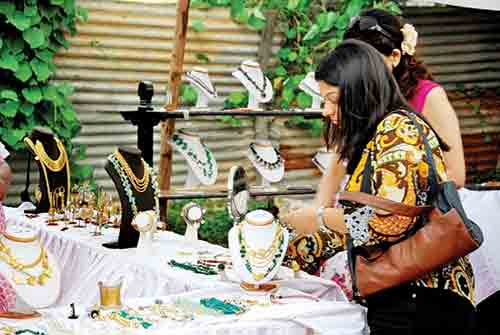
Reena Chengappa and Anu Gummaraju have been instrumental in setting up Second To None, a community that is not just promoting recycling and upcycling – the creation of objects of art and utility out of waste — but also helping organise markets and facilitating commercial activity around this. This has already found resonance with a wide audience.

Yet, it’s early days for this mindset. Reena has heard it all — from questions about practicality, to those about the weirdness and the snobbishness of it all. However, she’s happy about how folks are accepting it — “All’s well now and folks are willing to look at this choice as an option”. Sejal Shah, who creates and promotes eco-friendly upcycled jewelry, has received a lot of encouragement from people, but only a lukewarm response from actual buying customers.

Even at home, it’s often a crusade. Chidambaram Subramaniam faced a bunch of challenges in both his efforts, and the reaction of people at home when the maggots in the compost bin multiplied and crawled in one day! Over time, his persistence with composting, and creating a kitchen garden in his balcony have not only found converts at home, but evoked curiosity amongst the neighbours as well.

At our local convenience store, one sees more people come in with their own bags. There was news of an apartment complex winning an award for its waste management efforts. Kids at school are carrying home the message that plastic is bad. Yes, these are mere dents in the armour of the marketing and packaging machinery that just injects so much into our lives that we end up wasting, but these are good signs and we might see bigger change if folks like Meenakshi succeed in bringing about positive changes in policy.

It’s good to know that for a growing tribe of Bangaloreans, taking garbage out of sight is not getting it out of mind.

Getting started

* Daily Dump: http://dailydump.org or help with composting at home

* Zero Waste Management Group: http://groups.google.com/group/zwm-blr for advice on how to help your community adopt better waste practices

*Bangalore’s own flea market: http://secondtononemarket.wordpress.com/

Eco-tips

What can you do to reduce your contribution to Bangalore’s growing landfills?

*Segregate! keep the kitchen (organic) waste separate from the dry waste (paper, plastics)

*Composting. This will ensure the organic waste – which is 60% water – is actually turned into beneficial nutrients for your garden

*Reuse. See what you don’t really need to throw away. Or what someone around you could reuse. Think hard before putting anything into a bin.

*Recycle. It’s amazing how much can be recycled. Talk to the neighbourhood gujari guy.

*Carry your own bags wherever you go shopping. Including multiple small ones for the veggies at large grocery stores.

*Avoid bottled water. Carry a bottle from home, and refill.

*Buy things you ‘need’, not just ‘want’.

source: http://www.deccanherald.com / Home> Supplements> Living /

Freshly brewed: Premium segment fuels tea, coffee growth

MUMBAI:
Like many other consumer goods categories, the premium segment is clearly driving the growth of the Indian tea and coffee market as well. According to market research agency IMRB, the premium segment in tea grew faster in terms of reach and volume compared to non-premium tea this year even as instant coffee pushed the growth in the coffee market. Considering a category like tea, which has almost a hundred per cent penetration in India, consumers are now increasingly opting for value-added, flavoured offerings.

The IMRB data said premium tea grew 11% in terms of volume as opposed to a 4% growth clocked by the nonpremium segment during the January-October period this year compared to the corresponding period last year. On the other hand, instant coffee which is higher priced compared to conventional coffee, grew its volume by 9%. And as consumers upgraded, the volume of unbranded tea declined by 2% while the strong hold of regional players only increased.

“We are seeing that consumers are looking to experiment more with their daily cup of tea. This is where the value-added offerings are being lapped up by people. Tea bags have become commonplace today and niche brands are gaining traction. Expansion in the tea category is clearly coming from this segment,” said Damodar Mall, director, food strategy at Future Group, which runs the Big Bazaar stores. The growth in the tea market is being led by the bigger pack sizes unlike the instant coffee space which is largely dominated by the low unit packs. Premium tea penetration is still at 20% currently in India of an estimated Rs 8,000 crore market.

In the tea category, local brands have continued to rule the roost as they cornered another percentage point and stood at 38% of the overall market. “Regional brands are competing well as their overheads/expenses are less compared to the national brands,” said Piyush Desai, chairman & MD of Wagh Bakri, a strong regional player in the Indian tea market. Hindustan Unilever (HUL) and Tata Global Beverages (TGB), which are the two national players in the tea market, are losing ground to regional players like Wagh Bakri.

According to a recent research report by SBICAP Securities, “Local tea manufacturers like Wagh Bakri and Warren Tea in the hinterlands of India are better able to gauge the demand and cater to the regional taste more effectively than national players like TBG and HUL. Increasing distribution reach in the rural markets is becoming more expensive than in urban markets due to accessibility. Over the past two years, TGB and HUL have both lost 0.5% market share to smaller regional players.”

HUL’s Bru emerged as the single largest penetrated brand in the instant coffee market with a 10% reach driven by its growth in the household reach. Nescafe had a reach of 5% with its volumes growing at 14% during this year, according to IMRB. “The volumes in the premium segment are going up in both tea and coffee as consumers are not restraining from upgrading despite the talk of the slowdown. Instant coffee is growing very well as the in-home consumption reach has now gone up to 16% with a healthy growth rate of 7%,” said Manoj Menon, group business director at IMRB International.

HUL and TGB comprise 40% of the total consumption in India, while they handle 20% of the total tea volumes from the plantations. They sell at higher prices compared to bulk tea sold at auctions due to branding, packaging and distribution. While HUL has premium brands like Brooke Bond Lipton, TGB, an integrated beverage company, has evolved from a tea plantations company to marketing and brand focused organisation. The company has a strong portfolio of global and regional consumer brands like Tata Tea, Tetley, Eight O’Clock Coffee (EOC), Good Earth, Jemca, Grand, Vitax and Himalayan.

GROWTH SIP TEA (ALL INDIA URBAN + RURAL) Tea volume grows by 5% Premium segment grew its reach by 8% Growth driven by large packs Local brands have the highest share in the category at 38% (share grows by 1%) Unbranded tea has 33% volume share-down 2%

COFFEE (ALL INDIA URBAN + RURAL) Instant coffee driving the growth for coffee category Instant coffee has an in-home reach of 16% – growing by 7% Conventional (ground) coffee is stagnant in terms of reach For Bru, growth is coming from smaller packs but for Nescafe large packs are driving the growth Almost 87% of instant coffee volumes are from South alone

Period: Jan-Oct ’11 vs Jan-Oct ’10 Source: IMRB

source: http://www.timesofindia.indiatimes.com / Home> Business> India Business / by Samidha Sharma & Namrata Singh / TNN / December 08th, 2011

Tiger Hills by Sarita Mandanna


I picked up this book for a lark(like I pick up most books these days). Some of the books I pick up like this end up very disappointing. This one on the other hand, was anything but disappointing.

It was riveting. The story of Devi, a girl born in Coorg in late 1800s. Devi is a wilful child with her mind of her own, unlike other girls at that time. She decides at the age of 10 that she would marry the Tiger Killer, Machu, her best friend Devanna’s cousin. Devanna, on the other hand grows up, desperately in love with Devi, who is completely unaware of his feelings. Devanna is a very intelligent child and is mentored by the local Reverend. He shares a love for Botany with the Reverend, and both of them spend a lot of time together finding specimens in the rich Coorg forests. His dedication towards biology pushes him into a medical school education, which turns the tide for everyone involved.

The way their lives turn out, weaved in with what is happening in Coorg at that time, makes for a fascinating read. The beauty, traditions, and the culture of the place is brought out beautifully by the author. The book transports you to the Coorg that Devi lived in. From the older times when Coorg was untouched by outside influences, to when Eurpoean influences gets the locals to change their names from Kalamma to Kitty, just as Nari Malai gets changed to Tiger Hills.

The story is fast paced, with shocking twists and turns, making us empathize with the characters at so many levels, even when they end up doing things which are not quite right.. A story of love, unrequited and requited, a story of the things people do when consumed by emotions, a story of how normal lives can change in an instant.

A book that gripped me through it. I would not call it a fast read, but a book which refuses to let go, even after you turn the last page.

source: http://www.wordsndreamz.wordpress.com / posted December 10th, 2011

Unique Jana Gana Mana Honour for K M Chinnappa

MADIKERI :

Madikeri: Kodagu has added one more feather in its cap as K M Chinnappa, environmentalist and former forest officer, was documented by ‘Jana Gana Mana’ team in celebration of 100 years of the national anthem of India penned by Ravindranath Tagore. As per the information available with Express, the team has selected many stalwarts in various walks of life for their achievements. Chinnappa was chosen for his service in the field of conservation of nature.

The film titled ‘Bharatha Bhaghya Vidhatha’ produced by Pancham Nishad Creative Private Limited, Mumbai, and the team headed by Ruchika Tiku, interviewed Chinnappa in his nativetown and amidst the forest he loves.Chinnappa is the only one selected from Karnataka.

Ruchika told Express that the institution aimed to highlight the nine values of Compassion, Honesty, Discipline, Courage Secularism, Passion and Vision, Peace and Harmony, Knowledge and Creativity, Positive Health and Environment.

Pancham Nishad is one of the leading organisations in the country focusing on the promotion of Indian music and culture through live concerts and other media since a decade. The documentary will aims at giving a positive message to the youth and to inspire them.

source: http://www.ibnlive.in. com / Karnataka / Posted on December 10th, 2011 / Express News Service, The New Indian Express

Fun things to do this weekend in Bangalore

Flea for all
Sunday Soul Sante was first curated more than a year ago, to bring together the creative culture of Bangalore at one venue. This event is essentially a day-long feature that showcases some of the best things Bangalore has — art, craft, fashion and accessories, home furnishings and pottery. Food is also an integral part of the Sante and there is something to please everyone.

For entertainment there will be a fashion show choreographed by stylist and fashion consultant Prasad Bidapa. Apart from that a lot of music is on the plate — with DJs Ivan, Vachan and Inferno on the console.

Where: At Tripura Vasini, Palace Grounds
When: December 11, 12pm onwards

source: http://www.dnaindia.com / Home> Bangalore / by Vishwadha Chander / Saturday, December 10th, 2011

Kodavas celebrate harvest festival

BANGALORE:
Members of the Kodava community assembled on Friday evening on Kodava Samaja Premises dressed in their traditional attire and finery. It is that time of the year, when fireworks and dance accompany the men, as they get down onto a small patch of a paddy field cultivated on premises to harvest the first strands of paddy.
The harvest festival of the Kodavas, called Puthari, was celebrated on Friday night in the City. When questioned about the timing, the secretary of the Kodava Samaja Ammatanda K Chinnappa explains, “The timing is decided by a group of elders associated with the Igguthappa temple in Coorg. This year, they have announced that the auspicious timing to begin the harvest season is at 9.05 pm on Friday.”
Several Kodava ladies also said that the festival was generally celebrated on Rohini nakshatra, the cycle of which begins on Friday night.
The cultural affairs secretary at Kodava Samaja Sudha Muthanna said that while in villages the festivities begin a week in advance, in the City, some 400 Kodavas members come together to celebrate with dance and more importantly, eat food cooked with the rice harvested on this auspicious day. “Kolata and other traditional dances are performed in villages at a common designated place or in the muttam (courtyard) of the ain mane all through this week and on all three days of this festival,” she said.
The Kodava Samaja arranged for the harvest early in the evening to allow people to take home a fistful of the harvest. “Families consider this as auspicious, like bringing Lakshmi home, and take the paddy home. Since, paddy cultivated on premises will be insufficient to cater to the needs of all Kodava members in the City, we have arranged for paddy from Kodava to supplement the stock,” said Sudha Muthanna.
At the time of harvest, a gun shot is fired in the air and everybody chorus Poli Deva Poli, where poli means prosperity. With this, they usher in a prosperous year. A rich festival indeed.

source: http://www.expressbuzz.com / Home> Cities> Bangalore / Express News Service / December 10th, 2011

Fest brings in glimpses of Kodava culture

Taluk-level Kodava Sanskritika Mela painted a festive mood in Kushalnagar on Tuesday.

Kushalnagar, Dec 6, DHNS:
Organised by Kushalnagar Kodava Samaja, the programme was inaugurated by Zilla Panchayat President Shantheyanda Ravi Kushalappa who thus threw open a platform to showcase Kodava culture and traditions.

Kodavas dressed in their traditional attire presented a slice of Kodava folk culture by performing ‘Ummathat’, ‘Kolata’, ‘Bolakat’, ‘Kathi Aat’, ‘Valagathat’, ‘Pariyakali’ etc. The mela was not confined to youth. Even kids and elderly took part in the programme with equal zeal.

Inaugurating the event Ravi Kushalappa said that everyone should take up the responsibility of keeping their culture and traditions alive and passing it on to the next generation.

He said that the Kodavas should take this responsibility because Kodava culture and language is distinct from others.

“Number of Kodavas is declining in Kodagu. The Kodavas are migrating to cities to try their fortune. This in future will lead Kodava culture and language towards dangerous end,” he warned.

Kodava Sahithya Academy President Imudiyanda Rani Machaiah presiding over the programme said that Kalamela intends to protect the Kodava culture in its pristine form.

Kodava Sahithya Academy former president Bacharaniyanda P Appanna presided over the session. Kodava Samaja former president Cholanda A Muddappa presented paper on ‘Changing Kodava culture’ while Lecturer Ajjikuttira Sunita Girish presented paper on ‘Kodagu-background of Kodava folklore and history’

source: http://www.deccanherald.com / Home> District/ December 06th, 2011 / DHNS

Chef challenge kickstarts

BANGALORE:

Metro Cash and Carry India, in partnership with the Food Lovers Club, kicked off the second edition of the Young Culinary Chefs’ Culinary Challenge in the city of Bangalore on December 7. Titled ‘Produce to Plate – Young Chefs’ Culinary Challenge 2011’, the challenge witnessed twenty-five (25) of the most talented and upcoming chefs from across hotels and restaurants in the city gather at a common platform and display their skills in producing some of the finest gourmet dishes for Bangalore’s connoisseurs. The 25 participants will undergo a series of challenges and eliminations before the seven best of the lot reach the final round.

As part of the preliminary rounds, the participating chefs along with their executive chefs visited the metro store in Yeshwanthpur, to identify and shortlist their preferred choice of ingredients for their recipes. The participants were required to submit details of their preferred ingredients and culinary workstations by December 2.
After the preliminary rounds on December 7 and 8, the challenge will host its final round on December 15 and results will be out by January 2012. winners will receive gold, silver and bronze medals, in addition to attractive cash awards of `61,000, `41,000 and `31,000 for the first, second and third prizes respectively. They will also have the privileged
opportunity to be featured in Food Lovers’ magazine.

The Young Chefs’ Culinary Challenge 2011 will have some of the most renowned chefs in India judging the event, including chef Abhijit Saha, founder director and executive Chef, Avant Garde Hospitality, Chef Madhu Krishnan-executive chef, ITC Gardenia, chef Nimish Bhatia-executive chef, The Lalit Ashok, chef Vijaya Bhaskaran-executive chef, Le Meridien, chef Rudolph Eichele-executive chef, The Leela Palace Kempisnki, chef Vijay Malhotra-executive chef, ITC Windsor, chef Ramasamy Selvaraju-executive chef, Vivanta by Taj, chef Naren Thimmaiah-executive chef , chef Naren Thimmaiah-executive chef, The Gateway Hotel.

Ajay Sheodaan, Director, Customer Management, METRO Cash and Carry India said, “The Young Chefs’ Culinary Challenge 2011 is a wonderful opportunity to encourage these promising chefs to sample, experiment with and create culinary masterpieces from the vast range of high quality products we offer.”

source: http://www.ibnlive.in.com / Express News Service, The New Indian Express / Bangalore, December 09th, 2011

Coffee Board partners BIAL to promote S. Indian coffees

BANGALORE, DEC. 5:

Bean display: Representatives from coffee regions – Araku Valley, Bababudangiri , B R Hills, Chikmagalur, Kodagu, Nilgiris, Sheveroy Hills, Travancore and Nelliyampathy and Pulneys.

To increase local consumption and for showcasing coffees from South India, the Coffee Board has partnered Bangalore International Airport Ltd and the Karnataka Tourism Department.

As part of the promotion, coffees from Araku Valley, Bababudangiri , B.R. Hills, Chikmagalur, Coorg, Nilgiris, Sheveroy Hills, Travancore, Nelliyampathy and Pulneys are being showcased.

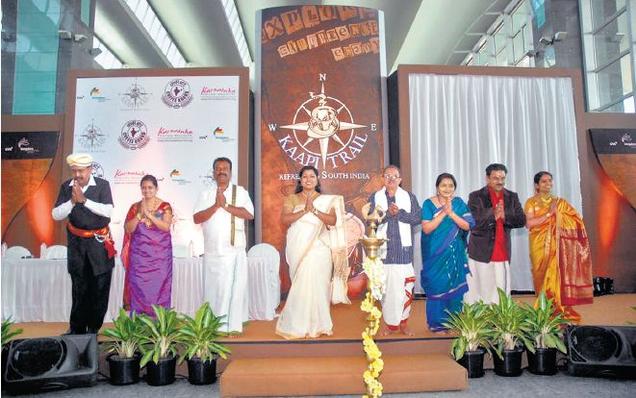
For the first time coffees from various regions are being displayed as part of a 10-day coffee festival, Kaapi Trial, at the Bangalore International Airport. The event will give passengers an opportunity to interact with coffee experts and experience live coffee-making demonstrations and cupping.

According to Mr Jawaid Akhtar, Chairman, Coffee Board, “The festival will help enhance and promote knowledge of the region and coffee-drinking habit of the State that is core to its heritage.”

“As part of the promotion, the coffees, specially selected from the regions, have been carefully blended and brewed to extract their best flavour.

Special blends will be created to give a different coffee experience,” he added.

“This is for the first time that an Indian airport is hosting a coffee festival of this magnitude. The 10-day long extravaganza will exhibit different facets of South Indian coffees, giving passengers an opportunity to explore in a unique way,” said Mr Sanjay Reddy, Managing Director, Bangalore International Airport Ltd.

“We believe that efforts such as these will go a long way in establishing Bangalore as a gateway to the South of India and bring economic prosperity to this region.

By the end of the festival, we hope to engage with over two lakh passengers and make them coffee experts,” he added.”

source: http://www.thehindubusinessline.com / Agri-Biz / by Anil Urs / December 05th, 2011

‘Nature walk in coffee land’ reaches Madikeri

Madikeri, Dec 4, DHNS:

The ‘nature walk in coffee land’ organised to create awareness on environment from Bababudangiri reached Madikeri on Sunday.

The jatha was led by Krishnamurthy Pushpanath. The jatha reached Sampigekatte at 9.30 am.

The jatha was welcomed by skating children with flowers. District Congress Committee President B T Pradeep, Jaya Karnataka district president Rabin Kuttappa, Kodagu Growers Federation member B T Dinesh, Madhu Bopanna and others were present.

The jatha passed through Gandhi Maidan in Madikeri. After garlanding the statue of Gandhi, Krishnamurthy said, “There is a need to protect Western Ghats and Malnad to check global warming. It is our duty to protect Western Ghats.

There is a need to create awareness among the public on the need to protect Western Ghats from destruction. With the global warming, there has been increase in temperature by one or two degree every year. The increase in temperature will affect coffee. If this continued, then coffee plants may not survive by 2030.”

Kodagu Growers Federation’s Dr Pradeep said “the coffee plantations absorb carbon dioxide. Hence, the coffee growers are protecting the nature. The Centre should support the coffee growers.” The jatha left for Bhagamandala from Madikeri.

source: http://www.deccanherald.com / Home> District / Monday, December 05th, 2011