Helping Hands. Touch of joy to less privileged

There is always a steady stream of visitors at the Spastics Society of Karnataka. On Friday, a privileged bunch dropped in, bringing joy to the special children at the Society.

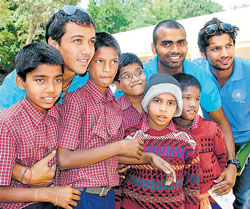
Nine members of the Indian national hockey team, accompanied by coach Michael Nobbs, medical doctor Lt Col BK Nayak and selector AB Subbaiah, delighted the excited kids, who jumped up in happiness.

“It’s brilliant if you can put a smile on the faces of these kids,” said an emotion-choked Nobbs, who initiated the visit arranged by Hemophilia Federation (India) vice-president Vikash Goyal. “Every moment of their life is a such a huge struggle. Most of these kids haven’t done anything wrong in their life, yet they have to undergo such a painful ordeal. We just spent 10 minutes in every classroom, probably less than a minute with every kid, but their joy was incomparable.

“Some of them watch TV, and could thus identify a couple of the Indian players. The next time they see us play on TV, they will be saying ‘These people came and visited us.’ Most of us are so privileged and yet we keep complaining about the smallest of worries. The players too sometimes feel they haven’t got their due. This visit will make a world of difference to their thinking.”

The group spent two hours touring the facility, interacting with several kids. It was obvious that most of the players were deeply moved by the plight of these children for whom life has been a struggle since birth.

“I am just lost for words,” said a teary-eyed Indian captain Bharat Chetri. “You really feel for the kids and for their parents. Apart from the continuous pain of watching their kid suffer, their parents also have to work doubly hard to raise them. Hats off to them,” added Chetri, easily the most popular man with the kids alongside local player VR Raghunath.

Such visits are being planned by Nobbs on a regular basis. A few days before the Champions Challenge last month, the entire team had met patients at Pune’s Paraplegic Rehabilitation Centre, which houses several war veterans.

“We will be doing this regularly,” observed a humbled Nobbs. “As humans, we need to give back to the society in whatever way possible. I heard about how Vikash Goyal lost his 12-year-old son a couple of years ago to haemophilia. It is really heart-breaking. We just did our bit in the smallest manner possible.”

source: http://www.deccanherald.com / Home> Sports / DHNS / Bangalore, December 16th, 2011

Walk, smell the coffee

Pushpanath ‘Push’ Krishnamurthy is tired. A campaigner with Oxfam, UK, he is just back from a fortnight-long, 540-km walk across Karnataka for what he calls “climate justice”. “After walking 30-40 km every day for half a month, it’s tiring to not walk anymore,” he says, leaning back in his chair at the office of the Centre for Social Markets, a Bangalore-based non-profit that promotes climate change dialogue and socially sustainable entrepreneurship, where he is currently on an externship.

In a white chikankari kurta and jeans, his face framed by a cloud of unruly salt-and-pepper hair, Krishnamurthy looks every bit the eccentric Gandhian. He is brimming with stories from his journey, timed to coincide with the UN climate conference in Durban, South Africa.

“I met 30,000 people in 16 days. Hordes of people joined me on various legs of the walk, welcomed me into their homes, shared their stories, fed me and garlanded me. I felt like Bono without the sunglasses,” he says, laughing. Krishnamurthy began his walk, backed by CSM and the Karnataka Growers’ Federation, on November 25 in the hills of Chikmagalur, descending two thousand feet in the next few days to pass through Hassan, Coorg and Hunsur and finally arrive at Mysore. Along the way, farmers and coffee growers filled him in on the climatic variance of the past few years and how it was affecting their crops. He visited villages ravaged by unseasonable bouts of rain and explained in chaste Kannada the correlation between human activity and climate change. He blogged every day and gave interviews to radio and local papers, attracting a posse of supporters aged seven to 80. “Most of them hadn’t heard of the Durban talks. They thought I was a crazy old man. Some called me a parisara vaadi, a climatologist. I told them I am just a regular guy with irregular hair,” he says, lightheartedly.

source: http://www.indianexpress.com / IE> Story / by V Shoba / December 18th, 2011

Ristretto | Tokyo Coffee


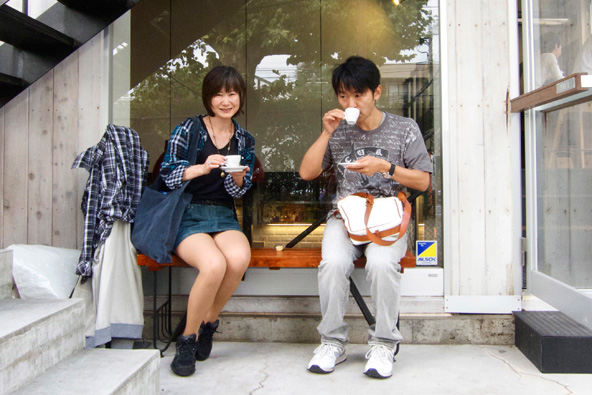
Patrons sit and sip outside Nozy Coffee in Tokyo.
Photographs by Oliver Strand

When I tell people that I went to Tokyo to check out the coffee, I get two reactions. One is bewilderment — as if I went to Denver for the surfing. The other is fascination: those who pay attention to coffee know that Japan is the world’s third-largest importer (after the United States and Germany), with obsessive buyers who regularly land the winning bids at Cup of Excellence auctions, and that it produces the coffee gear everybody wants.

Japan’s interest in coffee isn’t a fad. Dutch traders first introduced the drink a little more than 400 years ago, but it wasn’t until the port of Kobe was pried open in 1868 that coffee became widely available. Soon it was fashionable. Tokyo’s first kissaten, or coffee shop, opened in 1888; by the 1930s there were 3,000 in the city. The supply of beans was cut off during World War II, but once it returned in the 1950s there was another coffee-shop boom. According to Masanobu Kusunoki, director of the UCC Coffee Museum in Kobe, Japan had 160,000 kissaten by the 1960s.

Today, the kissaten are disappearing, replaced by Western-style chain stores and a growing market of home brewing. Still, there are around 80,000 kissaten left in Japan, which are easy to spot in Tokyo. They’re usually small and moody, and have the feel of a bar (stools at a long counter, sunlight kept to a minimum) or a diner (vinyl booths from another decade, lace curtains in the windows). Kissaten are not built for speed — you go to one to collect your thoughts, not for a quick caffeine hit. After you sit down, a waiter shuffles over and puts an ashtray in front of you, then wanders away to give you time to light up before coming back to ask for your order.

And the coffee? Most of what I tasted was dark and strong. Often it was a nel drip, and made with a thick cotton filter. Usually it had all the subtlety of a glass of Jack Daniel’s, which was fine. A kissaten is more about the experience than what’s in the cup.

But a few kissaten are known for the quality of the coffee and the theatricality of the presentation. One of the more regal establishments is Chatei Hatou, which occupies the low-ceilinged ground floor of a nondescript building on a side street in Shibuya.

Chatei Hatou is just a few steps away from Meiji Dori, one of the busiest arteries in Tokyo, but once inside the windowless room you lose all sense of the teeming traffic and L.E.D. billboards that turn the facades of skyscrapers into televisions. There’s classical music playing on vintage speakers, a towering flower arrangement, a wall with hundreds of cups and saucers that range from kitsch (the Beatles) to fine porcelain (Meissen). The best seats are at the bar, where you can watch members of the staff make each cup with the silent focus of a monk at prayer — it’s the posture, the breathing, the unflinching gaze as water is gently poured from a swan-neck kettle into a drip cone. The coffee is prepared with such intensity and grace that it feels as if time has stopped.

Little Nap Coffee Stand by Yoyogi Park in Tokyo.
Typically kissaten are not so hypnotizing, which could be why Japan’s new coffee generation is captivated by espresso drinks and steamed milk; the land of the rising sun is heavy into latte art.

One exception is Kayaba Coffee, a decades-old shop in a neighborhood behind Ueno Park with hilly streets and walled-in temples that was given a makeover by its stylish new owners. The kissaten is in a 100-year-old house with good midcentury touches — narrow tables and flattering lighting downstairs, tatami mats and Eames chairs on the second floor — and a clientele that ranges from post-university kids in skinny jeans to women of a certain age who have been coming to Kayaba for years. There’s coffee during the day, cocktails at night and video art on the wall.

Most of Tokyo’s notable coffee bars are found in the more fashionable neighborhoods that flank the city’s west. It’s the same story as in San Francisco, or London, or Oslo — they appear where where creative types work (Be a Good Neighbor in Sendagaya), shop (the Coffeeshop in Daikanyama) and live (Little Nap by Yoyogi Park). Some have international followings (Bear Pond Espresso in Setagaya, which was recently profiled in this column), and some soon will (Nozy Coffee in Setagaya).

Some share a storefront with another shop (No. 8 Bear Pond Espresso in Shibuya). And there are those that focus on espresso (Espresso Felice Roaster, in Zoshigaya). There are a handful of syphon bars (Cafe Obscura in Sangenjaya), and a few that put on a show (Streamer Coffee Company in Shibuya and Harajuku), while others are so elegant and pleasant that you don’t mind knowing that what’s in the cup could be better (Omotesando Koffee in Omotesando).

source: http://www.tmagazine.blogs.nytimes.com / FOOD, TRAVEL by Oliver Strand / December 16th, 2011

Coming in the line of hunters, he became a frontline warrior of forests

In Coorg, where men once loved hunting, K M Chinnappa broke the tradition by turning his gun to protect the forests. Anita Pratap captures the spirit of the man, and Mahesh Bhat his image

By Anita Pratap and Mahesh Bhat

Hunting was a way of life in the verdant forests and foothills of the Western Ghats in Karnataka’s Coorg area. It was an integral part of tradition, folklore, manhood, sport, food and commerce.

From poor, forest-dwelling tribesmen to the flamboyant royalty and courtiers in bustling Mysore, everyone loved hunting. But one man stood tall to end this way of life. His name is K.M.Chinnappa.
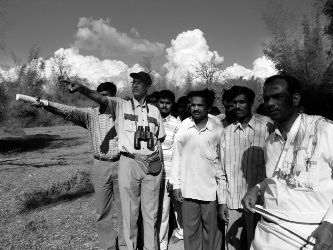
K M Chinnappa was the Range Forest Officer of Nagarahole for over two decades and was single-handedly responsible for making it one of the finest national Parks of India

Born in 1941 in Kumtur village near Nagarhole to a soldier who fought in the First World War, Chinnappa spent his youth roaming the forests of his ancestral land, listening to birds, watching the cavalcade of animals in their habitat, absorbing the every day miracles of the rich eco-system.

An enduring love for nature was thus born in him. Like his father, he too would become a mustachioed soldier. But with a difference. He would become a gun-toting, frontline warrior of the forests, dedicated to protecting wild life. Says he simply: “Wildlife is the purpose of my life.’

In 1967, he joined the Nagarhole National Park as a forester. The park was in ruins. Hunting had taken its toll. There were hardly any deer left, forget tigers and other big game. To cultivate rice, villagers had encroached on the swamps – the beloved play-ground of the elephants.

Tribesmen lived in clusters deep within the park to collect forest produce, ranging from honey to berries. Livestock herders grazed their cattle on the park’s grasslands. Hunters preyed on animals and birds.
Poachers hunted tigers for their skin; elephants for their tusks. Timber logging was a thriving mafia business. Sandalwood smugglers roamed with abandon.

The destroyers of Nagarhole’s environment used a range of weapons – hunters shotguns, tribesmen used snares and livestock herders used poison. Wild life protection laws were weak and the Forest Department concentrated on logging, misguidedly uprooting the diversity of natural vegetation to replace them with the monocultures of teak.

Rued Chinnappa: “If this devastation continued, I was dead certain that there would be no wild life left in Nagarhole in 30 years.”

He became a one-man army to reverse this process. And he succeeded. In less than a quarter of a century, Nagarhole revived, expanding from a 250 sq km part to 640 sq kms.

The poachers have retreated, the encroachers have gone and the hunters are virtually extinct, restoring Nagarhole to its rightful inhabitants – tigers, panthers, leopards, sloth bears, jackals, wild boars, porcupines, hares, langur and varieties of deer.

In the bad old days, tigers had to roam 200 sq kms before they could find prey. Now they can find it within 12 sq kms. The elephants are back where they belong: in the lush swamps and bamboo groves. The trick? Explains Chinnappa: “All you have to do is to stop human interference. Just leave the forests alone and they will regenerate themselves”.

Chinnappa was the right man at the right time. In 1972, in the wake of a groundswell of opinion generated by several leading Indian conservationists, then Prime Minister Indira Gandhi took a slew of measures to protect the environment.

Several laws were enacted and sanctuaries in Kanha, Corbett, Ranthambore, Bandipur and Nagarhole among others were pulled back from the brink of destruction.

Forest departments had new direction, muscle and teeth. Still, keeping the humans out of the forests was not easy. Chinnappa paid a high personal price to fulfil his mission to safeguard Nagarhole. He was arrested, jailed, transferred. His home was burned down. But he has no regrets. Says he with his characteristic robust optimism: “What’s the use of just going to office. I led a colourful life.”

To protect wild life, Chinnappa had to take on a range of human beings who lived on the wild side of life. He captured a large number of poachers and smugglers and filed court cases against them. But they were all acquitted in no time and were back to their wicked ways.

He realized he would have to terrorize them, make it really dangerous for them to hunt and poach. He took up the gun and did not hesitate to shoot. He recalls: “No body used high-calibre guns. I had only a 12 bore rifle. And I used only buckshot. But at that time, it was enough.”

He remembers the legend of a tribesman whom the locals nicknamed “parari Thimma” – vanishing Thimma. He was a notorious poacher who nimbly eluded forest guards. Chinnappa began tracking him and one day shot at him. And then he vanished forever!

Chinnappa became the local legend. Supporters hailed him as a hero, the phantom of the jungles. Poachers called him “The Devil” who stalked their hunting grounds.

Chinnappa used his immense knowledge of forest trails, tracking spoor, jungle craft, fabled night vision and stealth maneuvers to ambush the poachers and hunters. Guided by moonlight, he silently crept upon the forest brigands and opened fire. And the old way of life began to end.

But not without resistance. In no time, the threatened “vested interests” – profiteering poachers, unscrupulous smugglers, wealthy hunters, criminals, mafia operators and politicians all ganged up against Chinnappa.

In 1993 after voluntarily retiring from Karnataka Forest department, Chinnappa started Nagarahole Wildlife Conservation Education project reaching out to the local students, youth and the public.

Even the villagers rose in revolt. For Chinnappa, life took a curious turn. On the one hand, the regeneration of Nagarhole won high praise. He bagged the Karnataka Chief Minister’s Gold Medal in 1983, received an award from the Wildlife Conservation Society and foreign environmentalists showered glowing tributes in books and magazines.

His spartan way of life, incorruptibility and military discipline became legendary. Says Ullas Karanth, a leading wildlife biologist: “Chinnappa is a man of integrity. He is tough, efficient and incredibly courageous in the face of grave physical danger. His accomplishments in Nagarhole are undoubtedly a major milestone in the history of Indian wildlife conservation.”

He was admired and respected by his peers. But some of the locals feared and hated him. In 1988, one of Chinnappa’s guards publicly shot a local coffee planter who had killed and eaten his pet samba deer.

The dispute spun out of control and soon local poachers instigated a public agitation, accusing Chinnappa of masterminding the murder. Bowing to political pressure, Chinnappa was arrested and jailed for 12 days. Eventually he was cleared of all charges and reinstated

But vested interests continued to persecute him. He was implicated in the killing of a poacher in 1992 and a riot erupted. A frenzied mob ransacked the Forest Department’s buildings, burnt vehicles, assaulted staff, set fire to large swathes of forest land and set ablaze Chinnappa’s ancestral home.

Once again, he was cleared of all charges, but this time, Chinnappa decided to quit. He could understand why the poachers, smugglers and politicians ganged up against him. But the fact that they could enlist the support of villagers had a profound impact on him.

He realized he needed to move to another plane of conservation: education. He had to make the locals realize the practical and moral imperative to protect their environment. It was not merely the job of foresters. It was a collective responsibility.

And so in 1993 he retired prematurely from the Forest Department and started his NGO, the Nagarhole Wildlife Conservation Education Project to educate the local people and especially the children on the need to protect the environment.

His motto was simple: “Without humans, the forest will flourish. Without forests, we humans cannot flourish.” Through forest camps, discussions and slide shows, he opens the doors to a magical kingdom of flora and fauna, encouraging children to take delight in observing nature instead of hunting animals.

His mission also involves fighting legal cases. As President of Bangalore-based NGO, “Wildlife First”, Chinnappa and a group of conservationists documented the ecological devastation caused by the iron ore mine operators in Kudremukh. In retaliation, they were slapped with 12 criminal cases.

Says Bittu Sehgal, editor of environment magazine, ’Sanctuary’: “Law suits are filed by those who have money or power on their side to prevent public minded citizens from ‘interfering’.” The cases dragged on for years and wound up in the Supreme Court, which ordered the closure of the mines in December 2005.

Chinnappa’s accomplishments are all the more laudable because they were won against the stiffest odds. He endured setbacks, difficulties, threats, attacks, vilification, arrests and court cases.

But, remarkably, he has emerged unscathed, his innocence, courage, dedication, honour and optimism intact. He is completely devoid of bitterness. He chooses to forget the troublemakers who made life so difficult for him and his loyal wife Radha, but remembers fondly the senior officers and lowly guards who stood by him.

Through all his trials and tribulations, one thing remained undiminished: his sheer will to save the forests. With deep conviction he says: “If you have the will, you can do wonders.”

Today, Chinnappa derives enormous satisfaction from the guns – the yesteryear symbol of manhood – that lie rusting in many a Coorgi home. Cheering the end of that bygone era are the sights and sounds of a promising new life, symbolized by the swaying foliage and barking deer.

(Extract from the book ‘Unsung’ by Anita Pratap and Mahesh Bhat)

source: http://www.theweekender.com / Home> Causes> Gun Reversal /vol. 2, issue. 50 / 16-22 December, 2011
Hyderabad International Fashion Week kicks off

The first day of the Hyderabad International Fashion Week kicked-off in grand style with designer Asmita Marwa showcasing her chic, earthy collection.

Fashionistas and socialites trooped in early and snagged the seats on the front rows and patiently waited even though the show started a tad bit late. Asmita’s friend actor Siddharth made his ramp debut as her showstopper. After pulling the the ramp act off with elan, he confessed to the audiences that he was nervous about tripping over! Guests hit the lounge and bonded with each other over drinks after Asmita’s show.

The second show – Sanjana Jon’s much anticipated one – began way behind schedule. Socialites like Kavitha Reddi, Preeti Rao, Nikitha Reddy, Santa Jon, Geetu Jethwani and others even left the venue, thanks to the long delay. But once the show began, all was forgotten.

Famed playback singer KJ Yesudas’s son Vijay Yesudas kick-started the show with a soulful Hinglish track. Models and actors showcased her trendy collection. There was no dearth of star power for Sanjana’s show as she had not one, but close to 15 showstoppers! Ace shuttler Ashwini Ponnappa, actors Subbaraju, Shawar Ali, Bindu Madhavi, Harshvardhan Rane, Asmita Sood, Sonia, Rahul Haridas, Sana Khan and other tinsel town stars walked the ramp and cheered on Sanjana, who was all smiles as Vijay Yesudas crooned “Why This Kolaveri Di” on the ramp along with the designer and the showstoppers.

Spotted: CM’s wife Radhika Reddy with her daughter Niharika, Mayor Karthika Banda Reddy and Chandra Reddy, Jwala Gutta, Vasuki, Deepti Reddy, Keerthi Narshimachar and Anu, Dalem Sehgal, Rummy, Beenu Singh, Kavitha Gulecha, Mala Pasha, designer Ishita Singh, Malini Alexander, Dr Kiran Krishnamurthy and many others.

source: http://www.timesofindia.indiatimes.com / Home> Life & Style> Fashion> Shows / by Abhishek Raja / December 17th, 2011

RCGC Cup tees off today

The RCGC Cup amateur golf championship, sixth leg of the Indian amateur tour calendar, will tee off here on Tuesday. The four-day championship will be played over par-72, Royal Calcutta Golf Club. The meet is being organised by the Indian Golf Union.

No. 1 in India, S. Chikkarangappa, will lead a strong field of about 90 golfers from all over the country. He will look to win back-to-back titles on the amateur circuit, while Chandigarh’s Abhijit Chadha is set to provide the challenge to the Bangalore-based golfer.

Others who are likely to be in contention for the top honours are Khalin Joshi, Udayan Mane, local lad Raja Sardar, experienced Gagan Verma from Delhi and Vikram Rana.

The first 26 amateur golfers of the country, as per the IGU’s merit list, qualify automatically for this tournament; around 60 players have made the grade through a qualifier held at the Beldih & Golmuri Golf Club, Jamshedpur, last week and four are nominees of the RCGC.

The cut, for the RCGC Cup, will be applied after the first two days of play (36 holes) and the first 45 players will compete for top honours by playing another 36 holes. The tournament will be played in stroke play format

http: www://www.thehindu.com / Sports> Other Sports / by Special Correspondent / Kolkata, December 13th, 2011

Suzlons environment campaign PALS crosses one million members

Launched about four months ago by Suzlon the Pure Air Lovers Society (PALS), registered over one million members. Suzlon is claiming that PALS is among the fastest growing campaigns of its kind in the country, exceeding an average of over 9,000 registrations per day.

PALS is a movement to emphasise the importance of clean air, while helping to educate people on how to live a more environmentally responsible life. The PALS campaign website provides innovative informational and educational tools for engagement with the campaign.

The website hosts tools like the PUC check reminder, carbon calculator, carpooling information, list of green vendors among others.

The campaign, launched in Mumbai, has expanded across 86 cities, with New Delhi now leading registrations, followed by Mumbai and Bangalore.

Commenting on the campaign, Suzlon Group’s global head of brand Dharini Mishra said, “This has been a hugely successful campaign. In the beginning we saw participation from 18-24 years-old age group, but we have seen broad based interest and participation spreading into the 25-34 year old bracket.

Interestingly, people who went to graduate school are over-represented at PALS and this is skewed towards metros in the country. We are confident that registration with PALS is only going to grow and this will fuel a more conscientious and empowered people”.

PALS is supported by likes of Milind Soman, Anil Dharker, Gerson da Cunda, RJ Malishka and Nikhil Chinappa among otheres. PALS first initiative GaadiBandh focused on educating people on the importance of turning off vehicles at signals thereby helping to reduce pollution emissions from idling vehicles in Pune.

PALS is a movement to emphasise the importance of clean air, while helping to educate people on how to live a more environmentally responsible life. The PALS campaign website provides innovative informational and educational tools for engagement with the campaign.

The website hosts tools like the PUC check reminder, carbon calculator, carpooling information, list of green vendors among others.

The campaign, launched in Mumbai, has expanded across 86 cities, with New Delhi now leading registrations, followed by Mumbai and Bangalore.

Commenting on the campaign, Suzlon Group’s global head of brand Dharini Mishra said, “This has been a hugely successful campaign. In the beginning we saw participation from 18-24 years-old age group, but we have seen broad based interest and participation spreading into the 25-34 year old bracket.

Interestingly, people who went to graduate school are over-represented at PALS and this is skewed towards metros in the country. We are confident that registration with PALS is only going to grow and this will fuel a more conscientious and empowered people”.

PALS is supported by likes of Milind Soman, Anil Dharker, Gerson da Cunda, RJ Malishka and Nikhil Chinappa among otheres. PALS first initiative GaadiBandh focused on educating people on the importance of turning off vehicles at signals thereby helping to reduce pollution emissions from idling vehicles in Pune

source: http;//www.articels.economictimes.indiatimes.com / News> News by Industry / by Mitul Thakkar, ET Bureau / December 13th, 2011

Iraqi air force moves ahead with fighter squadron as U.S. exits

NEW AL-MUTHANA AIR BASE, Iraq:

Iraq expects to have an operational fighter wing squadron in 2015 or 2016, the nation’s top air force commander said Tuesday during a final press conference with outgoing U.S. Air Force leaders at a military base near Baghdad.

Iraqi Staff Lt. Gen. Anwar Hamad Amin said his country’s nascent fighter program represented an important step in the country’s ability to defend itself against external attack, as well as “the sacrifice from both sides, American and Iraqi, to build our Iraqi air force.”

Amin’s comments came as the U.S. Air Force contingent that has been training the Iraqis prepares to leave by the Dec. 31 deadline mandated by the current U.S.-Iraq security agreement.

Iraq finalized a long-awaited deal to purchase 18 F-16 fighter aircraft in September, and the White House announced Monday that it would notify Congress of the proposed sale of 18 more F-16 jets, according to media reports.

The Iraqi air force is still in its infancy, with cargo planes and small aircraft like the Cessna 208B and King Air 350 at its disposal. During the next few years, it will acquire more advanced C-130J cargo planes, as well as training fighter jets and the F-16s.

The aircraft are among the $11 billion worth of weapons and equipment that the Iraqi government has purchased from American defense companies, according to the State Department-run Office of Security Cooperation-Iraq.

A contingent of 157 servicemembers and Defense Department civilians will manage the OSC-I program to deliver the aircraft, while private defense contractors will show the Iraqis how to use them.

“They’re really more like acquisition specialists, as opposed to being in the squadron, doing the training,” Maj. Gen. Russell Handy, the senior U.S. Air Force commander in Iraq, said Tuesday.

Besides acquiring aircraft and equipment, the Iraqis must also address undermanning issues within their service.

Since English is the global language of aviation, pilots and other aviation workers must have a good grasp of it before learning how to use their new equipment.

“That’s one of our biggest challenges now, but we’re working through it,” said Amin’s aide, U.S. Air Force Col. Steve Burgh.

Ten of Iraq’s pilots are in the F-16 fighter pilot training pipeline at bases in the United States. One of the pilots has begun training in the plane itself, U.S. officials said Tuesday.

slavine@pstripes.osd.mil

source: http://www.stripes.com / Home> News / by Erik Slavin / Stars and Stripes / published December 13th, 2011

Tour of Nilgiris to get tougher this year

CHENNAI, DEC 12:

Keep pedalling: Cyclists of the Tour of Nilgiris 2008 navigate a bend in Ooty. The contesters will pass a coastal city before going uphill. (File photo)

F1 motor racing and cycling may be like chalk and cheese but come December 16, there will be something common between both. Karun Chandok, one of India’s promising drivers in the F1 circuit, will be riding along with 70 other cyclists in what could be termed as “mother of all cycling tours in the country.”

“Karun (Chandok) will be riding with the cyclists on the first day of the fourth Tour of Nilgiris that will be flagged off in Bangalore,” says Sridhar Pabisetty, one of the organisers of the tours under the auspices of RiceACycle Foundation.

The event that will end at Kodanad, 46 km from Ooty or Udhagamandalam in Tamil Nadu’s Nilgiris district, on December 23, is being sponsored by BSA.

The 70 cyclists, who will take part in the tour that will go through Wayanad, Bandipore and Mudumalai forests, include six from the US and Italy and three women. They will cover a distance of 860 km in eight days. The longest stretch of 192 km in the tour will be between Hassan and Madikeri with the cyclists scaling a higher elevation. Other areas the tour will cover are Mysore, Kannur, Sultan Bathery and Udhagamandalam.

“This is the fourth year of our cycling tour that is planned around the Nilgiris. But each year there has been some variation. We keep on modifying the tour based on road conditions, while looking for other special conditions,” says Pabisetty.

This year, the organisers have decided to make the tour a bit tough. “The tour will go to Kannur, a coastal area, before the riders go uphill,” he said.

When the tour was first introduced, it attracted 56 cyclists. The next year saw 350 people evincing interest but only 100 being picked up eventually. “Last year again, we pruned the number of cyclists to 70 because in some places, we don’t get the required accommodation. This year, too, only 70 have been selected,” says Pabisetty.

The cyclists for the tour which goes through different terrains are picked based on their background in cycling. “We look at their endurance; we see if they have done any endurance rides,” says Pabisetty.

Among the 70 cyclists will be an IPS official from Karnataka, a lieutenant colonel from the Army Service Corps in Bangalore, a lawyer and even a neuro-surgeon. There will also be a corporate participant: Srinath Rajan from MyTVS.

One of the unique features of this year’s circuit is that the organisers have introduced a GPS-based message service that will help them reach any cyclists in case of emergency.

“It is basically a button which pressed will transmit an emergency signal to a Web site. A 30-member call centre will keep tab of the site to attend to any emergency,” said Pabisetty.

It is just not an event to promote the cycle culture but also create awareness about pollution, preserving environment, mental strength and teamwork. “We encourage the cyclists to ride in groups. They can form groups with persons they are comfortable with,” says Pabisetty.

The tour will not be short on competitiveness either. There will be competitive sections at certain stretches across different stages to test the cyclists craft and grit. The top two will get a scuba-diving holiday package in the Andamans and BSA’s Montra bicycle, which is a premium product made of carbon.

source: http://www.thehindubusinessline.com / Features / by M.R. Subramani /

Zafar nominated convenor

Former India hockey captain Zafar Iqbal was nominated convenor of an ad hoc committee of the Arjuna Awardees Association on Monday.

“We decided to step down to pave way for new faces”, said outgoing President Bishan Singh Bedi.

The ad hoc committee will decide the date and process of election of office bearers.

The committee: Rajyavardhan Singh Rathore, Anwar Sultan, Moraad Ali Khan and Ashok Pandit (shooting); Ashwini Nachappa and Bhim Singh (athletics); Zafar Iqbal and Jagbir Singh (hockey) ; Chetan Chauhan (cricket); Khajan Singh and Arti Pradhan (swimming); Kunjarani Devi and Jyotsna Mukherjee Dutta (weightlifting); Bhuvneshwari Kumari (squash); Damyanti Tambe (badminton), Rajkumar Sangwan (boxing); Khushi Ram and Dalel Singh (basketball); Rajender Singh (powerlifting); Subash Verma (wrestling); Ramesh Singh , Ram Mehar Singh and Ashan Kumar (kabaddi), Amit Luthra (golf); Manjit Dua (table tennis) and Sanjeeva Kumar Singh (archery).

source: http://www.thehindu.com / Sports> Other Sports / New Delhi / December 13th, 2011