This post originally appeared on Murder Is Everywhere.
Has a place name caught your ear and not let it go? I have always felt that way about the region in Karnataka called Coorg. The name of the hill station is so unusual. It’s mysterious, while still being easy to remember.

This past January, I finally reached Coorg and learned that the name has roots in colonialism alone. In the 1830s, when the British deposed the local Raja, they swiftly annexed the land and renamed the place called Kodagu, which has civilization dating back to India’s Sangam period, 300 BCE.
The land known as Coorg was incorporated into the new state of Karnataka in 1956. Today, Kodagu is the district’s official name, but Coorg is what lots of people still say and write. The area is known for deep green mountains, coffee plantations, and people who are incredibly warm—and physically strong. The regional identity is defined by its minority indigenous community called the Kodava, people who may have originally come as Kurdish exiles from Iraq or with the military forces of Alexander the Great. To this day, the Kodavas are admired for their skills in hunting and military service.
We came from Mysore by car for a two-day visit. The first driving hour was easy on smooth roads. The last two hours were a stomach-testing, bumpy and twisty journey into the beautiful green hills.
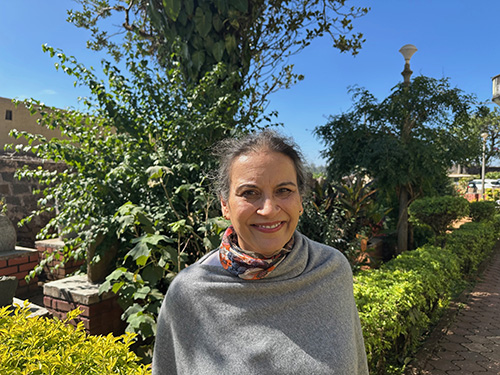
When we got out of the car at the Coorg Wilderness Resort, I realized we had entered the coldest place I’d ever experienced in India, with temperatures in the fifties and sixties daytime. I wrapped up in my cashmere shawl and kept it on for the rest of the stay.
Monkeys were everywhere! The clever girl photographed below became our frenemy. She waited near the suite till we were gone and then jumped down from the roof to our balcony and turned the handle of the closed door to go inside. Indoors, she located a closed can of almonds with a picture of the nuts on the can. She skillfully ripped off the metal lid, devoured the almonds and scampered through the suite, enjoying herself, until she was shooed out by the arriving cleaner. Even after the crime, she lingered near our door, giving cool stares that reminded Tony and me that she had rights to the place.


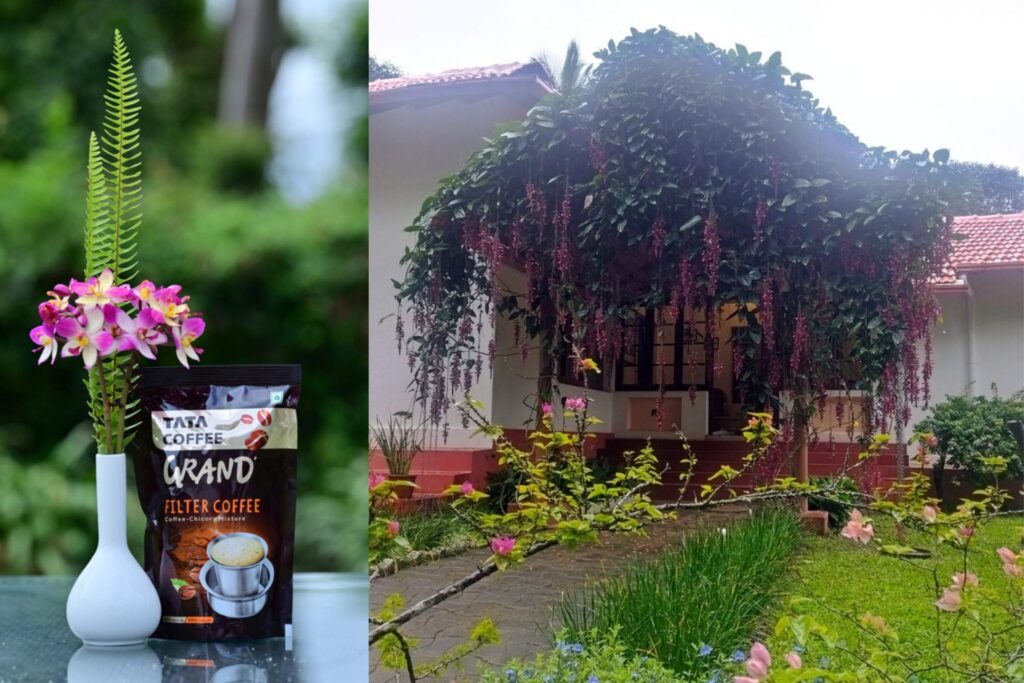
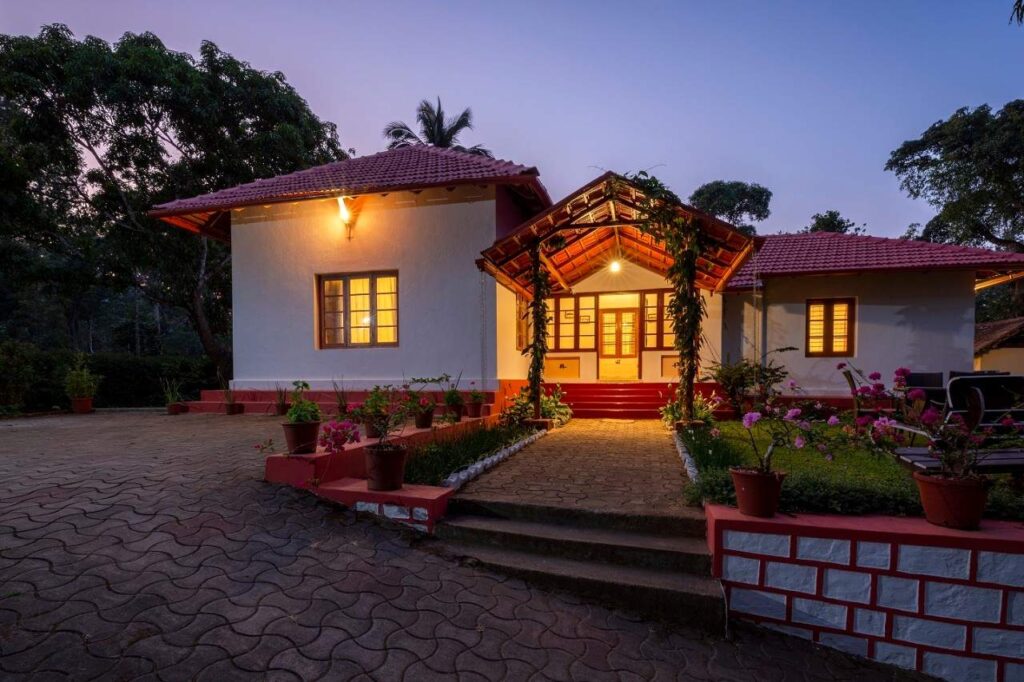
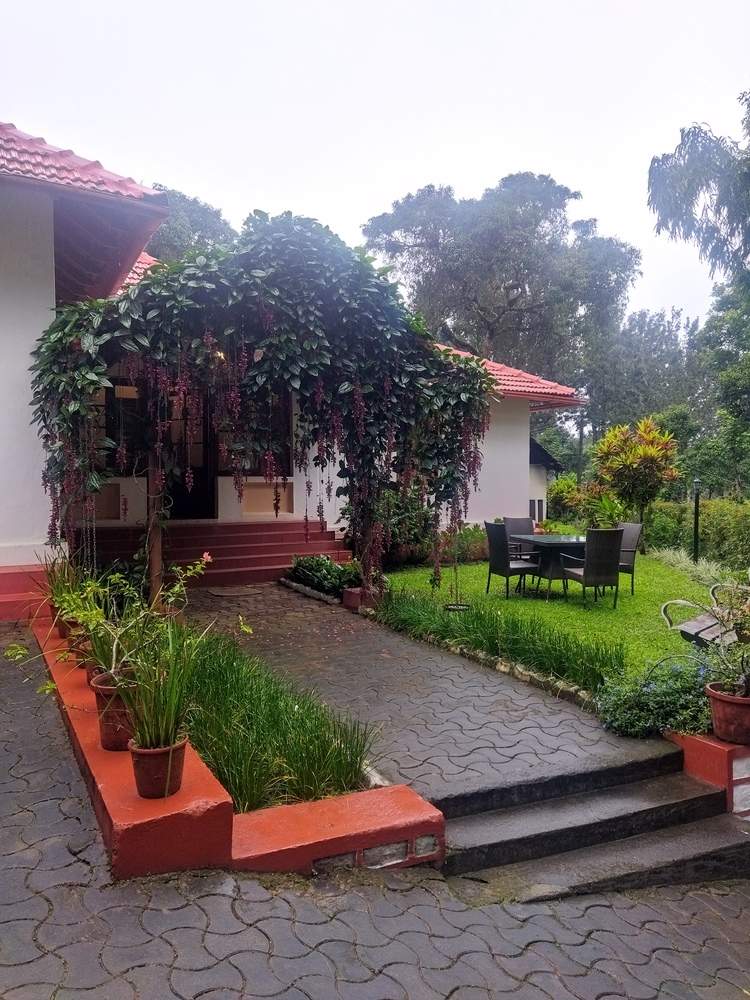
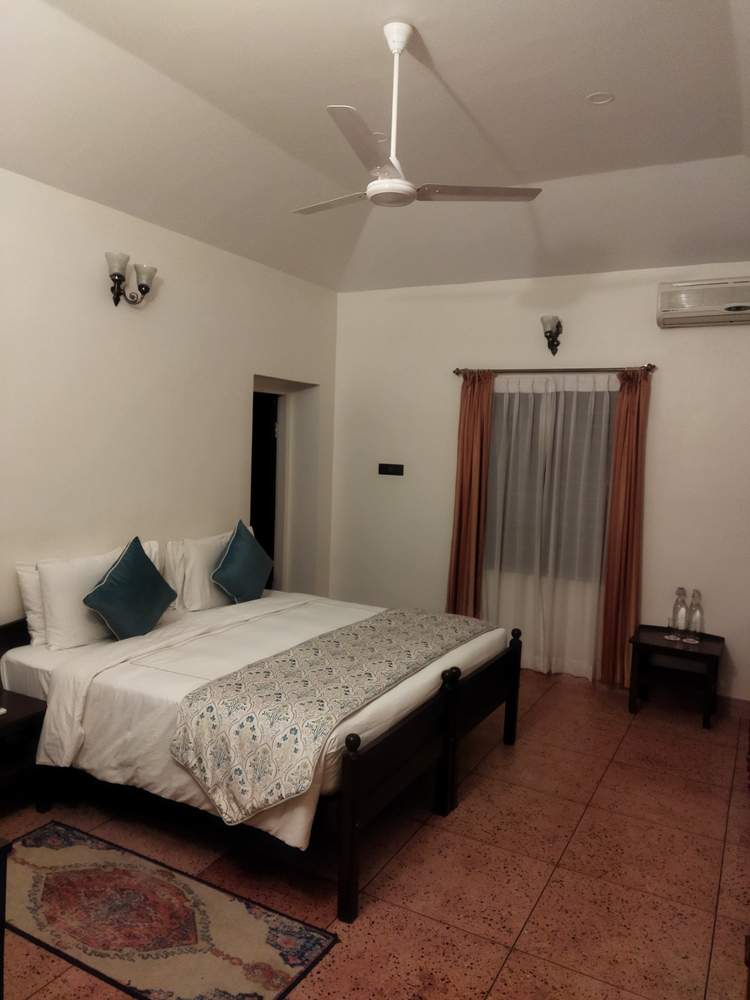
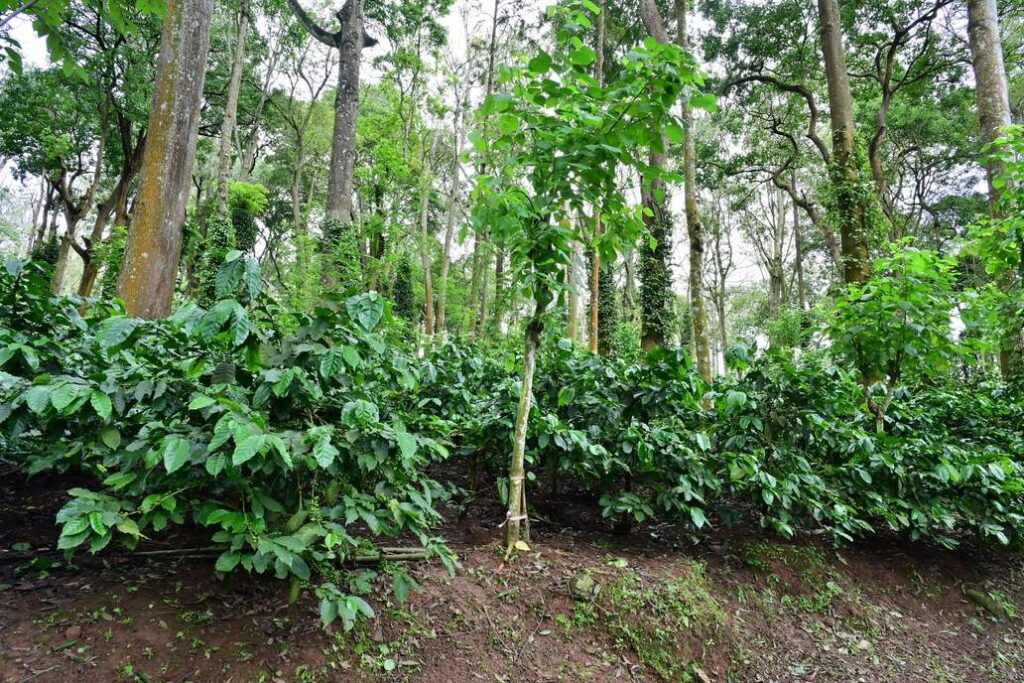
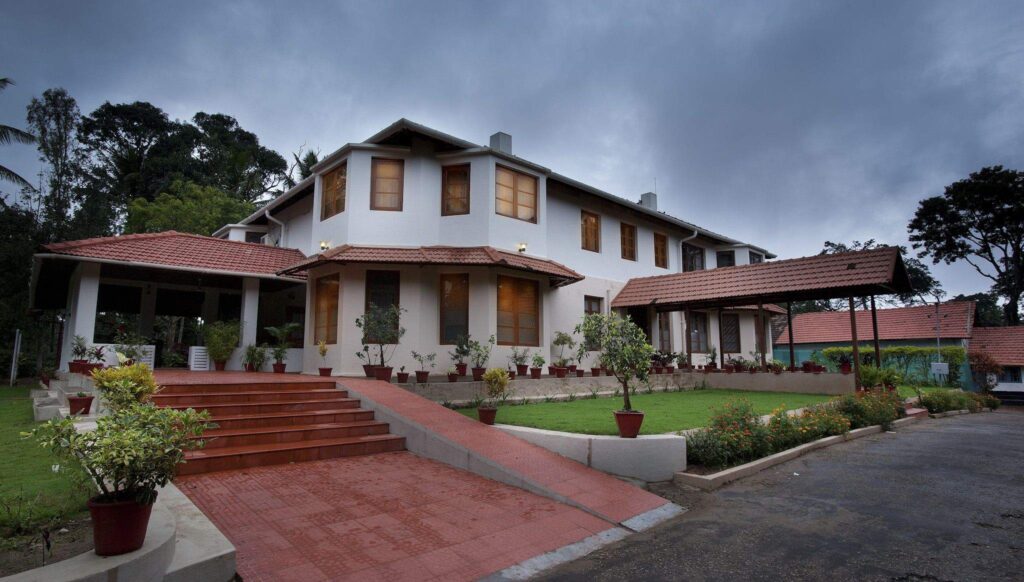
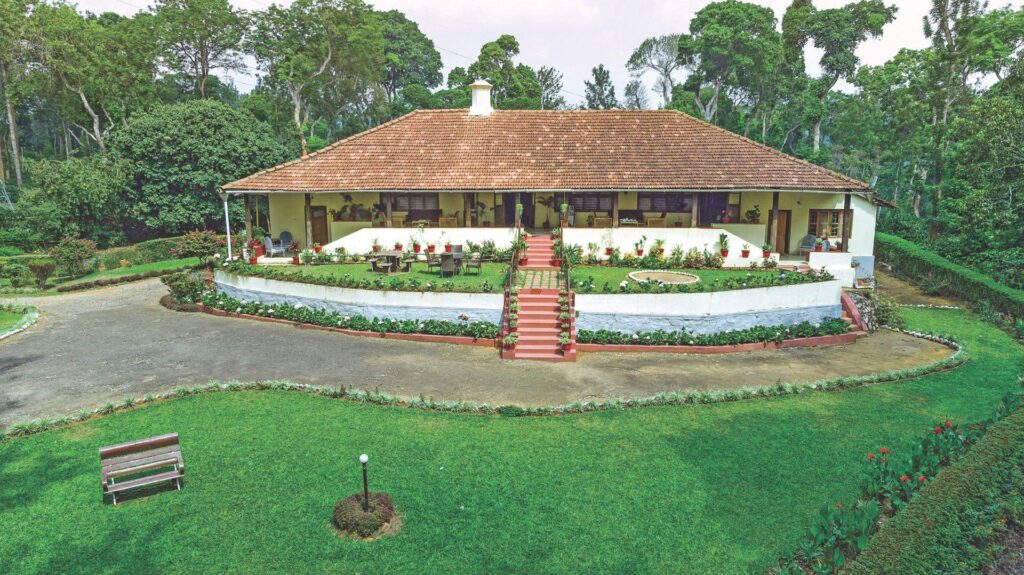
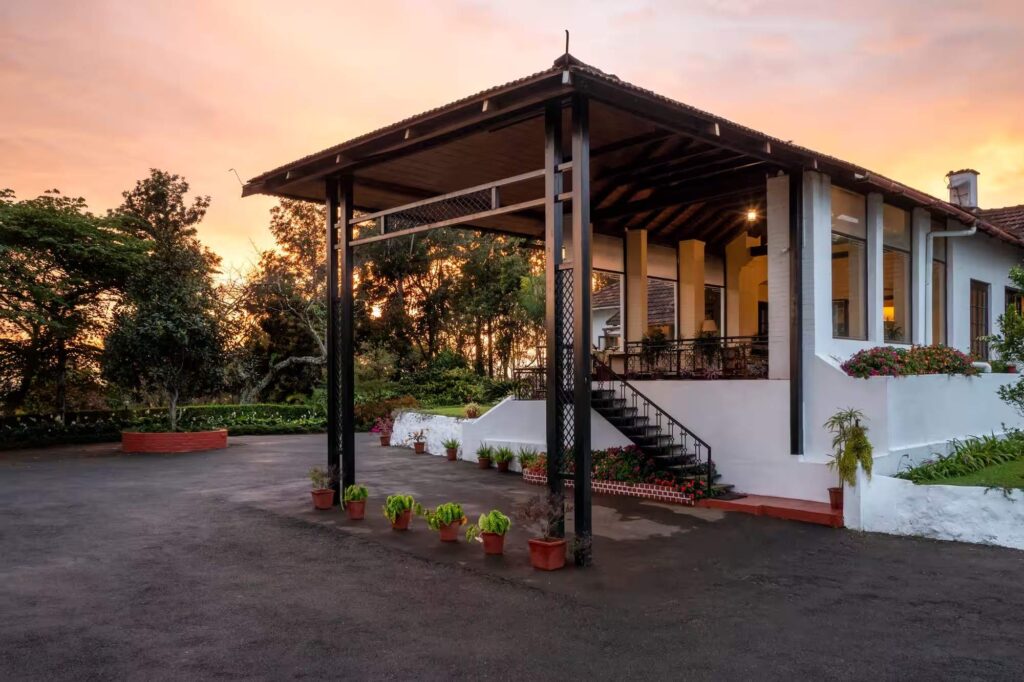
I’d seen the resort in brochures and online photographs and thought from its appearance that it was a renovated coffee plantation. My eyes had fooled me. The property was just a few years old but built in a convincingly traditional style and furnished with neo-Victorian furniture and textiles. Most rooms were a steep hill walk down from the reception building and hotels, but little electric carts whizzed about by young local drivers took care of any exhausting climbs, especially at night. The hotel buildings were painted cheerful red. Guest suites were almost all located up flights of stairs and had private balconies and terraces overlooking the rolling hills. At least part of my guess was correct: the vast lands included a small coffee plantation with beans being grown, roasted and shared with other properties in their group, the Paul John Hotels.
The food was extremely tasty, with most of the fare South Indian. Large buffet meals were included in most people’s room packages, but we found the hotel’s small restaurant that specialized in Kodava dishes, very enjoyable, both for the food and the company of local people. Local mushrooms, greens, and bamboo shoots were combined in curries that made an intriguing meal that seemed to taste of the mountains.

Hiking, swimming in a pool, visiting the hotel’s farm and learning about coffee production were all offered as activities. Most of the resorts’ clients were multigenerational Indian families. While climbing uphill on a hike to the lookout point shown above, I fell sharply and was worried my throbbing quadricep would prevent me from walking back downhill. One of the tourist families had chartered an all-terrain vehicle going along the same rough path and gave me a seat, for which I was extremely grateful. For the next eight days traveling in India, my bruised thigh slowly healed.
Fortunately, I was still mobile enough to walk short distances. In nearby Madikeri, Tony and I visited a fort dating from the early 1600s that, during British occupation of the early 1800s through 1947, was used for administration, as well as a small Anglican church. Strolling through this church, we studied a plaque engraved with names of British parishioners who’d left the paradise of Coorg to fight and ie in the World Wars. No longer used for services, the small Gothic building had become a museum of Indian history, with cases filled with local archaeological finds, many of them stone tablets and statues of Hindu and local deities.


One of India’s most distinguished military combat officers, General Kodendera Subayya Thimayya, came from a Kodava coffee plantation-owning family. The general, who was known in his youth as Dubbu to his family, became “Timmy” to the British and the outside world.
Gen. Thimayya studied at the Bishop Cotton boarding school in Bangalore, the Prince of Wales Royal Indian Military College, and finally at the Royal Military College in Sandhurst, where he was one of only six Indian cadets. During World War II, Timmy was the only Indian who commanded an Infantry brigade; after the British left, he rose in the Indian Army, becoming the 3rd Chief of the Army Staff of the Indian Army from 1957 to 1961. He retired and then served as Commander of the United Nations Peace Keeping Force in Cyprus, where he died of heart attack while on active duty at the age of 59.


It was delightful to talk with a retired soldier manning the visitor desk at Gen. Thimayya’s childhood home in Madikeri, which is now a museum. I enjoyed walking through and getting the sense of what a wealthy planter’s home was like. I was pleased to see a room devoted to information about the general’s wife, Nina, who was an accomplished dancer and had lived in France before their marriage, and other rooms had displays that told stories about his siblings and his children. The Thimayya house was one of the best sightseeing opportunities in Kodagu, which really doesn’t have the multiple temples, museums and shops in most Indian tourist destinations. Truly, the place is about being away from the world and in nature’s embrace.
In the center of Madikeri town, we sampled delicious cappuccino from local beans and deliberated over the varieties of coffee we would buy and share with friends as we traveled on in India.

It was sad to watch our last sunset from the balcony at the Wilderness Resort. But the long ride down from the mountains had another excitement in store: the Namdroling Monastery, a Tibetan Buddhist refuge and learning center. The monastery was built in 1963 when the Tibetans were welcomed to India after Chinese persecution.


The initial structure for the monastery was just bamboo, and the early monks had to fend of wild animals as they built in the jungle. The community raised money and have built the monastery into a gilded, impressive complex for monks and their families. The day we visited, many monks seemed to be hastening away down the road from the monastery. When we came upon police cars closing off the exit, we learned that the Dalai Lama was visiting for a few days, and the monks were going to meet him. No such chance for us; but we considered it a brush with greatness and another example of how Kodagu might appear like a sleepy mountain hideaway, yet have a powerful impact in the larger world.

source: http://www.sujatamassey.com / Sujata Massey / Home / by sujatamassey.com webmaster / March 26th, 2025