Mahouts, Kavadis unhappy as they are emotionally attached to pachyderms
Siddapur (Kodagu):
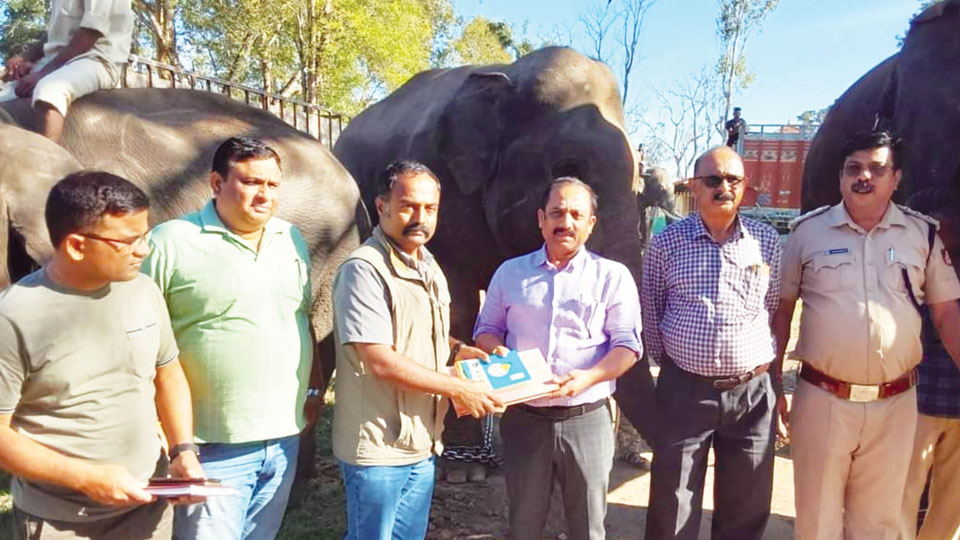
The Karnataka Forest Department has begun the transfer of 13 elephants in batches from various elephant camps in the State to Madhya Pradesh. The purpose is to assist the Forest Department of that State in reducing the human-animal conflict and also ease the pressure on the identified elephant camps of Karnataka.
The camps that are giving the elephants are in Mysuru, Kodagu and Shivamogga. Following a letter from the Principal Chief Conservator of Forests (Wildlife) and Chief Wildlife Warden, Madhya Pradesh, seeking transfer of camp elephants from Karnataka to Madhya Pradesh, the Karnataka Forest Department initiated the process to shift the identified elephants.
A team of Forest Department from Madhya Pradesh visited the elephant camps at Ramapura in Bandipur Tiger Reserve in Gundlupet taluk, Dubare Elephant Camp at Siddapura in Kodagu and Sakrebyle Elephant Camp in Shivamogga where they identified the 14 elephants (12 male and 2 female). Though 14 elephants were identified for transfer, one male elephant died, reducing the number to 13 — 11 male and two female.
Subsequently, they submitted a detailed report to the Madhya Pradesh Government for consideration of their transfer from Karnataka. Following up on the matter, the Karnataka Government sought the opinion of field officers who approved the transfer and later, the Union Ministry of Environment, Forest and Climate Change permitted the shifting.
The name of the selected elephants are: Krishna (21 yrs), Gaja (7 yrs), both male elephants, Marsiha (7 yrs) and Pooja (9 yrs), both female elephants — all four lodged in Ramapura camp of Bandipur Tiger Reserve; General Thimayya (8 yrs), Field Marshal (General) Cariappa (8 yrs), Valli (40 yrs), Lava (21 yrs) and Maruthi (20 yrs), all five male elephants from Dubare camp; Ravi (25 yrs), Shiva (6 yrs), Manikanta (35 yrs) and Bengaluru Ganesha (36 yrs), all four male elephants of Sakrebyle camp.
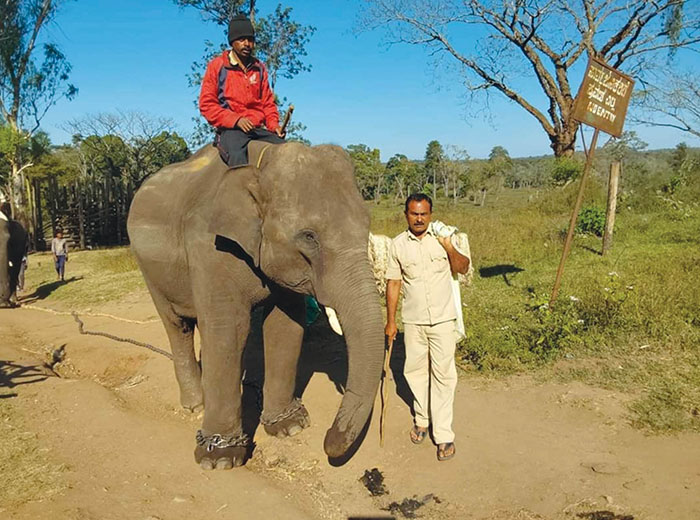
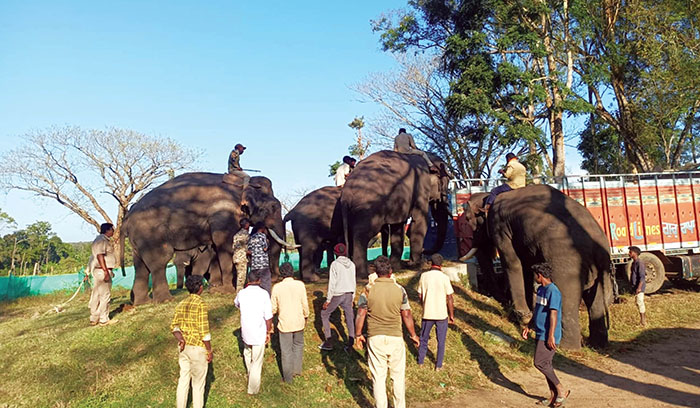
As per the agreement and the orders, yesterday, the five elephants were shifted from the Dubare Elephant Camp in trucks and the Madhya Pradesh Forest Department took possession of the elephants. They will subsequently reach Bhopal. The shipment includes Mahouts and Kavadis who will stay in Madhya Pradesh for some time till the elephants are acclimatised with new surroundings and new handlers.
The Ramapura camp gave four elephants instead of five as the male pachyderm Ganesha (17 yrs) that was identified to be shifted died due to illness. The remaining four elephants have already been sent to Madhya Pradesh.
Now with the shifting, the Ramapura Elephant Camp has been left with 14 elephants, Dubare Camp with 27 and Sakrebyle Camp has 15 elephants.
Kodagu Chief Conservator of Forests B. Niranjan Murthy said that there are elephant camps at Dubare, Harangi, Mathigodu, Bheemanakatte and Balle in Kodagu with a total of 70 tamed elephants and two of them from Mathigodu camp have been sent for capture and taming of wild elephants and other departmental purposes.
Mahouts, Kavadis unhappy
Even as the process of shifting began, the Mahouts and Kavadis have opposed it as they are emotionally attached to the elephants. This apart, they are scared of losing their livelihood as they will be left with no job after the elephants are shifted.
Pointing out that they are not permanent staff, Dobi, State Vice-President of Mahouts and Kavadis Association, said that it is the Mahouts who have captured and tamed these elephants in deep forests and their livelihood is now under threat.
Urging the Government to regularise their service and also to hike their wages, he wanted the Government to address the issues concerning daily wage Mahouts and Kavadis, who are serving the Forest Department for years without any job security.
source: http://www.staromysore.com / Star of Mysore / Home> News / December 23rd, 2022
While the team is currently equipped with four vehicles, two more four-wheelers will be allotted to the team to address the conflict efficiently.
The newly appointed Elephant Task Force team. (Photo | Special arrangement)
Madikeri :
To address the issue of wild elephant conflict, Karnataka had ordered the establishment of Elephant Task Forces in four conflict-affected districts. Similarly, the task force has become functional in Kodagu and assures to scientifically tackle the increasing movement of wild elephants.
“The Elephant Task Force team and office have been established at Madikeri, Virajpet, Somwarpet and Thithimathi divisions. A sub-station has been established at Srimangala and the task force will be alert 24X 7 to fight the conflict situation,” confirmed BN Murthy, the CCF of Kodagu division forest department.
Each task force has been appointed a Deputy Conservator of Forest, an Assistant Conservator of Forest, a Range Forest Officer, eight forest guards, forest watchers and Rapid Response Team members.
The department will provide the team with a transport facility and equip them with improved guns.
A control room will be functioning 24X7 and residents can call 8277124444 to alert the Elephant Task Force team about the movement of any conflict wild elephant at any time. CCF confirmed that the teams will be in touch with the wireless connection facility and will stay updated on the movement of conflict wild elephants.
While the team is currently equipped with four vehicles, two more four-wheelers will be allotted to the team to address the conflict efficiently.
source: http://www.newindianexpress.com / The New Indian Express / Home> States> Karnataka / by Express News Service / December 20th, 2022
Month-long photo exhibition brings alive one of the jewels that remain on earth
Mysore/Mysuru:
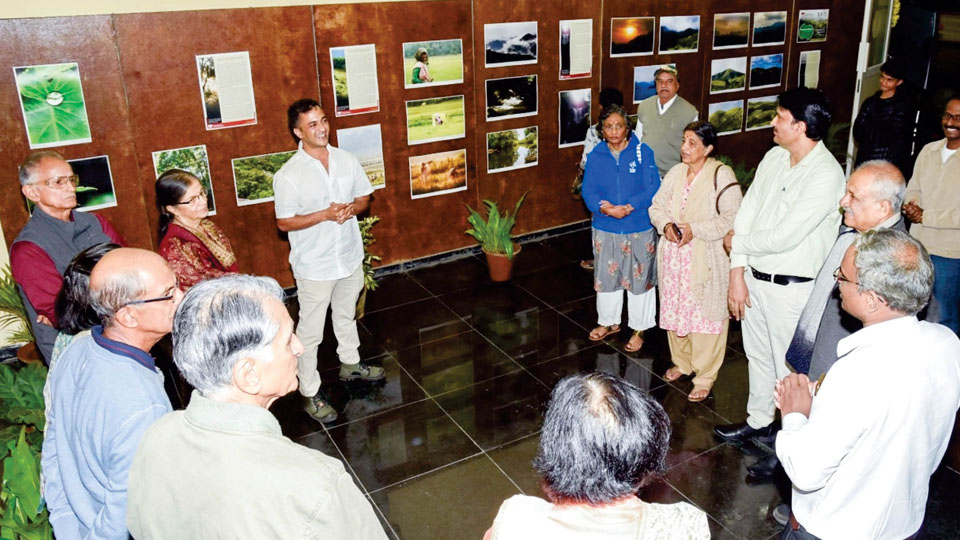
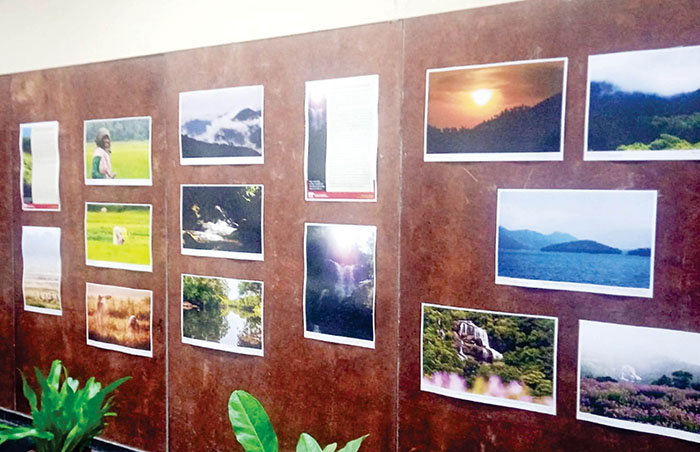
Marking International Mountain Day, a month-long photography exhibition on the theme ‘Western Ghats’ began at Regional Museum of Natural History (RMNH), Siddarthanagar in the city on Sunday (Dec. 11).
The exhibition is an attempt to celebrate the glorious natural history of the mountain range closest to us — The Western Ghats, which cover Kodagu in Karnataka, Ooty in Tamil Nadu and Munnar Hill Range in Kerala.
The expo is a collaborative effort of RMNH and writer, photographer K.C. Mandappa to raise awareness and inspire passion and conservation of mountains that are responsible for life sustenance and also livelihoods.
The photography exhibition was inaugurated by Munnar Tata Tea Estate Manager Dr. K.N. Chengappa in the presence of RMNH Chief Dr. A.P. Tiwari, senior scientists M. Vijay and Education Officer B.S. Yogendra.
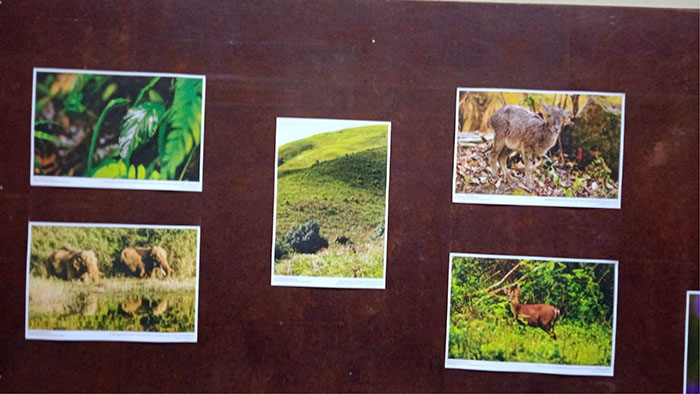
The expo has a total of 36 incredible photographs captured by Mandappa that explore the beautiful scenic geographical features, the flora and fauna, rich greenery and beautiful natural landscapes of Kodagu district. The photograph that displays two wild elephants passing through a water body at Pollibetta in Virajpet taluk, is much symbolic of wildlife and biodiversity in the district.
The photograph of a green snake which can hardly be noticed amidst the rich greenery, showcases the mysteries of nature. A photograph featuring three Nilgiri Tahrs roaming around in Munnar Hill range of Kerala is equally exciting.
Apart from this, the exhibition has many other interesting, exciting and absorbing rare photographs, featuring the hill ranges around the Paadi Igguthappa Temple at Kakkabbe, the flow of Cauvery as a small river near Napoklu, Nilgiri Hill range etc.
Mandappa said that the exhibition, apart from Kodagu district, has many photographs on places close to Mysuru that come under the Western Ghats. Pointing out that the photographs on display cover various aspects and activities concerning wildlife, agriculture, hill ranges, the rich flora and fauna, natural vegetation etc., in Kodagu district, he said that the expo also has many magnificent and captivating photos on Ooty and Munnar Hill ranges and the vast landscapes.
At this exhibition, one can experience the Western Ghats like never before and see some of the most threatened and vulnerable species on the Indian subcontinent in an area that routinely faces obstacles to conservation such as human-wildlife conflict, habitat fragmentation, habitat destruction, and road-related wildlife kills.
RMNH Education Officer B.S. Yogendra said that Mandappa has been excellent in capturing the geographical features of the beautiful landscapes of Western Ghats in a most absorbing manner.
Noting that Mandappa has carried out an in-depth study of the geographical features of Western Ghats, he said that water bodies like lakes and rivers and other water sources can exist only if there are hill ranges.
Pointing out that agriculture is an integral part of our nature, he said that mountains and hill ranges are crucial for survival of wildlife, vegetation and habitation. He further said that the illustration of the photographs too is excellent. “These photographs are arguably the most valuable tools we have for raising awareness and mobilising efforts to protect what jewels remain on this planet,” he added.
Expo open till Jan. 10
The month-long photography expo which opened on Dec. 11, will go on till Jan. 10, 2023. It will be open on all days from 10 am to 6 pm, barring Monday, which is a weekly-off day and other public holidays.
source: http://www.starofmysore.com / Star of Mysore / Home> News / December 14th, 2022
Large populations of wild elephants moved freely between Kodagu and Kerala states even as the Bramhagiri-Nagarahole-Wayanad forest was known to be an age-old elephant corridor.
Elephant image used for representational purpose only. (Photo | Special Arrangement)
Madikeri :
Elephants are migratory beings and tigers are known to be territorial. However, with forests depleting to make way for human-centric development, wildlife conflict is peaking, as is evident in Kodagu. Nevertheless, experts opine that the conflict can be addressed scientifically by not just establishing conflict-mitigation projects, but by connecting fragmented forest areas.
While humans are confined to district, state, national and international borders, the wildlife, especially elephants, migrate without borders. Similarly, a large population of wild elephants moved freely between Kodagu and Kerala states even as Bramhagiri-Nagarahole-Wayanad forest was known to be an age-old elephant corridor.
However, this corridor has now been fragmented and the Kodagu division of the Forest Department is keen on connecting the fragmented forest area to make way for the free movement of the elephants. This in turn will also create a large undisturbed forest area for the territorial tigers too.
“Over 150 acres of two private coffee estates has disconnected the elephant corridor and is disrupting free movement of the elephants. The department is in talks with estate owners to purchase the land and establish an elephant corridor,” said B N Niranjan Murthy, Chief Conservator of Forests of Kodagu division.
A huge gap between Bramhagiri and Wayanad forest area has forced the elephants to tread through villages and on roads to continue their migration. An estimate of Rs 25 crore has been drawn to procure private lands even as the department holds a vision to invest on a flyover in an area for vehicle movement.
source: http://www.newindianexpress.com / The New Indian Express / Home> States> Karnataka / by Prajna GR, Express News Service / December 07th, 2022
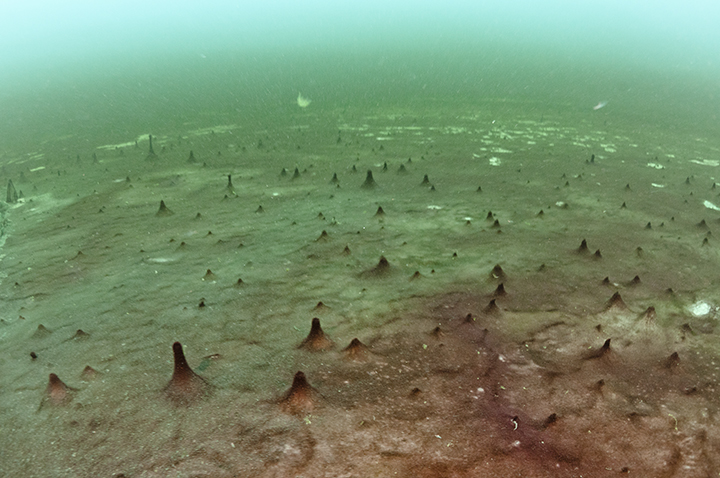
These microbial mats in a Lake Huron sinkhole have finger-like protrusions caused by a buildup of methane gas in small pockets beneath them. Image: Thunder Bay Marine Sanctuary
By Daniel Schoenherr
Special microbial mat systems in Alpena, Michigan, are helping scientists search for extraterrestrial life.
“It’s so different, and feels otherworldly,” said Stephanie Gandulla, a diver with the National Oceanic and Atmospheric Administration’s Thunder Bay Marine Sanctuary. She has sampled the mats near the sinkholes on the lake’s bottom.
You may have seen a microbial mat before — the green algae on wet rocks at the beach is an example.
Algae’s green color comes from chlorophyll — a substance that uses sunlight to turn carbon dioxide into energy. Carbon dioxide and oxygen support most of life on Earth.
But under special conditions, like those at three sinkholes just 2½ miles east of Alpena, primitive forms of microbes called cyanobacteria can survive without either of them.
These are white, not green, and they get energy from chemicals in the water.
“They are everywhere, but they are incredibly hard to find,” said Bopaiah Biddanda, a biologist with Grand Valley State University’s Annis Water Research Institute, who has been studying them for 20 years.
Such mats are normally found in ocean waters over 32,000 feet deep, but they can be found only 80 feet below the surface of what is known as Lake Huron’s Middle Island Sinkhole.
The sinkhole’s biologically extreme environment can help simulate sample collection in extraterrestrial worlds where life is based on similar chemicals. A new study by Biddanda models scenarios where robots could analyze material beneath the water of other planets. It’s based on the work in Lake Huron.
The study focuses on two methods: suction devices for soft mats and coring devices for hard mats.
Click on the photo below to watch a video about these mats:
The sinkholes near Alpena provide sulfuric, oxygenless groundwater that creates the conditions needed for the mats to grow. Filaments of cyanobacteria drift together, creating a wispy white-purple flow.
“It almost looks like a mirage,” Gandulla said.
It could be a long time before the experience from sinkholes in Lake Huron will be used to explore the potential of life on planets elsewhere, but Biddanda’s exploration is yielding other finds now.
Recently, for example, his team found an explanation for the mats’ mysterious ability to change colors overnight.
The purple and white cyanobacteria travel upwards to capture energy from the top of the mat, according to the study. During the day, microbes with color capture the small amount of sunlight reaching the seafloor with chlorophyll.
As the sun sets, the white microbes move to the surface of the mat to absorb chemicals in the sulfuric water for their energy. This continuous, vertical shift in microbes causes patches of the mat to change between purple and white in a daily cycle.
The microbial mats thrive off a special soup of chemicals in the groundwater, but changes in land use could disrupt it in the future.
The Thunder Bay sanctuary is constantly combating such threats to coastal ecosystems such as the one near Alpena.
“Development might choke off the water supply,” Biddanda said.
The marine sanctuary offers educational programs and tours to K-12 students and operates a welcome center year-round.
“We work together to protect it as a community,” Gandulla said.
Scientists hope to sample the oceans of Europa, a moon of Jupiter, for microbes with robots pioneered in Lake Huron. Image: NASA
The characteristics of Middle Island Sinkhole’s cyanobacteria could hold the key to much more than planetary exploration. They could lead to advances in other scientific fields, such as evolutionary biology and medicine.
“We have a library of pharmaceutical value here,” Biddanda said “This could help us down the road.”
And, he noted that they look cool: “There is something fascinating and mesmerizing about these colorful mats.”
A unique eco-certification initiative in Kodagu’s famous coffee estates offers fresh hope for preserving native rainforests of the Western Ghats.
Growing coffee in the shade of evergreen trees in Kodagu. | Gopikrishna Warrier
There was a time in the not-too-distant past when coffee farmers in Kodagu district of Karnataka grew their plants only under the canopy of evergreen forests they had inherited. Now they prefer to grow it under the sun, which has serious implications for the Western Ghats and on the waters of the Kaveri River.
More and more farmers are now letting trees such as Dadup (Erythrina subumbrans), Arecanut (Areca catechu), Balanji (Acrocarpus fraxnifolius) and Jackfruit (Acrocarpus heterophyllus) die so that the canopy can be opened up and they can grow sun-loving coffee varieties that produce more berries and beans, resulting in higher returns.
Instead of the big trees, they are now planting exotic Silver Oaks (Grevillea robusta), whose pole-like trunk can be used as a support for the climbing pepper vines, which help boosting incomes. The proliferation of Silver Oaks has made it one of the more common trees in some parts of the area.
This transition has a larger ecosystem cost. Kodagu, earlier known as Coorg, is located on the western edge of the Mysore Plateau, at an average altitude of 800 metres, as it lifts up to the crest of the Western Ghats ridge (altitude above 1,500 m) and then falls sharply westwards into Kerala. The plateau mainly slopes eastwards, with the streams and rivers joining to form the Kaveri River, which is the lifeline for millions of people in Karnataka, Tamil Nadu and Puducherry.
With insufficient rains over the Western Ghats during this year’s southwest monsoon, there is a shortage of water in the reservoirs across the Kaveri in Karnataka. This has led to the flaring of the water-sharing dispute with the lower riparian state of Tamil Nadu in recent days.
While this acrimony continues, payment for ecosystem services measures are being worked out in Kodagu district so that coffee farmers protect the forests under which they grow their crop, thereby preserving the water flow into the Cauvery. These measures also help to maintain the climate resilience in the river’s catchment and command areas.
With the forest-like mixed-tree canopy in coffee plantations disappearing, the torrential rains of the southwest monsoon flows quickly down the streams, carrying valuable topsoil away and causing floods followed by long dry periods downstream.
Paying for ecosystem services
The Kodagu farmers are being encouraged through payment for ecosystem services, in the form of eco-certification, to continue with their traditional coffee cultivation under the shade of mixed species of trees. This will help strengthen the ecosystem services they receive from the unique landscape of Kodagu, and also strengthen similar services and climate resilience of all those relying on the waters of the Kaveri downstream.
The concept of eco-certified coffee, whose certification process ensures that coffee is grown under mixed-species trees, has gained popularity in the district in the past five years. Close to 900 coffee farmers have converted to eco-certified coffee. Even with a conservative estimate of 10 acre per farmer, this means nearly 10,000 acres of eco-certified coffee. In addition, with Tata Coffee getting all of its 13 estates eco-certified, Kodagu district has at least 20,000 acres under coffee cultivation that aims to minimise damage to the environment.
As an incentive for protecting the environment, the coffee farmers get a premium above the market price for their coffee beans. Coffee is the major agricultural produce from Kodagu, with 33% of the district landscape under its cultivation. About 38% of India’s coffee production comes from the district.
Ecologically, Kodagu district has been identified as a micro hotspot of biodiversity under the larger Western Ghats region. Rightly so, since the western crest of the mountainous district is in the direct path of the southwest monsoon. The dark clouds heavy with rain dump much water over the district. While the western edge of the district receives above 5,000 mm of rainfall on an average, it reduces to around 1,200 mm in the east. Most of the water feeds into the Kaveri.
According to a reportby the College of Forestry at Ponnampet in Kodagu, natural forested ecosystems cover an area of 46% of the total area of the district. These include evergreen, semi evergreen, moist deciduous, dry deciduous and scrub forest types, and even the high-altitude shola-grassland ecosystem.
Traditionally, coffee is grown in the shade of these forests. Coffee estates in Kogadu have on an average 350 trees per hectare, compared with 270 in degraded groves and 640 trees per hectare in the nearby Brahagiri Wildlife Sanctuary, making these estates amongst the densest agro-forestry systems in the world.
“Very few landscapes across the world grow coffee in the way in which Kodagu does,” said C.G. Kushalappa, university head for forestry and environment sciences at the College of Forestry, Ponnampet in Kodagu. “We grow both Arabica and Robusta coffee under the shade of the trees. Our shade-grown Robusta fetch a premium price. When grown under the shade, the berries mature slowly and fill out better. They have good cupping (taste) quality.”
Coffee plants are increasing being cultivated under exotic Silver Oak trees. (Photo by S. Gopikrishna Warrier)
However, he needed scientific data to convince the coffee farmers and the district administration that there was strong ecosystem benefit in maintaining the traditional shade-growing methods. The opportunity for doing this research emerged when the College of Forestry was chosen as the lead institute in India to carry out the Coffee Agro-Forestry Network, or CAFNET study to understand the environmental services from this unique landscape.
Financed by the European Commission, the study was jointly conducted by the College of Forestry, the Coffee Board, the French Institute at Puducherry, CIRAD (the French national agricultural research system) and Bangor University from the United Kingdom between 2007 and 2011.
Rich local knowledge
The study noted that the multi-storeyed coffee agro-forestry system developed and sustained by the farmers based on their local knowledge is one of the most diverse production systems in the world. The traditional coffee agro-forestry system sustains diverse animal, bird, plant and microorganisms, and provide biodiversity, carbon sequestration and water-related ecosystem services. Since multiple crops such as pepper, mandarin oranges, vanilla and timber is also grown in these systems, they help provide resilience to farmers when they are hit by coffee price volatility.
The CAFNET report recommended that coffee farmers growing Arabica and Robusta under shade trees should be paid for the ecosystem services that their farms provide, so that they can protect biodiversity and therefore water in the Cauvery. Two methodologies for payment for ecosystem services suggested was eco-certification and geographical indications protection for Kodagu coffee.
Eco-certification of coffee farms in Kodagu started as a follow-up to this recommendation. Coffee farmer BB Thammaiah says his interest was piqued when students from the College of Forestry came to his farm to carry out biodiversity studies. “After the studies I was told about the uniqueness of the method in which I grow coffee, and I went in for eco-certification,” he said.
The two eco-certifications that have been popularly accepted are from the Rainforest Alliance and Utz. Coffee grower KK Naren in Kunda village near Ponnampet said the main benefit of the eco-certification process is that farmers are trained in good practices that have good environmental benefits and improve the working and living conditions for the workers.
“The economic benefit is not much,” he said. “It is more of training for us, which will be beneficial in the long run. The eco-certification process educates the coffee farmers about the environment.”
Importance of native trees
The most important lesson from the training relating to the eco-certification, according to Narenm was the understanding on the importance of native trees. “It is not that we didn’t know about native trees but we were not that keen on maintaining them,” he said. “The native trees do not give good financial returns, so we gave importance to silver oak.”
According to Naren, the Rainforest Alliance eco-certification process looks at whether native shade trees are present. The certifiers and auditors also look at labour management, whether the minimum labour wage is paid and the cleanliness around the labour quarters. They are very strict about not using child labour. “They also look at the way chemicals are used,” he said. “They are not saying no to chemicals but there are restrictions to some chemicals and the way the rest are used. They are keen that we should not use pesticides of chemicals near the rivers or tanks. They give importance to maintain local environment.”
Individual planters like Thammaiah and Naren got an opportunity, through the eco-certificaion process, to access the international market through a Swiss procurement agency that buys higher quality coffee. Both of them sell their eco-certified coffee to Ecom Gill, who procures the eco-certified produce for supply to Nespresso.
BB Thammaiah in his coffee farm where the plants are grown under the shade of native evergreen trees. (Photo by S. Gopikrishna Warrier)
For Tata Global Beverages Ltd and its production subsidiary Tata Coffee Ltd, the move to eco-certification of all of its 13 estates in Kodagu was an important step in the process to make its supply chain sustainable. According to Anurag Priyadarshi, global sustainability manager for Tata Global Beverages, one of the guiding principles that the group has adopted is to source sustainability. For this, all their estates in Kodagu have been eco-certified by Rainforest Alliance and Utz.
“Through the eco-certification process we are trying to ensure good management practices for the ecosystem, energy, water, waste, soil and agro-chemicals. We ensure the safety of the produce and also occupational health of the workers. Ultimately we want to prevent the impacts of climate change,” he said.
MB Ganapathy, head of plantations for Tata Coffee, said the company is aware about the fact that they are growing coffee in Kodagu, which is a biodiversity hotspot in the Western Ghats. “We have recognised this fact and that is the reason that our vision is to enhance the ecological wealth we have inherited. The eco-certification helps us safeguard the environment.”
Challenges remain
However, the rapid spread of the eco-certification process has also raised some hiccups which need to be overcome, states TR Shankar Raman, scientist at the Nature Conservation Foundation, whose organisation was involved with helping Rainforest Alliance with the certification in the initial years. The three points of concern, according to him, is the very rapid pace at which certification is being done; the relative absence of biologists and social scientists in the auditing process; and the dilution of conservation standards (like the requisite number of native species and canopy cover) in subsequent versions of the certification guidelines.
“While the rapid certification has more and more farmers being eco-certified, we hope the rigour of the process continues to be maintained, so that the end result of conserving the native vegetation is not compromised,” Raman observed.
With more farmers opting for eco-certification, there is a movement towards the protection of the traditional methods of coffee cultivation under the shade of mixed-tree species. For the process to strengthen the farmers should continue to get good economic benefit for their eco-certified produce.
According to Naren, if there is at least 10% more returns from the eco-certified coffee remains constant then there will be an incentive for the opting for opting for the process. At present the price at which procurement agencies such as Ecom Gill buy is linked to the international market price, plus a premium of Rs 60 to Rs 80 for a 50 kg bag of sun-dried cherries. The international prices fluctuate in relation to the local market prices, and as with the current situation can go below the domestic price.
However, Kushalappa says that in addition to the premium, there are other incentives and bonuses for producing good quality coffee beans. The average increase in price above the local market price was around 15% last year, which is well worth the effort.
If additional income for coffee farmers from eco-certification can help conserve unique agro-forestry ecosystem of Kodagu, then it will be the water flow into the Cauvery that would be conserved. Millions of people downstream, including the residents of Bengaluru and other parts of peninsular India, will thank the coffee farmers upstream for their drinking water and climate resilience.
As monsoon was the prime season to sow paddy — Kodagu’s main crop in the days of yore — people had no time for any other activity. So, this season was regarded as inauspicious and no ceremonies or celebrations were held. In between, the people would forage for these seasonal treats and prepare mouth-watering delicacies.
Processed bamboo shoots being sold in Kodagu. Photos by Arjun Bopanna, Niveditha Harish and Nisha Poovaiah
The aromas of baimbale curry (bamboo shoots curry), kummu curry (mushroom curry), kembu curry (colocasia curry), njand curry (crab curry), bhel meen curry (fish found in flooded paddy fields), pole meen curry (stream fish curry), therme thoppu palya (fiddlehead fern fry) are indicative of monsoon in this district located in the Western Ghats. These dishes are exclusively prepared during the wet months.
“The foremost reason these dishes are consumed only during the monsoon months is that the main ingredients such as aal kummu, baimbale are only available during this season,” says Chef Naren Thimmaiah.
According to Naren, cooking styles in each region would have developed purely on a trial-and-error basis. “Our elders would have realised when to eat what, the good and bad traits of a dish through experience,” he adds.
Purple delight
Unique sweet dishes prepared during this season are maddh payasa and maddh putt from maddh thoppu (Justicia Wynaadensis). Maddh translates to medicine in Kodava language and thoppu is leaf. The extract obtained from the leaves and stems of this plant imparts a beautiful, deep bluish-purple colour to the dish.
These dishes are prepared and consumed only on Kakkada padinett, the eighteenth day of kakkada month (early August) in the Kodava calendar, when this plant is believed to have accumulated 18 medicinal properties.
The plant, rich in antioxidative and anti-inflammatory properties, is said to improve overall health. Its anti-microbial properties are also said to boost immunity during the monsoon months, when one is more likely to fall ill.
Another quintessential monsoon dish is baimbale curry made from bamboo shoots. The shoots are cut into small pieces and soaked in water for two days to remove the acidic toxins. The shoots are said to have anti-inflammatory, anti-ulcer, anti-diabetic and anti-oxidant properties. The baimbale curry is best had with akki roti called otti.
A woman preparing Kodagu delicacies. Photos by Arjun Bopanna, Niveditha Harish and Nisha Poovaiah
Surprise yields
Mushrooms, called kummu, also make great ingredients. These edible fungi grow in small patches and gathering them is a fun activity but it takes a trained eye to distinguish between edible and poisonous mushrooms.
Another Kodava delicacy is prepared from fiddlehead ferns, called therme thoppu. These ferns are found near the banks of water bodies such as ponds, streams and rivers. Only the tender shoots of these wild ferns are selectively picked. The easiest way to cook it is to saute it with onions, dried chillies and salt. It is best had with otti.
Like therme thoppu, kembu (colocasia) is generally found near water bodies and marshy lands. There are three varieties of kembu: red stemmed (chonda) kembu, green stemmed kembu and mara kembu. Mara kembu grows under the shelter of large trees. While Tulunadu is famous for the patrodes made from colocasia leaves, in Kodagu people mainly prepare curry using it.
With the onset of the monsoon, people also make dishes from jackfruit seeds.
Apart from these seasonal plants, people also get a good catch of crabs and fish in the flooded paddy fields and streams. Piping hot curries prepared from crabs and fish add to the charm of the monsoon months.
“All the traditional food prepared during the chilly monsoon season adds heat to the body. Also, pepper is used widely in the region, which again adds heat to the body,” Naren says.
Naren explains that as the people were expected to work in the rains and were most likely to get cuts and wounds, the food consumed would build up body temperature and aid in quicker healing of the wounds. “There were no tablets available then, the the foods themselves had medicinal values,” he says.
Preserved for future use
While these dishes are prepared only in the rainy season, bamboo shoots, jackfruit seeds, hog plums (ambatte) and fish are preserved for later use.
Bamboo shoots and hog plums are stored in brine; fish are coated with salt, smoked and dried.
These foods are so culturally ingrained that people staying elsewhere either make it a point to go to Kodagu to procure these food items or get their relatives to send across these delicacies.
“The food items sourced from Kodagu have an altogether different taste. So, preparing dishes by getting the ingredients from Kodagu is a special feeling,” says Sudha Poovaiah, who is settled in Bengaluru.
source: http://www.deccanherald.com / Deccan Herald / Home> Spectrum> Spectrum Top Stories / by Dhanyata M Poovaiah / September 18th, 2021
Thousands of devotees from Kodagu, across the State and Tamil Nadu congregated at Talacauvery in Kodagu last night to witness Cauvery Theerthodbhava amid chanting of mantras and other religious rituals.
The holy event took place exactly at the predetermined Muhurtha of 7.22 pm in Mesha Lagna at the foothills of Brahmagiri inside the Holy Brahmakundike, considered to be the source of River Cauvery.
It is believed that Goddess Cauvery comes in the form of a fountain-head where water gushes from the Brahmakundike. A team of priests, led by Prashanth Achar, Raviraj Achar and Gururaja Achar chanted Vedic hymns before sprinkling holy water on the devotees. Later, devotees collected the Theertha (holy water) to be distributed among community members and to be kept at homes as holy signs.
The rituals associated with the holy occurrence began at 5 pm and as the predetermined time neared, devotees chanted mantras and welcomed the Goddess. The Theerthodbhava took place after the Sankalpa Puja and Mahamangalarathi. As the water bubbles appeared in the Brahmakundike that was filled with flowers, Kumkum and vermillion, the cries of devotees reached a crescendo.
Devotees took a holy dip in the main pond (Kalyani) in front of the Brahmakundike and offered their prayers. They jostled to collect holy water in pots from the Kundike and the priests sprinkled the holy water on them.
The area around the pond was barricaded to enable crowd management and only small groups of devotees were let inside by the Police to prevent crowding and stampede. Despite barricades, devotees swarmed around the Brahmakundike and the Kalyani.
Devotees also thronged Triveni Sangama at Bhagamandala and many took a dip in the river and many offered the ritualistic Pinda Pradhana as a mark of respect to their elders.
The Kodagu Ekikarana Ranga distributed free breakfast and lunch to the devotees as part of its 27th year food distribution. Free food will be supplied till the end of Tula month on Nov. 17. Kodagu District Minister B.C. Nagesh, MLAs Appachu Ranjan and K.G. Bopaiah and others were present.
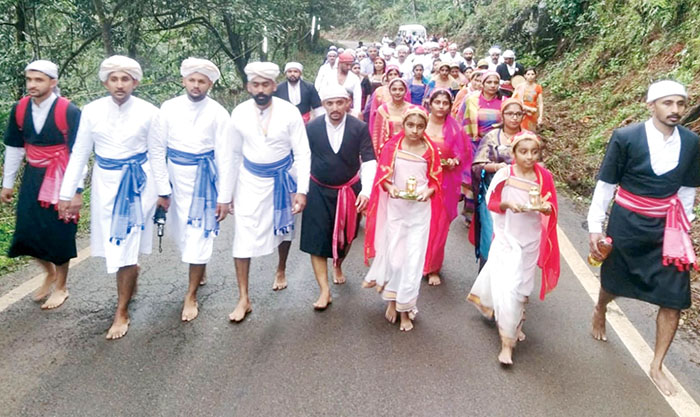
Devotees in traditional attire walk from Bhagamandala to Talacauvery
Unlike the last two years, thousands of devotees turned up to watch the spectacle and notably, many Kodava community members walked from Bhagamandala to Talacauvery along with musical bands and sang songs in praise of Goddess Cauvery. The holy place was teeming with devotees since early in the morning and the place was overcrowded by evening.
Various Kodava organisations like Akhila Kodava Samaja Youth Wing, Connecting Kodavas, Kodava Riders Club, Jabbhoomi Trust, Thingakoru Mottu Sanghatane, Ammathi Kodava Samaja, Ponnampet Kodava Samaja, Madikeri Kodava Samaja, Balele Kodava Samaja, Kodava Kootaaliyada Koota, Kodava Samajas of Napoklu, Virajpet, Hudikeri, Mysuru, Amma Kodava Samaja, Youth Council, Kodavaamera Kondata, United Kodava Organisation and Codava National Council walked along the route, singing paeans to the Goddess.
source: http://www.starofmysore.com / Star of Mysore / Home> News> Top Stories / October 18th, 2022
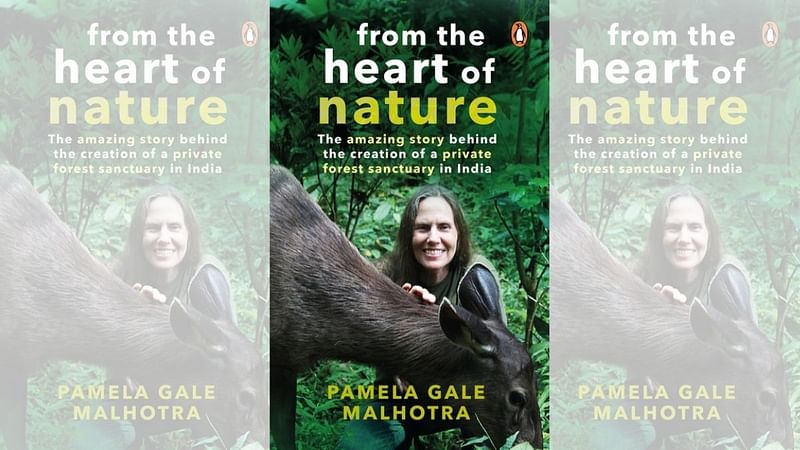
Published by Penguin India, ‘From the Heart of Nature’ by Pamela Gale Malhotra will be released on 25 January on ThePrint’s ‘SoftCover’.
New Delhi:
A new book written by a woman of Native American descent tells the “deeply fascinating and inspiring personal” story behind the setting up of a private wildlife sanctuary in Karnataka.
Published by Penguin India, ‘From the Heart of Nature’ by Pamela Gale Malhotra will be released on 25 January on Softcover, ThePrint’s online venue to launch non-fiction books.
Introducing the book as a narrative of the “struggles” and “obstacles”, “sorrows and joys”, and “wonders and awe-inspiring experiences” that she and her late husband, Anil, faced in the establishment and operations of the Save Animals Initiative (SAI) sanctuary in Kodagu, Karnataka, Malhotra writes that the sanctuary is dedicated to Mother Nature.
She describes the sanctuary as the brainchild of Native American culture and Indian culture coming together to preserve an environment “ravaged” and “decimated” by “illegal logging and poaching”.
The couple first purchased 55 acres of barren land for the sanctuary in 1991. Today, it’s a “treasure trove” of “indigenous trees and plants” as well as a refuge for various animal species under threat of endangerment and extinction, thanks to the restoration and conservation efforts involved, Penguin said in a statement.
As part of the story, Malhotra also details the mindset behind her efforts to establish the sanctuary, maintaining “physical and spiritual” connections with animals and trees, and how the preservation of nature is essential to save humanity.
Born in New Jersey of Native American heritage, Pamela Gale Malhotra, a graduate of Colorado State University, developed her “love affair” with the natural world by spending the majority of her childhood in the forests around her family estate.
Prior to their move to Karnataka and fulfilling a “childhood dream”, the couple had set up and operated a wildlife sanctuary on Hawaii’s Big Island. For her work with the SAI sanctuary, Malhotra has been a recipient of numerous awards, such as the Nari Shakti Puraskar in 2017.
source: http://www.theprint.in / The Print / Home> SoftCover / by ThePrint Team / January 21st, 2022
Satara, Jul 6 (PTI) Three nature conservationists from Satara in Maharashtra claimed to have “rediscovered” a “nearly extinct” damselfly species ‘Lestes patricia’ after almost 100 years.
A colony of this sub-species, christened ‘Lestes patricia taamrpatti’, was discovered by Dr Shriram Bhakare, Sunil Bhoite and Pratima Pawar-Bhoite from Umrodi Dam area, situated at the foothills of the northern Western Ghats in the district.
According to the researchers, a single male specimen of Lestes patricia, endemic to the Western Ghats, was first discovered in 1922 from Kodagu (Coorg) district in Karnataka and the only specimen currently available is at Natural History Museum, London.
“The discovered colony of new species closely match the specimen of the single known male of Lestes patricia fromthe London-based museum. However, there are stable differences between the newly found species and description of Lestes patricia,” said Bhoite.
“While comparing the body structure and features of the newly found species with an existing specimen of Lestes patricia from the London-based museum, stable differences were found. That is why the sub-species from the damselfly family has been named Lestes patricia taamrpatti,” he added.
Dr Bhakare, an ophthalmologist from Satara, said the reason behind adding the word ‘taamrpatti’ was because thepecies has a coppery red-brown uniform band bordered by black.
“The likelihood the newly discovered population is, in fact, a distinct species cannot be ruled out, but cannot be confirmed until further, fresh specimens of Lestes Patricia are made available from the locality in Kodagu.
“Since the stable features observed in the newly discovered population preclude it from being indisputably placed under Lestes patricia, yet given the lack of comparative material, it is not possible to place it as a new species with certainty,” he added.
So the newly discovered population from Maharashtra is tentatively placed as a subspecies of Lestes patricia, Bhakare informed.
He said a research paper on discovery of the nearly extinct species was published in Bionotes Journal recently.
The researchers said 10 specimens, comprising six males and four females, have been collected for examination. Of the 10, two male and two female specimens have been deposited with Bombay Natural History Society (BNHS), while the rest will be kept at other depositories in the country for further research.
PTI COR SPKBNM BNM
source: http://www.theweek.in / The Week / Home> Wire Updates> National / by PTI / July 06th, 2020
WELCOME. If you like what you see "SUBSCRIBE via EMAIL" to receive FREE regular UPDATES.
Read More »