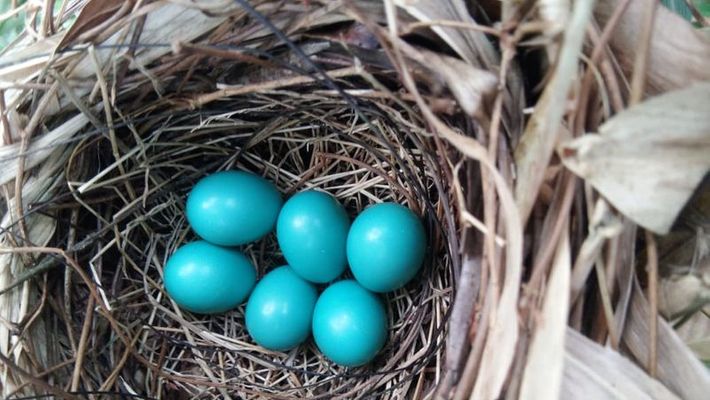
Six blue eggs of the rare Indian Robin bird were found at a coffee estate in Kodagu recently.
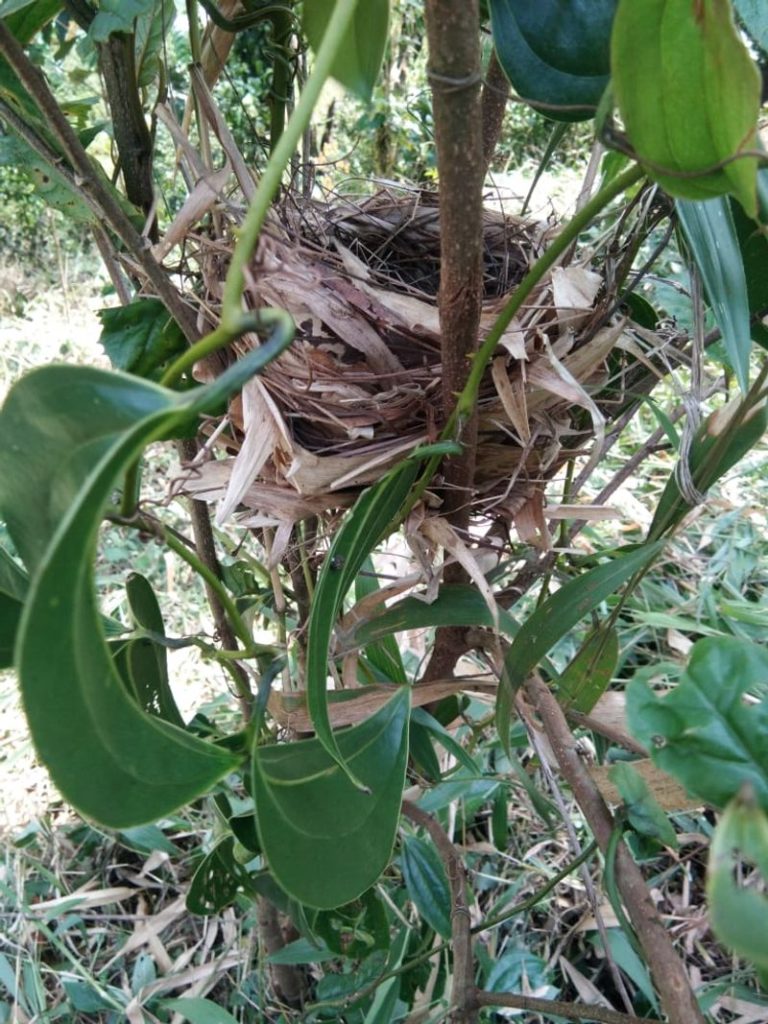
The 6 eggs were found nesting securely in a nest made of hay on a plant amidst the coffee estate.
The eggs were found by the farm workers of the estate owned by a woman named Pushpa in Bettathur village in Kodagu.
While the mother was found nowhere around the nest the eggs nested safe and secure from the current harsh climate.
According to reports Robins usually lay four eggs and then stop. However, Pushpa and her staff found six bright blue eggs in this nest.
It is the female bird’s job to maintain the proper incubation temperature, keeping the eggs warm during cold weather and shaded during hot weather.
The blue colour in robin eggs is due to biliverdin, a pigment deposited on the eggshell when the female lays the eggs.
There is some evidence that higher biliverdin levels indicate a healthier female and brighter blue eggs. Eggs laid by a healthier female seemed to encourage males to take more interest in their young ones.
source: http://www.newsable.asianetnews.com / Asia Net Newsable / Home> English News> India / by Team Newsable / Bengaluru – October 15th, 2020
The furore over Tanishq’s new commercial has advertising professionals wondering about their creative freedom and safety in the field.
Illustration: tapas ranjan
Bengaluru :
A Muslim mother-in-law, a baby shower, an expectant Hindu daughter-in-law. These were the simple elements in jewellery brand Tanishq’s commercial for their latest jewellery line, aptly named Ekatvam. But what was meant to be a heartwarming display of oneness landed in troubled waters when enraged netizens promptly proclaimed the video a promotion of ‘Love Jihad’.
Many in the advertising fraternity, however, are still trying to figure out what was so controversial about the ad. Joyeeta Patpatia, the director of the Tanishq video ad, has known all along that advertisements have been conversation starters, but she never anticipated that the new campaign would blow up to this extent. Mumbai-based Patpatia, who has directed commercial videos for brands like HP, Britannia, Ikea, etc in her 15-year career so far, tells CE that this is her first experience with such an issue. “The story is about two women, where in the backdrop is the religion. But that the religion part will be blown up is something I had never expected,” says Patpatia, who has even been getting threats over the ad.
This kind of hate (one of the brand’s stores in Gujarat also received threats over the ad) has only left advertising professionals stressed about the safety of their field. For instance, Nilma Dileepan, founder of city-based Yellow Umbrella Production, who has been making ad films for 10 years, says, “I am scared because if I make a video on interfaith marriage or same sex relationships, people might come to my house to pelt stones at it.
Thoughts like this take away your creative freedom as an individual,” adds Dileepan. Though she has not encountered any controversy about her work, Dileepan has been trolled after her wedding. With a Malayali and Kodagu lineage, Dileepan wore a traditional saree from Kerala in a Kodagu fashion. This, in addition to, incorporating some Kannadiga traditions since she was marrying a Kannadiga. “My friends told me that my wedding video was trending in Kodagu. People thought I was destroying their culture,” says Dileepan.
While one might think that making a commercial video is a fun job, Vidyaa B Reddy says it’s about finding a balance. “Although we follow the brief by the clients, it is important to take care of people’s opinions so that it does not upset different communities,” says Reddy, founder of Kettle Studios. Patpatia, however, talks about how the ad has also received a huge amount of love. “Many have even come up with different caricatures of characters,” she says.
heart to heart The controversy has sparked debates about whether the video would get the same reaction had the religions of the mother-in-law and daughter-in-law been swapped. Ex-model and transformation coach Tamanna Pasha, who was brought up by a Hindu mother and Muslim father, questions the same. “Aside from irritating those who are against interfaith marriage, the video also challanges the perception that the mother-in-law has to be evil.
The video was heart-warming but a segment of people, especially those with non-secular beliefs, have a lot of time to troll,” says Pasha, who is married to event manager Rafiushan Pasha. She adds, “I feel blessed to celebrate Diwali with my mother and Eid with my in-laws. Now people are more accepting. But the way my parents handled it during their time was incredible.”
source: http://www.newindianexpress.com / The New Indian Express / Home> Cities> Bengaluru / by Monika Monalisa / Express News Service / October 15th, 2020
Chammatira Praveen Uthappa unanimously elected President
Virajpet:
Chammatira Praveen Uthappa has been unanimously elected as the President of the newly-formed Akhila Kodava Samaja Youth Wing.
This was announced by Akhila Kodava Samaja President Mathanda Monnappa at the General Body Meeting of the Samaja held at the Samaja Auditorium in Virajpet on Saturday.
Addressing the meeting, Monnappa said that the Youth Wing has been entrusted with the responsibility of moulding the younger generation of the community on the lines of Kodava culture and customs. Pointing out that youths are the assets of the country, he said it is important to attract them towards Kodava culture and traditions.
Noting that handing over power to younger generation may bring about winds of change in administration, Monnappa said that the Youth Wing was to be launched six months ago but it got delayed due to the outbreak of deadly COVID-19 pandemic.
Asserting that Akhila Kodava Samaja will not interfere in the affairs of the Youth Wing, he said that, however, the Wing should progress under the guidance of senior community leaders and work towards the betterment of the youths.
Newly-elected Youth Wing President Chammatira Praveen Uthappa, in his address, said that the Wing will work towards harmonious living with members of all other communities. Maintaining that the Youth Wing will strive towards taking all Kodava speaking people along with it, he said that all differences that have arisen between communities due to misunderstandings will be sorted out in the coming days.
Asserting that Kodagu is a land of peace and harmony, Uthappa contended that Kodagu had never witnessed caste clashes before. But now, caste conflicts have surfaced because of vested interests who are out to disturb peace in the otherwise quiet hilly district, he said.
Maintaining that Kodavas do not want caste or community conflicts in their homeland, he warned that, however, Kodavas cannot remain silent when their roots get attacked by vested interests or communal elements.
Stating that the Youth Wing was for resolving local issues by bringing all communities under a single platform, Uthappa cautioned that at the same time, Kodavas will not remain silent spectators if their traditions and customs are threatened.
Office-bearers
The following were elected as office-bearers of Akhila Kodava Samaja Youth Wing: Annira Harish Madappa – Vice-President; Ajjikuttira Prithvi Subbaiah – Organising Secretary; Sannuvanda Darshan Kaverappa – General Secretary; Appanderanda Devaiah- Joint Secretary; Cheriyapanda Vishu Kalappa – Treasurer; Dr.Mullengada Revathi Poovaiah – Advisor.
The Youth Wing Membership drive will begin soon after the formation of a full-fledged Managing Committee.
source: http://www.starofmysore.com / Star of Mysore / Home> News / October 11th, 2020
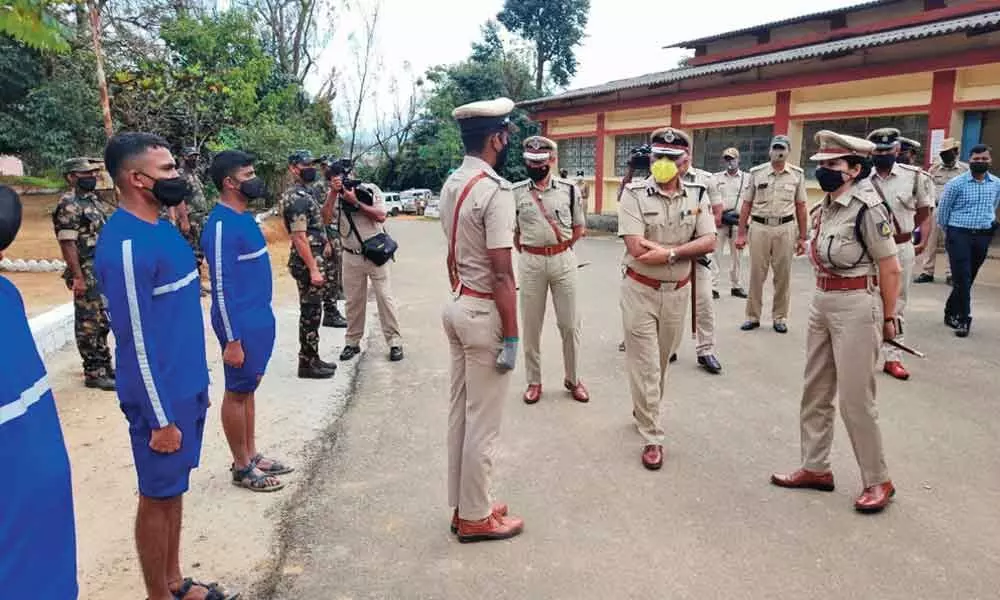
DGP Praveen Sood visited Kodagu on Sunday, as part of his tour to all the districts to boost the morale of police in Covid-19 pandemic situation, at a time when 150 police personnel in Kodagu alone are tested positive for coronavirus and 31 cases are active.
DGP Praveen Sood and IGP Southern Range Vipul Kumar during their visit to Kodagu on Sunday
Kodagu:
DGP Praveen Sood visited Kodagu on Sunday, as part of his tour to all the districts to boost the morale of police in Covid-19 pandemic situation, at a time when 150 police personnel in Kodagu alone are tested positive for coronavirus and 31 cases are active.
According to Praveen Sood, as many as 8,000 police personnel in the State are tested positive for Covid-19 so far and, 1,500 cases are active, and 72 police personnel lost their lives.
According to IGP Southern Range Vipul Kumar who accompanied Praveen Sood, in southern range alone including Mysuru, Kodagu, Chamarajnagar, Mandya and Hassan, as many as 794 police personnel are tested positive for Covid-19 and 181 cases are active and seven police personnel lost their lives.
Praveen Sood also held a district level review meeting of Police Department on Sunday in Kodgu. He said the Covid-19 cases in Kodagu are comparatively less. (Kodagu has registered 3115 Covid-19 positive cases, 574 cases are active and there are 48 deaths so far). Damages are lesser during floods and landslides during heavy southwest monsoons this year (from 5 August to 10 August), compared to past two years. He lauded the efforts of police in handling Covid-19 pandemic situation and also on their role in handling natural disaster situation in Kodagu.
He also said they are taking all measures to root out drug menace completely in the State. When contacted, Kodagu SP Kshama Mishra said Kodagu police have registered 22 cases related to growing, selling and circulation of marijuana and other drugs in Kodagu district this year.
On allegations of parties involving drugs at homestays and resorts in Kodagu, she said that no such cases are found this year.
source: http://www.thehansindia.com / The Hans India / Home> News> States> Karnataka / by Hans News Service / October 05th, 2020
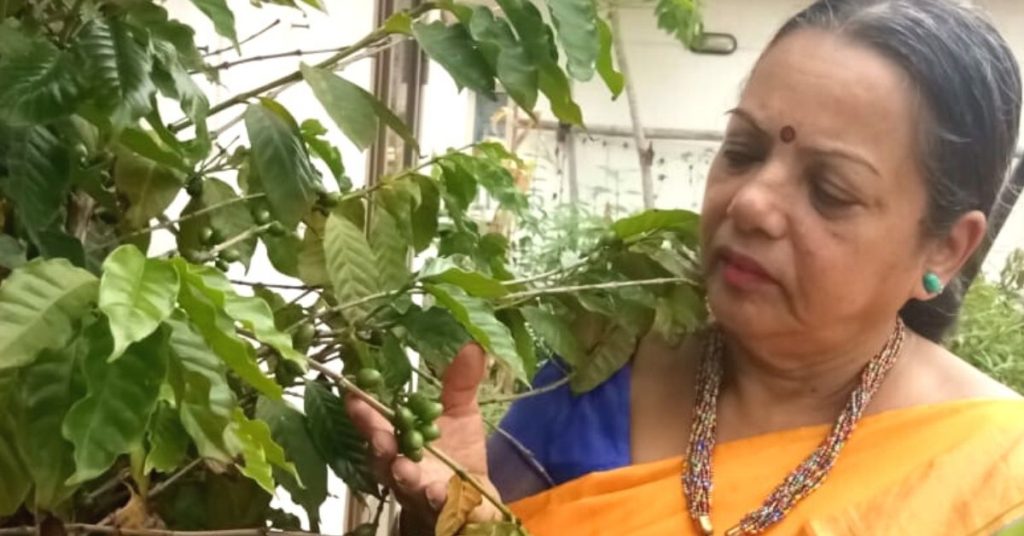
Indira Ashok Shah, a Bengaluru terrace gardener, shares tips on how to grow and care for a coffee plant at home.
For my parents, the day begins only after that first sip of filter coffee makes its way into their bodies. I’ve heard people refer to filter coffee as the elixir that gives them the energy to take on the day.
For all the coffee fanatics out there -what if there was a way to grow your own coffee plant, perhaps in your terrace or even balcony. You need not be living in Coorg, or Chikmagalur for this – you can grow them anywhere, says Indira Ashok Shah, an avid terrace gardener based in Bengaluru has successfully been nurturing a coffee plant on her terrace and in this article, she shall show you how you can do the same.
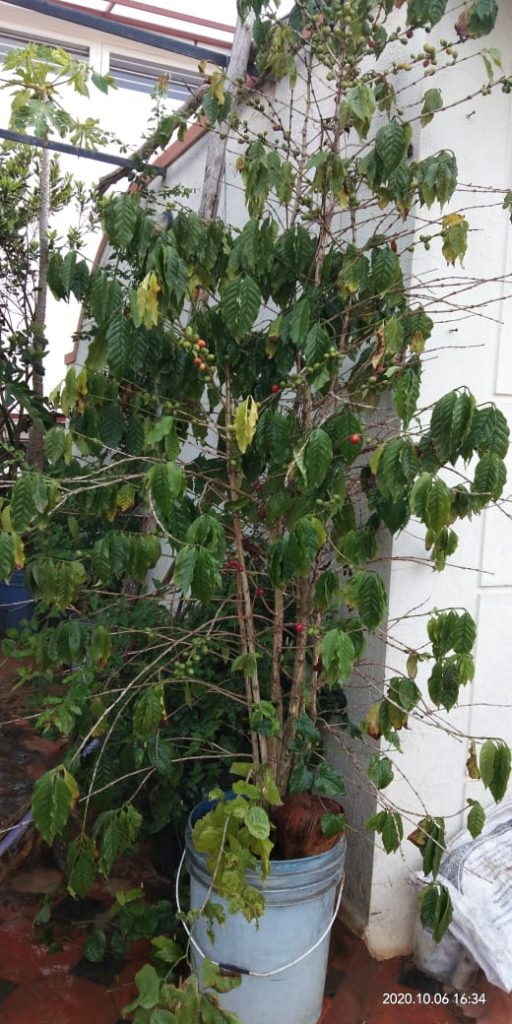
Indira’s coffee plant is almost ten feet tall from the ground and is lush with coffee berries. She also mentions that it has been with her for almost six years now. “I get about one kilogram of coffee powder annually thanks to my plant,” she says.
Things You Will Need To Grow Coffee Plant
Coffee plant in Indira’s terrace.
A 20-litre bucket (Indira has used a regular paint bucket)
Compost
Cocopeat
Soil
Stones
A well shaded area
Step 1
You will need to make three holes in the bucket you are using. This is for drainage and is extremely important that you do this. Once you make the holes place a small slab or piece of stone over the holes.
Do not cover the hole completely; it is important that when there is excess water in the bucket, it is able to drain out comfortably.
Fill the bucket with two parts of soil, two parts of cocopeat, and two parts of compost.
Click here to read up on how to make your own compost at home.
Step 2
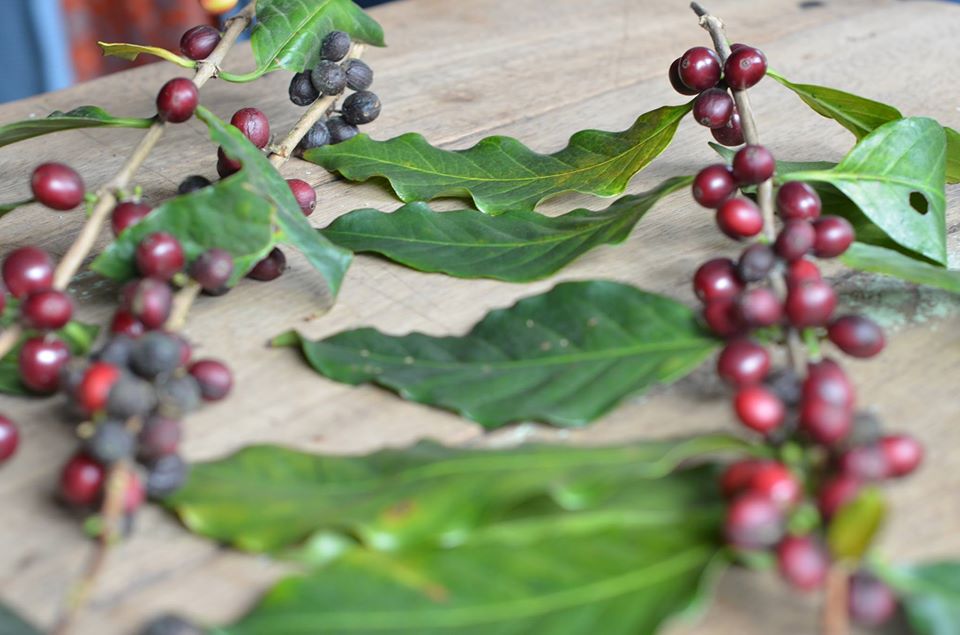
The coffee cherries after being harvested
Find a semi-shaded place to keep your coffee plant.
Do make note that coffee plant does not need direct harsh sunlight so find a good place for it to grow well.
It can also be kept indoors as long as they get some amount of sunlight each day.
Step 3
The coffee plant likes moisture and therefore you must ensure that the soil is always slightly moist and does not get dry.
The test to check whether the soil is adequately damp is to insert a stick in the soil. If it goes into the soil easily, then the soil moisture content is good.
While the soil must be moist there must not be any stagnant water on the surface.
Cocopeat is added to the soil to help it retain moisture.
How To Propagate Coffee Bean
Allow the coffee bean to ripen well. Once it is dried up, sow the bean into the same pot that you have made.
Once sown, ensure that the plant is kept under indirect sunlight.
Air Layering is another method that is used to propagate
Click here to watch the video about following the air layering technique.
Things To Know
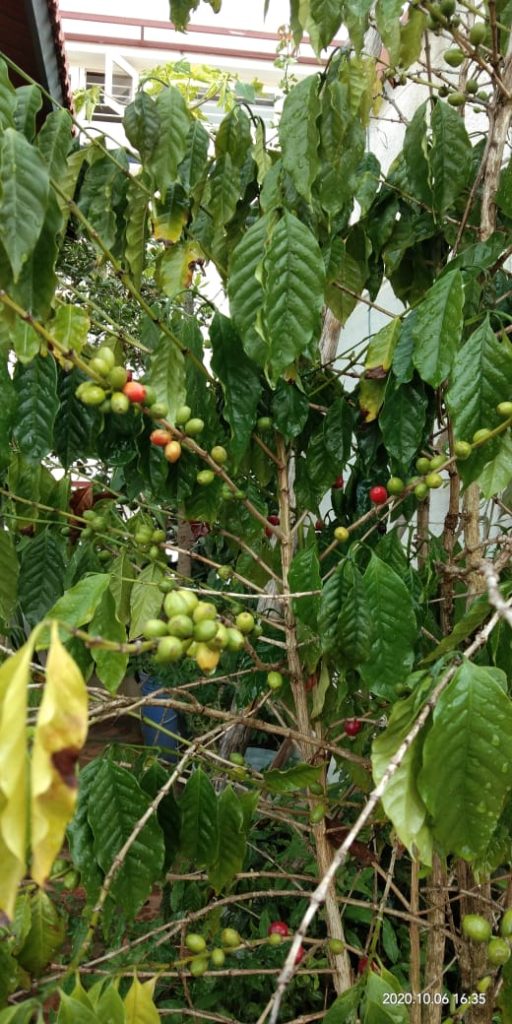
Coffee growing in a bucket.
Once every 10 or 15 days, do add more compost 2. Do not add any chemical fertiliser, pesticide, or anything additional to the plant 3. If you have a pest attack, just use a neem spray or make a mixture of Ginger-Garlic-Green Chilli (GGG) 4. To make the GGG mixture, take equal quantities of all three, make a paste, strain it and use that solution on plants, which have been attacked by pests. 5. Once the berries start turning brown, you can harvest them. 6. This can then be taken to a local coffee blender. 7. To add richness to the coffee, Indira adds chicory to the coffee powder and says her blends are usually 80 per cent coffee and 20 per cent chicory. 8. You can grow coffee across India, and Indira says that all one needs to keep in mind is to provide it with a shaded area to grow. 9. There is no particular season in which one needs to start growing coffee, just make sure that it is placed in a shaded area. 10. Coffee beans may be available at your local nursery and if you are unable to find it you can reach out to Indira as well. 11. If you get a graft and grow it, the plant will take about two years to grow and fruit. 12. Whereas if you start from scratch and sow the seeds then a minimum of five to six years is needed. So patience is the key. 13. Ensure that you water the plant every day and if the soil surface feels dry then twice a day as well. 14. You could also consider making your own cocopeat, which is nothing but the dried husk of the coconut churned in a mixie to get a good powder-like consistency. This, when sprinkled on the plant surface, helps to retain moisture for longer.
How And When To Harvest Coffee Berries
Wait for the berries to ripen and turn brown.
Pluck the ripened berries and remove the skin off the seed/bean.
Immerse all the seeds/beans into water and let it be until the skin and pulp completely leaves the seed/beans.
Sun dry the seeds/beans well to remove all water and moisture.
Once done, you can take the seeds/beans and get the coffee ground or do it at home.
You can click on the video below for a better understanding of how to grow coffee and care for the plant.Prom
“Please grow it by yourself and just refrain from using chemical fertilisers. Collect all your wet waste and make your own compost,” she says in conclusion.
If you want to reach out to Indira and get coffee seeds from her to grow your coffee then you can reach out to her via this Whatsapp group or through her Facebook group.
(Edited by Vinayak Hegde)
source: http://www.thebetterindia.com / The Better India / Home> The Better Home / by Vidya Raja / October 06th, 2020
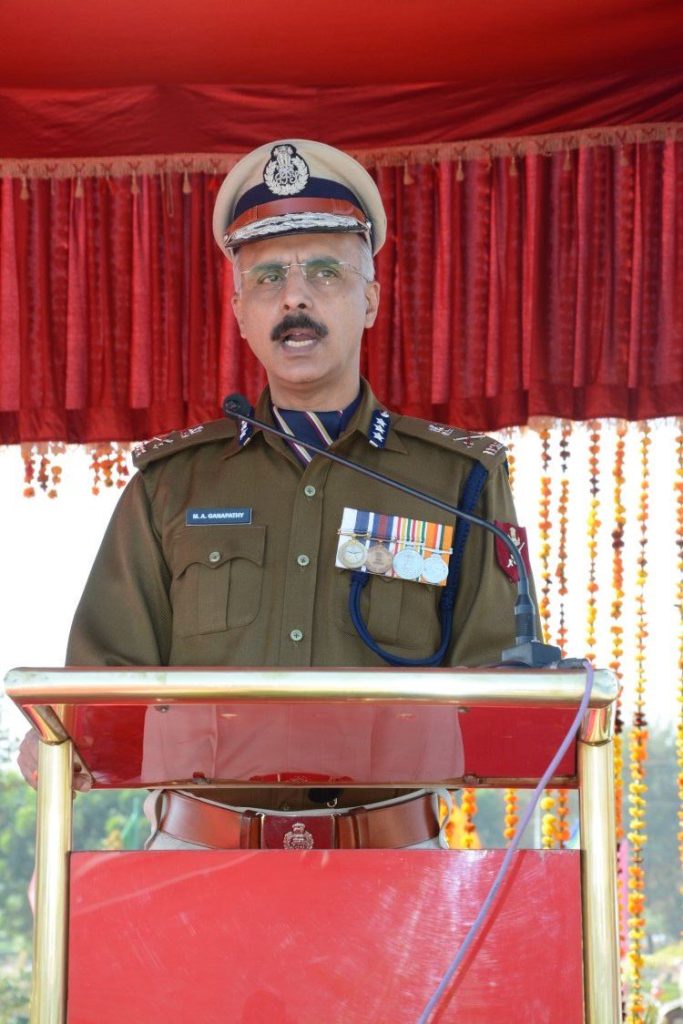
The Appointments Committee of the Cabinet has approved the appointment of Ganapathy, IPS, to the post of Director General, BCAS, for a tenure up to his superannuation on February 29, 2024, the order said.
Senior IPS officer M A Ganapathy has been appointed as the Director General of Bureau of Civil Aviation Security (BCAS), according to a Personnel Ministry order issued on Tuesday. He is a 1986 batch IPS officer of Uttarakhand cadre.
The Appointments Committee of the Cabinet has approved the appointment of Ganapathy, IPS, to the post of Director General, BCAS, for a tenure up to his superannuation on February 29, 2024, the order said. The post of BCAS chief fell vacant after Rakesh Asthana was appointed as the Director General of Border Security Force in August.
source: http://www.news18.com / News18 India / Home> India / by PTI / New Delhi, October 06th, 2020
The film won the best short film award in the Karnataka competition section of the Bengaluru International Short Film Festival 2020
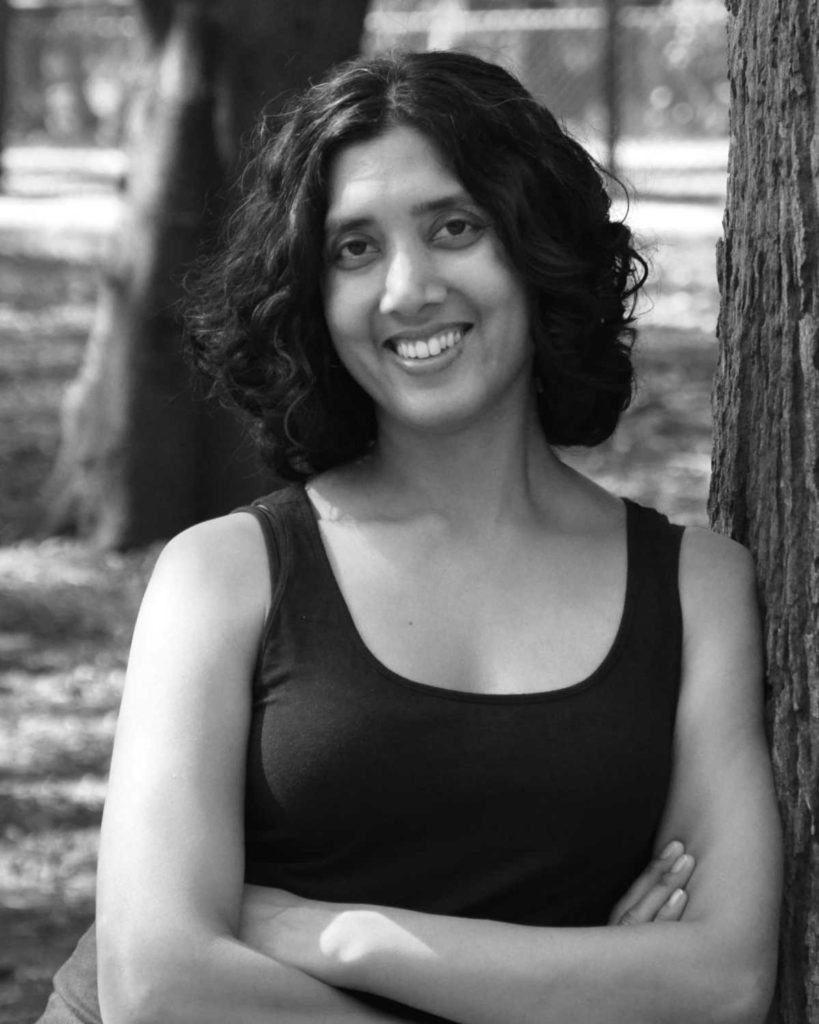
Set in Kodagu or Coorg, Karnataka, Priya Belliappa’s short film explores the lives of migrant labourers who come from across the country to work on coffee plantations.
A young man from a poor family in Kodagu, Kalappa (Avinash Muddappa) is one of the many educated unemployed Indians vying for just a handful of jobs. Despite having a doctorate, he finds that life in the city is not as lucrative as he had imagined and decides to join the workers on the coffee estates.
He meets Tabu (Geetanjali Thapa), a migrant worker from Assam who has travelled over 2,000 miles from her home to find a means of livelihood in the estates. But her name has not been included in the updated draft of the National Register of Citizens (NRC).
The film was conceptualised by Belliappa when she saw the influx of people travelling from Assam to work on the estates for a couple of months during the coffee season. The lives of the labourers who uproot themselves and their entire family for a few months for work made her curious, and the political and economic issues in the country formed the backdrop against which her story plays out.
Belliappa said, “The film is questioning a lot of things and these are questions that I do not have answers to but they nag me.”
The layered film questions lines and borders that define country, religion, language and caste; lines that become blurred in the struggle of life.
Speaking about how much of the film was shaped by the debates around the NRC and Citizenship Amendment Act (CAA), she said, “The film was shot before the NRC and CAA became a national debate. It was not a topic that everyone really knew about. If you look at the larger picture [in the film], it’s about belonging…I also put in the idea that boundaries and borders are imaginary lines for states or districts, and you sit back and you think about questions of humanity.”
The character of the young man too is a reflection of the status of youth in the country, who are increasingly finding themselves with a bagful of degrees but no jobs and was shaped by a newspaper article that reported that people who with a PhD degree were standing in line for a peon’s job. The filmmaker wondered, “It really hit me hard because everything grows up thinking that if they get a certain education, they are guaranteed a certain job…but we look at what is the education system today where you cannot assure somebody who has done a PhD a job…Everybody needs a certain income to survive, but if it [education] cannot guarantee you a job, what is it that one needs?”
The short film format allowed the filmmaker to delve into certain spaces with greater creative freedom and she said, “The reason that I made this into a short film was that I did not want to be bogged down by the commercial aspects of it. When you make a feature film, you need to think much more about economic aspects like what is going to happen to the film, how are you going to get the money back…So I chose to go with a short as it would give me a certain creative freedom to explore this subject in the way that I wanted using the silences and the spaces that I create. In a short film, you can use your creative freedom with a lot fewer restrictions as opposed to a feature.”
The film won the Best Short Film Award in the Karnataka competition section of the Bengaluru International Short Film Festival (BISFF) 2020. Responding to the recognition that the film has received the filmmaker said, “As a creative person, I want there to be a conversation [about this] and I hope that it reaches as many people as possible…if somebody thinks about this [the film], it’s good enough for me.”
She added, “The world over, there is a conversation about migrants moving, working…and we need to address it.”
Belliappa is planning to develop Frayed Lines into a feature.
source: http://www.cinestaan.com / Cinestaan / Home> Interview / by Sukhpreet Kahlon / New Delhi – October 08th, 2020
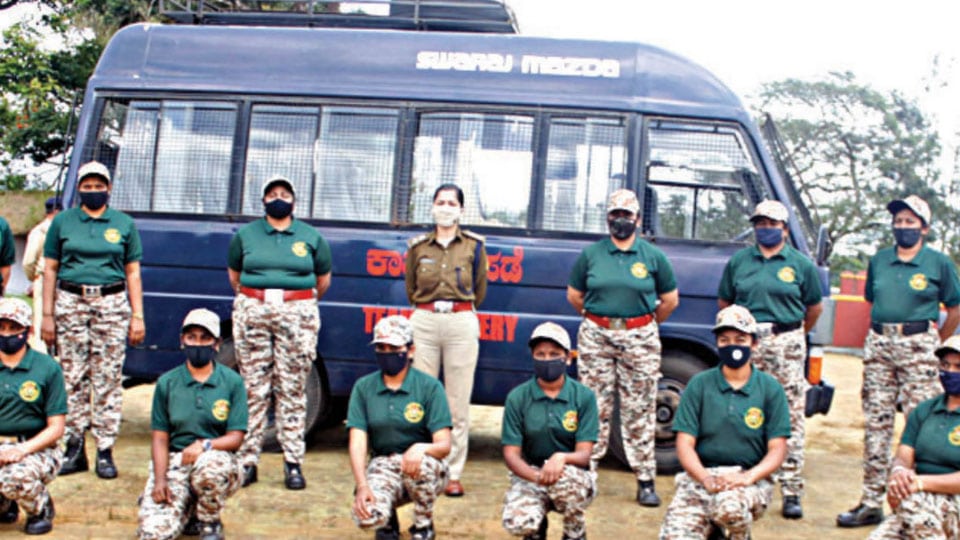
‘Cauvery Pade’ (Cauvery Force), an all-women Police team to tackle crimes against women and children in Kodagu district, was launched by Kodagu SP Kshama Mishra here on Thursday last.
Speaking on the occasion, Kshama Mishra said that the team will have two Assistant Sub-Inspectors (ASIs) and 16 other Police personnel.
“The Force will act against atrocities and crimes against children, girls and women. The Force will make regular rounds around schools and colleges, accommodations where there are more number of women and other women-dominated places and will act against anyone found behaving in an obscene or indecent way and harassing or stalking women,” she said.
Continuing, the SP said that ‘Cauvery Pade’ has been formed on the lines of ‘Abbakka Pade’ in Udupi, ‘Obavva Pade’ in Chitradurga and ‘Chamundi Pade’ in Mysuru. The patrol team will make rounds from 8 am to 6 pm in the limits of all prominent Police Stations of the district, focussing on schools and colleges for ensuring the safety of girl students.
The members of the public can call 100 in case of trouble or distress, she said and added that the mobile numbers of all the eighteen personnel attached to this women Police team, will be announced soon as the higher authorities issue them.
source: http://www.starofmysore.com / Star of Mysore / Home> News / October 06th, 2020
For the first time Kodagu coffee growers, who formed a farmer producer company, Biota Coorg FPC, have exported their crop directly to a roaster in Europe.
IB Bopanna, one of the founding directors of Biota Coorg
After suffering 50-70 per cent crop loss due to excessive rainfall and landslides over the last three years, small, mid-sized and large coffee growers in Kodagu district of Karnataka, who pooled in their coffees under Biota Coorg, are set to receive a 15-20 per cent premium, on an average.
Incorporated in January, Biota Coorg made its first direct export shipment of bulk branded coffees to a large roaster in Europe last week. A container consisting of 320 bags (60 kgs/per bag) of Robusta Cherry AB sourced from 75 of its members was shipped from Mangaluru port on September 30. The company plans to ship 10 more containers to different roasters across Europe, of which two containers are scheduled to be shipped in October and the rest by December. In addition, since its inception, Biota Coorg has directly sold Arabica coffees to local roasters and local cafes at a premium. The 10 founding directors of Biota Coorg, collectively have over 100 years of domain expertise in coffee growing and allied areas including exports of agri commodities, global marketing of coffees, agro-forestry, plantation management, organisation development and coffee quality enhancement through cupping.
Unique flavour
Grown under the shade of multiple species of endemic rainforest trees at an elevation of 3,000– 4,000 feet above sea level, Coorg coffees have distinct fruity notes because of the wild figs, citrus fruits that grow in the rainforests and caramel notes from the leaf litter-enriched soil. Because of the higher elevation, Robusta coffees from Kodagu take a longer time to mature and ripen, thereby resulting in a softer cup.
“The objective of incorporating Biota is to market and put Coorg Coffee on the world map by elevating its quality based on the region’s ecology and biodiversity,” IB Bopanna, one of the founding directors of Biota Coorg and former Senior Global Director- Coffee, The Coca-Cola Company, Atlanta, USA, told BusinessLine.
“Earlier growers were selling their coffee in bulk with little differentiation to local traders, at prevailing market prices. We are a cohort of 75 members (in our first year of operation) who have committed to superior on-farm harvesting and post harvesting standards that will command a premium in the international and domestic markets. We are committed to uphold the legacy of the region’s biodiversity by adhering to an audited standard in addition to RFA (Rainforest Alliance) certification, which we have applied for. All the coffee we procure is 100 per cent traceable. Every grower’s coffee is segregated, processed at the Tata Coffee facility in Kodagu, cupped and prepared specially to fit the requirement of high quality roasts, blends and brands.”
Community initiative
MB Ganapathy, former Chairman of KPA, said: “There are many large coffee growers who export their coffees in their individual capacities however, the majority who are small growers are dependent on the local traders to sell their coffee. Biota Coorg is a great community initiative that will benefit small coffee growers who can join hands and realise better prices for their produce by following quality practices set by Biota that will adhere to international standards of roasters.”
Bose Mandanna, a large grower and Biota member, said: “The advantage for international roasters is that they are ensured of a consistent supply of quality coffees from Biota. We have received a standard of good agricultural practices from Biota which we strictly follow including the use of chemicals and labour. We harvest the coffee at the right time, pulp it on the same day, wash it clean and dry it to the correct moisture levels, after which it is inspected by a Biota representative, who then further processes it in the curing works.”
source: http://www.thehindubusinessline.com / Business Line / Home> AgriBusiness / by Sangeetha Chengappa / Bengaluru / October 05th, 2020
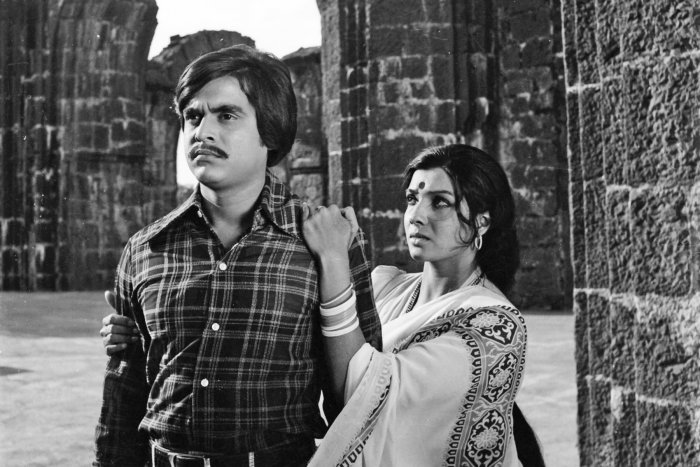
Puttanna Kanagal cast Jagadish as the lead in ‘Phalitamsha’ even though he had no prior experience in acting.
After the first few days of shoot of Phalitamsha, he wanted to give up
Filmmaker Jai Jagadish had no background in films or interest in it during his childhood. He belonged to a family, where his father, a farmer, insisted on Jagadish becoming a double graduate.
Puttanna Kanagal cast Jagadish as the lead in ‘Phalitamsha’ even though he had no prior experience in acting. Filmmaker Jai Jagadish had no background in films or interest…
Childhood and films
Hailing from Somwarpet taluk, Kodagu, he belonged to a family of coffee, pepper, cardamom and paddy growers. “My family consisted of five daughters and two sons. My father was a farmer.”
The filmmaker studied at the government school nearby. “I was a naughty child and uncontrollable, so I was sent to study in Sri Ramakrishna Vidyashala, Mysuru.” Jagadish’s father insisted on him becoming a double graduate. He did his BA from St. Philomena’s College, Mysuru.
Jagadish never acted in a drama, and never thought of acting in films. “Cinema was not my cup of coffee. My friend, Manjappa, a college leader from Maharaja’s College asked me if I would act in a Puttanna Kanagal’s film, if he got me the role. I was amused by the idea and I challenged him to find me a role,” he says.
Jagadish had read in film magazines that no actor had been finalised for ‘Phalitamsha’. In a couple of days, he got a call for the role, against four heroines. “I said I wasn’t going to act in it. My friends tried to convince me. I told them that I had other intentions and want to start my own business,” he says.
Even so, he went to Bengaluru, to meet Puttanna Kanagal. “I was asked if I knew anything about acting and I immediately responded that I didn’t. My looks and physique came in my favour, I was offered the role. I was shocked.”
Jagadish was told to leave to Badami and join the shoot immediately, but he insisted on informing his family. “I made a lightning call to my father. I knew he wouldn’t agree, and as expected after I called and explained, expletives followed. In the corner of mind, I knew I shouldn’t let go off the opportunity so I went for it,” he says.
After a few days of shoot, he wanted to give up. “I had only one lungi and a toothbrush on me and I decided to flee from the sets. Kitty, Kanagal’s wife’s brother, saw me from a distance and asked me what I was doing, he told me to rethink and give best shot at acting,” Jagadish says.
Jagadish’s first film released in a grand manner but didn’t do well. “In ‘Phalitamsha’, some shots were taken at the flying training school, Jakkur. The principal of the school, Patil, was impressed by me and I spoke about my interest in flying. A year later, I met him on M G Road and he told me to meet him at the school next day,” he says.
Jagadish was asked to do some medical checkups and joined the school. He studied for almost two-and-a-half years, while he waited for acting roles. “S Siddalingaiah called me and asked me to play the role of Vishnuvardhan’s brother’s role in ‘Biligiriya Banadalli’,” he says.
The role with dark shades, created a new turn in his career. “Directors were looking for a young villain, which led me to many other films.”
He was soon seen in films like ‘Bandana’, ‘Paduvarahalli Pandavaru’, ‘Daranimandala’ and ‘Parajitha’
He has worked with different actors like Vishnuvardhan, Srinath, Rajkumar (in Guri), Puneeth Rajkumar. Ravi Chandran. “I’ve worked with maximum films with Vishuvardhan, he was my favourite hero and a good friend. I’ve acted with films in Ambareesh to…
Planter now
Jai Jagadish has an estate in Kodagu, and he calls himself a planter and farmer now. “This is my work now. I have decided to stay away from filmmaking as I won’t be able to withstand the losses now,” he says.
Demonetisation soaked the spirit of filmmaking off him. “Most people decided to not invest into films. After ‘Yaana’ that was directed by my wife and starred daughters Vainidhi, Vaibhavi and Vaisiri, didn’t do as expected in the box office, I decided to stay awayfrom production,” he adds.
source: http://www.deccanherald.com / Deccan Herald / Home> Entertainment> Entertainment News / by Tini Sara Anien / DHNS / October 04th, 2020
WELCOME. If you like what you see "SUBSCRIBE via EMAIL" to receive FREE regular UPDATES.
Read More »