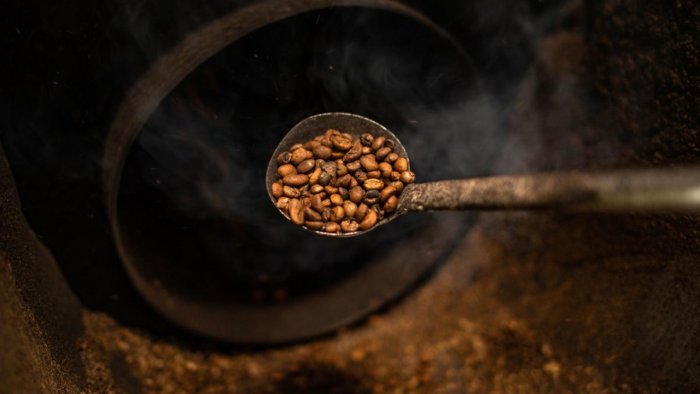
The Coffee Board of India has released geographical indication (GI) tag for five coffee varieties grown in the country. Of this, three are from Karnataka and one each from Kerala and Andhra Pradesh. The GI tag will help all the five coffee brands get maximum market and price for their premium produce across the world. These varieties are Coorg, Bababudangiri, Chikmagalur, Araku Valley and Wayanad coffees.
The Board had obtained GI registration for unique regional coffees grown in these regions during March 2019. Previously, GI registration was obtained for two specialty coffees such as Monsooned Malabar Arabica and Monsooned Malabar Robusta in 2008.
The region-specific GI tags will increase the credibility and visibility of Indian coffees in the international market which will further boost export earnings, the Coffee Board said in a statement.
Further to the registration, the GI tagged coffees are promoted in various national and international forums, it said.
The board has also invited coffee growers to register their coffees with the board so that they can brand their product before selling in the domestic and international markets.
The Coffee Board has also collaborated with Indian Missions in key destinations such as Berlin, Helsinki, Tallinn, Burssels, Shanghai, Moscow and Sao Paulo for an effective overseas promotion of Indian coffee.
As part of its efforts to promote the consumption of coffee in the domestic market, the Board is taking up a year-long, nationwide programme with the help of a special grant of $90,000 from International Coffee Organisation (ICO) for building capacity of nearly 200 entrepreneurs in coffee business, a Coffee Board official said.
This is expected to help in bridging the gap in coffee value chain in the domestic market, especially in non-southern regions of the country. Apart from the capacity building programmes for budding entrepreneurs, the Board proposes to conduct awareness programmes for promotion of coffee consumption in India, the Board said in a statement.
source: http://www.deccanherald.com / Deccan Herald / Home> Business> Business News / by Mahesh Kulkarni / DHNS, Bengaluru / October 01st, 2020
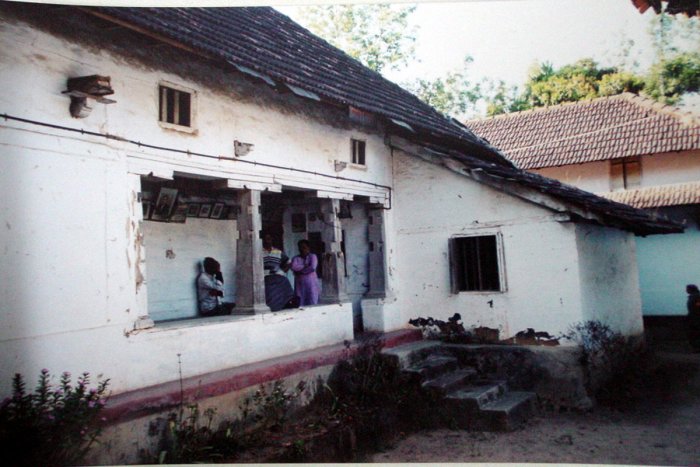
Ancient abode: The ancestral house of Mukkatira Ipanna, the sharpshooter, in Nalvathoklu village in Kodagu. Photo by Boverianda Chinnappa
Mukkatira Aiyappa of Bonda village in Kodagu had three sons: Muddayya, Ipanna and Bopayya. Muddayya became a Munshi (clerk) in the Diwan Kacheri (minister’s office). Linga Raja II was the ruler of Kodagu at that time. With his first queen, a lady from the Chowrira family, he had a son Chikka Vira Raja. His second queen, Palanganda Devaki, was his Pattada Rani (chief queen). They had two daughters Muddammaji and Devammaji.
In 1816, Linga Raja was on a hunt in Murnad, Kodagu. He was accompanied by Muddayya when they came across Ipanna. Linga Raja challenged him to shoot a bird off a bison’s back as he was a famed sharpshooter. The bison was at a long distance and a gunhad to be used. Ipanna shot it and impressed the Raja who summoned him to the court the next day.
The next day, Ipanna went to the court dressed in a white Kuppya (traditional coat). The Raja asked him the significance of the colour of his costume. Without any hesitation, he replied that a Kodava normally wore a white Kuppya on two occasions — in his wedding and then during his funeral. Those days, rarely one spoke boldly in front of the Raja. But the Raja was not displeased. Instead he surprised all by saying that he would get his elder daughter Muddammaji married to Ipanna.
Ipanna was converted into a Lingayat, since the Raja was one. Ipanna was given a new name, Chenna Basavappa. Muddammaji and Chenna Basavappa were married and gifted a farm. But Muddammaji fell sick frequently. So, this farm was exchanged with another farm which belonged to the Raja’s relatives in Appangala. However, Muddammaji died within two years after her marriage. The Raja then got his younger daughter Devammaji married to Chenna Basavappa in 1819.
In 1820, Linga Raja died. His queen Devaki committed suicide by consuming diamond dust. Chikka Vira Raja became the Raja. Chenna Basavappa and a few others were discontent with his rule. So they schemed to have him ousted. They failed in their in their endeavour and Chikka Vira Raja came to know of it. Chenna Basavappa and Devammaji were kept under house arrest.
In 1832, Chikka Vira Raja planned to have Chenna Basavappa executed. Devammaji and Chenna Basavappa learnt of this. On Shivarathri, they drugged the guards and escaped from Appangala on horseback. They crossed the borders of Kodagu and reached Mysore , where they headed to the house of the British Resident Casamajor and sought refuge. Meanwhile, the couple’s one-and-a-half-year-old son fell into the hands of the Raja’s men and was handed over to the Raja whose queen took care of him.
Muddayya was an intelligent and respected man. He had been promoted to become the Raja’s Khas Munshi (chief accountant). A favourite of the Raja, he was deemed to be a future Diwan. When Chikka Vira Raja first heard of Chenna Basavappa’s escape he got angry with Muddayya who was his elder brother. He then beat him up. His Diwan, Kunta Basava, got Muddayya executed. But, in truth, Muddayya was not aware of his brother’s plans.
Chikka Vira Raja demanded that the two fugitives should be handed over to him. But Casamajor forwarded this matter to the British East India Company Government. In 1833, the Government declared that the couple should not be surrendered to the Raja. Chenna Basavappa and Devammaji were moved to Bangalore and were given a pension. Chikka Vira Raja schemed with Nanda Lal Bharthi, a merchant from Mysore, to have Chenna Basavappa murdered. But these attempts failed.
In 1834, the Company invaded Kodagu. The Raja surrendered to the British and was exiled. Chenna Basavappa and Devammaji returned to Kodagu. Their Appangala farm was returned to them. Chenna Basavappa assumed the title of ‘Arasu’ (king). He petitioned the Company to provide him with one of the other palaces of the Raja. He also wanted the former Raja’s farm at Nanjarajapatna and be placed in charge of the Gaddige (the Rajas’ mausoleum). But the Company didn’t agree to this. Chenna Basavappa died in 1868.
source: http://www.deccanherald.com / Deccan Herald / Home> Spectrum> Spectrum Statescan / b y Mookonda Kushalappa / July 06th, 2019
Linga Raja I was the king of Kodagu and a subordinate ally of Nawab Hyder Ali of Mysore. In 1780, the king passed away, leaving his first son, the 16-year-old Dodda Veerarajendra as heir to the throne. Hyder Ali saw this as the perfect time to bring Kodagu under his complete control.
So, he moved the king’s family members from the Madikeri Fort in Kodagu to Gorur Fort in Hassan. Displeased with the king’s removal, Kodagu rose in rebellion against Hyder.
Elsewhere, the second Anglo-Mysore war was raging on. In 1782, Hyder died and his son Tipu Sultan succeeded him. Linga Raja’s family was shifted and imprisoned at Periyapatna Fort in Mysore. In December 1788, Dodda Veerarajendra, his wife, daughter, brothers Linga Raja II (aka Lingarajendra) and Appaji Raja and other family members managed to escape from their confinement.
According to scholar H Moegling (in 1855) ‘some faithful Coorg friends assisted him (the king) and conducted him safely’. Historians I M Muthanna and D N Krishnaiah identified these friends as Kulletira Ponnanna, Pattacheruvanda Boluka, Appaneravanda Achaiah, Ketolira Achuvanna and others. They disguised themselves as oil-vendors and reached Periyapatna, where they were able to release the royal family.
The people of Kodagu declared Dodda Veerarajendra their king but the new raja and his family had no place to stay. The Mysore Sultan still held the Madikeri Fort. The king first stayed at Kurchi where he made a temporary, makeshift residence.
One day, when the king was away, bandits from Wayanad attacked Kurchi; they killed the queen, looted the ornaments and burnt down the place.
D N Krishnaiah writes that with the king living near poverty, Ketolira Achuvanna recommended his own native village — Yavakapadi near Kakkabe — as a suitable place for the raja to stay till the war was over. Back then, Kakkabe was a remote location, surrounded by mountains and jungles. Achuvanna accommodated the raja in his own ancestral house until a new palace was built.
A farmland of the Puliyanda family was found to be the most secure site for a palace; hidden by natural barriers from all sides, it was relatively inaccessible to invaders.
Four brothers of a family living there were asked to vacate the place, with the promise of compensation. Everyone complied, save for the youngest brother Karichcha.
When the palace’s construction began, Karichcha troubled the construction workers during the day and hid in the forest at night. Displeased with this, the raja got him captured and put to death
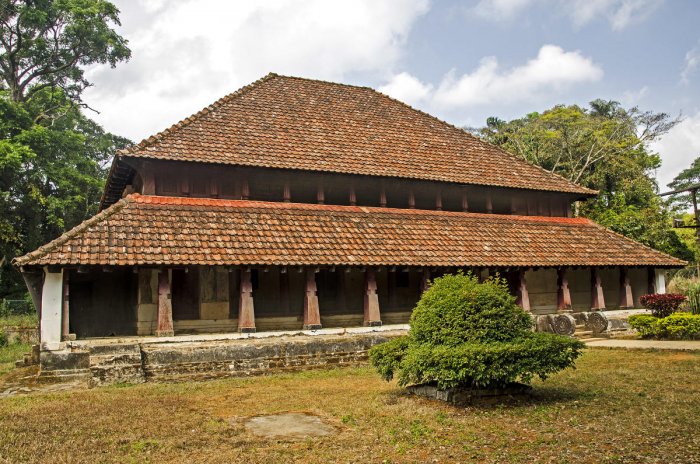
The palace eventually came up at the place and is called ‘Naalnaad aramane’ or Nalknad aramane, after the name of the region. The palace was relatively simple: a two-storey building with a thatched roof, built in the native Ainmane tradition.
The descendants of Achuvanna and his two brothers became the Aramane thakka (palace chamberlains); they were the hereditary chieftains in-charge of the Naalnaad palace. Meanwhile, Kodagu became free of Tipu’s rule in 1792. For Dodda Veerarajendra, life had come full circle, as he gained possession of his father’s old residence.
source: http://www.deccanherald.com / Deccan Herald / Home> Spectrum / by Mookonda Kushalappa / October 03rd, 2020
These artisanal coffee brands are creating exciting new ways of drinking your morning java
The world has been in the throes of the third wave of coffee for a while now. Artisanal sourcing, roasting, and blending of coffee is par for the course. Terms like flavour profiles, cultivars, and tasting notes are no longer restricted to the realm of wines. So what next?
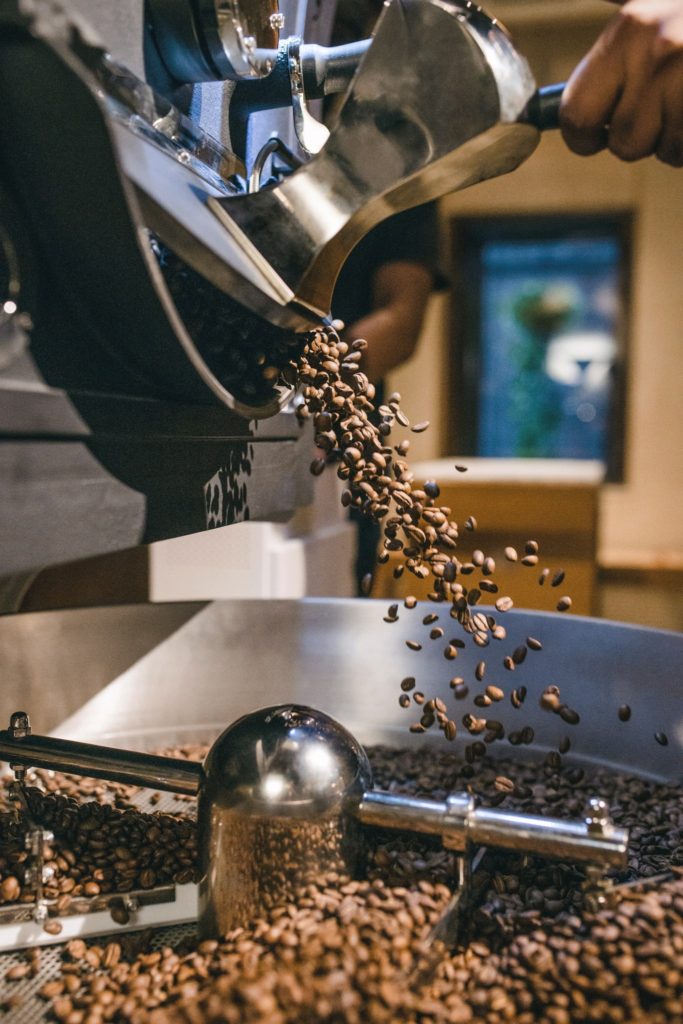
The fourth wave is all about people—the producers and the roasters—and their experiments to create a complex coffee with layers of flavours. “We can alter the flavour or unlock new flavours by intervening at various stages in the life span of the coffee bean. This can be at the plant-level or when the coffee cherry is ready to be pulped (the process of loosening the pulp from the bean) or at the drying stage, and of course, at the roasting stage”, says Ashish D’abreo, co-founder of Bengaluru-based Maverick & Farmer Coffee Roasters.
On the occasion of International Coffee Day, we look at what’s new in the artisanal coffee space in India.
The art of fermentation
Fermentation has been a mega food trend over the past couple of years and obviously, coffee growers are experimenting with it too. While it occurs naturally, the trick lies in controlling the process and fermenting the coffee just so. “Fermentation brings out the juiciness and complexity of flavours in a coffee. We carry out anaerobic fermentation, where the coffee cherries are placed in a tank of water and we monitor the pH level and sugar content. Under-fermented coffee is just a waste of resources, while over-fermentation produces an unappetising aroma of rotting fruit, so the process has to be quite precise,” explains Rahul Reddy, founder of the Mumbai-based Subko Specialty Coffee Roasters, which offers a 30-hour fermented single-origin (Ratnagiri Estate, Karnataka) coffee with notes of maple syrup, candied pecans and apricot.
Maverick & Farmer took things to another level at their Ajjikuttira Estates in Coorg, where third-generation coffee farmer (and co-founder) Tej Thammaiah fermented the coffee beans with orange juice to create ‘Orange You Curious?’ coffee. “Yeast, bacteria, and sugars are naturally present in both the coffee pulp and orange juice, which we ferment together for 24-36 hours,” explains Thammaiah. The beans are then shade-dried for about three weeks to produce a unique coffee with refreshing citrusy notes. “The point was to unlock flavours that are normally not found in coffee. We tried this with several other ingredients; some experiments failed but some were successful; for example, we have a micro-lot of lactic acid bacteria fermented coffee called ‘Milk and Honey’ launching in October,” he adds.
No smoke without fire
At the start of the drying stage, when the pulp has been stripped off, the tender green bean is porous and ready to imbibe any flavours or influences that it is exposed to. “A smoky note is a desirable flavour in coffee, but until now most of it came from really dark roasting coffee. While it’s enjoyable, you also get a lot of burnt flavour and the natural, delicate sweetness of coffee is completely lost. Our challenge was to bring in the smokiness without dark-roasting,” explains D’abreo. This resulted in “Ol’ Smoky” where the coffee beans are smoked with leaves and wood from fruit trees in a closed room for 13-14 hours. The source of the fire is not in the same room; rather the smoke is let in through a hole. “This introduces a nice smokiness to the coffee while leaving the natural sweetness and notes of Arabica intact. Ol’ Smoky is possibly the world’s first cold-smoked coffee and we are happy that we have been able to create something innovative”, adds D’abreo.
As the coffee beans dry further, roasters are experimenting with introducing new flavours—a favourite method is to ‘age’ the beans in whisky barrels to imbibe flavours such as oak, caramel, and vanilla. Mumbai-based Dope Coffee Roasters offers Double-Barrel Blend, a limited edition coffee from Harley Estate (Karnataka) that is aged in Amrut whisky barrels, producing a complex cuppa with a smooth, sweet finish. “Once the coffee is processed at the farm, we age it in the barrel for about a month. Since coffee green beans are so sensitive, they take on the malty, smoky aromas from the barrel. Unlike most artisanal coffee, this is 100 per cent Robusta, which we believe is India’s specialty and we are happy to see customers accepting it. We will shortly launch this as a cold brew as well,” says Rizwan Amlani, CEO and co-founder of Dope Coffee Roasters. Subko offers an interesting variant of this by cask-ageing cascara (skin of the coffee cherry) for 10 days, which is then cold-brewed for 16 hours and served with tonic water and jaggery.
Considering India’s status as prime coffee-growing country, there’s plenty of room for experiments at every stage of the coffee life cycle. “We have lived through the third wave and it’s time to take things forward. Our customers want to experiment; they are no longer fixated on one brand or blend and are excited to try new flavours. So our challenge is to see what else we can do to develop new tasting notes in coffee”, says D’abreo. The fourth wave is here to stay and Indian artisanal coffee brands are at the forefront of innovation. That’s sweet news for the coffee connoisseur.
source: http://www.vogue.in / Vogue / Home> Culture & Living / by Prachi Joshi / October 01st, 2020
Young Kannada beauty Rashmika Mandanna is in fine form as her previous two films Sarileru Neekevvaru and Bheeshma minted big bucks at the box office. Consequently, she is bagging big offers in Tollywood and she will next be seen in Allu Arjun’s ‘Pushpa’.
Interestingly, Rashmika is in pole position to sign for Acharya as well. The makers have reportedly arranged a look test featuring Ram Charan and Rashmika Mandanna early next month. They will be taking the final call on whether to bring her on board or not based on the output. She is consideration for Ram Charan’s love interest role in the film.
If Rashmika bags Acharya offer, she will be turning super busy with two projects starring mega heroes. These films could well provide Rashmika with the ticket to the elite league of actresses and she would be hoping to make the most of it.
Rashmika is already in Hyderabad and she is raring to get back to sets. Both Acharya and Pushpa will be hitting the floors very soon and the young actress is likely to work on them simultaneously if things fall into place.
source: http://www.telugubulletin.com / Telugu Bullettin / Home> Movie News / by TB Cinema / Hyderabad – September 26th, 2020
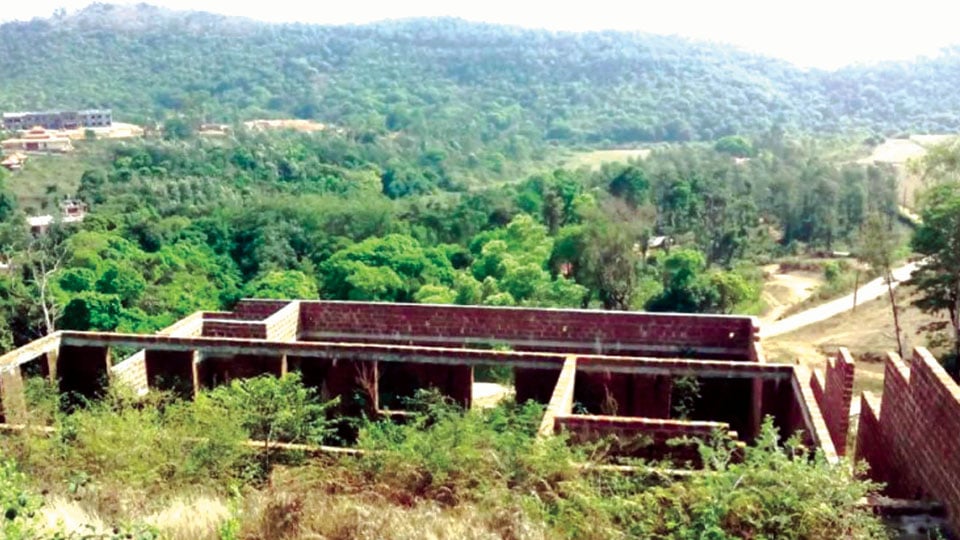
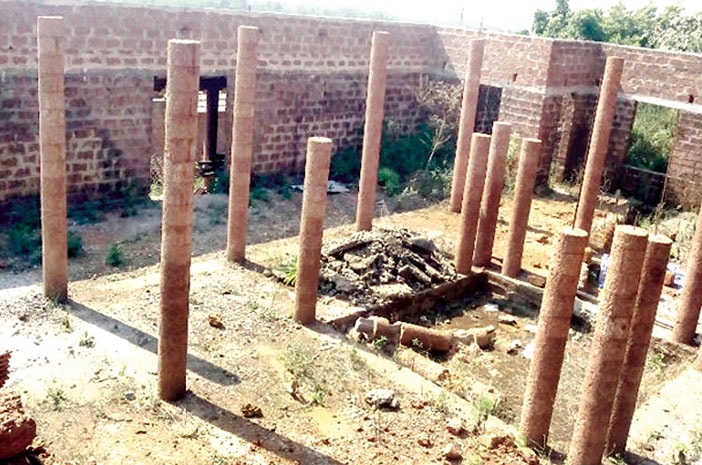
Tourism Minister C.T. Ravi said that the works on ‘Kodava Heritage Centre’ at Vidyanagar near Madikeri, the district headquarters of Kodagu, will be completed in ten months. The project was envisaged by the Government in 2004-05 for introducing the unique Ainmane tradition of Kodavas with a museum.
The Kodava Heritage Centre Project features an Ainmane, a Hall, a small indoor water pond, an open auditorium, a library, a museum and drinking water facility. The Project is coming up on a 4-acre land at Karavale Badaga village close to Vidyanagar on the outskirts of Madikeri City, near Mahindra Holiday Resort.
Replying to a question by Congress MLC Veena Achaiah in the Legislative Council yesterday on why the project was lying in limbo for long, Ravi assured that all the works on the Heritage Centre will be completed in ten months. Attributing the delay to the lethargic attitude of implementing agencies, change in structure design and multiple revision of estimate, Ravi said that part of the works have been completed and the rest will be completed at a cost of Rs.97 lakh. The contractor has been asked to finish the works in ten months, he added.
Continuing, Ravi said that the Union Tourism Ministry sanctioned Kodava Heritage Centre in 2004-05, with the project estimated to cost Rs. 88.75 lakh then, following which Rs. 33.54 lakh was released to Jungle Lodges and Resorts, the implementing agency. But the project did not take off and subsequently it was decided to execute the works through the district administration at a cost of Rs.1.45 crore. After administrative approval on Aug.18, 2010, the contract was awarded on Sept.12, 2010 to M.B. Hemashankar of Mysuru, who was asked to finish the works in a year, the Minister said.
Though the project took off, only the walls of the structure came up, amid complaints of poor quality work and improper planning and architecture.
Ravi said that due to doubts about the stability of the structure’s foundation, the Government was sought a redesign of the project in 2011. On account of the changed design, the project estimate was revised to Rs.2.68 crore, which was approved by the Government on April 26, 2012. The contractor who resumed the works based on the revised estimate went slow, following which the contractor was served notice a number of times asking him to expedite the project. But as the works were not finished, the contract was terminated on Nov.27, 2018. By the time the contract was terminated, the contractor who was paid Rs.1.68 crore by then, had partially constructed the retaining wall and tiled-roof (Mangaluru tiles). Later, the PWD Chief Engineer submitted a revised estimate of Rs. 3,30,45,110, which received administrative approval on May 27, 2020. The PWD has now been directed to complete the works in ten months, Ravi explained.
The cost of the Project which was first planned in 2004-05 has gone up from Rs. 88.75 lakh to Rs.3.30 crore in the 15-year period and the people of Kodagu are hoping that the Project will be wholly executed soon and the Heritage Centre becomes a major tourist attraction.
It may be mentioned here that Kodagu Deputy Commissioner Annies Kanmani Joy, who is also the District Tourism Development Committee Chairperson, surprised and upset over the undue delay in the execution of the project, held a meeting on Sept. 6, 2020, during which she ordered the officials to expedite the project.
Later Tourism Minister C.T. Ravi held a meeting with officials on Sept.11, when the Minister was shocked to learn that an important tourism project like Kodava Heritage Centre was lying in limbo for the past several years.
source: http://www.starofmysore.com / Star of Mysore / Home> News / September 27th, 2020
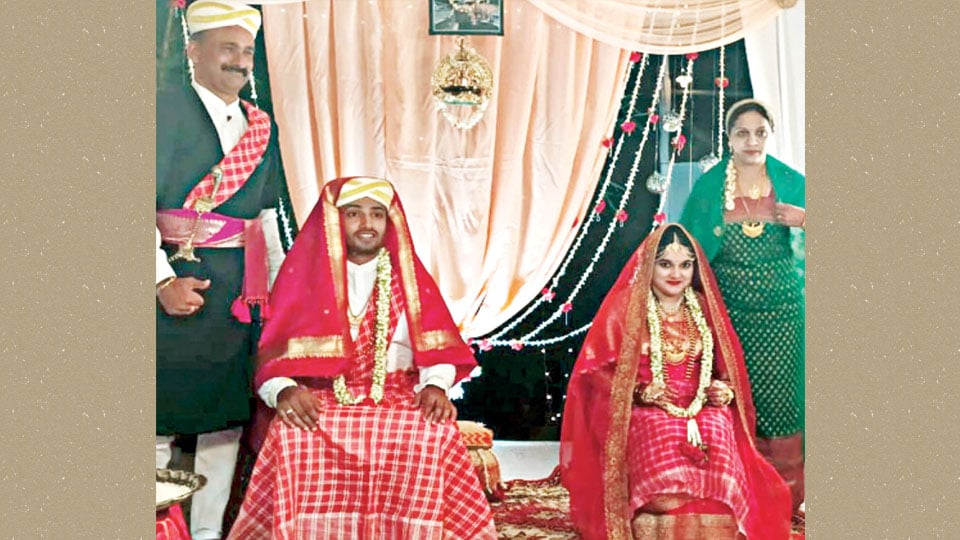
International hockey player Sannuvanda K. Uthappa, son of Sannuvanda Vasanth Kushalappa and Niraj of Devarapura, tied the nuptial knot with Sanjana, daughter of Puttichanda Uthappa and Leela of Bollarimad, at The Yellow Bamboo Resort in Balaji, South Kodagu, yesterday.
Only family members of the couple and close relatives were part of the simple ceremony (Dampathi Muhurtha) held last evening.
source: http://www.starofmysore.com / Star of Mysore / Home> Sports / September 28th, 2020
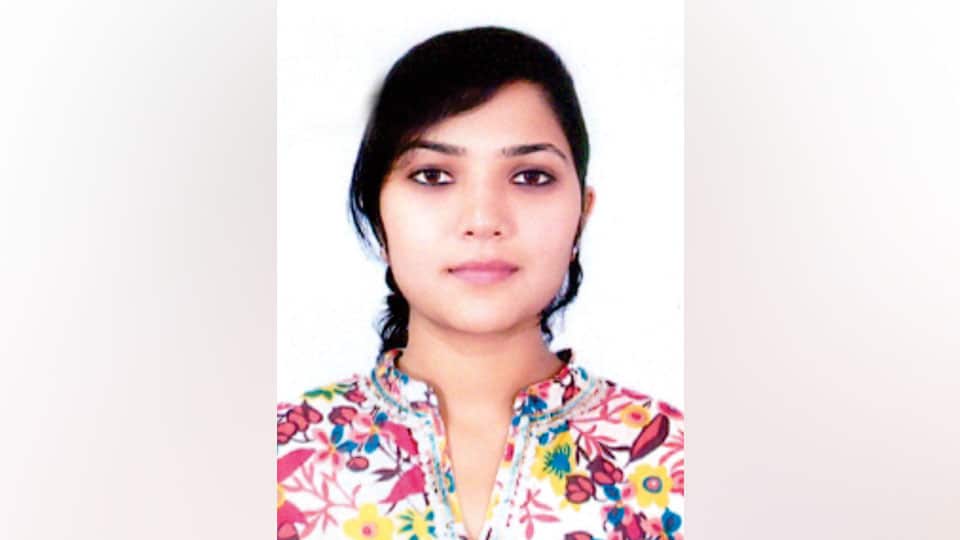
Dr. Chaitra Narayan, an entrepreneur, has been appointed as the Syndicate Member of University of Mysore.
As per the notification issued from the Office of the Governor, the term of office shall be for a period of three years with effect from Sept. 22, 2020.
Dr. Chaitra, Founder of Codagu Agritech and Shivam Distillations, holds a Ph.D and MSc in Microbiology from the University of Mysore.
She was selected by Rashtrapathi Bhavan, New Delhi, for the Festival of Innovation and Entrepreneurship in 2018 to present her ideas before President Ram Nath Kovind. She also presented the Biocapsule technology, which is a ‘Make in India’ initiative before Prime Minister Narendra Modi.
Currently working for the farmers of Kodagu, Hunsur and Periyapatna regions since 2016 towards alternative farming which involves cultivation of medicinal and aromatic plants, it has successfully led to an increase in revenue generation of farmers along with an assured buy-back market.
Codagu Agritech is a Biocapsule Manufacturing Company which helps farmers go for safe and sustainable farming while Shivam Distillations focuses on providing farmers of Hunsur and Periyapatna regions to cultivate aromatic crops as an alternative to tobacco cultivation.
An aromatic plant processing and distillation unit has been set up in the region to provide the farmers with the market at their doorstep.
source: http://www.starofmysore.com / Star of Mysore / Home> News / September 29th, 2020
Poonam Chattoo with her husband and Real Kashmir owner Sandeep Chattoo.
Over the past couple of seasons, Real Kashmir FC have been a beacon of joy for the people in India’s northernmost union territory.
A club that beat many odds to gain promotion to the I-League, mounted a title charge against all expectations in its first season in top-flight football and overcame the challenges posed by lockdown to achieve higher standards.
The men’s team has brought smiles to their people. And now it’s the women’s turn. At the helm is Poonam Chattoo, a Karnataka native who made Kashmir her home after her marriage to RKFC owner Sandeep Chattoo three decades ago.
“My parents are coffee planters settled in Kodagu after my father retired from the Food Corporation of India. It’s been a long journey from Kodagu to Kashmir, both diverse culturally, geographically and climatically, but I am grateful for the love and affection I have received,” Poonam, who gradutated from Bengaluru after schooling in Chandigarh, tells DH.
The women’s team has been in the making for a long time and the response has been overwhelming, according to Poonam, a teacher.
The requests flooded in from girls after RKFC made a name in the I-League but with so much unpredictability, they started in a small way with a She Power Programme with DPS, Srinagar. Now, the club has taken the plunge by starting registrations for building U-10 and U-14 teams. A training ground also has been identified and plans are being made to ensure they take part in national tournaments.
“(Coming from Karnataka) Sports is definitely in our blood. That mindset has helped me see things differently. All that these young girls need is just an avenue for their talents to bloom,” says Poonam.
“The past year has been dark but then the last couple of decades have not been easy either. Sport has always provided psychological, physiological and cathartic relief and I have always felt that the women have borne the bigger brunt of the circumstances. The girls just did not have an outlet.”
In her quest for understanding the difficulties, she had chats with Afshan Ashiq — captain of Kashmir football team and part of the recent virtual meeting with PM Narendra Modi for the Fit India Movement — about the trials and tribulations she faced and continues to face. Poonam also spoke to Irtiqa Ayoub who runs a rugby team in Kashmir.
“God willing, if we are able to bring hope to even a handful of young girls, I would consider it a blessing,” Poonam admits.
There are big challenges ahead, though, especially for someone as inexperienced as Poonam in the labyrinth that is Indian football.
“Yes, I have no experience of managing a football team, but having been a teacher it shouldn’t be a problem, plus we have very able coaches and a support team. And of course, we have a big brother in RKFC who we can always call for support.
“One doesn’t stop living….we just find different ways to go about our business,” she says.
Well, few are as adept at doing that at that as RKFC.
source: http://www.deccanherald.com / Deccan Herald / Home> Sports> Football / by Sandeep Menon / DHNS, Bengaluru / September 29th, 2020
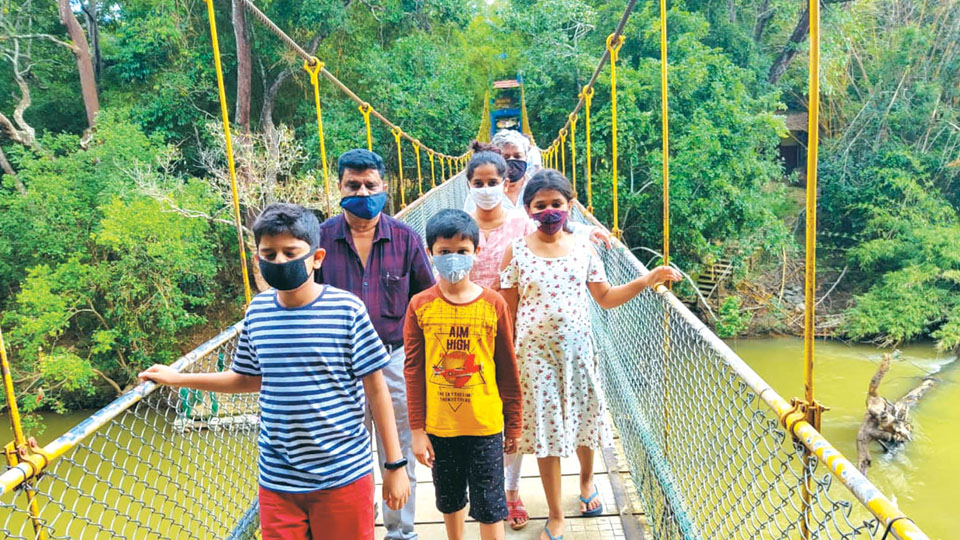
With the Government opening up the tourism sector following phased COVID-19 induced lockdown relaxations, Cauvery Nisargadhama, a prominent tourist destination near Kushalnagar in Kodagu, is witnessing a spurt in the number of tourists in recent days.
Yesterday, being a Sunday, the tourist spot recorded as many as 600 visitors and this number is significantly more when compared to last week.
Overall, the district recorded more number of visitors, thus bringing some hope for those dependent on the tourism industry. However, at the same time, tourists are disappointed that other most visited tourist spots such as Dubare Elephant Camp and the Golden Temple at Bylakuppe have not re-opened for tourists despite lockdown relaxations.
source: http://www.starofmysore.com / Star of Mysore / Home> News / September 28th, 2020
WELCOME. If you like what you see "SUBSCRIBE via EMAIL" to receive FREE regular UPDATES.
Read More »