Indian firm develops vaccine for Blue Tongue

Hyderabad :

Indian Immunologicals Limited (IIL) has launched a vaccine for Blue Tongue disease that affects domestic animals such as goats, sheep, cattle and camels. India is among the top victims of this disease. The mortality rate is quite high at 30 per cent.

The penta-valent vaccine Raksha-Blu protects all the five virus strains that cause the disease in India. It is priced at Rs. 5 a dose.

An arm of the National Dairy Development Board (NDDB), the IIL claims that it is the first vaccine developed indigenously for the disease.

“There are 24 viral strains prevalent in the world. In India, about five strains are predominant. Besides high level of mortality, it causes morbidity too. There has been no vaccine developed so far to protect the animals from the disease,” a company statement said here on Wednesday.

The Indian Council of Agricultural Research (ICAR) and Tamil Nadu University of Veterinary and Animal Sciences too have taken part in the development of the vaccine.

source: http://www.thehindubusinessline.com / Business Line / Home> Agri-Biz / by K. V. Kurmanath / Hyderabad – September 24th, 2014

Tata Coffee reappoints Hameed Huq as MD

The Board of Directors of Tata Coffee Ltd at its meeting held on November 07, 2013, have reappointed Mr. Hameed Huq as Managing Director on the expiry of his present tenure of office viz from January 03, 2014 to March 31, 2015.

Shares of Tata Coffee Ltd was last trading in BSE at Rs.1054.65, down by Rs.78.40 or 6.92%. The stock hit an intraday high of Rs.1154.95 and low of Rs.1020.

The total traded quantity was 1.69 lakhs as compared to 2 week average of 0.42 lakhs.

Source: Equity Bulls

source: http://www.equitybulls.com / Equity Bulls / Home> Stock Report / November 07th, 2013 (2013-11-07)

Former Kodagu ZP VIice-President Iqbal Hassan shot dead

IqbalHassanMPOs24sept2014

Virajpet :

Local Congress leader and former Kodagu ZP Vice-President Iqbal Hassan (46), was shot dead in broad daylight by unidentified assailants at Virajpet town in Kodagu district on Wednesday.

Iqbal was taking his seat for having lunch at a hotel in the busy Gadiyara Kamba area of the town at about 2 pm, when one of the two miscreants who came in a maroon coloured Maruti Alto car shot him in the chest, killing him instantly.

The miscreant reportedly fired another round which hit another person by name Chandrasekhar, a resident of Shivakeri, who was having lunch in the hotel, injuring him on his leg and chest. He was immediately rushed to Virajpet Government Hospital, from where he was shifted to Madikeri Hospital for advanced treatment. The miscreants managed to flee in the car in which they had come.

It is said that Hassan was reportedly involved in a dispute over a property with one Moosa, his neighbour, which had resulted in a clash between the two rival groups a few days ago, with both the groups complaining to the Virajpet Police.

Following the complaint and counter complaint, the Police had summoned both the groups to the Police Station yesterday and had succeeded in making both the groups arrive at a compromise, it is learnt.

The deceased Hassan is survived by wife and two sons aged 15 and 12. On hearing the news, residents of Virajpet town and surrounding areas streamed into the hospital and demanded arrest of the culprits.

Iqbal Hassan, who was associated with the Congress was serving as on office-bearer of the party’s Kodagu District Minority Cell.

He was elected to Kodagu ZP from Kadanur Constituency in Virajpet Taluk and served as ZP Vice-President from July 12, 2000 to March 12, 2002. He had also been ZP incharge-President for some time.

IGP (Southern Range) B.K. Singh, Kodagu SP Varthika Katiyar and other senior officials rushed to the spot. The Police have stepped up security in Virajpet Town following the murder.

source: http://www.starofmysore.com / Star of Mysore / Home> General News / September 18th, 2014

2013 was a year of joy, sorrow for Kodagu

Kodagu district witnessed a series of incidents in the year 2013 that has bygone. The year brought joy and sorrow to the district, however a keen look into the year reveals that the district witnessed more negative events than the positive ones.

From the heavy rainfall that proved disasterous to the district, to the reports under the guise of conservation of environment creating ripple in the society, the district has seen it all. It was also a year of protest, as there were repeated protests opposing Madhav Gadgil report and Kasturirangan report on conservation of Western Ghats, demand for title deeds to tribal, demand for relaxing the law on possession of weapons, protest seeking autonomy status to Kodagu.

Of all the events, the rain fury leading to major damage across the district, occupies the first place in the list of events. Coffee growers and agriculturists incurred crores of rupees loss due to rain. Six persons and 30 cattle lost their lives. The district administration had submitted a report to a study team from the Central government estimating the rain loss at Rs 86 crore.

The district witnessed a success in the form of amendment to the Land Revenue Act, 1964, scrapping the tax imposed on Jumma Bane land. Unfortunately, despite the amendment, people complain that the revenue department officials have failed to implement the Act effectively.

The presence of Maoist activities which was felt in the end of 2012, continued even in 2013. Maoist activities were noticed in Madikeri, Virajpet and Somwarpet taluks. In this backdrop, the government has decided to set up an Anti Naxal Force camp in Kutta.

For the first time in the history, Talacauvery – Bhangadeshwara temple management committee offered ‘Annadana’ for a period of one month from October 17 to November 16 as a part of Tulasankramana.

Despite the disputes that prevailed in offering ‘Annadana’ right to private organisation, ‘Annadana’ was offered, thanks to the efforts by Deputy Commissioner Anurag Tiwari who strove hard to co-ordinate between the temple committee and Kodagu Ekikarana Ranga.

source: http://www.deccanherald.com / Deccan Herald / Home> District / by Shrikanth Kallammanavar / Madikeri, DHNS – December 31st, 2013

Gazal Somaiah to up her glam stakes

GazalKF23sept2014

Gazal Somaiah, who made her T-Town debut with Uu Kodathara Ulikki Padathara, will be seen in a chirpy role in her next film, The End, directed by Rahul Sankrityan. Taking about her role, Gazal says, “It’s a horror film and my role offers ample scope to perform. I play a glamorous urban girl,Rekha,who is full of energy. I’m totally caught unawares with the paranormal happenings around me,” says the actress who was admittedly “very apprehensive” initially about the film.

The most difficult part of shooting for Gazal was dubbing her lines. “When my director couldn’t find a suitable voiceover artiste, I jokingly said I’ll dub for my lines. Then we went ahead and I think it’s the most difficult part in the filmmaking. But being a South Indian, I’m familiar with Telugu and I was able to complete the task”, explains the Coorg born actress, who will also be seen in a romantic entertainer Jagame Maya.

source: http://www.timesofindia.indiatimes.com / The Times of India / Home> Entertainment> Telugu> Movies / by Shashidhar AS / September 22nd, 2014

The Tamara Coorg wins ‘Best Luxury Honeymoon Resort in India’

TamaraCoorgKF22sept2014

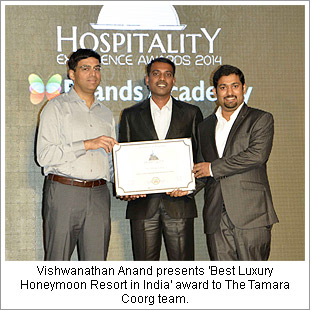
The Tamara Coorg won the award for ‘Best Luxury Honeymoon Resort in India’ at the Service Excellence Awards 2014 organised by Brands Academy recently.

Established as a celebration of unmatched excellence, Service Excellence Awards honour the doers and pioneers of the service industry. World-renowned chess champion, Vishwanathan Anand, presented the awards at a gala ceremony held in Mumbai, India.

Senthil Kumar, CEO, The Tamara Coorg, attributed the resort’s successes to its dedicated staff and world-class standards. “We are honoured to win this award and be recognised for our services. We strive to not only maintain our standards but to continue to exceed our guest’s expectations in the wonderful journey that lies ahead of us,” he said.

source: http://www.hospitalitybizindia.com / HospitalityBizIndia.com / Home> Newstrack / by HBI Staff, Mumbai / Monday – June 09th, 2014

From berry to brew…

CoffeeKODAGU21sept2014
Coffee was once a closely guarded Arabian secret until Baba Budan, a Sufi mystic, smuggled seven beans from Yemen and scattered them on the hills of Chikmagalur, from where it spread to the rest of India…Anurag Mallick and Priya Ganapathy spill the beans on the story of coffee, the world’s most popular brew.

It was Napoleon Bonaparte who once grandly announced, “I would rather suffer with coffee than be senseless.” Sir James MacKintosh, 18th century philosopher, famously said, “The powers of a man’s mind are directly proportional to the quantity of coffee he drank.” In The Love Song of J Alfred Prufrock, when T S Eliot revealed, “I have measured out my life with coffee spoons,” he hinted at the monotony of socialising and the coffee mania of the 1900s. German musical genius J S Bach composed the ‘Coffee Cantata’ celebrating the delights of coffee at a time when the brew was prohibited for women.

“If I couldn’t, three times a day, be allowed to drink my little cup of coffee, in my anguish I will turn into a shriveled-up roast goat,” cried the female protagonist! French author Honoré de Balzac wrote the essay ‘The Pleasures and Pains of Coffee’ to explain his obsession, before dying of caffeine poisoning at 51. Like Voltaire, he supposedly drank 50 cups a day! So, what was it about coffee that inspired poets, musicians and statesmen alike?

Out of Africa

Long before coffee houses around the world resounded with intellectual debate, business deals and schmoozing, the ancestors of the nomadic Galla warrior tribes of Ethiopia had been gathering ripe coffee berries, grinding them into a pulp, mixing it with animal fat and rolling them into small balls that were stored in leather bags and consumed during war parties as a convenient solution to hunger and exhaustion! Wine merchant and scientific explorer James Bruce wrote in his book Travels to Discover the Source of the Nile that “One of these balls they (the Gallas) claim will support them for a whole day… better than a loaf of bread or a meal of meat, because it cheers their spirits as well as feeds them”. Other African tribes cooked the berries as porridge or drank a wine prepared from the fermented fruit and skin blended in cold water.

Historically, the origins of the coffee bean, though undated, lie in the indigenous trees that once grew wild in the Ethiopian highlands of East Africa. Stories of its invigorating qualities began to waft in the winds of trade towards Egypt, North Africa, the Middle East, Persia and Turkey by the 16th Century. The chronicles of Venetian traveller Gianfrancesco Morosini at the coffee houses of Constantinople in 1585 provided Europeans with one of the foremost written records of coffee drinking. He noted how the people ‘are in the habit of drinking in public in shops and in the streets — a black liquid, boiling as they can stand it, which is extracted from a seed they call Caveè… and is said to have the property of keeping a man awake.’

It was only a matter of time before the exotic flavours of this intoxicating beverage captured the imagination of Europe, prompting colonial powers like the Dutch, French and the British to spread its cultivation in the East Indies and the Americas. Enterprising Dutch traders explored coffee cultivation and trading way back in 1614 and two years later, a coffee plant was smuggled from Mocha to Holland. By 1658, the Dutch commenced coffee cultivation in Ceylon (Sri Lanka). The word ‘coffee’ is apparently derived from qahwah (or kahveh in Turkish), the Arabic term for wine. Both the terms bear uncanny similarity to present day expressions — French café, Italian caffè, English coffee, Dutch koffie or even our very own South Indian kaapi. A few scholars attribute ‘coffee’ to its African origins and the town of Kaffa in Ethiopia, formerly known as Abyssinia. However, the plant owes its name “Coffea Arabica” to Arabia, for it was the Arabs who introduced it to the rest of the world via trade.

As all stories of good brews go, coffee too was discovered by accident. Legends recount how sometime around the 6th or 7th century, Kaldi, an Ethiopian goatherd, observed that his goats became rather spirited and pranced after they chewed on some red berries growing in wild bushes. He tried a few berries and felt a similar euphoria. Excited by its effects, Kaldi clutched a handful of berries and ran to a nearby monastery to share his discovery with a monk. When the monk pooh-poohed its benefits and flung the berries into the fire, an irresistible intense aroma rose from the flames. The roasted beans were quickly salvaged from the embers, powdered and stirred in hot water to yield the first cup of pure coffee! This story finds mention in what is considered to be one of the earliest treatises on coffee, De Saluberrima Cahue seu Café nuncupata Discurscus, written by Antoine Faustus Nairon, a Roman professor of Oriental languages, published in 1671.

Flavours from Arabia

Coffee drinking has also been documented in the Sufi monasteries of Yemen in South Arabia. Arabic manuscripts dating back to the 10th Century mention the use of coffee. Mocha, the main port city of Yemen, was a major marketplace for coffee in the 15th century. Even today, the term ‘mocha’ is synonymous with good coffee. Like tea and cocoa, coffee was a precious commodity that brought in plenty of revenue. Hence, it remained a closely guarded secret in the Arab world. The berries were forbidden to leave the country unless they had been steeped in boiling water or scorched to prevent its germination on other lands.

In 1453, the Ottoman Turks brought coffee to Constantinople, and the world’s first coffee shop Kiva Han opened for business. As its popularity grew, coffee also faced other threats. The psychoactive and intoxicating effects of caffeine lured menfolk to spend hours at public coffee houses drinking the brew and smoking hookahs, which incited the wrath of orthodox imams of Mecca and Cairo. As per sharia law, a ban was imposed on coffee consumption in 1511. The Grand Mufti Mehmet Ebussuud el Imadi was hailed when he issued a fatwa allowing the consumption of coffee, by order of the Ottoman Turkish Sultan Selim I in 1524.

Though subsequent bans were re-imposed and lifted at various points of time according to the whims of religious politics and power, coffee pots managed to stay constantly on the boil in secret, or in the open, for those desirous of its potent influence. Given the fact that Sufi saints advocated its uses in night-time devotions and dervishes and Pope Clement VIII even baptised the bean to ward off the ill-effects of what was regarded by the Vatican as ‘Satan’s drink’ and the ‘Devil’s Mixture of the Islamic Infidels’ till the 1500s, it is easy to see why coffee is nothing short of a religion to some people.

Coffee enters India & beyond

Surprisingly, India’s saga with coffee began in 1670 when a Muslim mystic, Hazrat Dada Hyat Mir Qalandar, popularly known as Baba Budan, smuggled seven beans from Arabia and planted them on a hillock in the Chikmagalur district of Karnataka. The hills were later named Baba Budan Giri in his memory. From here, coffee spread like bushfire across the hilly tracts of South India.

In 1696, Adrian van Ommen, the Commander at Malabar, followed orders from Amsterdam and sent off a shipment of coffee plants from Kannur to the island of Java. The plants did not survive due to an earthquake and flood but the Dutch pursued their dream of growing coffee in the East Indies with another import from Malabar. In 1706, the Dutch succeeded and sent the first samples of Java coffee to Amsterdam’s botanical gardens from where it made further inroads into private conservatories across Europe. Not wishing to be left behind, the French began negotiating with Amsterdam to lay their hands on a coffee tree that could change their fortunes. In 1714, a plant was sent to Louis XIV who gave it promptly to the Jardin des Plantes at Paris for experimentation. The same tree became the propagator of most of the coffees in the French colonies, including those of South America, Central America and Mexico.

The importance of coffee in everyday life can be gauged by the fact that its yield forms the economic mainstay of several countries across the world; its monetary worth among natural commodities beaten only by oil! It was only in 1840 that the British got into coffee cultivation in India and spread it beyond the domain of the Baba Budan hills.

Arabica vs Robusta

Kodagu and Chikmagalur are undoubtedly the best places to know your Arabica from your Robusta and any planter worth his beans will trace coffee’s glorious history with pride. The strain that Baba Budan got was Coffea arabica and because of its arid origins, it thrived on late rainfall. Despite its rich taste and pleasing aroma, the effort required to cultivate it dented its popularity. The high-altitude shrub required a lot of tending, was susceptible to pests, and ripe Arabica cherries tended to fall off and rot. Careful monitoring at regular intervals affected production cost and profitability.

Till 1850, Arabica was the most sought-after coffee bean in the world and the discovery of Robusta in Belgian Congo did little to change that. Robusta (Coffea canephora), recognised as a species of coffee only as recently as 1897, lived up to its name. Its broad leaves handled heavy rainfall much better and the robust plant was more disease-resistant. The cherries required less care as they remained on the tree even after ripening. Its beans had twice the caffeine of Arabica, though less flavour, which was no match for the intense Arabica. It was perceived as so bland that the New York Coffee Exchange banned Robusta trade in 1912, calling it ‘a practically worthless bean’!

But in today’s new market economy, the inexpensive Robusta makes more commercial sense and is favoured for its good blending quality. Chicory, a root extract, was an additive that was introduced during the Great Depression to combat economic crisis that affected coffee. It added more body to the coffee grounds and enhanced the taste of coffee with a dash of bitterness. Though over 30 species of coffee are found in the world, Arabica and Robusta constitute the major chunk of commercial beans in the world. ‘Filter kaapi’ or coffee blended with chicory holds a huge chunk of the Indian market. Plantations started with Arabica, toyed with Liberica, experimented with monkey parchment and even Civet Cat coffee (like the Indonesian Luwak Kopi — the finest berries eaten by the civet cat that acquire a unique flavour after passing through its intestinal tract), but the bulk of India’s coffee is Robusta.

As the coffee beans found their way from the hilly slopes of the Western Ghats to the ports on India’s Western Coast to be shipped to Europe, a strange thing happened. While being transported by sea during the monsoon months, the humidity and winds caused the green coffee beans to ripen to a pale yellow. The beans would swell up and lose the original acidity, resulting in a smooth brew that was milder. This characteristic mellowing was called ‘monsooning’. And thus was born Monsooned Malabar Coffee.

Kodagu, India’s Coffee County

Currently, Coorg is the largest coffee-growing district in India, and contributes 80% of Karnataka’s coffee export. It was Captain Lehardy, first Superintendent of Kodagu, who was responsible for promoting coffee cultivation in Coorg. Jungles were cleared and coffee plantations were started. In 1854, Mr Fowler, the first European planter to set foot in Coorg, started the first estate in Madikeri, followed by Mr Fennel’s Wooligoly Estate near Sunticoppa. The next year, one more estate in Madikeri was set up by Mr Mann. In 1856, Mr Maxwell and Mcpherson followed, with the Balecadoo estate. Soon, 70,000 acres of land had been planted with coffee. A Planters Association came into existence as early as 1863, which even proposed starting a Tonga Dak Company for communication. By 1870, there were 134 British-owned estates in Kodagu.

Braving ghat roads, torrid monsoons, wild elephants, bloodthirsty leeches, hard plantation life and diseases like malaria, many English planters made Coorg their temporary home. Perhaps no account of Coorg can be complete without mentioning Ivor Bull. Along with District Magistrate Dewan Bahadur Ketolira Chengappa, the enterprising English planter helped set up the Indian Coffee Cess Committee in 1920s and enabled all British-run estates to form a private consortium called Consolidated Coffee. In 1936, the Indian Cess Committee aided the creation of the Indian Coffee Board and sparked the birth of the celebrated India Coffee House chain, later run by worker co-operatives. With its liveried staff and old world charm, it spawned a coffee revolution across the subcontinent that has lasted for decades.

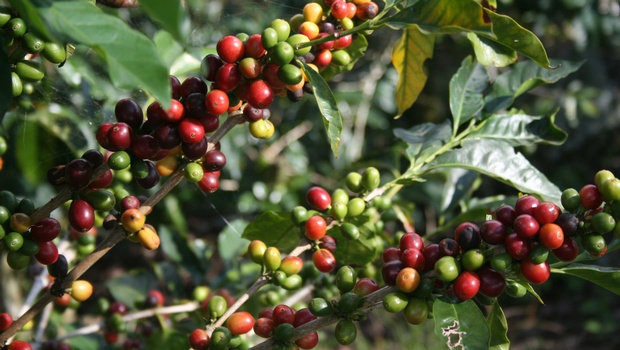
Connoisseurs say Coorg’s shade grown coffee has the perfect aroma; others ascribe its unique taste to the climatic conditions and a phenomenon called Blossom Showers, the light rain in April that triggers the flowering of plants. The burst of snowy white coffee blossoms rends the air thick with a sensual jasmine-like fragrance. Soon, they sprout into green berries that turn ruby red and finally dark maroon when fully ripe. This is followed by the coffee-picking season where farm hands pluck the berries, sort them and measure the sacks at the end of the day under the watchful eye of the estate manager.

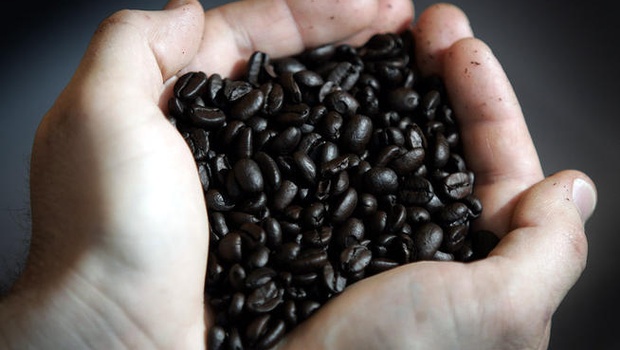
The berries are dried in the sun till their outer layers wither away; coffee in this form is called ‘native’ or parchment. The red berries are taken to a Pulp House, usually near a water source, where they are pulped. After the curing process, the coffee bean is roasted and ground and eventually makes its journey to its final destination — a steaming cup of bittersweet brew that you hold in your hands.

The ‘kaapi’ trail

In India, coffee cultivation is concentrated around the Western Ghats, which forms the lifeline for this shrub. The districts of Coorg, Chikmagalur and Hassan in Karnataka, the Malabar region of Kerala, and the hill slopes of Nilgiris, Yercaud, Valparai and Kodaikanal in Tamil Nadu account for the bulk of India’s coffee produce. With 3,20,000 MT each year, India is the 6th largest coffee producer in the world.

Recent initiatives to increase coffee consumption in the international and domestic market prompted the Coffee Board, the Bangalore International Airport and tour operator Thomas Cook to come together and organize coffee festivals and unique holiday packages like The Kaapi Trail to showcase premium coffees of South India. Coffee growing regions like Coorg, Chikmagalur, B R Hills, Araku Valley, Nilgiris, Shevaroy Hills, Travancore, Nelliyampathy and Palani Hills are involved in a tourism project that blends leisure, adventure, heritage and plantation life.

At the Coffee Museum in Chikmagalur, visitors can trace the entire lifecycle of coffee from berry to cup. In Coorg and Malnad, besides homestays, go on Coffee Estate holidays with Tata’s Plantation Trails at lovely bungalows like Arabidacool, Woshully and Thaneerhulla…
The perfect cuppa

Making a good cup of filter coffee traditionally involves loading freshly ground coffee in the upper perforated section of a coffee filter. About 2 tbs heaps can serve 6 cups. Hot water is poured over the stemmed disc and the lid is covered and left to stand. The decoction collected through a natural dripping process takes about 45 minutes and gradually releases the coffee oils and soluble coffee compounds. South Indian brews are stronger than the Western drip-style coffee because of the chicory content. Mix 2-3 tbs of decoction with sugar, add hot milk to the whole mixture and blend it by pouring it back and forth between two containers to aerate the brew.

Some places and brands of coffee have etched a name for themselves in the world of coffee for the manner in which coffee is made. The strength of South Indian Filter coffee or kaapi (traditionally served in a tumbler and bowl to cool it down), the purity of Kumbakonam Degree Coffee, the skill of local baristas in preparing Ribbon or Metre coffee by stretching the stream of coffee between two containers without spilling a drop… have all contributed to the evolution of coffee preparation into an art form.

With coffee bars and cafes flooding the market and big names like Starbucks, Costa, Barista, Gloria Jean’s, The Coffee Bean, Tim Horton’s and Café Coffee Day filling the lanes and malls in India along with local coffee joints like Hatti Kaapi jostling for space, it’s hard to escape the tantalising aroma of freshly brewed coffee. And to add more drama to the complexities of coffee, you can choose from a host of speciality coffees from your backyard — Indian Kathlekhan Superior and Mysore Nuggets Extra Bold, or faraway lands — Irish coffee and cappuccino (from the colour of the cloaks of the Capuchin monks in Italy) or Costa Rican Tarrazu, Colombian Supremo, Ethiopian Sidamo and Guatemala Antigua. And you can customise it as espresso, latte, mocha, mochachino, macchiato, decaf… Coffee is just not the same simple thing that the dancing goats of Ethiopia once enjoyed.

source: http://www.deccanherald.com / Deccan Herald / Home> Supplements> Sunday Herald / September 21st, 2014

Guest house in memory of State’s first IGP planned

It will come up at an estimated cost of Rs. 25 lakh

Kodagu District Retired Police Officers’ Association has mooted the idea

They want CMC to name a road after

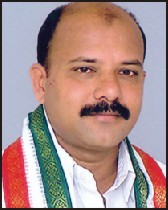
Pemmanda K. Monnappa

Madikeri:

The president of the Kodagu District Retired Police Officers’ Welfare Association, M.A. Appaiah, said here on Tuesday that a guest house in memory of the State’s first Inspector-General of Police, Pemmanda K. Monnappa, would be built near the Maitri Police Community Hall here at an estimated cost of Rs. 25 lakh.

Pemmanda K. Monnappa had served as the Commissioner of Police of the old Madras province. Later, he became the first Inspector General of Police, Karnataka (the then Mysore State), under the S. Nijalingappa government.

Funds

Mr. Appaiah, a retired Superintendent of Police, told presspersons that the guest house would be called ‘Swabhimana’. While some amount was being contributed by the Police Department in the form of grants, the rest would be mobilised through donations, Mr. Appaiah said.

Other cities

Memorials have been built in Mr. Monnappa’s memory in Chennai and Hyderabad. In Karnataka, it was the retired police officers’ idea to construct a guest house, Mr. Appaiah said. The association proposes to urge the Madikeri City Municipal Council (CMC) to name the road branching off from the College Road, near the Maitri Police Community Hall, leading towards the Subramanyanagar area, after Mr. Monnappa.

Career details

Pemmanda S. Ganapathi, a senior member of the Pemmanda family, recalled the services of Mr. Monnappa, who belonged to the Indian Police (IP) cadre. He had served in the Malabar area in Kerala and as the Superintendent of Police in Kurnool and Guntur in Andhra Pradesh. Mr. Monnappa then became the Commissioner of Police in Madras.

Milestone

Mr. Monnappa was instrumental in suppressing the Razakars rebellion in Andhra Pradesh as the Inspector-General of Police, Mr. Ganapathi said. The then Union Home Minister, Sardar Vallabbhai Patel, had chosen Mr. Monnappa to quell the mutiny in Hyderabad.

Recognition

After the reorganisation of the States in the country in 1956, Mr. Monnappa came back to the State, which was then called the Mysore State, to become the first Inspector General of Police, during the reign of S. Nijalingappa.

The British government, in recognition of Mr. Monnappa’s meritorious service, conferred on him the titles: ‘Rao Saheb’ and ‘Rao Bahadur’. He retired from service in the year 1958.

Mr. Monnappa’s son retired from service as a senior IAS officer and has now settled in Chennai.

Members of the Association, B.D. Mandappa, B.A. Poonacha, Y.D. Keshavananda, A.A. Appanna, A.B. Devaiah, A.M. Balakrishna, K.B. Belliappa and M. Achutan Nair, were present.

source: http://www.thehindu.com / The Hindu / Home> National> Karnataka / by Staff Correspondent / October 01st, 2008

Fresh Measures to Revive Coffee Sector in State

Coffee02KF18sept2014

Kalpetta :

The Coffee Board has outlined measures to revive the ailing coffee sector in the state.

The Board will provide financial aid to struggling coffee growers to purchase equipment, fertiliser and other inputs used in farm operations.

The amount of Rs 100 crore that has been set aside for ‘supporting mechanisation of farm operations’ under the 12th Five Year Plan will be utilised for providing subsidy to planters to purchase machineries.

According to the Coffee Board officials, planters will be provided financial assistance to procure machineries such as weed/brush cutter, pit-digging machine, telescopic pruner, hand-held/battery operated coffee harvester, sprayers, mini-tractors, power tillers, mini-transporters/rubber track carriers etc.

The new initiative is being rolled to promote mechanisation of farm activities to address the shortage of skilled labour, the officials said.

While small growers owning less than 20 hectares of plantation are eligible to get 50 per cent subsidy (up to Rs 2 lakh) for purchase of machinery, large farmers are eligible to obtain 20 per cent subsidy (up to Rs 5 lakh).

Apart from growers, registered societies with not less than 20 members and farmers’ groups are also eligible to avail benefits under the scheme.

The details of the project, including the names of the machineries sanctioned under the scheme and the sellers who have the necessary authorisation to sell them, are available on http://www.indiacoffee.org/

Details can also be obtained from the nearest liaison office under the Coffee Board. The last date for submission of application is October 31.

source: http://www.newindianexpress.com / The New Indian Express / Home> States> Kerala / by Express News Service / September 15th, 2015

Coffee and Mist: A Monsoon Journal from Coorg

CoffeeKF18sept2014

Bangalore :

When I was much younger, Coorg was a little squiggle on the map of Karnataka, its shadowy presence acknowledged by half-remembered geography lessons, coffee and by a certain gown-like drape of a certain Mrs Mundappa’s sari. The latter especially stood out eking out a visual cue for Coorg. Many years later in college, Coorg was one of the many places that people called home in the multicultural melting pot that was Delhi University. And almost all of them had an unbelievably high tolerance for fiery meat dishes. This naturally led to a conversation about the Pandi Curry or the famous spiced pork curry of the region. Some Coorgi folk actually believed that this dish was the sacred rite of passage for all meat lovers. Since a good Pandi Curry eluded me and those I sampled remained greasy blots in my food memory, just like the dish, with time, the place faded from the memory.

Five years later, as I crossed a bridge over the Cauvery, with the familiar highway markers announcing ‘Welcome to Kodagu District’ in, I felt a sudden rush of excitement as those half-remembered impressions flooded in.

In a few kilometres after the gateway town of Kushalnagar, the run-of-the-mill state highway suddenly transformed into a winding hilly road. Monsoon is not regarded as a favoured time to visit this region and yet, whenever I have travelled across South India, it has been under the aegis of the rain gods. Somehow, I have always enjoyed this off season experience which drives away the tourist hordes and returns the place to its quietude. The rain-washed land shorn of its summer dust has a fresh and dewy sheen. Coorg was no different and my first glimpse of the lush and wild forested tracts interspersed with the vast coffee plantations, was through a gap between passing rain clouds. As the sun cast its errant late afternoon beams across the road, the coffee bushes glistened, cementing this as a lasting snapshot of the place.

Coorg or the Kodagu district is the least populous of the 30 districts of Karnataka which make it one of the few places where the wilderness per square kilometre is far more than the human population around these parts. Also, since large tracts of this district are privately owned by the coffee planters (Coorg is India’s most important coffee-growing district), that ensures that the forest cover remains unspoilt and thus the region supports an extraordinary biodiversity. This also prevents any unnecessary development in an area which draws hundreds of holidaymakers. As a result there is the growth of a new hospitality industry—one which thrives on homestays and extremely luxurious boutique properties helmed by the plantation owners.

As we made our way through the bumpy non-roads a little above Suntikoppa into the Old Kent Estate, the Coorgi terrain enveloped us in her musky, squelchy and coffee-scented bosom. An idyll in the middle of 200 odd acres of coffee, cardamom and pepper crops, the Old Kent Estate is a renovated version of quintessentially English coffee bungalow. 21st century comforts are juxtaposed against coffee plantation walks and traditional Coorgi food. This is the template for most Coorgi homestays or resorts. We spent our days walking around misty hill roads. Like many other places, Coorg has also been more about the ‘in between’ journeys rather than the popular tourist spots. An initial sightseeing experience at the Abbey Falls left us a little scarred. Buffeted by the jet spray of the fairly impressive waterfall and trampled by nearly five score camera-happy tourists who braved precarious rocks and moss-sodden perches in order to get the perfect shot, we did a quick about turn just as we got a glimpse of the waterfall. The tourist legions had left in its wake reams of orange Haldiram bhujia packets, while the all-round wetness had led to a proliferation of leeches and you were lucky if you left Abbey Falls without a bloodsucker in tow. Thereafter we drove around aimlessly, tracking the natural beauty of the rolling hills and stopping where we pleased. Lured by ambling cows, little bridges over gurgling streams and picturesque sunsets, we were masters of our own itineraries.

A strange fact I discovered is that although this is the land of coffee with green beans hanging from every bush that you see by the highway, a good cuppa is not all that easy to come across. The best coffee of the region is actually packed off to the auction houses and sold off to foreign buyers. They return to India via the circuitous international coffee chain route with a 100 percent markup and are served in branded cups or as freeze-dried packs of Arabica and Robusta with esoteric descriptions on their labels.

Apart from the plantation homestays, it is rather unlikely that one will find Coorgi coffee at a roadside stall. A single ambitious shop in Madikeri has forward integrated into a cafe and this was where we had our first traditional Coorgi coffee, made with local beans and sweetened with jaggery­—a perfectly heartwarming brew. However, we managed to wrangle many a cuppa from the kitchen in our estate. And while we took in the changing light across the coffee bushes, we drank deeply of the brew of the land.

While coffee is an integral aspect of Coorgi cuisine, a plentiful bounty of the land, so is meat. Traditionally the Kodavas (the indigenous locals who had settled in the region thousands of years ago) were fierce hunters who subsisted on game that they caught and the produce of the land. This included a limited number of vegetables and resulted in a largely meat-based diet. And it is the meat from the wild boar hunt that forms the region’s greatest delicacy—the Pandi Curry. While we tasted our delightful Pandi Curry in a restaurant with a jaw-dropping view across a valley, most Pandi curries are best had in traditional homes accompanied by banter and snowy akki rotis.

I discovered that the true beauty of Coorg lies outside human settlement and in its fragrant coffee and delectable food. Everything is born of the soil, including its people. It rains as I walk under bulbous jackfruit, hanging from mossy branches. I pick an occasional green berry off a coffee plant and watch kingfishers create a sudden gash of blue across the green canvas. This is a Coorgi monsoon. And it is like no other that I have seen.

source: http://www.newindianexpress.com / The New Indian Express / Home> Cities> Bangalore / by Diya Kohli / September 18th, 2014