Madikeri Dasara committee submits audit report

Committee had spent ` 91.31 L in 2013 Dasara

For the first time, Madikeri Dasara Committee has submitted the audit report of the expenditure of 2013 Dasara to the district administration. The State government has been giving funds to the committee to organise Dasara with grandeur, from last few years.

According to the audit report, the government had sanctioned Rs 75 lakh for organising the programme. The total expenditure during 10 days was Rs 91,31,711 which includes funds collected from general public. Dasara Utsav Committee Working President K M Ganesh told Deccan Herald that the report which has been audited by chartered accountants has been submitted to the district administration. “As we requested the chief minister to release additional fund this year, he has agreed to release an additional Rs 25 lakh. We will upload the expenditure of this year’s Dasara on the website – www.madikeridasara.com, which can be viewed by general public.

However, the government has imposed three terms and conditions while sanctioning the amount. They are, to use the money for the same purpose for which it has been sanctioned, to submit an utilisation certificate of the proper use of released fund and to follow the rules under Transparency Act, 1999 in collection of public fund.

Meanwhile, the district registration officer has reported the district administration stating that Madikeri City Dasara Committee has not renewed its registration since 18 years. The committee was registered on May 4, 1987. Though it is supposed to be renewed every year, it was last renewed in 1995-96.

source: http://www.deccanherald.com / Deccan Herald / Home> District / by Shrikanth Kallammanavar / Madikeri – DHNS , September 03rd, 2014

Joshna, Dipika honoured

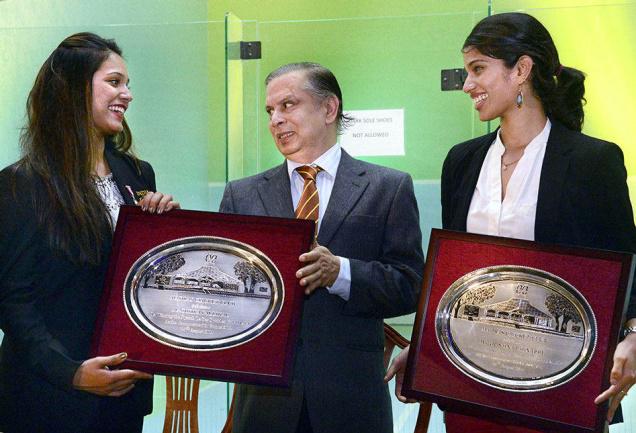
Dipika Pallikal and Joshna Chinappa being felicitated by MCC President Ajit Kumbhat. Photo : M.Vedhan

Madras Cricket Club (MCC) on Saturday honoured two of its “own children” — Joshna Chinappa and Dipika Pallikal — for having won the squash doubles gold at the Glasgow Commonwealth Games.

MCC president Ajit Kumbhat, hailed Joshna and Dipika as “role models for future generations.”

Tamil Nadu Squash Rackets Association founder member Dr. Ravi Santosham described the duo as “world champions”. Also, Joshna’s comeback from a grave knee surgery a few years ago was the stuff of legends, he said.

Former men’s National squash champion Ali Ispahani urged Joshna and Dipika “to stay out of the country for eight months (in a year)” if they wished to succeed. “If they stay out of India (and practice abroad) they can reach the top 5 (in the world),” he said. The day is not far off when the “girls from our club” will become world champions, he added.

The Hindu Sports Editor Nirmal Shekar said the growth of squash had a lot do with “N. Ramachandran (World Squash Federation president) and clubs like MCC.” He added: “they (Joshna & Dipika) will be right on top (in world rankings) in the next few years.”

Former World women’s champion Sarah Fitz-Gerald, now coach of Dipika, said both the players had “the ability to go higher.”

source: http://www.thehindu.com / The Hindu / Home> Sport> Other Sports / by Special Correspondent / Chennai – August 31st, 2014

Teachers, students differ on move to install CCTVs in classes

AMUCT against proposal, political student organisations in support

Teachers and students differ on Mangalore University’s move to install closed circuit television (CCTV) cameras in classrooms and laboratories in institutes owned by the university.

Vice-Chancellor K. Byrappa announced on Tuesday that the university will install CCTV cameras in classrooms, laboratories and at the university campus at Mangalagangotri, its post-graduate centre at Chikka Aluvara in Kodagu district and its two constituent colleges – University College in Mangalore and Field Marshal K.M. Cariappa College in Madikeri.

The Association of Mangalore University College Teachers (AMUCT) might have opposed the decision but the Association of Principals of Government First Grade Colleges under Mangalore University welcomed the move. Politically affiliated student organisations – Akhila Bharatiya Vidyarthi Parishat (ABVP), Students’ Federation of India (SFI) and National Students’ Union of India (NSUI) have also supported the university’s move.

Norbert Lobo, president, AMUCT told The Hindu that the bond between students and teachers was based on trust and hence there was no need to question it by installing CCTV cameras. He said the cameras could be installed on the campus, corridors and other common places. He said many colleges had installed the cameras on their campuses and police had instructed the colleges to do so as a security measure.

K. Radhakrishna, president, Association of Principals of Government First Grade Colleges under Mangalore University, said CCTV cameras in classrooms were required to monitor students as many government colleges were facing dearth of staff.

He said if some government colleges under the university, such as the ones in Vitla and Tenkanidiyoor, already installed the cameras both in classrooms and campuses some colleges were installing it.

Jayesh P K, city secretary, ABVP, Ashith Pereira, district president, NSUI, Nitin Kuttar, district president, SFI, said that the cameras in class rooms and campuses helped as a security measure in many a way.

Teachers and students said that many colleges have already banned the use of cell phones not only in class rooms and in campuses. Students would have to take permission of principals to bring cell phones.

Mr. Radhakrishna said that the government and the university sent circulars every year reminding colleges not to allow use of cell phones in colleges.

source: http://www.thehindu.com / The Hindu / Home> Features> Education Plus> College / by RaviPrasad Kamila / Mangalore – August 28th, 2014

440kV Power Line Gets Expert Panel Nod

Bangalore :

An expert committee has given the go-ahead for the proposed 400-kV Mysore-Kodagu-Kozhikode power line passing through eco-sensitive forest zones. It said the power line can follow the original alignment, despite serious apprehensions expressed by environmentalists in Kodagu district.

Speaking to reporters here on Wednesday, Power Minister D K Shivakumar said the state government had constituted a three-member expert committee headed by R S Shivakumara Aradhya to examine the issue. The committee has submitted its report and has recommended the construction of the line on the route originally proposed by the Power Grid Corporation of India Limited (PGCIL)

He said the work on the double-circuit transmission line, which had secured forest clearance, was halted following objections raised by environmentalists and a few elected representatives from the region.The committee, in its recommendations, also suggested certain remedial measures to deal with environmental issues. This included regeneration of vegetation along the 3.93-km stretch in Dubare and Devamachi reserve forests.

It recommended working out a plan to mitigate elephant-human conflicts in coffee plantations, paddy fields and settlements in Kodagu district during the cutting of trees and construction of tower lines.

The remedial plan should be prepared and implemented by the Forest Department in consultation with experts as well as local stakeholders, with funding from the PGCIL, it said and suggested better compensation to paddy growers than what was proposed by the PGCIL.

The committee felt that about 6,000 trees have to be cut in a 12-km stretch of coffee plantations in Kodagu and another 2,247 trees in the forest stretch to build the proposed line. It acknowledged that the line passes through 4.5 km of reserve forest in Virajpet, Madikeri and Hunsur forest divisions, which fall within the buffer zone of the tiger reserve.

Various environmentalist organisations, including Coorg Wildlife Society, had strongly protested against the project fearing large-scale damage to forests.

source: http://www.newindianexpress.com / The New Indian Express / Home> States> Karnataka / by Express News Service / August 28th, 2014

Pages from history : Musings on Victoria Gowramma

By Prof. A.V. Narasimha Murthy, former Head, Department of Ancient History & Archaeology, University of Mysore

Victoria Gowramma is an enchanting but a perplexing name as it is a curious combination of western culture represented by Victoria and Hindu culture symbolised in Gowramma. In fact, an old fashioned and devoted Hindu woman with traditional virtues is referred to as Gowramma. Actually Gowri is Parvathy, the consort of Shiva. Slowly the name Gowramma is vanishing from Hindu household in preference to more modern names. However, that name still persists among the Kodavas.

I was re-reading D.N. Krishnayya’s book Kodagina Itihasa (History of Kodagu) in Kannada. It is a good book and reads like a novel but gives authentic history of Coorg. He has devoted many pages for sketching the life of Gowramma. In fact, C.P. Belliappa has made a special research on the charming lady and has written a book titled Victoria Gowramma: The Lost Princess of Coorg, which I have not been able to read unfortunately. Further he has taken the trouble in exploring and locating her cemetery at Brompton in South-West London. Thus Belliappa has given a new lease of life in history to this extraordinary Princess of Coorg and has added a new chapter to the history of Coorg. K.B. Ganapathy has also written about her in his book ‘The Cross and the Coorgs’ and its Kannada version Kodagina Mele Shilubeya Neralu. All these books are useful in understanding the personality of this Princess who passed away when she was just 23 years (1841-63).

Victoria Gowramma was the daughter of Kodagu King Chikka Veerarajendra Odeya, son and successor of King Lingarajendra. He was just 17 years when he became the king and due to bad company he became a cruel and autocratic king and people of Coorg cursed him to the maximum but were scared of him to raise their voice. Killing people when he did not like them or those who did not toe his line had become a daily affair without any mercy. A low class person by name Kunta Basava, who was looking after the Palace dogs rose to the position of a Dewan of the State and encouraged the King in all his atrocious acts. Added to it, he had a strong weakness for women and as soon as he saw a charming woman, he would get her into his harem. The British warned him but he ignored their advice. Finally he submitted himself to the British and became a prisoner in his Palace. He was first taken to Vellore and finally to Kashi where he was kept as a State prisoner. He requested the British government to permit him to take his dear daughter Gowramma with him to England and the British permitted him.

Thus Princess Gowramma went with her father and reached England in March 1852. The deposed King and Gowramma were given a rousing reception at London and Veerarajendra was actively participating in social life of London along with his daughter Gowramma. Suddenly he thought of her future after his own death and wrote a letter to Queen Victoria, requesting her to take Gowramma under her protection and convert her to Christianity and give proper education to her. The queen was very happy and Gowramma was converted to Christianity in Windsor Castle church by Canterbury Archbishop.

Queen Victoria became her guardian and gave her the name Victoria Gowramma. Chikka Veerarajendra was also present on that occasion and he expressed his gratefulness to the queen. The responsibility of her protection and education was entrusted to Major Drummond and his wife. As they did not look after her properly, she was sent to Lady Login and Sir John Login who were proficient in Hindustani. She was not encouraged to meet her father frequently and was allowed to meet him on special occasions only. Gowramma had forgotten Hindustani and Veerarajendra did not know English and hence the father and daughter talked to each other through a bilingual interpreter. Most of the time Veerarajendra was weeping whenever he met his daughter and thought that he was responsible for her plight under the British but it was too late. He became sick and when she came to meet him, he handed over a bag to her which contained a large number of precious stones and rich ornaments and asked her to wear them. Both of them cried.

Veerarajendra died in 1859 in London but Gowramma could not go to the funeral as she was living in White Island, far away from London.

His body was kept in Kansal Green Cemetery and after two years the body was brought to Calcutta through a ship. From there it was taken by road to Kashi and was buried there as per the rituals of Veerashaiva community and a tomb was built over it. The expenditure for all this was Rs. 2500 and the British government sanctioned this amount. When he died he had cash and valuables worth around rupees four lakhs and it was distributed among his relatives. Nothing was claimed by Gowramma as she was under the protection of the queen herself.

Gowramma was under the protection of Mrs. Drummond. The latter had two daughters who were active and were going to school. But Gowramma was always inactive and had no interest in learning. Hence she was being treated badly by the family. She felt that under the influence of Gowramma, her two daughters also may get spoilt and requested the queen to relieve her family from the responsibility of Gowramma. Then Gowramma was entrusted to another European woman by name Lady Login. She had a good knowledge of India, and also had the responsibility of looking after Dilip Singh. He was the first King to be converted to Christianity whereas Gowramma was the first woman to get converted.

As part of the ritual, the queen wanted her to go to Italy. The queen had sent an expensive diamond ear-ring and necklace of pearls and asked her to lead a life acceptable to God. Veerarajendra who was present on the occasion was happy at this gesture. Then Gowramma was taken to Italy (Vatican) by Lady Login and the new climate made her healthy and enthusiastic, regarding the royal life. Though some people tried to get her married to Dilip Singh, the latter did not agree as Gowramma did not come up to his expectations.

Then Gowramma came to England along with Lady Login. The latter wanted to be relieved of the responsibility of Gowramma and she was put under the care of Lady Katharine Harcourt. But the latter put Gowramma under a Junior Governess and Gowramma did not like that. Then she was put under the care of Sir James Wirhog. At that time Colonel Campbell used to visit her house. He was a young widower and showed great interest in Gowramma. They were married and they had a female child who was given the name Edith Victoria Gowramma. Campbell and Gowramma enjoyed fairly good life, visited many places and took part in royal festivals and parties. The queen was very happy and ordered that there should be no deficiency in providing funds and amenities to Campbell and Gowramma. Thus everything looked wonderful to the couple.

Gradually her tuberculosis was becoming severe. Queen Victoria made all arrangements to get her the best medical help. But the medicines did not help and finally she died in 1864 (March 30) when she was just 23 years. As per the desire of the queen her body was buried in Brampton Cemetery in London and an epitaph was carved on the marble stone as follows:

“Sacred to the memory of Princess Victoria Gowramma, daughter of ex-Raja of Coorg, the beloved wife of Lt. Colonel Campbell. Born in India, July 4th 1841, she was brought early in life to England, baptised into the Christian faith under the immediate care and protection of queen Victoria who stood sponsor to her. She died on 30th March 1864.”

After her death, her daughter married Captain Yardley and had a son who died in a road accident. Thus ended the family of Victoria Gowramma. Now she has entered the pages of history, the ultimate of everyone including kings, queens and princesses. But there is something melancholic in her life which makes us to have a soft corner for her. That is the greatness of Victoria Gowramma.

source: http://www.starofmysore.com / Star of Mysore / Home> Feature Articles / August 30th, 2014
‘Shooting The Madras Song was a fantastic experience’

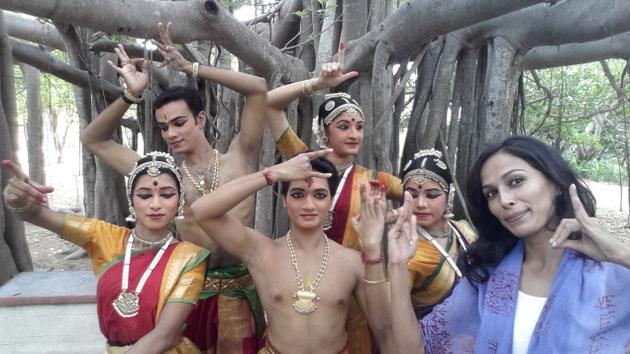
Yasmin at Kalakshetra / by Special Arrangement / The Hindu

Yasmin Ponnappa of Aaranya Kaandam fame talks about her experiences while filming the latest song of the city that has gone viral

Her performance in the critically acclaimed Tamil film Aaranya Kaandam made people sit up and take notice. And now, model-actress Yasmin Ponnappa is back with The Madras Song, a four-and-a-half-minute video that chronicles the experiences of a young girl visiting Madras for the first time.

Yasmin / by Special Arrangement / The Hindu

The natural abandon with which she prances around the city’s streets have had youngsters gushing about her. Tell her that, and she says, “It was meant to be natural. When we started filming, we were particular that it should not be like an act, but capture spontaneity.”

She might be from Bangalore, but it is namma Madras that Yasmin loves. “I still can’t get myself to call it Chennai,” she smiles. “I prefer Madras. I have a lot of wonderful friends here, and the camaraderie among everyone in the city is just fantastic.”
TheMadrasSongKF02sept2014
That’s exactly what The Madras Song team wanted to portray in its latest video. “Whatever Vijay (director Vijay Prabhakaran) depicted in the storyboard was exactly expressed in the video. His brief to me before we started shoot was simple — enjoy Madras like you would. I did that. I guess it’s the natural celebration of the city that people like,” she says.

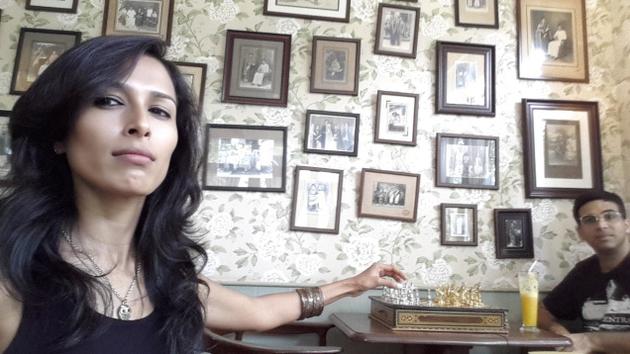
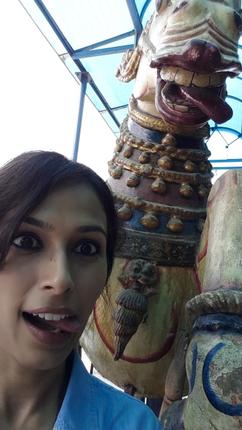
It’s not just the city’s sights and sounds that the song, sung by Nenjukule singer Shakthisree Gopalan, celebrates, but also some famous personalities. Celebrities such as Viswanathan Anand, Crazy Mohan and Sudha Ragunathan feature in the video. Ask Yasmin about it, and she says, “The selfie is a rage now and we wanted to capture that. Shooting selfies with Chennai’s celebrities was a fantastic experience. And, playing chess with Anand was something I’ll cherish for the rest of my life.”

Yasmin / by Special Arrangement / The Hindu

The actress loves the serenity and culturally charged atmosphere in Kalakshetra, one of her favourite places. “The place is so beautiful,” she says, “There are three kinds of prayers there, and just hearing them is so uplifting. Madras always celebrates its culture and Kalakshetra is proof of that.”

On the film front, she’s still waiting for an interesting project to come up. “There have been scripts, yes, but none as interesting as Aaranya Kaandam. I don’t believe in doing films just for the heck of it. I’m glad that after a powerful role in Aaranya Kaandam, The Madras Song has come up.”

source: http://www.thehindu.com / The Hindu / Home> Features> MetroPlus / by Srinivasa Ramanujam / August 21st, 2014

Curtains down on Kodagu Golf Club 2014: Chandra Brothers emerge Winner and Runner in Field Marshal Cariappa Memorial Tournament

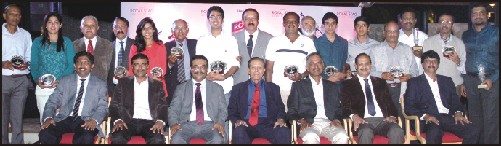
A group photo of the winners and runners of Kodagu Golf Open Championship - 2014 held at JW Golf Course in city on Aug. 23 and 24. (Sitting from left) Dr. S.L. Narayana (Chairman, Tournament Sub-Committee, JWGC) B.M. Nagesh (Hon. Secretary, JWGC), P.M. Ganapathy (President, JWGC), Dr. N.M. Caveriappa (President, Association of Kodagu Golfers of JWGC), Dr. Puttabasappa (Captain, JWGC), P. K. Somaiah (Secretary - Association of Kodagu Golfers of JWGC), H.S. Arun Kumar (Hon. Treasurer, JWGC); (Standing from left) R.N. Sudharshan, Sonam Chugh, K.M. Achaiah, C.K. Subramani, T.H. Shivani, Brig. R.V. Seetharamaiah, M.S. Yashas Chandra, M.B. Nanaiah (Treasurer - Association of Kodagu Golfer of JWGC), B.O. Ganesh Babu, Col. B.N. Somanna, M.S. Shreyas Chandra, Deepak Kumar Jain, Lt. Col. K.P. Vijay Kumar, C.K. Sridhar, Lt. Col. M.K. Poovaiah and M.S. Dinesh Kumar.
A group photo of the winners and runners of Kodagu Golf Open Championship – 2014 held at JW Golf Course in city on Aug. 23 and 24. (Sitting from left) Dr. S.L. Narayana (Chairman, Tournament Sub-Committee, JWGC) B.M. Nagesh (Hon. Secretary, JWGC), P.M. Ganapathy (President, JWGC), Dr. N.M. Caveriappa (President, Association of Kodagu Golfers of JWGC), Dr. Puttabasappa (Captain, JWGC), P. K. Somaiah (Secretary – Association of Kodagu Golfers of JWGC), H.S. Arun Kumar (Hon. Treasurer, JWGC); (Standing from left) R.N. Sudharshan, Sonam Chugh, K.M. Achaiah, C.K. Subramani, T.H. Shivani, Brig. R.V. Seetharamaiah, M.S. Yashas Chandra, M.B. Nanaiah (Treasurer – Association of Kodagu Golfer of JWGC), B.O. Ganesh Babu, Col. B.N. Somanna, M.S. Shreyas Chandra, Deepak Kumar Jain, Lt. Col. K.P. Vijay Kumar, C.K. Sridhar, Lt. Col. M.K. Poovaiah and M.S. Dinesh Kumar.

Mysore :

Kodagu Golf Open Championship-2014 sponsored by Association of Kodagu Golfers of J.W. Golf Club, Mysore in memory of Field Marshal K.M. Cariappa and Gen. K.S. Thimmaiah was held at Jayachamaraja Wadiyar Golf Club, in city on Aug. 23 and Aug. 24. The following are the winners:

Strokeplay Gross (Field Marshal Cariappa Memorial Trophy): Winner: Yashas Chandra (70-Gross), Runner: Shreyas Chandra (75 Gross).

Strokeplay Net (H/C 0=9) (Gen. K.S. Thimmaiah Memorial Trophy): Winner: Ganesh Babu (67-net), Runner: Sonam Chugh (69-net).

Strokeplay Net (H/C 10=18) (Sqd Ldr. M.B. Chittiappa Memorial Trophy): Winner: R.N. Sudarshan (67-Net), Runner: Deepak Kumar Jain 70-net).

Stableford Net (H/C0<=18) (Kodagu Challenge Trophy): Winner: C.K. Subramani (37-pts) (Better back 9 over Col. Somanna), Runner: Col. Sommana (37-pt) (Better Back 9 over M.S. Dinesh Kumar). Stableford Net (H/C 0 to 24) for seniors (65 years and above): Winner: Col. Vijaykumar (37 pts), Runner: Brig. R.V. Seetharamaiah (36 pts). Stableford Net (H/C 0 to 24) for super seniors (70 years and above): Winner: K.M. Achaiah (32-pts) Best Kodagu Golfer: Lt. Col. M.K. Poovaiah Best Lady Golfer: T.H. Shivani Nearest to Pin: B.P. Mahesh. Maximum Birdies: I.L. Aaplaap - 2 Birdies (won by lucky draw over Kulwanth Singh and Ashok Poovanna winner). Longest Drive: Winner: M.S. Dinesh Kumar Straighest Drive: Winner: C.K. Sridhar source: http://www.starofmysore.com / Star of Mysore / Home> Sports News / August 26th, 2014

Seeking to preserve Kodagu’s ainmanes

AinmanesKODAGU31aug2014

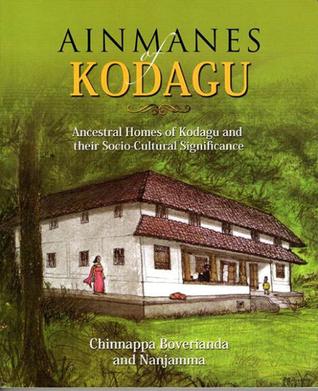
The much-awaited book on ‘Ainmanes of Kodagu’ (ancestral homes), authored by researcher-couple Boverianda Chinnappa and Nanjamma Chinnappa has hit the stands.

The book was written after extensive fieldwork in Kodagu district (Coorg) of Karnataka, to record for posterity the way of life that the culturally-rich ainmanes symbolise.

Speaking to The Hindu, P.T. Bopanna, journalist, who runs Kodagu’s first news portal www.coorgtourisminfo.com, said according to the researcher couple, the book is unique as it traces the origins and antiquity of the ancestral homes of all the native communities of Kodagu.

“It also describes the social and cultural significance of these ancestral homes, which are important elements of the rich heritage of the native communities of this area,” he said.

An ainmane has a verandah, with carved square wooden pillars tapering upwards and wooden seats between the pillars, ornately carved windows and door frames, and specific areas within the ainmane for the performance of rituals.

A ‘functional’ ainmane is where all the members of the okka (patrilineal clan) gather to celebrate important family rituals and ceremonies.

The book describes the ainmanes of the native communities in Kodagu (Coorg) and their socio-cultural significance.

Ainmanes are architectural symbols that bear testimony to the strength and vitality of the okkas of Kodagu.

According to the authors, the ainmanes that are still standing today account for only about 40 per cent of the original number that existed in Kodagu.

Many of them are dilapidated; others have been converted into simple homes. The Chinnappas expressed their apprehension that if this trend continues, these heritage buildings and the unique traditions, customs, festivals and rituals that are associated with them will probably vanish in the not too distant future. If they vanish, so will the heritage of the people, their way of life, they add.

The authors have said their aim is to raise awareness of the cultural significance of the ainmanes of Kodagu and encourage efforts to maintain and preserve these heritage buildings for generations to come.

The cover illustration for the book is by noted cartoonist, Nadikerianda Ponnappa.

The book has been published by Niyogi Books, Delhi. The work on the website www.ainmanes.com is in progress.

source: http://www.thehindu.com / The Hindu / Home> News> National> Karnataka / K. Jeevan Chinnappa / Bangalore – August 23rd, 2014

Kodagu Trees Are Source of Data for Researchers

Bangalore :

Three thousand trees in parts of Kodagu are helping forest ecology studies by providing experimental evidence for various research projects.

The trees are being studied to understand how they adapt to changes in rainfall, temperature and duration of the rainy season.

This data is part of a bigger project in which tree responses to changing climates are being measured to gauge how trees react to changing weather parameters.

The trees are on two 30-hectare sample plots set up by the Forest Department in collaboration with the French Institute of Pondicherry (FIP), in low-lying wet evergreen forests in Kadamakkal reserve forest.

“My colleagues and I have found that the amount of rainfall has decreased in the last 100 years and that is why there has been less growth of tree species,” said Dr B R Ramesh, faculty at French Institute of Pondicherry.

The researchers are measuring the girth of the trees using a stainless steel tape and a Vernier scale to record their growth patterns in different climatic conditions.

Their work also focuses on long-term ecological monitoring of forests, the use of new remote-sensing data and techniques to predict biomass and structure, modelling distribution of species and biodiversity and making databases with the available information.

“New research lines are also being developed that explore the effects of landscape change on ecosystem services and potential climate change impacts on forest vegetation,” Dr Ramesh added.

These experts have also explored the environmental and social impact of restitution of tree rights to coffee planters, the Western Ghats acting as a water sink and the loss of forest cover and the extent of biodiversity in the Ghats.

Dr Ramesh and his colleagues, Dr S Prasad and Dr Anupama K, have also developed an app called Biotik which can be used to identify 600 tree species in the Western Ghats.

source: http://www.newindianexpress.com / The New Indian Express / Home> States> Karnataka / by Papiya Bhattacharya / August 19th, 2014

Siddhant, Poovamma are ‘best athletes’

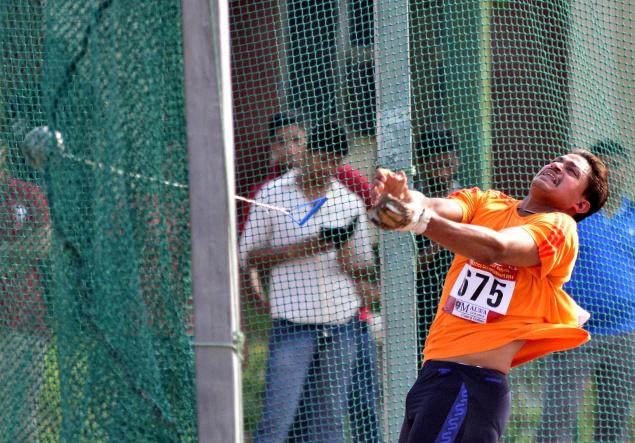
 The Hindu Going a step further: Chandrodaya Narayan Singh of Uttar Pradesh won with his second throw of 67.84, to better his own mark of 67.78, beating national record holder Kamalpreet Singh. Photo: Akhilesh Kumar / The Hindu

The Hindu Going a step further: Chandrodaya Narayan Singh of Uttar Pradesh won with his second throw of 67.84, to better his own mark of 67.78, beating national record holder Kamalpreet Singh. Photo: Akhilesh Kumar / The Hindu

Athletics: Tamil Nadu and Kerala win the overall men’s and women’s team championships

Siddhant Thingalaya equalled his National record of 13.65 as he won the men’s 110 metres hurdles in the 18th Federation Cup athletics championships at the NIS Complex here on Tuesday.

Siddhant Thingalaya and M.R. Poovamma were adjudged the ‘best athletes’ of the championships. Tamil Nadu won the overall team championships ahead of Kerala. The teams won the men’s and women’s titles respectively.

In men’s triple jump, national record holder and Commonwealth Games medallist Arpinder Singh had no difficulty winning with his third jump of 16.70 in the final. Renjith Maheshwary could not fight, as he had a best of 16.43 on the last attempt, after efforts of 16.40 and 16.41.

Krishna Poonia risked an injured left knee to clinch the women’s discus gold with her last throw of 56.84 metres, more than three and a half metres ahead of World junior bronze medallist Navjeet Kaur Dhillon. After throws of 54.83, 55.38 and 55.49, the Delhi Commonwealth Games gold medallist stepped it up in the last throw.

In women’s 400m, M.R. Poovamma clocked 52.42, beating Priyanka Panwar for the gold.

In men’s hammer throw, Chandrodaya Narayan Singh of Uttar Pradesh won with his second throw of 67.84, to better his own mark of 67.78. Kamalpreet Singh, who holds the national record of 70.37, settled for the silver with his third throw of 66.78.

Sushmita Singha Roy won the heptathlon two points ahead of Bengal teammate Swapna Barman, with a score of 5402 points.

In the morning, Rahul Kumar Pal of Maharashtra sprinted past Laxmanan of Tamil Nadu for the gold in the 10,000 metres. He had focused on the event and thus enjoyed an advantage over the exhausted 5000m runners, including gold medallist Kheta Ram, who grabbed the bronze after having led for the most part.

In the women’s 10,000 metres, Asian Games gold medallist Preeja Sreedharan was a class apart, finishing at 34:27.94 beating Swati Gadhave by more than two minutes. Meanwhile, the jury reinstated the original results in the men’s 3000m steeplechase, after having disqualified Naveen of Haryana and Ashish of Assam for “pacing”.

The IAAF rules clearly state that any athlete “giving or receiving assistance” from within the area during an event should be warned by the referee and advised that he would be disqualified from that event if it was repeated. It further clarifies about “assistance” being from a “lapped” or “about to be lapped” athlete.

Arguing that that they were from different States, and that one would not assist the other, Naveen was conveniently reinstated champion, and Ashish labelled “DNF” (did not finish), having finished a lap short.

The results:
Men: 200m: 1. Manikanda Arumugam 21.21; 2. Velayutham 21.83; 3. M.G. Joseph 21.87. 400m: 1. Kunhu Muhammed 46.40; 2. Arokia Rajiv 46.41; 3. Jibin Sebastian 47.28. 1500m: 1. Jinson Johnson 3:52.60; 2. Ravindra Rautela 3:53.09; 3. Sajeesh Joseph 3:53.38. 10000m: 1. Rahul Kumar Pal 30:04.77; 2. Laxmanan 30:05.20; 3. Kheta Ram 30:08.98. 3000m steeplechase: 1. Naveen 8:46.18; 2. Jaiveer 8:53.36; 3. Manju 8:54.43. 110m hurdles: 1. Siddhant Thingalaya 13.65 (ENR); 2. K. Prem Kumar 13.96; 3. Surrender 14.24. Triple jump: 1. Arpinder Singh 16.70; 2. Renjith Maheshwary 16.43; 3. Rakesh Babu 16.15. Hammer: 1. Chandrodaya Narayan Singh 67.84 (NMR, old 67.78); 2. Kamalpreet Singh 66.78; 3. Neeraj Kumar 66.71. 4x100m relay: 1. Tamil Nadu 40.96; 2. Kerala 41.08; 3. Maharashtra 41.18. 4x400m relay: 1. Navy 3:11.44; 2. Kerala 3:11.62; 3. Punjab 3:13.07.

Women: 200m: 1. Asha Roy 23.89; 2. Srabani Nanda 24.02; 3. Archana 24.94. 400m: 1. M.R. Poovamma 52.42; 2. Priyanka Panwar 53.40; 3. Debashree Majumdar 53.79. 1500m: 1. O.P. Jaisha 4:09.14; 2. Sini Markose 4:18.18; 3. Sushma Devi 4:20.43. 10000m: 1. Preeja Sreedharan 34:27.94; 2. Swati Gadhave 36:28.46; 3. Monika Athare 36:44.15. 100m hurdles: 1. M.M. Anchu 13.80; 2. Deepika 13.81; 3. K.V. Sajitha 13.86. Discus: 1. Krishna Poonia 56.84; 2. Navjeet Kaur Dhillon 53.26; 3. Praveen Kumari 46.65. Heptathlon: 1. Sushmita Singha Roy 5402; 2. Swapna Barman 5400; 3. Liksy Joseph 5351. 4x100m relay: 1. Kerala 46.47; 2. West Bengal 46.56; 3. Punjab 47.27. 4x400m relay: 1. ONGC 3:42.26 (NMR, old 3:42.70); 2. Kerala 3:45.96; 3. Haryana 3:48.50.

source: http://www.thehindu.com / The Hindu / Home> Sport> Other Sports / Kamesh Srinivasan / Patiala – August 19th, 2014