What’s the secret of filter coffee?

Most coffee lovers, including some south Indians, aren’t familiar with every secret of filter coffee. Two men are about to change that

What happens when a Bihari experiments with filter coffee? He thinks he can make the coffee without a filter.

That’s not funny. That’s blasphemous, if you are a Tam-Bram.
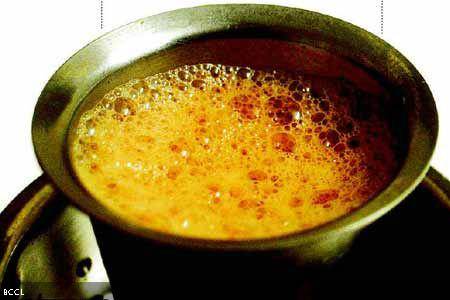
(South sensation )
(South sensation )

Arvind Srinivas finds it hard to hold back the chuckle when he recounts a conversation he recently had with TP Mishra, a customer from Kandivli (E), who had called him to order half a kilo of Kumbakonam coffee. “When I asked him if he had a filter brewer, he said, ‘I will add the powder to boiling water, let it simmer for a while and filter it’!”

Mehta is just the sort of client Srinivas, a creative director at a media firm, is looking for.

He finds time away from his day job to help Mumbaikars appreciate south Indian filter coffee, especially the famous Kumbakonam degree variety. The two-month-old business he runs with partner Parameshwar K R involves sourcing coffee powder from Kumbakonam, a temple town in Tamil Nadu that has been the hub of filter coffee since pre-Independence, delivering it to Mumbai homes and inculcating the art of appreciating good coffee.

“The locals would trickle into the main coffee centre as early as 5.30 am to get their first cup,” Srinivas says about the town, even as the aroma of a fresh brew wafts from the kitchen of his Kandivli home, where wife Savitri, an advocate at the High Court, is busy.

Degree coffee, he says, is nothing but coffee made mixing fresh, undiluted cow’s milk and the first batch of decoction. Of course, everything about the brew — starting from the beans — needs to be just perfect.

When the couple moved to Mumbai from Pondicherry in 1990, they spent a good part of their time hunting for authentic coffee powder. “I scoured Matunga stores, but my wife insisted it wasn’t good enough. Another brand available in Andheri, was according to her innu mosham (worse),” he says.

A quick call to a friend who owns a coffee shop on Kamakshi Josiyar Street in Kumbakonam, solved the problem. The beans for this powder, like any other, are sourced from the Coffee Board of India, which gathers stock from coffee plantations around Coorg and Ooty. What, however, makes this coffee special is the lack of chicory — powder of roasted tap root — which is usually mixed with the ground beans to add colour to the coffee. But it could end hampering the flavour. “Some coffee drinkers are so used to chicory because it makes the brew strong, they specifically ask for it. One customer from Thane asked me to source coffee powder with 21 per cent chicory; no more, no less,” Srinivas laughs.

“For years, we had been visiting Srinivas and realised that the coffee at his place tasted better than anywhere else, so we thought we should teach the rest of the city how to make a proper cup,” adds Parameshwar.

The other factor that differentiates great coffee from average is the method of roasting the beans. “Roasting them on a skillet isn’t enough. Traditionally, the beans were roasted in a closed cylinder that rotated constantly. A small opening on one side allowed grannies to check if the beans were ready before they were ground,” he says.

But, before you give him a tinkle for the coffee (Rs 550 per kg, delivered anywhere in Mumbai within seven days), figuring how to make the perfect cup is important.

Fill half the percolator in the stainless steel coffee brewer with the powder. “It can be more, but never less,” pitches in Savitri. Pour boiling water into the filter and place the lid to ensure the aroma and flavour don’t escape. The decoction should always be hot. “If by evening, it cools down, don’t heat it directly or after mixing it with milk — that kills the taste. Instead, place the decoction in a small vessel and slip it into a container holding boiling water. It will get warm without losing its essence,” he adds. Then, there is the slight detail of how to drink the coffee. Fancy mugs don’t work. It’s the davara-tumbler utensil combination you need to invest in, and pour the coffee back and forth before taking a sip. “It gives the coffee a good froth while enhancing its taste. It is essential to the coffee-making process,” Srinivas adds.

source: http://www.articles.timesofindia.indiatimes.com / The Times of India / Home> Life & Style> Food> Filter Coffee / by Gitanjali Chandrasekharan, Mumbai Mirror / August 04th, 2013


Two long weekends bring cheer to tourism sector

Abbi Falls, near Madikeri town is attracting a large number of tourists. / Photo: K. Murali Kumar / The Hindu

Monsoon tourism destinations in State in high demand
Copious rain across the State has brought cheer to the tourism industry. The travel and hospitality sector is expecting big business during the two consecutive long weekends this month.

With popular destinations in Kerala such as Munnar and Thekkady taking a beating following the recent heavy rain, monsoon tourism destinations in Karnataka such as Kodagu, Chikmagalur and Shimoga are among those that are in high demand.

The first long weekend begins on Friday with holiday declared for Id-ul-Fitr while the next one coincides with the Independence Day holiday.

“It is now nearly impossible to get a good accommodation in Kodagu or Chikmagalur. They were booked even before the recent heavy rainfall in Kerala,” an official in a leading travel agency said.

As a number of people were travelling in taxis, getting a car had also become difficult, he added.

However, an hotelier in Madikeri said the season would have been better if the condition of roads was good. “Roads connecting Madikeri to Mangalore and Mysore have been damaged following the recent downpour,” he said.

source: http://www.thehindu.com / The Hindu / Home> News> National> Karnataka / by Staff Reporter / Bangalore – August 09th, 2013

Only work matters: Harshika Poonacha

Actress Harshika Poonacha

Actress Harshika Poonacha seems to have her hands full with nine films in her kitty this year. She had two releases in a row, Cycle and Ale and her third film, Managana Kaili Maanikya (MKM) opposite Ramesh Aravind is releasing this week.

“People always want to see more and more of Harshika. She is addictive, you see,” Harshika chuckles.

Having bagged so many films in a year, this young actress, who had maintained a clean image for quite some time, has now become controversy’s favourite child.

She has been in the news for not attending press meets or promoting her films. The actress says, “I am a professional when it comes to work, else I wouldn’t have survived in the industry. People unnecessarily use my fame for their promotions and later come back and apologise. That is the reason I have been silent all this while. I am doing good films and the audience as well as my directors and producers are happy with me. That’s all that matters.”

Though this young actress has been an easy target for a few directors and producers, it has also been observed that her to the point attitude is only damaging her image in the industry. “I have always been very straight forward when it comes to my profession. People who have worked with me know how I am. It’s very important to be true to yourself. The rest will follow,” she says.

In MKM, Harshika has been paired opposite a senior actor, Ramesh Aravind and according to her, she was floored by the actor’s abilities. “It was a great experience working with Ramesh. His style of acting, dialogue delivery, comic timing and on the spot dialogues and expressions blew me away. I have started cracking a few PJs after completing the film. I hadn’t attempted the comedy genre until now. So when this offer came by, I was more than excited as the director had made the script keeping me in mind. It is always special to work with a producer like Sandesh Nagraj Sir. He treats me like his own daughter,” she says.

Up next is B3…I Love You, in which she has taken a bold move and will be seen in a love making scene for the first time. “B3 will elevate me as a mature actress. Lot of interesting things are happening in my life presently. I just thank god and would want to go with the flow,” she says.

source: http://www.newindianexpress.com / The New Indian Express / Home> Entertainment> Kannada / by A Sharadhaa – ENS / July 23rd, 2013

CEAT and MTV collaborate to present ‘CEAT MTV Chase The Monsoon’

The show will premier on the web on 24 July

CEAT has tied up with music and youth entertainment channel MTV to launch ‘CEAT MTV Chase The Monsoon’ – a social reality show featuring a 21 day biking roadtrip where 8 riders, in teams of 2, set out with a limited budget to explore the sights, scenes & life during Indian monsoons.

The show will premier on the web on 24 July and will show the participants sharing their experiences live online through updates, pictures and videos on the website chase.mtvindia.com and on social media platforms like Facebook, Twitter and YouTube. The teleivision premier is slated for the last week of August and will be hosted by MTV VJ, Nikhil Chinapa & VJ Bani.

Participants for biking road trip can register as a couple or team of two and submit a video, photographs or blog entry about their adventurous biking experiences. CEAT and MTV will shortlist a total of 12 entries for the final event. Once shortlisted, the teams need to gather votes from friends and families till the 15 of July to get selected for the road trip. The teams finally selected will embark on a journey from Pondicherry to Mumbai over 21 days performing tasks and earning credits/money on the way in the stipulated task checkpoints. The journey will cover cities of Madhurai, Kanyakumari, Kochi, Munnar, Ooty, Mangalore, Hampi, Hubli, Goa and Pune.

Arnab Banerjee, Executive Director, CEAT said, “We at CEAT are constantly seeking to engage with the youth. The show perfectly represents the passions and adventures of riding in the monsoon in India, but also keeping it safe all the while. We hope that the show will capture the attention and imagination of audiences across the country.”

Aditya Swamy, EVP and Business Head, MTV India said, “At MTV we are constantly creating content and engagement around the smaller screens. We have a large digital footprint which reaches over 20 MM people. Its this reach combined with our understanding of young people that gives us the advantage in creating successful web content. In CEAT we have a partner who values the power of content in engaging with consumers, and we hope that this is the beginning of a long partnership.”

source: http://www.business-standard.com / Business Standard / Home> Companies> News / by BS Reporter / Mumbai – July 19th, 2013

Curious concoctions from Coorg

It is unconventional and a shift from the regular dosas and idli. South Indian food is much meatier than we ever think. Dakshin at Sheraton Hotel brings a quirky menu from the southern belt at its ‘Taste of Coorg Festival’. IKNOOR KAUR checks it out
FoodKF06aug2013

When you first think of Coorg food, images of pork curry, fishchutney, tamarind rice and bamboo shoot curry pop up. But visiting Dakshin at Sheraton for the ‘Taste of Coorg Festival’ was a different experience. Contrary to the conventional Coorg preparations, they have twisted the menu into an interesting blend.

For coconut admirers, Dakshin seems to be a paradise. And for someone like me, who abhors it, the restaurant has the surprising ability to revise the taste-buds. Served to you as a welcoming drink is a mix of ginger — ale and mint in shot glasses. This is followed by a menu that opens a door to the vast variety of dishes including the ones from the sub–regions of South. So, the place brings here South Indian flavour with its authenticity.

Served on traditional banana leaves, the food majored itself around pork and mutton. Kodava food has pork as an important component and their pork dishes owe their magic to the masalas used in their making.

Plated as starters, traditionally called Prarambham, was one of their unique preparations of pork called Chilkana Pandi where the pork was marinated in local spices, Coorg vinegar and was browned in onion and green chillies. Along with it was the Prawns Rave Fry with sermolina coated prawns which were lightly batter fried. The distinct flavour of pepper highlighted the pork while the tangy taste of the prawns made for a good appetizer. Both of these were served with four kinds of chutneys, coconut, tamarind, tomato and coriander.

Digging into sub–regions of Coorg, known for its exceptional flavours of the Western Ghats, the fine–dining experience brought out a rustic feel. The main course, known as the Saivam called for a nice variety of dishes including pork, mutton and chicken. Their main dish started with Koli Mangyepajji which was boneless chicken cooked in green chilli, raw mango paste and drum stick.

Pandi Curry was festival’s trademark dish with Coorgi boneless pork preparation, enhanced with Coorg vinegar and pepper, eye chilli and Coorg spices. This was accompanied with kadumbuttu (rice dumpling). The subtle flavour of coconut with enhanced tanginess made this chew an exceptional experience. Another dish part of the same course was the Dry Pepper Yerechye which was tender mutton marinated with spices and fried with onions, tomatoes and chillies.

Though Coorg is primarily famous for red preparations, a bit of green was experimented too. Part of their vegetarian menu was Kuroo Curry which was an amalgamation of red beans and vegetables simmered in local masala gravy, flavoured with ginger and green chillies.

As it is said, ‘either you have it with rice or a rice based roti’, Dakshin provided a range of items to choose from as acoompaniments. Some of them were akki ooti, kadumbuttu and paaputtu. They had a non-vegetarian version of this too called yerchi koolu which was mutton cooked with rice and served with mango paji and raita. Even though the menu consisted of limited dishes, it managed to whet the appetite for Coorg food. Dessert Mangai Rasayana was a nice blend of ripe mango puree in sweetened milk with shopped mango. The texture of the pudding reminded us of kheer.

Fondly referred to as the ‘Coffee Cup of India’, this is one epithet that Coorg proudly carries with itself. Living up to that, the meter coffee of the region has a taste in the blend that comes only with precision while mixing the coffee. The chefs at Dakshin boast of this ability and offered some to us as a post meal beverage. With keeping a definite distance during the mixing process, the chef managed to bring out a blend that one would only find in Coorg.

The chefs in the Dakshin kitchen have personally spent months in Coorg, understanding and learning the authentic preparation of the food. That is one of the main factors that provide the authenticity in the food.

source: http://www.dailypioneer.com / The Pioneer / Home> Vivacity / Friday – June 28th, 2013

Coorg plantation wins award for most romantic resort

Mumbai :

The Tamara resort in Coorg recently won the award for most romantic resort at a travel awards show hosted by a Hindi business channel. It is listed in the top 20 honeymoon destinations by Conde Nast Traveller India.

This is a luxury 56-key resort located in the hills of Coorg near Madikeri. It has been set up within an estate of 170 acres that produces coffee, cardamom, pepper and honey, and claims to be one of the few places in the world that is built inside a functional coffee plantation.

Its promoters say that it is set on a slight slope, and offers a breathtaking view of the Western Ghats and lush green forests along with two waterfalls flowing within the premises. Tourists either head out on guided treks and nature trails, or opt for a plantation tour with the coffee experience.

A bridge overlooking one of the waterfalls serves as a multi-cuisine restaurant. The resort is in the second phase of development that will have new luxury cottages and premium suites apart from sit-out decks at a height of 3,600 sq ft overlooking the hillside. An indoor private jacuzzi and spa is also on the anvil.

source: http://www.timesofindia.indiatimes.com / The Times of India / Home> Business> India Business / by Bella Jaisinghani, TNN / July 06th, 2013

Tryst with the goddess

Gustasp & Jeroo Irani encounter the Cauvery in the forests of Karnataka.

A deep trench, meant to keep elephants away from the lush coffee plantation, had the imprint of a large footprint. An elephant had just lumbered past. “He is in the vicinity,” whispered Ganesh, our naturalist-guide.
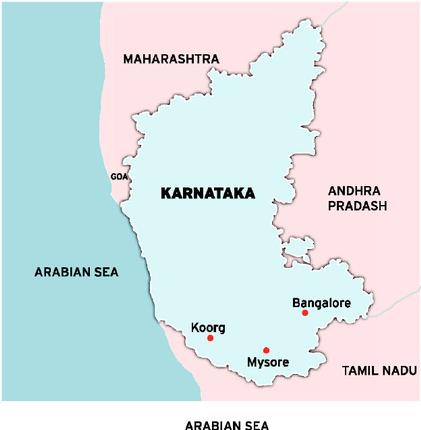
CoorgMapKF05aug2013

As we soldiered on through the Dubare Forest in Kodagu or Coorg, Karnataka, past stands of dead bamboo and soaring rosewood and sandalwood trees, the jungle resonated with an air of menace. “Shhh! He’s there, not too far away!” Ganesh said, as our hearts beat a harsh tattoo against our chests. We were in search of the legendary river Cauvery and it seemed like in the process we would be trampled by an elephant. We stood as still as the tall matti trees from whose sturdy trunks tribals draw water to drink. And then, to the huge relief of our group of four, we heard the lone tusker tramp away in the opposite direction.

Parting thickets of leaves and dry twigs that clawed at us, we trod up and down red paths to suddenly arrive at a clearing. An expanse of emerald-green waters, rippled below, tripping over smooth boulders… the Cauvery at last! The mythical maiden river had played truant even with Sage Agastya who fell in love with her. Legend says the sage asked a disciple to keep an eye on his beautiful wife Cauvery and put her in a vessel. The mischievous and self-willed lady was upset and started to flow away. When the young lad protested, she went underground. That is why, it is said, the river disappears from her source at TalaCauvery, high in the Western Ghats in Coorg, to re-emerge at Bhagamandala, a few kilometres away where a charming temple is dedicated to her.

In the land of her birth, the river is worshipped as a living goddess. Every Coorg or Kodava home is adorned with a photograph or oleograph of the Cauvery and a heavy brass lamp is lit every morning and evening to honour the ancestors. We, however, washed our faces in her life-giving waters and splashed it on one another, while Ganesh sang a song to Ma Cauvery, his voice riding over the sound of the rushing river.

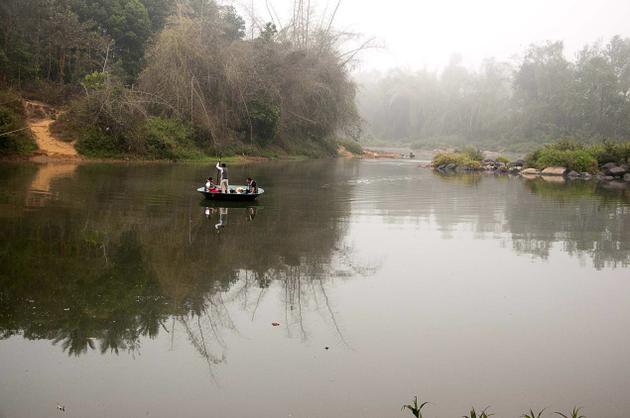
When we were there recently, the river was fairly shallow but coracles bearing locals drifted along its length to the various villages. We too twirled down the river in a coracle to the riverside village of Karadigodu, with trusty Ganesh, when the fragrance of freshly-baked local bread wafted over the slowly-awakening hamlet. Children were getting ready for school, cramming into an auto rickshaw that doubled as a school bus, while grandmothers packed tiffin boxes with lunch for their men-folk on their way to work in the coffee plantations. Mothers swung infants on ample hips and waved to older children heading for the nearest college, heaving backpacks on frail backs.

The village has an aura of sleepy prosperity. / Photo: Gustasp and Jeroo Irani / The Hindu

The village had an aura of sleepy prosperity. Neat little cottages were strung in rows, painted in vivid shades of pink, purple, mauve and green and, in some, TV sets played out the latest South India soaps. We stopped at a local stall (grandly called The Riverside Hotel) for some South Indian filter coffee, fresh sweet bread and smoke-flavoured onion bhajias that had just been whipped off a wood fire. And in front of the village flowed the mercurial Cauvery which, when it is in spate, can break its banks and flood the hamlet and the first row of houses! Yet when we took part in harvesting coffee berries in a plantation, we began to understand how the locals feel an almost mystical attachment to the river.

“Without the river and the land that it waters, we are nothing,” said one of the women coffee pluckers whose nimble technique of prying coffee berries off the bush, we tried hard to imitate. “Ma Cauvery is our goddess!” she exclaimed.

After coffee harvesting ends in February, pepper is culled and so it goes on till June when, with the rains, the Cauvery brims with revitalising waters again, the soil sprouts anew and the cycle of life is renewed.

We met the river goddess again in Kabini, a three-hour drive away, past fields of ripening corn, sugar cane and paddy. The forests of Nagarahole were a dark-green tangled smudge beyond the coiling river Kabini which, incidentally, is a tributary of the Cauvery!

As our boat put-putted down the Kabini that circles the south-eastern edge of the Nagarahole National Park, we saw a couple of wild elephants, long tusks grazing the ground, a marsh crocodile sunning itself on a bank, as still as a log of wood, an iridescent kingfisher that dived for his meal and emerged triumphant. All around us was a world as fresh as at the dawn of time and we thanked Ma Cauvery for her life-nurturing presence which even embraces the wilderness.

source: http://www.thehindu.com / The Hindu / Home> Features> Sunday Magazine / by Gustaspjeroo Irani / July 13th, 2013

Nishan to romance Keerthi

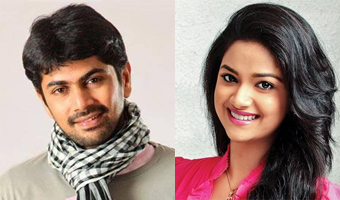
nishanKF05aug2013
Geethanjali :

Actor Nishan will romance Keerthi in the upcoming film Geethanjali. The film is directed by Priyadarshan and has Mohanlal doing the role of Dr Sunny, a psychiatrist. Nishan will be the second lead after Mohanlal in the film.

The actor is elated that he has bagged a role in his favourite director Priyadarshan’s film and is looking forward for the shooting to begin.

source: http://wwwq.nowrunning.com / Home> Malayalam / Monday – July 15th, 2013

Kodagu district minister assures grants for relief works

Kodagu District In-Charge Minister Dr. H.C. Mahadevappa is seen inspecting the damaged Mysore-Madikeri road yesterday. Former Minister T. John, MP H. Vishwanath and others are seen.

Madikeri :

Kodagu District In-Charge Minister Dr. H.C. Mahadevappa, who visited the district yesterday, inspected the damaged road at Boikeri village linking Mysore and Madikeri. He also visited Thayagaraja Colony in Madikeri town where houses were damaged due to heavy downpour.

Later, speaking to press persons at Sudarshan Guest House, Dr. Mahadevappa, who holds the PWD portfolio, said that as per the preliminary report submitted by the district administration, the district has incurred a loss of at least Rs. 24 crore due to heavy rainfall. Based on the consolidated report, the government is committed to sanction funds to take up relief works, he said.

Stating that the district had received more than double the amount of rainfall than last year by this time, he said that the average rainfall this year till date was 219.79 cms (86.54 inches), while it was 91.67 cms (36.03 inches) last year. “I am aware the heavy downpour has adversely affected normal life. I have directed the DC to undertake relief work on a war footing,” he said.

Gabion technology for Madikeri road repair

Karnataka Road Development Corporation Limited (KRDCL) Managing Director R. Srinivas, speaking to press persons here yesterday, said that there were two options to repair the massive breach in Mysore-Madikeri road at Boikeri village – either build a concrete retaining wall or use the Gabion technology. “Senior officials have been told to inspect the spot and submit a report, based on which repair work will be undertaken,” he said.

The highway work between Sampaje and Maani, which is progressing in a slow pace, will be expedited to complete by May 2014, Srinivas said.

What is Gabion technology

A gabion is usually a box filled with concrete or sometimes sand and soil for use in civil engineering, road building, and military applications. A gabion wall is a retaining wall made of stacked stone-filled gabions tied together with wire. Gabion walls are usually battered (angled back towards the slope) or stepped back with the slope rather than stacked vertically. The most common civil engineering use of gabions is to stabilise slopes against erosion. Other uses include retaining walls, temporary floodwalls and silt filtration from runoff.

source: http://www.starofmysore.com / Star of Mysore / Home> General News / July 29th, 2013

Kodagu Mahila Sangha conducts free health camp in city

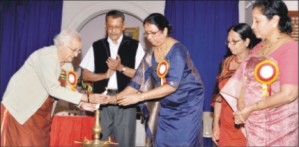
Sree Kaveri Kodagu Mahila Sangha’s Advisor Parwati Cariappa (extreme left) and Sangha President Sarasu Nanaiah are seen lighting the lamp at the inauguration of the free health camp in city yesterday as chief guest Dr. P.A. Kushalappa, Sangha Organising Secretary Gowri Mandanna and Hon. Secretary Lovely Appaiah look on.

Mysore :

A free health check-up camp was held under the aegis of Sree Kaveri Kodagu Mahila Sangha at the Kodagu Sahakara Sangha premises in Jayalakshmipuram yesterday.

The camp was inaugurated by dermatologist Dr. P.A. Kushalappa and Mahila Sangha’s Advisor Parwati Cariappa.

The health camp was held in memory of late Ursula Kariappa, wife of Karthamada Kariappa.

Sangha President B. Sarasu Nanaiah presided. Hon. Secretary P. Lovely Appaiah welcomed.

A large number of people availed of the opportunity at the camp in which Physician Dr. Latha Muthanna, Dr. Padmini Kaveriappa, dentist Dr. Manasa Sendil, Paediatrician Dr. Jyotsna Prasad, Dr. P. P. Aiyanna (Ayurveda), gynaecologist Dr. Kamalamma, orthopaedic surgeon Dr. Ajay Hegde and Dr. Rajesh of Vasan Eye Care participated.

Sangha Vice-President Bollamma Appanna and the guests presented mementos to the doctors who participated in the camp.

Treasurer Jyothi Kashi, Joint Secretaries Bollamma Kuttappa and Kavya Kuttappa, Organising Secretaries Gowri Mandanna and Sumi Gopal and other members were present on the occasion.

source: http://www.starofmysore.com / Star of Mysore / Home> General News / July 29th, 2013