Tatas to focus on beverages ‘power brands’

TataKF03aug2013
The brands that will be given a global push are Tetley, Tata Tea, Himalayan and Eight O’ Clock Coffee

The beverage arm of the $100-billion (Rs 6 lakh crore) Tata Group has prepared a blueprint that will see it devote its attention to four “power brands” in its quest to achieve a turnover of $5 billion (Rs 30,000 crore) in the next three years.

The list will include products such as Tetley, Tata Tea, Himalayan and Eight O’ Clock Coffee, which will be given a global push. At the same time, the Rs 7,271-crore Tata Global Beverages (TGB) will not take its eyes off regional products either, pushing these aggressively in their home markets. On this list are brands such as Kanan Devan, Chakra Gold and Gemini in South India, Vitax in Poland and Joekels in South Africa.

The blueprint, explains TGB Managing Director Harish Bhat, is in keeping with company Chairman Cyrus Mistry’s vision to invest significantly behind the firm’s brands. At the company’s recently-concluded annual general meeting in Kolkata, 44-year-old Mistry, who became chairman last year, said that the foundation for investment behind the firm’s products had been laid. “It is crucially important to grow our brands in India and overseas. There is also a need for innovations which need funds,” he said.

TGB derives 65-70 per cent of its revenues from international markets and the balance from India.

Tetley, one of the products on the global power list, already sells in a number of markets outside its home turf of the UK. This includes India, where it competes with Twinings and Brooke Bond Taj Mahal from Hindustan Unilever. Tata Tea, an Indian product, meanwhile, has been taken to markets such as Canada and West Asia, while plans are afoot to take Himalayan packaged water, also an Indian product, which was acquired in 2007 by the company, to Southeast Asia in the near term.

Bhat declines to indicate whether new products would be added to the global or regional list through new acquisitions. Outgoing Vice-Chairman R K Krishna Kumar, at the TGB AGM, had hinted that the company was looking at a new acquisition. He had said, “TGB will make a major acquisition and be a truly worldclass company, not in the tea or coffee space but in new beverages.”

As things stand, TGB derives nearly 70 per cent of its revenues from tea, 20 per cent from coffee and five per cent from water. The plan is to take the contribution of water and coffee to 10 per cent and 25 per cent, respectively, in the next three years, Bhat said. Tea’s contribution, on the other hand, would come down to about 60 per cent, he added.

TGB proposes to achieve this by pushing its joint ventures with PepsiCo and Starbucks aggressively in the next few years. “A total of 18 stores have been opened so far by Tata Starbucks in Mumbai and Delhi. This count will go up as we move forward,” he said.

On the joint venture with PepsiCo (called NourishCo), Bhat indicated that in-house brands Tata Water Plus and Tata Gluco Plus were doing well.

“Tata Water Plus has seen higher growth than Himalayan packaged water (in the June quarter). But this is in the markets of Tamil Nadu and Andhra Pradesh, where the brand is currently present. The plan will be to take it to other markets in the country,” he added.

source: http://www.business-standard.com / Business Standard / Home> Companies> News / by Viveat Susan Pinto / Mumbai – August 03rd, 2013
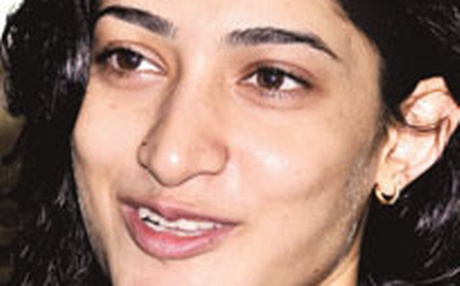
Set for World Championship

Ashwini Ponnappa
Ashwini Ponnappa

Ashwini Ponnappa, the glamourous Bangalore shuttler, is gearing up for the World championships to be held in Guangzhou, China, from August 5 to 11.

Ashwini, who won the Commonwealth Games gold partnering Jwala Gutta, now has a new doubles partner in Pradnya Gadre of Maharashtra.

She launched the Banga Beats Indian Badminton League team from her home city but quite shockingly, wasn’t picked up by them. In the player auctions, it was Pune which bagged her for a sum of $25,000.

The IBL has decided not to have women’s doubles in the championships and as such, Ashwini will have to only depend on the mixed doubles apart from the women’s singles, if she is in the fray for that event as per the decision of her team.

But on a positive note, according to her, whatever controversy that has been generated, is good for Indian badminton. “Rubbing shoulders with top players will give us a lot of benefits. The experience of playing them will remove the psychological barrier when we meet them in bigger events. Also, the game in the country will get a big boost. Not often do big names come and play here. So people will get a very big opportunity to watch them in action. I am sure Indian badminton is poised for a big leap,” said Ashwini.

Championship preparation

With the World championships coming a lot before the IBL, she has a huge advantage at the moment as she can concentrate on doing well in a championship that matters the most. Certainly, a lot more than any national league or Grand Prix in the World.

“In the past few days, the IBL distraction did disrupt my training but now I am back on court and practising hard for the upcoming World Championships. I am training in Bangalore right now while my doubles partner, Pradnya Gadre is training in Hyderabad. We hope to put in some work together soon. Having played with each other earlier, we know our games well and combining with her should be no problem,” Ashwini said.

According to her, the preparation has been good and she is working on her fitness more than any other aspect. “I have always taken one match at a time. It does not make sense predicting things, so I am concentrating on the first round right now. We have a tough first round, let’s first clear it. We will be facing Damkjaer Kruse and Marie Roepke from Denmark and we have not played them earlier. So it is going to be a very important game for us,” said the shuttler who won the bronze in the 2011 World championships with Jwala to become only the second Indian to do so after the 1983 singles bronze that the legendary Prakash Padukone won way back in 1983.

“I am partnering Tarun Kona in the mixed doubles and there I think we will meet a Japanese pair – Hirokatsu Hashimoto and Miyuki Maeda – in the first round. Let’s see how it goes,” said Ashwini.

source: http://www.newindianexpress.com / The New Indian Express/ Home> Cities> Bangalore / by S S Shreekumar / ENS – Bangalore / August 01st, 2013

Permission to sell Kodagu’s Jamma lands could lead to ecological disaster

The tiny hill district of Kodagu (Coorg) in Karnataka is facing an ecological disaster with the President of India giving his assent to a controversial legislation which allows the disposal and sale of Jamma lands in Kodagu located in the fragile Western Ghats. It is feared that the resultant denudation of the forests in the region could trigger an environmental damage with unpredictable consequences.

The repercussions of the legislation — The Karnataka Land Revenue (Third Amendment), Act, 2011, which received Presidential assent early this year after the bill was referred to the President by the Karnataka governor last year, will not only be severe on the Western Ghats region, considered as one of world’s bio-diversity hotspots, but will also take its toll on the customary laws, traditions and culture of the indigenous communities.

Jamma land tenure is unique to Kodagu district and it is estimated that the extent of ‘Jamma Baane’ land in Kodagu is around 2.55 lakh acres in possession of the local people — Kodavas, Amma-Kodavas, Heggades, Airis, Koyavas, Moplas and Gaudas. Jamma lands consist of wetland for growing paddy and the accompanying Baane land, initially used for cattle grazing and held free of assessment, now converted into coffee estates.

According to Sir J B Lyall, a British expert on tenures in Coorg who traced the origin of Jamma, it was originally a military tenure held on payment of half the assessment in consideration of military service. Jamma was granted under ‘sanads’ largely by the Coorg Rajas (1600 AD to 1834 AD) and to a smaller extent by the British till 1895 to the local inhabitants.

Hitherto, there was a ban on the sale of Jamma lands as the cultivator was only a ‘deemed owner’. The new legislation will confer the title of ‘occupant owner’ and allows the sale of land. The legislation, it is feared, will legitimise large scale denudation of trees and the formation of human settlements on Jamma Bane lands as there will be heavy influx of population from the neighbouring states. The presence of increased human habitation will have its impact on the adjoining forest land, its flora and fauna.

For generations, the life of the local communities, centered around the cultivation of the Jamma lands, the principal tenure in Kodagu. The Jamma lands could not be alienated as there was no provision for transferring the title of the property. The ownership was jointly held by the clan and it was managed by the head of the clan (Pattedara).

The issue went before the Karnataka high court and a full bench of the court held in its judgement delivered in October, 1993 that Jamma Baane landholders had limited privileges for cattle grazing, supply of firewood and timber for the domestic and agriculture purposes, but had no right to exploit the trees for commercial purposes, unless the holder had paid full timber value to the government. The court also held that the land-owner had no right to the sub-soil.

Customs and traditions

Once the ban on the sale of Jamma lands is lifted, the indigenous communities will be removed from their traditional Jamma holdings which formed the basis of their customs and traditions. The ‘ain-mane’ or the ancestral houses of the clans, was the focal point of all festivities and religious usages. It is feared that once the Jamma lands are sold to outsiders, the new land owners could lay claim to the ‘ain-manes,’ considered sacred to the local communities. This could lead to social tensions and law and order problem.

The biggest threat will come from the real estate mafia who were eyeing the Jamma lands all these years. With tourism boom in Kodagu, the local communities will be under pressure to sell their lands as the state will not have any control over them. It is learnt that already Jamma lands are being sold in anticipation of the new law taking effect.

The amendment to the Jamma tenure was effected during the previous BJP regime. The amendment was politically motivated and passed in haste without much debate in the Legislative Assembly, reportedly at the instance of the then Speaker K G Bopaiah who wanted to take political advantage. One of the reasons for Bopaiah’s re-election from the Virajpet constituency was on account of the political mileage he gained by getting the amendment passed.

The new amendment will create more problems than it hopes to solve. Those who drafted the amendment bill have failed to recognise the fact that apart from Jamma Baane lands, there are other types of Baanes — ‘Hithlu’ and ‘Sagu Baane’ lands.
Advocate K Sarojini Muthanna, who is knowledgeable on Jamma tenure matters, has suggested that the government should carry out further amendments to the Karnataka Land Revenue Act, 1964, devoting a separate chapter for the Jamma lands of Kodagu. The main support for the amendment has come from Akhila Kodava Samaja, representing a small section of the Kodavas. The president of the Samaja, Mathanda C Monnappa, opined that the amendment removed ‘irritants’ by way of government circulars which gave the impression that the land belonged to the government.

A large section of people, however, feel that in the interest of preserving the culture of Kodagu, and maintaining the ecological balance in the Western Ghats, the Siddaramaiah government should not give effect to the amendment to the Jamma land tenure.

source: http://www.deccanherald.com / Deccan Herald / Home> Panorama / by P T Bopanna / July 24th, 2013

Coffee Board ups output forecast to 3.47 lakh tonnes

CoffeeBlossomKF03aug2013
‘Crop to drop by 20% due to weather-related problems’, says KPA
Bangalore :

Despite rampant white stem borer (WSB) menace and long days of dry period after blossom, coffee production is set to increase by 28,800 tonnes (9.05 per cent) over the final estimate of previous year 2012-13 (3,18,200 tonnes).

The Coffee Board, which released the post-blossom crop forecast, said for the year 2013-14, coffee production is estimated at 3,47,000 tonnes.

Of the total estimate, the arabica and robusta break up is 1,11,000 tonnes and 2,36,000 tonnes respectively. Arabica production has shown an increase of 12,400 tonnes (12.88 per cent) over the final estimate of 2012-13, while robusta increased by 16,400 tonnes (7.47 per cent).

By the states, the production gain has mainly come from Karnataka to the tune of 18,890 tonnes (8.21 per cent) and non-traditional areas (NTA) with 1,780 tonnes (28.57 per cent) while Kerala has shown an increase of 6,350 tonnes (9.89 per cent) and Tamil Nadu by 1,755 tonnes (10.10 per cent) compared to the previous 2012-13 season’s final estimate.

“Due to the drought like conditions (April-May), the crop setting in arabica and robusta has been severely effected. Also there were many incidences of WSB in arabica plantations.

The Karnataka Planters’ Assocation (KPA) estimates that there will be a drop of 20 per cent due to this weather-related problems, said Nishant R. Gurjer, Chairman, KPA.

In Karnataka, all the three districts recorded increase in production over the previous year with an almost equal share of arabica and robusta. Kodagu district recorded the highest increase of 14,420 tonnes (12.02 per cent) which is mainly accrued from robusta (11,620 tonnes or 11.77 per cent) and arabica gained by 2,800 tonnes (13.15 per cent).

Hassan district recorded an increase of 3,535 tonnes (10.84 per cent) which has come from both arabica (2,635 tonnes or 14.02 per cent) and robusta (900 tonnes or 6.52 per cent).

While Chikmagalur showed an increase of 935 tonnes from Arabica, the robusta production showed a decline of 2,940 tonnes (-7.30 per cent) over the previous year final estimate.

“Due to prolonged and unprecedented drought of over 50 days, there has been a spurt in the WSB pest that has devastated the arabica plants. We have also been unable to carry out the regular operations like spraying and manuring on time due to lack of rains in May. As for robusta, due to severe constraints of power and water resources, we were unable to cover our entire area for blossom and backing irrigation. We feel the blossom estimate may have to be revised further downward in view of prevailing conditions,” said Sahadev Balakrishna, Partner, Netraconda Estates, Chikmagalur.

“The arabica production regained in 2013-14 season in Karnataka mainly because of the biennial bearing nature of arabica as last year’s final estimate was low,” said the coffee board official.

The blossom showers are reported to be normal in all most all the coffee growing zones, while there was a delay in backing showers in certain pockets were reported. “In general good crop condition and better husbandry practices have helped to invigorate production in Karnataka. The crop forecast for Karnataka is placed at 86,735 tonnes of arabica and 1,62,380 tonnes of robusta totalling 2,49,115 tonnes,” the official explained.

Kerala coffee zones also have received adequate and timely blossom and backing showers. There was no adverse effect on crop was reported.

Accounting this, the post-blossom estimates for the 2013-14 is placed at 70,550 tonnes, which is an increase of 9.89 per cent (6,350 tonnes) over the previous 2012-13 final estimate of 64,200 tonnes.

Tamil Nadu post-blossom forecast is placed at 19,125 tonnes which also showed an increase of 1,755 tonnes (10.10 per cent) mainly in Pulneys and Shevroys region against the previous year final estimate of 17,370 tonnes.

In non-traditional areas of Andhra Pradesh and Orissa and north eastern region, the post-blossom forecast is placed at 8,210 tonnes against previous final estimate of 6,405 tonnes.

The higher forecast has come mainly from Andhra Pradesh and Orissa due to increase in bearing area.

2012-13 production was 3,18,200 tonnes

The final coffee production 2012-13 estimate is 318,200 tonnes, an increase of 2,700 tonnes (0.86 per cent) over the post monsoon estimate of 315,500 tonnes and an increase of 4,200 tonnes (1.34 per cent) over the previous year’s 2011-12 final estimate of 314,000 tonnes.

The Coffee Board, which released the final crop estimate for 2012-13, said of the total final estimate, the share of Arabica is 98,600 tonnes and that of Robusta is 219,600 tonnes.

The production of Arabica has shown a marginal decline of 1625 MT (-1.62 per cent) while Robusta increased by 4,235 tonnes (2.01 per cent) over the post-monsoon estimate made before crop harvesting in 2012. The loss in Arabica production and the production gain in Robusta has mainly come from Karnataka.

The final crop estimate for Karnataka is placed at 230,225 tonnes with a break up of 77,425 tonnes of Arabica and 1,52,800 tonnes of Robusta. The final production in Karnataka has shown a marginal increase of 3,020 tonnes (1.33 per cent).

The Arabica production has marginally declined in Chikmagalur (-1.32 per cent), Kodagu (-1.87 per cent) and Hassan of (-1.96 per cent) districts, while Robusta production shown an increase in Chikmagalur (8.33 per cent), Kodagu (1.15 per cent) and in Hassan (0.55 per cent) districts.

In Kerala, the final estimate of 2012-13 is placed at 64,200 tonnes with an increase of 375 tonnes (0.59 per cent) from the post monsoon estimate of 63,825 tonnes.

Tamil Nadu final production of 2012-13 is placed at 17,370 tonnes which is a marginal decline of 380 tonnes over the post monsoon estimate of 17,750 tonnes.

In the Non-Traditional Areas and North Eastern Region, the final estimate of 2012-13 is placed at 6,405 tonnes against post monsoon estimate of 6,720 tonnes which showed a marginal decline of 215 tonnes in Andhra Pradesh.

source: http://www.thehindubusinessline.com / Business Line / Home> Industry> Agri-Biz / by Anil Urs anil.u@thehindu.co.in / Bangalore – July 22nd, 2013

Mangalore University to offer five new courses

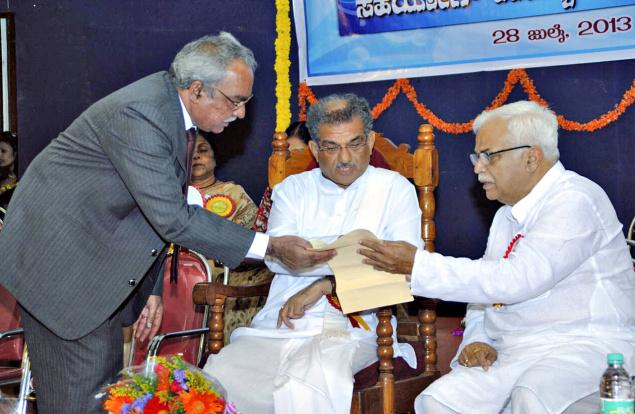
Vice-Chancellor T.C. Shivashankara Murthy, Dharmasthala Dharmadhikari D. Veerendra Heggade, and Higher Education Minister R.V. Deshpande at inauguration of a job fair at SDM Business Management College in Mangalore on Sunday. / Photo: H.S. Manjunath / The Hindu

Extend last date for admissions for the courses till August 15, says Minister for Higher Education and Tourism R.V. Deshpande

Minister for Higher Education and Tourism R.V. Deshpande said here on Sunday that the government has permitted Mangalore University to offer five new courses, including post-graduate, diploma and certificate, from the academic year 2013-14.

Addressing presspersons, the Minister said the university has been permitted to offer post-graduate courses in Bharatanatyam (Master of Arts) and Food Science and Nutrition (Master of Science), certificate courses in radioisotopes in biological science and visual arts, and diploma and post-graduate diploma courses in Kodava language and culture.

Field Marshal K.M. Cariappa College, a constituent college of the university at Madikeri, would offer the diploma and post-graduate diploma in Kodava language and culture. Any other colleges affiliated to the university can come forward to offer the two post-graduate courses. The certificate courses would be offered by the university.

Mr. Deshpande said that as the admissions for the current academic year at the university would close on July 31, he had directed the university to extend the last date for admissions for the five courses until August 15 as they were sanctioned recently.

According to P.S. Yadapadithaya, Registrar (administration) at the university, the University Science Instrumentation Centre (USIC) on the university campus would offer three-month certificate course in radioisotopes in biological science. N.G. Pavanje Chair in Fine Arts, an endowment chair, would offer a 16-week certificate course in visual arts. The diploma and post-graduate diploma in Kodava Language and Culture were of one-year duration each. The college would also offer a six month-certificate course in Kodava Language and Culture. The post-graduate courses were of two-year duration, but the university would not offer them in the current academic year.

Another official at the university said the university was yet to receive the formal approval letter to this effect from the government.

LOAN MELA

Mr. Deshpande said that 53 lakh students aged between 18 years and 25 years were out of higher education in the State and only 17 lakh were pursuing further studies. To increase the enrolment ratio of youth to higher education, the government would organise educational loan melas to provide financial support to youth to purse higher education. He did not make it clear when and how many such melas would be organised.

Earlier, he addressed a gathering at a job fair organised by the Department of Collegiate Education to graduates of government degree colleges of Dakshina Kannada, Udupi and Kodagu districts in the city.

source:http://www.thehindu.com / The Hindu / Home> News> Cities> Mangalore / by The Hindu, Special Correspondent / Mangalore – Julu 29th, 2013

Off the beaten track in Somwarpet

A nondescript town in the lap of the majestic Pushpagiri mountain, Kumarahally’s geography makes it the perfect place to look for some solitary adventures, writes B V Prakash

Not all those who wander are lost, said a great man once; it surely must be the love of adventure. During my latest visit to Coorg, I decided to give the usual sights a miss and filled with an urge to explore the unseen, I deviated towards Somwarpet to drive through the primitive villages spread across the mountain ranges of the majestic Pushpagiri.

The destination was the nondescript town of Kumarahally. Also called Kumarally (in short), this town has nothing to boast of as a tourist destination; it is just one of the many small towns with similar names such as Shantalli, Kundalli, Bidalli and Bachalli through which one has to pass. However, it serves as a good base from which you can foray into a couple of interesting and exciting locales.

Leaving Somwarpet by afternoon, I headed north-west, breezing past the lush coffee estates and the green fields shining bright in the afternoon sun. After about five kilometres, a deviation to the left led me to a rustic settlement. Named Abbi Matha, this settlement is a religious place where devotees come for worship. But for others, it is a popular picnic spot thanks to the presence of the Abbi Matha Falls. The two-tier cascade may not steal the show, but it is impressive in its austere simplicity — surely an interesting diversion to break the 20-km journey to Kumarally. A dilapidated mutt premises can be visited here. Getting back on the track, I continued my journey towards Kumarally; the remaining journey was covered in half an hour and before dusk, I had reached my destination. The homestay at Kumarally — there is only one — is the ideal place to spend the night before exploring the locales nearby.

The nearest and most sought after sight here is the enchanting waterfalls of Mallalli. If you take the kuchcha road that goes beside the homestay, within a little less than three kilometres, you reach the famed waterfalls. However, driving on the slippery muddy stretch into the valley is indeed a torture. Mornings are the ideal time to visit the falls which are a sight to behold during sunrise. So at dawn, while still dark, I headed for the falls. After driving two kilometres on the treacherous path, I chose to walk the remaining way which proved to be a pleasant experience thanks to the fresh air and the sweet call of the birds. As I reached the edge of the wide gorge, I was left dumbfounded by the sheer beauty of the white cascades rolling down gently. I had all the time in the world to admire its beauty and also walk down all the way to its base.

From the front, the two distinct falls, each with its own form, appeared even more charming. The river Kumaradhara, which flows from here, tumbles down over short drops at a couple of places before joining the Netravathi at Uppinangadi. Rejuvenated from the astounding beauty in front of me, the tough climb back hardly mattered. On the way, I remembered the suggestion of my host Ponnappa and traced a trail through the coffee estates to see an unknown little falls which he said was called the mini-Mallalli falls.

Back at the homestay, after relishing a typically Coorgi breakfast of Votti (rice chapathi) and a cup of refreshing coffee, I drove up to Heggademane, a sleepy town six kilometres away. These places are familiar to trekkers as the trek to Pushpagiri begins from here. But you don’t have to be one to enjoy the panoramic view of the tall rounded peak rising into the blue sky from a lush forest. The Shantamallikarjuna temple here is worth visiting. In recent times, it has undergone a thorough improvement. The 850-year-old Champaka tree in the backyard is something that must not be missed.

Another interesting spot nearby is a hilly tract called Pattepare, which has some strange heaps of stones. Placed in triangular cairns of pebbles with a small opening, these were used as hideouts by erstwhile soldiers in times of battles, according to Ponnappa. There are also caves with narrow entrances. Though the whole place looked bizarre, it did evoke a feeling of belonging to a bygone era. With the sight of the mountain peak, the charming falls, the temple and clusters of age old cairns, Kumarally had me captivated.

How to get there

Kumarally is 20 kilometres from Somwarpet which is well connected with other cities. Though buses go to Kumarally it is easy to visit the spots with own transport in a day. The only homestay here provides food and accommodation.

source: http://www.deccanherald.com / Deccan Herald / Home> Supplements> Spectrum / by B V Prakash, DHNS / July 30th, 2013

Forest officials drive back elephants into Kodagu forests

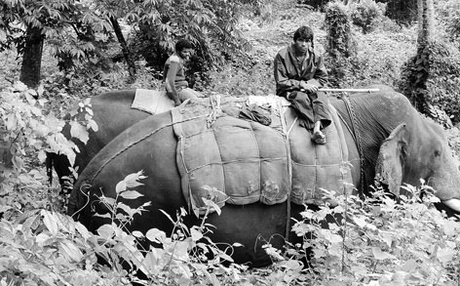
The two-day operation to drive wild elephants back into forests by the forest department in South Kodagu in progress | Express photos

The two-day initiative of the Forest Department to drive wild elephants back into the forests came to an end on Saturday.

On Friday, the operation commenced in the presence of chief conservator of forests, Kodagu circle, Brijesh Kumar Dixith, Deputy Conservator of Forests (DCF), Virajpet division, Malathi Priya, Deputy Conservator of Forests, Nagarahole wildlife division, Gokul, assistant conservator of forests and range forest officials and staff from all the forest department divisions of Kodagu district.

14 Jumbos Driven Back to Forests

The teams were able to chase away 14 elephants from Devarapura and Nokya Gram Panchayat limits, ACF Belliappa told Express.

On Saturday, the teams were unable to spot even one elephant.

He said the teams will continue to ensure the elephants do not return.

“The operation will be continued next week in Pollibetta areas. Movement of vehicles and people will be restricted through publicity arrangements,” he said.

Belliappa added that most elephants entered South Kodagu either from Mauvkal or Nagarahole forests.

Need for Public Help

The operation involved tamed elephants, special task force staff, wildlife staff from Nagarahole, Virajpet division forest officers and staff along with watchers. General public and police also extended required assistance to the department.

Chief conservator of forests, Kodagu circle, Dixith told reporters here on Saturday that as per the elephant census taken last year, as many as 6,000 elephants were located in the state. In Kodagu region, covering Gonikoppa, Thithimathi and Maldaare areas, as many as 100 wild elephants are troubling people, he said.

“Another 32 elephants are permanent residents of BBTC coffee estates in Siddapura. These should be captured and shifted,” he said. However, before their capture, a few technical and legal aspects need to be addressed, he said.

In Bramhagiri wildlife sanctuary, 30 elephants on the Kodagu-Kerala border have been identified that need to be captured and sent back into forest cover, he said. All these issues have been brought to the notice of Forest Minister Ramanath Rai, Dixith added.

source: http://www.newindianexpress.com / The New Indian Express / Home> States> Karnataka / by Express News Service – Madikeri / July 29th, 2013

Ashwini wants all icon players to be treated the same

(What irks Ashwini is that…)

Badminton player Ashwini Ponnappa was aghast when she was sold at much lesser than her base price at the auction for the upcoming Indian Badminton League (IBL).

Pegged at a base price of $50,000, Ashwini fetched just half of that when she was sold to the Pune Pistons, despite being among the icon players of the tournament.

While the IBL will pay her the differential, what irks Ashwini is that there was no communication about lowering the price. “I wasn’t informed about it. Even if there is no women’s doubles event, it doesn’t explain their actions because Jwala (Gutta) and I’ve been performing very well. In the mixed doubles arena, my partner Tarun Kona and I have the highest international ranking.”

Does that mean that she won’t be a part of the tournament? “I will keep my commitment to play the league, irrespective of whether they keep up their end of the bargain or not,” she says.

Saina Nehwal and PV Sindhu, meanwhile, got their base price. “All icon players need to be treated the same. If you are calling a player an icon, it must have been based on performance, and Jwala and I have been performing consistently. There is no need to discriminate between players based on price,” she says.

source: http://www.articles.timesofindia.indiatimes.com / The Times of India / Home> Sports> More Sports / by Taniya Talukdar, TNN / July 25th, 2013

World No.1 ranking and a Slam is priority now: Rohan Bopanna

Rohan-BopannaKF31jul2013
New Delhi:

Rohan Bopanna is content that the sacrifices he made in his tennis journey paid off as he became world number three but the Indian tennis star`s hunger for success has only increased and he now wants to become number one besides notching his first Grand Slam trophy.

Bopanna`s career graph has how a steady rise and in the last two years, he has emerged as a force to reckon with in the doubles arena.

Of his eight titles, six have come in the last three years. Season 2012 was remarkable when he made six finals and won two titles with compatriot Mahesh Bhupathi. In 2011 he won all the three finals with Pakistan`s Aisam-ul-haq Qureshi.

“Discipline has been a key factor to my success. I have always made sure that I put my game ahead of anything else, sometimes even before friends and family. The journey has definitely not been easy but all the sacrifice has paid off very well in terms of my performance on-court. When you get better at your sport, the sacrifices you`ve made in that part don`t really count,” Bopanna said.

Courtesy his semifinal appearance at the Wimbledon, Bopanna, nicknamed `Bofors` for his powerful serve, climbed to number three in rankings early this week, behind formidable American twins Mike and Bob Bryan.

“The number one spot is of priority for me. Though there is no catching up to the Bryan Brothers this year, I am working hard to ensure that I reach the number one spot soon. That ranking is important to me and to get our country up there will certainly be a dream come true,” he said.

Bopanna (5335) is realistic in his calculations as the gap between him and the Bryans is a huge 9125 points. Hence his immediate goal is to add that elusive Grand Slam trophy to his eight ATP Tour titles.

He came close to doing that in the 2010 US Open but ended runners-up with Qureshi to Bryan brothers.

“Right now I have my eyes set on a Grand Slam win. Having reached so far, I want to go all the way and win a Grand Slam for the country,” he said.

Often it is said that Indian players peak late. In fact, Bopanna himself turned pro in 2003 but four of his eight titles have come in the last two years. Asked if at 33, success has come late to him, He said, “Better late than never.”

“As an athlete, success is not just about winning, it is about working hard and giving it all you have. I have always taken one match at a time and worked hard, when I succeeded I worked further on the aspects of the game which worked for me; when I failed, I listed out my weaknesses and worked on them. So, if you look at the bigger picture every game has been a learning curve,” he said.

Bopanna has always played under the shadow of India`s two most remarkable stalwarts — Leander Paes and Bhupathi — who were the team to beat in the late 1990s and early 21st century before parting ways.

They also have an enviable unbeaten run in the Davis Cup since 1997, winning 23 doubles rubbers.

Now that Bopanna has created his own space in the tennis world, does he feel ready to take the baton from Paes and Bhupathi?

“I have been representing the country for more than a decade. My performances have clearly improved leaps and bounds and if this means I am to take the baton on, I am ready.”

Bopanna also said he has worked hard on his game and that has shown on the court.

“My fitness and volleys have definitely improved over time with a lot of practice. For me, I make sure that I have not just played a match, but learned from it as well ensuring a certain degree of improvement in my game from the last match that I`ve played.”

Bopanna has changed a lot of partners. This season alone, he is set to play with his eighth partner in Germany`s Andre Begemann after a successful experiment with Edourad Roger-Vaselin at Wimbledon.

What forces Bopanna to change partners so frequently?

“Vaselin is concentrating on singles and will only be available to play once the Cincinnati Open starts, so I am partnering with Andre Begemann in the meantime. As a doubles player you have to get the right partner to make sure you yield good results and so I have been changing partners frequently.”

“If finding the right partner means trying out different players and tweaking your game, you have to adjust. It`s all about finding out what works best for you.”

Last year his pairing with Bhupathi was tremendous. They won two titles (Paris and Dubai) and were runners-up at six other events. However, after a failed campaign at London Olympics they could not repeat their performance.

“We had been playing well together for quite some time and when you are playing together for long you tend to understand what works out and what doesn`t.

“We took the decision of changing partners keeping in mind that performing our best was one of the most important aspects of being an athlete. So, I paired up with Vasselin and luckily it worked well for us,” he said.

Does he feel tempted to play with Qureshi, with whom he caught attention of the world by forming the Indo-Pak express that won three titles in 2011 and made 2010 US Open final?

“Aisam and I were a great team and we have moved on from there. Whether or not we pair up again is a question that only time can answer.”

Bopanna, who tied the nuptial knot with Supriya recently, said life has “indeed changed for better” after marriage.

“Supriya accompanies me to different tours and keeps me company. She has also been an incredible support system, encouraging me through and through, helping me perform better.”

PTI
source: http://www.zeenews.india.com / ZeeNews.com / Home> Sports> Tennis / by PTI / Sunday – July 28th, 2013

Kodagu Mahila Sangha conducts free health camp in city

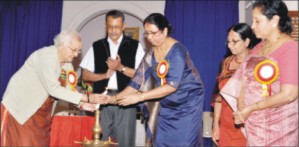
Sree Kaveri Kodagu Mahila Sangha’s Advisor Parwati Cariappa (extreme left) and Sangha President Sarasu Nanaiah are seen lighting the lamp at the inauguration of the free health camp in city yesterday as chief guest Dr. P.A. Kushalappa, Sangha Organising Secretary Gowri Mandanna and Hon. Secretary Lovely Appaiah look on.

Mysore :

A free health check-up camp was held under the aegis of Sree Kaveri Kodagu Mahila Sangha at the Kodagu Sahakara Sangha premises in Jayalakshmipuram yesterday.

The camp was inaugurated by dermatologist Dr. P.A. Kushalappa and Mahila Sangha’s Advisor Parwati Cariappa.

The health camp was held in memory of late Ursula Kariappa, wife of Karthamada Kariappa.

Sangha President B. Sarasu Nanaiah presided. Hon. Secretary P. Lovely Appaiah welcomed.

A large number of people availed of the opportunity at the camp in which Physician Dr. Latha Muthanna, Dr. Padmini Kaveriappa, dentist Dr. Manasa Sendil, Paediatrician Dr. Jyotsna Prasad, Dr. P. P. Aiyanna (Ayurveda), gynaecologist Dr. Kamalamma, orthopaedic surgeon Dr. Ajay Hegde and Dr. Rajesh of Vasan Eye Care participated.

Sangha Vice-President Bollamma Appanna and the guests presented mementos to the doctors who participated in the camp.

Treasurer Jyothi Kashi, Joint Secretaries Bollamma Kuttappa and Kavya Kuttappa, Organising Secretaries Gowri Mandanna and Sumi Gopal and other members were present on the occasion.

source: http://www.starofmysore.com / Star of Mysore / Home> General News / July 29th, 2013