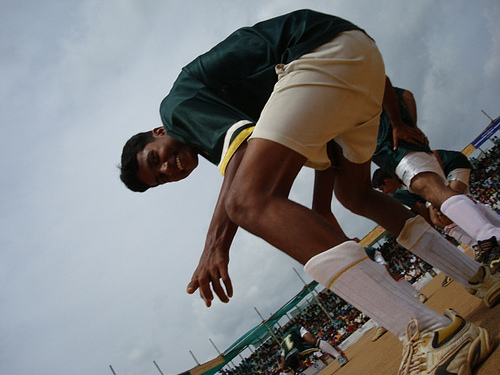
Janma Nakshatra shoot progresses in Virajpet

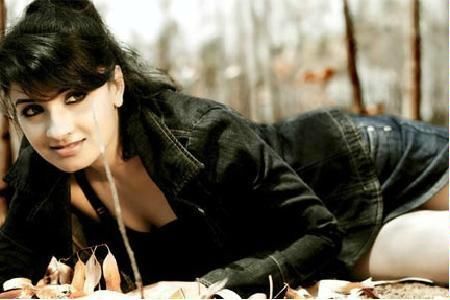
The shooting of the upcoming movie Janma Nakshatra, is progressing at brisk pace in Virajpet of Madikeri district. The movie has Nagakiran, Dishapooviah and Roopashree in the lead roles. The movie is directed by Dayakar and Arjun Janya is the music director of the film.

KodaguKF28apr2013

Nagakiran, who recently changed his name from Nagakiran to Nagarjun, on the suggestion of numerologists is playing the role of forest range officer for the first time in this movie. The film has horror and love elements, but promises to be a commercial entertainer.

Nagakiran will also be seen in an action movie MD, directed by Adath, who has directed the movie Ale. The movie is said to be about brothers who fight for their own cause. The actor will be addressed as Nagarjun from the movie MD.

source: http://www.articles.timesofindia.indiatimes.com / The Times of India / Home> Entertainment> Regional> Kannada / by Vinay Lokesh, TNN / April 26th, 2013

Stop making baseless allegations, greens tell BJP

Coorg Wildlife Society President Colonel (retd) C P Mutthanna has challenged the BJP leaders to prove the allegations they have made against the Congress of using foreign funds received by fake environmentalists for election campaign.

Addressing media persons on Tuesday, he criticised the BJP leaders for making false allegations against the environmentalists who are trying their best to protect and preserve land, water and natural resources of the district. The environmentalists are simply portrayed as villains.

“Let Manu Mutthappa stop making baseless allegations. Why didn’t the BJP government which was in power take up an investigation into foreign funds that arrive to the State. Why was the issue not discussed so far, but raised only when the election has approached?” he asked.

Deforestation concern

Mutthanna questioned the mentality of not speaking against several issues in the district including hydel power projects, high-tension wires, illegal sand mining, expansion of Madikeri city etc.

If all these projects are implemented it would lead to massive deforestation. If the high-tension wire is laid from Kaiga to Thalasherry via Kodagu, it would lead to the chopping of 15000 trees.

The issue has been brought to the notice of the State Chief Secretary. If the government fails to take action, then the next option would be to approach the court, he said.

Illegal sand mining

Coorg Wildlife Society Vice President B A Poonacha expressed concern over the damage caused to rivers due to illegal sand mining on the banks of river Cauvery and Lakshman Theertha. If the illegal mining is not stopped now, there would be difficulty in supplying water to Bangalore and Mysore, he said.

source: http://www.deccanherald.com / Deccan Herald / Home> District /DHNS, Madikeri – April 25th, 2013

ASHWINI PONNAPPA becomes a VICTOR-sponsored player

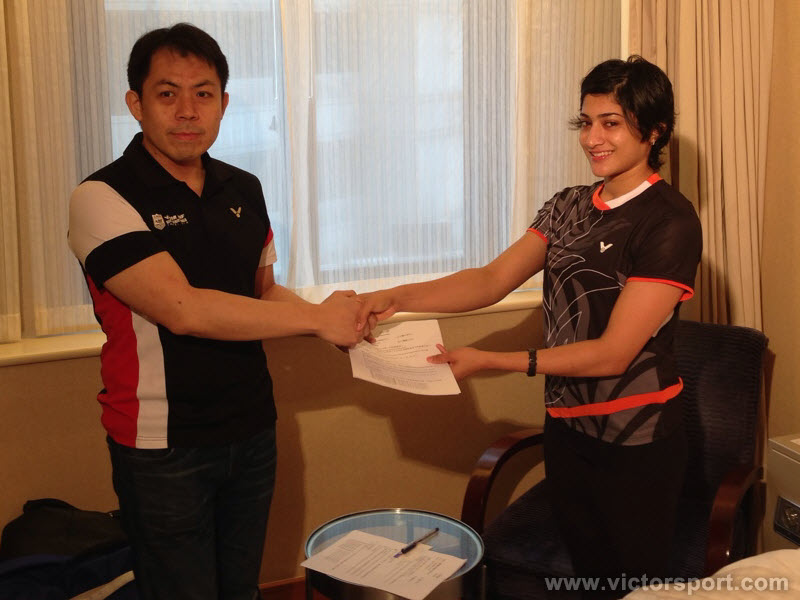
After signing Indonesia’s AHMAD/NATSIR, last week VICTOR signed a sponsorship deal with one of India’s top doubles players ASHWINI PONNAPPA; it is expected that she will play at the India Open later this week in VICTOR colors.

The head of VICTOR marketing division Martin Lu & Ponnappa / Pic www.victorsport.com

She is the first Indian player to be sponsored by VICTOR and, by sponsoring her, VICTOR once again has shown its determination to expand its presence in international badminton.

ASHWINI PONNAPPA said that she is really happy to be sponsored by VICTOR. In recent years VICTOR has improved markedly in terms of brand image and product quality so she has no worries at all about being closely associated with the brand, she said. She hopes that she will play better wearing VICTOR rackets and wearing VICTOR clothes to help raise the profile of badminton in India. PONNAPPA said that in India badminton is a new sport that is attracting more and more players and she hopes that in future, with the help of VICTOR, she will achieve better results and will encourage more young people in India to take up the sport.

ASHWINI PONNAPPA is attractive and has achieved some good results. Playing in the women’s doubles at the 2012 London Olympics her and her partner beat Chinese Taipei’s “golden women’s doubles pair” Cheng Wen Hsin/Chien Yu Chin in the qualifying round. Also, she is still only 23 so still has a lot of potential. This is a new star that aficionados of the game will not fail to notice.

source: http://www.victorsport.com / Victor / Home> News> Latest News / April 25th, 2013

Record number of candidates in fray in Kodagu

With 23 candidates in fray, a record number of candidates are contesting in two constituencies for the first time in the history of Kodagu.

Along with the national parties and regional parties, equal number of Independents are trying their luck in the Assembly polls.

As many as seven Independents are contesting in Madikeri constituency. They are C V Nagesh, Santhosh Kumar, Rafeeq, M A Nizamuddin, B C Nanjappa, Guruprasad, Hareesh Poovaiah. Other candidates are K M Lokesh (Cong), Appachu Ranjan (BJP), S P Mahadevappa (BSP), Vanajakshi (CPIML), B A Jeevijaya (JDS), K M Basheer (JDU) and Shambhulingappa (KJP).

Three Independents

In Virajpet constituency, three Independent candidates are contesting. They are — David, Maranna Dilip Kumar and D Uday. The other candidates are — B T Pradeep (Cong), K G Bopaiah (BJP), D S Madappa (JDS), Chengappa (CPIML), Janith Ayyappa (BSR Cong) and Usman (SDPI).

Only three candidates had contested from Madikeri constituency in 1957. Five candidates had contested in 1962, 1972, 1978, and 1999, while six candidates had contested in 1967, 1983, and 2004. At least nine candidates had contested in 1985, 1994 and 1989, while eleven candidates had tried their luck in the 2008 elections.

Straight contest

Only two candidates had contested from Virajpet constituency in 1957 and 1967.
Five candidates were in the fray in 1962, 1989, 1994, and 2008. Three persons had contested in 1972, 1983, 1985 and 2004.

There are nine candidates in fray for May 5 Assembly polls.

source: http://www.deccanherald.com / Deccan Herald / Home> District / Madikeri, DHNS – April 23rd, 2013

Star-ry eyes on Gayle

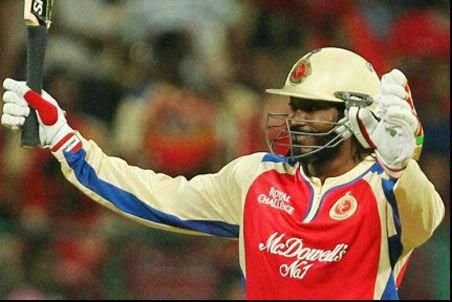
It sure is a defining moment for Bangalore in several ways than one. With the IPL match kick-starting for the Royal Bangalore Challengers with back-to-back wins, the match between Pune Warriors and RCB was one to note.

Stars from various film industries, though glued to their television sets, could not resist from tweeting about Chris Gayle’s thunderous batting and about the match. While Sandalwood stars Nidhi Subbaiah tweeted “Omg! Gayle!!!! #RCB,” Pranitha Subhash said, “Gayle storm?? Thats a hurricane!! The audience have indeed become fielders! Fastest 100 in ipl and T20 history! #Respect.”
GayleKF25apr2013

South-actor Siddharth could not stop tweeting about Gayle’s performance. “I think Chris Gayle is a sport and a tournament unto himself. Eventually bowlers will need to lose a bet to bowl to him. Legendary. Monster!,” “Jamaican sprinters are going to need to run the 100m sprint in 5 seconds to better this Gayle performance. #ChrisGayle,” “What’s the censor boards take on this Chris Gayle knock?,” “Bangalore cheerleaders are dropping like flies. They haven’t stopped dancing for 15 overs. What is happening in this game? #ChrisGayle,” were some of his tweets.

Bollywood Actress Shilpa Shetty and co-owner of the team Rajasthan Royals tweeted, “Unbelievable inning by Gayle! ThankGod we r not at the receiving end!!ha ha ha;) Incredible..he makes it all look so easy!” And, Kollywood actor Dhanush’s tweet read, “The chris gayle innings today will change the world of cricket. Batting redefined.this is brutal. Looks like play station 3 match.”

While these were only some of the actors who tweeted continuously about Gayle and the team, personalities Priya Mani, Sohpie Choudry and Raghu Dixit were among several others who showered their appreciation for Gayle. Gaylestorm sure did take over the entire country by surprise.

source: http://www.articles.timesofindia.indiatimes.com / The Times of India / Home> Entertainment> Regional> Kannada / by Parinatha Sampath, TNN / April 23rd, 2013

Five coffees to energise your Monday morning

coffeeKF23apr2013
Following on from Gary Berry’s introduction to coffee houses in Soho, we thought we’d pick out five flavoursome coffee brands to help you wake up on those dreary Monday mornings back in the office.

Coffee has an interesting history. Now commonly associated with the New World, it was originally cultivated in Yemen and Ethiopia from as early as the 13th Century. From Ethiopia and Yemen, the drink spread to Egypt, the Middle East, Asia Minor and northern Africa. The name itself is thought to come from the Arabic qahhwat al-bun (‘wine of the bean’).

Early Arab mystics drunk coffee to help them communicate with god and maintain focus, and at one point the spread of the beverage was seen as such a terrible social ill the drink was considered as bad as alcohol (hence the name ‘wine of the bean’). Coffee houses were seen as places where rebellious ideas began. While coffee houses now might occasionally be jittery places, they’re probably much tamer affairs than in the dark and middle ages.

With this in mind we thought we’d add a bit of mystique and danger to your coffee drinking habits, with our brief round-up of some of the most exciting coffee brands out there.


Marley Coffee

Anecdote has it that Bob Marley wanted to return to a simpler life of farming at some point in his life. His grandmother apparently dried her own coffee beans in the sun each morning, before making herself a strong cup of the black stuff. Now Rohan Marley, and his friend Shane Whittle, have selected their own beans from Ethiopia, Central America and the Blue Mountains in Jamaica. Marley Coffee has a rich but smooth flavour, and a strong aroma.

Marley Coffee‘s One Love Organic Coffee is an organic medium roast with blueberry, cocoa and spicy notes, with an aftertaste of cherry. The Lively Up! espresso blend again has cocoa hints, but this time with the tastes of sweet caramel and candied fruits. Meanwhile the Buffalo Soldier blend is a dark, sweet roast with an earthy flavour.

Jamaica Blue Mountain Coffee
Like the Marley brand, Jamaica Blue Mountain Coffee hails from the Chepstowe area of Jamaica. Jamaica Blue Mountain Coffee is mostly Arabica Typica and is wet processed. The Coffee Industry Board of Jamaica inspects exports to make sure that the quality is top notch. Jamaica Blue Mountain coffee has a mild flavour, lacking the bitterness of some blends, and as such is one of the world’s favourites.

Cluwak
Sumatra Island in Indonesia is the home of the world’s most expensive coffee, Kopi Luwak. Cluwak is one of the key brands for this type of coffee.

‘Kopi’ means coffee in the local tongue, while the ‘Luwak’ is an animal that eats coffee beans. The Luwaks, although keen to eat the beans, can’t digest them. So when they come out the other end, the inner beans pass through, having fermented, and are gathered to make this coffee. Prices can reach almost £500 per pound for this scatalogical luxury. Vietnamese weasel coffee (a specific type) goes for up to £1,000 per pound. The Specialty Coffee Association of America, however, claims the coffee tastes bad, and there is an assumption it is bought for prestige (and for the story) rather than for taste.


Woolloomooloo Blend

Toby’s Estate’s Woolloomooloo Blend is the perfect coffee for milk lovers. Based on a monsooned Indian bean, the flavour is bold, rich and earthy. The blend is named for the estate’s first roastery and cafe on Cathedral Street, and means ‘place of plenty’ in the indigenous language. The full taste of this bean means it isn’t drowned out by the milk.

Gloria Jean’s Coffees White Russian
Another blend for the milk-lovers, this full-bodied coffee has a gentle boozy edge. The liqueur flavour is perfect for those with a taste of alcohol after a heavy weekend, but is also smooth on the palate. This smooth blend is decadent and still packs a kick.

source: http://www.sosogay.co.uk / Home> Food & Drink / by Adam Love / April 22nd, 2013

Nidhi Subbaiah gets geeky cool

Nidhi Subbaiah might not have signed any other movie after the release of Ajab Gazzabb Love, but the actress is very active on Twitter. While she kept updating about who she will support this IPL (RCB of course!), she has also been voicing her opinion on Hebbal/Malleshwaram blasts and the recent Delhi rape case.

This time around, she wanted to get into a fun mood and posted a picture of her with her new spectacles. She posted on her micro-blogging page saying, “Specs happened to me!” While the frame and specs suited her face well, it looks like every actress in Bollywood are making a style statement with their glasses these days.

Meanwhile, Nidhi, we hear, is busy listening to scripts in Bollywood and will sign a film soon. In Kannada, the Pancharangi actress hasn’t signed any new film. Her special number in Poornima Mohan’s upcoming film School Days, which is yet to hit the screens.

source: http://www.timesofindia.indiatimes.com / Home> Entertainment> Regional> Kannada / by Sharanya CR, TNN / April 22nd, 2013

Women voters outnumber men in Kodagu

There has been an increase of 8.4 per cent in the number of voters in the district, compared to last elections.

The total number of voters in Kodagu is 4,02,333. It was 3,71,056 during 2008 Assembly polls. As many as 31,277 voters have enrolled their names in the last five years.

There are 2,00,523 men voters and 2,01,795 women voters. Men voters have increased by 7.3 per cent (13,796). The total number of women voters has been increased by 17,466 (9.4 per cent).

The total number of voters in Madikeri constituency is 2,02,074. It was 1,81,375 during the 2008 Assembly polls. There has been an increase by 20,699 voters in the last five years (11.41 per cent). The total number of men voters in the constituency is 1,00,235.

Last year enrolment

As many as 9,257 men voters have enrolled in the last five years. The number of women voters during the last election was 90,397 and it has been increased to 1,01,832.

The total number of voters in Virajpet constituency has been increased by 5.5 per cent since 2008. The total voters in the constituency is 2,00,259 — 1,00,288 men and 99,963 women.

source: http://www.deccanherald.com / Deccan Herald / Home> District / Madikeri, DHNS – April 21st, 2013

Vittal Hegde gives insight on rain water harvesting

Mangalore :

“It is important to resolve water problems in the scenario of present climate change caused by huge carbon emissions. The important manifestations of climate change is global warming which causes global temperature to change,” said professor A Vittal Hegde from department of applied mechanics and Hydraulics, NITK.

He addressed the gathering after inaugurating the seminar of ‘water proofing and water harvesting’ organized by Kodagu Dakshina Kannada and Udupi Engineers Association (KDKUEA) at Hotel Ocean Pearl on Saturday April 6.

Addressing further, he said since the year 1700 after industrial revolution, climate change has been the cause of various issues. Due to regular changes in the level of carbon dioxide, there is a change in the atmosphere. The release of greenhouse gases leads to extreme events such as floods occur said the speaker giving an example of a recent flood that occured in Australia.

Considering the above problems, he said methodical support to local RWH should be provided to get a substantial amount of water. Briefing about rain water harvesting (RWH), he said it is accumulation and deposition of rain water for use before it reaches the aquifer.

In ancient India, people believed that forests were mother the of rivers; in fact a study from US indicated that 60% of fresh water comes from forest. The water bodies used to be maintained by the community around but after Independence, the government took full control over the water bodies and water supply.

Speaking about the benefits of RWH, Hegde said it improves water availability, improves quality of ground water, prevents soil erosion, flooding and more important is is that it saves water an dmoney for the future.

Concluding his talk, he said that every city/village should implement RWH for the benefit of the future generation. Unless it is been made mandatory, no one will implement it, thus government should support and take initiative, he added.

A Vishnu Bhat welcomed the gathering, Dr RG D’Souza compered while M Divakar Shetty delivered the vote of thanks.

HV Harish, president of KDKUEA, Hemanth K Jain, director, Kerakol India limited, DR S Srihari from the department of civil engineering in NITK Surathkal, Dr Lakshman Nandagiri, Dr Girish Kumar, U Nagendra Rao, Gajanana S Hegde among others were present.

source: http://www.daijiworld.com / Daiji World / Home / Daijiworld Media Network – Mangalore (VM) / Photographs: Spoorthi Ullal / Mangalore, April 06th, 2013

What a martial race does when there’s no war

MaritalraceKF21apr2013
Few sporting events in Karnataka, in India, in the world, can hold a candle in motive, in spirit, in atmosphere, to the hockey festival organised each summer between Coorgi (Kodava) families.

Part sport, part mall, part fashion parade, part talent hunt, part social glue, the tournament is a beautiful salute to sport from a beautiful people of a beautiful part of the world.

The 12th edition, for the Alamengada Cup this year, concluded today, 12 May 2008, in Ponnampet in Virajpet taluk, with the finals played between the Koothanda family and the Anjaparavanda family.

View a portfolio of 82 pictures here: Coorg Hockey

View a short YouTube video here: Koothanda vs Anjaparavanda

Below read an essay by Sugata Srinivasaraju of Outlook magazine on the 2005 tournament.
————————————

By SUGATA SRINIVASARAJU

They charge towards the umpire when he blows the long whistle to declare a goal. For someone who is not entirely familiar with the Kodava (or Coorgi) hockey passion, it appears that the eleven hockey sticks will do the guy to death. But that does not happen. It turns out to be an incessant argument in incessant rain. Each time it happens the match-clock stops for a minimum of ten minutes. The longest break is for thirty-odd minutes when the Koothanda family team scores past the Nellamakkada family, 3-2, in the last fifteen minutes of the finals of the Kodava Families’ Hockey Festival. For the record, it is the world’s biggest hockey tournament.

We wonder why passions should run so high when this is just ‘festival’ hockey and no great championship? A neighbouring Mysorean who has been a regular at the festival since it began in 1997 explains the nuances involved: “The nation is too amorphous and even if you lose playing for it, it does not haunt you beyond a point. But it is completely different when you are defending your family pride, the shame is more immediate.”

Family pride and family identity is in fact at the core of this festival organised annually in the picturesque terraces of the coffee land. In the days of the coffee price depression, when this inward-looking community, almost clanish, started looking out to measure the vistas of the world, when it looked most distracted in centuries of its existence, a brilliant idea struck a man in his 60s, Padanda Kuttani Kuttappa, to re-fix the roving Kodava eyes and arrest the slipping ground. He invented the ethnic hockey festival. In the very first year, nearly 60 families registered themselves and the numbers swelled each year. In 2003 it touched 281, a world record of sorts which found its way into the Limca Book.

In 2004 the Maleyanda family which organised the fest expected the number of participating families to cross 300, but it did not happen due to certain ‘teething operational problems,’ only 236 families played the game and any given year there has been a guaranteed audience of 25,000 people.

The swelling numbers explain why corporates too have started taking interest in the fest. In 2001 Nike was involved and in 2004 a local tobacco company and Toyota supported the effort with a small grant. LG held a raffle draw with television and mobile phones as gifts.

The organising family needs around Rs 15 lakh to conduct the fest, which it raises by collecting donations from family members, anywhere between five and ten thousand. Participating families pool about 30,000 to meet expenses arising out of travel to the venue (which is generally the home-village of the organising family) uniforms for players, equipment costs etc.

The economics of the whole affair has been worked out to perfection.

Returning to pride, why did the Kodavas decide to play hockey to hold their ground? ‘Because that is what they know best,’ is how some would put it bluntly, but a more liberal interpretation would be, besides the pork curry and coffee, hockey is the only thing that is common to two per cent of the rich planters, eight per cent of medium to small planters and ninety per cent of poor Kodava farm labourers.

A good-humoured joke about the community that did the rounds some two decades back was: Kodava men joined the army or played hockey or joined the Bata Shoe Company as salesmen, because they were fair and dandy. Rum, of course, was another common element to all categories of Kodava men. The strong army connection comes from the fact that two top generals in the Indian Army were from Coorg: Field Marshal K M Cariappa and Gen Thimayya.

Surprisingly, both belonged to the Kodandera family, which also participated in the 2004 hockey fest. It may surprise outsiders, but Coorg has produced more than 40 hockey internationals and some of them like M.P. Ganesh and M.M. Somaiya have even captained the Indian team. Incidentally, the first international from Coorg, M.D. Muthappa, belongs to the Maleyanda family, 2004′s tournament organisers.

But strangely, Ganesh or Somaiya or the gifted goal-keeper A.B. Subbaiah become completely unfamiliar when they come to Coorg. Their first name familiarity with the outer world, gets drowned under the weight of their family names.

For instance, M P Ganesh, who is now the executive director of the Sports Authority of India, becomes Mollera Ganesh. A B Subbaiah turns Anjaparavanda Subbaiah. And the brilliant fullback and Olympian, C.S. Poonacha is Cheppudira Poonacha.

As if sucked back into their original community identity. “Into the womb of mother Cauvery,” as a lay Kodava emotionally put it bringing in the platitude personification of the river that has its origins in the coffee land.

At the finals of the Maleyanda Cup, it was not just the hockey greats present, there were also others who had made it big in other fields. South Indian actress Neravanda Prema, Davis Cupper Machanda Rohan Bopanna were among them. They had all left their cosmopolitan masks behind in Bangalore, Bombay or Delhi to be authentic local heroes. But their speeches in the Kodava language was a give away of their Anglicized transformation. If they did not come to this ethnic festival there was no threat of ex-communication, but there was always the fear of being excluded.

In many ways the story of the Kodavas is the familiar story of the New World. It is the same as the Irish tracking their family trees and their Gaelic roots. In fact the whole environment on May 23, 2005 was like the one in Dhaka on every February 21 (Ekushey February), the Mother Language Day, the day to which Bangladesh owes its existence.

“Part kermises, part festival of remembrance, both political statement and celebration,” writes British writer Jeremy Seabrook about Ekushey February.

Celebration and statement were both there at the hockey fest too, at Gargandur in Somwarpet: There was an ethnic food stall; men unabashedly consumed liquor before the final match began at 2 pm; a Kodava job agency had put up its banner; the 37 Medium Coorg Regiment, Madras Engineering Group and Border Scouts were there looking for talent; a woman cartoonist sold her “Still Hope Ammathi” T-shirts (a cheering Kodava phrase for the losing side); a clutch of planter-woman with their authentic coffee brew were there to zealously promote coffee as a ‘health drink’ and all amidst the din of nasal Kodava sounds. It was a shandy.

Amidst the celebration the statement was not forgotten, it was quietly tucked away in the souvenir that was circulated. It was a charter of demands before the Prime Minister by the Federation of Kodava Samajas: “The Fazal Ali Commission has observed in its report that Kodagu should be maintained as a separate identity. It also recommended the reservation of a Lok Sabha seat for Kodagu. Once the State of Kodagu was amalgamated with the State of Mysore the solemn assurance was ignored… culture and identity of the people undermined…,” it read. This should explain the separate statehood demand for Kodagu a decade ago.

The coffee land has been a RSS-BJP bastion. “No beef, only pork” is what a Kodava exclaimed at the food stall, energetically waving his family flag. Every participating family in the hockey fest have their own colours and flags. A common motif on these flags is a 1837 insignia given by the British to the Coorg people for “distinguished conduct and loyalty.”

Besides the political statement, there is also a cultural and social reasoning to the hockey festival.Consider these two voices: “When you have to build a family hockey team, the entire family will have to sit together, so in many ways it becomes a vehicle to sort out family and property disputes. It is also a time when the young scattered away in the cities come to meet the old,” says M.K. Ponnana.

In fact the Kodava family teams are unique in the sense that if the forwards are 16-year-olds, the fullbacks could be 60 years and the goal keeper could be a lady. The Koothanda family which reached the finals had 20-year-old Shilpa as its goalie.

Young and old, rich and poor, men and women, the binary distinctions are temporarily suspended for the families’ hockey season.

For Ponamma Muthappa the whole fest feigns war. It recreates the clash of tribal chieftains. “We are a martial race and we are very physical, when there is no war we express ourselves through hockey,” she explains.

Whatever may be the thick connotations of the hockey festival, for rank outsiders the single most interesting factor could be the pretty Kodava women. But the bugle sounds there too: “It is difficult to take home a wife,” a local girl adds blush to the statement, suggesting that they seldom marry outside their community!

[Excerpted from ‘Keeping Faith with the Mother Tongue – Anxieties of a Local Culture’ by Sugata Srinivasaraju. Published by Navakarnataka Publications. Price Rs. 200. Pages: 288]

source: http://www.churmuri.wordpress.com /