India International Coffee Festival: Bengaluru

India International Coffee Festival 2026 in Bengaluru from Feb 12. Showcasing India”s coffee ecosystem, quality, and diversity.

pix

Bengaluru, (PTI) :

The India International Coffee Festival beginning from February 12 is expected to attract over 20,000 visitors, officials said on Monday.

The three-day festival will be held at Chamara Vajra, Jayamahal here with the support of the Specialty Coffee Association of India (SCAI), Coffee Board of India and presented by NESCAFA, Nestle India, they said.

The festival brings together the entire spectrum of India’s coffee ecosystem on a single platform, officials said.

Addressing a press conference here, Kurma Rao M, CEO and Secretary, Coffee Board of India termed the India International Coffee Festival (IICF) as the country’s only dedicated coffee festival.

He said IICF 2026 will convene coffee growers, processors, exporters, roasters, equipment manufacturers, cafe brands, baristas, and consumers.

Positioned as an industry-led forum, the festival focuses on collaboration, knowledge exchange, innovation, and market access at a time when India’s coffee sector is transitioning towards quality-led growth, he added.

“Indian coffee is gaining recognition for its quality and diversity. Platforms such as IICF play an important role in connecting producers with markets, encouraging best practices, and supporting the long-term growth of both domestic consumption and exports,” Rao told reporters here.

IICF organiser and SCAI president Hamsini Appadurai said, “India’s coffee sector is steadily moving from a commodity-led approach to a quality and experience-driven market.”

“This edition of IICF reflects that shift with greater scale, deeper business engagement, and a strong focus on showcasing the diversity and potential of Indian coffee across domestic and global markets,” she said.

According to a statement, the festival, which is structured around a farm-to-cup framework, offers insights into production, processing, roasting, and brewing through curated tastings, workshops, and cupping sessions.

These experiences highlight regional coffee profiles, processing techniques, and flavour development, encouraging informed consumption and a deeper appreciation for quality and traceability, it said.

The 2026 edition will also host the National Coffee Championships, where winners from regional rounds will earn the opportunity to represent India at international competitions, reinforcing India’s presence on the global coffee stage, Rao said.

Source: PTI    By Rediff Money Desk, Bengaluru

DISCLAIMER – This article is from a syndicated feed. The original source is responsible for accuracy, views & content ownership. Views expressed may not reflect those of rediff.com India Limited.

source: http://www.money.rediff.com / rediff / Home> Market News / by Rediff Money Desk, Bengaluru / by PTI / February 09th, 2026

Various Schemes Implemented by the Horticulture Department: Yogesh

Under the Pradhan Mantri Krishi Sinchayee Yojana (PMKSY) – “More Crop per Drop”, assistance is being provided for installing drip/micro irrigation systems for horticultural crops, said Yogesh, Deputy Director of the Horticulture Department.

He stated that crops such as arecanut, coconut, ginger, banana, palm, black pepper, avocado, sapota, and various vegetables are eligible under the scheme. Farmers belonging to Scheduled Castes/Scheduled Tribes and other categories can receive up to 90% subsidy.

Under the National Horticulture Mission, farmers are given 40% assistance to expand new areas for banana, vegetables, and avocado cultivation. In the rejuvenation program, farmers are provided with free saplings of oranges and pepper, along with organic manure.

Under the Protected Cultivation Program, 50% subsidy is provided for the construction of greenhouses/polyhouses/shade net houses and for plastic mulching. Similarly, 50% subsidy is offered for water storage structures.

For post-harvest management, 50% subsidy is given for the construction of processing units/pack houses/cold storages. Additionally, a 40% subsidy is available for setting up mushroom units.

source: http://www.clnews.in / Coffeeland News / Home> Agriculture> General / by CLN Newsdesk / July 11th, 2025

From Darkness to Opportunity- Aahwahan Foundation’s Solar Initiative Brings Light to Remote Kodagu Villages

Karnataka : 

In the remote villages of Karnataka’s Kodagu district, nightfall once meant darkness, uncertainty, and limitation. For hundreds of families, kerosene lamps were the only source of light, children struggled to study after sunset, and women faced safety concerns while completing daily chores. That reality is now changing with the launch of Project Chirag – Solar Village Initiative by Aahwahan Foundation.

The initiative is being implemented across 17 villages, including Nittur, Ponnappasanthe, Balele, Balyamandur, Nalkeri, and Kirgur, reaching 630 households and benefiting a population of 2,243 people. Designed to address energy poverty in underserved rural communities, Project Chirag provides clean, reliable solar-powered electricity to homes that previously had little or no access to dependable lighting.

Each household has been equipped with a comprehensive solar lighting system consisting of a 150Wp solar panel, a 120Ah solar tubular battery, and a 10A charge controller. The system powers four energy-efficient LED lights—two 10W and two 5W—along with an 18W pedestal fan and a mobile charging facility. With up to 48 hours of backup, families now have access to 3–4 hours of lighting and up to 8 hours of fan usage per cycle, depending on sunlight and consumption patterns.

The impact of the initiative goes beyond illumination. With safer, brighter homes, children are able to study in the evenings, women can carry out household activities without fear, and families feel more secure after dark—an important change in villages located near forest areas with frequent wild animal movement. The availability of electricity has also enabled small business owners and home-based entrepreneurs to extend their working hours, contributing to improved household incomes.

Reflecting on the transformation, Mr. Braja Kishore Pradhan, CEO & Founder of Aahwahan Foundation, said, “When I first visited these villages, darkness wasn’t just about the absence of light—it reflected a lack of opportunity, safety, and dignity. Through Project Chirag, we are seeing children study without fear, women move freely after sunset, and families reclaim their nights. Solar energy has restored not just visibility, but hope and independence.”

Residents across the villages echo this sentiment. “Before Project Chirag, studying and working after sunset was extremely difficult. Now our homes are bright, and life feels safer and easier,” said a resident of Nittur. A villager from Ponnappasanthe added, “Solar lights have changed everything for us. Children can study, women feel safer at night, and small businesses are growing.”

By replacing kerosene lamps with renewable solar power, Project Chirag is also delivering environmental benefits, reducing indoor air pollution and dependence on fossil fuels. Built with durable components and secure wiring, the systems are designed for long-term reliability and sustainability.

Project Chirag demonstrates how clean energy can become a catalyst for social development, combining safety, education, livelihood enhancement, and environmental responsibility. In the villages of Kodagu, electricity is no longer a luxury—it is becoming the foundation for opportunity, dignity, and a brighter future.

source: http://www.thecsruniverse.com / The CSR Universe / Home> Article / by The CSR Universe Team / February 05th, 2026

Coorg Wilderness Resort & Spa: Blending luxury & wellness with romance in the Western Ghats

The establishment has introduced a Valentine’s special range of stay experiences, including candlelit dinners, couple-focused spa therapies, guided forest treks, yoga and meditation sessions.

Coorg Wilderness Resort | coorgwildernessresort.in

_______________

What You Need to Know

Coorg, a picturesque hill district in Karnataka, known for coffee and natural beauty, is home to Coorg Wilderness Resort & Spa. This luxury retreat offers immersive nature experiences with refined comfort, focusing on “slow luxury” and experiential stays. It provides romantic and wellness-focused offerings, emphasizing connection and renewal for guests.

*AI-generated summary. Check context in original text.

________________

New Delhi: 

Located nearly 250 kilometres from Bengaluru, tucked deep within the Western Ghats, Kodagu—better known as Coorg—remains one of Karnataka’s most evocative hill districts. Largely rural and famed for its coffee plantations and gracious hospitality, the region draws thousands of visitors annually with its rolling estates, wildlife reserves, ancient temples, and historic forts. Often referred to as the ‘Scotland of India’ and the ‘Kashmir of the South’, Coorg’s mist-draped hills and dense forests lend it a timeless, almost cinematic charm.

Amid this serene landscape sits Coorg Wilderness Resort & Spa, a secluded luxury retreat designed to immerse guests in nature while offering refined comfort. A venture by Paul John Resorts & Hotels, the resort is perched high above the valleys, offering expansive views, intimate dining spaces, and an atmosphere that encourages guests to slow down and savour their surroundings.

The establishment has introduced a Valentine’s special range of stay experiences that blend wellness, indulgence and romance. From candlelit dinners beneath starlit skies to couple-focused spa therapies, guided forest treks, yoga and meditation sessions, the offerings are designed to foster connection—both with nature and with one another. The emphasis is on unhurried moments—shared silences, long walks through misty trails, and evenings where time seems to stretch effortlessly.

Each experience is crafted to feel personal and understated, allowing luxury to take a quieter, more meaningful form. The resort’s approach reflects a growing shift in travel preferences towards slow luxury and experiential stays that prioritise wellbeing and emotional connection over excess.

By combining immersive natural experiences with elegant hospitality, Coorg Wilderness Resort positions itself as a destination for travellers seeking depth, intimacy, and renewal—making it a compelling addition to upcoming travel and lifestyle features focused on mindful escapes.

Besides Coorg Wilderness Resort & Spa, Paul John Resorts & Hotels’ varied portfolio includes Kumarakom Lake Resort in Kerala, The Paul Bangalore, the colonial-styled Forte Kochi, and Big Banyan Vineyard & Resort near Bangalore. The properties offer curated experiences, ranging from Ayurveda and wellness retreats to urban luxury stays.

source: http://www.theprint.in / The Print / Home> India / by The Print Team / February 05th, 2026

Musical evening in Bengaluru in honour of Madikeri Nagendra’s birth anniversary

Sangeetha Sambhrama will feature a book, album and website launch, followed by a concert of Madikeri Nagendra’s original compositions.

Madikeri Nagendra’s sonorous voice and unique compositions have a special place in Kannada’s Sugama Sangeetha or journey of musical expression. An event titled, Sangeetha Sambhrama, will be a reminder of a bygone era of music that once played a major role in Karnataka’s musical milieu.

The event commemorates Nagendra’s 75th birth anniversary and has been organised by his son, Bharath Nagendra. Born on September 16, 1950, to a culturally vibrant family, Nagendra’s early exposure to classical music, saw him become a household name and a contemporary of Rathnamala Prakash, Malathi Sharma, Shimoga Subbanna.

According to the Bengaluru-based Bharath, the event will bring together musicians, scholars and connoisseurs of music. The evening will begin with the launch of Madikeri Nagendra – Yashogaathe, a book that chronicles the artiste’s journey. This will be followed by the release of an audio album Geethavenna Jeevana, a compilation of 11 original compositions by Nagendra, orchestrated by Praveen D Rao.

Saanidhya, a website documenting the curated knowledge of Sugama Sangeetha, will also be launched on the occasion. Live music will be presented by vocalists Supriya Raghunandan, Meghana Bhat, Srilakshmi Belmannu, Keerthan Holla, Nishchay Vishwasena and Bhargav HC, as part of the celebrations.

Bharath says Saanidhya is an initiative to create a living archive for the next generation. “There is a dearth of information about Sugama Sangeetha on the internet. In the past, singers kept this form alive by singing compositions of writers such as Kuvempu and Da Ra Bendre. Yashwanth Halebandi, for instance, was known for singing Bendre’s songs. This website is an effort to keep this art form from disappearing.”.

source: http://www.thehindu.com / The Hindu / Home> Entertainment> Music / by Sindhu Nagaraj / February 04th, 2026

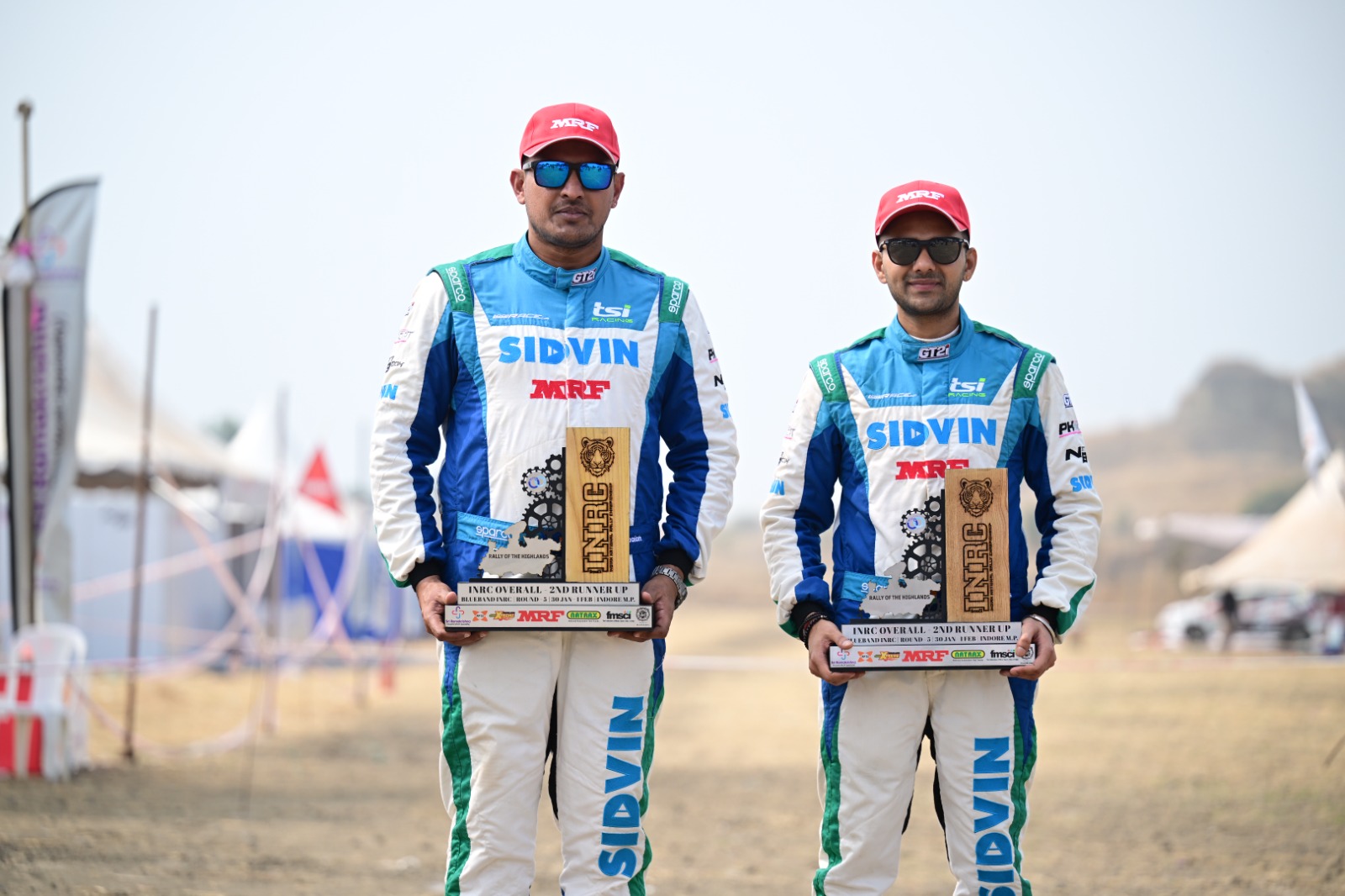
Aditya–Virender win Highlands Rally; Dean–Gagan clinch maiden INRC title

Karnataka’s Dean Mascarenhas and experienced co-driver Gagan Karumbaiah sealed their maiden Indian National Rally Championship (INRC) title with a round to spare. – IANS

Indore (MP) (IANS) :

Karnataka’s Dean Mascarenhas and experienced co-driver Gagan Karumbaiah sealed their maiden Indian National Rally Championship (INRC) title with a round to spare, even as their TSI Racing teammates from Himachal Pradesh, Aditya Thakur and Virender Kashyap, clinched overall honours at the Rally of the Highlands, the fifth and penultimate round of the 2025 season, held at the National Automotive Testing Tracks (NATRAX), Pithampur, on Sunday.

Dean and Gagan finished fifth overall on the final day, earning a crucial championship point that gave them an unassailable provisional lead and confirmed their first National title. Dean, who made his rally debut at K1000 in 2010, had narrowly missed out on the championship in 2019 by just one point.

“Incredible. It is an amazing feeling to finally win the Overall National Championship,” said Mascarenhas. “I have waited over 15 years for this moment. A huge thanks to TSI Racing and PH Sport, without whom this would not have been possible. I am especially grateful to my co-driver, Gagan, who has been phenomenal. This is a truly memorable milestone in my career.

The duo has partnered with each other since the Coimbatore Rally in 2019. Despite minor mechanical issues, Aditya Thakur and Virender Kashyap produced a composed drive to secure the rally win.

“We broke the gear mounting in the first stage today, but managed to finish the stage. There was no point pushing after that, so we focused on protecting our position and bringing the car home safely,” said Thakur. “It is a joy to drive this car, and we are delighted to get our first win for the team. Congratulations to Dean on winning the championship.”

Defending champion Karna Kadur, partnered by Musa Sherif, delivered a blistering performance on the final day to finish second overall. However, it was not enough to take the title battle into the final round, as Mascarenhas’ fifth-place finish proved decisive.

In INRC2, Jason Saldanha of Mangaluru, guided by veteran co-driver PV Srinivasa Murthy, claimed victory. Kerala’s Fabid Ahmer and Milen George produced a strong final-day charge to finish second, while Harkishan Wadia and Kunal Kashyap completed the podium.

Chettinad Sporting’s Vishakh Balachandran, with Chiranth Jain, won the INRC3 category ahead of teammates Sheshank Jamwal and Raghuram Saminathan. Anushriya Gulati, partnered by Karan Aukta, finished third, secured the Ladies Class title, and also placed an impressive ninth overall. Phoebe Dale of Meghalaya and Athira Murali completed the podium in that order

In other categories, Bhopal’s Mohammed Kaif Khan, with Jibran Ahmed, won the Gypsy Challenge, while Bengaluru’s Asool Albert John and Kodagu’s Aiyappa Bopanna clinched the Classic Challenge Cup.

Provisional results final:

Overall: 1. Aditya Thakur/ Virender Kashyap (both Himachal) TSI Racing, (01 hour, 39 minutes, 49.2seconds); 2. Karna Kadur (Bengaluru)/ Musa Sherif (Kasargod), Arka Motorsports (01:40:40.0); 3. Dean Mascarenhas (Mangaluru)/ Gagan Karumbaiah (Kodagu) (TSI Racing) (01:41:02.9).

INRC2: 1. Jason Saldanha (Mangaluru)/ PV Srinivasa Murthy (Bengaluru) Arka Motorsports (01:41:21.0); 2. Fabid Ahmer (Palakkad)/ Milen George (Kottayam), Pvt. (01:41:28.8); 3. Harkrishan Wadia (Delhi)/ Kunal Kashyap (Shimla) Arka Motorsports (01: 42:39.0).

INRC3: 1. Vishakh Balachandran (Thiruvananthapuram)/ Chiranth Jain (Karkala) Chettinad Sporting (01:43:00.4); 2. Sheshank Jamwal (Hamirpur, HP)/ Raghuram Saminathan (Coimbatore) Chettinad Sporting (01:43:04.3); 3. Anushriya Gulati (Dehradun)/ Karan Aukta (Jubbal, HP) Arka Motorsports (01:45:15.2);

INRC 3T: 1. Baljinder Singh Dhillon (Delhi)/ Goutham CP (Chikkamagalur) R-Tech Motorsports (01:50:47.5); 2. Thejas Reddy/ Ravindra Kumar (Both Bengaluru) Snap Racing (01:54:17.3).

Junior INRC: 1. Abhimanyu Sajeevan (Kozhikode) Snap Racing (01:41:36.6); 2. Arjun Y Mavaji (Bengaluru) pvt (01:48:04.8); 3. R-Tech Motorsports (01:50:44.7);

Ladies Class: 1. Anushriya Gulati (Dehradun), Arka Motorsports; 2. Phoebe Dale Nongrum (Shillong) (01:11:58.3); 3. Athira Murali (Kottayam) Chettinad Sporting.

Fmsci Gypsy Challenge: 1. Mohammed Kaif Khan (Bhopal)/ Jibran Ahmed (Bengaluru) Pvt. (01: 54:00.2); 2. Aneesh Sangma (Tura)/ Dinky Varghese (Coimbatore) Pvt. (01: 54:15.2); 3. Vinod Singh/ Adithya Garg (Both Indore) (02:00:24.8).

Classic Challenge: 1. Asool Albert John (Bengaluru)/ Aiyappa Bopanna (Kodagu) pvt (02:09:07.3); 2. Siddartha Santosh (Bengaluru)/Sawan Sathyanarayan (Chennapatanam) Snap Racing (02:16:47.0).

source: http://www.indiatribune.com / India Tribune / Home> Sports / by India Tribune / February 01st, 2026

Union Budget 2026: Karnataka Planters’ Association, farmers expect climate-linked insurance cover for coffee

The Union government should make regulatory changes and include coffee, tea, and rubber under PMFBY, wherein 80% to 90% of premiums are paid by governments, say planters.

A file photo of the ripened coffee berries at a plantation in Kodagu used for representational purpose only. | Photo Credit: The Hindu

The Karnataka Planters’ Association (KPA), an apex body representing growers in the coffee heartlands of Chikmagaluru, Hassan, and Kodagu, which account for more than 70% of India’s entire coffee production, has strongly demanded the inclusion of coffee farms under a weather-linked crop insurance plan.

M. Salman Baseer, chairman of KPA, told The Hindu that the apex body has been requesting the government to include coffee under a climate-linked insurance plan, considering the crop are being badly hit by droughts or floods year after year.

Excessive rain

“We hope the upcoming Budget will hold some good news for coffee farmers in Karnataka in this regard,” anticipated Mr. Baseer, adding that incessant and excessive rains over the last several years have caused havoc on coffee plantations, resulting in significant crop- and plant losses in Karnataka.

Pradeep Poovayya, a coffee farmer from Kodagu and an executive committee member of the Coorg Planters’ Association, said currently, coffee, rubber, and tea are not covered under Pradhan Mantri Fasal Bima Yojana (PMFBY), which provisions 80% to 90% of premium payments by the governments. “These crops come under the Ministry of Commerce and not the Ministry of Agriculture. This is an unfair classification. While black pepper, coconut, arecanut, and paddy are covered under PMFBY, coffee is not,” Mr. Poovayya highlighted.

Arvind Rao, former chairman of KPA, also noted, “Coffee farming in India is completely dependent on rain and shine. However, unpredictable and extreme weather adversely impacts production, and that has been happening every year for the last many years.”

Input and labour costs

According to Rana George, Managing Director of Kelachandra Coffee, which grows Robusta and Arabica across 7,000 acres of land, climate volatility, rising input and labour costs, and new export compliance requirements are increasing pressure across the value chain.

“The Indian coffee sector needs support that strengthens growers while elevating India as a premium global origin. The Budget can make a meaningful difference through focussed investments in climate resilience, crop advisory and irrigation support, research on high-yield and climate-tolerant varieties, and easier access to long-tenure credit for replantation and farm modernisation,” Mr. George added.

Policy-based approach

Mr. Poovayya said farmers’ lands were often subject to the vagaries of nature, such as fire, floods, landslips, and earthquakes. However, the government only offered short-term relief instead of having a policy-based approach.

“We want regulatory changes to ensure coffee is included under PMFBY, and climate-related crop and land losses should be covered under the National Disaster Relief Fund,” he said, adding that farmers currently receive a meagre ₹35,000 (a sum fixed several decades ago) per hectare of farmland lost and ₹7,000 per acre for crop loss. “These are fixed based on archaic calculations,” Mr. Poovayya said.

source: http://www.thehindu.com / The Hindu / Home> News> India> Karnataka / by MIni Tejaswi / January 31st, 2026

Here’s Why You Should Take A Nature Trail Through The Spectacular Coffee Plantations Of Coorg

Let me get my coffee first.

My love affair with coffee started during the lockdown; trying new flavours and textures became an escape for me in those tough times, which has now developed into a regular morning comforting ritual with my coworkers. As I sit here penning down a love story to coffee, my colleagues can spot me sipping on a big tumbler of iced coffee. I had the chance to experience a rich story of coffee-making firsthand, one that had me appreciating this beverage even more. A 6-hour drive from Bengaluru brought me to the Tata Consumer’s plantation on the beautiful slopes of Coorg, which gave me an opportunity to discover and learn all about coffee beans.

Coorg is more than a famous hill station; it is also India’s coffee-growing region. For a coffee-lover like me, this trip became a one-of-a-kind core memory. With tiny droplets of rain and stunning natural visuals, I was transported to a rain-soaked fantasy with the fragrant rustling from the coffee plants. Here I saw the labour and commitment that go into each cup. I was lulled into feeling of calmness, one of nature’s offerings that’s impossible to replicate. Strolling down the road that goes through the plantation with miles of trees and coffee plantations in either direction, I was drawn into the story of coffee. The coffee plants are laden with a green and maroon coloured beans which hang thickly from the branches.

The plantation slopes are renowned for their Arabica and Robusta brews and are surrounded by several lakes, verdant hills, and a diverse range of flora and animals. November is considered to be the best time to pick up the berries and witness the harvest. But when a coffee enthusiast like me is roaming around so much coffee, you can’t help but crave the brown beverage. So, while explaining the foundation and motives of their campaigns and crop, the brand served to cure our coffee craving with steaming hot sips of their best-selling filter kaapis.

A 150-Year-Old Legacy

You might wonder what makes Tata Consumer Products different from its competitors. Tata’s association with the beverage dates back more than 150 years when some tenacious planters from the then-state of Mysore in South India planted the first seeds of the estates and brought coffee to the Coorg Hills. These are some of world’s best coffees, produced by the land and most importantly the local people living there.

source: http://www.elle.in / Elle / Home> Food / by Ekta Sinha / October 09th, 2023

Coffee harvest slows down in Chikkamagaluru, Kodagu, as migrant workers from Bengal leave for SIR

Coffee picking across parts of Chikkamagaluru and Kodagu has slowed down during the peak harvest season after a large section of migrant labourers returned to West Bengal for the Special Intensive Revision (SIR) verification exercise. The sudden labour shortage has pushed up wage demands from the remaining workers, leaving planters caught between the risk of crop damage if harvesting is delayed and the burden of higher labour costs.

The period between November and March is the peak harvesting season for Robusta coffee, when labour requirement is at its highest and timing is critical, N. Bose Mandanna, former Vice-Chairman, Coffee Board of India, said. He added that coffee cherries have to be picked at the right stage of ripeness, but the process has become a hurdle as many migrant workers have returned to their native districts for over 10 days for the verification process.

Delays threaten quality, yield

If harvesting is delayed, the cherries either over-ripen or dry and fall to the ground, where they get damaged and cannot be used, leading to losses. “The quality goes out immediately if fruit is not picked on time,” he said, adding that when the fruit is harvested at the correct time, the pulp extracted during processing is of the best quality, which gets farmers higher prices, and that any delay directly affects the quantity harvested and the quality of coffee produced. 

Untimely rains

Adding to the disruption caused by workers leaving for the SIR verification, Abhishiek Ponnappa, a planter and representative of Kodava Coffee Growers, said untimely rainfall in parts of Karnataka and Kerala this January have created a double whammy for the farmers. The rains prevented coffee plants from drying properly, while continuing harvesting under wet conditions risks damaging the plants and affecting the next year’s crop. 

Usually, migrant workers return to their home states either before the coffee harvest begins or after it ends in March. This time, however, labour shortage was a challenge throughout January due to SIR verification, as workers began receiving notifications and left within extreme short notice, Harish Maharishi, who owns a plantation in Mudigere, Chikkamagaluru said.   

Local workers tied to tourism

In Chikkamagaluru and Kodagu, local workers are largely unavailable in plantation areas, as the growth of tourism has absorbed much of the local workforce, leaving coffee estates heavily dependent on migrant labour, planters said.  

Producing one tonne of Robusta green coffee beans requires about 4,500–4,700 kg of coffee fruit. In Indian conditions, an average acre of Robusta yields around 600–700 kg of fruit. At the usual harvesting rate of ₹5 per kg, and assuming a picker harvests about 200 kg a day, it would take roughly 15–17 labourers to harvest one acre of a Robusta plantation, Mr. Mandana explained.  

Rising wages

Another concern during large-scale labour shortages is a sharp increase in wage demands, planters said. 

Under regular conditions, Robusta pickers are paid ₹4–₹5 per kg because the variety allows large volumes to be harvested in a day. The coffee picked by each worker is weighed, and wages are calculated accordingly. An average worker, Mr. Mandana explained, earns ₹476.11 a day, but those who pluck 200–250 kg can earn ₹800–₹1,200 in a single day. When labour becomes scarce, workers, as planters said they are witnessing now, demand higher rates of ₹7–₹8 per kg, which sharply increases the cultivation cost, leading to a difference of at least ₹600 per worker per day for the same quantity of coffee picked.

source: http://www.thehindu.com / The Hindu / Home> News> India> Karnataka / by Rishita Khanna / January 31st, 2026

Wins Inter-Sangha Tennis Ball Cricket

The Annual Inter-Sangha Tennis Ball Cricket Tournament in memory of Kannambira Girish Kushalappa was  organised by Kodava Samaja Cultural and Sports Club, Mysuru, recently at University and Gangothri Grounds in which 18 teams from different areas participated.

In the  finals, Sri Igguthappa Kshemabivridhi Sangha, Hebbal A, emerged winner by defeating Sri Cauvery Kodava Association (Mysore East).

The winning team members are seen with chief guest Ajjikuttira T. Poovaiah (DCF retd.), Kannambira Neeta Kushalappa, Ponjanda A. Ganapathy,  President, Kodava Samaja, Mysuru, Machanda Prakash Belliappa, Vice-President of the Club, Aramanamada Ponnanna, Secretary of the Club, along with Club office-bearers and others.

As part of the tournament, an exhibition match was also played between two veteran teams as Mysore North and Mysore South.

source: http://www.starofmysore.com / Star of Mysore / Home> Sports / January 29th, 2026