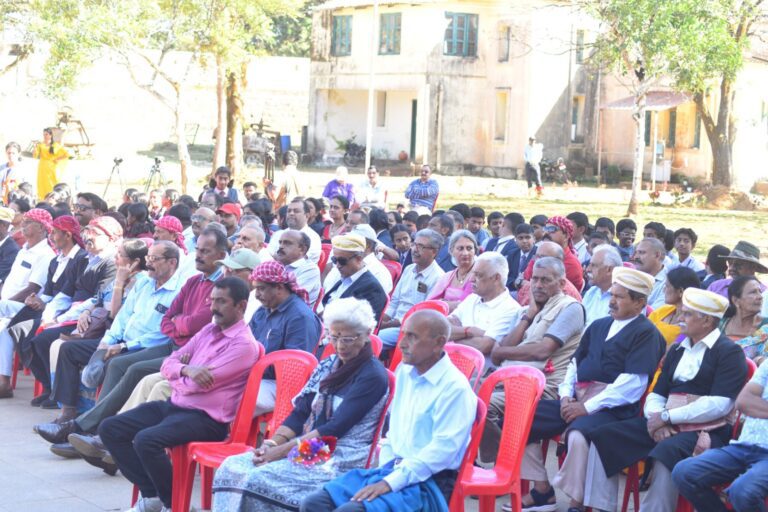
The United Kodava Organisation (UKO) organised a programme titled ‘Neppra Nalat Manjata Mott’ (Unforgettable Step in the Courtyard of Memory) to commemorate historic events and pay tribute to freedom fighters.Held at the fort premises in Madikeri, the programme carried the theme ‘Independence and Kodagu – A Fusion of History, Music and Patriotism’.
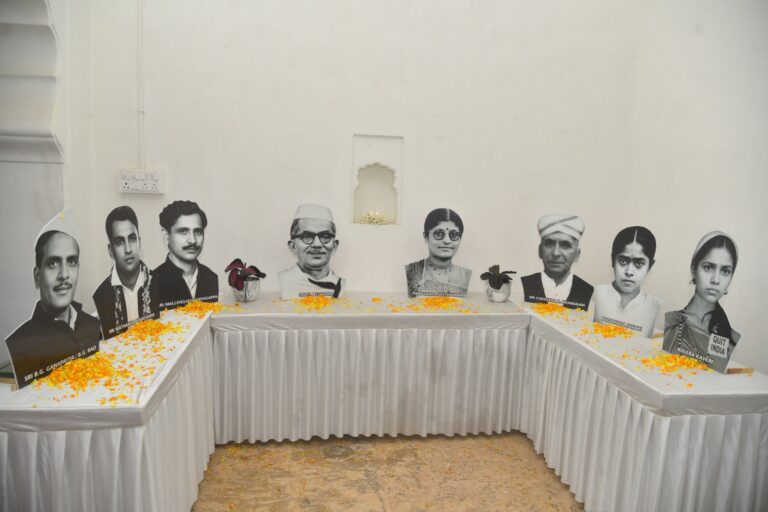
A portrait exhibition was organised to honour those who fought for the nation’s freedom.Portraits of hundreds of freedom fighters from Kodagu who resisted British rule were displayed inside the fort. Rare photographs depicting significant incidents from Kodagu during the freedom struggle were also exhibited, drawing keen interest from the audience.
Tributes were paid to freedom fighters through speeches and songs. Homage was offered to martyrs including MallengadaChangappa, Matricada Belyappa and Chekkera Monnaiah, who sacrificed their lives for the nation.
Students of General Thimmaiah School presented the historical background of Pannangalathamme Devara through a dance performance. Students of Kodagu Vidyalaya, along with Paleyada Divya and Maletira Ajith Poovanna, rendered patriotic songs.
Addressing the gathering, UKO convenor Kokkalemada Chinnappa said that creating false history and forgetting real history posed a serious threat to the nation’s identity. He noted that Kodagu too had witnessed continuous freedom struggles and expressed regret that such sacrifices are often overlooked.Personality development guide and international athlete Teetamada Arjun Devaiah said the Kodava community currently requires courageous, grassroots-based organisations that work issue-wise and have financial backing. He urged the community to focus on building such institutions.
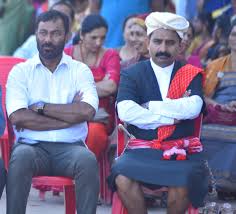
Shakti Daily Editor G. Rajendra, Coorg Hotels and Resorts Association President Kundyola Dinesh Cariappa, Archaeological Department Officer Sunil, sons of freedom fighter Mallengada D. Changappa-Prakash and Girish, General Thimmaiah School Principal Baleada Savita, District BJP President Napanda Ravi Kalappa, former City Municipal Council President Neravanda Anita Poovaiah, and several Kodava community leaders and UKO members were present.
source: http://www.clnews.in / Coffeeland News / Home> General / by CLN newsdesk / September 27th, 2024
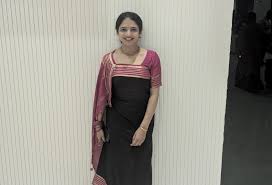
CLN has been patiently tracking the progress of Apparanda Neer Somakka with pride – a quiet and humble girl who pursued her goals with determined alacrity. Every Kodava youngster should read the contents of this interview; parents and mentors should take note too. It is the single-minded pursuit of her academic goals to get her PhD at a relatively young age, so that she can now focus on what she wants to achieve in her career, that is commendable! She presently works as Research Associate at Institute for Social and Economic Change which is an All-India Institute for Interdisciplinary Research and Training in Social Sciences.
We are really proud of her and the good news is that there are more youngsters who have achieved similar academic distinction to shine in their future careers. The interview and answers given by this young lady clearly demonstrates a maturity well beyond her years! There is a certain sense of goodness, in an old-fashioned manner that permeates through her thought process. An embodiment of good values of education – hard work, acknowledgement of mentorship, alignment with community values, with the clarity of end goal.
Despite the somewhat longer than usual length of the message, READERS ARE REQUESTED TO SHARE THIS INTERVIEW AMONGST ALL IN THEIR NETWORK – ESPECIALLY SENIOR STUDENTS IN SCHOOLS & COLLEGES AND PARENTS. There is a strong message for Kodava women to pursue their interests even while residing on their plantations. Agri based small businesses are a distinct value-adding opportunity that would complement their family income, financial literacy and improve their economic empowerment/stature.
CLN: You were obviously a serious and committed student in your earlier years at KCES Kakkabe and Sri Rama Trust English Medium School, Napoklu. Tell us a bit about these years at school and your thought process in choosing Agricultural Economics as your field of Study for Graduation. Also the choice of your locations for higher studies.
NS: During my school years at KCES Kakkabe and Sri Rama Trust English Medium School, Napoklu, I was fortunate to have the guidance of supportive teachers who played a significant role in shaping my path. My Kannada teacher, Chermandanda Shobitha Ma’am, stands out for her constant encouragement and belief in my abilities. Her support during those formative years instilled in me the confidence to explore different subjects, and this has had a lasting impact on my academic choices.
Growing up in a region where agriculture was central to daily life, I became naturally curious about how farming practices influence rural livelihoods. This curiosity led me to choose Horticulture as my focus during my undergraduate studies. We had around 70 subjects, but I was particularly drawn to social sciences because of their dynamic and evolving nature.
After completing my undergraduate degree, I took the Indian Council of Agricultural Research (ICAR) exam, securing an All India Rank of 192, which allowed me to select a good institution for my Master’s. I pursued my M.Sc. (Agricultural Economics) at Dr. Rajendra Prasad Central Agricultural University in Pusa, Bihar, a place with a strong agricultural foundation. Later, for my PhD, I again appeared for the ICAR SRF exam and secured an All India Rank of 54, which led me to Sher-e-Kashmir University of Agricultural Sciences and Technology, Jammu. Both institutions provided a mix of theoretical and practical learning, allowing me to focus on issues critical to rural development.
Looking back, it’s clear that the support of my teachers, and the environment I grew up in, played a major role in shaping my career and interests.
CLN: Again your choice of studying at Jammu is more than just brave. You had a very clear objective in your mind which seems to have been fulfilled with flying colours. Share your experiences of studying at what appears to us, as a fairly remote place – so far away from home.
NS: Choosing to study in Jammu for my PhD was indeed a significant decision, but it was driven by a clear purpose. For me, Sher-e-Kashmir University of Agricultural Sciences and Technology (SKUAST), Jammu, represented more than just an institution—it was an opportunity to immerse myself in the unique agricultural challenges of a region with diverse topography, climate, and socio-economic conditions. While Jammu might seem remote and far away from home, the decision was motivated by the desire to engage with agricultural issues in regions like Jammu and Kashmir, which have immense untapped potential. The challenges here—ranging from the impact of mountainous terrain on agriculture to the socio-political complexities—offered fertile ground for research, especially in the field of Agricultural Economics. My doctoral research on the Deendayal Antyodaya Yojana-National Rural Livelihoods Mission (DAY- NRLM) and its impact on women’s livelihoods in Jammu and Kashmir allowed me to contribute meaningfully to the region’s rural economy.
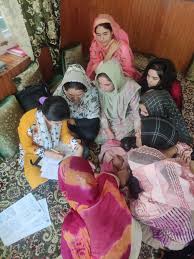
Neer during her research at Baramulla, Kashmir.
The journey wasn’t without its difficulties. Adapting to the distinct cultural and geographical differences compared to my hometown was initially challenging. However, it was these differences that provided a fresh perspective and enriched my learning experience.
I was exposed to real-world issues like inadequate market linkages, reliance on traditional farming methods, and post-harvest losses—all areas that need targeted economic interventions.
Moreover, studying in Jammu brought me closer to understanding the resilience of the local farming communities. Despite the challenges posed by remoteness, political instability, and climatic vulnerabilities, these communities have developed ways to adapt and sustain themselves. This first-hand experience reinforced the importance of policies that cater to the unique needs of such regions. The supportive faculty at SKUAST Jammu, my mentor Prof. Sudhakar Dwivedi, and access to excellent research facilities made my time here both productive and fulfilling. The focus on holistic agricultural development in the region aligned perfectly with my career goals, and my research has been recognized as impactful, which is incredibly rewarding.
In retrospect, studying in Jammu was far from a compromise; it was a conscious choice that broadened my horizons and allowed me to make a meaningful contribution to a region often considered remote but filled with potential.
CLN: What were the highlights of your Undergraduate, Post Graduate and Doctoral studies?
NS: During my undergraduate studies in BSc Horticulture, I was exposed to a wide array of subjects that expanded my understanding of agricultural practices, crop production, and sustainable farming. It wasn’t just the academic learning that shaped me; the numerous field visits, village stays, and even an all-India study tour gave me hands-on experience and a taste for travel. These opportunities allowed me to interact with farmers, understand their challenges first-hand, and witness how agricultural practices vary across regions. These experiences deepened my interest in agriculture and rural development, and sparked my passion for finding ways to improve the livelihoods of farming communities.
For my postgraduate studies, I pursued an MSc in Agricultural Economics at Dr. Rajendra Prasad Central Agricultural University in Pusa, Bihar. Moving away from home for the first time, this phase taught me resilience and adaptability. Living in Bihar was an unique experience—far from familiar surroundings, I was exposed to new cultures, perspectives, and agricultural challenges. The coursework, coupled with practical exposure, helped me build a strong foundation in agricultural economics, with a focus on real-world applications. My Master’s thesis on black pepper production gave me an opportunity to explore the economics of specific crops, further strengthening my research skills and passion for agricultural development. My doctoral studies at Sher-e-Kashmir University of Agricultural Sciences and Technology, Jammu, were both challenging and rewarding. Focusing on the impact of Deendayal Antyodaya Yojana-National Rural Livelihoods Mission on women’s livelihoods in Jammu and Kashmir, my PhD research allowed me to delve deeper into the socioeconomic aspects of rural development. This was a period of intense learning, where I had to balance fieldwork, data analysis, and academic writing. The challenge of conducting research in a region with diverse social and economic conditions helped me grow both academically and personally. Despite the hurdles, the sense of accomplishment was immense, and it solidified my commitment to contributing to the field of agricultural economics.
CLN: Each phase of my education—undergraduate, postgraduate, and doctoral—has added a different dimension to my understanding of agriculture, rural livelihoods, and economic development, shaping me into the person I am today.
Your choice of thesis for the PhD programme is very interesting – Impact of Deendayal – Antyodaya Yojana – National rural livelihood mission on Women’s livelihood of Jammu & Kashmir. Please describe briefly the findings of your study.
NS: I have always been deeply interested in gender studies, particularly in how rural women navigate and overcome challenges in their daily lives. This personal passion led me to choose the topic of my PhD thesis: “Impact of Deendayal Antyodaya Yojana-National Rural Livelihoods Mission (NRLM) on Women’s Livelihoods in Jammu and Kashmir. “
My study focused on understanding how this government program influenced the lives of women, particularly in terms of financial inclusion and economic empowerment. I surveyed 420 women from both Jammu and Kashmir, some of whom were part of the NRLM and others who were not, to compare the outcomes.
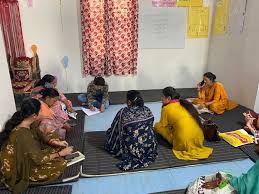
Neer during her research at Udhampur, Jammu.
The results were telling. Women who were part of NRLM, especially through Self-Help Groups (SHGs), showed much better financial inclusion compared to those who were not involved. Many of the women in these groups had better access to loans and used them primarily for agricultural purposes, which is central to the livelihoods in the region. In fact, agriculture remained a dominant theme, showing just how crucial it is for these communities. One of the key findings was that the women who participated in NRLM programs experienced a noticeable improvement in their economic empowerment. They were more likely to feel secure in their livelihoods and had greater decision-making power in their households. On the other hand, women who were not part of the program were much more vulnerable, struggling with access to credit and lower levels of empowerment.
One woman from Kashmir told me, “Before joining the SHG, I never thought I could contribute financially to my family. Now, I have my own income, and my opinions matter at home.” This quote stayed with me, as it exemplified the transformative power of these programs. While the NRLM isn’t a perfect solution, it has certainly provided a lifeline for many rural women, giving them the tools and confidence to build better futures for themselves and their families.
The Sustainable Livelihood Initiative (SLI) is a holistic model of aimed at empowering women at the Bottom of the Pyramid in the un-banked and under-banked segment of the population. This includes providing vocational training, financial literacy insurance and access to credit facilities.
CLN: Did your studies cover these aspects and do you see yourself being involved in the future in this key area of development for this country?
NS: Yes, my studies did touch upon several aspects similar to the Sustainable Livelihood Initiative (SLI), particularly in terms of financial inclusion, access to credit, and economic empowerment for women. Through the NRLM, women were provided with access to credit facilities, which played a crucial role in improving their livelihoods. The focus on financial literacy and vocational training, although not explicitly part of my research, aligns closely with the needs I observed during my fieldwork. Many of the women lacked basic financial knowledge, which limited their ability to effectively utilize loans or save for the future. I strongly believe that initiatives like the SLI, which address these gaps in financial literacy and provide vocational training, are key to empowering women, especially in rural and under-banked areas. Moving forward, I see myself being actively involved in this area, as it holds immense potential for fostering inclusive development in India. Programs that target the bottom of the pyramid are critical for sustainable growth, and I am keen to contribute to initiatives that focus on women’s empowerment, financial inclusion, and rural development.
CLN: What are your other areas of interest in terms of sports, hobbies and related activities?
NS: Outside of my academic and professional pursuits, I have a range of interests that keep me balanced and grounded. I enjoy reading both fiction and non-fiction, and you can often find me curled up with a good book. Cooking is another passion of mine, something I inherited from my paternal side, and I find great joy in experimenting with different recipes and flavours in the kitchen. Painting offers me a creative outlet, allowing me to express myself through colours and brushstrokes. I also have a love for travel and trekking, which allows me to explore new places and connect with nature. These hobbies not only relax me but also offer a sense of fulfillment and inspiration in my daily life.
CLN: Your words of encouragement for youngsters – especially girl students and young women of Kodagu.
NS: To the young students and women of Kodagu, I want to encourage you to embrace your full potential and pursue your dreams with confidence. Education is a powerful tool, so stay dedicated and curious, exploring various fields and subjects that ignite your passion.
Overcome challenges with resilience and view obstacles as opportunities for growth. Support and uplift each other, as collaboration can lead to collective success. Set ambitious goals, balance your efforts with self-care, and celebrate your unique heritage. Seek mentorship and believe in your abilities, knowing that you have the power to shape a bright and impactful future. Your determination and hard work will pave the way for your success and contribute positively to your community.
CLN: Support and understanding from the family, Okka (is it relevant?) and others in the community.
NS: I owe a great deal of gratitude to my family and community for their unwavering support throughout my journey. My parents have always encouraged me, no matter how unconventional or adventurous my choices were. I truly believe I am nothing without them; they’ve stood by me through every high and low, always providing strength and reassurance.
My extended family has also been a constant source of pride and encouragement, celebrating even my smallest accomplishments with joy. I’m incredibly fortunate to have my Okka standing by me, offering support and motivation at every step.
I can’t forget to mention my friends, who are more like family to me. They’ve walked alongside me, ensuring I’m okay, cheering me on, and being a huge part of my growth.
Special thanks go to Apparanda Sagar Ganapathy, whose constant support has been invaluable throughout my academic journey, and to like-minded individuals whose help was pivotal during crucial moments in my studies.
I’m also deeply grateful to the Coorg Education Fund, whose generous support allowed me to pursue my education without financial stress. Their assistance ensured I could focus fully on my studies, and for that, I will always be thankful.
CLN: Some comments on the recent articles on there History of Education in Kodagu published in CLN. What can be improved – in a broad sense, about education facilities, curriculum, medium of instruction and guidance in Kodagu?
For example – is there a need for more English medium schools and colleges?
There is an urgent need of private institutions for Higher Learning?
More effective role and support from Organisations like Coorg Education Fund.
NS: The recent articles on the history of education in Kodagu published in CLN shed light on the progress made over the years, but they also highlight areas that need improvement.
One major aspect is the need for more English medium schools and colleges, as proficiency in English can open doors to better opportunities in higher education and employment.
There’s also an urgent need for more private institutions for higher learning to fill the gap in specialized courses and advanced education options, which are currently limited. Furthermore, the Coorg Education Fund, which has played a commendable role in supporting students, could expand its impact by identifying exceptional students at an earlier stage and providing consistent mentorship and guidance throughout their academic journey. Such initiatives would ensure that deserving students not only access education but also receive the support needed to excel and complete their studies successfully. Addressing these broad issues would significantly enhance educational outcomes in Kodagu.
CLN: Have you visited your schools and spoken to children about your experience – your interaction would be a source of tremendous motivation to children studying in Kodagu.
NS: I haven’t had the chance to visit my schools and speak to the children yet, as I started my job immediately after completing my PhD. However, I am very much looking forward to the opportunity to do so as soon as possible. I believe that sharing my journey—from my early days at school in Kodagu to my academic and professional achievements—can offer valuable insights and encouragement to the students. By connecting with them and sharing the challenges and triumphs of my path, I hope to inspire them to pursue their own dreams with confidence and determination. I’m excited about the possibility of giving back to the community that played such a formative role in my life and supporting the next generation of students in their educational endeavour’s.
source: http://www.clnews.in / Coffeeland News / Home> Articles / by CLN newsdesk / September 29th, 2024
Indian coffee often fetches poor prices due to lack of quality segregation. But the Climate Smart Coffee Project wants to change that.
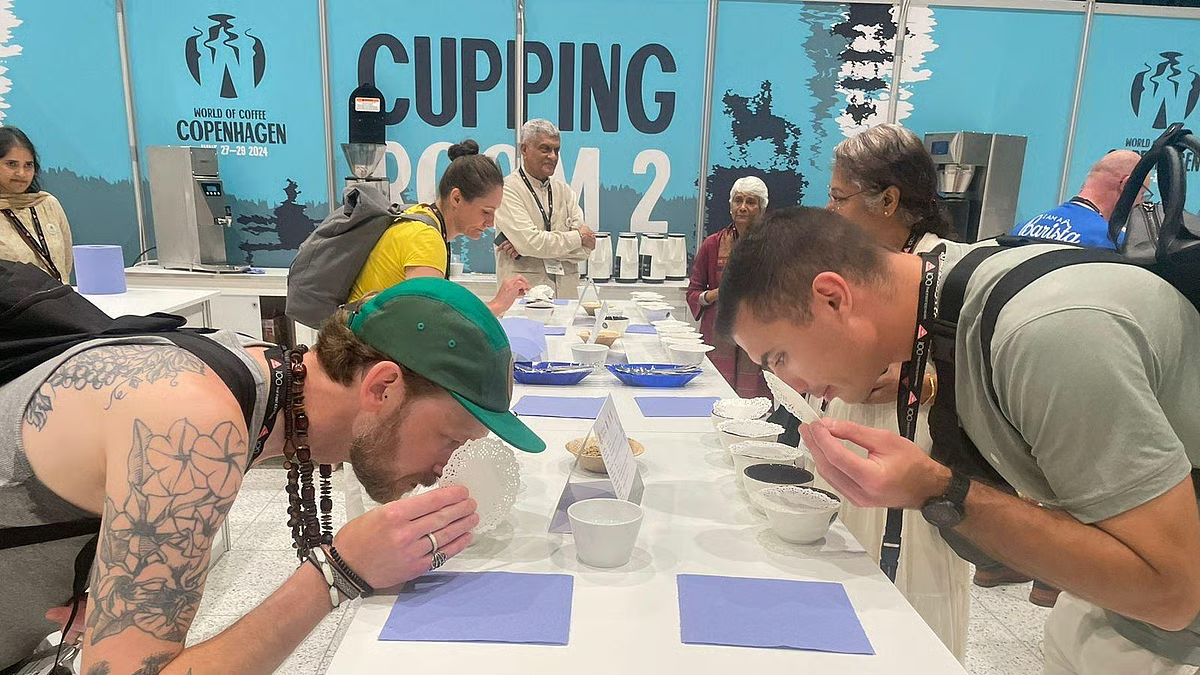
For the first time Wayanad specialty coffee was displayed at the World Coffee Conference at Copenhagen, Denmark, last year. It received good response from participants and coffee connoisseurs. (Photo | Special Arrangement)
Kochi :
It was a stunning beginning to a perfect brew. Aroma and all.
Two years ago when the Dutch team visited Wayanad, they took back two samples of coffee beans — One from Brahmagiri and the other from Biowin Agro Research.
“We gave them our best beans,” recalls a member of the Climate Smart Coffee Project.
“But we were stunned when the results came in. One scored 83 cup scores, the other 86. That’s among the finest grades in the world. Specialty coffee starts at 80. Normally, our coffee gets a 52 cup score,” the member added.
This led to the beginning of a cooperative-led coffee revolution.
With the Kerala government’s long-envisioned Wayanad Coffee Park finally coming to life, a bold new chapter is being scripted in India’s plantation economy — one that centres around smallholders, not estates; sustainability, not volume.
Early in its planning, the project toyed with the idea of two governance models: the famed Anand/Amul dairy cooperative model of Gujarat, and the public-private model of Cochin International Airport Ltd.
After detailed deliberations and field engagement, the team chose Amul model.
“We looked at what fits our reality,” explains G Balagopal, head of the Climate Smart Coffee Project. “Over 60% of Wayanad’s 60,000 coffee farmers are small, marginal or tribal. They don’t own estates like in Coorg, across the district in Karnataka. The only way they gain power is through aggregation. The Anand model does that.”
Groundwork and Governance
The cooperative structure is being built from the bottom up: Joint Liability Groups (JLGs) of 5–10 farmers feed into Farmers Interest Groups (FIGs), which are mentored by representatives from local dairy societies and the project, explains Prakash Madhavan, an advisor to the project. Above JLGs sit Farmer Producer Companies (FPCs) — six in total across Wayanad’s three taluks. Four are general-purpose, while two are reserved: one for tribal farmers and another exclusively for women.
An apex district-level federation will unify them, with a strong mentoring layer. Farmers will eventually gain shareholding rights in Kerala Coffee Ltd, a state government special purpose vehicle set up under the Plantation Department to lead the development of the Coffee Park.
Coffee Park: The Hub of a New Ecosystem
Spread across 20 acres in Kalpetta, the Coffee Park will house processing units, a cupping lab, a sustainability testing centre, and a coffee experience centre complete with a museum and café. At its heart will be a lake, around which tourists can engage with the coffee journey — from bean to brew.
An incubation centre for coffee startups, in partnership with NIT Calicut, is also on the cards. The goal? Spark youth and women entrepreneurship in everything from specialty roasts to coffee-based cosmetics and even textiles.
“It’s Not Just Coffee — It’s Climate Resilience”
“This isn’t a plantation revival,” says Madhavan, who is a retired joint Dairy Development Director, using his experience in the dairy sector to good use to bring together coffee farmers.
“It’s a coffee-centred agroforestry model that counters climate change.” He notes that coffee’s ability to thrive in shade and conserve biodiversity makes it ideal for Wayanad’s terrain — unlike tea or other crops, coffee plantations rarely suffer landslides.
The project originated from Meenangadi Panchayat, Kerala’s first carbon-neutral initiative launched during T M Thomas Isaac’s tenure as Finance Minister. When full carbon neutrality proved difficult for farmers, the idea evolved into “climate-smart agriculture” — with coffee as the flagship crop.
From Strip Plucking to Specialty Coffee
Changing how coffee is harvested is key. “Earlier, we did strip plucking — red, green, yellow, all at once,” says Madhavan. “Now, farmers are trained to pick only ripened red beans for specialty grade. It’s slower, more labour-intensive, but it earns far more.”
Already, 2,000 farmers have been onboarded into the training and aggregation system, many through existing milk cooperatives, which cover 20,000 families in Wayanad. “Most of them already grow coffee,” says Balagopal. “We’re just connecting the dots.”
Wayanad’s Global Ambition
The global coffee market is volatile, with prices set on futures exchanges. Indian coffee often fetches poor prices due to lack of quality segregation. But the Climate Smart Coffee Project wants to change that.
“Wayanad produces about 50,000–60,000 tonnes of coffee annually, yet most farmers don’t know their bean’s cup score,” says Madhavan. “But we found that our Robusta parchment coffee scores 10 grades higher than expected. In fact, Robusta is now more profitable than Arabica due to its climate resilience.”
The strategy is to brand ‘Wayanadan Kappi’ as a premium Indian Fine Robusta (WIFR) — a move that recently saw its debut at the World of Coffee expo in Copenhagen.
A Future Beyond Beans
The long-term plan? Train 15,000 of Wayanad’s 60,000 coffee farmers in quality control, traceability, and value addition. Provide digital disbursement tools, climate advisory services, and establish a local processing ecosystem so that more than 90% of coffee’s value addition, which currently happens outside Kerala, stays with the farmer.
“The average farm-gate price is just 5–7% of the final retail price,” says consultant Ajit Mathai. “That must change. With quality-linked payments and proper processing, we can put Wayanad on the world map — just like Araku Valley did for Andhra.”
He adds: “This is not idealism. It’s already happening on the ground.”
In two years, the full Coffee Park will be functional. But training, aggregation, and branding are underway now. As one farmer recently quipped after a cupping session, “We didn’t know our beans were this good. Now we won’t sell them cheap again.”
And that may be the truest sign yet — that Kerala’s coffee revolution is not just brewing, but already pouring into the cup.
Farmers Engaged:
2,000 small and tribal farmers already onboarded
15,000 targeted in the next phase
Cooperative Structure (Amul Model):
—————————————————
Individual Farmers — Joint Liability Groups (JLGs)
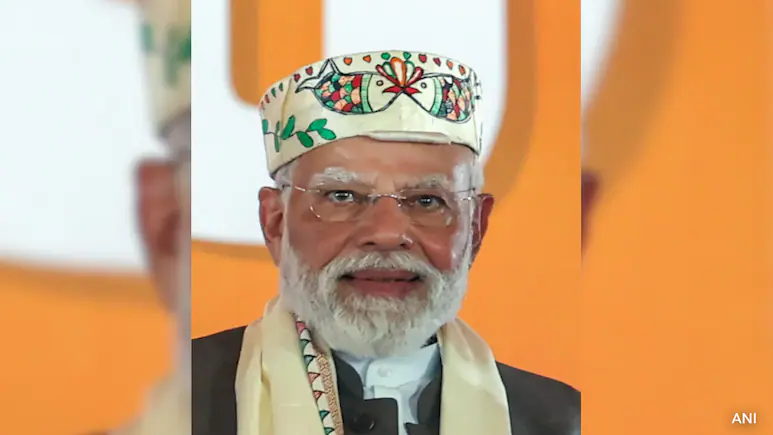
In his 127th edition of his monthly radio address Mann ki Baat, Prime Minister Narendra Modi also said the Northeast is also progressing in coffee cultivation.
Prime Minister Narendra Modi on Sunday said Indian coffee is gaining popularity globally, driven by the diverse varieties grown in states, including Karnataka, Tamil Nadu and Kerala.
In his 127th edition of his monthly radio address Mann ki Baat, the Prime Minister also said the Northeast is also progressing in coffee cultivation and this is further strengthening the identity of Indian coffee worldwide.
“Indian coffee is becoming very popular all over the world. Be it Chikmagalur, Coorg and Hassan in Karnataka; the areas of Pulney, Shevaroy, Nilgiri, and Annamalai in Tamil Nadu; the Nilgiri region on the Karnataka-Tamil Nadu border; or the areas of Wayanad, Travancore, and Malabar in Kerala — the diversity of Indian coffee is truly remarkable,” he said.
PM Modi added that Koraput (Odisha) coffee is also gaining popularity.
Some people, he said, have left lucrative corporate jobs to pursue their passion for coffee cultivation.
“…they liked coffee so much that they entered this field and are now successfully working in it. There also are many women whose lives have been pleasantly transformed by coffee,” the prime minister said.
Koraput region is known for its unique agro-climatic conditions suitable for high-quality Arabica coffee. In the state, about 5,000 hectares of land is under coffee cultivation.
The Tribal Development Co-operative Corporation of Odisha Ltd (TDCCOL) is an apex-level cooperative institution that ensures end-to-end processing, right from procurement to drying, grading, and marketing of the commodity.
Arabica and Robusta Coffee are the two commercially cultivated coffee types worldwide, including India.
Karnataka accounts for about 70 per cent of the country’s coffee production. It is followed by Kerala and Tamil Nadu. Andhra Pradesh and Odisha are non-traditional areas of coffee cultivation.
During April-September this fiscal year, the country’s coffee exports rose 12.5 per cent to USD 1.05 billion.
(Except for the headline, this story has not been edited by NDTV staff and is published from a syndicated feed.)
source: http://www.ndtv.com / NDTV / Home> News> India News / by Press Trust of India / October 26th, 2025
In a bid to promote shade-grown coffee cultivated in Kodagu and tap new international market, about 120 growers introduced Arabica and Robusta variety to an Australian delegation, in Madikeri on Tuesday.
The 120 growers have established Biota Coorg Farmers Producer Company, and in their ongoing efforts to find global market, hosted a ‘Coffee Cup Tasting and Interaction’ event to Deputy Consul General of Australia in Bengaluru General Steven Connelly, and others.
The office bearers and members of the company presented the taste of their shade-grown Robusta and Arabica coffee, cultivated in their plantations, to the visiting dignitaries that also included Steffi Cherian, Public Diplomacy Officer, Department of Foreign Affairs and Trade, Australian Consulate-General, Bengaluru
K.K. Vishwanath, CEO, said although Australia has been a coffee-consuming nation for a long time, it has traditionally imported coffee from other markets. “Now, they are being introduced directly to Kodagu’s unique shade-grown coffee through the Deputy Consul General based in Bengaluru,” he said.
This is an attempt to open new market opportunities for Kodagu coffee by establishing connections with Australian coffee businesses, said Mr. Vishwanath.
The host company appealed to the Australian delegation to act as a bridge by facilitating contacts with coffee traders in Australia.
The local growers also proposed the idea of enabling virtual ‘cup tasting’ sessions in which they would send coffee samples beforehand and requested assistance in creating a system to promote and market ‘Kodagu Coffee’ in Australia.
Mr.Vishwanath and other members of the company expressed confidence that given an opportunity to participate in coffee marketing programmes and exhibitions that are held in Australia, they could leave a lasting impression of Kodagu’s coffee.
Earlier in the day, the visiting Australian delegation were taken on a tour of Kodagu’s coffee estates and apprised of the methods of producing shade-grown coffee.
source: http://www.thehindu.com / The Hindu / Home> News> India> Karnataka / by The Hindu Bureau / July 09th, 2025
It’s the kind of space where breakfast isn’t treated as a checklist item but as a small ritual. The environment does much of the work for you: soft light, the steady aroma of coffee.
Hyderabad:
There are cafés that feel designed for efficiency, and then there are those that quietly encourage you to slow down.
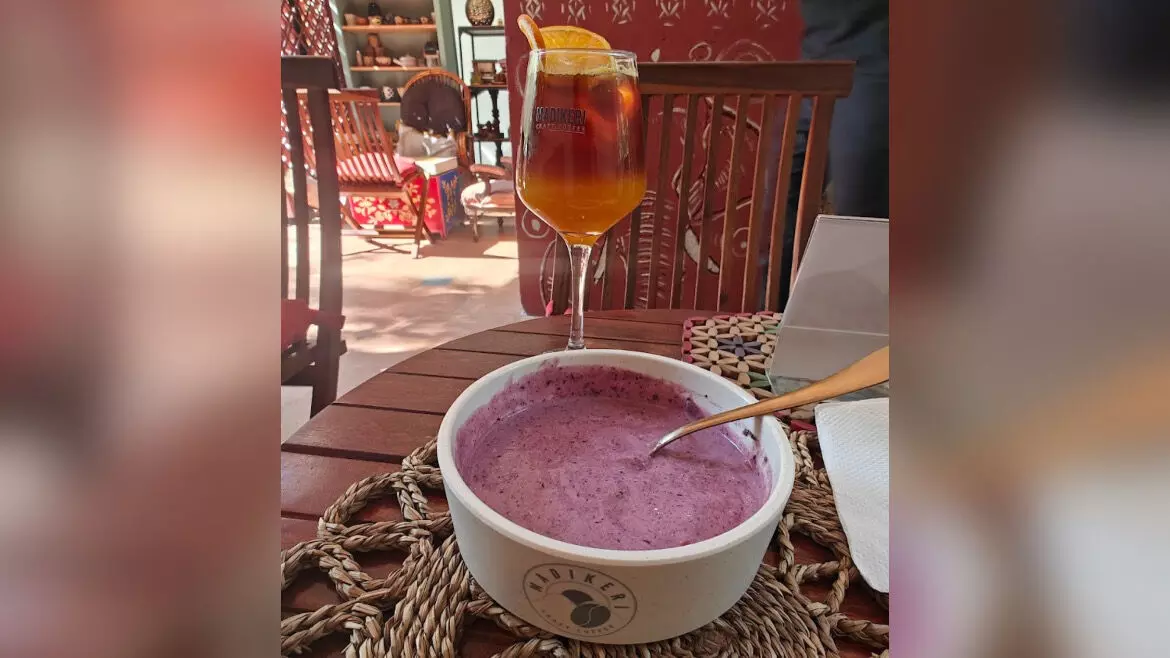
Madikeri Craft Coffee in Jubilee Hills belongs to the second category.
On winter mornings, when the air carries a slight bite and the city hasn’t fully woken up, the café feels like a pause button, books resting on shelves, handcrafted mugs doubling as décor, and seating that invites you to stay longer than planned.
It’s the kind of space where breakfast isn’t treated as a checklist item but as a small ritual. The environment does much of the work for you: soft light, the steady aroma of coffee, and a calm that feels increasingly rare in busy neighbourhoods.
If you’re heading here in the morning, these are the choices worth making.
Start with a drink that sets the tone
– Sunrise fusion
For those who find themselves torn between a glass of juice and a cup of coffee at breakfast, the Sunrise Fusion offers a thoughtful middle ground. The drink brings together orange juice and coffee in a way that feels balanced rather than experimental. The citrus adds brightness, while the coffee grounds it, creating a drink that’s refreshing but still energising.
This isn’t a sugary concoction meant to distract; it’s restrained and purposeful, making it a good first order of the day.
Suggestion: Choose this if you want a gentle energy boost without committing to a full-bodied coffee.
Build your breakfast with intention
– Choconut bowl
Breakfast bowls often fall into two extremes, either overly indulgent or strictly functional.
The Choconut Bowl manages to stay somewhere in between. A thick blend of banana and chocolate forms the base, layered with chia, pumpkin and flax seeds, and finished with fresh strawberries.
The result feels nourishing without being dull. The textures shift as you eat, and the flavours stay balanced throughout, making it a satisfying option for those who want substance without heaviness.
Suggestion: Ideal if you’re looking for a breakfast that keeps you full while still feeling light enough to move through the morning.
– Avocado toast
Avocado toast has become a fixture on breakfast menus across cities, and Madikeri Craft Coffee’s version succeeds by not overcomplicating it. The bread is evenly toasted, offering structure without dryness.
The avocado is smooth and rich, while the cream cheese base adds a subtle tang that prevents the dish from feeling flat.
It’s familiar, yes, but thoughtfully executed, which makes all the difference.
Suggestion: A dependable choice if you prefer savoury breakfasts that pair easily with both hot and cold beverages.
Small additions that complete the table
If you prefer a simpler breakfast, pairing a croissant or baked item with your drink works well here. The bakes are light, clean in flavour, and serve as quiet companions rather than centrepieces. They round out a breakfast spread without demanding attention.
Suggestion: Best enjoyed alongside a hot coffee on colder mornings.
Coffee that anchors the experience
At its core, Madikeri Craft Coffee remains a coffee-first space.
The menu offers a range of brews that cater to different preferences, from classic hot coffees to cold brews and flavoured variations that don’t overwhelm the base. There are also alternatives for those who don’t drink coffee, making the café accessible without diluting its identity.
The drinks feel deliberate, not rushed, aligning well with the mood the space sets.
Suggestion: If you’re planning to stay a while, start with something lighter and move on to a second drink once you’ve settled in.
Why the space matters as much as the menu
What truly defines Madikeri Craft Coffee is its atmosphere. It accommodates solo diners comfortably, allowing you to read, think, or simply sit without feeling conspicuous. The layout encourages quiet conversations rather than noise, making it a good choice for early mornings or reflective breaks.
Unlike cafés built around constant activity, this one allows stillness. That restraint is reflected in the breakfast menu as well, focused, uncomplicated, and easy to return to.
Where it fits into the city’s breakfast scene
In a city where breakfast culture is increasingly shaped by brunch-heavy menus and social gatherings, Madikeri Craft Coffee offers an alternative. It caters to those who enjoy mornings on their own terms, unhurried, intentional and quietly indulgent.
This isn’t a place you rush through. It’s one you let stretch into the morning.
Final suggestions before you go
• Visit early for the calmest experience
• Start with a drink before deciding on food
• Keep the order simple and well-paced
• Choose a seat where you can settle in
At Madikeri Craft Coffee, breakfast isn’t about doing more; it’s about doing less and doing it well.
source: http://www.newsmeter.in / News Meter / Home> More> Lifestyle / by Anousha Caroline Williams / December 28th, 2025
The first season, starring Varsha Bollamma in the lead, began streaming in August this year.
Constable Kanakam, the mystery-thriller starring Varsha Bollamma in the lead role, achieved considerable popularity upon its streaming premiere in August. The series is streaming on ETV Win. On Sunday, the streamer announced the premiere date for second season of the show.
Also featuring Megha Lekha in a major role, Constable Kanakam season 2 will begin streaming on January 8. Directed by Prashanth Kumar Dimmala, the plot of season 1 revolved around the disappearance of women in the remote village, a case which the protagonist decides to solve against all barriers.
Season 1 also gained a lot of traction with its cliff-hanger where it left a lot of questions about Chandrika (Megha Lekha) and her disappearances, leaving audience on edge and intrigued about next season. In our review for season 1, we noted, “The show had great potential to subvert many genre-conventions, and even does so on some occasions — but at the heart of it, Constable Kanakam plays it safer than it needed to. Fortunately, that doesn’t make it any less watchable either.”
video
Constable Kanakam also stars Rajeev Kanakala and Srinivas Avasarala in the lead cast. The series is produced by Kovelamudi Satya Sai Baba and Vemuri Hemanth Kumar under Meteor Entertainments, in association with ETV Win. The technical crew includes cinematographer Sriram Mukkupati, editor Madhav Kumar Gullapalli and composer Suresh Bobbili.
Constable Kanakam was also in news after the makers made allegations of plagiarism against Zee5’s Viraatapalem.
Silence had questions. Season 2 has all the answers.
All questions lead to one truth. Where is Chandrika?
Constable Kanakam Season 2 📅 From Jan 8 📲 Only on @etvwin
Use code 'WIN50' – ₹50 OFF on Monthly Premium Pack Use code 'WIN100' – ₹100 OFF on Yearly Premium Plus… pic.twitter.com/69ofBdKk5u
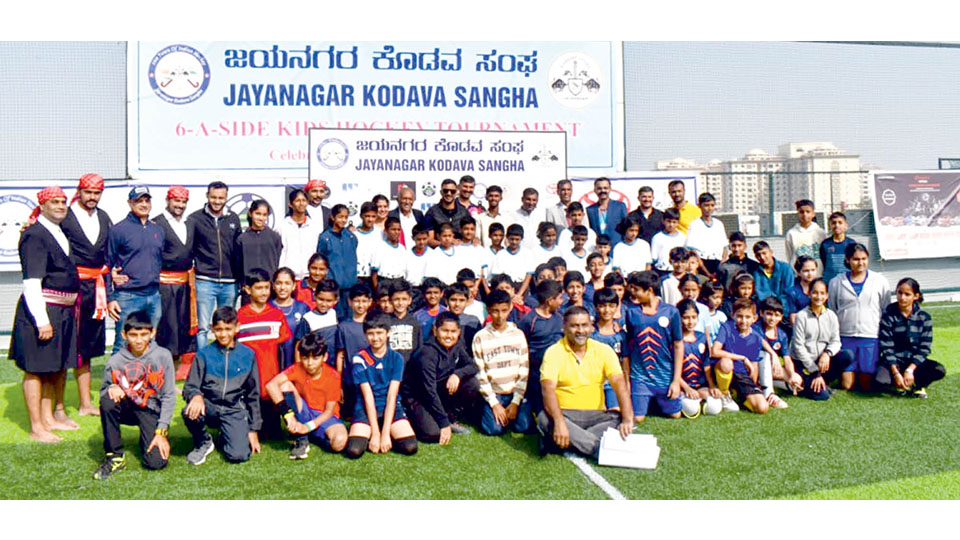
As Indian hockey completed a hundred years of inspiring the nation, the Jayanagara Kodava Sangha, Bengaluru, chose to honour the landmark not by looking back alone, but by lighting a path forward — placing children at the centre of its centenary celebrations through a dedicated hockey tournament for young players.
The tournament, organised for boys and girls aged 8 to 13 years, was held on Dec. 21 at Turf City, JP Nagar 7th Phase, offering children an opportunity to experience competitive hockey in a structured, encouraging environment.
Beginning with the historic Olympic gold medal at Amsterdam in 1928, India went on to dominate the world stage, producing legendary figures such as Major Dhyan Chand and claiming eight Olympic gold medals. For decades, hockey was synonymous with national pride, teamwork and excellence — ideals that continue to inspire young athletes today.
The Kodava community of Kodagu, often referred to as the cradle of Indian hockey, has been central to this legacy.
Known for its sporting ethos and strong community bonds, the Kodava contribution to State and National hockey has been both consistent and distinguished. The Jayanagara Kodava Sangha, through this initiative, sought to rekindle that spirit among children.
The tournament was inaugurated by V.R. Raghunath, former Indian international, Olympian and Arjuna Awardee.
He was joined by Kottangada N. Joyappa, Sub-Junior Karnataka player and Kangira Bheemaiah, Chairman of Kodava Samaja Legal Cell, as the guests of honour.
The prize distribution ceremony was attended by Chiriapanda Suresh Nanjappa, President of Kodava Samaja, Bengaluru and Mallengada S. Muthanna, Joint Treasurer.
source: http://www.starofmysore.com / Star of Mysore / Home> News / December 29th, 2025
Prof. B.K. Thelma. | Photo Credit: SPECIAL ARRANGEMENT
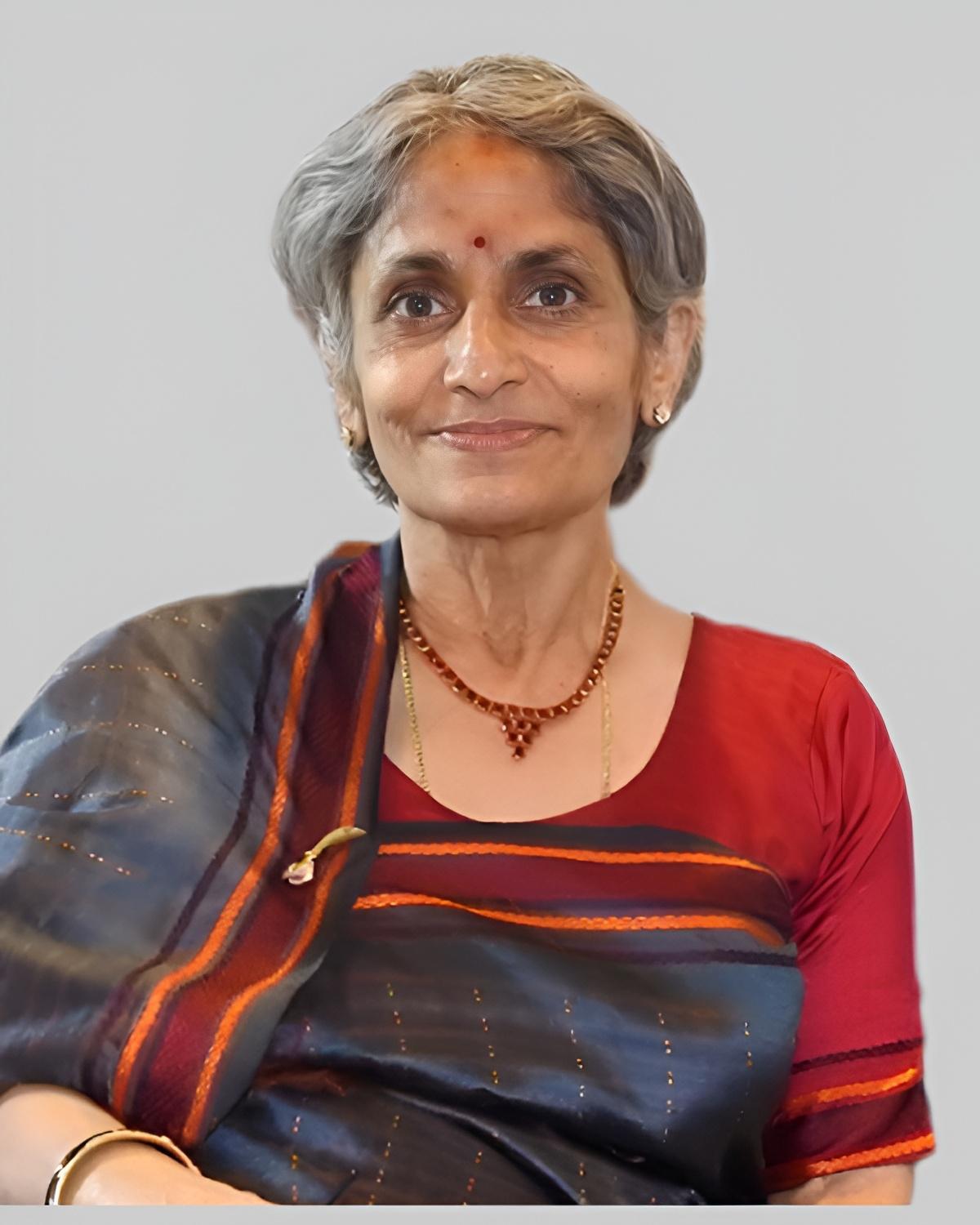
B.K. Thelma, who led the first genetic study of Kodavas, has been chosen as ‘Coorg Person of the Year 2025’ by a news and tourism portal called www.coorgtourisminfo.com
The portal, promoted by journalist and author P.T. Bopanna, annually selects the ‘Coorg Person of the Year’ on the basis of a poll conducted through the portal.
“The origin of Kodavas in Karnataka has been a standing riddle for ethnologists all these years. The credit for solving the mystery behind their origin should go to Coorg-born professor Buttiyanda Kuttappa Thelma and her team,” said a statement from the portal.
“Carrying out a systematic sampling of the Kodavas from across Kodagu, using the available genetic analytical tools, Thelma and her team have been successful in publishing a scientific paper on the genetic makeup of Kodavas,” the statement further said.
Prof. Thelma, aged around 70, belongs to the Kodava community, known for its uniqueness, especially with regard to dress code and cuisine.
“She is a recipient of several awards, to name a few — C.N.R. Rao Lifetime Achievement Award from Karnataka S&T academy (2021), Meritorious Service Award from University of Delhi (2021), National Science Chair (2021-2026), J.C. Bose fellowship (2011-2021), S.P. Raychaudhuri Endowment Lecture Award, Indian Society of Cell Biology (2018), Sanghvi Oration Award, Indian Society of Human Genetics (2015), Sunder Lal Hora Medal, Indian National Science Academy (2014),” the statement added.
source: http://www.thehindu.com / The Hindu / Home> News> India> Karnataka / by The Hindu Bureau / December 29th, 2025
This result was achieved despite a decline in volumes, which stood at 366,000 tonnes as of 16 December, compared to 391,000 tonnes during the equivalent period of 2024.
The emblem of the Coffee Board of India
Milan :
Indian coffee exports are set to exceed $2 billion by the end of 2025: more than double the value of five years ago, reflecting the sharp rise in prices. Data based on export permits issued by the Coffee Board of India shows shipments up to December 16 stood at $1.968 billion, a 21% increase from $1.63 billion recorded over the same period last year.
This result was achieved despite a decline in volumes, which stood at 366,000 tonnes as of 16 December, compared to 391,000 tonnes during the equivalent period of 2024 (-6.4%).
Industry officials attributed the drop partly to some European buyers shifting to cheaper origins as Indian coffee prices remained elevated, report Indian media.
Indian Robusta and Arabica beans continue to fetch a premium in international markets.
The premium for Indian Robusta parchment AB is currently estimated at $1,000–$1,100 per tonne over London’s LIFFE prices, while Robusta cherry AB is trading at a premium of $400–$450 per tonne. For Arabica parchment, the premium is around 12–15 cents per pound over New York prices.
The top destination countries were Italy (18%), Germany (11%), Belgium (7.5%), the Russian Federation (5.3%) and the United Arab Emirates (5%). India is the world’s seventh largest producer and fifth largest exporter of coffee.
source: http://www.comunicaffe.com / International Comunicaffe / Home> Market & Trade> Report & Statistics / December 24th, 2025
WELCOME. If you like what you see "SUBSCRIBE via EMAIL" to receive FREE regular UPDATES.
Read More »