Perfect brew! Amul-model, cooperative-led coffee revolution in Kerala’s Wayanad gains global attention

Indian coffee often fetches poor prices due to lack of quality segregation. But the Climate Smart Coffee Project wants to change that.
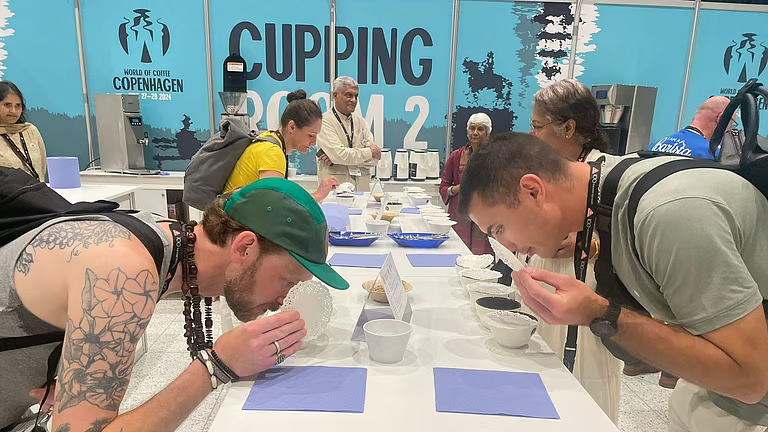
For the first time Wayanad specialty coffee was displayed at the World Coffee Conference at Copenhagen, Denmark, last year. It received good response from participants and coffee connoisseurs. (Photo | Special Arrangement)

Kochi :

It was a stunning beginning to a perfect brew. Aroma and all.

Two years ago when the Dutch team visited Wayanad, they took back two samples of coffee beans — One from Brahmagiri and the other from Biowin Agro Research.

“We gave them our best beans,” recalls a member of the Climate Smart Coffee Project.

“But we were stunned when the results came in. One scored 83 cup scores, the other 86. That’s among the finest grades in the world. Specialty coffee starts at 80. Normally, our coffee gets a 52 cup score,” the member added.

This led to the beginning of a cooperative-led coffee revolution.

With the Kerala government’s long-envisioned Wayanad Coffee Park finally coming to life, a bold new chapter is being scripted in India’s plantation economy — one that centres around smallholders, not estates; sustainability, not volume.

Early in its planning, the project toyed with the idea of two governance models: the famed Anand/Amul dairy cooperative model of Gujarat, and the public-private model of Cochin International Airport Ltd.

After detailed deliberations and field engagement, the team chose Amul model.

“We looked at what fits our reality,” explains G Balagopal, head of the Climate Smart Coffee Project. “Over 60% of Wayanad’s 60,000 coffee farmers are small, marginal or tribal. They don’t own estates like in Coorg, across the district in Karnataka. The only way they gain power is through aggregation. The Anand model does that.”

Groundwork and Governance

The cooperative structure is being built from the bottom up: Joint Liability Groups (JLGs) of 5–10 farmers feed into Farmers Interest Groups (FIGs), which are mentored by representatives from local dairy societies and the project, explains Prakash Madhavan, an advisor to the project. Above JLGs sit Farmer Producer Companies (FPCs) — six in total across Wayanad’s three taluks. Four are general-purpose, while two are reserved: one for tribal farmers and another exclusively for women.

An apex district-level federation will unify  them, with a strong mentoring layer. Farmers will eventually gain shareholding rights in Kerala Coffee Ltd, a state government special purpose vehicle set up under the Plantation Department to lead the development of the Coffee Park.

Coffee Park: The Hub of a New Ecosystem

Spread across 20 acres in Kalpetta, the Coffee Park will house processing units, a cupping lab, a sustainability testing centre, and a coffee experience centre complete with a museum and café. At its heart will be a lake, around which tourists can engage with the coffee journey — from bean to brew.

An incubation centre for coffee startups, in partnership with NIT Calicut, is also on the cards. The goal? Spark youth and women entrepreneurship in everything from specialty roasts to coffee-based cosmetics and even textiles.

“It’s Not Just Coffee — It’s Climate Resilience”

“This isn’t a plantation revival,” says Madhavan, who is a retired joint Dairy Development Director, using his experience in the dairy sector to good use to bring together coffee farmers.

“It’s a coffee-centred agroforestry model that counters climate change.” He notes that coffee’s ability to thrive in shade and conserve biodiversity makes it ideal for Wayanad’s terrain — unlike tea or other crops, coffee plantations rarely suffer landslides.

The project originated from Meenangadi Panchayat, Kerala’s first carbon-neutral initiative launched during T M Thomas Isaac’s tenure as Finance Minister. When full carbon neutrality proved difficult for farmers, the idea evolved into “climate-smart agriculture” — with coffee as the flagship crop.

From Strip Plucking to Specialty Coffee

Wayanad’s Global Ambition

The global coffee market is volatile, with prices set on futures exchanges. Indian coffee often fetches poor prices due to lack of quality segregation. But the Climate Smart Coffee Project wants to change that.

“Wayanad produces about 50,000–60,000 tonnes of coffee annually, yet most farmers don’t know their bean’s cup score,” says Madhavan. “But we found that our Robusta parchment coffee scores 10 grades higher than expected. In fact, Robusta is now more profitable than Arabica due to its climate resilience.”

The long-term plan? Train 15,000 of Wayanad’s 60,000 coffee farmers in quality control, traceability, and value addition. Provide digital disbursement tools, climate advisory services, and establish a local processing ecosystem so that more than 90% of coffee’s value addition, which currently happens outside Kerala, stays with the farmer.

“The average farm-gate price is just 5–7% of the final retail price,” says consultant Ajit Mathai. “That must change. With quality-linked payments and proper processing, we can put Wayanad on the world map — just like Araku Valley did for Andhra.”

He adds: “This is not idealism. It’s already happening on the ground.”

In two years, the full Coffee Park will be functional. But training, aggregation, and branding are underway now. As one farmer recently quipped after a cupping session, “We didn’t know our beans were this good. Now we won’t sell them cheap again.”

And that may be the truest sign yet — that Kerala’s coffee revolution is not just brewing, but already pouring into the cup.

Farmers Engaged:

2,000 small and tribal farmers already onboarded

15,000 targeted in the next phase

Cooperative Structure (Amul Model):

—————————————————

Individual Farmers — Joint Liability Groups (JLGs)

Farmer Interest Groups (FIGs) — 6 FPCs (incl. tribal & women-led)

Apex District Federation

Coffee Park Highlights (Kalpetta, 20 acres):

—————————————————–

Coffee Experience Centre & Lakeside Café

Cupping & Grading Labs

Startup Incubation Hub (NIT Calicut tie-up)

Coffee Museum & Micro-lot Demonstration Plots

Eco-tourism integration

source: http://www.newindianexpress.com / The New Indian Express / Home> Good News / by Rajesh Abraham / July 02nd, 2025

Kodagu police hold meeting to discuss precautionary measures in the event of natural disasters

The Kodagu district police held a meeting to discuss precautionary measures to be taken in the event of a natural disaster in the hilly district, which has been receiving heavy rains in the last few weeks.

Superintendent of Police K. Ramarajan, in a statement, said that the police officers have been instructed to rope in volunteers from each jurisdiction. They have been told to gather the details of operators of earthmovers, cranes, towing vehicles, jeeps, and wood cutters.

The meeting was organised in view of the rivers, lakes, ponds, and other waterbodies were overflowing following heavy rains the district received so far.

The public were advised to cooperate with the Police Department during natural calamities. Those who are willing to volunteer during emergencies can provide their details including their name, address, mobile number, etc., to the Kodagu district police on 82779 58444. They can also submit their details at the local police station.

In case of assistance and/or to report on untoward incidents, the public can contact the above-mentioned number.

source: http://www.thehindu.com / The Hindu / Home> News> India> Karnataka / by The Hindu Bureau / July 02nd, 2025

Varsha Bollamma Faced Snakes, Scorpions While Shooting Thammudu!

“There were only four girls in the film. In Whistle, there was a whole football team,” she laughed.

Walking into a forest full of snakes and scorpions isn’t most people’s idea of a film shoot, but for Thammudu, Varsha Bollamma did just that. The actress, known for her fun and quirky screen presence, took on a more serious role this time.

Speaking to reporters ahead of the film’s release, she shared what went on behind the scenes, some of it tough, some unforgettable.

“There were only four girls in the film. In Whistle, there was a whole football team,” she laughed. “But I still remember playing Gayatri in that one.” In Thammudu, she plays a young woman named Chitra. The team had warned her early on, this wasn’t going to be a typical shoot. Forest locations, action scenes, and a physically demanding role. Still, she didn’t think twice. She liked the story and was ready to give it her all, no matter how hard the shoot got.

The toughest part? Filming in the forest at night. “There were snakes, scorpions, and no proper lighting. We had to act with firecrackers going off near us,” she said. “There were kids and older people on set too, so we had to be extra careful.” Despite the tough conditions, she trained for the role, learning kickboxing just to look the part. “The role doesn’t involve fighting, but I had to look fit. That’s all.”

With no phone signals in the Maredu Milli forest, Varsha and Nithiin passed time the old-school way, talking and joking around. “He’s the same off-screen as he is on it. Polite, respectful never acting like a star.” As for her own career, Varsha isn’t chasing lead roles or screen time. “I don’t care if it’s a heroine role or not. If the part is good and I can do it well, that’s enough.”

source: http://www.english.tupaki.com / Tupaki.com / Home> Entertainment / by Tupaki Desk / July 04th, 2025

Ginger under siege: Pyricularia Fungus identified in Kodagu district

A newly identified fungal disease has emerged as a significant threat to ginger cultivation in Karnataka, prompting an urgent advisory from the ICAR–Indian Institute of Spices Research (ICAR-IISR). Researchers from the premier spices research institute have confirmed that the pathogen Pyricularia spp.—typically associated with blast diseases in monocot crops like rice and wheat—has, for the first time, been found infecting ginger crops in the Kodagu district.

The outbreak, which escalated rapidly during the 2024 growing season, has already caused an estimated 30 per cent yield loss in affected farms. The disease manifests initially as leaf yellowing with small dark olive-green to black lesions, progressing swiftly to defoliation and plant collapse. While rhizomes may appear outwardly unaffected, early leaf loss significantly hampers rhizome development, reducing both quality and weight.

The severity of the outbreak has been linked to specific weather conditions during August and September 2024, when intense morning dew in Kodagu created ideal conditions for fungal spore germination and field-level spread. Interestingly, other major ginger-producing belts in Karnataka and Kerala have not reported similar infections, suggesting the outbreak may be microclimate-driven. Researchers at ICAR-IISR’s regional station in Appangala played a critical role in field monitoring and sample analysis, though challenges in preserving infected tissue during transport slowed initial confirmations.

ICAR-IISR has issued comprehensive control recommendations to mitigate the disease and prevent recurrence. These include fungicidal seed treatment of rhizomes using either Propiconazole (1 ml/litre) or a Carbendazim-Mancozeb mix (2 g/litre), followed by storage in dry, ventilated conditions. For standing crops, preventive foliar applications of Propiconazole (Tilt) or Tebuconazole (Folicur) are advised approximately four months after planting. If early symptoms appear—particularly dark pinhead spots with surrounding chlorosis—immediate fungicide application is critical due to the pathogen’s rapid spread. Field observations have confirmed infections in fields up to 20 kilometers apart, indicating strong airborne mobility.

As an interim measure, ICAR-IISR has advised farmers in high-risk zones to suspend ginger cultivation until further assessments are completed. Ongoing research aims to better understand the pathogen’s adaptation to ginger, map its lifecycle triggers, and evaluate long-term solutions, including resistant varieties and sustainable biological controls.

The emergence of Pyricularia on a non-traditional host like ginger has raised new concerns among plant pathologists and agro-climatic researchers. It also underscores the urgent need for robust surveillance systems, climate-linked disease forecasting, and strategic extension services to protect India’s spice economy.

source: http://www.agrospectrumindia.com / Agro Spectrum / Home> Crop Protection / by Crop Protection / July 04th, 2025

Hotel Review: A Refreshing Break At Coorg Wild Walk By CGH Earth

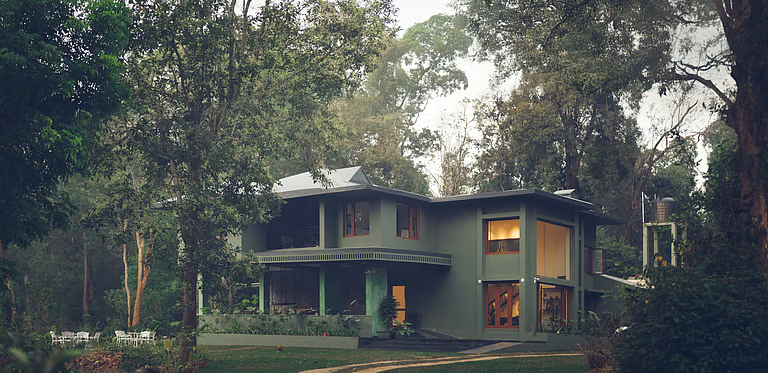
Nestled in a coffee estate near Nagarhole’s Kutta Gate, Coorg Wild Walk by CGH Earth is a four-bedroom immersive retreat for those who seek nature’s quiet charm.

Coorg Wild Walk by CGH EarthSourced

My journey to Coorg Wild Walk by CGH Earth began in Delhi, which was sweltering at 40°C. A quick flight landed me in Bengaluru, and the city welcomed me with the gentlest breeze and cloudy skies as if someone had hit refresh on the weather. The shift was almost cinematic.

From there, we hit the road, a long, winding, 240-250 km stretch that slowly peeled away the layers of city life. Concrete gave way to curves of green, rustling leaves replaced honks, and the air grew dense with the smell of wet earth and roasted coffee. We took the Nagarhole route to Coorg, which was one of the best decisions of the trip. Tall, dense forests looked straight out of a rainforest documentary. Pine trees lined the roads like they were greeting you. The postcard views were only getting better as we drove further.

The monsoon was in full swing, with dramatic grey clouds rolling across the sky, casting flickering shadows over hills and plantations. Every turn brought a surprise: wild boars darting across the road, a family of deer grazing peacefully, birds fluttering overhead in sudden flashes of colour. I kept the car window down the entire time. Not even once did I feel like shutting the world out. It was more than just a ride; it was a slow transition into the wilderness.

The Stay: Coorg Wild Walk by CGH Earth

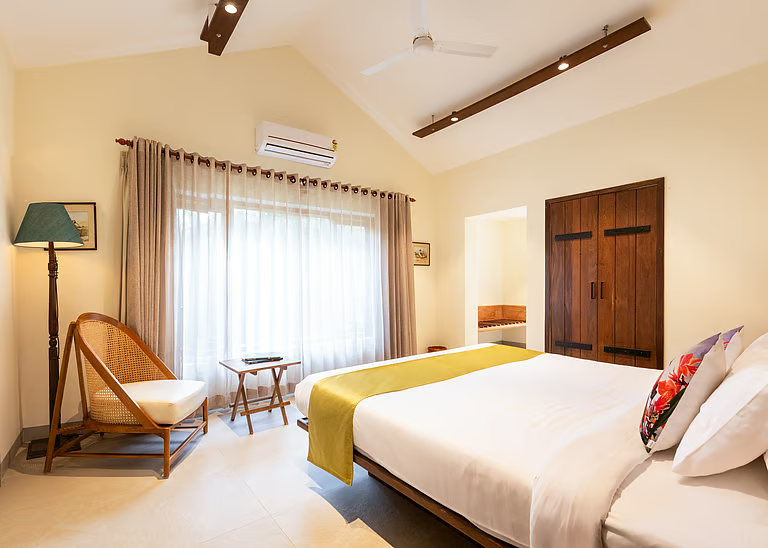
A glimpse of a room at Coorg Wild Walk by CGH EarthSourced

After nearly eight hours on the road, we arrived. But instead of exhaustion, I felt a sense of quietude. The welcome was warm and grounding — a chilled cultural drink in hand and a cool towel to freshen up. Even though we were right on the forest’s edge, it didn’t feel isolating. The villa is designed to blur the line between indoors and outdoors, with massive glass windows that open into dense greenery, open verandahs that double as dining spaces, and a living room so cosy you’ll find yourself curled up with a book without even trying.

Inside, everything feels natural: reclaimed wood furniture, soft, warm lighting, bamboo accents, and handpicked Kodava artefacts that give the space a distinct cultural identity. My room had a large window with the best nature shots — I would sit there for hours with soft music playing, watching jackfruit trees sway, wildflowers bloom, and coffee plants ripple under the wind. Alarms didn’t mark mornings, but by the soft drip of rain, birds singing like lullabies, and the gentle rustle of animals waking up in the forest.

Property manager Lokesh Gowda told me about a leopard that once came and slept at the villa’s doorstep. “It’s his home, too,” he said with a chuckle. Elephants sometimes break through the electric fence at night. “Midnight feasts,” he added casually. Equal parts scary and fascinating, but mostly just humbling.

Dining At Coorg Wild Walk by CGH Earth

Enjoy a meal in the lap of nature at Coorg Wild Walk by CGH EarthSource

If the surroundings calmed my soul, the food healed everything else. Dinner on day one was like coming home to a table laid out by someone who knows exactly what comfort tastes like. Sitting down to a very inviting plate, it pulled me in before the first bite.

There was a crispy Aloo Gobhi Fry that had the perfect crunch and spice, a tangy Pineapple Curry that was equal parts sweet and sour with the fragrance of tempered mustard seeds dancing in the background, and a Spinach Curry that was silky, creamy, and comforting — like the green equivalent of a warm hug. The Coorg-style chicken was rich, peppery, and fell off the bone, while the mutton was slow-cooked till it melted with every bite. And don’t even get me started on the buttery carrot soup; it was thick, velvety, and carried this earthy sweetness that made me smile mid-sip.

Breakfast the next morning was just as dreamy. A spread of fresh fruits, grilled tomatoes, eggs made to order, warm potato tikkis, and sausages sizzling on the side. But it was the local dishes that stole my heart. Kadambuttu, those soft rice balls, soaked up the curry like they were made for each other. Neer Dosas, light and lacy, melted in the mouth. And the Akki Roti, hearty and wholesome, had the flavour that only wood-fired griddles can bring. The grand finale was a warm bowl of Paruppu Payasam — moong dal, jaggery, coconut, and dry fruits, slow-cooked into a sweet, sticky heaven. It was so good that I didn’t know whether to eat it or frame it.

And the best part? All this while sitting outside, under a canopy of trees, with birdsong as your playlist and clouds moving above like nature’s screensaver.

Nearby Experiences

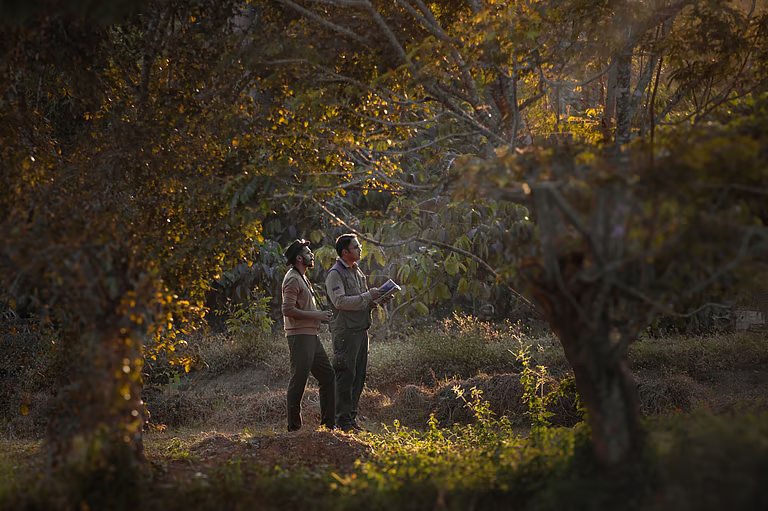
A glimpse of the property / Sourced

Of course, no trip to Coorg Wild Walk is complete without a proper safari. With the Kutta Gate of Nagarhole Tiger Reserve just 3 km away, I set out early one cold morning, jacketless (rookie mistake) but buzzing with excitement.

Nagarhole, or the Rajiv Gandhi National Park, is a massive 847.98 sq. km sprawl of protected jungle, part of the Nilgiri Biosphere Reserve. Its core zones are tiger territory, but the entire area is teeming with life. Our safari began at dawn with only a few jeeps ahead, which meant less noise and more chance to spot animals in their element.

As we rumbled deeper into the forest, the rain-soaked leaves shimmered, and mist clung to the tree trunks. We saw Chital, Sambar Deer, Barking Deer, and even a herd of elephants walking gracefully through the undergrowth. Bright peacocks called from the branches above, and the elusive Indian Giant Squirrel darted like a flash of rust-red through the canopy.

It happened when I had given up hope of a big cat sighting. I spotted a leopard. Calm, unbothered, regal. She walked slowly, elegantly, just a few feet from us. Our eyes met for a second, hers wild and ancient, mine wide with awe. It felt like a shared moment. No roars, no drama, just quiet understanding. The kind you remember long after the ride ends.

The Extras that Make It Whole.

CGH Earth ensures this isn’t just a place you stay. It’s a place you feel. From guided plantation walks where you get to understand the journey of coffee from bean to cup, to peaceful birdwatching sessions and barbecue nights under star-splashed skies, every day has something new to offer. The property is not for the rushed. It’s for those who want to listen more than they speak. For those who like slow mornings, long books, deep conversations, and wild silences. It’s a place where nature doesn’t just surround you — it includes you.

The Information | Coorg Wild Walk by CGH Earth

Address: K Badaga, Nanachi Estate, Kutta, Karnataka 571250

Tariff: Starts at INR 13,571 per night. This includes breakfast and Wi-Fi (excludes taxes). Please note that the prices vary from season to season.

How to reach Coorg?

Coorg is around a 6–7 hour drive from Kempegowda International Airport, Bengaluru. You can hire a taxi or take a private cab. Alternatively, you can fly into Mangalore International Airport (IXE) or Mysore Airport (MYQ). Mangalore is about 140–160 km away, while Mysore is closer, at around 120–130 km.

When is the best time to visit Coorg?

Coorg is a year-round destination. For pleasant, cool weather, visit between mid-November and mid-February. The monsoon months (June to September) transform Coorg into a lush green escape, but expect heavy rainfall and slower city life. Flooding may occur in certain areas, so plan accordingly.

For bookings and other details check their website: www.cghearth.com/coorgwildwalk/

source: http://www.outlooktraveller.com/ Outlook Traveller / Home> Stay> by Mithi Singh / July 01st, 2025

Kodava Hockey Premier League-2025:  Pale Taluk emerge champions

Mysuru:

Team Pale Taluk emerged as the champions of Kodava Hockey Premier League – 2025 defeating Coorg Titans 3-1 in the finals held at Chamundi Vihar Stadium Hockey Grounds here yesterday.

In the first half, Coorg Titans was leading 1-0 after converting a penalty. Pale Taluk came back strongly in the second half to score three consecutive goals to emerge champions. Kodavu Warriors won the third place.

The winners were awarded a cash prize of Rs. 1.50 lakh while the runner-up team received Rs. 1 lakh cash reward along with trophies.

The jubilant Pale Taluk team posing with winner’s trophy at Chamundi Vihar Stadium in city yesterday.

Earlier, presiding over the valedictory event, Legal Advisor to Chief Minister and MLA Ajjikuttira S. Ponnanna expressed his happiness over the tournament being organised in Mysuru for the Kodava community and also congratulated Kodava Samaja Youth Wing Mysuru, Kodava Samaja Mysuru and Hockey Mysore for the success of 3-day tournament.

“We have been encouraging all sports including hockey in Kodagu as sports is an integral part of our culture. The State Government has been providing sufficient funds for promoting sports which has to be utilised efficiently. An 11-acre land has been identified in Virajpet taluk which will be developed into a sports facility,” he added.

Coorg Titans posing with their runner-up trophy.

Department of Youth Empowerment and Sports (DYES) Commissioner R. Chethan, in his address, expressed concerns about youngsters committing suicide even for a small loss despite being excellent in their academics. He called upon the sportspersons to take the loss positively and come back stronger to emerge victorious.

Urging the parents to encourage their children to take up sports which not only helps in being physically fit but mentally stronger as well, Chethan lauded the Kodava Samaja Youth Wing for hosting the tournament by bringing community people from Mysuru and Kodagu together.

No players from Karnataka in National team

DYES Commissioner Chethan regretted the absence of Karnataka players in the National side. “Earlier, at least 3-4 players from the State, majority from Kodagu, were a part of the National Hockey team. However, it is disheartening to note that not a single player from the State was a part of the National team which won bronze in the previous Olympics.

A detailed discussion has been held with Hockey Karnataka and DYES is ready to provide all necessary facilities to improve the sport,” he added.

United Kodava Organisation Convener Kokkalemada Manju Chinnappa, Vamcy Merla Sports Foundation’s Pradeep Urs, Hockey Mysore President Konganda Dilip Biddappa, Kodava Samaja Mysuru President Ponjanda A. Ganapathy, Gynaecologist Dr. Appaneravanda Sonia Mandappa, actor Shwetha Chengappa, advocate Smitha Devaiah, Indian Hockey player C.B. Poovanna, Kodava Samaja Youth Wing Mysuru President Kotera Vedith Uthaiah, Technical Official Pullangada Rohini Bopanna, motorsport enthusiast Vamcy Merla and others were present.

source: http://www.starofmysore.com / Star of Mysore / Home> Sports / June 30th, 2025

₹50 crore for development works in Madikeri: Minister

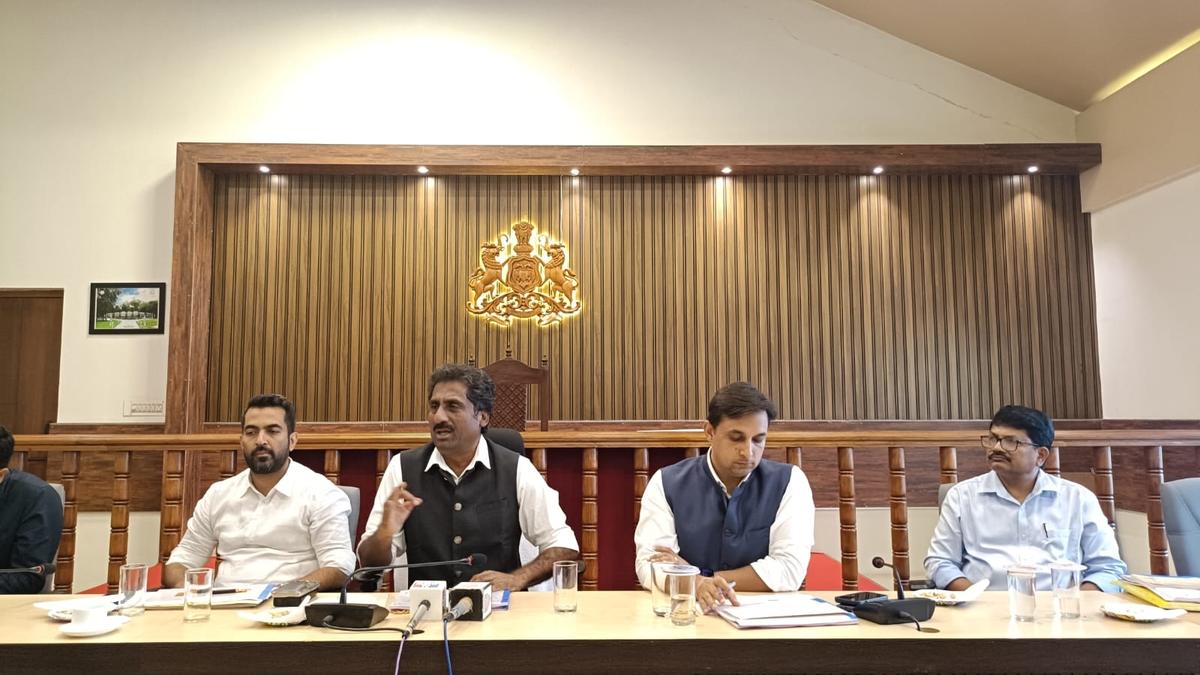
Minister for Municipalities Administration Rahim Khan speaking during his visit to Madikeri on Wednesday. MLA Mantar Gowda and Deputy Commissioner Venkataraja are seen. | Photo Credit: SPECIAL ARRANGEMENT

Municipal Administration Minister Rahim Khan inaugurated the newly constructed Town Municipal Council (TMC) office building at Kushalnagar in Kodagu. The facility has been built at a cost of ₹7 crore.

Speaking at the event on Wednesday, the Minister announced that Chief Minister Siddaramaiah had approved the release of ₹50 crore for various development projects in the Madikeri Assembly Constituency.

Mr. Khan said allocations would be released in phases for development works. He announced the launch of three additional Indira Canteens in the constituency. Each canteen is expected to serve breakfast and lunch to more than 300 people daily, he added.

Madikeri MLA Mantar Gowda said the new municipal office was spacious and well-equipped, adding that Kushalnagar was likely to be upgraded to a City Municipality in future. He proposed the installation of a statue of former Chief Minister R. Gundu Rao on the premises in recognition of his contributions to the town’s development.

He said the merger of several gram panchayats, including Guddehosur with Kushalnagar TMC, strengthened its case for elevation to City Municipality status.

The Minister inspected the Indira Canteen near the KSRTC bus stand.

source: http://www.thehindul.com / The Hindu / Home> News> India> Karnataka / by The Hindu Bureau / June 12th, 2025

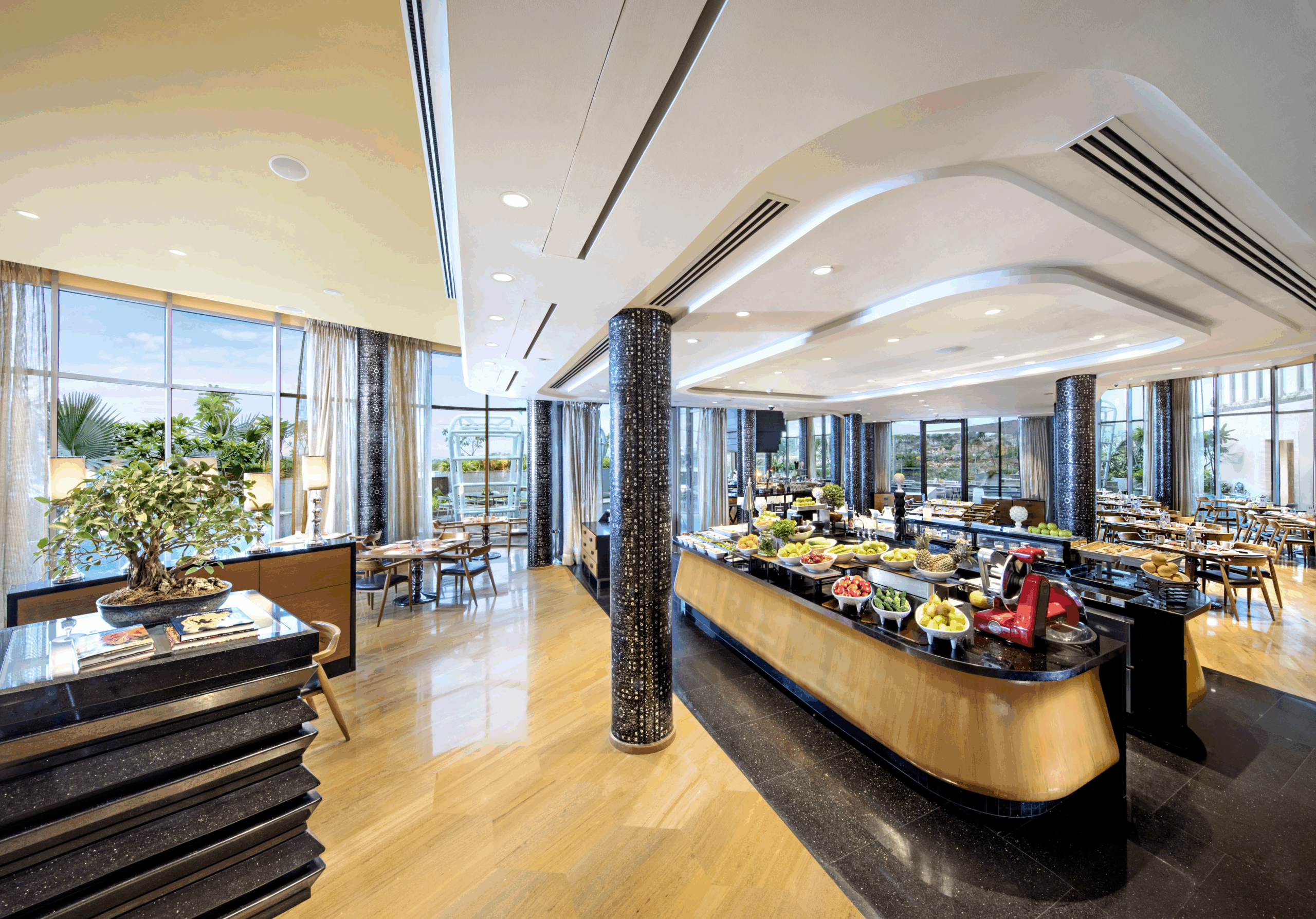
Kodava Food Festival at Golconda Pavilion, ITC Kohenur

ITC Kohenur presents an immersive culinary experience with a three-day Kodava Food Festival, spotlighting the distinctive cuisine of Karnataka’s Kodava region.

ITC Kohenur presents an immersive culinary experience with a three-day Kodava Food Festival, spotlighting the distinctive cuisine of Karnataka’s Kodava region.

Curated with care, the menu features an array of time-honoured recipes that reflect the bold and aromatic flavours of the Kodava table. Diners can expect dishes such as Balekai Barthad – shallow-fried raw plantains, Nallamalu Erchi – Coorg-style lamb pepper fry, Meen Barthad – crisp fried fish, Koli Barthad – spicy pan-fried chicken, Ograne Itte Kadambutt – rice dumplings stir-fried with vegetables, Bollary Barthad – golden-fried yellow cucumber, among others.

The menu also includes traditional accompaniments and seasonal preparations such as Chorange PajjiThenge PajjiBaimbale CurryKaad Mange, and Tarkari Pulav, offering a rare glimpse into the depth and diversity of the cuisine.

Starting from 30th June to 2nd July 2025, between 7:00 PM and 11:30 PM, the Kodava Food Festival offers an extraordinary culinary journey through one of India’s most distinctive regional cuisines.  

Golconda Pavilion – ITC Kohenur, 30th June to 2nd July 2025, 07:00PM to 11:30PM.

To reserve your table and for further details, please call +91 79955 59223

source: http://www.hospibuz.com / Hospibuz.com / Home> Hotel Listicles> Hotel / by Hospibuz.com / June 28th, 2025

Rain: Holiday declared for schools in Kodagu district

The NDRF team inspecting the landslide-prone areas in Kodagu on Wednesday. | Photo Credit: SPECIAL ARRANGEMENT

In the wake of persistent and widespread rainfall across Kodagu district, Deputy Commissioner Venkataraja has declared a holiday for all anganwadi centres, primary and high schools, and pre-university colleges on Thursday as a precautionary measure.

The district has been witnessing heavy downpours over the past few days, with instances of rain-related damage reported from several locations. In the 24 hours ending at 8.30 a.m. on Wednesday, Kodagu recorded 60.92 mm of rainfall. Srimangala received 146 mm, while Shanthalli and Shanivarasanthe registered 160 mm and 112 mm respectively.

Meanwhile, Kiran Kumar, assistant commandant of the 10th Battalion of the National Disaster Response Force (NDRF), visited the district on Wednesday to evaluate the readiness of the NDRF team already deployed in Kodagu.

The NDRF team inspecting the landslide-prone areas in Kodagu on Wednesday. | Photo Credit: SPECIAL ARRANGEMENT

During his visit, he held discussions with R.M. Ananya Vasudev, a district disaster management expert, and inspected areas vulnerable to landslides. He also issued directives to strengthen safety measures and ensure swift relief operations in case of emergencies.

source: http://www.thehindu.com / The Hindu / Home> News> India> Karnataka / by The Hindu Bureau / June 25th, 2025

Karnataka rains: Minister seeks damage report from Kodagu DC

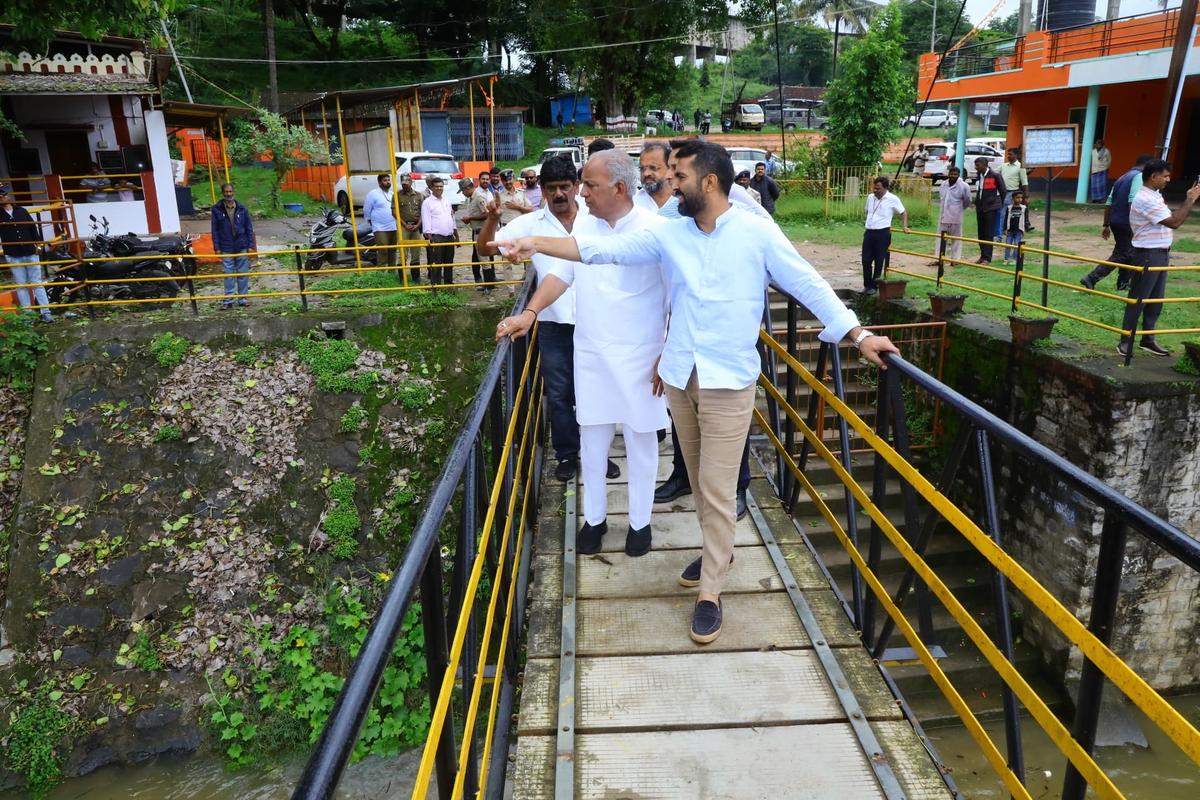
Minister in charge of Kodagu N.S. Boseraju inspecting a damaged house during his tour of rain-affected areas in the district on Thursday. | Photo Credit: SPECIAL ARRANGEMENT

Minister in charge of Kodagu N.S. Boseraju on Thursday directed the district administration to submit a comprehensive report on rain-related damages in the Karnataka district. He said the matter would be taken up at the Cabinet meeting scheduled for July 2, where necessary funds will be sanctioned based on the report.

Speaking to reporters at Harangi after inspecting rain-hit areas, Mr. Boseraju said that Kodagu had been under red alert for several days due to incessant rains that caused widespread damage to roads, bridges, and houses. “Fortunately, there has been no loss of life, thanks to timely precautionary measures,” he said.

The Minister stressed that while rainfall in Kodagu is vital for southern Karnataka, the current downpour has led to severe local destruction. “In the upcoming Karnataka Development Programme (KDP) meeting, we will assess the extent of damage to homes, roads, and infrastructure for carrying out immediate relief measures and planning permanent solutions,” he added.

He noted that earlier, the release of relief funds required specific criteria to be met. Now, however, funds will be disbursed based on the actual scale of damage.

“Officers have been directed to submit the report at the earliest. Once received, it will be discussed with the Chief Minister, the Revenue Minister, and departmental secretaries to facilitate timely fund allocation.”

Referring to the closure of the Ramaswamy Kanive hanging bridge, which connects Kushalnagar in Kodagu with Periyapatna in Mysuru, Mr. Boseraju said steps would be taken to reopen the bridge in coordination with K. Venkatesh, Periyapatna MLA and Minister for Animal Husbandry and Sericulture.

N.S. Boseraju inspecting the hanging bridge near Kushalnagar in Kodagu on Thursday. | Photo Credit: SPECIAL ARRANGEMENT

Earlier in the day, the Minister, accompanied by Mantar Gowda, MLA, visited several rain-affected locations. He inspected the flow of the Cauvery river and assessed damage to the hanging bridge at Kushalnagar, and assessed another bridge near Rangasamudra., and visited a damaged house belonging to a local resident Chandrashekhar.

He said the monsoon had arrived unusually early — in late May — this year, resulting in considerable damage across the district. With more rain expected over the next two months, he directed officials to take adequate precautionary measures in flood-prone areas.

Mr. Boseraju also assured that the district administration has sufficient funds in its Personal Deposits account to manage disaster response, and that compensation has already been distributed to those whose houses were damaged. Permanent reconstruction works will begin after the monsoon subsides, he said.

A report on the total rain damage will be submitted to the Chief Minister, along with a request for additional funds, he added.

Deputy Commissioner Venkat Raja, Zilla Panchayat CEO Anand Prakash Meena, Superintendent of Police K. Ramarajan, and other officials were present during the visit.

source: http://www.thehindu.com / The Hindu / Home> News> India> Karnataka / by The Hindu Bureau / June 26th, 2025