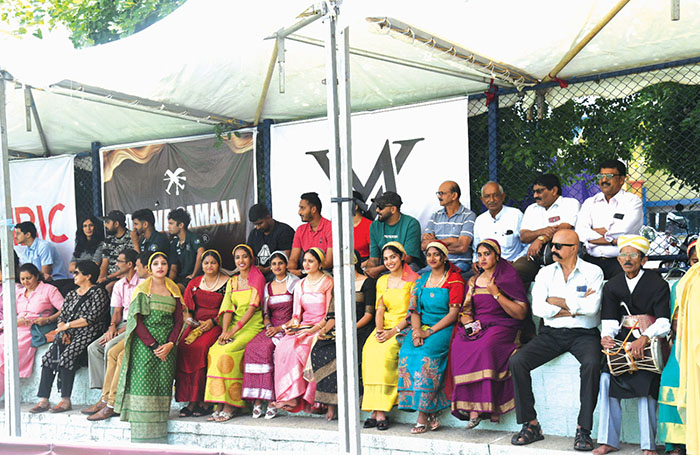
Harshel Kaveri, a member of Ashwini Sports Foundation – Karumbaiah Academy for Learning & Sports (KALS), Kodagu, has qualified for Nationals in Shooting with a score of 377/400 at the 29th All India G.V. Mavalankar Shooting Championship-2019 held at Ahmedabad from Sept.13 to 29.
She took part in the 10m Peep sight Air Rifle (NR) Championship in the Youth, Women Individual category which was the pre-nationals event held at Ahmedabad, Gujarat, last month.
Harshel Kaveri, a Grade 10 student of KALS School, Gonikoppal, is the granddaughter of Chenanda Pandith and Gange, residents of Kuvempunagar, Mysuru.
source: http://www.starofmysore.com / Star of Mysore / Home> Sports / October 17th, 2019
One day, this scientist hopes to mislead a kumbara night frog into thinking he’s one of them
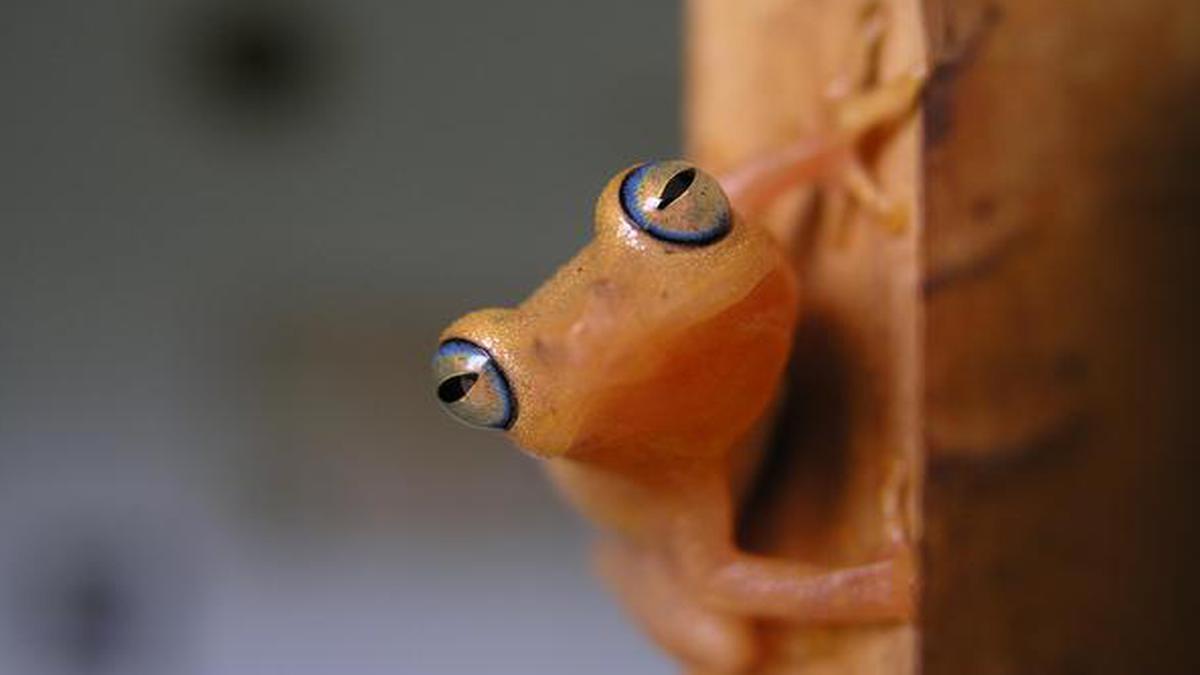
Coorg Yellow Bush Frog
Gururaja K.V. hid behind a tree and called “ treeek…ting…ting…ting. ” Several Coorg yellow bush frogs replied, “ treeek…ting…ting…ting .” When he called again, the amphibians leaped towards him. He snuck behind another tree and sang the frog song. The little leapers reoriented to his new position. For 90 minutes, the researcher played hide-and-seek as his subjects sought the intruder. One of them eventually found him and jumped on his throat. “It literally wanted to choke me,” he recalled, barely able to contain his laughter. Realising its opponent was much larger, the confused amphibian leapt off.
Gururaja’s experiments with mimicry led to another species trying to out-compete him. He imitated the bird-whistle call of the Jog night frog, signalling he was a male who had found a mate. His ‘rivals’ upped their volumes to drown out his chirps so that the female wouldn’t hear him.
To most people, all frogs look similar. Gururaja is one of the few experts who can point to slight differences that set species apart. He even discerns distinct personalities. His research subjects have names such as Hegde, Bhat, and Vishnu. The Hegde frog was talkative like Gururaja’s host in the area, Ashok Hegde. The frog he called Bhat was so quiet, the researcher had to check on it every hour.
Gururaja didn’t discover these amphibians until he was a master’s student at Karnataka’s Kuvempu University. Since he was an amateur birdwatcher, his advisor, S.V. Krishnamurthy, had suggested he list the species frequenting the campus. Gururaja wanted a more challenging project. How about studying the diet of night frogs, his advisor asked. That’s how his career in this field began.
At first, touching the frogs’ loose skin and slippery texture felt icky. After handling hundreds over a month, his disgust dissipated and he was hooked. Since no more than five people studied frogs at that time, making a mark in this under-researched area was easier than in the crowded field of bird research.
Much of the amphibian work in India is taxonomic — examining dead specimens, describing species, and establishing the relationship between different ones. After completing his postgraduate studies, Gururaja switched to studying their natural history. His curiosity and observations led to the discovery of one of the most enigmatic species — the kumbara night frog.
In 2006, Gururaja observed a female perform a headstand, with the male riding piggyback, to lay her eggs on leaves and twigs. The deed done, she hopped away, while the male picked up globules of mud with his tiny hands and plastered the mass of eggs until it was completely covered.
Gururaja spent the following eight years documenting more instances of this unusual behaviour before publishing his discovery. He continues to study the kumbara night frog, seeking answers to questions such as: why does it do what it does? Is it protecting its eggs? From what? Some species carry tadpoles on their backs such as poison dart frogs or in their mouths like gastric-brooding frogs. But no other amphibian stands on its hands or daubs mud on its eggs. He estimates he has enough work with night frogs alone to keep him occupied for another 15 to 20 years.
In northern Kerala, his team discovered another species, the ochlandra reed frog, with a beautiful yellow sunburst pattern in its eyes. He had seen nothing like it before. Nor had he seen any frog do what it subsequently did. It disappeared from view by squeezing into a hole in a length of reed bamboo. It wasn’t merely hiding from predators. To Gururaja’s astonishment, it stuck its eggs to the inner walls of the hollow columns. Researchers knew of no other amphibian that exploited this snug space as a nest site until 2011, when they saw a related species wriggling into a reed bamboo in Tamil Nadu’s Western Ghats.
Publishing natural history observations such as this demands tedious work. It’s not enough to report on one frog that did something exceptional. To be scientifically acceptable, researchers spend several seasons watching different frogs of the same species before they can conclude the behaviour is not an aberration.
Gururaja is mindful that spending long months during the rains in damp clothes and mucking in streams and swamps is not for everyone. He gives recording equipment to new students to record frog calls. In the process, the youngsters forge their own relationship with the forest and the creatures. Only a few turn their backs on this field deterred by leeches. Gururaja safeguards against burnout by taking a break after every five days of fieldwork.
The high humidity has greater success in killing recording equipment. No matter how well Gururaja treats his gear — wrapped in plastic, sheltered under an umbrella, wiping it dry at the end of each session — moisture condenses on the circuit boards, corroding them. He shrugs off the loss as par for the course in doing frog work.
One species resists Gururaja’s attempts to fool it with his mimicry. He can’t match the frequency of the kumbara night frog’s call, but it’s not from lack of trying. Every season, he tries afresh to challenge his favourite amphibians at their game, and one day he hopes to mislead one into thinking he’s of them.
source: http://www.thehindu.com / The Hindu / Home> Sci-Tech> Environment> Beautiful People / by Janaki Lenin / February 23rd, 2025
Relentless rains continue to lash Kodagu, pushing rivers and streams well above the danger mark. Authorities have evacuated residents from low-lying areas and declared a holiday for all schools and colleges today, as the region remained under a red alert issued until 8 am this morning.
But as Kodagu battles the fury of nature, its most critical weather monitoring tools are failing. Of the 104 Telemetric Rain Gauges (TRGs) installed across the district, 56 — over 54 percent — are non-functional. Shockingly, there is no clear timeline for when these essential devices will be restored.
In a glaring act of official negligence, a TRG installed at Kanoor Gram Panchayat in Ponnampet Taluk — an area known for heavy rainfall — has been placed under a roof. Ironically, it is installed to measure rain but placed where it does not rain.
This baffling decision has rendered the gauge completely useless. With not a drop of rain reaching the sensor, accurate data from this high-rainfall zone is lost. Residents said that the TRG was installed two months ago and nothing has been done to rectify the construction anomaly.
Furious residents have flayed the Panchayat for such incompetence, calling out the lack of basic common sense and waste of public funds. TRGs are vital for real-time rainfall data collection and help agencies like the Karnataka State Natural Disaster Monitoring Centre (KSNDMC) issue timely flood alerts and coordinate emergency responses.
With more rain forecast and rivers swelling dangerously, the failure to properly install and maintain these gauges could cost lives, and underscores a disturbing lack of preparedness to face the monsoon.
source: http://www.starofmysore.com / Star of Mysore / Home> News> Top Stories / June 26th, 2025
The species identified are — Coffea stenophylla, Coffea racemosa, Coffea liberica and Coffea excelsa.
Representative Image
Bengaluru :
As climate change is affecting harvesting and cropping patterns of all agriculture produce, coffee growers too are facing challenges. To address the issue, researchers are working on climate-resilient coffee varieties.
The Centre for Excellence of Central Research Institute (CCRI) located in the Coffee Research Sun Station, Chettalli in Kodagu has identified four wild coffee varieties that are particularly resilient to climate change.
Cup tasters discovered that Coffea stenophylla tastes close to Coffea arabica. This has raised hopes that consumers may soon have a new climate resilient option to choose from.
New coffee varities will have to be blended
“There is resistance in these wild varieties as they have stood the natural test of time. They have strength in their roots, have high yields and can withstand high temperatures. The four varieties are different from the existing and popular Arabica and Robusta coffees. During research, these varieties were found growing naturally in the wild and even in the estates of some coffee growers,” said Jeena Devasia, Divisional Head, Plant Breeding and Genetics, CCRI, Chettahalli substation, told The New Indian Express.
During the study, researchers found historical evidence to show that Robusta is equal to Coffea stenophylla in taste and texture. “If all goes well, consumers will soon get a new climate-resilient coffee variety to choose from,” she said.
Researchers said wild varieties are found all over India. Some are also found in the Himalayan zone, growing naturally as trees. “The region under coffee cultivation is gradually increasing in India,” added Jeena.
Some companies are exporting some of the wild coffee varieties that are growing in their estates. Komal Sable, South India Coffee Company Partner, said they are exporting around 5.5 tonnes of green Coffea excelsa to the US, UK, Netherlands, Switzerland and other places. While some countries are consuming it as single origin and others are blending it, he added.
Explaining the advantages and disadvantages, coffee tasters and traders said it could be difficult for consumers to immediately accept the new variety as they have a set taste suiting their platter. The new varieties are climate resilient and need less pesticides. They are less acidic in nature and are more sweet. Some even have a fruity flavour and are less bitter.
Coffee Board officials said that when these varieties are launched in the domestic market, they will have to be blended to meet the consumers’ demand.
Experts said there are around 120 globally identified and accepted coffee varieties. The list continues to have additions and deletions depending upon research and quality reports. Tests and tasting is an ongoing process and is the need of the hour, they added.
Karnataka produces
72,020 metric tonnes of Arabica coffee
1,76,000 metric tonnes of Robusta coffee
Total area under coffee production — 2,48,020 acres (70.5% of coffee-growing areas in the country)
source: http://www.newindianexpress.com / The New Indian Express / Home> Karnataka / by Bosky Khanna / September 25th, 2024
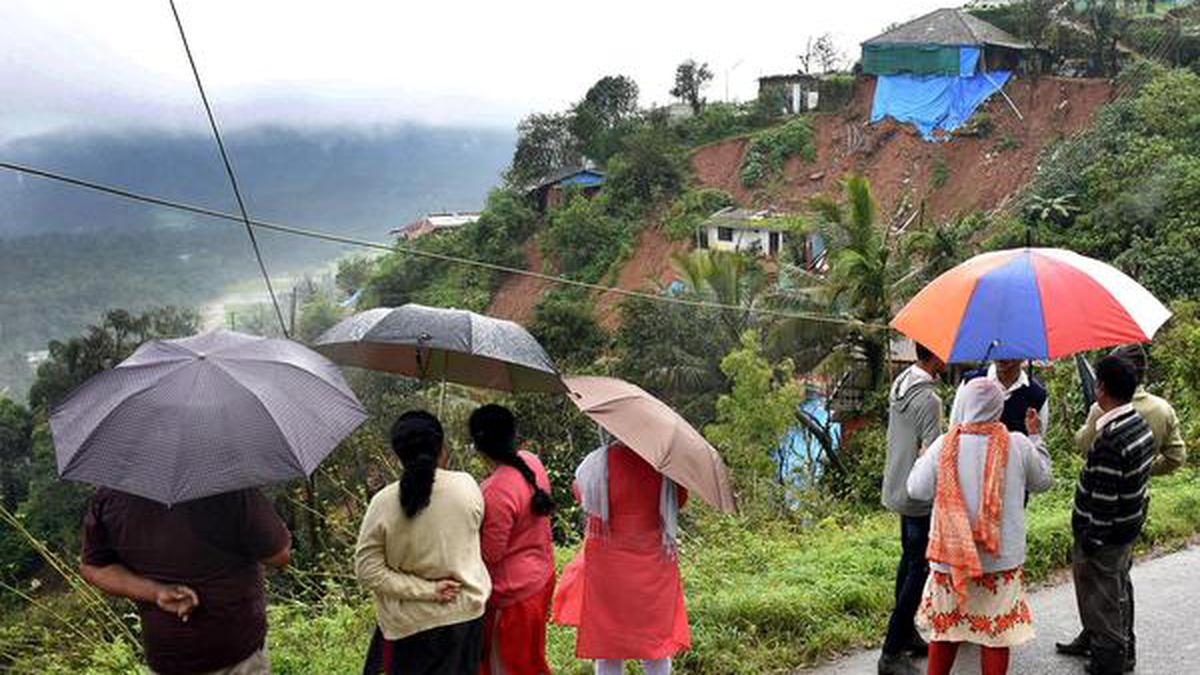
People looking at the devastation near Raja Seat at Indira Nagar in Madikeri.
The abandoned localities on the hilltops near the Raja Seat in Madikeri town, which bore the brunt of landslips, are testimony to the devastation here. People are thronging the roads leading to the dwellings to understand the scale of destruction from a safe distance.
Though tourist arrivals have dropped drastically following the Deputy Commissioner’s diktat to hotels and homestays to not accept bookings until August 31, people carrying relief from various places and those from adjoining places bordering the district are thronging these places to see the destruction that has struck the coffee land this month.
The police have established a check-post near Raja Seat to prevent people from closing in where the remaining houses in Indira Nagar and Sri Chamundeshwari Nagar, the adjoining residential hubs, are delicately positioned. They are facing the looming threat of the earth caving in any time. All the residents had been evacuated to safer places and relief camps.
“The devastation is much bigger in the interior parts which have no access because of damage to roads. Therefore, people are coming to the town to see the havoc,” a local said.
‘Disaster tourism’
Madikeri MLA Appachu Ranjan said VIPs visiting Kodagu to understand the scale of devastation need to bring their escorts with them instead of depending on the local police and officials to usher them to the sites. If a large number of people accompany high-profile visitors, it will hamper the ongoing relief works, he said.
“Deployment of local officers on such visits may end up in relief work getting hindered despite the fact that officers from other districts have been deputed to oversee works,” he argued. “Local officers need to be on duty for relief and rescue since they are aware of the terrain. Deploying outstation officers will not serve the purpose. I have conveyed this to the Minister in charge of Kodagu district, S.R. Mahesh, and Deputy Commissioner P.I. Sreevidya.”
Meanwhile, the district officials and staff have been strictly told not to avail leave for at least a fortnight in order to assist with the relief and rebuilding works.
A woman Madikeri Zilla Panchayat employee said: “We have been told to put off our leave and stay in the headquarters for attending to the relief and other important works.”
An engineer attached to the Public Works Department, who is overseeing the roadworks, said, “Until the situation becomes stable, it may not be possible to avail leave, considering the devastation and the works to be carried out on a war footing.”
source: http://www.thehindu.com / The Hindu / Home> News> India> Karnataka / by Shankar Bennur / August 23rd, 2025
Has a place name caught your ear and not let it go? I have always felt that way about the region in Karnataka called Coorg. The name of the hill station is so unusual. It’s mysterious, while still being easy to remember.
This past January, I finally reached Coorg and learned that the name has roots in colonialism alone. In the 1830s, when the British deposed the local Raja, they swiftly annexed the land and renamed the place called Kodagu, which has civilization dating back to India’s Sangam period, 300 BCE.
The land known as Coorg was incorporated into the new state of Karnataka in 1956. Today, Kodagu is the district’s official name, but Coorg is what lots of people still say and write. The area is known for deep green mountains, coffee plantations, and people who are incredibly warm—and physically strong. The regional identity is defined by its minority indigenous community called the Kodava, people who may have originally come as Kurdish exiles from Iraq or with the military forces of Alexander the Great. To this day, the Kodavas are admired for their skills in hunting and military service.
We came from Mysore by car for a two-day visit. The first driving hour was easy on smooth roads. The last two hours were a stomach-testing, bumpy and twisty journey into the beautiful green hills.
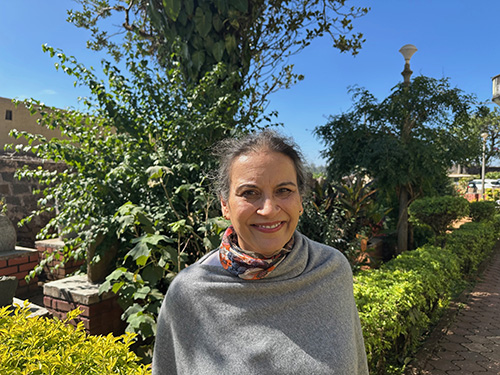
When we got out of the car at the Coorg Wilderness Resort, I realized we had entered the coldest place I’d ever experienced in India, with temperatures in the fifties and sixties daytime. I wrapped up in my cashmere shawl and kept it on for the rest of the stay.
Monkeys were everywhere! The clever girl photographed below became our frenemy. She waited near the suite till we were gone and then jumped down from the roof to our balcony and turned the handle of the closed door to go inside. Indoors, she located a closed can of almonds with a picture of the nuts on the can. She skillfully ripped off the metal lid, devoured the almonds and scampered through the suite, enjoying herself, until she was shooed out by the arriving cleaner. Even after the crime, she lingered near our door, giving cool stares that reminded Tony and me that she had rights to the place.
I’d seen the resort in brochures and online photographs and thought from its appearance that it was a renovated coffee plantation. My eyes had fooled me. The property was just a few years old but built in a convincingly traditional style and furnished with neo-Victorian furniture and textiles. Most rooms were a steep hill walk down from the reception building and hotels, but little electric carts whizzed about by young local drivers took care of any exhausting climbs, especially at night. The hotel buildings were painted cheerful red. Guest suites were almost all located up flights of stairs and had private balconies and terraces overlooking the rolling hills. At least part of my guess was correct: the vast lands included a small coffee plantation with beans being grown, roasted and shared with other properties in their group, the Paul John Hotels.
The food was extremely tasty, with most of the fare South Indian. Large buffet meals were included in most people’s room packages, but we found the hotel’s small restaurant that specialized in Kodava dishes, very enjoyable, both for the food and the company of local people. Local mushrooms, greens, and bamboo shoots were combined in curries that made an intriguing meal that seemed to taste of the mountains.
Hiking, swimming in a pool, visiting the hotel’s farm and learning about coffee production were all offered as activities. Most of the resorts’ clients were multigenerational Indian families. While climbing uphill on a hike to the lookout point shown above, I fell sharply and was worried my throbbing quadricep would prevent me from walking back downhill. One of the tourist families had chartered an all-terrain vehicle going along the same rough path and gave me a seat, for which I was extremely grateful. For the next eight days traveling in India, my bruised thigh slowly healed.
Fortunately, I was still mobile enough to walk short distances. In nearby Madikeri, Tony and I visited a fort dating from the early 1600s that, during British occupation of the early 1800s through 1947, was used for administration, as well as a small Anglican church. Strolling through this church, we studied a plaque engraved with names of British parishioners who’d left the paradise of Coorg to fight and ie in the World Wars. No longer used for services, the small Gothic building had become a museum of Indian history, with cases filled with local archaeological finds, many of them stone tablets and statues of Hindu and local deities.
One of India’s most distinguished military combat officers, General Kodendera Subayya Thimayya, came from a Kodava coffee plantation-owning family. The general, who was known in his youth as Dubbu to his family, became “Timmy” to the British and the outside world.
Gen. Thimayya studied at the Bishop Cotton boarding school in Bangalore, the Prince of Wales Royal Indian Military College, and finally at the Royal Military College in Sandhurst, where he was one of only six Indian cadets. During World War II, Timmy was the only Indian who commanded an Infantry brigade; after the British left, he rose in the Indian Army, becoming the 3rd Chief of the Army Staff of the Indian Army from 1957 to 1961. He retired and then served as Commander of the United Nations Peace Keeping Force in Cyprus, where he died of heart attack while on active duty at the age of 59.
It was delightful to talk with a retired soldier manning the visitor desk at Gen. Thimayya’s childhood home in Madikeri, which is now a museum. I enjoyed walking through and getting the sense of what a wealthy planter’s home was like. I was pleased to see a room devoted to information about the general’s wife, Nina, who was an accomplished dancer and had lived in France before their marriage, and other rooms had displays that told stories about his siblings and his children. The Thimayya house was one of the best sightseeing opportunities in Kodagu, which really doesn’t have the multiple temples, museums and shops in most Indian tourist destinations. Truly, the place is about being away from the world and in nature’s embrace.
In the center of Madikeri town, we sampled delicious cappuccino from local beans and deliberated over the varieties of coffee we would buy and share with friends as we traveled on in India.
It was sad to watch our last sunset from the balcony at the Wilderness Resort. But the long ride down from the mountains had another excitement in store: the Namdroling Monastery, a Tibetan Buddhist refuge and learning center. The monastery was built in 1963 when the Tibetans were welcomed to India after Chinese persecution.
The initial structure for the monastery was just bamboo, and the early monks had to fend of wild animals as they built in the jungle. The community raised money and have built the monastery into a gilded, impressive complex for monks and their families. The day we visited, many monks seemed to be hastening away down the road from the monastery. When we came upon police cars closing off the exit, we learned that the Dalai Lama was visiting for a few days, and the monks were going to meet him. No such chance for us; but we considered it a brush with greatness and another example of how Kodagu might appear like a sleepy mountain hideaway, yet have a powerful impact in the larger world.
source: http://www.sujatamassey.com / Sujata Massey / Home / by sujatamassey.com webmaster / March 26th, 2025
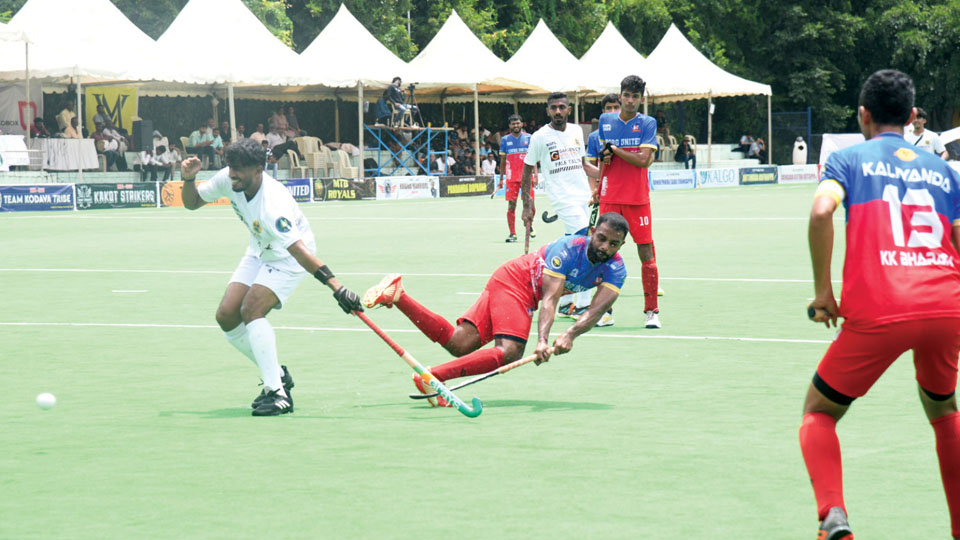
MTB Royals and Kakot Strikers ended up in the top of Pool A and Pool B respectively after winning both their matches on Day-1 of three-day Kodava Hockey Premier League (KHPL) organised by Kodava Samaja Youth Wing Mysuru at Chamundi Vihar Stadium here yesterday.
In their first match, MTB Royals defeated Team Kodava Tribe 1-0 and in their second match, they overcame Coorg Titans 1-0 to top the Pool A. Meanwhile, Kakot Strikers also won both their matches in Pool B. They defeated Connecting Kodavas 1-0 in their first match and South Side Rangers 2-1 in their second match.
On Day-2, this morning, Coorg United defeated MTB Royals 2-1, Kodavu Warriors overcame Kakot Strikers 2-1 and Coorg Titans reigned supreme over Team Kodava Tribe 2-0.
Yesterday’s Results
Coorg Titans 1 beat Coorg United 0
Kakot Strikers 1 beat Connecting Kodavas 0
Team Kodava Tribe 1 beat MTB Royals 0
Anjigeri Naad 4 beat Kodavu Warriors 3
(penalty shootout)
Pale Taluk 3 beat Coorg United 0 (shootout)
South Side Rangers 2 beat Kakot Strikers 1
Coorg Titans 1 beat MTB Royals 0
Connecting Kodavas 1 beat Kodavu Warriors 0
Pale Taluk 1 beat Team Kodava Tribe 0
South Side Rangers 4 beat Anjigeri Naad 3
(penalty shootout)
Day 2 Results
Coorg United 2 beat MTB Royals 1
Kodavu Warriors 2 beat Kakot Strikers 1
source: http://www.starofmysore.com / Star of Mysore / Home> Sports / June 28th, 2025
Date : June 27 – June 29 / Time : 7 am to 5.30 pm / Venue : Hockey Grounds, Chamundi Vihar Stadium
Mysuru:
The three-day Kodava Hockey Premier League (KHPL) – 2025 was off to flying start with Coorg United taking on Coorg Titans in the inaugural match held Chamundi Vihar Stadium in Nazarbad, here this morning.
In the inaugural match, Coorg Titans defeated Coorg United 1-0. Kuttimada Bhuvan Ponnanna scored the lone goal of the match for the Titans. In another match, Connecting Kodavas overcame Kakot Strikers 1-0. Mukkatira Poonacha scored for Connecting Kodavas. In the third match, MTB Royals defeated Team Kodava Tribe. Chekkera Varun Madappa scored the only goal of the match for the Royals.
The 3-day Franchise-based Kodava Hockey Tournament, organised by Kodava Samaja Youth Wing Mysuru in association with Kodava Samaja Mysuru and Hockey Mysore, will feature a total of 24 matches including the finals to be held on June 29.
A total of 10 teams including Coorg United, Kodavu Warriors, Pale Taluk, South Side Rangers, Team Kodava Tribe, Connecting Kodavas, Anjigeri Naad, Coorg Titans, Kakot Strikers and MTB Royals are competing in the tournament which promises some best action. Matches are played in a short format with 34 minutes allotted to each match with two quarters of 17 minutes each.
KHPL-2025 mandates each team to include one female player and two emerging players under 18. This step brings gender inclusivity and youth empowerment to forefront, ensuring 10 women and 20 young talents shine on Kodava hockey stage.
Hockey Karnataka Hon. Secretary and ex-Olympian Anjaparvanda B. Subbaiah, Hockey Mysore President Konganda Dilip Biddappa, Kodava Hockey Academy President Pandanda Bopanna, Hockey Mysore Vice-President Kotera Muddaiah, Kodava Samaja Cultural and Sports Club ex-President Kuttimada D. Muthappa, Youth Wing President Kotera Vedith Uthaiah, Field Marshal K.M. Cariappa Assn. President Nayakanda Thimmaiah and others were present.
source: http://www.starofmysore.com / Star of Mysore / Home> Sports / June 27th, 2025
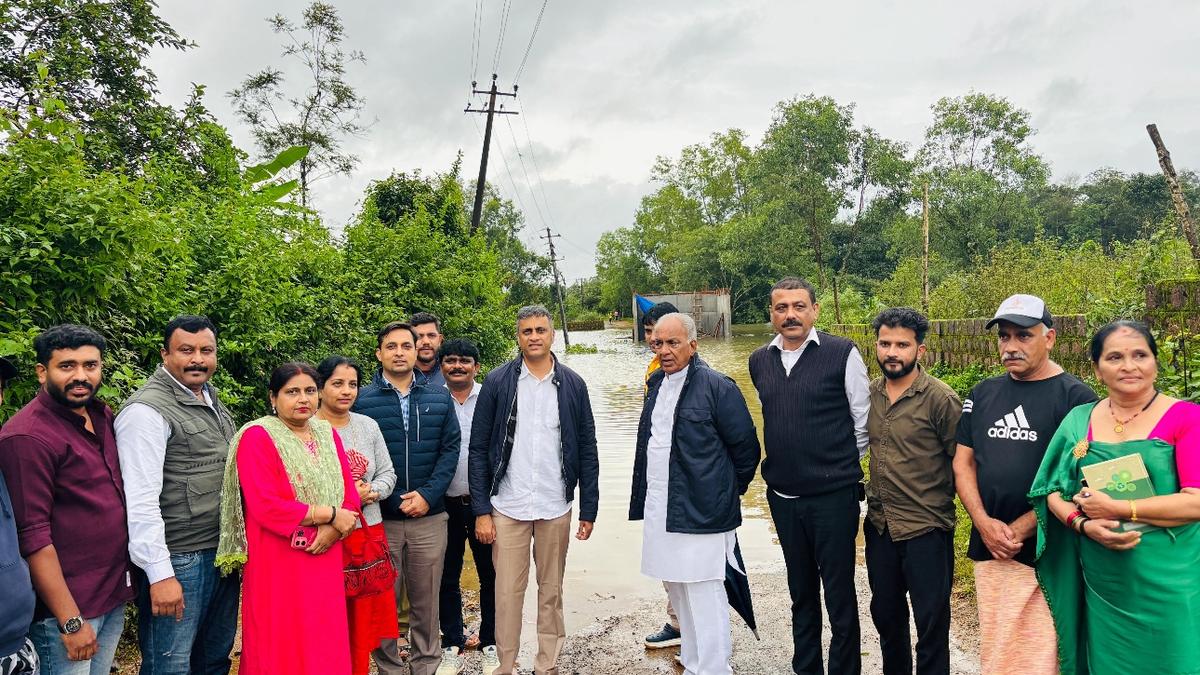
Minister in charge of Kodagu N.S. Boseraju, A.S. Ponnanna, MLA, and others visiting rain-affected areas at Napoklu in Kodagu on Friday. | Photo Credit: SPECIAL ARRANGEMENT
Kodagu district in-charge Minister N.S. Boseraju on Friday instructed the Forest Department officials to devise effective, long-term measures to tackle the growing human-animal conflict in the district.
Presiding over the district-level Karnataka Development Programme (KDP) tri-monthly review meeting in Madikeri, the Minister said that the conflict with wild elephant continues unabated, and he called for scientific and permanent solutions.
He spoke to Forest Minister Eshwar Khandre over the phone, suggesting a meeting in Bengaluru with Kodagu MLAs and senior forest officials to discuss forest-related challenges.
A.S. Ponnanna, MLA, raised concerns over the increasing elephant attacks that result in human casualties. While barricades and trenches have been created, elephants continue to raid villages in groups. Mantar Gowda, MLA, criticised the lack of coordination among forest officials, and said that elephants are merely chased from one area to another without addressing the root problem.
MLC S.L. Bhoje Gowda suggested scientific interventions, preservation of forest ponds, and replacing eucalyptus and acacia trees with fruit-bearing and bamboo species to provide adequate food for wildlife within forests.
Issues like permanent rehabilitation for flood-affected families in Karadigodu village, reparation of rain-damaged roads, etc. were discussed at the meeting. Directions were also issued to the Escom officials to remain alert in case of power disruptions during monsoon.
The Minister directed the officials to address grievances of aided schools and ensure basic facilities. The Agriculture Department was asked to ensure timely distribution of seeds and fertilisers for paddy and maize this season.
Later, Mr. Boseraju, along with Virajpet MLA and Chief Minister’s Legal Advisor A.S. Ponnanna, visited Cheriyaparambu in the Napoklu region to inspect the rain-affected places.
The Minister inspected the bridge built across the Cauvery river and assessed the surrounding areas. Mr. Boseraju instructed the officials to take precautionary measures to ensure public safety and road connectivity, if the bridge gets cut-off in case of floods in the river.
Deputy Commissioner Venkataraja, Zilla Panchayat CEO Anand Prakash Meena, and others were present.
source: http://www.thehindu.com / The Hindu / Home> News> India> Karnataka / by The Hindu Bureau / June 27th, 2025
Stirring up the markets were weather updates from Brazil, where a cold front of polar air is approaching. This could bring frost to some areas of Paraná, São Paulo and southern Minas Gerais, although not comparable, according to forecasters, to the winter 2021 events, which caused significant damage to crops.
Roasted coffee beans (credits: Ri Butov from Pixabay)
In the first winter session (austral winter, of course), fears of frost in Brazil caused coffee futures to surge, with a strong recovery seen yesterday, Monday 23 June 2025. In New York, the September contract gained over 3.6% (+1,150 points) to close 326.55 cents. In London, the September contract soared to $3,904, nearly 4.5% higher than the previous session’s settlement.
Stirring up the markets were weather updates from Brazil, where a cold front of polar air is approaching.
This could bring frost to some areas of Paraná, São Paulo and southern Minas Gerais, although not comparable, according to forecasters, to the winter 2021 events, which caused significant damage to crops.
Analysts expect New York coffee futures to trade within the 320–360 cent range in the near future.
According to Safras & Mercado, 43% of the Brazilian harvest was complete by 18 June. This figure is slightly lower than last year (44%), but higher than the five-year historical average (40%).
As for Robusta, Gil Barabach, analyst at S&M, reports “harvesting operations have progressed at a good pace in the last week, helped by favourable weather conditions”.
The Robusta harvest is 58% complete, compared to 62% last year. It should be noted that this year’s harvest is expected to be a record one.
The Arabica harvest advanced eight percentage points in one week reaching 34% of the estimated total. This is slightly below last year’s figure of 35%, but well above the historical average of 30%
“Overall, this year’s crop profile remains positive compared to last year, with an improvement in terms of coffee screen size,” added Barabach.
Meanwhile, Indian exports are booming. The Coffee Board of India reports that exports in FY2024/25 increased in value by 40.2% to over $1.8 billion. The main destinations included Italy, Germany, Russia, Belgium, the UAE and the US.
source: http://www.comunicaffe.com / International Comunicafe / Home> Markets & Trade> Reports & Statistics / June 24th, 2025
WELCOME. If you like what you see "SUBSCRIBE via EMAIL" to receive FREE regular UPDATES.
Read More »