CCRI to depute coffee experts to Nagaland

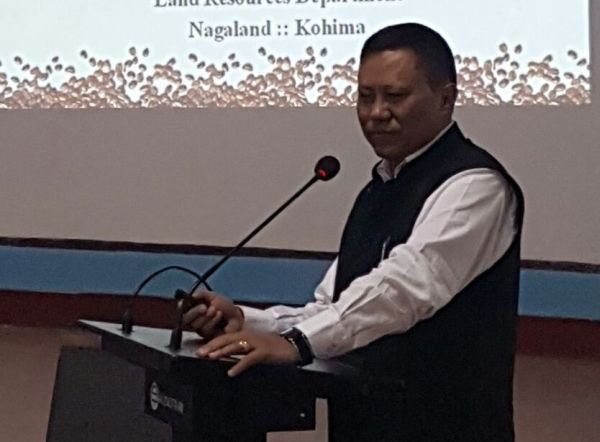
Secretary, Land Resources, Y. Kikheto Sema IAS sharing prospects of coffee plantation in Nagaland at CCRI Chikkmagalur, Karnataka.  (Morung Photo)
Secretary, Land Resources, Y. Kikheto Sema IAS sharing prospects of coffee plantation in Nagaland at CCRI Chikkmagalur, Karnataka. (Morung Photo)

Assuring all possible guidance and assistance to the state Land Resources Department for coffee plantation, the Central Coffee Research Institute, Chikkmagalur, Karnataka has agreed to depute scientists and technical experts to the state to study the climatic condition and feasibility of coffee plantations.

Speaking to The Morung Express over the phone from Bangalore, Secretary, Land Resources, Y Kikheto Sema IAS said that the Director CCRI, Dr. Raguramulu expressed happiness over the Nagaland team’s visit and agreed to depute coffee experts to Nagaland and also to provide whatever coffee seeds were required by the state.

Kikheto said that the climatic conditions of Karnataka and Nagaland were similar and expressed optimism that the state would see a landmark growth in coffee plantation with technical experts providing their valuable expertise after examining the feasibility.

He said Dr. Raguramulu recalled about the establishment of Coffee Demonstration Farm at Kiruphema in the past, which could not take off effectively owing to frequent landslides and volatile situation in the state. However, Kikheto apprised the CCRI Director that Nagaland was relatively peaceful now and assured of all government support for establishing Coffee (Arabica) Research Centre in the state.

CCRI officials, scientists and State Land Resources Department officers held a joint meeting on Wednesday at the former’s office, where Kikheto presented a power point presentation on the status of coffee in Nagaland.

He said Coffee plantation has an edge over rubber and tea since it could be intercropped with other crops such as banana, orange, citrus, pepper etc, while mixed cropping was not possible for the latter two crops. He said that the Land Resources Department was yet to receive funds even as it has been declared as the nodal department for revival of coffee plantation in the state.

Kikheto informed that the state LRD team were taken on a coffee farm visit by the officials and famers and also taken to Chikkmagalur coffee laboratory.

The LRD officials also visited the Coffee Sub Research Centre, Coorg on Thursday with CBI officials on Thursday.
“We have learned a lot from the field and laboratory visits about coffee plantation and we will accordingly train our farmers back home with proper guidance and assistance from the CCRI,” Kikheto said.

He informed that 70% of coffee production in the country was from Karnataka. Kikheto extended gratitude to the CBI Bangalore, CCRI Chikkmagalur and Coffee Sub Research Centre, Coorg for their support and cooperation.

source: http://www.morungexpress.com / The Morung Express / Home / by Morung Express News / Dimapur – October 20th, 2016(posted October 21st, 2016)

Mushrooming enclaves hit Cauvery flow

Bengaluru :

Near Ponnapet in Virajpet taluk, Kodagu district, the sight that greets the visitor is one of lush paddy fields extending till the very edge of the horizon. However, a wide stretch of land leaden with construction material with a tiny makeshift office, is a blemish on Kodagu’s otherwise pristine landscape.

White boards reading Converted Site For Sale and pointing, rather ironically, towards verdant green fields is a common sight across the district. Interestingly, some of these plots cost more than a flat in the heart of Bengaluru.

Reflecting on the sharp spurt in the price of land in the district in the past decade, president of the Coorg Wildlife Society, Colonel CP Muthanna said, “Ten years ago, an acre cost Rs 7 lakh. Now, it is almost Rs 1 crore, and many layouts have cropped up in the last five years.” The many residential enclaves that have cropped up, mostly on wetlands and agricultural fields, might have resulted in the land prices shoot up, but they have had a disastrous effect on the flow of rain water into the many streams and brooks that feed the Cauvery River, which originates in the district. A school built on paddy fields near Gonikoppa in Virajpet is faced with the problem of flooding almost annually.

However, it is those who practise agriculture who have to bear the brunt of these ill-thought out development projects. Gopakumar M, who has been studying otters in the Cauvery River, said, “Paddy was the primary crop that was grown by farmers here. Now, cultivation has come down by 50%, since many have abandoned it because of labour costs, irregular rainfall pattern and lack of business.”

However, Muthanna laid the blame at the government’s feet, for its failure to encourage cultivation of indigenous varieties of paddy. “Sellers are saying that they are giving up because of high labour costs and rainfall patterns; they aren’t good enough reasons. Most sell them for the money,” he said.

source: http://www.timesofindia.indiatimes.com / The Times of India / News Home> City News> Bangalore / Aditi Sequeira / TNN / October 15th, 2016

From the lap of nature

walkingstickskf21oct2016

In 2014, when a Coorgi village tribal gave Bheemaiah K K a rattan vine stick for his off-road activities, he contemplated starting a venture selling ‘all-purpose’ sticks. “That was in June-July, the beginning of my journey,” says the founder of Bheem Styx, now with a store on Indiranagar’s 12th Main. After three months of driving between Coorg, his hometown, and Bengaluru, where he lives, with the stick in his vehicle, he decided to act on the idea.

“I often travelled through forests and coffee estates,” says Bheemaiah — Bheem for short — from a family of coffee growers. “I realised then it didn’t make sense to ‘climb a tree to cut a branch’, and that sticks were strewn across roads and paths. You only had to see them and pick them up.” So every summer he goes hunting for sticks, fallen branches and trees, even keeps a look out for landslides along the Western Ghats. “Now that people know what I do, they alert me about fallen trees or about the civic bodies pruning trees,” he says.

He also makes the most of monsoon tree-felling gusts of wind in the city and elephants that uproot trees in the forests and, in all, about 400 sticks find their way into the drying room at his Coorg homestead, where they remain for a few months to a year.

“I seal the ends with wires to prevent cracking. Even so, some crack, some others are already eaten by insects or are rotten from inside,” he admits. But except for these 80 to 100, the rest, he says, turn out strong.

“They are mostly from hardwood trees whose names I know only in Kodava,” says the journalism graduate who moved to the city in 1997 for his schooling. “Some of these, my father tells me, are said to last for 80 to 100 years.” Others sticks come from boughs and branches of coffee plants or fruit trees, also grown abundantly in the Kodagu belt.

Once dried and hardened, these sticks are cleaned, sandpapered and transported to the garage store in the city, where they are painted. Bheem has dipped into his friends circle for this. “Some are artists, but most are students, entrepreneurs in their own right or art enthusiasts with day jobs,” he adds.

From deep-river-walking sticks and hook sticks, which can be used to pull down branches, and catapult sticks, whose ‘Y’ can either fling stones at fruits or work as an armrest, to home decor, fashion and city-walking sticks, there are several options on offer. Smaller bits of wood become keychains. They are priced between Rs 500 and Rs 12,000, with customised ones selling for not less than Rs 6,000.

Bheem reasons: “Collecting sticks is a sweaty, dirty job. I’ve got bitten by leeches, and once by a snake, though it wasn’t venomous. Caterpillars and thorns abound the wooded areas, so you hardly come back without a scratch or rash.”

The going is slow too, he adds. “At a time, one person can’t carry more than four to six sticks, given that often there are no walkways,” he explains. “Some are heavier than the rest, like the jungle palm felled by elephants. Carrying one five-foot-long, half-foot-wide piece of those is a difficult task.” But passion keeps him going back year after year, he muses.

source: http://www.deccanherald.com / Deccan Herald / Home> Supplements> MetroLife / Chetana Divya Vasudev / DHNS – October 18th, 2016

Thousands witness Theerthodbhava at Talacauvery

Thousands of devotees witnessed the Cauvery Theerthodbhava at Talacauvery, the birth place of River Cauvery on Monday.

A slew of rituals were performed, near the Cauvery Brahmakundike where the river originates, from the morning by a group of priests led by K P Gopalarishna Achar.

The Brahmakundike was decked up with gold and silver ornaments worth Rs 60 lakh. The priests performed ‘Mahasankalpa Puje,’ ‘Rudrabhisheka’, ‘Kumkumarchane’ and ‘Mahamangalarathi’ before the water sprang from the Brahmakundike.

They sprinkled holy water on devotees, soon after Theerthodbhava. The devotees had arrived with cans, pots, tins and bottles to fetch the holy water to their places.

The devotees believe that river Cauvery makes her presence felt in the form of ‘Theertharoopini’ once in a year and that the holy water is helpful in curing the diseases and bring peace in the land.

The devotees started the day with a divine bath at the holy confluence of Cauvery, Kannike, and Sujyoti at Bhagamandala. Some of them also climbed Brahma Bagiri Betta later in the day.

Simha, Ramya attend
MP Prathap Simha, MLA Appachu Ranjan, former Mandya MP Ramya made it to Cauvery jatre while District Minister M R Seetharam, Kodagu District-in-charge Secretary Kalpana, DC Richard Vincent D’Souza gave the event a skip.

MP Prathap Simha said rainfall is decreasing in Kodagu with each passing year. Let the Goddess Cauvery ward off drought and bring peace and prosperity to the farmers and the citizens, he added. Ramya told reporters that she prayed for an early solution to the Cauvery dispute.

Elaborate security
The district administration had made elaborate security arrangements. CCTV cameras had been installed at strategic locations in and around Talacauvery. More than 500 police personnel, including those from District Armed Reserve (DAR) and Karnataka State Reserve Police (KSRP) had been deployed.

Though a large number of devotees visited Talacauvery for Theerthodbhava, the number of devotees from Tamil Nadu had declined drastically, this year. Only a few vehicles bearing the registration of Tamil Nadu were seen parked near Triveni Sangama at Bhagamandala.

A large number of devotees from Kerala took part in the festivities. “Though the turnout is good, it appears to be less than the previous year,” said a local.

Meals served

As part of Cauvery Jatre, the members of Kodagu Ekikarana Trust and Cauvery Theerthotsava Anna Santharpana Trust served meals to over 15,000 devotees.

The meals will be served for the next 30 days for free. Farmers from Mandya had sent 10,000 laddus to be distributed among devotees, 30 quintal rice, 1,500 coconuts, jaggery and vegetables for the preparation of meals to be served in the next 30 days.

Kodagu Ekikarana Trust and Cauvery Theerthotsava Anna Santharpana Trust members served Uppittu, Idli, Chutney, and carrot halwa for morning breakfast.

Cultural programmes

As part of the Theerthodbhava, the Kannada and Culture Department had organised cultural
programmes. The Health and Family Welfare Department had set up a temporary clinic for the conveniece of the devotees.

The members of Kodava Makkada Okkoota-Madikeri, Hindu Agnidala-Virajpet, Kodagu Hakku Samrakshana Samithi of Palooru, V Friends of Virajpet, Malma Yuvaka Sangha, Yuvashakti Yuvaka Sangha of Ponnampete and Bharavi Kaveri Sangha of Kushalnagar collected theertha in cans and to be distributed among households at their respective towns.

Devapat CD released

MLC K T Srikante Gowda said the people of Mandya have a great respect for the people of Kodagu. He was speaking after releasing Devapat, a CD brought out by Karnataka Kodava Sahitya Academy at Talacauvery. Gowda appealed to the people to protect Western Ghats and also help in the preservation of River Cauvery.

MLC Appaji Gowda said there is a close relationship between the people of Kodagu and Mandya. River Cauvery is the lifeline of the people of Mandya, he observed. MLCs Sunil Subramani, Veena Acchaiah, Karnataka Kodava Sahitya Academy President Biddatanda S Thammaiah also spoke.

source: http://www.deccanherald.com / Deccan Herald / Home / K A Aditya / Talacaurvery (Kodagu District) / DHNS – October 18th, 2016

Increase allocation of coffee seeds to Nagaland: Govt says

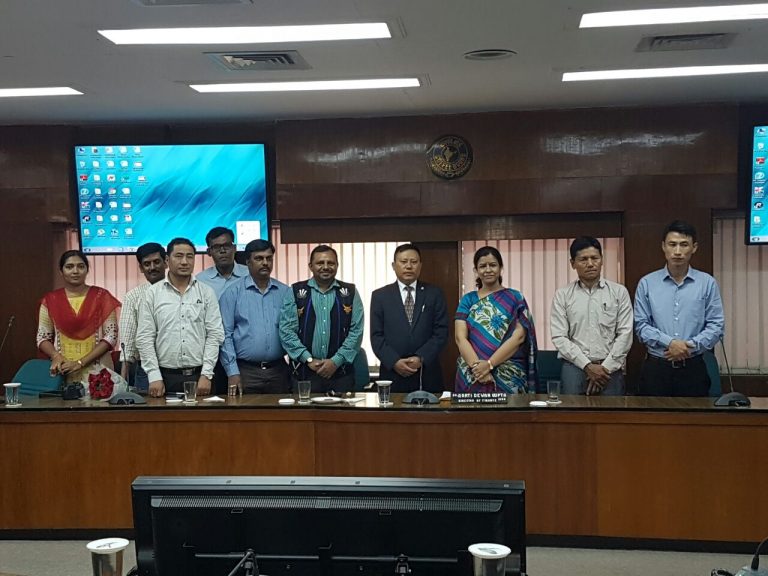
Officials of Land Resources Department, Nagaland and Coffee Board of India after a meeting in Bangalore on Monday

Citing feasibility and viability of coffee plantation in the state, the Nagaland State Department of Land Resources has requested the Coffee Board of India (CBI), Bangalore to enhance the allocation of coffee seeds to the state.

This request was made by a team of department officials led by its Secretary, Y. Kikheto Sema IAS and five other officers during a meeting with officials of the CBI, Bangalore at the latter’s office on Monday.

Speaking at the meeting, Kikheto said that there was vast coffee plantation in the state during the 1980s, however, it became a failed crop owing to lack of awareness, marketing and management problem. He said the farmers began to cut down coffee plants in desperation and that around 40 hectares remained now.

Kikheto said that a research conducted out of that 40 hectares, it was found that Arabica species coffee grown in the state was one of the best.

It may be mentioned that the state government on September 2016 had made the Department of Land Resources as the nodal department for revival of coffee plantation.

He said that the CBI had allocated 300 kgs coffee seeds during 2015-2016 but ran short since the demand was high in the state. Kikheto requested the CBI to allocate at least 4000 kgs seeds to cover 4000 hectares and added that the payment would be prompt. Responding to this request, Director of Finance, CBI, Dr. Arati Devan Gupta assured the Department officials of looking into the matter for enhancing coffee seeds allocation.

Kikheto said that the department was targeting coffee plantation coverage of about 50, 000 hectares by 2030.
He also said that the department during 2015-16 had developed 230 hectares of coffee plantation and plans to cover 600 hectares this year.

Pointing out that coffee harvesting takes about four years after planting, Kikheto asked the CBI for possible assistance to coffee farmers during the initial years of plantation and also for maintenance of nurseries.

He also made a request for establishing Arabica Coffee Research Centre in Nagaland, since the state is planning for coffee plantation on a large scale and constant research is required.

Kiheto said that the day was significant for the department since a group of three different officers’ team were attending important meetings. One team led by Additional Director, Renbenthung Jami is attending the annual rubber conference organized by Association of Natural Rubber Producing Countries at Guwahati where a new clone developed by Rubber Board of India exclusively for planting in NE was being released. Another team led by Director, Hoto Yepthomi was at Mokokchung for Springshed training programme.

The Secretary was accompanied by Deputy Director, C. Vanchamo Ngullie, Officer incharge Coffee and four District Project Officers.

This information was provided to The Morung Express over the phone by Secretary, Land Resources, Y. Kikheto Sema IAS.

source: http://www.morungexpress.com / The Morung Express / Home / by Morung Express News / Dimapur – October 17th, 2016(posted October 18th, 2016)

Coffee growers pitch for renewed thrust on research to boost yields

Karnataka planters’ body favours separate body on the lines of Upasi Tea Research Foundation

coffeekf16oct2016

Bengaluru :

Concerned over low and stagnating productivity levels, and dwindling area under the Arabicas, coffee growers in Karnataka — the largest producing State — are seeking a renewed thrust in research activity to boost yields.

Seeking to play an active role in such research, the Karnataka Planters Association (KPA), the apex body of coffee growers, has mooted a proposal to set up a separate body in the state on the lines of UPASI Tea Research Foundation.

“We want to have a separate research body for coffee in Karnataka like the UPASI TRF. We have approached the State government for funding such an initiative,” said Baba PS Bedi, Chairman, KPA. Karnataka accounts for 70 per cent of the 3.48 lakh tonnes of coffee produced in the country.

Speaking ahead of KPA’s annual conference, Bedi said the State-run Central Coffee Research Institute (CCRI) has not been able to meet the growers’ requirement of clonal planting material nor had come up with new high yielding or disease resistant varieties in the recent past. “In the current year, the CCRI distributed only 10,000 Robusta Clones in Chikmagalur and Hassan districts, which amounts to 20 acres of plant material and is grossly inadequate … It is quite apparent that CCRI does not have the means at its disposal to propagate large number of clones/tissue culture plant material. Therefore, it is imperative that this research is outsourced as productivity levels are low, costs of production cannot be met and Arabica plantations are dwindling in number,” Bedi said.

KPA and UPASI have already made a proposal to the Karnataka government on setting up a facility for clonal propagation and tissue culture planting material at the latter’s research station in Koppa, Chikmagalur. Global majors such as Nestle, that have a major interest in coffee, would also be involved in the research efforts, Bedi added.

Backing KPA’s proposal on a separate research facility, Upasi President D Vinod Shivappa said a renewed thrust on research efforts was required to make coffee production sustainable.

Further, Bedi also said that KPA was concerned about dwindling Arabica plantations due to the high incidence of white stem borer, leaf rust and low productivity.

He said CCRI should consider import of Arabica varieties that are resistant to white stem borer, leaf rust and genetically proven to be high-yielders under the multi collaborative research project co-ordinated by the World Coffee Research organisation.

Exempt from GST
On the proposed GST regime, Bedi said if coffee is made taxable under GST, the input tax paid by the grower or agriculturist on inputs used or consumed by the agriculturist in growing this product should be allowed to be set-off.

The entire process of coffee growing up to the stage of its curing should be considered as an ‘intermediary stage’ of coffee production and exempted from the provisions of GST, the KPA chairman said.

‘Coffee’ seeds cannot be consumed till they are roasted and ground. Therefore, taxable event under GST should commence from the stage of its value addition that is when coffee is roasted and ground. “If a grower or agriculturist is not allowed to avail input tax credit, then there should be an exemption from GST on all inputs including fertilisers and chemicals used by an ‘agriculturist’,” Bedi added.

source: http://www.thehindubusinessline.com / Business Line / Home> Economy> Agri Business / The Hindu Bureau / Bengaluru – October 13th, 2016

India makes bid to host 2020 ICO world conference

Bengaluru :

India has made a pitch to host the International Coffee Organisation’s (ICO) fifth World Coffee Conference in the country’s coffee capital Bengaluru in 2020.

ICO, the main inter-governmental organisation for the coffee producing and consuming countries, is keen that India host the next conference.

A formal decision from the apex body of the coffee producing and consuming nations is likely to be expected in March 2017, said MK Shanmuga Sundaram, Chairman, Coffee Board, confirming India’s bid to host the global meet.

Every four years, ICO holds the high-level World Coffee Conference to enable discussion around critical topics for the global coffee sector. Previously the conferences have been held in England in 2001, Brazil in 2005, Guatemala in 2010 and in Ethiopia in 2016.

ICO, which is working to strengthen the global coffee sector and promote its sustainable expansion in a market-based environment, has member governments representing 98 per cent of the world coffee production and 83 per cent of world consumption.

source: http://www.thehindubusinessline.com / Business Line / Home> Economy> Agri Business / The Hindu Bureau / Bengaluru – October 14th, 2016

Watch Star Suvarna Mahotsava on Sunday at 6pm

Star Suvarna channel will air Suvarna Mahotsava on Sunday at 6pm.

starsuvarnakf14oct2016

On the occasion, the channel has honoured women achievers like Ashwini Ponnappa, B Sarojadevi, Saalu Marada Thimakka, Umashree, Manjula Gururaj, Padmini Prakash, Mayuri Upadhya, Amulya and Hema Chaudhary.

The event is hosted by Niranjan Deshpande, who is currently in the Bigg Boss house .

Small screen actors who have acted in the serials aired by Star Suvarna have performed in the glittering evening.

Sandalwood director S Narayan, actor and director Prakash Raj and singer Raghu Dixit have graced the occasion.

source: http://www.timesofindia.indiatimes.com / The Times of India / News Home> TV> News / Kannada / TNN / October 13th, 2016

What Is A Coffee Tonic, Anyway?

Left to right: a coffee tonic gets made by Kimhak Em at Peixoto Coffee in Downtown Chandler. / Kimhak Em

Maybe you got too caught up in colorful cans of LaCroix to notice, but over the summer, at cafes al over the country, Instagram snaps of what might have otherwise have been latte art were replaced, now and again, by some … bubbly, layered beverage in a plastic cup.

Yeah, what were those? Tan and foamy on top, mysteriously dark in the middle, clear and effervescent on bottom.

We saw it at Cartel. We saw it at Futuro. We saw it at Kream and at Peixoto.

These were clearly no boring cups of cold brew.

As the name suggests, it’s simple: a “coffee tonic;” iced, sparkling tonic water with a shot of espresso layered — not splashed — over top. You have to do it slowly; the copper-colored layer of bubbles sitting on the espresso, called “crema,” is volatile CO2 and since too much friction with fizzy water can result in quite a mess, baristas take it slow.

If you can consider a soda a soft drink that’s been carbonated, flavored, sweetened, and served cold, then you can view the coffee tonic for what it is: a coffee soda, albeit a freshly made one. Given the prominent role that the concentrated coffee plays in the beverage, this drink has really only gotten popular within the specialty coffee sector, where shops tend to pay a greater attention to the flavor of espresso.

Tonic water is pretty sweet, thanks to a good amount of added sugar, but it’s there to balance the beverage’s bittering agent, called quinine; the same stuff that lends pleasant bitter quality to your Italian liqueurs.

Some shops like Futuro put their tonic trust in a proven brand. In that shop’s case, Fever Tree, the standard bearer as of now for the tonic industry — if you asked for a gin and tonic at a craft cocktail bar, they’re probably using Fever Tree. A few widely distributed craft brands like Q are now available as well. Either way, most brands will deliver a neutral flavor that lets the complex flavors in a quality, nicely pulled shot of espresso shine, just as it would let an interesting and nuanced gin. There’s a locally made tonic mixer, too, made by Iconic Cocktail Co, which is flavored with kaffir lime.

Cartel flavored theirs, when they had it (it’s not currently on the menu; it may come back). It was simply tonic water, espresso, with a smidge of vanilla bean paste dotted in.

“We felt the vanilla bean paste helped to make it a bit rounder and accentuate the complex character of the espresso,” says Amanda Cohen, Cartel Coffee Lab’s director of education and quality control. Kream coffee, by contrast, squeezes citrus in theirs to amplify the acidity already present in espresso and the tangy flavor of the quinine.

The most from-scratch end of the coffee tonic spectrum is represented by the folks over at Peixoto, in Chandler. They make their own tonic syrup from start to finish, and add in flavors they feel will compliment the type of espresso. A formula of quinine, citric acid, and sweeter can turn into, for instance, a tonic syrup flavored with ginger and lime, and sweetened with agave. The shop currently offers this variety. They add soda water to the syrup and float the espresso atop. This approach appeals to Kimhak Em, who develops recipes and oversees quality control at the shop and has a background in culinary school. He wanted to put a culinary spin on a drink that’s been trending in coffee shops around the nation.

“I think the first time I had an espresso tonic was at one of the shops that I frequented in the Bay Area,” Em says. That was close to two years ago.

The drink hasn’t existed all that long — it began at a very prominent coffee shop and roaster in Sweden called Koppi. When a coffee shop called Saint Frank opened in San Francisco in late 2013, they paid homage to Koppi’s drink, making their own version — still just Fever Tree tonic, ice, and espresso — called the Kaffe Tonic (kaffe being the Swedish word for coffee). As Saint Frank rose to prominence in eyes of coffee professionals across the country, shops began adopting their own version, some sticking to the drink’s paired down roots, and others opting to personalize.

Three years later, it looks like the drink has stuck.

Editor’s Note: Shelby Moore works with Futuro in various capacities.

source: http://www.phoenixnewstimes.com / Phoenix News Times / Home / by Shelby Moore / Tuesday – October 11th, 2016

Fiction: Good Hope Road by Sarita Mandanna

Good Hope Road by Sarita Mandanna

There’s a road called Good Hope Road in Washington, D.C. and many of the events in Sarita Mandanna’s second novel occur around Good Hope Road in 1932, as America’s WWI veterans march for the passing of the Bonus Bill, legislation entitling war veterans to a decent income and health care. Vietnam and Afghanistan veterans still have these same issues today.

But this is not a political novel, rather it is a tale of how WW1 affected a rich New England heir and his unlikely best friend, a dirt-poor young black man from Louisiana.

James and Obadaiah are in Paris when war breaks out, and both decide to join the French Foreign Legion. Had they known the horrors that lay ahead, they might have just gone home.

Years later, they have lost contact and James is practically estranged from his adult son Jim. When Jim meets an actress from Boston, Madeleine, things change. Madeleine is determined to mend the rift between father and son.

With much persuasion, James Senior eventually decides to do something about his post-war embitterment and so lobbies the press about furthering the veterans’ Bonus Bill. What starts out as a letter of complaint leads to a national movement, and a new lease of life for James Senior.

The story sweeps from one World War to the next, as Mandanna explores themes of family, friendship, race, civil rights and the utter futility of war.

Epic in its scope, yet beautifully intimate and poetic in its style, it’s a keeper.

Sunday Indo Living

source: http://www.independent.ie / Independent.ie / Home> Entertainment Newsletter / by Anne Cunningham / October 10th, 2016