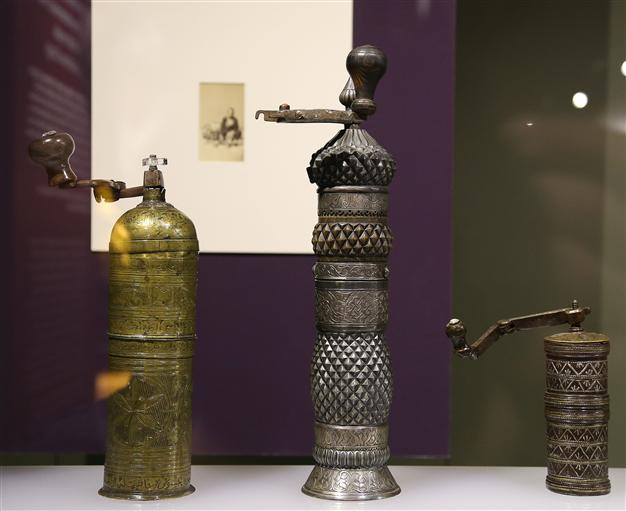
Istanbul’s Topkapı Palace Museum is hosting a new exhibition, featuring the 500-year history of Turkish coffee. Organized in collaboration with the Turkish Coffee Culture and Research Association, the exhibition, titled “A Drop of Pleasure: 500 years of Turkish Coffee” opened on Feb. 17 at the museum’s Has Ahırlar section with the attendance of Culture and Tourism Minister Ömer Çelik.
Speaking at the ceremony, Çelik said Turkish coffee was an inevitable part of social life, not only of eating and drinking culture.
He said Turkish coffee culture dated back to the 16th century, and it had particular importance in the Ottoman Empire, both in the palace and daily life, as socio-cultural event.
“Beyond being a drink, coffee exists in the center of a big cultural structure. It also has a very important place in daily life. It used to be prepared and drank in coffee houses and movable coffee cookers. The coffee houses, where coffee culture had been surviving for hundreds of centuries, also hosted traditional Turkish arts such as shadow play, eulogy shows and theater-in-the-round,” the minister said, adding that coffee was born in Yemen and expanded west thanks to the Ottomans.
He said the Ottoman Empire, which was dominant on the trade routes between the east and west, spread coffee and helped it be loved by Europeans during diplomatic relations.
“For example, during his ambassadorship in Paris, humorist Süleyman Agha promoted coffee to French culture. When he was returning to the empire, his Armenian-origin assistant stayed in Paris and opened a coffee house. Another striking example is that after the Siege of Vienna in 1683, the first coffee houses were opened in Vienna with 500 sacks of coffee left by the Ottoman Empire. From then on, Europeans met real coffee culture,” Çelik said.
UNESCO added Turkish coffee and its tradition to its List of Intangible Cultural Heritage in 2013. In this way, Çelik said for the first time the culture and tradition of a drink was added to that list.
Most comprehensive show on coffee
The exhibition “A Drop of Pleasure: 500 years of Turkish Coffee” consists of pieces from the Topkapı Palace Museum collections as well as the collections of many private museums and libraries. The show reveals the unique ceremony that Turkish coffee created in the Ottoman culture.
Curated by Ersu Pekin, the exhibition is the most comprehensive one related to coffee in Turkey and will be open through June 15.
Most of the pieces in the exhibition are being displayed for the first time. It brings together historical, cultural and social elements of coffee, its botanic features and cooking methods in the world between the 16th and 20th centuries.
source: http://www.hurriyetdailynews.com / Hurriyet Daily News / Home Page> Arts – Culture/Artss / Istanbul – Anadolu Agency / February 18th, 2015
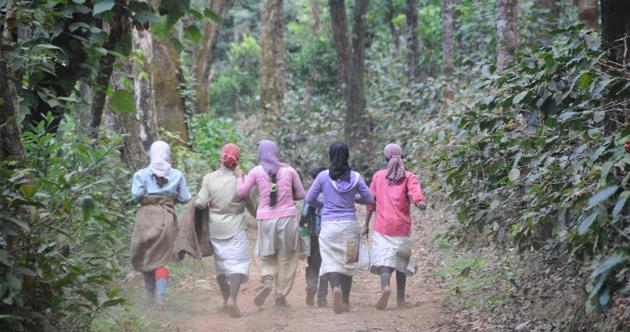
Homebound Migrant workers return to their sheds after the day’s work at a coffee estate near Madikeri, Coorg. – GRN SOMASHEKAR
Though migration of labour from the east has helped revive the plantations in southern India, questions remain on the long-term implications, Vishwanath Kulkarni reports
As the harvest season starts in Coorg, Karnataka, coffee planter MC Kariappa has a lot of issues to contend with — productivity, weather and, the biggest worry of all in recent times, paucity of labourers. So when a dozen labourers from Assam landed at the gates of his coffee plantation at Madapur in January, at the start of the harvest season, Kariappa heaved a sigh of relief.
Though not adept at, or trained to work in coffee plantations, these migrant labourers -– both men and women — proved useful for Kariappa in harvesting Arabicas, the mild and premium variety of coffee. “Some of them are as good as the local workers, picking up to 100kg of ripened coffee a day,” says Kariappa, relieved that the harvest this year went off smoothly.
Migrant workers are now a common sight in Coorg’s coffee plantations, especially during the harvest season, as the country’s key coffee-growing region has been facing an acute shortage of labour over the past few years. Traditionally, plantations in Coorg and Chikmagalur attracted migrant workers from the drought-prone regions of North Karnataka and the plains of neighbouring Mysuru. This pool of labour now increasingly prefers urban centres such as Bengaluru, as jobs in malls, petrol bunks and garment sector are better paying. There is less toil too, compared to work in the plantations.
“Most of the worker quarters in my plantations were vacant until these people [migrant workers] landed here,” says Kariappa. Adds N Bose Mandanna, former vice-president of the Coffee Board and a planter in Suntikoppa: “Without improved labour availability, we would have been in a soup.” There are no official figures, but the number of workers from Assam and other eastern parts of the country migrating to Karnataka’s plantations are commonly believed to run into ‘thousands.’
The movement of labour is not towards Karnataka alone. Plantations across South India, including those in Tamil Nadu and Kerala, now depend on the labourer from eastern or north-eastern India.
A ‘healthy’ phenomenon
The daily wagers at Coorg’s coffee plantations largely come from Assam, while tea gardens in Tamil Nadu’s Nilgiris, and the Kerala estates growing coffee, spices, coconut and rubber get their workforce from Arunachal Pradesh, Tripura, Jharkhand, Odisha and West Bengal.
In the other two southern states — Andhra Pradesh and Telangana — the migration is confined to urban areas.
This was the case elsewhere in the south too, with migration initially confined to urban job sectors such as construction, security services and jewellery-making. The plantations have recently emerged as a favourite destination for the migrant unskilled labourer and the trend is seen to be gaining momentum now. It helped that connectivity between the two corners of the country improved with the addition of train connections.
“Growth in the South is creating employment opportunities. And migration is a healthy sign for the economy,” says Gopinath Parakuni, founder and General Secretary of CiviDep India, a non-governmental organisation working among labourers in the plantation, construction and garment sectors.
It helps that mechanisation has not caught up with plantations, as it has elsewhere in the agriculture sector for tasks such as land preparation, sowing and harvesting. In Punjab and Haryana, where farms were once a favourite destination for labourers from Bihar and Uttar Pradesh, mechanisation has taken over, leading to falling numbers of migrant farm workers.
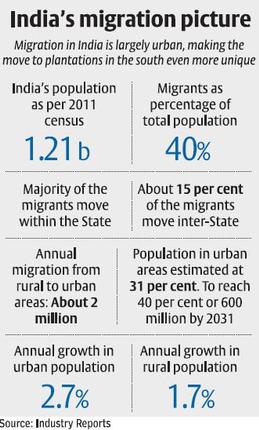
Rural migration mirrors a larger trend in the country, with about two million migrating annually from rural to urban areas and vice versa, says Ram B Bhagat, Professor and Head, Department of Migration and Urban Studies, International Institute of Population Sciences, Mumbai. In other words, about two per cent of India’s 1.21 billion population migrates every year. Half of the population is under the age of 25 and migration helps them secure jobs and livelihoods.
Inflection point
In all the southern States, the arrival of migrant workers was preceded by the movement of the local workforce to urban job markets.
In the Nilgiris, the tea sector had for decades depended on farm hands from the southern districts of Tirunelveli, Ramanathapuram and Salem. In 1999, the labour unrest in two estates set off several changes.
Workers moved to the plains and the knitwear cluster of Tirupur began to emerge as a hot destination for jobseekers back then. “This was followed by the boom in the IT services sector, which created allied jobs. The workers realised that plantation wages could not match the package offered in the urban markets. The rest is history,” says an executive from the plantations industry, who declined to be named.
Though officials from the local tea industry were unable to provide any figure, it is estimated that over 50,000 migrant workers currently work in the Nilgiris.
Tea plantations in Kerala traditionally employed labourers from Tamil Nadu, but are increasingly replacing them with migrants from the eastern and north-eastern parts of the country.
Every day, trains bring over 1,000 migrant workers, mostly unskilled casual labourers, who arrive with the help of friends, relatives or labourer-turned-labour contractors. They are immediately absorbed into the urban job markets in the far corners of Kerala, which is today home to nearly 25 lakh migrant workers — the largest pool in the southern region.
A third of the migrants joins the construction sector, while not that many find work in agriculture.
In the past five years, though, a sizeable number of them have found work in the plantation sector, including rubber estates. After the recent fall in rubber prices forced farmers to leave trees untapped, the migrant workers had to look elsewhere for work.
Moreover, “individual, homestead farmers prefer local workers,” points out Jose Sebastian of the Thiruvananthapuram-based Gulati Institute of Finance and Taxation. “Migrant workers are not much preferred on the rubber plantations,” adds Ajith BK, secretary of the Association of Planters Kerala. “Rubber-tapping demands specific skills and requires staying close to the plantation, reporting to work before daybreak and a long-term commitment, as it is not a seasonal harvest,” says Ajith. But in other plantations, the dependence on migrant labour has increased.
For a better life
Noor Mohammad has come to Coorg for the second time this year, seeking work in the plantations. This time, the 25-year-old has brought along his wife and younger brother. “It is good working here in these estates,” says Mohammad, who hails from Darrang in Assam.
He was initially brought to the plantation by a labour contractor or raj mestri. Similarly Asadullah, another worker in his mid-50s, has brought along his family from Guwahati. Back home, the likes of Mohammad and Asadullah own small plots, cultivating rice and vegetables. It is a hand-to-mouth existence, worsened by the violent unrest caused by the Bodo movement.
Life is better in Coorg. The migrants are paid on a par with their local peers, based on the quantity of coffee beans picked daily. This is different from the wages specified under the Plantation Labour Act, which is in effect during the rest of the year. The more the labourers pick, the more they earn — a major incentive. Estate owners pay ₹3.50 to ₹5 for one kg of coffee beans picked. The rates are higher when labour is scarce and time is running short for the harvest.
Many workers tend to remit their earnings back home on a weekly basis. Noor Mohammad and his family plan to save about ₹50,000 during the current season. While many return home at the end of the two-three-month harvest period, others stay back for work such as weeding and trimming.
They get accommodation on the estates and wages are paid according to the Plantation Act, which includes benefits such as provident fund, insurance and gratuity. A male labourer is paid ₹270 a day, and the female counterpart gets ₹230. “Back home, it is difficult for women to go out for work, even in their own rice or vegetable fields,” says Mohammad.
The wage structure is similar in the Nilgiris. “I was earning a daily wage of ₹95-100 back home, but am now getting more than ₹250 a day,” says Rabi, an Assamese working in a tea estate. Industry associations say there is no discrimination in the package or amenities offered to migrant workers. “They are provided accommodation, crèche and all other benefits on a par with the locals,” said the industry executive.
Social dynamics
In Kerala, migrant workers earn as much as ₹700 a day, but their living conditions are not as good as the local labourers. Although squalid, the lodging is often offered for free or at low rates, so the labourers accept them unquestioningly. Factors such as low literacy and unfamiliarity with the local language act as a barrier to integrate with the local community.
In Coorg, locals say they work in harmony with the migrant workforce. “They work on their own and we are on our own,” says Sundri, a local who has been working in coffee plantations for several years.
But experts warn that rising migration can lead to socio-economic issues. In Kerala, which ironically is a major source of manpower for West Asian countries, the locals are increasingly voicing concerns about the alleged rise in law-and-order troubles due to the migrant population. Incidents such as the one in early February where three workers from West Bengal were arrested for allegedly killing a hotel employee in Kozhikode are fuelling such fears. This has prompted the Kerala police to create a database of migrant workers, including their photographs and fingerprints.
In Karnataka, the recent arrest of a terror suspect hailing from Assam has triggered concerns. Plantation associations have advised members to insist on documents such as identity cards from the labourers as a precautionary measure. In the Nilgiris too, the situation is similar.
“It is difficult to do a background check of these people. We do not know if there is infiltration, but there is all-round concern about engaging them. We can’t shoo them away either. Estate managements maintain a register, but it is still not organised,” a planter said on conditions of anonymity.
Though the arrivals of migrants have increased the workforce, the long-term implication on the social fabric remains to be seen, Mandanna adds. This would depend on on how long they would stay back and whether they pick up the local language and integrate well with the local population.
With inputs from LN Revathy, KPM Basheer and KV Kurmanath
source: http://www.thehindubusinessline.com / Business Line / Home> Features / by Vishwanath Kulkarni / February 16th, 2015
Maruthi Nilaya, a modest dwelling in Bagalugunte, an area adjoining bustling Yeshwantpur, was just another house until Monday afternoon. The family of KC Cariappa, living in a first-floor house, was the typical financially struggling but happy foursome. But on Tuesday, there were curious glances and knowing smiles as people flocked to their home.
The search for Cariappa’s house didn’t take long as a child perched on a compound asked, “Cariappa mane huduktaa iddeera?” (Are you looking for Cariappa’s house?). Before waiting for a reply, he pointed towards the house. The skinny kid — like the other residents of the street and the country now — knew who Konganda Charamanna Cariappa is.
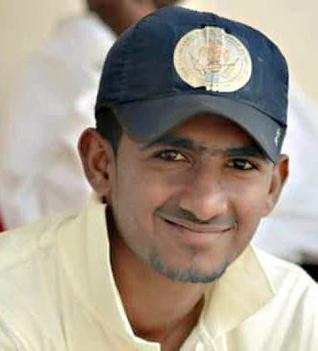
Life has taken a dramatic turn for the spinner, who was bought by Kolkata Knight Riders for a jaw-dropping Rs 2.4 crore — 24 times his base price. The family can’t believe it. After a tiring overnight bus journey from Shivamogga, where he played a league match, Cariappa sat down to watch the IPL auctions with his family.
When KKR first put the paddle up, he admitted, he clapped for himself. Every member of the close-knit family had tears of joy.
Prathima, Cariappa’s mother and a housewife, summed up the scene: “The auction apart, just to hear his name being called out was enough to make me cry. When the bidding was over, it felt unreal that he had commanded a price like that. It still feels like a dream, one which we hope will never end.”
In less than three minutes, the youngster, named after Field Marshal General K M Cariappa, went from a budding cricketer to a crorepati.
“We stay in a rented house for which we pay Rs 5,000 a month. We have lived here for 12 years and haven’t had enough resources to repair it. I first want to buy a house for my family. I want to give the rest of the money to my parents,” the 20-year-old told TOI.
Will he gift himself a mean machine? “No. I am not interested in bikes and cars. I spent all my time working towards my dream of making it big as a cricketer, so I had no time to dream about fancy vehicles. For me, it is just a mode of commuting. Until a year ago, when I bought a gearless two-wheeler, I travelled by bus,” said Cariappa, who has been mentored by former Ranji player Sudhindra Shinde.
Coming from a youngster who has just won a ticket to the glitzy world of IPL, the statement may seem shocking; but given his hard life, he knows the value of every penny earned. For Rs 10 per day is the pocket money he and his older brother, Nanaiah, receive.
“It was all we can afford, and our children know that. Cariappa would leave home at 4.30, change two buses and walk from Shivajinagar to reach Chinnaswamy Stadium by 6am. But he never complained. Both our children know hard pressed we are for money,” Pratima confided.
Four years ago, when Cariappa made it clear cricket was his true passion, his father, a Charmanna, a supervisor at Kodava Samaja, could not afford the Rs 6,500 that was required to enroll him in a coaching camp and buy a cricket kit. But the doting father from Virajpet dug into his meagre savings and borrowed from friends to ensure his son had the basics.
“When he first said he didn’t want to study, I was very worried because I know the importance of education. People around me asked me to discourage him and said talent alone would not get him anywhere. We needed political influence and money to see him go the distance. I didn’t have either. But he was adamant, and said the pads were his books, the bat his pen, and he would script his life’s path with a ball in hand,” Charmanna said.
Elaborating on his son’s struggle, the man who earns a little over Rs 20,000 a month said: “I often give Cariappa Rs 100 for fuel. After filling petrol, he has little money left. Although I rarely show emotions at home, I sit at work and worry if my son has eaten or how he will manage if his vehicle breaks down. My face brightened after the auction.”
Cariappa, for his part, has realigned his priorities. While his pre-Monday ambition was to play for Karnataka in the Ranji Trophy, he now wants to play for Team India.
For a youngster who has dared to dream, it surely is no lofty ambition.
source: http://www.timesofindia.indiatimes.com / The Times of India / Home> City> Bengaluru> Namma Metro / TNN / February 18th, 2015
At the monthly meeting held on Thursday, Virajpet Town Panchayat unanimously passed the resolution to impose ban on plastic including 40 micron plastic, in the town panchayat limits from April 1.
Town Panchayat President said although ban on plastic is in force in TP limits, 40 micron plastic is still being used. When raids were conducted on those who were trying to sell banned plastic, some Town Panchayat members tried to create pressure.
Hence, it would be better to lift the ban. This remark lead to elaborate discussions and finally the meet decided to pass the resolution to impose ban on all types of plastic from
April 1.
Border survey
TP President told Urban Development Authority Engineer that, the resurvey towards marking of town border is being conducted as flaws have been spotted in the survey work conducted in 2008 and that the resurvey is 80 percent complete.
The engineer asked the President to submit the final report on the survey work as soon as possible since a high level meeting of the urban development authority is scheduled to be held in Bangalore on February 28.
Member D P Rajesh Padmanabh alleged that the license fee of the shops of people belonging to Savitha Samaja, Madiwala and other classes. He meanwhile urged to decrease the license fee. He further urged to increase the cable license fee as a single person in operating the cable network in the entire town.
Member Rachan Medappa said that the hotels in the town are not maintaining cleanliness and hygiene. The officials should consider the matter seriously as the tourists from other places visit the town and avail hotel service in a large number.
It was decided in the meeting to rent the JCT machine purchased by the Town PAnchayat, to the needy public. Also, it was decided to officially inaugurate the private bus stand, after the completion of the development works.
The meeting resolved to cancel the no objection certificate of the wine shop at Gonikoppa road as the shop owner is availing the facilities from Virajpet Town Panchayat and paying the taxes to Bittangala Panchayat.
Though most of the offices in the government buildings in the Town Panchayat limits, have been using the basic facilities such as water and others, they have kept crore of rupees of tax pending.
If the taxes are not recovered, the maintenance of the Panchayat would be difficult, the members said. The President directed the Executive officer to serve notices to such offices.
The President meanwhile said that the licenses of some shops have not been renewed as the shop owners are paying the taxes. Hence, she told the Panchayat staff to go to the offices, collect the tax directly, before renewing the licenses.
Discussions were also carried out on providing of water facility and construction of street lights and drains.
Virajpet Town Panchayat Vice President Chandrashekhar, Development works standing committee President T J Shankar, Chief Officer M G Ramesh, Engineer Hemkumar and others were present.
source: http://www.deccanherald.com / Deccan Herald / Home> District / DHNS – Virajpet, February 20th, 2015
The annual fair of Emmemadu Dargah Sharif, popularly known as Emmemdau Makham Urs will be held in Emmemadu in Madikeri, Kodagu from February 27 to March 6.
Addressing mediapersons in Mangaluru on Friday, Urs committee member C A Ismail said that The Emmemadu Dargah is visited by the people of all religions and is a centre of religious tolerance. Mass marriage of orphan girls, mass feeding and other programmes will be held as a part of the Urs.
The Urs will be inaugurated on February 27 by Panakkad Sayyid Munavvarali Shaihab Tanjal at 2 pm. On March 3, a religious programme will be presided over by Atakkoya Tanjal at 12 pm.
Inauguration
Muthukkoya Tanjal Jifri will inaugurate. Home Minister K J George, Minister Dinesh Gundu Rao, U T Khader, Khamarul Islam, Roshan Baig, Member of the Parliament Prathap Simha, Member of the Legislative Assembly K G Bopaiah, former Member of the Legislativ Assembly MC Nanaiah, Member of the Legislative Council T John, Adaguru Vishwanath and others will attend.
Bayar Tanjal, Koora Tanjal, Maryad Hamsa Musliar will lead the religious rituals.
Valedictory programme
The valedictory programme will be presided over by Shaikhuna A P Aboobakar Musliar.
Lakhs of people will take part in the mass feeding to be held on March 2 at 4 pm.
The programme will be streamed live at www.yemmemadu.com
source: http://www.deccanherald.com / Deccan Herald / Home> District / DHNS / Mangaluru – February 21st, 2015
It’s been seven years since Harshika Poonacha made her debut in Kannada industry. Having done bold roles in the movies like B3, the actress is yet to join the A-list heroines. The actress is now making attempts to make a mark on the small screen by participating in a dance reality show Dancing Star season-2. She was also one of the contestants who were housed in the Bigg Boss house.
According to the insiders in the industry, “Harshika is now looking to revive her flagging filmi career by taking part in the reality shows like Dancing Star season-2. She might be trying to follow the footsteps of actor Vijay Raghavendra, whose career resurrected after winning Bigg Boss.”
On film front, Harshika has Telugu movie Panipuri and Tamil movie Ananda Thollai in the pipeline, along with The Gulaabi Street in Kannada.
source:http://www.timesofindia.indiatimes.com / The Times of India / Home> TV> News> Kannada / TNN / February 06th, 2015
Konganda Charmanna Cariappa inadvertently unleashed a fierce bidding war.
I’m feeling over the moon, says Cariappaas KKR picks him at IPL auction
‘Who is Konganda Charmanna Cariappa?’ could well have been an Indian Premier League trivia question, because until his name was mentioned by auctioneer Richard Madley during the player auction at the ITC Gardenia Hotel here on Monday, the spinner was seemingly resigned to the slow-climb through his cricketing career.
The 20-year-old Kodava lad inadvertently unleashed a fierce bidding war between the Kolkata Knight Riders (KKR) and the Delhi Daredevils and his base-value of Rs. 10 lakh was shredded as money began to flow.
When finally KKR picked him at Rs. 2.4 crore, a hush fell across the media hall, and then journalists scrambled to get his number.
Reacting to the good news, Cariappa said: “I never expected this kind of bidding. I am feeling over the moon. I was hopeful that I would be picked up for my base price, but not at the price I got. I don’t know how life will change for me now. My father is the supervisor at the Kodava Samaj here, and my mother, a housewife. I started playing cricket seriously about four years ago. The last Karnataka Premier League was my first season where I was bought for Rs. 25,000.” Originally a leg-spinner, Cariappa meandered towards the guiles of off-spin, and people close to him label him as a “mystery spinner”.
It is precisely the reason why he was much sought after in the auction as IPL teams love to spring surprises on their unsuspecting opponents.
His coach, Sudhindra Shinde, said: “He usually bowls the carom ball. He needs to use this opportunity.”
In a State famous for men like B.S. Chandrasekhar, E.A.S. Prasanna, Anil Kumble and Sunil Joshi, Cariappa has an enviable legacy to live up to. For now, he is laughing all the way to the bank.
source: http://www.thehindu.com / The Hindu / Home> News> National> Karnataka / by Special Correspondent / Bengaluru – February 17th, 2015
The 116th birth anniversary of the late Field Marshal Kodandera Madappa Cariappa was respectfully observed here on Wednesday, under the joint aegis of the Kodagu district administration and the department of Kannada and culture.
The function began at the Field Marshal Cariappa circle with the garlanding of his lifesize statue by MP Pratap Simha, MLA M P Appachu Ranjan, Tobacco Development Board chairperson T P Ramesh, zilla panchayat president Chodumada Shareen Subbaiah, vice president Allaranda Beena Bollamma, town municipal council president Julekhabi, Karnataka Kodava Sahitya Academy president Biddatanda S Thammaiah, deputy commissioner Anurag Tewari, zilla panchayat CEO Kurma Rao and other prominent citizens.
At a formal programme held in Cauvery Bhavan of the TMC premises, Pratap Simha spoke on the late Field Marshal and termed him as a solider, general and commander-in-chief beyond compare. His ideals, discipline and commitment would always remain a source of inspiration to the modern generation, he said.
He also gave a call to everyone to adopt FM’s exemplary virtues like discipline, consistency and punctuality for which he was known all along his life. Programmes of this kind to honour those personalities who had taken the status and honour of the nation to greater heights should be regularly held, he further said.
MLA Appachu Ranjan too spoke on the integrity, sense of time and efficiency of the late Cariappa, who ought to be remembered by everyone. He was the one who introduced the martial traditions and culture to regions within India and abroad, he added.
He informed that the house in Shanivarasante where the Field Marshal was born had been turned into a library. Similarly, the ‘Sunnyside’ residence here where Gen Thimayya lived would soon be converted into a memorial edifice.
Col K C Subbaiah, president of FM K M Cariappa and Gen Thimayya Forum recalled that the former was the very first Commander-in-Chief of independent India’s armed forces. He urged the members of the parliament to make efforts to have the Bharat Ratna honour bestowed posthumously on Cariappa.
He further put forward a suggestion that the FM’s birthday be officially observed as Discipline Day on an all-India basis. He also made a fervent request for the early completion of the Sunnyside memorial project.
Nadikerianda Bose Mandanna, who received the Lifetime Achievement Award for his meritorious service to various fields, also gave a call to the younger generation to imbibe the virtues which Cariappa stood for like dedication and punctuality.
Forum secretary Ulliada M Poovaiah spoke on the life of FM Cariappa. A booklet on his life was also released on the occasion.
Department of Kannada and culture assistant director Mangala Nayak was also present at the function.
source: http://www.mangalorean.com / Mangalorean.com / Home> Broadcast> Madikeri / by Richard Lasrado / Thursday – January 29th, 2015
Energy Minister D K Shivakumar on Friday said the government plans to go ahead with laying of high tension electricity transmission lines in Kodagu and the power project at Kudgi in Vijayapura district, despite opposition from the locals. He was speaking at an interaction programme organised by the Karnataka Small Scale Industries Association (KASSIA) on Friday.
“We will go ahead with the projects as they are in the interest of the state. The work on the Kodagu power line has almost been completed with the exception of 50 odd km in Kodagu area. We can’t undo and change the entire setup. We have constituted a committee to look into the process of setting up the line. Similarly, the work will go in Kudgi too,” the minister said.
He claimed that by the end of 2015, the state will become self-sufficient in terms of energy and it will also have the capacity to supply power to other states. “Once all these lines are constructed, the state will not have any power issues. In Bengaluru, we decided to invest Rs 2,000 crore for setting up transmission lines. The city will receive an additional 300 MW of power when the Gowribidanur-Hiriyur line becomes active. A gas plant will also be set up in Yelahanka as an emergency source of power supply,” he said.
The minister noted that the government is facing troubles in acquiring land for setting up towers. “Earlier, the land was cheap. As the land rates have shot up now, the owners are unwilling to part with their land,” he said.
Issuing a stern warning to power bill defaulters, the minister said there is a due amount of about Rs 13,000 crore to be collected from farmers in the state.
Attributing this to the slipshod policies of the former Yeddyurappa-led BJP government, he said, “It (BJP’s policies) is evidently a case of poor planning. However, I have made it clear to everyone that if they do not pay their bills, we will not supply power. It is as simple as that.”
source: http://www.newindianexpress.com / The New Indian Express / Home> States> Karnataka / by Express News Service / February 14th, 2015
The month-long Kuppanda hockey festival between Kodava families, will take place at Virajpet Junior College ground from Apr. 15.
Announcing this at a press meet here on Friday, the Hockey Fest Committee President Maj. General (retd.) Kuppanda P. Nanjappa said two fields at Virajpet Junior College ground is being readied for the fest, which is expected to cost Rs.1 crore.
About 300 Kodava families are expected to take part in the fest, for which more than 10 companies including Reliance Group, have come forward for sponsorship. Besides, Chief Minister Siddharamaiah has assured of Rs. 35 lakh to a delegation comprising Home Minister K.J. George and Virajpet MLA K.G. Bopaiah, which met him recently, he said.
Outlining the special features of this year’s tournament, Nanjappa said that an exhibition match will be played between MEG team and Coorg XI, cultural events, motorbike stunts by Indian Army, brass band, para sailing, etc., former international hockey stars M.P. Ganesh, Maneyapanda Somaiah and Konganda Uthaiah will be the chief guests, he said.
The registration of Hockey teams will commence from Feb. 9 and the last date for registration is Mar.15, he added.
For more details, call Mob: 99005-00456. Fest Committee office-bearers Kuppanda Sachith, Kuppanda Devaiah, Kuppanda Thimmaiah, Kuppanda Mohan Monnappa, Kuppanda Ramesh Nanaiah were present.
source: http://www.starofmysore.com / Star of Mysore / Home> Sports News / February 08th, 2015
WELCOME. If you like what you see "SUBSCRIBE via EMAIL" to receive FREE regular UPDATES.
Read More »