Category Archives: Inspiration / Positive News and Features

‘Heritage Centre Can Save Culture From Modernisation Onslaught’

Heritage Centre can save culture from modernisation onslaught' - Star of  Mysore

Madikeri:

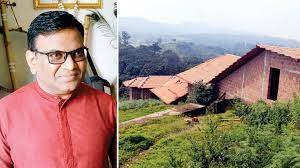
The impact of modernisation, globalisation, liberalisation and privatisation has significantly eroded indigenous customs and traditions, leading to their gradual decline. Nevertheless, the establishment of the Kodava Heritage Centre at Madikeri in Kodagu dedicated to preserving these customs and traditions for future generations is commendable, said Dr. M. Nanjaiah Honganur, Head, Department of Studies in Folklore, University of Mysore.

Speaking to Star of Mysore,  Dr. Nanjaiah Honganur said that in recent times, the cultural heritage of our land is rapidly fading away due to the influence of modernity. It is the collective responsibility of all individuals to safeguard these practices and pass them on to the next generation.

“Kodagu boasts of a unique culture and environment. Establishing a Heritage Centre in collaboration with the Kodava Samaja to safeguard the customs and traditions of the region is a worthy endeavour. It aims to narrate the history of the land through both physical and virtual means,” he said. “Presently, our customs and traditions are being relegated to the pages of history due to various factors and the pressures of modern life. Kodagu takes great pride in its distinctive traditions, making it essential to preserve them. Efforts should focus on conserving customs related to Kodava marriages, festival celebrations, funeral rituals, agricultural practices, farming in hilly regions and heritage handicrafts. These aspects must form the core of conservation initiatives, which need to be undertaken promptly,” he suggested.

Museums, often referred to as ‘material culture house’ exhibits items once used by our ancestors, such as farming equipment, household articles, attire and other objects. These museums play a crucial role in introducing younger generations to our traditions and customs. They serve as a timeless resource for transferring culture to the next generation, raising awareness about historical artefacts. Museums dedicated to culture hold particular significance in society, he added.

Opposition from some quarters to the establishment of the Kodava Heritage Centre is unjustified, he noted. “Educating the younger generation about age-old practices becomes our responsibility. Online museums dedicated to specific topics have gained popularity and a similar demand has emerged in Kodagu. While these digital platforms benefit educated individuals and netizens while creating global awareness, regular museums attract a wider audience,” he added.  The opportunity to closely examine and interact with exhibits in person provides a unique experience. The freshness and tactile engagement during a visit to a traditional museum are unparalleled, he noted.

“Regardless of cultural form — be it folk, coastal or any other — all folk practices should be preserved and programmes should be designed accordingly,” Dr. Nanjaiah Honganur added.

source: http://www.starofmysore.com / Star of Mysore / Home> News / by M T Yogesh Kumar / May 29th, 2023

IRS Officer From Kodagu Appointed Dy. Director Of Enforcement

Mysore/Mysuru: 

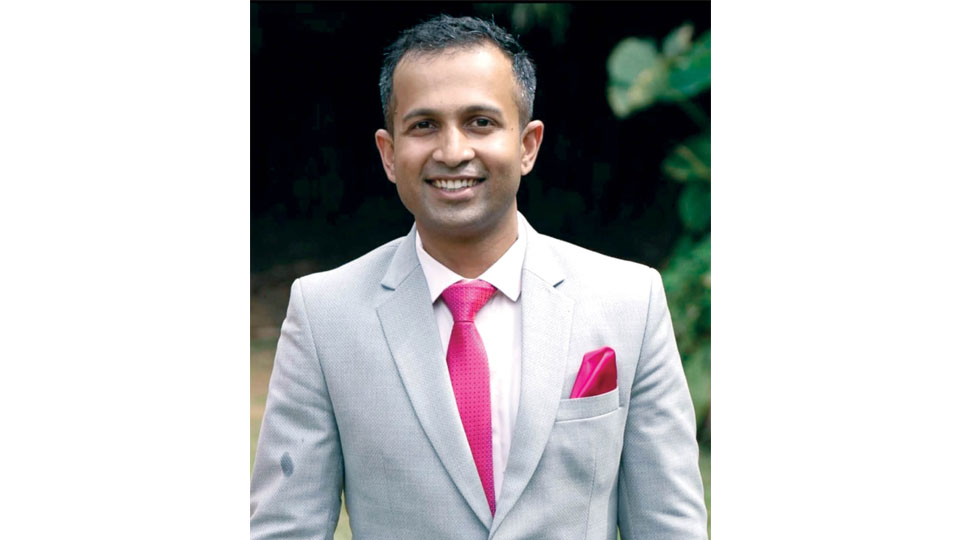
Dr. Kottangada Pemmaiah, an Indian Revenue Services (IRS – Income Tax) Officer from Kodagu, has been appointed as Deputy Director of Enforcement in the Directorate of Enforcement.

 The appointment order was issued by the Office of the President of India on May 25. Dr. Pemmaiah from the Central Board of Direct Taxes (CBDT) cadre is among 17 officers who have been appointed as Deputy Director of Enforcement.

The Directorate of Enforcement (ED) is a multi-disciplinary organisation mandated with the investigation of offences of money laundering and violations of foreign exchange laws.

 It functions under the Department of Revenue of the Ministry of Finance. As a premier financial investigation agency of the Government of India, the Enforcement Directorate functions in strict compliance with the Constitution and laws of India.

The Directorate of Enforcement has Delhi as its headquarters and is headed by the Director of Enforcement. There are five Regional Offices in Mumbai, Chennai, Chandigarh, Kolkata and Delhi headed by Special Directors of Enforcement. There are 10 Zonal offices each of which is headed by a Deputy Director.

Dr. Pemmaiah has excelled in the roles of Deputy Director (Investigation), Surat, Gujarat and Deputy Director of the Foreign Asset Investigation Unit (FAIU) in Surat.

Speaking to Star of Mysore, Dr. Pemmaiah said that basically Indian Police Service or Indian Revenue Services or Customs, and a 5-year experience is the criteria for the appointment of Deputy Director of Enforcement.

“They had verified my previous work done and they had a series of interviews after which the selection has been made. So, with the blessings of ‘Guru Karona’ I was one of the 17 officers. I am happy that I have been given this responsibility and this is a sensitive assignment considering the nature of the job and its national importance,” he said.

Dr. Pemmaiah is the son of Kottangada late Devaiah. His mother Viju Devaiah is a social worker and President of Cauvery Pommakkada Koota at Gonikoppa. Before getting into Civil Services, Dr. Pemmaiah was serving as Resident Medical Officer at Gonikoppa Community Health Centre.

source: http://www.starofmysore.com / Star of Mysore / Home> News / May 27th, 2023

Annual Kodava Meet In San Francisco Bay Area

40 families to organise the mega event on Sept. 2 and 3

California:

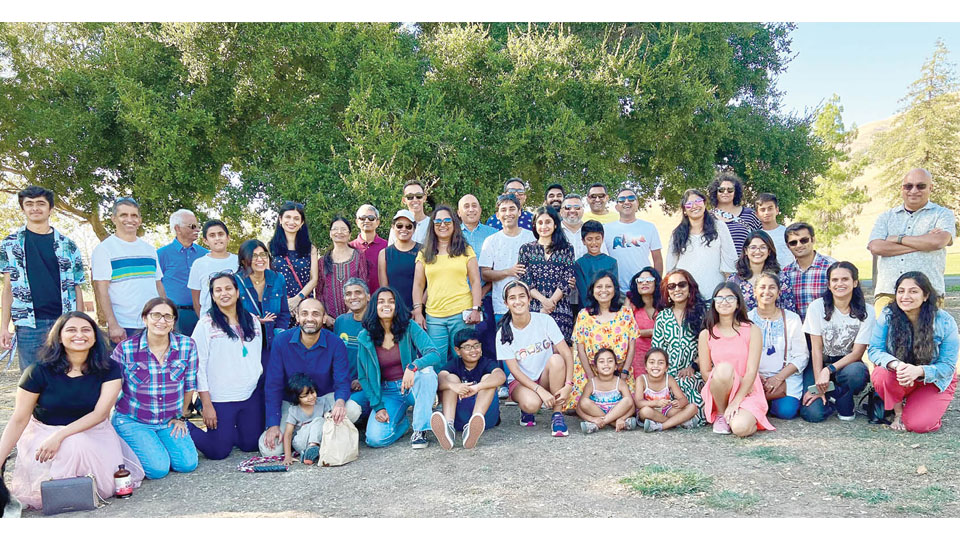
The Annual Kodava Convention in North America will be held on Sept. 2 and 3, 2023, this time in the San Francisco Bay Area, also known as Silicon Valley.

This convention, which has been going on for about 15 years, was postponed in 2020 due to the COVID-19 pandemic. A number of Kodava families across the country have already registered to participate in this convention, which is being jointly conducted by about 40  Kodava families.

It is an event for Kodava brethren from all across North America to meet, learn and celebrate the Kodava culture. With a strong history of more than 20 years, these conventions have been hosted in several major US cities in the past.

This year’s convention is called ‘namme-by-the-bay’ and will showcase the vibrant and colourful festivals of Kodagu. This will be a unique opportunity for the attendees to learn about Kodava art, food, culture and deities in a much greater depth.

Furthermore, this event also presents meet-and-greet opportunities and networking for jobs, family connections and matrimony. An informal pre-convention event will be held on Sept. 2 at Elliston Vineyards — a beautiful and historic location in Sunol Hills.

Several Kodava families across the country have already registered to attend this event, which is being organised by about 40 Kodava families from San Francisco Bay Area and Sacramento.

The convention is being conducted to save the Kodava traditions and develop unity among the Kodava people. For more information, write to bayareakodavas@gmail.com.

source: http://www.starofmysore.com / Star of Mysore / Home> News / May 22nd, 2023

The Lost Heroes of Kodagu

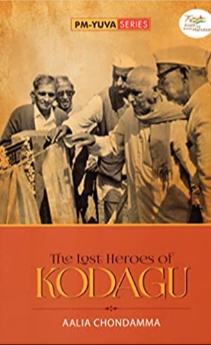
A land known for its coffee and renowned for its generals and warriors, the history of Kodagu has never been traced to its origins, the thread of descent becoming a tangled knot of colonial theories and hearsays. But history is important for one to realise the essence of culture and one’s own identity. Without this realisation, much is lost, and more is at risk.

Kodagu has always been placed in the category of the areas that complied silently with the British, when in reality, its contributions were simply underplayed and whitewashed. Many braves from all backgrounds had been leaders and warriors in their own right, following Gandhian ideals and fighting passionately for freedom. 

The PM’s YUVA Mentorship scheme was an opportunity to shrug off this stereotype and uncover the truth. The Lost Heroes of Kodagu talks of those men and women who looked danger in the eye, unflinching even as blows landed on them left and right. It talks of those who rose and made sure their voices were heard despite attempts to muffle them. Those that history let slip through cracks and crevices, silent and dormant.

Recover them as you read. Watch as they come alive through the pages. Be inspired by their grit and determination, be empowered by their stories. But most of all – remember them, keep them in glorious memory.

Please do order the book on Amazon and leave a review: https://www.amazon.in/dp/9354918859/ref=smop_skuctr_view

I’d love to hear from you as well! Reach out at aaliamevada@gmail.com 🙂

source: http://www.bookofachievers.com / BookOfAchievers.com / Home> Snippets> Essay / by Aalia Chondamma / April 13th, 2023

Kodava over the years: Letters and sounds

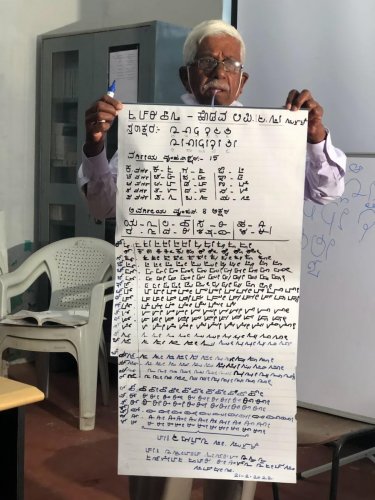
Bacharaniyanda Appanna teaching I M Muthanna’s script at the Kodava Sahitya Academy in Madikeri.

Featuring unique words and vowels not found elsewhere, the Kodava language, spoken in Kodagu, is an independent Dravidian language. According to the most recent data from the Karnataka Kodava Sahitya Academy, there were 21 castes living in Kodagu who spoke the Kodava language: the Kodavas, Amma Kodavas, Kodagu Heggades, Kembattis, Airis, Koyuvas, Boonepattas and the Gollas (Eimbokalas), to name a few.

Kodagu was an independent principality in South India between 1633 and 1834. After the British annexed Kodagu in 1834, it was called Coorg and became a province of British India. After Independence, Coorg was retained as a state and placed under a chief commissioner. In 1956, when the states of the Indian Union were reorganised, Coorg became a district of Karnataka state. 

Kannada was the official language in Kodagu for much of its existence. The Kodava language generally uses the Kannada script. 

The earliest inscriptions found in Kodagu date back to the 9th and 10th centuries and are in Kannada. But there were two peculiar 14th-century inscriptions of Kodagu, dated around 1370-1371 AD found in the Bhagandeshwara temple of Bhagamandala and the Mahalingeshwara temple of Palur. Many have dismissed the inscriptions as a mixture of scripts and languages. In 2021, my work involved isolating letters used in both. I labelled the script used ‘thirke’ (meaning ‘temple’).

Several scripts

There have been a number of scripts invented for the Kodava language in the last 150 years or so. Koravanda Appayya, a doctor in the erstwhile Mysore State, had invented one with around 50 letters in 1887. 

Kodagu scholar Iychettira M Muthanna invented another alphabet for the language in 1970. Appaneravanda Kiran Subbaiah, a sculptor in Mysuru, invented one in 1980. In 1983, he introduced a variant of the Kannada script to accommodate the Kodava language. Often, Kannada or Roman characters (the script used for English) were adapted, sometimes with additional changes.

Ponjanda S Appaiah, a professor, used the Roman script with his own transliteration system in 2003 to write in the Kodava language. In his Kodava-English dictionary, Appaiah used combinations of English letters for the Kodava language. He authored the entire book in the Roman script.

On the other hand, the ‘Kodava Arivole’ (Kodava dictionary) by Boverianda Uthaiah is in the Kannada script and makes use of 35 of the 49 Kannada letters.

In 2005, German linguist Gregg Cox introduced the Coorg-Cox script. Three years later, Charles Henry Kumar, a teacher from Mandya brought out another script to write the Kodava language. 

Extra sounds

Boverianda Nanjamma and Chinnappa say that in addition to the five rounded Kannada vowels (with both long and short forms), the Kodava language has four unrounded vowels in their short and long forms and a nasal sound which accompanies some of the consonants. They have used five diacritical marks (symbols added above letters to indicate accent, tone and stress) in their works to accommodate these extra sounds. 

In February 2022, under the presidentship of Ammatanda Parvathi Appaiah, the Karnataka Kodava Sahitya Academy discussed the various scripts used for the Kodava language. Bacharaniyanda Appanna, a former president of the academy, taught those assembled the script invented by I M Muthanna. 

Upon comparison, it was declared that Muthanna’s script was the easiest to learn. The Kodava Sahitya Academy then recommended the Muthanna script to the Central Institute of Indian Languages to be made official.

Muthanna was of the opinion that his script was to be taught to children below the age of 15-16 years, says Appanna. “They will learn with passion and help promote the script when they write in it and inspire others,” he adds.

On why a script is important, Appanna says: “A script adds strength to a language, like how pillars strengthen a house. Yet, there are many prominent languages which do not have their own script. English uses Roman, Hindi uses Devanagari.” Having a native script is also important as it accommodates native sounds otherwise not found in other scripts.

Nerpanda Prathik Ponnanna, a language activist, has been popularising the Muthanna Kodava script by creating awareness about it through social media videos. He has also been getting signboards in the script for various shops, ancestral houses, and hockey tournament family teams.

source: http://www.deccanherald.com / Deccan Herald / Home> Spectrum / by Mookonda Kushalappa / May 10th, 2023

Film Actress Rashmika Mandanna Is ‘Coorg Person Of The Year-2022’

Mysore/Mysuru:

Pan-India actress and ‘National Crush of India’ Rashmika Mandanna is ‘Coorg Person of the Year-2022.’

Rashmika, hailing from Virajpet in Kodagu (Coorg) district, was selected ‘Coorg Person of the Year’ in a poll conducted by www.coorgtourisminfo.com, Kodagu’s first news portal promoted by journalist and author P.T. Bopanna.

Rashmika Mandanna, who achieved phenomenal success in the pan-India movie ‘Pushpa-The Rise,’ has brought focus on the tiny hill district of Coorg, a popular tourist destination inhabited by the Kodavas, who have a unique culture.

Rashmika, who has become a household name through her acting and dancing skills, has emerged as an unofficial ‘brand ambassador’ for Kodagu culture. She has thrown the spotlight on the Kodava (Coorg) saree which involves tucking the pleats at the back of the waist, instead of the front. She has also popularised Coorg cuisine through her media interactions.

On the professional front, she is the reigning queen in the Telugu film industry and made her debut in Bollywood through ‘Goodbye’ starring Amitabh Bachchan.  Rashmika-starrer ‘Mission Majnu’ is set for a January 20 release on Netflix.

Rashmika, who made her acting debut in the Kannada film ‘Kirik Party’ in 2016, has been associated with commercially successful films that include ‘Anjani Putra’ (2017), ‘Geetha Govindam’ (2018), ‘Yajamana’ (2019), ‘Sarileru Neekevvaru’ (2020), ‘Pogaru’ (2021) and ‘Sita Ramam’ (2022). Rashmika made her Tamil entry with ‘Sulthan’ opposite Karthi.

Born on April 5, 1996, she is the daughter of Mundachadira Madan Mandanna and Suman.

She did her schooling at the Coorg Public School (COPS), Gonikoppal, Kodagu.  She studied for a Bachelor’s degree in Psychology, Journalism and English Literature at the M.S. Ramaiah College of Arts, Science and Commerce in Bengaluru.

Along with her studies, she took up modelling. Rashmika got a break after she won the ‘Times Fresh Face’ title in 2014. There has been no looking back ever since.

source: http://www.starofmysore.com / Star of Mysore / Home> News / January 03rd, 2023

First Kodavathi Army Officer To Be Promoted As Colonel

Mysore/Mysuru: 

Lt. Col. M.A. Smitha of Mysuru has become the first Kodavathi Woman Army Officer to be selected for promotion to the rank of Colonel.

Commissioned to Army Service Corps (ASC) in 2005 from Officers Training Academy (OTA), Chennai, she has had a illustrious career of 18 years in the Army service in challenging appointments and locations across the country.

A few major achievements include a tenure in UN Peace Keeping Mission in Israel and Syria (UNDOF) where she was awarded a Force Commander’s Commendation Card for displaying exemplary courage under challenging situations.

 She displayed her multi-talented skills in 2013 by winning the Raid Himalayan Car Rally along with her Army Team in a Gypsy in women’s category. She also summited Mount Kilimanjaro, the highest peak in Africa, in 2014.

A native of V. Nalkeri in Kakotuparambu, Virajpet taluk, Smitha is the daughter of ESM  HSM,  Mevada S. Appanna [37 (Coorg) Medium Regiment and 35 Medium Regiment] and Radha, who are presently residing at Vijayanagar 3rd Stage, Mysuru. She is married to Col. Mandepanda Aiyappa (Maratha Light Infantry) and they are blessed with two daughters.

source: http://www.starofmysore.com / Star of Mysore / Home> News / April 14th, 2023

Of lore written on silken leaves

Kodava traditions and celebrations are centred around a rich oral folk tradition. Mookonda Kushalappa tells the stories of those that kept it alive.

During the times of the Rajas, writing was not popular among the Kodavas of Kodagu, who were paddy farmers and cattle herdsmen. 

In the absence of literature, the region was rich in oral folklore. A song was sung for every occasion — songs were sung during the annual village festival and during the harvest festival Puththari. Songs were sung for weddings and funerals. Four singers would carry small hourglass drums called dudi and beat them with small, curved sticks. These rustic songs often had the same rhythm. 

The compiler

A key force in chronicling these oral traditions was Nadikerianda Chinnappa. Chinappa was born in 1875 in Karada village. 

In 1899, he joined the revenue department and wrote an English poem “My position as Shanbhog”. In 1900, he became a Revenue Inspector. In 1902, he joined the Indian Army’s Coorg Regiment and became a Subedar Major. Two years later, the regiment was disbanded and he joined the police department. 

Subedars Codanda Ayyanna, Bolachanda Nanjappa and Nadikerianda Chinnappa of the Coorg Regiment, Fraserpet (Kushalnagar), 1902. Photo courtesy Boverianda Nanjamma Chinnappa

After his training from Vellore, he became an SI in Kushalnagar. Thereafter, he was transferred to Napok, Srimangala and Virajpet until he was made prosecuting inspector in Madikeri. 

In 1917, he created a Kodava prayer called ‘Sri Moola Kanniye’, addressed to ‘the first maiden’ or Parvathi who was incarnated as Kaveri. This came to be known as the Kodava anthem. He also composed a Kannada poem in honour of the deity of Chomamale hill, Somagiri Deva. 

During his free time, he would ride through the countryside on horseback. He would visit folk singers and every time he heard an interesting song, he would bring the singer home. His wife would cook food for the singer, while Chinnappa would offer him toddy. The singer would beat the dudi and sing the song while Chinnappa wrote it down. 

By 1922, he had extensively collected several folk songs which were sung during various ceremonies and festivals such as the Kaveri Song, the Wedding Song, the Funeral Song and the Puththari Harvest Song, along with 750 proverbs and idioms. 

The folk songs were divided into categories based on when they were sung or in praise of whom they were sung — customs and ceremonies, festivals, heroes and deities. He published a compilation, titled ‘Pattole Palame’ in 1924. The Pattole Palame is one of the earliest compilations of folklore in India.

The name Pattole Palame was originally used for old palm-leaf records kept by astrologers in Kodagu. It comes from the words ‘patt-ole’ (silk leaves) ‘palame’ (lore), meaning oral traditions recorded on palm leaves, which were like silk. 

Between 1894 and 1928, G A Grierson, a civil servant, conducted the Linguistic Survey of India. A knowledgeable speaker was invited from every known Indian language. The person had to narrate a translated biblical parable and either sing a song or narrate a story in the language. 

In 1922, Chinnappa was recorded narrating the ‘Prodigal Son’ in Kodava language. He also sang his own composition, ‘Sri Moola Kanniye’. These gramophone recordings were sent to the British Library’s Sound Archives and the Madras Museum. 

The language was recorded as ‘Kodaga’ and wrongly identified as being from Madras. The narrator was uncredited and the song was called ‘Coorg national anthem: Swadesi priya kirtane’. It was in the 1970s that Chinnappa’s voice was identified by his son Subbayya when he listened to the Madras Museum recording. 

In 1929, Chinnappa translated the Bhagwat Gita into Kodava and called it ‘Bhagvathanda paat’. Krishna was called by his Kodava name Kuttappa in this book.

The translators

Chinappa’s legacy has been kept alive by his descendants, including his grandson Boverianda Muthanna Chinnappa, fondly nicknamed Bobjee. After working as an engineer in India and various countries abroad, Boverianda Chinnappa became an entrepreneur in Canada. He married his cousin Nadikerianda Nanjamma, another grandchild of Nadikerianda Chinnappa. 

Nanjamma worked as a statistician and taught statistics in India and Canada. She co-authored a book on Business Survey Methods. In 1993, she was elected a fellow of the American Statistical Association. 

After their retirement, Boverianda Chinnappa and Nanjamma returned to India. Their translation of Pattole Palame into English was published in 2003. Nanjamma’s brother renowned cartoonist N Ponnappa illustrated the cover of the book. 

The Pattole Palame book cover

The couple visited nearly 1,720 clans in Kodagu over the years to research ainmanes. Their work was compiled into a book called ‘Ainmanes of Kodagu’ and an online website.

The author (extreme left) with Boverianda Chinnappa and Nanjamma in 2018. Photo courtesy: Iynanda Dinesh Monnappa, Cauvery Studio, Ammathi

In 2006, Nanjamma received a Mangalore University honorary doctorate from the Governor of Karnataka. That same year, she won the ‘Coorg Person of the Year’ award. 

Boverianda Chinnappa passed away on March 10 this year. He is survived by his wife, two daughters and their families.

source: http://www.starofmysore.com / Star of Mysore / Home> Spectrum / by Mookonda Kushalappa / April 05th, 2023

..

Kodava pride : Devanira K. Appaiah, a teacher, received the prestigious President’s Award

Devanira K. Appaiah, a teacher, received the prestigious President’s Award for teaching from the then President Dr. S. Radhakrishnan  in 1962.

He may have been the first Kodava to wear a kupiya-chale (traditional Kodava men’s attire) for the ceremony at Rashtrapati Bhavan.

Appaiah is the father of Raghu and Sanju from Ammathi, Kodagu. (Pic. courtesy: WhatsApp)

source: http://www.starofmysore.com / Star of Mysore / Home> Feature Articles (above part of the article ) by Prof. G. L. Shekhar / Top Stories / April 10th, 2023

Air Marshal Nanda Cariappa Releases ‘War – The Ugly Mistress’ In City

Mysuru/Mysore: 

Air Marshal (Retd.) K.C. Cariappa (Nanda) released Dr. Lata Muthanna’s novel “War – The Ugly Mistress” at a programme organised by Mysuru Book Clubs-2015 at Sri Kanteerava Narasimharaja Sports Club (Mysore Sports Club) on Lalitha Mahal Road here last evening.

Speaking on the occasion, Air Marshal Nanda Cariappa said that his profession is related to the book. Pointing out that the book has focussed on Indian Navy, he said that it reminds one of the turbulent  times of the war period over 50 years ago.

Noting that the author has vividly explained war scenarios, he said that the book has also highlighted the post-war scenarios.

Recalling his younger days when he dreamt of becoming a pilot, which he realised by joining the Air Force, he said that he was fortunate to get an opportunity to serve the Nation. He further said that everyone should read this book for a better understanding of the serious consequences of war.

Prof. K.C. Belliappa, former Vice-Chancellor of Rajiv Gandhi University, Itanagar, Arunachal Pradesh, who was the chief guest, said one can get a real war experience by reading the book and lauded the author’s contribution to literature though she is a doctor by profession.

Dr. Lata Muthanna, a well-known Consulting Physician,  said the book owes a lot to serendipity. She stated that when she started to draw the outlines of the narrative, the civil war in Sri Lanka was still on. After the civil war ended, she went to Sri Lanka and spent time with the main character of her book, Angeline, a Singaporean, who as a child, had survived the Second World War. The book literally carries her (Dr. Lata) to different places and various periods of time. It was as though she lived through the wars and felt the fear, anger and desperation of all those who were involved in it, she said. Maintaining that no Government has the right to throw its people into the jaws of death, she said that the world citizenry should never allow that to happen.

The book release was followed by a panel discussion, in which retired Statistician Boverianda Nanjamma and retired engineer Boverianda Chinnappa took part. Both are translators and scholars of Kodava studies

Sharada Chengappa, a multifaceted personality, received the first copy of the book. Her husband Chengappa was a well-known freedom fighter, who had the good fortune of caring for Mahatma Gandhi when he visited Kodagu.

Mysuru Book Clubs-2015 Founder-President Shubha Sanjay Urs, Chinimamba Desraj Urs, Sita Bhaskar, Nalini, Kavita Bopaiah and others were present at the event.

source: http://www.starofmysore.com / Star of Mysore / Home> News / February 12th, 2020