Category Archives: Leaders

CNC Conducts 16th Human Chain in Ammathi

Madikeri: 

The Codava National Council (CNC) held its 16th human chain awareness campaign in Ammathi of Virajpet taluk on Tuesday, October 21, rallying for the indigenous Codava community’s constitutional recognition and territorial sovereignty.

Under the leadership of Chairman N.U. Nachappa Codava, an advocate, the event spotlighted demands for Codavaland’s political autonomy, Scheduled Tribe (ST) designation, reserved seats in Parliament and State Assembly similar to Sikkim’s “Sangha” model, and enduring rights to ancestral properties and the Animistic “thok-gun” firearm tradition integral to Codava ceremonies.

Nachappa stressed that Codava survival hinges on securing a distinct ethnic identity in the 2026-27 national census through a dedicated column and code, enabling constitutional protections for their mono-ethnic, Animistic faith, which venerates the Cauvery River, forest deities, and ancestral graves without mainstream religious or caste affiliations.

Unlike conventional practices, Codava weddings feature a sacred “patthak” tied by the bride’s mother and obligatory offerings of alcohol and pork, aligning with global indigenous groups like Jharkhand’s Santal (proclaimed Sarna by CM Hemant Soren) or the Kalash, protected by UNESCO’s heritage framework.

From 1871 to 1931, colonial censuses acknowledged Codavas as a unique non-religious, non-caste entity, a status lost post-1947 as they were merged into dominant categories, obliterating their distinctiveness. Nachappa warned that without census reinstatement, their political and cultural voice risks permanent suppression, undermining self-determination.

The CNC voiced concerns over alleged plots to integrate Bangladeshi Rohingyas into Kodagu’s voter rolls, inflating demographics for political gain, and criticised unauthorised land conversions for resorts, such as a 16-acre township within a 2,400-acre estate, enabled by lax governance.

To address labour needs without compromising local rights, Nachappa suggested a guest worker permit system, modelled on the 2015 Modi-Sheikh Hasina Dhaka agreement, mandating seasonal migrants’ return to their regions.

The peaceful chain, joined by Codava leaders like Udianda Chondamma, Badumanda Sanvi Dechamma, and Inanda Prakash Ganapathy, vowed to continue the struggle in the name of sacred Codava symbols and the Constitution, closing with the National Anthem.

The 17th chain is scheduled for Monday, October 27, 2025, in Srimangala, building on events in places like Madapur and Chettalli to amplify Codava advocacy for justice and recognition.

source: http://www.hansindia.com / The Hans India / Home> News> State> Karnataka / by The Hans India / October 21st, 2025
Inside story – Celebrating a new bond

A walk about Virajpet in Coorg throws up interesting tales.

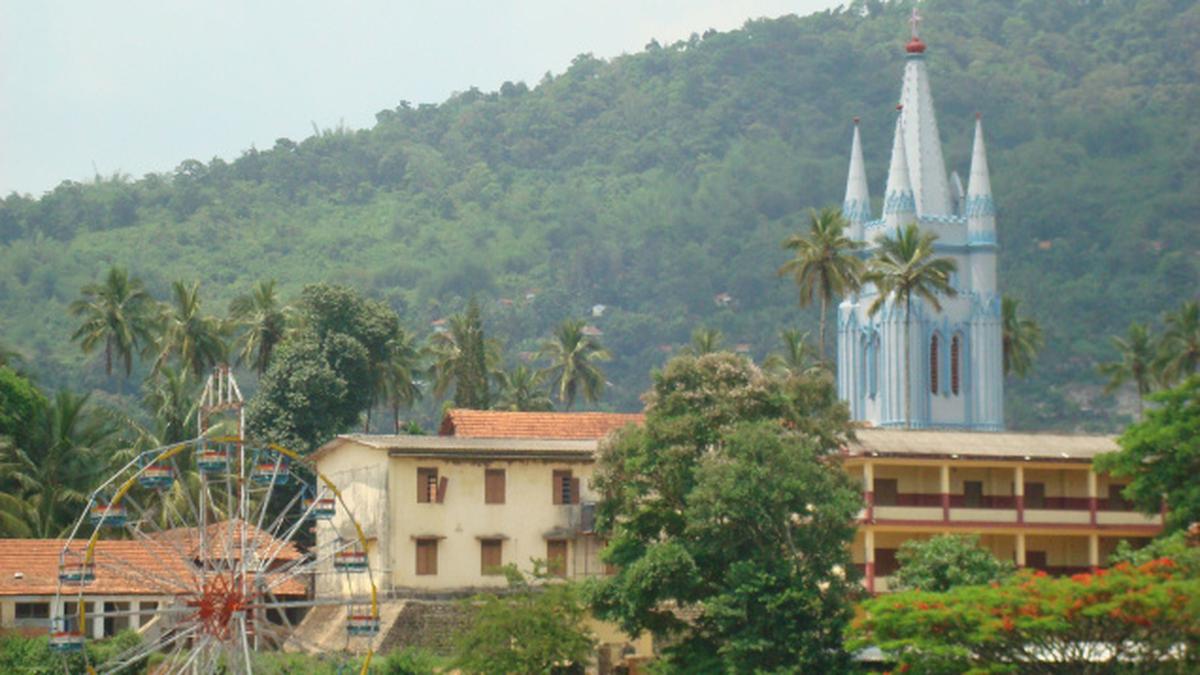
STEEPED IN HISTORY: Virajpet. / Photo: Lakshmi Sharath

I was lost in Virajpet looking for an address. The quaint town in Coorg was a welcome break en route to Madikeri. Traditionally-dressed Kodava women were shopping in the vegetable markets, and the main street was bursting with traffic.

I looked around and saw houses with tiled sloping roofs transformed into eateries and retail outlets. I stopped by the auto stand and asked for Telugu Street, but was met with puzzled glances.

I walked around the main street, lost in the old world charm, when a Kodava came to my assistance.

“You are standing in Telugu Street Madam; go a bit further and you may find Bengali Street, but no one refers to the streets by these names now.” We had coffee at a local eatery as Ponappa, a retired Army man, provided a glimpse of Virajpet’s history.

The great escape

Our story starts in the middle of the 18th Century when Madikeri, the capital of Coorg, ruled by the Haleri kings, was invaded by Hyder Ali and his son Tipu Sultan. The young Haleri prince, Dodda Veerarajendra, and his brothers were virtually held prisoners, while the father-son duo was busy fighting the British.

The story goes that Dodda Veerarajendra finally escaped from Tipu’s prison and regained his kingdom. The British sensed an ally in the Haleri king and decided to support him in the war against Tipu.

It was in this scenario that Virajpet, barely 30 km from Madikeri, was founded by Dodda Veerarajendra.

As kings have a penchant for naming places after them, this town too was called Veerarajendrapette.

Ironically, it was established as a settlement to celebrate the relationship forged by the Haleri kings with the British. Ironic, because it was the British who finally deposed the Haleri dynasty later.

Virajpet belonged to Veerarajendra, who built a fort here with a palace, and a pond for his cavalry. Although the remnants of this can be seen even now, Virajpet is largely reminiscent of the Colonial era.

The landmarks today are the St Anne’s church, built initially during Veerarajendra’s reign and the clock tower, established in the 20th Century to commemorate the coronation of King George V.

I quiz Ponappa about Telugu Street, and he smiles. “When Veerarajendra built the town, many Kodavas were imprisoned by Tipu, and so he invited people from neighbouring kingdoms to come over.

There were several communities living here — the Christians, Moplas, Tamilians, Jains and Telugus, among others.”

Cosmopolitan town

Adds Ponnappa: “Virajpet is what you would have then called a cosmopolitan town. For instance, the Bengali Street was filled with those who came down here after the British defeated the Nawab of Bengal in another battle.”

I finally manage to find my destination, and Ponappa takes leave. It’s amazing how stories bring strangers together!

source: http://www.thehindu.com / The Hindu / Home> Features> Metroplus> Travel / by Lakshmi Sharath / May 23rd, 2010


Rohan Bopanna Scripts History By Smashing Leander Paes’ Record, Becomes Oldest…

Bopanna surpassed Paes’s record and stands only behind the legendary McEnroe on the list of oldest players to reach a men’s doubles finals.

Indian tennis ace Rohan Bopanna added another feather to his illustrious cap as he became the oldest player to reach the final of an ATP 500 event with his run alongside doubles partner Takeru Yuzuki to the final of the Japan Open 2025.

Bopanna and Yusuki, who eventually surrendered the final to Moncao’s Hugo Nys and France’s Edouard Roger-Vasselin 5-7, 5-7, Bopanna better compatriot Leander Paes’s record of being the oldest player to reach the summit clash of the ATP category event.

Bopanna, at the age of 45 years, 6 months shattered Paes’ record of having made the final in the men’s doubles of a ATP 500 final at the age of 44 years, 9 months when the latter reached the summit clash of the Dubai Tennis Championships in the year 2018. Paes, who partnered along with American James Carretani went down to Jean-Julien Rojer and Horia Tecau.

Bopanna stands as the second-oldest player after the legendary John McEnroe to reach the final of a men’s doubles event of an ATP-level competition.

McEnroe accomplished the feat at the ripe old age of 47 years, when he won the 2006 San Jose, an ATP International Series event, a category which was replaced by an ATP 250 event in 2009, crown with Jonas Bjorkman. The event marked one of the two events McEnroe took part in after coming out of retirement. Bopanna also joined McEnroe a the only players to play a men’s doubles event after turning 45.

Bopanna also stands as the oldest player to win a Men’s doubles Grand Slam with his victory at the Australian Open in 2024 and the ATP 1000 Title in Miami Open 2024 en route to becoming the oldest first-time World No.1 ranked player last year.

source: http://www.news18.com / News 18 / Home> English Edition / by Vivek Ganapathy / October 01st, 2025

Coffee Dasara brews hope for growers amid challenges

45 stalls celebrate Kodagu’s coffee culture as top growers honoured

Madikeri:

The Coffee Dasara celebration held on Wednesday at Gandhi Maidan, Madikeri, captivated visitors with a vibrant display of coffee culture, featuring 45 thematic stalls and a strong message of solidarity with coffee growers grappling with persistent challenges.

The event was jointly organised by the Madikeri Dasara Committee, Madikeri Dasara Cultural Committee and the Coorg Planters Association inside the Sakamma Auditorium, named after Karnataka’s first woman coffee entrepreneur. The coffee mega event was executed and coordinated by H.T. Anil.

Inaugurating the celebration, Madikeri MLA Dr. Mantar Gowda highlighted that despite favourable market prices, coffee growers continue to face serious hardships.

“Labour shortages, climate fluctuations, and market instability are major hurdles, especially for small-scale producers. We must unite to tackle these challenges,” Dr. Mantar Gowda urged.

Dr. Mantar Gowda noted that Kodagu district accounts for nearly 75 percent of Karnataka’s coffee production and stressed that Coffee Dasara, which began last year, should become an annual platform to foster dialogue and development.

Madikeri MLA Dr. Mantar Gowda with Coffee Dasara Convener H.T. Anil during the event.

Crop insurance coverage

Coffee Board Chairman Dinesh Devavrinda underscored the need for insurance coverage for coffee crops, similar to schemes available for arecanut and pepper. He pointed out that coffee is cultivated not only in Karnataka’s Kodagu, Hassan and Chikkamagalur districts but also across the north-eastern States and encouraged farmers to take pride in their profession.

Kodagu Deputy Commissioner Venkat Raja reaffirmed the administration’s commitment to supporting farmers, promising to act as a bridge between growers and policy-makers. He announced plans to launch video-based training programmes on coffee cultivation and marketing, emphasising the urgent need for modernisation in the 21st century.

Technical insights

Several experts shared technical insights during the event. Dr. Ichettira Mandappa, Coffee Board Director, spoke about maintaining quality in coffee cultivation, coffee grower Karan discussed emerging varietals in coffee farming, Jermie D’Souza presented research on dwarf robusta strains while Dr. Chendrimada Captain Thimmaiah, Assistant Director, Veterinary Services, explained the role of soil fertility in improving yields.

The event also featured a felicitation ceremony honouring outstanding coffee farmers, recognising their contributions to the industry.

Growers felicitated

Distinguished coffee growers were felicitated by International Booker Prize-2025 winner Deepa Bhasthi, who hails from Madikeri. They included Vinod Shivappa, former President of UPASI (United Planters’ Association of Southern India), S.M. Chengappa, progressive farmer from Kiragandur, Lava Edadante from Edadante village, D.P. Ravishankar from Ponnampet, D.Y. Abdul Razak from Kodlipet, Vikram from Masagodu, Robert from Ponnathmotte in Chettalli and Nizamuddin Siddiqui, senior coffee entrepreneur from Madikeri.

Prominent dignitaries present included the Coorg Planters Association Chairman A. Nanda Belliappa, Madikeri Town Municipality President and Madikeri Dasara Committee Chairperson     P. Kalavathi, Madikeri Dasara Committee office-bearers, Jyothika of Women’s Coffee Awareness Forum, former MLCs Veena Achaiah and S.G. Medappa.

source: http://www.starofmysore.com / Star of Mysore / Home> News / September 28th, 2025

Coffee Dasara to celebrate Kodagu’s brewing heritage

Madikeri:  

A unique Coffee Dasara blending festive spirit with agricultural pride will be held on Sept. 24 (Wednesday) at Gandhi Maidan in Madikeri, celebrating Kodagu’s deep-rooted coffee culture.

The event will honour coffee growers and provide valuable insights into cultivation techniques, announced H.T. Anil, Convener of Coffee Dasara.

Launched last year under the vision of Madikeri MLA Dr. Mantar Gowda, Coffee Dasara returns this year following an overwhelming response. The second edition is being organised in collaboration with the Coorg Planters’ Association.

The programme will begin at 10 am at the Sakamma Memorial Hall, named after Kodagu’s trailblazing coffee entrepreneur, the late Sakamma — Karnataka’s first woman coffee entrepreneur. Coffee stalls will be opened in her memory, celebrating her legacy.

A lecture series from 10.30 am to 1 pm will offer practical knowledge and expert guidance to coffee cultivators. At 1 pm, ten distinguished coffee growers from Kodagu will be felicitated for their exceptional contributions to the coffee industry.

Coffee on the menu

Adding a delicious twist to the festivities, culinary competitions will showcase coffee’s versatility in cooking and baking. Categories include coffee-flavoured cakes, cupcakes, brownies, biscuits, puddings, beverages, and chocolates — all celebrating coffee as both a drink and a delicacy.

This year’s Coffee Dasara will feature 35 stalls highlighting coffee-related products, information and innovations. Speciality brews will be served by local cafés, while major exhibits will be set up by the Indian Coffee Board, Horticulture Department, Industries Department, HOPCOMS, Nandini Dairy and the Kodagu Coffee Growers’ Cooperative Society, among others.

Coffee Dasara continues to honour Kodagu’s rich coffee heritage by blending tradition, innovation and community pride. This vibrant event not only celebrates the region’s global reputation for coffee cultivation but also strengthens the bond  between growers, producers and coffee lovers.

source: http://www.starofmysore.com / Star of Mysore / Home / September 22nd, 2025

A eulogy to…  KBG

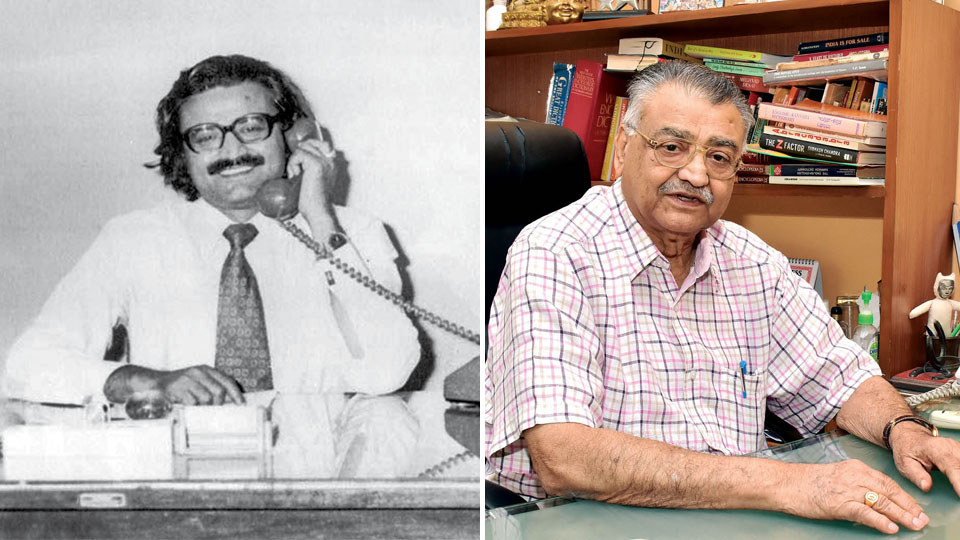
On Sunday, the 13th (of July), my father and the Founder-Editor of Star of Mysore and Mysuru Mithra, K.B. Ganapathy, passed away.

Knowing him, I think he would have got a kick out of it if he had kicked the bucket on Friday the 13th, popularly considered an unlucky day.

It feels odd to write about my father, but I feel I owe it to the readers of Star of Mysore, who have made this small newspaper from this small city into one of India’s most successful evening newspapers. 

To not write about him would feel wrong. Especially because his life was not only well lived, but it was also wildly interesting.

KBG, as he was popularly known, never really spoke much of his early life with me until a few years ago, when I became a father and he, a grandfather. The stories were fantastic.

When you become one of the youngest lawyers in Bengaluru at a time when jukeboxes and dance halls were in vogue…

When you, as a nerdy, bespectacled boy from Coorg to have the audacity to move to Bombay to become an actor, then a scriptwriter, without knowing a word of Hindi…

When you rejoin College in Bombay to study journalism and are chosen to work under a legend like T.J.S. George…

When you launch your own advertising agency in Pune and help name the now-iconic moped, Luna…

When you move Osho Rajneesh from Juhu Beach into an apartment and handle his first PR campaign for The Illustrated Weekly of India…

When you finally pack it all up and return to Mysore to run a bill-book printing press… and then start your own newspaper… You’re bound to have stories. And KBG had a whole lot of them and he told them brilliantly… 

From tales of quirky Bombay industrialists to the eccentricities of Osho Rajneesh, from the spiritual gurus he encountered in his career to dealing with political thugs he had confronted, his stories were always unexpected, always unforgettable.

Whether he was protesting at the Bombay Docks with George Fernandes or breaking ‘journalistic ethics’ by openly campaigning for H.S. Shankaralinge Gowda in Mysore, KBG lived with a conviction few dared to match and fewer still could argue with, though I often did.

What made him a good journalist was simple. A nose for news, a maniacal work ethic, and a fearlessness that bordered on charming arrogance. 

KBG also had a quirk. He never wore a shirt without a pocket. Why? Because he always carried a tiny notepad and a pen. Even on the day he died, he had notes scribbled in his little notepad stuffed in his shirt pocket — observations and “news points for reporters.” He never stopped reporting.

KBG loved intellectual combat, and often our dinner table arguments ended with me yelling, “Youth may be wasted on the young, but wisdom is definitely wasted on the old !” 

He would smirk and say, “Don’t flatter yourself. At your age, only Rahul Gandhi can be forever young.” Then, with a smile, he would ask, “Drink?”

That was KBG. You could argue with him, disagree with him, even mock him, but he always knew how to separate debate and decency.

That same spirit defined Star of Mysore. Even if you didn’t share his ideology, your voice still had a place in his paper. 

Through Star of Mysore and Mysuru Mithra, he gave voice to countless civic warriors. Many of them eventually joined politics, but before that, they helped shape our city.

 He encouraged service clubs like Rotary, Lions and MGP, believing they created a collective civic conscience to keep the Government accountable.

Though he had an irreverent side, he was also deeply spiritual.

On his 85th birthday, I asked him, “After all these years, what according to you is happiness?” He replied instantly, “Freedom from physical pain.”  

Then, after a pause, added, “You can have all the money and status you want, but if your body is hurting, even if it’s a toothache, you’ll be miserable.” 

I asked when he had this spiritual epiphany. With a mischievous smile he replied, “When I had piles.” We both laughed. I said, “Now you know how it feels to work with you.” He laughed and clapped, something he would do on hearing something witty. That bellowing laughter with clapping will be missed.

Since his passing, people have asked me how I’m coping. For now, I keep reading the note he would write on the first page of his diary every year for over 40 years. They are lines from the Bible:

“The race is not to the swift,

nor the battle to the strong,

nor does food come to the wise

or wealth to the brilliant,

but time and chance happen to them all.”

And then he would add, in his own hand:

“So do not despair, Ganapathy, for this too shall pass.”

And so, while we grieve, we carry on, for… this too shall pass.

On behalf of my family and everyone at Star of Mysore and Mysuru Mithra, Thank You, dear readers, for your love and loyalty. We hope to continue informing, entertaining and waking the activist in every Mysurean.

P.S.:  After his passing, some have criticised the current State Government for not offering KBG State Honours like his peers got.

Honestly, it doesn’t matter.

What greater honour can a journalist ask for than the love of his readers? 

That, for my father, was more than enough.

e-mail:  vikram@starofmysore.com

source: http://www.starofmysore.com / Star of Mysore / Home> Columns, In Blace & White , Top Stories / by Vikram Muthanna / July 26th, 2025

Mysore Kodava Samaja pays tribute to KBG

Mysore Kodava Samaja paid floral tributes to Kalyatanda B. Ganapathy (KBG), Founder-Editor of Star of Mysore and Mysuru Mithra, who passed away on July 13, at the condolence meeting held at the Samaja premises in Vijayanagar yesterday.

Samaja President Ponjanda A. Ganapathy, former Samaja President and present BVB Mysuru Hon. Secretary Poyyettira S. Ganapathy, former Rajiv Gandhi University (Arunachal Pradesh) Vice-Chancellor Prof. Kambeyanda C. Belliappa, Samaja Advisor Jammada Ganesh Ayyanna, former Rangayana Director Addanda C. Cariappa, KBG’s son and Star of Mysore Managing Editor Vikram Muthanna, Bharani Art Gallery Convenor Nellamakkada B. Kaverappa and others spoke about KBG.

Samaja Vice-President Machimada P. Nanaiah, Hon. Secretary Ketolira A. Belliappa, Joint Secretary Ajjikuttira Diana Poovaiah, Hon. Treasurer Ittira G. Kashiappa and others were present.

source: http://www.starofmysore.com / Star of Mysore / Home> Gallery> Photo News / August 11th , 2025

Paddy diversity, agricultural heritage highlighted in Mysuru desi rice mela

Nearly 200 varieties of indigenous rice varieties on display at the desi rice mela, which was inaugurated in Mysuru on Saturday. | Photo Credit: M.A. SRIRAM

The two-day desi rice mela commenced in Mysuru on Saturday, with seed conservators expressing concern that commercial crops were pushing the traditional paddy varieties to the brink.

The objective of the mela is to highlight the paddy diversity that existed in the Old Mysuru region, and how scores of indigenous paddy varieties are going out of vogue due to the proliferation of hybrid varieties and shifting consumer preference to white polished rice.

With over 200 paddy varieties on display, the mela is being held at Nanjaraja Bahadur Choultry, and has been organised under the aegis of Sahaja Samrudha and the Save Our Rice Campaign. Also on display are traditional rice varieties from different States, including rare types such as red rice, aromatic rice, black rice, medicinal rice, and bold-grained rice, along with value-added rice products.

Paddy conservators from across the State are selling their own desi rice directly. Seeds of popular varieties like Rajamudi, Burma Black, Sidda Sanna, Ratnachudi, Navara, Govind Bhog, HMT, and Sindhoor Madhusale are also on display and for sale.

The mela was inaugurated by B.P. Ravishankar, a seed conservator from Hudoor in Ponnampet, Kodagu. He has preserved as many as 57 desi rice varieties.

“Paddy cultivation is becoming increasingly expensive. With the arrival of commercial crops, traditional paddy varieties are being pushed to the margins and the government must provide necessary support to bring these desi rice varieties back into farmers’ fields”, said Mr. Ravishankar.

Unveiling medicinal rice varieties, Shridevi Annapurna Singh, former Director of the Central Food Research Institute, said that traditional varieties are rich in nutrients, while the black and red rice varieties have medicinal properties, and called for their inclusion in people’s diets.

Presiding over the event, G. Krishna Prasad, Director of Sahaja Samrudha and the Organic Farmers’ Collective, said that farmer-breeders in Karnataka have developed excellent paddy varieties like Sidda Sanna, Sindhoor Madhusale, Andanoor Sanna, and NMS-2. “The government must take steps to release these varieties, which are popular among farmers,” he said.

Mr. Prasad also cautioned against any attempts by the government to introduce transgenic paddy varieties that pose risks to the environment and consumer health. Farmers and consumers must remain vigilant to prevent transgenic paddy from entering farmers’ fields, he added.

C. Shanthakumar, the coordinator of Save Our Rice Campaign, said that Karnataka was the home of paddy diversity, but hundreds of varieties have been lost due to lack of demand. ‘’The desi rice mela has been organised to create awareness among farmers and consumers about nutrient-rich, traditional paddy varieties suited to local food habits,” he added.

The mela also offers millets, vegetable seeds, tubers, organic products, and fruit saplings that are for sale.

source: http://www.thehindu.com / The Hindu / Home> News> India> Karnataka / by The Hindu Bureau / August 09th, 2025

Sri Kaveri Kodava Association, Mysuru East, Kodagu Model School pay tributes to KBG

Mysore/Mysuru:

In a heartfelt tribute to Kalyatanda B. Ganapathy (KBG), Founder-Editor of Star of Mysore and Mysuru Mithra, Sri Kaveri Kodava Association, Mysuru East and Kodagu Model School held a condolence meeting at the school’s Cheethamma Hall recently.

Association members, leaders and school representatives highlighted KBG’s towering personality as a journalist, mentor and champion of  public service.

Association President Kademada M. Belliappa remembered KBG as a visionary from Kodagu, whose media platforms empowered civic awareness across Mysuru.

Former President Kanjithanda K. Aiyappa reflected on the values KBG embodied, stating, “Birth is an option, but death is predetermined.” He credited KBG with sparking the idea of Kodagu Model School.

Senior member Kakamada Subbaiah noted that KBG’s life and values continue to shape how his passing is honoured, while former President Puliyanda S. Devaiah shared personal memories of their long-standing association as neighbours, calling KBG “a guide, mentor and enterprising figure” who contributed to the School’s bylaws and resource networks.

Former Secretary Appachangada Motaiah recalled KBG’s pivotal role in overcoming early challenges in building the school, acknowledging the commitment of teacher Chowrira Prapulla and Chairperson Chowrira Seethamma, alongside his own guidance.

Former Treasurer C.M. Chengappa praised KBG’s inclusive leadership and his rare Hon. Doctorate from University of Mysore.

Head Mistress Anitha Mary recalled KBG’s genuine interest in student activities and exhibitions, while Treasurer Pattamada Charmana described him as “a fighter whose contributions                    are irreplaceable.”

Administrator Cauvery and Chairperson Seethamma acknowledged his mentorship, intellect and community reach.

Kannada teacher Hamsamati read a commemorative poem in KBG’s honour.

President Belliappa concluded the ceremony by sharing a condolence message received from the Prime Minister’s Office.

source: http://www.starofmysore.com / Star of Mysore / Home> News / July 31st, 2025

Suttur Seer recalls KBG’s illustrious works, services

Mysore/Mysuru: 

The Suttur Mutt has deeply condoled the passing of K.B. Ganapathy, Founder-Editor of Star of Mysore and Mysuru Mithra. In his condolence message, Suttur Seer Sri Shivarathri Deshikendra Swamiji recalled that Ganapathy was originally an Advocate who practised at the Karnataka High Court and Civil Courts.

“Driven by a deep interest in journalism, Ganapathy left his legal profession and worked for The Free Press Journal and The Indian Express for several years. He later founded the English eveninger Star of Mysore in 1978 and the Kannada morning daily Mysuru Mithra in 1980, becoming the Founder-Editor of both newspapers. These publications quickly gained popularity for their in-depth reporting on local issues affecting Mysuru and surrounding districts, the Swamiji added.

“Ganapathy wrote thought- provoking editorials and book reviews, often highlighting social shortcomings. He also served the society in many capacities — as a Member of the Karnataka Media Academy, President of Mysuru District Journalists Association, Chairman of Bharatiya Vidya Bhavan (BVB) and Vice-President of Kodava Samaja. He actively participated in relief efforts through Mysuru Nagaraikara Vedike, extending help to Tsunami victims in Tamil Nadu and others affected by natural disasters,” the Seer said.

Sri Deshikendra Swamiji further noted that Ganapathy authored four books in Kannada — ‘Adarshavadi’, ‘Kodagina Mele Shilubeya Neralu’, ‘Choomantra’ and ‘Shivajiya Khadga’ — and seven in English. “His book ‘Life and Times’, which reflects on life, literature, religion, spiritualism and personalities, stands out as a significant work. His recent book ‘The Hidden Life of a Yogi’ was released during the 9th edition of the Mysuru Literature Festival-2025. His popular Abracadabra column in Star of Mysore and its translated versions in Mysuru Mithra were widely read and appreciated. He received numerous accolades, including the Rajyotsava Award and an Honorary Doctorate from the University of Mysore,” the Seer added.

“His demise is a great loss to society and the field of journalism. May the Almighty grant strength to his family, relatives and well-wishers to bear this loss. We pray for his soul to rest in peace,” the Seer said.

source: http://www.starofmysore.com / Star of Mysore / Home> News> Top Stories / July 14th, 2025