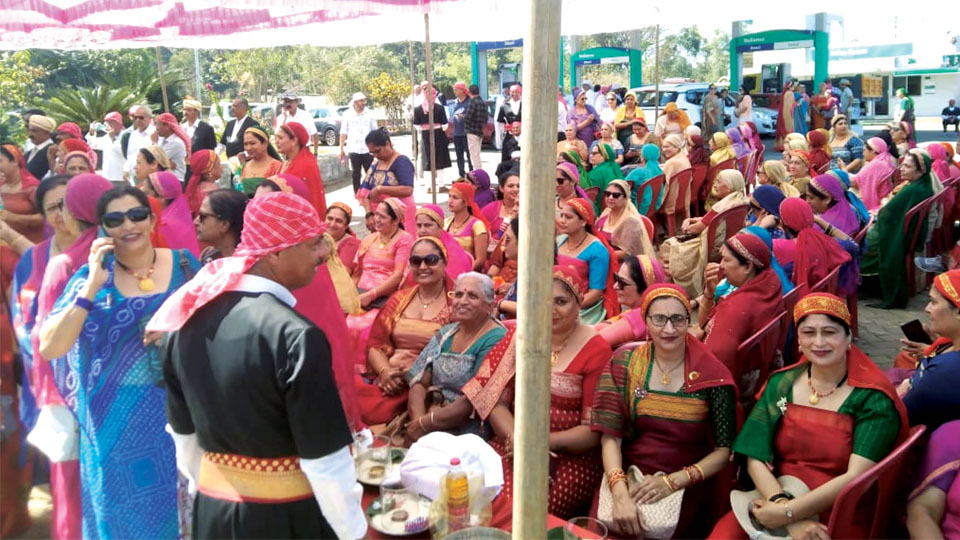
Kodavas and the Arebhashe Gowdas are two prominent communities in Kodagu, Karnataka.
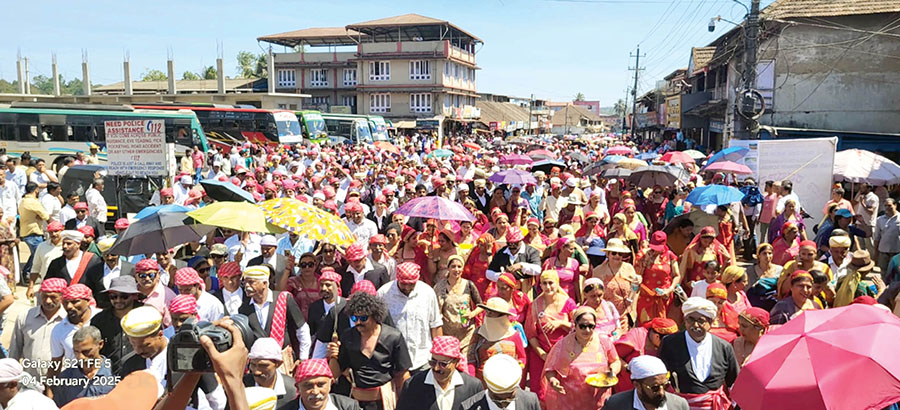
On February 2, thousands of Kodava men and women in traditional attire took out ‘Kodavaame Baalo’, an 82km, six-day peace march led by the Akhila Kodava Samaja (AKS) in Kodagu, Karnataka. They did so to reassert their distinct identity and to draw attention to the social, religious and political challenges their community faces.
The trigger for the march was a temple entry row that has pitted two prominent communities in Kodagu―the Kodavas and the Arebhashe Gowdas―against each other.
The newly built Sri Mrutyunjaya (Shiva) temple, in Kattemadu village near Madikeri town, is the epicentre of the dispute. On December 27, when some Kodavas turned up for the annual festival in their traditional attire, some Arebhashe Gowdas stopped them from entering the temple. The “common dress code” as per the bylaw did not allow Kodava attire.
The situation escalated with both sides sticking to their guns. They filed separate complaints and announced massive jaathras (marches) in protest, forcing the district administration to intervene and impose prohibitory orders around the temple. The Arebhashe Gowdas held a massive rally in Madikeri, which the Kodavas followed up with their march from Kutta to Madikeri. The run-up to the two marches was marked by a social media war with both sides uploading provocative videos and posts.
“The Kodava community will not take part in any peace process initiated by the district administration till the police identify and arrest those who attacked Kodavas and attempted to restrict their cultural attire at the temple,” said the memorandum submitted by the AKS to Kodagu Deputy Commissioner Venkat Raja.
Said AKS member J. Ganesh Aiyanna: “A few years before the Mrutyunjaya temple incident, we were prevented from entering Talacauvery during ‘Teerthodbhava’ (annual sacred event at the place where the Cauvery is believed to originate) for wearing our traditional attire. We will not tolerate the assault on our tradition and cultural identity.”
Harsha Kodagana, member of the Arebhashe Samaja, said they were just following the rules. “The temple was built at a cost of around 06 crore, which was collected from devotees belonging to all communities. The 43-member temple committee (which includes nine Kodava members) passed a bylaw with 13 points, including the common dress code. This is meant to build a sense of equality among all communities. Some committee members stopped those wearing the Kodava attire as it violated the bylaw. The temple priest was attacked. We want the police to take suo motu action against people posting derogatory posts on social media and making casteist slurs.”
The Kodavas, however, claim that this is not an isolated case. “Some people from a particular community have belittled our icons Field Marshal K.M. Cariappa and General K.S. Thimayya, who are India’s war heroes,” said Aiyanna. “The Kodava community has a long tradition of serving the Indian armed forces. People have also petitioned the courts to curb our gun rights but the court has restored it till 2029. The gun is revered in a Kodava family as it is an integral part of all our customs. We announce the birth of a baby boy with gunshots, and baby girl by beating brass plates. We have never used these weapons for violent purposes. We are nature and ancestor worshippers and are not involved in any politics. But the assault on our culture is growing.”
The memorandum submitted to the deputy commissioner said that the government must ensure a safe atmosphere for Kodavas to practise their traditions on their own land. It also urged the government to take steps to facilitate Kodava community participation in the Talacauvery rituals, extend constitutional protection for Kodava land, culture, traditions, religious practices and social security, and to curb “political oppression” by dominant communities.
The district administration has sought a report from the temple committee, but notably, the elected representatives―Congress MLAs A.S. Ponnanna (Virajpet) and Mantar Gowda (Madikeri), and BJP MP from Mysore-Kodagu Yaduveer Wadiyar―have kept a safe distance from the controversy.
Interestingly, when it comes to elections, the two communities have supported candidates without caste considerations. Previously, BJP leader Appachu Ranjan, a Kodava, had won the Gowda-dominated Madikeri assembly seat three times, while fellow party member K.G. Bopaiah, a Gowda, had won the Kodava-dominated Virajpet assembly seat thrice.
The temple entry episode is the latest incident that could galvanise the Kodavas, who for long have feared losing their identity. The 1.5 lakh-strong population has been dwindling; there has been fragmentation of families because of migration for education and employment, and inter-caste marriages. The community, under the banner of the Codava National Council, has been resisting the change in demography, loss of land and the alienation of the younger Kodavas from their language and culture. The long list of the council’s demands includes geo-political autonomy, inclusion in the scheduled tribe list, exemption from the Arms Act, inclusion of Kodava language in the Eighth Schedule of the Constitution, recognition of river Cauvery as a living entity, UNESCO’s intangible cultural heritage tag, inner line permit system to prevent demographic changes, and greater representation of Kodavas in Parliament.
The influx of people from outside, commercial exploitation of forests for tourism and massive infrastructure projects have resulted in water scarcity, landslides and floods, say locals. The people of Kodagu include Kodava, Arebhashe Gowda and 21 other Kodava-speaking communities who have lived in harmony despite the many challenges.
“After the backlash by Kodavas over Tipu Jayanti celebrations, the Congress government was forced to stop it,” said a local leader who did not want to be named. “But now, some vested interest groups are playing mischief to divide the Hindu community.”
source: http://www.theweek.in / The Week / Home> The Week / by Prathima Nandakumar / February 16th, 2025
The third day of the ‘Kodavame Baalo Padayatra,’ a peace march from Kutta to Madikeri advocating for the Constitutional rights and unique cultural identity of the Kodava community, began from Ponnampet Kodava Samaja this morning.
By joining the march, participants are setting new records for a foot march, as Kodavas and Kodava language speakers set aside social, organisational and political differences to march towards Madikeri.
The march, which commenced on Feb. 2 from Kutta, reached T. Shettigeri on the first day. On Feb. 3, it continued from T. Shettigeri to Ponnampet. Today, participants paid homage at Ponnampet, garlanding the statues of the town’s founder, Diwan Cheppudira Ponnappa, and Mahatma Gandhi before proceeding to Gonikoppa. After lunch at Gonikoppa, the marchers are scheduled to reach Bittangala by evening.
The massive foot march to protest the oppression of Kodavas will culminate on Feb. 7 at the district headquarters in Madikeri, where over 40,000 people are expected to attend. The overwhelming response from Kodavas and Kodava speakers indicates a massive gathering on the final day.
Throughout the march, Kodavas are showcasing their pride in their culture and identity. Despite the scorching heat, men, women and children — some in traditional attire and others in plain clothes — are marching silently, seeking to safeguard their cultural identity and community rights as enshrined in the Indian Constitution.
Traditional welcome
The march stands against political and administrative neglect, unchecked migration, cultural and geographical loss and the denial of Kodavas’ right to practice their customs and traditions in their homeland. The camaraderie within the community has been evident, with local elders, women, family Thakkas and village elders, and community heads wholeheartedly supporting the cause.
Hospitality, an inherent trait of the Kodavas, was on full display over the past two days, as participants were spontaneously offered food and shelter all along the route. They were traditionally welcomed at various points where heads of families and aged women blessed the walkers.
A key highlight of Day-2 was the red-carpet welcome at Thuppanani and Biloor Junction leading to Hudikeri, where lunch was served at Kodava Samaja. The marchers also received warm support from Theethira family.
At Mapillethod, Kodava Muslim Alira family extended a hearty welcome, with Muslim community members gathering in large numbers to express their support. They provided snacks, buttermilk, tea and coffee, to marchers in a show of solidarity.
source: http://www.starofmysore.com / Star of Mysore / Home> News / February 04th, 2025
Some section of Kodava community have also urged the state government to ban the movie in Karnataka.
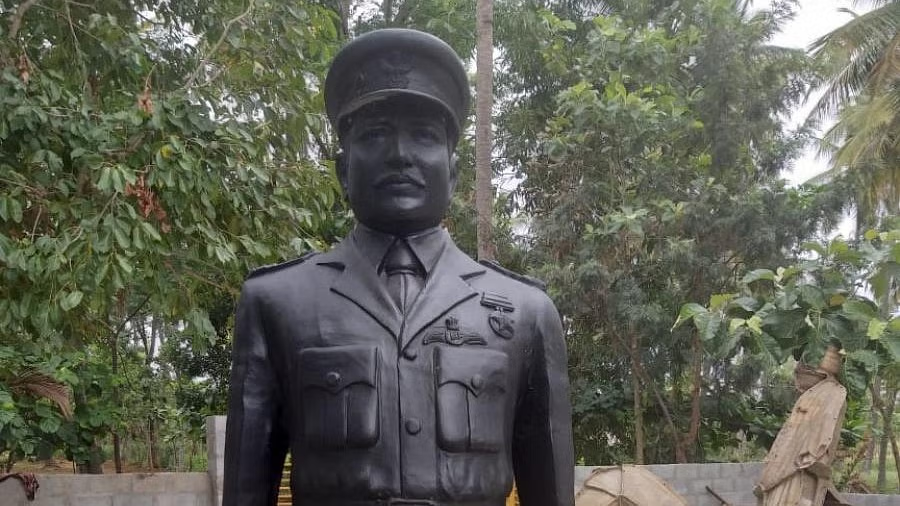
The bronze statue of Squadron Leader Ajjamada B Devayya
Madikeri:
The issue of portraying the character of Maha Vir Chakra awardee Squadron Leader Ajjamada B Devayya, as a Tamilian in the Hindi movie ‘Sky Force’, directed by Sandeep Kewlani has drawn the ire of people from Kodagu.
The move by the filmmakers has been criticised on social media. Tweeting about Ajjamada B Devayya, the people opined that even though the movie is based on him, his character has been misrepresented.
Some have also urged the state government to ban the movie in Karnataka.
The film was released on January 24 and is said to be inspired by the life of Ajjamada B Devayya and by his role in destroying a Pak aircraft during the Indo-Pak war in 1965. He was martyred during the fight.
Speaking to DH, Codava Makkada Coota president and publisher Bollajira B Aiyappa said that the real name of the patriot should have been used for the lead character in the film. Even though the character’s name is changed, the identity of him being Kodava should have been shown. The change of his identity as a Tamilian has hurt the sentiments of Kodavas. Kodagu has given Field Marshals, Generals and Squadron leaders to the country, he said.
Ajjamada B Devayya./ File Photo
“The movie makers had come to Kodagu to collect information about A B Devayya. The opening and closing credits of the movie have made a mention about the story being based on A B Devayya’s life, he said.
He further stated that a book has been published about Ajjamada B Devayya – ‘1965 ra Yuddha Hagu Kodagina Mahavira’.
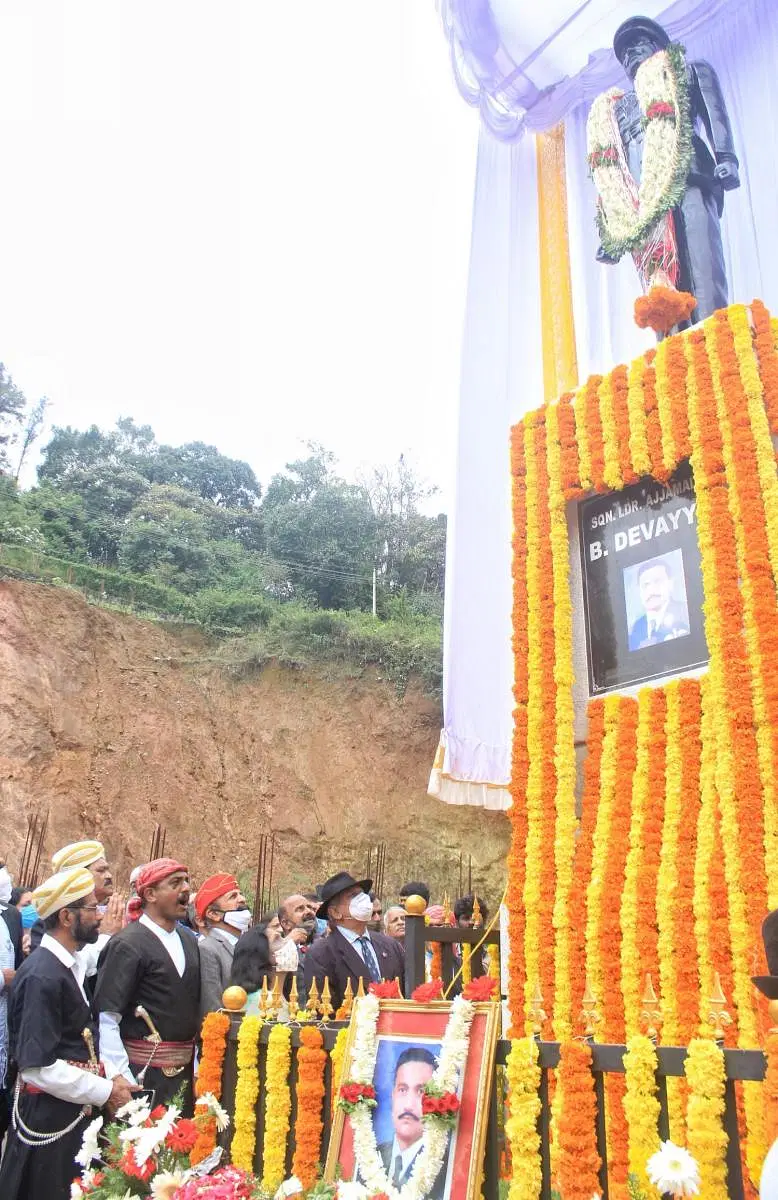
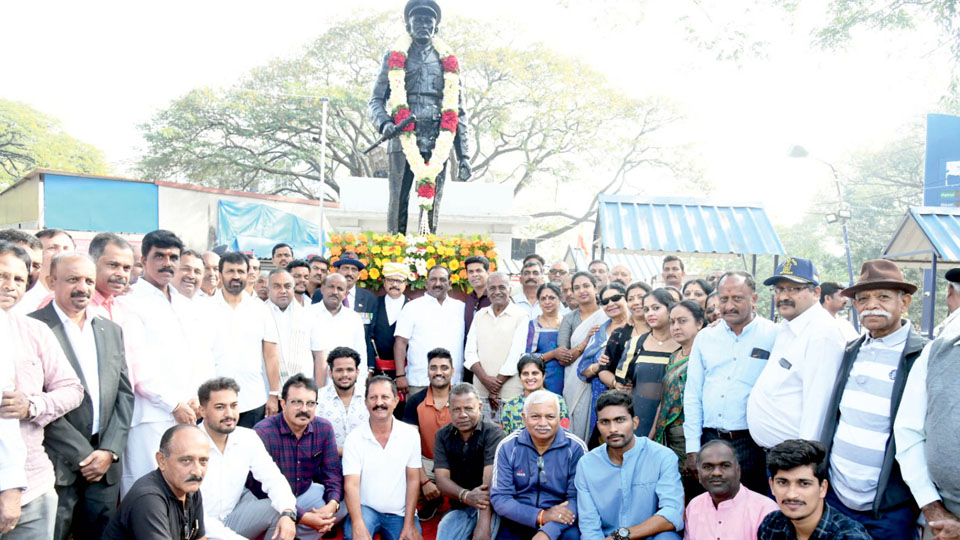
The Coota has been observing his commemoration on September 7 every year at A B Devayya Circle in Madikeri where the statue is situated. The statue is erected and is being maintained by Codava Makkada Coota, Aiyappa added.
source: http://www.deccanherald.com / Deccan Herald / Home> India> Karnataka / by Ashwani Kumar N K R / January 30th, 2025
On the 126th birth anniversary of Field Marshal Kodandera Madappa Cariappa, tributes poured in from across the nation this morning, honouring the first Indian Commander-in-Chief of the Indian Army.
The Indian Army took to ‘X’ on January 28, writing, “Remembering the Legend…On his 126th Birth Anniversary, the Indian Army pays homage to Field Marshal K.M. Cariappa, OBE.”
Union Minister Nitin Gadkari also shared his respect, posting, “Remembering First Indian Commander-in-Chief of the Indian Army Field Marshal Sir Kodandera ‘Kipper’ Madappa Cariappa.”
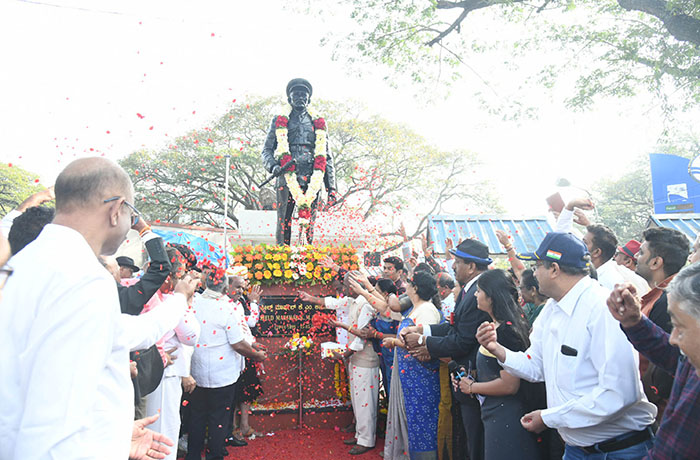
In Mysuru, as part of the celebrations, floral tributes were offered to the statue of the Field Marshal at the Circle named after him on JLB Road.
Chamaraja MLA K. Harishgowda emphasised that the name of Field Marshal Cariappa, whose contributions to the country’s defence are immeasurable, should be honoured as long as the Sun and Moon exist.
Stating that the annual commemoration of the Field Marshal’s birth anniversary is a fitting tribute, he highlighted that Field Marshal Cariappa was known for his discipline, dedication and determination.
The MLA also mentioned that the Mysuru Kodava Samaja had previously proposed the installation of a statue of another Kodagu warrior, General K.S. Thimayya. He announced that work has now begun on the statue, which will be installed at the Kodava Samaja premises in Vijayanagar, with funds allocated from his Legislator’s fund.
Kodagu’s contributions recalled
Krishnaraja MLA T.S. Srivatsa pointed out that Kodagu is likely the only district in the country where almost every household has at least one member serving in the country’s defence forces. He also lauded Field Marshal Cariappa for his pivotal role in shaping the post-independence Indian Army, as well as his involvement in Iran’s army structure. Srivatsa added that Cariappa also had a deep love for sports and music.
MLC C.N. Manjegowda stressed the importance of celebrating the Field Marshal’s birth anniversary, encouraging youths to draw inspiration from his legacy and consider joining the army.
Manjegowda, an ex-serviceman, urged the Government to ensure that Field Marshal Cariappa’s birth anniversary is celebrated as prominently as those of other great personalities.
City BJP President and former MLA L. Nagendra highlighted that Prime Minister Narendra Modi celebrates Deepavali every year with the Armed Forces at the country’s borders. He noted the renaming of Metropole Circle as Field Marshal K.M. Cariappa Circle in recognition of the late Commander’s accomplishments and called for it to be referred to by its new name.
Former Mayor M.J. Ravikumar suggested that the busy junction at the Circle be made safer by constructing a shelter that covers the entire area to prevent accidents from speeding vehicles. He also called for further development of the Circle.
Former Mayor Srikantaiah, former Corporators Maletira U. Subbaiah and Prameela Bharath, Kodava Samaja President Ponjanda A. Ganapathy, Kodava Samaja Cultural and Sports Club President Mukkatira C. Ashok, Field Marshal K.M. Cariappa Abhimaani Balaga President Nayakanda Thimmaiah and community leaders were present.
source: http://www.starofmysore.com / Star of Mysore / Home> News> Top Stories / January 28th, 2025
The Kodava community in Karnataka will hold an 80-km peace march to highlight cultural erosion, identity concerns, and ecological challenges in Kodagu.
Kodava Community Plans 80-Km Peace March to Protect Cultural Identity
The Kodava community, an indigenous group in Karnataka known for its unique traditions and martial heritage, has announced an 80-kilometer peace march from February 2 to 7. Organized by the Federation of Kodava Samajas, the march will begin in Kutta, near the Kerala border, and conclude in Madikeri, Kodagu’s district headquarters.
The initiative aims to draw attention to the community’s dwindling population and threats to its cultural identity. According to reports, the Kodava community has been raising concerns over cultural erosion, socio-political neglect, and restrictions on traditional practices.
The Kodava population, once estimated at 300,000, has declined to approximately 125,000. Speaking to The Times of India, Chandapanda Prajwal Poovanna, a real estate professional, highlighted the demographic shift. “Only 40% of Kodavas continue to reside in Kodagu, leading to a loss of political representation and influence,” he said.
The community has also voiced concerns about the increasing sale of ancestral land to outsiders. Wealthy buyers, including politicians and businesspeople from Karnataka and neighboring states, are reportedly converting plantations into commercial establishments.
“Many Kodavas are forced to sell their properties and migrate due to economic pressures. This not only threatens our cultural roots but also disrupts Kodagu’s ecological balance,” Theethramada Satish Bopanna told The Times of India.
Despite their small numbers, the Kodavas have made significant contributions to India’s armed forces and sports. Field Marshal K M Cariappa and General K S Thimayya are among the community’s most celebrated military leaders. Sports icons like hockey player M P Ganesh, cricketer Robin Uthappa, badminton star Ashwini Ponnappa, and tennis player Rohan Bopanna also hail from the region.
“Even with such contributions, the state and central governments often overlook our concerns because we are a small community that does not significantly impact vote banks,” cultural expert Poyyatira Raj Chengappa told The Times of India.
The Kodava community has been advocating for special status to protect their cultural and ecological heritage.
Bayavanda Sharath Kushalapoa, secretary of SVG Kodava Sangha, highlighted the importance of such measures. “Special status would prevent outsiders from purchasing land for commercial purposes and help conserve Kodagu’s distinct culture and environment,” he said.
Organizers have called for widespread participation to highlight the urgency of their cause. Kodava Community Plans 80-Km Peace March to Protect Cultural Identity
source: http://www.thehansindia.com / The Hans India / Home> News> State> Karnataka / by Sowmya Sangam / Hans News Service / January 28th, 2025
On the 125th birth anniversary of K M Cariappa, here’s a look at one of his letters to Jawaharlal Nehru.
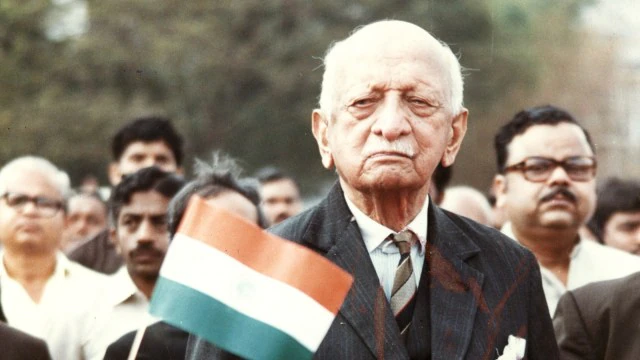
After his retirement, Field Marshal (then General) Cariappa served as the high commissioner of India to Australia and New Zealand from 1953 to 1956 and after completing this tenure he settled in Madikeri in Coorg. (Source: Express Archives)
Field Marshal K M Cariappa , the first Indian Commander-in-Chief of the Army, wrote a series of letters to then Prime Minister Jawaharlal Nehru with several suggestions — from the Kashmir issue to the setting up of a National Defence College.
After his retirement, Field Marshal (then General) Cariappa served as the high commissioner of India to Australia and New Zealand from 1953 to 1956 and after completing this tenure he settled in Madikeri in Coorg.
On the 125th birth anniversary of K M Cariappa on January 28, here is a look at one of his letters to Jawaharlal Nehru.
In his letter dated April 14, 1960, a plain-speaking Cariappa expressed his annoyance to Nehru for not replying to two of his letters. “Since we last met on 16th January at Bangalore I have written to you two letters on matters which I thought and still think are of some importance. Taking you at your own word I have always written and talked to you quite frankly, without beating around the bush with no ulterior motives or political ambitions of any kind whatsoever. I know what a very busy person you are. But I did expect at least a line or two In reply to those letters. Have I said anything, traitorous or unpatriotic? At any time that you should so totally ignore the matters. I have written to you. Panditji, I never expected this of you. This is indeed a sad and tragic ‘discovery’ for me. I am afraid, I cause and create unhappiness to myself By being too much of an idealist,” wrote Cariappa.
Cariappa then went on to raise three issues in his letter which he had mentioned on previous occasions to Nehru. He referred to the urgent need to look into the morale of officers in the Army, and also opposed the setting up of a National Defence College citing expenses and administrative issues about it.
Field Marshal Cariappa also emphasised to Nehru the need to reach out to the then president of Pakistan Ayub Khan and solve the Kashmir issue, saying that it should not be left pending for future generations. “Panditji please do this in your lifetime. We cannot live forever and we cannot hold office forever. Ayub will be prepared to discuss things with you if you show your desire to thrash out the matter between you two. Please let India and Pakistan settle the 12-year-old matter between themselves. This will then secure a more permanent feeling of goodwill between the two countries than if it were left to someone else — third party to settle it for us,” he said.
Urging Nehru to give “a kind and charitable thought” to his suggestions, Cariappa ended the letter by asking Nehru not to dismiss his suggestions by saying “yet another irresponsible thing from one who is mental”.
source: http://www.indianexpress.com / The Indian Express / Home> News> Cities> Chandigarh / by Man Aman Singh Chhina / January 28th, 2025
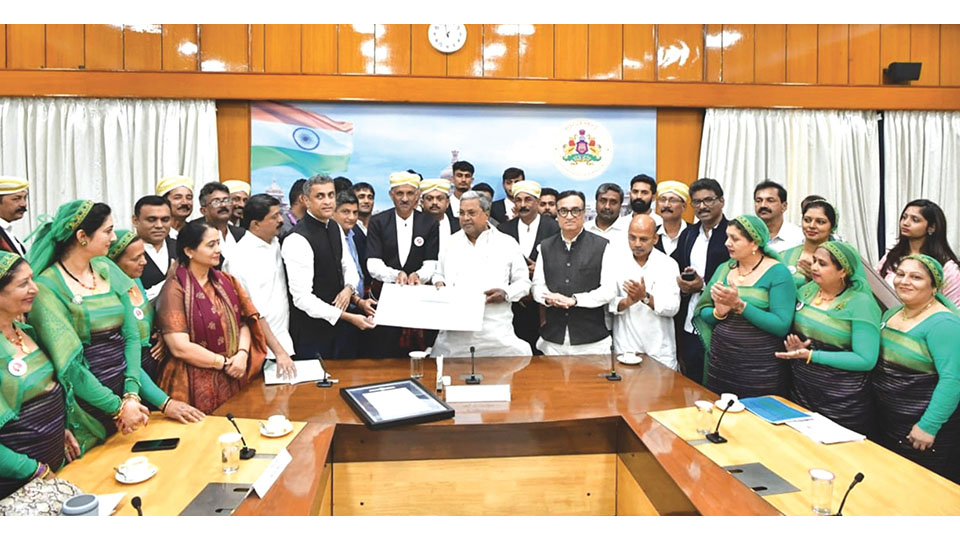
Chief Minister Siddaramaiah handed over a cheque for Rs. 1 crore to the Kundyolanda family, organisers of the 2024 Kodava Hockey Festival, during a ceremony held here on Thursday.
The funds, allocated from the Department of Youth Empowerment and Sports, underscore the government’s commitment to promoting the unique sporting tradition of the Kodava community in Kodagu.
The event was attended by Virajpet MLA and Chief Minister’s Legal Advisor Ajjikuttira S. Ponnanna, MP Ajay Maken, Medical Education Minister Dr. Sharanprakash Patil, Urban Development Minister Byrathi Suresh, Chief Secretary to the Government Shalini Rajneesh, and Additional Chief Secretary to the CM and Additional Chief Secretary, Finance L.K. Atheeq.
Highlighting the cultural and sporting significance of the festival, CM Siddaramaiah praised the Kodava hockey tournament, which entered the Guinness World Record last year as the largest field hockey event.
The 2024 edition saw participation from 360 teams and 4,800 players, showcasing the unmatched passion of the Kodava community for hockey.
“Hockey is deeply rooted in Kodava culture, and it is a matter of pride that the tournament has gained global recognition. As the birthplace of hockey legends like Dhyan Chand, India must nurture this sport alongside cricket. The State Government remains steadfast in its support for elevating the Kodava Hockey Festival to greater heights,” Siddaramaiah stated.
The Kodava family hockey tournament, a hallmark of the Kodagu district, has been organised annually for over two decades. It began in 1997 with just 60 teams and has grown into a mega-event with international attention.
Many Kodavas have gone on to represent India in national hockey teams, further cementing the community’s association with the sport. CM Siddaramaiah expressed his hope for the tradition to flourish and promised continued support to sustain the festival’s legacy.
It may be recalled in Aug. 2024, Congress Rajya Sabha MP from Karnataka, Ajay Maken, speaking in the Rajya Sabha, had highlighted that the Kodava Family Hockey Tournament 2024 had earned a place in the Guinness Book of World Records — a remarkable achievement accomplished without any support from the Union Government, though the State Government had fully backed the event. This, he had argued, underscores the urgent need for the Centre’s involvement in such significant sporting events.
He had also called upon the Centre to provide financial assistance for the Annual Kodava Family Hockey Tournament.
source: http://www.starofmysore.com / Star of Mysore / Home> Sports News / January 13th, 2025
P.T. Bopanna’s book Nanjamma Chinnappa – Chronicler of Coorg Culture looks at how the writer who passed away last year and her husband closely observed and recorded many aspects of the Kodava culture.
P.T. Bopanna | Photo Credit: SPECIAL ARRANGEMENT
The Pattole Palame (Silken Lore), originally compiled by the folklorist Nadikerianda Chinnappa in 1924, is considered a treasure trove of Kodava oral traditions, including songs, rituals, and stories that have been passed down through generations. Originally written in Kodava, it was the late Nanjamma Chinnappa and her late husband Boverianda Chinnappa who translated the work to English in 2003, making this treasured piece of literature accessible for Kodavas as well as others interested in oral literature around the globe.
As the celebrated author passed away in March 2024, writer and journalist P.T. Boppanna is set to release a book honouring her, titled Nanjamma Chinnappa – Chronicler of Coorg Culture. The book is a collage of works of Nanjamma that talks about her setting the image of a quintessential Kodavathi, her work on the architectural heritage of Kodagu, ancestral homes and Coorg cuisine. It is also a personal tribute looking at how the Chinnappa couple guided Bopanna’s journey as an author.
Speaking to The Hindu, Bopanna said that Nanjamma and her late husband worked as a team for various projects and were associated with some of his work too. “The Chinnappas were closely associated with my book and website projects for over 15 years,” he said.
Book on Nanjamma Chinnappa by P.T. Bopanna. | Photo Credit: SPECIAL ARRANGEMENT
The couple’s journey
“Nanjamma, a statistician of international repute, and her husband Chinnappa, an engineer, left for Cambridge, England, in 1974 where Nanjamma was a visiting fellow of Cambridge University. In 1975, they went to Canada to continue their careers and returned to India in 1995. Their first project after returning from Canada was to translate into English Pattole Palame, a book on Kodava culture, folk songs and traditions, written by their common grandfather Nadikerianda Chinnappa,” he explained.
Boppanna said that it took Nanjamma and her husband nearly eight years to complete the translation of the book which runs into 700-plus pages and was published in 2003. “The couple will be remembered mainly for their monumental book Ainmanes of Kodagu, on the traditional dwelling places of the original inhabitants of Kodagu. The Chinnappas believed that Ainmanes (house of elders/ancestral home) and their surroundings were sacred heritage sites that need to be preserved for future generations,” he said.
The Chinnappas are said to have visited close to 700 traditional and functional Ainmanes belonging to all communities in Kodagu and clicked 1,500 photographs during their field-work which took them five years. The book was published in 2014. “The couple also put together a website www.ainmanes.com that contains detailed information and photographs of each Ainmane visited, including oral narratives related to the Okka (clan) to whom the Ainmane belongs,” explained Boppanna.
A personal connect
The couple took a lot of interest in Boppanna’s own work on Kodava heritage and guided him in many ways, he said. “The Chinnappas were associated with my book and website projects since around 2007. They had gone through the manuscript of all my nine books, including my last book Round and About with P.T. Bopanna, published in 2022. They checked my books for grammatical and factual errors and offered suggestions for improving the content. Initially, I used to visit their home in Bengaluru. After they shifted to Mysuru a few years ago we exchanged emails and messages. They wrote the foreword for my book Are Kodavas (Coorgs) Hindus? They also wrote the afterword for my book My Coorg Chronicle,” he explained.
Boppanna said that one of the highlights of this book is the interview of Nanjamma by Dr. Nervanda Veena Poonacha, an eminent sociologist and women’s studies scholar. Veena had spoken to Nanjamma on the latter’s life journey. The foreword for the book has been penned by Dr. Sowmya Dechamma C.C., Professor, Centre for Comparative Literature, University of Hyderabad.
In the foreword of the book, Dechamma says that those who are even slightly familiar with the Kodavas of Kodagu and their increased awareness of Kodava language, culture and identity politics in the last three decades or so, would have definitely come across Nanjamma Chinnappa, her work and her ideas.
Context of their work
“On 31st March 2024, Nanjamma left us, leaving a void in the Kodava world. If an earlier generation of Kodava writers and intellectuals like Pandyanda Belliappa, I.M. Muthanna, B.D. Ganapathy, set a foundation for a discourse about the different identities of the Kodava, it was around a time when limitations of literacy and media restricted access to their work and discussions around them. The times in which Nanjamma and her husband and collaborator in her work, Chinnappa, began researching, writing and translating on the Kodavas, their work began appearing during a period of immense growth in media, combined with changes in the larger socio-economic scenario that had bearings on identity politics of the 1990s and thereafter. The opening up of the economy and large-scale migration of the Kodavas into urban centres along with an awareness of a distinct Kodava identity was the context in which Nanjamma and Chinnappa’s works were received,” she says in the foreword.
What Dechamma finds of immense significance in this volume is the interview of Nanjamma by Veena Poonacha that charts Nanjamma’s life and work. “Her review of works by Nanjamma and Chinnappa are equally valuable. Bringing together in one place the reflections and works by Nanjamma and Chinnappa is one of the best tributes possible to the life and work they were part of. Their effort in spreading indigenous knowledge associated with Kodavas and Kodagu needs us to take their work further,” she says.
Priced at ₹195, the book Nanjamma Chinnappa – Chronicler of Coorg Culture is published by Prism Books Pvt. Ltd,. and is available for purchase on online stores such as Amazon and Flipkart.
source: http://www.thehindu.com / The Hindu / Home> News> Cities> Bengaluru / by Yemen S / January 03rd, 2024
In my previous article, I featured an Ethiopian coffee export company who ran her business based on trust. This is factored in two ways; dealing with her farmers and clientele. In this day and age, we can learn a thing or two by understanding the wisdom behind why some people do the things they do, treading a harder path and not resort to shortcuts. They are in it for the long term, not focused on the short term gains. I have nothing but high regard for individuals like Medina.
Continuing a similar conversation, I have been focusing on what exactly is happening at the farm level by getting in touch with the producer directly. In this article, I talk to the owner of a coffee estate farm based in India. Sumaira gives us an insight about how her family’s coffee estate started in the late 18th century, processing techniques employed on her farm, the specialty coffee movement in India, and much more.
source: Rasulpur Coffee Estates
Can you tell me a bit about yourself and Rasulpur Coffee Estates?
I am Sumaira, the owner of Rasulpur Coffee Estates & Roasters . We are located in the Rasulpur village, Coorg district, in the hot spots of the Western Ghats, India. My entrepreneurship journey has had its shares of ups and downs. I took up a career as an interior designer and worked as a business head for a furniture empire in India. Later on, I moved to the UAE and explored the real estate industry and the coffee sector. I envisioned starting up something of my own, being from a family of coffee planters and having the self-confidence and determination to start my own business. Something clicked the moment I realized how the coffee industry is growing day-by-day.
To add, I am a fifth generation coffee planter who introduced specialty coffee at our estate. We introduced better equipments and techniques, and new processing and fermentation methods which I’ll get into a little later. A laboratory is set up for roasting and cupping to create different roast profiles and new blends at our estate. We believe in helping and encouraging our coffee community, especially the neighboring small and marginal coffee growers to analyze their coffees, and improve their harvesting and processing methods to fetch a better price for their coffee.
The journey of Rasulpur Coffee Estates started in the late 18th century when our ancestors migrated to the Western Ghats of India i.e. Coorg at the time of the British rule, as their main occupation was trading in coffee and spices. They travelled to different parts of Coorg, as they developed a liking towards coffee estates and the greenery, purchased plenty of estates, learnt the methods of coffee cultivation, and started exporting coffee to foreign countries. England was one of the major countries to which coffee was exported to from our estates in that period with the help of the Coffee Board.
We named the estate and brand ‘Rasulpur Coffee’ after the village, Rasulpur, which is on the banks of the Kaveri river in Kodagu district is named after Mr. Rasul Khan, our first generation planter. He cleared the land, started cultivation, built dams for irrigation, made the place livable and initiated agricultural works. Looking at his abilities and progress, the government named this village after him.
In time, our second, third and fourth generation planters purchased more coffee plantations and improved the methods of cultivation, processing, and introduced pulping and irrigation. An R&D team was also set up and a variety of experiments are conducted to this day. The goal here is to enhance the quality of the crops, and advance the processing and post harvesting methods. Our coffee is featured in auctions, supplied for projects, sold locally and exported to wholesalers, cafes, and restaurants. We also ferment micro lots as per requirements from our roasters and young entrepreneurs who are venturing into the coffee industry.
What kind of processing is done on the farm?
Processing on our farm is done in three different ways along with few specialty processing methods, all of which change the sweetness, body and acidity of brewed coffee. These are natural/sun dried, washed, and honey processed.
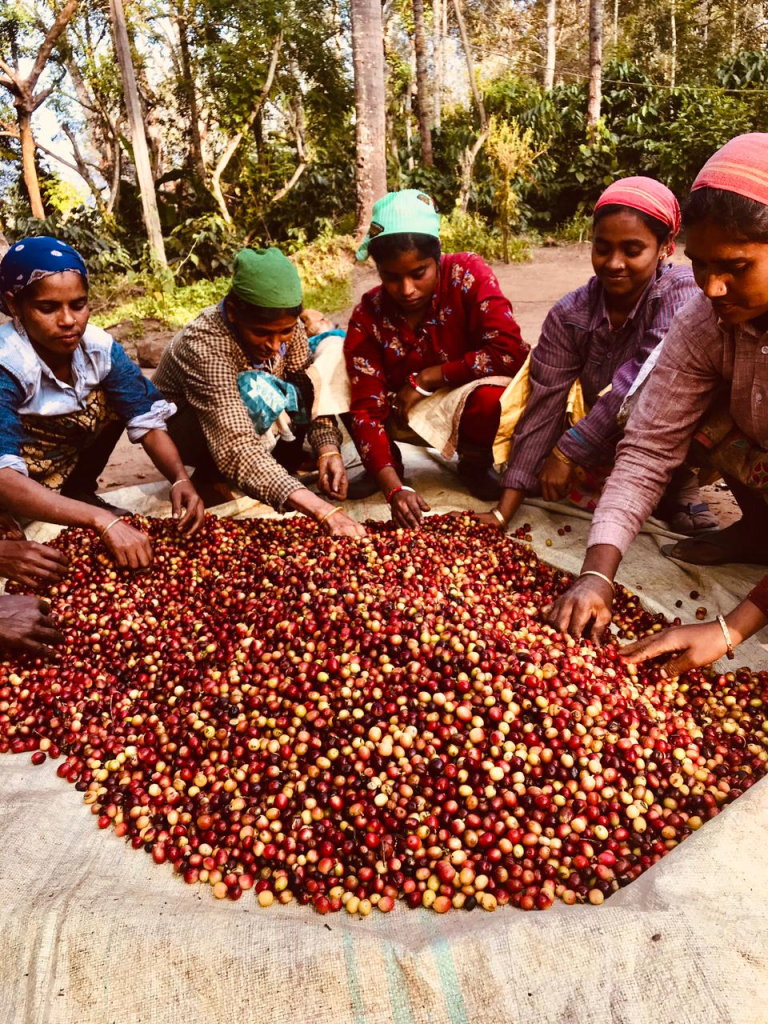
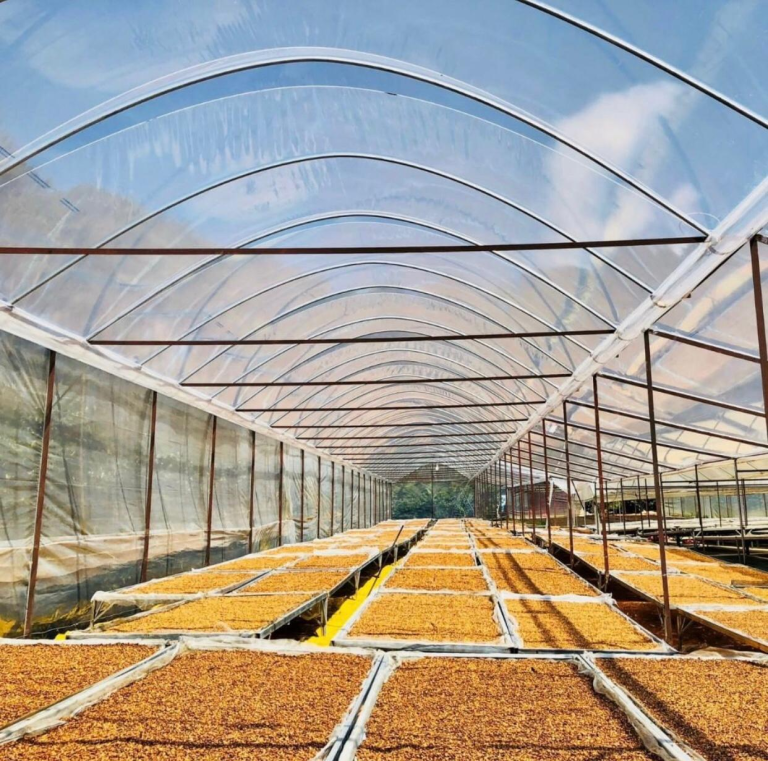
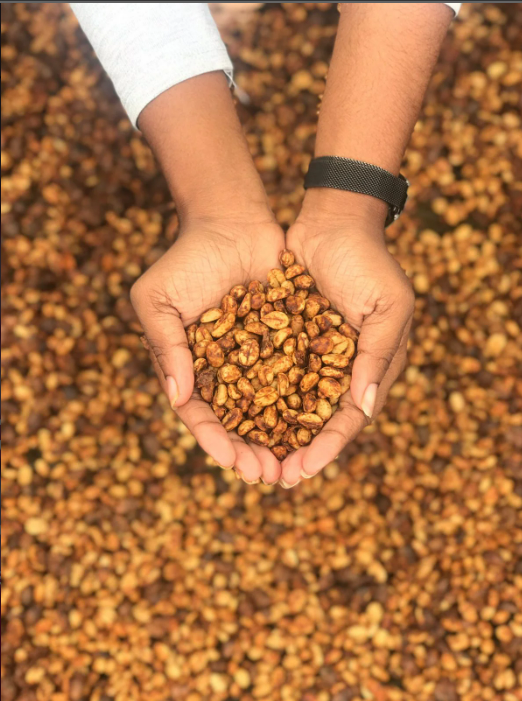
Natural/sun dried process. A natural processed coffee, also referred to as dry processed, is a traditional yet common way to process coffee today. Originating in Ethiopia, it involves drying out freshly picked coffee cherries with the seed still inside. To do this, we place the cherries on drying beds in the sun. These beds are either patios or raised drying tables. The cherries have to be rotated and turned to prevent mold, and takes about seven to eight days to ferment. During this time, the sugars and mucilage (the sticky substance that coats the seed) will latch onto the seeds, develop flavours and make them sweeter. Once the coffee is dry, a machine separates the pulp from the seed. Natural coffees are heavy bodied, and have deep, complex tasting notes. This development comes from the way the cherry ferments differently. Natural processed coffees can be difficult to replicate because of the inconsistencies in fermentation. However when done right, these coffees can also be some of the sweetest you’ll taste. It is juicy, syrupy and well worth the extra effort.
Washed process. Unlike natural, washed processed coffees are called the opposite, i.e. wet processed. In this scenario, machines called pulpers remove the seeds from the cherries before drying them. However, it is not just any cherry that gets the seed removal treatment. These cherries must have the perfect amount of ripeness to make sure they are sweet enough. To accomplish this, they go through a sorter and are segregated according to density. Once these pulpers remove the skin and pulp from the seeds, they are placed in tanks full of water. The water separates the rest of the mucilage and fruit caked onto the seed. Finally, the seeds are dried on the beds in the sun. Washed processed coffees have cleaner, and more crisp tasting notes when compared to natural processed coffees. The body of a brewed washed coffee is lighter. There is typically more brightness as well, because of a cleaner acidity that balances out the sweetness of the coffee. They are just as fruity as natural coffees, but the flavor notes are easier to differentiate.
Honey processed. This method is a combination of both natural and washed. It is a rare and demanding method, and not as commonly practiced as the previous two. However, it produces a unique cup of coffee, with flavours similar to both of the previously described processing methods. During honey processing, a pulper removes the seed from the cherry before it undergoes a drying process. However, it does not go into washing tank to remove the mucilage. That mucilage, which is what the ‘honey’ refers to stays on the seed and is now dried in the sun. The amount of mucilage left behind determines the sweetness, and there are even machines to control the amount on the seed. Like natural process, the seeds are dried on beds. The flavor components of honey coffees are varied and complex. Like washed coffees, they have lighter body and are very syrupy and sweet. Acidity is present but more mellow when compared to washed coffees.
Specialty processing. This is an emerging field and we use unique methods like anaerobic, aerobic, natural fermented, and fruit fermented to name a few. We ferment our coffee in a temperature controlled environment, with or without oxygen, followed by controlled drying to bring out unique and funky flavors out of the coffee.
source: Rasulpur Coffee Estates
What is the current state of the specialty coffee industry in India?
The coffee culture in India has evolved over the past decades. The nostalgia-inducing coffee houses were popular meeting grounds until the 1980’s. In the 90’s, cafe culture took over the country and coffee became the trendy drink to try.
Cafes are becoming the primary hangouts for youngsters and coffee found an emerging and appreciative audience. In the past two decades, we have seen a surge of cafes all over the country. They have materialized as a central hub for meeting, whether casual or business, and also doubling up as co-working spaces.
The 2020 pandemic impacted the industry In multiple ways and its effects were manifold. Logistics of coffee exports are pretty bad even today. Traditional coffee plantation owners who supply heavily within India and export to Europe are left with excess stock of coffee that could no longer be shipped to international markets.
Coming to the Indian coffee space, in recent years, the spotlight is on specialty coffee. This movement is picking up speed with many brands and roasters setting up shop. Analysis gives us a deeper understanding on how speciality coffee has emerged as the current buzzword in coffee circles. Current generation and millennials have emerged as the major chunk of consumers of specialty coffee within India.
Increased awareness and interest about coffee augmented by growing exposure to worldwide trends due to rising international travel and social media saw many of them exploring specialty coffee and manual brewing techniques. Lockdowns put a halt to the possibility of exploring cafes and thus many coffee consumers in the country turned to home brewing.
Many retail specialty coffee brands saw skyrocketing sales in 2020 as consumers invested in manual brewing equipment ranging from French Press, Moka Pots, Chemex and Aeropress. The new generation of coffee consumers respect the people behind the product, want to better understand the ‘farm to cup’ journey and are willing to invest in educating themselves on all nuances of coffee.
A few years back, this was largely unheard of. Farmers were just one aspect of the coffee supply chain, but hardly ever found the spotlight on them. Now plantation owners are keen on sharing their stories and experiences, information on their crops and the work they put in to make that perfect cup of coffee.
One can safely say that specialty coffee will not just be a passing trend, but en route to becoming one of the mainstays of the Indian coffee space in the coming decade.
I think there is a lack of communication between the consumers and farmers. I know some of the consumers, including me, have started to pay attention to where exactly the coffee is coming and from which farm. What do you think can be done to fill this gap?
The missing ingredient is awareness. People need to be educated about Indian coffee. The new-generation farmers need to collaborate with the Coffee Board of India and conduct events to promote coffees originating from India within the country and internationally.
Joint efforts need to be made by all coffee enthusiasts to encourage the consumption of coffee by making people understand the benefits of drinking coffee. The government has to support and help promote farmers to come forward and establish their own brands.
Being honest and transparent ensures the consumers and clients knows about the past, present and the way you are going to build a future. Bringing credibility to the table builds trust factor for the brand with the consumers.
I know some of the issues the farmers are facing currently are the increasing production costs, what steps are you employing to change that? Have you increased the price of your coffee to reflect that?
Whether we like it or not, coffee is getting more expensive. It’s important to look at some of the reasons why this is happening, before you potentially do one of the following:
Buy less sustainable and ethical coffee because it’s cheaper or
Lay blame on the wrong people for higher prices.
There are many factors influencing the cost of coffee from climate change, disruptions to global shipping, consumer demand, and packaging cost. While the need to use more environmentally-friendly packaging for coffee cups and bags is real, so too is the cost for shops switching to compostable or recyclable materials. We have also witnessed fluctuating shortages of packaging stock forcing some companies to find more costly short term solutions to packaging which comes at a higher cost.
Lastly, coming to the cost of quality, producing coffee of higher quality simply costs more. Coffee must be cared, harvesting and processing is hard work. It requires time and physical effort if you want to achieve the highest quality standards. You can’t have it both ways.
source: Rasulpur Coffee Estates
What are your thoughts on transparency? Has it benefitted you in any way?
Yes, by ten-fold. Transparency has improved our overall trust factor in this industry. It solves many problems and even stops disasters before they happen. It expands relationships, increases productivity, strengthens innovation, and improved our revenue.
What is the future of specialty coffee?
By far, the most interesting and exciting coffee segment of the moment is specialty coffee. It is rapidly expanding in India and across the globe as consumers continue to seek out the best cup of coffee to enjoy.
When it comes to coffee quality, specialty coffee is the ‘cream of the crop’ and is likened to fine wines due to its distinctive characteristics and delicious flavour that can only be achieved under certain growing conditions.
In today’s market, specialty coffee has become an intricate science and a global phenomenon that is seeing rapid growth across all sectors. More estates are coming into this specialty game, that will give ‘Indian specialty coffee a lot of mileage.’
What do you do in terms of R&D on Rasulpur Estate
We are currently doing research on developing a hybrid plant which is resistant to white stem borer and leaf rust. These are the two biggest pests and diseases faced by all Arabica growers throughout the world. International Coffee Organization (ICO) is working with different countries to find a solution for this.
This R&D program has been ongoing for the past four years on a 40 year old, 30 ft tall, Arabica plant labelled by us as Rasulpur Arabica. So far, the results look promising and it is resistant to these diseases. We have propagated progenies of this plant by clonal cutting, seed and tissue culture, and cross-bred this plant with other varieties of Arabica.
source: Rasulpur Coffee Estates
About Rasulpur Coffee Estate
Rasulpur Coffee Estates & Roasters is based out of Rasulpur village in Coorg district in the hot spots of the Western Ghats, India. The Estate is run by Syeda Sumaira, a fifth generation coffee planter and entrepreneur.
Fun fact: Coffee farms are the best place to get first hand knowledge about the beverage, how it is grown, harvested and processed. Rasulpur Coffee Estates organizes coffee tours, get in touch with them to find out more.
source: http://www.fltrmagazine.com / FLTR / Home> Insight> People / by Naveed Syed / August 11th, 2022
Colonel Cheppudira Muthanna discusses efforts to create a pan-Asian network of organisations to protect the nature and climate of the Himalayas.
Colonel Muthanna is a former President of IUCN Member, Coorg Wildlife Society (cws.in) and founder of the Environment and Health Foundation India
I was in the Indian Army for 24 years and served in the Himalayas for 10 years. I became very concerned about how climate change was affecting the Himalayas, especially the rivers that so many people depend upon. I realised we must act before the change in the region reaches a tipping point.
The rivers that start in the Himalayas – the Ganges and the Mekong – support hundreds of millions of people across South Asia, Southeast Asia and China, representing one-fifth of the entire human population. In many places, where the slopes have been deforested, there are more avalanches because the trees helped hold the snow. Reduced snowfall due to climate change also means the rivers have less water in them. And the tree species are changing too. The outcome is that the water security of a fifth of the world’s population is at risk.
” THE RIVERS THAT START IN THE HIMALAYAS SUPPORT HUNDREDS OF MILLIONS OF PEOPLE “
Cutting down drastically on the production of black carbon locally, combined with extensive forest restoration, could help stabilise the ecosystems here. Black carbon is the name given to the sooty particulate emissions released when millions of cooking stoves light up across these countries. It raises the temperature regionally, in addition to the global effect of CO2 emissions. If we can replace many stoves with more efficient ones, it will quickly reduce the amount of black carbon drifting above the Himalayas. We also need better technology for the brick kilns and road building, which are also major sources of black carbon in the region. Reforestation around urban areas could also help absorb more black carbon.
The Himalayas and the Mekong basin are contiguous and interdependent eco-regions. Therefore it is crucial to form a regional cooperation of our countries to mitigate climate change. This is the essence of the proposed HIMEK (Himalayas-Mekong) Alliance. There are a number of agencies in the region working on reduction of black carbon and forest restoration – but our effort must be to coordinate with them and upscale their initiatives to a regional level.
We have been supported by IUCN, which is very important because all of the relevant countries are Members of the Union. If we can initiate pilot projects in some of the countries, it can then be scaled up across the region. Everyone we have talked to approves of the idea – now we need monetary support.
by – Colonel Muthanna is a former President of IUCN Member, Coorg Wildlife Society (cws.in) and founder of the Environment and Health Foundation India
source: http://www.iucn.org / IUCN / Home> News & Events> Story / by Colonel Cheppudira Muthanna / December 13th, 2023
WELCOME. If you like what you see "SUBSCRIBE via EMAIL" to receive FREE regular UPDATES.
Read More »