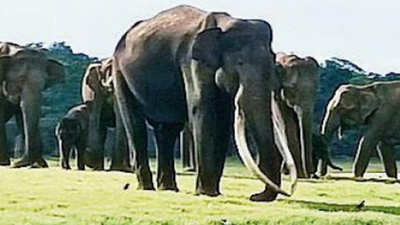
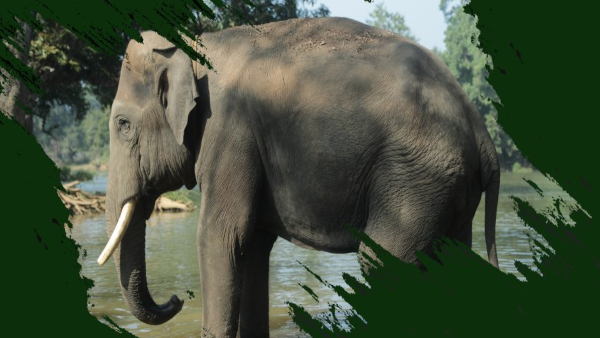
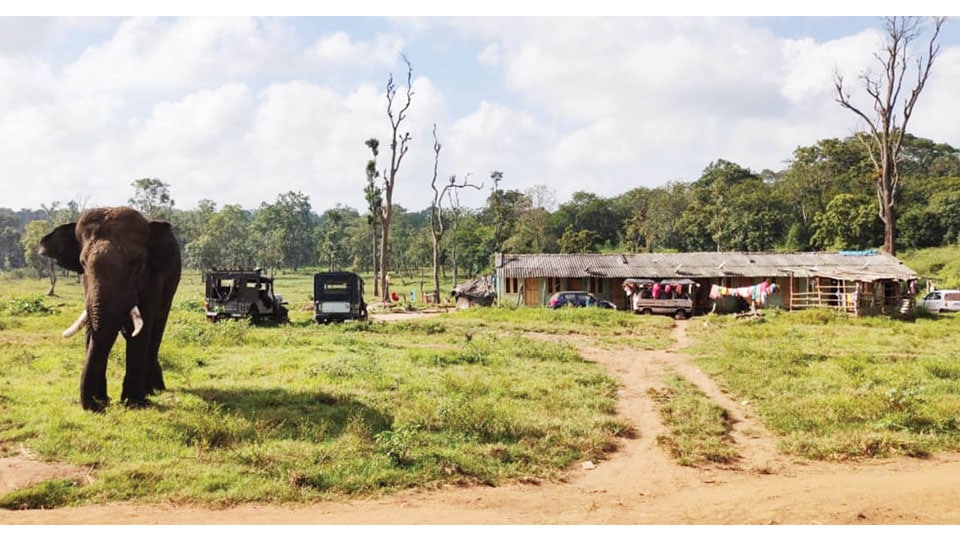
The recent census of elephants in Kodagu forests has indicated that there are 1,103 jumbos in the jungles. The census was taken up for three days last month. The number of elephants has increased in Kodagu though the region is in the middle of human-wildlife conflict.
Conservator of forests (Kodagu circle) BNN Murthy and DCF (Madikeri division) AT Poovaiah said that the census was taken up after a gap of six years. The elephant census, which was conducted in Karnataka, Kerala, Tamil Nadu , was conducted in 23 ranges of four divisions in the district namely Madikeri, Virajpet, Madikeri wildlife division, and Nagarahole Tiger Reserve. About 800 personnel were involved in the census.
The elephant census was conducted in three phases. On the first day, the number of elephants was directly recorded through a block count. On the second day, indirect enumeration was done and on the third day, enumeration was done using the lake and dams by observing the number of elephants coming to drink water.
For enumeration operations, the enumerators roamed forest areas on foot and recorded the marks of elephants seen in the forest as per the prescribed document. The number of male, female and baby elephants in a herd of elephants was determined, officials noted.
There were 200 teams of three people each. Arms were provided to each team as a precautionary measure, the officials stated.
The forest officials said that there are a large number of elephants dwelling in the plantations also and if this number is detected, the number of elephants will increase substantially.
source: http://www.timesofindia.indiatimes.com / The Times of India / Home> News> City News> Mysuru News / by G. Rajendra / TNN / June 07th, 2023
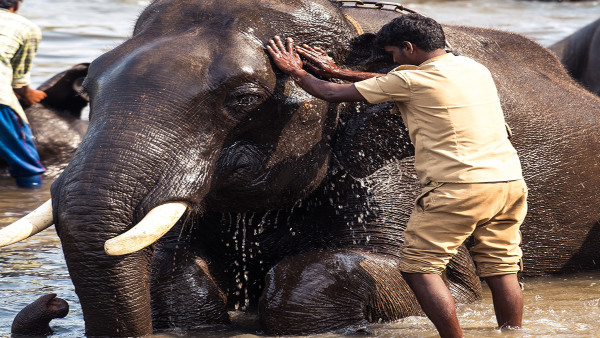
Dubare Elephant Camps, nestled amidst the picturesque beauty of Karnataka. It offers an unforgettable experience for wildlife enthusiasts and nature lovers. Located on the banks of the River Cauvery, this unique destination provides an opportunity to interact with elephants in a responsible and sustainable manner. In this comprehensive travel guide, we will explore the fascinating world of Dubare Elephant Camps, providing insights into the camp’s history, activities, wildlife encounters, accommodations, nearby attractions, and essential travel tips. Let’s embark on this remarkable journey into the heart of the elephant kingdom.
History and Background
Dubare Elephant Camps have a rich history rooted in the tradition of the mahouts (elephant trainers) who once served the Maharajas of Mysore. Initially, it served as a training ground for elephants used in the royal processions and other important functions. Over time, it transformed into a conservation and eco-tourism destination, where visitors can learn about the gentle giants and contribute to their well-being.
Getting There
Dubare Elephant Camps are located approximately 240 kilometers from Bangalore, the capital city of Karnataka. The nearest airport is the Kempegowda International Airport in Bangalore, while the nearest railway station is Mysore Junction. From there, one can hire a private taxi or take a bus to reach the camps.
Activities at Dubare Elephant Camps
a. Elephant Interactions:
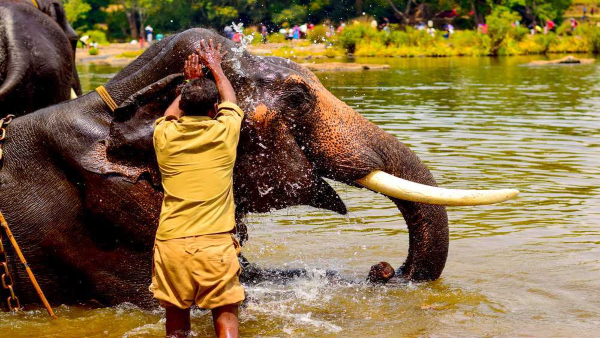
The highlight of the camp is the opportunity to interact with elephants. Visitors can learn about their behavior, feed them, participate in bathing sessions, and even take part in the elephant grooming process.
b. River Rafting:
The camp offers thrilling river rafting experiences on the River Cauvery, allowing visitors to soak in the breathtaking views of the surrounding forests.
c. Nature Walks and Bird Watching:
Explore the lush green surroundings on guided nature walks, spotting diverse bird species and learning about the local flora and fauna.
d. Fishing:
Engage in a calming fishing experience in the river, trying your luck at catching the elusive Mahseer fish.
e. Coracle Rides:
Hop onto a traditional coracle boat and glide through the gentle waters of the River Cauvery, enjoying the tranquility and scenic beauty.
Wildlife Encounters
Apart from elephants, Dubare is home to a wide variety of wildlife species. Visitors have the chance to spot animals such as deer, gaur (Indian bison), wild boars, and various reptiles. Lucky guests may even catch a glimpse of the elusive leopard or tiger. The forest also boasts a vibrant birdlife, with species like Malabar pied hornbill, Indian roller, and white-bellied treepie making it a bird watcher’s paradise.
Accommodations
Dubare Elephant Camps provide various options for accommodation, ranging from tented cottages to eco-friendly lodges. The camps offer basic amenities while maintaining a close connection to nature. Visitors can enjoy a comfortable stay surrounded by the serene beauty of the forest.
Nearby Attractions
a. Namdroling Monastery: Situated in Bylakuppe, the largest Tibetan settlement in India, the Namdroling Monastery is home to thousands of monks and houses stunning Tibetan architecture.
b. Cauvery Nisargadhama: A scenic island formed by the River Cauvery, Nisargadhama offers lush greenery, bamboo groves, and a deer park, making it an ideal picnic spot.
c. Nagarhole National Park: Located nearby, this national park is a tiger reserve and a haven for various wildlife species. Visitors can embark on a thrilling safari to witness the incredible biodiversity of the region.
Best Time to Visit
The ideal time to visit Dubare Elephant Camps is from October to March when the weather is pleasant. During this period, one can enjoy outdoor activities without being hindered by the monsoon rains.
Essential Travel Tips
a. Carry comfortable clothing, walking shoes, and insect repellents.
b. Respect the animals and follow the guidelines provided by the camp authorities for the safety of both visitors and elephants.
c. Plan your visit in advance and make necessary reservations, especially during peak seasons.
d. Avoid littering and maintain cleanliness within the camp and its surroundings.
Dubare Elephant Camps offer an incredible opportunity to connect with nature, immerse in wildlife encounters, and understand the significance of elephant conservation. From thrilling activities to serene moments amidst the wilderness, this destination promises a memorable experience. By responsibly exploring the Dubare Elephant Camps, visitors can contribute to the conservation efforts and create lasting memories of their wildlife adventure in Karnataka, India.
source: http://www.nativeplanet.com / Native Planet / Home> Travel Guide / by Navya Sona /June 24th, 2023
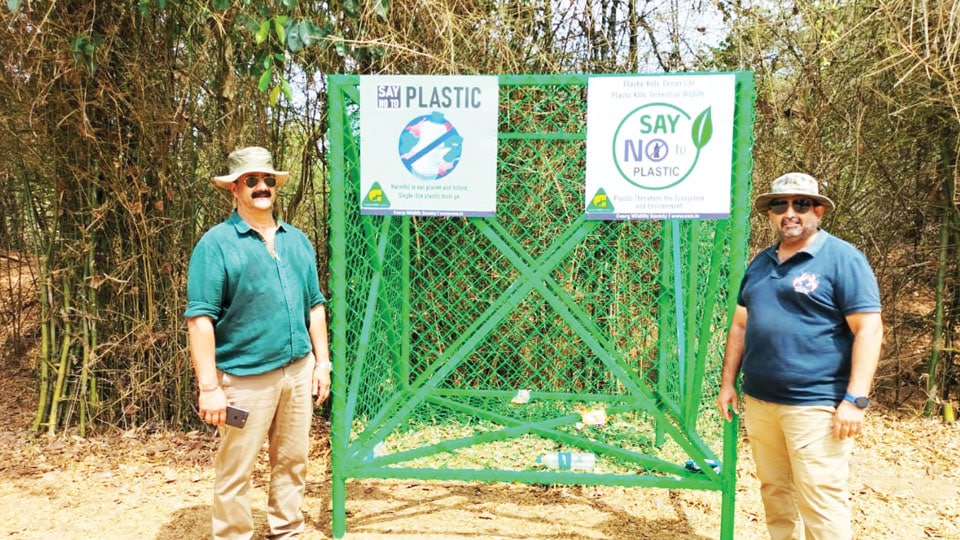
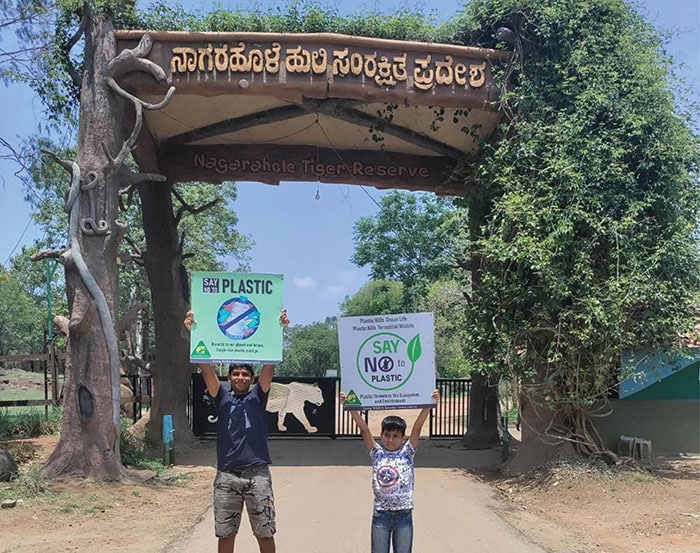
Coorg Wildlife Society (CWS) has taken a significant initiative by installing mesh waste bins at all four entrances of the Nagarahole Tiger Reserve — H.D. Kote Gate (Kallatti Gate or Metikuppe Gate), Veeranahosahalli Gate, Karmad Gate and Nanachi Gate.
This proactive step aims to ensure a plastic-free environment and eliminate the usage of single-use plastic bottles and sachets within the forest premises. In collaboration with the Karnataka Forest Department, the CWS has ensured the proper disposal of single-use water and juice bottles, as well as used sachets, into these bins before entering the forest.
This endeavour marks the beginning of an aggressive campaign aimed at achieving a zero-tolerance policy towards plastic waste within Nagarahole Tiger Reserve. Achieving this goal necessitates vigilant monitoring at all entry gates, a responsibility that Coorg Wildlife Society has undertaken, particularly during long weekends and holidays when visitor traffic is higher.
The society has thanked the Forest Department for its support, which has been instrumental in making this initiative possible. The society has announced that similar mesh bin installations are planned at the Anechowkur and Thithimathi entry gates from the Mysuru and Kodagu sides in the near future.
According to Coorg Wildlife Society office-bearer Karthamada Naveen Bopaiah, the Society is committed to promoting sustainability and a litter-free sanctuary within Nagarahole Tiger Reserve. “With continued cooperation and efforts, we are optimistic about creating a sustainable ecosystem where wildlife thrives and litter is kept at bay,” he added.
Tourists entering Nagarahole from the districts of Karnataka and Kerala dump plastic waste on the roadsides of the forest area with various environmental implications. Those forest areas in the proximity of human settlements or recreation areas have become vulnerable to waste pollution. Though the Department has initiated waste collection facilities, the illegal dumping of waste inside the Nagarahole Reserve is still present.
source: http://www.starofmysore.com / Star of Mysore / Home> News / June 16th, 2023
The Thar is so different from my BMW 320d, in all senses, and driving this SUV was indeed a very different experience.
BHPian Dr.AD recently shared this with other enthusiasts.
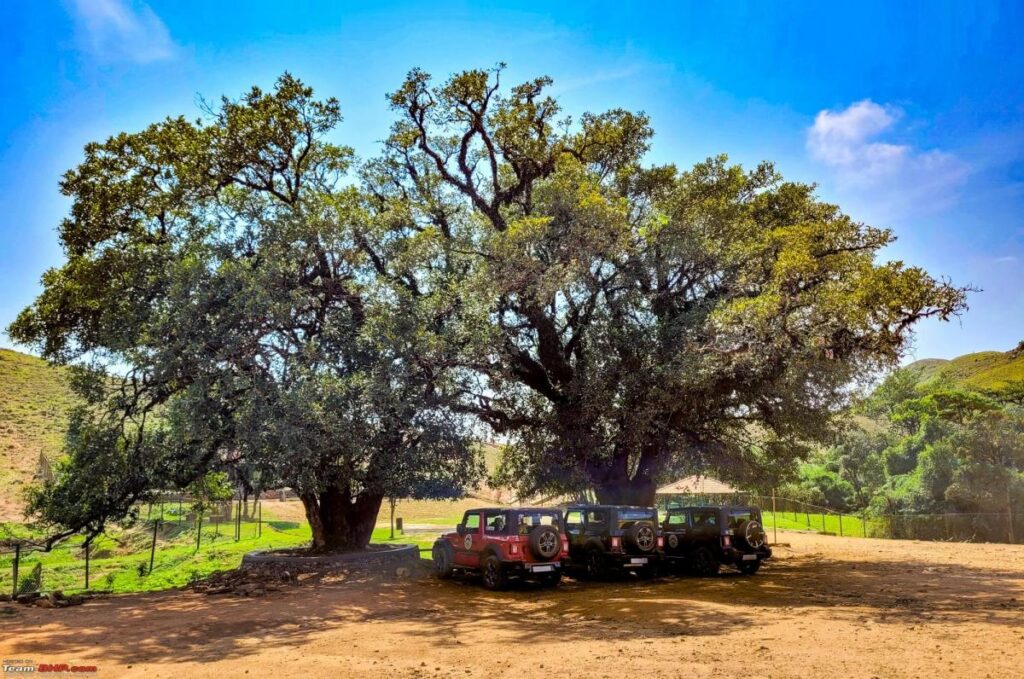
Three Thars and the Hills of Coorg
First Drive with my New Thar:
Just about three months ago, I would have never imagined I would be writing a Thar travelogue, that too so soon. My road trips used to primarily be with my red BMW 320d, and there was no real plan to do something very different so soon.
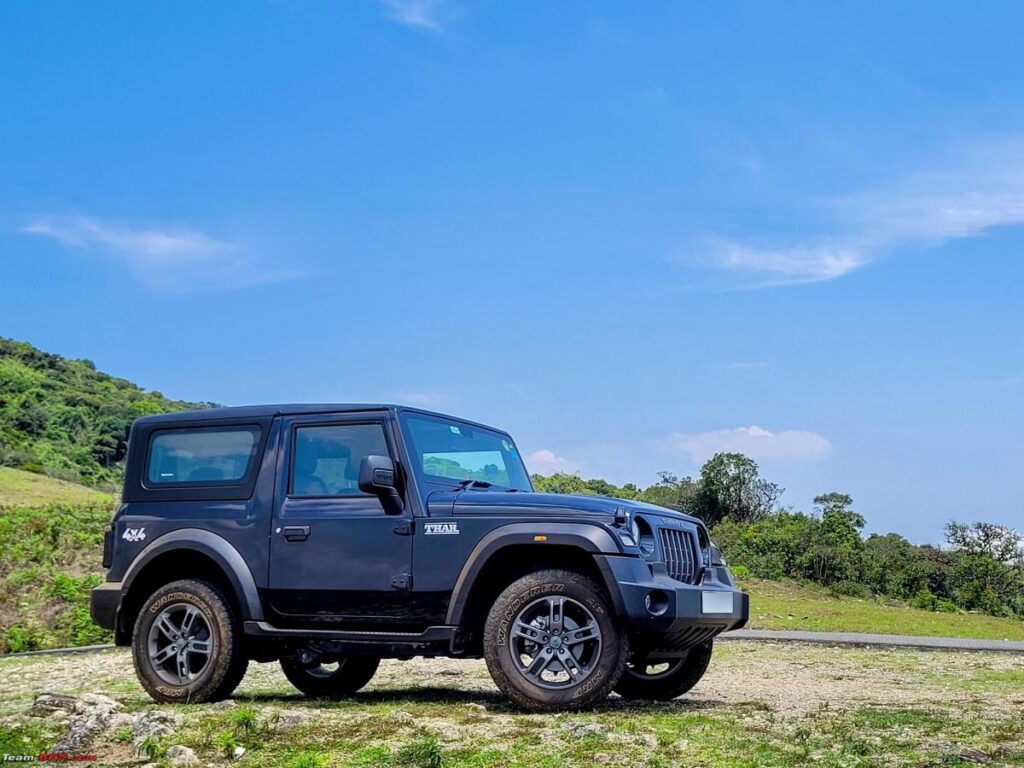
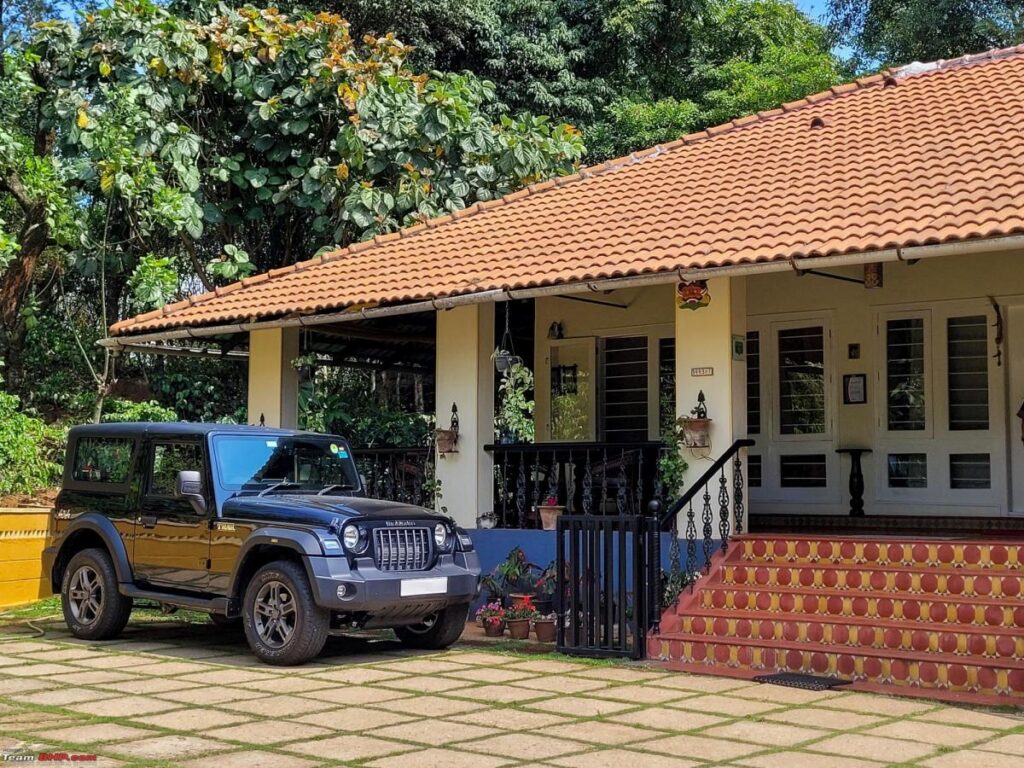
But then, as always, life is all about unpredictability and experimentation. In somewhat of an unexpected (to myself) development, and purely as a fun experiment, I bought a brand new Mahindra Thar (Petrol AT 4×4 in Napoli Black) just a couple of weeks ago. From now on, this would be a new companion to my trusted BMW 320d. I plan to create my Thar ownership thread someday. But I thought it would not necessarily be inappropriate to start with a travelogue ahead of the ownership thread.
I always buy cars for long road trips and visit beautiful locations as my primary purpose. And every time I bought a car, I took that car for a long drive pretty much immediately. Thar is no exception. I got the Thar just a couple of weeks ago. In those two weeks, all I had managed was about 200km of driving around (mostly due to busy work schedules and work travels). This first road trip added about 700km to that, and was a perfect introduction for me to the new Thar and its capabilities.
In a nutshell, this trip was memorable to me because this was my drive in the new Thar. Thar is so different from my BMW 320d, in all senses, and driving a Thar was indeed a very different experience. Getting used to the Thar and understanding its capabilities was a big part of the motivation for this drive. Another thing that made this drive special to me was that, unlike my road trips in the 320d, this time, there was plenty of off-roading too. The main purpose of Thar is to explore rough terrains, and we did that on this very first road trip.
My new Thar in the hills of Coorg:
The Thars, The Crew and the Homestay:
One of the many reasons I love TeamBHP is because of the friends I made thanks to this forum.
My partners in this drive were our close friends Mr. and Mrs. @robimahanta, in their Aquamarine Blue Thar (Petrol 4×4 AT).
But as a bonus, this time, we made new friends.
It was a great pleasure to have Mr. and Mrs. @justwheels, in their Red Thar (Diesel 4×4 AT). We met them for the first time on this drive, and we had a great time together.
And of course, my better half was with me in my Black Thar, and she enjoyed the Thar experience (including some off-roading) even more than I did. I am glad she likes the Thar so much and so quickly that she is hooked on the idea of exploring difficult terrain in a 4×4 vehicle!
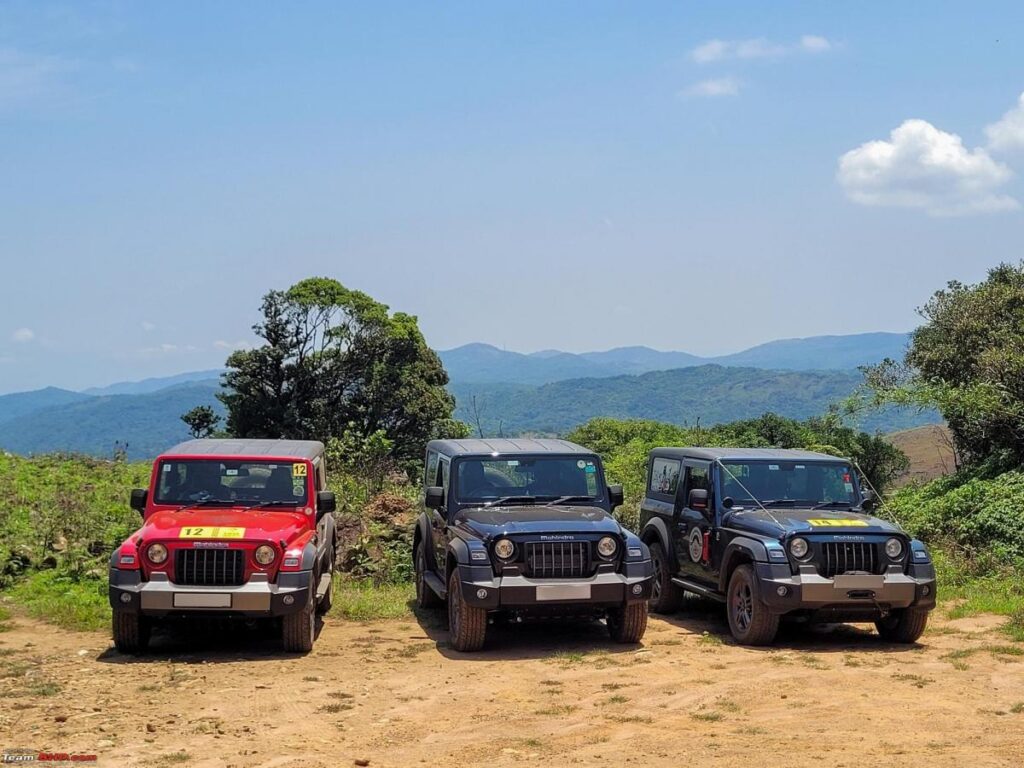
The Three Thars together on the hills of Coorg:
The Homestay:
We stayed at the same homestay where we had stayed back in August 2022 and loved it so much, as I described in my tip report from that time. The homestay is called Green Pastures, Coorg.
The homestay owners and hosts, Hemanth and Tripula, are wonderful hosts and good friends now. Just like my previous experience there, this time too we had a great time at the homestay and had a wonderful experience overall.
The homestay has three rooms, and that was just perfect for the three Thars and three couples traveling together.
Green Pastures is not only a beautiful homestay, but one more speciality of the place is that the owner Hemanth is an off-road enthusiast and a very experienced off-roading expert. He himself owns an old Mahindra MM540 4WD, and also organizes some off-road events in Coorg. He knows the trails and hills of Coorg like the back of his hand. One of the main motivations for visiting his homestay in Thars was to do some off-roading explorations nearby guided by his knowledge of the area. He indeed gave us some great routes to explore and even took out his MM540 and lead us on a beautiful hill trail the first evening we were there. It was a great experience to follow his MM540 and watch it handle the terrain with so much ease and poise.
Anyways, I will stop this prologue here and share the off-roading experiences and photos below.
Exploring Roads and Off-Roads of Coorg
One of the main agendas for me on this trip was to try off-roading in my new Thar. I have done one major off-roading expedition in the past in the deserts of Rajasthan (described in this old travelogue) and then did a couple of small off-roading events here and there. But still, never did any off-roading in my own car. This trip was my first experience of off-roading in my own car in a small private group (without any official “organizer” of the event). Overall, I am still new to this game of off-roading, but thankfully, I had expert off-roaders @robimahanta and @justwheels with me, and their guidance and the tips they shared were also a great learning experience for me.
We did not do any hard-core off-roading on this trip (and that was not the plan anyways), but we did some mild off-roading, and then also drove around on some random hills and some mud paths we saw along the way. All of this gave me a good taste of off-roading in one’s own car and I enjoyed it a lot.
The first evening we were there, Hemanth (the homestay owner and our host) took us to a nice trail in the hills nearby, leading us in his MM540 4WD, at the sunset hour. It was a short drive, but still was a wonderful drive.
The MM540 leading the convoy of three Thars on a nice hill trail at dusk:
It was a short but nice trail. We saw some great views from the viewpoint we reached the top of that small hill. For me, this was also the first time I used 4-wheel drive mode (4H) on my new Thar. It worked well on the first attempt, and everything was fun. I enjoyed this short off-road drive for sure.
The next morning Hemanth suggested a nice circuit that included some off-roading and some driving on lesser-known hill roads that were so broken that it justified having a Thar there. I would have never driven on those broken hill roads in my BMW. But the Thar was totally in its elements on those roads, and we managed to cover both totally broken roads and the off-road hill climbs with ease. Both I and my wife enjoyed this new experience, and we enjoyed this new aspect of motoring.
To start the driving day, we first hit a hill called Kote Betta. We reached the peak and randomly explored some paths nearby.
From Kote Betta, we started driving on some lesser known hill roads and some very narrow country roads. At one point, we found a random mud path leading to some flat grassland, and just randomly drove on those mud tracks. I got another opportunity to use 4H in my Thar and I enjoyed it again.
We continued our drive on the rural hill roads, and at one point, found another hilltop where we could go off the road again.
After driving on these narrow hill roads, we hit a proper off-road trail to reach a hilltop known as Mandalpatti Peak. This is a hilltop with panoramic views all around. And it takes a proper 4×4 vehicle to reach this location as the path to this is a dirt track full of stones, and at a couple of points, requires tricky maneuvers over rocks and a few steep rocky sections.
At the beginning of this off-road trail, there is a check-post which allows only 4×4 vehicles to enter, after paying the appropriate fees.
After some careful crawling on those rocky sections and the stone-filled road, we reached the hilltop.
The three Thars at the top of Mandalpatti hills:
This trail was not too difficult for Thar, but yet was just right to give me a good idea of Thar’s capabilities and a preview of what kind of drives I would do in future in my Thar. I used 4H and Hill Descent Control (while coming down the hill), and I was happy that both of these features worked very well. This being my first drive in the new Thar, I was still getting used to handling this vehicle on such hill trails.
But here, @justwheels went ahead of me, and started giving me instructions on radio and I started following the lines suggested by him. Thanks a lot to him for his expert guidance that helped me quickly understand the nuances of handling Thar on such terrain. @robimahanta was behind me and was watching me carefully and giving tips as and when necessary. The three of us were using radios for communication and that was of immense help. Thanks to both of these expert off-roaders for making my first off-roading experience in my own Thar both easy and fun.
Epilogue
It was a short and sweet weekend drive that was made memorable by the beautiful Thars, the great company we had, the idyllic homestay and the wonderful hosts there.
Thanks to all of these for making this trip so much fun. Everything went well except for the weather. We were expecting some rain (common in Coorg at the end of May), and looking forward to driving in the rain and mud on the hills. Unfortunately, we were unlucky with the weather. There were no rains at all when we were there, although it rained before we went there and the forecast showed a lot of rain in the following week. Just the weekend we were there was bone dry and quite hot, something totally different from what we expected.
I was happy that I got to use the Thar well and got accustomed to it quickly. I wanted to try out various mechanisms in Thar, and I got to use 4H and Hill Descent Control on multiple occasions. I also used Cruise Control on the Mysore-Bangalore highway and everything worked fine. The only thing I did not get to use was 4L (given the bone-dry weather, there was no mud or slush anywhere and there was no chance to use 4L). Hopefully, my future trips will give me plenty of opportunities to use 4L.
Personally, for me, it was a new experience for sure. Thar is so different from my BMW 320d that driving it felt like playing a totally new game compared to what I am used to. And honestly, both I and my wife enjoyed this new Thar experience. True that both the ride and handling are quite bad in Thar. However, once you experience and appreciate what Thar is capable of beyond the tarmac and smooth roads, it is easy to look past these shortcomings and start liking the vehicle anyways. The simple joy of motoring with peace of mind on broken roads and wandering around on hilltops without worrying about your vehicle was something that we totally loved. And that exactly is the USP of Thar. Anyways, it is still early days for me with Thar and I will comment more on my Thar experiences after a few more drives.
Of course, I absolutely love driving my 320d too, and I plan to use both the 320d and Thar for different kinds of road trips from now on. Hopefully, I will have more Thar stories and travelogues to share in the future, but for now, this simple weekend drive was the first chapter in a new driving experience for me.
Well, that is all for now. Thank you for reading!
P.S. During my final reading of the travelogue after composing it, I realized that every single photo I included in this travelogue has a Thar in it. Not a single photo without a Thar! This was certainly not by design and certainly not done on purpose, but it just so happened and I myself noticed that only in the end. But this shows the photogenic appeal of the Thar. I just did not bother shooting any landscapes or sunset pictures this time, when I had three beautiful machines to shoot instead.
Check out BHPian comments for more insights and information.
source: http://www.team-bhp.com / Team-Bhp.com / Home> News / by Utkarsh Chaudhary / June 05th, 2023
Superintendent of Kodagu district police K. Ramarajan has issued a stern warning against ill-treatment of tourists visiting the district.
The police warning comes in the wake of the assault on tourists in Abbey falls in the district allegedly by parking fee collectors.
Speaking at the Kodagu District Tourism Committee meeting at the Deputy Commissioner’s office in Madikeri on Tuesday, Mr. Ramarajan directed officials to ensure that notice boards with a message for tourists to contact emergency services on 112 should come up in all tourist destinations and highways leading to tourist places in the district in the next ten days.
In the event of ill-treatment of tourists by locals, the Police Department will register suo moto cases against the persons accused of misbehaving with them.
Tourists from different parts of the State and the country will visit the district. It was necessary for locals and the administration to treat them well, he said.
Deputy Commissioner of Kodagu B.C. Sateesha emphasized upon the need to ensure that incidents like the one taking place at Abbey Falls were not repeated.
Superintendent of Police pointed out that frequent trouble has been reported over the issue related to parking of vehicles in Abbey Falls.
Mr. Ramarajan said the Police Department will issue time-bound No Objection Certificates (NOC) to home-stays while seeking co-operation from everybody to the district administration and the police’s efforts to maintain a vigil against the use of ganja and other narcotic substances.
The meeting also saw demands for resolving the issues surrounding parking of vehicles at Abbey Falls, widening the road leading to the waterfalls and fixing a speed limit for the vehicles.
The participants also called upon the authorities not to focus only on Raja’s Seat, Abbey Falls and Mandal Patti, but also consider for development other places in the district like Somwarpet, Malali Waterfalls etc.
source: http://www.thehindu.com / The Hindu / Home> News> India> Karnataka / by The Hindu Bureau / May 30th, 2023
The impact of modernisation, globalisation, liberalisation and privatisation has significantly eroded indigenous customs and traditions, leading to their gradual decline. Nevertheless, the establishment of the Kodava Heritage Centre at Madikeri in Kodagu dedicated to preserving these customs and traditions for future generations is commendable, said Dr. M. Nanjaiah Honganur, Head, Department of Studies in Folklore, University of Mysore.
Speaking to Star of Mysore, Dr. Nanjaiah Honganur said that in recent times, the cultural heritage of our land is rapidly fading away due to the influence of modernity. It is the collective responsibility of all individuals to safeguard these practices and pass them on to the next generation.
“Kodagu boasts of a unique culture and environment. Establishing a Heritage Centre in collaboration with the Kodava Samaja to safeguard the customs and traditions of the region is a worthy endeavour. It aims to narrate the history of the land through both physical and virtual means,” he said. “Presently, our customs and traditions are being relegated to the pages of history due to various factors and the pressures of modern life. Kodagu takes great pride in its distinctive traditions, making it essential to preserve them. Efforts should focus on conserving customs related to Kodava marriages, festival celebrations, funeral rituals, agricultural practices, farming in hilly regions and heritage handicrafts. These aspects must form the core of conservation initiatives, which need to be undertaken promptly,” he suggested.
Museums, often referred to as ‘material culture house’ exhibits items once used by our ancestors, such as farming equipment, household articles, attire and other objects. These museums play a crucial role in introducing younger generations to our traditions and customs. They serve as a timeless resource for transferring culture to the next generation, raising awareness about historical artefacts. Museums dedicated to culture hold particular significance in society, he added.
Opposition from some quarters to the establishment of the Kodava Heritage Centre is unjustified, he noted. “Educating the younger generation about age-old practices becomes our responsibility. Online museums dedicated to specific topics have gained popularity and a similar demand has emerged in Kodagu. While these digital platforms benefit educated individuals and netizens while creating global awareness, regular museums attract a wider audience,” he added. The opportunity to closely examine and interact with exhibits in person provides a unique experience. The freshness and tactile engagement during a visit to a traditional museum are unparalleled, he noted.
“Regardless of cultural form — be it folk, coastal or any other — all folk practices should be preserved and programmes should be designed accordingly,” Dr. Nanjaiah Honganur added.
source: http://www.starofmysore.com / Star of Mysore / Home> News / by M T Yogesh Kumar / May 29th, 2023
A grand ‘Kodava Yuva Mela’ was hosted by Jabboomi Charitable Trust at Crystal Court Hall in Madikeri yesterday that reflected the unique Kodava culture, attire, traditions and practices.
Such a Mela was held for the first time and thousands of community members, wearing their best traditional attire, had gathered from all parts of Kodagu and the gathering also comprised community members from Mysuru and Bengaluru. Special buses were arranged to ferry them to Madikeri.
The Mela provided a platform for youth to connect with one another to build long-term bonds which will enhance cohesiveness within the community. It enabled the Kodava youth to meet, greet and network with each other and recall, re-live and experience the tradition and culture.
Kodava youths are scattered across the State and country owing to professional, educational, residential and personal reasons. As a result, intra-community relations have weakened over decades. The only occasions when youth are able to interact with each other are limited to social and family get-togethers within Kodagu and beyond its borders.
The Mela began with a puja to Goddess Cauvery and ‘Gejje Thand’ (a sacred wand held by Kodava men during important events. It is usually sacred ownership of every Okka (family)) and the overall message to the youngsters was to unite and not to forget the traditions and culture of the motherland.
Jabboomi Charitable Trust Convener Chottekmada Rajiv Bopaiah said that the youths must not forget the roots of the community. “Kodagu, its uniqueness, culture, traditions and practices are like a ‘mother root’ and cannot be forgotten. “It is our duty to safeguard the Kodava soil (land), ethos, tradition, family values, age-old and time-tested practices, festivals and holy observations,” he noted.
We must be committed to preserving the tradition and fight for the existence of the Kodava community in the face of any adversities and at the same time unite the community socially, financially and culturally so that we can live in co-existence and facilitate the thriving of Kodavaame in the land of Kodagu,” he added.
Noted youth achievers of the community Vice-President – Talent Acquisition, State Street Ajjamada Goutham Chengappa, chef Bariyanda Naren Thimmaiah, singer Machchanda Sharan Aiyappa, actors Ulliyada Bhuvan Ponnanna, Uddappanda Harshika Poonacha, Koothanda Tarak Ponnappa, IRS officer Dr. Kottangada Pemmaiah, Bharatanatyam exponent Mukkatira Shilpa Nanjappa, young writer Mevada Aliya Chondamma, make-up artist Baduvanda Madhushree Ganapathy, head of Lopamudra Medical Centre Mukkatira Dr. Amrit Nanaiah, industrialist Machcharanda Deepika Appaiah, planter Kallichanda Chengappa and forest officer Naganda Parvathi were felicitated.
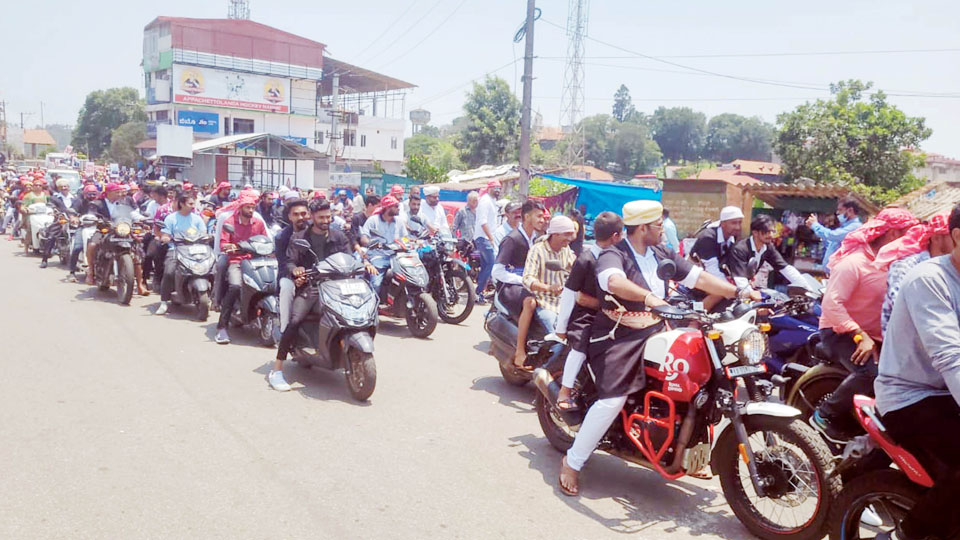
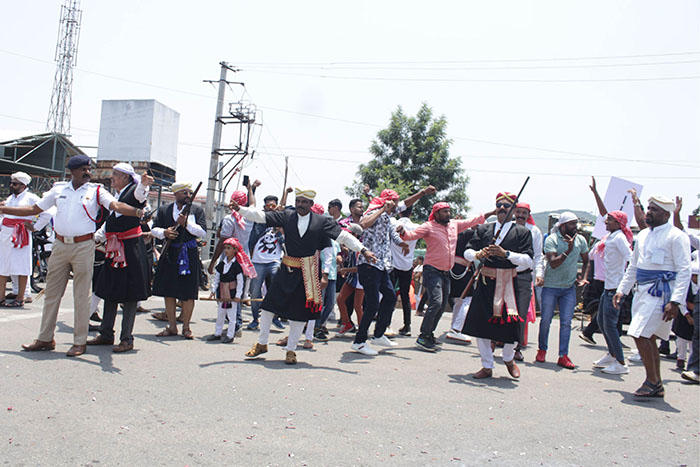
A massive procession was held on the streets of Madikeri as part of the mela from the private bus stand to the Crystal Court Hall where the male community members carried their traditional weapons including guns and ‘Odikathi’ (sword), the female crowd sporting their traditional Kodava saree and the ‘vasthra’ (head scarf) and accompaniments like ‘Thalithakki Bolcha’ (traditional lamp). A lot of traditional bands too performed along the procession route attracting the crowd and tourists.
The statues of war heroes and Generals including Squadron Leader Ajjamada Boppayya Devayya, Major Mangerira Chinnappa Muthanna and General Kodandera Subayya Thimayya were garlanded along the procession route. Hundreds of youths rode their bikes along the procession route.
source: http://www.starofmysore.com / Star of Mysore / Home> News / May 21st, 2023
Our travel diary from a weekend of bliss at this 125 acre property nestled in the hills of Madikeri.
Baalelle restaurant at The Ibnii in Coorg
Waking up to the sound of birds chirping and the gentle lap of water is what mornings are like at our pool villa at The Ibnii. Turns out we forgot our swimsuit. But a deterrent this is not. With not a soul in sight, except the stunning views of lush green trees that tower up high and coffee plantations in the distance — a 7am dip feels a bit surreal. The air is chilly but the water is warm. Given it is temperature controlled, this is the case even at midnight, we soon discover, much to our delight. For now however, we realise it is our moral imperative to simply soak in the moment. Phone off. Soul turned on. One hundred and twenty five acres of pristine forest land embraces us in response.
Some moments like the one above are suspended in time. While others are steadily threaded into a highlight reel of our days spent at this wellness resort nestled in the hills of Madikeri, Coorg. Right on top of this list is when Priyanka, who is showing us around the property, over a walk, plucks an orange flower and promptly pops it whole, into her mouth. “It’s edible, I eat one every morning,” she says, most matter-of-factly, as though this is as common as a bowl of oats. We are keen to pop a morning flower too! The nasturtium, as it is called, is mild and sweet with an unexpected kick of spice at the end. Definitely our most memorable palate adventure, although the kitchen’s Pandi Curry, comes in a close second.
At the pool villa
Mindful eating To keep waste to a minimum, we find out that this resort has a unique policy — guests need to pay Rs 100 for every 10 grams of food they waste. Bold, but effective we realise, as we find ourselves doubly mindful about what we put on our plate from the buffet. That said, if you do end up paying for food wasted, it is heartening to find out that the funds are donated to an orphanage in Madikeri. Meanwhile, another big surprise is that the drinking water at The Fig, the resort’s multi cuisine restaurant, quite literally comes from the air. We spot a robust air water purifier that does the job in the corner one afternoon, after returning from a relaxing hour spent at the spa. En route, we recall spotting a family of sunbathing monkeys, so perhaps all species at this resort take ‘rest and recharge’ quite seriously.
Forest restoration With an awareness that all natural ecosystems are vanishing all over the world at an alarming rate, the resort has committed a third of its property for the purpose of restoration of forest. Sherry Sebastian, one of the founders of The Ibnii says, “Bringing back a complex ecosystem such as this one within the Western Ghats is a slow process. We have more than 50 species of trees already growing here but the whole understory is choked mostly by coffee plants that are growing densely. We have taken up the mammoth task of selectively removing the invasive plants so natural regeneration can happen.” She adds, “Additionally, this area will be used as a resource to educate our guests about the importance of the natural world.”
Breathe in
■ Electric cars and buggys are used on the property to keep the air clean ■ Guests are privy to a live air quality index monitor at the reception ■ Drinking water at the restaurant is quite literally bottled from moisture in the air with the use of an air water purifier
Kodava lessons A bit of trivia for folks looking at a getaway here soon, apart from nature walks and regional cuisine, you get impromptu language lessons in the local Kodava tongue, courtesy names like Baalelle (banana leaf) for their vegetarian restaurant or Pattole Palome (a collection of Kodava folklore), which is the name of the green building it is housed in. Kaldi Kappee, the resort’s award-winning lakeside coffee shop, however, has been named after the Ethiopian shepherd who discovered coffee beans back in 850 CE. As the story goes, he noticed his goats nibbling on some wild berries, following which they pranced around with more energy than ever, making him curious enough to try the berries himself.
Coffee date While on the subject of coffee, don’t miss the resort’s coffee trail. Ours encompasses the different stages of berries and coffee making and ends with the grand reveal of a prized jar of dried ‘civet poop’. The civet cat better known as the Kopi Luwak roams free on the premises and for conservation purposes, the coffee from their droppings is not sold or monetised. But we do get the unique experience of holding some premium poop in our hands (pre washed of course). And then we’re told to do the oddest thing — shake it. We hold it up to our ear and shake to hear the softest jingle of coffee beans inside.
While civet coffee isn’t available at the resort itself, here’s a golden nugget of trivia for any coffee lover. Apart from those nutty flavour notes, this luxury brew is a great choice for folks who suffer from uncomfortable bouts of acidity. Given that it is essentially pre-digested by the civet cat, you can enjoy your cuppa with no reservations. We have to admit, this coffee date, poop et al, is perhaps one of our most ‘memorable’ and is definitely a change of pace from the Tinder experience.
The Ibnii is a 12 hour drive from Chennai. Accommodation at INR 18,000 onwards.
source: http://www.indulgexpress.com / Indulge Express, The New Indian Express / Home> Travel / by Sonali Shenoy / May 19th, 2023
The direct recruitment of Kavadis (elephant caretakers) has begun at Dubare Elephant Camp in Kushalnagar taluk, Kodagu district.
Following the order of the Government, Kodagu Division DCF B.N.N. Murthy kick-started the process of recruitment in the wake of lack of adequate number of Kavadis at the camp, in the presence of Forest Department officers.
A total of 29 Kavadis from different parts of the State are attending the recruitment, with due preference given to those adept at taming the elephants. The recruitment is being conducted to fill the vacant posts of five Kavadis at Dubare Elephant Camp,” said DCF Murthy.
Deputy Conservators of Forest (DCFs) Shivaram Babu and Sharanabasappa, Assistant Conservators of Forest (ACFs) Gopal, Srinivas Nayak and Nehru, Range Forest Officers (RFOs) Ananya Kumar and Shivaram, Deputy Range Forest Officers (DRFOs) Ranjan, Chetan and Savan and other forest personnel were present on the occasion.
source: http://www.starofmysore.com / Star of Mysore / Home> News / May 18th, 2023
Boys in sari and girls in traditional male attire at the Puthu Bhagwathy temple. Photo courtesy Nellira Ananya
The months of March, April and May witness many annual village temple festivals happening in Kodagu. The temple idols called ‘thadamb’ are carried by a priest on the head, in processions. ‘Therays’ (shaman dances), where performers wear colourful red costumes and imitate deities or ancestors, are organised in temples and ancestral homes of some clans.
The main festivals are the Bhagwathi Namme and the Boad Namme, which are held in honour of village deities. Two such temple festivals were held in the second week of April this year. One was at the Puthu Bhagwathy temple in Birunani village. The other was at Pannangalatamme in Yavakapadi village.
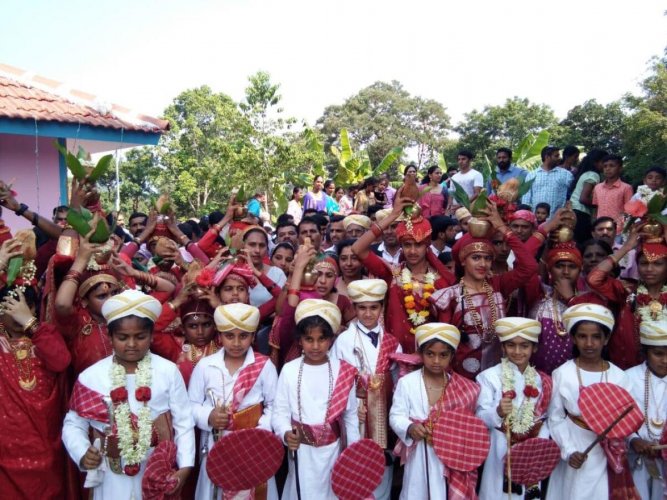
During the Puthu Bhagwathy festival, the people of Birunani make vows to the goddess in order to fulfil their wishes, often for the good health of their children. The celebrations include a ceremony similar to a wedding ritual, with the boys dressed as brides and the girls as grooms.
Legend has it that once five sibling gods — two brothers and three sisters — came to South Kodagu from Kerala. The eldest brother Mattlappa settled in Mathur near Ponnampet. The eldest sister Puthu Bhagwathy settled in Birunani. The younger brother Ogerelappa settled in the forests of Ogerelappa. The youngest sisters, twins, settled in Rudraguppe near the Kammaratappa temple and hill. They were known as Rudraguppelamme or Jodi Bhagwathy.
Members of the Kembatti, Kodava, Airi, Kudiya, Kaniya and other communities participate in the Pannagalatamme festival. They bring ‘bolle kall’ (toddy), umbrellas and other articles to the festival. A few members of the Kembatti community wear red or white ‘kuppyas’ (native coats) and perform ‘thirale’ or go into a trance.
The tale behind this festival goes as follows. Long ago, seven sibling gods — six brothers and one sister — lived in Kerala. The eldest brother settled in Tali Parambu and built a famous temple there. He sent his younger siblings eastward towards Kodagu to establish temples. Today, three of these other temples are in Kodagu, while the other three are in Kannur and Wayanad.
Four siblings came to Kodagu. The farm they were camping in belonged to the Pardanda joint family in Kunjila. The sister milked a cow belonging to the family which was grazing there. She used the milk to cook the rice. The rice was placed in a clay pot and buried in the hot sand beside a stream.
There were banana trees growing on the farm. The siblings cut a few leaves to use as plates. Ummavva of the Pardanda family saw this and scolded them. The sibling gods then cursed the family that no bananas would thereafter grow on their farm.
Muthanna, the head of the Pardanda family, then came and sought their forgiveness. But the curse took effect. However, the Pardanda were made the ‘deva thakka’ (hereditary temple managers) of the Igguthappa temple which was built in the nearby Padi hamlet.
Another brother settled in Palur and became known as Palurappa. The last brother settled in Thirunelli across the Kodagu border in Wayanad and is called as Pemmaiah.
source: http://www.deccanherald.com / Deccan Herald / Home> Spectrum / by Mookonda Kushalappa / April 20th, 2023
WELCOME. If you like what you see "SUBSCRIBE via EMAIL" to receive FREE regular UPDATES.
Read More »