Tag Archives: Dubare

Coorg and the bean talk

There’s more to Coorg than the coffee plantations, resorts and mountains shrouded in mist.

There are no Café Coffee Days or Baristas in the coffee county. Instead, vistas of stumped coffee plants growing in the shade of benevolent native trees stretch through silence broken by whistling wind and falling yet uplifting waterfalls. Wild elephants meander in the plantations in the day and fireflies fly in the plantations at night. Coorg is a country painted on a canvas and brought to life.

When you travel within India, you feel the truth of the cliché you’ve heard since childhood — India is many countries into one. How different are the people, their attires, aspirations, lives and even histories and humanities.

The bumpy, washed out road from Mangalore to Coorg changes its rough character drastically the moment it enters the Coorg district.

Perched on the Western Ghats of Karnataka, Coorg or Kodagu has gained its popularity in India in the recent years. She has claimed her place as a coffee plantation hill station, like her near and distant tea plantation cousins Kodaikanal, Ooty and Darjeeling. And with this claim numerous new resorts in the region have burgeoned, many of them located inside the coffee estates.

According to popular belief, coffee in India is rooted in a mystical beginning in the 17th century. The Muslim saint Baba Budan, returning from a pilgrimage, clandestinely brought along seven coffee seeds from Yemen (from where it was forbidden to take coffee seeds) and planted them in Chandragiri hills in Karnataka. These hills are now known as Baba Budan Giri. Like the seven skies and the seven rounds of Kabaa, the holy significance of number seven led him to carry seven seeds.

Kodavas are the main ethnic group of Coorg, carrying a rich farming and militia history. It is a culture that thrives on Nature, not industry. Paddy fields in the foothills and coffee plantations on the slopes, mainly around the district headquarter Madikeri, are the traditional and main source of livelihood.

What is different about the coffee country is not just the coffee, but guns. The Kodavas, being warriors in ancient times, worship arms. Guns are an important part of the festivals of this region. “Most families carry two or three guns,” says Biju, the co-owner of a coffee plantation that spreads over 400 acres. He continues with a glint in his eyes, talking about his passion, i.e., guns. “And yet it is one of the safest places to live in. The crime against women is quite rare and they are the main decision makers in many families.”

That is indeed reflected in the sex ratio where the number of females exceeds the number of males.

There are other ethnic communities and forest-dwelling hunter and gatherer tribes as well. Water is aplenty and the main river of the region is Cauvery. Coffee makes Coorg one of the richest districts of India. Sunil, the co-owner of a coffee plantation and The Porcupine Castle resort answers with a knowing grunt, when we inquire where we can find good coffee, “The coffee that you’re used to , is a mixture of different varieties of coffees.

And each one has a secret formulation, which the company doesn’t disclose. They just buy the raw coffee variety from us like Robusta and Arabica and process and mix it themselves.”

Nonetheless, the Indian coffee is supposed to be one of the finest in the world, grown fully in the shade of eucalyptus, vanilla and native evergreen and leguminous trees. The shade giving trees not only protect the coffee plants but also enrich the soil and prevent erosion. The exotic, full-bodied taste and aroma finds its way to your cup through intense labour and extraordinary care.

The coffee plantations are as multicultural and inclusive as the medley that is India. Pepper, cardamom, vanilla, a local variety of orange and bananas share the same home, drawing their daily supply of nutrients from the shared pool of coffee plantations.

The homesick British, who once inhabited the cool climes of Coorg, named it the Scotland of India. British architecture still stands strong in Madikeri and many tourists visit the same. Around 5 km away from Madikeri is Abbey Falls, a sight to behold, provided it’s not a public holiday.

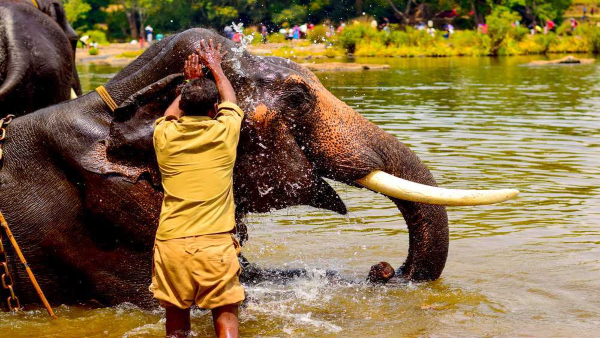
There is Iruppu Falls too where you can actually go inside the water. An elephant camp of the forest department at Dubare is another tourist attraction and so is Nisargadhama, an island in Cauvery. For the religious, there is Talacauvery, the origin of Cauvery, with a Lord Brahma temple on the bank. For the adventurous, there are the Nagarhole National Park, and Brahmagiri, Talacauvery and Pushpagiri Wildlife Sanctuaries. You can hope to catch a glimpse of a tiger, gaur, dhole (wild dog), leopard or elephant that magnanimously let you pass through the privacy of their living space.

Ever wondered what we would do if a tiger or a guar or a dhole or a leopard enters the privacy of our home or our garden or our street or even our city?

But the Kodavas and the other ethnic groups and tribals of Coorg don’t mind them coming in to their plantations and passing by their villages.

They know better than us that the mountains and fields belong as much to a lonely elephant or a pack of dholes. If I were to settle in the coffee country, it won’t be only for the lush landscape or healthy sex ratio or rich culture; it will be for the forgotten pleasures of experiencing synergy with nature.

source: http://www.thehindu.com / The Hindu / Home> Todays Pages> Features> Metroplus / by Arefa Tehsin / May 18th, 2016
Karnataka’s Kodagu district records over 95 lakh tourists in last two years

More than 95 lakh tourists visited the hilly district of Kodagu during the last two and a half years.

According to information provided by officials of the Tourism Department at a recent meeting of the Kodagu District Tourism Development Committee, the district had recorded 43.69 lakh tourists in 2023 and 45.72 lakh in 2024.

Sharing these numbers, Anita Bhaskar, Deputy Director of Tourism, Madikeri, said that Kodagu accounted for 23 out of the 778 tourist destinations identified under the Karnataka Tourism Policy 2020-26.

The tourist destinations in Kodagu included Raja Seat, Madikeri Fort, Abbey Falls, Mandalpatti, Harangi Reservoir, Mallalli Falls, Iruppu Falls, Dubare, Chikkahole, General Thimmayya Museum, and Nagarhole National Park among others.

A request had been made to shift the Talacauvery-Bhagamandala temples from the list of tourist sites to the list of spiritual destinations, the official said.

A total of 2,300 homestays in Kodagu district had been registered online and certified. This is in addition to the 150 hotels and resorts operational in the district, out of which 53 are officially registered on the Tourism Department’s portal.

Mandalpatti

The scenic peaks of Mandalpatti have been selected for development through Public Private Partnership (PPP) under the One District One Destination scheme.

The Galibeedu Gram Panchayat had approved the infrastructure development at Mandalpatti with an allocation of ₹50 lakh. However, as Mandalpatti falls under the Forest Department, cooperation of the Department has been sought for the repair of roads and other related works, the official said.

Referring to Chief Minister Siddaramaiah’s announcement on development of water sports and adventure tourism in his Budget speech of 2024-25 , the official said that Harangi reservoir will be open for such activities under Jungle Lodges and Resorts (JLR), while rafting licenses had been granted for Dubare in Kushalnagar and Barpuhole in Ponnampet.

Ms. Bhaskar said that the Tourism Department had sought approval from the Lake Development Authority to float tenders for rafting, kayaking, canoeing, wind surfing, jet skiing, and water zorbing at Honnamana Kere, a tourist destination in Somwarpet taluk of Kodagu district, which already has attractions like hills and caves.

Children’s mini train

Meanwhile, Deputy Commissioner of Kodagu Venkat Raja, who presided over the meeting, said steps will be taken to start a children’s mini train at Raja Seat after receiving a report from the engineers of South Western Railways.

He said that engineers from the Railways had already inspected the site and gathered details with regard to the proposal to start a children’s mini train.

source: http://www.thehindu.com / The Hindu / Home> News> India> Karnataka / by The Hindu Bureau / July 31st, 2025

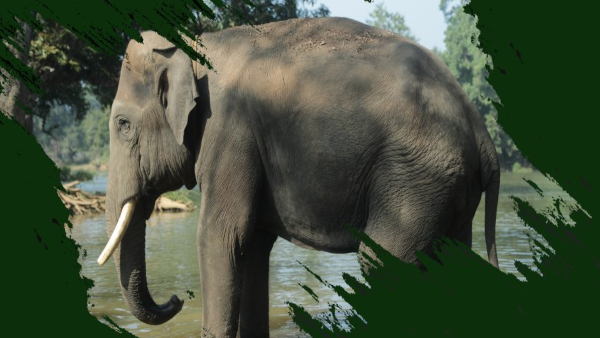
The majestic Elephant of Dubare elephant camps. What makes them so special?

Dubare Elephant Camps, nestled amidst the picturesque beauty of Karnataka. It offers an unforgettable experience for wildlife enthusiasts and nature lovers. Located on the banks of the River Cauvery, this unique destination provides an opportunity to interact with elephants in a responsible and sustainable manner. In this comprehensive travel guide, we will explore the fascinating world of Dubare Elephant Camps, providing insights into the camp’s history, activities, wildlife encounters, accommodations, nearby attractions, and essential travel tips. Let’s embark on this remarkable journey into the heart of the elephant kingdom.

History and Background

Dubare Elephant Camps have a rich history rooted in the tradition of the mahouts (elephant trainers) who once served the Maharajas of Mysore. Initially, it served as a training ground for elephants used in the royal processions and other important functions. Over time, it transformed into a conservation and eco-tourism destination, where visitors can learn about the gentle giants and contribute to their well-being.

Getting There

Dubare Elephant Camps are located approximately 240 kilometers from Bangalore, the capital city of Karnataka. The nearest airport is the Kempegowda International Airport in Bangalore, while the nearest railway station is Mysore Junction. From there, one can hire a private taxi or take a bus to reach the camps.

Activities at Dubare Elephant Camps

a. Elephant Interactions:

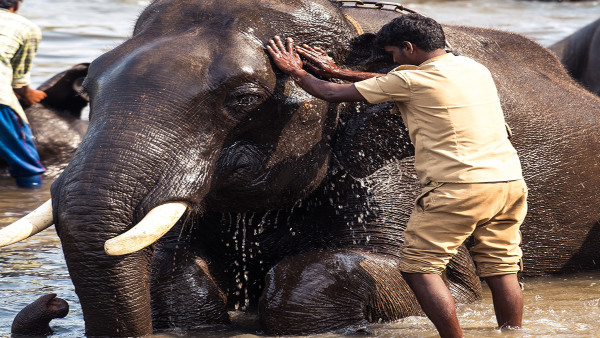
The highlight of the camp is the opportunity to interact with elephants. Visitors can learn about their behavior, feed them, participate in bathing sessions, and even take part in the elephant grooming process.

b. River Rafting:

The camp offers thrilling river rafting experiences on the River Cauvery, allowing visitors to soak in the breathtaking views of the surrounding forests.

c. Nature Walks and Bird Watching:

Explore the lush green surroundings on guided nature walks, spotting diverse bird species and learning about the local flora and fauna.

d. Fishing:

Engage in a calming fishing experience in the river, trying your luck at catching the elusive Mahseer fish.

e. Coracle Rides:

Hop onto a traditional coracle boat and glide through the gentle waters of the River Cauvery, enjoying the tranquility and scenic beauty.

Wildlife Encounters

Apart from elephants, Dubare is home to a wide variety of wildlife species. Visitors have the chance to spot animals such as deer, gaur (Indian bison), wild boars, and various reptiles. Lucky guests may even catch a glimpse of the elusive leopard or tiger. The forest also boasts a vibrant birdlife, with species like Malabar pied hornbill, Indian roller, and white-bellied treepie making it a bird watcher’s paradise.

Accommodations

Dubare Elephant Camps provide various options for accommodation, ranging from tented cottages to eco-friendly lodges. The camps offer basic amenities while maintaining a close connection to nature. Visitors can enjoy a comfortable stay surrounded by the serene beauty of the forest.

Nearby Attractions

a. Namdroling Monastery: Situated in Bylakuppe, the largest Tibetan settlement in India, the Namdroling Monastery is home to thousands of monks and houses stunning Tibetan architecture.

b. Cauvery Nisargadhama: A scenic island formed by the River Cauvery, Nisargadhama offers lush greenery, bamboo groves, and a deer park, making it an ideal picnic spot.

c. Nagarhole National Park: Located nearby, this national park is a tiger reserve and a haven for various wildlife species. Visitors can embark on a thrilling safari to witness the incredible biodiversity of the region.

Best Time to Visit

The ideal time to visit Dubare Elephant Camps is from October to March when the weather is pleasant. During this period, one can enjoy outdoor activities without being hindered by the monsoon rains.

Essential Travel Tips

a. Carry comfortable clothing, walking shoes, and insect repellents.

b. Respect the animals and follow the guidelines provided by the camp authorities for the safety of both visitors and elephants.

c. Plan your visit in advance and make necessary reservations, especially during peak seasons.

d. Avoid littering and maintain cleanliness within the camp and its surroundings.

Dubare Elephant Camps offer an incredible opportunity to connect with nature, immerse in wildlife encounters, and understand the significance of elephant conservation. From thrilling activities to serene moments amidst the wilderness, this destination promises a memorable experience. By responsibly exploring the Dubare Elephant Camps, visitors can contribute to the conservation efforts and create lasting memories of their wildlife adventure in Karnataka, India.

source: http://www.nativeplanet.com / Native Planet / Home> Travel Guide / by Navya Sona /June 24th, 2023