Category Archives: Travel, Tourism & Homestays (wef. Oct 03rd, 2021)

Nagarhole National Park: The ultimate wildlife adventure in Karnataka

Explore Nagarhole National Park’s wildlife, from elephants to tigers. Visit Kabini River, Iruppu Falls, and Brahmagiri Sanctuary for an unforgettable adventure!
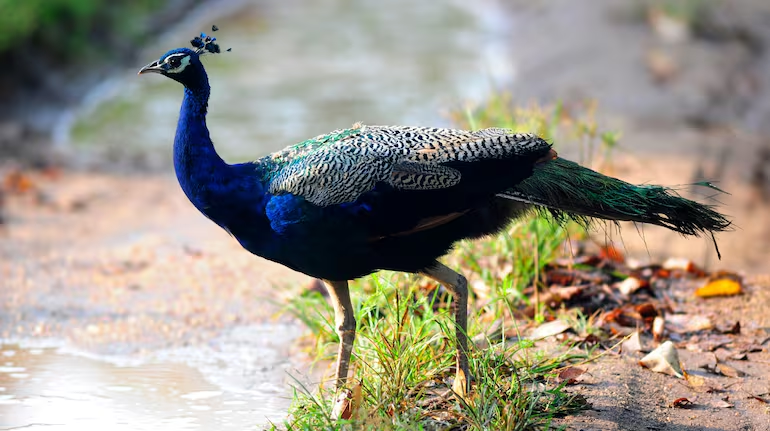
Exploring the natural beauty and wildlife of Nagarhole National Park. (Image: Canva)

Nestled in the lush landscapes of Karnataka, Nagarhole National Park, also known as Rajiv Gandhi National Park, is a treasure trove of wildlife and natural beauty. Located in the stunning Coorg district, this 640-square-kilometer park is part of the Nilgiri Biosphere Reserve and is a must-visit for any wildlife enthusiast or adventure seeker. With its tropical forests, rolling grasslands, and serene swamps, Nagarhole promises an unforgettable experience for those eager to discover the heart of India’s wilderness.

Best Time to Visit Nagarhole National Park
For the best chance to spot the park’s incredible wildlife, plan your visit between October and May, when the dry season takes over and the animals come out to play. The park remains closed during the monsoon months (June to September) due to heavy rains and the risk of flooding, so be sure to plan accordingly!
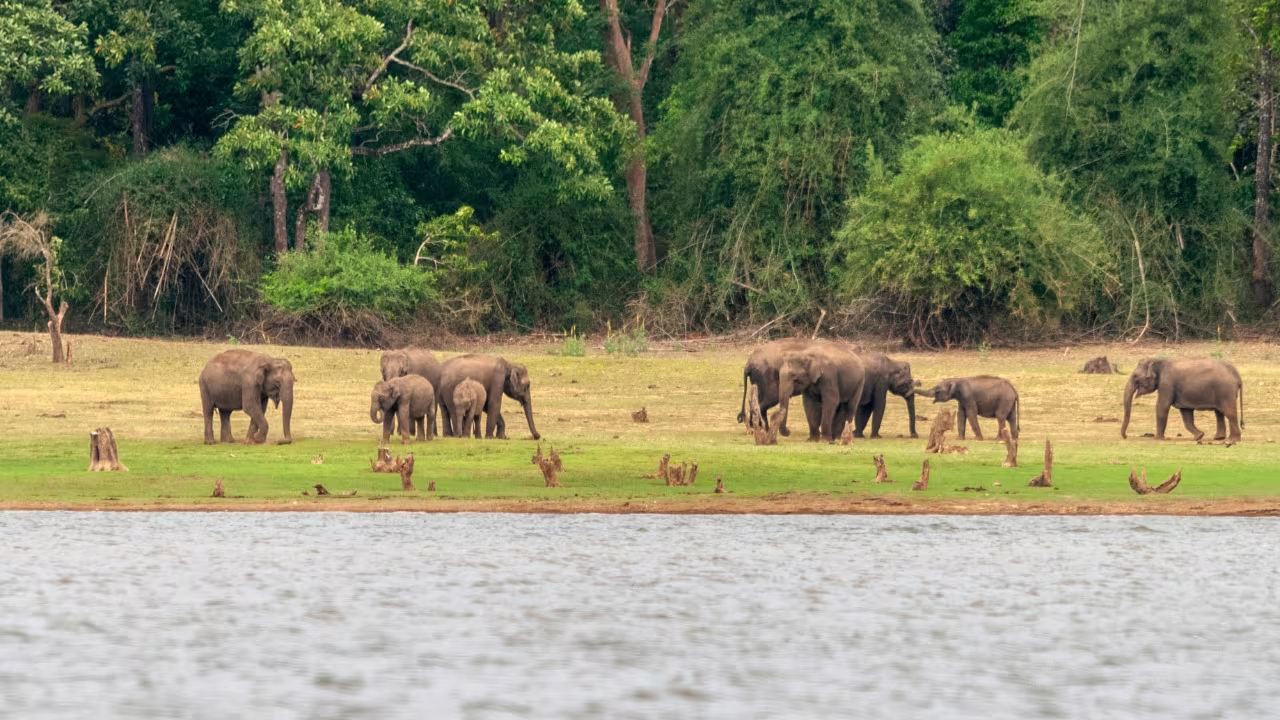
Elephants roaming the lush forests of Nagarhole National Park, showcasing Karnataka’s wild beauty. (Image: Canva)

How to Reach Nagarhole National Park

*By Air: The nearest airport is Mysore Airport, about 95 kilometers away, while Bangalore International Airport (220 km) is a convenient option with well-connected roads.

*By Train: Hop off at Mysore Railway Station, which is well-connected to major cities across India.

*By Road: Nagarhole is easily accessible by road from Coorg (80 km away), with several buses and private vehicles making the journey regularly.

What to Spot Inside Nagarhole National Park
Step into the heart of nature at Nagarhole National Park, where the rich diversity of wildlife thrives in its lush landscapes. Keep your eyes sharp as you embark on a thrilling wildlife experience and look out for:

1. Elephants in Majestic Motion: Graceful Elephants roaming through the dense forests, an awe-inspiring sight that epitomizes the park’s grandeur.

2. Tigers and Leopards in Stealth: The elusive Tigers and Stealthy Leopards, whose silent movements through the shadows make every sighting a rare and unforgettable moment.

3. Indian Bison and Sambar Deer: Majestic Indian Bison (Gaur) and curious Sambar Deer, their imposing presence and calm demeanor adding to the park’s wild charm.

4. Sloth Bears and Wild Dogs: The elusive Sloth Bears, and the intelligent Wild Dogs, whose elusive nature and group dynamics make them exciting to spot.

5. Birdwatcher’s Paradise: A birdwatcher’s haven, with vibrant species like the Indian Peafowl and Malabar Grey Hornbill filling the air with their calls, offering a spectacular birding experience.
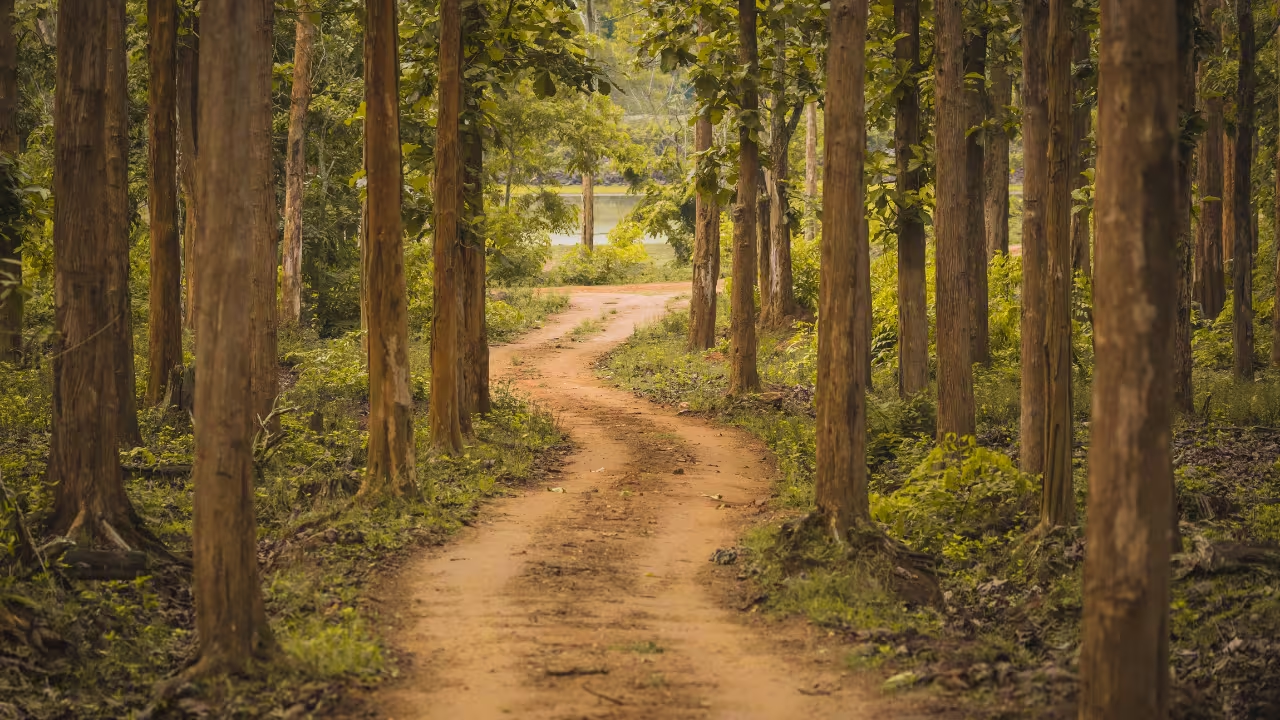
Immerse yourself in the lush greenery of Nagarhole National Park, a haven for nature lovers. (Image: Canva)

The diverse habitats within Nagarhole—from thick forests to open grasslands—create the ideal environment for wildlife, making it a photographer’s dream and a nature lover’s sanctuary. But the adventure doesn’t stop here—once you’ve immersed yourself in the wonders of Nagarhole, there are even more hidden gems nearby that will take your exploration to the next level.

Must-Explore Nearby Attractions
While Nagarhole National Park offers incredible wildlife experiences, there are many more nearby attractions that will elevate your adventure to the next level. Extend your adventure beyond the park with these nearby gems:

1. Kabini River
For a truly immersive experience, take a boat safari along the Kabini River. This peaceful waterway, lined by dense forests, offers glimpses of elephants, crocodiles, and a wide variety of bird species. It’s an intimate way to explore the wildlife of the region and capture unforgettable moments.
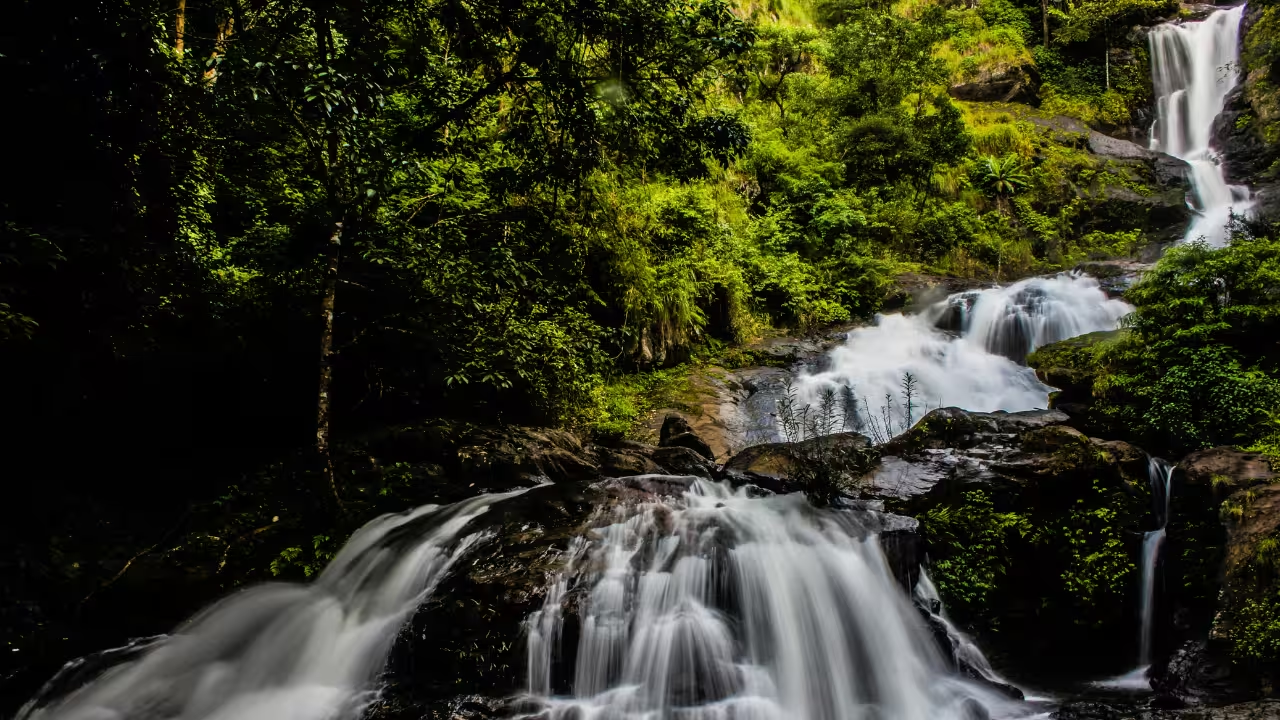
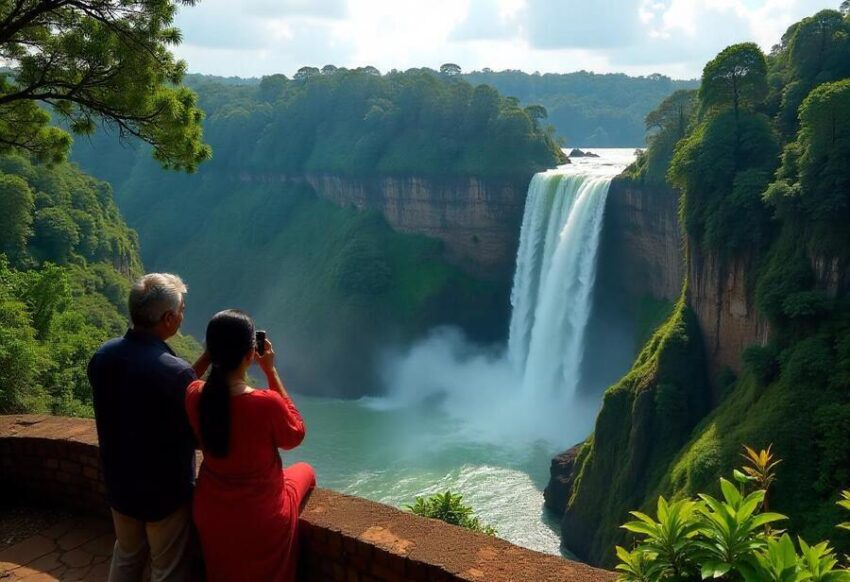
Iruppu Falls (Image: Canva)

2. Iruppu Falls
Situated in the Brahmagiri Range, Iruppu Falls is a stunning waterfall set amidst lush greenery. A popular trekking destination, this picturesque cascade is the perfect spot for a refreshing dip or a peaceful picnic. The journey to the falls is as rewarding as the destination, with breathtaking views along the way.

3. Brahmagiri Wildlife Sanctuary
For a deeper connection with nature, explore the Brahmagiri Wildlife Sanctuary, located near the Coorg and Wayanad borders. Known for its rich flora and fauna, it’s a haven for wildlife enthusiasts and trekkers alike. The sanctuary is home to tigers, leopards, elephants, and a diverse range of birds, making it a great spot for a nature walk or hike.

Whether you’re on a thrilling safari, spotting the ‘big cats’, or simply soaking in the sights and sounds of the jungle, Nagarhole National Park offers an experience that will captivate your heart and soul. Ready to escape into the wild? This park is calling your name.

source: http://www.moneycontrol.com / Money Control / Home> Travel / by Priyanka Roshan / January 09th, 2025
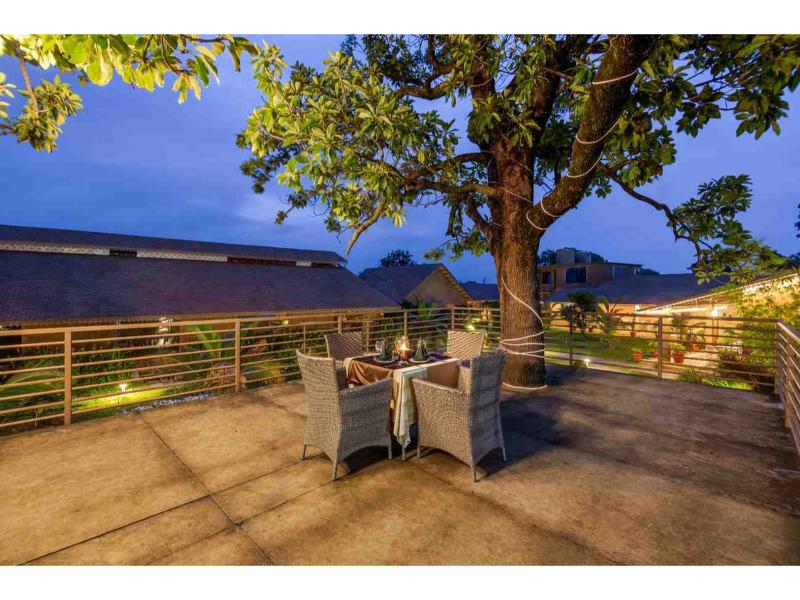
Karnataka welcomes new Sterling Brookstone Coorg 

Thomas Cook (India) subsidiary, Sterling Holiday Resorts, has expanded its presence in Karnataka with the launch of Sterling Brookstone Coorg. Located near Madikeri in the Western Ghats, the new property provides villa and cottage-style accommodations, combining modern conveniences with natural beauty.

Sterling Brookstone, a resort in Coorg, offers an array of amenities such as a swimming pool, banquet facilities, and an on-site restaurant. The Planter’s Kitchen caters to all palates, serving both local Kodagu delicacies and international cuisine. The resort also offers easy access to local attractions including Abbey Falls, Madikeri Fort, and Dubare Elephant Camp, positioning it as a perfect destination for leisure travelers.

Sterling Holiday Resorts, which manages over 3,000 keys across 57 resorts, hotels, and retreats in 48 Indian destinations, recently acquired a new property that aligns with its vision of providing memorable experiences at key tourist spots. The company, owned by Fairfax Financial Holdings, operates under two brands – Sterling and Nature Trails, serving various segments including leisure travel, Meetings, Incentives, Conferences, and Exhibitions (MICE), destination weddings, and group tourism. The acquisition of the new property is seen as a significant step in expanding Sterling’s footprint in India’s tourism sector.

Sterling Holiday Resorts has expanded its portfolio with the addition of a new resort in Coorg, demonstrating its commitment to providing exceptional hospitality experiences.

source: http://www.constructionweekonline.in / Construction Week / Home> Projects & Tenders / by Staff Writer / January 04th, 2024

Andhra Pradesh elephant handlers train in Dubare

Training sparks debate over elephant transfers to Andhra Pradesh; local Mahouts, Kavadis unhappy

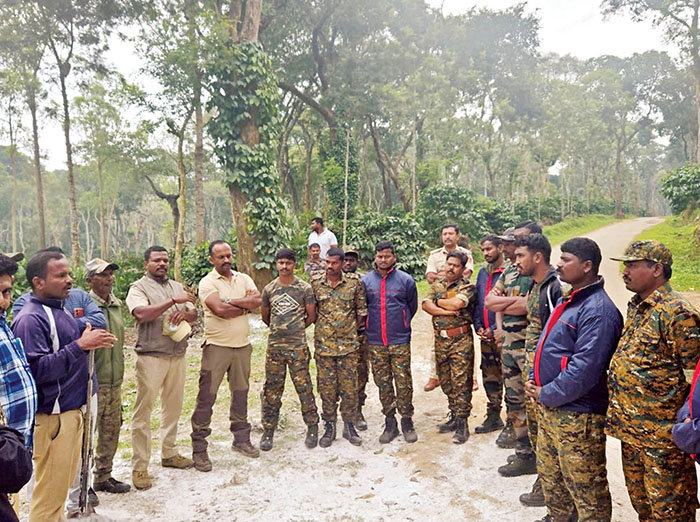
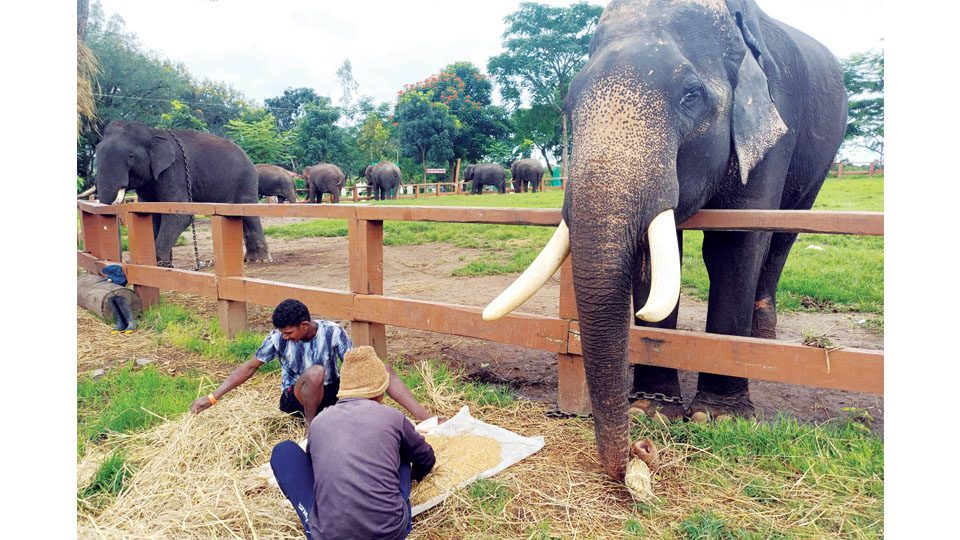
A team of 21 elephant handlers, including 17 Mahouts and four Kavadis from Andhra Pradesh, is undergoing specialised training in handling Kumki elephants at Dubare Elephant Camp in Kodagu. 

The training, which began in mid-November, is set to conclude on Dec. 10, after which the team will return to Andhra Pradesh. Kumki elephants are trained to tackle wild elephants, safeguard human settlements and support wildlife conservation, including forest patrols and crop protection. 

This training is part of a Memorandum of Understanding (MoU) signed in Vijayawada between the Andhra Pradesh Forest Department and Karnataka in September 2024. The agreement seeks mutual cooperation in addressing wildlife challenges and it was formalised in the presence of Andhra Pradesh Dy.CM Pawan Kalyan and Karnataka Forest Minister Eshwar B. Khandre.

However, reports suggest that Karnataka may be planning to transfer four to six trained elephants to Andhra Pradesh under the guise of this training programme. 

Andhra Pradesh has an urgent need for Kumki elephants, with only two elephants — Jayanth (67) and Vinayak (54) — stationed at the Naniyala forest camp in Chittoor district and are reaching retirement age. This shortage has hampered efforts to protect wildlife, prevent the theft of sandalwood and red sanders trees, conserve forests and mitigate man-animal conflicts.

Sources informed Star of Mysore that the training might be a cover for relocating elephants to Andhra Pradesh. Mahouts and Kavadis in Dubare are unhappy with the move, citing Karnataka’s own shortage of trained elephants.

“It takes four to five years to tame and train an elephant to follow commands. We build a deep, familial bond with these animals through immense sacrifice and effort. Transferring them would not only sever this bond but also leave us jobless,” said one mahout.

Forest officials, however, denied any finalised plans, stating they have not received Government orders to shift the elephants. Some mahouts countered, claiming that a proposal was discussed months ago and that Karnataka is quietly laying the groundwork for the transfer. 

Reports indicate that many elephants in Dubare have already been introduced to Andhra Pradesh handlers, who are being trained to manage them. The plan reportedly involves sending a specific number of elephants to support wildlife operations in Andhra Pradesh, with fears they might not return after their assignments and will be kept there for that State’s services.

Meticulous training on all elephant aspects

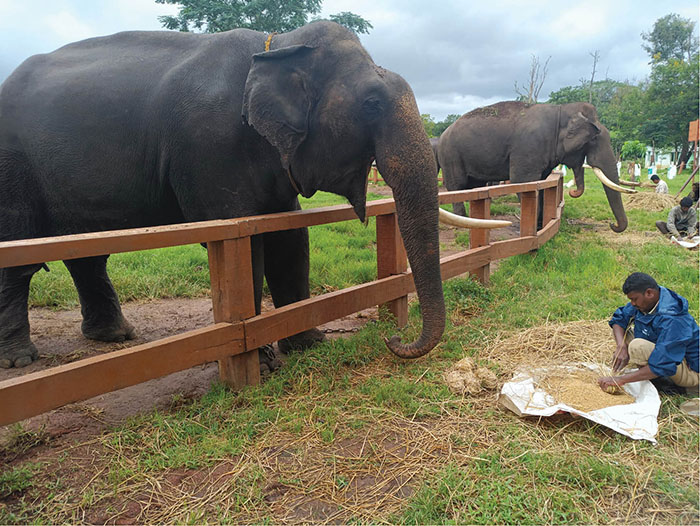
The training programme for elephant handlers from Andhra Pradesh at Dubare Elephant Camp focuses on understanding elephant behaviour and mastering specific cues to control and direct them effectively. Under the guidance of lead trainer J.K. Dobi, the training employs a range of techniques, including the use of specialised tools, handling chains and creating loud noises to ward off wild animals. 

The handlers are trained with elephants Dhananjaya, Kanjan, Vidyashree, Vijaya and Rama in foundational skills such as touching, bathing and interpreting signals. They are taught commands in specific languages, methods for balancing atop elephants and techniques like tapping the elephant’s ear with their foot or patting its head for direction.

Additionally, they learn about elephant dietary requirements, including the cooking process, ingredients and feeding schedules.

To provide a comprehensive understanding, the team has been taken to other elephant camps across Kodagu and Mysuru districts, including Harangi, Mathigodu, Balle, and Veeranahosahalli. Here, they are familiarised with the unique conditions and challenges specific to each camp, ensuring their preparedness for diverse environments.

Karnataka must prioritise its elephant needs

According to Forest Department officials, Karnataka plans to send four trained elephants to Andhra Pradesh to assist in wild elephant capture and training operations only. Since 2013, Karnataka has handed over 59 trained elephants to various States. The Forest Department must be transparent and avoid concealing facts.

Andhra Pradesh initially requested 22 elephants, but the number was scaled down to eight after Karnataka refused. Even now, sending elephants to Andhra Pradesh is not the right move. We need elephants for Dasara, other tasks and as a tourist attraction at elephant camps. Our resources are already stretched with limited elephants in the State. To capture and tame an elephant it costs Rs. 14 lakh and to fit a radio collar, it requires Rs. 22 lakh. Joseph Hoover, Conservationist & Wildlife Activist

source: http://www.starofmysore.com / Star of Mysore / Home> Feature Articles / by Joseph Hoover, Conservationist & Wildlife Activist / December 09th, 2024

Dubare’s hanging bridge gets approval

Stronger suspension design unveiled for 210-metre bridge; estimate cost Rs. 6 crore

Kushalnagar:

The ambitious project to construct a hanging bridge over the River Cauvery at Dubare Elephant Camp in Kodagu is poised to further transform this popular tourist destination.

Dubare draws thousands of tourists each month and the addition of a hanging bridge connecting both riverbanks promises to be a significant attraction. Currently, one side of the river is managed by the Tourism Department, while the Forest Department oversees the opposite side, home to the renowned elephant camp.

Presently, tourists can only traverse the river via motorised boats. Due to the high demand for boat rides, many visitors risk crossing on slippery rocks — when the water level is low, leading to accidents and prompting criticism of the Forest Department.

The original hanging bridge plan envisioned a 110-metre structure supported by three columns — two at the ends and one in the centre — with an estimated cost of Rs. 3 crore.

Two poles instead of three

However, the new proposal extends the bridge length to 210 metres, supported by only two poles, eliminating the central column thanks to enhanced suspension wire technology. The revised design will be higher at the centre than at the ends for added stability.

This updated project is estimated to cost Rs. 6 crore. The bridge will have a walking width of 1.5 metres and will be constructed above last year’s flash flood level to ensure safety.

Hanging bridge expert Patanjali Bharadwaj has finalised the design, materials and total project cost, including labour. Unlike the previous proposal where land ownership was shared between the Tourism and Forest Departments, the new project will be built entirely on Forest Department land, streamlining the approval process.

Budget estimate of Rs. 6 crore

The design and location survey have been completed and submitted to the Public Works Department (PWD). A budget estimate of Rs. 6 crore has been forwarded to the Finance Department for final approval. Patanjali Bharadwaj has designed the bridge and calculated the material cost as per the PWD budget list and provided the cost estimate.

The State Government and the PWD have granted in-principle approval and the project has been included in the Forest Department’s Action Plan, receiving sanction from the Forest Minister.

Funding will come from the Kodagu Foundation, which pools entry fees collected at various parks, trekking spots and forest guest houses, supplemented by government funds.

The PWD will supervise the construction, with the tender process set to begin following financial clearance. If funding is timely, the bridge could be completed within six months, with an expected finish date in 2025.

Boating to be discontinued

Bhaskar, Deputy Conservator of Forests (DCF), Madikeri Circle, explained the project’s earlier challenges. “Previously, land issues stalled progress due to the split ownership between the Tourism and Forest Departments, complicating clearances under the Wildlife Act. This time, we selected land solely managed by the Forest Department, eliminating these administrative obstacles. We are committed to seeing the project through. Once operational, boating services will be discontinued, though river rafting will continue,” he said.

For context, Patanjali Bharadwaj is the son of Padma Shri awardee Girish Bharadwaj, known as the ‘Bridge Man’ for constructing over 100 suspension footbridges across India. Girish Bharadwaj founded ‘Rational Engineering Industries’ in 1975 in Sullia, Dakshina Kannada, now known as Ayasshilpa. Patanjali is continuing his father’s legacy with this new project.

Revenue boost

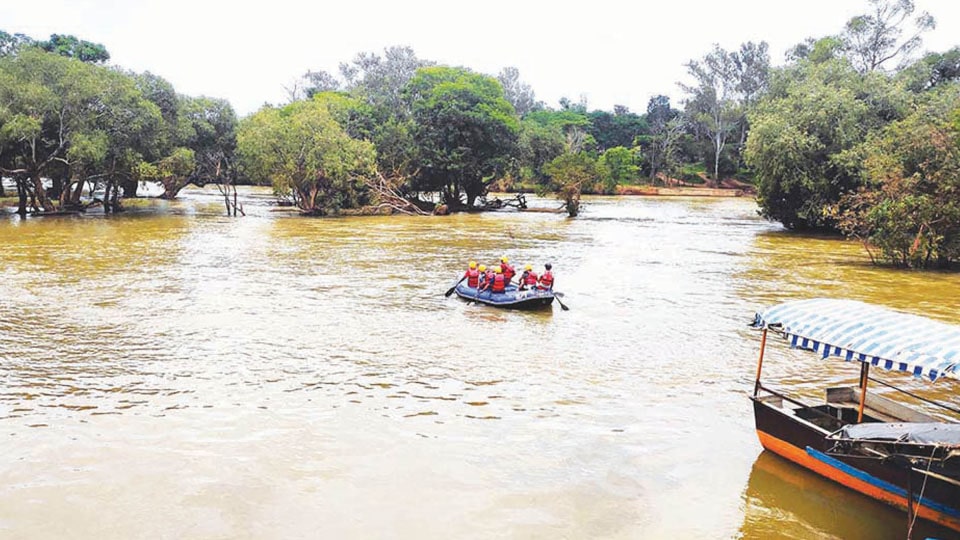
The Dubare Elephant Camp operates daily from 9 am to 11 am and 4 pm to 5.30 pm. Forest officials report that the site welcomes an average of 500 to 700 tourists daily and has four boats for river crossings.

“During festivals and weekends, when over 2,000 tourists visit daily, managing the crowds becomes difficult. Weight restrictions limit boat capacity, forcing many visitors to leave without experiencing the elephant camp. The hanging bridge will resolve these issues and is expected to boost revenue,” officials added.

source: http://www.starofmysore.com / Star of Mysore / Home> News / November 24th, 2024

Kodagu gets new KSRTC buses with Madikeri RTO registration

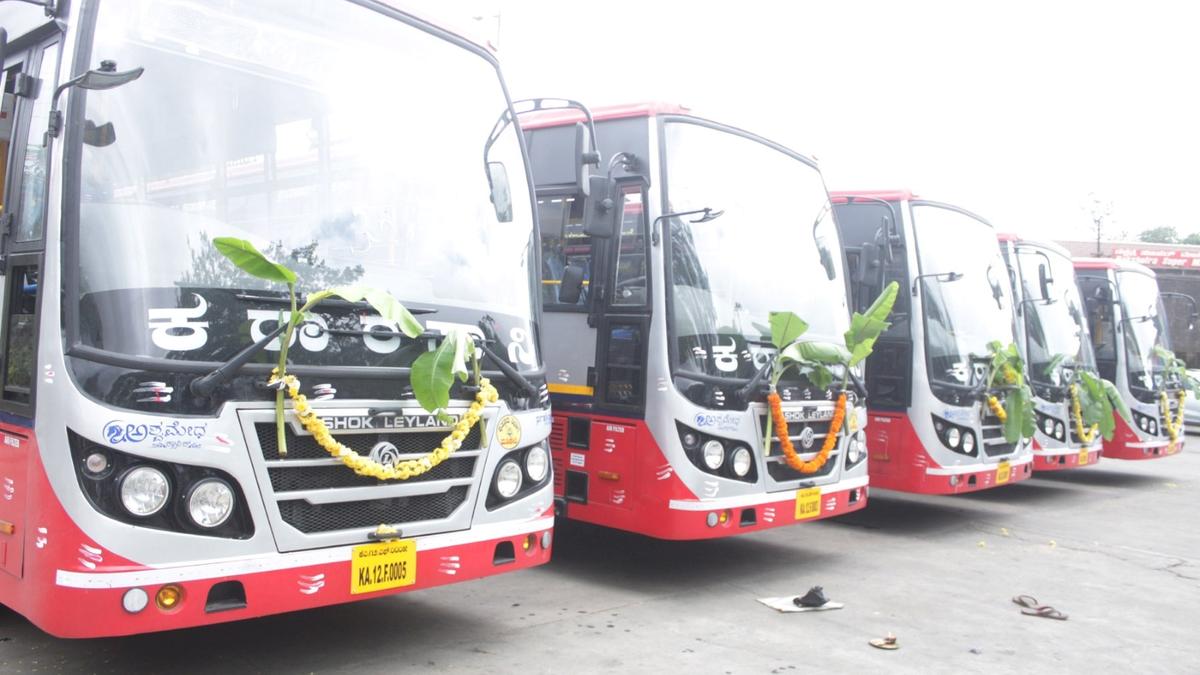
KSRTC buses with the registration of Madikeri RTO were added to the existing fleet of buses operated by the Madikeri depot on Thursday.

Five ‘Ashwamedha’ buses were the new buses with KA-12 vehicle registration that were flagged off in Madikeri by MLA Mantar Gowda.

The five buses will operate as Dasara special in view of the Navarathri celebrations. After Dasara, the buses will be operated in Kodagu district, said the MLA, after flagging off the buses at a function held in Madikeri.

The MLA said he had urged Minister for Transport Ramalinga Reddy for allocating buses with KA-12 registration (Madikeri RTO), during his recent visit to Shanivarasanthe in Kodagu district. Responding to the request, the Minister sanctioned the buses with the Madikeri registration, he said, while expressing happiness over the sanction of buses with Madikeri registration.

More KSRTC buses will ply in Kodagu in the coming days. Women can travel in the newly allotted buses as part of the Shakti scheme, he added.

The five buses have also got fancy registration numbers KA-12 F-01, F-02, F-03, F-04, F-05, the MLA said.

source: http://www.thehindu.com / The Hindu / Home> News> India> Karnataka / by The Hindu Bureau / October 10th, 2024

8th edition of Barefoot Marathon on Sunday-Dec. 8

Kodagu:

The 8th edition of Barefoot Marathon will be held on Dec. 8 (Sunday).

The event, which is a fund-raiser for The Coorg Wellness Foundation, set up for the wellness of people, wildlife and ecology of Kodagu, will be flagged from Tata Coffee Sports Grounds at Pollibetta, at 6 am.

Bib distribution will be done Dec. 7 between 11 am to 1 pm. 

To volunteer, contact Varun on Mob: 96868-55539 and for accommodation, call Ricky Monappa on Mob: 96323-38111.

For registration, interested may log on to https://youtoocanrun.com/races/the-barefoot-marathon-8th-december-2024/

The Marathon will be held in five categories — Full Marathon, Half Marathon, 10K Run, 5K Run and 1.5K Run.

The registration fee for all categories is Rs. 1,000 which includes brunch and T-shirt.

source: http://www.starofmysore.com / Star of Mysore / Home> News (headline edited) / November 04th, 2024

Karnataka: Tourists flock to Kodagu during long weekend

With a string of holidays including Deepavali and Kannada Rajyotsava weekend, the tourist-favorite district of Kodagu has seen a massive influx of visitors.

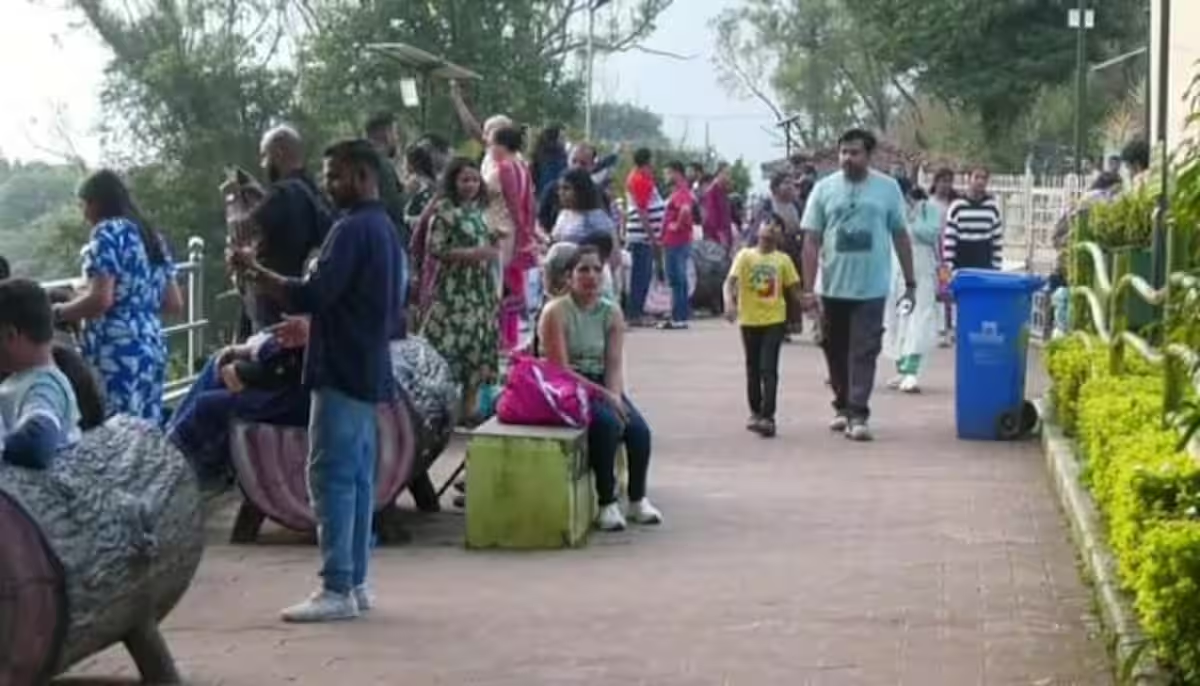
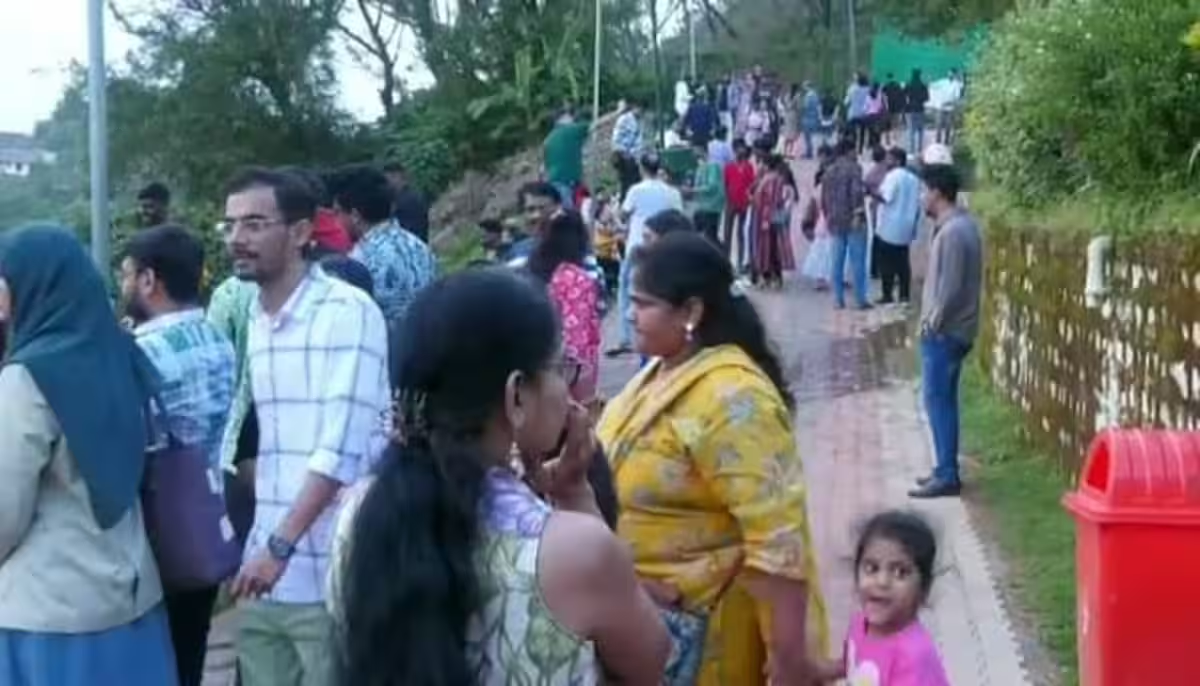
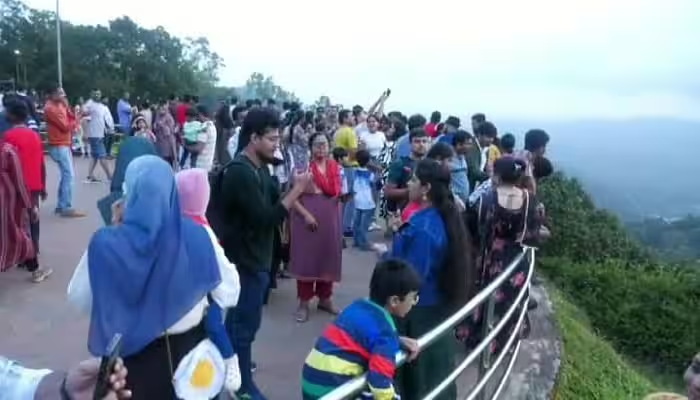
With four consecutive holidays, including Naraka Chaturdasi, Kannada Rajyotsava, Balipadyami, and Sunday, lakhs of tourists have flocked to Kodagu. Tourist spots and religious sites are bustling with visitors and devotees, creating a vibrant atmosphere in the region.

Tourists have thronged Raja’s Seat, the popular hilltop spot in Madikeri, where visitors are enjoying the panoramic views. Other attractions like Abbey Falls, Dubare, and Nisargadhama are also seeing a surge in footfall. The recent holy occasion of Cauvery Theerthodbhava has further drawn thousands of pilgrims to Talacauvery and Bhagamandala.

Heavy traffic congestion has been reported at major tourist spots and religious centres, including Raja’s Seat, Abbey Falls, and Talacauvery, posing challenges for the police in ensuring smooth traffic flow.

The month-long Kiru Sankramana period after the Theerthodbhava is seen as an auspicious time for a holy dip in the Cauvery River at Talacauvery. Thousands of devotees, including those from other districts and states, are visiting the sacred spot. The ongoing holidays have further increased the number of visitors, causing some local concern over difficulties in performing rituals peacefully.

source: http://www.newsable.asianetnews.com / Asianet Newsable / Home> English News> Karnataka / by Vinaykumar Patil / November 03rd, 2024

Karanang Kodpo – Homage to ancestors by the Kodavas

Kodagu is deep- rooted in the culture of the past, the glorious past.

The traditions, the idealsand the institutions of the past are inherited by us as a rich legacy. It is not just the abundant natural beauty that makes Kodagu a distinct place. It’s people- the Kodavas with discrete culture and heritage boost the glory of this land. This is the season of the year, where Kodavas in Kodagu district perform the annual ritual KARANANG KODPO held in memory of their ancestors.

Amidst the misty hills and lush coffee plantations of Kodagu, the indigenous community of Kodavas honour “GURU KARONA” the first ancestor as their protector and guide. With Guru karona as their guardian, they walk the path of their ancestors, connecting to the very soul of their land. 

Our ancestors are as much a part of us as we are part of them. Karanang kodpo is an occasion for kodava usually after the changrandhi, to invoke the ancestors, offer them sweet, meat, liquor, take their blessings and the families rejoice followed by a feast. 

All auspicious ceremonies and works of Kodavas were usually done during this time because Kodavas did not have temple culture and kept Brahmins away as we Kodavas adore ancestral worship and venerate our man of yester year “Guru karona”.

Karanangkodpo is an important annual observance where offerings are made to a clan’s ancestors. The food and drink habits of deceased members of the family are remembered. Accordingly, offerings are made to the dead.  The Karona, or the dead patriarch, is prayed to. Offerings of food and drink made to Gods and ancestors are called “Meedhi”. Kodava cultural traditions and practices were transmitted orally from generation to generation.

In olden days, all the members if an “okka” lived together in their ” Ainmane” or ancestral home. While many of these Ainmanes have been rebuilt, the traditional ones that are still standing are 150 to 200 years old. Today even if they do not live in the Ainmane, members of an okka gather to celebrate festivals and traditional ceremonies. The Karona, the first Ancestor or founder of the okka is revered as a God. Kodavas consider their Ancestors as their guiding spirit and their elders as their living guides. As a mark of respect, younger people touch the feet of their elders when they meet during auspicious occasions.  Elders invoke their ancestors when they bless those who touch their feet.

The cultural heritage of the Kodavas is a priceless legacy passed down from generation to generation. Every legacy followed strengthens our collective voice, fostering unity and resilience.

Together we strive for an empowered kodava community that stands proud, preserving our roots and shaping a future rooted in our unique traditions.

Sadly, with the passage of time our culture has been ambushed by modernization.

Currently conserving our rich heritage to let our future generations know who truly are, is of surmount importance. Every nook and corner of our Ainmane act as a silent reminder into our colourful past.

An architectural aspect which as stood the tests of time are our Ainmanes. Homes to the native communities of Kodagu, these Ainmanes stand as a silent testimony of our story. 

Let’s join hands, in conserving the little that remains of ancestors and their impressions left on the phase of earth.

Because Ainmanes are a matter of pride and the soul of kodava rituals and their revival provides a surety to Kodavas customs and legacy. As traditions passes on from generation to the next it is a duty of every Kodavas to maintain the sanctity of their places of worship.

source: http://www.clnnews.in / Coffee Land News / Home> Articles / by Kodandera Mamatha Subbaiah / October 25th, 2024

Kodava Ain Mane established at Dakshinachitra Museum in Chennai

The work for the Ain Mane at Dakshinachitra Museum began in June 2023 and the same is ready to be inaugurated today.

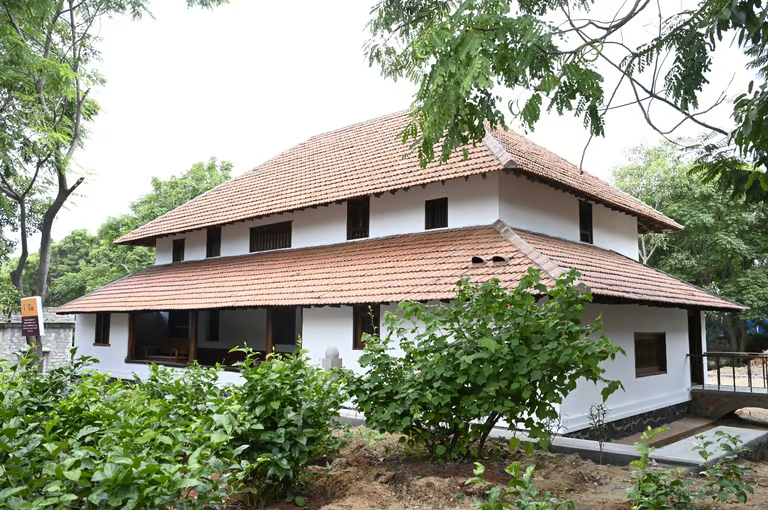
The Ain Mane established at the Dakshinachitra Museum in Chennai.(Photo | Express)

Madikeri :

The Kodava Ain Mane forms the epicenter of the culture of Kodava community. The Ain Mane aka ancestral house act as curators of the Kodava traditions and culture. With an aim to introduce these traditional edifices to the world, a model of the Ain Mane will now be inaugurated at the Dakshinachitra Museum in Chennai today.

Dakshinachitra is a cultural living museum of art, architecture, lifestyle, performing arts and craft. The museum is home to 18 traditional houses that depict the unique culture of South India. And as a 19th addition to the museum, a traditional Kodava Ain Mane has now been established at the center in Chennai and depicts the rich culture of the Kodava community.

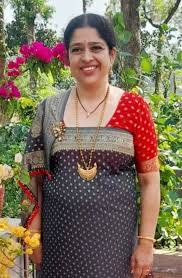
“Our long search for an Ain Mane from Kodagu bore fruit in 2022. We acquired and dismantled the 1852 built Kodira family Ain Mane in Kodagu. The entire house was documented in detail and all the wooden elements were numbered, dismantled and transported to Dakshinachitra Museum in early 2023,” shared Rathi Vinay Jha, former secretary of the tourism department, member of the Sandooka Museum Trust and Life Trustee of Daskhinachitra Museum who headed the Kodava Ain Mane project. She was earlier involved in curating materials for the Sandooka Virtual Kodava museum.

The work for the Ain Mane at Dakshinachitra Museum began in June 2023 and the same is ready to be inaugurated today. The Ain Mane is lined with materials that exhibit the unique culture, traditions, rituals, folk culture, attire and cuisine of the Kodava community.

The project was supported by the CSR wing of Hyundai Motors and Mobis India Foundation. As confirmed by Rathi, a Kodava troupe from Kodagu will perform at Dakshinachitra today and tomorrow during the inaugural ceremony.

“The Dakshinachitra Museum managed by Madras Craft Foundation showcases ancestral homes from all the Southern States. The museum is 35 years old and they already have 18 such ancestral homes. The Kodava House will be the 19th such house. The Kodava house will showcase the culture and heritage of Kodavas and Kodagu,” she concluded. 

source: http://www.newindianexpress.com / The New Indian Express / Home> Karnataka / by Pragna GR / October 22nd, 2024

Karnataka Tourism Launches ‘Connect Kodagu’ to Showcase Sustainable Tourism in Madikeri

The Karnataka State Tourism Development Corporation (KSTDC) has launched the ‘Connect Kodagu’ initiative in Madikeri, unveiling a comprehensive plan to elevate Kodagu as a prime example of sustainable tourism.

Through this initiative, KSTDC aims to promote eco-friendly travel practices, enhance visitor facilities, and preserve the natural beauty of the Kodagu district, a region renowned for its scenic landscapes and rich cultural heritage.

The program gathered local tourism organizations and district officials to discuss actionable steps to ensure a responsible tourism approach that aligns with the needs of both the environment and the visitors.

Among the key measures discussed were upgrades to tourist amenities, tighter control over unauthorized wine production, and collaborative efforts with health and law enforcement agencies to ensure quality standards for local products. KSTDC’s vision is to build a cohesive tourism ecosystem where environmental stewardship is balanced with visitor satisfaction, creating a memorable and responsible experience for all who visit Kodagu.

Kodagu’s popularity as a destination for solo travelers and wellness enthusiasts has been steadily growing, thanks to its peaceful ambiance and potential for health-oriented tourism. To add cultural depth to visitors’ experiences, the initiative includes plans to convert historic local homes into unique lodging options, drawing inspiration from similar projects in North India. Infrastructure enhancements were also highlighted, with the proposed addition of essential facilities such as restrooms and small retail outlets at intervals along key highways to support visitor needs.

As part of its forward-looking strategy, KSTDC and the Kodagu administration are set to release a coffee table book showcasing the district’s many attractions, from scenic spots to cultural landmarks. Additionally, a tourism app is under development, designed to provide tourists with easy access to information on local sites, activities, and services. The initiative has already garnered strong backing from regional tourism associations, which view ‘Connect Kodagu’ as a landmark effort to position Kodagu as a sustainable and culturally enriching destination in India.

Through the ‘Connect Kodagu’ initiative, KSTDC is setting a precedent in the tourism industry by not only addressing current challenges but also proactively planning for the future. By focusing on environmental preservation, cultural authenticity, and infrastructure development, KSTDC aims to create a tourism model that other regions in India could follow. This program underscores the importance of sustainable tourism in fostering economic growth while protecting the region’s ecological and cultural wealth.

source: http://www.travelandtourworld.com / Trave and Tour World / Home> India Travel News / October 29th, 2024