Kodagu, a tiny district in Karnataka, has produced thousands of sportspersons and soldiers for the nation.
Madikeri:
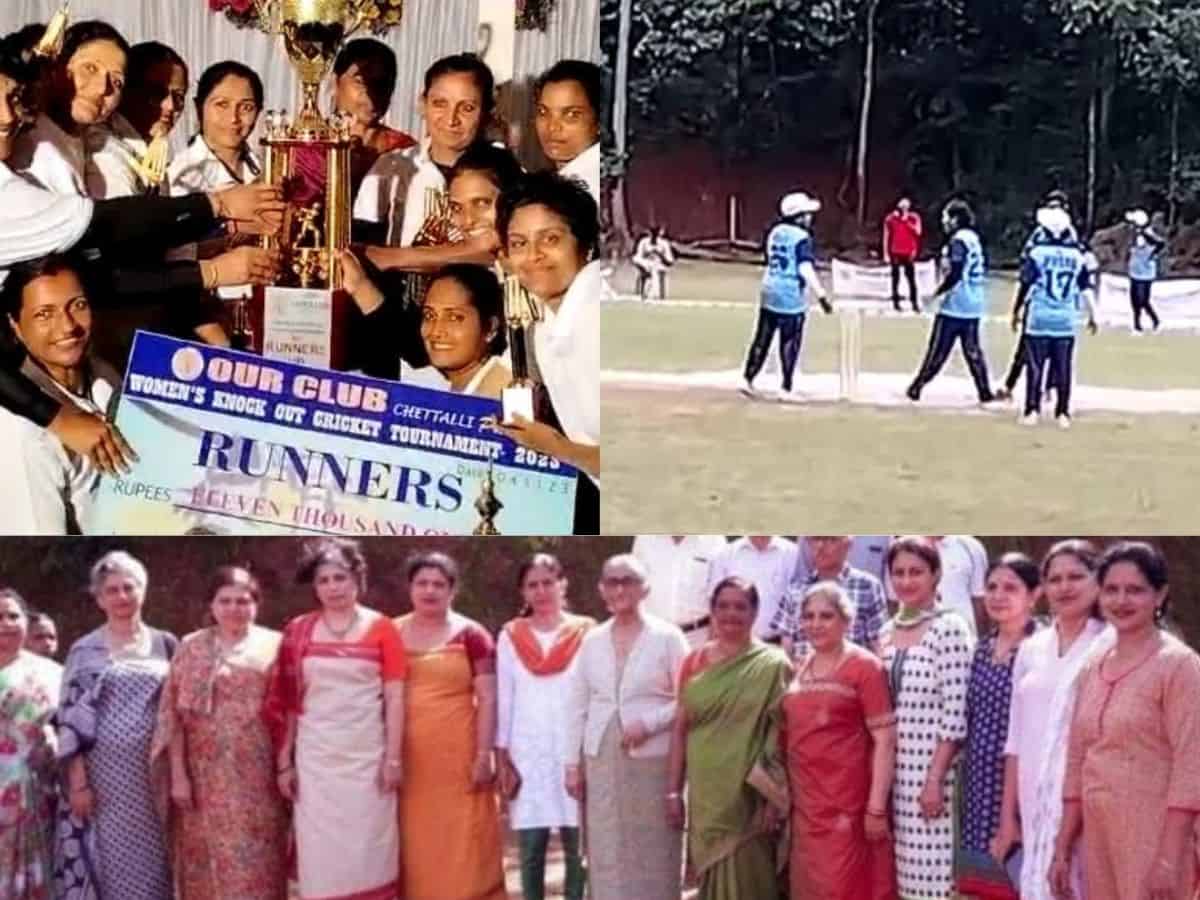
For years, cricket enthusiasts in Kodagu — a tiny district in Karnataka — were enthralled by men playing cricket tournaments. However, the game got a lot more exciting as married women’s cricket matches have now taken the spotlight.
In a remarkable event, a married women’s cricket tournament was held on Sunday, November 5, in Chetalli village of Madikeri taluk. The women participants showcased their cricketing prowess at the district-level match, and the atmosphere was electrifying.
In an intense competition, Team Maldare emerged victorious, claiming the title, while Team Master Blaster secured the second spot. These married women, donning cricket uniforms, put aside their daily chores and responsibilities to celebrate the game they love. With cricket bats in hand, they skillfully hit sixes and fours, proving that they were no less than their male counterparts on the field.
The event came alive even further by various food stalls set up by other women and mesmerising dance performances by the cheer team, which left the Chettalli High School ground brimming with excitement.
Historic moment
The Chettalli High School ground witnessed a unique and historic moment, as the 2nd married women’s open knockout cricket tournament was organised by the Chettalli’s Club. A total of 15 married women’s teams, all above 25 years of age, enthusiastically participated in this 6-over tournament.
In the much-anticipated final, Team Master Blaster won the toss and chose to bat, setting a target of 23 runs in the scheduled four overs. Team Maldare chased down this modest total in just 2.3 overs, securing their victory.
Pushpa Kuttanna, a retired principal of K M Cariappa College, lit the ceremonial lamp, emphasising the vital role women play in society. She commended the efforts of the Chettalli’s Club for organising the tournament exclusively for married women, who often balance family life and responsibilities. This marked a historic moment as the first-ever married women’s cricket tournament in the country.
‘Women can excel in any field’
Aichettira Sunitha Machaiyya, the president of the club, stated that it was established in Chetalli in 2010 with the goal of empowering women. Monthly programmes have been organised, and following the success of the tournament last year, they were inspired to host another tournament.
The winners, Team Maldare, received a cash prize of Rs 21,000 along with a trophy, while Team Master Blaster claimed the second prize of Rs 11,000 and a trophy. Kokeri women’s team secured the third prize, earning Rs 6,000 and a trophy.
Individual awards were also presented, with Bharti of Team Master Blaster named the best bowler, Sujitha of Team Maldare recognized as the best batter, and Anjana of Team Sambhrama awarded the highest run-scorer.
This historic event not only showcased the passion and talent of married women in cricket but also highlighted the importance of gender equality in sports, proving that women can excel in any field they choose.
Guinness record
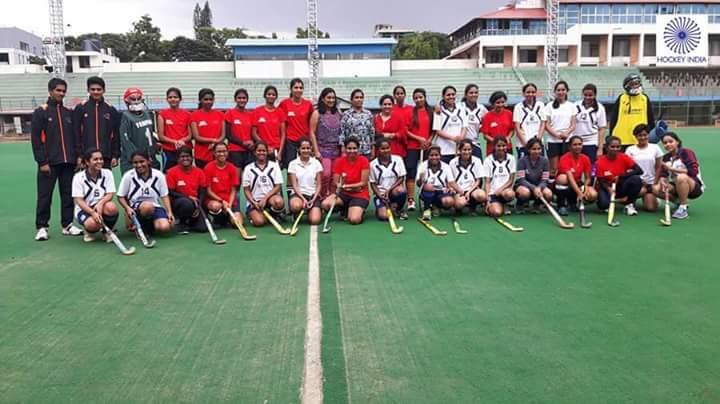
Kodagu, a tiny district, has produced thousands of sportspersons and soldiers for the nation. The annual Kodava family hockey tournament, started in the year 1997, has secured place in Guinness book of World Records as the largest family hockey tournament in the world.
source: http://www.siasat.com / The Siasat Daily / Home> News> Bangalore / by News Desk / November 07th, 2023
‘Bhakta Ratnakara Keerthane’, restored work of renowned Kodava writer, released.
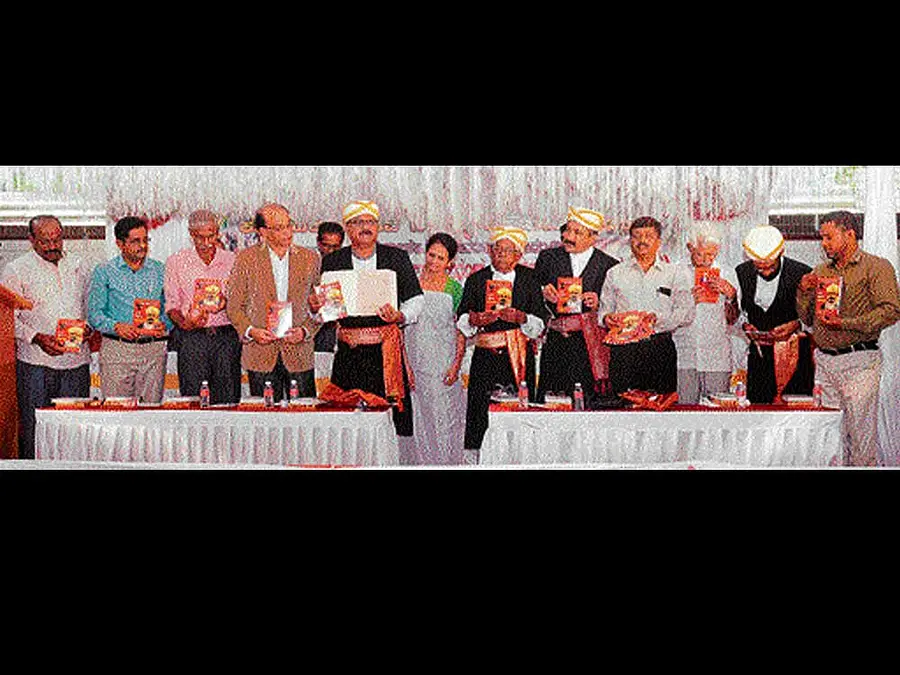
Dignitaries release Appaneravanda Appachha’s ‘Bhakta Ratnakara Keerthane’ in Madikeri on Saturday. DH photo
Writer Bacharaniyanda Appanna has said that a chapter on the life of Kodava writer Appaneravanda Appachha should be included in school syllabus.
At a book release programme organised by Karnataka Kodava Sahitya Academy here, Appanna said Appachha laid foundation for literary activities in Kodagu.
Lauding the initiative of the academy to document the achievements of the writer in the form of a book, Appanna said such initiatives will bust the myth that the district still lags behind in literary field. Though most of the works are being brought out in Kodava, lack of adequate publicity has become an impediment in reaching literary lovers, he observed.
Study materials
Lauding Appachha as ‘Kalidasa of Kodagu’, Appanna said it is evident with most of the poems, plays and also theatre songs penned. The available study materials will help younger generation in getting a glimpse of the writer and his achievements, he noted.
Appachha’s works date back to over a century and he has written four plays in Kodava. One among them, ‘Bhakta Ratnakara Keerthane’, was facing extinction, but for the timely initiative of the academy. The work has got a new lease of life, he said.
Registrar of Kodava Cultural Study Centre, Mangaluru University, Kodeera Lokesh said, “Though the love for the land among locals is on the decline, there are very few who feel proud and also patriotic, speaking in awe about the contribution to defence forces in the country.”
The youths should take initiative in studying culture and tradition of the land. The academy is playing a key role in conserving the culture, by judiciously using funds provided from the government, he added.
Additional Deputy Commissioner M Sathish Kumar stressed on documentation of history related to Kodagu for history lovers. The available historical documents in the record room at deputy commissioner’s office can be digitised for the benefit of next generation, he suggested.
Works released
Researcher Biddanda Rekha Chinnappa’s book on ‘Swatantrya Poorva Kodagina Rajakeeya Parisiti (Politics in Kodagu During Pre-Independence Era), researcher Kambeyanda Deena Bojanna’s ‘Kodagina Mand Mane Kymada Mandgala Srimantha Parampare (The Rich History of Traditional Kodava Houses), Macchamada Gopi Seethamma’s ‘Neethi Joppe’ and journalist Ithichanda Ramesh Utthappa’s ‘Appaneravanda Appaccha Kavi Jeevanacharitre (Biography of the Writer) and Sirigandha Srinivasmurthy’s CD on ‘Kodava Bhashikara Samagra Dakaleekarana’ were released. Akademy chairman Biddatanda S Thammaiah, Madikeri Urban Development Authority Chairman Chummi Devaiah, writer Nagesh Kalur, deputy director (retd) S I Bhavikatti were present.
source: http://www.deccanherald.com / Deccan Herald / Home> Amp> Story> Content> 627810 / by DHNS / August 13th, 2017
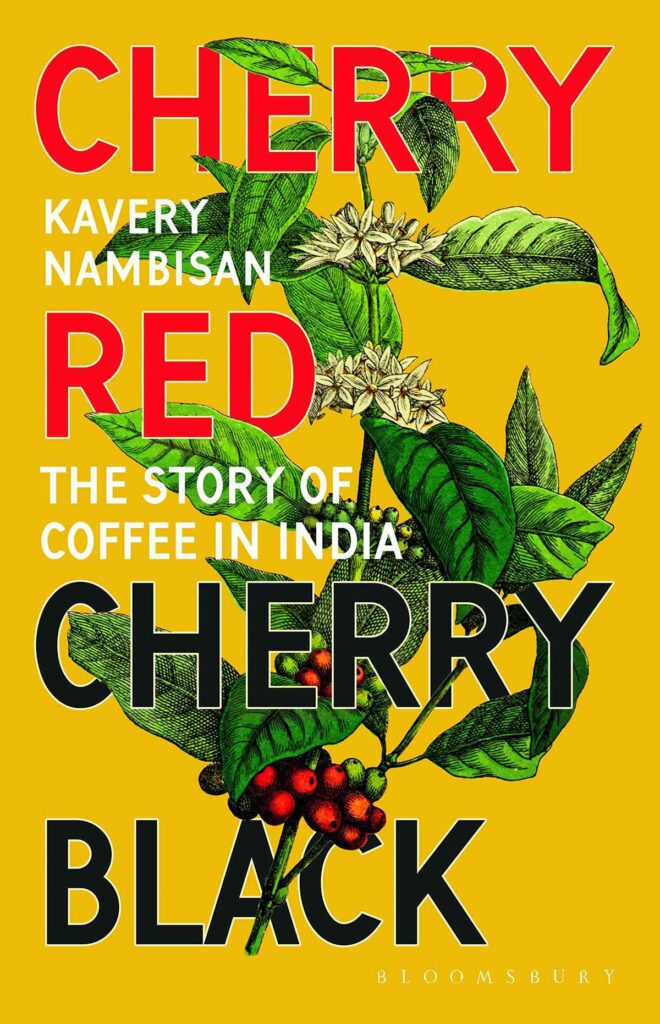
Kavery Nambisan traces the history and geography of the brew in India in her book ‘Cherry Red, Cherry Black: The Story of Coffee in India’.
At the Nellikad Coffee Estate in Pollybetta, Coorg | Photo Credit: Special arrangement
When did coffee arrive in India? How did Coorg, a rice-growing area initially, take to growing coffee in large quantities? Where does India stand as a coffee planter and exporter? Kavery Nambisan writes the history of one of the country’s most popular beverages in her new book, Cherry Red, Cherry Black: The Story of Coffee in India. In an interview, she says the history of coffee in India is closely interwoven with global history.
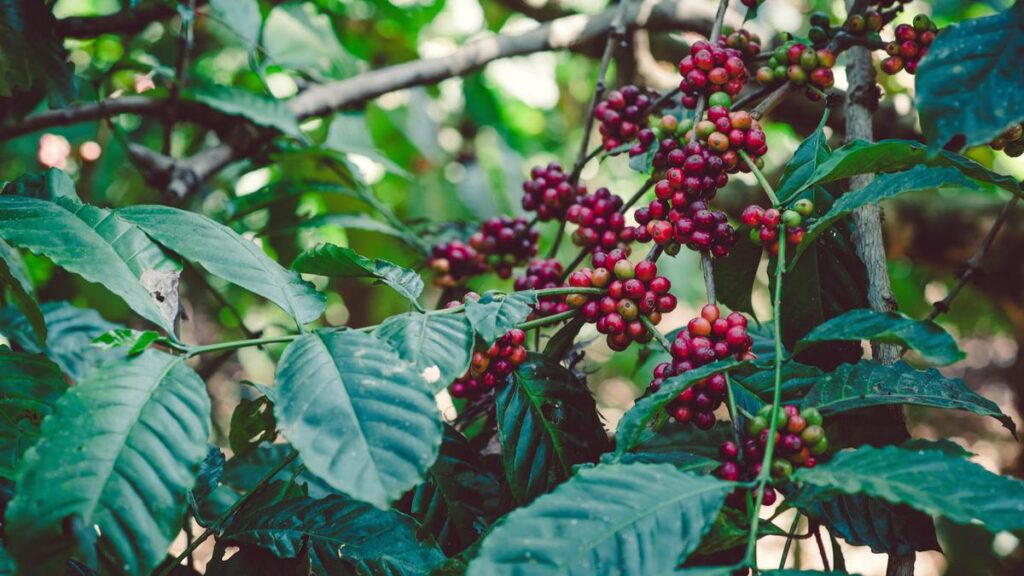
The story goes that an Indian merchant who went on a pilgrimage to Mecca is said to have brought some coffee seeds back with him in the early 17th century, and thus began the backyard cultivation of coffee in parts of then Mysore province, mainly Chikmagalur, Hassan and Coorg. The British saw its potential and expanded the growth of the cash crop. Having worked in the industry — she tried at her hand at berry picking when she was 15 and realised what a tough thing it is — Nambisan also outlines the challenges the industry faces.
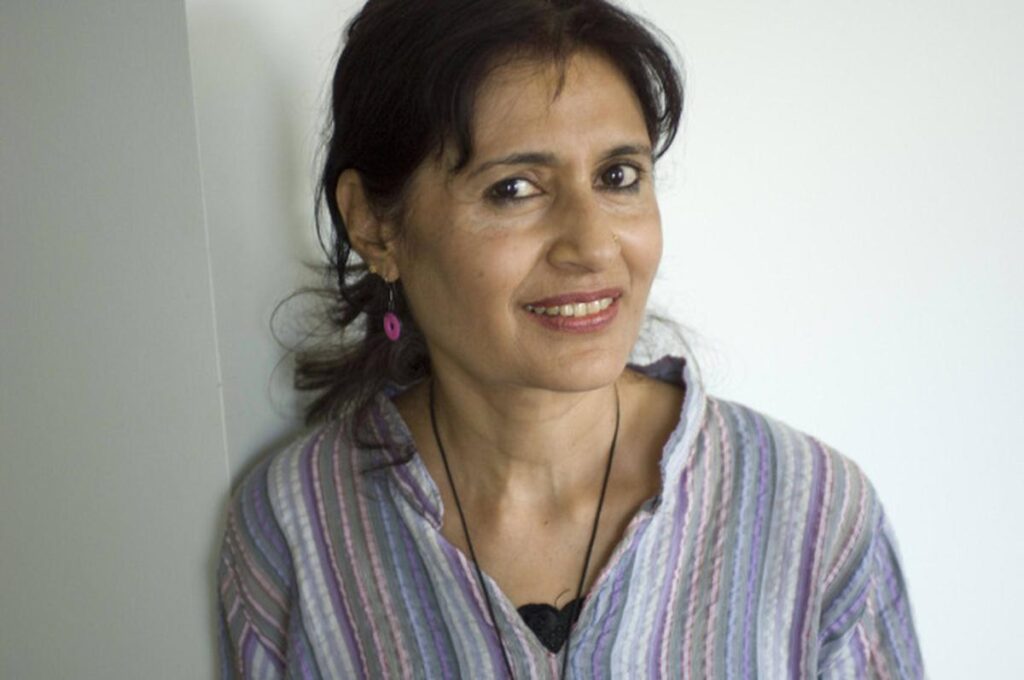
Author Kavery Nambisan | Photo Credit: Special arrangement
You say history has everything to do with the story of coffee in India. Why?
The history of coffee is closely interwoven with global history, particularly from the 18th to the 20th century. It is believed that the stimulant effects were first discovered in Abyssinia when a goatherd noted how his goats frolicked non-stop after eating coffee berries growing in the wild. This led to its cultivation and coffee became something of an energy drink of those days. Its popularity spread to many parts of Arabia and from there to parts of Europe. An Indian merchant who went on a pilgrimage to Mecca is said to have brought some coffee beans back with him and so started the back-yard cultivation of coffee in parts of the Mysore Province, mainly, Chikmagalur, Hassan and Coorg.
By the mid-19th century the British had recognised the potential for growing coffee (and tea) on a large scale. They cut down thousands of acres of forests in these regions for this purpose. The British government which got revenue from its production and export, played a key role in regulating the sale of coffee. The two World Wars challenged the prospects of export and profits while competition from other coffee-growing countries ensured that our own plantations had to work on improving quantity and quality.
Wasn’t Coorg a rice-growing area before the prospect of expanding coffee growth brought the British to the region in large numbers?
The people of Coorg were hunter-peasants right up to the early 19th century when it was annexed by the British. Livelihood was closely tied to paddy cultivation which in turn was dependent on the monsoons. Paddy is a labour-intensive crop and needs workers prepared to work in difficult weather conditions. So the local tribespeople worked in the fields for daily wages. Coffee growing was initially very challenging, and disease often destroyed the crops. But with effective planning, research on the cause of disease, treatment and plant selection, it turned out to be very profitable.
Though the first coffee estate was set up near Mercara, why did coffee growth proliferate in southern Coorg? And what was the variety grown there?
North Coorg where coffee was initially grown receives heavy rainfall which can damage the blossoms and the young berries. Moreover, the area is mostly hilly and so coffee is grown on steep terrain. Within a few decades of cultivation, hundreds of acres of coffee plantations were thus destroyed. Many plantations closed down and some of the British planters went back to England. In Southern Coorg on the other hand, the land is gently sloping, or flat and the rains are not so severe. It is better suited for coffee cultivation. The two varieties of coffee grown are Robusta and Arabica.
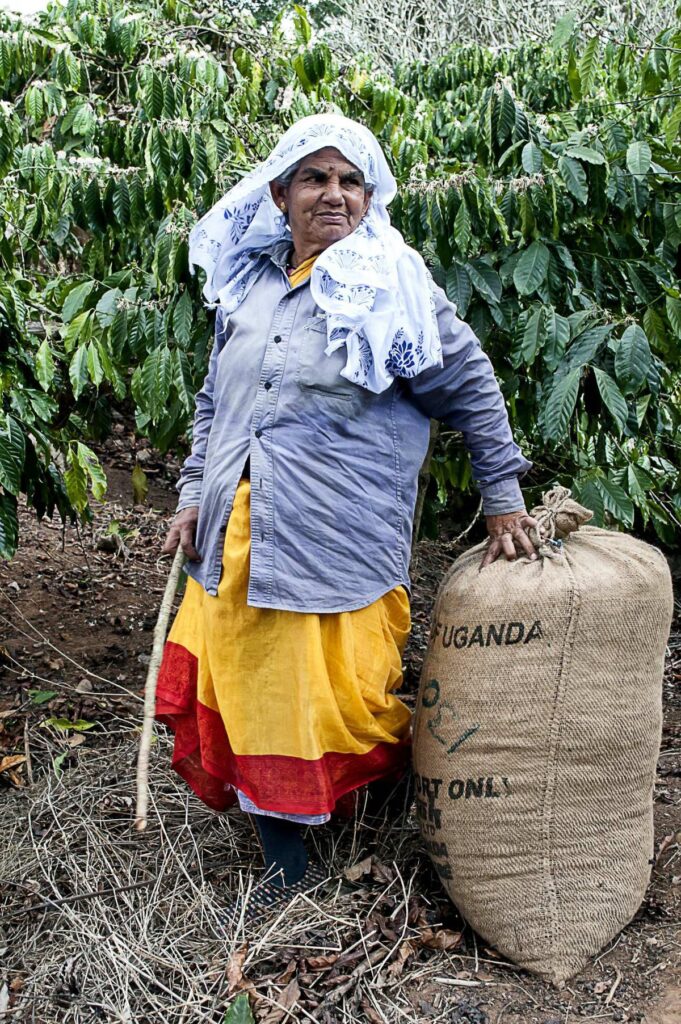
A coffee picker with a sack of harvested beans | Photo Credit: GRJGM
Please share your experience of plucking coffee berries when you were 15. How tough was it?
That was foolish bravado on my part. Perhaps also, the fact that I was of an age when I romanticised manual labour. Coffee plucking itself appears easy when a skilled worker does it. Actually, It is hard work. There are nettled shrubs and creepers that get in the way, abrading palms and scratching the arms and shins. The many insects that creep, crawl and fly will often sting. Dried coffee twigs can poke the eyes for good measure when the picker crouches beneath the bushes to pluck the berries. I was not able to pick as much as I thought I could. But the workers? They talked and laughed all day and plucked enough berries to fill a few sacks each.
Was the rapport between the local Kodavas and the British a happy one? What did they learn from each other?
I guess you could say it was a good rapport. You need to go back in history in order to understand why. Coorg (or Kodagu) was ruled by the Haleri kings for 250 years before the British annexed Coorg in 1834. Coorg was better off under the British. They got schools, dispensaries, apothecaries, etc. Importantly, there was more peace and harmony which came with better administration. Within a few decades, many of the Kodavas became literate. The British found them to be hard-working, honest and trustworthy.
___________________________
Cherry Red, Cherry Black: The Story of Coffee in India
Kavery Nambisan Bloomsbury
₹699
_________________________
What are some of the concerns about the modern coffee industry?
There are several concerns: Coffee plantations are the result of the felling of large areas of forest land, particularly in and around the Western Ghats. It is also a crop that uses pesticides and chemical fertilizers which denude the soil of its health and vigour. Organically grown coffee is a possibility, but economically it is not viable in large plantations. The climate catastrophes experienced in the last few years has led to destruction and loss of lives. We need to look at alternate ways of producing coffee so the end result is not deleterious to the environment. There are many individuals, groups and a few corporates who are experimenting with new methods. Coffee growing is no longer as lucrative as it once was and there is a need for innovation and the use of methods that are not harmful to the ecosystem.
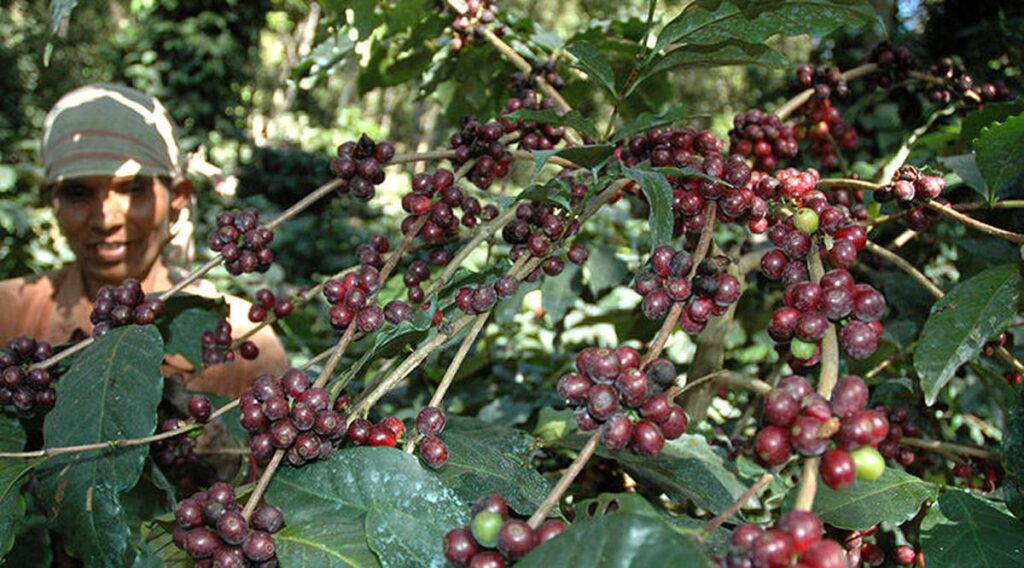
A farmer in Coorg picks riped coffee beans for pulping | Photo Credit: Sampath Kumar G.P.
From Steeping to the French Press there are many ways to make coffee and you describe them in the book, which is your favourite way to make and drink coffee?
I have been a coffee drinker all my life, naturally. I cannot start the day without coffee. I like it strong, hot and full flavoured. I use a mix of Robusta and Arabica beans, roasted at a mill nearby and powdered at home. I have three methods that I use to make coffee, depending on my mood. The Moka pot coffee, filter coffee or the simple brew, in which you heat fresh water and when it comes to boil, add the coffee powder, cover and let it steep for 2 minutes, strain and serve with hot milk and jaggery.
source: http://www.thehindu.com / The Hindu / Home> Books / by Sandipta Datta / December 09th, 2022
The first Annual General Body Meeting (AGM) and get-together of Pombolak Kodava Koota, Mysuru was held at Kodava Samaja premises in Vijayanagar here recently.
Koota President Mundottira Jaya Chengappa presided.
Theetharamada Dr. Devaki rendered the invocation. Vice-President Thathira Bheemaiah condoled the death of Koota members in the past one year.
Koota’s annual report was read out by Joint Secretary Guddanda Rashmi Uday while the accounts was presented by Treasurer Kullachanda Vinutha Kesari.
The names of new members was read out by Annarkanda Prathima Thimmaiah, who also compered the programme.
Committee Member Boppanda Appaji proposed the vote of thanks.
Various sports and games were conducted for the members present by Sports Committee Member Adikera Sajjan Cariappa.
Cash prizes were presented to meritorious students while the Ph.D awardee Dr. Theetharamada Dr. Devaki was felicitated on the occasion.
Hon. Secretary Chottanda Chengappa, Mallengada Sharanu Somaiah, Theethira Beena, Ammanda Somaiah, Mullanda Vinu Cariappa and others were present.
source: http://www.starofmysore.com / Star of Mysore / Home> News / November 02nd, 2023
Funds of nearly Rs 3 crore are being spent for the event that has garnered support from all the Kodava Samajas including the Samajas established abroad.
Members of the Kodava community (Express)
Madikeri :
A Global Kodava Summit aims to unite the Kodava community under a single roof and highlight the culture, traditions, and crises faced by the community. Several members of the community in the district fear that the culture, traditions, and practices of the Kodavas are at stake and will soon vanish.
The summit will host various cultural programmes, exhibitions, and seminars to preserve the unique practices of the Kodavas. It will be hosted by the Connecting Kodavas Trust and will be held on December 29 and 30 in Madikeri.
The summit is the fruit of efforts taken by the trust for several years. “Since 2017, the Connecting Kodavas forum has been involved in collecting details of every Kodava clan from the nook and corner of the district,” said Niran Nanjappa, one of the core members of the Connecting Kodavas Trust.
Meanwhile, volunteers have visited all the villages in the district to document details of the roots of the various Kodava clans.
“As per our research, over 1,000 Kodava clans are in existence. Many other clans have vanished. A few clans have just two members and the biggest clan has over 650 members. All these details are documented and will be revealed during the summit that is likely to witness participation from 20,000 to 25,000 people,” Niran Nanjappa added.
“During our research, we have found several anecdotes relating to the roots, practices and evolution of the Kodava clans. We have insights into the issues that led to the vanishing of several clans too. All these anecdotes will be shared to ensure that the community flourishes and our culture is preserved,” he opined.
“After the summit, we also plan to release websites for each clan so that the members of the clan can track their lineage,”Niran Nanjappa added.
Funds of nearly Rs 3 crore are being spent for the event that has garnered support from all the Kodava Samajas including the Samajas established abroad.
Alongside seminars, the Global Kodava Summit will also have demonstrations of the various practices, architecture, and ancestral history of the community as well as interactive workshops.
The forum also aims to establish a model village in the near future across five to six acres of land to highlight the uniqueness of the community.
source: http://www.newindianexpress.com / The New Indian Express / Home> States> Karnataka / by Express News Service / October 31st, 2023
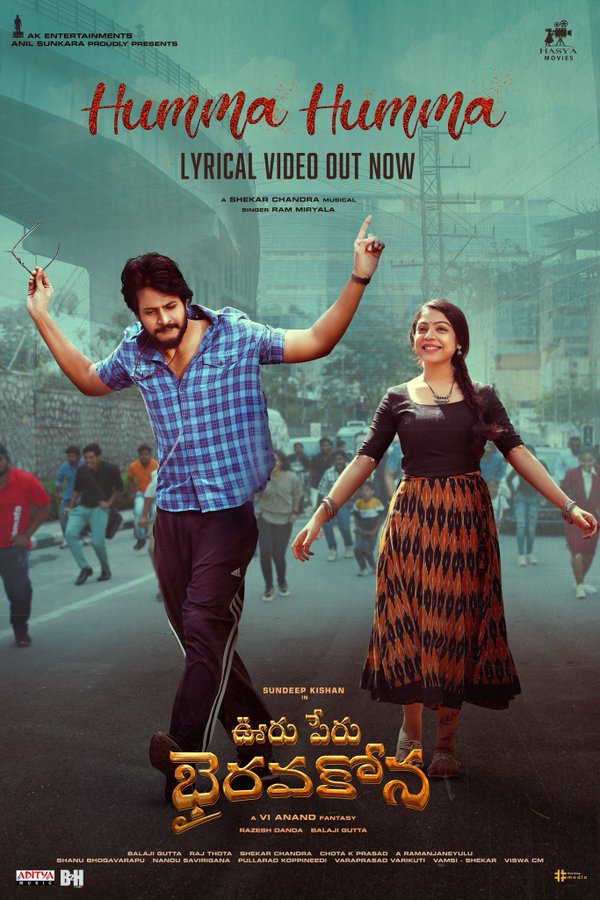
Ram Miriyala has crooned Ooru Peru Bhairavakona’s Humma Humma song that is composed by Shekar Chandra
Sundeep Kishan and Varsha Bollamma
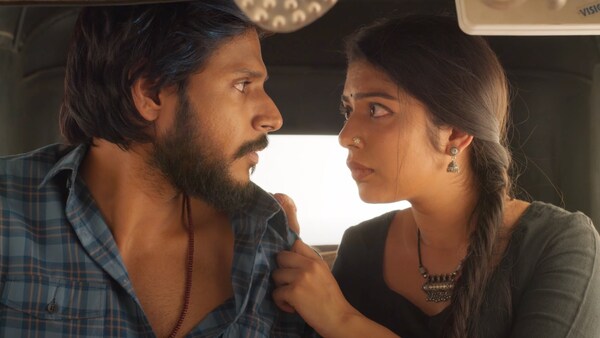
Sundeep Kishan, who was earlier seen in the gangster saga Michael this year, is all set to entertain audiences with the mystical thriller Ooru Peru Bhairavakona soon. Kavya Thapar and Varsha Bollamma play the female leads in the thriller produced by Razesh Danda under Hasya Movies, while Anil Sunkara is the presenter. VI Anand, who worked with Sundeep in Tiger, is the director.
A new single from the film, Humma Humma, was launched today. Shekar Chandra scores the music for the thriller. Ram Miriyala has crooned for the number, jointly lyricized by the composer and Tirupathi Jaavana. The catchy fusion track focuses on how the protagonist is smitten by the woman of his dreams and goes all out to woo her. The quirky lyrics, composition capture his enthusiasm.
‘Naa Valla Kade Bomma..Nee Kallu Chuste Amma..Inta Kalamu Lede..Vinta Lokamu Ente..Jaari Paddade Manase,’ the song’s opening lines read. The simple lyrics showcase the plight of a youngster who’s desperate to express his feelings to a loved one. Ram Miriyala’s laidback rendition, Sundeep Kishan’s expressions and Vijay Binni’s vibrant choreography enhance the appeal of the number.
The song has been shot at popular locations in Hyderabad and cinematographer Raj Thota’s aesthetic sense lets you explore the charm of the city while driving the story forward. The music video introduces viewers to the team behind the song, from the singer to the composer, lyricist and director as well. Humma Humma could be your ideal companion for a car ride to lift your spirits during a lazy evening.
The teaser of Ooru Peru Bhairavakona, released a few months ago, earned encouraging responses from audiences. Besides the mystical thriller, Sundeep Kishan is associating with actor Dhanush for two of his upcoming projects: Captain Miller and D50.While the former hits screens this December, D50 is directed by Dhanush himself.
source: http://www.ottplay.com / OTT Play / Home> News / by Srivathsan Nadadhur / October 28th, 2023
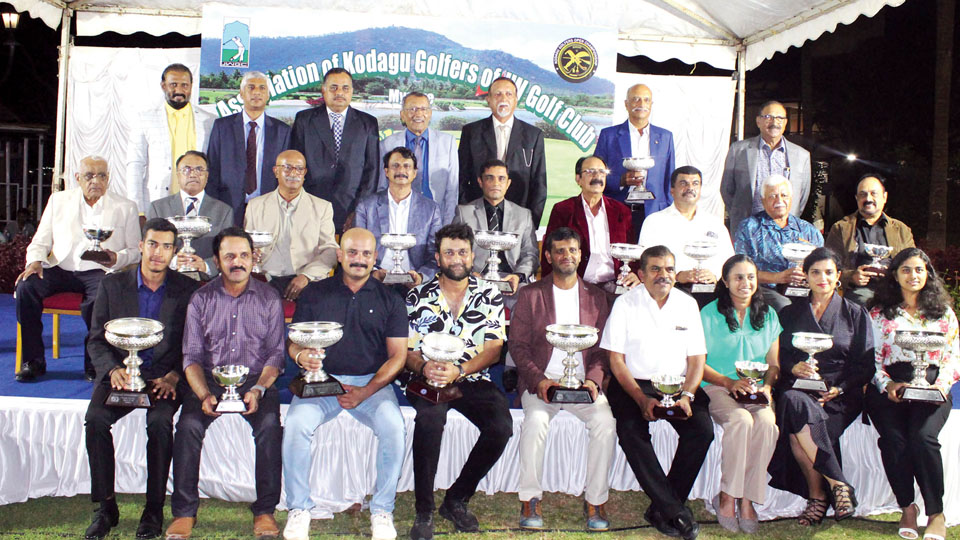
Following are the prize-winners of 22nd Edition of Kodagu Golf Open Championship-2023 held at J.W. Golf Club in city on Oct. 7 and 8:
Strokeplay Gross – Field Marshall Cariappa Memorial Trophy – Sponsored by K.C. Biddappa: M.A. Bopanna (75 Gross) – Winner (Better Back 9 Over H.S. Arun Kumar); H.S. Arun Kumar (75 Gross) – Runner.
Strokeplay Net (H/C 0 to 12) – Gen. K.S. Thimmaiah Memorial Trophy – Sponsored by Mandovi Motors: Amogh Devaiah (69 Net) – Winner; M.R. Surya Kumar (70 Net) – Runner (Better Back 9 Over P. Ramesh).
Strokeplay Net (H/C 13 to 18) – Sqn. Ldr. M.B. Chittiappa Memorial Trophy – Sponsored by Mallengada B. Nanaiah: K. Mahesh (65 Net) – Winner; M.A. Ramesh (66 Net) – Runner.
Stableford Net (H/C 0 to 18) – Kodagu Warriors Trophy – Sponsored by Star of Mysore: K.L. Jayaprakash (40 Points) – Winner; Rahul R. Jain (39 Points) – Runner (Better Back 9 Over Dr. S. Prasanna Shankar).
Stableford Net (H/C 19 to 24) – Kodagu Challenge Trophy – Sponsored by Mall of Mysore: M. Preethal (42 Points) – Winner; M. Suresh (40 Points) – Runner.
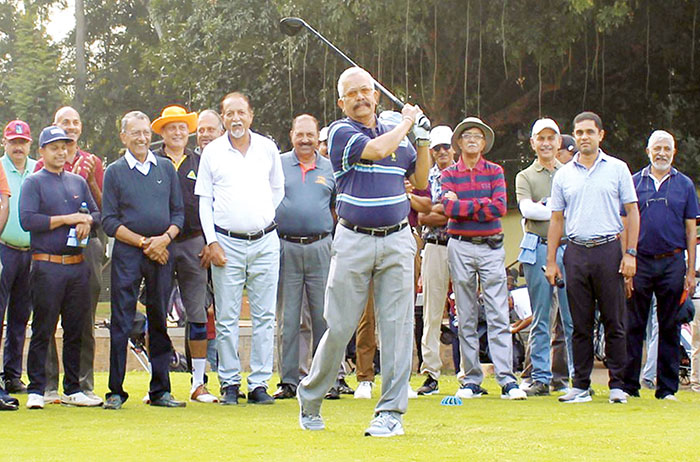
K.C. Biddappa (chief guest) teeing off to inaugurate the 22nd Edition of Kodagu Golf Open Championship-2023 at J.W. Golf Club on Oct. 7. Dr. Abraham Thomas (President, JWGC), M.A. Bopanna (Chairman, Tournament Sub-Committee), Dr. P.A. Kushalappa (President, Association of Kodagu Golfers of JWGC) and JWGC Members were present. The two-day Championship was sponsored by Association of Kodagu Golfers of J.W. Golf Club.
Stableford Net (H/C 0 to 24) for seniors above 65 years – Senior Challenge Trophy – Sponsored by B.G. Jeeth Uthaiah: Dr. S. Prasanna Shankar (39 Points) – Winner; K.M. Veer Mohen (37 Points) – Runner.
Stableford Net (H/C 0 to 24) for super seniors above 75 years – Super Seniors Challenge Trophy – Sponsored by Dr. P.A. Kushalappa: Dr. Placid Lasrado (35 Points) – Winner.
Best Kodagu Golfer – Stableford Net (H/C 0 to 24) – Sponsored by Bopy’s Inn: Dr. K.A. Nanjappa (36 Points) – Winner.
Best Lady Golfer – Stableford Net (H/C 0 to 24) – Sponsored by C.B. Chengappa: Anupama Vatal (35 Points) – Winner.
Nearest to the Pin – 2nd Hole – Sponsored by Ramya Bopanna: Dr. M.N. Guruprasad (3 Feet 11 Inches) – Winner.
Nearest to the Pin – 6th Hole – Sponsored by Travel Parkz: Praveen Chandar (14 Feet 5 Inches) – Winner; Nearest to the Pin – 12th Hole – Sponsored by Praveen Chengappa: K.C. Eapen (18 Feet 6 Inches) – Winner.
Crooked Line – 16th Hole – Sponsored by K.B. Kushalappa: Dr. A.M. Preethi (On The Line) – Winner; Hidden Holes – Sponsored by Brig. N.N. Madappa – S.N. Hemanth – Winner.
A total of 269 golfers took part in the Championship sponsored by Association of Kodagu Golfers of JWGC, according to a press release from JWGC Tournament Sub-Committee Chairman M.A. Bopanna and JWGC Hon. Secretary V.G. Achar.
source: http://www.starofmysore.com / Star of Mysore / Home> News / October 09th, 2023
Once, it was my dream to earn medals and show who I was. Now, I have a small community of runners with whom I believe that my dream becomes theirs too. That they believe that they can run! And they are doing it!”
In my 8th grade, I looked insane running around the school when everyone else had gone home or were studying in classrooms.
Born to a family who insisted I take up academics and forget sports, I had decided that I will be a sportsperson. I probed deeper into the aspect of “why”my dad as an Indian Hockey player himself did not support me to pursue sports.
Then I realized it wasn’t easy. My dad was given no choice. His only road to Olympics being cut very easily by the Board member who decided to give the chance to another person to become an Olympian all because they were family members!
I remember hiding all my 200+ medals in a trunk in my room upstairs and lying to my relatives that I did not take up sports at all!
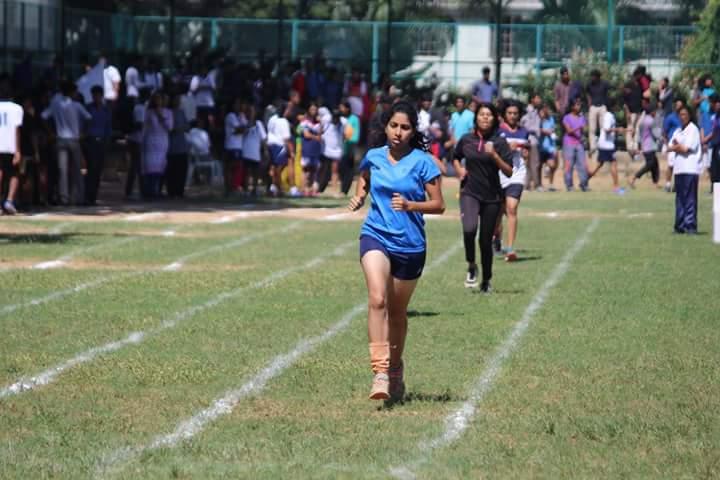
The back story of this this being: There was to be a cross country race for districts that I decided I would participate in. I practiced in the early mornings despite the fact that animals lurked in the forest where my house was located at the time in Coorg, Karnataka. Unbelievably, my practice paid off, I won the race.
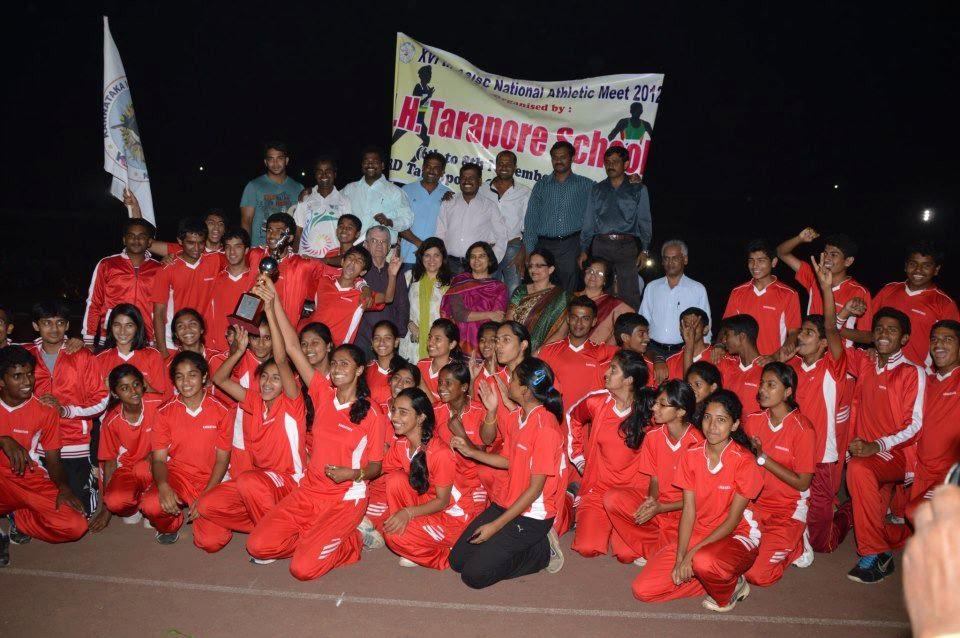
I got selected for coaching camp for the state meet and I won individuals for Karnataka, being the first for my school. For the first time, Team Karnataka won a bronze in womens 4*100m relay nationals’ that I was a part of. It was a moment of pride indeed!
Due to an ardent stress to pursue my education and forget sport, I was put in a college with no athletic tracks. I remember being told, “sports is not for the girls, only the boys”. I took the opportunity to start a college athletics team & called ourselves “No playground athletes” and ran about in football court, sometimes working out on the basketball bleachers and sometimes even in the throw ball court! Some of us got selected for All India Athletics meet and running besides legends like Tintu Luka etc was a fortunate one.
Besides this, seeing a few good players in Handball, Hockey and despite having no proper grounds, courts to play, a team was formed for both sports and we went on to become university winners.
When my dad showed his Men’s Hockey cup for zonal level under his captaincy in a university, I took a vow to get a women’s cup as well to sit right next to his in the college library.
And it all paid off! Now our university officially has a hockey, handball and athletics team. I suffered from the drawbacks of a ligament tear for a year but that did not stop me from realising my dreams to pursue my sport passionately!
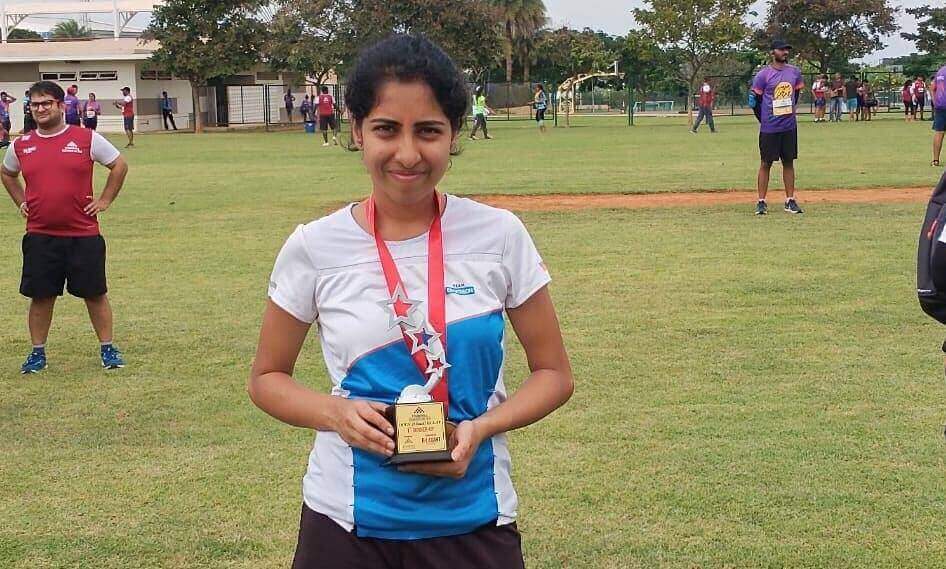
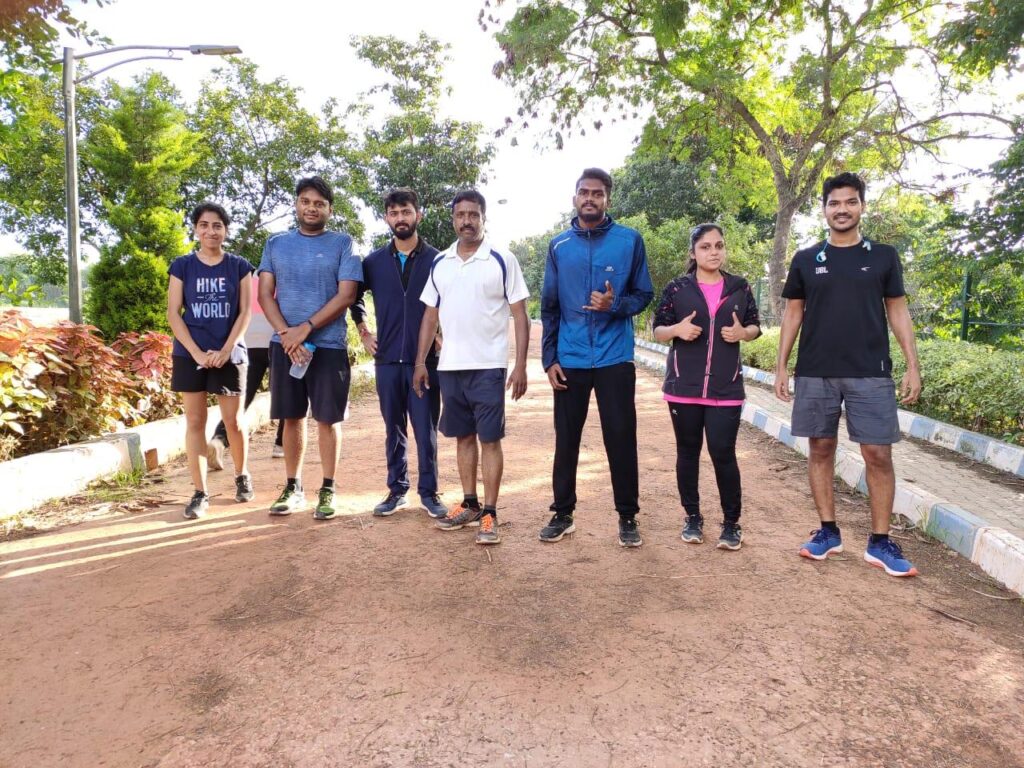
Very soon recovering from a ligament tear, being 3rd in TCS 10k for Decathlon, this is a start and Decathlon Sports India has given me an opportunity to make a strong running community in Koramangala, Bangalore!
Once, it was a dream to earn the medals and show who I was. Now, I have a small community of runners with whom I believe that my dream becomes theirs too. That they believe that they can run! And they are doing it!”
source: http://www.blog.decathlon.in / Decathlon Blog / Home> Browse Topics / by Shrividya Somanna / March 02nd, 2021
The uniqueness of the Kodava community has garnered appreciation globally, even as the films aim at preserving its culture.
Director Kottukathira Prakash Cariappa
Madikeri :
Kodagu is beautiful and bountiful. The district is blessed with nature and culture, preserved and honoured by its people for generations. In recent times, cinema has taken the centre stage to bring the life and times of Kodavas on screen. Despite a dearth of cinema halls or multiplexes in Kodagu, Kodava cinema is evolving with 29 films made in the regional language till now. Parallel to the big screen and censor-certified films, youngsters are also venturing into short filmmaking in the Kodava language, highlighting the culture, attire and traditions of the community.
It was in 1972 that the first Kodava film – Nada Mann Nada Kool (My Land, My Food) – was released, marking the inception of a new era in regional cinema. “Mandara Poo, Naa Bynda Poo, Ponn Ra Manas… several such films came later and Kodava cinema grew in tandem with the Tulu film industry. But it was always non-Kodavas who directed Kodava films during the initial years,” explains V Nanaiah, former president of the Virajpet Kodava Samaj, who has acted in over 10 Kodava films.
While Kodava cinema goes back five decades, it was only a decade ago that its films began to be directed by those from the community. “Filmmakers of Kodava movies in the early 70s were not locals. This was evident in a majority of early cinema as the Kodava language was not used in its original form,” recalls Nanaiah. While most actors were Kodavas, the direction still lacked the real touch.
Nevertheless, Kodava cinema evolved post-2015. The ninth Kodava film – Talang Neer (also directed by a non-Kodava director, Gopi Peenya) became a revolutionary flick. It highlighted the existential crisis of the community and the language was used in its true form. “Our cinema evolved with technology. Until 2015, Kodava movies never recorded much commercial success. Talang Neer was the first film shown to the public. It was a super hit as the director trusted the actors and gave them the freedom to write dialogues in the Kodava dialect. The movie also won a state award,” he adds. From here on, Kodava cinema gained prominence, and Kodava Samajas became hubs that promoted regional cinema by screening these movies. Cinema also began to archive the culture, tradition, practices, attire and food of the community.
“In all, 29 Kodava films have been made so far, among which three have not applied for censor certificates. There was a lot of internal politics behind the making of regional movies earlier. However, all that has changed and new movies in the Kodava language are made every year, despite challenges,” opines Kottukathira Prakash Cariappa, who has directed over five Kodava films. An ex-armyman with a passion for cinema and acting, he takes pride in promoting Kodava cinema at international film festivals.
Baake Mane, directed by Prakash, is among the first Kodava films to be screened at the Bengaluru International Film Festival (BIFFes), even as Naada Peda Asha, a film based on writer Nagesh Kalur’s novel, won 72 awards in various festivals.
“Our films are receiving an overwhelming response in festivals. However, the industry lacks support and encouragement in Kodagu,” he opines. While a few films have recorded good public shows across Kodagu, fewer locals watch them. “During the screening of Naada Peda Asha at BIFFes, a Japanese viewer met the filmmaker and congratulated him for the cinematography and storyline. However, locals who speak the language hesitate to watch these films. Apart from making a Kodava film, creators also have to put in their efforts to exhibit their works,” says Nanaiah.
But that has not stopped artists from creating Kodava films. The uniqueness of the Kodava community has garnered appreciation globally, even as the films aim at preserving its culture. The subsidies extended to the Kodava regional cinema have made it possible for filmmakers and actors to keep doing better, as Prakash says, “Kodava films portray the culture of the Kodava community and help preserve its language. The community’s tryst with the Army, its unique attire, rituals, etc… I want to present them to the world. We receive subsidies and even funds through film festivals, which are invested into making new films. While we feel encouraged if people watch our films, I look forward to creating new films every year.”
source: http://www.newindianexpress.com / The New Indian Express / Home> Good News / by Prajna GR , Express News Service / September 24th, 2023
Ponjanda A. Ganapathy (centre), the newly-elected President of Kodava Samaja, Mysuru, for the year 2023-2025, is seen with (from left) Ajjikuttira Diana Poovaiah – Joint Secretary, Ketolira A. Belliappa – Hon. Secretary, Machimada P. Nanaiah – Vice-President and Ittira G. Kashiappa – Hon. Treasurer.
source: http://www.starofmysore.com / Star of Mysore / Home> Photo News / October 20th, 2023
WELCOME. If you like what you see "SUBSCRIBE via EMAIL" to receive FREE regular UPDATES.
Read More »