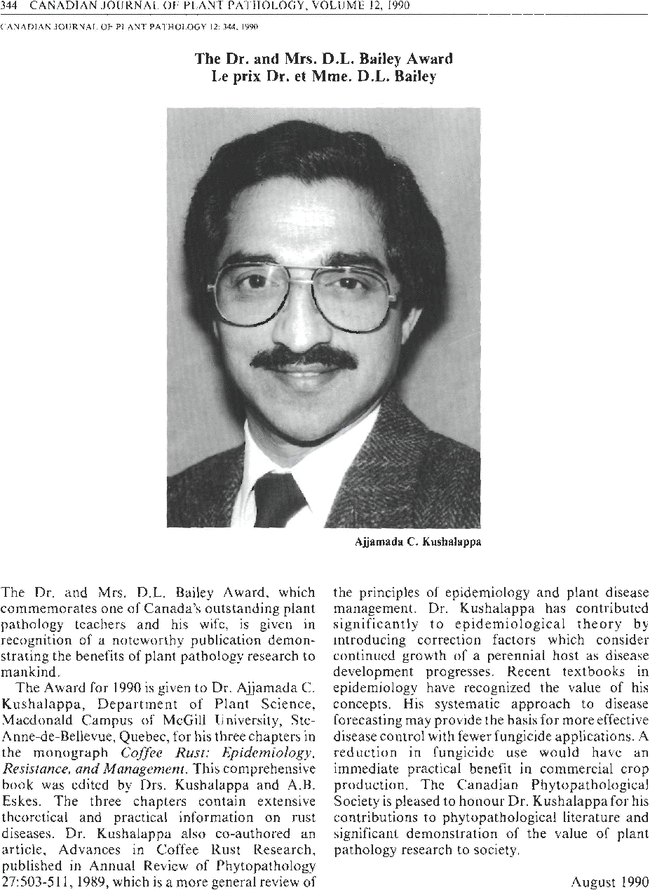
source:http:/www.tandfonline.com / August 1990

source:http:/www.tandfonline.com / August 1990
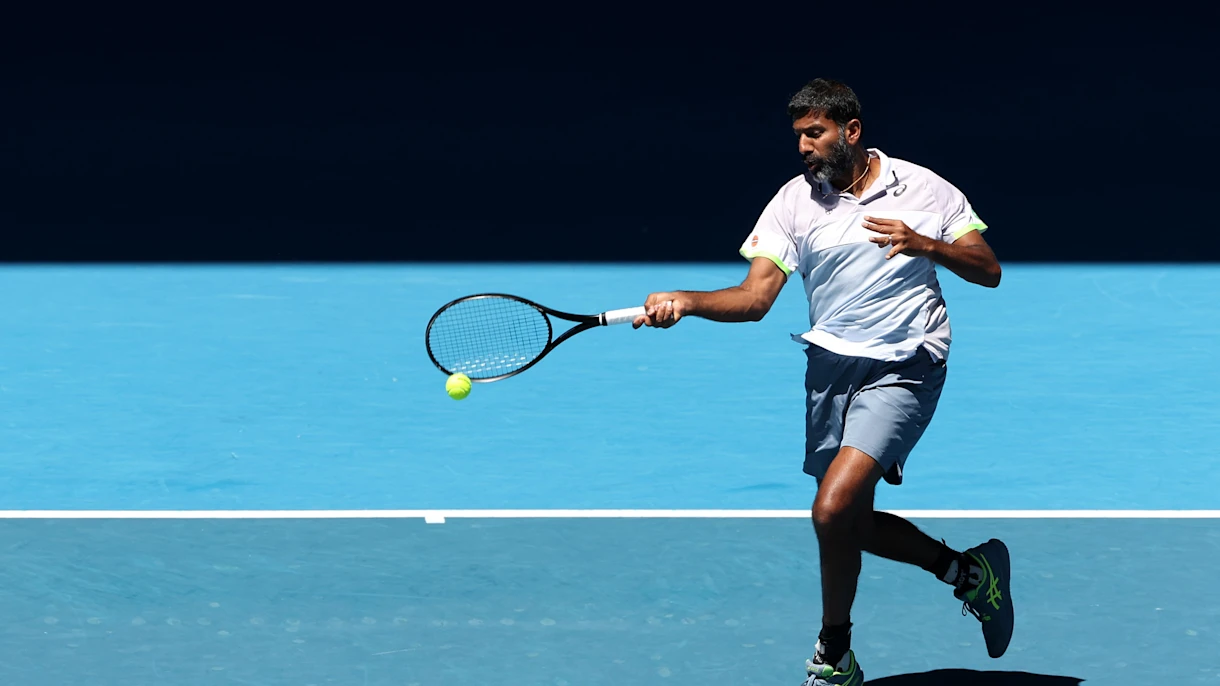
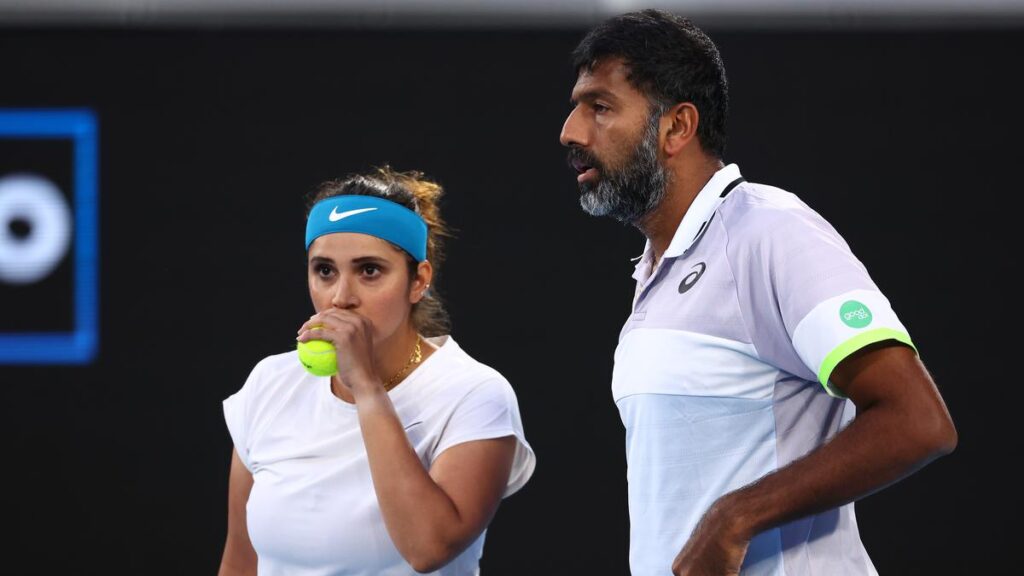
“Unfortunately, I am the only top-100 doubles player in the camp”, says Bopanna, as he points out that Ramkumar Ramanathan (71), Saketh Myneni (84) and Yuki Bhambri (96) are missing the camp.

Rohan Bopanna is the best doubles player in the country, by a mile. Ranked 19, the former world No.3, is busy tuning the quality of doubles in the country with a preparatory camp in Dubai.
“Unfortunately, I am the only top-100 doubles player in the camp”, says Bopanna, as he points out that Ramkumar Ramanathan (71), Saketh Myneni (84) and Yuki Bhambri (96) are missing the camp.
“Ramkumar has his own reason. Saketh and Yuki were scheduled to join but are injured”, observed Bopanna, who has channelised support from Pune Metropolitan District Tennis Association (PMDTA) and KPIT for the camp.
The support ensures that the players just about buy their ticket to Dubai which Bopanna felt was important as he keeps insisting on players investing on their tennis to get better.
“We are having the camp in Dubai so that the players are out of their comfort zone, away from family distractions, and focus on best preparation for the season. Apart from the ATP event in Pune, there are a few Challengers in the country”, said Bopanna.
Purav Raja, Divij Sharan, Jeevan Nedunchezhiyan, Sriram Balaji,Anirudh Chandrashekhar, Vijay Sundar Prashanth, Arjun Kadhe would all be in the camp along with Toshihide Matsui of Japan and Fernando Ramboli of Brazil.
“Parikshit Somani and Sai Karteek Reddy wanted to join and we agreed. The leading singles players are having their coaches and plans”, said Bopanna, as he explained the reason for having a doubles camp.
Most of the players have the ability to break through to the next level but the idea is to help them sustain a good level.
“They all know how to play doubles. They can improve their technique and work as a team. The camp basically gives them a different perspective”, he said.
Interestingly, four courts at the Sania Mirza Academy in Dubai are being utilised, with the camp being conducted during midday to avoid disturbing the regular training schedule. Jeff Coetzee and M Balanchandran are the coaches, along with physios Gaurang Shukla and Manish Singh, apart from strength and conditioning coach Ashish Borkar.
“Some Kazakh players are also training in Dubai in a different place. We will have some matches, sets etc.”, remarked Bopanna.
“My coach Scott Davidoff is here in Dubai. We assembled yesterday. We could have started earlier, but waited for the players to finish their league commitments. The camp will finish on December 23, so that players can reach Pune and get acclimated to the conditions for the ATP event. Or reach home for a few days before starting the season again”, said Bopanna.
In the absence of Matthew Ebden, Bopanna would be partnering 35th ranked singles player, Botic van de Zandschulp of Holland for doubles in Pune.
source: http://www.sportstar.thehindu.com / Sportstar / Home> Tennis / by Kamesh Srinivasan / December 13th, 2022
The verification process is still ongoing to confirm if the event has broken the previous world record.

Madikeri:
With an aim to create the Guinness World Record, over 6000 people from the Kodava community got together at Bittangala in Virajpet on Saturday.
They gathered to break the world record for the largest family gathering under a single roof and the initiative was organized by the Kodava Clan Portal. The initiative was called ‘Okoota’.
“Nearly 6500 people gathered under the same roof to prove that we all belonged to the same family,” shared G Kishoo Uthappa, the founder of the Kodava Clan portal. He explained that people from three generations gathered for the event and the same was monitored by the representatives of the World Record Association.
The verification process is still ongoing to confirm if the event has broken the previous world record.
The Kodava Clan portal was started to help the Kodava community connect with the ancestral lineage and the portal has succeeded in creating the largest family tree of over 21,000 Kodava individuals.
Through the portal, one can even find out how they are related to FMKM Cariappa or anyone else from the community. The portal had won the India Book of Records for the largest family tree and it has now attempted to break the Guinness World Record.
“We are now linking everyone who was part of the event to the family tree in the portal to find out if we all belong to the same family,” explained Kishoo. A total of 4514 people from the same family gathered in France earlier to create the world record for the largest family gathering and the Kodava clan aims to break this record.
Meanwhile, the event provided a platform to the Kodava litterateurs to exhibit their works and enabled sales of the same. Over 30 outlets in the vicinity promoted the Kodava culture even as various entertaining events including the ‘valagathat’, singing and other programmes were organized.
source: http://www.newindianexpress.com / The New Indian Express / Home> Good News / by Express News Service / December 25th, 2022
ILT20 2022-23: International League T20 (ILT20) franchise, Dubai Capitals (DC), have acquired the services of former India international Robin Uthappa for the…

ILT20 2022-23:
International League T20 (ILT20) franchise, Dubai Capitals (DC), have acquired the services of former India international Robin Uthappa for the inaugural season. The 37-year-old Uthappa, who recently announced his retirement from the IPL, played the last two IPL seasons for CSK. The swashbuckling right-hander is set to join the Dubai-based ILT20 franchise and will look to replicate his success in the middle-east nation.
“As classy as it gets at Dubai Capitals. Here’s welcoming 𝐑𝐨𝐛𝐛𝐢𝐞 to our family, now eager to see a few dancing down-the-track shots at the Dubai International,” the franchise shared the joining of Uthappa on their official Twitter handle.

Apart from Robin, several other big names will grace the tournament
In the IPL, Uthappa featured in 205 matches, scoring 4,952 runs with an average of 27.51. The Karnataka stalwart scored 27 half-centuries in his IPL career and registered his best score of 88 runs against RCB in April this year. Apart from Uthappa, star players like Kieron Pollard, Andre Russell, Eoin Morgan, Dasun Shanaka and Wanindu Hasaranga will take part in the maiden season of ILT20.
The players who will be in the first UAE T20 League have been announced by Dubai Capitals, which is a branch of Delhi Capitals.
source: http://www.insidesport.in / Inside Sport / Home> Cricket / by Pranchal Srivastava, Editor / December 15th, 2022

Title : The Wild Cat’s Compendium / Author : Dr. Nima Poovaya Smith /Year : 2022 /Pages : 51 /Price : Rs. 449
(Kindle version)
Publisher: Caracal Publications, United Kingdom
Dr. Nima Poovaya-Smith (parental home Ammanichanda) has just launched a delightful book titled The Wild Cat’s Compendium, which is a collection of 45 brilliantly crafted verses on 45 species of wild cats as well as few of the domestic ones.
Composing poems is an art and Nima excels in succinctly portraying the feline species in all its glory. In a few apt words, the 45 poems read as fluidly as the graceful strides of the cats.
(Read the sample poem.)

Cats of All Tribes
Cats of all tribes major, middling, minor, inlaid menace and glamour, damascened suits of shadow armour.
Your coats boast such stylish motifs. Spots, dots, rosettes, stripes, flecks, spirals.
Draw breath, there is more, of this feline allure. Marbled, banded, clouded, streaked, stippled, brindled.
Your fur a lush canvas for lavish mark-making. Each unique striation etched with precision. Nature’s artful illusion.
The guile of the design, woven into the dapple of sun and shade, dissolving into air without hint or sign.
Seeing you without knowing we do, even when face-to-face. Our deepest, murkiest selves in plain view to that occult feline gaze.

African Golden Cats: By Joseph Wolf
What is remarkable about this compendium is the in-depth research that has gone into the lives, habitat, behaviour, and appearance of each variety of cat. Nima has been working on this book for quite a few years and has packed a great deal of information wonderfully crafted using her treasure trove of highly refined vocabulary. In addition, Nima has woven the grave threats these feline species face in the wild and that their primary detractors belong to the human species. In one of the poems, she has given a consciously chilling recipe for preparing tiger bone wine. Hopefully those who indulge in such shameful practices will realise and shun their superstition-ridden beliefs.
In the Introduction to the book, Nima mentions about her (and mine) maternal grandparents’ home (in Palangala village, Kodagu), where tigers and other wild cats roamed close to human dwellings. During our childhood days we have heard several tiger tales from our shikar-loving uncles. Over the years, those childhood memories have expanded in Nima’s mind to bring out this wonderful collection of poems.
As a bonus, each poem is richly illustrated with paintings by several well-known artists. One of the artists is Nima’s brother Sunil’s wife Sheila, an alumna of CAVA, Mysuru.
Nima earned her Ph.D in English literature from Mysore University under the guidance of Prof. U.R. Ananthamurthy who used to mention that Nima was one of his best students. She went on a scholarship to University of Leeds to pursue her post-doctoral studies. She has been a curator of several museums in the UK. She was awarded the Order of the British Empire (OBE) in 2016 for her contribution in the field of arts and museums. She was appointed as Deputy Lieutenant of West Yorkshire in 2020, which entails interacting with the British royal family.

Chinese Mountain Cat: By Sheila Ammanichanda
Currently Nima is a Senior Visiting Research Fellow, School of Fine Art, History of Art and Cultural Studies, University of Leeds.
Wild Cats’ Compendium was launched at the Ilkley Literature Festival in October 2022. In the accompanying photograph, Nima is in conversation with David Lascelles, 8th Earl of Harewood (and second cousin of King Charles III), during the book launch.
Wild Cat’s Compendium is available on Amazon. However, currently only kindle version of the book is marketed in India: The Wild Cats’ Compendium: Cats of All Tribes eBook: Poovaya-Smith, Nima: Amazon.in: Kindle Store
Reading Wild Cat’s Compendium is an enriching experience. Every time you re-read a poem you learn something more. I rate this book as a Collectors’ Item.
source: http://www.starofmysore.com / Star of Mysore / Home> Feature Articles / by C.P. Belliappa / December 12th, 2022
Doha:
Karnataka Sangha Qatar in cooperation with Indian cultural Center hosted Indian Community.
Welcome reception to V S Vinay, ex Indian Hockey team player and current Hockey Karnataka Sr team coach and felicitated on December 6 at Ashok Hall Auditorium of Indian Cultural Centre.
Dignitaries present during this event was president of Indian Cultural Center P N Baburajan, vice president of Indian Cultural Center Subramanaya Hebbgelu.
The platform to this felicitation was created by Indian Cultural Centre to Honour the dignitaries visiting State of Qatar during the FIFA 2022 event.
Mahesh Gowda president – Karnataka Sangha Qatar welcomed the gathering and thanked V S Vinay for giving time for the reception and expressed confidence that under his mentorship many players will get trained and join Indian Hockey team and play for the country, also mentioned it is a proud moment that V S Vinay hails from Coorg district of Karnataka and which is know for producing world class players and won many medals for India.


Mahesh Gowda also thanked Indian cultural organisations for their invite and all Associated Organisations for felicitating the guest.
P N Baburajan in his address briefed the dignitary about Indian Cultural Center and how ICC is involved in the FIFA celebrations.
V S Vinaya thanked Karnataka Sangha and Indian Cultural Centre for felicitating him and people for there time to meet him, also motivated the parents to put their children in any sports and also briefed how their children get all the training facilities from the federation if they are really doing well in the sport.
The programme emcee was done by KSQ member Nithi Ramesh.
source: http://www.daijiworld.com / Daijiworld.com / Home> Middle East / by Media Release / December 10th, 2022

By Daniel Schoenherr
Special microbial mat systems in Alpena, Michigan, are helping scientists search for extraterrestrial life.
“It’s so different, and feels otherworldly,” said Stephanie Gandulla, a diver with the National Oceanic and Atmospheric Administration’s Thunder Bay Marine Sanctuary. She has sampled the mats near the sinkholes on the lake’s bottom.
You may have seen a microbial mat before — the green algae on wet rocks at the beach is an example.
Algae’s green color comes from chlorophyll — a substance that uses sunlight to turn carbon dioxide into energy. Carbon dioxide and oxygen support most of life on Earth.
But under special conditions, like those at three sinkholes just 2½ miles east of Alpena, primitive forms of microbes called cyanobacteria can survive without either of them.
These are white, not green, and they get energy from chemicals in the water.
“They are everywhere, but they are incredibly hard to find,” said Bopaiah Biddanda, a biologist with Grand Valley State University’s Annis Water Research Institute, who has been studying them for 20 years.
Such mats are normally found in ocean waters over 32,000 feet deep, but they can be found only 80 feet below the surface of what is known as Lake Huron’s Middle Island Sinkhole.
The sinkhole’s biologically extreme environment can help simulate sample collection in extraterrestrial worlds where life is based on similar chemicals. A new study by Biddanda models scenarios where robots could analyze material beneath the water of other planets. It’s based on the work in Lake Huron.
The study focuses on two methods: suction devices for soft mats and coring devices for hard mats.
Click on the photo below to watch a video about these mats:
The sinkholes near Alpena provide sulfuric, oxygenless groundwater that creates the conditions needed for the mats to grow. Filaments of cyanobacteria drift together, creating a wispy white-purple flow.
“It almost looks like a mirage,” Gandulla said.
It could be a long time before the experience from sinkholes in Lake Huron will be used to explore the potential of life on planets elsewhere, but Biddanda’s exploration is yielding other finds now.
Recently, for example, his team found an explanation for the mats’ mysterious ability to change colors overnight.
The purple and white cyanobacteria travel upwards to capture energy from the top of the mat, according to the study. During the day, microbes with color capture the small amount of sunlight reaching the seafloor with chlorophyll.
As the sun sets, the white microbes move to the surface of the mat to absorb chemicals in the sulfuric water for their energy. This continuous, vertical shift in microbes causes patches of the mat to change between purple and white in a daily cycle.
The microbial mats thrive off a special soup of chemicals in the groundwater, but changes in land use could disrupt it in the future.
The Thunder Bay sanctuary is constantly combating such threats to coastal ecosystems such as the one near Alpena.
“Development might choke off the water supply,” Biddanda said.
The marine sanctuary offers educational programs and tours to K-12 students and operates a welcome center year-round.
“We work together to protect it as a community,” Gandulla said.

The characteristics of Middle Island Sinkhole’s cyanobacteria could hold the key to much more than planetary exploration. They could lead to advances in other scientific fields, such as evolutionary biology and medicine.
“We have a library of pharmaceutical value here,” Biddanda said “This could help us down the road.”
And, he noted that they look cool: “There is something fascinating and mesmerizing about these colorful mats.”
We’re a project of the Knight Center for Environmental Journalism at Michigan State University.
source: http://www.greatlakesecho.org / Great Lakes Echo / by Daniel Schoenherr / November 22nd, 2022
A unique eco-certification initiative in Kodagu’s famous coffee estates offers fresh hope for preserving native rainforests of the Western Ghats.

There was a time in the not-too-distant past when coffee farmers in Kodagu district of Karnataka grew their plants only under the canopy of evergreen forests they had inherited. Now they prefer to grow it under the sun, which has serious implications for the Western Ghats and on the waters of the Kaveri River.
More and more farmers are now letting trees such as Dadup (Erythrina subumbrans), Arecanut (Areca catechu), Balanji (Acrocarpus fraxnifolius) and Jackfruit (Acrocarpus heterophyllus) die so that the canopy can be opened up and they can grow sun-loving coffee varieties that produce more berries and beans, resulting in higher returns.
Instead of the big trees, they are now planting exotic Silver Oaks (Grevillea robusta), whose pole-like trunk can be used as a support for the climbing pepper vines, which help boosting incomes. The proliferation of Silver Oaks has made it one of the more common trees in some parts of the area.
This transition has a larger ecosystem cost. Kodagu, earlier known as Coorg, is located on the western edge of the Mysore Plateau, at an average altitude of 800 metres, as it lifts up to the crest of the Western Ghats ridge (altitude above 1,500 m) and then falls sharply westwards into Kerala. The plateau mainly slopes eastwards, with the streams and rivers joining to form the Kaveri River, which is the lifeline for millions of people in Karnataka, Tamil Nadu and Puducherry.
With insufficient rains over the Western Ghats during this year’s southwest monsoon, there is a shortage of water in the reservoirs across the Kaveri in Karnataka. This has led to the flaring of the water-sharing dispute with the lower riparian state of Tamil Nadu in recent days.
While this acrimony continues, payment for ecosystem services measures are being worked out in Kodagu district so that coffee farmers protect the forests under which they grow their crop, thereby preserving the water flow into the Cauvery. These measures also help to maintain the climate resilience in the river’s catchment and command areas.
With the forest-like mixed-tree canopy in coffee plantations disappearing, the torrential rains of the southwest monsoon flows quickly down the streams, carrying valuable topsoil away and causing floods followed by long dry periods downstream.
The Kodagu farmers are being encouraged through payment for ecosystem services, in the form of eco-certification, to continue with their traditional coffee cultivation under the shade of mixed species of trees. This will help strengthen the ecosystem services they receive from the unique landscape of Kodagu, and also strengthen similar services and climate resilience of all those relying on the waters of the Kaveri downstream.
The concept of eco-certified coffee, whose certification process ensures that coffee is grown under mixed-species trees, has gained popularity in the district in the past five years. Close to 900 coffee farmers have converted to eco-certified coffee. Even with a conservative estimate of 10 acre per farmer, this means nearly 10,000 acres of eco-certified coffee. In addition, with Tata Coffee getting all of its 13 estates eco-certified, Kodagu district has at least 20,000 acres under coffee cultivation that aims to minimise damage to the environment.
As an incentive for protecting the environment, the coffee farmers get a premium above the market price for their coffee beans. Coffee is the major agricultural produce from Kodagu, with 33% of the district landscape under its cultivation. About 38% of India’s coffee production comes from the district.
Ecologically, Kodagu district has been identified as a micro hotspot of biodiversity under the larger Western Ghats region. Rightly so, since the western crest of the mountainous district is in the direct path of the southwest monsoon. The dark clouds heavy with rain dump much water over the district. While the western edge of the district receives above 5,000 mm of rainfall on an average, it reduces to around 1,200 mm in the east. Most of the water feeds into the Kaveri.
According to a report by the College of Forestry at Ponnampet in Kodagu, natural forested ecosystems cover an area of 46% of the total area of the district. These include evergreen, semi evergreen, moist deciduous, dry deciduous and scrub forest types, and even the high-altitude shola-grassland ecosystem.
Traditionally, coffee is grown in the shade of these forests. Coffee estates in Kogadu have on an average 350 trees per hectare, compared with 270 in degraded groves and 640 trees per hectare in the nearby Brahagiri Wildlife Sanctuary, making these estates amongst the densest agro-forestry systems in the world.
“Very few landscapes across the world grow coffee in the way in which Kodagu does,” said C.G. Kushalappa, university head for forestry and environment sciences at the College of Forestry, Ponnampet in Kodagu. “We grow both Arabica and Robusta coffee under the shade of the trees. Our shade-grown Robusta fetch a premium price. When grown under the shade, the berries mature slowly and fill out better. They have good cupping (taste) quality.”

However, he needed scientific data to convince the coffee farmers and the district administration that there was strong ecosystem benefit in maintaining the traditional shade-growing methods. The opportunity for doing this research emerged when the College of Forestry was chosen as the lead institute in India to carry out the Coffee Agro-Forestry Network, or CAFNET study to understand the environmental services from this unique landscape.
Financed by the European Commission, the study was jointly conducted by the College of Forestry, the Coffee Board, the French Institute at Puducherry, CIRAD (the French national agricultural research system) and Bangor University from the United Kingdom between 2007 and 2011.
The study noted that the multi-storeyed coffee agro-forestry system developed and sustained by the farmers based on their local knowledge is one of the most diverse production systems in the world. The traditional coffee agro-forestry system sustains diverse animal, bird, plant and microorganisms, and provide biodiversity, carbon sequestration and water-related ecosystem services. Since multiple crops such as pepper, mandarin oranges, vanilla and timber is also grown in these systems, they help provide resilience to farmers when they are hit by coffee price volatility.
The CAFNET report recommended that coffee farmers growing Arabica and Robusta under shade trees should be paid for the ecosystem services that their farms provide, so that they can protect biodiversity and therefore water in the Cauvery. Two methodologies for payment for ecosystem services suggested was eco-certification and geographical indications protection for Kodagu coffee.
Eco-certification of coffee farms in Kodagu started as a follow-up to this recommendation. Coffee farmer BB Thammaiah says his interest was piqued when students from the College of Forestry came to his farm to carry out biodiversity studies. “After the studies I was told about the uniqueness of the method in which I grow coffee, and I went in for eco-certification,” he said.
The two eco-certifications that have been popularly accepted are from the Rainforest Alliance and Utz. Coffee grower KK Naren in Kunda village near Ponnampet said the main benefit of the eco-certification process is that farmers are trained in good practices that have good environmental benefits and improve the working and living conditions for the workers.
“The economic benefit is not much,” he said. “It is more of training for us, which will be beneficial in the long run. The eco-certification process educates the coffee farmers about the environment.”
The most important lesson from the training relating to the eco-certification, according to Narenm was the understanding on the importance of native trees. “It is not that we didn’t know about native trees but we were not that keen on maintaining them,” he said. “The native trees do not give good financial returns, so we gave importance to silver oak.”
According to Naren, the Rainforest Alliance eco-certification process looks at whether native shade trees are present. The certifiers and auditors also look at labour management, whether the minimum labour wage is paid and the cleanliness around the labour quarters. They are very strict about not using child labour. “They also look at the way chemicals are used,” he said. “They are not saying no to chemicals but there are restrictions to some chemicals and the way the rest are used. They are keen that we should not use pesticides of chemicals near the rivers or tanks. They give importance to maintain local environment.”
Individual planters like Thammaiah and Naren got an opportunity, through the eco-certificaion process, to access the international market through a Swiss procurement agency that buys higher quality coffee. Both of them sell their eco-certified coffee to Ecom Gill, who procures the eco-certified produce for supply to Nespresso.

For Tata Global Beverages Ltd and its production subsidiary Tata Coffee Ltd, the move to eco-certification of all of its 13 estates in Kodagu was an important step in the process to make its supply chain sustainable. According to Anurag Priyadarshi, global sustainability manager for Tata Global Beverages, one of the guiding principles that the group has adopted is to source sustainability. For this, all their estates in Kodagu have been eco-certified by Rainforest Alliance and Utz.
“Through the eco-certification process we are trying to ensure good management practices for the ecosystem, energy, water, waste, soil and agro-chemicals. We ensure the safety of the produce and also occupational health of the workers. Ultimately we want to prevent the impacts of climate change,” he said.
MB Ganapathy, head of plantations for Tata Coffee, said the company is aware about the fact that they are growing coffee in Kodagu, which is a biodiversity hotspot in the Western Ghats. “We have recognised this fact and that is the reason that our vision is to enhance the ecological wealth we have inherited. The eco-certification helps us safeguard the environment.”
However, the rapid spread of the eco-certification process has also raised some hiccups which need to be overcome, states TR Shankar Raman, scientist at the Nature Conservation Foundation, whose organisation was involved with helping Rainforest Alliance with the certification in the initial years. The three points of concern, according to him, is the very rapid pace at which certification is being done; the relative absence of biologists and social scientists in the auditing process; and the dilution of conservation standards (like the requisite number of native species and canopy cover) in subsequent versions of the certification guidelines.
“While the rapid certification has more and more farmers being eco-certified, we hope the rigour of the process continues to be maintained, so that the end result of conserving the native vegetation is not compromised,” Raman observed.
With more farmers opting for eco-certification, there is a movement towards the protection of the traditional methods of coffee cultivation under the shade of mixed-tree species. For the process to strengthen the farmers should continue to get good economic benefit for their eco-certified produce.
According to Naren, if there is at least 10% more returns from the eco-certified coffee remains constant then there will be an incentive for the opting for opting for the process. At present the price at which procurement agencies such as Ecom Gill buy is linked to the international market price, plus a premium of Rs 60 to Rs 80 for a 50 kg bag of sun-dried cherries. The international prices fluctuate in relation to the local market prices, and as with the current situation can go below the domestic price.
However, Kushalappa says that in addition to the premium, there are other incentives and bonuses for producing good quality coffee beans. The average increase in price above the local market price was around 15% last year, which is well worth the effort.
If additional income for coffee farmers from eco-certification can help conserve unique agro-forestry ecosystem of Kodagu, then it will be the water flow into the Cauvery that would be conserved. Millions of people downstream, including the residents of Bengaluru and other parts of peninsular India, will thank the coffee farmers upstream for their drinking water and climate resilience.
This article first appeared on India Climate Dialogue.
source: http://www.scroll.in / Scroll.in / Home> Environmental Balance / by S Gopikrishna Warrier / September 17th, 2016

As the son of an Indian naval officer, Bidanda Bopaya was born in Pune, has lived all over the Indian coastline, and was sent to a boarding school in Ooty at a young age. His wife, Louella, daughter of an Indian air force officer, is a psychologist in private practice.
The Bidandas moved to Pittsburgh in 1987 after graduate work at Penn State and have raised two children in the Burgh. Their daughter, Maya is pursuing a PhD in finance & economics after an early career on Wall Street, and their son Rahul is an engineering graduate from Pitt. The Bidandas live in Fox Chapel.
Bopaya, a professor of engineering at the University of Pittsburgh and President of the Institute of Industrial & Systems Engineers, has authored/edited 13 books in the subjects of his specialization. Here is Bopaya in his contemporary dress and also in the traditional Kodava attire.

Editor’s note:
My early childhood was in Madikeri (earlier name Mercara) in Kodagu District, earlier known as Coorg (population: over 500,000 people) in Karnataka State. Madikeri is the headquarters for Kodagu and the home of the Kodavas, a small, accomplished, and colorful community in the Indian social tapestry. Kodavas are ~20% of the population of Kodagu District, and have contributed disproportionately to India’s armed forces, sports teams, and other professions including as India’s first female ambassador, India’s first PhD in sports medicine, the founder of the National Institute of Sports in Patiala, and of course, India’s first Commander-In-Chief (Gen. Kodendera Subbayya Thimmayya), and India‘s first Field Marshal Kodendera Madappa Cariappa.

After sixty years, I chanced to drive through Madikeri. I had a vague memory of Omkareshwara Devasthana, a Shiva Temple there. Since it was the only temple I knew in my childhood, it made no impact then. When the driver showed me the temple from a mile away from the hills, I told him it looks like a mosque. His reply: was saar, iduve devasthana. (No sir, this IS the temple.) Stunned at the unique architecture for a Hindu temple with a typical Islamic dome including the four minarets, I stood in silence in front of the temple absorbing the ambience.
Then during the Patrika fundraising, I saw one Bidanda Bopaya as one of the on-line contributors. From the name, I recognized he is a Kodava (known earlier as Coorgis). I contacted him with my Madikeri roots, and one thing led to another in our exchanges, which finally culminated with Mr. Bopaya writing this article for the Patrika. – Kollengode S Venkataraman
The Omkareshwara Temple is a picturesque and unique place of worship in Madikeri, the heart of a salubrious and verdant hill station in Karnataka. Our family spent summers in Kodagu, and the place remained a well-kept secret because of the absence of a railhead. Now, it is a weekend getaway to Bangalore IT techies arriving in hordes.
Steep hills studded with vibrant homes surround the temple. Legend has it that the Raja of Kodagu, Lingarajendra II, built the temple repenting for some terrible act he committed. He was advised to build a Shiva temple that would awe people, as long as the sun and the moon are around! He commissioned the temple, consecrating it in 1820, with a Shivalinga brought from Kashi enshrined at the temple’s sanctum.

Omkareshwara Devasthana is the only known example of a Shiva temple for that matter, any Hindu temple built like a mosque with four turrets (or minarets) at each corner and a dome at the center. The rationale for this one-of-a-kind architectural style (Islamic with a Gothic touch) for a Hindu temple is not precisely known even though the temple is only 200 years old, given the frosty relations between the Kodavas and Muslims, thanks to Tipu Sultan (1750-1799), who repeatedly invaded and unsuccessfully tried to take control of the region. Search the web under Tipu Sultan and Kodavas to get multiple perspectives of this complicated relationship.
Given today’s strife-ridden global situation among all religions, it is inspiring that one Hindu temple integrated multiple styles of architecture into its place of worship two centuries ago. As children, we played hide-and-seek with our extended family around the temple.
The Rajaâ’s tomb located nearby, built in 1809, also has an Islamic architecture. My great-great-grandfather Bidanda Bopu was the Commander-in-Chief of the Kodagu Rajaâ’s army and is buried next to the Raja. Growing up, our family often celebrated festivals and visited the tomb to pay respects to our ancestors.
The Kodavas are proud people and maintain unusual traditions. Kodagu is often called the land of generals, beautiful belles, coffee, cardamom, pepper and honey, all because of its hilly terrain and suitable weather, honey, large number of military leaders, and charming and gracious women! Some interesting features of Kodavas
1)Are Kodavas Hindus? While Kodavas are governed by the Hindu laws, they are technically not Hindus, with the absence of a caste system; Kodavas are ancestor- and nature-worshippers. Most festivals are centered around agrarian and martial themes and traditions. However, many Kodavas have now adopted a Hindu lifestyle and traditions.
KODAVA FESTIVALS: Kodavas are rooted to their land as farmers and agriculturists. No wonder, all Kodava festivals are around farming.
2) Kailpodhu: After the paddy fields are transplanted in early September, Kodavas worship their weapons and tools, after cleaning and decorating them. This is followed by festivities (shooting competitions, athletic prowess, while feasting on spicy food and copious alcoholic beverages). Kodavas have the right to bear firearms and weapons without license.
3) Kaveri Sankramana: The river Kaveri originates in Kodagu District in a small natural spring in Bhagamandala, close to Madikeri. In mid-October, at a specified time, the sacred River Kaveri ” yes, for Kodavas in particular, and for all Kannadigas, Kaveri is sacred ” renews with new divine springs gushing towards a larger body of water. This is the birthplace of the river. People take dips in this holy water. Goddess Kaveri is then worshipped in Kodava homes with youngsters touching the feet of elders for blessings. Kaveri is perhaps the most common name for girls among Kodavas. This is the only meatless festival among Kodavas!

4)Puttari (meaning New Rice), is the traditional harvest festival, celebrated in early December when people gather in their traditional family home (ainamane) nicely decorated with farm motifs. Like Onam, Pongal, Lohri, Baishakhi, Bihu, and of course, Thanksgiving here, special culinary items are prepared. An important part of this festival is the matriarch of the family leading others into the fields for a symbolic first harvesting of rice paddies.
In addition to these, individual villages have temples that celebrate colorful festivals, including walks thru hot beds of coals. The best way to experience these is to be with Kodavas in their home during the season.

5)Is there a Kodava cuisine? Yes, of course. Kodava cuisine is replete with unique and fiery dishes including Pandhi Kari (pork curry cooked in a special vinegar), Baimble-Kari (bamboo shoot curry), mango paji (mango chutney), kuru kari (kidney beans, green beans, in a coconut gravy), akki rotti (rice chapattis) and the list goes on!!
6) Kodava music, dance and dress are unique and are on display at weddings and festivals. Kodava women elegantly drape themselves in a unique style in standard 6-yard saris. Men wear black wraparounds (kupya), colorful sashes (chalé), and daggers (peeche kathi).
7)Interesting fact: No priests at Kodava weddings. Family elders lead all the religious rites, with a frenzy of Kodava dancing, pandhi curry, libations, and ceremonies steeped in family traditions.

Websites offer a ton of information on tourism-related questions on Kodagu — places of interest, cuisines, lodging, what to do, how to reach, the best time to visit. One website is: www.coorgtourisminfo.com
source: http://www.pittsburghpatrika.com / The Pittsburgh Patrika / Home / by Bidanda Bopaya, Fox Chapel, PA / October 2022 issue

At the first glance it seems to be another piece of metal with the sign of a star embossed on it. The hardly visible recipient’s name along with the date it was received is engraved in a corner. To own this piece of metal is an irrepressible desire of every soldier who goes to war. That’s because it represents valor. It’s the ‘Maha Vir Chakra’, second highest gallantry award given to those who exhibit exemplary courage and valiance. It is the Indian equivalent of the ‘Distinguished Service Cross’ of the British. Since 1947, Only 218 braves of the mighty Indian Army have been the proud recipients of the Maha Vir Chakra. 6 among them have received the Maha Vir Chakra twice, also called the Maha Vir Chakra Bar. Considering this, only two from Karnataka, a state which has given some of the most valiant soldiers and officers to the Indian army, have been the illustrious recipients of this gallantry award.One is Squadron Leader Ajjamada B Devaiah famously known as the ‘Tiger of Sargodha’ and the other is Major (Later Lt. Colonel) P S Ganapathi. While the former was martyred in action during the 1965 war and was awarded the Maha Vir Chakra posthumously, the latter is a living example of unparalleled gallantry amongst us today.
Saga of a living memorial
Unlike the brave souls of Punjab, there have been no books published about this hero. He hasn’t given any interviews to TV channels or attended public events which are flashed all across the media. Almost nothing is known about him yet. He is relatively unknown even in his own hometown, Coorg, the land of the brave warriors. Shy of any kind of publicity and one who lives by the dictum ‘Safeguarding the nation is my duty alone’ is how Lt. Col. Puttichanda Somaiah Ganapathi has led his life throughout. Participating in public events is not at all a difficult task. However, Lt. Col.PS Ganapathi believes that safeguarding the honor of the esteemed medal is his paramount duty and is more valuable than any kind of publicity.
At 73 today, Lt. Col.Ganapathi might not have a large frame but his baritone voice, characteristic of military officers, hasn’t waned a bit. Lethargy that comes with age is alien to him. The agility of his mind is intact despite many years of retired life. Currently residing at ‘Sena Vihar’ in Bengaluru, Lt. Col.Ganapathi’s retired life is anything but idiosyncratic with lives of retired people who prefer a laidback existence.An effervescent man, unlike most people his age, he drives to his hometown in Coorg once every month on his own.His life in the concrete jungles of Bengaluru hasn’t sapped his love for farming one bit.His suave demeanor and absence of any signs of pretension for being the proud owner of a national gallantry award, is the true nature of this hero.
While seated at his home in the multistory apartment complex at the Army’s ‘Sena Vihar’, Lt. Col. Ganapathi began to narrate the stirring story behind his Maha Vir Chakra. He was soon joined by his wife on her wheelchair, with a cup of coffee in her hand. Although, she had heard her husband’s heroic tale umpteen times,her desire to keep listening to the saga made her tolend her ear once again. The showcase behind the Lt. Col. was decked with the upright photo which had captured the invaluable moment when he was presented the MVC by the President. Adjacent to it was the photo of his son, who departed untimely, adorned with a sandalwood garland. The enduring agony of the deceased son was apparent, albeit fleetingly,in the stern battle-hardened face of the Lt. Colonel.
As a worthy prelude to his tale of heroism, Lt. Col. Ganapathi began by recollecting his childhood.
Madikeri Central High school, 1952
After completing his primary education from Napoklu in Coorg, Ganapathi was admitted to the Central School at Madikeri for High school studies. This was the school from where towering personalities like Field Marshal Cariappa and General Thimmayya studied, played hockey and graduated. The Central School was famous all over Coorg for its quality English education, encouragement in sports and its discipline. While most kids ran towards the ‘Mens Compund’ Ground to play hockey as soon as the school bell rang, Ganapathi used to run to the school auditorium to gaze at the large portraits of FM Cariappa and Gen. Thimmayya which were hung on its walls. Years of gazing and drawing inspiration from them, sowed seeds of desire within Ganapathi to join the military and become a decorated officer like the two greats.As soon as he completed the ‘Seventh Form’, he began his preparations and started to spend a lot of time on the ground. He used to sit and listen to the stories of war and valor from retired soldiers in the town. Though many years had passed, the inspirational portraits from his school never ebbed from his mind.
Years later, after completing his college education, Ganapathi joined as a Forrester. While he was posted at Kolhapur in Maharashtra, he attempted to join the military. He failed. He attempted again in Bengaluru and failed yet again. But he did not give up and again attempted to join the military at Bengaluru. He succeeded in this attempt. Ganapathi’s ambition that blossomed at Central High schoolin Madikeri had now come true.He was deputed to the Officers Training Academy (OTA) at Chennai. After the successful training in Chennai, Ganapathi became an officer of the 14th Mahar Regiment.
Within a few days of joining the military, PS Ganapathi duly ingrained the military traits of discipline and diligence. Those portraits of Central High school had only become larger in his mind. He was selected for the Anti-Insurgency battalion formed to tackle the militancy spread in Nagaland and Mizoram. He worked in various areas in the North-East like Palampur, Gangtok, Nathu La, etc. He received further training for a few years in Belgaum. He was then deputed to Assam Rifles. During this period, Ganapathi has served in various regions, under different environments and had experienced adverse conditions from close quarters.
Colombo, 1987 July 29
That was an era during which rivers of blood was flowing all across Sri Lanka. India too bore the brunt of the bloody strife there. Lakhs of people from the affected areas from Sri Lanka sought refuge on the shores of Tamil Nadu daily. The Tamils of Sri Lanka had the sympathy of Indians. India was caught in a quandary over the dispute in Sri Lanka. On the one hand, the Lankan government was adamant on not granting any kind of special status to the Tamils there. The then Prime Minister Rajiv Gandhi, with the arbitration of the then CM of Tamil Nadu MG Ramachandran, invited LTTE’s Chief Prabhakaran to Delhi to deliberate on the Tamil issue. Indian Intelligence institutions had exerted considerable pressure on the LTTE chief. Soon after this, Rajiv Gandhi undertook a tour of Sri Lanka. However, the Tamils of Sri Lanka were displeased at the way their leader was purportedly treated in Delhi. On the very first day of his visit, a Sri Lankan soldier had attacked Rajiv Gandhi with a gun during the ceremonial Guard of Honor. Subsequently, Rajiv Gandhi and the then Sri Lankan President G R Jayavardhane conducted bilateral talks and signed a deal. As per the deal, the Sri Lankan government would recognize the Tamil aspirations and grant special status and privileges to them. India on its part had promised to send its military to Sri Lanka and undertake the task of persuading the Tamils to lay down their arms.
The world assumed that this historic deal would solve the century old dispute and put an end to the 3-decade old cycle of bloodletting in Sri Lanka. India’s initiative to solve the crisis was lauded the world over. It was deemed that the Intervention of India would change the situation in the island nation. Everyone believed that the fighting Tamils would lay down their arms and hoped that the lives of Tamils, who formed 20% of Sri Lanka’s population, would change for the better. Many even penned poems over the cause. Congress leaders in India started to sing paeans to Rajiv Gandhi and even declared that there was no difference between King Ashoka who sent saplings of the Bodhi tree to Sri Lanka and Indira Gandhi’s son Rajiv in their speeches.While all these events were happening, Tamils the world over had exercised a conspicuous silence which was ominous of the lull before astorm. The world had thought that a single treaty would resolve India’s refugee crisis, establish peace in Sri Lanka and assuage sorrows of the Tamils.
Tamilnadu, 1987 August
The Indian troops arrived in Sri Lanka with much zeal to fulfil the obligations of the peace accord. With the over-confidence brought by the success of signing the pact, Indian government sent over ten thousand Indian soldiers to Sri Lanka in the first week of August itself. All the three arms of Indian armed forces crossed the ocean into Sri Lanka. The India troops which consisted of The Sikh Regiment, Maratha Light Infantry, Mahar Regiment, along with battalions of 10th Para Commandos, Armored regiment with U-72 battle tanks, Gorkha and Rajputana battalions, soldiers of 4th mountain division, Chetak and Cheetah helicopters of the Air Force, several units of ‘Marcos’ commandos of the Indian Navy, landed at several places in Jaffna, Trincomalee, Batticaloa, Ampara, and Urumpirai with overweening confidence.
In a land that it did not belong to, in an environment that it was alien to, the Army did not have a faint idea about the war that was about to ensue. The only plan of action in mind was to establish peace. Hence there were no adequate preparations or efficient battle plans. Even the intelligence gathering was not robust enough. The maps of the area were woefully inadequate. In such circumstances, the truth of the grim scenario dawned on the Indian army. The LTTE had armed even the women and children with guns. The LTTE terrorists who had hidden capsules of cyanide, stunned the Indian soldiers. The troops which had arrived with the sole aim of establishing peace in the island, had its plan turn topsy-turvy in just a few days. The LTTE which had mastered the art of subversion, began to hoodwink the Indian Army. At several places, in a beguiling act of reciprocating to the peace accord, LTTE cadres surrendered old and rusted weapons to the Indian Army. A few days later, a leader of the LTTE committed suicide by consuming cyanide. This incident completely grounded any chances of establishing peace in the island nation. LTTE’s Chief Velupillai Prabhakaranused this as an opportunity to declare a direct war against the Indian troops. The war resulted in the martyrdom of 1138 brave Indian soldiers, the same soldiers who had come to the island with an idea of establishing peace. More than 3000 Indian soldiers were critically wounded. By the time the Indian government decided to recall its peace-keeping forces, the Army was decorated with 1 Param Vir Chakra (posthumously) and 6 Maha Vir Chakras. Among the six recipients of the MVCs was PS Ganapathi.
Trincomalee, 1987 July 30
(In first person) I was deputed from the Assam Rifles to the 8th Mahar Regiment. Pursuant to the orders of the government, the first batch of the peace-keeping force was airlifted from Tiruchirapalli to Jaffna on 30th July, 1987. I was in this batch. The dense jungles around Jaffna made me anticipate the struggles we would face in event of a military operation. I had a premonition of the same at the first glance of Jaffna. It did not take many days for my apprehensions to become true. This was because the LTTE waged a direct war against us. Within a few days of our landing, the LTTE attacked the Palali Airbase on the outskirts of Jaffna. The CRPF troops which were part of the peacekeeping force, were also attacked. The Jaffna Radio station was captured. Despite several counter-attacks by our forces, the LTTE did not capitulate easily. Jaffna was LTTE’s bastion and it was fighting to hold on to it at any cost. By this time, we understood that unless the LTTE loses Jaffna, its strength would not be depleted. But the Land mines buried unsuspectingly, suicide squads whose strategies were difficult to comprehend, disheveled all plans of our troops. The situation turned so grave that the then Chief of Army Staff Krishnaswamy Sundarji had to pay a visit to Sri Lanka in October 1987 and guide our troops in the peace keeping operations. The LTTE attacks were so dreadful and brutal that the Sri Lankan army abandoned and withdrew from areas which were the strongholds of LTTE. We were then clear that our next goal was Jaffna.
LTTE had assembled a strong army at a place called Maruthanamadam to defend Jaffna. Unless Maruthanamadam was cleared of the LTTE forces, the path to Jaffna would not be easy. We had to proceed towards Maruthanamadam from our station in Uduvil. Though our troops did not have exact information about this path, we were aware of the fact that LTTE cadres were present on the entire stretch. It was 6AM in the morning of August 11, 1987 when I was summoned by my Commanding Officer of the 8th Mahar Regiment Colonel BS Rathi. He informed me that he was entrusting the task of clearing Maruthanamadam from LTTE militants to me. Maruthanamadam was about 3 KMS from the place we were stationed. Without further delay, I along with 60 of my regiments’ soldiers proceeded towards Maruthanamadam. Our troops were adequately equipped with Medium Machine Guns, Hand grenades, personal weapons and few 106 RCL guns. As we reached Maruthanamadam, we faced heavy resistance. Those 3 KMS we traversed to Maruthanamadam that day is etched in my mind,just like a movie,even to this day.It was an uninhabited area, with kutcha roads.We neared Maruthanamadamaround 7AM. It was an atmosphere of stoic silence characteristic of a graveyard. Though we could see a few houses, no humans were visible. As we mulled over the scenario, a sudden barrage of gun fire fell upon us. We were stunned for a moment. While we deliberated our action, we realized that our estimation
that LTTE had modern weapons was indeed true. We also realized that the gun fire was emanating from within the houses there.Tackling the militants who are hiding inside such houses is a very dangerous operation. We had to overcome the danger at any cost. Lobbing grenades inside the houses through the windows was our only option. I then order my troops to lob 36 High Explosive grenades into the houses. Our soldiers blasted atleast 40-50 houses and destroyed the safe havens of the militants. Havildar Kaka Phule was grievously injured in the operation and attained martyrdom later. He was awarded the Vir Chakra for his courage.
Anaicottai, October 15, 1987
The success of the first operation had given lot of confidence for our troops. Jaffna was still in the hands of the LTTE. We had only advanced by a single step. With each step we took, the dangers only increased. Our next target was the town of Anaicottai. It was also called as Jaffna junction. The path to Jaffna would be easier only if we cleared this junction. LTTE agents were active throughout the path. The stretch was deserted with no signs of human activity. But in the silence that pervaded the area, temple bells used to ring all of sudden. It soon occurred to me as to why the Temple bells tolled when there were no one visible. I had realized at Maruthanamadam that the LTTE was a step ahead of us in gathering intelligence. The temple bells were used from far distances to convey to the LTTE cadres that the Indian Army was approaching Anaicottai. We proceeded with caution after we realized their modus operandi. We now only had enough arms and ammunitions to fight for 12 hours. We did not carry surplus arms as we had expected the 41st Brigade to arrive at Anaicottai by the evening of 16thOctober. As soon as we reached the Jaffna junction where four roads meet, we were attacked by the LTTE with their full might. We had to fight back hard and stop the enemies from advancing further. As the fighting ensued, the sun started to set and darkness had engulfed us. We would not retreat for any reason come what may.By nightfall, it started to rain and our adversaries were merely at a distance of 200 to 300 meters from us. While plain wetlands were behind us, scrub forests lay ahead of us.The ground beneath was sludgy. We were forced to consume rain water itself to quench our thirst.The incessant military operation since morning was taking its toll on our fatigued troops. Everyone ran the risk to slipping into deep sleep if anyone attempted to shut their eyes even for a moment.The gun fire from the enemies used to stop intermittently and start again all of a sudden. This continued throughout the night.I opined that we had to defeat them through the waiting game. I then sent the corresponding message to our headquarters. I received the communication that the 41st Brigade had departed from India and we should keep the enemy engaged until the Brigade arrives. We then received the message that a troop of 1st Maratha Light Infantry commanded by Colonel Oberai and armed with 81MM mortars would come to our rescue. As day and nights passed, we continued to fight the LTTE without as much as battling our eyelids. The putrid rainwater that had accumulated around continued to quench our thirst for days. The LTTE had come as close as 50 meters from us. We could not delay further and began our intense counter attack. Our soldiers fought valiantly like I had never witnessed before. By this time, the 8th Mahar regiment supplemented out efforts with their 81MM mortars and the 31st Light Regiment safeguarded us with their 120MM mortars and they fired upon the LTTE fiercely. While the battle raged on, I was forced to witness the deaths of several of my beloved boys. Unanticipatedly the LTTE fired a large explosive which landed close to me. The intensity of the blast was so deafening that my left ear started ringing. Decades after the war was over and even many years after my retirement, this was the only sound I heard in my left ear. The LTTE forces advanced further maybe after they realized our condition. During one of these nights I positioned myself in the Rifle trench and had my aim directed at the enemy. Despite the incessant and intense gun fire from their side, we did not fire a single shot. Silence from our side gave two soldiers of LTTE the confidence to walk towards our lines with the help of torch lights. I waited in my trench until they came very close to me. When I could see their face clearly, I fired upon them using my Sten machine carbine. Those two bullets I fired at that instant had a tremendous effect on the enemy’s psyche. LTTE’s courage had taken a beating.
The next day, a contingent of 15 soldiers led by Capt. Sunil Chandra arrived to deliver food and ammunitions to our troops. Capt. Sunil was a handsome young man but a tad impulsive, maybe owning to his young blood.While he was conversing with me in the rifle trench, Capt. Sunil got up to light a cigarette. I had forewarned him that lighting cigarettes could be dangerous. He must have taken a puff when his headsurfaced a few inches above the trench. A sniper bullet pierced through his scalp. Capt. Sunil Chandra breathed his last right in front of me. I took a headcount of my troops while lying in the trench itself. 11 of my brave boys had laid down their lives in the battle. I then could feel the heaviness in my heart. Finally on the morning of 19th October, 41st Brigade commanded by Brig. Manjit Singh arrived for our support. By then we had almost vanquished the enemy. A few of them had fled from their positions. For an operation that was supposed to last only 12 hours, we had fought relentlessly for 72 hours.
Uduvil, 25th January, 1988
Pursuant to the operations at Maruthanamadam and Anaicottai, Maj. Ganapathi was deputed to serve at the Army Headquarters at Uduvil. It was 8.30PM in the night of 25th of January. As usual, everyone in the camp were listening to news on the radio. A special bulletin was about to be broadcast. But none were aware of this and were eager to hear the news related to the Republic Day which was a day later.Then the announcement came on the radio that the ‘Indian Government had declared the Maha Vir Chakra for Maj. PS Ganapathi for exemplary courage demonstrated during the operations to clear Jaffna of LTTE militants and for the gallantry displayed during the operations to capture Maruthanamadam and Anaicottai’.
All his friends were elated and joyous. Congratulations poured in from his senior officers and staff. However,Ganapathi was reticent throughout. He neither felt proud for the award nor did he thank anyone.But he asked the only question that was haunting him. “You have bestowed the Maha Vir Chakra on me. But will it be possible to get back those 11 boys whom I lost?”
source: http://www.santoshthammaiah.wordpress.com / December 02nd, 2016