Rida Tharana makes Coorg proud, picks Nikhil Gajare gown spotlighting Indian craftsmanship for her Cannes red carpet debut. See all the photos.
Coorg-born fashion and lifestyle content creator Rida Tharana officially made her red carpet debut at the 79th Cannes Film Festival on May 13. A day later, Rida took to Instagram to unveil a series of photos that showcase her look that seamlessly bridges the gap between avant-garde global fashion and the meticulous handiwork of Indian artisans.
Rida’s sculptural ivory gown at Cannes 2026
For her walk across the iconic Cannes Film Fetival red carpet, Rida Tharana chose a custom creation by Indian designer Nikhil Gajare. The gown is a striking example of contemporary couture, featuring a structured, strapless corset bodice and intricate curved paneling that flows across the torso, creating a 3D effect that mimics the organic lines of a seashell.
The rigid structure of the bodice gives way to a voluminous, multi-layered chiffon skirt, allowing for a dramatic twirl that captured attention. A unique, copper-toned pleated sash wraps around the hips, providing a metallic pop against the pristine ivory fabric and highlighting the fusion of different textile techniques. To complete the regal ensemble, Rida wore diamond jewellery by Sennes, with her hair styled in a high, textured, voluminous updo.
Rida’s candid post
Beyond the glamour of the red carpet, Rida shared a deeply personal message regarding her journey to Cannes. In her Instagram post, she admitted that her initial reaction to the invitation was to decline. “When I first found out I had the opportunity to walk the Cannes red carpet, I said no. I didn’t think I deserved it. I questioned myself every second,” she revealed
She credited her management team for pushing her beyond her self-doubt. Rida’s post touched on the rollercoaster of emotions — from the fear of public criticism to the eventual realisation that this was her moment to own. She also revealed that the choice of designer was deliberate. Having worked with Nikhil previously, Rida noted that the piece ‘felt like her’. She likened the experience to a childhood dream, stating that while she never had Barbie dolls growing up, the gown made her feel like a princess.
The debut marks a significant milestone for the creator, and by choosing to wear an emerging Indian couturier on one of the world’s most scrutinised stages, Rida reinforced her reputation as a cultural curator, proving that the journey from Coorg to Cannes is paved with hard work, authenticity, and a bit of self-belief.
“When I say this year is mine, I mean it. This year, and everything that comes after, is mine,” she concluded.
source: http://www.hindustantimes.com / HindustanTimes / Home / by Sanya Panwar / May 14th, 2026
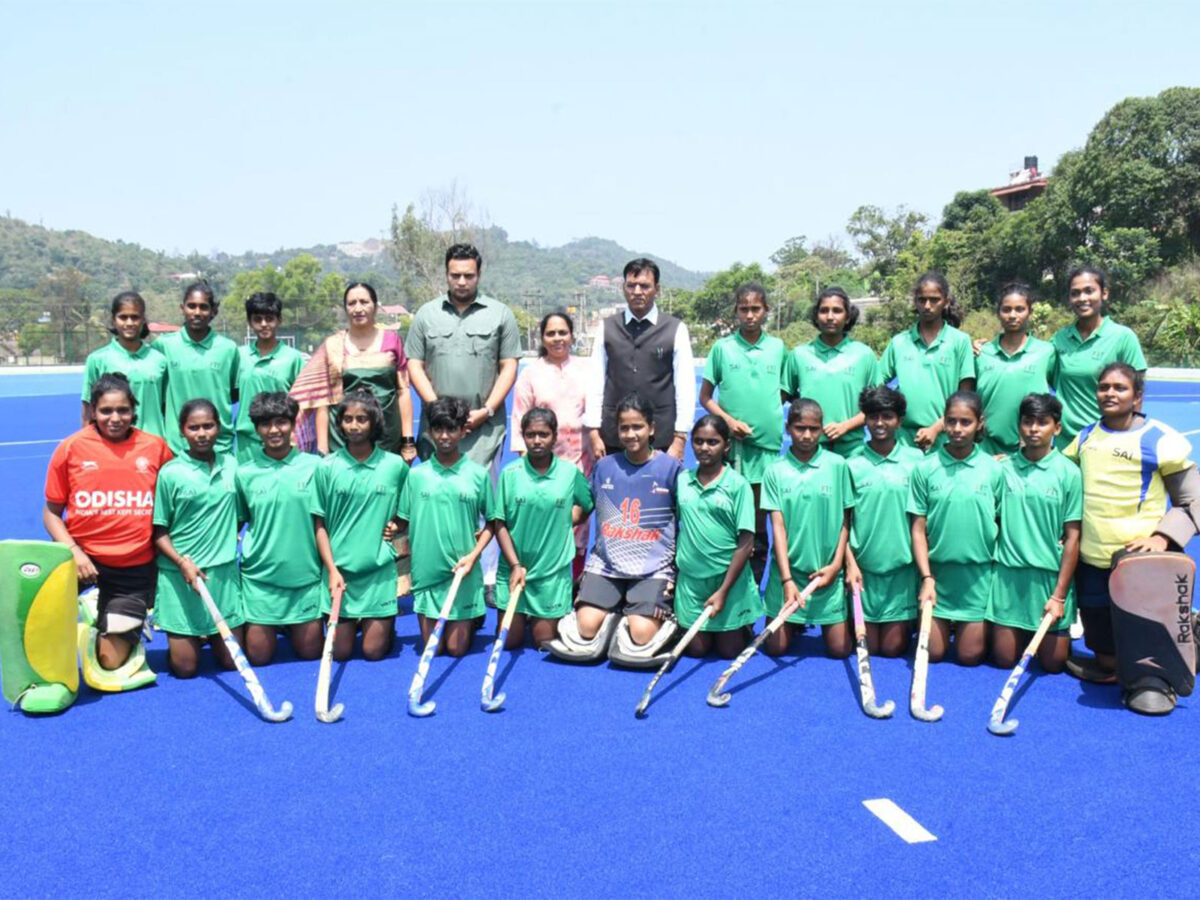
ANI Photo | Union sports minister meets women hockey players at SAI Madikeri Centre
Union Minister of Youth Affairs and Sports Mansukh Mandaviya visited the Sports Authority of India (SAI) Training Centre in Madikeri on May 2 and engaged with women hockey players from the Kodava community at the conclusion of a month-long hockey festival.
Mandaviya emphasised the importance of nurturing talent from across India to achieve the nation’s ambitions of becoming a global sports powerhouse. He highlighted the contributions of the Kodava community in promoting field hockey, noting that Kodagu district is considered one of the cradles of Indian hockey. Over 50 players from the community have represented India internationally, including seven Olympians such as P Govinda, MP Ganesh, MM Somaiya and CS Poonacha.
“Future Olympians in the making! Met with the rising stars of Indian Hockey from the SAI Training Centre (STC), Madikeri, Karnataka,” Mandaviya stated in a post on X.
The minister remarked that the Union Government is committed to developing a comprehensive sports ecosystem and identified the forthcoming 2030 Commonwealth Games in Ahmedabad as a positive step. He added that India’s rich talent pool provides strong prospects for sporting dominance.
“Taking inspiration from our Hon’ble Prime Minister Narendra Modi’s vision, the Sports Ministry is committed to nurturing the wide talent pool available across various parts of the nation. Unearthing and nurturing talent from different parts of the country can only ensure that we fulfil the dream of Modi ji. The bigger the talent pool, more the chances of us performing better in big ticket events. I am confident that both Indian men and women will register solid performance in the Commonwealth Games in 2030, where hockey is likely to make a return,” Mandaviya said.
The SAI Training Centre in Madikeri spans 5.49 acres in the hill station region of Kodagu District, approximately 1,100 metres above sea level. It operates as a feeder centre for 22 National Centres of Excellence (NCOEs) across India. Facilities include an artificial hockey turf, a 60-bed hostel, dining hall and kitchen. Around 50 girls from the Kodava community train there for various hockey events organised across Karnataka.
source: http://www.thenewsmill.com / The News Mill / Home> Sports / by The News Mill (with ANI inputs / May 02nd, 2026
A new climate analysis finds India’s coffee farms absorbed 30 extra days of harmful heat annually because of carbon pollution. Researchers are racing to find alternatives before Arabica and Robusta run out of room.
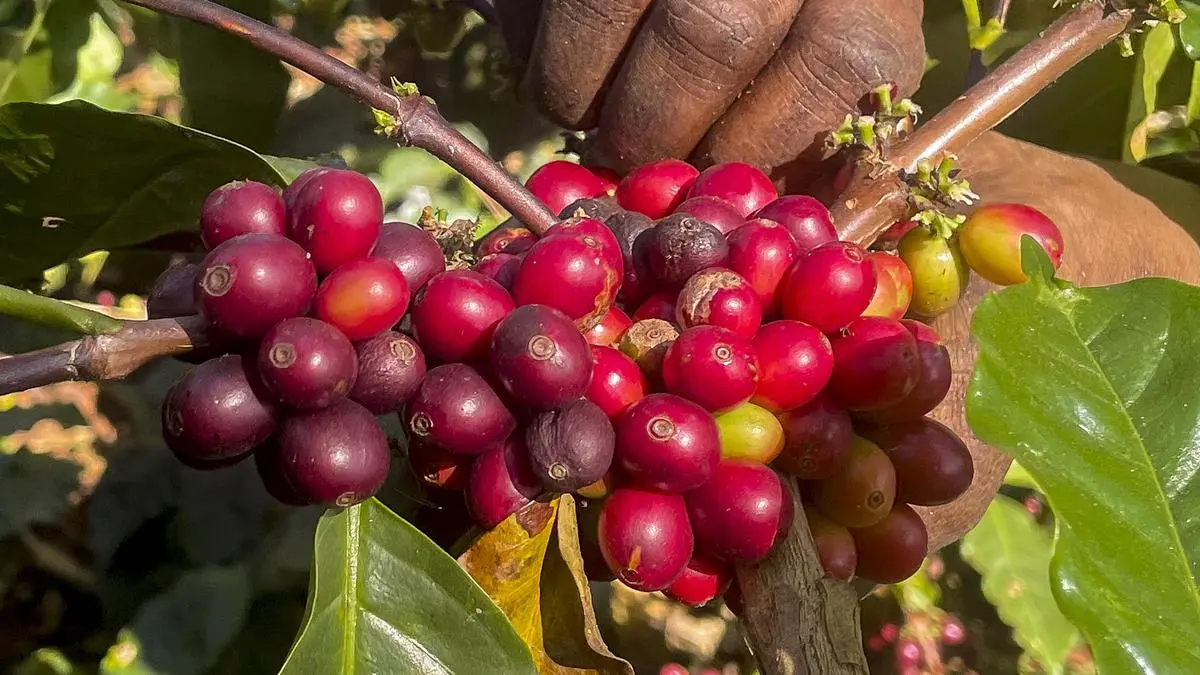
A worker picks ripe coffee cherries at Kelachandra Coffee Estate, in Chikkamagaluru district, Karnataka, on January 10, 2026. | Photo Credit: Laxmi Devi Aere/PTI
More than two billion cups of coffee are consumed every day, and for several years now, surging prices and falling production have marked the global coffee trade. Farmers in the world’s top five coffee-producing countries have faced mounting losses because of a warming planet, and India’s coffee sector is not immune. A new analysis by Climate Central, an independent group of scientists and communicators who research the changing climate, finds that 25 coffee-growing countries together accounting for about 97 per cent of global production all experienced more coffee-harming heat over the past five years.
Kristina Dahl, Climate Central’s Vice President for Science, explained to Frontline in an email interview why coffee was chosen as the subject. “Coffee is one of the most popular beverages in the world and a daily staple for billions of people,” she said. “It also provides a very direct and tangible link between climate change and everyday life. Any climate-driven disruption to coffee production has global ripple effects—from farmers in the ‘bean belt’ to consumers worldwide.”
Coffee plants are highly sensitive to temperature. When maximum temperatures regularly exceed 30°C, the quality and quantity of bean harvests decline. Reduced harvests and lower-quality beans tighten global supplies, contributing to price volatility—as seen in December 2024 and again in February 2025, when global coffee prices reached record highs, Dahl said. For farmers, many of them smallholders, lower yields, crop losses, and the cost of adapting to new conditions strain already thin profit margins.
The analysis, which examined daily temperatures between 2021 and 2025 across 25 major producing countries, is the first to directly attribute the increase in coffee-harming heat days—defined as days when maximum temperatures exceeded 30°C—to climate change using attribution science, she said. Climate Central drew on its Climate Shift Index, which compares observed temperatures to modelled estimates of temperatures in a hypothetical world without carbon pollution. Last year, the organisation conducted a similar attribution analysis on cocoa, another climate-sensitive crop.
Heat is already impacting harvests
The top five coffee-growing countries—Brazil (roughly 37 per cent of global production), Vietnam (17 per cent), Colombia (8 per cent), and Ethiopia and Indonesia (6 per cent each)—together are responsible for 75 per cent of world’s supply, experienced an average of 57 extra coffee-harming heat days per year because of climate change. Brazil averaged 70 additional harmful heat days annually; Indonesia 73; Vietnam 59; Colombia 48; and Ethiopia 34.
The situation is particularly acute in Asia, Dahl pointed out. Thailand recorded an average of about 75 additional harmful heat days a year. India, which contributes approximately 3.5 per cent of global coffee production, experienced an average of 118 coffee-harming heat days per year between 2021 and 2025, of which 30 were attributable to climate change. In a world without carbon pollution, India would have had roughly 88 such days instead of 118. Kerala recorded 65 additional heat days linked to climate change annually; Tamil Nadu 43; and Karnataka, India’s largest coffee-producing State, 32.
These impacts are not theoretical. “In practical terms, rising heat is already affecting harvests in major coffee-producing countries, threatening both quantity and quality,” Dahl said. She pointed out that while earlier studies had linked rising temperatures, drought, and shifting rainfall to reduced yields and shrinking suitable growing areas, the Climate Central analysis adds a new dimension: it quantifies precisely how many additional harmful heat days can be attributed to carbon pollution.
Beyond heat, the analysis notes that climate impacts are worse for Arabica plants, which account for about 60–70 per cent of global supply, since they are more sensitive than Robusta varieties to temperatures above 30°C. Pests and diseases—coffee leaf rust and the coffee berry borer in particular—also intensify with climate change. Without significant reductions in carbon emissions, suitable land for coffee farming could decline by up to 50 per cent by 2050, according to earlier research cited by Dahl. “Adaptation and resilience can only take farmers so far,” she said.
Wild species and the search for alternatives
India is the world’s fifth-largest Robusta producer, and about 80 per cent of its coffee is grown by smallholders, according to World Coffee Research. The country’s coffee exports earned approximately $1.28 billion in fiscal year 2023–24, making it a significant agricultural earner.
Akshay Dashrath, co-founder of the South India Coffee Company (SICC), which he set up in 2017 with his wife Komal Sable as a sourcing and logistics platform, has been researching Excelsa (Coffea dewevrei) since 2019. He found a market initially difficult to reach, but publications by the Royal Botanic Gardens, Kew, on Excelsa and related species accelerated demand. He has been working with Kew for three to four years on climate-resilient coffee species, running trials of Excelsa, Stenophylla, and four coffee species native to India—Coffea bengalensis (found from Chikmagalur to Thailand), Coffea travancorensis, neobridsoniae, and wightiana—on his family’s Mooleh Manay Estate in North Coorg, Karnataka. For the past two years, he has also been breeding Excelsa for better cup quality and commercial viability.
“A hotter environment means coffee is under stress: production per plant reduces, cup quality drops, and the plant weakens. It is happening in specific blocks—those with less shade are more susceptible to disease, and once the plant is weak, it becomes prone to fungal infection,” Dashrath said. He described a severe leaf rust outbreak on his farm: the heavily shaded plants survived, but those under direct sunlight lost their foliage.
Rising heat is not the only problem. He pointed out that for Robusta—and for Arabica—dry air matters as much as temperature. “Heat with dry air is more damaging to certain species,” he said. Excelsa, native to Central Africa, tolerates heat, dry air, and drier soils better than Arabica or Robusta because its root system goes considerably deeper, giving it access to soil moisture that shallower-rooted varieties cannot reach. Dashrath puts Excelsa’s root depth at 4.5 to possibly 7–8 feet, compared with Robusta at 2.5 feet and pure Arabica at around 3 feet.
Coffee plants are highly sensitive to temperature. When maximum temperatures regularly exceed 30°C, the quality and quantity of bean harvests decline. | Photo Credit: Prakash Hassan
Indian coffee has been grown under shade since the 1850s, making canopy management central to the crop’s culture. However, Dashrath notes that many growing belts are now thinning their canopy to increase yields by admitting more sunlight, and supplementing Robusta with external irrigation—a trend that could leave farms more exposed to heat and moisture stress.
India also carries a legacy of genetic limitations. “Historically, we had access to diverse germplasm, including hybrids of Arabica, Liberica, and Excelsa,” Dashrath said. “But in the 1940s, the research focus shifted towards developing Arabica–Robusta hybrids for leaf rust tolerance.” The result is that the country’s commercial varieties remain concentrated in two species highly sensitive to warming. The Central Coffee Research Institute, founded in 1925, is conducting research on climate-resilient coffee, though its director did not respond to a request for comment.
The case for Excelsa as a climate buffer became clearer to Dashrath in July 2024, when 33 inches of rain fell on his farm in a single month—far more than the typical annual average of 58 inches. Arabica and Robusta could not withstand the waterlogging, but Excelsa’s deeper root system held. “When we talk of climate-resilient coffee, we need species that can handle not only heat but also climate variability,” he said.
Stenophylla (Coffea stenophylla), a wild species from West Africa, offers another avenue. Rediscovered in Sierra Leone in 2018 after not being seen in the wild since 1954, Stenophylla has been found to tolerate temperatures significantly higher than Arabica while producing a comparable flavour profile, according to research published in Nature Plants in 2021 by scientists from the Royal Botanic Gardens, Kew, the University of Greenwich, CIRAD, and researchers in Sierra Leone. It is currently on the IUCN Red List as “Vulnerable.”
Excelsa currently accounts for about 1 per cent of the global coffee market and is grown commercially in small quantities in Chikmagalur and Coorg. SICC received a grant from Coffee Circle last year to grow Excelsa on trial plots across six different sites; the data from those trials has been shared with Kew, which is mapping climate conditions from Uganda to India and parts of South-East Asia. The trials are informing a broader picture of which plant material performs under changing conditions.
Still, Dashrath is candid about the timeline. Arabica has been bred for around 600 years; Robusta for 150. Excelsa is a wild species with considerable variation from plant to plant, and no consistency in yields. Getting it to a standard where it can compete in commodity markets is a 20–25-year project, he said. “The market is there, but it needs more breeding, standardised seeds, and testing before it can be deployed at scale. Currently it is a niche product, priced rather high.”
There are over 120 recognised coffee species, according to Kew researchers, though most are either inedible or commercially unviable. Coffea racemosa, from Mozambique, has also attracted attention for its claimed heat tolerance, though published data on its upper temperature threshold remain limited. Dashrath is blunt about the bottom line: “If the world gets warmer, coffee-growing areas may shift, or alternatives like Excelsa may need to move to centre stage. To sustain coffee, we need to start looking outside the realm of Arabica and Robusta.”
Concerns about Arabica’s future are felt most acutely in Ethiopia, the crop’s birthplace. Dejene Dadi, General Manager of the Oromia Coffee Farmers Cooperatives Union (OCFCU), one of Ethiopia’s largest smallholder coffee cooperatives and exporters, put the stakes plainly: “Coffee farmers in Ethiopia are already seeing the impact of extreme heat. Ethiopian Arabica is particularly sensitive to direct sunlight. Without sufficient shade, coffee trees produce fewer beans and become more vulnerable to disease.” He called for governments to act on climate change and invest in smallholder organisations capable of scaling up adaptation. “Coffee farming is part of our cultural heritage, and coffee trees are symbols of continuity and pride,” he added. “Ethiopia is the birthplace of coffee, and Ethiopian coffee farmers are key to safeguarding its future.”
Research at the Royal Botanic Gardens, Kew—through a project focused on Excelsa and Liberica coffee and related species, with field and farm trials across Africa and Asia—offers some grounds for cautious optimism. The work is designed to identify which species combinations can sustain coffee cultivation in warming conditions and provide farmers with alternatives to the two varieties that currently dominate.
For India’s approximately 3.6 lakh coffee farmers, most of them dependent on Robusta for their livelihoods, and for the country’s coffee export sector—worth close to $1.3 billion in FY2023–24 and significantly more since—the challenge from climate change is not distant. It is measured, now, in 30 extra days of harmful heat each year, and rising.
Meena Menon is a freelance journalist and visiting postdoctoral fellow at Leeds Arts and Humanities Research Institute, University of Leeds.
____________
Summary
A Climate Central analysis reveals that 25 major coffee-producing countries, including India, are experiencing increased ‘coffee-harming heat’ due to climate change, impacting global production and prices. India faces an average of 118 such days annually, with 30 directly attributable to climate change. This heat stress reduces yields and quality, particularly for sensitive Arabica plants. Researchers are exploring climate-resilient coffee species like Excelsa and Stenophylla, which exhibit better tolerance to heat and variable weather conditions. While these alternatives offer hope, their widespread commercial adoption requires significant research and development, highlighting the urgent need for climate action and adaptation strategies to safeguard the future of coffee.
Key Questions & Insights(AIⓘ)
What is the primary finding of Climate Central’s analysis regarding global coffee production?
Why was coffee chosen as the subject for Climate Central’s analysis?
How does high temperature affect coffee plants and global coffee prices?
What is ‘coffee-harming heat’ as defined by Climate Central?
How many additional coffee-harming heat days did India experience annually due to climate change between 2021 and 2025?
Which Indian states were most affected by climate change-linked heat days for coffee production?
Why are Arabica plants more vulnerable to climate change than Robusta varieties?
What is the potential impact of climate change on suitable land for coffee farming by 2050?
What is the significance of Excelsa coffee in the context of climate change?
What is the current status of Excelsa in the global coffee market?
What is Stenophylla and why is it considered a promising alternative coffee species?
What is the main challenge for India’s coffee sector due to climate change?
_____________
source: http://www.frontline.thehindu.com / Frontline / Home> India> Environment> Digital Exclusive / by Meena Menon / February 25th, 2026
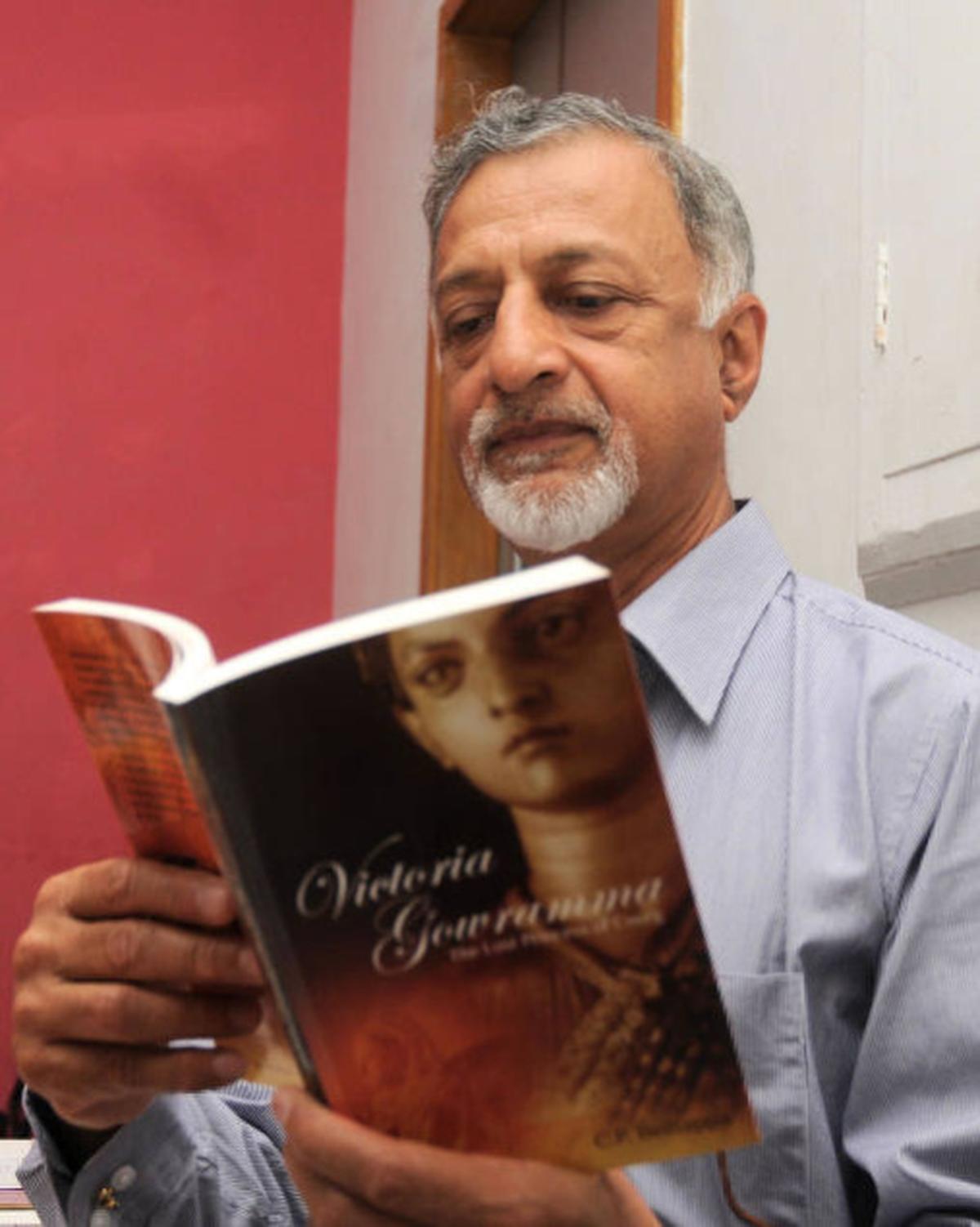
C.P. Belliappa’s A Slice of History: `Victoria Gowramma : The Lost Princess of Coorg’, brings to life the tragic tale of the princess from Coorg
A Slice of History: C.P.Belliappa’s `Victoria Gowramma : The Lost Princess of Coorg’. Photo: M. Vedhan
In a quiet corner of the Brompton Cemetery in London lies a 19th Century grave partially covered by undergrowth. The graceful stone cross above it is slightly broken, but the epitaph composed by Queen Victoria can still be read: “Sacred to the memory of the Princess Victoria Gouramma (sic), daughter of the ex-Raja of Coorg…”
That’s where the strange and tragic tale of Victoria Gowramma, the princess from Coorg who was raised Christian and became Queen Victoria’s goddaughter, ended in 1864. But, her story has come to light again in all its fascinating detail, thanks to C.P. Belliappa’s rigorously researched book “Victoria Gowramma: The Lost Princess of Coorg”, which was recently launched in the city.
“Historical writings on Coorg — mostly gazetteers by the British who lived there during the 19th Century — mention the story of Gowramma and her father, the exiled Raja Veerarajendra, in a paragraph or two,” says Belliappa, author of “Tale of a Tiger’s Tail & Other Yarns from Coorg” and “Nuggets from Coorg History”. “But the details were never there, and I got more and more inquisitive.”
Accidental discovery
His big break came when he accidentally stumbled upon three books written in the 19th Century by people who knew both the Raja and his daughter.
“I was able to download them — for free! — from www.archive.org, where old books are digitised and uploaded,” he says. “They were authentic, first-hand accounts, and comprised 75 per cent of the information I needed.”
The rest he found from the digital archives of The Times, London — reports of court functions and events that contained all sorts of interesting titbits of information. .
“Victoria Gowramma…” traces the intriguing series of events surrounding the princess’ journey to England with her father in 1852, and her difficult and often lonely life there subsequently. The various threads include the exiled Raja’s attempts to reclaim the wealth the British took from him (his reason for taking Gowramma to England in the first place), and the grand plans by Queen Victoria to match-make between Gowramma and another young royal convert to Christianity, Maharaja Duleep Singh of Punjab.
“Queen Victoria believed that if two royals converted to Christianity were married, and their children were born Christian, it would encourage more of their subjects to convert,” says Belliappa. “What’s interesting is that although the plan didn’t work, the Queen continued to be fond of Gowramma to the very end.”
Power dynamics
The book, then, is more than just a portrait of a princess; it gives you a glimpse into the political and religious power dynamics of the time. With its wealth of primary sources, it’s a solid historical work, though Belliappa admits that he was very tempted to go the historical fiction route. “I gave it a lot of thought, and decided finally that the facts themselves were so sensational that they didn’t need fictionalising,” he says.
Since the book’s release in England last year, the author has uncovered even more interesting nuggets of information — for instance, after a bit of detective work, he’s discovered that direct descendants of Gowramma live on to this day in Australia. “I have enough material to add at least an epilogue in future editions of the book,” he says. “It’s been a very exciting time.”
source: http://www.thehindu.com / The Hindu / Home> Books / by Divya Kumari / March 04th, 2011
Indian tennis legend Rohan Bopanna reflects on his journey in the sport from a late start in Coorg to Grand Slam success and becoming World No.1 in doubles at the age of 43.
Rohan Bopanna officially retired from tennis in November 2025 at the age of 45. Image: Reuters
In an interview with ATP Tour last year after his retirement announcement, Rohan Bopanna had this to say when asked about his career – “I think my career is a story of patience, discipline and self-belief.”
He wasn’t exaggerating. Ask any sports psychologist worth his or her salt and they will tell you that Rohan Bopanna’s tennis career can be a case study in those three simple and yet absolutely invaluable qualities – patience, discipline and self-belief. After all, he went from almost quitting the sport in 2021 to enjoying the best phase of his career in which he won the Australian Open men’s doubles title in 2024 and became the oldest man to climb to the very pinnacle of the ATP doubles rankings.
With Bopanna bringing the curtain down on his tennis career last year, Indian tennis bid adieu to the last of the “Fab-Four” who conquered the Grand Slams. A look back at his incredible journey in which he truly peaked past the age of 35 and continued to play at the highest level despite “no cartilage” in his knees due to “severe long-term wear and tear”, makes for fascinating reading.
The tennis journey, for Rohan, began later than most others who take up the sport professionally. Studies have shown that most tennis pros pick up the sport between the ages of four and seven. Rohan was 11 when he started playing tennis – an age when most of his peers were already mastering tactical and technical skills. Most coaches will tell you that it is very, very difficult for someone to start playing tennis at 11 and then go on to become a professional player on the Tour. It takes significant talent, training, investment and also mental toughness. In his case it was the challenges that drove him to excel.
“I started playing tennis relatively late at age 11, though sports were always central to my life in Coorg. Initially driven by curiosity and competition, I quickly fell in love with the individual challenge of being on court and figuring things out on my own,” Bopanna told Firstpost in an exclusive interview.
Rohan Bopanna won the Australian Open men’s doubles title in 2024 at the age of 44. Image: Reuters
Bopanna on forming Indo-Pak Express with Aisam
Bopanna was born and grew up in picturesque Coorg. Dubbed “the Scotland of India”, Coorg is of course famous for its coffee plantations, moss-covered hills and stunning Western Ghats landscapes. What it is not known for are tennis academies. His father played a pivotal role in helping him pursue his passion, including building a tennis court on their coffee plantation estate in Coorg. That gave him the wings he needed to fly. He moved to an academy in Pune when he was 14 and had to go through quite the grind. Though he turned professional in 2003 and played both singles and doubles (reached a world ranking of 213 in singles in 2007), it wasn’t until 2010 that he really understood the path he needed to exclusively follow – the path of the doubles game. In 2010 Bopanna reached the final of the US Open men’s doubles with Aisam-ul-Haq Qureshi, the other half of the famous “Indo-Pak Express”. And that was what convinced Bopanna that he needed to focus on the doubles game.
“Reaching the 2010 US Open final with Aisam was a major turning point. It gave me the clarity that I could compete consistently at the highest level in doubles. I decided to commit fully to the format to maximize my strengths,” Bopanna further told Firstpost.
The Indo-Pak Express followed up that US Open success with the 2011 Paris Masters title. The duo in fact, went on to win titles on all three surfaces (grass, clay and hard) and the list includes the 2011 Stockholm Open, the 2011 Halle Open, the 2010 South Africa Tennis Open, and the 2014 Dubai Tennis Championships. Bopanna and Aisam subsequently also reunited in 2021 after a seven-year split. Overall, across doubles and mixed doubles (in which he won the 2017 French Open title) the list of Bopanna’s tennis partners makes for very impressive reading. It includes Mahesh Bhupathi (played with him in the 2012 London Olympics), Leander Paes (played with him in the 2016 Rio Olympics), Divij Sharan (won the 2018 Asian Games men’s doubles gold medal with him), Edouard Roger-Vasselin (reached the 2013 Wimbledon semi-finals with him), Matthew Ebden (won the 2024 Australian Open with him), Aisam, along with Ivan Dodig, Denis Shapovalov, Pablo Cuevas, Florin Mergea, and N Sriram Balaji. In the mixed doubles he played alongside the likes of Gabriela Dabrowski (won the 2017 French Open title with her), Sania Mirza (reached the 2023 Australian Open final and the semi-finals of the 2016 Rio Olympics), Timea Babos (reached the 2018 Australian Open final) and Rutuja Bhosale (won the 2022 Asian Games mixed doubles gold medal with her).
Aisam-Ul-Haq Qureshi of Pakistan and a young Rohan Bopanna celebrate a win in 2011. Image: Reuters
“I shared a natural chemistry with Mahesh Bhupathi and Aisam-ul-Haq Qureshi that translated into great results. In mixed doubles, playing with Sania Mirza was special because our deep friendship built a foundation of trust on the big stages,” Bopanna further shared with Firstpost.
Notably, Rohan and Aisam launched the “Stop War, Start Tennis” peace campaign and were conferred with the 2010 Arthur Ashe Humanitarian of the Year award for promoting peace through tennis.
When Bopanna came close to quitting tennis
Like any other professional sports career, Bopanna’s too, saw some real dark lows. He came very close to quitting the sport twice – once in 2019 and then again in 2021. The first was after he discovered that he had “no cartilage” left in his knees, which of course severely affected his mobility and left him in a lot of pain. Bopanna in fact has gone on record in the past to say that he was having two to three painkillers a day. What really helped was Iyengar yoga – something he began practising during the Covid pandemic, doing one and half hour sessions, four times a week. The second really low phase was when he just wasn’t managing to win matches post Covid. The “hard quarantine” he was under in Melbourne was beginning to take its toll. After the Covid lockdowns were lifted and he went back to pro tennis, Bopanna lost his opening seven tour-level matches, going five months without a win. The then 41-year-old seriously contemplated retirement at the time. It is famously documented how a conversation with his wife, Supriya, who asked him to treat this as “a new challenge rather than a limitation” made him change his mind. What followed was the best phase of his career. It was then that Bopanna, as he told ATPTour.com- “started playing my best tennis.”
“Tennis has made me mentally resilient, teaching me to stay grounded through both success and failure. Beyond the court, I am grateful for the global community I’ve built; I have friends in nearly 50 countries who offer a perspective on the world that goes far beyond the tour,” Bopanna further told Firstpost.
Anyone who has tracked Bopanna’s career will, of course, be curious to know just how it felt to have that incredible second wind, where he found himself as the oldest first-time world number one in men’s doubles, at 43 – something that he ensured for himself when he and Ebden beat Argentina’s Maximo Gonzalez and Andres Molteni in straight sets at the 2024 Australian Open. So, what did that mean to him? I had to ask him that.
“Reaching World No. 1 was special because it represented longevity and the belief that age is not a limitation if you take care of your body and stay hungry for success,” was Rohan’s answer – something that can well be a mantra for youngsters who are just picking up the sport.
Of course, Bopanna and Ebden didn’t just stop there – they went on to win the whole thing, beating Simone Bolelli and Andrea Vavassori in the final. He was 43 years, 10 months, and 24 days old. This was a significant achievement for Bopanna, who in 17 previous appearances at the Australian Open had never progressed beyond the third round in the men’s doubles draw. It was also yet another indicator of just how successful the late blooming phase, if one can call it that, was for one of Indian tennis’ biggest legends. The cherry on the cake (though technically the announcement was made one day before the final) was Bops being conferred with India’s fourth-highest civilian honour – the Padma Shri. He had come a long way from deciding to focus on the doubles game in 2010. A few smart decisions yielded great returns in ensuring that he continued to remain a force to be reckoned with well into his 40s.
“The 2010 US Open gave me the initial belief. The second turning point came much later when I invested in a full-time physio. Prioritizing recovery and smarter scheduling allowed me to extend my career and play my best tennis into my 40s,” Bopanna further told Firstpost.
Bopanna reveals his sweetest victory
Apart from his achievements on the Tour, Bopanna has served Indian tennis diligently over many, many years. Apart from winning two Asian Games gold medals – one each in the men’s doubles and mixed doubles – he has represented the country in three editions of the Olympics (2012, 2016, 2024) and also played Davis Cup for India over two decades – from 2002 to 2023, collecting the Arjuna Award (2018) and of course the Padma Shri (2024).
So, I asked him – “You have two Grand Slam titles under your belt, but you also have two Asian Games gold medals and won multiple Davis Cup matches. Looking back at your career, if you had to pick the sweetest victory of them all, which one would it be?”
This is Bopanna, who famously told the chair umpire that a ball that had been ruled out when struck by his opponents in a crucial phase of the final of the 2023 US Open men’s doubles had actually touched his elbow. No one saw that happen and the point had already been awarded to Bopanna and Ebden. So, I was of course expecting an honest answer.
“The Australian Open title is a career highlight as the culmination of years of effort. However, representing India in the Davis Cup or Asian Games always carries a unique emotional value,” the two-time Grand Slam champion said.
Bopanna and Australia’s Matthew Ebden celebrate the men’s doubles final win at Australian Open. Image: Reuters
Post retirement, Bopanna’s biggest focus now is to help Indian tennis as best as possible. The Rohan Bopanna tennis academy is doing some great work, targeting structured coaching pathways for youngsters that fuels holistic development and high-performance training and mentorship. And you can bet that three of the core personal values being taught there are – patience, discipline and self-belief.
source: http://www.firstpost.com / FirstPost. / Home / by Akaash Dasgupta / April 27th, 2026
Palecanda Bojamma (91), wife of late Palecanda P. Muthanna (former Advocate General of Karnataka and former President of Kodava Samaja, Bengaluru), passed away in Arizona, USA, on Apr. 22.
Originally from Madikeri town in Kodagu, Bojamma (Paruvangada) leaves behind her daughters Dechu Muthanna, Dr. Neeli Muthanna, son Poonacha Muthanna, grandsons and a host of relatives and friends.
Cremation took place at Paradise Memorial Gardens, East Shea Boulevard, Scottsdale, Arizona, USA today (Apr. 24).
source: http://www.starofmysore.com / Star of Mysore / Home> Obituary / April 24th, 2026
As the war disrupts global shipping routes, demand collapses, prices fall, and tribal growers in Andhra Pradesh are left with unsold stock and mounting debt.
Araku is a significant coffee-producing region, with this year’s crop standing at 18,000 tonnes, according to the Coffee Board of India.
The Iran-US war has found an unlikely casualty in the coffee plantations of Araku, in Andhra Pradesh’s Alluri Sitarama Raju district. Demand for the region’s famed Arabica beans has fallen sharply, leading to stocks piling up and farmers’ distress.
Araku is a significant coffee-producing region, with this year’s crop standing at 18,000 tonnes, according to the Coffee Board of India. Around 90 per cent of the production, nearly 15,000 metric tonnes, is exported to Europe, the UAE, and other markets.
Shipping routes disrupted
The war has made the Strait of Hormuz and the Red Sea (Suez Canal) route too dangerous to use. Ships are now being rerouted around the Cape of Good Hope, adding three to four weeks to delivery times for European buyers. Freight costs have jumped fivefold, insurance premiums have surged, and crude oil prices have risen 28 per cent — with a barrel now touching USD 107. Foreign buyers, uncertain about delivery timelines, are holding back new orders.
Exporter Ravi Kiran put it plainly, “It’s not just the cost — containers have become impossible to find. A shipment to Europe that used to cost USD 2,000 now costs over USD 10,000. And because ships are going around Africa, it takes twice as long for containers to return.”
Prices in freefall
Arabica prices have fallen 2.31 per cent in recent trading, while Robusta dropped 4.69 per cent. Global supply pressures are adding to the pain – Brazil is projected to produce a record 75.3 million bags, with world output potentially reaching 180 million bags.
Locally, farmer K Gopal said parchment coffee was fetching Rs 540 per kg in January-February, but by first week of March, that had fallen to Rs 446.
“Now no one is buying even at Rs 400,” he said. “They just say — war.”
Tribal farmer Simhachalam from Pachipenta, near the Araku valley, was blunt about what it means on the ground, “We sweated all year for a good harvest. When we finally brought it to market, they said ‘war’. I can’t see how I’ll repay my debts.”
Govt agencies halt purchases
Traders and middlemen who bought early are now sitting on unsold stock, waiting for prices to recover before buying more from farmers. Government agencies — the Girijan Cooperative Corporation (GCC) and the Integrated Tribal Development Agency (ITDA) — have also suspended purchases, leaving farmers with nowhere to turn. Farmers are now demanding that the GCC intervene immediately to buy up the surplus.
Traders and middlemen who bought early are now sitting on unsold stock, waiting for prices to recover before buying more from farmers.
Quality of beans at risk
Experts warn that prolonged storage could reduce moisture levels in the beans, diminishing their aroma, threatening the hard-won brand image of Araku coffee in international markets.
Coffee Board official Ramesh acknowledged that the war had dampened purchases, though he maintained that market fluctuations were normal and that local prices would recover when national market rates improved.
For now, Araku farmers, once proud of growing one of the world’s most admired coffees, are trapped in a crisis that is entirely beyond their control, and one that may only resolve when the guns fall silent.
(This article was originally published in The Federal Andhra Pradesh)
source: http://www.thefederal.com / The Federal / Home> Business> Farm Matters / by Amaraiah Akula / March 21st, 2026
In this photo essay, we showcase more exhibitors at IICF 2026, along with expert insights.
Bengaluru recently hosted the 2026 edition of the India International Coffee Festival (IICF) at Chamara Vajra, Jayamahal Road. See our earlier coverage of the World Coffee Conference in 2023 here.
“We estimate that 20,000 visitors attended the three-day IICF event. The energy on the floor was indicative of strong commercial engagement,” Hamsini Appadurai, President of the Specialty Coffee Association of India (SCAI), tells YourStory.
The festival featured India’s geo-tagged coffee varieties such as Coorg Arabica Coffee, Wayanad Robusta Coffee, Chikmagalur Arabica Coffee, Araku Valley Arabica Coffee, and Bababudangiris Arabica Coffee. There were also international brands such as MilkLab (Australia), Astoria Coffee Machines (Italy), and Probat Coffee Roasters (Germany).
IICF had parallel workshops on Farm to Cup: Post-Harvest Processing 101; Robusta Tasting: Processing Methods; Roasting Fundamentals: Profile Building & Tasting; Coffee Species Showcase & Guided Tasting; Manual Brewing and Espresso Brewing; and Marketing Specialty Coffee: Storytelling & Tasting;
There were panel discussions on a range of provocative topics: Why Biodiversity Is the Foundation of Coffee’s Future; and The New Coffee Farmer: Balancing Yield, Quality, and Profit in a Changing Market.
Many visitors said they appreciated the opportunity to learn about coffee trends and network with coffee lovers and industry professionals. “Exhibitors were pleased with the promotion of the shared vision and passion of the industry,” Appadurai adds.
She explains that the Australia delegation places IICF right up there along with other global events such as World of Coffee Dubai, World of Coffee Indonesia, World of Coffee Bangkok, FHA Singapore, and Melbourne International Coffee Expo.
“The festival was a rich source of inspiration and strategic thinking. One initiative already taking shape for the next edition is a dedicated micro-lot auction for roasters, an exciting development that we believe will add significant value to the specialty coffee ecosystem,” Appadurai says.
Last year, Nestlé India strengthened its premium at-home offering by bringing Nespresso to the country. “With this, we cater to consumers seeking super premium coffee experiences at home,” says Sunayan Mitra, Director – Coffee and Beverages, Nestlé India.
It has expanded its NESCAFÉ Ready-to-Drink cold coffee portfolio, and developed NESCAFÉ Ice Roast. At IIFC, it showcased Duo Gusto, a pioneering solution that dispenses both hot and cold beverages from a single machine. “Innovation in cold beverages is equally central to Nestlé’s out-of-home strategy,” he adds.
Next year’s IICF will have more stalls. “We would like to secure a larger venue, and significantly increase our international visitor footprint. The vision is to position IICF as a truly world-class destination event for the global specialty coffee industry,” Appadurai describes.
“Coffee is an experience, not merely a beverage We are witnessing a meaningful shift from coffee as a functional caffeine fix to coffee as a lifestyle and cultural statement,” observes Komal Sable, Co-Founder, South India Coffee Company.
Gen Z is driving experimentation and discovery. “Younger consumers are far more open to exploring new formats and alternative milk pairings,” she adds.
Sustainability and ethical sourcing are now baseline expectations. “But they must coexist with convenience. Today’s consumer demands transparency and responsibility, delivered in formats that fit seamlessly into a fast-paced lifestyle,” Sable explains.
Coffee makers are responding to these trends and shifts. “They need to be agile, transparent, and have stronger storytelling. Responsibility must begin at the origin,” she affirms.
Producers also bear a responsibility to better educate roasters, buyers and end consumers about the expertise, risk and dedication involved in cultivating quality coffee. “When that story travels clearly through the value chain, it builds a deeper, more authentic respect for origin,” Sable suggests.
Coffee thus lends itself well to purpose-led enterprise. “It brings together agriculture, branding, community, and commerce in a deeply meaningful way. The growth of specialty coffee and direct-to-consumer models has also lowered the barriers to entry,” she says.
More women are stepping into roles that were historically male-dominated. “These include estate leadership, green buying, roasting, and supply chain management,” she observes, citing diverse examples from Kaveri Coffee, Coromandel Coast, Sangameshwar Coffee, and Coffee Mechanics.
“Creating intentional platforms that spotlight women in coffee is essential not only for representation but also for building lasting confidence, access and opportunity within the ecosystem,” Sable emphasises.
Coffee today is not simply about selling a beverage. “It is about shaping culture. And women are trailblazing that shift in remarkable ways across every level of the industry,” she says with pride.
However, the coffee industry is facing challenges like unpredictable rainfall, rising temperatures, and shifting crop cycles that directly affect quality, yields and costs at origin. “Supporting producers and investing in long-term ecosystem partnerships is not a choice — it is essential to the future of coffee,” she cautions.
SCAI and the Coffee Board of India are committed to driving knowledge transfer within the industry. “We will have expanded workshops, masterclasses and curated learning experiences. The best is very much yet to come,” Appadurai signs off.
Now what have you done today to pause in your busy schedule and harness your creative side for a better world?
(All photographs taken by Madanmohan Rao on location at IICF 2026.)
source: http://www.yourstory.com / Your Story / Home> Food & Beverages / by Madanmohan Rao / March 08th, 2026
My love affair with coffee started during the lockdown; trying new flavours and textures became an escape for me in those tough times, which has now developed into a regular morning comforting ritual with my coworkers. As I sit here penning down a love story to coffee, my colleagues can spot me sipping on a big tumbler of iced coffee. I had the chance to experience a rich story of coffee-making firsthand, one that had me appreciating this beverage even more. A 6-hour drive from Bengaluru brought me to the Tata Consumer’s plantation on the beautiful slopes of Coorg, which gave me an opportunity to discover and learn all about coffee beans.
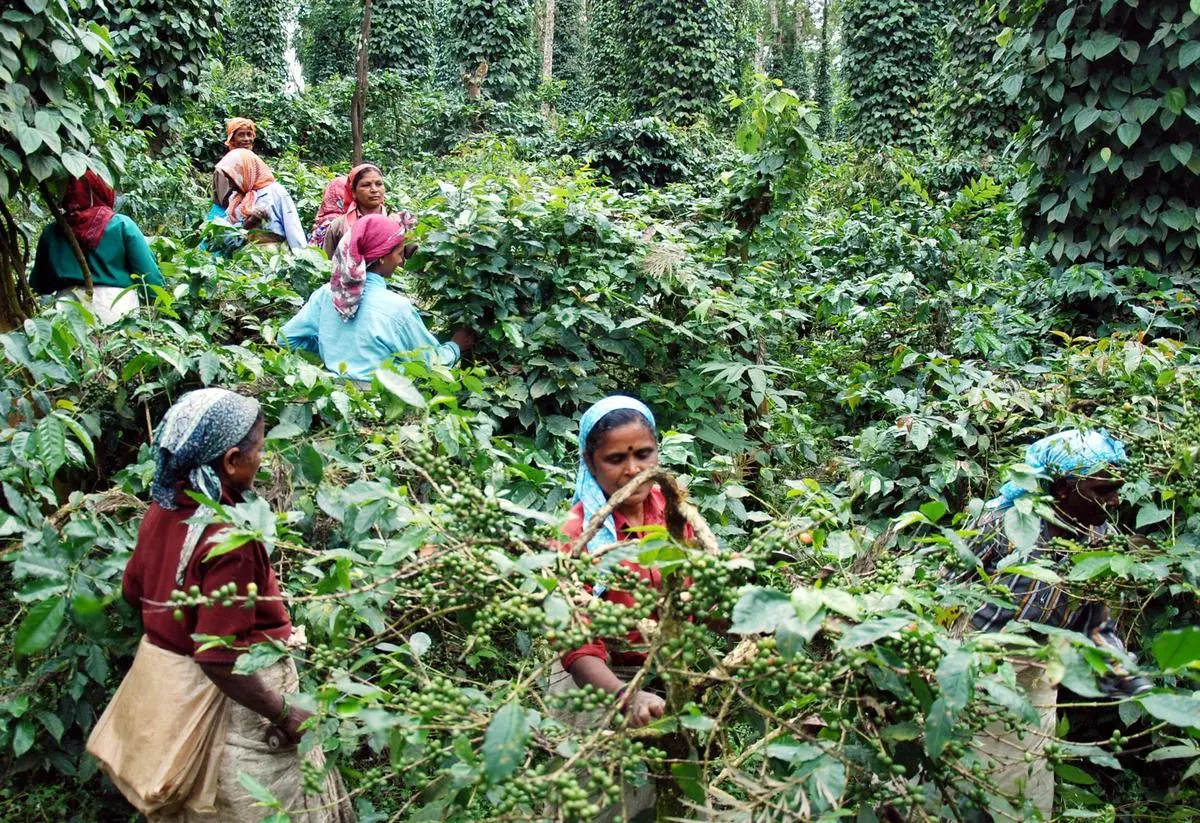
Coorg is more than a famous hill station; it is also India’s coffee-growing region. For a coffee-lover like me, this trip became a one-of-a-kind core memory. With tiny droplets of rain and stunning natural visuals, I was transported to a rain-soaked fantasy with the fragrant rustling from the coffee plants. Here I saw the labour and commitment that go into each cup. I was lulled into feeling of calmness, one of nature’s offerings that’s impossible to replicate. Strolling down the road that goes through the plantation with miles of trees and coffee plantations in either direction, I was drawn into the story of coffee. The coffee plants are laden with a green and maroon coloured beans which hang thickly from the branches.
The plantation slopes are renowned for their Arabica and Robusta brews and are surrounded by several lakes, verdant hills, and a diverse range of flora and animals. November is considered to be the best time to pick up the berries and witness the harvest. But when a coffee enthusiast like me is roaming around so much coffee, you can’t help but crave the brown beverage. So, while explaining the foundation and motives of their campaigns and crop, the brand served to cure our coffee craving with steaming hot sips of their best-selling filter kaapis.
A 150-Year-Old Legacy
You might wonder what makes Tata Consumer Products different from its competitors. Tata’s association with the beverage dates back more than 150 years when some tenacious planters from the then-state of Mysore in South India planted the first seeds of the estates and brought coffee to the Coorg Hills. These are some of world’s best coffees, produced by the land and most importantly the local people living there.
source: http://www.elle.in / Elle / Home> Food / by Ekta Sinha / October 09th, 2023
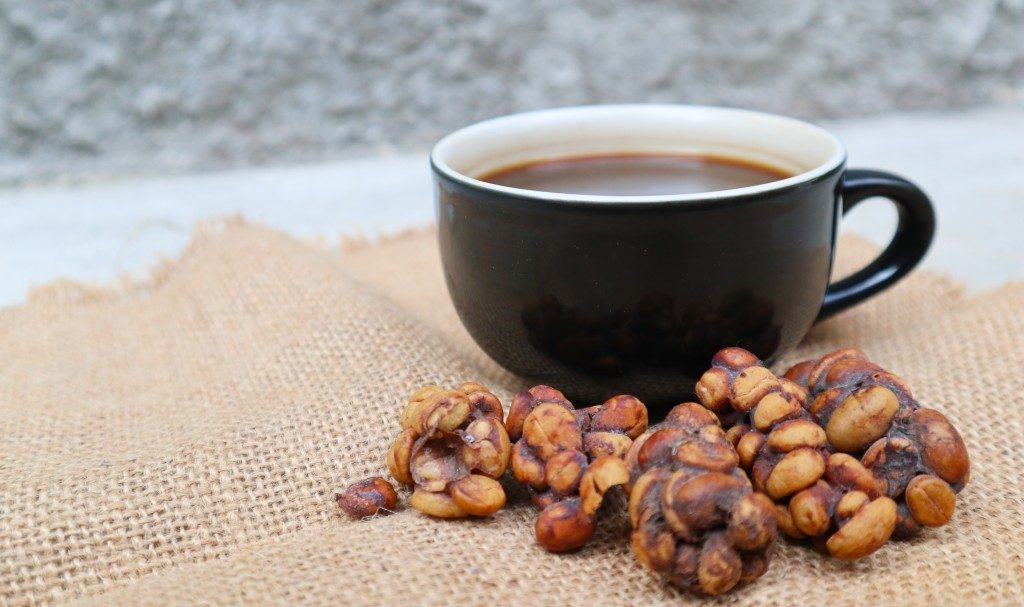
Researchers found that coffee beans harvested from the faeces of the Asian palm civet had a significantly higher total fat content than the traditionally harvested beans.
Civet coffee, better known as kopi luwak, is a premium and highly-priced coffees globally, known for its unique aroma, taste, and nutritional value.
The beans, which can sell for as much as USD 1,000 per kilogram, are harvested from the faecal matter of civets — usually Asian palm civets (Paradoxurus hermaphroditus) — which eat ripe coffee berries and digest the pulp whilst the beans inside pass through the digestive system.
Although this type of coffee has been harvested and sold for over 100 years, there is still debate around whether the unusual harvesting method changes the coffee’s chemical composition.
A new study published in Scientific Reports might have answers to this. Researchers from Kerala, India, have found that coffee beans harvested from the faeces of the Asian palm civet may have higher levels of fats and other key flavour-enhancing compounds than traditionally harvested beans.
“Civets feed on ripened coffee berries, which undergo digestion, absorption, and a natural fermentation process during their passage through the gut. While the pulp gets digested, the beans are excreted through their faces,” the researchers stated in the study.
The study investigated the physical and chemical characteristics of civet-derived and manually collected Robusta coffee from conventionally managed and organically managed coffee estates across Kodagu, which ranks among the highest coffee-producing districts in India.
The team of researchers from the Central University of Kerala, India, collected 68 faecal matter samples from wild civets on five estates growing Robusta coffee in January. The researchers also collected ripe coffee berries from each estate for comparison.
“In our study area, located within the biodiversity hotspot of the Western Ghats, civets are part of the natural ecosystem and consume fruits wildly,” the researchers stated. “The civets in the area belong to three different species. However, based on our observations and previous research, the Asian Palm Civet, a nocturnal mammal, is found most frequently.”
The team, led by Professor Palatty Allesh Sinu from the Department of Zoology, found that the civet beans had a significantly higher total fat content than the manually harvested beans. The civet beans also had significantly higher levels of two fatty acid methyl esters (FAMEs) — caprylic acid methyl ester, and capric acid methyl ester.
“The chemical differences in the civet coffee are a result of fermentation of the beans in the digestive system of the civets, and that the differences likely affect the coffee’s final flavour,” the researchers stated.
The higher fat content would affect the coffee’s aroma and taste profile, whilst the higher levels in the two FAMEs may add a dairy-like flavour.
The team analysed unroasted beans for the study, as the roasting process would further affect the beans’ chemical composition. They also noted that they analysed Robusta beans, whilst most civet coffee is produced using Arabica beans.