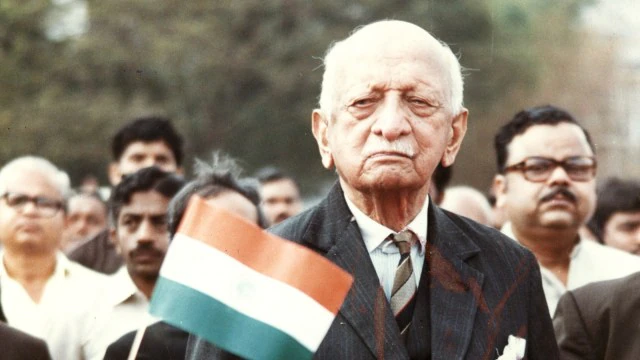
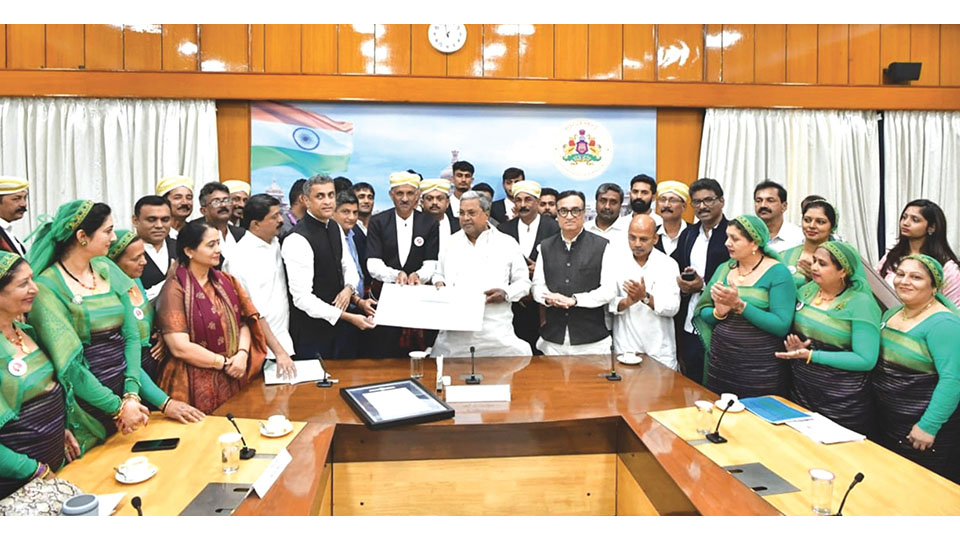
Retired IAS officer, Rathi Vinay Jha, has been selected as Coorg Person of the Year 2024 in a poll conducted by a news and tourism portal, www.coorgtourisminfo.com.
With her roots in Kodagu district in Karnataka, Ms. Rathi Vinay Jha, a former Union Tourism Secretary, had initiated several projects to “conserve Kodava culture and the martial traditions of the comunity, known for its contributions to the nation in the areas of defence and sports,” author P.T. Bopanna, who runs the portal pointed out.
He said Ms. Rathi was instrumental in setting up the virtual museum of Kodava heritage and culture, the project known as Sandooka — a treasure trove of information.
“The virtual museum is an interactive online space, brought together through material contributed by the Kodava community. Sandooka will be a living museum of Kodava culture and will be useful for future generations of Kodavas.”
“It was at the instance of Ms. Rathi, a model of Kodava ainmane (ancestral house) was inaugurated this October in Dakshinachitra Museum near Chennai,” Mr. Bopanna said.
Dakshinachitra is home to 18 traditional houses that depict the unique culture of South India. The ainmane project involved dismantling a structure built in 1852 in Kodagu and was transported to Dakshinachitra Museum, said Mr. Bopanna.
source: http://www.thehindu.com / The Hindu / Home> News> India> Karnataka / by The Hindu Bureau / January 01st, 2025
Following are the prize winners of the 23rd Edition of Kodagu Golf Open Championship-2024 held at J.W. Golf Club, Mysuru, on Nov. 30 and Dec. 1:
Strokeplay Gross – Field Marshal Cariappa Memorial Trophy, sponsored by K.C. Biddappa: Shridhar Singh (74 Gross) – Winner; K.A. Anil Kumar (77 Gross) – Runner (Better Back 9 Over M.C.S. Manohara).
Strokeplay Net (H/C 0 to 12) – Gen. K.S. Thimmaiah Memorial Trophy, sponsored by Mandovi Motors: I.K. Anil (68 Net) – Winner (Better Back 9 Over Sonam Chugh); Sonam Chugh (68 Net) – Runner (Better Back 9 Over M.C.S. Manohara).
Strokeplay Net (H/C 13 to 18) – Sqn. Ldr. M.B. Chittiappa Memorial Trophy, sponsored by Mallengada B. Nanaiah: J.N. Arjun (62 Net) – Winner; Ram Kevalur (68 Net) – Runner (Better Back 9 Over K.C. Vishwananda Bhat & Janardhan Babu).
K.B. Ganapathy, Founder-Editor, Star of Mysore and Mysuru Mithra, seen presenting the trophy to K.C. Vishwananda Bhat (38 Points), runner of Stableford Net (H/C 0 to 18) – Kodagu Warriors Trophy sponsored by Star of Mysore, as others look on.
Stableford Net (H/C 0 to 18) – Kodagu Warriors Trophy, sponsored by Star of Mysore: Dr. T.M. Prashanth (39 Points) – Winner; K.C. Vishwananda Bhat (38 Points) – Runner (Better Back 9 Over Janardhan Babu).
Stableford Net (H/C 19 to 24) – Kodagu Challenge Trophy, sponsored by P.C. Naren Uthaiah: B.S. Sathyanarayan (40 Points) – Winner; Madhushree Srinivasan (38 Points) – Runner (Better Back 9 Over A.S. Somesh, K.N. Theerthananda & M.B. Nanaiah).
Stableford Net (H/C 0 to 18) – Kodagu Warriors Trophy, sponsored by Star of Mysore: Dr. T.M. Prashanth (39 Points) – Winner; K.C. Vishwananda Bhat (38 Points) – Runner (Better Back 9 Over Janardhan Babu).
Stableford Net (H/C 19 to 24) – Kodagu Challenge Trophy, sponsored by P.C. Naren Uthaiah: B.S. Sathyanarayan (40 Points) – Winner; Madhushree Srinivasan (38 Points) – Runner (Better Back 9 Over A.S. Somesh, K.N. Theerthananda & M.B. Nanaiah).
P.M. Ganapathy, Senior Member, Association of Kodagu Golfers of JWGC, teeing of the Kodagu Golf Open Championship-2024 on Nov. 30.
Best Lady Golfer – Stableford Net (H/C 0 to 24), sponsored by C.B. Changappa: Priya Kushalappa (36 Points) – Winner.
Fortunate Golfer – Sponsored by Brig. N.N. Madappa: M. Ramesh – Winner.
Nearest to the Pin – 2nd Hole – Sponsored by Col. C.P. Medappa: A.S. Somesh (7 Feet 2 Inches) – Winner.
Nearest to the Pin – 6th Hole – Sponsored by Travel Parkz: Dr. Anthony Fernandes (8 Feet 5 Inches) – Winner.
Nearest to the Pin – 12th Hole – Sponsored by Praveen Chengappa: Ram Kevalur (11 Feet 10 Inches) – Winner.
Crooked Line – 16th Hole – Sponsored by K.B. Kushalappa: Rick Van Vliet (On The Line) – Winner.
A total of 270 golfers took part in the Championship, according to a press release from Tournament Sub-Committee Chairperson Sonam Chugh and Hon. Secretary V.G. Achar.
source: http://www.starofmysore.com / Star of Mysore / Home> Sports / December 03rd, 2024
In my previous article, I featured an Ethiopian coffee export company who ran her business based on trust. This is factored in two ways; dealing with her farmers and clientele. In this day and age, we can learn a thing or two by understanding the wisdom behind why some people do the things they do, treading a harder path and not resort to shortcuts. They are in it for the long term, not focused on the short term gains. I have nothing but high regard for individuals like Medina.
Continuing a similar conversation, I have been focusing on what exactly is happening at the farm level by getting in touch with the producer directly. In this article, I talk to the owner of a coffee estate farm based in India. Sumaira gives us an insight about how her family’s coffee estate started in the late 18th century, processing techniques employed on her farm, the specialty coffee movement in India, and much more.
source: Rasulpur Coffee Estates
Can you tell me a bit about yourself and Rasulpur Coffee Estates?
I am Sumaira, the owner of Rasulpur Coffee Estates & Roasters . We are located in the Rasulpur village, Coorg district, in the hot spots of the Western Ghats, India. My entrepreneurship journey has had its shares of ups and downs. I took up a career as an interior designer and worked as a business head for a furniture empire in India. Later on, I moved to the UAE and explored the real estate industry and the coffee sector. I envisioned starting up something of my own, being from a family of coffee planters and having the self-confidence and determination to start my own business. Something clicked the moment I realized how the coffee industry is growing day-by-day.
To add, I am a fifth generation coffee planter who introduced specialty coffee at our estate. We introduced better equipments and techniques, and new processing and fermentation methods which I’ll get into a little later. A laboratory is set up for roasting and cupping to create different roast profiles and new blends at our estate. We believe in helping and encouraging our coffee community, especially the neighboring small and marginal coffee growers to analyze their coffees, and improve their harvesting and processing methods to fetch a better price for their coffee.
The journey of Rasulpur Coffee Estates started in the late 18th century when our ancestors migrated to the Western Ghats of India i.e. Coorg at the time of the British rule, as their main occupation was trading in coffee and spices. They travelled to different parts of Coorg, as they developed a liking towards coffee estates and the greenery, purchased plenty of estates, learnt the methods of coffee cultivation, and started exporting coffee to foreign countries. England was one of the major countries to which coffee was exported to from our estates in that period with the help of the Coffee Board.
We named the estate and brand ‘Rasulpur Coffee’ after the village, Rasulpur, which is on the banks of the Kaveri river in Kodagu district is named after Mr. Rasul Khan, our first generation planter. He cleared the land, started cultivation, built dams for irrigation, made the place livable and initiated agricultural works. Looking at his abilities and progress, the government named this village after him.
In time, our second, third and fourth generation planters purchased more coffee plantations and improved the methods of cultivation, processing, and introduced pulping and irrigation. An R&D team was also set up and a variety of experiments are conducted to this day. The goal here is to enhance the quality of the crops, and advance the processing and post harvesting methods. Our coffee is featured in auctions, supplied for projects, sold locally and exported to wholesalers, cafes, and restaurants. We also ferment micro lots as per requirements from our roasters and young entrepreneurs who are venturing into the coffee industry.
What kind of processing is done on the farm?
Processing on our farm is done in three different ways along with few specialty processing methods, all of which change the sweetness, body and acidity of brewed coffee. These are natural/sun dried, washed, and honey processed.
Natural/sun dried process. A natural processed coffee, also referred to as dry processed, is a traditional yet common way to process coffee today. Originating in Ethiopia, it involves drying out freshly picked coffee cherries with the seed still inside. To do this, we place the cherries on drying beds in the sun. These beds are either patios or raised drying tables. The cherries have to be rotated and turned to prevent mold, and takes about seven to eight days to ferment. During this time, the sugars and mucilage (the sticky substance that coats the seed) will latch onto the seeds, develop flavours and make them sweeter. Once the coffee is dry, a machine separates the pulp from the seed. Natural coffees are heavy bodied, and have deep, complex tasting notes. This development comes from the way the cherry ferments differently. Natural processed coffees can be difficult to replicate because of the inconsistencies in fermentation. However when done right, these coffees can also be some of the sweetest you’ll taste. It is juicy, syrupy and well worth the extra effort.
Washed process. Unlike natural, washed processed coffees are called the opposite, i.e. wet processed. In this scenario, machines called pulpers remove the seeds from the cherries before drying them. However, it is not just any cherry that gets the seed removal treatment. These cherries must have the perfect amount of ripeness to make sure they are sweet enough. To accomplish this, they go through a sorter and are segregated according to density. Once these pulpers remove the skin and pulp from the seeds, they are placed in tanks full of water. The water separates the rest of the mucilage and fruit caked onto the seed. Finally, the seeds are dried on the beds in the sun. Washed processed coffees have cleaner, and more crisp tasting notes when compared to natural processed coffees. The body of a brewed washed coffee is lighter. There is typically more brightness as well, because of a cleaner acidity that balances out the sweetness of the coffee. They are just as fruity as natural coffees, but the flavor notes are easier to differentiate.
Honey processed. This method is a combination of both natural and washed. It is a rare and demanding method, and not as commonly practiced as the previous two. However, it produces a unique cup of coffee, with flavours similar to both of the previously described processing methods. During honey processing, a pulper removes the seed from the cherry before it undergoes a drying process. However, it does not go into washing tank to remove the mucilage. That mucilage, which is what the ‘honey’ refers to stays on the seed and is now dried in the sun. The amount of mucilage left behind determines the sweetness, and there are even machines to control the amount on the seed. Like natural process, the seeds are dried on beds. The flavor components of honey coffees are varied and complex. Like washed coffees, they have lighter body and are very syrupy and sweet. Acidity is present but more mellow when compared to washed coffees.
Specialty processing. This is an emerging field and we use unique methods like anaerobic, aerobic, natural fermented, and fruit fermented to name a few. We ferment our coffee in a temperature controlled environment, with or without oxygen, followed by controlled drying to bring out unique and funky flavors out of the coffee.
source: Rasulpur Coffee Estates
What is the current state of the specialty coffee industry in India?
The coffee culture in India has evolved over the past decades. The nostalgia-inducing coffee houses were popular meeting grounds until the 1980’s. In the 90’s, cafe culture took over the country and coffee became the trendy drink to try.
Cafes are becoming the primary hangouts for youngsters and coffee found an emerging and appreciative audience. In the past two decades, we have seen a surge of cafes all over the country. They have materialized as a central hub for meeting, whether casual or business, and also doubling up as co-working spaces.
The 2020 pandemic impacted the industry In multiple ways and its effects were manifold. Logistics of coffee exports are pretty bad even today. Traditional coffee plantation owners who supply heavily within India and export to Europe are left with excess stock of coffee that could no longer be shipped to international markets.
Coming to the Indian coffee space, in recent years, the spotlight is on specialty coffee. This movement is picking up speed with many brands and roasters setting up shop. Analysis gives us a deeper understanding on how speciality coffee has emerged as the current buzzword in coffee circles. Current generation and millennials have emerged as the major chunk of consumers of specialty coffee within India.
Increased awareness and interest about coffee augmented by growing exposure to worldwide trends due to rising international travel and social media saw many of them exploring specialty coffee and manual brewing techniques. Lockdowns put a halt to the possibility of exploring cafes and thus many coffee consumers in the country turned to home brewing.
Many retail specialty coffee brands saw skyrocketing sales in 2020 as consumers invested in manual brewing equipment ranging from French Press, Moka Pots, Chemex and Aeropress. The new generation of coffee consumers respect the people behind the product, want to better understand the ‘farm to cup’ journey and are willing to invest in educating themselves on all nuances of coffee.
A few years back, this was largely unheard of. Farmers were just one aspect of the coffee supply chain, but hardly ever found the spotlight on them. Now plantation owners are keen on sharing their stories and experiences, information on their crops and the work they put in to make that perfect cup of coffee.
One can safely say that specialty coffee will not just be a passing trend, but en route to becoming one of the mainstays of the Indian coffee space in the coming decade.
I think there is a lack of communication between the consumers and farmers. I know some of the consumers, including me, have started to pay attention to where exactly the coffee is coming and from which farm. What do you think can be done to fill this gap?
The missing ingredient is awareness. People need to be educated about Indian coffee. The new-generation farmers need to collaborate with the Coffee Board of India and conduct events to promote coffees originating from India within the country and internationally.
Joint efforts need to be made by all coffee enthusiasts to encourage the consumption of coffee by making people understand the benefits of drinking coffee. The government has to support and help promote farmers to come forward and establish their own brands.
Being honest and transparent ensures the consumers and clients knows about the past, present and the way you are going to build a future. Bringing credibility to the table builds trust factor for the brand with the consumers.
I know some of the issues the farmers are facing currently are the increasing production costs, what steps are you employing to change that? Have you increased the price of your coffee to reflect that?
Whether we like it or not, coffee is getting more expensive. It’s important to look at some of the reasons why this is happening, before you potentially do one of the following:
Buy less sustainable and ethical coffee because it’s cheaper or
Lay blame on the wrong people for higher prices.
There are many factors influencing the cost of coffee from climate change, disruptions to global shipping, consumer demand, and packaging cost. While the need to use more environmentally-friendly packaging for coffee cups and bags is real, so too is the cost for shops switching to compostable or recyclable materials. We have also witnessed fluctuating shortages of packaging stock forcing some companies to find more costly short term solutions to packaging which comes at a higher cost.
Lastly, coming to the cost of quality, producing coffee of higher quality simply costs more. Coffee must be cared, harvesting and processing is hard work. It requires time and physical effort if you want to achieve the highest quality standards. You can’t have it both ways.
source: Rasulpur Coffee Estates
What are your thoughts on transparency? Has it benefitted you in any way?
Yes, by ten-fold. Transparency has improved our overall trust factor in this industry. It solves many problems and even stops disasters before they happen. It expands relationships, increases productivity, strengthens innovation, and improved our revenue.
What is the future of specialty coffee?
By far, the most interesting and exciting coffee segment of the moment is specialty coffee. It is rapidly expanding in India and across the globe as consumers continue to seek out the best cup of coffee to enjoy.
When it comes to coffee quality, specialty coffee is the ‘cream of the crop’ and is likened to fine wines due to its distinctive characteristics and delicious flavour that can only be achieved under certain growing conditions.
In today’s market, specialty coffee has become an intricate science and a global phenomenon that is seeing rapid growth across all sectors. More estates are coming into this specialty game, that will give ‘Indian specialty coffee a lot of mileage.’
What do you do in terms of R&D on Rasulpur Estate
We are currently doing research on developing a hybrid plant which is resistant to white stem borer and leaf rust. These are the two biggest pests and diseases faced by all Arabica growers throughout the world. International Coffee Organization (ICO) is working with different countries to find a solution for this.
This R&D program has been ongoing for the past four years on a 40 year old, 30 ft tall, Arabica plant labelled by us as Rasulpur Arabica. So far, the results look promising and it is resistant to these diseases. We have propagated progenies of this plant by clonal cutting, seed and tissue culture, and cross-bred this plant with other varieties of Arabica.
source: Rasulpur Coffee Estates
About Rasulpur Coffee Estate
Rasulpur Coffee Estates & Roasters is based out of Rasulpur village in Coorg district in the hot spots of the Western Ghats, India. The Estate is run by Syeda Sumaira, a fifth generation coffee planter and entrepreneur.
Fun fact: Coffee farms are the best place to get first hand knowledge about the beverage, how it is grown, harvested and processed. Rasulpur Coffee Estates organizes coffee tours, get in touch with them to find out more.
source: http://www.fltrmagazine.com / FLTR / Home> Insight> People / by Naveed Syed / August 11th, 2022
Fabriano in Acquarello is the international artistic convention dedicated to water color painting. International Exhibition FabrianoIn Acquarello will be organized with the participation of InArte – International Watercolour Sociaty, Italy and in cooperation Municipality Fabriano, Fondazione Carifac, Fondazione Fedrigoni Istocarta, Rotary and Lions club from 23rd to 26th April 2015 with the participation of the most important watercolor communities from around the world that will allow Italian and foreign watercolorist demonstrate, share and discuss their work in a unique context.
Water Color Society of India, founded by Amit Kapoor in 2013 at New Delhi, a part of International Water Color Society functioning with the aim to promote and popularize water color/water media in every country and to bring the hidden Indian talent at International platform. The society has identified the water color painting of Shri Aimanda Rupesh Nanaiah, resident of Maragodu Village of Kodagu district. Aimada Rupesh Nanaiah is one among the 20 artists representing India for the Fabriano in Acquarello 2015 exhibition at Italy scheduled for April-May 2015. Shri Aimanda Rupesh Nanaiah was born on November 19, 1976. He did his Primary Education at St. Anne’s Convent, Siddapur and Secondary at Siddapur High School, Pre-University at Murnad Pre-university and Bachelor of Fine Arts in Applied arts 1995-2000 at CAVA Mysore.
A Special Cover was released to felicitate water colour painting of Shri Aimanda Rupesh Nanaiah selected for Fabriano in Acquerello 2015 on 14th February 2015 at Madikeri (Special Cover approval no. KTK/28/2015). The cover illustration depicts the water color painting selected for the exhibition with the title “Pathukutti-The Fish Seller”, and scenes of paddy transplantation, Madikeri Town, and other village scenes of Kodagu. The reverse of the cover also features paintings of tractor alongside paddy field and a Kodagu township. The cover was released by Senior Post Master, Madikeri. The cover was received b the Artist Shri Rupesh Nanaiah who and whose family were felicitated on the occasion. The event was held at the Madikeri Head Post Office Premises. The artist also gave a demonstration of sketching by sketching the post masters caricature. My stamp depicting the painting was also launched on the occasion.
Courtesy: Viswas Menon, Madikeri
Special Cover on Kodagina Gowramma – 14th February 2015.
Mrs. B. T. Gopal Krishna (b. 1912 – d. 1939), better known as Kodagina Gowramma, was an Indian writer who wrote in Kannada and lived in Kodagu. She was also a feminist and a supporter of the Indian Freedom Movement. Gowramma was born in 1912 and married to Mr. B. T. Gopal Krishna of Gundugutti village of Somwarpet taluk in Kodagu, then known as Coorg, a province in British India. She invited Mahatma Gandhi to her family house, during his campaign in Coorg, and donated all her gold ornaments towards the Harijan (Dalit) Welfare Fund. She died young, drowning in a whirlpool, at the age of 27, on April 13, 1939.
Gowramma wrote in Kannada and on the feminist ideology using the pen name ‘Kodagina Gowramma’. The stories that she wrote, such as “Aparaadhi Yaaru” (Who is the criminal), “Vaaniya Samasye”, “Aahuthi” and “Manuvina Raani”, were modern and progressive.
On the occasion of 10th District Kannada Sahithya Sammelana, a Special cover was released on Kodagina Gowramma on 14th February 2015 at Madikeri. (Special Cover approval no. KTK/27/2015). The Special Cover depicts the portrait of Gowramma, and photos of her two important books in Kannada “Kambani” and “Chiguru” and the special cancellation depicts the map of Karnataka and the Karnataka mate with 10th District Kannada Sahithya Sammelana in a circle.
Courtesy: Viswas Menon, Madikeri
source: http://www.indianphilately.net / Indian Philately Digest / Home> News> News Archive 2015> February 2015
Dr. Padma Shekar, a native of Kodagu, a litterateur, education expert, researcher and retired Vice-Chancellor, is among 69 achievers chosen for this year’s Karnataka Rajyotsava Award.
Dr. Padma hails from Thorenur village, Kushalnagar taluk in Kodagu district. She has served as the Professor and Chairperson of Department of Studies in Jainology and Prakrit, University of Mysore, Director of Centre for Women’s Studies, University of Mysore and Chairperson of Department of Studies in Christianity, University of Mysore.
A recipient of several awards in the fields of research and literature, she is currently a resident of ‘Preeti Nilaya’, Vijayanagar Second Stage, Mysuru.
Elated by the decision of the State Government to consider her for the award, Dr. Padma Shekar said “I had been a recipient of several awards in the field of literature. Now, I have been awarded for the service rendered in the field of education, which is very close to my heart, that has brought immense joy and happiness for me.”
“I have worked in the field of education for 40 years and it was during my tenure in office that, Karnataka Sanskrit University and Department of Studies in Jainology and Prakrit, University of Mysore.
The Government has taken cognisance of all these achievements. I humbly recall all those who have nurtured my growth from a remote village to the level of a Professor.
I will especially thank former CM Dr. M. Veerappa Moily and Chief Minister Siddaramaiah and his Government. I was born in Virajpet, Kodagu, where I spent my childhood. I was also the Chairperson of 11th District Kannada Sahitya Sammelan,” said Dr. Padma Shekar, recalling her achievements with pride.
source: http://www.starofmysore.com / Star of Mysore / Home> News / October 31st, 2024
The Kodava National Council (CNC) organised a human chain demonstration at Buttanagal Junction today, highlighting the rampant misuse of the Karnataka Land Reforms Amendment Act and its devastating consequences on Kodava culture and the region’s ecology. CNC President N. U. Nachappa voiced strong opposition, condemning land grabs facilitated by loopholes in the 2020-21 amendments, impacting the Kodava heartland, including Perumbadi, Balugodu, Nangala, and Buttanagal.
A major concern raised was the ongoing encroachment by external investors, corporate entities, and resort mafias, who are allegedly exploiting fertile agricultural lands and jeopardising the tributaries of the sacred River Cauvery.
Siddaur’s historic BBTC coffee estates, spanning 2,400 acres, are now under threat of urban conversion by powerful external interests. According to CNC, these exploitative developments are destroying green landscapes, contaminating water resources, and undermining Kodava heritage, including sacred spaces like “Mand” and village deities.
Nachappa highlighted a significant case in Nangala, where a businessman from Andhra Pradesh has reportedly acquired 50 acres and plans to construct a massive resort, scaring local residents and threatening essential water catchments. The CNC President also alleged that a prominent Parliament member from South India is using unaccounted wealth to fund real estate acquisitions in Kodava Land, aiming to establish economic corridors and mega-cities at the expense of local communities. Substantial donations are being made to prestigious Kodava clubs to suppress opposition.
The CNC argues that external economic forces are transforming Kodava Land into a playground for urban expansion, negatively affecting agriculture, forest resources, and water systems. The council warns of severe demographic shifts if unchecked migration occurs, with outsiders obtaining local IDs through fraudulent means and becoming beneficiaries of government schemes, thereby destabilising the area’s social fabric.
The CNC further accused resort developers of manipulating regulations to degrade the environment, drawing a direct link to large-scale deforestation and ecological harm. Comparisons were made to Wayanad, Kerala, where similar activities have led to catastrophic landslides and flooding. Nachappa reiterated that only Scheduled Tribe status and self-determination rights for Kodavas can curb the destruction and protect their land.
Echoing the sentiment, CNC members protested against luxury estates and villa projects that are obliterating traditional Kodava home-stay practices and disrespecting the local way of life. The council pointed out the selective application of environmental laws, which are lenient on powerful resort owners but stringent on Kodava farmers. Highlighting corrupt practices, CNC claimed that resort mafias, aided by local and state political support, are destabilising the region.
The protest ended with an urgent call for unity among Kodavas to resist these land reforms and preserve the natural and cultural wealth of Kodava Land.
source: http://www.thehansindia.com / The Hans India / Home> News> State> Karnataka / by M Raghuram / Hans News Service / November 06th, 2024
Professor Padma Shekhar, who is originally from Torenur in Kodagu but now resides in Mysuru, was honoured with the prestigious Rajyotsava Award for her contributions in the field of education.
Before her retirement in 2019 as chancellor of Bengaluru Sanskrit University, she served in multiple roles at the University of Mysore, including as professor of Jainology and Prakrit department, director of the Centre for Women’s Studies, chairman of the department of christianity, and chief superintendent of the women’s hostel.
Besides her educational career, Padma authored numerous books and received various accolades. She supervised multiple PhD scholars. She is among the 69 recipients of this year’s Rajyotsava award.
The Karnataka govt also selected two accomplished individuals from the district for the Suvarna Mahotsava Award, as part of the Karnataka Sambhrama-50 celebration.
Kathimada Jimmy Annaiah and Nandini Basappa were chosen for their achievements in sports. Annaiah from Ponnampet was a member of the University of Mysore hockey team in 1957. He currently heads the Kiggatnad Senior Citizens Forum and promotes sports activities through social work.
Nandini, residing at Panya Estate in Suntikoppa, achieved recognition as an international basketball player. She participated in numerous national and international competitions and served in leadership positions. Her roles include vice-president of the Basketball Federation of India, Karnataka Basketball Association, and India Junior Women’s Basketball team manager. Her achievements include the Kempegowda award and State Sports awards in 2001.
source: http://www.timesofindia.indiatimes.com / The Times of India / Home> News> City News> Mysuru News / by G Rajendra / October 31st, 2024
The Karnataka Government has ordered the nomination of representatives from newly added villages to the Virajpet Town Municipal Council (TMC).
The appointments are set to take immediate effect, with prominent names being included as additional members to the Municipal body.
Among those nominated as Councillors is Atif Manna, son of late Shahul Hameed Manna, a former Councillor of Virajpet Town Municipality. Another appointee is H.B. Anitha, wife of Ahmed Wahid.
Atif Manna, who belongs to the Nawayathi community, brings with him a rich political legacy. His family has played a vital role in Virajpet’s governance for decades.
The first Nawayathi Councillor and President of Virajpet Municipality was late Janab Maani Hussain Saheb Bahadur, who served as the President for 11 years. His contributions to the region were recognised by the Coorg Government, which honoured him with the title ‘Bahadur.’
The family’s political involvement spans generations. Atif Manna’s grandfather, Meera Manna, was a Councillor for three terms and once served as Vice-President of the Municipality. His father, Shahul Hameed Manna, served two terms — once through an election and once by nomination.
Continuing this lineage, Atif Manna has now been nominated as the Councillor to represent the newly expanded areas of Virajpet TMC.
source: http://www.starofmysore.com / Star of Mysore / Home> News / October 25th, 2024
The first-ever ‘Coffee Dasara’ launched at Gandhi Maidan as part of the recently held Madikeri Dasara was a ground-breaking initiative to elevate the coffee industry and engage the farming community. This event raised awareness about the transformative changes in coffee cultivation and the various facilities available to growers.
Conceptualised by Dr. Manthar Gowda, MLA from Madikeri Constituency, the two-day event on Oct. 7 and 8 featured a diverse array of coffee enterprises and 34 departmental stalls, all dedicated to equipping growers in the district with essential information and resources.
Numerous organisations also participated, setting up stalls to offer supplementary materials and insights related to various agricultural products, including coffee, thereby fostering a spirit of collaboration and innovation in the agricultural sector.
Inaugurating the Coffee Dasara, Agriculture Minister Cheluvarayaswamy affirmed the Government’s commitment to standing by farmers to ensure the comprehensive development of all agricultural activities, particularly coffee cultivation, which serves as the backbone of Kodagu’s economy.
He noted that coffee cultivation does not fall under the purview of the Agriculture Department or the State Government. In various regions of the State, paddy cultivation is widespread, supported by reservoirs. However, water availability often decreases as crops mature, leading to difficulties for farmers, he said.
“To tackle this issue, the State Government has decided to create farm ponds (krishi honda) in command areas, which will aid farmers during water shortage. The Government plans to grant permission for the construction of 250 farm ponds in Kodagu district,” he assured.
Escaping modernisation
As the chief guest, Minister for Health and Family Welfare, Dinesh Gundu Rao, stressed that no region can escape the wave of modernisation. He underscored the need for balanced development while maintaining cultural roots.
Emphasising the promotion of coffee cultivation and industry, he advocated for the establishment of local coffee brands and raising awareness about domestic coffee consumption.
Virajpet MLA Ajjikuttira S. Ponnanna praised the focus on coffee cultivation during the Madikeri Dasara celebrations, expressing hope that importance of coffee would continue to be emphasised in future Dasara festivals, spreading its significance throughout State.
MLA Dr. Manthar Gowda highlighted the numerous challenges faced by coffee growers and called for support, urging Ministers not to permit the conversion of paddy fields into non-agricultural land to preserve Kodagu’s agricultural heritage.
South Indian filter coffee
Coffee Board Chairman Dinesh Devabrinda announced a plan ‘from farm to market,’ aimed at doubling coffee production over the next decade while maintaining quality.
He noted that the Government of India recognises the significance of coffee and has allocated Rs. 307 crore to the Coffee Board for the development of the coffee industry. Of this, Rs. 19 crore will be provided to coffee growers in Kodagu through various assistance schemes.
Currently, the average coffee consumption per Indian is 30 cups. If this figure can be increased to at least 60 cups, internal coffee consumption could rise from 2,50,000 tonnes to 3,50,000 tonnes, significantly benefiting farmers.
He emphasised that South Indian filter coffee is among the best globally, and the Coffee Board is actively working on initiatives to promote this filter coffee on a worldwide scale.
Kodagu Deputy Commissioner Venkata Raja, Assistant Commissioner Vinayak Narwade, former MLC Veena Achaiah, Secretary of Karnataka Planters’ Association K. Rajiv Ganapathy, President of the Coorg Planters’ Association Nanda Belliappa, General Secretary of the Women’s Coffee Awareness Society Anita Nanda, Coffee Board Member Taluru Kishore Kumar, Coffee Board member, Kodagu Congress President Dharmaraj Uthappa, former President Vinod Shivappa, General Secretary of the Madikeri Dasara Committee B.Y. Rajesh Yellappa and others were present.
source: http://www.starofmysore.com / Star of Mysore / Home> News / October 16th, 2024
Dr. S.V. Narasimhan, a family physician based at Virajpet in Kodagu district, is an avid birder, nature lover, adept at computers, Karnatak music and astronomy.
Author of Feathered Jewels of Coorg, a field-guide to 310 species of birds found in Coorg, Dr. Narasimhan is the pioneer in spreading wildlife conservation messages through his unique hand-painted Wildlife Message Cards that are sent free to individuals throughout the world to mark the Wildlife Week.
Total number of hand-painted cards made by him this year is 2,180; in 40 years, 81,595 cards. Total recipients this year including Star of Mysore – 1,236; in 40 years – 16,220 persons.
The Special Wildlife Messenger of this year is Red Junglefowl (Gallus gallus). A resident bird of the Himalayan foothills of Assam, Meghalaya, Nagaland States of India, these birds belong to the most beautiful family of pheasants. Males about 70 cms, have a rich mix of colours on their feathers. They are found in the tropical forests of sub-Himalayan States of Assam, Nagaland and Meghalaya. They are found near human settlements and have been domesticated since 7,400 years, forming the primary species of all the domesticated chicken all over the world. Omnivorous, they feed on fallen fruits, seeds, roots and tubers along with arthropods, larvae and earthworms, lizards and insects foraged with its toes.
source: http://www.starofmysore.com / Star of Mysore / Home> News / October 13th, 2024
WELCOME. If you like what you see "SUBSCRIBE via EMAIL" to receive FREE regular UPDATES.
Read More »