Category Archives: Famous Personalities of Kodagu / Coorg

Queen of cuisines

Ranee Vijaya Kuttaiah talks about the intense relationship of her Kodava community with food, her quest for recipes across two States, and reveals secrets of the early years of food styling in India
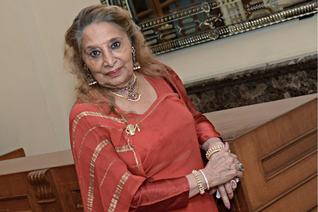
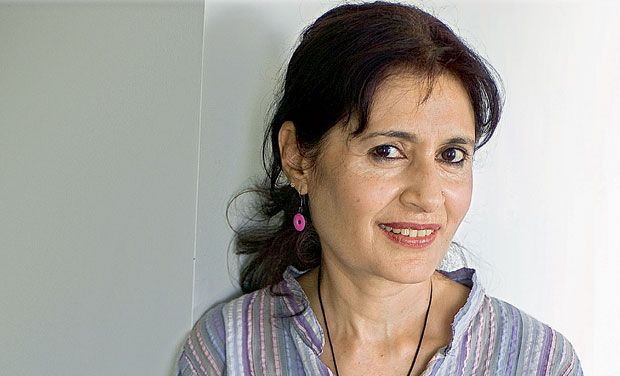
Bursting with ideasRanee Kuttaiah has collected recipes from households of different communities in Karnataka / Photo: Bhagya Prakash k. / The Hindu

Avid golfer. Kalakshetra student. Bharatanatyam and Kathakali dancer. Great grandmother. Lived the good life in the Nilgiris. Travelled the world giving performances. Anjaneya bhakt. Ford Motors PR in New York. Writer. Food stylist. Lecturer. Hotel manager. A very good cook.

Ranee Vijaya Kuttaiah is so many things rolled into one, it’s difficult to keep pace with this energetic Kodava matriarch as she flits from one story of her life to another. She can hold forth on anything from how politics is dirty to why prostitution should be legalised. And from how to boil lobster just so, to how to make ice cream that won’t melt under bright lights. All this coming from a woman who, when she got married, didn’t know how to make a cup of tea.

“I used to write for The Hindu when I lived in the Nilgiris with my husband. I’m a Kalakshetra dancer. My husband died when he was young. I was just too heart broken and swore never to wear my anklets and dance again. I started writing short stories, started a company called Shadow Light Co-ordinators and we would do high-end food and fashion shoots in Bangalore,” says Ranee, of the beginnings of how she came to write about food.

ITC Windsor and Sterling Paperbacks re-launched a revised edition of her famous recipe book, Cuisine from Karnataka with her other classic Cuisine from Coorg this week at an evening that saw the who’s who of Coorg and Ranee’s friends bond over food and wine. Talking of the strong bond that her Kodava community has with food, she points out: “We worship our ancestors with liquor! On any occasion, we first offer a little bit of whatever we cook in front of the photos of our ancestors. We are a kshatriya race used to good food, and we are big agriculturists.”

While studying for her masters in the United States in the 1960s, during her summer break she chanced upon a food styling course in one of the hotels. She signed up for it and a whole unknown world was revealed to her. “Cooked food doesn’t style well. It creates a mess. Food is best shot uncooked. I’ll tell you a secret. You can’t photograph steam. So when I had to shoot a hot, steaming kettle, I would blow out smoke from a cigarette just in time for the photographer to shoot. Mind you I don’t smoke. Ice-cream melts under lights. So we would whip paint and freeze it to look like ice cream! I would par-boil lobsters and then paint them with lovely orange oil paints before setting it up on a silver platter.” When she styled food for the famous Sangeeta Khanna cookbook, her present publisher appreciatively ate a meal in her house and asked her to write a book on Coorg cuisine. Ranee turned to her mother for the classic recipes of Coorg. It’s a book that’s been going into reprint for the last 14 years.

One book led to another. Having lived 30 years in Tamil Nadu and having performed all over the State, she recalls taking down recipes whenever she travelled in Madurai, Ramnad, Thirunelveli and Thanjavur, recording recipes of Nadar and Thevar cuisine, which featured in her book Cuisine from Tamil Nadu. Her own personal favourite, though, is Syrian Christian non-vegetarian food from Kerala, she pipes in.

She decided to write about Karnataka cuisine because — “it’s my State and largely ignored” she says, with a mix of pride and hurt. “It’s was as if holige and bisi bele bhath were the only things Karnataka had to offer,” she says talking of the limited popularity of food from the state then. She had close friends in political circles like Ramakrishna Hegde. “Many of the ministers were Lingayats and Gowdas. I would travel to Mandya and Maddur, visit the homes of the Gram Panchayat chiefs and ask their wives what they cook at home. I would collect four to five recipes from different families of the same dish, come home and try them in my kitchen and arrive at what I thought was the best of them.” Her book on Karnataka covers food from the Lingayat, Gowda, Bunt, and Madhwa Brahmin community (into which her sister was married).

source: http://www.thehindu.com / The Hindu / Home> Features> MetroPlus / by Bhumika. K / October 17th, 2014

Mysore girl in “Pyate Hudigiru Halli Lifeu Season – 3”

SomaiahKF14oct2014
Mysore :

After three Kodava celebrities — Shwetha Chengappa, Deepika Kamaiah and Harshika Poonacha — participated in the just concluded TV Reality Show Bigg Boss Kannada Season-2, here is another Kodavathi from Mysore — Cheeyakapoovanda Ravika Somaiah — taking part in another Reality Show on the television, Pyate Hudigiru Halli Lifeu – Season 3, which got off to a grand start on Oct. 6, after the grand finale of Bigg Boss.

She is one among the 10 contestants participating in Pyate Hudigiru Halli Lifeu, a happening reality show on Suvarna Channel everyday at 8 pm.

Ravika Somaiah has been a top model for Needle Works under Jayanthi Ballal for the last two years.

source: http://www.starofmysore.com / Star of Mysore / Home> General News / October 08th, 2014

Set to serve: An Indo-Russian mixed doubles badminton team

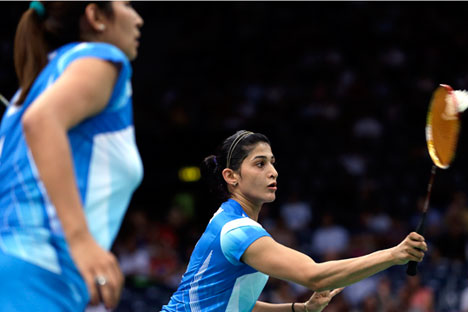
Ashwini Ponnappa and Vladimir Ivanov, who have teamed up for mixed doubles events, talk to RIR about their badminton partnership and the upcoming Denmark Open.

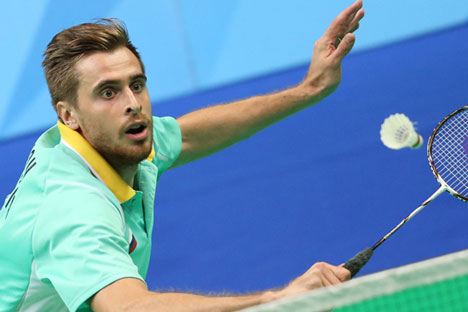
Vladimir Ivanov. Source: Grigoriy Sokolov / RIA Novosti

Indian women’s doubles badminton player Ashwini Ponnappa and Russian multi-format men’s player Vladimir Ivanov have partnered for mixed doubles events sanctioned by the Badminton World Federation. They would be seen in action together at the upcoming Denmark Open Super Series.
Both Ponnappa and Ivanov have established credibility in women’s and men’s doubles events, respectively. Ponnappa is the current Commonwealth Games silver medalist in women’s doubles. Ivanov has been riding on a winning streak in men’s doubles along with his partner Ivan Sozonov. They are the reigning European Champions.

However an ideal mixed doubles partnership has eluded them till now. Given their shared aspiration to do well in the mixed doubles format, this partnership could be their best shot. “My career began with singles matches and then I also started playing doubles,” Ivanov says. “It’s really hard to compete in both the formats simultaneously at the top most level. I am good enough at doubles, but I haven’t had a strong mixed doubles partner for the international circuit. Now I have this chance and I hope this partnership will be good for my career. It could also help me balance my efforts towards singles and doubles categories.”

Ashwini Ponnappa (right). Source: AP

Ponnappa also believes that their ambitions can be aligned. “I want to focus on mixed doubles some more. I was looking for someone outside the country,” she says. “I had seen Ivanov play at the Indian Badminton League and I think he did really well. He was also looking for a mixed doubles partner.”

Ivanov caught the fancy of badminton followers during the inaugural edition of the Indian Badminton League (IBL). He achieved an upset by defeating the Indian star P Kashyap in men’s singles and also contributed some significant doubles wins for his team.

This Indo-Russian team has got the nod of the governing authorities of both the countries. “In badminton, the associations play an active role and help their players a lot,” Ponnappa says. “That is why it was important for us that the Indian and Russian badminton associations approve of our team. Fortunately and thankfully we’ve got their support.”

In this sport, players mostly travel as national teams. Unlike tennis, it is hard to find a precedent of international pairing in badminton. The only other such team is that of Petya Nedelcheva of Bulgaria and Imogene Bankier of Scotland who participated at the World Championships earlier this year. With prominent players such as Ponnappa and Ivanov teaming up, international collaborations will surely gain popularity. It would also create participation opportunities for players from those countries where badminton is not played extensively.

Pullela Gopichand appreciates Russia’s sporting culture

The foremost challenge in this arrangement is that of geographic distance. Ponnappa and Ivanov are ready to deal with it. “We haven’t played together as yet,” Ivanov reveals. “It is difficult to draw any conclusion at the moment. But I think it will work out for us. I’ve watched her play and I can say that we have a similar approach in mixed doubles. The key here is to be clear about what each player has to do in each game.”

Ponnappa is also positive about their teamwork. “We are both experienced in playing doubles. I believe that it won’t be a major problem for us to coordinate with each other. We’ll have a few days to practice before the Denmark Open and we’ll take it from there. I am sure our strategy will evolve with every game,” she says.

Both the players assert that the upcoming tournament wouldn’t be just a trial run. They plan to compete together in the French Super Series and the Bitburger Open events that follow the Denmark Open.

Ivanov has already established synergistic association with Indian badminton players owing to his experience at the IBL. “It is an exciting and charged atmosphere during the games and also among the teammates. This experience is really close to my heart,” he says. “This psychological comfort is important in our profession, that’s why besides expectations about winning in mixed doubles, I think our partnership will lead to an even stronger connect with the Indian players and fans.” Ivanov, who had to depend on a translator when he first arrived in India, now feels a certain affinity with the Indian badminton fraternity.

This Indo-Russian badminton partnership can be a game changer not just for Ponnappa and Ivanov, but also for the sport itself, provided that they manage to serve an ace.

source: http://www.in.rbth.com / Russia & India Report / Home> Culture> Sports / by Priyanka Gera, specially for RIR / October 05th, 2014

Rustic vignettes

Spot on in bringing characters alive.

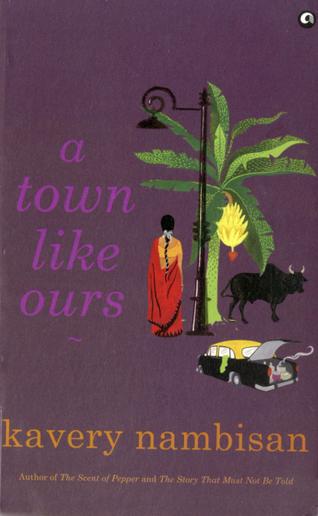
A Town Like Ours; Kavery Nambisan, Aleph, Rs.395

In literature that delves into social miseries, there is a common feeling that those who have words don’t have the stories, and those who have stories don’t have the words. If you’re living on the pavement with your family, you probably don’t have the means to record the experience for posterity. On the other hand, if you sit at a desk of your own and compose literature, you don’t have access to the miseries you want to write about.

To reconcile that problem, writers set up a peculiar kind of narrator, the person steeped in the rough life who somehow has the vocabulary and wider perspective to tell the stories. It is the kind of construct we find in old fiction, like Nelly Dean from Wuthering Heights or the flamboyantly criminal Moll Flanders. Nowadays, it seems an unnecessarily elaborate way to get to the stories. Readers are primed to accept them without that explanatory frame.

In Kavery Nambisan’s A Town Like Ours, the peculiar narrator is Rajakumari, a retired prostitute who lives in a dark room somewhere in the temple of the village goddess. She knows everyone’s back story and is not ashamed to tell it all. In her early years, she was enterprising enough to trade sex for lessons in maths, language, anatomy and other subjects. With education comes some preachiness, but we are Indians and that’s how we spin a fiction. Rajakumari has plenty to say about the chief industry of the town, the way it has poisoned the wells, contaminated the soil and whitened the children’s hair. She opines on religion and knee joints. But mostly she studies human nature. Old acquaintances come to visit, women come to confide their sorrows, and young boys help her walk to the sanctum of the goddess. Through her tiny window, she reads the faces and gestures she sees on the basis of the many souls she has entertained in her working life, and she puts it all together.

At the centre of her stories is the family that lives out of an Ambassador taxi. Father drives it during the day, mother runs a tea-and-bajji stall out of the trunk after she comes home from her housecleaning jobs, the sister and brother go to school and spend the rest of their time on the streets. But there are in fact no brothers, sisters or fathers in the case. Saroja and Sampathu, each escaping a frightening past, have simply joined forces and are bringing up two children together. In spite of strong affections, the family is a fragile composite that holds together for some time and then fragments again. One child goes missing and then the other, and suddenly Sampathu is not to be seen.

Elsewhere in the town, Manohar and Kripa separate after a fight and come together again. This couple become enmeshed with Saroja and help to look for her family. Nambisan is spot on in drawing Saroja’s situation as the woman left behind. She cannot tell her neighbours she doesn’t know where the other three are. Every day she parries questions about when her husband is “coming back from the village”. She must keep up appearances, or she will be judged and found wanting.

Up to that point Nambisan’s novel is leisurely. We move back and forth through memories and conversations to find out what kind of person each character is. But the suddenly precipitous pace near the end throws us, as each member of the family comes wandering back and misunderstandings flower among them. The whore in the temple says a prayer for herself, and leaves us with unfinished stories.

source: http://www.thehindu.com / The Hindu / Home> Books> Literary Review / by Latha Anantharaman / October 04th, 2014

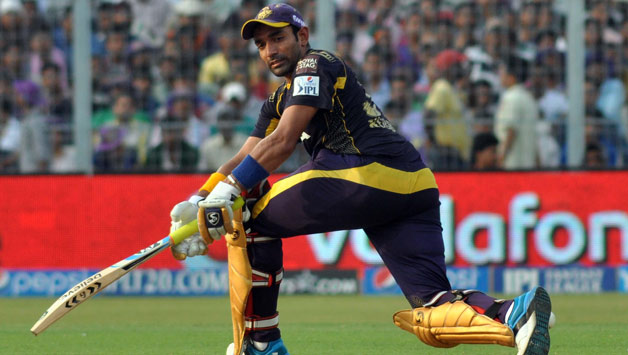
Robin Uthappa completes 4000 T20 runs

Uthappa also became the highest run-getter in CLT20 2014 © IANS

Robin Uthappa recorded 4000T20 career runs in the final match of the Champions League T20 (CLT20) 2014 against Chennai Super Kings (CSK) in Bangalore on Saturday.

Uthappa became the sixth Indian to register 4000 runs in this format. Suresh Raina has scored 5000 runs in this format and is the only Indian to touch this figure. Overall, Chris Gayle has scored the most runs in the format.

The Karnataka batsman had a sublime IPL 2014 and also ended up as the highest run-getter in the tournament after which he was also selected in the Indian squad for the Bangladesh tour.

source: http://www.cricketcountry.com / The Cricket Country / Home> News / by Cricket Country Staff / October 04th, 2014

Asian Games: M R Poovamma wins bronze in women’s 400m race

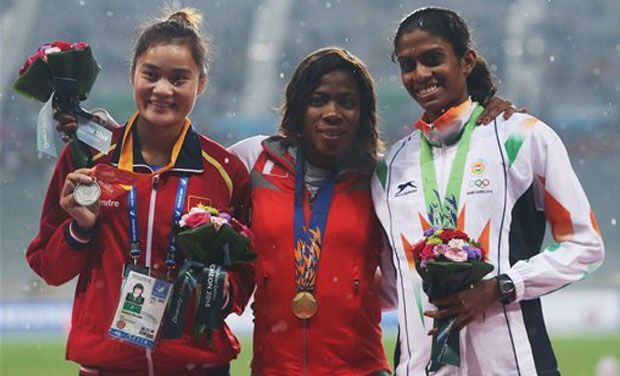
Silver medalist Vietnam's Quach Thi Lan, gold medalist Bahrain's Oluwakemi Adekoya and bronze medalist Poovamma Raju Machettira pose during the medal ceremony of women’s 400 m final at the 17th Asian Games in Incheon, South Korea.
Silver medalist Vietnam’s Quach Thi Lan, gold medalist Bahrain’s Oluwakemi Adekoya and bronze medalist Poovamma Raju Machettira pose during the medal ceremony of women’s 400 m final at the 17th Asian Games in Incheon, South Korea.

Incheon:

M R Poovamma bagged a bronze in women’s 400m race as India swelled their medal count from athletics competition to three at the Asian Games here on Sunday.

Poovamma clocked 52.36secs in the final race behind pre-match favourite Oluwakemi Adekoya (51.59secs) of Bahrain and Vietnam’s Thi Lan Quach (52.06secs) at the Inchon Asiad Main Stadium here.

24-year-old Poovamma, who was the second fastest off the block in the final today, could not touch her personal and season’s best of 51.73secs which she clocked at the National Inter-State Championships in Lucknow in June.

Thi Lan, the second worst off the block, overtook Poovamma to take the second place behind the Nigerian-born Bahrain runner, who is also the Asian season leader. The other Indian in the fray Mandeep Kaur finished sixth in the eight competitor field with a timing of 53.38 secs.

source: http://www.deccanchronicle.com / Deccan Chronicle / Home> Sports> Other Sports / PTI / September 28th, 2014

Asian Games: Indian women’s squash team settles for silver

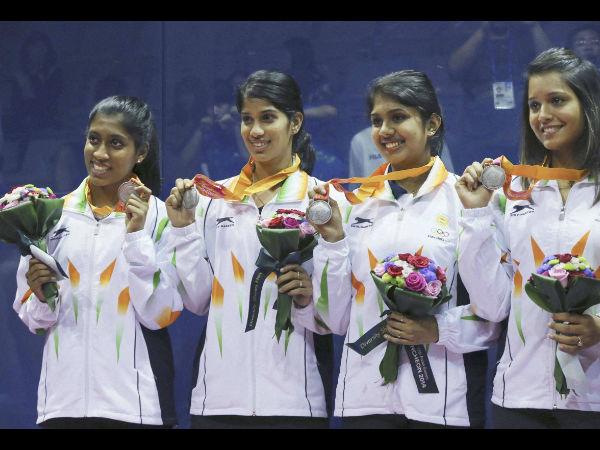
Anaka Alankamony, Joshna Chinappa, Aparajitha Balamurukan and Deepika Pallikal pose with their silver medals during the women's team squash award ceremony at the 17th Asian Games in Incheon on Saturday.
Anaka Alankamony, Joshna Chinappa, Aparajitha Balamurukan and Deepika Pallikal pose with their silver medals during the women’s team squash award ceremony at the 17th Asian Games in Incheon on Saturday.

Incheon :

Gold proved elusive but it was nonetheless a historic silver for the Indian women’s squash team after it went down to Malaysia in the final of the 17th Asian Games here on Saturday.

The team lost 0-2 to Malaysia to settle for the silver after Deepika Pallikal and Anaka Alankamony lost their matches in a contest which lasted a little over an hour. Alankamony opened the proceedings for India and did up some fight before going down 9-11 10-12 2-11 to Odette Arnold Delia in 43 minutes.

Next up was Dipika Pallikal, who once again came face to face against world number one Nicol David after losing the singles semifinal to her earlier this week.

The face off, however, did not yield a different result as Pallikal went down 7-11 6-11 3-11 in 29 minutes. Joshna Chinappa’s inconsequential final rubber did not take place after her rival Wee Wern Low withdrew from the contest.

The defeat notwithstanding, this will still be india’s best performance in the Asian Games squash competition as the men are also assured of at least a silver after reaching the final of the team competition.

Top singles player Saurav Ghosal has already added a historic silver to the medal list – a first in the Asian Games squash. Pallikal, on the other hand, had won a bronze medal in the women’s singles, also a first for Indian squash.

PTI

source: http://news.oneindia.in/ OneIndia.in / Home> News> Sports / PTI / Saturday – September 27th, 2014

BP Govinda named chairman of HI selection committee

New Delhi:

Olympian BP Govinda was on Friday named chairman of Hockey India’s nine-member selection committee, which will start working from July 1.

The panel, which will be in office for a one-year tenure, was picked in the Hockey India Executive Board meeting held here. The selection committee will work jointly with the HI’s High Performance and Development Committee to identify fresh talent in the country.
Govinda represented the country twice in Olympics (1972 & 1976), two World Cups (1973 & 1975) and three Asian Games (1970, 1974 & 1978).

Olympian BP Govinda was named chairman of Hockey India's nine-member selection committee, which will start working from July 1.
Olympian BP Govinda was named chairman of Hockey India’s nine-member selection committee, which will start working from July 1.

“The other members in the Selection Committee are Olympian Mr. Syed Ali (1964 Olympics), former international player Dr. R P Singh (World Cup in1986 & 1990), former Captain Mr. Gagan Ajit Singh (Olympics in 2000 & 2004), former Captain Mr. Arjun Halappa (Olympics in 2004 & Commonwealth Games in 2010), former Captain Ms. Savitri Purty (Asian Games in 1986), former Captain Ms. Mamta Kharab (Commonwealth Games in 2002 & 2006, Asia Cup in 2004), former Captain Ms. Surinder Kaur (Asia Cup in 2004) and former Captain Ms. Saba Anjum (Commonwealth Games 2002 & 2006, Asia Cup 2004 and Asian Games in 2002),” the HI said in a statement.

The newly-appointed Selection Committee will come into effect from July 1.

source: http://www.ibnlive.in.com / IBN Live / Home> Sports> Hockey / Press Trust of India / May 31st, 2013

Surgeon’s write path

Kavery Nambisan. (Photo: DC)

Hyderabad:

While she was still studying surgery at the University of Liverpool in England, Kavery Nambisan was informed by her friend that a mission hospital in Bihar was in desperate need of a surgeon, and asked if she would be interested in the offer. She took it up as a challenge and landed in the town of Mokama, a dacoit infested area, where she went on to treat patients who had faced several degrees of violence.

After Mokama, she worked at rural hospitals in Uttar Pradesh, Tamil Nadu and Karnataka, where she presently works in the Coorg district. But in the meanwhile, Kavery found time to write seven novels in the last two decades.

Her last book, The Story That Must Not Be Told was shortlisted for the DSC Prize for South Asian Literature as well as the Man Asian Literary Prize. “I started writing once I had become a doctor; initially it was few flippant pieces here and there, and then I ended up writing two children’s novels. It was a revelation for me, because I don’t have a literary background,” she says.

Kavery soon ventured into writing adult novels because she felt there was more to her imagination that she could put down on paper. Her recently released seventh book A Town Like Ours, chronicles the growth of Pingakshipura, a village that has now become a town. It is a place where the water runs a poisonous black and the hair on every child’s head is white. And all of this is through the eyes of an ageing prostitute who resides at a temple premises.

The central character is borrowed from one of Kavery’s childhood memories. “When my father was transferred to Delhi, there was a temple we used to visit often. Right next to the temple, in a room, I found this scantily clad elderly lady who was smoking a hookah and had several men huddled around her. She had a loud voice, and as a young girl, I was mystified and yet disgusted by her appearance,” she adds. But do most of her memories, or her medical experience find place in her books?

“Not constantly, but since I am a writer, I do observe. I listen to my patients intently when they confide in me about their family problems. Any inclusion is not always intentional but I guess once you have the seed of something, you can always create,” she says.

Kavery, who writes early in the mornings and during weekends, says that she never had a problem juggling her professional expertise with her passion for writing. “Since I have always had it this way, I never have really seen it as a problem. Apart from medicine and writing, I don’t feel the need to socialise because I meet so many people anyway. However, I have discovered that I can write an awful lot in hotel rooms when I am travelling, because there I have no other responsibilities,” she adds.

In the present times, when bookstores are stocked with new authors writing about college romances and urban life, there are barely a handful of voices which document the rural facets of our country. The author adds, “It’s not their fault that most of these young authors did not have any rural experience to write about. On my part, I am deeply saddened by injustice which plagues our society. When I have the opportunity of education and upbringing, someone else is continuously being denied it. I constantly think of it, but I haven’t been able to come up with an answer. But instead of feeling helpless, we must realise that we can’t do everything to resolve the situation, but can continue to do what we do best.”

And Kavery’s decision to spend her life writing about and aiding the rural folk in villages, where healthcare is deemed a luxury, is a clear example of that. “It was partly the influence of my father and my teachers, who instilled in me the sense of purpose, of why you do something. And being born and brought up in a village, I realised this is what I should do, because this is what I do best,” she says.

source: http://www.deccanchronicle.com / Deccan Chronicle / Home> LifeStyle> Books/Art / DC / Amrita Paul / August 30th, 2014

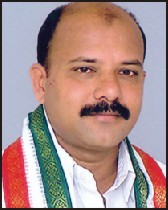
Former Kodagu ZP VIice-President Iqbal Hassan shot dead

IqbalHassanMPOs24sept2014

Virajpet :

Local Congress leader and former Kodagu ZP Vice-President Iqbal Hassan (46), was shot dead in broad daylight by unidentified assailants at Virajpet town in Kodagu district on Wednesday.

Iqbal was taking his seat for having lunch at a hotel in the busy Gadiyara Kamba area of the town at about 2 pm, when one of the two miscreants who came in a maroon coloured Maruti Alto car shot him in the chest, killing him instantly.

The miscreant reportedly fired another round which hit another person by name Chandrasekhar, a resident of Shivakeri, who was having lunch in the hotel, injuring him on his leg and chest. He was immediately rushed to Virajpet Government Hospital, from where he was shifted to Madikeri Hospital for advanced treatment. The miscreants managed to flee in the car in which they had come.

It is said that Hassan was reportedly involved in a dispute over a property with one Moosa, his neighbour, which had resulted in a clash between the two rival groups a few days ago, with both the groups complaining to the Virajpet Police.

Following the complaint and counter complaint, the Police had summoned both the groups to the Police Station yesterday and had succeeded in making both the groups arrive at a compromise, it is learnt.

The deceased Hassan is survived by wife and two sons aged 15 and 12. On hearing the news, residents of Virajpet town and surrounding areas streamed into the hospital and demanded arrest of the culprits.

Iqbal Hassan, who was associated with the Congress was serving as on office-bearer of the party’s Kodagu District Minority Cell.

He was elected to Kodagu ZP from Kadanur Constituency in Virajpet Taluk and served as ZP Vice-President from July 12, 2000 to March 12, 2002. He had also been ZP incharge-President for some time.

IGP (Southern Range) B.K. Singh, Kodagu SP Varthika Katiyar and other senior officials rushed to the spot. The Police have stepped up security in Virajpet Town following the murder.

source: http://www.starofmysore.com / Star of Mysore / Home> General News / September 18th, 2014