Category Archives: Famous Personalities of Kodagu / Coorg

Verbattle junior- zonal selection kicks off in Mangalore; 22 teams shortlisted

Mangalore :

Around 60 teams participated in the Verbattle Junior Round at the zonal level selection of the Verbattle Junior as a part of Verbattle Debate Competition 2014 here on Friday out of which 22 teams have been shortlisted to go to the next level ‘Verbattle Junior-Skirmish’ which is to be held in Bangalore in the third week of August.

The participants belonged to the age group of 12-16 years studying in Std VIII to Std X. The 22 teams selected in the Mangalore zone included teams from Chikmagalur, Dakshina Kannada, Kodagu, Uttara Kannada, Udupi and Shimoga. The zonal level selection of Verbattle senior will take place on Saturday.

After a basic introduction to the rules and regulations of the Verbattle Junior round, Verbattle foundation Founder Deepak Thimaya announced the topics that were to be debated upon in the course of the event. Out of a list of 10 topic statements, some of the topics included – The current education system is not equipped to deal with intelligence, Politics has solutions to India’s problems and Schools are breeding grounds of negativity. The participant teams were given their final topics around 30 minutes before the debate session following which the teams underwent intense sessions of about an hour.

“Verbattle is a wonderful platform that improves one’s speaking skills. Initially I had problems in speaking fluently but participating in Verbattle Junior and reaching the semi-finals last year has given in me immense confidence in speaking and voicing out my opinions and hence I came back this year to participate and I am excited that our team got through to the next round and I’m also confident that our team will win,” said Suraj Kumar, one of the participants studying in Madhav Kripa High school.

The next round which is the Verbattle Junior -Skirmish will be held on August 19 in Bangalore. The semi-finals and finals for Verbattle Junior and Senior will be held on August 22, 2014. The final debates will be moderated by Deepak Thimaya and judged by some of the eminent personalities from the state.

source: http://www.timesofindia.indiatimes.com / The Times of India / Home> City> Mangalore / Stanley Pinto, TNN / August 01st, 2014

The glass ceiling in diplomacy

WOMEN OF THE WORLD: THE RISE OF THE FEMALE DIPLOMAT
Helen McCarthy
Bloomsbury, London, 2014
404 plus xii pages; Rs 595

This book’s core message is how the male-dominated world of British diplomacy gradually – and grudgingly – let professional women in. As an academic, the author scores on objectivity, but the reader may miss an intimacy of personal experience that an insider might have provided. The author’s reliance on documentary material, and absence of interviews with working diplomats, produces a disproportionate emphasis on history; the book is weak on the contemporary scene.

This 400-page tome is fluffed up with an extended introduction on the evolution of the world of British diplomats from the late 19th century onwards, in which women were notable for their absence. But useful nuggets are thrown up. Who might imagine that as far back as 1893, most of the candidates recruited into the Foreign Office passed through a “crammer” called Coombes to prepare for entrance tests? It was the shortage of men during World War I that brought women into clerical-level diplomatic work in London, but few rose to executive positions. When in 1933 the Foreign Office asked embassies if women could handle diplomatic and consular work, most ambassadors were aghast. It was the Soviet Union that in 1924 appointed the world’s first female ambassador, Alexandra Kollontai, to Norway. The United States appointed its first female head of mission to Denmark in 1933 (that was a “legation”, headed by a “minister plenipotentiary”; such junior embassies, withered away after World War II, or WWII).

Two chapters (the fifth and the sixth) are devoted to the proceedings of a 1934 committee that examined and recommended against the entry of women in the diplomatic service. It took WWII to bring about real change in British mindsets. At the nine-week conference at San Francisco, five female delegates were among the participants, from Canada, China (KMT), Dominica, Uruguay and the United States; the United Nations Charter bears the signatures of four women.

The main narrative is sketched through the archival material that the historian author has tracked down after rigorous search through official papers, personal diaries, and letters and other sources. This produces fascinating pen portraits of strong characters, such as the Soviet ambassador Kollontai, fluent in 11 languages, who served in Norway, Sweden and Mexico; Dame Edith Lyttelton, the United Kingdom’s delegate to the League of Nations who argued in vain for women’s entry to the diplomatic service; and Freya Stark, a Briton who became an Arab affairs specialist in the 1930s, exploring little-known corners of Syria and the Arab peninsula, and during WWII worked with much verve in Cairo, Baghdad and Tehran. The few women that found diplomatic assignments, such as Nancy Lambton in Tehran, had to appear in academic gowns on formal occasions, since a diplomatic uniform – de rigueur in those days – did not exist for women.

It was as late as 1942 that Mary McGeachy became the first woman to be given diplomatic status, at the United Kingdom Embassy in Washington, D C. While other civil services had become accessible to women 20 years earlier, the ban on women in the service’s executive-level “A Branch” was lifted in 1946. This was preceded by a 1943 white paper that amalgamated the diplomatic and consular services, and a committee appointed in 1945 that recommended removal of the ban. But it came with two caveats: a marriage bar, and a “quota” of 10 per cent. Yet through the 1950s, women did not make up more than two per cent of the executive branch.

Presented through the eyes of female recruits, the final section of the book is fascinating, depicting the recruitment process (including the two-day “house party” where candidates that had passed the written tests were put through problem-solving and goal-achievement skills; how I wish such a process was used for the Indian Foreign Service, or the IFS). The Foreign Office was hugely behind the times in waiting till 1973 to remove the bar on marriage for female diplomats. Indian female diplomats confronted the same prejudice. They were required to resign on marriage; in the 1950s, we lost outstanding persons, such as Rama Mehta and Mira Sinha Bhattacharjea. This irrational rule was lifted in 1962 when Manorama and Hardev Bhalla, both in the IFS, married. In 1973, the United Kingdom appointed its first female high commissioner, but their first married female as ambassador emerged only in 1987. India appointed C B Muthamma (the first woman to join the IFS in 1949) as its professional female ambassador to Hungary in 1970.

The United Kingdom’s glass ceiling remains much worse for professional women than one may imagine. In 1995, the senior-most female diplomat, Pauline Neville-Jones, Foreign and Commonwealth Ofiice (FCO)’s political director, could not win the prize she sought – the Paris ambassadorship; that went to a male colleague six years her junior. She declined substitute assignments and joined a bank. Till date, a woman has not headed any of the United Kingdom’s top six missions, nor served as the FCO permanent under secretary. India has seen three female foreign secretaries since 2002, and ambassadors of both genders at virtually all its top posts.

The book evokes real issues that all foreign services face today: the old formula for wives of diplomats to immerse themselves in “housewifery and hospitality”, treating the embassy as an extended family, with roles assigned by status of their husbands, no longer works. The challenges faced by spouses taking up jobs while accompanying diplomats are all too common in all foreign ministries. One wishes the author had examined this further, looking also at practices in other countries.

The reviewer is a former diplomat, author and teacher
source: http://www.business-standard.com / Business Standard / Home> Beyond Business> Books / by Krishna S. Rana / August 10th, 2014
Best is yet to come, says Ashwini Ponnappa

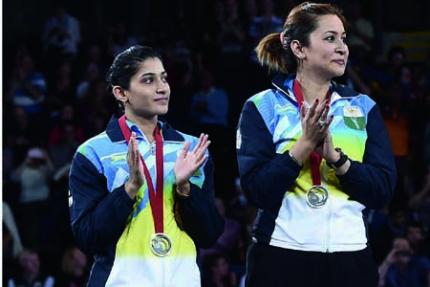
Ashwini Ponnappa (left) and Jwala Gutta.

Glasgow 2014 was shuttler Ashwini Ponnappa’s second appearance at the Commonwealth Games. And the girl from Bengaluru was “satisfied” with her performance if not overwhelmed, after taking her second medal in as many Games.

Ashwini and Jwala Gutta, the 2010 CWG gold medallists, settled for silver in the women’s doubles after going down 17-21, 21-23 against world no. 18 Malaysian combo of Vivian Kah Mun Hoo and Khe Wei Woon in the final.

But Ashwini said the best was yet to come from the pair.

“Me and Jwala are getting better and better with each tournament. These Games have given us the motivation and belief that we are in the right direction, that we are getting close to what we are striving for,” she said.

Talking of their mistakes during the title clash, Ashwini said that she needed to work on the mental aspect and her shot selection in high pressure situations

“We have now learnt our lessons from these Games. Personally I think, my strokes weren’t smart. Also, I have to be calmer. I was expecting too much from myself during the final, so at some point I got irritated. I need to avoid those situations,” she pointed out.

Jwala and Ashwini re-united last October, and since then they picked up the senior nationals title in December before bagging the bronze at the Asian Badminton Championship in April this year.

Asked if she was satisfied with their show at Glasgow, Ashwini said, “Yes, you can say that.

“I am happy to get a medal. We went into the Games targetting the gold. But I don’t think we played to our capabilities in the final. Still, it’s always a good feeling to win a medal.”

The Commonwealth gold has been missed, but the year still has a couple of major tournaments left and Ashwini said she hardly has any time to celebrate her medal. “We are targetting one tournament at a time. Next is the World Championships, and we want to do well there,” she said.

“There is no time to relax, so I am starting my training with Tom John sir. Jwala will be training with S.M. Arif sir. I will join her in Hyderabad after a couple of weeks,” said Ashwini.

source: http://www.asianage.com / The Asian Age / Home> Sports> Other Sports / by Priyanka Sharma / August 07th, 2014

I have already moved on: Joshna Chinappa

Chennai :

The gold dust is yet to settle. Fresh from her stellar show at the Commonwealth Games along with partner Dipika Pallikal, 27 year-old Joshna Chinappa is in a happy zone.

With the Asian Games round the corner, she isn’t game for a break yet.

After her return to the city, Joshna took time off on Wednesday for a freewheeling chat with TOI.

With the Asian Games round the corner, Joshna isn't game for a break yet. (TOI Photo)
With the Asian Games round the corner, Joshna isn’t game for a break yet. (TOI Photo)

Excerpts:

How would you sum up your CWG experience and how different is this win from any of your other ones?

I had a great time at Glasgow. The stadium was fantastic, the crowds great and the atmosphere electric. All my wins have been special in some way. But to win gold at the Commonwealth Games for India has been a long-cherished dream. I worked really hard with my trainer Rajamani ahead of the event. That it’s incidentally India’s maiden squash medal at the Games makes it even more special.

After the tri-nation win in Malaysia, were you upbeat of your chances as a pair and what are the adjustments you had to bring about in your game to complement each other better?

Dip and I were confident that as a pair we could win a medal. We took it one game at a time though. I didn’t have to adjust much because we are both strong on our respective sides and we both knew what we had to do on court to win our games.

What are the tournaments you’d be focusing on next?

I have already moved on to my next event and will be getting back to training soon. My next event is the Malaysian Open and Hong Kong Open in two weeks. After which there’s the Asian Games in Incheon.

How would you rate your chances at the Asian Games?

I have a good chance in the individuals. As far as the team event is concerned, we won a bronze in the last edition in Guangzhou so I hope we can go higher than that this time.

In what way are you hoping that this win will help change the way squash is viewed in the country and what are your expectations from the state government to help improve the state of the sport?

We do get a bit of support from the central government. Our chief minister has always been encouraging towards sport and sportspersons and we’ve always been rewarded when we win at big international events. I hope this win will spur more youngsters to take up squash and work hard. We need more squash courts in Chennai and more kids being supported if the sport has to take a leap into the future.

How did you celebrate after the win?

We went for shopping the next day. I prefer spending time on my own when I’m not training or watch a movie or catch up on TV shows (I watch way too many!). Revenge, The Following, Real housewives of Beverly Hills are some of my favourites.

FAST FIVE

Biggest fantasy: To own an island.

Biggest fear: Visiting the dentist.

Worst moment: When I got injured and the doctor in America told me I needed surgery and couldn’t play for a month.

One thing you can’t do without (apart from squash): I can be a bit superstitious… might need to cut down on a few.

One thing you hate about yourself: I don’t hate much about me except that I need to relax a bit more.

source: http://www.timesofindia.indiatimes.com / The Times of India / Home> Sports> More Sports> Others / by Susan Ninan, TNN / August 07th, 2014

Uthappa, Pandey in demand

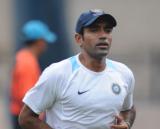
UthappaBF21aug2014
Star opener Robin Uthappa and middle-order bat Manish Pandey, along with KL Rahul, are expected to rake in the big mo­olah at the Karnataka Premier League players’ au­c­tion here at the M Chinnaswamy Stadium on Thursday.

Uthappa, the player of the tournament in the recently-concluded IPL-7, is in the auction as his team — Bangalore Brigadiers — have pulled out of the third edition. His team-mate at Kolkata Knight Riders, Pandey, couldn’t be retained by Belagavi Panthers as existing teams are allowed to keep just one player from Pool A that consists of the top 30 State cricketers.

Panthers, who also had R Vinay Kumar in their ranks, went for the Karnataka skipper. The medium pacer will also be leading the Panthers in the T20 league to be held from August 28 to September 12.
Another batsman, who has made rapid progress in the last one year, Karun Nair, has been retained by defending champions Mangalore United while Bijapur Bulls left their slate clean.

Stuart Binny, the second highest paid player behind Uthappa in the previous auction, will not be available for the tournament as the all-rounder has been included in the ODI squad for the England series. With Mumbai Indians refusing to release leg-spinning all-rounder Shreyas Gopal and medium pacer HS Sharath injured, there were three vacancies in Pool A. Left-arm spinner KP Appanna, medium pacer SL Akshay and batsman C Cheluvaraj have come in as replacements.

Another top-order batsman Rahul, who was also part of Brigadiers, will be one of the most sought after players at the auction scheduled to kick off at 3.30 pm after the unveiling of the sponsor’s logo. Hard-hitting opener Mayank Agarwal is also sure to generate some heat along with A Mithun, S Arvind, Ronit More, Amit Verma and Kunal Kapoor.

It will be interesting to see how much interest former State cricketers like Anand Katti, Yere Goud and B Akhil — who are all in Pool A — generate among the bidders.

Unlike in the previous auction in 2009, when the franchises were allowed to spend Rs 7 lakh each on buying players, amounting to Rs 56 lakh, this time the cap has been raised to Rs 20 lakh per team. As a result the six teams at the player bidding together can spend a maximum of Rs 1.2 crore on a minimum of 90 players (taking into consideration that each team should have a minimum of 15-player squad) and a maximum of 108.

The two retained players, Vinay and Nair, who have a minimum cap Rs 3 lakh, will get 15 per cent more than the highest paid player in the auction in their respective teams or whichever is the higher amount.
Each franchise can spend a maximum of Rs 12 lakh to buy no more than five players from Pool A and if any player in this ‘elite’ group goes unsold he will come into Pool B which has close to 200 players.

The unsold Pool A player, however, can go under the hammer again only after Pool B players are auctioned off. The base price for unsold Pool A player is pegged at Rs 25,000. Each bid for a player has to be raised by Rs 10,000 for Pool A and by Rs 5,000 for Pool B.

Also, to help maintain local flavour, it has been made mandatory for teams to have two players from their catchment area.

source: http://www.deccanherald.com / Deccan Herald / Home> Sports / DHNS , Bangalore – August 06th, 2014

Kodagu girl dabbling in OZ politics

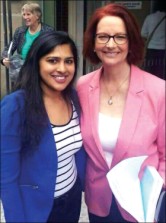
Charisma Kaliyanda with Australian Prime Minister Julia Gillard

Mysore :

Kaliyanda Charisma is in the thick of Australian politics. She is currently running up for election to the State Parliament of New South Wales, which is one of the States of Australia. “I hope to be elected in March 2015, at which time I will work hard to represent the constituents of the seat of Holsworthy” she said. Charisma is contesting from Holsworthy on a ticket from the Australian Labor Party, who have selected her as their candidate to contest the upcoming State election.

“I was inspired to become involved in politics by three incidents that all occurred around the same time. Firstly, my University (University of New South Wales) was making big changes to our degrees and I was complaining in class when one of my classmates asked me “what are you going to do about it?” She invited me to stand with her friends for election to the Student Representative Council (SRC) of UNSW. I realised I was just wasting my breath by complaining without taking any action, so I joined my classmate and her friends. The following year, I was elected President of the UNSW SRC,” said Charisma, speaking to Star of Mysore.

“Secondly, as part of my studies I travelled on exchange to Mexico. Here, I realised the value of being involved in politics — if people from all walks of life are not involved in politics then the decisions that are made cannot be representative of society as a whole,” she said.

“Finally, it was around this time that I was diagnosed with Type 1 diabetes. This experience made me realise that the health system we have in Australia is fantastic, and that health and education are so important to being able to succeed in life. So, I got involved in local politics,” said Charisma.

Charisma is an occupational therapist by profession. Her experience with the health system there led her to get Masters in Occupational Therapy from the University of Sydney. “I love working in paediatrics, which is why I completed a program working at a school for children with physical disabilities in Mumbai last year,” she said.

About her background, Charisma said that she is the daughter of Kaliyanda Jaya and Banumathi, from Kolakeri village, Madikeri taluk, Kodagu. Banumathi is working for NSW railways. She and her brother were born in Bangalore. When she was around four years old, her parents decided to migrate to Australia. “Although the size of the Kodava community in Sydney has increased in recent years, it was relatively small when we were growing up. However, despite having lived in Australia for over 20 years, my parents have ensured that we have never forgotten our roots, our language and our traditions,” said Charisma.

“I have always found it a privilege to be able to share my heritage, particularly with Australian friends, as Australia’s multicultural society celebrates the richness of different cultures. We speak Kodava thakk at home, and make sure to celebrate Kailpodhu, Puthari and Kaveri Shankramana with not only our Kodava friends but also our non-Kodava friends. The Kodava community in Sydney gets together for our festivals every year, but we also celebrate at home. My friends love my mum’s pandhi curry and wotti” she said.

“My family is extremely supportive – they have always encouraged me to pursue my goals wholeheartedly. I am lucky that we have been able to visit family and friends in India every 3-4 years. My father is Kaliyanda Jaya, from Kolakeri and my mother, Chottera Bhanumathy, is from Kunjalageri. We still have family and friends living in Coorg and Bangalore, however, we make it a point to visit our grandmother in Kunjalageri, whenever we are in India,” she said.

source: http://www.starofmysore.com / Star of Mysore / Home> Feature Articles / August 10th, 2014

M.C.Nanaiah urges Government to honour Joshna Chinappa

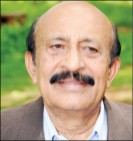
NanaiahKF15aug2014
Bangalore :

Veteran politician and former Minister M.C. Nanaiah has urged the State Government to honour Kodagu sports person Joshna Chinappa who won gold medal in the Squash Doubles in the CWG-2014.

Speaking to press persons here yesterday, Nanaiah said the Karnataka Olympics Association (KOA) must honour Joshna as she hails from Polibetta in Kodagu, with her grand parents and parents all belonging to this place.

Pointing out that her parents moved to Chennai seeking a career, Nanaiah said that Joshna was born and brought up in Kodagu and she belonged to the State. The squash player was living with her parents in Chennai and it was not correct on the part of the KOA for not honouring her citing that she was a resident of Chennai.

Noting that the KOA honoured Vikas Gowda who is settled in the US and others such as cricketer Azaruddin and tennis player Sania Mirza earlier, Nanaiah wondered why the Association ignored Joshna, who through her feat in the Commonwealth Games (CWG) had brought good name to Karnataka.

Pointing out that the Tamil Nadu and Andhra governments had announced cash rewards ranging from Rs. 20 lakh to Rs. 50 lakh for CWG achievers, the former Minister urged Chief Minister Siddharamaiah and Minister for Youth Services and Sports Abhayachandra Jain to look into the discrimination against the squash players, which has hurt sports lovers across the State and take measures to felicitate and reward Joshna as early as possible.

Referring to the spurt in atrocities and sexual violence against women in the State, Nanaiah observed that the effective implementation of the POCSO Act will go a long way in preventing crimes against women.

Reiterating the need for implementing the POCSO Act to curb sexual abuse of women and children, Nanaiah said that the Government has constituted a 26 member committee, headed by him, to look into effective measures needed for preventing sexual violence and other crimes against women and chilren, including implementation of POCSO Act.

The Committee, which is due to begin work shortly, will deliberate on the laws related to sexual violence and atrocities against women and children and come up with practical measures for tackling such crimes, he added.

source: http://www.starofmysore.com / Star of Mysore / Home> General News / August 09th, 2014

” I may be living in Chennai, but i am a Kodavathi first ”

Says Joshna Chinappa, squash champion

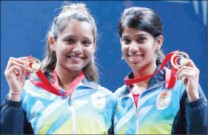
Joshna (right), along with Deepika Pallikal, won the gold medal in Commonwealth Games, Glasgow

Bangalore :

Joshna Chinappa, who along with her partner Deepika Pallikal won the gold medal in Squash Doubles at the Commonwealth Games held in Glasgow recently, says that though she resides in Chennai, Tamil Nadu, by heart and soul she is a Kodavathi.

In a special interview to a newspaper after her return to Chennai on Tuesday, Joshna, hailing from the Kuttanda family, said that she took pride in saying that she has the lineage of Field Marshal K.M. Cariappa and the first Inspector General of Karnataka, P. Ponnappa.

“Though I am residing in Chennai with my parents, I belong to Kodagu district in Karnataka. My father Anjan Chinnappa is an industrialist in Chennai. I have houses in Bangalore and Kodagu too. I am the grand niece of Field Marshal Cariappa (grand-daughter of the younger sister of Field Marshal Cariappa). My great grandfather Ponnappa was the first IGP of Karnataka, which is a matter of pride for me,” she gushed with a broad smile and added, “Whenever I visit Kodagu, I meet school children and spread awareness about the game of squash.”

She recalled the days when her father Anjan Chinappa used to play squash at the Madras Cricket Club, to which she would accompany him and started playing the game. “Seeing my interest in the game, my father gave me all the support and encouragement. Thanks to my parents’ efforts and well-wishers’ support, I got the honour of bringing credit to India,” she said.

For Joshna, several international events are lined up. After a few days rest, she will be participating in the two international championships in Malaysia and then attend the Asian Championship. “Winning the gold in the CWG has boosted my confidence. I will spare no effort to clinch a gold in the 17th Asian Games to be held in Korea,” she said. Tamil Nadu Chief Minister J. Jayalalithaa had awarded cash prizes of Rs. 50 lakh each to Joshna and Deepika for the CWG gold.

source: http://www.starofmysore.com / Star of Mysore / Home> General News / August 09th, 2014

Nidhi Subbaiah: Ajab Gazabb Love taught me patience

A bundle of talent, a trained sailor , a natural singer, actor Nidhi Subbaiah is trying to make her foothold in Bollywood. Recently in Varanasi to shoot for her second film , Direct Ishq Ho Gaya, the pretty actor is keen to be part of good cinema , cinema which ten years down the lane she is proud to be associated with.

Nidhi Subbaiah
Nidhi Subbaiah

The Gold Rush

A gold medalist in sailing, Nidhi represented her state, Karnataka twice at competitions held in Chilka Lake and Vizag. “I was the helmsman of the team. My love for sailing began in school where I joined the naval wing of NCC, that had sailing as part of the training . For two years I underwent training and even wanted to make a career out of it, but my Commanding Officer, who despite being very happy with my skills, dissuaded me, as there was no future in the sport. Issues like lack of sponsors did not make it a lucrative career choice so I had to give it up. It is unfortunate that in our country sports as a career has limited options.Only cricket for men and tennis for women are viewed as the right career choice , which should change and other sports should also be encouraged, ” she says. I shocked my parents.

Her passion for the sport ensured Nidhi admission in an Engineering college in Mysore, to pursue civil engineering, in the sports quota category. With most of my friends joining the same college, was the reason for getting myself enrolled . I dropped out of the college after the first year as I started getting modelling offers and soon some prestigious assignments came my way . This decision did not go well with my parents as they had some pre conceived notion about the entertainment industry . Being the only child of my parents, my father , a coffee planter and my mother , a lawyer, always wanted me pursue higher studies from US .This came as a shocker to them but later things changed and now they support all my efforts. While exploring possibilities on the silver screen I preferred moving to Bangalore due to it’s familiarity rather than to Mumbai which was an altogether new city for me. I started getting offers for Kannada films ,” she says.

Ajab Gazabb Love taught me patience The actor who forayed into Bollywood with Ajab Gazabb Love with Jackky Bhagnani , says that the film not doing well at BO did bother her initially . “It took me a while to get my second film but it taught me patience which I lacked earlier . I pondered over a lot of things and learned to love my craft .The reason I could shoot for a long stretch of time, even eighteen hours at a time, despite temperatures cross 45 degrees in Banaras for Direct Ishq, when some members of the crew fainted due to heat,” she says. Essaying the role of Dolly Shukla in the film, who is a theth Banarasi, Nidhi feels, that it is a coincidence that the UP connect remains even in her second film . “In Ajab Gazabb Love I portrayed a Luckhnawi girl and now a Banarasi , perhaps it has something to do with my previous birth , “she says with a laugh.

I can scream my lungs out when provoked The character of Dolly, walks in boots and is a rockstar who screams at the slightest pretext and bashes boys with ease .Some crew members were apprehensive whether I will be able to get into the skin of the character since I appear as a soft person at first glance but I told them that you did a good job by selecting me since I can yell my lungs out if provoked,” she adds mischievously.

Want to do cinema that connects with the audience Keen to work with directors like Imtiaz Ali, the actor says that it is the script and her role in the film that is vital to her . “This, along with the director I am working with, has been the criterion so far in my selection of the films. I don’t want to be typecast and wish to do the kind of cinema that connects with the audience, so the boundaries of serious or commercial cinema does not bother me, as five years from now I want to be seen as a self made girl with a space of my own in Bollywood,” she says.

source: http://www.timesofindia.indiatimes.com / The Times of India Home> Entertainment> Hindi> Bollywood / Meera Vohra, TNN / August 05th, 2014

Equestrian Ajai Appachu for 17th Asian Games in Korea next month

AjaiAppachuKF13aug2014

Mysore :

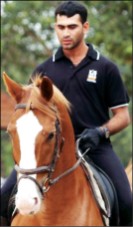
Renowned equestrian Ajai Appachu has been selected for the 17th Asian Games to be held in Korea to participate in the horse-riding competition during Sept. 2014. Trained at Embassy International Riding School, Bangalore, Ajai will be accompanied by his student Fawad Mirza and Nadia Hariprasad.

For Ajai Appachu, this is the second Asian Games. He has won prizes in all the equestrian competitions that he took part, having won more than 50 awards so far. A truly gifted rider and an extremely successful instructor, Ajai has won innumerable equestrian accolades in India, South Africa and Australia in every field of equestrian sport, whether dressage, show jumping or eventing.

Ajai has been trained under world-class instructors and is now the guiding force behind the Embassy International Riding School (EIRS) competition yard.

His students reflect his ability and the EIRS team for the Junior National Equestrian Championship is a force to reckon with, having achieved the highest medal tally at national level since 2003. The young rider has a long list of achievements under his belt.

Ajai started his winning streak in competitive riding in 1996 when he was adjudged the best rider in the zonal championships at Kolkata. Ajai is the son of Maj. Gen. (Rtd.) Cheppudira Jai Appachu and Gita, hailing from Kodagu.

Ajai won the Individual Gold (1.30 mt) at the recently held KRA Cup, Seoul, South Korea. Also, won the Team Silver for Jumping; Qualified for the Asian Games in Guangzhou, China in the year 2010; Won FEI World Jumping challenge Category A in Meerut (2011); Won the FEI World dressage challenge held at Embassy International Riding School in 2008; Won Team Gold in show jumping at the Junior International (1999); Best Rider at the Tollygunj Horse Show (1997-98); Junior National Champion at Bangalore (1998); Represented India in South Africa where the team won a gold and three bronze medals; Represented India for the 4th time in the International Tent Pegging meet (2000) and other awards.

source: http://www.starofmysore.com / Star of Mysore / Home> General News / August 07th, 2014