Category Archives: Famous Personalities of Kodagu / Coorg

Team Game a Concern Amid Individual Glory

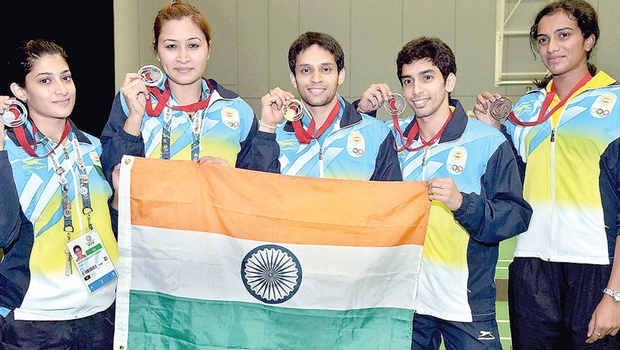
(From left) India’s Commonwealth Games 2014 badminton medallists Ashwini Ponnappa & Jwala Gutta (silver), Parupalli Kashyap (gold), RMV Gurusaidutt (bronze) and PV Sindhu (bronze) in Glasgow on Sunday | pti

Hyderabad :

The colour made the difference. Otherwise, the medals tally was the same. In the 2010 Delhi Games, India had won four medals. So too in Glasgow.

It was two gold, one silver and one bronze in Delhi. However, Indian shuttlers could bag only one gold, one silver and two bronze medals this time.

However, there will be ifs and buts on India’s show. Surely, the last-minute withdrawal of Saina Nehwal cost India a gold medal. But there were hopes that if Saina was not there, then young world championship bronze medallist PV Sindhu had the chance to retain the gold for the country instead.

But Sindhu fell to Canadian Michelle Li in the semifinals to finally end up with a bronze medal in her maiden venture. However, Parupalli Kashyap’s long wait for a championship medal was finally over. “I feel very happy for this Hyderabadi boy. He has a good game but somehow falters at crucial times. But this time there was no stopping him. He deserves the gold,” said former international Sanjay Sharma, adding, “it was not his fault if Lee Chong Wei (World No 1) pulled out like Saina.”

But Sharma was not happy with the overall performance, particularly with India failing to win a medal in the team event. “It was the biggest disappointment. We don’t have depth in doubles unlike in the singles where there is some bench strength. If India has done well in the team events in the recent past, it is surely because of Jwala Gutta, who has been a force to reckon with in the doubles for India. She has done yeomen service as far as doubles is concerned for India. But then we can’t depend too much on her every time,” he said.

Former national coach Vimal Kumar, too, agreed that doubles is surely going to be the Achilles’ heel in any team event. “The singles in the recent past was not an issue but it is the doubles that is the biggest problem for India. Jwala and Ashwini (Ponnappa) have won laurels in women’s doubles but where are the men’s and mixed doubles combinations. It hurt India and will continue to do so in future tournaments. India has to do a lot of catching up to improve their doubles combination. I think the Badminton Association of India (BAI) has to give more emphasis to doubles by grooming young talent for future tournaments,” he opined.

Sharma said if India have to think of any team medal, then BAI should make concerted efforts to groom a strong doubles combination. “When we could not win any medal in CWG, which has more of a depleted field, then India stand no chance in Asian Games and other big events. It should start planning in the right earnest for the 2016 Rio Olympics,” he added.

The former doubles specialist said the CWG gold could propel Kashyap to greater heights. “It is a huge boost to Kashyap’s confidence. We could see a pumped up Kashyap in World Championships and Asian Games where the field is much stronger.”

Vimal feels that Kashyap is always a better player in individual events. “In team events, he is under some sort of pressure. But in individual events he plays more freely. He was impressive in the individual event and I liked the way he handled the pressure, specially in the semifinals and final.

“Remember, in terms of standard of the game, CWG is not of high quality as there are no Chinese, Indonesians, Danes or Japanese players. But this win came at the right time. He will have a much tougher time at the Worlds and Asian Games,” said the former chief national coach.

Sindhu, according to Sharma and Vimal, faltered. “It is a good learning experience for Sindhu. But I thought she had a good chance to win a gold medal but then she failed to capitalize on the golden opportunity,’’ said Sharma, who is now a TV commentator on the game.

Vimal felt Sindhu has to improve her defence. “I think it is time she should depend on instructions. She should make the match analysis by herself and improve on her defence. She need to have more variations in her game,” said the present Prakash Padokone Badminton Academy coach.

source: http://www.newindianexpress.com / The New Indian Express / Home> Sport / by N. Jagannath Das / August 05th, 2014
Joshna and Dipika: India gets new racquet queens

ipika Pallikal (left) and Joshna Chinappa pose with their medals after winning the gold in women's doubles squash event during the 2014 Commonwealth Games in Glasgow. (AFP Photo)
ipika Pallikal (left) and Joshna Chinappa pose with their medals after winning the gold in women’s doubles squash event during the 2014 Commonwealth Games in Glasgow. (AFP Photo)

Glasgow :

Forget the gold. Few gave them a chance to even finish on the podium in the Commonwealth Games, given that teams with pedigree like Australia, England, New Zealand and Malaysia were in the fray.

But two girls from Chennai – Joshna Chinappa and Dipika Pallikal – squashed all doubts and did the impossible on Saturday to claim the top prize in women’s squash doubles. This is India’s first ever medal in the sport in the Commonwealth Games.

It took the fifth seeded Indian duo just 28 minutes to tame the top seeds Jenny Duncalf and Laura Massaro of England in straight games: 11-6, 11-8.

The scoreline might suggest that the game was a little one sided but it was not. The British pair, after losing the first game, roared back for a 7-2 lead in the second. The Indians fought back to clinch a famous victory .

“We were down for a while, but we were confident. We were telling ourselves that we could do it. We were not here to settle for the silver. We had the belief and the confidence that we could win the gold medal,” 22-year-old Dipika told TOI.

It was a tough competition for the Indian girls as the field included quite a few former Commonwealth Games medallists. “Doubles was a tough competition. It was important for us to take one match at a time, not thinking about whom we were going to play if we advanced. I guess that paid off as it took away the pressure,” she said.

Dipika admitted that the feeling that she and her 27-year-old partner Joshna were the architects of India’s first medal winners in squash was yet to sink in. “I guess it will take a couple of days to sink in. We are delighted.”

Former national champion Bhuvaneshwari Kumari, here as a coach, said the medal would do a world of good to the game back home. “It will inspire people back home. The government and the federation have been very supportive but I think this gold will help us get more support.”

source: http://www.timesofindia.indiatimes.com / The Times of India / Home> Sports> Tournaments> Commonwealth Games 2014 / by Biswajyoti Brahma, TNN / August 03rd, 2014

There’s Something for Everyone in This Town

KaveryNambisanKF10aug2014

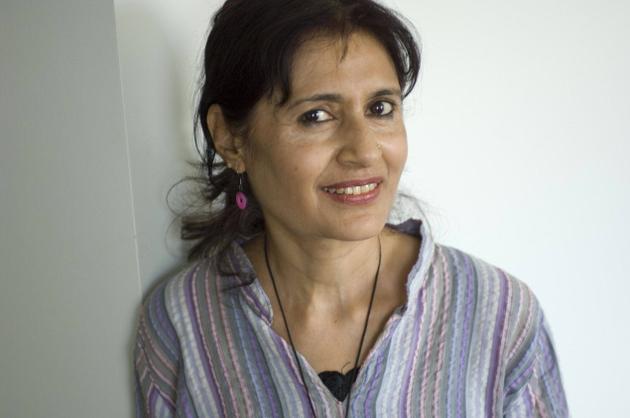
Kavery Nambisan’s poised surgical fingers cut through the heart of rural India in her charming seventh novel, A Town Like Ours. Yes, you read that right. When most people struggle with writing one book (full time), Nambisan has deftly churned out little more than half a dozen books while juggling her day job as a surgeon. If that doesn’t make you envious, then perhaps this will: her last book The Story That Must Not Be Told was shortlisted for the Man Asian Literary Prize and the DSC Prize.

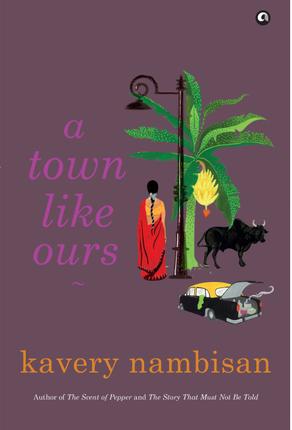
In her latest offering, A Town Like Ours, you get the feeling that Nambisan has been mulling over the idea for years—lodged in her subconscious—before writing it all down in one swift sweep. It is a quiet book with an assured, elegant voice. Set in the fictional small town of Pingakshipura, the novel’s narrator is Rajakumari, a retired whore past her prime, who at one time serviced everyone and the local temple priest. This is a town where water runs black—all thanks to the temple priest—and every child’s head is white. Poignant and aching in parts, Nambisan’s motley crew of characters weave a story of love and loss and the desire to succeed in a ferocious world.

There is Saroja and Sampathu who flee a murder most morbid only to land up in Pingakshipura and raise Gundumani and Rukmini (Rukma) in a battered old taxi. No matter how odd this may seem, the two hold onto this semblance of a home. Then there is Gundumani, the boy with the crooked leg, whose can’t seem to understand his love for the woman whom he has treated as his sister, until well…let’s leave that for you to discover. Then there is Lectric Manu, who is a little too keen on Saroja; Kripa and Manohar, the childless couple who discover something unusual about each other after years of marriage.

A Town Like Ours is a sad tale that negotiates all those uncomfortable emotions gurgling underneath. Here is a little sampling of Rajakumari’s thoughts: ‘The very pith of marriage is carnal, you will do it with your husband or wife and no other. The manliness and womanliness with which couples accept this situation while attempting to imitate happiness is enough to make me weep. So it begins, this wedded happiness which is sometimes also a curse. Couples tire of each other’s bodies without realising it. They proceed to make children who grow up and go to school, the bidi factory or brothel, they live normal lives while their vague disenchantment cooks away and bounces off the walls of their cage like tired moths that slowly-slowly wither to dust.’

The writing is measured and the story unravels itself beautifully as you nudge each page. Nambisan’s book is a slow, lilting little gem that is ought to be relished on a long, monsoon-dappled train journey.

A Town Like Ours
By: Kavery Nambisan
Pages: 256 / Price: Rs 395 / Publisher: Aleph Book Company

source: http://www.newindianexpress.com / The New Indian Express / Home> LifeStyle> Books / by Supriya David / August 10th, 2014

Harshika Poonacha, darling of audiences, back to Bigg Boss

harshikaKF06aug2014

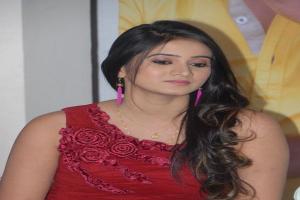
Sandalwood actress Harshika Poonacha who was recently eliminated from the house of popular Kannada reality show Bigg Boss is all set to make her comeback on the show. The reason behind Harshika’s re-entry to Bigg Boss was because audiences have been demanding her comeback on the show.

And the makers of the show had no other choice, but to relent to the audiences demand. She will be once again seen on the TV show from Sunday onwards.

Hope her re-entry will be a pleasant one, and she remains in the show for long.

Recently we saw Sandalwood director Guruprasad making a wild card entry into the controversial reality show currently on air on a popular Kannada TV channel. The show, in its second season, is being hosted by Kannada superstar Sudeep.

Director Guruprasad is mostly known for portraying realistic stories on screen. Thus we wonder whether the filmmaker will be able to fight back against all the allegations and backbiting that happen on the show.

source: http://www.timesofindia.indiatimes.com / The Times of India / Home> Entertainment> Kannada / TNN / August 03rd, 2014

THE SUNDAY INTERVIEW : ‘Life can be a fairy tale… or a mess’

Author Kavery Nambisan / by Special Arrangement / The Hindu

Kavery Nambisan talks to the writer about her book A Town Like Ours, and juggling the roles of writer and surgeon.

Pingakshipura — where the hair on children’s head has turned white and the water runs black — is the town Kavery Nambisan created in her latest book, A Town Like Ours. Though a fictional account of a fictitious place, Nambisan’s words resonate with a dark, uncensored truth that brings to mind the fate of hundreds of villages across the country. Known for her highly perceptive and emotive style, Nambisan talks about her writing and her dual life as author and surgeon.

BookKF03aug2014

Excerpts from an interview:

Tell us a little about how you created Pingakshipura.

It grew around the character of Rajakumari. When I created this endearing, coarse-tongued prostitute and tried to imagine her life, the place that came to mind was a shapeless, noisy pell-mell town. I worked backwards from the town to what it must have been a decade or two earlier. I thought I had created Pingakshipura but, in actual fact, it was like the villages of Karnataka where I lived in my childhood that, over the decades, transmogrified into towns. The lopsided modernisation that we so timidly endorse in our greed for wealth leads to a distortion of the intrinsic fabric of society. The deep and abiding wisdom that is a part of village life is forever lost.

You choose to use Rajkumari to tell the story?

She is derived from a real characterYou know how you come across a person and she stays in your mind and cooks away in your imagination until she is no longer a strangerThe important thing about Rajakumari is not her beauty but her ability to think, and to believe in herself. Her unique position as a harlot gives her the fearlessness and the freedom to retain her dignity at all times.

As for using her voice to tell the story, who better than a whore to give an honest account of the goings-on in any place, who better to tease out the absurdities of life and people? Her voice is like the drumbeat of Pingakshipura, the collective voice of the town. She speaks in her language, namely Kannada which is also the language I grew up with in school.

Not every character’s story is resolved. This seems to be deliberate.

It is Rajakumari who speaks. She is keenly interested in the lives of four people; two couples and two children. My own experience is that the lives of seemingly disparate people come together due to the strangest of circumstances. And a novel is only a peeping-hole into something that happens somewhere. Life can be a charming fairy-tale but more often it is a mess. I look in and show what I see.

I am also very interested in the way we keep secrets from each other, the way we speak half-truths and get away with it all the time. We try to shield our own ‘imagined’ dignity or shield that of others. But see what dilemmas we can end up with. Would it not have been easier for Manohar to tell his wife about his longing for children instead of doing what he did? Or for Saroja to be utterly honest with Sampathu?

A Town like Ours seems to underline your own worries about where rural India is headed.

I guess that runs like a theme through the book, although it is not talked about much. Yes, I am depressed about the destruction, the thinning away, of our link with Nature. It is like humanity is steadily losing blood, getting more anaemic by the day and, instead of treating the cause, is trying to pep itself up by using the magic tablet of modernisation.

Is this the kind of fiction you believe in writing, one that reflects on and mirrors reality?

I did not plan anything. When I started, all I knew about writing was that you had to tell a story. I like stories that make me smile or laugh (sometimes with bitterness). But what really moves me is the grand canvas of living. We humans have a greater capacity for grief than for joy, don’t you think? At least, that is the case with me. I try to be honest, that’s what I do when I write. Everything flows from there. Injustice of all sorts fills me with disbelief about our future and I write so I can change that disbelief into something more hopeful.

Are there any similarities/overlaps in the two facets of your life: writer and surgeon?

Surgery is all about knowledge, skill and team-work. Writing, on the other hand, is done in isolation; it is a bizarre mix of observation, experience, memory and imagination, a chipping- away until something comes out on the page. But both writing and surgery require a certain confidence and the ability to take risks. Who knows what your novel will turn out to be like? In surgery, the risk is that each human body behaves differently and, although you think you know it well, it always throws up surprises. When I open an abdomen, or take on something else, I should be prepared to handle the innumerable variations. Especially in a rural area where you cannot cry for help. You succeed by staying abreast of progress, by keeping your faculties sharp and your mind open to learning. Once you say, “Yes, I can do this for you,” to a patient, you go all the way in the best way possible. By nature, I’m a risk-taker. That’s how I’ve survived as a writer and a surgeon.

source: http://www.thehindu.com / The Hindu / Home> Features> Sunday Magazine> The Sunday Interview / by Swati Dastur / August 02nd, 2014

India A in Australia: Robin Uthappa’s men register 5th consecutive win

Manoj Tiwary

In the Quadrangular A Team ODI tournament that is reaching its closing stages in Australia, India registered their fifth straight win on the trot, against Australia A, on Thursday. The loss ended Australia A’s five match unbeaten run that started in the first match of the tournament against the same opponents. Chasing 229 for win, India reached home with 5-wickets to spare.

Ambati Rayudu(77) and Kedar Jadhav(52) stitched together a 101-run partnership after India A lost three wickets early in the chase. Rayudu batted cautiously for his half-century, while Jadhav continued to be the aggressor. The Maharashtra batsman struck two sixes and three boundaries in his knock, which was eventually ended by Cameron White.

Sanju Samson joined Rayudu and continued from where Jadhav left; the duo added 52 off 59 balls that set India on course for the win. Parvez Rasool contributed 20 off 16 to guarantee a victory. The Kerala wicketkeeper-batsman finished on an unbeaten 49 from 51 balls.

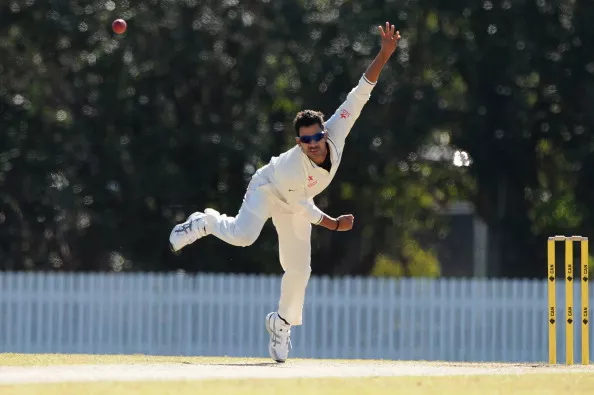
Earlier in the day, White won the toss and decided to bat first at the Marrara Oval, Darwin. Opener Marcus Stoinis batted briskly for his 58, before falling to Akshar Patel. The breakthrough opened the gates for Manoj Tiwary who bagged his maiden five-wicket haul of his career by getting rid of the next five batsmen.

Peter Nevill (23) got stumped by Samson, while the captain did not last long. Phil Hughes, who scored the incredible record-breaking double century in his last outing, became the second batsman to be stumped off Tiwary’s leg-spin in the match, for 58.

Akshar Patel was extremely effective, bowling economically and also picking up important wickets. The left-arm spinner cleared off the tail that sneaked in some quick runs towards the end of the innings. Australia were eventually bowled out with 228 on board in the final over of the innings.

Indian skipper Robin Uthappa failed once again with the bat and is without a single half-century in this entire tour. In the end, it turned out to be a convincing victory for the visitors. The two sides will meet again in the finals on Saturday.

source: http://www.sportskeeda.com / Sports Keeda / Home> Report> Cricket / by Pradeep Kalamagam / July 31st, 2014

Vikramkant to lead Karnataka in National Hockey Championship

Bangalore:

Vikarmkant will lead the 19-member men`s Karnataka hockey squad for the third Senior National Championship to be held at Pune from May 28 to June 10.

S K Uthappa, adjudged the best player in 2011 Senior Nationals in Bhopal where Karnataka had finished runners-up, will be the vice-captain of the state side.

The team is being coached by 1994 World Cupper K K Poonacha.

Karnataka is grouped in Pool C along with Services, SAI, Bihar and Goa. They will play their first match against Goa on June 3.

As many as 37 participating teams have been divided into eight pools and toppers of each pool will make it to the quarter finals. Pune had previously hosted the inaugural Hockey India Junior Men`s Nationals in 2011.

The championship will be telecast live on DD from the quarter final stage.

Pool A: Hockey Punjab, Hockey Delhi, Association of Indian Universities, Hockey Arunachal.

Pool B: Air India Sports Promotion Board, Madhya Pradesh Hockey Academy, Hockey Puducherry, Tripura Hockey, Chhattisgarh Hockey.

Pool C: Hockey Karnataka, Services Sports Control Board, Hockey Bihar, Goans Hockey, Sports Authority of India.

Pool D: Hockey Haryana, Uttar Pradesh Hockey, Hockey Maharashtra, Hockey Andaman and Nicobar, Mumbai Hockey Association.

Pool E: Hockey Jharkhand, Hockey Odisha, Hockey Himachal Pradesh, Bengal Hockey Association, Comptroller and Auditor General.

Pool F: Railway Sports Promotion Board, Hockey Bhopal,

Sashastra Seema Bal, Hockey Jammu and Kashmir, Namdhari XI.

Pool G: Manipur Hockey, Hockey Andhra Pradesh, Hockey Uttarakhand, Hockey Kerala.

Pool H: Hockey Unit of Tamil Nadu, Chandigarh Olympic Association, Hockey Assam, Hockey Rajasthan.

Karnataka squad: Jagdeep Dayal, K D Bidappa, S K Appachu, B P Chingappa, S M Rafeeq, Vikramkant (captain), C K Somanna, M B Aiyappa, S K Uthappa (vice captain), M G Poonacha, M K Muddappa, Mohan Muthanna, Nikkin Thimmaiah, Bipin Bopaiah, K B Thammaiah, P L Thimmanna, K M Somanna, P V Pramod and C U Bopanna.

Coach: K K Poonacha

Manager: Rickey Ganapathy

Physio and Trainer: Sampath Kumar.

PTI

source: http://www.zeenews.india.com / Z News / Home> Sports> Others / Thursday – May 30th, 2013

Young faces included in new hockey selection panel

Hockey India made sweeping changes in the national selection committee, bringing in many young faces.

The nine-member selection committee will be headed by Olympian BP Govinda.

Former India captain Arjun Halappa is in the committee

The new committee was decided at the HI Executive Board meeting recently and will come into effect from July 1.

It will have one-year tenure.

It includes former men’s team captains Gagan Ajit Singh and Arjun Halappa, besides women’s team skippers Savitri Purty, Mamta Kharab, Surinder Kaur and Saba Anjum, who is youngest member in the committee at 27.

The other two members in the panel are Olympian Syed Ali (1976 Olympics) and former international player RP Singh (World Cup in 1986 & 1990).

“The Selection Committee will work jointly with the High Performance and Development Committee to identify fresh talent in the country. The High Performance committee is a step forward in bringing uniformity in the development of the sport across the country.”

HI secretary general Narinder Batra said they have selected youngsters because they know the modern day hockey.

“The committee has been selected keeping in mind the present day environment. They know what it needs today to take Indian hockey forward,” he said.

“Besides we have people like BP Govinda and Harbinder Singh who is the government advisor in the committee. It is a fine mix of youth and experience,” he added.

source: http://www.dailymail.co.uk / Mail Online India / Home> India / by Mail Today Reporter / June 01st, 2013

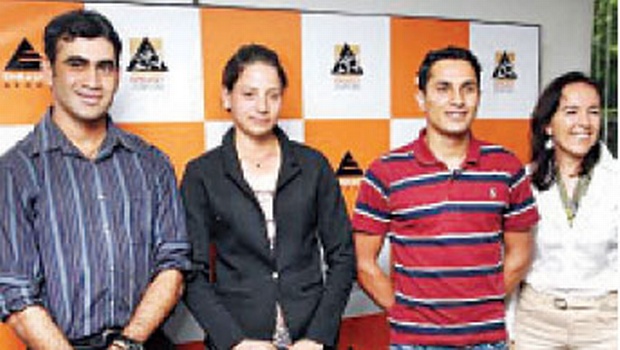
Ajai, Nadia, Fouad hope to do well at Asiad

Ajai Appachu, Nadia Haridass, Fouad Mirza and Silva Storai

Bangalore :

Three of Karnataka’s excellent show jumpers from Embassy International Riding School, Bangalore, will make their way to Incheon, Korea for the 17th Asian Games to be held from September 19 to October 4.

Ajai Appachu and Nadia Haridass will represent the country for the second time in the Asian Games, while Fouad Mirza will make his debut. In 2010, Ajai was selected for Asian Games, but did not make it due to technical issues.

Equestrian has featured in the Asian Games ever since it was first staged in New Delhi in 1982. To date, Japan leads in the number of accolades collected at the Asian Games followed by South Korea and India.

Appachu, Mirza and Haridass train at Bangalore’s premier horse riding school, Embassy International Riding School (EIRS). They have meticulously trained under reputed instructors.

Appachu has earned several accolades at events across the world. Recently, he stood second at the renowned Hopetoun Commonwealth Cup in Scotland.

At 22, Mirza has performed splendidly, having won over 50 regional and international championship medals. He stood fourth at the Hopetoun Commonwealth Cup.

Nadia, a dressage specialist, has been a consistent performer in the category and has gained recognition in equestrian circles by winning many laurels and representing the country at both national and international platforms.

“I think we stand a good chance of winning in South Korea as we have the best horses. In the run-up to the Asian Games, we have been training hard in Europe and also participating in tough competitions,” said Appachu. Nadia, who trains under Olympian Hubertus Schmidt in Dusseldorf, Germany, said: “Competing against the world’s best riders in the qualifying rounds of Asian Games has infused confidence in me ahead of the big event. Qatar has spent a huge amount of money to prepare for the race and they can be tough opponents.”

“I am optimistic about winning a medal in the team event. Overall, the championship will be tough as Korea, Japan and Qatar have invested heavily on buying a good breed of horses,” said Oxfordshire-based Fouad.

“Nowadays, more parents want their children to pursue the sport and I hope we have some good performances at Asian Games,” said EIRS director Silva Storai, who was a professional rider herself, not too long ago.

source: http://www.thenewindianexpress.com / The New Indian Express / Home> Cities> Bangalore / by S.S. Shreekumar / July 29th, 2014

GROUND ZERO – Lessons only a mother can teach

GROUND ZERO
Lessons only a mother can teach
The understanding of our existence is a lifelong quest on a path strewn with flowers and thorns. Urbanisation and materialism have seen many of us lose our moral compass. My mother taught us to stay connected to those around us and Nature even as we travelled far and wide.
Raj Chengappa

RajChengappaKF31jul2014My mother went gently into the long night last week. She had lived a full life of 85 years. We had known that the end was near for the past couple of months. She herself had wanted to go ever since she had lost her life’s companion, my father, a decade ago but her spirit and body would not give up. She had prided herself that she had never visited a hospital for treatment and she was determined not to do so in her twilight years. We respected that, and though her last couple of months were tough as her body wilted, she coped with it in the familiar surroundings of her children’s houses.

When I got the call just before midnight from my sister, whom my mother had been staying with in Bangalore, the finality of her passing away hit me. As I prepared to take the flight to Bangalore from Chandigarh, the memories sped by in staccato frames with no particular narrative or continuity. There was a feeling of immense gratitude and love for someone who along with my father had ensured that each of her four children was sufficiently equipped to face life’s struggles and had the freedom to pursue their dreams.

Uppermost among them was the fact that she opted to say alone in Bangalore for five years when my father, who was in the Army, was posted in Kashmir, so that we would get the best of education. All of us were below eight years of age and she would bundle us every day to school, our uniforms starched and ironed and tiffin boxes packed. On our return, a hot snack would be waiting for us. She made sure we had our baths in the evening and prayed before going to bed. It was only when I became a parent I truly appreciated the effort.

Her village nestled among the verdant Coorg hills gave her the love for her roots and Nature.

As I got on in life, my mother’s primary question till the very last was, “How is your health — hope you are taking care of yourself?” She rarely asked me questions as to how successful I was in terms of my career, how much money I had saved or what kind of house I was living in. She only wanted to know if I was maintaining my health. The old saying ‘health was wealth’ still held good for her.

Perhaps an equally important lesson she taught us was never to forget our roots or humble beginnings. Though educated in Bangalore and Delhi and having lived in Jammu, Ferozepur (where I was born) Kolkata, Deolali, Hyderabad and Nellore, my mother never ever forgot the village in Kodagu (Coorg) where she lived in the formative years of her life.

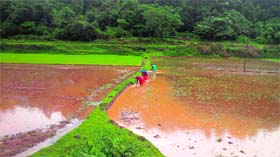
When my maternal grandfather was alive, she ensured that we spent many holidays in her village. To reach her ancestral house we had to walk over 5 km from the bus stop, past hills clad in thick forest, valleys with verdant paddy fields and the swift flowing Cauvery river that originated not far from her village.

It taught us to love nature and understand how most of India lived then and many do even today — no roads, tap water, toilets or electricity. We learnt to wake up to the call of the rooster in the morning, to milk the cows, help plough the fields, call cattle back from the meadows in the evening and read under oil lamps or listen to grandpa’s experiences.

My mother’s last wish was that part of her ashes be strewn in the Cauvery river flowing near her house, a part buried near the house where her parents’ ashes were interred and the remaining buried next to those of my father in the fields in his village some 30 km away.

Heavy monsoon rain lashed Kodagu when we took the urns carrying her mortal remains. We were warned that the river was in spate and the roads leading to her village were inundated. But Mother Nature obliged and the rain abated just enough for us to fulfil her last wish of being forever back among the people and place she loved the most.

Her final journey was a lesson too. The search for our roots and the understanding of our existence is a lifelong quest on a path strewn with flowers and thorns. Rapid urbanisation has seen many of us lose our moorings and moral compass. The pursuit of materialism as an end itself has only made emptiness and disquiet grow.

My mother taught us the importance of staying connected to nature, family, friends and those who worked or lived around you. Never to forget your roots even as your body and mind took you far and wide. So that when the bell tolled, Nature would welcome you with open arms and to limitless warmth, as it did her.

raj@tribuneindia.com

source: http://www.tribuneindia.com / The Tribune Online edition / Sunday, July 27th, 2014