Category Archives: Famous Personalities of Kodagu / Coorg

What a martial race does when there’s no war

MaritalraceKF21apr2013
Few sporting events in Karnataka, in India, in the world, can hold a candle in motive, in spirit, in atmosphere, to the hockey festival organised each summer between Coorgi (Kodava) families.

Part sport, part mall, part fashion parade, part talent hunt, part social glue, the tournament is a beautiful salute to sport from a beautiful people of a beautiful part of the world.

The 12th edition, for the Alamengada Cup this year, concluded today, 12 May 2008, in Ponnampet in Virajpet taluk, with the finals played between the Koothanda family and the Anjaparavanda family.

View a portfolio of 82 pictures here: Coorg Hockey

View a short YouTube video here: Koothanda vs Anjaparavanda

Below read an essay by Sugata Srinivasaraju of Outlook magazine on the 2005 tournament.
————————————

By SUGATA SRINIVASARAJU

They charge towards the umpire when he blows the long whistle to declare a goal. For someone who is not entirely familiar with the Kodava (or Coorgi) hockey passion, it appears that the eleven hockey sticks will do the guy to death. But that does not happen. It turns out to be an incessant argument in incessant rain. Each time it happens the match-clock stops for a minimum of ten minutes. The longest break is for thirty-odd minutes when the Koothanda family team scores past the Nellamakkada family, 3-2, in the last fifteen minutes of the finals of the Kodava Families’ Hockey Festival. For the record, it is the world’s biggest hockey tournament.

We wonder why passions should run so high when this is just ‘festival’ hockey and no great championship? A neighbouring Mysorean who has been a regular at the festival since it began in 1997 explains the nuances involved: “The nation is too amorphous and even if you lose playing for it, it does not haunt you beyond a point. But it is completely different when you are defending your family pride, the shame is more immediate.”

Family pride and family identity is in fact at the core of this festival organised annually in the picturesque terraces of the coffee land. In the days of the coffee price depression, when this inward-looking community, almost clanish, started looking out to measure the vistas of the world, when it looked most distracted in centuries of its existence, a brilliant idea struck a man in his 60s, Padanda Kuttani Kuttappa, to re-fix the roving Kodava eyes and arrest the slipping ground. He invented the ethnic hockey festival. In the very first year, nearly 60 families registered themselves and the numbers swelled each year. In 2003 it touched 281, a world record of sorts which found its way into the Limca Book.

In 2004 the Maleyanda family which organised the fest expected the number of participating families to cross 300, but it did not happen due to certain ‘teething operational problems,’ only 236 families played the game and any given year there has been a guaranteed audience of 25,000 people.

The swelling numbers explain why corporates too have started taking interest in the fest. In 2001 Nike was involved and in 2004 a local tobacco company and Toyota supported the effort with a small grant. LG held a raffle draw with television and mobile phones as gifts.

The organising family needs around Rs 15 lakh to conduct the fest, which it raises by collecting donations from family members, anywhere between five and ten thousand. Participating families pool about 30,000 to meet expenses arising out of travel to the venue (which is generally the home-village of the organising family) uniforms for players, equipment costs etc.

The economics of the whole affair has been worked out to perfection.

Returning to pride, why did the Kodavas decide to play hockey to hold their ground? ‘Because that is what they know best,’ is how some would put it bluntly, but a more liberal interpretation would be, besides the pork curry and coffee, hockey is the only thing that is common to two per cent of the rich planters, eight per cent of medium to small planters and ninety per cent of poor Kodava farm labourers.

A good-humoured joke about the community that did the rounds some two decades back was: Kodava men joined the army or played hockey or joined the Bata Shoe Company as salesmen, because they were fair and dandy. Rum, of course, was another common element to all categories of Kodava men. The strong army connection comes from the fact that two top generals in the Indian Army were from Coorg: Field Marshal K M Cariappa and Gen Thimayya.

Surprisingly, both belonged to the Kodandera family, which also participated in the 2004 hockey fest. It may surprise outsiders, but Coorg has produced more than 40 hockey internationals and some of them like M.P. Ganesh and M.M. Somaiya have even captained the Indian team. Incidentally, the first international from Coorg, M.D. Muthappa, belongs to the Maleyanda family, 2004′s tournament organisers.

But strangely, Ganesh or Somaiya or the gifted goal-keeper A.B. Subbaiah become completely unfamiliar when they come to Coorg. Their first name familiarity with the outer world, gets drowned under the weight of their family names.

For instance, M P Ganesh, who is now the executive director of the Sports Authority of India, becomes Mollera Ganesh. A B Subbaiah turns Anjaparavanda Subbaiah. And the brilliant fullback and Olympian, C.S. Poonacha is Cheppudira Poonacha.

As if sucked back into their original community identity. “Into the womb of mother Cauvery,” as a lay Kodava emotionally put it bringing in the platitude personification of the river that has its origins in the coffee land.

At the finals of the Maleyanda Cup, it was not just the hockey greats present, there were also others who had made it big in other fields. South Indian actress Neravanda Prema, Davis Cupper Machanda Rohan Bopanna were among them. They had all left their cosmopolitan masks behind in Bangalore, Bombay or Delhi to be authentic local heroes. But their speeches in the Kodava language was a give away of their Anglicized transformation. If they did not come to this ethnic festival there was no threat of ex-communication, but there was always the fear of being excluded.

In many ways the story of the Kodavas is the familiar story of the New World. It is the same as the Irish tracking their family trees and their Gaelic roots. In fact the whole environment on May 23, 2005 was like the one in Dhaka on every February 21 (Ekushey February), the Mother Language Day, the day to which Bangladesh owes its existence.

“Part kermises, part festival of remembrance, both political statement and celebration,” writes British writer Jeremy Seabrook about Ekushey February.

Celebration and statement were both there at the hockey fest too, at Gargandur in Somwarpet: There was an ethnic food stall; men unabashedly consumed liquor before the final match began at 2 pm; a Kodava job agency had put up its banner; the 37 Medium Coorg Regiment, Madras Engineering Group and Border Scouts were there looking for talent; a woman cartoonist sold her “Still Hope Ammathi” T-shirts (a cheering Kodava phrase for the losing side); a clutch of planter-woman with their authentic coffee brew were there to zealously promote coffee as a ‘health drink’ and all amidst the din of nasal Kodava sounds. It was a shandy.

Amidst the celebration the statement was not forgotten, it was quietly tucked away in the souvenir that was circulated. It was a charter of demands before the Prime Minister by the Federation of Kodava Samajas: “The Fazal Ali Commission has observed in its report that Kodagu should be maintained as a separate identity. It also recommended the reservation of a Lok Sabha seat for Kodagu. Once the State of Kodagu was amalgamated with the State of Mysore the solemn assurance was ignored… culture and identity of the people undermined…,” it read. This should explain the separate statehood demand for Kodagu a decade ago.

The coffee land has been a RSS-BJP bastion. “No beef, only pork” is what a Kodava exclaimed at the food stall, energetically waving his family flag. Every participating family in the hockey fest have their own colours and flags. A common motif on these flags is a 1837 insignia given by the British to the Coorg people for “distinguished conduct and loyalty.”

Besides the political statement, there is also a cultural and social reasoning to the hockey festival.Consider these two voices: “When you have to build a family hockey team, the entire family will have to sit together, so in many ways it becomes a vehicle to sort out family and property disputes. It is also a time when the young scattered away in the cities come to meet the old,” says M.K. Ponnana.

In fact the Kodava family teams are unique in the sense that if the forwards are 16-year-olds, the fullbacks could be 60 years and the goal keeper could be a lady. The Koothanda family which reached the finals had 20-year-old Shilpa as its goalie.

Young and old, rich and poor, men and women, the binary distinctions are temporarily suspended for the families’ hockey season.

For Ponamma Muthappa the whole fest feigns war. It recreates the clash of tribal chieftains. “We are a martial race and we are very physical, when there is no war we express ourselves through hockey,” she explains.

Whatever may be the thick connotations of the hockey festival, for rank outsiders the single most interesting factor could be the pretty Kodava women. But the bugle sounds there too: “It is difficult to take home a wife,” a local girl adds blush to the statement, suggesting that they seldom marry outside their community!

[Excerpted from ‘Keeping Faith with the Mother Tongue – Anxieties of a Local Culture’ by Sugata Srinivasaraju. Published by Navakarnataka Publications. Price Rs. 200. Pages: 288]

source: http://www.churmuri.wordpress.com /
A green movement like the West

Here comes an innovative idea to bring back greenery to the parched, degraded Silicon City.

Four young professionals, Shailesh Deshpande, Reena Chengappa, Sriram Aravamudan and Athreya Chidambi gave up their five-figure corporate jobs and dedicated themselves to small space urban gardening.

Talking about the project, My SunnyBalcony which aims at giving everyone a dream garden, Sriram said, “All four of us came up with this idea while having a discussion over a cup of coffee one day. We realised that there were a lot of trees been cut for flyovers and other projects. Instead of mourning over it, we thought we should do something.”

With high rise buildings being the order of the day, these youngsters plan to bring in the green room movement like in the West.

“Bangalore is a city where we don’t see excessive heat or cold which can destroy the plants. We have to just sow the seeds in the soil and then watch it grow. Initially we started it as a weekend project and later quit our regular jobs to be here. We decided on taking up the balcony spaces of the house as it is a personally owned space unlike the terrace which is a community space. Too narrow to be of any use and too long to be ignored, this balcony was a perfect candidate for a garden. We started doing it at a friend’s place and then at their bosses’ houses. To take it further, we developed a website and got into this business full time. It has been three years now since we started,” he said.

Getting into a totally uncharted territory, they could only hope for the best.

“Four of us initially did all the digging, planting and gardening. Today, we have come to a stage where we can hire some permanent staff. In the mean time, we realised the city has a major issue with garden products and accessories. So we started selling garden products in terracotta, wrought iron and bamboo which are all sourced from artisans in and around Bangalore. Today, our products are available in a couple of stores and we have started taking shipping orders too,” he said.

Avid gardeners, these youngsters took some basic course in gardening before they plunged into the activity thoroughly.

“The gardening course just gave us the basic understanding. We realised the only way this will pick up is through innovative marketing.

With half of Bangalore population being environment-friendly, it was not difficult for us to sell our products.

“With a very basic budget, we could only do our publicity through social networking sites,” said Sriram who encourages vegetable gardening in the city.

“We are not saying that ornamental gardening is bad. We being passionate about organically grown vegetables, feel that there are some easy ways to tackle the issue. Bangalore weather can be classified as a Mediterranean one even though we are in the tropical region because of the city’s altitude. We can easily grow vegetables like spinach, western oregano, tomatoes, brinjals, beans, grapes, ash gourd, pumpkin, bitter gourd, carrots and more. Vegetable creepers over balconies is also an exotic idea,” he offers.

Gardening needs constant care as the plants have to be watered every day which might become difficult for people who travel often. Well, this problem can be settled. “Farewell, water woes. We do have a solution. We assist them with solutions like irrigation, pest control and how to take care of the plants,” he said.

In terms of gardening project, they have covered at least 300-400 houses. “Our garden products have at least reached 1000 homes,” said Sriram who also hosts a number of workshops at corporate houses to create awareness on gardening.

source: http://www.newindianexpress.com / The New Indian Express / Home> Cities> Bangalore / by A Sharadhaa / ENS – Bangalore / April 16tgh, 2013

A fine performance by Pooavamma

The qualification marks for the World Athletics Championships continued to be elusive, but M.R. Poovamma lit up the evening with a fine performance in the women’s 400 metres in the second Asian Grand Prix at the NIS Complex in Patiala on Saturday.

With a battery of technical officials in operation, and manual timings as a back-up, the meet was a smooth affair, even as triple jumper Renjith Maheswary and Om Prakash in shot put improved their performances, in promising a better fare in the Federation Cup to be staged at the same venue after a fortnight.

Returning to competition after a bout of typhoid, the 22-year-old Poovamma clocked 53.59 seconds in outclassing a weak field. Pleased with her strong start for the season despite having trained for a few days only, she expressed confidence about improving her time in the meets ahead.

Having won two titles in the Asian Grand Prix last year, Poovamma felt that better competition would help her improve on her best time of 52.94.

Coach N. Ramesh was also confident that Poovamma would improve quickly and go under the qualification mark of 52.35. Of course, the athletes have the chance to win the Asian championship and become automatic ‘A’ standard qualifiers for the World Championship, but the question mark about the event coming off continued to dangle despite attempts to host it in Jharkhand.

Renjith had only two good jumps but managed to reach 16.78 metres, better than his mark of 16.67 last week. He said that the delayed start, by about an hour on the jumping pit, had spoilt his preparation, and he could not strike any rhythm.

However, that did not stop him from competing in long jump as well, and bagging a bonus bronze.

In shot put, the other Olympian in the fray, Om Prakash won with a throw of 18.65 metres. He had two other throws of 18.19, and 18.54 — better than his last week’s effort of 18.12. However, the qualification mark was a bit away at 20.10.

Arokia Rajiv continued to shine as he won the 400 metres ahead of Kunhu Mohammed and S.K. Mortaja, with an improved time of 47.22 seconds. He also won the silver in the 200 metres, and felt that it had taken a bit of sting away from him for the 400 metres.

Coach Mohd. Kunhu who trains all the three at the Army base in Pune assured that Rajiv would go under 46.5 soon.

With the third Grand Prix having been postponed owing to the Annual General Meeting of the Athletics Federation of India (AFI), the athletes will next assemble at the same venue on April 23 for the Federation Cup.

The results: Men: 200m: 1. Bhartinder Singh 21.66; 2. Arokia Rajiv 21.72; 3. Bala Murugan 22.19.

400m: 1. Arokia Rajiv 47.22; 2. Kunhi Mohammed 47.44; 3. S.K. Mortaja 47.69.

800m: 1. Manjit Singh 1:52.55; 2. Pranjal Gogol 1:52.97; 3. Vikash Latyeya 1:53.59.

3000m: 1. Kheta Ram 8:06.33; 2. P. Suresh Kumar 8:06.43; 3. V. L. Dangi 8:18.27.

400m hurdles: 1. Jithin Paul 51.72; 2. Binu Aquito 53.14; 3. Gurinder Singh 59.21.

Long jump: 1. Arshad 7.56; 2. Bhartinder Singh 7.54; 3. Renjith Maheswary 7.27.

Triple jump: 1. Renjith Maheswary 16.78; 2. Arpinder Singh 16.46; 3. Rakesh Babu 15.89.

Shot put: 1. Om Prakash 18.65; 2. Jasdeep Singh 17.95; 3. Satyender Singh 17.50.

Javelin throw: 1. Devender Singh 76.77; 2. Dinesh Kumar 73.44; 3. Samarjit Singh 72.71.

Women: 200m: 1. Asha Roy 24.23; 2. Merlin K. Joseph 24.83; 3. Sini S. 25.13.

400m: 1. M.R. Poovamma 53.59; 2. Anju Thomas 55.27; 3. Saraswati Chan 55.70.

800m: 1. M. Gomathi 2:11.99; 2. Jhuma Khatun 2:12.66; 3. Fulan Khatun 2:16.62.

3000m: 1. O.P. Jaisha 9:37.49; 2. Swati Gadke 10:13.87; 3. Kiran Rani 10:23.36.

Long jump: 1. V. Neena 5.95; 2. Amitha Baby 5.57; 3. Niksy Joseph 5.50.

source: http://www.thehindu.com / The Hindu / Home> Sports> Athletics / by Kamesh Srinivasan / Patiala, April 07th, 2013

Ale team apologizes to Harshika Poonacha

(Harshika )
(Harshika )

The female cast of the upcoming Kannada film found themselves in the midst of a controversy recently, when lead actress Harshika Poonacha took offence to promotional material that prominently featured Aviva Bidapa, who is only doing a cameo in the film. Harshika, in fact, voiced her disappointment when she saw Aviva’s pictures showcased in such fashion. Sources say that Harshika refused to associate herself with the film since then.

However, a clarification note recently issued by the film’s team seems to have put things in the right perspective, as far as Harshika is concerned. “Harshika Poonacha is the only female lead in our film. All the other characters appear either in guest or supporting roles,” states the notice issued by the production house. “Some of the initial posters did feature Aviva, but that led to unnecessary misunderstandings which we have rectified now,” confirms filmmaker Kiran Kumar Reddy.

The actress herself, seems a lot more relaxed after the team issued a public clarification. “A film’s poster should have the heroine, not someone who appears in a cameo. I don’t think it is fair if a film unit does otherwise. I just insisted they do the right thing. The team has apologized and we have now put behind all our differences,” says Harshika. Kiran also tells us, “We will not be using any of Aviva’s photographs or stills from the film anymore. She will only be seen as part of the movie, playing her cameo.”

source: http://www.articles.timesofindia.indiatimes.com / The Times of India / Home> Entertainment> Regional / by Kavya Christopher, TNN / April 14th, 2013

Coorg by birth, Chennaiite at heart

There are only a handful of Kodava families in Chennai; at any point in time, their numbers were between 150 and 200 families. With a diverse culture and beliefs that bear little resemblance to any other community in India, the Kodavas of Chennai have made their mark in every possible field right from government services to sports.

P M Belliappa IAS (Retd), MBE says, “You could trace the beginning of the shift from Coorg to Madras in the 1930s. Many came here to study at Madras Christian College and since the city was also a centre for administration, they eventually got jobs here and settled down,” he says.

Belliappa, who has lived in many cities across India during his service in the Indian Administration Service, zeroed in on Chennai to settle down post-retirement. “The city has always been hospitable to everyone,” he adds.

Kodavas or Coorgs as they are referred to are Hindu-Kshatriyas (the warrior clan). However, they are known for being non-ritualistic and believe in ancestor worship.

Pravin Aiana, the president of Coorg Association of Madras and an architect by profession, explains, “Every Coorg name consists of a family name followed by the father’s name and the person’s name. The language we speak (Coorgi) is a mix of South Indian languages including Kannada, Malayalam and a little bit of Tamil. Coorgi is a dialect and we use the Kannada script for writing.”

With a dominant presence in government services, armed forces and sports, especially hockey among others, there has been a significant art connect as well. Rani Pooviah, one of the prominent names in the world of art, taught at the Government College of Fine Arts in the 50s.

Pooviah made a huge contribution to the Madras Movement spearheaded by KCS Panicker, who founded the Cholamandal Artists’ Village in the 60s. Noticing the absence of any of her works in Panicker museum, Belliappa and the Coorg Association of Madras donated one of her works to the museum last month.

It is a fact that Coorgs and hockey are inseparable. Aiana says, “Yes, of course. We are in the book of records for producing the largest number of hockey teams. Back in Coorg, every year there is a tournament between families who compete against each other in hockey matches. The winner gets to host the next year’s event.” There has been a Coorg and cricket connect in Chennai, much before Robin Uthappa wrote history in the annals of Coorg, after being selected for the Indian cricket team in 2006. P K Belliappa led the Tamil Nadu cricket team in the 60s.

In the recent times, another name that has made a mark in sports (squash) is city-based Joshna Chinappa. She says that she owes her sport achievements to her family. “I guess it runs in my family and I cannot imagine being anything else but a sports person,” she adds. Ask her if she has had a stint with hockey too, she laughs, “Yes, I have held the hockey stick and tried playing, but it is way too intense a game.”

People like Pratika Appaiah have had the best of the both worlds, as they put it. “I have lived in Chennai all my life and it is very dear to me, but I will always be a Coorg at heart! If it wasn’t for studying in Chennai, I wouldn’t have had the drive to pursue my studies,” she says.

Another highlight of the Coorg culture is their cuisine that is replete with dishes made of pork, bamboo shoots and rice. “The variety in Coorg food even for vegetarians is amazing. There are so many dishes with rice as base and probably this is one of the few Indian cuisines that uses bamboo shoots. Our love for pork is a known fact. But, personally, we here in Chennai love the dosas and idlis so much that we can even have them for lunch,” says Priya Aiana, an architect.

Vilma Appaiah, who has been in the city for the last 30 years, sums up, “When in Rome be a Roman is the belief we follow. Through the association we meet quite often and connect with things related to our culture,” she says. Vilma is all set to attend the Hockey tournament in Coorg this month.

source: http://www.newindianexpress.com / The New Indian Express / Home> Cities> Chennai / by Janani Sampath / ENS – Chennai / April 15th, 2013

Gunning for their birthright

Joshna Chinappa | EPS

When you hear that possessing arms is a privilege that a person in the Kodava community is born with, you cannot help but look at them in wonder. However, for them it is a way of life, something that is a part and parcel of their existence and culture.

It is a special license that was bestowed upon them by the British, who exempted the community from the Arms Act. Today, the Kodavas or the Coorgs are among the few communities in India who can possess weapons without having to go through the formal procedure of obtaining a license. Under Section 3 and Section 4 of the Indian Arms Act, 1959, Kodava people who come under the categories ‘Coorg by race’ enjoy the privilege.

Squash champion Joshna Chinappa explains, “I have held the weapon, but never fired it. Having been raised in a family of army people, I have been aware of the privilege that Kodavas are entitled to. But we also know that the privilege comes with a lot of responsibility.”

Interestingly, the community also has a festival to celebrate the significance of weapons in their life. Kailpold, which is similar to Ayudha puja, involves festivities including shooting competitions.

Chennai-based Vilma Appaiah explains the ubiquitous role of arms in the life of a Kodava. “When a male child is born, the family fires in the air to announce the news. Arms are like heirlooms; every family displays the weapons they own in the hall.”

Zarina Uthappa, who originally hails from Ooty and has settled in Chennai for the last 12 years, acknowledges that she has never fancied firing, adding, “Everybody who comes home wants to know the make and the features of the arms that we have at our place. Invariably, the conversation is about single-barrel, double-barrel, pistol and revolver. However, for any Coorg household it is a legacy that we pass on to the next generation.”

source: http://www.newindianexpress.com / The New Indian Express / Home> Cities> Chennai / by Janani Sampath / ENS – Chennai / April 15th, 2013

A 1960’s Coorg artiste works find a place in Chennai

Chennai :

It’s been years since he chatted about art and life while eating Coorg food with his friend, the late painter Rani Nanjappa, but artist S G Vasudev remembers it as clearly as if it was yesterday. “My late wife Arnawaz and I spent most of our evenings at her house. We were extraordinarily close,” he says.

On Thursday, he will be returning to those years during a function organised by the Coorg Association of Madras to remember one of the few women painters of Madras of the 1960s. Former IAS officer P M Belliappa will donate one of Nanjappa’s paintings to the museum at Cholamandal Artists’ Village.

“Coorg has few artists of repute and I felt it was a glaring omission that Rani’s work was not in the museum, which traces the Madras movement she was part of,” says Belliappa, who knew Nanjappa as a child. Belliappa bought two of her works recently and decided to donate a figurative canvas from 1962 to the museum, while retaining the abstract she did later in her life.

Born Rani Pooviah in the early 1940s, she studied art in Chennai at Stella Maris and College of Arts and Crafts. She was one of principal K C S Paniker’s favourite students and taught at the college later. “She was vivacious and well-read with a wonderful sense of humour and brilliant organisational skills,” says Vasudev.

Her student, sculptor S Nandagopal, remembers her as vivacious and striking personality who made art fun. “I was a physics student and never planned to be an artist,” he says. “But Rani was so passionate about art and could spot talent and inspire people.” Nanjappa moved to the US in the 1970s after she got married and continued to hold shows there. “She wanted to return. Looking back to India can be problematic for an artist,” says Vasudev. In March 1982, she went into a coma following a serious car accident, from which she never recovered.

Nanjappa’s work is described as being balanced and contemplative yet full of energy and colour. She drew inspiration from large kolams and colourful rangolis. Writing for Illinois Art Council in Chicago, she said, “The complex geometric patterns of kolam in white, pure and strong and the colour contrast in the rangoli helped me discover geometric forms in Indian dance and music. For example, in Bharatanatyam, besides the graceful rhythm, there are strong angular movements, giving ideas of geometrical patterns traced in the air. These are my inspiration.”

source: http://www.articles.timesofindia.indiatimes.com / Home> City> Chennai> Art and Life / by Shalini Umachandran, TNN / March 21st, 2013

Cariappa library open only three days in a week!

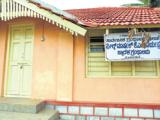
K M Cariappa’s ancestral house which houses a public library is not much use to the public. How many of students and general public are benefited from it is a big question. Teachers and students have expressed displeasure as the library remain open only on a few days.

cariappaLibraryKF13apr2013
It was former Chief Minister J H Patel who inaugurated the library in 1999.

Prior to the library, the building was functioning as a Nada Kacheri. It was the ancestral house of first commander in chief of Indian army Field Marshal Cariappa.
The board which is hung outside the building reads as Field Marshal K M Cariappa Memorial building.

The board reminds us that the house was the place where Cariappa was born. A few wants the building to remain as a library. However, a few wants to install a bust in front of the house.

If the library continue to function, then it will help the public, said teachers.
There are over 10,000 books in the library. The library has 281 members. The membership fee is Rs 30. There is one librarian. The library purchases newspapers.
However, it remains closed throughout the day. It will be open only on three days in a week till 12.30 pm.

The public said it would be better if the library is kept open in the evening.
Rangubai Vittalrao, member of the library said “there are good books available in the library. However, many in the town do not have habit of reading. The timings of the library is not suitable for the general public. It should remain open on all the days in a week after 2 pm.”

R K Narayana, a member of K M Cariappa memorial library for the last 15 years said “the library has not been much use to the public. Out of 281 members, only 50 visit the library regularly.”

source: http://www.deccanherald.com / Deccan Herald / Home> District / Shanivarasanthe, DHNS – March 19th, 2013

Badlapur Boys

Credits

Director: A Muthu
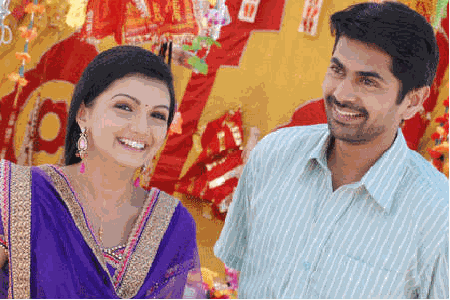
Cast: Nishan Nanaiah, Saranya Mohan, Annu Kapoor, Aman Verma, Kishore Sahani, Pooja Gupta, Ankit Sharma, Boloram Das Shashant Udapurkar, Sushant Khandiya ,Shashi Chaturvedi Nitin Jadhav, Mazar Khan , Preet Saluja, Varun Kashyap Banner: Karrm Entertainment Producer: A. Muthu, Salim Tanvar Story, Screenplay: Shailesh Verma Background Music: Monty Sharma Music: Sachin Gupta, Sameer Tandon, Raju Sardar Lyricist: Sameer Anjan Choreographer: Vickas Sharma Costume: Supraba Jain Editor: A Muthu Cinematographer: Sanket Shah Action: Parvez Khan Art: Nitin Wable Genre: Social, Family Drama, Sports

( Badlapur Boys )
( Badlapur Boys )

Synopsis

Film ‘Veenila Kabadi’, a Tamil super hit film which was directed by Susindran in 2009 is
now being remade in bollywood and it will be called ‘Badlapur Boys’. Bollywood editor A Muthu who has edited more than 50 films like Sadak, Deewana, Balwan, Raja Babu, Judwa, Ziddi, Haseena Maan Jayegi has taken the remake rights of film ‘Veenila Kabadi’ and turns producer with this film.

Badlapur Boys deals with a plot of social family romantic drama with sports as a backdrop and the lead hero Nishan states it’s a very simple film and people who have dreams of being successful will surely connect with the subject.

source: http://www.articles.timesofindia.indiatimes.com / Home> Entertainment> Previews / TNN / April 01st, 2013

Eagle eye on birds of prey

Kiran Pooncha.
Kiran Pooncha.

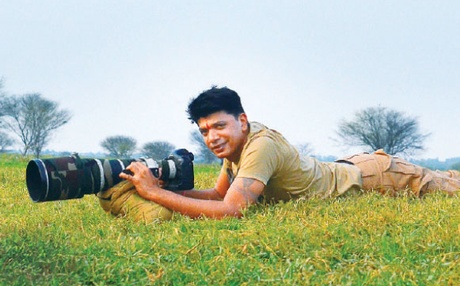
From sketching to photography could be considered a natural transition, but switching from land acquisition to bird photography and conservation is a paradigm shift. Kiran Poonacha from Bangalore has not only made that shift but also crowned it with international laurels and appreciation from the world’s best bird photographers.

Known as the raptor man of India, Pooncha is a born conservationist, rescuing and carrying out documentation work on raptors, especially eagles in various corners of India. It also gives him an opportunity to capture the majestic birds in action. Says Pooncha, “I love their temperament, their style, their enormous power and majesticity. I want to share my moments with these powerful yet graceful birds with everybody.”

Unlike visualisation by other photographers, his image of the winged wonders stands out because they are captured when in action and that is what gives life to the pictures. The birds taking off, flying, diving, swooping, hunting, feeding, nurturing, he has caught all these with the right background and foreground, surreal lighting, great precision and artistic imagery. “Capturing birds in flight is technically very challenging but it is such rare movements that interest people and also stays in their memory. I’m also pursuing my passion in my hometown Coorg. This is a tribute to what I have been exposed to during my early years while growing up in Madikeri. I sincerely hope my photographs will help influence people conserve birds by restoring their natural habitat,” says Pooncha with a smile.

Hailing from a family of nature lovers and born and bred in the hill district of Coorg, a place abounding with rare and beautiful species of birds, Pooncha was inspired to start birding at the tender age of seven. Chikkaballapur, where he did his schooling and a nearby place called Gudibande with rocky terrain and scrub forests that support a variety of avians, played an important role in igniting his interest. Midway for 15 years, he missed nurturing these winged wonders in their habitat as he was busy with his education and professional duties but now nothing seems to stop him in his pursuit.

“I patiently bided for the time when I could go back to the world of birds. In 2006, Neeta, my wife and birding partner, gifted me a camera and that is when my passion for capturing my love for birds began. Coinciding with this, I met a couple of people through a social networking website who shared similar interests. These incidents gave me a second chance to pursue my passion to visualise birds in a permanent frame,” says Pooncha.

Pooncha became a member of India Nature Watch that supports well-known photographers from across the country for sharing their work on their website. This exposure played an important role in helping him to improve his photographic skills. He purchased his first DSLR camera in 2007 and his dear friend and boss Kumar Babu gifted a zoom lens and that is when he started concentrating on his chosen hobby, bird photography.

“I have done extensive studies on birds since childhood. I have raised pigeons, kites, parakeets, and sparrows, looked after injured birds, tending to their broken wings and spoon-fed them. Not all survived, however, one injured black kite would not part from me even after two years,” says the raptor man. Pooncha proudly adds, “I can tell you the spots where ea gles can be found, where they hunt, breed and Bangalore is filled with raptors—tawny eagles, snake eagles, boneless eagles, Indian spotted eagles and many more species.”

Now, every holiday and weekend is taken up by trips to scrub forests and wetlands around Bangalore in search of eagles. His favourite haunts on the outskirts of the city include Hessarghatta, T G Halli, Bannerghatta forests, Gudibande and Hoskote.

Over the years, his portfolio on raptors has attracted international attention and awards as some of the images are pretty rare, hitherto never captured on camera. Dedicated to studying these birds, Pooncha says, “My social life is a big zero as all my time is taken up either following them through thorny jungles or standing in slimy wetlands for days together, hoping for the best shot.”

Recollecting his experiences, he says, “Once I was following a Bar Headed Geese near Talkad near Mysore when a snake wound up around my leg. My position was so treacherous that neither could I leave my subject nor ignore the reptile. But fortunately, after two hours, the snake slinked away. Another time, I had to sit in the water for hours together to get a Little Grebe in action. Some images like two snakes fighting for territory at Hessarghatta, a snake eagle hovering between death and new life and falcons at Kolar for whom I waited for three years are still fresh in my mind.”

Pooncha’s dream project, a birding resort on a 30-acre land surrounded by Pushpagiri Hills near Madikeri will soon be a reality. He is hoping to bring renowned experts like Arthur Morris, popularly called “father of bird photography”, Doug Brown and others for workshops on bird photography apart from giving an opportunity to youngsters to know more about birds.

Decrying the nation’s obsession with big mammals, Pooncha appeals, “Birds need our help. They play a very important role in the food chain, pollination and of course, they are the natural scavengers of the earth. We have to look beyond tigers and elephants as India has thousands of species that needs protection at all levels. If I can convince hundred people to conserve nature in and around Bangalore, it will be a small beginning to save these helpless avians.”

source: http://www.newindianexpress.com / The New Indian Express / Home> Magazine / by Meera Bhardwaj / March 31st, 2013