A one-day branding and marketing awareness programme was held in Kushalnagar in Kodagu district on 10 August 2026 for around 150 tailor beneficiaries registered under the PM Vishwakarma scheme. The programme covered Artificial Intelligence tools, digital marketing, e-commerce onboarding, QR code generation, and registration on the Udyam Portal.
PM Vishwakarma Scheme
The PM Vishwakarma scheme is a Central Sector scheme of the Union Ministry of Micro, Small and Medium Enterprises. It covers 18 traditional trades, including tailor, carpenter, blacksmith, goldsmith, potter, sculptor, and basket maker.
MSME-DFO and district-level outreach
The Branch MSME Development and Facilitation Office, Mangaluru, organised the programme in association with the Kushalnagar Taluk Tailors’ Association. Sundar Sherigar, Assistant Director and Head of Office at the Branch MSME-DFO Mangaluru, presided over the session.
PMEGP and Udyam Portal
Hanumatharaya, Joint Director of the District Industries Centre, Madikeri, briefed participants on the features, eligibility, and financial assistance application process under the Prime Minister’s Employment Generation Programme. The Udyam Portal is the Government of India’s online registration system for micro, small and medium enterprises.
Important Facts for Exams
The Ministry of Micro, Small and Medium Enterprises administers several enterprise support schemes for artisans and micro-enterprises in India.
PMEGP stands for Prime Minister’s Employment Generation Programme.
QR code-based payments are part of India’s digital commerce ecosystem under the Unified Payments Interface and other payment systems.
Artificial Intelligence tools are increasingly used in digital marketing, customer outreach, and product listing on e-commerce platforms.
Local artisan associations
The event involved the Kushalnagar Taluk Tailors’ Association and the Kodagu District Tailors Association. Suman S. Raju, Assistant Director and programme coordinator, explained the execution stages and benefits of the PM Vishwakarma scheme.
source: http://www.gktoday.in /GK Today / Home> Current Affairs Today> Latest Current Affairs / by August 11th, 2026
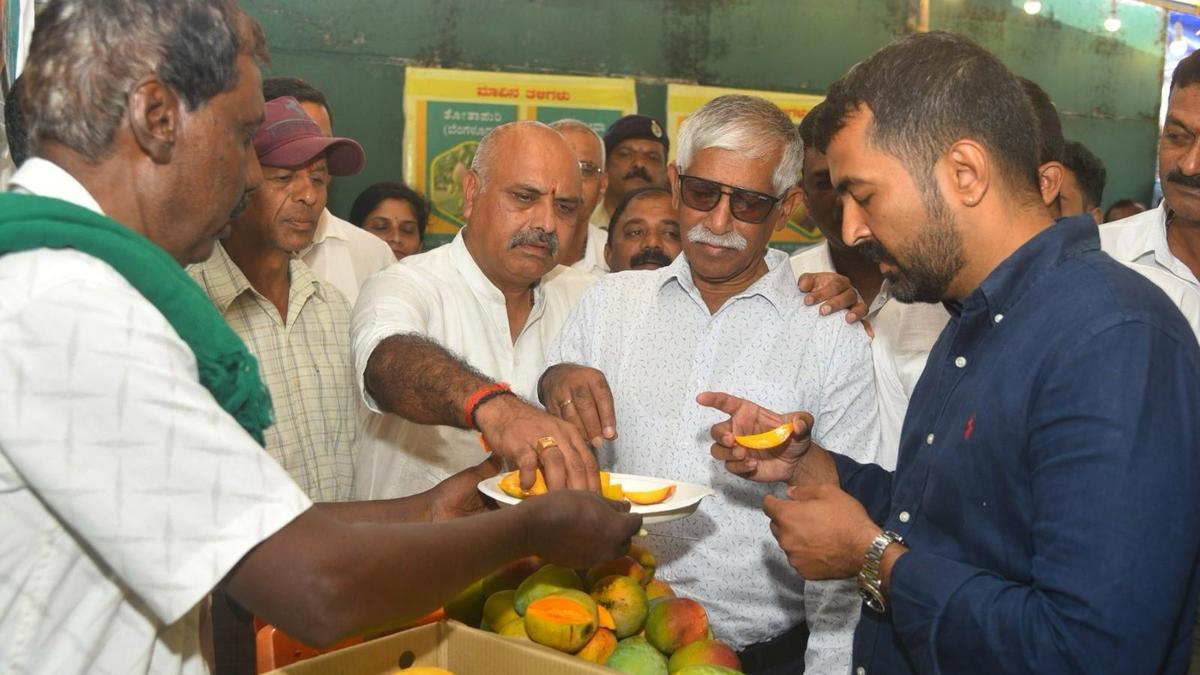
Mantar Gowda, Madikeri MLA, and others after inaugurating the three-day mango mela in Madikeri on Friday. | Photo Credit: SPECIAL ARRANGEMENT
A three-day Mango and Jackfruit Mela got off to a start in Madikeri on Friday, drawing visitors with over 20 mango stalls, exotic fruit varieties and direct sales from growers.
The sixth edition of the mela, organised by the district administration, Zilla Panchayat, Department of Horticulture and Kodagu HOPCOMS at the HOPCOMS premises in Madikeri, was inaugurated by Madikeri MLA Mantar Gowda, who launched the event by tasting mangoes and interacting with growers.
The mela features around 20 mango stalls, two jackfruit stalls and several outlets displaying fruit saplings, vegetable seeds and flowering plants. Farmers directly marketing produce from their orchards emerged as an attraction.
Mantar Gowda inspected various mango varieties, including Badami, Imam Pasand, Alphonso, Kesar, Dasheri, Mallika, Malgova, Sindhoora, Raspuri, Totapuri, Kalapadi, Sakkaregutti and Rumani. He also visited stalls displaying jackfruit varieties and exotic fruits such as mangosteen and rambutan.
Speaking to reporters, the MLA stressed the need to promote horticulture crops and organise training programmes for farmers in Kodagu.
He said the district, known for crops such as coffee, cardamom and pepper, was also witnessing cultivation of arecanut, butter fruit and wild mango, and suggested that farmers should increasingly focus on alternative crops in view of the region’s high rainfall.
Mr. Gowda also proposed leasing nearly 100 acres of land under the Horticulture Department at Madapura to farmers to improve utilisation and generate higher income.
He also announced plans to hold training programmes for mango growers to encourage mango and jackfruit cultivation in the district.
Several mango varieties are available at the mela, with prices ranging from ₹40 per kg for Totapuri to ₹200 per kg for premium varieties such as Imam Pasand, Kesar, Malgova and Sakkaregutti. Alphonso is priced at ₹150 per kg, while Badami and Raspuri are selling at ₹100 per kg.
Representatives of HOPCOMS, officials from the Horticulture Department, elected representatives and local officials were present at the inaugural event.
source: http://www.thehindu.com / The Hindu/ Home> News> India> Karnataka / by The Hindu Bureau / May 22nd, 2026
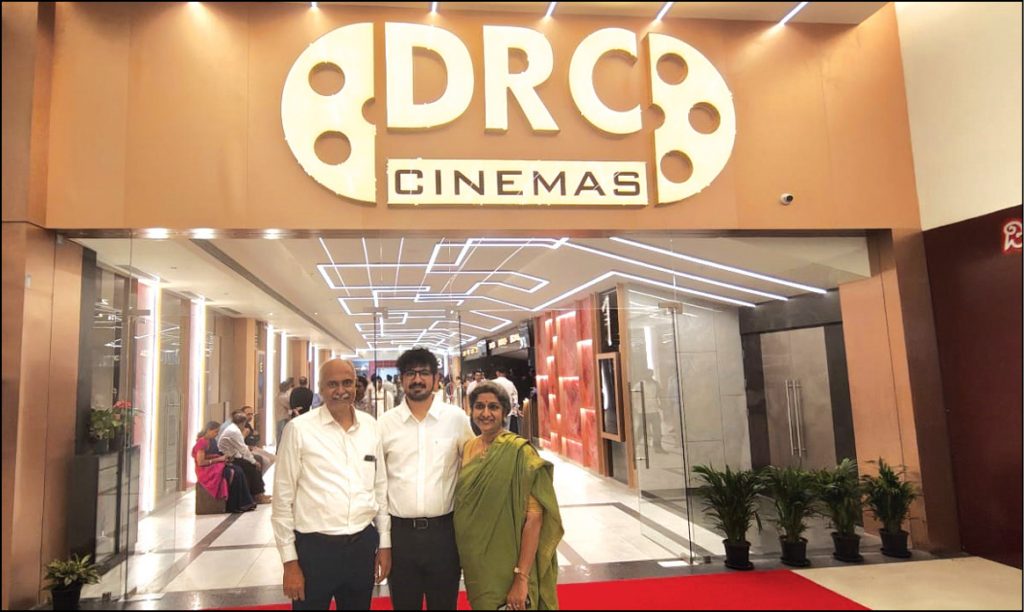
DRC Cinemas, one of the sought after multiplexes of Mysureans since its inception at B.M. Habitat Mall in Jayalakshmipuram in Mysuru in 2011, has opened its first ever branch at Kushalnagar in Kodagu. The inauguration of DRC Cinemas, Kushalnagar was held this morning.
The multiplex is located on the first floor of Reliance Smart Bazaar near Tavarekere in the town.
DRC Cinemas has a total of three screens combining 651 seats. Screen 1 and Screen 2 have a total of 203 seats each with 13 gold and 190 gold (recliner) seats while Screen 3 has 246 seats with 16 gold (recliner seats).
Speaking to Star of Mysore, DRC Cinemas Managing Partner Vyshali Hanumanth expressing happiness of DRC opening in Kushalnagar, said that the multiplex would become a weekend get away for the people of Kushalnagar and nearby towns as it is in the prime location.
She also assured that DRC Cinemas would be offering a blockbuster of an experience to the cine lovers of that part of Kushalnagar. The invitees, who visited the DRC Cinemas got a glimpse of the newly built multiplex and cafeteria. The screening of movies is likely to start from June 19.
DRC Cinemas Managing Partners C.R. Hanumanth, Vyshali, and C.H. Krishna Rao were present.
source: http://www.star of mysore.com / Star of Mysore / Home> News / June 13th, 2026
In a major boost to road infrastructure in tourism-dependent Kodagu district, the Centre has sanctioned ₹22 crore under the Central Road and Infrastructure Fund (CRF) for the development of three key State highways.
Announcing the allocation on Wednesday, Mysuru-Kodagu MP Yaduveer Krishnadatta Chamaraja Wadiyar said the funding would improve connectivity across important stretches in Somwarpet, Madikeri and Virajpet taluks, benefiting residents, farmers, students, businesses and tourists.
Mr. Wadiyar thanked Union Minister for Road Transport and Highways Nitin Gadkari and the Government of India for responding to Kodagu’s long-pending infrastructure requirements.
Of the total allocation, ₹10 crore has been earmarked for the improvement of selected stretches of the Madikeri-Kutta State Highway (SH-89). Another ₹6 crore has been sanctioned for the development of the Kodlipet-Hebbale Road (SH-244) in Somwarpet taluk, while ₹6 crore will be used to upgrade portions of the Talacauvery Road (SH-90) in Virajpet taluk.
According to the sanctioned proposal, works on SH-244 will cover selected stretches between 16.70 km and 30.00 km, connecting Gopalapura, Banavara Hebbale, Mullur and Malambi villages. On SH-89, improvements will be undertaken along different stretches. The Talacauvery Road project will cover selected portions between 51.00 km and 61.00 km.
Mr. Wadiyar said the projects would improve road safety and travel comfort and increase transport efficiency across the district. Better road infrastructure would also support tourism, facilitate the movement of agricultural produce and strengthen local economic activity, he added.
In the recent years, there was a growing demand from the people for improved road connectivity in Kodagu, one of Karnataka’s premier tourist destinations and a major producer of coffee and spices. The Central funding is expected to upgrade several road stretches that have long awaited improvement.
Mr. Wadiyar reiterated his commitment to securing additional infrastructure investments for the Mysuru-Kodagu constituency and added that efforts would continue to bring more development projects to the region.
source: http://www.thehindu.com / The Hindu / Home> News> India> Karnataka / by The Hindu Bureau / June 10th, 2026
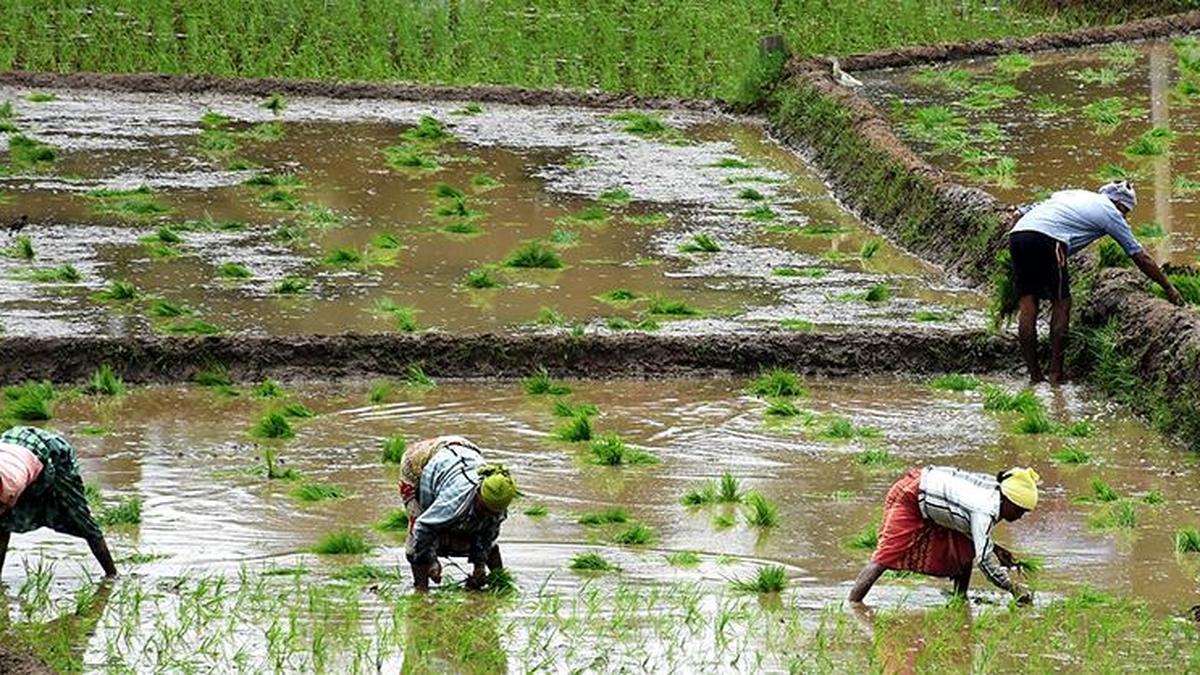
Sowing in Mysuru district | Photo Credit: File photo
A sharp deficit in pre-monsoon rainfall across southern Karnataka has raised concerns ahead of the onset of the southwest monsoon, with key districts in the Mysuru region, particularly Kodagu and Mysuru, recording significant shortfalls that could affect preparation for kharif sowing.
Data released by the Karnataka State Natural Disaster Monitoring Centre (KSNDMC) as of May 27 shows that South Interior Karnataka received 106 mm of rainfall against the normal 125 mm during the pre-monsoon period from March 1 to May 27, registering a deficit of 16 per cent.
Among the districts in the Mysuru region, the data said, Kodagu recorded the steepest decline, receiving only 106 mm rainfall against the normal 220 mm – a deficit of 52 per cent. Mysuru followed with 89 mm against the normal 184 mm, recording a 51 per cent shortage. Mandya received 96 mm against the normal 146 mm, registering a shortfall of 34 per cent, while Chamarajanagar received 140 mm against the expected 181 mm, reflecting a 22 per cent deficit.
The shortfall was more noticeable in April. Mysuru district received only 10 mm rainfall against the normal 66 mm, recording an 85 per cent deficit. Kodagu registered a 76 per cent shortfall, followed by Chamarajanagar at 75 per cent and Mandya at 59 per cent.
Although rainfall activity improved marginally in May, it remained insufficient to offset the earlier deficit. Between May 1 and 27, Mysuru received 65 mm rainfall against the normal 103 mm, registering a 37 per cent shortfall, while Kodagu received 64 mm against 114 mm, a deficit of 44 per cent. Mandya and Chamarajanagar fared relatively better, receiving 62 mm and 105 mm respectively.
The data also showed significant rainfall deficits in Hassan and Dakshina Kannada districts.
source: http://www.thehindu.com / The Hindu / Home > News> India> Karnataka / by The Hindu Bureau / May 27th, 2026
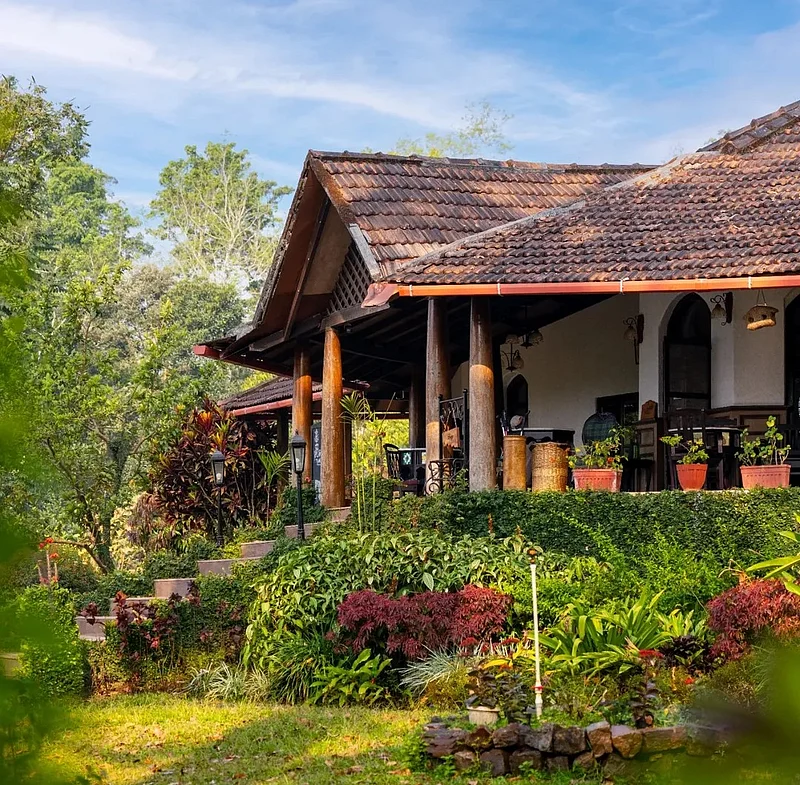
Plantation stays in Coorg offer immersive escapes set within working coffee estates. Blending heritage bungalows, villas and homely retreats, they invite travellers to slow down and experience life shaped by nature, mist, and coffee culture.
Shutterstock : Book a stay in the coffee and pepper plantations of Coorg
Coorg’s plantation stays sit within working coffee and spice estates, offering quiet retreats shaped by the landscape. From heritage bungalows to hillside cottages, each stay reflects a slower rhythm of life rooted in nature, local culture, and the everyday workings of the plantation.
Old Kent Estates & Spa, Madikeri
Old Kent Estates & Spa was established in 1864. Photo: oldkentestates/Instagram
Set within a 200-acre coffee and spice estate in Suntikoppa, Old Kent Estates & Spa offers a refined plantation retreat shaped by Coorg’s colonial past. Established in 1864 by British Lieutenant Colonel WR Wright, the property preserves the character of a historic planter’s residence while introducing contemporary comforts. Surrounded by coffee bushes, cardamom groves and towering teak trees, the estate remains deeply connected to the landscape that defines Kodagu.
Design & Spaces
The estate blends British colonial architecture with Tudor Revival influences, featuring deep verandahs, period detailing and heritage-inspired interiors.
The restored nineteenth-century bungalow, known as The Lodge, houses a library, games room, home theatre, and a formal dining space.
Walking trails designed by Italian mountaineer Lorenzo Gariano wind through coffee, cardamom and pepper plantations shaded by teak, rosewood, and mahogany trees.
Accommodation includes a mix of heritage lodge rooms and expansive English-style cottages set across the plantation. The cottages feature private gardens, spacious living areas, and large bathrooms equipped with jacuzzis, rain showers, and traditional bucket baths.
Amenities
Guests can explore guided plantation trails, birdwatching routes and nature walks across the estate’s 200 acres.
The property also offers a spa, movie room, library, outdoor games and telescope-assisted stargazing experiences.
Dining at The Perch and Gordon’s Saloon focuses on multi-cuisine fare alongside freshly ground estate coffee and locally sourced ingredients.
The Information
Address: Thaikappa Estate, Horoor Post, Old Kent Estate Rd, Suntikoppa, Kodagu, Karnataka 571237
Room Rates: Approximately INR 7,000–12,000 per night, depending on season, taxes and inclusions
Website: www.oldkentresorts.com
Evolve Back Coorg
Evolve Back Coorg offers a deeply immersive plantation stay – Photo: evolvebackcoorg/Instagram
Set within a 300-acre working coffee and spice estate near Virajpet, Evolve Back Coorg offers a deeply immersive plantation stay shaped by the landscape of Kodagu. Formerly known as Orange County, the resort combines eco-conscious luxury with traditional Kodava design design and a strong connection to plantation life. Surrounded by dense greenery, the property focuses on quiet, nature-led experiences rather than overt indulgence.
Design & Spaces
The resort draws inspiration from traditional Kodava architecture, with tiled roofs, carved wooden doors, rustic interiors and earthy textures that blend seamlessly into the surrounding plantations.
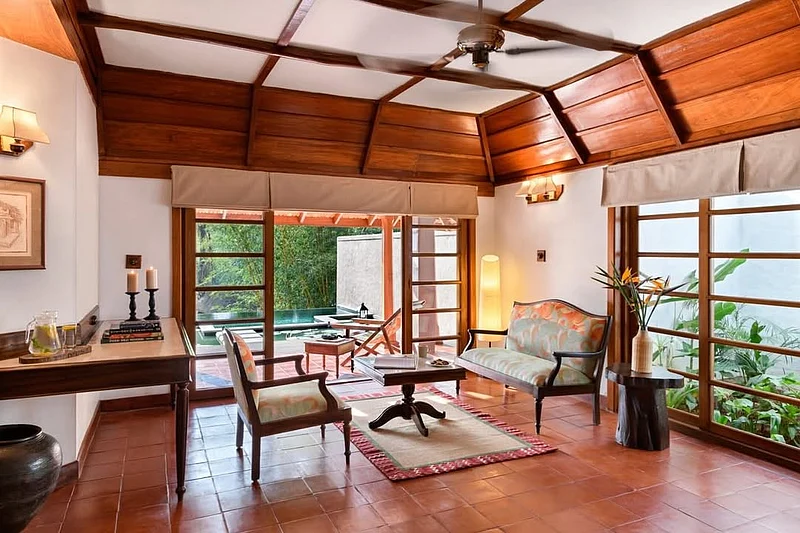
Accommodation includes Lily Pool Villas and Heritage Pool Villas, featuring private pools, spacious living areas, four-poster beds, red oxide flooring and plantation-facing sit-outs designed for privacy and quiet.
Guided plantation walks, coffeeology sessions and birdwatching trails allow guests to engage closely with the estate’s coffee and spice-growing landscape.
Amenities
Dining options include The Granary for multi-cuisine fare and Peppercorn, a speciality grill restaurant overlooking the plantation lake.
The property also features the Ayura Ayurvedic centre, infinity and family pools, a reading lounge and a Coffee and Culture Museum dedicated to Coorg’s plantation heritage.
The Information
Address: Chikkana Halli Estate, Karadigodu Post, Siddapur, Virajpet, Kodagu, Karnataka 571253 Room Rates: Rates generally start from approximately INR 29,750–35,000 per night per couple, including accommodation, breakfast, dinner and taxes. Seasonal offers for longer stays may include resort credits and discounted pricing. Website: www.evolveback.com/coorg/
The Tamara Coorg
The resort combines eco-conscious luxury with a strong sense of place / Photo: thetamaracoorg/Instagram
Perched more than 3,500 feet above sea level in the Western Ghats, The Tamara Coorgoffers an immersive plantation retreat within a 180-acre coffee, cardamom and pepper estate. The resort combines eco-conscious luxury with a strong sense of place, allowing guests to experience the rhythms of estate life while surrounded by dense forest and rolling hills. With sustainability at its core, the property focuses on quiet, nature-led hospitality shaped by the landscape of Coorg.
Design & Spaces
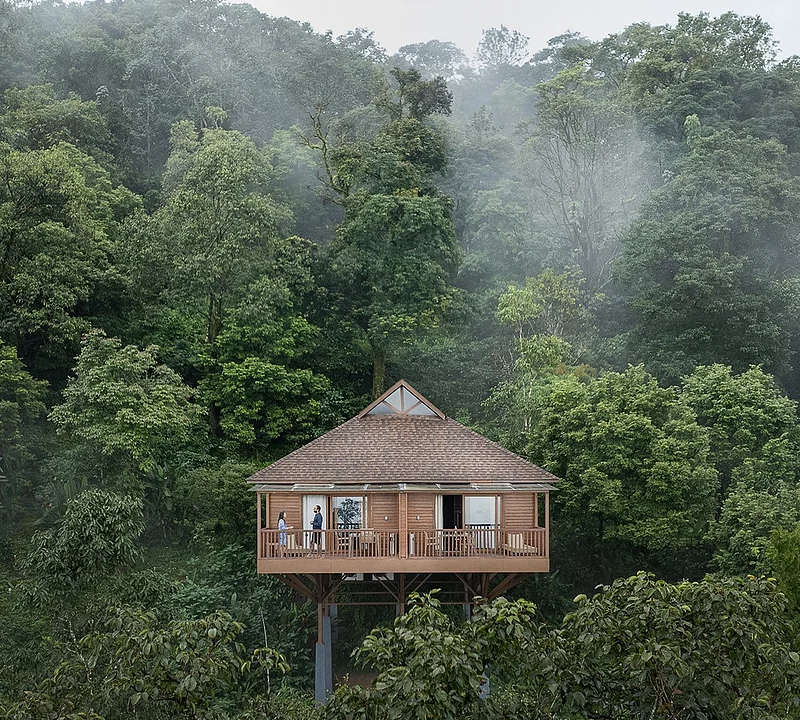
The resort features 56 cottages built on timber stilts to preserve the natural terrain, with architecture inspired by traditional Kerala design and crafted largely from Canadian spruce wood.
Accommodation ranges from Luxury Cottages to spacious suites with private Jacuzzis, all featuring large sundecks overlooking forest canopies, hillsides and seasonal waterfalls.
Plantation walks, coffee-tasting sessions and the signature Blossom to Brew experience introduce guests to the estate’s coffee-growing heritage, while The Verandah — a restored nineteenth-century workers’ residence — now serves as a library and tasting space.
Amenities
Guided treks, birdwatching trails, forest therapy walks and seasonal waterfall explorations form a key part of the experience at the resort.
Dining focuses on fresh, estate-grown ingredients and regional Kodava cuisine, alongside a range of Indian and international dishes.
Sustainability initiatives include organic farming, waste management systems and a no-plastic philosophy integrated across the property.
The Information
Address: The Tamara Coorg, Kabbinakad Estate, Yevakapadi, Napoklu, Madikeri, Karnataka 571212 Room Rates: Rates generally start from approximately INR 25,245 per night for two adults, with pricing varying by cottage category and season. Website: www.thetamara.com/coorg-resort/
Amni Estate
Amni Estates offers a deeply secluded stay centred on simplicity, nature and slow living / Photo: amni.coorg/Instagram
Hidden within a coffee plantation in the hills of Coorg, Amni Estate offers a deeply secluded stay centred on simplicity, nature and slow living. Family-run and entirely off-grid, the property trades conventional luxury for silence, rugged beauty and an intimate connection with the surrounding landscape. With its antique-filled interiors and misty plantation setting, the estate feels closer to a private countryside retreat than a typical homestay.
Design & Spaces
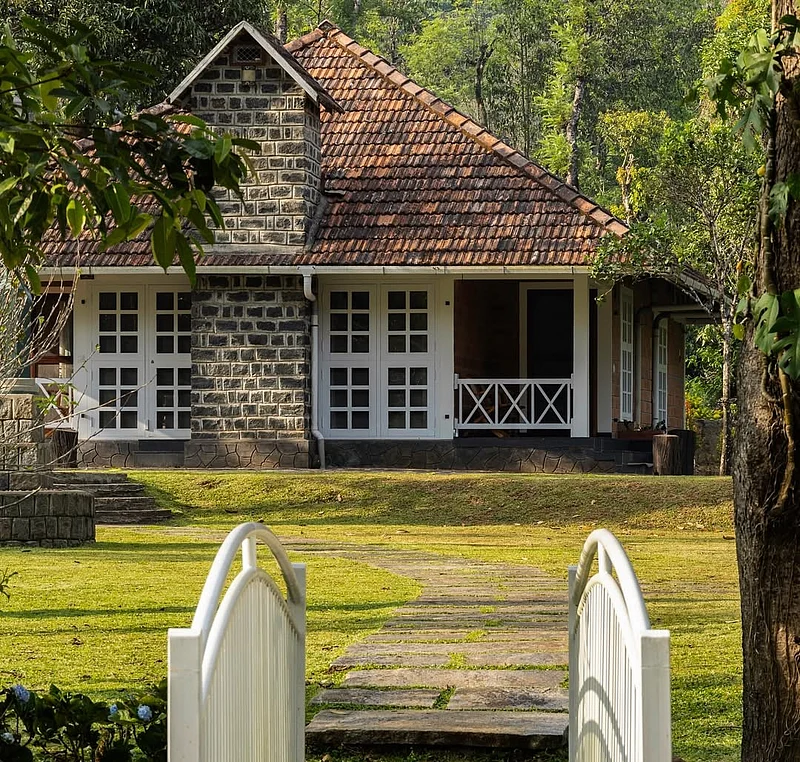
The property features stone cottages built across grassy slopes in the Balyaatra range, designed to blend naturally into the plantation landscape.
Interiors are layered with antiques collected over decades, including Victorian lamp posts, cast iron fountains and reclaimed railway sleepers that give the estate its old-world character.
Accommodation is centred around a two-bedroom cottage suited to small groups, with quiet corners, hammocks and open spaces that encourage guests to slow down and settle into estate life.
Amenities
Guided walks through the coffee and spice plantations offer a closer look at the estate’s flora, seasonal produce and surrounding forests.
Guests can spend their time fishing in the pond, gathering around bonfires or simply exploring the grounds alongside Zeiss, the estate’s well-known resident dog.
Meals are home-cooked and rooted in traditional Kodava cuisine, with family recipes and locally sourced ingredients forming the heart of the dining experience.
The Information
Address: Guyya (near Galibeedu), Madikeri, Kodagu, Karnataka Room Rates: Rates are generally around INR 12,000+ per night for two, inclusive of meals and curated activities, depending on season and group size. Website / Instagram: @amni.coorg
Silver Brook Estate
Silver Brook Estate is a quiet homestay shaped by forested greens, silver oaks and a stream / Photo: silverbrook.homestay/Instagram
Tucked into a 6-acre coffee plantation in Kadagadal, near Madikeri, Silver Brook Estate is a quiet homestay shaped by forested greens, silver oaks and a stream that runs through the property. The setting feels intimate and unhurried, with bird calls, plantation paths and open sit-outs defining the rhythm of the stay. It is designed for travellers looking for a simple, nature-led break close to town.
Design & Spaces
The estate is spread across coffee plantations shaded by silver oak, pepper vines and fruit trees, with a natural brook running through the grounds.
Accommodation is set within a main bungalow and select rooms, designed for small groups, couples and families seeking a homely plantation setting.
Common areas include a library, hammocks and open garden spaces that encourage slow, outdoor living within the estate.
Amenities
Home-style Kodava meals are a highlight, with traditional dishes such as pandi curry and pepper chicken served by the hosts.
The property supports relaxed activities like estate walks, birdwatching and bonfire evenings in the open courtyard.
Its location makes it convenient for day trips to nearby attractions such as Abbey Falls, Dubare Elephant Camp and Nagarhole National Park.
The Information
Address: Kadagadal, near Madikeri, Kodagu, Karnataka
Room Rates: Typically range between INR 5,800–7,400 per night for double occupancy, often including breakfast (season and room type dependent).
Website: www.silverbrookestate.in/home
FAQs
What is a plantation stay in Coorg? A stay set within working coffee or spice estates, offering quiet surroundings, nature views and a slower pace compared to typical resorts.
Best time to visit? October to March is ideal for pleasant weather. Monsoon (June to September) is lush but rain-heavy.
How do you reach these stays? Most require private taxis or self-drive vehicles, as they are located outside town areas and deep within estates.
What activities are offered? Plantation walks, birdwatching, coffee tours, spa treatments, and nature experiences are most common.
Do I need to book in advance? Yes, especially during peak season and weekends due to limited rooms.
What should I pack? Comfortable walking shoes, light layers, insect repellent, and rain protection during monsoon.
source: http://www.outlooktraveller.com / Outlook Traveller / Home> Story / by OT Staff / curated by Anuradha Sengupta / May 18th, 2026
Set amid coffee and spice farms in South India’s Coorg Region, the new resort will be part of The Leela Palaces, Hotels and Resorts’ portfolio.
The Leela Coorg Forest Sanctuary. / Credit: The Leela Palaces, Hotels and Resorts
Key Points:
The Leela Coorg Forest Sanctuary will feature 71 private villas surrounded by lush greenery and coffee estates near Madikeri, in Karnataka’s Coorg region.
Guests will enjoy wellness experiences such as yoga, Ayurvedic therapies, and a Turkish hammam at a 27,000-square-foot spa, along with access to a lake and family-friendly amenities.
The resort reflects the brand’s shift toward nature-focused retreats, offering privacy and restoration in a serene setting.
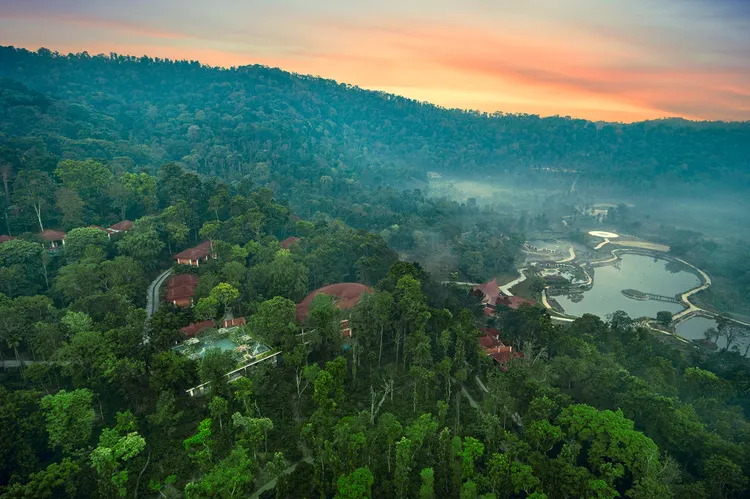
A new luxury retreat is coming to one of South India’s atmospheric hill regions. Later this year, The Leela Palaces, Hotels and Resorts, a 2025 Global Vision Awards winner , will launch The Leela Coorg Forest Sanctuary, a 76-acre, all-villa hideaway set amid coffee estates and misty, forested hills near Madikeri, in Karnataka’s Coorg region.
“The Leela Coorg Forest Sanctuary offers a rare synthesis of wilderness, wellness, and warmth of true Indian luxury for travelers who seek space, stillness, and a genuine connection to nature,” Anuraag Bhatnagar, the brand’s chief executive officer, shares in a statement shared with Travel + Leisure.
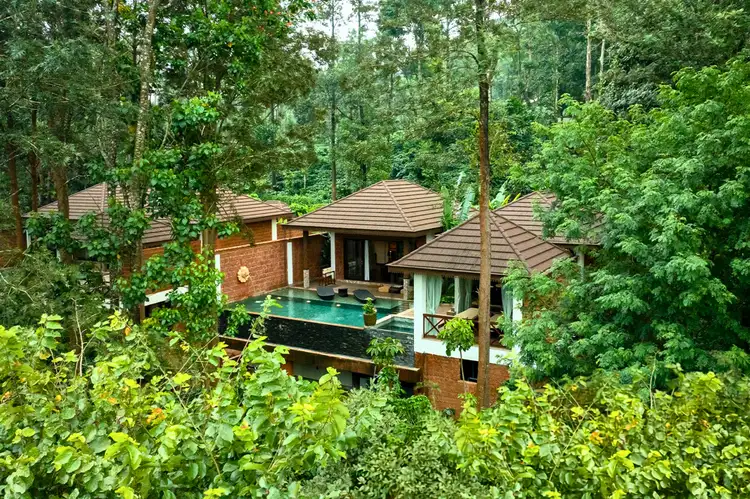
Exterior view of a villa with a private plunge pool. / Credit: Sounak Ghosh / The Leela Palaces, Hotels and Resorts
The resort’s accommodations will include split-level family villas and intimate retreats for couples, all tucked into the surrounding greenery. At the top end, a four-bedroom presidential villa will come with a private pool and wellness facilities.
The setting is a big part of the draw. Coorg, in the Western Ghats, is known for its cooler climate, waterfalls, and rolling spice farms. It’s also one of India’s most important coffee-growing districts. That heritage will show up in the resort’s bean-to-cup coffee programming, including a plantation walk and tasting at Modur, one of Coorg’s oldest coffee estates.
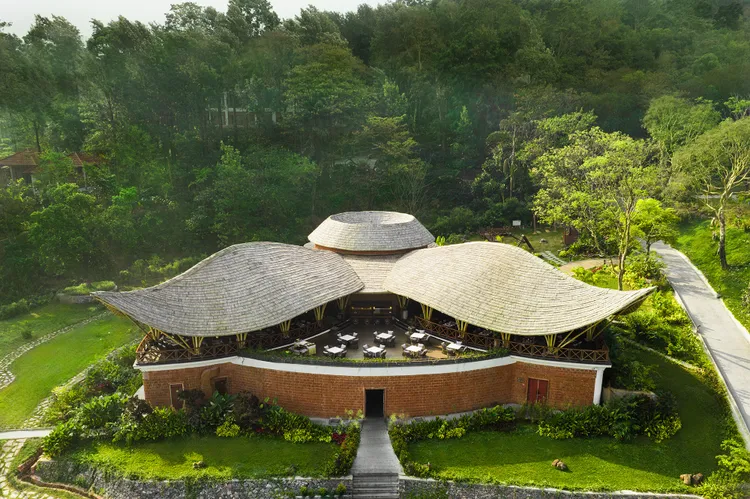
Exterior of the restaurant. / Credit : The Leela Palaces, Hotels and Resorts
On the dining front, the resort is planned with four venues spanning regional and global cooking, including a striking bee-shaped all-day dining restaurant, an overwater dining space, and a lounge.
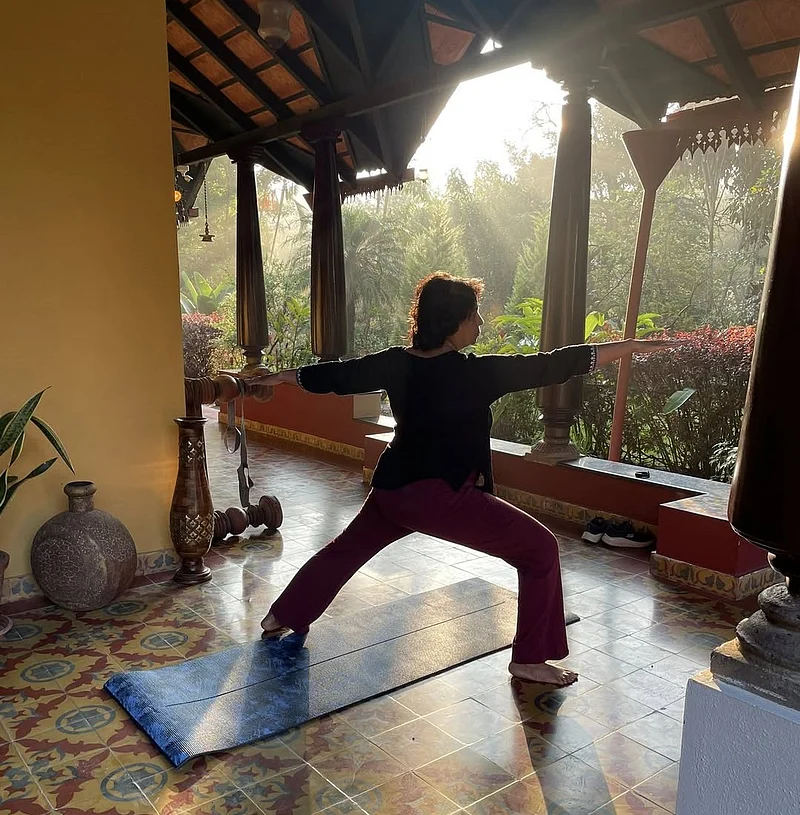
Wellness will be just as central to the experience, too. Aujasya by The Leela Spa, the resort’s 27,000-square-foot sanctuary drawing inspiration from the brand’s signature wellness program, will offer yoga by the lake, pranayama breath control, Ayurvedic and global therapies, Swedish and Balinese massage, aromatherapy, a Turkish hammam, panoramic sauna, steam, Jacuzzi, and relaxation areas.
The Leela Coorg Forest Sanctuary. / Credit: Sounak Ghosh/The Leela Palaces, Hotels and Resorts
The seven-acre lake will allow rowing, fishing, and kayaking. Other planned activities include guided nature walks, birding, cycling, stargazing, and forest trails leading to two natural waterfalls. There will also be a family-friendly outdoor play area.
The project marks a new direction for The Leela. Best known for grand city hotels and palace-style stays, the Indian luxury brand is using the Coorg property to introduce its first Sanctuary, a concept focused on nature, privacy, and restoration rather than polished city glamour. The move comes as the company marks its 40th anniversary and expands further into destination-driven leisure travel.
source: http://www.travelandleisure.com / Travel + Leisure / Home / by Regan Stephen / May 14th, 2026
Coffee Exports Jump 26.6% YoY To 1.74 Lakh Tonnes In Early 2026: Coffee Board
New Delhi, (KNN) :
India’s coffee exports increased 26.6 per cent year-on-year (YoY) to 1.74 lakh tonnes during January–April 2026, led by strong growth in robusta and instant coffee shipments, according to data from the Coffee Board of India.
Exports stood at 1.37 lakh tonnes in the corresponding period last year. India exports a mix of arabica, robusta and instant coffee.
Export Value and Realisations Improve
In value terms, coffee exports rose to Rs 936.57 crore from Rs 757.07 crore a year earlier. Unit value realisation also edged up to Rs 4,94,766 per tonne, compared with Rs 4,75,023 per tonne in the same period last year, PTI reported, citing the coffee board data.
Robusta Leads, Arabica Declines
Robusta exports recorded a sharp 36 per cent rise to 85,168 tonnes, up from 62,736 tonnes a year ago. Instant coffee shipments also increased to 20,332 tonnes from 17,504 tonnes, while re-exports of instant coffee rose to 38,169 tonnes from 30,274 tonnes.
In contrast, arabica exports declined significantly by 58 per cent to 30,589 tonnes, compared with 72,479 tonnes in the year-ago period.
Sector Shows Signs of Structural Shift
Industry experts said India’s coffee sector is gaining momentum in 2026, with its role in the global market gradually evolving beyond its traditional position as a robusta-focused exporter.
Rising export values, higher imports for processing, and steady domestic consumption indicate a sector at a potential turning point.
Record Output Expected
The Coffee Board has projected record production of 4,03,000 tonnes for the 2025–26 crop year (October–September), with output expected to grow across key producing states such as Karnataka, Kerala and Tamil Nadu.
Arabica production is estimated at around 1,18,000 tonnes, while robusta output is expected to exceed 2,84,000 tonnes, supported by improved yields and favourable moisture conditions.
Climate Risks Persist
Despite the positive outlook, experts cautioned that weather volatility and climate-related risks remain key challenges for the sector going forward.
(KNN Bureau)
source: http://www.knnindia.co.in / KNN, Knowledge & News Network / Home> Sector> Export-Import / by KNN Bureau / May 05th, 2026
Despite sufficient time being given to homestay owners, it has been observed that many establishments remain unregistered. | Photo Credit: File Photo
All homestays operating in Kodagu district have been instructed by the Tourism Department authorities to be mandatorily registered.
As per government orders, it is mandatory for all homestays operating in the district to register with the Tourism Department. Despite sufficient time being given to homestay owners, it has been observed that many establishments remain unregistered, said a press statement issued by the office of the Deputy Director of the Tourism Department in Madikeri on Friday.
The instructions by the Tourism Department have come in the wake of an alleged sexual assault on a woman from the U.S. in a homestay in Kodagu district.
Pointing out that the district administration has taken serious note of many homestays remaining unregistered and had earlier directed that all unregistered homestays complete their registration immediately, the Tourism Department said, “Homestays operating without registration must cease all unauthorised activities forthwith.”
Licenses of homestays operating illegally in the district have already been cancelled, the Tourism Department said, before warning that legal action will be initiated against those continuing to operate in violation of the rules, without registration with the Tourism Department.
The homestays that have already obtained licenses from the Tourism Department and whose validity of five years is nearing expiry have also been instructed to renew their licenses.
source: http://www.thehindu.com / The Hindu / Home> News> India> Karnataka / by The Hindu Bureau / May 01st, 2026
The Minister said the mandate for production, development, research and domestic marketing of spices other than cardamom is vested with Ministry of Agriculture & Farmer’s Welfare.
Union Minister for Commerce and Industry Jitin Prasada /Credit: X/@JitinPrasada
New Delhi:
Union Minister of State for Commerce and Industry Jitin Prasada on Tuesday said that black pepper production in Kodagu may increase by about 16 per cent in 2025-26 compared to 2024-25.
Replying Yaduveer Wadiyar question, the Minister said the mandate for production, development, research and domestic marketing of spices other than cardamom is vested with Ministry of Agriculture & Farmer’s Welfare. The Ministry informed that it has conducted a quick pre-harvest survey in Kodagu district which indicates that black pepper production in Kodagu may increase by about 16 per cent in 2025-26 compared to 2024-25, he said.
Spices Board under the “Sustainability in Spice Sector through Progressive, Innovative and Collaborative Interventions for Export Development (SPICED)” scheme provides assistance to the growers of spices, including pepper growers of Kodagu district for post-harvest improvement by providing pepper thresher, graders /cleaners etc, conducting capacity building programmes and undertaking market linkage initiatives organizes buyer seller meets, he said.
He further said at present the import policy for pepper is ‘Prohibited, with a provision permitting import only if the Cost Insurance & Freight (CIF) value is Rs. 500. per kg or above. The said MIP of Rs. 500/kg continues to remain in force and is not applicable to imports under Advance Authorization Scheme for export production, imports by 100% Export Oriented Units (EOU) and units in Special Economic Zones (SEZ) and imports for extraction of oleoresin for re-export by manufacturer-exporters, subject to applicable policy conditions, he said.
source: http://www.deccanherald.com / Deccan Herald / Home> India> Karnataka / by Ajith Athrady / March 11th, 2026
WELCOME. If you like what you see "SUBSCRIBE via EMAIL" to receive FREE regular UPDATES.
Read More »