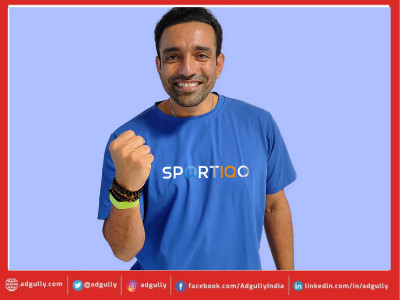
Sportiqo, a blockchain-based fantasy sports platform has announced ace Indian cricketer Robin Uthappa as their brand ambassador. Sportiqo marked the beginning of its operations in India in the month of February and so far, amassed 32,000 active users owing to its beta launch. The stylish batter from Karnataka, Robin is a generational talent, wanted by every cricket league in the world. Uthappa was a part of the Indian squad which won the ICC World T20 in 2007. He is known for his masterful batting performances and his great impact on his team’s success.
Speaking on the association, Robin Uthappa said, “Sportiqo is the perfect platform where I am able to find a cohesive link between sports and technology. The stock market is something that is often portrayed as being meant for a particular segment of the audience but with Sportiqo sports fans across age groups would not only be able to learn how the stock markets work but at the same time be able to use their sporting knowledge and skills to do it in a fun and engaging manner.”
He further added, “Making the youth learn about investing and trading using cricket is a great idea. India needs creative options to improve the financial literacy of the masses and I am glad that Sportiqo is addressing that gap. I am proud to be associated with the platform.”
“We are delighted to welcome Robin Uthappa to the Sportiqo family as our new brand ambassador. He is one of the most exciting cricketers of his era. said Anindya Kar, Chief Product Officer and Co-Founder of Sportiqo. “With his disruptive and instinctively innovative approach to his sport, Robin Uthappa embodies the same pioneering spirit that will drive Sportiqo to keep pushing boundaries in the sector.”
Sportiqo will also launch a host of digital campaigns with Robin Uthappa in the near future.
Sportiqo has so far, raised $1.25 million (Rs. 10 crores) in the pre-seed round from angel investors with a focus on user acquisition in its first phase post-launch. The cricket stock market platform is already live for the ILT20 League, and Pakistan Super League (PSL) and additionally, in the coming time, Sportiqo will add a portfolio of other sports and leagues as well such as the English Premier League and the Indian Premier League among others.
source: http://www.adgully.com / AdGully / Home> Marketing / by Adgully Bureau / March 21st, 2023
Bommai inaugurates Appachattolanda Cup Kodava Hockey Festival at Napoklu
Madikeri:
Chief Minister Basavaraj Bommai said that Kodava Development Corporation, a long-pending demand of the people of the district, will be a reality soon.
“I will issue an order on the setting up of the Kodava Development Corporation at the earliest,” he said after inaugurating the Kodava family hockey tournament hosted by the Appachattolanda family at General Thimayya Stadium in Cheriyaparambu of Napoklu last evening.
“Kodavas are physically strong and protect the nation. The Government is committed to the welfare and growth of the Kodava community and the Kodava Community Development Corporation that will strive exclusively for the overall development of the unique Kodava community has been a long-pending demand from the community and steps would be taken to realise it,” he added.
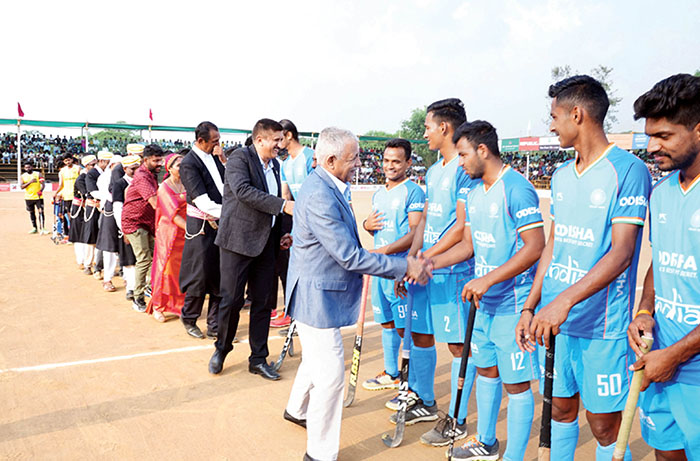
Picture shows former Indian Team hockey coaches M.P. Ganesh and A.B. Subbaiah greeting the players.
Heaping praises on the concept of a family hockey tournament, the CM said that the concept is wonderful and unique and brings Kodava families under one roof. “Kodava families are well-knit families. At a time when relationships are waning, the tourney has helped bring together families. Families should be united and relationships should bring together the people,” he said. “This is a special tournament as it is organised by the Kodava families. These families enjoy a good relationship, and family bond and the heritage of the Kodava community is being promoted through the game of hockey. The culture, tradition, and practices of the Kodavas unite all. Their attire and food are special,” he added.
“It is happy to note that this tournament is going on for the last 23 years. Families must unite and relationships must prosper. This is the culture of India. This kind of tournament is not seen anywhere in the world. Hence, the State Government has released Rs. 1 crore for the tournament,” Bommai said.
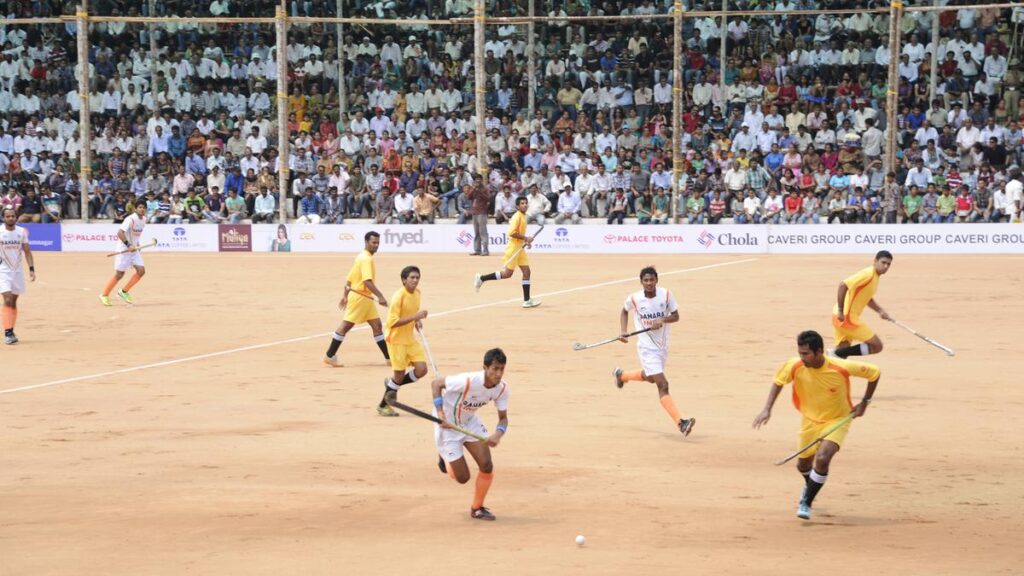
The hockey festival is being held from Mar. 18 to Apr. 9 on three grounds and a record 336 families or teams have registered for it. This is the 23rd edition of the event which had a four-year break from 2018 onwards owing to natural calamities in the district followed by the COVID-19 pandemic.
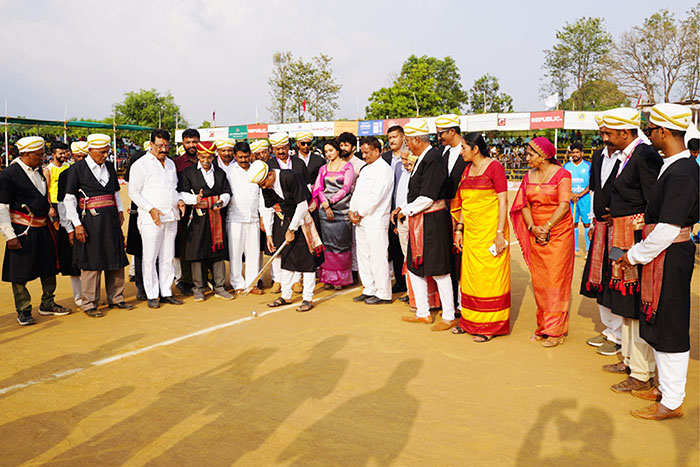
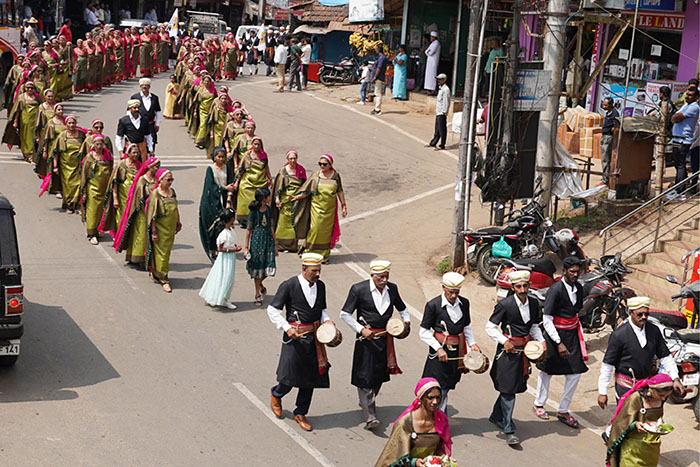
Earlier, the tournament began with a grand procession. Besides this year’s participants, the family teams which have participated in the tournament in the previous years also took part in the procession. Heads of the family teams gave the green signal for the hockey festival by firing 23 rounds of gunshots in the air.
The idea of a family tournament to bring together different Kodava families was conceived by the late Pandanda Kuttappa, popular as Kuttani, and the first edition was held in 1997 and has since then grown into a major event. The first exhibition match was held between the 37th Coorg Field Regiment and Kodava Academy-11. The second exhibition match was held between Indian Junior Hockey team and Karnataka team consisting of Olympian players from Kodagu.
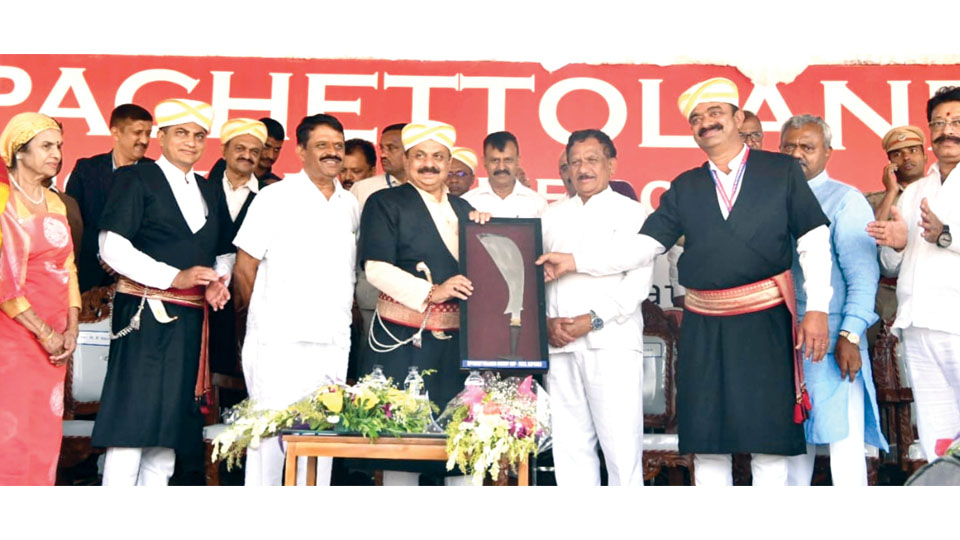
The CM was felicitated by handing over a silver hockey stick and silver ‘odikathi’ on the occasion. Bommai was dressed in Kodava attire, complete with ‘Kupiya-chele’, ‘peechekathi’ and ‘mandethuni’. Several cultural programmes were performed.
Minister S.T. Somashekar, MLAs K.G. Bopaiah, Appachu Ranjan, MP Pratap Simha, MLC Suja Kushalappa, former MLC Veena Achaiah, DC Dr. B.C. Satish, SP Ramarajan, ZP CEO Akash, ADC Nanjundegowda, CCF B. Niranjan Murthy, Kodava Hockey Academy Director Cheeyanda Satya, Hockey Festival Convener Appachattolanda Manu Muthappa, Appachattolanda family Pattedara Erappa, ex-Advocate General and Congress leader A.S. Ponnanna, Bangalore Kodava Samaja President M.T. Nanaiah, Padmashri Rani Machaiah, former hockey coaches M.P. Ganesh and A.B. Subbaiah were present.
source: http://www.starofmysore.com / Star of Mysore / Home> News / March 19th, 2023
The Kodava community in the hilly district conducts the inter-family hockey tournament every year where players from over 200 families participate.
The annual Kodava hockey festival has no bar on age or gender. The only rule of forming a team is that all members must be from the same family. | Photo Credit: File photo
Napoklu, a small town 21 km away from district headquarters Madikeri, is all set to host what is termed the world’s largest field-hockey tournament, as the annual Kodava hockey festival will be held from March 18 to April 9 after a four-year gap.
The town has only three mud grounds. On Thursday, workers were seen preparing the grounds for the tournament, while temporary bleachers were up on all sides of the ground where 30,000 spectators can be accommodated, said Navin, a member of the festival organising committee, while overseeing preparations at the Napoklu General Thimayya Ground.
“In all, three grounds will be utilised for the hockey tournament and they will also be used as a backup in case it rains,” he said. Multiple galleries, lighting, speakers, and display boards have been set up on the ground. An estimated ₹1.5 crore have been spent to organise the event by the family.
The Kodava community in the hilly district conducts the inter-family hockey tournament every year where Kodava players from over 200 families come together to play. From 2018, the hockey festival was not held due to large-scale devastation caused by heavy rainfall and the COVID-19 pandemic.
The sporting event has no bar on age or gender. The only rule of forming a team is that all members must be from the same family.
This year, the Appachettolanda family is organising the tournament under the aegis of Kodava Hockey Academy. “From every family, young boys and girls, men, women, and professionals, and former hockey players who have represented the State or country, will be part of the family team. Through this event, we are bringing all the Kodavas together. Most of the community members who are outside the district working in various professions come to Kodagu to be part of the sporting event like a festival,” said Appachettolanda Manu Muthappa, president of the Hockey Festival Committee.
The late Pandanda Kuttappa conceived the idea of the Kodava family hockey tournament, which morphed into a major sporting event and festival in the country. “Mr. Kuttappa started the Kodava Family Hockey Tournament in 1997 and was organised by the Pandanda family first in a belief that tapping the inherent love among the Kodavas for hockey could help bring the families and the community together,” Mr. Muthappa noted.
The tournament also emerged as a platform for the community members to discuss trade and business interests besides scouting for marital alliances, according to Maletira Srinivas, secretary of Kodava Hockey Academy. “In the first tournament which was held in 1997, nearly 60 teams took part. The format of the tournament was such that every year, one of the Kodava families had to host the event. Now, over 200 families participate where 3,000 players play hockey,” Mr. Srinivas said.
“Starting with the first tournament, the numbers have increased, reaching a high of 281 in 2003, where this event became the world’s largest hockey tournament. Lasting three weeks, it is a single-elimination tournament and concludes on April 9,” he added.
CM to inaugurate
The Kodava Hockey Namme (festival) is hosted by a different family each year and named after it. Families apply to the Kodava Hockey Academy expressing interest and are allotted the tournament after evaluation. There is no permanent venue; the festival has been held across the district in previous years.
On March 18, Chief Minister Basavaraj Bommai will inaugurate the festival, which will open with an exhibition match between India Junior XI and Karnataka Men’s XI. The organisers said the festival is held at an estimated cost of ₹ 1.5 crore all raised through funds. While the winning team of the festival this year will be given a cash prize of ₹3 lakh, the runners-up will get ₹2 lakh, and the second runner-up will get ₹1 lakh.
source: http://www.thehindu.com / The Hindu / Home> News> India> Karnataka / by Darshan Devaiah B P / March 17th, 2023
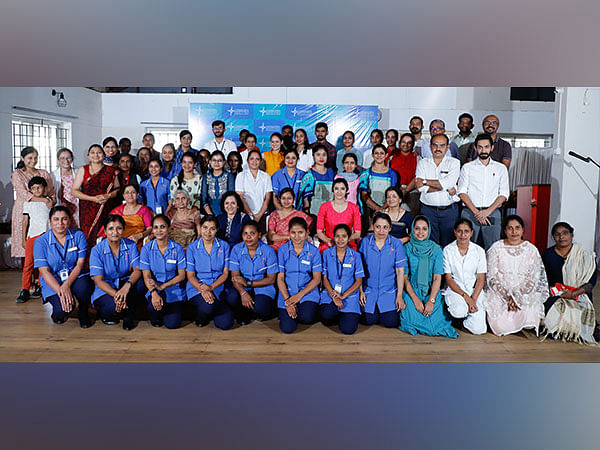
On the occasion of International Women’s Day, Lopamudra Hospitals, Gonikoppal organized a special event to celebrate women.
The event was graced by three renowned women from the region, Dr Gowramma Paruvangada, Consultant OBG at PNM hospitals, with five decades of practice in mother and child care, Dr. Fathima Kariappa, President of IMA Virajpet and Consultant OBG at Virajpet Nursing Home, and Uzma Jabeen, Panchayat Development Officer, the youngest in the district of Kodagu.
The event was presided over by the Managing Directors, Capt. Madappa M. A. and Dr Amrit Nanaiah M.M., a Consultant Physician at the Hospital. Dr Soumya Ganesh Nanaiah the Director of the Lopamudra Drishti Eye Hospital, a Cataract and Refractive Surgeon was present. She also emceed the event. Dr Sonia Mandappa, Consultant OBG, and Dr Trupthi Uthappa, Consultant ENT, were also present.
Speaking of their varied experiences, the Chief Guests enlightened the gathering on a multitude of topics.
Dr. Gowramma Paruvangada spoke about her long-standing commitment to serve women from rural parts of the country and her willingness to contribute more to the society at large. Dr Fathima Kariappa reminisced about how the babies she helped deliver were today doctors at the very Lopamudra Hospitals. She also emphasized the importance of women empowerment in today’s society and the role of family as an institution. Uzma Jabeen highlighted various government schemes available for women and how they could avail the benefits by contacting her.
The event was a sequel to a ‘Women’s Health Camp’ that saw more than 100 women availing the benefits of a health package curated to check overall well-being of women.
On the event of International Women’s Day, the hospital unveiled its new logo and a toll-free number for quick response. The hospital can now be reached at 1800 8333653. They also inaugurated the B Scan recently installed at the eye hospital. The B Scan is the first to be installed in Kodagu district. It can be used to assess the posterior segment of the eye in cases of media opacities and can be useful in cases of advanced cataracts
Dr Ruth Adhlaka, a Consultant Physician at the hospital, gave the vote of thanks, acknowledging the importance of such events and the hospital’s commitment to serving and empowering women.
We recommend Pandi Curry, Koli Curry and Baimbale Curry.
Hyatt Centric rolls out special brunch menu
Chef Gaurav Ramakrishnan introduced a special Coorg cuisine brunch at The Bengaluru Brasseri recently. The special brunch includes dishes like Pandi Curry, Kadambuttu, Kummu Curry, Akki Roti, and more. We started off our brunch with Murgh Lasooni Tikka and Indonesian Grilled Fish. The former is a delicacy marinated in yoghurt and a few seasonings while the latter was flavourful and a bit on the spicier side.
We then decided to check out their special brunch dishes. We started off with boiled rice and Pandi Curry. Boiled rice with pandi curry is like a staple diet in the Coorg region. The pandi curry was made using chilli powder, green chillies, masalas, and Kachumpuli (a dark-coloured vinegar). The delicacy was flavourful and complemented the rice very well.
Kadambuttu
We went for another round of boiled rice, but this time along with the Koli Curry. This Coorgi-style chicken curry was cooked with grated coconut, tamarind paste, green chillies, and red chilli powder. The dish was more on the spicier side but we loved having it with the steamed rice.
Next, we tried the Akki Roti with Baimbale Curry. The curry was made with bamboo shoots along with cumin and mustard. The base of the curry was cooked using coconut paste. The dish was delicious and left us craving more.
Koli Curry
Our brunch came to a close with a couple of desserts – Thambuttu and Kaavale Puttu. The former was made with mashed banana pulp and roasted broken rice along with grated coconut while the latter had ripe jackfruit pulp, ghee and cardamom. This dessert was steamed and served in banana leaves.
If you are looking for a place to try out special Coorg delicacies, the special brunch at The Bengaluru Brasseri is one you should definitely look at.
She sits inside a cage, goes down 25-feet deep well to bring back the feline after darting
Mysore/Mysuru:
One of the most challenging and dramatic animal rescue missions has been accomplished by a Kodagu-born veterinarian Dr. Pandikanda Meghana Pemmaiah, now settled in Mangaluru.
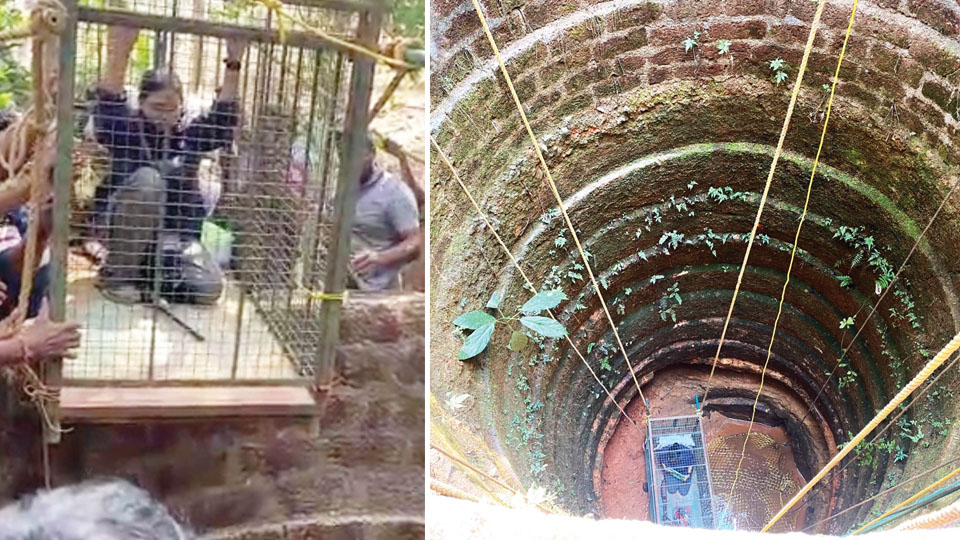
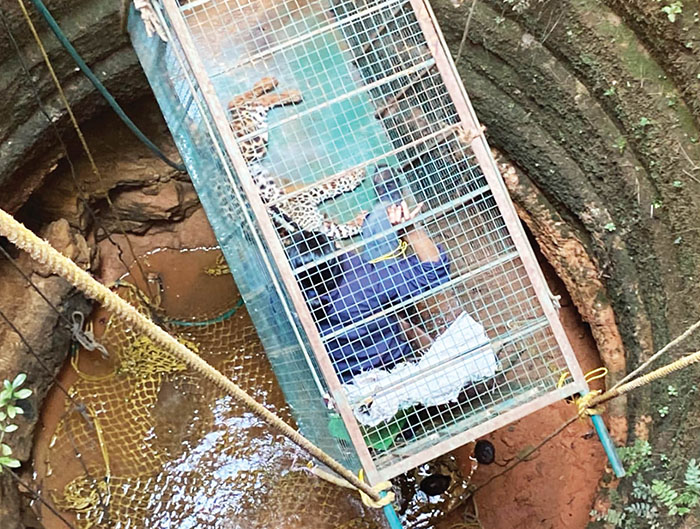
She recently saved a leopard that had fallen inside a 25-feet deep well and performed the act by sitting inside a cage that was lowered into the well to sedate the leopard that was stuck there and starving for 36 hours. She was able to pull the one-year-old feline into the same cage in a tense and dare-devil two-hour rescue operation. Her husband Dr. Yashaswi Naravi too was a part of the rescue mission.
In fact, it was 31-year-old Dr. Meghana, who volunteered to go down the well. She told Star of Mysore that though she was scared as it was deep inside the well and the leopard was not visible from the top, the adrenaline rush to save the starving and stuck animal overcame the fear.
The incident took place near a house in Niddodi near Kateel in Dakshina Kannada, about 35 km from Mangaluru. “We got a call at 9 am on Feb. 12 from the Forest Department. We are a team from Chitte Pilli, a Wildlife Rescue and Research Centre in Mangaluru and the team comprises me, my husband and experts Dr. Prithvi Salian and Dr. Nafisa Kousar. We reached the place at 11 am with some necessary equipment for the rescue,” she said.
After successfully tranquillising the big wild cat, Dr. Meghana being pulled up along with the tranquillised leopard inside the cage.
Failed attempts
The Forest Department had tried to rescue the feline with a ladder and a cage, as in other instances the trapped leopard had walked into the cage when it was lowered inside a well. However, this leopard was unwilling to move, she added.
The leopard was not visible from the top and it had taken shelter at a cosy spot that was shaped like a cave-like cavity — to avoid falling into the water — inside the sturdy well that was built with stones. The leopard was aggressive when attempts were made by the Department to drain the well water.
“Later, a different strategy was adopted and it was decided to lower a cage carrying a person to tranquillise the leopard and bring it back. We had no other choice and someone had to do it. I volunteered despite the dangers involved,” Dr. Meghana revealed.
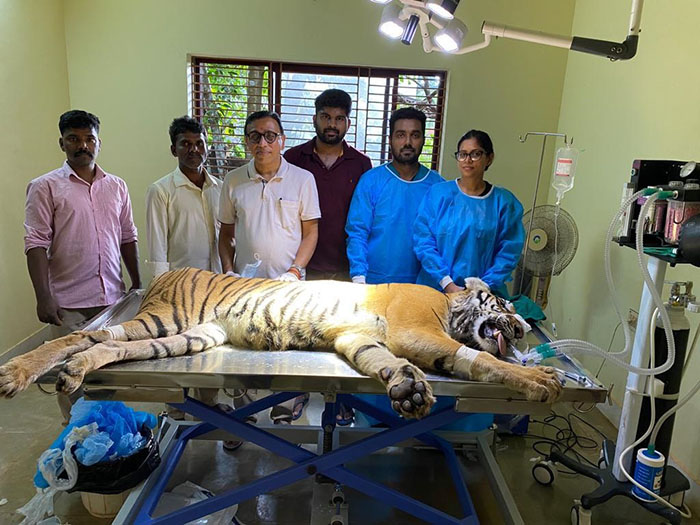
The leopard being treated after capturing in Mangaluru.
A risky mission
The cage was lowered by villagers, volunteers and the Forest Department staff in a coordinated action and with Dr. Meghana holding the tranquilliser gun. “We did not have a visual of the leopard and as such, it was a risky mission as no one had a clue as to how the leopard would react,” she said.
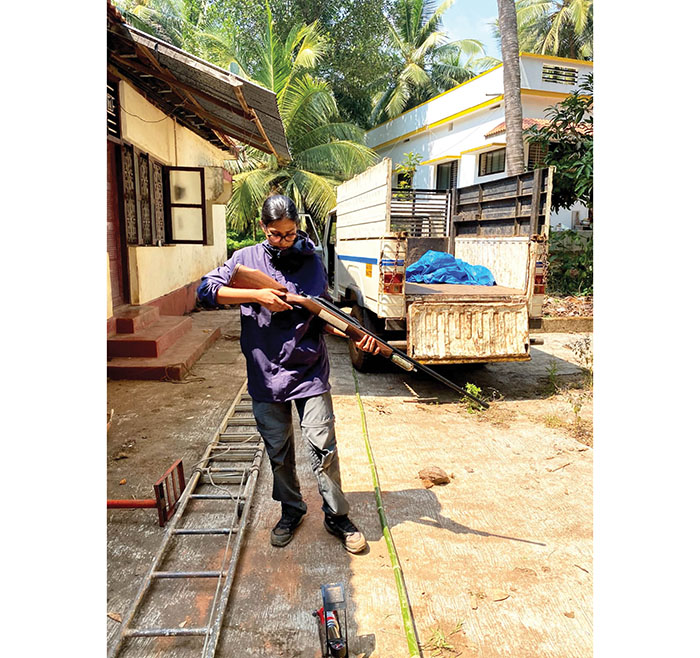
“I waited patiently for a sight of the leopard as the cage was lowered gradually and finally I could spot the animal around 10 to 15 feet inside the well and it was growling at me though it looked exhausted without food and water. I had very little time and hence aimed the dart at the animal and shot at it. Luckily, it was a precision shot and the dart hit the feline’s thigh in the first attempt itself,” Dr. Meghana said.
Meghana had carried about three to four syringes containing the sedating medicine as she did not know about its weight, size, health and other parameters for darting it. If she missed the aim the first time, she could well refill the tranquilliser gun with the second shot but the leopard could have moved away from the initial close proximity and there was more probability of her missing the shot.
Growling leopard
“In fact, I had to sit inside the cage for over 15 minutes for the dart to take effect and the leopard was right in front of me. It was growling and looking at me. Slowly, the sedation process began and I tried to pull it to the cage but could not. Another youth got inside the well and helped me and we both put the 25-kg leopard inside the cage. It was a leopardess. Now when I look back, sometimes I fear what could have happened if something had gone wrong,” she said.
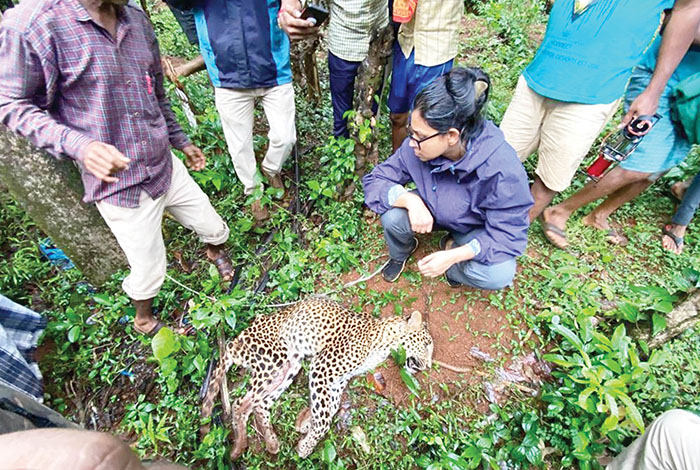
So tense was the situation after the dart was fired that Dr. Meghana sat motionless inside the cage as any movement or noise would disturb the leopard and it would take a long time for the animal to get sedated. Finally, the feline fell unconscious after over 15 minutes. After the leopard was lifted back to the ground, it was checked and the vets found no external injury marks.
“It was a healthy leopard but was exhausted. After administering the required medicines for the feline to rejuvenate and get back its strength so that it has the capacity to hunt on its own, it was handed over to the Forest Department that released it back to the wild,” Dr. Meghana said.
Passion for wildlife keeps her going
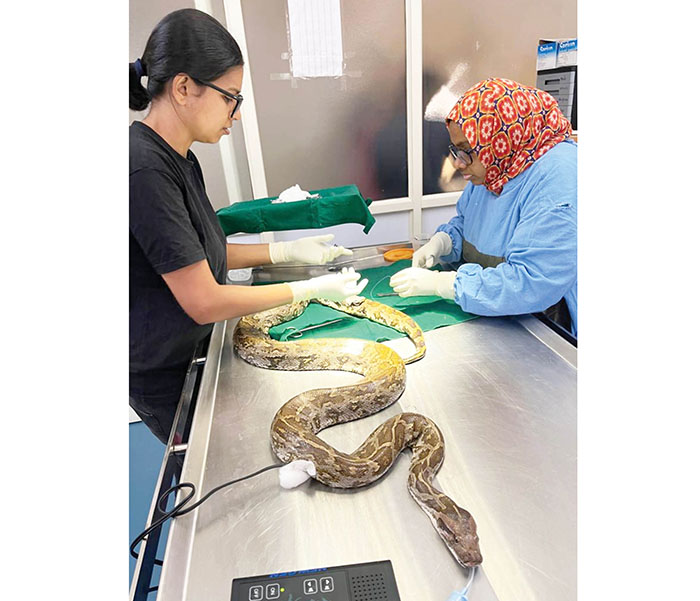
Wildlife rescue operations are nothing new for Meghana and she has been a part of many rescue operations in the last six years in Karnataka. She has been a part of many missions where she has rescued and treated tigers, owls, star tortoises, pariah kites, crows, pigeons, birds and even pythons.
“Passion about wildlife, increasing human-animal conflicts and the resulting rescue mission keeps me going. I dread to see an animal suffering due to injuries,” she said.
Every year, she does almost 10 darting procedures after following the scientific process and protocols. But this was the first time she had to get down into a well, sitting inside a cage to rescue a leopard. She hails from Halugunda village near Virajpet in Kodagu district and studied in Bengaluru.
Dr. Meghana treating a python.
After completing her PUC from Christ College, Dr. Meghana did her BVSc followed by MVSc in Wildlife and Surgery from Veterinary College, Bengaluru. The next four years, she worked in People For Animals (PFA) as a senior veterinarian and this gave her on-hand exposure to animal rescue and medication.
Her father late Pandikanda M. Pemmaiah was a retired Superintendent of Police and her mother P.P. Sarasu and rest of the family live in Bengaluru. She married veterinarian Dr. Yashaswi Naravi of Mangaluru and both have been working at Chitte Pilli — a Wildlife Rescue and Research Centre.
source: http://www.starofmysore.com / Star of Mysore / Home> News> Top Stories / February 21st, 2023
The villagers stated that they were not taken into confidence before sanctioning the project and said that these dams will severely affect the farmers and villagers living downstream of the Chiklihole.
The check dam project across Chikliholey Stream in Kodagu by the Minor Irrigation Department is under construction. (Photo | Special Arrangement)
Madikeri :
The check dam project across Chikliholey Stream in Kodagu by the Minor Irrigation Department has met with strong opposition from the villagers.
The department has now assured to call off the project as villagers alleged that the check dams are being constructed to help a private estate owner. The project is estimated to cost around Rs four crores.
The villagers of Horuru, Modur, Abhiyala, Attur and Nallur of Kedakal grama panchayat have strongly opposed the new check dam project upcoming across the Chikliholey stream.
The Minor Irrigation Department has taken up the task of building two check dams – within a span of 100 meters distance – across the Chikliholey stream near D Block of Kedakal Grama Panchayat.
However, the villagers stated that they were not taken into confidence before sanctioning the project and said that these dams will severely affect the farmers and villagers living downstream of the Chikliholey.
They claimed that the check dams also pose a risk of flash floods and landslides during monsoon.
As sources confirmed, a 128-acre private estate was recently bought by a person from outside the district at the D Block of the panchayat limits.
The villagers allege that due to vested interests, the minor irrigation department has sanctioned the construction of two check dams across the Chikliholey stream, which according to the villagers will only help the D block estate owner.
“The check dams are of no use to the farmers of the village. The planters who have plantations downstream of the Chikliholey will be severely affected by the check dam project as this will stop the free flow of the water stream. The entire Chikliholey dam will be of no use if these check dams are constructed as this will stop water flow from December to May – when people need water the most,” explained Sanju Ponappa MM, vice president of Kedakal Grama Panchayat.
The villagers on Monday called for an emergency meeting that witnessed participation from over 30 villagers alongside the Kedakal Grama Panchayat members. The stir against the construction of the check dams invited the attention of Minor Irrigation Department officials who visited the spot. Following the strong opposition from the villagers, the department has now handed over a letter to the Grama Panchayat assuring them to immediately stop the project.
The construction of the two check dams has been called off following opposition from villagers.
source: http://www.newindianexpress.com / The New Indian Express / Home> States> Karnataka / by Express News Service / February 20th, 2023
Naxal-hit Bastar region in Chhattisgarh is set to become a hub of coffee production as coffee cultivation has increased in the region.
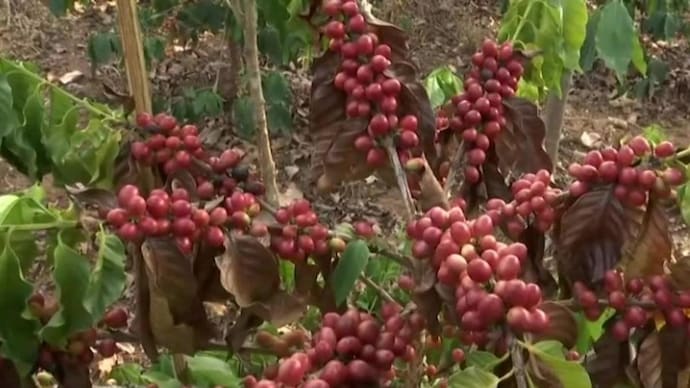
Four varieties of Coffee Arabica and one variety of Coffee Robusta were planted on 20 acres on an experimental basis in 2017-18. (Photo: Twitter/ANI)
Naxal-hit Bastar region in Chhattisgarh is set to become a hub of coffee production as coffee cultivation has increased in the region.
Dr K P Singh, a horticulture scientist, said four varieties of Coffee Arabica and one variety of Coffee Robusta were planted on 20 acres on an experimental basis in 2017-18.
“The first harvesting was done in 2020-21. When we sent the samples to the Coffee Board of India, our coffee got a rating of 6-6.4, which is a good rating. After that, it was cultivated on 100 acres in 2021-22. Farmers are reaping the benefits of coffee production in the region,” said Singh.
The coffee produced in Bastar got a rating between 6 and 6.4 from the Coffee Board of India. (Photo: Twitter/ANI)
Collector of Bastar Chandan Kumar said the coffee produced here will give a new identity to Bastar.
“It has always been a challenge for us to connect people to the mainstream by ensuring employment so that they can move towards prosperity. Today, the work on coffee plantation is underway on 350 hectares of land in Bastar,” said Kumar.
A ‘Bastar Cafe’ has also been established here to connect people with the taste and aroma of the coffee produced here. “People are liking it and definitely, its demand will increase in the coming days,” said the collector.
A ‘Bastar Cafe’ has also been established to connect people with the taste and aroma of the coffee produced here. (Photo: Twitter/ANI)
India is among the top 10 coffee-producing countries. Indian coffee is considered one of the best coffees in the world due to its high quality and gets a high premium in the international markets.
India produces two types of coffee–Arabica and Robusta. Arabica has a higher market value than Robusta coffee due to its mild aromatic flavor. Robusta coffee is mainly used in making various blends due to its strong flavor.
Coffee is largely produced in the southern part of India. Karnataka is the largest producer, accounting for about 70% of the total coffee production in India, followed by Kerala, Tamil Nadu, Andhra Pradesh and Odisha.
source: http://www.indiatoday.in / India Today / Home> News> India / by India Today Web Desk / New Delhi – February 16th, 2023
The National Barista Championship 2023 (The 21st Edition), hosted by the Coffee Board of India, Speciality Coffee Association of India, and United Coffee Association of India, is being organised from February 14th to 19th at Orion mall, Bangalore. With over 60 stalls offering more than 100 different types of coffee, the audience will be experiencing the largest collection of coffee ever under one banner. This year NBC is powered by Kaapi Solutions as the platinum sponsors along with Nescafe and SCAI (speciality coffee association of India) as the Gold sponsors) as the Gold sponsors for the event.
This year we have around 60 Baristas who would be battling it out for the Title of Champion. Making it the biggest tournament in Asia.
NBC is a prestigious annual event in the coffee industry where baristas from various regions of India come together to showcase their brewing skills and compete for the title of the National Barista Champion. All the best cafe brands such as Blue Tokai, Thirdwave, Lavazza along with many other speciality coffee brands all over India will participate in this unique event.
This year’s National Barista Championship is set to be the most competitive yet, as baristas push the boundaries of what is possible with coffee. A very strong committee has been set up where the volunteers under the guidance of Purnesh DM (President of the Speciality coffee association of India), Vikram Khurana (President United coffee association of India) and Srikanth Rao (Vice President United coffee association of India) who shares the same passion for coffee and have worked tirelessly to put this event together.
The event provides a unique opportunity for attendees to network with industry leaders, learn about the latest trends and techniques in coffee preparation, and sample some of the finest coffee blends from around the world.
“We are thrilled to host the National Barista Championship in Bangalore,” said Dr K G Jagadeesha, IAS, Secretary of the Coffee Board. “This city has a rich history and culture of coffee-making, and it’s an honor to bring the best baristas from top cafe brands, and specialty coffee brands from all over India to compete here. Last year’s event, held at Orion Mall in Rajajinagar, was a huge success with over 10,000 visitors, a multitude of coffee, 40+ stalls, and lively music. We look forward to welcoming both the competitors and the public to this exciting event.”
The competition, which will be held over 6 days – 14th to the 19th of Feb. This includes the preliminaries which will happen on the 14th -15th and the 16th post which 18th will be the semi-finals and it concludes on the 19th with the finals. The second day will feature the final round, where the baristas will be judged on their latte art and signature drinks. The winner of this highly regarded competition will then go on to represent India at the World Barista Championship 2023 to held in Athens, Greece.
The National Barista Championship is an annual event that brings together baristas from various regions of India to showcase their brewing skills and compete for the title of National Barista Champion. This coffee festival is a congregation of music, entertainment, a wide array of stalls and a whole lot of coffee and with some great jury to help make it a seamless judging process. NBC 2022 Had Ms Seonhee Yoon from Korea fly down to judge these world class brewers.
This story has been provided by NewsVoir. ANI will not be responsible in any way for the content of this article. (ANI/NewsVoir)
source: http://www.business-standard.com / Business Standard / Home / by ANI Press Release / February 15th, 2023
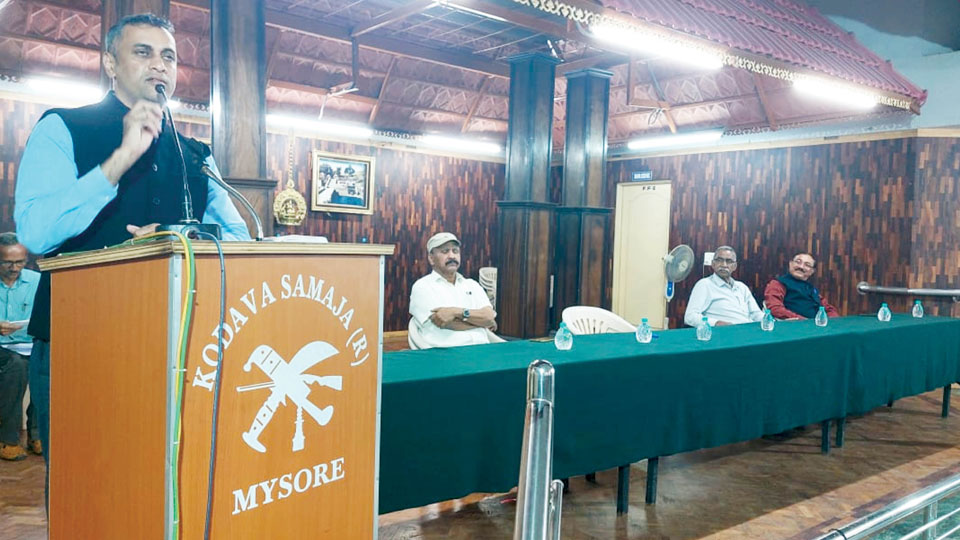
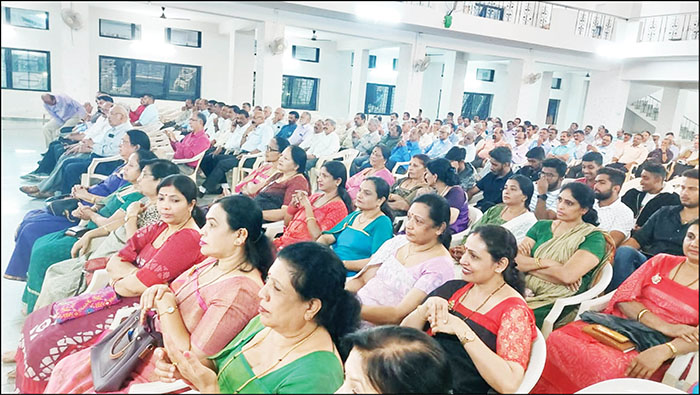
A large number of Kodava families attended the Kodava Convention organised by Kodavas residing in Mysuru at Kodava Samaja in Vijayanagar here recently.
The objective of the Convention was to discuss and deliberate various burning issues and problems concerning Kodavas and Kodagu.
Former Principal of Cauvery College in Gonokoppa, South Kodagu, Prof. Ittira Biddappa, who was the main speaker of the evening, narrated the history of Kodagu. He also mentioned various services rendered and sacrifices made by Kodava community in nation-building. He also remembered the gallant and valiant combatant men and officers of Armed forces and Para-military personnel.
Cheppudira Arun Machaiah, International Karate Master and a social worker, called upon Kodava community to protect their own interest in Kodagu. He urged the gathering to be cautious regarding the political atmosphere in Kodagu and to choose the best political leaders for Kodagu.
Former Additional Advocate General and Advocate Ajjikuttira S. Ponnanna, who was the chief guest, appealed to the Kodavas to unite themselves to protect the legacies left behind by their ancestors.
Ponnanna also briefed about various issues concerned with Jamma land, the difficulty in getting their name recorded in Record of Rights and RTC by all those who left Kodagu long ago to other districts, other States or joined the Armed Forces and Para-military forces.
He reiterated that the land tenure in Kodagu is entirely different from other States. If Kodavas cannot succeed to include themselves and their children in the 9th column/ RTC in the share of Jamma land belonging to them, then the future generation of Kodavas would lose their identity as Kodavas which would be a disaster.
He also spoke at length regarding a writ petition filed by a person in the Supreme Court questioning the exemption given to Jamma land owners and Kodavas by race to possess guns as per Indian Arms Act.
Regarding the increasing human-animal conflict in Kodagu, the Advocate expressed concern over tigers attacking and killing humans and the troubles faced by people with more than 200 resident elephants in coffee estates posing threat to the life and property of owners and workers constantly. He also highlighted the inability of the present Karnataka Government and Forest Department to minimise the human-animal conflict in Kodagu.
The Convention concluded with an interaction session. Chenanda Raghu Uthappa compered.
source: http://www.starofmysore.com / Star of Mysore / Home> News / February 13th, 2023
WELCOME. If you like what you see "SUBSCRIBE via EMAIL" to receive FREE regular UPDATES.
Read More »