Category Archives: Agriculture

Pilgrim and the seven magical seeds that brought Arab coffee to shores of India

India is home to 16 distinct varieties of coffee. (Supplied)

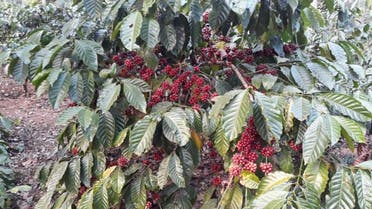
India, the world’s sixth-largest coffee grower, on an average produces about 3.2 lakh tons of coffee every year of which 75 percent are exported to countries like Italy, Germany, Russia, Belgium and Turkey. Today, India is home to 16 distinct varieties of coffee.

The journey of coffee to India has a vivid Arab connection. A devout pilgrim hailing from Chickmagalur, a picturesque hill station in India’s Karnataka state, Hazarat Shah Janab Magatabi, fondly known as Baba Budan, on his return journey, around 1600 AD via Yemen brought with him seven Coffee Arabica seeds by strapping them to his chest under his tunic.
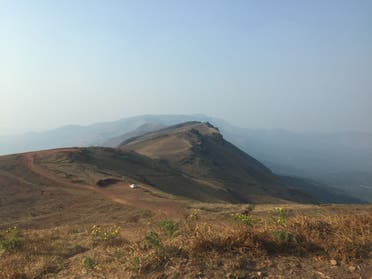
Bababudangiri Hills in Chickmagalur where coffee was first planted in India. (Supplied)

Legend has it that Arabs were extremely protective about their coffee industry and taking the seeds outside was not allowed. The saint had known that they were magical seeds for making refreshing beverage as he had tasted the kahwa (Arabic for coffee) in Mocha, a port city of Yemen that overlooks the Red Sea.

Besides being a trading hub for coffee, Mocha was the source of the popular Mocha coffee beans. After reaching his native place, Baba Budan sowed the seeds in his hermitage garden near a hill cave at Chandragiri and the rest is history.
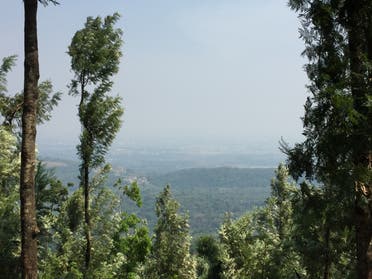
Chickmagalur is a picturesque hill station in India’s Karnataka state. (Supplied)

The coffee plants gradually spread as backyard plantings, and later on to the hills. The hills are now called Baba Budan Hills after the him. Today Chickmagalur, the birthplace of coffee in India, is filled with coffee plantations throughout its length and breadth.

Besides Chickmagalur, the charming region of Coorg is also one of the major grower of coffee. Coffee cultivation grew and thrived in India during the British rule and beyond.
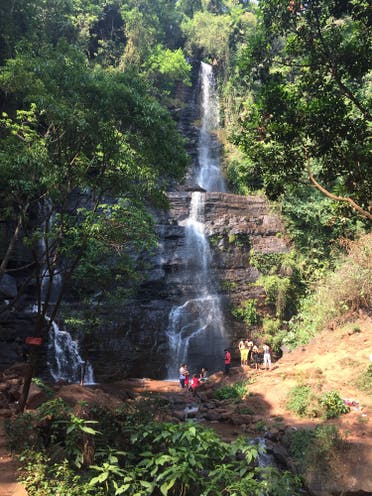
A fall amid coffee plantations in Chickmagalur. (Supplied)

The Dutch began to harvest coffee in the Malabar region, but a major transition happened when the British led a relentless drive to set up Arabica coffee plantations across the hilly regions in South India, where the climatic conditions were more favorable for the crop.

Grown under a canopy of thick natural shade in ecologically sensitive regions of the Western and Eastern Ghats spread over Karnataka, Kerala and Tamil Nadu, Indian coffee quickly spread to non-traditional areas like Andhra Pradesh and Odisha on the Eastern Coast; Assam, Manipur, Meghalaya, Mizoram, Tripura, Nagaland and Arunachal Pradesh in the North East. Despite many states growing coffee, Karnataka and Kerala, accounting for nearly 90 percent of total production.
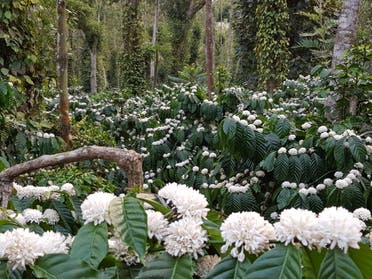
The charming region of Coorg is also one of the major grower of coffee. (Supplied)

In India, based on region of production, 13 regional coffees are classified: Anamalais, Bababudangiris, Biligiris, Araku Valley, Brahmaputra, Shevaroys, and Pulneys (for Arabica) and Wayanaad and Travancore (for Robusta). Coorg, Chikmagalur, Nilgiris and Manjarabad are famous for both Arabica and Robusta.

Apart from these 13, there are three Specialty Coffees classified based on their international popularity. They are Monsooned Malabar, Mysore Nuggets and Robusta Kaapi Royale.
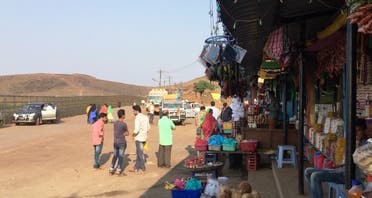
Stall owners are thankful to Arabia for the wonderful coffee. (Supplied)

During a recent visit to Baba Budan hills, this correspondent spoke to stall owners and few tourists who still are thankful to Arabia for the wonderful coffee.

One stall owner who sells cool drinks and snacks on the hills overlooking the shrine summed up, “It is because of Baba Budan that India got coffee so early and the credit for discovering coffee goes to Arabs who invented and discovered hundreds of stuff including the coffee.”

Little wonder then a small cup of coffee has so much history behind it.

source: http://www.english.alarabiya.net / AlArabiya News / Home> Features / by Aftab Husain Kola / October 07th, 2018
Madikeri: Field day observed in Somwarpet to attract youth towards agriculture

The taluk administrative officials, advocates, teachers and students of Somwarpet taluk came together and worked hard on the paddy farmland on Sunday. It was a field day as officials and others took a break from their office work and enjoyed themselves on the field.

This event was organized by the Young Indian Farmers Association of Kodagu in order to call up youngsters and others to shower their love towards agriculture. This event was hosted for the fifth time by the association.

Revenue department officials, foresters, lawyers, teachers, people’s representatives and students including the tahsildar of Somwarpet taluk gathered at a private farmland in Belur village here and planted paddy seedlings across the field.

The president of the association, Srinidhi Lingappa said, “The association has been organizing this event for the past five years with an aim to create awareness about the need and importance of taking up agriculture.”

Inaugurating the formal function, tahsildar S N Naragund opined that there is an immediate need to create awareness among young Indians about the importance of agriculture.

Former MLA Appachu Ranjan said that, “Nowadays, youngsters and children are taking up jobs in cities and often neglect the need to take up agriculture. As a result, agriculture is unable to achieve the desired progress.”

Forest department Kushalnagar division ACF Gopal and Belur G P representatives also took part in the event.

source: http://www.daijiworld.com / Daijiworld.com / Home> News / by Daijiworld Media Network – Madikeri (SJM) /September 18th, 2023

Meeting the Guardians of River Cauvery.

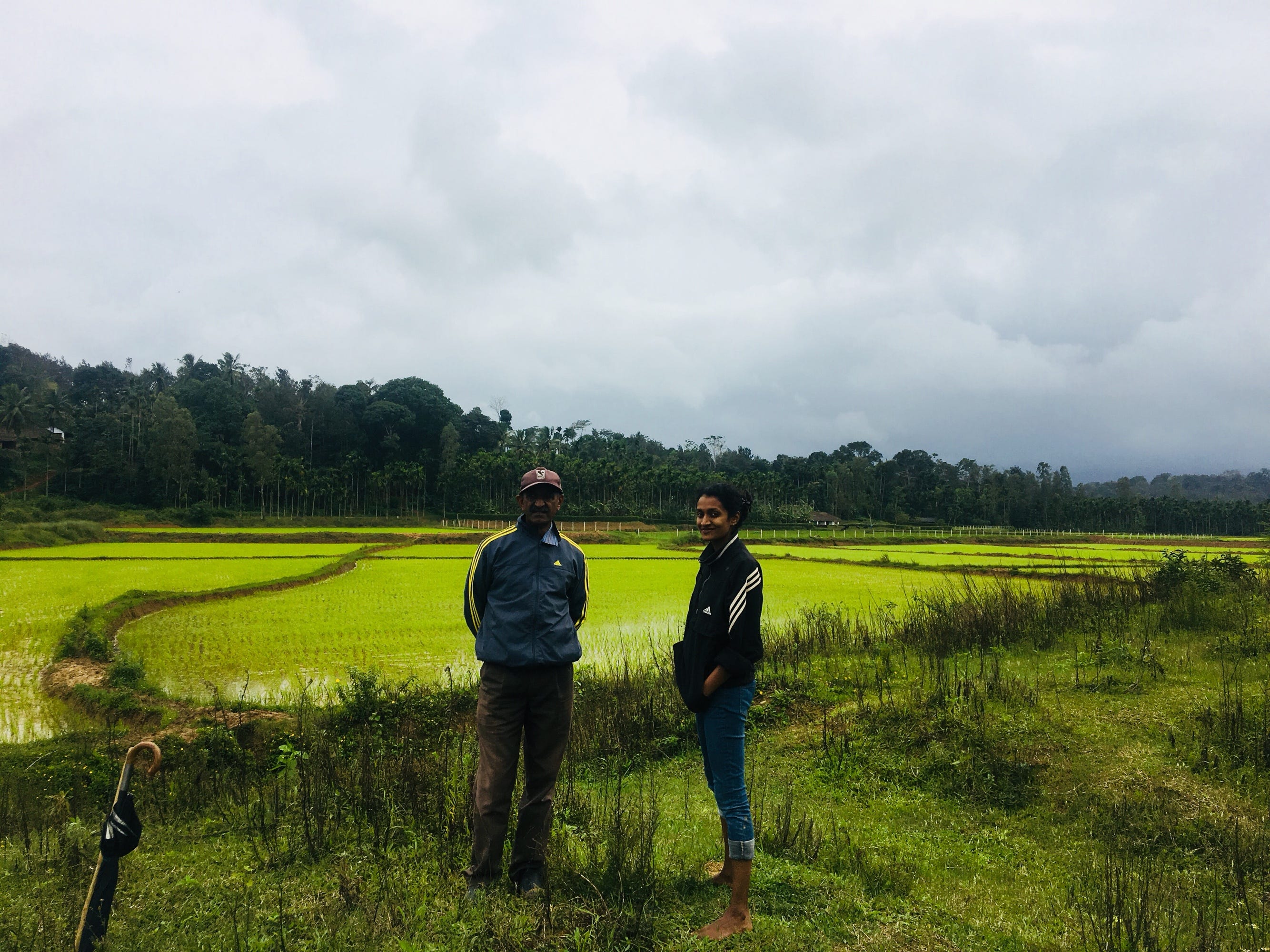
Kechamada Uthapa and his daughter Pooja taking me on a tour of his paddy land.
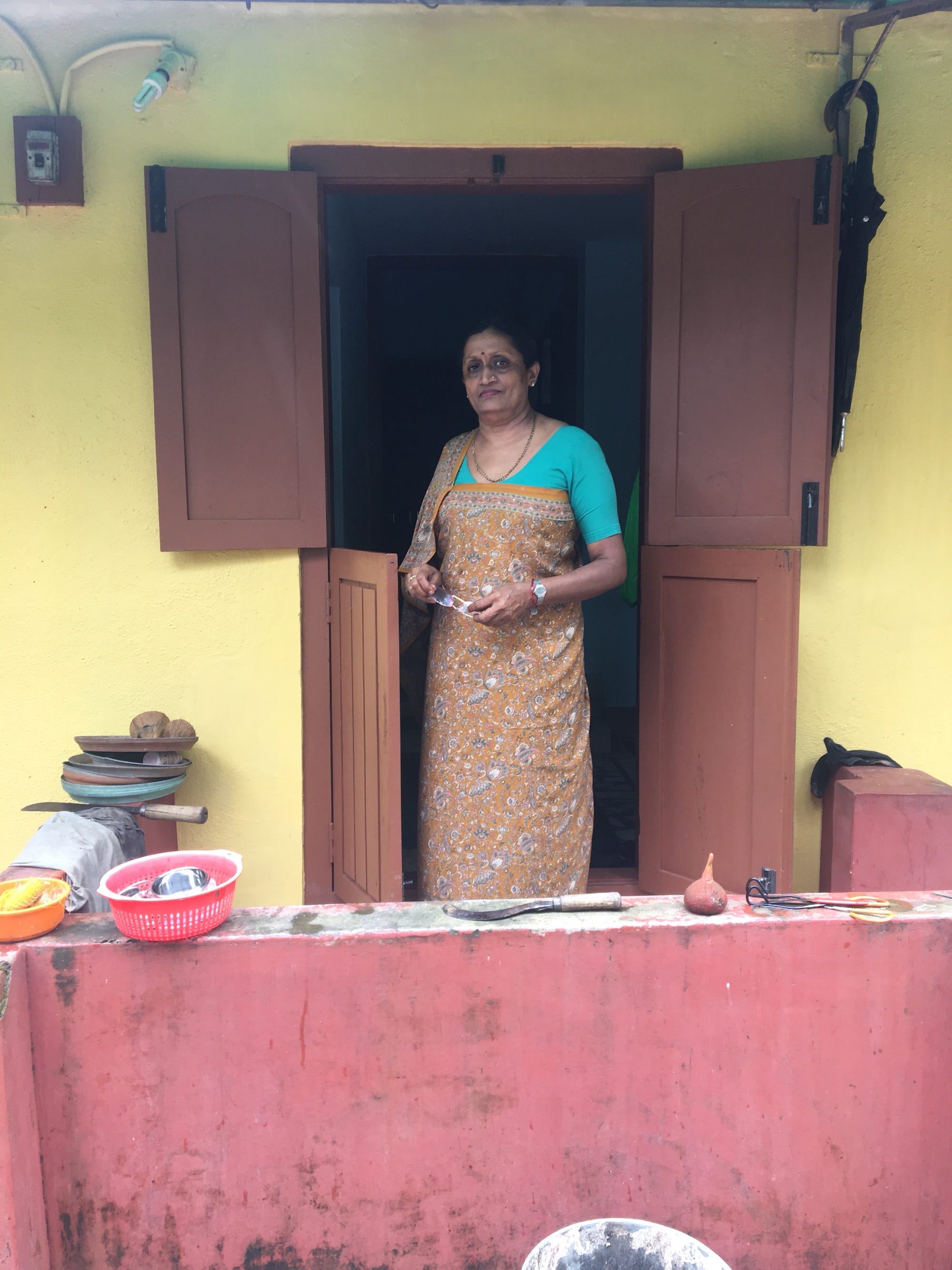
Mrs Uthappa in their home in Kutta, Coorg.

Two weeks before the devastating rainfall that destroyed large parts of Coorg, I had the privilege of spending a few days with Mr Kechamada Uthappa, and his family. Mr Uthappa, who lives in the Kutta region of Coorg, is one of the few planters who still grows paddy. A little known fact is that paddy is the traditional crop of Coorg and not coffee, that it is now famous for.

After an interesting conversation with his daughter Pooja, an environmental engineer, I learned that paddy cultivation actually helps with rejuvenating the river. So I made way up to Coorg to see this for myself. While I did learn about how this happens, it was the warmth from Mr Uthappa, with his wry sense of Kodava humour, incredible energy at 67, infinite patience in answering my questions, his wife who gently guides the whole household and his daughter, who is a true a daughter of the soil, gave me an incredibly real and fulfilling experience in this ‘digital world’, it honestly made me happy.

After meeting them, I have come to believe that, If geography is destiny, then the people of Coorg are the guardians of River Cauvery.

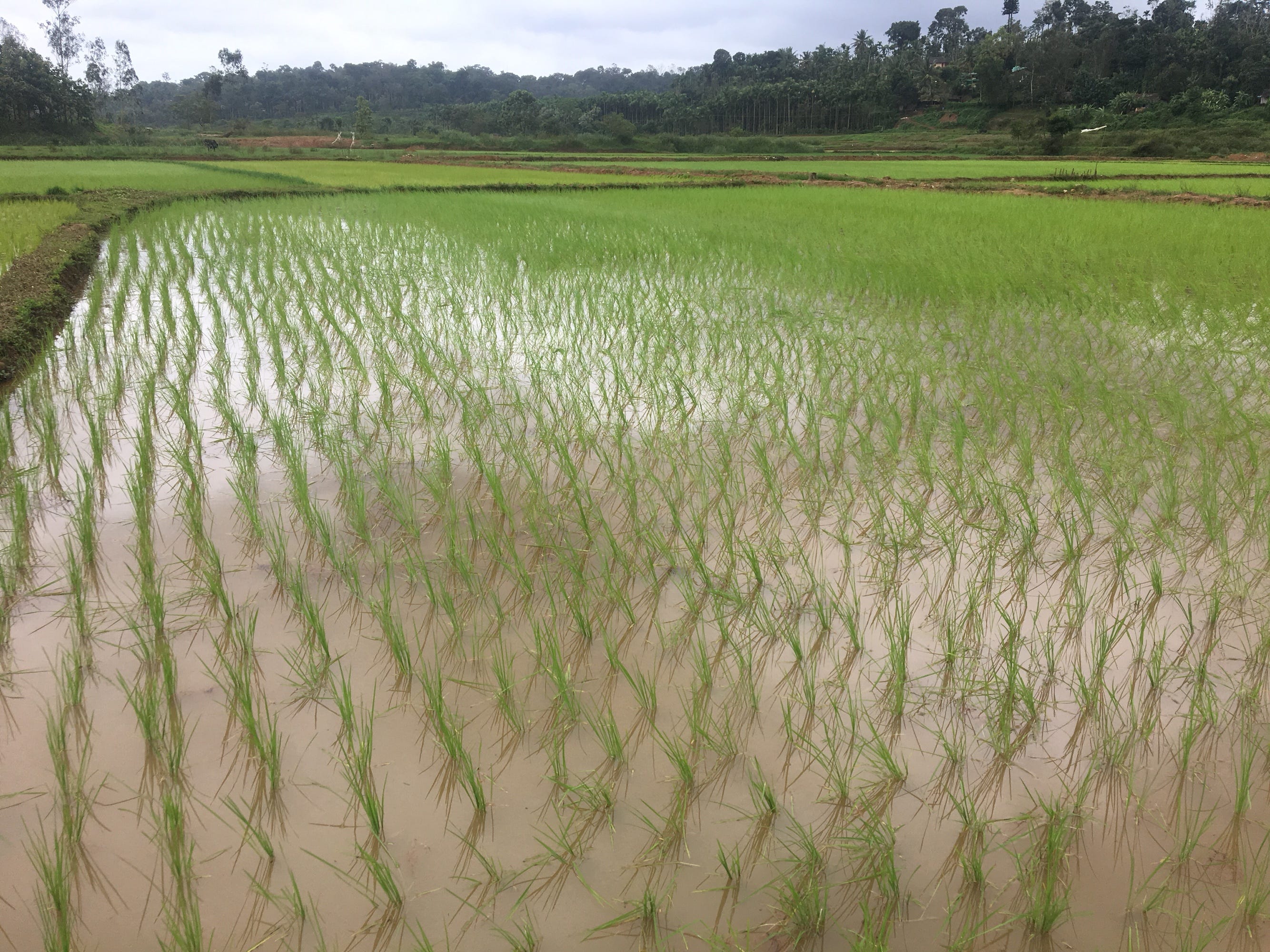
Paddy plantation 
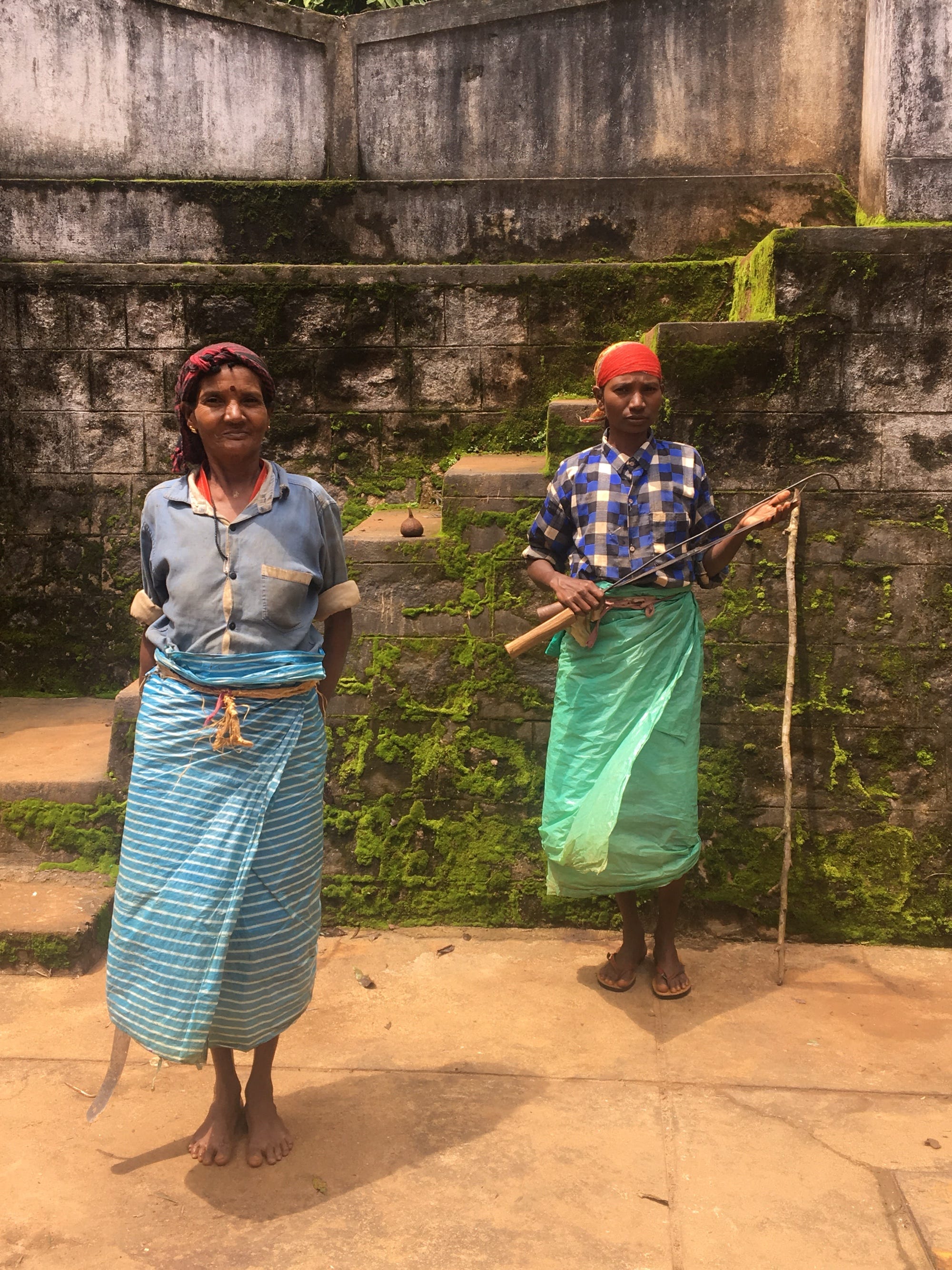
Women who work in the fields and estate, totally impressive.

In the old days the land was seen as a boon from the Goddess Cauvery and the land belonged to her. They celebrated the river and did everything in their power to care for her. To them it was ‘Cauverammas Bhoomi’.

‘Naati Pani’or paddy cultivation is what deeply connected the people of Coorg to their land and River Cauvery. It was also the most exciting time of the year, with every one coming together, it was almost like a celebration of the river itself. Owners used to plough the land themselves and shared a close relationship with the workers. Everyone would sing songs of the Cauvery to make their work light. They valued the river because she provided for them. They worked hard for their food and rice was a staple in their diets – think akki ottis and kadambuttus. Rice is not something they ordered online, unlike our generation who have a very transactional relationship with food.

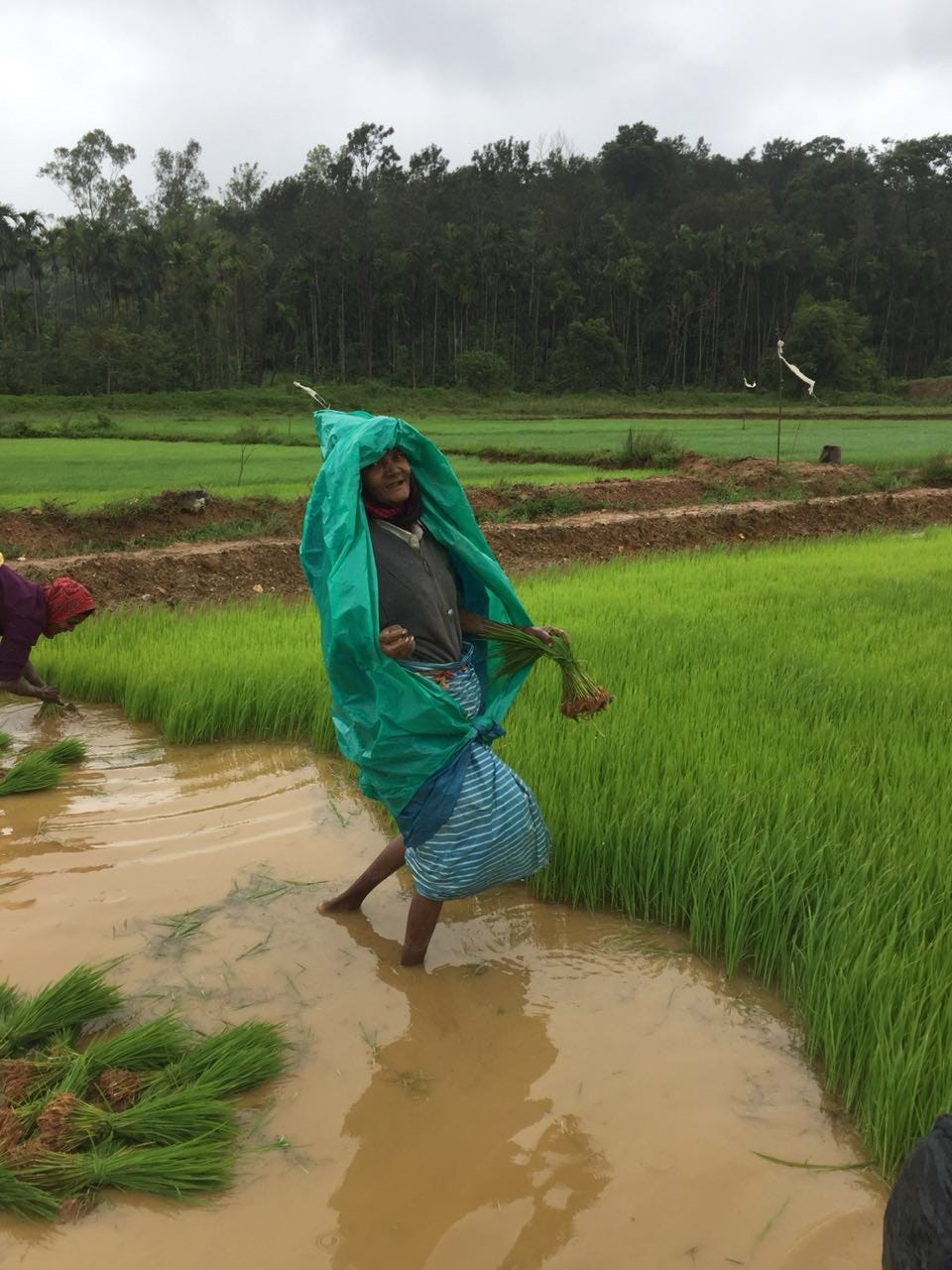
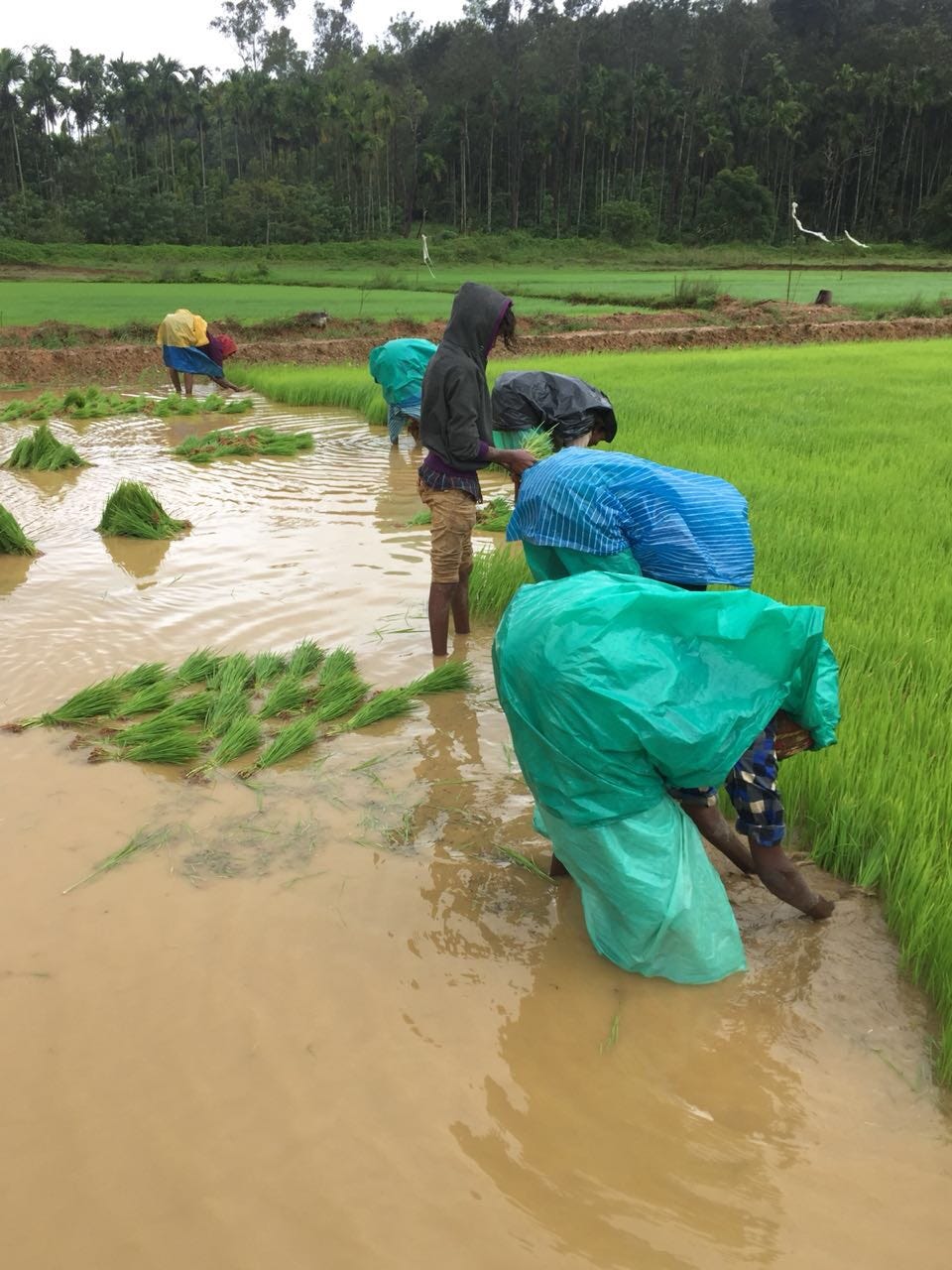
Workers planting Paddy
Stream going back into the Lakshman Tirtha

‘Naati pani’ requires a lot of work and patience. Infact, Mr Uthappa says that it requires ‘Aar-Ambu’ or 6 arrows – fertile land, cattle, workers, rain, seeds and implements. The relationship with ‘Naati’ is also very intrinsic with water – The rain feeds the fields and the fields feed the river and recharge the ground water. Most planters today have even built large tanks to harvest rain water.

The land is divided into multiple fields and work begins in the cold wet monsoons and ends six months later. Mr Uthappa remembers how his grand mother would wake them up at 4 am to begin paddy work in the fields – she would ensure there was enough food and drink for everyone including the labourers.

pix04

The paddy land is usually dived into Baleya theva – the biggest field, the Yaka – the sowing field which was slightly elevated so that it could retain water and was always situated closest to the stream, Chali or the central field allowed for the flow of water and Podup which is clay soil that has spring like properties and the Pada butta bel or fallow land.

Each of these fields is fed by rain water and controlled by shallow streams which is then fed back into the river. Mr Uthappas fields feed back into the Lakshman tirtha, a tributary of the Cauvery. Most of the knowledge and traditions and even geographical understanding on what should be grown is passed down orally and Mr Uthappa is hopeful that today, even though most of them don’t encourage their children to work in the fields there will be a time when everyone will come back to their roots.

The end of ‘Naati pani’ is celebrated with Kail-Podh. In keeping with their martial traditions all the implements would be polished, decorated with the ‘Thok-poo’ (which is now available only in the ‘Devara Kadus’ or Sacred forest groves maintained by each village). It was also a time where they could enjoy a break from their hard labour of ‘Naati pani’ and food, song and folk dancing would be indulged in.

Unfortunately, today most of the paddy fields are being left fallow or being converted into ‘holiday home sites’, reducing the ground water levels, changing the culture and even the food habits. The koile meen (fish commonly found in paddy fields), local rice varieties like Doddi and Boliya are fast disappearing. Reality is that rice is now being bought by the Karnataka government from Andhra Pradesh (where incidentally I am from).

It hit home when Mr Uthappa, told me of a kodava saying, “if you want to ruin a man you don’t need black magic, all you have to do is ask him to replace paddy for coffee or other crops and the land will run dry.” It makes you think if you would still be able to relish your cup of ‘bella coffee’ if there was no paddy planted in Coorg?

So as you celebrate Kail-Podh this year with Pandhi curry and Kadambuttus, or have ever visited Coorg and enjoyed her hospitality, remember that you are the guardian of River Cauvery and send out a special thought to all that she has provided.

Follow our series about the #CultureOfWater @SaveRiverCauvery on Facebook, Twitter and Instagram.

source: http://www.medium.com / Medium.com / Home / by Rohita R Madappa / September 02nd, 2018

Stalk rot disease haunts coffee estates across South Kodagu

In South Kodagu, the rainfall has receded and the region is exposed to some sunlight, resulting in an increased number of estates recording stalk rot disease.

Wild animals are allowed to feed and breed in some coffee estates of Chikamagaluru district | Express
For representational purpose only | EPS

Madikeri:

Several coffee estates across Kodagu are already facing the brunt of monsoons and changing weather patterns. The coffee plantations, especially in the South Kodagu region, are showing severe signs of stalk rot disease and the coffee growers are worried.

“The stalk rot disease usually affects the coffee plants during mid-monsoons – especially in August, when the rainfall gets heavy. However, the coffee stalks and coffee beans are rotting at the beginning of monsoons this year,” shared Devaiah, a grower in the Srimangala belt of South Kodagu.

Several crops across the coffee estates are affected by rotting disease and controlling the spread of the disease amidst the bad weather condition has become a herculean task to the growers. Amidst the increased loss of yield due to wildlife conflict, the spread of the rotting disease is adding more woes to the growers’ troubles.  

While stalk rot disease is an age-old condition that has been affecting coffee plants – especially the Robusta variety of coffee– the cases of the disease spreading have increased invariably in the recent past. Changing weather patterns is concluded as one of the reasons for the increased spread of the disease, as George Daniel, DD of Chettalli Coffee Board explained, “Weather conditions play an important role in the spread of stalk rot disease. The soil will have increased moisture content during monsoons. When this moisture is exposed to even little sunlight, it gives a perfect ground for the mushrooming of anthracnose fungus – which causes the stalk rot disease.”

In South Kodagu, the rainfall has receded and the region is exposed to some sunlight, resulting in an increased number of estates recording stalk rot disease.

“At first, just one or two coffee cherries will start to rot. within a day, the entire plant gets affected. It is important that the affected parts of the plants are immediately cut off and buried under the soil to prevent further spread of the endemic,” added George. He analyzed that estates that have reported stalk rot in the previous years are more prone to the disease.

He suggests that the growers spray Opera Fungicide – One ml of the fungicide mixed with One liter of water – to curb the disease spread. “The mixture must be sprayed when rain takes a break,” he added. Further, it is important that growers carry out pre-preparations for monsoons as spraying 0.5% Bordeaux mixture would help curb the growth of fungus in monsoons.

“The Robusta variety of plants is highly affected by the disease. However, Arabica varieties too are prone to the disease. Sanitation work of the plantation including pruning of the crops, reduction of shade, proper lighting and air circulation plays an important role in preventing stalk rot disease in plantations,” he said.

Coffee berries begin to drop following infection from stalk rot disease.

source: http://www.newindianexpress.com / The New Indian Express / Home> States> Karnataka / by Express News Service / July 27th, 2023

KRS breaches 100-ft mark, thanks to copious rain in Kodagu; Kabini inching closer to attaining full reservoir level

A file photo of the Krishnaraja Sagar in Mandya district.

The water level in the Krishnaraja Sagar (KRS) across the Cauvery breached the 100-ft mark on Tuesday morning and attained 102.35 ft by night owing to heavy rain in the catchment area of the river for the last few days. Meanwhile, water level in the Kabini reservoir in H.D. Kote taluk of Mysuru district is nearing the full reservoir level.

The southwest monsoon, which was weak in Kodagu during June and a greater part of July, gained traction during the last few days consequent to which heavy to very heavy rain lashed the district, bridging the deficient significantly.

This also helped increase the volume of the inflow and enabled the KRS to cross the 100-ft mark, which seemed unlikely till a few days ago. The reservoir level was 91.24 ft on Saturday.

While the reservoir level has crossed the 100-ft mark as against the full reservoir level of 124.8 ft, the live storage in the dam increased from 16.69 tmcft on Saturday to 22.81 tmcft on Tuesday, an increase in the storage by 6.12 tmcft in less than three days. But it is pertinent to note that this is only 46% of the dam’s gross capacity of 49.45 tmcft.

Inflow and outflow

The inflow was at the rate of 48,025 cusecs on Tuesday morning and increased to 49,280 cusecs at night, according to the Karnataka State Natural Disaster Monitoring Centre (KSNDMC) and the outflow was at 5,449 cusecs. The current trend of increased inflow into the KRS may last so long as Kodagu receives copious rain coupled with an increase in the discharge from the Harangi where the outflow was hovering around the rate of 30,000 cusecs on Monday, dropped to 20,000 cusecs on Tuesday afternoon and further declined to 13,000 cusecs by evening.

The forecast

The ICAR-Krishi Vigyan Kendra at Gonikoappal, which is the District Agro Meteorological Unit of Kodagu, has forecast rainfall from 41.6 mm in Somwarpet to 60.9 mm in Madikeri and 59.9 mm in Virajpet, on Wednesday. But from Thursday onwards, the forecast indicates that the rain will abate and the three taluks are expected to receive between 8.7 mm and 14.7 mm rainfall on Thursday and 1.5 mm and 3.1 mm on Friday with a further decline by Saturday.  Consequently, the rate of inflow into the Harangi and the KRS in the downstream will also abate.

Kabini nearing FRL

The Kabini reservoir at Beechanahalli in H.D. Kote taluk of Mysuru district is inching closer to attaining the full reservoir level of 2,284 feet.

This is due to heavy inflow consequent to rain in the catchment area of the river in Wayanad, Kerala, in the upstream region. The rate of inflow was 25,485 cusecs and the water level was 2,281.27 ft on Tuesday. The authorities have announced that the outflow from the dam was stepped up from the rate of 15,000 cusecs to 20,000 cusecs and said the Bidarahalli bridge could be partially submerged.

Kabini is the first reservoir that tends to get filled up as early as late June or in the first week of July during monsoon but this year scanty rain resulted in poor inflow into the reservoir. The gross storage capacity of the reservoir is 19.52 tmcft against which the live storage on Tuesday was 17.79 tmc ft.

source: http://www.thehindu.com / The Hindu / Home> News> India> Karnataka / byThe Hindu Bureau / July 25th, 2023

Kodagu: Paddy cultivation takes a back seat owing to weather changes and wildlife conflict

Several farmlands in South Kodagu have been abandoned owing to bad weather conditions and the increased movement of wild elephants.

Image used for representational purpose.

Madikeri:

Paddy cultivation in the district is receding compared to yesteryears as farming is yet to pick up pace this monsoon. Changing weather conditions, natural disasters and increased wildlife conflict are other factors affecting paddy cultivation. It is said that only 48 hectares of land have been cultivated with paddy. 

Over six years ago, nearly 35,000 hectares of farmlands across Kodagu were cultivated with paddy crops. But, the extent of the cultivation has diminished over the years as the target for paddy cultivation has now been reduced to 30,500 hectares by the agriculture department.

“The increasing wildlife conflict can be seen as one of the reasons for the farmers to give up paddy cultivation in several farmlands in the district. Further, many farmers have also taken to the cultivation of horticulture crops. Increased conversion of farmlands to areca nut estates has reduced paddy cultivation,” opined Shabana Sheikh, the Joint Director of the Agriculture Department.

A total of 23180 hectares of farmland was cultivated with paddy achieving a target of 76% last year. Over 384 hectares suffered crop loss due to rainfall last year. 

The farmers of South Kodagu have increasingly given up paddy cultivation. Out of the 14000 hectares of targeted cultivation, only 9960 hectares were cultivated for paddy last year. Several farmlands in South Kodagu have been abandoned owing to bad weather conditions and the increased movement of wild elephants.

With monsoons delayed in the region this year, the paddy transplantation work is yet to pick up pace in the district. In Madikeri taluk, only 40 hectares of farmlands have recorded paddy transplantation work to date this year. Meanwhile, eight hectares of farmland have witnessed paddy transplantation in Somwarpet taluk. Nevertheless, as per the data recorded by the department, no farmlands have yet been cultivated for paddy due to delayed rains across South Kodagu including in Virajpet and Ponnampet taluks.    

source: http://www.newindianexpress.com / The New Indian Express / Home> States> Karnataka / by Express News Service / July 11th, 2023

Holiday for schools in Kodagu as monsoon gains vigour

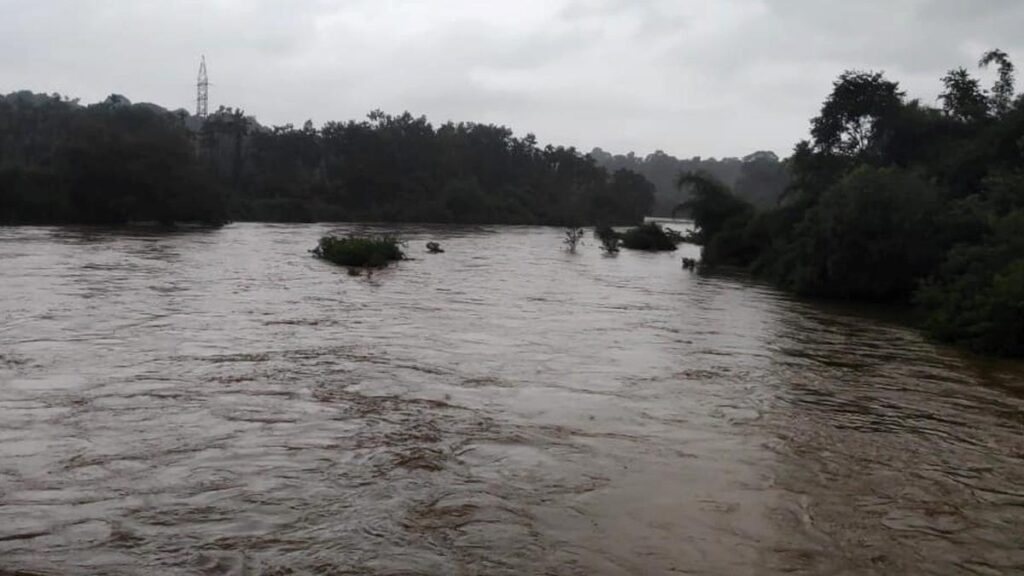
The Cauvery near Betri in Kodagu district brimming with water due to heavy rains on Thursday. | Photo Credit: SPECIAL ARRANGEMENT

All schools and anganwadis in Kodagu will remain closed on Friday as a precautionary measure in view of the incessant rains across the district.

A communique was issued by Deputy Commissioner of Kodagu Venkat Raja. Meanwhile, the India Meteorological Department (IMD) said monsoon was vigorous and active over south interior Karnataka with very heavy rainfall of 120 mm reported in Bhagamandala during the 24-hour period ending 8.30 a.m. on Thursday.

The IMD has forecast heavy rains at isolated places over Shivamogga, Chikkamagaluru, Hassan, and Kodagu district on July 7 and 8.

Though the monsoon progression into Kodagu has been slow, the last 72 hours has shown some traction with moderate to heavy rains in the Cauvery catchment areas.

The cumulative rainfall since the advent of South West Monsoon since June 1 till date is below normal in Kodagu (-79%), Mysuru (-40%), Mandya (-23%), Hassan (-63%), and Chamarajanagar (-32%).

But the 24-hour period ending at 8.30 a.m. on Thursday saw Kodagu registering 58.12 mm of rainfall and this has been the trend since the past few days shoring up hopes of monsoon gaining vigour.

Apart from Bhagamandala (120 mm), heavy rains were also recorded at Sampaje (98.5 mm), Shantalli (100 mm), Madikeri Kasaba (54.20 mm), Napoklu (76.40 mm), Virajpet (68.4 mm), Hudikeri (53.3 mm), Srimangala (59.4 mm), Ponnampet (50 mm), and Ammathi (50 mm). Rains have also lashed other places like Suntikoppa, Kushalnagar, and Kodlipet.

The inflow into the Harangi reservoir was at the rate of 1,557 cusecs and the inflow is expected to increase owing to the current spell of rains in the next few days.

However, the cumulative rainfall since the advent of south west monsoon from June 1 till date is below normal in Kodagu (-79%), Mysuru (-40%), Mandya (-23%), Hassan (-63%), and Chamarajanagar (-32%).

source: http://www.thehindu.com / The Hindu / Home> News> India> Karnataka / by The Hindu Bureau / July 06th, 2023

Afforestation in Kodagu gets boost with Forestry College’s initiative

While 70% of saplings are that of native trees, 30% are crops that have some economic value.

HYDAUG2021164_07413635
Picture for representational purpose only | (Pic: Express)

The College of Forestry at Ponnampet, in collaboration with Sucden India, is involved in an afforestation drive across Kodagu. The initiative called the Sustain Landscape Project involves the distribution of native varieties of tree saplings among farmers.

Plans are afoot to plant them across sacred groves in the district.

Kari Mara (Diospyros ebenum), ‘Karadimara (Chukrasia tabularis), Dhoopa mara (Vateria indica), Kari Dhoopa (Canarium strictum) to name a few, are native trees that once dotted the Kodagu landscape.

Older generations are familiar with the tree species but these are alien to the present generation. The increased demand for wood and medicines along with galloping urbanisation has led to plummeting of the native trees. To revive the trees, Ponnampet Forestry with support from Sucden India this sustainable plan was devised.

“Community forestry is being promoted through the project with seedlings of the native trees being distributed to the farmers of the district. We have been conducting this initiative for the last three years. Final-year students of the college look after the seedlings of the native trees and a few economic crops, under the experiential learning model. The students receive stipends from Sucden and the seedlings raised in the college nursery are then distributed to farmers,” said K Nanaiah, assistant professor of the college.

Look at the numbers
The seedlings are distributed for free to the farmers. While 70% of saplings are that of native trees, 30% are crops that have some economic value, he said. Since 2020, a total of 250 farmers (the majority in South Kodagu) have received the saplings and raised them. The college students have also planted saplings across river banks and other protected areas across South Kodagu.

This year, they plan to expand the initiative across Kodagu, he said. The college has invited the participation of various Sacred Grove Temple committees. “Communities must be involved for this sustainable initiative. If this does not happen, we will devise other plans to plant these saplings,” he said.

The project initiative has achieved a success rate of over 50% with 25,000 to 30,000 saplings have been planted so far. They are now targeting 60,000 plantations by this year.

source: http://www.edexlive.com / Edex Live, The New Indian Express / Home> News> Kodagu / by Prajna GR / July 03rd, 2023

How Climate Change Is Brewing Trouble For India’s Coffee Industry

India’s coffee growth is being affected by unpredictable weather patterns, including insufficient rainfall, temperature fluctuations, drought, and heavy flooding.

While Baba Budan, the Sufi monk, planted the smuggled seven coffee beans in the bountiful hills of Chikmagalur, little did he know that India, one day, would be the 6th largest coffee producer, with Karnataka contributing 71 per cent of coffee production to the world. Though the coffee culture has evolved through the years, and there has been a significant boom globally for coffee, the threat for your morning cup is real and is right there knocking on the doors–climate change!

Unpredictable weather patterns are affecting most parts of the world, including India. The country grows a lot of Robusta and Arabica, and both these varieties suffer prolonged periods of inadequate rainfall, temperature rise, drought and heavy flooding.

The Case With Arabica And Robusta
Samia Subhani, a fourth-generation coffee planter and the founder of “The Kaimara Belt Coffee,” sounded distressed. Her family has been into coffee growing and trading for over 150 years, and their estate in the Baba Budangiri hills grows Arabica, the most demanding variety. Subhani’s estate has 50-80 farmers working on the plantation daily, all dependent entirely on coffee farming. But with the ongoing effects of climate change, coffee is going through a difficult phase putting all their lives at risk.

Arabica is the most demanding variety of coffee when it comes to cultivation. Photo Credit: Shutterstock

“Climate change causes leaf shedding, reduced coffee plant productivity, and increased vulnerability to pests. Extreme cold delays plant flowering and lowers berry quality. Heavy rains at irregular times cause cherries to burst and drop prematurely. Continuous heavy rains before harvest prevent drying, leading to crop spoilage,” Subhani explained.

But like they say, every solution has a problem. Subhani mentioned that we must dig deeper into our pockets and follow some mitigation measures to maintain the yield and deliver quality coffee to patrons. “So, we provide artificial rains during droughts, maintain proper irrigation in the system, avoid using harmful pesticides to control soil erosion and use only soil-friendly organic fertilisers.”

While this is the situation in an Arabica coffee plantation at Chikmagalur, Coorg, popularly known as the “Scotland of India,” is known to grow more of Robusta.

“Climate change is certain to impact coffee yields due to temperature changes. Coorg is experiencing water scarcity, affecting coffee production. Coffee plants require water, nutrients, rainfall, and sunshine for healthy growth and harvest. Fluctuations in yield have increased, with lower yields in recent years. Delayed monsoons in Coorg will further reduce usable berry production,” said Shruti Shibulal, CEO and Director of Tamara Leisure Experiences.

Though these climatic impacts are less friendly to coffee crops, Shibulal believes they have the advantage of scientific studies to inform how we can prepare for this impending change. Collaboration and knowledge sharing between those with high knowledge of the crop and those with research-driven and technological expertise is vital to assess, test and implement viable solutions.

Robusta is grown extensively in Coorg. Photo Credit: Shutterstock

“The Tamara Coorg is a 100 per cent organic plantation. Therefore, our irrigation is entirely dependent on rainfall. Rainwater harvesting tanks here facilitate the annual reuse of 90 lakh litres of rainwater. These reserves do marginally help us contend with unpredictable weather patterns. However, the coffee trees depend on rain and sunshine in balanced intervals to yield the greatest number of healthy berries,” she added.

According to Shibulal, instead of using measures like industrial fans or increased labour to speed up the drying process of coffee berries, they focus on protecting and nourishing their coffee trees using organic fertilisers and natural supplements. They also prioritise sustainable practices like reusing rainwater for irrigation and actively monitoring soil health. She further emphasised the importance of maintaining a tree canopy structure, which creates a favourable micro-climate for coffee plants and supports biodiversity.

“I would turn my support to local and regional producers or individual plantations (whenever possible). Smaller establishments will face greater challenges during times such as these. As consumers, we must lend our loyalty to those actively pursuing practices that combat climate change in the long run,” Shibulal concluded.

Climate Change Affecting Coffee Planters All Over
Tapaswini Purnesh, a fifth generation coffee planter and Director–Marketing & Promotions of Classic Coffee, mentioned that other coffee planters, including the Harley Estate at Sakleshpur in Karnataka, are also battling climate change.

“The worst scenario is the last 4 to 5 years, where we have been experiencing heavy rains during harvest season, i.e., November to February, which normally is a complete dry spell. India is unique to the sun drying of coffee. However, due to unseasonal rains during harvest, plantations are now installing mechanical dryers to avoid quality deterioration,” Purnesh said.

She also stated that coffee production is highly labour-dependent. In the long run, finding labour may become increasingly challenging, an evident trend. As the cost of implementing adaptive measures rises and the arduousness of growing quality coffee amidst climatic pressures is considered, customers must acknowledge that good coffee comes with a price tag. “The coffee growers will be motivated to enhance and refine their coffee cultivation practices if they receive adequate remuneration from the price realisation.”

Meanwhile, the latest estimates warn that climate change may mean that as much as half of the land used for coffee production worldwide may no longer be suitable for it by the middle of the century if global warming continues at this rate. So, as all these coffee planters suggest, every citizen must be more responsible towards our environment, travel responsibly, and follow more sustainable practices to save our environment and the most loved, coffee.

source: http://www.outlookindia.com / Outlook Traveller / Home> Explore> Story / by Deepa Shri Rajan / June 25th, 2023

Giant African Snails haunt the estates of North Kodagu

“During pre-monsoon, I spotted a couple of Giant African Snails on coffee plants and I got rid of them.

Giant African Snails feed on leaves and a branch of coffee plants in Handli village

Madikeri : 

With the arrival of the monsoon, coffee growers of Handli village near Shanivarasanthe in north Kodagu are fighting a harmful invasive species. The Giant African Snails have invaded a majority of the estates in the village with coffee growers struggling to rid the estates of these pests.

“During pre-monsoon, I spotted a couple of Giant African Snails on coffee plants and I got rid of them. Now, there is an army of these pests and they are destroying my crops — coffee, pepper vines and plantains,” Suresh Babu, a coffee grower, told TNIE. 

The snails feed on stems, leaves and creepers. The farmers rued that the snails multiply quickly and there seems to be no solution in sight to get rid of them. “We are now hiring labourers to remove these snails from the plants. However, this is a disgusting job and we have to pay extra to labourers. A majority of the labourers do not want to take up this task as these snails are slimy,” said Kumar, another grower. 

The residents explained that the attacks from these snails across estates have been reported every year during the wet season for five years now.  While the government provided some compensation and remedy during the previous years, it is not the case now, said another coffee grower.   

“There needs to be a scientific solution to this problem.  Coffee Board scientists have to come up with a permanent solution to rid the estates of these snails even as government support to the affected growers is the need of the hour,” concluded Kumar.

source: http://www.newindianexpress.com / The New Indian Express / Home> States> Karnataka / by Prajna GR, Express News Service / June 12th, 2023