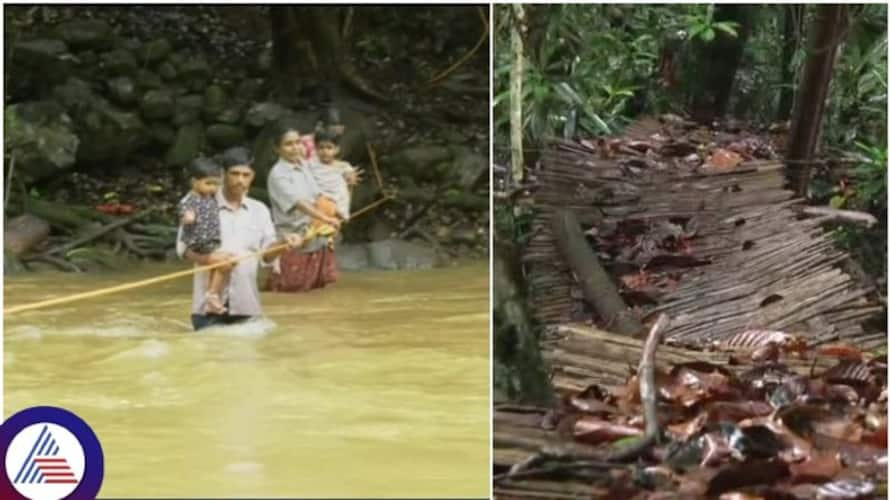
Bandadka village in Coorg, known as the Scotland of India, faces challenges during the rainy season. Lack of road connectivity, proper bridge, electricity, and necessities affect villagers. Despite requests, the authorities have not provided adequate facilities, putting lives at risk.
Coorg is known as the Scotland of India. It shines with lush green vegetation, numerous waterfalls and rich culture. However, during the rainy season – the lack of basic necessities in the villages comes to the fore. One such unfortunate village is the Bandadka village of Sampaje taluk.
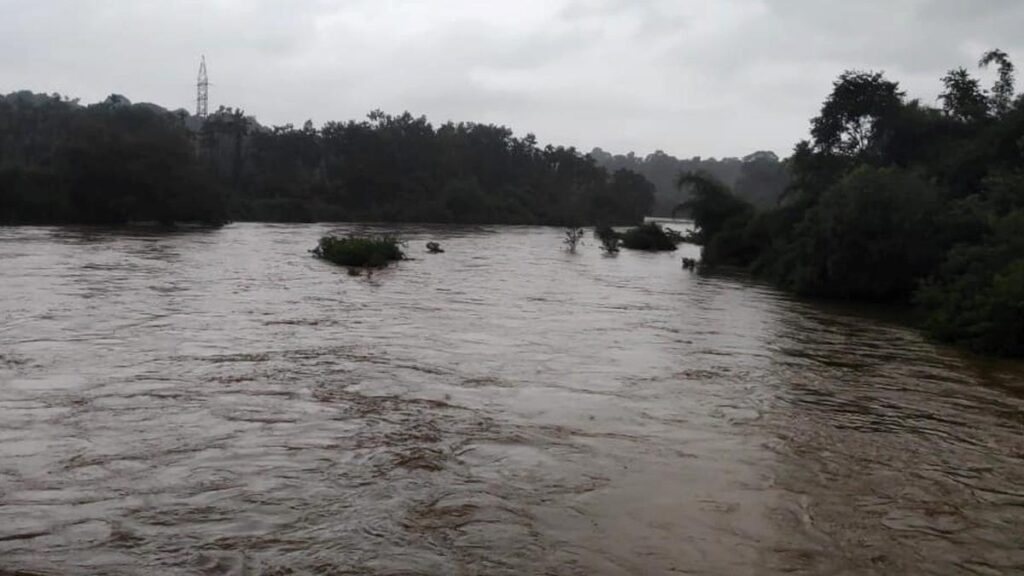
The village has no road connectivity to the city. Every rainfall disrupts their peace. Agony takes over as the flow of the river is alarming. The local panchayat has not yet been able to provide the village with a proper bridge.
‘Jeevanadi’ going dry: Coorg suffers in tourism
During rainfall, it is risky to cross the Payashwini river, which flows along NH275. If one wants to reach the village, crossing the river while holding on to a rope is mandatory.
The villager’s lack of electricity, road connectivity, and even the link bridge connecting them to the taluk is breathing its last. Surprisingly, even after 75 years of Independence, there are such villages in the state, especially in the tourist hotspot of Coorg, which lack the necessities.
The link bridge connecting the village and outskirts is ready to set sail if the people set their foot on it. There are five families in the village. Three of them comprise of old-aged people who are leading their lives in danger. The river flow during summer is very low, so the villagers’ daily life is not disrupted. Only during the rainy season do they undergo an adventurous river crossing every day. The Payashwini river, called the Chandragiri river, flows across Sullia, Jalsoor, Chengala and Kasargod.
Karnataka: Expect rainfall within 24 hours; ‘Orange’ alert for the coasts
The Panchayat used to construct a small bridge for the villagers once in 3-4 years. This year, the one constructed last time is on the verge of collapsing into the river.
For medication, villagers must walk 2.5 km through the wild forest, which elephants and leopards inhabit. They should walk through the small dam and reach NH 275 for transport. The villagers complain that even after requesting the ministers, Panchayat and District administration to provide them with the facilities, no one seems to care.
source: http://www.newsable.asianetnews.com / Asianet News Able / Home> English News> India News / by Vijaykumar Patil / July 04t, 2023
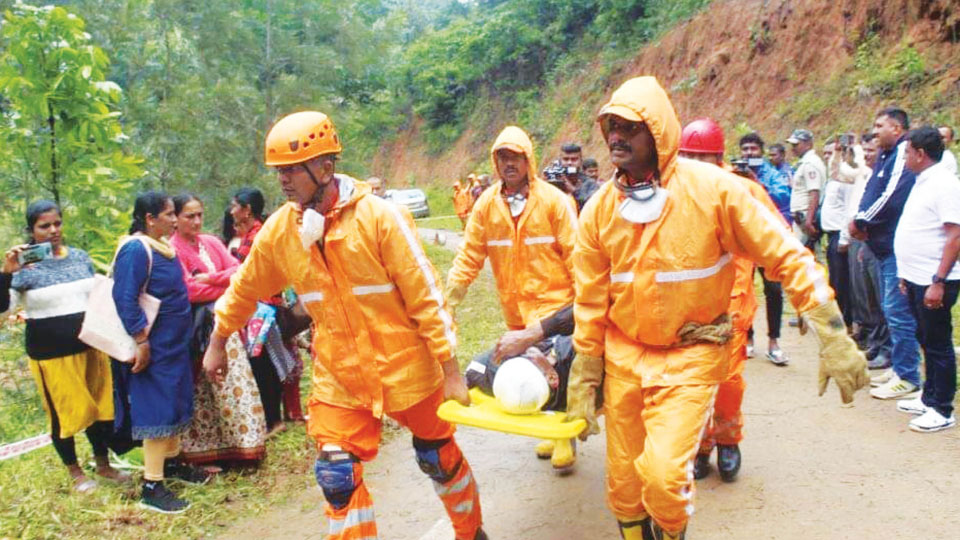
A mock drill on flood rescue operations was conducted by the National Disaster Response Force (NDRF) rescue team and personnel from Government Departments at Hebbatageri village in Kodagu yesterday. Ironically, the drill was held at a time when Kodagu is facing an acute shortage of rainfall which is much below normal.
NDRF personnel, as specialised disaster responders,demonstrated flood response, rescue, evacuation and first aid to educate the local population. The drill was led by Deputy Commissioner Venkata Raja who assumed charge just days ago.
The drill, titled ‘Disaster Demonstration,’ was carried out with the cooperation of various Departments such as District Administration, NDRF, Police, Fire Brigade and Home Guards. The drill was aimed to create awareness among the public about how to undertake rescue operations during natural disasters like floods and landslides.
All the Departments actively participated in the exercise and understood their responsibilities during such challenging times. The training was aimed to equip people with effective strategies to cope with emergencies and disasters and to emphasise the role of NDRF in these situations.
Demonstration on emergency rescue methods
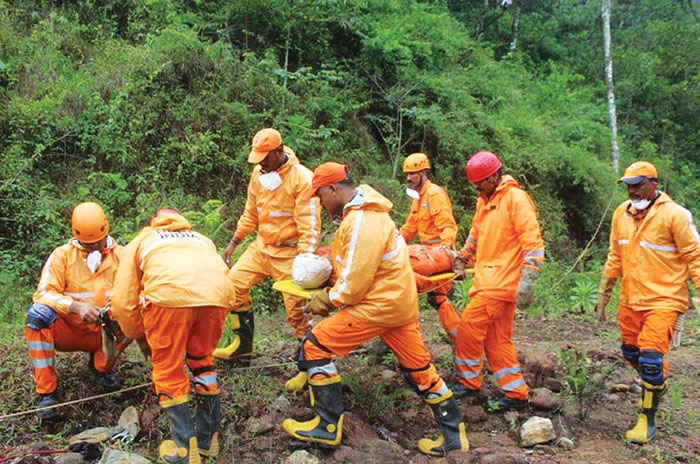
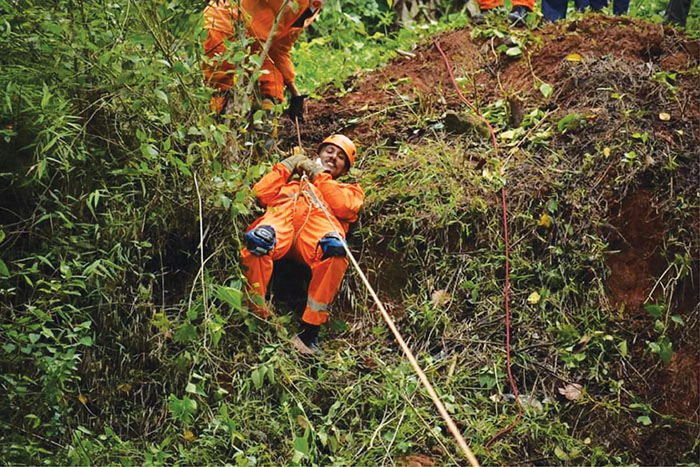
The mock drill included demonstrations of rescues including the collapse of land, tree falls, drowning rescue, boat rescue techniques and rescue from collapsed houses. Demonstration on emergency rescue methods and first-aid for drowning cases were also conducted.
In the event of a natural disaster, various measures were demonstrated in such situations. These included cutting off electricity supply, sealing off the incident site, providing initial medical treatment and transporting severely injured individuals to the hospital. Mock drills of such nature were conducted more than nine times in Kodagu till now.
NDRF Inspector Shantilal Jatiya led the team of 23 members, Assistant Sub-Inspector Chennanayaka from the Police Department with 15 Police officers, a team of 8 members led by Nagaraju from the Fire and Emergency Services Department and a team of 8 members led by Akshay from the Home Guards division participated, taking the total personnel to 54.
The DC stated that the mock exercise aimed to assess the disaster preparedness of different departments and agencies responsible for disaster management. Considering the vulnerability of villages along the river banks to floods, raising awareness among the public and evaluating the adequacy and effectiveness of stakeholders was crucial for building disaster resilience.
He revealed that the joint practice sessions were aimed to enhance coordination, address shortcomings and achieve better results during rescue operations. The main objective of the exercise was to raise awareness among citizens about preventive measures and equip them with the necessary skills to deal with any natural or disastrous situation effectively.
Coordinated actions and synergy
Venkata Raja explained that through coordinated actions and synergy among various emergency support functions at the district and village levels, an effective flood response could be ensured during a real disaster situation. Drawing from past experiences, arrangements were being made in advance, including resources, manpower, equipment, communication, and systems, to save lives, he said.
The District Administration took the initiative to provide information through demonstration to instil public confidence in understanding how rescue operations are conducted and safety measures are taken during floods and landslides. Venkata Raja also mentioned the importance of raising public awareness about the procedures and protocols followed during such situations to ensure safety and rescue operations.
‘Though we have received below-average rainfall, there is a possibility of average to above-average rainfall in July and August,” he added. District Disaster Management Officer R.M. Ananya Vasudeva and other officers were present.
source: http://www.starofmysore.com / Star of Mysore / Home> News> Top Stories / July 02nd, 2023
While 70% of saplings are that of native trees, 30% are crops that have some economic value.
Picture for representational purpose only | (Pic: Express)
The College of Forestry at Ponnampet, in collaboration with Sucden India, is involved in an afforestation drive across Kodagu. The initiative called the Sustain Landscape Project involves the distribution of native varieties of tree saplings among farmers.
Plans are afoot to plant them across sacred groves in the district.
Kari Mara (Diospyros ebenum), ‘Karadimara (Chukrasia tabularis), Dhoopa mara (Vateria indica), Kari Dhoopa (Canarium strictum) to name a few, are native trees that once dotted the Kodagu landscape.
Older generations are familiar with the tree species but these are alien to the present generation. The increased demand for wood and medicines along with galloping urbanisation has led to plummeting of the native trees. To revive the trees, Ponnampet Forestry with support from Sucden India this sustainable plan was devised.
“Community forestry is being promoted through the project with seedlings of the native trees being distributed to the farmers of the district. We have been conducting this initiative for the last three years. Final-year students of the college look after the seedlings of the native trees and a few economic crops, under the experiential learning model. The students receive stipends from Sucden and the seedlings raised in the college nursery are then distributed to farmers,” said K Nanaiah, assistant professor of the college.
Look at the numbers The seedlings are distributed for free to the farmers. While 70% of saplings are that of native trees, 30% are crops that have some economic value, he said. Since 2020, a total of 250 farmers (the majority in South Kodagu) have received the saplings and raised them. The college students have also planted saplings across river banks and other protected areas across South Kodagu.
This year, they plan to expand the initiative across Kodagu, he said. The college has invited the participation of various Sacred Grove Temple committees. “Communities must be involved for this sustainable initiative. If this does not happen, we will devise other plans to plant these saplings,” he said.
The project initiative has achieved a success rate of over 50% with 25,000 to 30,000 saplings have been planted so far. They are now targeting 60,000 plantations by this year.
source: http://www.edexlive.com / Edex Live, The New Indian Express / Home> News> Kodagu / by Prajna GR / July 03rd, 2023
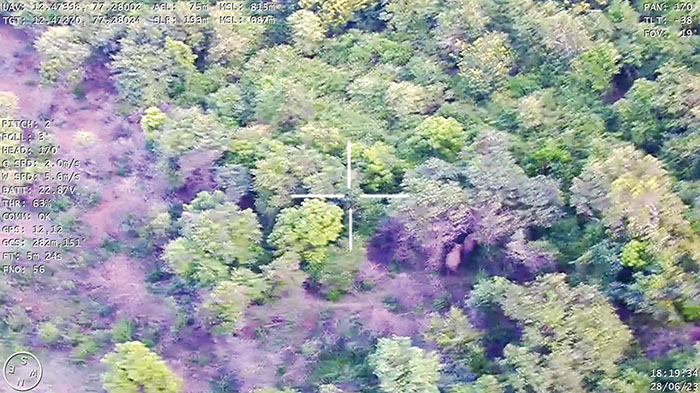
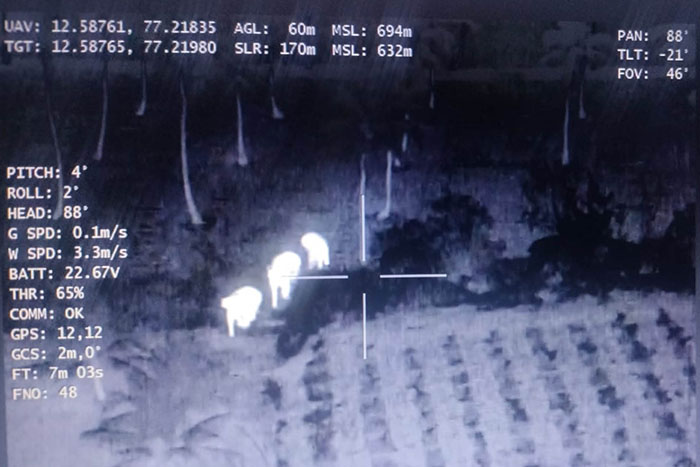
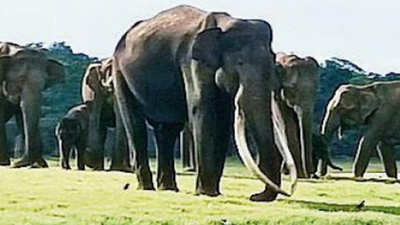
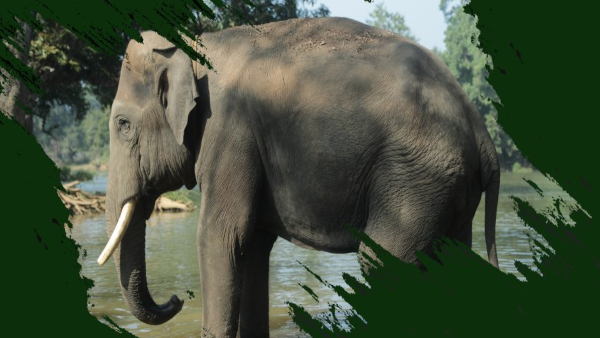
The recent census of elephants in Kodagu forests has indicated that there are 1,103 jumbos in the jungles. The census was taken up for three days last month. The number of elephants has increased in Kodagu though the region is in the middle of human-wildlife conflict.
Conservator of forests (Kodagu circle) BNN Murthy and DCF (Madikeri division) AT Poovaiah said that the census was taken up after a gap of six years. The elephant census, which was conducted in Karnataka, Kerala, Tamil Nadu , was conducted in 23 ranges of four divisions in the district namely Madikeri, Virajpet, Madikeri wildlife division, and Nagarahole Tiger Reserve. About 800 personnel were involved in the census.
The elephant census was conducted in three phases. On the first day, the number of elephants was directly recorded through a block count. On the second day, indirect enumeration was done and on the third day, enumeration was done using the lake and dams by observing the number of elephants coming to drink water.
For enumeration operations, the enumerators roamed forest areas on foot and recorded the marks of elephants seen in the forest as per the prescribed document. The number of male, female and baby elephants in a herd of elephants was determined, officials noted.
There were 200 teams of three people each. Arms were provided to each team as a precautionary measure, the officials stated.
The forest officials said that there are a large number of elephants dwelling in the plantations also and if this number is detected, the number of elephants will increase substantially.
source: http://www.timesofindia.indiatimes.com / The Times of India / Home> News> City News> Mysuru News / by G. Rajendra / TNN / June 07th, 2023
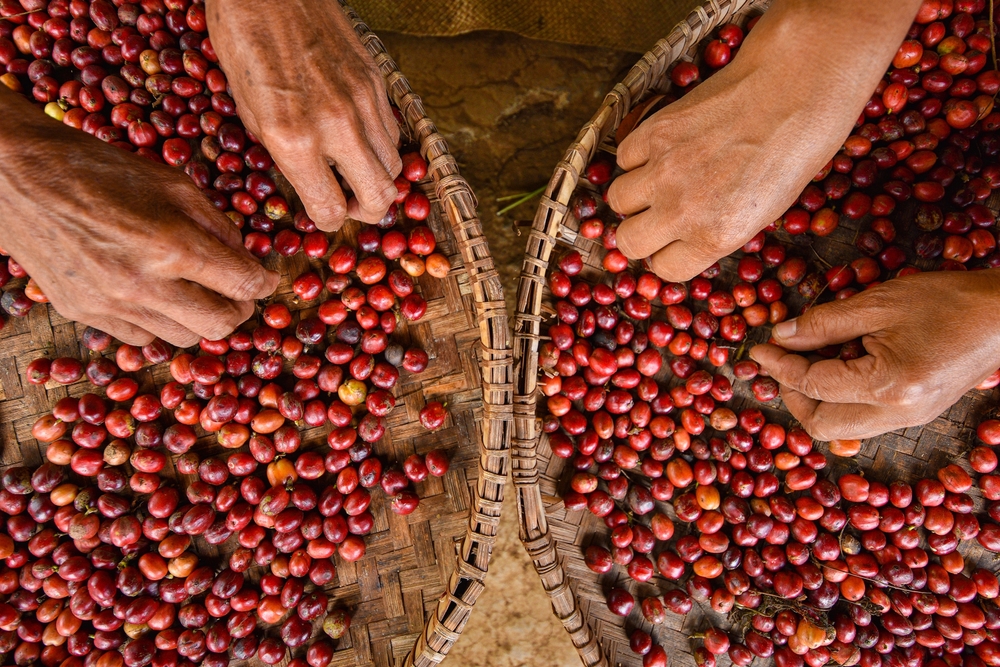
India’s coffee growth is being affected by unpredictable weather patterns, including insufficient rainfall, temperature fluctuations, drought, and heavy flooding.
While Baba Budan, the Sufi monk, planted the smuggled seven coffee beans in the bountiful hills of Chikmagalur, little did he know that India, one day, would be the 6th largest coffee producer, with Karnataka contributing 71 per cent of coffee production to the world. Though the coffee culture has evolved through the years, and there has been a significant boom globally for coffee, the threat for your morning cup is real and is right there knocking on the doors–climate change!
Unpredictable weather patterns are affecting most parts of the world, including India. The country grows a lot of Robusta and Arabica, and both these varieties suffer prolonged periods of inadequate rainfall, temperature rise, drought and heavy flooding.
The Case With Arabica And Robusta Samia Subhani, a fourth-generation coffee planter and the founder of “The Kaimara Belt Coffee,” sounded distressed. Her family has been into coffee growing and trading for over 150 years, and their estate in the Baba Budangiri hills grows Arabica, the most demanding variety. Subhani’s estate has 50-80 farmers working on the plantation daily, all dependent entirely on coffee farming. But with the ongoing effects of climate change, coffee is going through a difficult phase putting all their lives at risk.
Arabica is the most demanding variety of coffee when it comes to cultivation. Photo Credit: Shutterstock
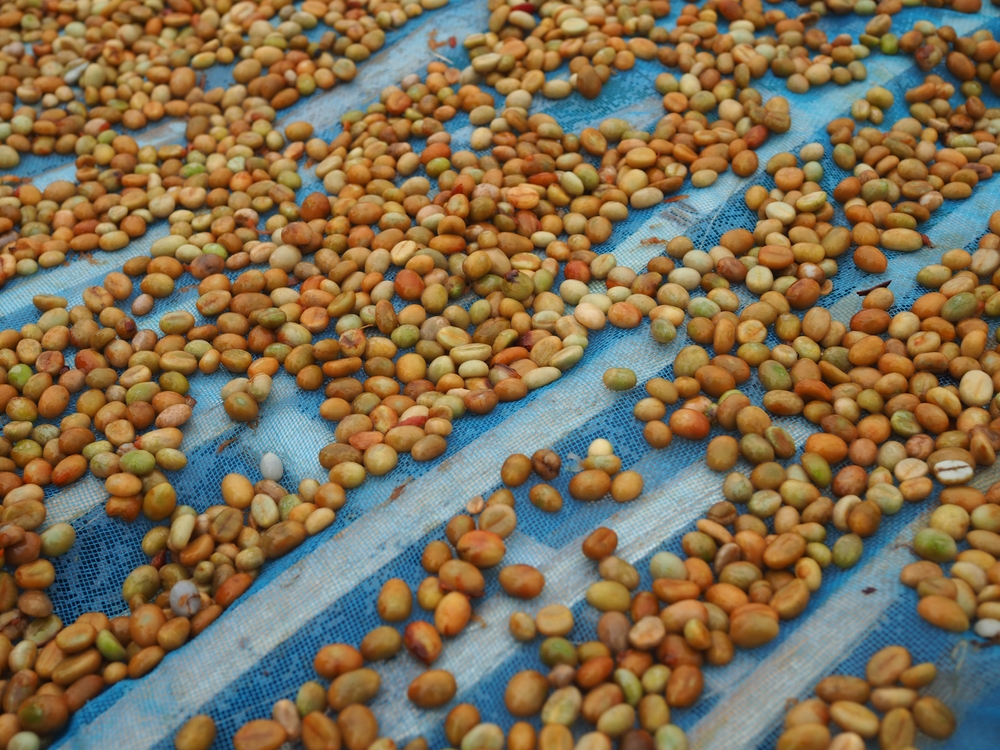
“Climate change causes leaf shedding, reduced coffee plant productivity, and increased vulnerability to pests. Extreme cold delays plant flowering and lowers berry quality. Heavy rains at irregular times cause cherries to burst and drop prematurely. Continuous heavy rains before harvest prevent drying, leading to crop spoilage,” Subhani explained.
But like they say, every solution has a problem. Subhani mentioned that we must dig deeper into our pockets and follow some mitigation measures to maintain the yield and deliver quality coffee to patrons. “So, we provide artificial rains during droughts, maintain proper irrigation in the system, avoid using harmful pesticides to control soil erosion and use only soil-friendly organic fertilisers.”
While this is the situation in an Arabica coffee plantation at Chikmagalur, Coorg, popularly known as the “Scotland of India,” is known to grow more of Robusta.
“Climate change is certain to impact coffee yields due to temperature changes. Coorg is experiencing water scarcity, affecting coffee production. Coffee plants require water, nutrients, rainfall, and sunshine for healthy growth and harvest. Fluctuations in yield have increased, with lower yields in recent years. Delayed monsoons in Coorg will further reduce usable berry production,” said Shruti Shibulal, CEO and Director of Tamara Leisure Experiences.
Though these climatic impacts are less friendly to coffee crops, Shibulal believes they have the advantage of scientific studies to inform how we can prepare for this impending change. Collaboration and knowledge sharing between those with high knowledge of the crop and those with research-driven and technological expertise is vital to assess, test and implement viable solutions.
Robusta is grown extensively in Coorg. Photo Credit: Shutterstock
“The Tamara Coorg is a 100 per cent organic plantation. Therefore, our irrigation is entirely dependent on rainfall. Rainwater harvesting tanks here facilitate the annual reuse of 90 lakh litres of rainwater. These reserves do marginally help us contend with unpredictable weather patterns. However, the coffee trees depend on rain and sunshine in balanced intervals to yield the greatest number of healthy berries,” she added.
According to Shibulal, instead of using measures like industrial fans or increased labour to speed up the drying process of coffee berries, they focus on protecting and nourishing their coffee trees using organic fertilisers and natural supplements. They also prioritise sustainable practices like reusing rainwater for irrigation and actively monitoring soil health. She further emphasised the importance of maintaining a tree canopy structure, which creates a favourable micro-climate for coffee plants and supports biodiversity.
“I would turn my support to local and regional producers or individual plantations (whenever possible). Smaller establishments will face greater challenges during times such as these. As consumers, we must lend our loyalty to those actively pursuing practices that combat climate change in the long run,” Shibulal concluded.
Climate Change Affecting Coffee Planters All Over Tapaswini Purnesh, a fifth generation coffee planter and Director–Marketing & Promotions of Classic Coffee, mentioned that other coffee planters, including the Harley Estate at Sakleshpur in Karnataka, are also battling climate change.
“The worst scenario is the last 4 to 5 years, where we have been experiencing heavy rains during harvest season, i.e., November to February, which normally is a complete dry spell. India is unique to the sun drying of coffee. However, due to unseasonal rains during harvest, plantations are now installing mechanical dryers to avoid quality deterioration,” Purnesh said.
She also stated that coffee production is highly labour-dependent. In the long run, finding labour may become increasingly challenging, an evident trend. As the cost of implementing adaptive measures rises and the arduousness of growing quality coffee amidst climatic pressures is considered, customers must acknowledge that good coffee comes with a price tag. “The coffee growers will be motivated to enhance and refine their coffee cultivation practices if they receive adequate remuneration from the price realisation.”
Meanwhile, the latest estimates warn that climate change may mean that as much as half of the land used for coffee production worldwide may no longer be suitable for it by the middle of the century if global warming continues at this rate. So, as all these coffee planters suggest, every citizen must be more responsible towards our environment, travel responsibly, and follow more sustainable practices to save our environment and the most loved, coffee.
source: http://www.outlookindia.com / Outlook Traveller / Home> Explore> Story / by Deepa Shri Rajan / June 25th, 2023
Shantha, 66, a resident of Kodagu district who lost her house in the 2019 floods, has written to President Droupadi Murmu seeking her permission for euthanasia.
Shantha had lost her home in the 2019 Kodagu floods
Madikeri :
Shantha, 66, a resident of Kodagu district who lost her house in the 2019 floods, has written to President Droupadi Murmu seeking her permission for euthanasia.
“Either help me build a house (she urged the government) or give me permission to kill myself,” Shantha wrote to the President highlighting the failure of the district administration and the authorities concerned in granting her a house. Shantha’s village of Nellihudikeri was one among the several hamlets in Kodagu that was flooded in 2019.
At present, Shantha, a widow, stays with her son in a rented house and works as a domestic help. In the aftermath of the floods, Shantha took shelter in a nearby relief centre. “The then CM BS Yeddiyurappa and other ministers promised us of building new houses. The government also assured us of paying our rents till the houses were ready. However, none of this happened,” she wrote in the letter.
source: http://www.newindianexpress.com / The New Indian Express / Home> States> Karnataka / by Express News Service / June 26th, 2023
Dubare Elephant Camps, nestled amidst the picturesque beauty of Karnataka. It offers an unforgettable experience for wildlife enthusiasts and nature lovers. Located on the banks of the River Cauvery, this unique destination provides an opportunity to interact with elephants in a responsible and sustainable manner. In this comprehensive travel guide, we will explore the fascinating world of Dubare Elephant Camps, providing insights into the camp’s history, activities, wildlife encounters, accommodations, nearby attractions, and essential travel tips. Let’s embark on this remarkable journey into the heart of the elephant kingdom.
History and Background
Dubare Elephant Camps have a rich history rooted in the tradition of the mahouts (elephant trainers) who once served the Maharajas of Mysore. Initially, it served as a training ground for elephants used in the royal processions and other important functions. Over time, it transformed into a conservation and eco-tourism destination, where visitors can learn about the gentle giants and contribute to their well-being.
Getting There
Dubare Elephant Camps are located approximately 240 kilometers from Bangalore, the capital city of Karnataka. The nearest airport is the Kempegowda International Airport in Bangalore, while the nearest railway station is Mysore Junction. From there, one can hire a private taxi or take a bus to reach the camps.
Activities at Dubare Elephant Camps
a. Elephant Interactions:
The highlight of the camp is the opportunity to interact with elephants. Visitors can learn about their behavior, feed them, participate in bathing sessions, and even take part in the elephant grooming process.
b. River Rafting:
The camp offers thrilling river rafting experiences on the River Cauvery, allowing visitors to soak in the breathtaking views of the surrounding forests.
c. Nature Walks and Bird Watching:
Explore the lush green surroundings on guided nature walks, spotting diverse bird species and learning about the local flora and fauna.
d. Fishing:
Engage in a calming fishing experience in the river, trying your luck at catching the elusive Mahseer fish.
e. Coracle Rides:
Hop onto a traditional coracle boat and glide through the gentle waters of the River Cauvery, enjoying the tranquility and scenic beauty.
Wildlife Encounters
Apart from elephants, Dubare is home to a wide variety of wildlife species. Visitors have the chance to spot animals such as deer, gaur (Indian bison), wild boars, and various reptiles. Lucky guests may even catch a glimpse of the elusive leopard or tiger. The forest also boasts a vibrant birdlife, with species like Malabar pied hornbill, Indian roller, and white-bellied treepie making it a bird watcher’s paradise.
Accommodations
Dubare Elephant Camps provide various options for accommodation, ranging from tented cottages to eco-friendly lodges. The camps offer basic amenities while maintaining a close connection to nature. Visitors can enjoy a comfortable stay surrounded by the serene beauty of the forest.
Nearby Attractions
a. Namdroling Monastery: Situated in Bylakuppe, the largest Tibetan settlement in India, the Namdroling Monastery is home to thousands of monks and houses stunning Tibetan architecture.
b. Cauvery Nisargadhama: A scenic island formed by the River Cauvery, Nisargadhama offers lush greenery, bamboo groves, and a deer park, making it an ideal picnic spot.
c. Nagarhole National Park: Located nearby, this national park is a tiger reserve and a haven for various wildlife species. Visitors can embark on a thrilling safari to witness the incredible biodiversity of the region.
Best Time to Visit
The ideal time to visit Dubare Elephant Camps is from October to March when the weather is pleasant. During this period, one can enjoy outdoor activities without being hindered by the monsoon rains.
Essential Travel Tips
a. Carry comfortable clothing, walking shoes, and insect repellents.
b. Respect the animals and follow the guidelines provided by the camp authorities for the safety of both visitors and elephants.
c. Plan your visit in advance and make necessary reservations, especially during peak seasons.
d. Avoid littering and maintain cleanliness within the camp and its surroundings.
Dubare Elephant Camps offer an incredible opportunity to connect with nature, immerse in wildlife encounters, and understand the significance of elephant conservation. From thrilling activities to serene moments amidst the wilderness, this destination promises a memorable experience. By responsibly exploring the Dubare Elephant Camps, visitors can contribute to the conservation efforts and create lasting memories of their wildlife adventure in Karnataka, India.
source: http://www.nativeplanet.com / Native Planet / Home> Travel Guide / by Navya Sona /June 24th, 2023
“During pre-monsoon, I spotted a couple of Giant African Snails on coffee plants and I got rid of them.
Giant African Snails feed on leaves and a branch of coffee plants in Handli village
Madikeri :
With the arrival of the monsoon, coffee growers of Handli village near Shanivarasanthe in north Kodagu are fighting a harmful invasive species. The Giant African Snails have invaded a majority of the estates in the village with coffee growers struggling to rid the estates of these pests.
“During pre-monsoon, I spotted a couple of Giant African Snails on coffee plants and I got rid of them. Now, there is an army of these pests and they are destroying my crops — coffee, pepper vines and plantains,” Suresh Babu, a coffee grower, told TNIE.
The snails feed on stems, leaves and creepers. The farmers rued that the snails multiply quickly and there seems to be no solution in sight to get rid of them. “We are now hiring labourers to remove these snails from the plants. However, this is a disgusting job and we have to pay extra to labourers. A majority of the labourers do not want to take up this task as these snails are slimy,” said Kumar, another grower.
The residents explained that the attacks from these snails across estates have been reported every year during the wet season for five years now. While the government provided some compensation and remedy during the previous years, it is not the case now, said another coffee grower.
“There needs to be a scientific solution to this problem. Coffee Board scientists have to come up with a permanent solution to rid the estates of these snails even as government support to the affected growers is the need of the hour,” concluded Kumar.
source: http://www.newindianexpress.com / The New Indian Express / Home> States> Karnataka / by Prajna GR, Express News Service / June 12th, 2023
Mantar Gowda, MLA, directs the officials to coordinate with different departments to mitigate any extremities in weather.
A flash of lightning illuminating the skies in Mysuru. | Photo Credit: M.A. SRIRAM
With the monsoon set to keep its tryst with Kodagu in the next few days, the authorities reviewed their preparations to meet any eventuality.
A meeting was convened in Madikeri on Friday, June 9, and Mantar Gowda, MLA, directed the officials to coordinate with different departments to mitigate any extremities in weather.
He said the revenue, forest, PWD, CESC and other departments should coordinate and ensure that they attend to any problems caused in case of a landslide, uprooting of trees or telephone and electricity poles. The teams constituted for the purpose should reach the affected spots immediately and carry out repairs or any other mitigatory exercise to tide over the crisis.
The MLA said relief centres should be stocked with basic necessities and be equipped to deal with flood victims who could be shifted from their villages.
The officials were also instructed to counsel those affected by floods and infuse psychological strength in them and professional counsellors should be roped in with the assistance of Department of Health.
The nodal officers in charge of different relief centres should ensure coordination among different wings and branches of the district administration, said Mr. Gowda.
The authorities were directed to impress upon the people living in the vulnerable areas to be ready to relocate at short notice. The Chamundeshwari Electricity Supply Corporation (CESC) personnel were directed to ensure that electricity poles that are uprooted are immediately replaced and power supply restored at the earliest. Similarly, the forest department staff were asked to be on alert to clear the roads of any uprooted trees to pave way for traffic movement.
The district health officer was directed to monitor for any outbreak of water-borne diseases during monsoon and ramp up the preparations to handle any epidemic. The Education Department officials were instructed to ensure that no classes are conducted in schools identified to be in dilapidated conditions.
The ZP CEO Shekar said that meetings have been conducted at the Gram Panchayat levels and 19 schools have been identified for conversion as relief centres if need be. The principals of the respective schools will also function as nodal officers, he added.
There is a helpline at every Gram Panchayat and volunteers will also be deployed in case of any emergency, said the official.
Shantilal Jatia, heading the NDRF at Kodagu, said that a team of 24 personnel are stationed in the district and they would be ready for deployment at any time in case of emergency.
source: http://www.thehindu.com / The Hindu / Home> News> India> Karnataka / by The Hindu Bureau / June 09th, 2023
According to the researchers, with the discovery of the new species, the number of bent-winged bats in India has increased from 4 to 5.
OU scientist discovers new species of Bat (Photo: Twitter)
Hyderabad:
Eminent zoology scientist from Osmania University Dr Bhargavi Srinivasulu, along with her son, Aditya Srinivasulu, has discovered a new species of bat from Karnataka’s Coorg.
The mother-son duo have named their discovery, ‘Miniopetrus srinii Srini’s Bent-winged Bat’, discovered in a cave in Makuta of Kodagu district (Coorg).
The research papers were submitted on Saturday and the expert committee cleared the papers and conferred the rare honour.
“We collected the specimens of bats from a large subterranean cave in the dense jungles of Western Ghats in Makuta, we doubted that this could be a cryptic species of bat, which we had tentatively identified as the Small Bent-winged Bat,” said Dr Bhargavi.
Found in southern Europe, Africa, Madagascar, Asia, Australia, New Caledonia and Vanuatu, Bent-winged Bats are small-sized bats that live in large colonies of a few hundred individuals in caves.
According to the researchers, with the discovery of the new species, the number of bent-winged bats in India has increased from 4 to 5.
The specimens of bats were collected from a large subterranean cave in the dense jungles of the Western Ghats in Makuta. The Small Bent-winged Bat is reported from the Nicobar Islands, peninsular India, Nepal and Northeast India.
Talking about the multiple works they undertook in discovering the new bats, Dr Bhargavi said, “Our research on Andaman bats has revealed that the fauna on the islands are genetically different from those on mainland India. We conducted morphological, cranial, echolocation and genetic studies to determine the relationship between the Makuta specimens and others.”
A peer-reviewed scientific mega journal for animal taxonomists named Zootaxa has published the description of the new species that were named in honour of Prof C Srinivasulu, a bat biologist working at the varsity.
source: http://www.siasat.com / The Siasat Daily / Home> News> Hyderabad / by News Desk / May 29th, 2023
WELCOME. If you like what you see "SUBSCRIBE via EMAIL" to receive FREE regular UPDATES.
Read More »