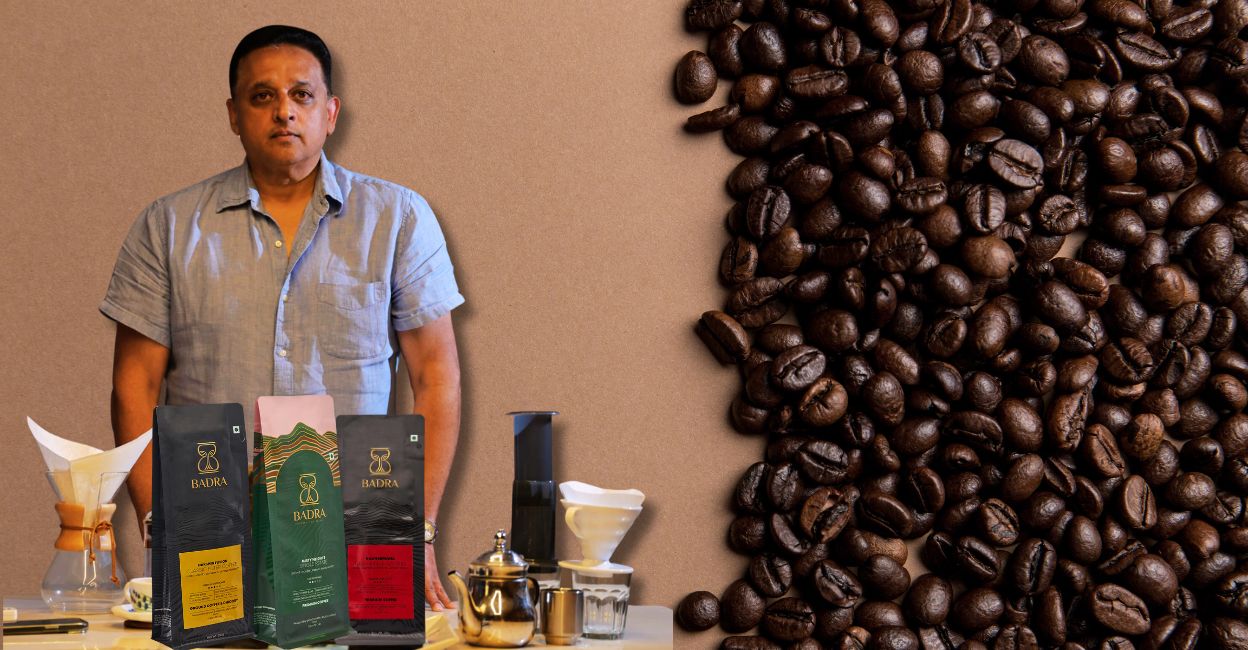
What sets Badra Coffee apart from other coffee brands is its commitment to a direct-from-farm process. From cultivating the beans in the estates of Chikkamagaluru to processing them for various brewing methods, every step is handled in-house, with no middlemen involved.
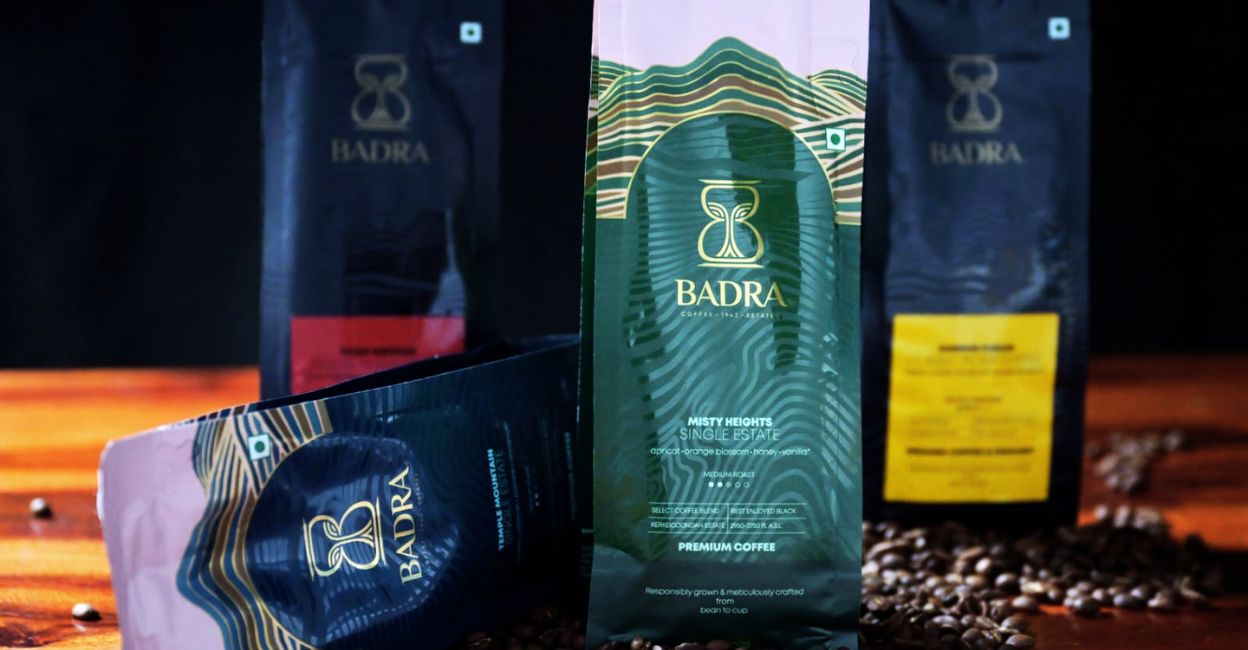
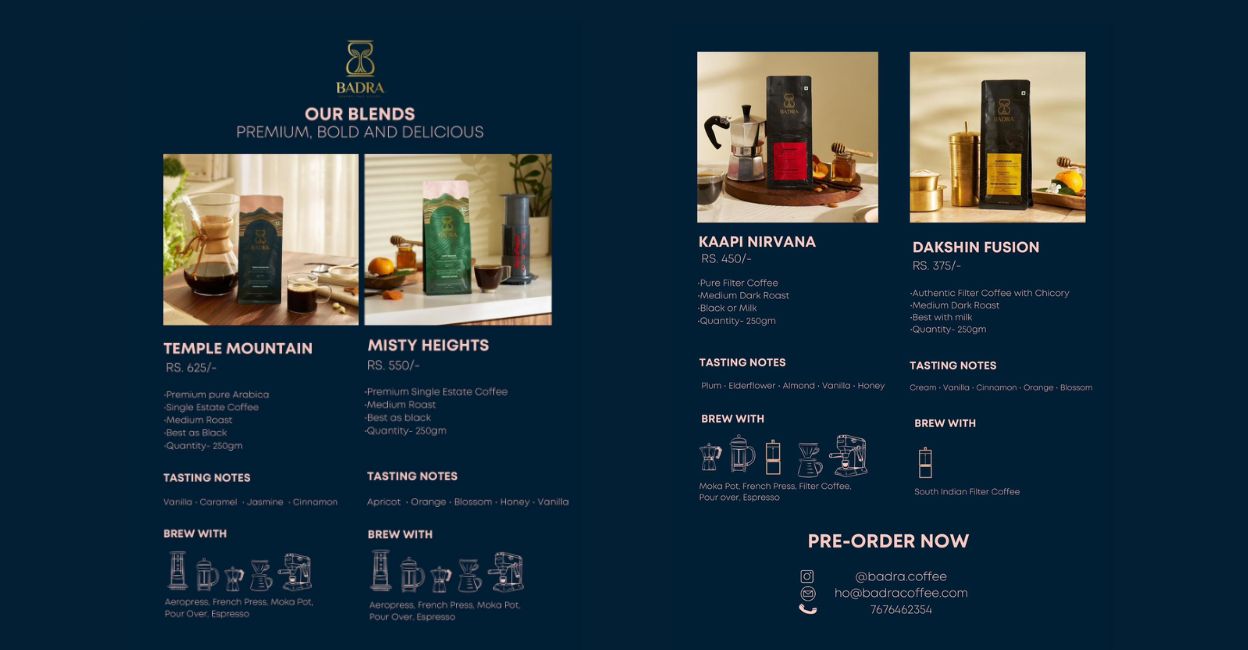
Now, the brand is gearing up to launch four unique blends in the retail market. Three of these—Temple Mountain (Arabica), Misty Heights (Single Estate), and Kaapi Nirvana (Filter)—are pure coffee varieties, while Dakshin Fusion is a filter coffee blended with chicory.
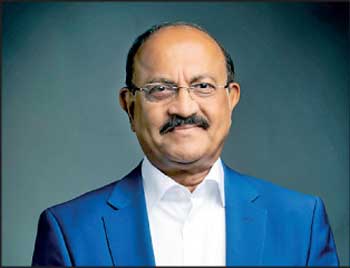
“We call it relationship coffee. We work closely with our buyers to understand their specific flavor requirements and tailor our coffees to meet those preferences,” Jacob Mammen, Managing Director of Badra Estates in Chikkamagaluru, Karnataka told The Week.
Badra Estates & Industries Ltd. was established in 1943 by Mammen’s great-grandfather after acquiring the estate from Brooke Bond Ltd.
For decades, the coffee industry in India was regulated, with all growers required to pool their beans with the Coffee Board of India. It wasn’t until 1997 that the government allowed growers to sell their coffee independently, which opened doors for Badra to explore international markets. Since then, the company has focused on developing specialty coffees.
The rise of coffee culture in India, fuelled in part by brands like Cafe Coffee Day, has led to a growing interest in specialty coffees. And for the first time, Badra Coffee is offering its premium blends directly to retail customers. “We are a seed-to-cup company,” says Mammen. “If you want to truly savour your coffee, rather than just drink it out of habit, try one of Badra Coffee’s blends for an exceptional bean-to-cup experience.”
Badra Coffee’s blends, Temple Mountain (Arabica), Misty Heights (Single Estate), Coffee Nirvana (Filter), and Dakshin Fusion (Chicory Blended Filter), are now being launched. Photo: Special arrangement
Badra Coffee, which has been exporting to 10 countries, including Japan, the US, South Korea, Germany, and Norway, for over two decades, will now be available in the Indian retail market. Their blends, Temple Mountain (Arabica), Misty Heights (Single Estate), Coffee Nirvana (Filter), and Dakshin Fusion (Chicory Blended Filter), are now being launched.
The market prices for 250-gram packets are Rs 625, Rs 550, Rs 450, and Rs 350, respectively. In the initial phase, orders can be placed through the website badracoffee.com or via the toll-free number 18001236490. The coffee would also soon be available through Amazon. Orders above Rs 500 will not incur delivery charges.
Photo: Special arrangement
source: http://www.onmanorama.com / ONManorama / Home> News> Business / by OnManorama Staff / August 24th, 2024
A delegation of Codagu Planters Association (CPA) met Mysuru-Kodagu MP Yaduveer Krishnadatta Chamaraja Wadiyar on Aug. 20 during the 109th birth anniversary of former CM Devaraj Urs at Kallahalli, Hunsur.
The CPA presented a memorandum requesting the MP’s intervention to secure GST exemption for black pepper and cardamom. The delegation was led by CPA Chairman A. Nanda Belliappa and comprising Vice-Chairman A.A. Chengappa, members K.K. Vishwanath, K.K. Belliappa, Muthu Cariappa, and Secretary C.K. Belliappa.
The CPA’s memorandum highlighted that GST authorities have been issuing notices to coffee growers, insisting on GST registration due to the tax on black pepper. They argue that while green pepper is not subject to GST, dried black pepper attracts tax.
The CPA contends that the drying process does not alter the fundamental nature of the produce and should not impact the tax-exempt status of black pepper and cardamom.
This stance is supported by Section 2(7) of the CGST Act 2017, which exempts individuals or Hindu Undivided Families engaged in cultivation by their workers or with the help of family members or hired workers from GST registration.
The CPA also pointed out that imposing GST on black pepper and cardamom is inconsistent with the treatment of similar commodities like paddy and red chillies, which are exempt from GST.
The delegation briefed MP Yaduveer Wadiyar on the issue, who assured them that he would raise the matter with the Union Finance Ministry. A memorandum has also been submitted to the Union Finance Minister and the Finance Secretary through the MP.
source: http://www.starofmysore.com / Star of Mysore / Home> News / August 22nd, 2024
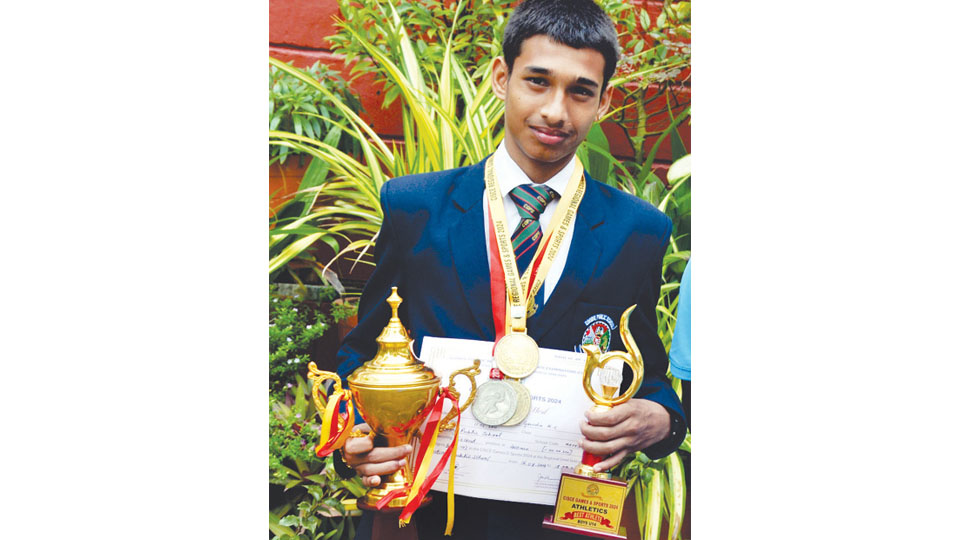
In a stellar display of speed and agility, students of Coorg Public School (COPS) made their mark at the CISCE Regional Athletics Meet 2024, hosted by KA324 Indian Public School, Bengaluru.
K.C. Sukanth Gowda, a Class 8 student, stole the show with his impressive performances, clinching gold medals in the 100m and 200m events in the Under-14 category and a silver medal in the 400m event.
Sukanth’s remarkable achievements earned him the Individual Championship title in the Under-14 boys’ category.
The Coorg Public School team, comprising 12 participants, including 4 girls and 8 boys, showcased their teamwork and dedication, ultimately winning the Overall Championship in the Under-14 boys’ category.
source: http://www.starofmysore.com / Star of Mysore / Home> Sports / August 21st, 2024
Welcome to The Sprudge Twenty Interviews presented by Pacific Barista Series. For a complete list of 2024 Sprudge Twenty honorees, please visit sprudge.com/twenty.
“Today’s earthly embodiment of the virtue of grace would have to be the inimitable Sunalini Menon, an extraordinary woman who I consider to be both a mentor, and one of the world’s greatest coffee cuppers. I first witnessed her quiet self-assurance and profound knowledge of coffee at work in Singapore, when I had just moved from Papua New Guinea. A couple of gentlemen were trying to flog me coffee from Yunnan, China, which was just coming on as an origin. “As good as a Costa Rican hard bean,” they blustered loudly. Sunalini happened to be cupping with and coaching me that afternoon, but they clearly didn’t know her and assumed she was just another woman who could be hoodwinked and bullied.
As we started to cup their samples, Sunalini gently probed them with questions on the varieties they had planted. Was it a first or second-generation cross as the Catimor cup was clearly coming through? Perhaps the parenting might have been from xyz stock as that taste was in the finish, didn’t they think? And where had the progenitor plant material come from as it tasted rather more along the lines of lmn than xyz, didn’t they think?
With every softly spoken question, her deference combined with her indisputable empirical knowledge of what she was cupping put the gentlemen further on the back foot. I watched their posture literally move from forward leaning, imposing, nearly bullying to quiet, defensive, and ultimately defeated. The lids came down over their eyes, their body language shut down, they were silenced. It was a prize-winning performance, the likes of which I have not since seen. Never once did Sunalini raise her voice or humiliate. Instead, with soft-spoken words underpinned by the undisputed certainty of her palate and her knowledge, she whipped them. Always immaculately clad in the bright and decorative costumes of her native India, Sunalini’s personal and professional elegance are an inspiring beacon to other women in coffee.”
Nominated by Shirin Moayyad
How many years have you worked in the coffee industry?
I joined the coffee industry as early as 1971, commencing with the Government of India organization of the Coffee Board, where I served 20 years. When I joined the Board, the marketing for Indian coffee was being carried out by the Board, considering that the farmers, majority of whom were small and tiny farmers, were not very conversant with the marketing of their coffees nor the international market pricing for coffee. In the year 1995, the coffee market got liberalized, with the farmer not only cultivating coffee, but also marketing his coffee produce, when I decided to move from the governmental sector to the private sector, considering that the excitement would now be in the private sector. In fact, when the market got liberalized, I almost decided to give up my job in coffee, as my husband had moved to the Middle East along with my daughter to work in a US bank. However, as the farmers in India requested my help, considering that they were not very familiar with the quality aspects of coffee nor were they conversant with the marketing of their coffee, I decided to stay on in coffee!
I set up a coffee laboratory, which was the first of its kind in India, with the help of the farmers, where I could evaluate the quality aspects of coffees of all in the coffee value chain. Most importantly, my focus was on the coffee farmer and the post harvesting measures he would need to follow and implement on his farm, to ensure the quality of his end product.
My journey started in the private sector on 1st September 1995, with my lab coming into full operation on the 1st of January 1996, handling the quality aspects of Indian coffee from the coffee season of 1995/1996.
A long journey of 50+ years in coffee—energising, stimulating and exciting!
What is your current role in coffee?
My current role in coffee is not only to evaluate the visual and cup quality of coffees grown in India and from across the world, but also to help the Indian coffee farmer and his counterpart in other coffee producing origins to improve the quality of his produce, from the time of harvest till the time the coffee is served to the consumer.
Apart from helping and educating the coffee farmers in India and around the world, I also help in certifying the quality of coffees purchased by international buyers and roasters of coffee, who have specific requirements on the quality of the coffees that they purchase from India.
Teaching and imparting knowledge on the important correlation between post harvest processing of coffee and quality in the cup, has also been an important facet of my career, whereby I have been conducting teaching courses not only in India, but also at the Universita del Caffe, Trieste, Italy, under the University of Udine and the Ernesto Illy Foundation. This has been an important aspect of my career, being able to teach and put across the finer points of quality to young professionals and entrepreneurs, who want to pursue coffee as a career.
The café culture in India, which opened its doors on 1st January 1996, has also enabled me to develop different blends and single origin coffees, helping to present varied taste profiles of coffee to the Indian consumer. The lab helped in developing various blends for the first Café, which started the Café culture in India, with these blends being served, even today, at its various outlets opened in urban and rural India. The lab has helped many cafes in their journey to serve a good cup of coffee to the consumer, which has become an important role in my coffee journey.
I also help in providing consultancy and advice to new start-ups on the quality aspects of coffee, [in particular for] start-ups in roasting and in the cafe industry.
Overall, my current role in coffee is focusing on the quality of the coffee produce, which is cultivated by the producer, exported to the buyer, roasted by the roaster and served in cafes and coffee shops, to be enjoyed by the consumer.
What was your first coffee job?
My first job was that of an Assistant Cup Taster at the Coffee Board of India, a designation which brought with it a lot of laughter. To me, the designation of “Assistant Cup Taster” sounded exotic, whereas, to all my friends, the designation not only brought laughter, but also the exclamation, “you taste cups and cups and even get paid for it.” Well, that was my first coffee job, where I learnt that coffee was a fruit and that we drink the seed of the fruit. I learnt how the seed could be extricated from the fruit, how to roast it, how to brew it, and how to cup it. It has been a long journey of excitement, adventures, and knowledge acquisition, though, at times, it has also been frustrating and disheartening!
Did you experience a life-changing moment of coffee revelation early in your career?
The coffee revelation came early in my career when I went to a coffee farm. I thought coffee harvesting and processing were very simple exercises, with machines carrying out most of the work, but what I saw on the field was a moment of great revelation to me and changed my whole concept of life in general.
I vividly remember my first visit to the coffee plantations. It was truly a memorable experience. Selective harvesting of those ripe red cherries by nimble and experienced hands was a fascinating sight—watching women covering their heads with scarves, tying jute bags around their waist, darting under tall coffee plants with tiny droplets of dew and gusty winds blowing around them, creatures of all sizes and shapes crawling all over them and yet those tender loving hands picking only just ripe red cherries deftly and with speed. What care, what precision, what patience! Look into the bag and you find only just ripe red cherries. Talk to them—there is only a smile which flashes back at you, a smile of satisfaction, a smile of thanks, a smile of humility. I learnt a lesson during that visit that, even in any situation of hardship and difficulty and in adverse conditions of work, you would still need to maintain a balance and carry out the task that is before you with care, humility, and dedication.
The women working in the coffee fields have been a source of inspiration, besides being my role models in my journey in coffee, teaching me my coffee principles, teaching me that life should be accepted in all its fullness and that strength does not come from a physical capacity, but from an indomitable will—the will to survive, the will to move forward, the will and the courage to change the things we can, and the will and the wisdom to accept the things we cannot change.
What facet of the coffee industry has changed the most during your career?
What has changed the most during my career has been the change in the perception of coffee as a brew, as a beverage and as a drink. When I was growing up in coffee, it was coffee brewed on the Indian filter, a contraption which resembles the “Neapolitan” coffee maker of Italy, wherein the coffee is extracted through infusion and by gravity. The coffee, which is brewed, is thereafter mixed with milk and sugar and served in Indian households and in small coffee outlets called “Darshinis”, which are located by the wayside in India.
Today, in India and in other producing and consuming countries, where tea has been the main beverage that is consumed, coffee has become a way of life. It is looked at as a drink, which is not only brewed on the Indian filter and served with milk and sugar, but brewed in exotic ways on different brewing equipment, whose principle of extraction is different, creating different taste profiles in the cup.
In my country, coffee is no longer looked at as a drink for the elderly and to be drunk at home. It is considered a hip beverage and drink, which is served in cafes, which have sprung up in every nook and corner of urban and even rural India. The Millennials and Gen Z’s have changed the face of coffee not only in my country, but also in the world around us, making us understand that there are waves in coffee, which change the appearance of the coffee bean and its taste profile.
At present, issues like quality, sustainability, wellness/health, and convenience are becoming the mainstay of the world coffee industry, with consumers not only wanting to understand the quality, sustainability, and health benefits of the coffee they are drinking, but also wanting their cup of coffee to be served in a convenient format such as a pod, a capsule, an RTD, a cold brew, or as a crafted instant coffee. This is a far cry from the 1960s, when all we saw the bean being extricated from the fruit!
Is there a person or persons who served as your mentor early in your coffee career? How did they impact you?
Yes, there are many persons who have served as my mentors when I started my career in coffee. I was perhaps the first woman to enter the coffee arena in India and I use the word “arena” because coffee was entirely a male-dominated bastion when I entered the Coffee Board of India. I found that I was the only woman in the officer’s cadre at the Board and had to develop the strength to wade through this “male” cup of coffee and not just wade through this cup, but also ensure that my work in the taste profile of the cup would be appreciated!
It has been a long journey… a journey which made me look up to different mentors and individuals, who shaped my life in coffee.
My first mentor was the late Dr. Ernesto Illy, whom I met at a fair in Trieste, when I was busy hanging up various paraphernalia of articles at the India booth. He was surprised to see a young Indian woman in coffee and took me into his fold, teaching me not only the taste aspects of coffee, but also the chemistry behind the taste nuances in coffee. He was a superb taster, helping me to understand how to identify the different attributes in the cup and most importantly, to relate the attributes in the cup to the chemistry of the coffee bean. He mentored me in my coffee career, for which I am extremely thankful.
The late Erna Knutsen, whom I met a couple of times during the SCA events in the US, also helped me to understand that a woman could be strong and grow in coffee, provided she develops the knowledge base in coffee. She helped me to understand that I need to read and learn about coffee, before I could speak on coffee. She made me understand that “knowledge is power” and without a knowledge base, I would be a dormant coffee bean!
Kenneth Davids is another mentor of mine, who helped me to develop my vocabulary in coffee. He is very calm and patient and a brilliant writer, who helped me to understand how to describe a cup of coffee and how to put it across, in a simplistic manner, to the average consumer.
What still surprises you today about coffee, or gives you joy?
Today, what still surprises me about coffee is the fact that I can never say “I know it all.” Every day is a new and stimulating experience for me, giving me joy in understanding and appreciating the various taste nuances and taste profile of a cup of coffee. When you taste pure 100% Arabica of a certain variety, you get certain flavor notes and when I taste the same 100% Arabica, but pertaining to a different variety, I get an array of different flavor notes and that’s what gives me joy—the joy of discovery, the joy of experiencing, and the joy of tasting a varied cup of coffee every day!
What’s something about the coffee industry you’d most like to see change?
The change that I would like to see in the coffee industry is to see the coffee farmer being highlighted and given prominence, when one drinks a cup of coffee. Today, when one drinks a cup of coffee, we are mainly talking about its flavor and perhaps, some information about how it was processed and from where it was obtained. However, not very many consumers are aware of the hands behind the beans, the hands which have toiled and produced that exotic cup of coffee. I would like to see the change where it would be the farmer in focus and thereafter, all the other factors of terroir, altitude, shade pattern, certification, and taste nuances. Giving the farmer the prominence, with his caricature or a photo and a few lines on him/her and the family, could perhaps help in enhancing the taste profile of the cup of coffee, as one would appreciate and understand the hard work that has been put in by those caring hands, to produce that tasty cup of coffee!
What is your most cherished coffee memory?
Among the very many cherished coffee memories that I have, the one that holds a light in my mind is the memory of a hardcore Arabica buyer, who disliked the Robusta bean, but came to appreciate it at my lab. I still remember the hardcore buyer talking only about Arabicas and was even averse to the mention of the word “Robusta”. I wanted to understand why this buyer was so averse to the Robusta bean. Hence, when he came to my lab to carry out cupping of various Arabica coffees, which he was proposing to taste and then purchase, I slipped in a Robusta cup in-between the cups of Arabica coffee and had written the details of the Robusta bean under the cup, as I did with all the Arabicas.
It was a blind cupping session. The buyer was a good taster too. He cupped all the coffees and when he came to the Robusta cup, he stopped for a while, tasted it, re-tasted it, but he did not mention any negatives and proceeded with the cupping. At the end of the cupping round, he came back to this cup of Robusta coffee, tasted it and asked me as to what this cup was all about? My first reaction to his question was not the answer, but asked him as to whether he appreciated the cup or whether this cup was not up to his expectations. The answer I got was quite surprising.
The cupper stated that the cup was different, but he liked it as it had some unique notes, which he found to be not only different, but also very acceptable. I was overjoyed, but did not show my happiness and instead asked him to lift the cup when he would see the details of the coffees, which had been prepared and served at the table for cupping. He lifted the cup and for a moment, his face changed color. I could see him absolutely confused, when he turned round to me and said “No, this cannot be Robusta!” I said yes, it is a well prepared washed Indian Robusta. He was shocked.
What I liked about him was that from that cupping day onwards, while he may not purchase Robustas, he does not talk poorly of the Robusta bean. In fact, whenever he discusses the species of Arabica and Robusta, I can hear him saying that Robusta too is quite a distinct bean and that there are buyers who love the bean and there are those who still have not been able to find the usage for this coffee species. This is a memory that is etched in my mind and which I will never forget.
Do you make coffee at home? If so, tell us how you brew!
Yes, making coffee at home is a ritual. I grew up in a home where coffee was brewed every morning on the Indian filter and me and my sister, as children, would wake up to the aroma of the coffee brewed by my grandmother, which would hit our nostrils and be our “wake up” call for the day to begin.
The brewing is a very simple methodology. The coffee is a form of Drip Filter, brewed by infusion and gravity. The Indian filter comprises two vessels placed one on top of the other. The top vessel has small holes through which the brew is extracted. The coffee powder is placed in the top container and to ensure that the coffee bed is not disturbed when hot water is poured for brewing, a plunger is placed on top of the coffee bed. Hot water is then poured into the top container and the hot water passes through the bed of coffee powder, slowly extracting the coffee flavors from the coffee powder and drips down by gravity into the lower container. Generally, we take about 10g of coffee powder to about 100 to 120ml fresh boiling water, though this ratio would depend on the taste preference of the person who is brewing and drinking the cup of coffee. It takes about eight minutes for the coffee to be brewed and thereafter, a cup of coffee, either with or without milk and sugar is enjoyed.
Depending on the time of day and my mood, I vary my ratio of coffee powder to water and enjoy my cup of ‘black coffee’!
What is your favorite song/music to brew coffee to?
My favourite song is ‘Black Coffee’ by Ella Fitzgerald.
What is your idea of coffee happiness?
My idea of coffee happiness is working with the small coffee farmer, helping him to understand the coffee beans that he produces, standing with him while he processes his coffee beans and thereafter, cupping with him and helping him to understand how the flavor attributes and taste profile get developed in the coffee cup through his helping hands. It gives me joy to see the light and smile on the tiny coffee farmers face when his coffee is recognized and appreciated by roasters, buyers, and consumers around the world. The joy on his face is what brings me happiness.
If you could drink coffee with anyone, living or dead, who would it be and why?
I would like to drink coffee with my late grandmother. It was she who introduced me to the aromatics of coffee. Every week, I would walk with her to the nearby coffee store, where she would chose her roasted beans, prepare her blend, get the blend ground to her specifications and thereafter, carefully carry the coffee packet home, to being brewed every morning. As a child, I was fascinated by this exercise of round shaped beans and flat beans being mixed together; at that point of time, I did not know that it was a mix of round beans of peaberry and flat beans of Arabica.
What I loved about the entire experience was that, I not only walked with my grandmother to the nearby store to see the blend being made and the coffee beans being ground, but also enjoyed the aromatics of the coffee powder and the aromatics of the brew, which hit my nostrils every morning as a “wake up” call to start my day.
My grandmother would brew the coffee on the Indian filter and drink the coffee from a special mug, which we call “Sombu” in India—a large container with a long neck, which can hold almost 400ml. of coffee. She would sit along with my sister and myself, drinking her “Sombu” of coffee, with both of us sisters looking at the coffee beverage “longingly” and drinking our glass of milk. No amount of pleading would enable us to sip her “Sombu” of coffee, but her condition was that, if we study and behave well throughout the day, she would add a few drops of the coffee beverage to our milk, the next day. This is a memory I will never forget.
What’s one piece of advice you would give someone getting their start in the coffee industry today?
Traversing coffee is a very adventurous and stimulating journey, but one needs to learn and understand the different facets of the coffee bean. It is a long journey of studying, understanding, and appreciating the bean, with the challenge of the aromatic nuances of the coffee brew not being easily discernible. However, I can state with confidence that, embarking on the coffee journey is invigorating and inspiring. Once you start on the journey, you will never look back, but only look forward, to continue traversing the flavourful, yet challenging road to energy, excitement and exhilaration!
Thank you so much.
The Sprudge Twenty Interview series is presented by Pacific Barista Series. For a complete list of 2024 Sprudge Twenty honorees and interviews, please visit sprudge.com/twenty.
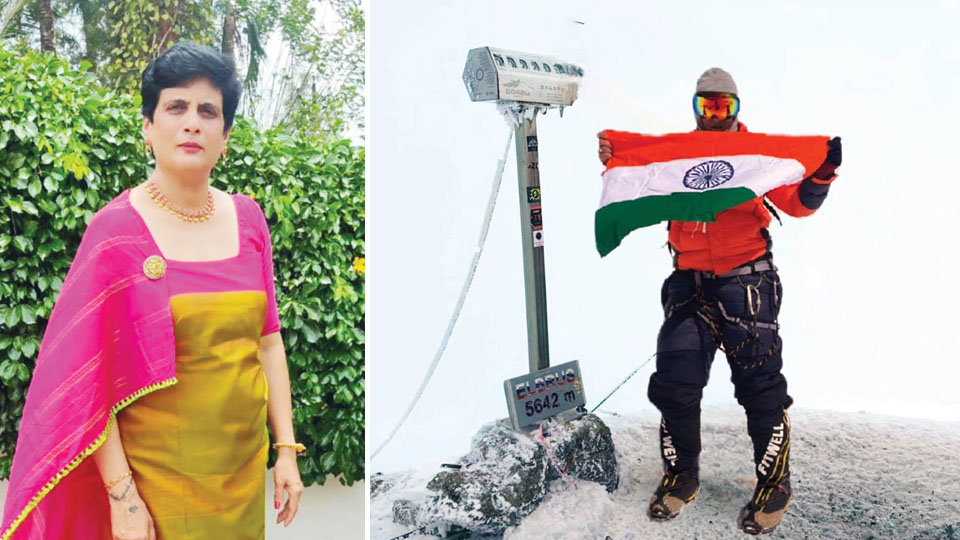
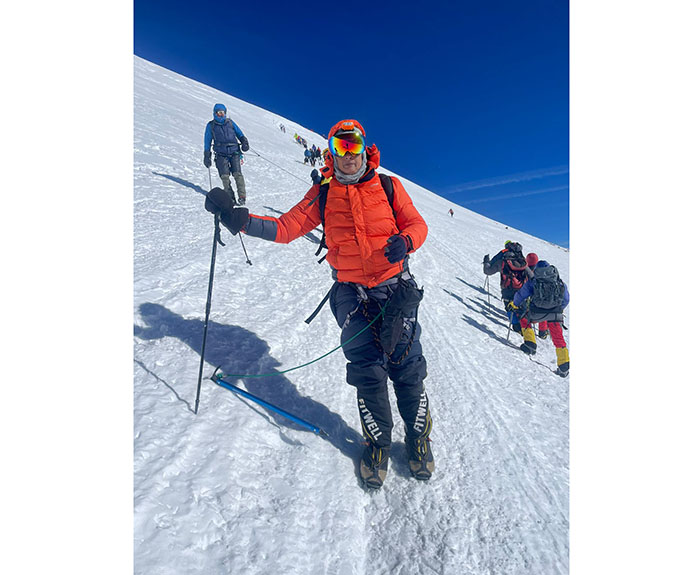
Jammada Preeth Appaiah, a resident of Bannimantap, Mysuru, reached the summit of Mount Elbrus, the tallest mountain in Russia and Europe, on Aug. 17. She completed the climb in 7 hours and 20 minutes, starting at midnight and reaching the peak at 7.20 am. She was part of 11-member expedition team.
Preeth is the second person from Kodagu to achieve this feat, following Tekkada Bhavani from Peroor, Napoklu. In March 2023, Preeth also scaled Mount Kilimanjaro, Africa’s highest peak and the tallest free-standing mountain in the world at 5,895 metres (19,340 feet).
Mount Elbrus, an extinct volcano standing at 5,642 metres (18,510 feet) above sea level, is located deep within the Caucasus range near the Georgia border. This range, which includes 14 of Europe’s highest mountains, spans 700 miles and is home to the tenth-most prominent peak in the world.
Situated in the southern Russian republic of Kabardino-Balkaria, Mount Elbrus is the highest peak of the Caucasus Mountains. Although part of the Caucasus Range, which straddles Asia and Europe, most geographers classify it as the tallest peak in Europe.
Speaking to Star of Mysore over the phone, Preeth Appaiah shared details of her journey to conquer Mount Elbrus. She departed from Mysuru on Aug. 9, arriving in Russia on Aug. 10. On Aug. 11, she undertook an acclimatisation trek to a mountain rich in Molybdenum, standing at 4,120 metres (13,515 feet).
Following this initial trek, Preeth travelled to Elbrus village and completed two more days of acclimatisation walks to Pastukhov Rocks. The final summit push for Mount Elbrus began around midnight, with Preeth reaching the peak by 7.20 am on Aug. 17.
Biting Cold
“Mount Elbrus is fraught with hidden death traps, with temperatures plummeting to minus 35 to minus 40 degrees. The Arctic wind is extremely dangerous and despite wearing five layers of clothing and climbing gear, the cold was unbearable. The mountain is riddled with crevices and craters that can easily be camouflaged by snow in bad weather. We couldn’t summit for two days due to the weather, so we finally made the ascent on Aug. 17,” Preeth recounted.
After successfully scaling Mount Kilimanjaro, Preeth was determined to conquer Mount Elbrus as part of her goal to climb all seven summits — the highest mountains on each continent.
Preeth Appaiah is a home-maker, married to advocate Jammada M. Aiyanna in Mysuru. The couple has two sons, Pratham Poonacha and Aryan Kuttappa. Preeth is the daughter of late Hon. Captain Kunjiyanda Appaiah and Gowramma. Her brother, Kunjiyanda Machaiah (Machu), is a wildlife photographer.
source: http://www.starofmysore.com / Star of Mysore / Home> News / August 20th, 2024
Tollywood’s young hero, Kiran Abbavaram, is set to marry his girlfriend, Rahasya Gorak, on August 22.
After dating for several years, the couple is finalizing their plans to marry in the presence of their family and friends after getting engaged recently.
Kiran and Rahasya first met through their debut movie, Raja Vaaru Rani Vaaru, and have been dating for seven years. Both worked as software engineers and entered the industry through short films.
The couple will marry on August 22 in Coorg, where Rahasya’s family resides. Both families will attend the wedding, but there are no reports of celebrities attending.
source: http://www.sakshipost.com / Sakshi Post / Home> Entertainment> Tollywood / August 19th, 2024
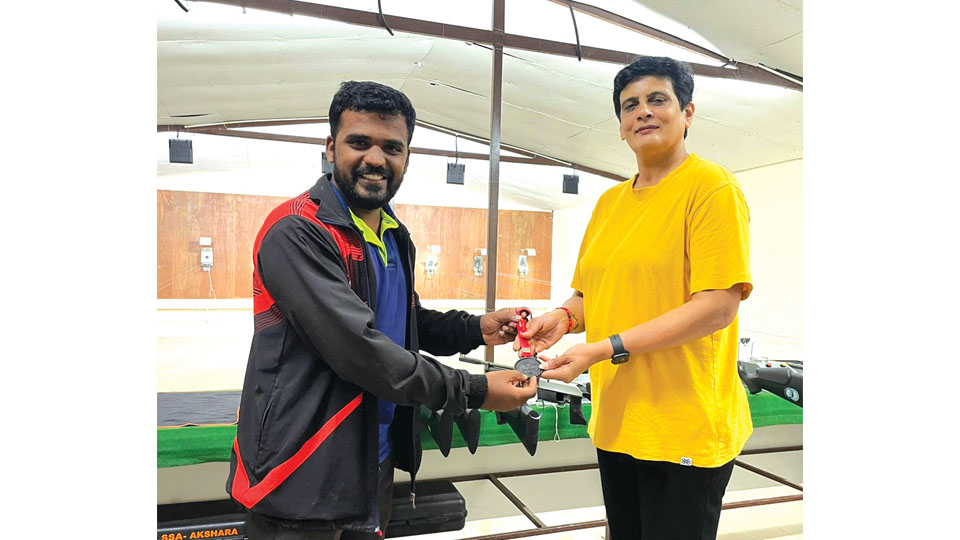
Jammada Preeth Appaiah, a resident of Bannimantap in city, won a bronze medal in the Women’s Masters Category at the 12th Karnataka Shooting Competition and Championship-2024.
The event was held on July 5 at the Sports Authority of India Shooting Range and Bangalore University Shooting Range in Bengaluru, which was organised by Karnataka State Rifle Association.
Preeth Appaiah is a student of the Mysuru Sports Shooting Academy (MSSA) and regularly practices under coaches Vivek and Mamith. In 2023, she achieved a remarkable feat by climbing Mount Kilimanjaro, the highest mountain peak in Africa.
She reached the summit of the highest free-standing mountain in the world at 5,895 metres (19,340 feet). Preeth is the wife of advocate Jammada M. Aiyanna.
source: http://www.starofmysore.com / Star of Mysore / Home> Sports / July 10th, 2024
Sneha Medappa Maruvanda grew up in India, and Dr. Mark Ross Edelstein, in Virginia. But in getting to know one another, they discovered their backgrounds were strikingly similar.
Don Mears Photography
By the time Sneha Medappa Maruvanda met Dr. Mark Ross Edelstein in person, she feared they might not have anything left to say to each other.
“I was having a bit of a panic attack about meeting,” said Ms. Medappa Maruvanda, 30, who matched with Dr. Edelstein on Bumble in November 2019, and soon became engaged in a two-week-long conversation with him on the app. He was living in Philadelphia, and she in Bala Cynwyd, Penn., a suburb of the city.
“We had over talked,” she said. “He was telling me about his heroes when he was four, how a teacher was very mean to him.”
Another concern, said Dr. Edelstein: “Both of us were a little bit worried about our cultural background differences.” He was raised by Jewish parents in Richmond, Va. Ms. Medappa Maruvanda grew up in a Hindu family and was born in Coorg, a rural district in the Indian state of Karnataka, before moving to Bengaluru, formerly Bangalore, as a young girl.
But when they met up that December at a Cuban restaurant in Philadelphia, neither was at a loss for words. As for their cultures, it quickly became clear that they might not be as different as they had seemed.
“Our backgrounds are very similar in terms of sense of community and family, so I think that made it a lot easier to bridge that cultural gap,” said Dr. Edelstein, 32.
A graduate of the University of Virginia, where he received a bachelor’s degree in sociology and bioethics, Dr. Edelstein earned a medical degree from the Virginia Commonwealth University School of Medicine. He is currently in his fifth year of residency training for interventional radiology at Temple University Hospital in Philadelphia.
Ms. Medappa Maruvanda received a bachelor’s degree in industrial engineering and management from Rashtreeya Vidyalaya College of Engineering in India, then earned a master’s degree in industrial and systems engineering at Rutgers University in New Jersey. She is now a project manager in the Wayne, Pa., office of Johnson Matthey, a multinational chemicals and technology company.
After the couple’s first date, Dr. Edelstein texted his sister, who had asked if he was in love. His reply: “Maybe.”
“I was like ‘Yeah, but that’s insane at this point, one date,’” Dr. Edelstein added. “But I was definitely struck by her.”
Don Mears Photography
Later in December, after their third date, the pair became an official couple. Weeks later, when Dr. Edelstein’s parents visited Philadelphia in January 2020, he told them that he knew Ms. Medappa Maruvanda was the one.
“I’d never met someone so selfless and just truly kind,” Dr. Edelstein said. “It’s never been so easy to be myself around another person.”
Ms. Medappa Maruvanda said her feelings for Dr. Edelstein were solidified six months later, in July 2020, when he met some of her cousins and began asking them questions in Kodava thakk, the language spoken in Coorg.
“I had no idea that he had been Googling this language. And it’s not an easy one to learn because there aren’t many of us,” Ms. Medappa Maruvanda said. “It was just this moment of complete shock to me that he put so much effort into wanting to connect with my cousins.”
On Jan. 15, 2021, Dr. Edelstein proposed to Ms. Medappa Maruvanda in the living room of her apartment in Bala Cynwyd, where the two now live together. A year later, the couple was wed at Main Street Station in Richmond on Jan. 22. Rabbi Jake Rubin, the director of Hillel at University of Virginia, officiated.
At the ceremony, the ketubah was read in English and Hebrew by Mr. Rubin, and in Kodava thakk by Ms. Medappa Maruvanda’s mother. The Seven Blessings were read by Ms. Medappa Maruvanda’s sister and two cousins, and Dr. Edelstein’s brother, sister and two uncles. Afterward, the couple’s 160 vaccinated guests enjoyed a cocktail hour with Indian hors d’oeuvres and music.
In April, the newlyweds plan to travel to Bengaluru for a second wedding celebration. In the meantime, the bride said, “I am most excited by having the monotony of a relationship. I want to do mundane things with Mark. I’m excited to have our own little life together.”
A version of this article appears in print on Feb. 13, 2022, Section ST, Page 13 of the New York edition with the headline: Finding Common Ground in Different Cultures.
source: http://www.nytimes.com / The New York Times / Home> Sytle> Mini-Vows / by Kristej Bayrakdarian / February 11th, 2022
A top award winning Indian journalist Raj Chengappa will deliver a talk on elections and the media at a forum organised by the Sri Lanka India Media Friendship Association (SLIMFA) today at 9.30 a.m. at the Taj Samudra, Colombo.
Chengappa, who is India Today Group Editorial Director (Publishing) and India Today magazine Editor, will share experiences from the recent Indian elections.
Given the recently concluded General Elections in India, and the upcoming Presidential Elections in Sri Lanka, the topic for the keynote is ‘Indian Election 2024 and Media’.
Raj has varied interests and is a specialist in political analysis, foreign affairs, national security, nuclear weapons, the environment and development. He also does a weekly podcast and YouTube show for India Today called Nothing But The Truth.
His keynote will be followed by panel discussion comprising a Sri Lankan journalist, columnist and an election observer further sharing perspectives on the role of media in elections.
The panellists are People’s Action for Free and Fair Elections (Paffrel) Executive Director Rohana Hettiarachchie, international award-winning investigative journalist, senior editor, trainer, researcher, and rights advocate Dilrukshi Handunnetti, experienced serial entrepreneur, former corporate senior executive, columnist, and public speaker Saliya Weerakoon.
The event, first by the newly formed Sri Lanka India Media Friendship Association, is part of the Bharat Sri Lanka Maithri Week from 12-18 August 2024 commemorating India’s 78th Independence Day. Strategic partners of the forum are Taj Samudra, Colombo and SriLankan Airlines.
Raj was a Nieman Fellow at Harvard University in 1991-92, a Stimson Centre Fellow on Security Affairs in Washington DC in 1995 and a Harry Brittain Fellow (partly at London and Oxford University) in 1985. He has won numerous national awards including the Statesman Award for Rural Reporting (1987), the Prem Bhatia Award for Political Analysis (1998), Karnataka’s Rajyotsava Award 2002, National Award for Rural Reporting (2019), the Haldi Ghati Award (2020), Ramnath Goenka Award for Excellence in Feature Writing (2024) and the ENBA and India Audio and Music awards for the Best Show Host for Nothing But the Truth (2024).
source: http://www.ft.lk / Daily FT / Home / August 17th, 2024
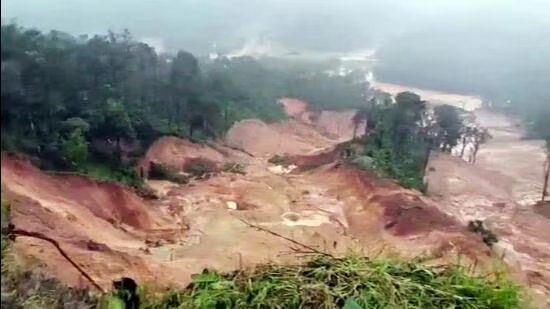
In August 2018, relentless rainfall triggered landslides that caused death of 20 people, destroyed over 4,000 homes, and forced the evacuation of 18,000 people
In August 2018, relentless rainfall triggered landslides that caused death of 20 people, destroyed over 4,000 homes, and forced the evacuation of 18,000 people. (HT)
The recent Wayanad tragedy has rekindled the memory of devastating landslides of 2018 in the minds of Kodagu’s residents and yet the district continues to struggle with landslides, encroachment and environmental threats.
In August 2018, relentless rainfall triggered landslides that caused death of 20 people, destroyed over 4,000 homes, and forced the evacuation of 18,000 people. It was a disaster of unprecedented scale, marking the first major landslide-related calamity in Karnataka.
Even though the Karnataka government and its people stood by its neighbours in times of crisis, the problems at home were being ignored for years. When, in response to this tragedy in Wayanad, the Geological Survey of India (GSI) conducted a study, it, identified 104 disaster-prone areas in Kodagu. Authorities have since earmarked nearly 3,000 families for relocation to safer zones, with 313 families already moved, and 10 relief centres set up for temporary shelter. Plans are underway to establish 95 more relief centres across the district, in preparation for future evacuations.
According to experts, the critical situation is because of the rampant deforestation in Kodagu. Col CP Muthanna, former president of the Coorg Wildlife Society, has warned that the unchecked destruction of forests and rapid construction are endangering the district’s ecosystems, particularly the watershed of the Cauvery river.
He said that if the present trend of commercial conversions continues in Kodagu, then within a few years, Gonikoppal, Ponnampet, and Virajpet will become a single large city like Mysuru. In North Kodagu, Madikeri. Kushalnagar, and Somwarpet will become likewise.
“If we have two Mysuru-sized cities in Kodagu, then all the Cauvery water will be required within Kodagu and the 70% of water supply to Bengaluru will be cut off,” he said.
He added that said that one of the reasons for the water shortage in Bengaluru is the rampant and unchecked commercial land conversions and urbanisation of Kodagu, and argued against giving No Objection Certificates (NOCs) for such conversions in the district.
The widespread encroachment on forest land in the Western Ghats, threatens the fragile ecosystems. The Kodagu division of the forest department has registered over 3,000 cases of encroachment, with some already in the process of eviction. The Madikeri division alone faces 3,410 pending cases involving over 5,500 acres of forest land. “These are just known cases,” said a forest department official, who didn’t want to be named.
According to the government, despite stringent legal provisions, Karnataka has lost around 25,767 acres of forest land due to encroachment between 2014 and 2023.
The recent environmental disaster in Wayanad, have intensified concerns about the impact of these encroachments. In response, on August 2, forest minister Eshwar Khandre formed a special task force (STF) to tackle this issue. “The forest encroachment clearance operation in the Western Ghats and other Ghats has started. The task force will work diligently to clear illegal resorts, homestays, and other encroachments in all Ghats, including the Western Ghats, which span 10 districts of the state,” he said.
The newly formed task force will operate under the leadership of the principal chief conservator of forests and chief forest task force. “Clear instructions have been given to carry out clearance operations in all cases regarding encroachments in the forests in the Ghat areas after 2015,” the minister said.
However, the removal of encroachment is just one part of the problem, according to the environmental activists. The controversial K Kasturirangan commission report, which proposed designating 20,668 square km in Karnataka as an Eco-Sensitive Area (ESA), is back in the spotlight after the Wayanad tragedy.
Although the government initially rejected the report, chief minister Siddaramaiah has now signalled a potential re-evaluation, acknowledging the need for further discussion. K Kasturirangan commission report (formally titled Report of the High-Level Working Group on Western Ghats) was submitted in 2013. “The government is against the implementation of the Kasturirangan committee report. Though the government rejected the report, we will discuss the issue with forest minister Eshwar Khandre and not make a hasty decision. The issue needs more discussions before arriving at any decision,” he added.
Environmentalists are divided on the ESA designation. A faction opposing the Kasturirangan report expressed concerns that the report’s recommendations, which include restrictions on permanent structures, roads, industries, and tourism infrastructure within the ESA, would severely impact the livelihoods of local villagers and hinder regional development. In contrast, environmentalists argued that the rapid development occurring in Karnataka’s Western Ghats benefits outsiders rather than residents.
As the debate continues, Kodagu’s environmental challenges grow more urgent. The district’s booming tourism industry, which attracted over 42 lakh visitors last year alone, is straining natural resources and heightening the risk of future disasters.
As Kodagu braces for the rest of the monsoon season, the district finds itself at a crossroads, balancing the demands of development with the urgent need to protect its natural environment. The coming months will likely determine whether the region can avoid another disaster or face a repeat of the tragic events of 2018.
source: http://www.hindustantimes.com / Hindustan Times / Home / by Arun Dev, Bengaluru / August 16th, 2024
WELCOME. If you like what you see "SUBSCRIBE via EMAIL" to receive FREE regular UPDATES.
Read More »