Tag Archives: Dubare Elephant Camp – Kodagu

Dubare tragedy: The dangerous illusion of ‘tamed’ elephants

The tragedy raises urgent questions about the continued use of captive elephants for tourism, festivals, and processions in the name of tradition, even as shrinking habitats, broken elephant corridors, and rising human interference intensify conflict between humans and wildlife.

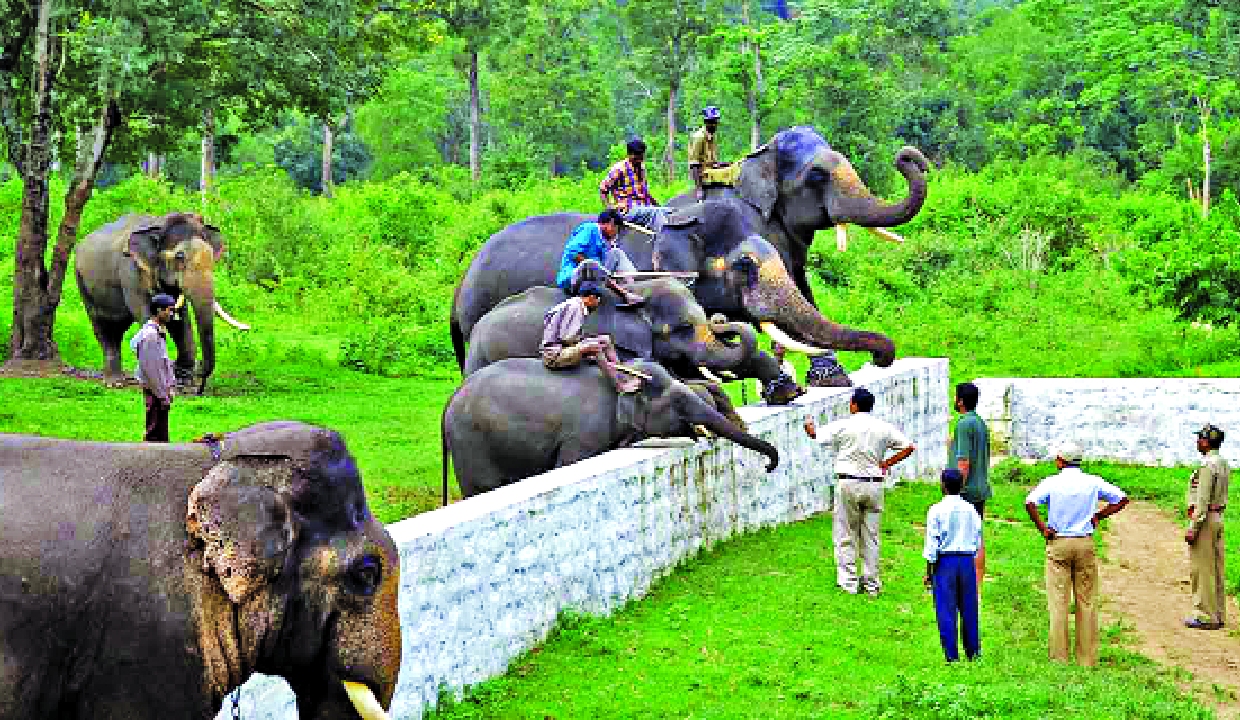
This week’s tragedy at Dubare elephant camp in Kodagu district, deep inside Karnataka’s Western Ghats, questions the decision of the authorities to permit tourists to bathe captive elephants in the flowing waters of the Cauvery River. This camp is located deep within forests dominated by the movement of wild elephants. All captive elephants in this camp were not born in captivity; many were captured from the wild and later tamed in such camps. It is not fair to conclude that tamed elephants have shed all their wild characteristics and fully obey the command and control of their masters – mahouts and kavadis. There have been instances in the past where elephants have killed their masters – mahouts and kavadis. There have also been instances where elephants did not obey the commands of the mahout and ran amok, inflicting casualties and death among crowds.

Captive elephants are often subjected to torture by mahouts using iron ankushes, which can cause bleeding and septicaemia. The footpads of elephants are frequently injured from walking on paved roads. Though camps have treatment facilities under the supervision of veterinary doctors, bleeding from earlobes and footpads is often neglected, and the elephants continue to suffer.

Let me examine in this piece how far we are justified in taking elephants for processions during special occasions and marriages where large crowds gather, and how far we are justified in continuing age-old traditions where tourists are permitted to pour water and rub the elephants’ bodies while standing beside them. On several occasions, I have personally failed to convince the Karnataka government not to use captive elephants during Mysuru Dussehra. The argument advanced was: why discontinue traditions?

Captive elephants were extensively used in dragging timber logs across hilly terrain in forestry operations in the past. The Forest Department maintained elephant camps for such operations. However, maintaining these camps was always costly, which restricted their expansion. As forestry operations have now been scaled down and tree felling in hilly terrains prohibited in the interest of conservation, these camps have largely lost their relevance.

Now, bureaucrats and politicians see these camps as permanent centres for training wild elephants that stray out of forests, damage crops and property, and threaten human lives. Earlier, the Karnataka Forest Department carried out khedda operations to capture only a few elephants needed for logging operations. However, with the advent of safer tranquillising techniques, more and more wild elephants are being captured. The department often comes under public pressure to capture elephants straying into villages. The argument advanced is that the elephant population in the wild is increasing due to conservation, and the excess population must therefore be brought into captivity. Wild elephants involved in conflicts, when translocated several hundred kilometres away into another elephant habitat, have often returned to their original homes within weeks, strengthening the argument for bringing such elephants into captivity.

In an era when elephant habitats are continuously fragmenting and shrinking owing to the expansion and widening of linear infrastructure, diversion of forests for mining, industries and development projects, and unauthorised encroachment on forest land, wild animals — especially elephants — are left with little option but to migrate in search of food, shelter, and water, thereby straying into human settlements.

The spread of invasive species and forest fires has also degraded elephant habitats. Palatable plant species and bamboo forests have suffered extensive damage, forcing elephants to move out of forests regularly. Elephant corridors that once provided migratory routes have been occupied by humans. Human settlements and cultivation inside forest pockets have expanded, to the detriment of conservation.

Captive elephant camps like Dubare are themselves islands of human activity within forests. As part of their daily routine, camp elephants are released into forests during the daytime, where they interact with wild elephants. Fights between captive and wild elephants are reported regularly. There have even been instances where captive elephants were killed by wild tuskers. Aggression is a natural part of elephant behaviour and cannot always be controlled by a mahout’s ankush. Sometimes, the animals can surprise us.

About a decade ago in Karnataka’s Kalaburagi district, an elephant in a procession kicked its mahout in full public view. The kick was mild and the mahout survived the scare. Feeling insulted, the mahout attempted to attack the elephant with an ankush. The elephant became even angrier and kicked him with such force that he fell nearly 20 feet away and died. Elephants killing their mahouts is not uncommon, and such incidents have been reported from across the country.

Within a herd, stronger elephants are also known to target weaker members. This is what happened at Dubare earlier this week. A tusker attacked a makhna (another male elephant without tusks) while tourists were permitted to bathe the herd. The hostility had likely built up over time, and on that fateful day, the tusker chose to attack the makhna in full view of tourists. The makhna collapsed onto a female tourist bathing it, crushing her to death. The tusker continued attacking the makhna until the mahout managed to calm it down. Despite the best treatment provided at the camp, the makhna died the following day.

Dubare camp also has tourist lodges run by the state-owned Jungle Lodges and Resorts (JLR). One of the activities offered to tourists is bathing the camp elephants, while another is jeep safaris through nearby forests to view wild animals. It has also been found that the entire camp and JLR premises lie within a corridor historically used by wild elephants. Blocking this corridor has disrupted elephant movement and intensified human-elephant conflict.

There are other forest pockets in Kodagu that have been granted for coffee estates. These estates too obstruct elephant corridors. More than 10,000 acres of coffee estate owned by Tata lie within this corridor. The entire estate is fenced, diverting elephants into human settlements and aggravating conflict. Sometimes elephants break through the fencing and enter the estates, threatening workers’ lives. Even the narrow roads inside coffee estates are covered by drooping coffee branches on both sides, limiting visibility. Estate management must ensure better visibility and safer movement.

This is a vicious cycle. As wild elephant movement is obstructed, incidents of conflict increase, and every human death places additional pressure on the Forest Department to capture the elephants involved and bring them into captivity. The continued operation of such elephant camps and JLR facilities is not in the interest of conservation.

Such elephant camps should be downsized in a phased manner, and corridors must be restored by removing fencing in Tata Coffee estates and around JLR properties. Tourists should not be allowed near camp elephants, and under no circumstances should close interactions be permitted. Tourist viewing areas should instead be cordoned off, allowing visitors only to observe elephants bathing in the river from a safe distance.

Dubare camp also has tourist lodges run by the state-owned Jungle Lodges and Resorts (JLR). One of the activities offered to tourists is bathing the camp elephants, while another is jeep safaris through nearby forests to view wild animals. It has also been found that the entire camp and JLR premises lie within a corridor historically used by wild elephants.

The writer is a retired Head of Forest Force, Karnataka, and teaches Economics at the Karnataka Forest Academy; Views presented are personal.

source: http://www.dailypioneer.com / The Pioneer / Home / by B K Singh / May 28th,2026
Jharkhand CM Hemant Soren on a relaxing Kodagu getaway

Visits Dubare Elephant Camp, Cauvery Nisargadhama

Madikeri:

Jharkhand Chief Minister Hemant Soren arrived in Kodagu district along with his family for a three-day private visit and is currently staying at a luxury resort near Madikeri.

Soren reached Madikeri on Sunday evening and was received by Assistant Commissioner Mithun Chakravarthy on behalf of the District Administration. Kushalnagar Tahsildar Sridhar has been appointed as the protocol officer for the visit.

The Chief Minister and his family are staying at the Leela Palace resort at Kadagadalu on the outskirts of Madikeri.

During the visit, they toured popular tourist destinations including Dubare Elephant Camp and Cauvery Nisargadhama near Kushalnagar.

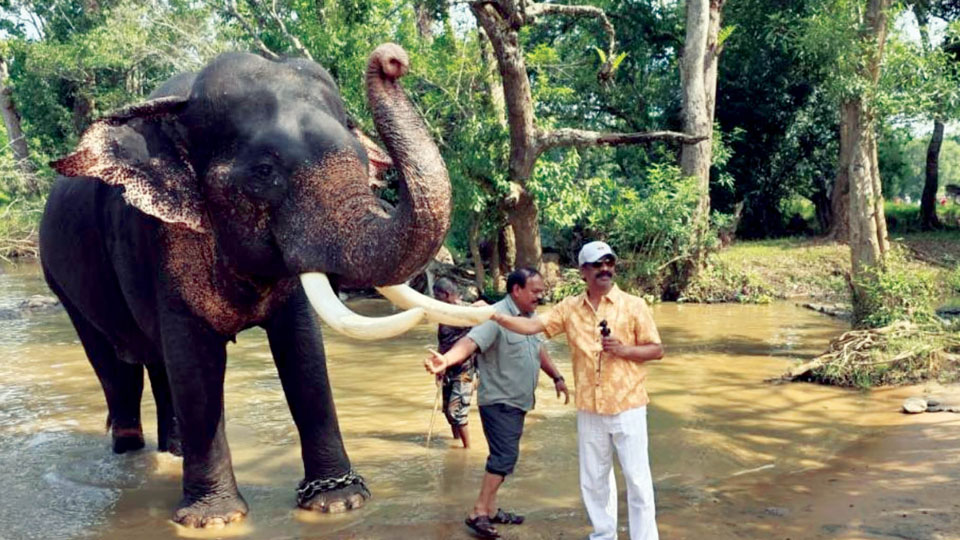
Yesterday morning, Soren was welcomed by camp elephant Sri Rama at Dubare Elephant Camp. The Chief Minister, who appeared delighted by the interaction, posed for photographs with the elephant before proceeding to Cauvery Nisargadhama, where he spent time near the river and clicked photographs.

Soren was accompanied by Assistant Conservator of Forests (ACF) Gopal, Range Forest Officer (RFO) Rakshith and Dubare Deputy Range Forest Officer (DRFO) Ranjan. Several staff members and mahouts were also present at the camp.

Sources said that Soren is expected to stay in Kodagu for two more days before returning to Jharkhand.

Tight security arrangements have been made in view of the Chief Minister’s visit. As he is under Z-Plus category security cover, public access has been restricted at certain locations visited by him.

Kodagu Superintendent of Police (SP) R.N. Bindu Mani told Star of Mysore that details of the Chief Minister’s movements could not be disclosed due to security reasons.

source: http://www.starofmysore.com / Star of Mysore / Home> News / May 12th, 2026

Whitewater rafting in Karnataka: Experts urge enforcing safety protocols

While Karnataka is all geared up to welcome whitewater rafting enthusiasts in the monsoon, it is important that adventure activities are conducted in a way that minimises risks and yet provides the benefits of participation, say experts.

Enjoying whitewater rafting in Dandeli, Karnataka / Jungle Lodges & Resorts

With the monsoon in full swing, Karnataka is all geared up to welcome tourists and adventure enthusiasts to experience the thrills of whitewater rafting. As you raft through gushing waters surrounded by dense jungles, you are transported into a world of roaring rapids with sprays of pristine white water and treated to glimpses of wildlife on some stretches of the river.

Adrenaline junkies can head to the stretch adjacent to the Dubare Elephant Camp in Kodagu on the River Cauvery and some stretches of the Kali river at Dandeli. The highlight of the season is the 1.5-hour whitewater rafting adventure on the roaring Barapole river, which originates in the Brahmagiri hills and flows towards the Arabian Sea. Rafting enthusiasts can navigate a 4.5 km stretch of the river featuring four iconic rapids with thrilling sections reaching up to Class 4 difficulty level for a duration of four months.

Another rafting destination is Bheemeshwari set on the banks of the Cauvery in the Cauvery Wildlife Sanctuary. Plans are on the anvil to resume rafting in Seethanadi, a swift Western Ghats river known for its challenging rapids and stunning scenery during the monsoon. The run on this powerful river passes through thick evergreen forests that form part of the Western Ghats in the Someshwara Wildlife Sanctuary and the Kudremukh National Park. Rafting on this brilliant 22 km stretch takes four hours to complete.

Streamlining rafting operations

The recently constituted River Rafting Management and Monitoring Committee of Kodagu district has stressed the need for enforcing stringent safety protocols to prevent mishaps during this high-risk adventure activity. The committee has urged all rafting operators in Kodagu district to compulsorily obtain and renew the fitness certificates for their rafts before launching any water-based adventure activity.

The mandatory certification, which must be renewed annually, is issued by the General Thimayya National Academy of Adventure (GETHNAA), a government of Karnataka enterprise for the promotion of adventure sports in the state.

“It is important that adventure activities are conducted in a way that minimises risks and yet provides the benefits of participation. Karnataka Tourism has laid down some guidelines that include obtaining necessary licenses and certifications from relevant authorities and ensuring compliance with safety standards,” says Major General (retired) MN Devaya, advisor to GETHNAA.

Listing the items that are essential for rafting, he adds, “Firmly secured life jackets, crash helmets, rescue floats with unreeling nylon lines, first-aid emergency kit, detailed instructions to the rafters, and an attendant kayak or raft for emergency assistance are mandatory for rafting activity. GETHNAA also has a training centre at Barapole.”

Explaining the measures taken by the committee, Venkat Raja, IAS, Deputy Commissioner (DC), Kodagu district, says, “The committee has taken up the responsibility of upgrading basic infrastructure at rafting sites to improve the tourist experience and enhance safety. Other measures included installation of shelters at the ticket counters, hand railing on the steps, changing rooms for guides, benches, provision of drinking water, toilets, CCTV surveillance, and directional signboards to rafting sites at strategic junctions.”

There are 47 raft operators functioning in the 7 km stretch in Dubare and four operators in the 4.5 km stretch in Barapole. “All the rafts are numbered for authenticity and easy identification. To prevent unhealthy competition, the pricing is flexible and monitored by the committee. Another encouraging factor is the involvement of the local populace, especially tribal residents, in the rafting operations,” adds the DC.

In Dandeli, Jungle Lodges & Resorts (JLR) is the only reliable organisation to conduct white water rafting. “The rafting operations that are currently suspended will resume after the monsoon in September/October. We have outsourced our rafting operations in the Kali river in Dandeli to Manasa Adventures, a professionally experienced adventure company. Strict safety guidelines are adhered to with professional river guides. We have perfected our standing as a whitewater rafting destination with highly qualified river guides and proper equipment,” says Prashanth Shankhinamath, IFS, Managing Director, JLR.

Need for stringent monitoring

Noting that there are many unauthorised rafting operators in Dandeli, Vaibhav Kamat of Jungle County, Dandeli, says, “This has led to protocol breach, which raises concerns over safety. As there is a mad rush during weekends, some of the operators overload the rafts, flouting all safety norms. Crowd control is also woefully lacking and overcrowding can lead to accidents. Some operators send visitors into rafts without safety gear such as life-jackets as they do not have the professional knowledge to operate the services. So there is a dire need for the state administration to monitor these operations.”

Urging a crackdown on illegal operators, he adds, “The safety standards and procedures followed by rafting organisations, including the availability of qualified guides and proper equipment, should be monitored. Action should be initiated against operators for violations. The permission process for raft owners should also be made more stringent.”

It is high time that Karnataka Tourism conducted a safety audit of all the river rafting destinations in Karnataka. This will help identify potential hazards and deficiencies in safety protocols. A social audit should also be conducted to examine the impact of rafting activities on local communities and the environment. This includes assessing benefits like opportunities for locals as well as potential negative impact such as environmental damage, social disruption, and cultural insensitivity. The impact of rafting on local businesses should be assessed.

An environmental impact study of rafting activities is imperative too to assess the impact on river banks, the river ecosystem, vegetation, and wildlife habitats. The effectiveness of waste management practices at rafting sites and the impact on the surrounding areas should be evaluated. The carrying capacity of rafting destinations and whether tourism is being managed sustainably should be determined.

Susheela Nair is an independent food, travel and lifestyle writer and photographer contributing articles, content and images to several national publications besides organising seminars and photo exhibitions. Her writings span a wide spectrum which also includes travel portals and guide books, brochures and coffee table books.

source: http://www.thenewsminute.com / The News Minute / Home> Karnataka / by Susheela Nair / edited by Vidya Sigamany / July 31st, 2025