From Bean to Cup: Training equips coffee farmers in Tuensang

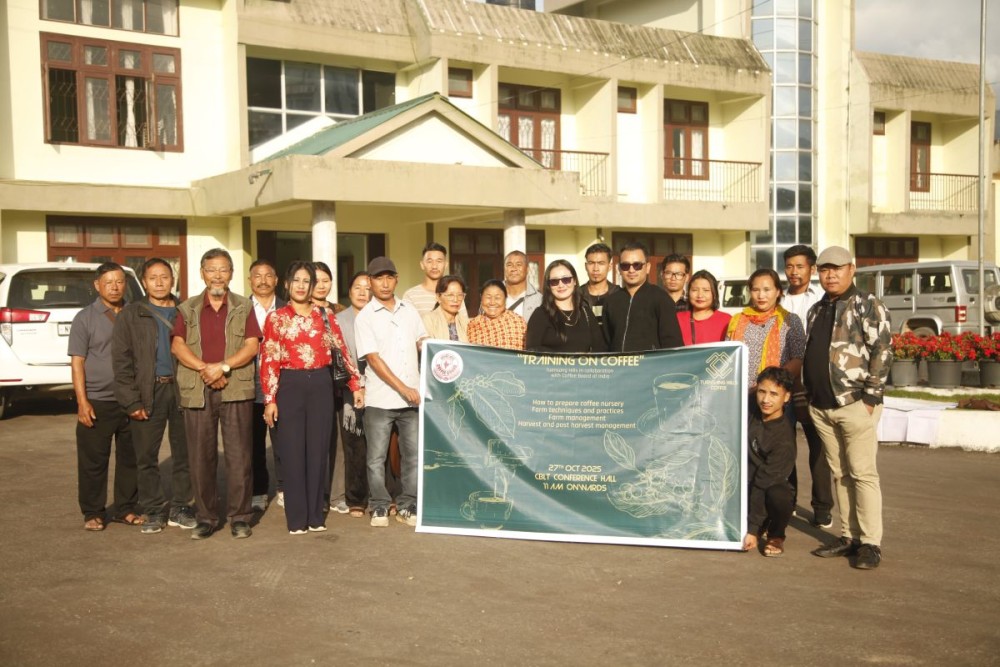
Officials from CBI and Founder and Co-founder of Tuensang Hills with the participants along with the officials of Land Resource Department. (morung photo)

A one-day training programme on coffee cultivation was held in Tuensang to build technical knowledge among local farmers in Nagaland.

The training, organised by Tuensang Hills Coffee in collaboration with the Coffee Board of India (CBI), was conducted at the Chang Baptist LashongThangyen (CBLT) conference hall in Tuensang Town on October 27.

The programme aimed to equip farmers with expertise in key areas, including nursery preparation, advanced farm techniques and practices, farm management, as well as harvest and post-harvest handling.

Around 30 participants took part in the session, which was facilitated by DipanjaliKemprai, Senior Liaison Officer, and N ImtisungchitImchen, Assistant Extension Officer, both from the Coffee Board’s Mokokchung office. Officials from the Land Resources Department, Tuensang, also attended the training, underscoring the department’s continued support in promoting coffee cultivation in the district.

Founder of Tuensang Hills Coffee, PangshaChingmak, said the training was initiated to empower farmers with practical skills and promote coffee as a viable livelihood option in Tuensang district. He highlighted the district’s suitable terrain and climate for coffee cultivation and emphasized plans for sustained follow-up programs and field support to assist farmers after the training.

Responding to questions, Kemprai explained that the collaboration began when Chingmak approached the Coffee Board with details of his startup, Tuensang Hills Coffee, which has been selected for incubation under AIC CCRI-CED. “Our office came forward to boost his startup by providing technical knowledge to the farmers to produce good quality coffee,” she said.

Kemprai added that the Coffee Board continues to support farmers across Nagaland through the Integrated Coffee Development Project, offering subsidies, training, and assistance from “bean to cup.” She also mentioned plans to strengthen market linkages to ensure better prices for local produce and to organize more quality-improvement trainings in the future.

On challenges faced in promoting coffee cultivation in the Northeast, Kemprai noted that small and scattered farm holdings, poor road connectivity, and limited manpower make regular monitoring difficult. To bridge communication gaps, the Board has created WhatsApp groups for quick dissemination of information and encourages farmers to access details of schemes and technical support through the official Coffee Board website.

Highlighting the growing recognition of Naga coffee, Kemprai said, “The future of Naga coffee looks promising. Many entrepreneurs and farmers are coming forward, and Nagaland coffee is gaining recognition for its organic nature and quality.” She cited the state’s achievements at the Aurora International Taste Challenge winning a silver plaque in 2021 and a gold award in 2023 as evidence of its rising reputation in the specialty coffee market.

The training concluded with interactive discussions and a call to strengthen community-based efforts for sustainable coffee cultivation in Eastern Nagaland.

source: http://www.morungexpress.com / The Morung Express / Home / by Morung Express News / October 28th, 2025


Indian coffee brews global success story

Indian‍‌‍‍‌‍‌‍‍‌ coffee of different varieties grown in diverse regions was the theme of a “Mann Ki Baat” address by Prime Minister Narendra Modi. Besides the traditional areas like Karnataka (Chikmagalur, Coorg, Hassan), Tamil Nadu, and Kerala, he talked about the North-East as the new frontier of coffee cultivation.

Prime Minister also talked about the revolutionary effect of coffee plantation on the living of the people, especially tribal farmers and women, by giving the example of Koraput coffee which not only revived the degraded forest but also ensured the income of the people. The Ministry of Commerce and Industry added that Indian coffee is a highly export-oriented product, as 70% of the production is going to more than 120 countries, resulting in a $1.80 billion revenue in 2024-25.

Indian coffee exports have been on a dramatic rise over the last three years, in fact, the value of exports has gone up from $1.29 billion in 2023-24 to $1.81 billion in 2024-25. The increase is more than 40%, and it is solely due to the increased global demand for both raw and value-added coffee products like roasted and instant coffee. India is the seventh-largest coffee producer, and the coffee plantations cover 4.9 lakh hectares while the production is 3.63 lakh metric tonnes.

Demand for the Indian coffee in the international markets is primarily due to the introduction of specialty tribal coffees like Koraput and Araku, which have started to command premium prices. These coffees attract highly selective international markets that put quality, sustainability, and traceability at the forefront.

The Coffee Board’s intervention in the form of support to farmers and new market linkages has not only raised the farmer’s income but also their living standards, especially in the tribal communities. In India, the culture of coffee consumption has grown significantly in the last 4-5 years. Average coffee consumption increased step by step from 1,180 thousand 60-kg bags in 2020 to roughly 1,235 thousand bags in 2022.

The change in consumer behaviour, caused mainly by millennials and GenZ, has made the coffee consumption gradually comparable with the traditionally dominant tea consumption. The demographic change combined with the advent of specialty coffee chains like Blue Tokai, Third Wave Coffee, and the extension of internationally recognised brands such as Costa Coffee and Starbucks is driving a dynamic coffee market growth that is expected to continue for the next 10 years at a CAGR of around 7.5%.Merchants and startups in the Indian coffee industry have created a culture around specialty coffee focusing on domestic bean sourcing and the generation of higher consumer awareness.

Specialty coffee brands in India have attracted a substantial amount of funding from global investors such as Verlinvest, who sees India becoming not only a major coffee-consuming country but also a hub for coffee exports. In addition to ready-to-drink coffee beverages and urban café culture, the Indian coffee market has deepened in terms of variety and has more potential consumers to target.

Beyond economic metrics, the coffee sector has delivered significant environmental benefits. Koraput coffee has helped restore degraded forest land, reduced soil erosion, and provided tribal farmers with steady cash income in place of subsistence farming. This sustainable approach aligns with global trends favoring environmentally responsible sourcing, further enhancing Indian coffee’s international appeal.

In conclusion, the points of Prime Minister Modi about Indian coffee going global are supported by solid facts: the rapidly growing and diversifying coffee farming landscape, robust export performance, changing domestic consumption pattern, and the rise of new premium coffee brands. With the backing of government schemes, eco-friendly farming methods, and rising foreign demand, Indian coffee is set to realise further market penetration, higher farmer incomes, and improved global standing over the next ten ‍‌‍‍‌‍‌‍‍‌years.

source: http://www.thepamphlet.in / The Pamphlet / Home> Economy> Opinion / by Surabhi Singh / October 28th, 2025

New President and Vice President of UPASI

Mr.Ajoy Thipaiah has been elected as President of The United Planters Association of Southern India (UPASI) for the year 2025-26 at the Annual General Meeting of the Association held on 20th September 2025 at Kochi.

As a fourth generation coffee planter attached to the traditional coffee grower family, he joined the family owned and run plantations of Guddadamane and Kerehaklu Estates situated in Aldur of Chikkamagaluru District, Karnataka, after completing his under graduation at Christ College,  Bangalore in the year 1983. He was actively involved in the Karnataka Planters Association (KPA) from the late eighties and had a long stint as its Executive Committee member, culminating in heading the Association as Chairman in the year 2008-09. He was also actively involved with the UPASI and KPA Sports Clubs  and served as the President of both clubs.

Mr.Ajoy Thipaiah was nominated to the Coffee Board of India in the year 2009 and served a full term as a representative of Coffee growers from Karnataka State. He served in the UPASI Executive Committee during the year 2007-08 and 2008-09, and has been in the Committee since 2017-18. He served as the Chairman of the UPASI Coffee Committee for the period 2021-22 to 2023-24.

Mr.Abhishek Poddar of Matheson Bosanquet Enterprises Pvt Ltd  has been elected as Vice President of UPASI for the year 2025-26.

source: http://www.afternoonnews.in / Afternoon / Home> Tamil Nadu / by Staff / September 23rd, 2025

Tata Starbucks Unveils Its Indian Single-Origin Whole Bean Specialty Coffees

Bringing Coorg’s rich stories, soil, and spirit to every cup

Bengaluru :

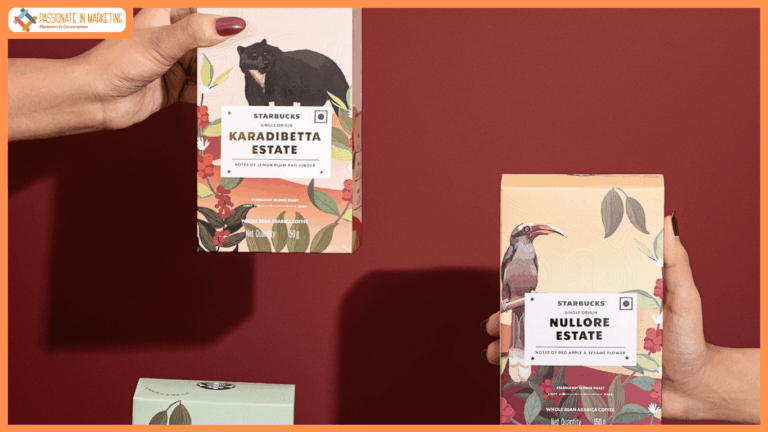
Tata Starbucks is celebrating India’s deep-rooted coffee heritage with the launch of its first-ever estate-exclusive single-origin coffees, sourced from the Nullore, Margolly, and Karadibetta Estates of Coorg, Karnataka.

Building on the success of the India Estates Blend, which first spotlighted the country’s coffee origins, this new range brings the focus even closer to the land and the people behind each bean. Through this launch, Starbucks shines a light on India’s coffee-growing heartlands and the generations of farmers whose craft and care shape every cup. As one estate manager expresses on the coffee pack, “This coffee is our legacy – I warmly welcome you to experience it in your cup.”

Joining Starbucks celebrated lineup from coffee growing regions of Africa, Asia Pacific, and Latin America, this curated trio underscores the brand’s commitment to showcasing the world’s most distinctive coffees while championing India’s own specialty coffee estates.

Rooted in the heart of Coorg’s coffee belt, the Nullore, Margolly, and Karadibetta estates each embody a unique legacy of craftsmanship, biodiversity, and care passed down through generations.

  • India Nullore Estate: Growing at an altitude of 910 meters above sea level this Arabica coffee offers tasting notes of red apple and nutty sesame flower, with a sweet lemon acidity, a medium-light body, and medium-high acidity creating a balanced yet vibrant cup. Nestled in Madikeri’s mist-covered hills, the estate is a model of circular farming, where nature nurtures every bean under a two-tier canopy of native trees.
  • India Margolly Estate: With roots dating back to the 1850s, Margolly Estate is in the undulating highlands of southern Coorg. Grown at 980 meters above sea level, this washed Arabica features Barhi date and cinnamon bark notes, rounded by a forest honey finish. The estate’s dense canopy, thriving pepper vines, and rainwater harvesting practices mirror the cool, humid conditions of evergreen forests, producing beans with balanced acidity, clean finish, and distinct character.
  • India Karadibetta Estate: Perched at 1000 meters above sea level, Karadibetta Estate produces high-altitude Arabica with tasting notes of jamun plum, ginger, and sweet tulsi herbal. Its high acidity and medium body create a layered, aromatic profile that reflects the biodiversity and lush terrain of Coorg’s highlands.

From the Grey Hornbill of Nullore, a natural seed-sower of Coorg’s forests, to wandering elephants through Margolly’s lush pepper trails and the vibrant flora of Karadibetta’s highlands, each package has been thoughtfully designed with illustrations that celebrate the wildlife, biodiversity, and ethical sourcing practices that define these estates and the communities that sustain them.

Mitali Maheshwari, Head of Product & Marketing, Tata Starbucks, said, “India’s coffee origins carry the rich legacy of their people, with stories spanning centuries. We’re proud to share the distinct flavors and craftsmanship of Coorg through these iconic estates that have been harvested for the first time for Tata Starbucks. Each single origin coffee in this range reflects its unique terroir, biodiversity, and the passion of its farmers, brought to life in every cup.”

source: http://www.passionateinmarketing.com / Passionate in Marketing / Home> Marketing / October 28th, 2025

Maddu thoppu: Magic leaves of monsoons

And one such way, followed traditionally and scientifically, is consumption of dishes made from a highly medicinal plant.

Dishes prepared from bamboo shoot are also the highlight of ‘Kakkada padinent’ I Prajna GR

Madikeri :

Monsoon in Kodagu is synonymous with chilly weather due to continuous rainfall. While the traditional houses in the district are equipped with fireplaces to warm up the ambience, the people of Kodagu follow certain indigenous ways to stabilise the body temperature. And one such way, followed traditionally and scientifically, is consumption of dishes made from a highly medicinal plant, locally known as ‘Maddu thoppu’ (medicinal leaves). And this festival of leaves was celebrated on August 3.

With scientific name ‘Justicia Wynaadensis’, ‘Maddu thoppu’ grows abundantly as a bushy shrub in the humid tropical belts of Kodagu. “In 1921, botanist J S Gamble, former official of the forest department, had recorded the abundance of this plant in the evergreen forests of the Western Ghats – from South Canara, Kodagu to Wayanad, Eastern Nilgiris and South Malabar,” says Ulliyada Daty Poovaiah, ex-president of Kodava Academy.

With slender stems and hunter green leaves, they grow like an army of soldiers at places where there is scanty sunlight. They earn special status during ‘Aashada masa’ in the Hindu calendar, also known as ‘Kakkada masa’ in Kodava calendar. This month begins on July 17 and ends on August 16. “The ‘Kakkada’ month is considered inauspicious and no important ceremonies or celebrations take place during this one month,” says historian Bacharaniyanda Appanna.

While tradition says that this month is inauspicious, there is a reason behind it. This monsoon month demands complete attention in the paddy fields and since Kodagu is an agriculture-based district, every household involved themselves in agricultural activities and there was no time for any other kind of celebrations,” explains Daty.

And the continuous work on farmlands in cold weather demanded one to be fit, which is when ‘Maddu thoppu’ came into attaining special status during this inauspicious season. ‘The presence of numerous phyto components lends credence to the use of the plant as a medicinal herb by the local community,” states Dr Latha  D in a study conducted on this medicinal plant. With anti-microbial effects, they fight various pathogens that spread widely during the monsoons. “While Justicia Wynaadensis has high medicinal value and is used widely in Ayurveda medicine, the plant attaining maximum medicinal value on the 18th day of ‘Aashada’ month is more of a belief,” explains Ayurveda doctor Udayashankar. 

And hence the people of Kodagu religiously follow the ritual of plucking the leaves of ‘Maddu thoppu’ on the 18th day of ‘Kakkada’ and indulge in a variety of elaborate cuisines. “The plant is believed to give 18 types of medicines during this month and a variety of dishes including ‘Maddu thoppu halva’ and  ‘Maddu thoppu’ porridge are prepared using pure, traditionally extracted honey. (The plant is believed to lose its medicinal components one by one after the 18th day).

Along with this, a variety of dishes are prepared from country chicken, colocasia leaves, bamboo shoot, crabs, jackfruit and are laid alongside paddy-arrack, which are all believed to stabilise the body heat during chilly monsoons,” explains Daty. This marks the celebrations of ‘Aati padinent’ (padinent translating into 18th day in Kodava language), which falls on August 3 every year. While the presence of Justicia Wynaadensis in the backyards of houses is reducing after urbanisation, they are still widely present on the peaks in the district.

source: http://www.newindianexpress.com / The New Indian Express / Home> Bengaluru / by Prajna GR / Express News Service / August 05th, 2018

Innovative daily programme revives tribal student attendance in Kodagu government school

In the past two years, admissions have increased significantly, and from the current academic year, the school has started recording 100% attendance.

Chennangi Government Primary School, located in a tribal settlement in South Kodagu, has introduced a unique concept called Dinnakondu Karyakram, a special programme held every day.(Photo | Express)

Madikeri :

In a heartening initiative aimed at ensuring 100% attendance among tribal students, a government school in Kodagu has taken an extraordinary approach.

Chennangi Government Primary School, located in a tribal settlement in South Kodagu, has introduced a unique concept called Dinnakondu Karyakram, a special programme held every day, which has now made school a fun and welcoming space for all its students. The result: students who once refused to attend classes are now turning up enthusiastically each day.

The school currently has 52 students, all from tribal families. While government schools across the state are allegedly witnessing a sharp fall in admissions due to various issues, this institution is seeing a positive shift. In the past two years, admissions have increased significantly, and from the current academic year, the school has started recording 100% attendance.

“Several tribal students stayed away from the institution. When their parents left for daily wage work, these students sat at home. However, we conducted a survey before the start of this academic year and have ensured that all the children from the tribal colony attend classes at the institution,” shared Susha K K, the headmistress of the institution.

Over five students who had previously discontinued schooling have now returned and are attending classes without hesitation. Last year, the school had introduced Thingaligondu Karyakrama (a special programme every month), where students were encouraged to exhibit their talents through various performances. However, despite this, some students still remained absent.

This prompted the school to implement a new daily programme. As soon as students arrive at the school each morning, they are engaged in various fun activities ranging from yoga, singing, dancing, craft, and literature, to unique games.

“This has resulted in all the students attending classes without fail. To encourage them further, we have started a YouTube channel and we regularly upload the talent shows of the students onto the channel. It is like an incentive to these students, as the entire village watches and celebrates them after watching the YouTube channel,” the headmistress shared.

Admissions have gone up from 39 students to 52 in the past two years. Some students who had even taken transfer certificates were allegedly convinced by the headmistress to return. In addition, the school management conducted awareness meetings with parents, urging them to ensure their children attend school regularly to build a better future.

Despite facing an acute shortage of teaching staff and deteriorating infrastructure, the school management is doing its best to provide quality education to the tribal students.

source: http://www.newindianexpress.com / The New Indian Express / Home> Karnataka / by Prajna GR / August 07th, 2025

Harangi fills up for first time in October

The catchment areas in the district are receiving heavy rainfall every day, and the reservoir is filled to its full capacity for the first time in a non-monsoon month.

Water level in Harangi stands at 2,858.09 ft, against its capacity of 2,859 ft on Friday. / Photo | Express

Madikeri :

For the first time, Kodagu’s Harangi reservoir has filled up to the brim in October. Following increasing inflow to the dam, over 5,000 cusecs of water is being let out to the rivers. The catchment areas in the district are receiving heavy rainfall every day, and the reservoir is filled to its full capacity for the first time in a non-monsoon month.

“In the wake of heavy rainfall in the Harangi basin for the past one week, additional water is being released into the river for the dam’s safety,” said Harangi Irrigation Department Executive Engineer IK Puttaswamy.

He confirmed that the inflow into the dam has been increasing day by day for the last five months. The water level as of Friday stood at 2,858.09 feet against its full capacity of 2,859 feet.

Kodagu district has been facing monsoon showers since May this year, and the district continued to receive heavy rainfall every day. Several parts of the district have already received more than 7,600 mm of rainfall this year. The district recorded 2,998.59 mm of rainfall this year from January.

source: http://www.newindianexpress.com / The New Indian Express / Home> Karnataka / by Express News Service / October 25th, 2025

Genetic study traces origin of Coorgis to three ancestral populations spanning millennia

The Kodavas, while a socio-culturally homogenous community, have evoked considerable interest among anthropologists as their origins and demographic history are much debated.

The Coorgi, or Kodava, community in Karnataka can trace its origins to at least three different ancestral populations, including as geographically diverse as the Palliyar, a tribe from the South Western Ghats, to north Indian Sikh-Jat. The oldest of these can be traced to roughly 3,000 years ago, and the most recent, to about 330 years, reports a first-of-its-kind study analysing genetic data from native Coorgis.

The study, published in the latest edition of the peer-reviewed Communications Biology, underlines that the several ethnic communities in India are not homogenous and are a result of the mixing of diverse ethnic groups over millennia.

The Coorgis, while a socio-culturally homogenous community, have evoked considerable interest among anthropologists whose origins and demographic history are much debated “due to their stark socio-cultural contrast with surrounding populations”, the study notes.

Their population comprises around 3,00,000 individuals, with 1,200 extended families.

Based on studying the genetic history from 144 individuals, the authors, comprising those from the University of Delhi, South Campus, and the Centre for Cellular and Molecular Biology, Hyderabad, have found that the oldest — called Coorg 3 — had a shared genetic history with the Palliyar population and this lineage came into being about 98 generations before present (GBP).

One GBP is about 25 to 30 years, thus dating them to about 3,000 years ago. Then the Coorg-1 branched away 64 generations, or around 1,900 years ago. The third group, Coorg-2, is relatively recent — about 330 years ago — from the admixture of Coorg-1 and Coorg-3.

The authors came to their conclusions by comparing the frequency of certain genes in the Kodavas to the database of the genetic structure of other caste groups and tribes. The frequency distributions of variations in certain genes enable educated guesses at the times during which certain populations combined, or whether the individuals of a group were largely isolated from surrounding populations.

Traditionally a group of agriculturists with martial customs interlacing their day-to-day lives, the Coorgis practise family exogamy and caste endogamy, the paper notes.

However, the community’s various customs prevalent among the Coorgis “notably deviate from the Hindu way of life” and their cultural origin stories trace them to the Indus Valley during the Mohenjodaro period as well as migratory groups such as the Indo-Greek army of Alexander’s India chapter, pre-Muslim Kurds or pre-Christian Georgian, and an off-shoot of the Indo-Scythian Sakas.

“These being entirely anecdotal or from the early population dating, scientific evidence is lacking,” the authors B.K. Thelma, K. Thangaraj, Anirban Mukhopadhyay, Loumos Kumar, and Kiran Sran note.

“These insights into ancient and diverse genealogies among Coorgis not only explain their unique status in the Indian diaspora but also encourage further research to identify unknown migrations to the Indian subcontinent and thus further unravel its unique demography,” the authors note.

India’s population groups, several of whom maintain distinct physical and cultural practices, trace their ancestry to two large population groups: Ancestral South Indian (ASI) and Ancestral North Indian (ANI). The former trace their lineage to a hunter-gatherer Ancient Ancestral South Indian (AASI) group from 65,000 years and the lineages from the Indus Valley Civilisation. The latter, or the ANI, are a mix of IVC and late Bronze Age Steppe culture (of Central Asian origin).

The mixing of ASI and ANI intermixing between 1,900 and 4,200 years make up the main caste and tribe groups of North and South India.

source: http://www.thehindu.com / The Hindu / Home> News> Cities> Bengaluru / by Jacob Koshy / May 20th, 2025

CNC Conducts 16th Human Chain in Ammathi

Madikeri: 

The Codava National Council (CNC) held its 16th human chain awareness campaign in Ammathi of Virajpet taluk on Tuesday, October 21, rallying for the indigenous Codava community’s constitutional recognition and territorial sovereignty.

Under the leadership of Chairman N.U. Nachappa Codava, an advocate, the event spotlighted demands for Codavaland’s political autonomy, Scheduled Tribe (ST) designation, reserved seats in Parliament and State Assembly similar to Sikkim’s “Sangha” model, and enduring rights to ancestral properties and the Animistic “thok-gun” firearm tradition integral to Codava ceremonies.

Nachappa stressed that Codava survival hinges on securing a distinct ethnic identity in the 2026-27 national census through a dedicated column and code, enabling constitutional protections for their mono-ethnic, Animistic faith, which venerates the Cauvery River, forest deities, and ancestral graves without mainstream religious or caste affiliations.

Unlike conventional practices, Codava weddings feature a sacred “patthak” tied by the bride’s mother and obligatory offerings of alcohol and pork, aligning with global indigenous groups like Jharkhand’s Santal (proclaimed Sarna by CM Hemant Soren) or the Kalash, protected by UNESCO’s heritage framework.

From 1871 to 1931, colonial censuses acknowledged Codavas as a unique non-religious, non-caste entity, a status lost post-1947 as they were merged into dominant categories, obliterating their distinctiveness. Nachappa warned that without census reinstatement, their political and cultural voice risks permanent suppression, undermining self-determination.

The CNC voiced concerns over alleged plots to integrate Bangladeshi Rohingyas into Kodagu’s voter rolls, inflating demographics for political gain, and criticised unauthorised land conversions for resorts, such as a 16-acre township within a 2,400-acre estate, enabled by lax governance.

To address labour needs without compromising local rights, Nachappa suggested a guest worker permit system, modelled on the 2015 Modi-Sheikh Hasina Dhaka agreement, mandating seasonal migrants’ return to their regions.

The peaceful chain, joined by Codava leaders like Udianda Chondamma, Badumanda Sanvi Dechamma, and Inanda Prakash Ganapathy, vowed to continue the struggle in the name of sacred Codava symbols and the Constitution, closing with the National Anthem.

The 17th chain is scheduled for Monday, October 27, 2025, in Srimangala, building on events in places like Madapur and Chettalli to amplify Codava advocacy for justice and recognition.

source: http://www.hansindia.com / The Hans India / Home> News> State> Karnataka / by The Hans India / October 21st, 2025

Dr. K.B. Ganapathy Memorial Road Race held in Mysuru

Mysuru : (MK&VNS)-

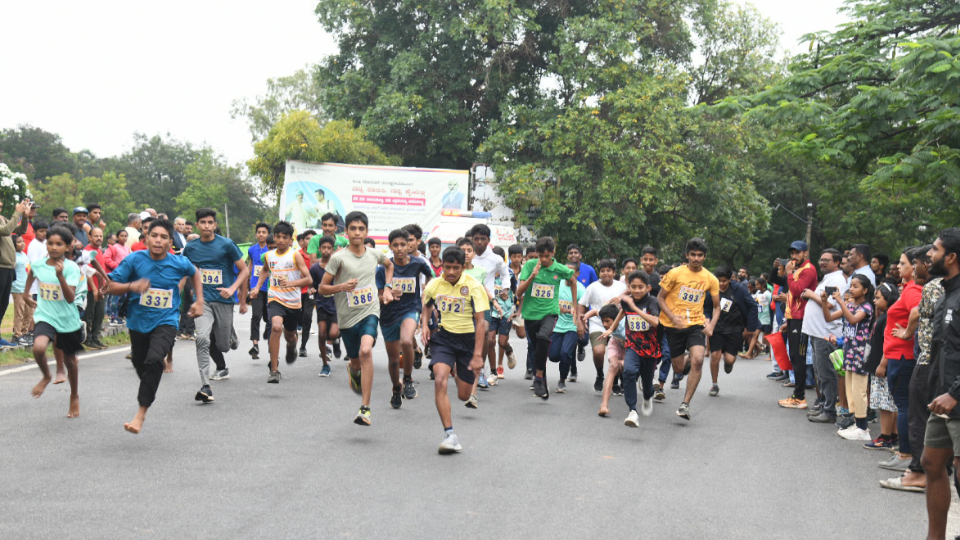
Hundreds of school and college students took part in the Star of Mysore and Mysuru Mithra Founder-Editor Dr. K.B. Ganapathy (KBG) Memorial Road Race organised by Mysore Athletics Club at University of Mysore Athletic Ground (Oval Grounds) in city this morning.

The event was inaugurated by senior journalist Amshi Prasannakumar.

The event was held in five categories — Children below 5 years (100 mts), Primary School (Boys and Girls – 400 mts), Higher Primary School (Boys and Girls – 800 mts), High School (Boys and Girls – 1.5 km) and PUC (Boys and Girls – 2 km). Winners were awarded with medals and cash prizes.

Mysore Athletics Club President Dr. Chainsingh Rajpurohit presided. Senior Journalist Narasimhamurthy, University of Mysore’s Department of Physical Education (DPE) Director Dr. C. Venkatesh, KSA (Bengaluru) Pistol Sharp Shooter H.D. Aravind Gowda, Social Worker Harish Moganna, Mysore Athletics Club Patron Dr. C. Krishna, Secretary M. Yogendra, Organising Secretary G.R. Prabhakar and Executive Committee Members were present.

Results

Primary School (400 mts Run) Boys: 1. N. Pavan (BVB, Mysuru), 2. U. Rishaan (St. Joseph’s School), 3. Aryan Kavan (DPIRS), 4. S. Kashish (BVB), 5. S. Surya (MWLSS), 6. Sayug Kuttappa (Podar International School) and 7. Ganvith. G. Gowda (KNC).

Girls: 1. E. Uthra (BVB, Mysuru), 2. B.P. Vriddhi Ponnanna (Gnanaganga School), 3. C. Sinchana (Kurubur), 4. Sinchana (Kurubur), 5. Sanvi (Kurubur) and 6. Lalitya (Christ Public School).

Higher Primary School (800 mts) Boys: 1. N. Subash Gowda (New Oxford Public School), 2. M.S. Vishal (Baden Powell Public School), 3. N. Tanmay (BVB, Mysuru), 4. Janvik (DAV Public School), 5. K.S. Anush (BVB) and 6. S.M. Ayush (BVB).

Girls: 1. R. Niha (St. Joseph’s School), 2. K.M. Pragathi (Vidya Darshini, Kurubur), 3. M. Meghna (Vidya Darshini, Kurubur), 4. S. Prakruthi (Vidya Darshini, Kurubur), 5. Bindu (Vidya Darshini, Kurubur) and 6. M.K. Gowri (BVB, Mysuru).

High School (1.5 km) Boys: 1. P. Lasith Kishore (Vijaya Vittala Vidyashala), 2. S. Shreyas (Rotary West), 3. H.V. Chirag (VVS B.M. Shree School), 4. Chiranth H.G. Gowda (KNCIGS, Mysuru), 5. V. Sudarshan Jain (Capital Public School) and 6. M. Meghanath Gowda (K.P. Convent).

Girls: 1. Inchara (Kurubur Club), 2. Mamatha (Kurubur Club), 3. S. Jayashree (Sri Chamundeshwari Sports Club), 4. H. Saha (St. Joseph’s School), 5. Divyashree (Sri Chamundeshwari Sports Club) and 6. Varsha (DAV Public School).

PUC (2 km) Boys: 1. K.U. Omkar (SBRR Mahajana PU College), 2. Varun (Vidya Jyothi PU College), 3. M. Dileep (Vivekananda College), 4. R. Srujan (Vivekananda College), 5. P. Yashwanth (Vivekananda College) and 6. R. Koushik (Vijaya Vittala PU College).

Girls: 1. N. Manasa (Kurubur), 2. S. Ankitha (Kurubur), 3. Deepashree (Kurubur), 4. M. Ananya (Kurubur), 5. Manasa (Kurubur) and 6. N. Vaishnavi (Mysuru).

source: http://www.starofmysore.com / Star of Mysore / Home> Sports News / October 19th, 2025