1837: When the rebel flag fluttered high

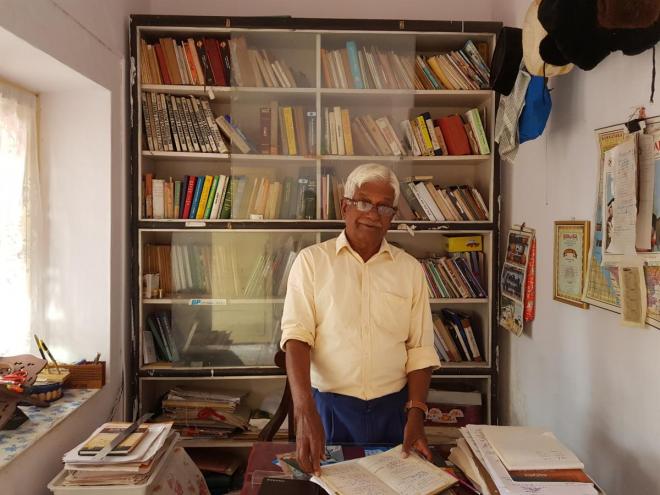
In 1837, this anger turned to action for freedom and the British suffered a temporary defeat, says N.S. Deviprasad Sampaje, Writer.

The Jangama Kalyanaswamy's flag used during the Sullia rebellion was hoisted by Guddera (Guddemane) Appaiah against the British in 1837 was later adopted as the Kodagu Gowda coat of arms. They are also called Arebhashe Gowdas
The Jangama Kalyanaswamy’s flag used during the Sullia rebellion was hoisted by Guddera (Guddemane) Appaiah against the British in 1837 was later adopted as the Kodagu Gowda coat of arms. They are also called Arebhashe Gowdas

Mangaluru:

It was the first armed uprising against the British, which took place 20 years before the First War of Indian Independence in 1857. The men who laid down their lives in this uprising of 1837 in Mangaluru are not forgotten.

The Tulunadu Rakshana Vedike and several others organisations marked the 179th anniversary of the uprising on Tuesday at Bavutagudda, where the rebels hoisted the Indian flag to mark their victory over the British on April 5, 1837.

“The people of Kodagu and Canara (coastal Karnataka) were unhappy with the British for various reasons. In 1837 this anger turned to action for freedom and the British suffered a temporary defeat,” recalls writer, N.S. Deviprasad Sampaje.

Mr Sampage , who wrote the book ‘Amara Sulliyada Swatantrya Sangrama,’ detailing this early struggle for freedom, says it was a mass movement and not restricted to some villages or caste.

“It received unprecedented support from the people of Dakshina Kannada. However there were efforts to tone it down by labelling it ‘Kalyanappa na Katakayi, or ‘loot of Kalyanappa’.

But in reality it was a major movement for freedom in the region, which scared the British. The reports of the then Collector of Dakshina Kannada, Leven, reveals this,” he says.

The rebellion was led in Kodagu by leaders such as Aparampara, Kalyanappa and Putta Basappa and continued in Sullia, Puttur before culminating in Mangaluru, the seat of the British Collector.

It is said the rebels held control of the city for 13 days before British reinforcements arrived in Mangaluru and recaptured it.

But it took two months more for the British to arrest the rebels and hang them in public to silence the movement.

“The government must do a proper study of the entire movement so people get to know its importance,” emphasises Mr Sampaje.

source: http://www.deccanchronicle.com / Deccan Chronicle / Home> Nation>Current Affairs / by Gururaj A. Paniyadi, Deccan Chronicle / April 06th, 2016

From doodling for food to doodling for money – Rachna Prabhu’s artsy journey

“Itni shiddat se maine tujhe pane ki koshish ki hai, ki har zarre ne mujhe tumse milane ki saazish ki hai,” lines delivered by Shahrukh Khan in a movie is often used to describe how if you have the passion for something, the world will conspire to bring you closer to it.

In real life too, this theory seems to work and Rachna Prabhu is a case in point.
RachnaPrabhu01KF28feb2018

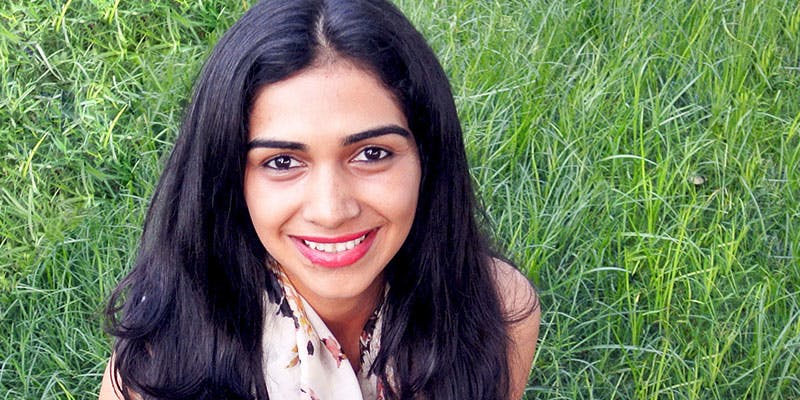
Rachna Prabhu, an entrepreneur and the Founder of Doodle Doo, has been drawing ever since she was old enough to pick up a pencil.

“I never had any formal art education. In school I’d draw for friends (in exchange for grub) and of course doodle on the pages of my notebooks. My parents were most encouraging, even at a very young age. Over the years I experimented with different styles. But it was only in my 20s that I found an illustration style that was unique to me, and that has stuck with me ever since,” she says about her journey with drawing.

She has an online store. She also enjoys interacting directly with her customers in flea markets, which, she says, has provided great results in terms of sales.

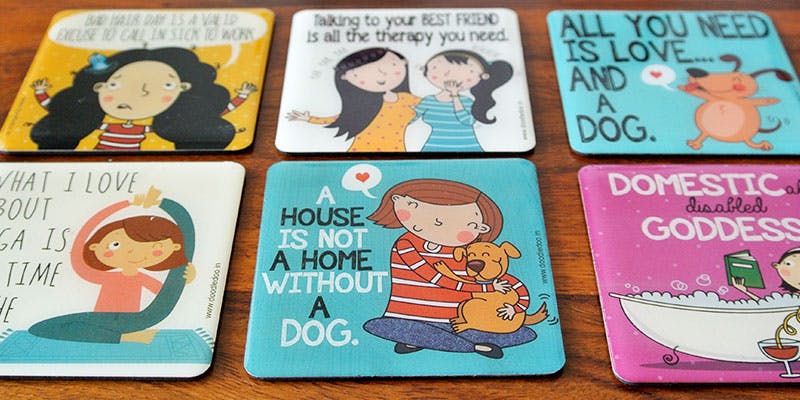
Her target audience is mostly women and her USP – products with playful illustrations for young women. “Funnily, a fridge magnet that says ‘A princess never cooks’ is my single most popular product! But as a category, my pocket mirrors are popular with my customers,” she shares with a smile.

This 29-year-old from Coorg works from her home studio in Mysore. Since her parents were planters based out of Kerala, her formative years were spent in Ooty in a boarding school. She got married two years ago and moved to Mysore.

Rachna pursued her bachelors in business management and holds a master’s degree in mass communication from COMMITS in Bengaluru.

“It was during my journalism course that my professor asked me if I would illustrate stories for our college’s monthly newsletter. That’s when something changed – I realised that I could do a lot more with my illustrations.”

So while at her first job as a PR at a firm in Bengaluru she began secretly emailing local publishers with the hope of getting work as a children’s book illustrator. “I was lucky enough to hear back from one publisher, despite having no art portfolio to boast about. From there I just dove in.”
RachnaPrabhu02KF28feb2018

Well with technology transforming how we work and function, she was informed that she would need to submit her work in its digital form. “Of course I didn’t know how to use any software, so I just logged into YouTube, learnt how to use Photoshop, and kick started my night-shift job as an illustrator, even illustrating three children’s books that same year. There has been no looking back since then. The Internet has been my greatest learning tool but everything I know, I have learnt on the job, and there is no greater sense of achievement,” says Rachna with the pride that comes from hard work that yields success.

Even though Rachna changed jobs and began working for a content syndication firm and later as a corporate communications professional in an IT firm, her tryst with drawing continued. All along, in addition to her 9 to 5 job she kept drawing and working on some great commissioned work. Up until two years ago, she worked during the nights and weekends as an illustrator.

It was her marriage and her husband that changed the status quo. “Thanks to my super-supportive husband that I transitioned to being a freelance illustrator full time and started Doodle Doo. It was the best decision ever.”

While working the nights on illustrations, Rachna had pondered over the idea of printing artwork on products and selling them. “Pocket mirrors in particular piqued my interest, because every time I walked into a quirky store, I’d look for cute pocket mirrors but just never found any. I immediately knew the first product I wanted to design and sell. I also knew that I wanted to start by selling at flea markets in Bengaluru because I was a regular at them.”

So when Rachna quit her job she knew exactly what she wanted to do – start her own line of illustrated products. That’s how Doodle Doo took root. She designed her favourite pocket mirrors, fridge magnets, doodle kitchen towel, laptop sleeves, beware of the dog signs, and a recipe book with an illustrated cover. She recently launched a 2016 desk calendar too.

At the moment there is a one-woman army behind Doodle Doo. Rachna takes care of everything right from creating artwork, to replying to emails, taking care of online orders, packaging and shipping products to customers.

It takes anything between an hour to a few days to complete an illustration, depending on the work involved. “I scribble it out in my sketchbook and make it pretty on Photoshop while listening to loud music and of course,” she says, “some days I do have creative blocks.”

It has not been a walk down the green pastures for Rachna, with absolutely no idea of how to start and run a business, her biggest challenge initially was starting a business that, “was a true representation of me but still had sale value. I was also very apprehensive of the artwork I had used on products because I wasn’t sure if the general public would like them. But it was my first big sale at a flea market that put all my worries to rest. Seeing the customers’ happy faces and receiving their wonderful feedback was all I needed to know that I’d got my first step right. The Internet has been my best friend and thanks to social media, Facebook in particular, my online store is well into its 12th month.”

“So I guess for any entrepreneur or freelance artist, the initial months or years are a struggle. But over time, it falls into place – at least for me it has, thankfully. And then it becomes a job that you love,” she says.

Rachna’s business mantra is, “Strive to be unique and original to set yourself apart from the rest; success will follow. And most importantly, remember to celebrate small victories along the way.”

She enjoys the flexibility that comes with being ones own boss. “Finding the right balance between work and break time is hard. I am slowly learning how to draw a line between the two. You begin to think that it’s normal to work all day and sometimes well into the night too,” was her response to my question about work-life balance since she works from home.

Rachna is happy and content and thoroughly enjoying herself. In the near future she says, “I hope to add some new products to my online store. I’m also hoping to collaborate and find some amazing personal and client work as an artist to challenge me into the New Year.”

Keeping her motivated is the positive feedback she has received. It keeps her confident and going. But her important piece of advice to other entrepreneurs like her is, “I do believe that one must work really hard and be very patient as it takes time to build a customer base that loves your products and wants to support what you do.”

source:http://www.yourstory.com / YourStory.com / Home> Women Entrepreneurs / by Tanvi Dubey / November 25th, 2015

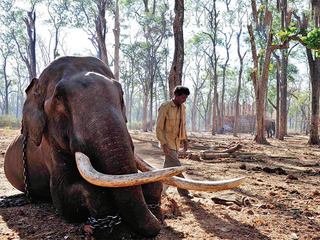
Don’t make a killing

Elephant01KF05feb2018

A documentary film about the elephant-man conflict in Karnataka posits that solutions to loss of life due to elephant attacks can only come through co-existence. Not everybody agrees, though. We look for some answers.

There is a moment in Elephants in the Coffee when Naveen Cariappa (his family has farmed an area in Coorg for more than three generations) talks about how media, officials and conservationists rush to the site of an elephant death, but remain silent when a coffee plantation worker is killed as a result of conflict with the very same elephants. The lament encapsulates the kernel of the 58-minute documentary – that the solution to such man-elephant conflict lies not in taking sides, but in pursuing solutions that encourage a peaceful co-existence between both parties.

Created by author, documentary filmmaker and cultural explorer Bhaskar Krishnamurthy and journalist-turned-educator Tom Grant, Elephants in the Coffee looks at the fragile relationship between elephants and humans, and has been shot mainly around Nagarahole National Park and the coffee estates skirting it.

Krishnamurthy, who was in the city for the screening (he is based in the US) says this, his first film on the subject, was born out of a desire to understand what happens as human population grows and elephant habitat shrinks. “Are we at the threshold of cutting our relationship with animals? The more plantation workers die as a result of this conflict, the more tolerance for wildlife is going to reduce. And that doesn’t bode well,” he says. Grant adds: “Cariappa represented an important duality, or internal conflict, among farmers. He loved elephants and nature. He worked with people in the national park to help improve the situation for elephants. But when they began destroying his crops and threatening his workers, he had to seek solutions. He found no reasonable measures by which he, as a small farmer, could protect his farm from crop raiding elephants. In our minds, he is a symbol of the Indian farmer who is being forced to change his attitude toward an animal he once saw as a benevolent god. Now he, as many others, see the elephant as a menace that must be addressed.”

There are others. PC Bopanna, a farmer describes how he survived after an elephant pelted him to the ground, but today, hobbles along on a crutch, his leg badly damaged in the incident, even multiple surgeries later.

Then there is the other side – of elephants losing their habitat, of majestic creatures being robbed of their homes and reduced to residents of tiny spaces once they’re marked as violent and aggressive and eventually, captured. Krishnamurthy speaks with feeling of the 60 elephants housed in captivity in Karnataka, and how they may be alive, but living regimented lives like that for the rest of their days “is no life at all”.

Fences have not worked, as illustrated by viral videos of an elephant slipping under a railway crossing barrier at Chapramari Wildlife Sanctuary earlier this year.

Elephants in the Coffee also shows how elephants outsmart all kinds of barriers, trampling them with ease. As the film makes clear, ‘If you make a 20-foot-long moat, the elephant will walk till the 21st foot and cross over there’. Successful models have been few, such as the SMS-based warning system developed by Dr Anand in Valparai to warn workers when an elephant is in the area, or the SMS messaging system at Tata Coffee, demonstrated in the film by biologist Karthic Krishnan.

Conservationist Padma Ashok is also of the opinion that co-existence is the only way forward. She opines that solutions need to be thought of by people local to the area, by taking into consideration the topography, landscape and geographical features of the area. “From the elevation to the length of the river in that area, everything matters. And you need a combination of two-three solutions to tackle the problem, because elephants are able to outsmart most,” she says.

Not everyone agrees, though. Praveen Bhargav, former member of the National Board for Wildlife, believes harmonious co-existence is “one of the greatest myths in conservation”, a utopian idea that “rarely works in the long term with most conflict-prone large mammals”. He advocates “site-specific solutions driven by scientific knowledge and a deep understanding of the social context”. He adds: “Loss of a family member is tragic but it must be seen in perspective. In Karnataka alone, more than 10,000 people have lost their lives in road accidents in 2015 while around 15 people have died due to elephant conflict. Large swathes of elephant habitat have been fragmented/lost due to agriculture, human settlements, encroachments, dams, highways, resorts etc which is a major driver of conflict.

There is no magical solution but conflict can be minimised by spatially separating humans and large wildlife to the extent possible by deflecting developmental projects, preventing ad-hoc grants of public lands by the revenue department, incentive-driven voluntary resettlements and innovative ideas for creating viable buffers around reserves involving local communities. In some specific cases, marooned, isolated population of elephants may have to be moved out to minimise conflict.”

Krishnamurthy believes the biggest problem is a lack of education. People have no idea what impact a cup of their coffee is having in the wild. He suggests the promotion of sustainable wildlife products, say by giving “a premium to the coffee you drink”. “At least that way a part of it will go back to wildlife conservation.” He would also like more stringent requirements for ownership of coffee estates and homestays that have mushroomed indiscriminately in these areas over the past few years. “So many of them are owned by people living, say, in Bengaluru. Maybe one way to minimise the number of such estates is to lay down laws that owners have to have strong roots in Coorg,” he explains. And to ensure better welfare of the captured elephants, mahouts need to be treated better and paid more. “Otherwise they’re losing interest and daily wage labourers who are paid a pittance and have no interest in forming a relationship with the animal, are taking their place.” The best answer, though, he believes, is technology. “Even the SMS warning service is eventually a human intervention. Instead, I’m sure that in Bengaluru we can develop technology to identify elephant movement and tracking, where there is no need at all for a person to physically go out there and do it.”

For Grant, the solution also lies in people considering the cost of their cup of coffee. As he puts it: “Americans drink an average of three cups of coffee each, but they have little idea how coffee is grown. India is one of the top exporters of coffee. And now Tata has a joint operating agreement with American coffee giant Starbucks. Yet no one in America who drinks coffee knows that India’s elephants are locked in a struggle for survival with the people who grow coffee.”
The answer isn’t that people stop drinking coffee, he emphasises.

Rather, “if every coffee drinker gave a penny for elephants with every cup, we could solve this problem in an instant”.

source: http://www.bangaloremirror.indiatimes.com / Bangalore Mirror / Home> Opinion> Sunday Read / by Sowmya Rajaram, Bangalore Mirror Bureau / April 30th, 2017

Wilma on cloud nine as she becomes Wing Commander

Madikeri:

Many men and women serve in Indian defence forces from the small hill district Kodagu, known for coffee. Each family tries to ensure that at least one joins the defence force and the trend continues.

Life has not changed though many lost lives during service. The immense desire to serve the nation has not stopped women too. The latest to join the ranks as wing commander in Indian Air Force (IAF) is Pandanda Wilma Bheemaiah, wife of Pandanda Bheemaiah.

Daughter of Alamengada Muddappa and Tara from Hudikeri in Kodagu, Wing commander Wilma is presently stationed in Agra.

She served in African nation Congo on a united peace keeping mission and has many proud moments in her career.

source: http://www.newskarnataka.com / News Karnataka / Home> Cities> July 30th, 2016

Scouring the Kodava attic

AppannaKF02feb2018

Passionate about relics and all things old, this retired History lecturer’s face brims with excitement as he shows his collection to the tourists and attempts to provide a theatrical demonstration of the artefacts. Bacharaniyanda P Appanna, a native of Kushalnagar, is a hoarder of historical artefacts that are exclusive to Kodagu. History comes alive in his house not just through the artefacts, but also through his energetic tale-telling enactment.

The history and culture of Kodagu have been an enticing topic for professional and amateur researchers alike. For most of these researchers, the abode of Bacharaniyanda P Appanna is a treasure trove of knowledge, resembling a theatre of history.

The dwelling

Appanna invariably accompanies while the curious visitor explores his collection. Taking you through a small room, he points out at an ordinary bulb. Switching it on, he says, “This bulb has been functioning from January 1, 1973.” Such is his precision and enthusiasm for age-old things. One is welcomed by a huge bookshelf at the entrance of his house. There is a kurikutt – a single piece vermilion and turmeric holder made of wood, hanging beside a brass lamp inside the house. Below this lies a chanduka, a compartmented wooden case.

Sitting beside these dateless artefacts, he says, “I have been hoarding historical objects for over 30 years now. Students and professionals from around the globe come here to learn about the significance of these artefacts.”

Appanna travels to the interior parts of Kodagu and scrutinises each village to source his artefacts. He is interested in exploring old ancestral houses, and says, “I mostly visit age-old houses owned by the elderly. Requesting their permission, I first scrutinise the attic and then the backyard to find the valuables.” Thereby, he acquires innumerable authentic and priceless artefacts for his collection.

Appanna has thoroughly researched and named the artefacts correctly, some in Kannada and the rest in Kodava language. Since his house cannot accommodate all the artefacts, some are placed in a makeshift shed outside the house.

Several Kodava weapons hang inside the house. They include the amb kathi, meembal, vodi kathi and a variety of rifles strung along with a line of bullets. Spirited, he precisely enacts how the Kodavas used these weapons, and explains, “Amb kathi was designed for the ladies, who were skilfully trained to use them. The meembal was used for fishing.”

Showcasing hobbies

His makeshift shed is home to antique vessels, vintage knitted baskets and stone measures to name a few. Explaining the functionality of sekala, a huge mud pot with pores in its inner lining, he says, “It was the steam cooker of the bygone era.” He then lines up a few measuring bowls, pare, pani and sair, and explains, “One pare is 10 sair, one pani is two sair…” These are local measuring units of the bygone days. Similarly, he lines up a few stone weights and goes on to explain their units, which include pare and batti.

Furthermore, he introduces the kota kudike, a mud pot that used bamboo leaves and wet sand placed at its bottom to preserve meat and fish for five to six days. He also possesses a wooden device used to make nuputtu, a famous Kodava dish. Next is the batte bari, a knitted basket, that acts as a wardrobe. Showing one of the ancient ones, he says, “This belonged to the wife of Kaliyat Ajappa, a cult deity.” Likewise, he shows more items such as the pombana (coin holder), maal pott (jewellery holder), ele thatte (ancient tray), etc.
He also possesses the ceremonial dowry items given to women during their weddings.

In the backyard, equipment related to agriculture and fishing is arranged. The design of the ancient fish trap is sure to enthral the viewers. Bacharaniyanda house is open to all enthusiasts who want to experience the culture of Kodagu and the visitors’ names are jotted neatly in his diary with dates. Appanna can be contacted on 9480730763.

source: http://www.deccanherald.com / Deccan Herald / Home> Supplements> Spectrum / by Prajna G R / January 22nd, 2018

A walk down coorg’s lane

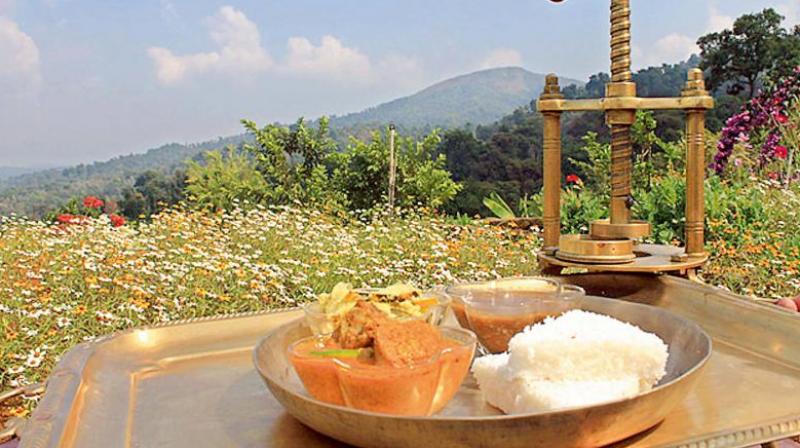
The cuisine has evolved with locally produced fresh ingredients that are available in the region, hunting and foraging.

The cuisine has evolved with locally produced fresh ingredients that are available in the region, hunting and foraging.

Slow-cooked meat and heaps of Kachampuli or vinegar, gives coorgi cuisine its own, unique identity, setting it apart from food from other parts of South India.

Situated in the heart of Karnataka, Coorg is not just home to breathtaking views and a beautiful weather, but also to the famed Coorg cuisine. The cuisine has evolved with locally produced fresh ingredients that are available in the region, hunting and foraging.

Make no mistake; Coorgi cuisine is completely different from that of its neighbouring state of Kerala. It’s far more rustic, and less refined, with its own ambrosial personality.

The preferred style of cooking is mainly slow cooking in primitive pottery, in earthenwares. Most food is prepared with a few key ingredients because of the climatic conditions of Coorg. Pork — especially wild boar — and Kachampuli, or Coorgi vinegar, are the most commonly used ingredients. Interestingly, the meats are cooked over slow flame using their fats, instead of oil. Kachampuli is a strong and viscous variety of syrup, derived from Kodambuli, a fruit. The vinegar offsets the acidic taste and adds a characteristic flavour to the dishes.

However, given that the cuisine isn’t as well known to most of the country, there are various myths about Coorgi cuisine that people believe. Many are under the assumption that coffee can be used to prepare Coorgi food, which is incorrect. Neither does Kerala have any kind of influence on their cuisine.

Unfortunately, because the cuisine is yet to be explored on a mass scale, it’s not had much of an impact in India. By increasing awareness of this cuisine amongst gourmet diners, especially about its imperative flavours and uniqueness, Coorgi cuisine will finally have its day in the sun.

CoorgFood02KF28jan2018

Kadambuttu (Steamed rice dumplings)

INGREDIENTS
1 cup Broken rice rava
2 cups Water
½ tsp Salt
Some butter
A few fenugreek seeds, roasted and powdered

METHOD
Boil the water with salt. For one measure of broken rice, take two measures of water.
Add the fine broken rice rava and stir continuously, so that no lumps are formed. Add fenugreek powder.
Keep stirring till rava is cooked, and all the water is absorbed. It should leave the mixture with a dough-like consistency.
The process will take 30 minutes. Remove from fire and allow it to cool.
Spread out on a plate and knead it a little with greased palms.
Roll it into lime sized round balls between your palms, rubbing a little melted butter to it.
Wrap up these balls in a damp muslin cloth, and steam for 10-15 minutes.
Kadambuttu is best served with Pandi Curry.
CoorgFood03KF28jan2018


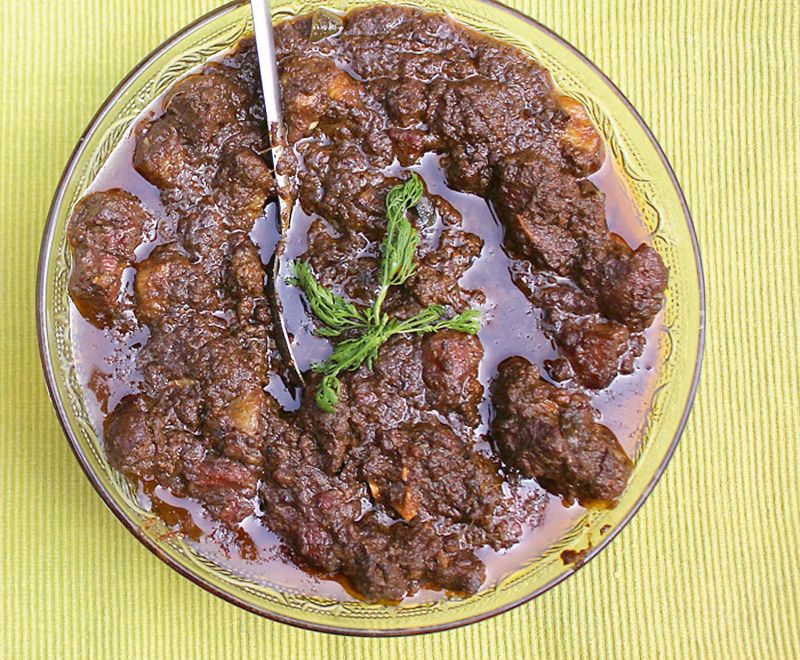
Pandi Curry (Pork Curry)

INGREDIENTS
1 kg Pork
1 tsp Chilli powder
1 tsp Turmeric powder
400 gm Onion, chopped
50 gm Ginger
50 gm Garlic
10 nos Bird’s eye chilli
50 gm Coriander leaves
4 tbsp Coorgi pork masala powder
3 tbsp Kachampuli
Salt to taste

METHOD
Cut the pork into medium-sized pieces. Wash and smear them with turmeric, chilly powder and salt.
Coarse grind the chillies, onions, ginger, garlic and coriander.
Sauté the marinated meat in a vessel slightly.
Add the green masala and a cup of hot water to it. n Let it cook for 10-15 minutes, so that the masala is completely absorbed by the meat.
When almost cooked, add the powdered spice masala. If cooking in a pressure cooker, you can add the spice masala at the beginning, but in an open vessel, you can add it later.
Simmer and allow it to cook; the colour will keep getting darker.
After the meat is well cooked (dark blackish-brown in appearance, with a slight glaze), add the Kachampuli and remove from the fire.
There should be a thick gravy for the curry.

CoorgFood04KF28jan2018

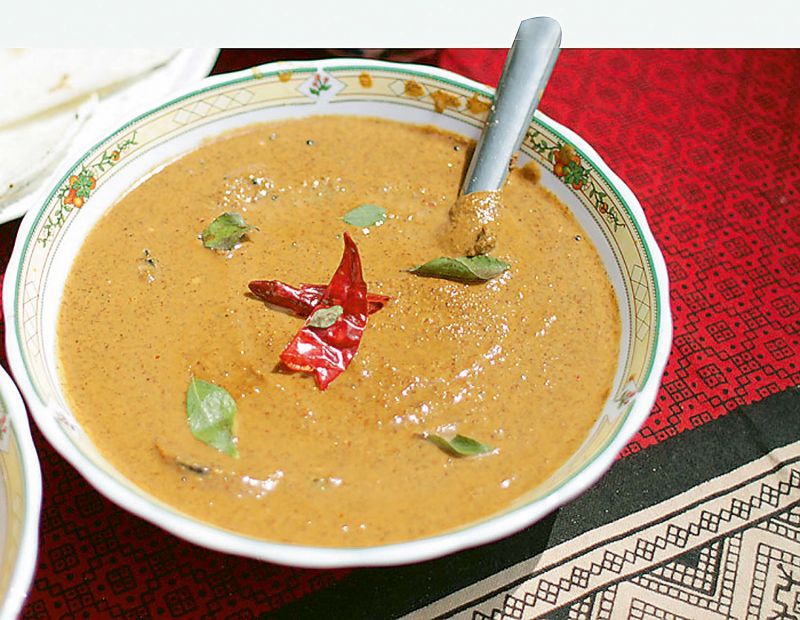
Mudre Pajji (Horsegram chutney)

INGREDIENTS
100 gm Horsegram
50 gm Dry coconut
2 tbsp Onions, chopped
3 nos Dry red chilli
A small ball of Tamarind Salt, to taste

For tempering:
5 gm Mustard seeds
20 ml Oil
10 nos Curry leaves
2 nos Dry red chilli

METHOD:
Dry roast horsegram in a pan till it is reddish brown. When it starts popping, it indicates that it’s almost done. Remove from the fire.
Once the horsegram is cold, add it to a food processor. Put in the rest of the ingredients and process well.
Take the coarse paste and transfer it to a bowl.
Add to it tempered mustard, curry leaves and red chillies.

Saurabh is the head chef of Massive Restaurants

source: http://www.asianage.com / The Asian Age / Home> Age on Sunday / by Saurabh Udinia / January 28th, 2018

Harmony is essence of republic: M R Seetharam

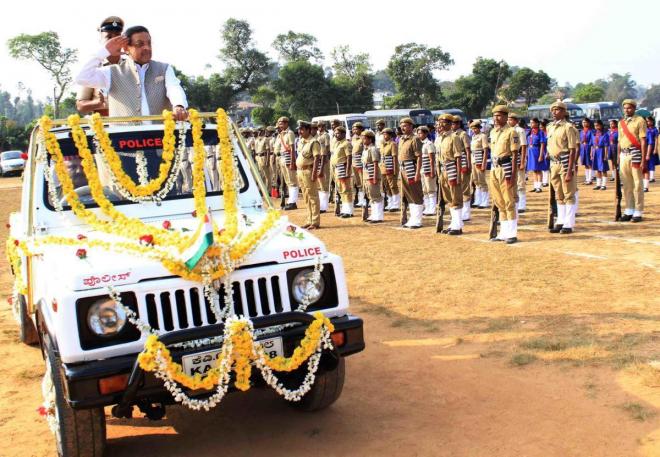
Kodagu District In-charge minister M R Seetharam receives the guard of honour during the Republic Day event in Madikeri on Friday.

The state government is committed to the development of the state and is working relentlessly, surpassing the barriers of caste, religion and language, said District-In-charge Minister M R Seetharam.

He was speaking after hoisting the Indian flag during the Republic day celebrations at General Thimmaiah ground in Madikeri on Friday.

The Indian Constitution upholds the value of ‘unity in diversity’. The contribution of Dr B R Ambedkar and others in providing us with a written constitution will be remembered by all the generations to come, he said.

The lives of the general public hold utmost importance for the government. Harmony and brotherhood is the mantra of development. Thoughts of people in a secular country should be based on secularism and equality, he said. All must take a pledge to respect the constitutional values, he said.

M R Seetharam said that during his recent visit to the district, Chief Minister Siddaramaiah had initiated projects worth Rs 122 crore. 94,011 families have been benefited by Anna Bhagya scheme in the district. 5514 and 799 people have been provided with title deeds under 94 C and 94 CC respectively. The construction work of 528 houses for Diddalli evacuees is on. Around 8,200 families of Jenu Kuruba and Erava Soliga communities are being provided with nutritious food. Forest Rights have been provided to 1,392 forest dwellers.

The minister further said that Indira Canteen will be set up in Somvarpet, Madikeri and Virajpet.

Troupes from DAR Police, Civil Police, Home Guards, MFC College, Koodige Sainik School, Bharatiya Vidya Bhavan, Government PU College, Government High School, General Thimmaiah School and St Micheal High Schools carried out a march past on the occasion.

MLC Veena Acchaiah, Zilla Panchayat President B A Harish, CMC President Kaveramma Somanna and Deputy Commissioner P I Srividya were present among others.

Schoolchildren presented cultural programmes on the occasion.

source: http://www.deccanherald.com / Deccan Herald / Home> District / DH News Service, Madikeri / January 26th, 2018

7th India International Coffee Festival 2018 reflects on experiential tourism in Karnataka

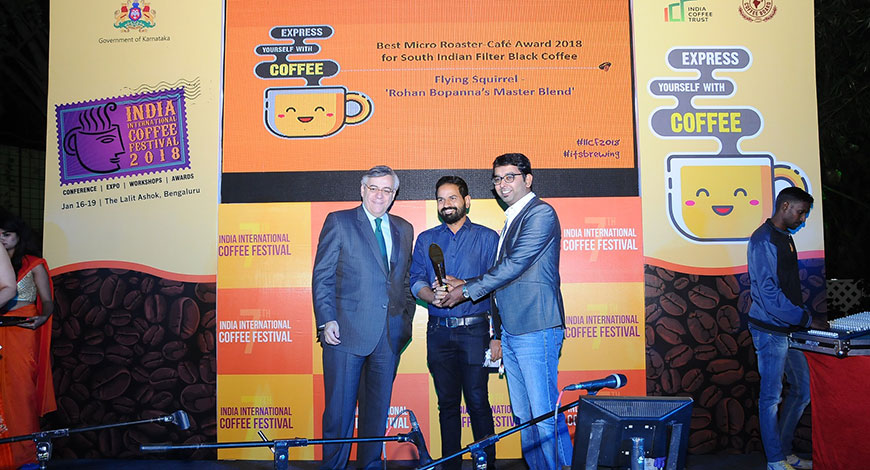
7th edition of India International Coffee Festival 2018 hosted at The Lalit Ashok, Bengaluru saw a host of activities including the coffee workshops, exhibition, keynote sessions, Fireside chat with Shri Priyank Kharge, Hon’ble Minister for IT, BT and Tourism, Government of Karnataka, Coffee Quiz Competition for Coffee enthusiasts ending the day with Café Awards ceremony.

IndiaCoffeeExbn31jan2018

The day started with workshops on ‘Role of sustainability in Post-Harvest Processing Equipment to secure the right quality, type and quantity of coffee.’ The session was led by Carlos Brando and Joao Alberto Peres Brando from Pea Marketing Ltd.

Shri Priyank Kharge, Hon’ble Minister for IT, BT and Tourism, Government of Karnatakagraced the occasion and attended a fireside chat session along with Mr. Anil Kumar Bhandari, President, India Coffee Trust where he emphasized on experiential tourism.“Today people want to experience and learn from their outings, hence experiential tourism is leading to a lot of buzz around homestays. We have offline and online strategies in place and are ready to build infrastructure and jointly manage it with associations. We have opened up 11 new eco-trails that will benefit the homestays and provide exhilarating experience to travelers,” said Shri Priyank Kharge while addressing the gathering.

He further said that, “I am privileged to have a unique opportunity to bring together information technology and biotech to further tourism in the state. I urge the startup fraternity and innovators to come forward with solutions that will help us build a sustainable tourism ecosystem in Karnataka.”

Commenting on this occasion, Anil Kumar Bhandari, President, India Coffee Trust said,“This year the festival focused on skill-building workshops, showcase of products and services, key sessions by delegates on Global Coffee Outlook and Future of Indian Coffee Sector.”

“The Indian coffee sector is growing at a rapid pace. And to sustain this growth, the dependence on government subsidies needs to come to an end,” said Shri Srivatsa Krishna, IAS, Chief Executive Officer and Secretary, Coffee Board of India.

Also, addressing a keynote session here, Jose Dauster Sette, Executive Director, International Coffee Organization said, “India is the sixth place in internal coffee consumption. In future by 2050, the production of world coffee might further decrease due to factors such as climate change that facilitates spread of pests and diseases. Both Arabica and Robusta are also negatively affected by the climate change.”

source: http://www.everythingexperiential.in / Everything Experiential – Business World / Home / by EE News Desk / January 24th, 2018

Subsidies way out: Coffee Board tells planters

Bengaluru (UNI):

Subsidies to planters from the government might not be renewed and Coffee planters need to look inward and adopt to newer technologies and strategies to enhance the quality and quantity of Indian Coffee, Srivatsa Krishna, CEO and Secretary of the Coffee Board said on Thursday.

Speaking at the plenary session of the India International Coffee Festival (IICF) here, he said the Board had recommended continuation of only two types of subsidies to the sector and it was up to the government to approve them or not.

He said that the Coffee Board is making every effort to enhance both production and quality of Indian Coffee. But the planters need to embrace innovative methods and information technology for their own well being and should reduce dependence on the government.

Mr Krishna said the Karnataka government had also initiated inquiry into allegations of coffee planters encroaching government and forest land to increase their acreage.

He said that the Coffee Board will initiate a branding exercise for Coffee in the second quarter of 2018. It had held consultations with some top branding companies and highlighted the need for securing GI tag for some specific premium brand of Coffee to ensure that the Indian Coffee is known world over.

The Coffee Board Secretary said considerable efforts have been made to enhance the productivity of coffee from 500 kg per hectare to one tonne per hectare, but still more inclusive approaches should be taken by the planters to further increase the productivity and go in for premium coffees to enhance exports.

MORE UNI CNR MSP CS 1506

source: http://www.uniindia.com / UNI, United News of India / Home> Business Economy / Bengaluru – January 18th, 2018

Anita Cariappa bags nataka academy award

Madikeri:

Anita Cariappa of Kodagu, has bagged the Karnataka Nataka Academy award for the year 2006-07 for her contribution to the field.

She is the wife of stage artiste and founder of “Sristi” theatre in Kodagu, Addanda Cariappa. Ms. Cariappa is a product of the “Neenasam” and a postgraduate in Kannada.

She is the recipient of many awards relating to Kannada and Kodava theatre.

Ms. Cariappa had been a member of the Karnataka Nataka Academy.

She has acted in Kodava films, such as “Bal Polandat” and the national award-winning movie “Hasina”, apart from acting in television serials.

N.S. Deviprasad, who also hails from Kodagu, who has organised various theatre activities in the district, has been selected for the Suvarna Karnataka award from the academy, according to information reaching here.

source: http://www.thehindu.com / The Hindu / Home> National> Karnataka / by Staff Correspondent / July 11th, 2007