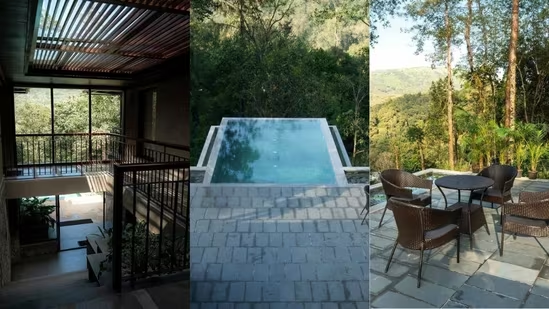
Here’s a sneak peek into a luxury nature resort in Coorg, featuring surreal views and a floating pool overlooking hills and lush greenery.
Priyam Saraswat gave a tour of this stunning villa in Coorg. (ayatana.residences/Instagram)
Set amidst the mountains in Coorg, this stunning villa is one of the most surreal spots, offering calming interiors, a floating pool at its centre, and panoramic views. Content creator Priyam Saraswat took to Instagram on April 12, 2026, to share the glimpses of this villa that offers luxury amidst nature at its best. Let’s take a closer look at the villa.
Inside the villa
Within Ayatana, a luxury nature resort, this villa is one of the recently launched projects that offers luxury to travellers amidst nature. In order to save the natural earth, all the structures in this villa are built on stilts. Surrounded by greenery all around, the property features minimalistic decor with calming interiors worth visiting for.
The highlight of the villa is its private floating pool built amidst trees and nature. The pool is designed with sharp linear geometry and vanishing edges that visually merge with the landscape. The water body acts as a reflective architectural element, amplifying openness and luxury while cooling the microclimate around the villa.
Into the bedrooms
The villa features two bedrooms, each with one master suite. The calming wooden and earthy interiors of the room makes it perfect for relaxation. The massive space inside the bedroomdelights with a beautiful swing overlooking the mountains and views. The bathroom features an open shower space that looks surreal.
This villa interior leans heavily into tropical modern architecture, where the design blurs indoor and outdoor living while maximising natural light, ventilation and landscape views. The central void creates a dramatic double-height atrium that visually connects different levels of the house. It allows daylight to penetrate deep into the interiors while also improving passive cooling and airflow, a signature feature in contemporary homes built in humid, hilly regions like Coorg. Large floor-to-ceiling glass panels erase the boundary between the interiors and the surrounding greenery.
The architectureintentionally frames the forest and mountain views almost like a living artwork. The space uses clean lines, exposed geometry and a restrained material palette instead of decorative detailing. The focus remains on volume, light and proportion rather than ornamentation.
The extended sloping metal roof with deep overhangs serves both functional and aesthetic purposes by protecting interiors from heavy rainfall and harsh sunlight, encouraging passive cooling, creating shaded outdoor transition zones, and enhancing the sleek contemporary silhouette.
Note to readers: This report is based on user-generated content from social media. HT.com has not independently verified the claims and does not endorse them. This article is for informational purposes only.
source: http://www.hindustantimes.com / Hindustan Times / Home / by Anukriti Srivastava / June 01st, 2026
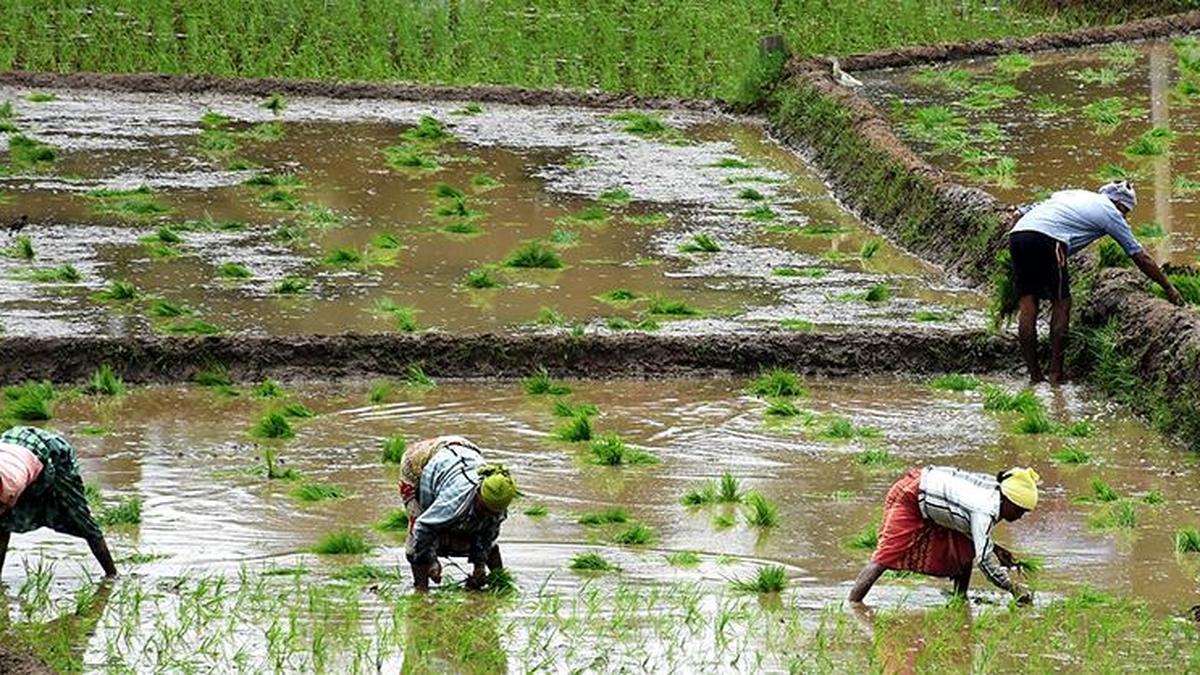
Sowing in Mysuru district | Photo Credit: File photo
A sharp deficit in pre-monsoon rainfall across southern Karnataka has raised concerns ahead of the onset of the southwest monsoon, with key districts in the Mysuru region, particularly Kodagu and Mysuru, recording significant shortfalls that could affect preparation for kharif sowing.
Data released by the Karnataka State Natural Disaster Monitoring Centre (KSNDMC) as of May 27 shows that South Interior Karnataka received 106 mm of rainfall against the normal 125 mm during the pre-monsoon period from March 1 to May 27, registering a deficit of 16 per cent.
Among the districts in the Mysuru region, the data said, Kodagu recorded the steepest decline, receiving only 106 mm rainfall against the normal 220 mm – a deficit of 52 per cent. Mysuru followed with 89 mm against the normal 184 mm, recording a 51 per cent shortage. Mandya received 96 mm against the normal 146 mm, registering a shortfall of 34 per cent, while Chamarajanagar received 140 mm against the expected 181 mm, reflecting a 22 per cent deficit.
The shortfall was more noticeable in April. Mysuru district received only 10 mm rainfall against the normal 66 mm, recording an 85 per cent deficit. Kodagu registered a 76 per cent shortfall, followed by Chamarajanagar at 75 per cent and Mandya at 59 per cent.
Although rainfall activity improved marginally in May, it remained insufficient to offset the earlier deficit. Between May 1 and 27, Mysuru received 65 mm rainfall against the normal 103 mm, registering a 37 per cent shortfall, while Kodagu received 64 mm against 114 mm, a deficit of 44 per cent. Mandya and Chamarajanagar fared relatively better, receiving 62 mm and 105 mm respectively.
The data also showed significant rainfall deficits in Hassan and Dakshina Kannada districts.
source: http://www.thehindu.com / The Hindu / Home > News> India> Karnataka / by The Hindu Bureau / May 27th, 2026
The tragedy raises urgent questions about the continued use of captive elephants for tourism, festivals, and processions in the name of tradition, even as shrinking habitats, broken elephant corridors, and rising human interference intensify conflict between humans and wildlife.
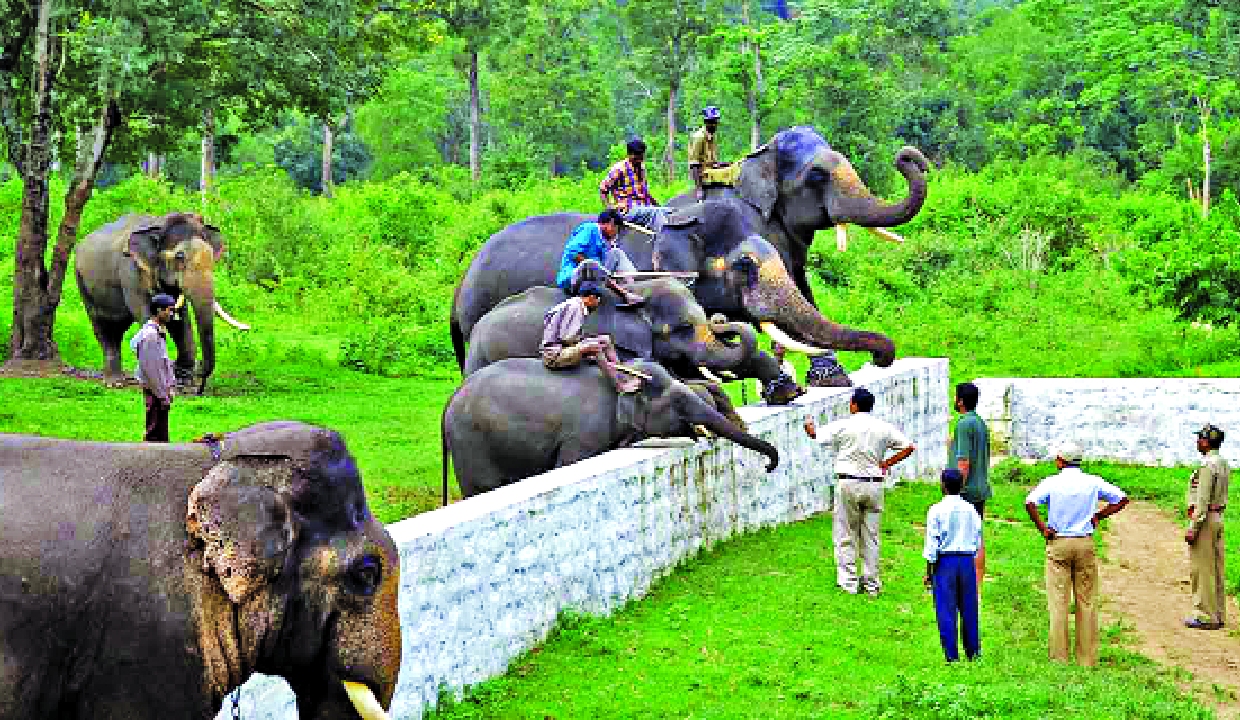
This week’s tragedy at Dubare elephant camp in Kodagu district, deep inside Karnataka’s Western Ghats, questions the decision of the authorities to permit tourists to bathe captive elephants in the flowing waters of the Cauvery River. This camp is located deep within forests dominated by the movement of wild elephants. All captive elephants in this camp were not born in captivity; many were captured from the wild and later tamed in such camps. It is not fair to conclude that tamed elephants have shed all their wild characteristics and fully obey the command and control of their masters – mahouts and kavadis. There have been instances in the past where elephants have killed their masters – mahouts and kavadis. There have also been instances where elephants did not obey the commands of the mahout and ran amok, inflicting casualties and death among crowds.
Captive elephants are often subjected to torture by mahouts using iron ankushes, which can cause bleeding and septicaemia. The footpads of elephants are frequently injured from walking on paved roads. Though camps have treatment facilities under the supervision of veterinary doctors, bleeding from earlobes and footpads is often neglected, and the elephants continue to suffer.
Let me examine in this piece how far we are justified in taking elephants for processions during special occasions and marriages where large crowds gather, and how far we are justified in continuing age-old traditions where tourists are permitted to pour water and rub the elephants’ bodies while standing beside them. On several occasions, I have personally failed to convince the Karnataka government not to use captive elephants during Mysuru Dussehra. The argument advanced was: why discontinue traditions?
Captive elephants were extensively used in dragging timber logs across hilly terrain in forestry operations in the past. The Forest Department maintained elephant camps for such operations. However, maintaining these camps was always costly, which restricted their expansion. As forestry operations have now been scaled down and tree felling in hilly terrains prohibited in the interest of conservation, these camps have largely lost their relevance.
Now, bureaucrats and politicians see these camps as permanent centres for training wild elephants that stray out of forests, damage crops and property, and threaten human lives. Earlier, the Karnataka Forest Department carried out khedda operations to capture only a few elephants needed for logging operations. However, with the advent of safer tranquillising techniques, more and more wild elephants are being captured. The department often comes under public pressure to capture elephants straying into villages. The argument advanced is that the elephant population in the wild is increasing due to conservation, and the excess population must therefore be brought into captivity. Wild elephants involved in conflicts, when translocated several hundred kilometres away into another elephant habitat, have often returned to their original homes within weeks, strengthening the argument for bringing such elephants into captivity.
In an era when elephant habitats are continuously fragmenting and shrinking owing to the expansion and widening of linear infrastructure, diversion of forests for mining, industries and development projects, and unauthorised encroachment on forest land, wild animals — especially elephants — are left with little option but to migrate in search of food, shelter, and water, thereby straying into human settlements.
The spread of invasive species and forest fires has also degraded elephant habitats. Palatable plant species and bamboo forests have suffered extensive damage, forcing elephants to move out of forests regularly. Elephant corridors that once provided migratory routes have been occupied by humans. Human settlements and cultivation inside forest pockets have expanded, to the detriment of conservation.
Captive elephant camps like Dubare are themselves islands of human activity within forests. As part of their daily routine, camp elephants are released into forests during the daytime, where they interact with wild elephants. Fights between captive and wild elephants are reported regularly. There have even been instances where captive elephants were killed by wild tuskers. Aggression is a natural part of elephant behaviour and cannot always be controlled by a mahout’s ankush. Sometimes, the animals can surprise us.
About a decade ago in Karnataka’s Kalaburagi district, an elephant in a procession kicked its mahout in full public view. The kick was mild and the mahout survived the scare. Feeling insulted, the mahout attempted to attack the elephant with an ankush. The elephant became even angrier and kicked him with such force that he fell nearly 20 feet away and died. Elephants killing their mahouts is not uncommon, and such incidents have been reported from across the country.
Within a herd, stronger elephants are also known to target weaker members. This is what happened at Dubare earlier this week. A tusker attacked a makhna (another male elephant without tusks) while tourists were permitted to bathe the herd. The hostility had likely built up over time, and on that fateful day, the tusker chose to attack the makhna in full view of tourists. The makhna collapsed onto a female tourist bathing it, crushing her to death. The tusker continued attacking the makhna until the mahout managed to calm it down. Despite the best treatment provided at the camp, the makhna died the following day.
Dubare camp also has tourist lodges run by the state-owned Jungle Lodges and Resorts (JLR). One of the activities offered to tourists is bathing the camp elephants, while another is jeep safaris through nearby forests to view wild animals. It has also been found that the entire camp and JLR premises lie within a corridor historically used by wild elephants. Blocking this corridor has disrupted elephant movement and intensified human-elephant conflict.
There are other forest pockets in Kodagu that have been granted for coffee estates. These estates too obstruct elephant corridors. More than 10,000 acres of coffee estate owned by Tata lie within this corridor. The entire estate is fenced, diverting elephants into human settlements and aggravating conflict. Sometimes elephants break through the fencing and enter the estates, threatening workers’ lives. Even the narrow roads inside coffee estates are covered by drooping coffee branches on both sides, limiting visibility. Estate management must ensure better visibility and safer movement.
This is a vicious cycle. As wild elephant movement is obstructed, incidents of conflict increase, and every human death places additional pressure on the Forest Department to capture the elephants involved and bring them into captivity. The continued operation of such elephant camps and JLR facilities is not in the interest of conservation.
Such elephant camps should be downsized in a phased manner, and corridors must be restored by removing fencing in Tata Coffee estates and around JLR properties. Tourists should not be allowed near camp elephants, and under no circumstances should close interactions be permitted. Tourist viewing areas should instead be cordoned off, allowing visitors only to observe elephants bathing in the river from a safe distance.
Dubare camp also has tourist lodges run by the state-owned Jungle Lodges and Resorts (JLR). One of the activities offered to tourists is bathing the camp elephants, while another is jeep safaris through nearby forests to view wild animals. It has also been found that the entire camp and JLR premises lie within a corridor historically used by wild elephants.
The writer is a retired Head of Forest Force, Karnataka, and teaches Economics at the Karnataka Forest Academy; Views presented are personal.
source: http://www.dailypioneer.com / The Pioneer / Home / by B K Singh / May 28th,2026
Backed by the Supreme Court, Vinesh Phogat will compete in the Asian Games selection trials on Saturday with IOA and Sports Ministry observers present, ensuring transparency in a closely watched wrestling showdown.
Aditi Chauhan, MM Somaiya to be government observers for Vinesh Phogat’s Asiad trial (Image: PTI)
Former footballer Aditi Chauhan and Olympic gold-winning ex-hockey captain M M Somaiya will be the two observers from the Indian Olympic Association (IOA) and the Sports Ministry when Vinesh Phogat competes in the high-profile women’s wrestling trials for the Asian Games here on Saturday.
According to a well-placed source, Chauhan would be representing the IOA and Somaiya would be the observer from Ministry and the Sports Authority of India (SAI) at the Indira Gandhi Indoor Stadium here.
The 31-year-old Phogat got the go ahead to appear in the trialfrom the Supreme Court on Friday.
She had been first permitted to fight by the Delhi High Court after challenging a suspension imposed by the Wrestling Federation of India (WFI) citing procedural and disciplinary violations by her, including a missed dope test last year.
The WFI challenged the HC order in the top court, which too refused to stop Phogat.
“Today at this stage, the high court having passed the order, the hope and expectations have risen. To tell her to go back home and we can’t do anything, will not be proper. We are very bold in telling you this,” the bench told the counsel appearing for the WFI.
The Delhi HC had asked the ministry to appoint observers for the trials while chiding WFI for trying to prevent Phogat from competing.
Chauhan, a trailblazing former goalkeeper who played professionally in the UK with West Ham United, is currently the Program Officer for the IOA’s Athlete Commission (Safeguarding & National Olympic Academy), having been appointed to the role earlier this year.
She made 57 appearances for India before retiring.
Somaiya was a part of the 1980 Olympic gold-winning Indian hockey team and captained the side in the 1988 Seoul Games. Somaiya is also an Arjuna awardee.
Earlier this month, the WFI had declared Phogat ineligible to participate in domestic events till June 26, saying that she had still not completed the mandatory six-month notice period for a retired athlete’s return.
Phogat, however, had turned up at the National Open Ranking Tournament in Uttar Pradesh’s Gonda only to return without competing. Her bitter feud with WFI dates back to 2023 when she led a street protest against the then federation Brij Bhushan Sharan Singh, accusing him of sexual harassment.
source: http://www.indiatoday.in / India Today / Home> News> Sports> Other Sports / by Press Trust of India / May 29th, 2026