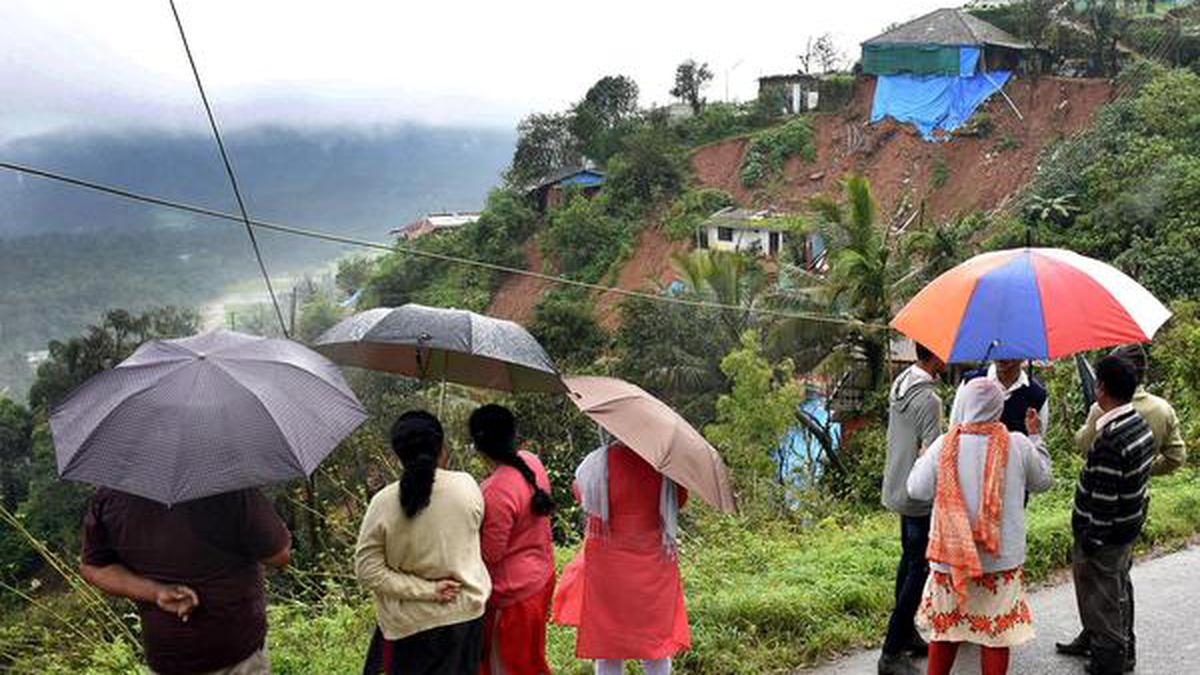
People looking at the devastation near Raja Seat at Indira Nagar in Madikeri.
The abandoned localities on the hilltops near the Raja Seat in Madikeri town, which bore the brunt of landslips, are testimony to the devastation here. People are thronging the roads leading to the dwellings to understand the scale of destruction from a safe distance.
Though tourist arrivals have dropped drastically following the Deputy Commissioner’s diktat to hotels and homestays to not accept bookings until August 31, people carrying relief from various places and those from adjoining places bordering the district are thronging these places to see the destruction that has struck the coffee land this month.
The police have established a check-post near Raja Seat to prevent people from closing in where the remaining houses in Indira Nagar and Sri Chamundeshwari Nagar, the adjoining residential hubs, are delicately positioned. They are facing the looming threat of the earth caving in any time. All the residents had been evacuated to safer places and relief camps.
“The devastation is much bigger in the interior parts which have no access because of damage to roads. Therefore, people are coming to the town to see the havoc,” a local said.
‘Disaster tourism’
Madikeri MLA Appachu Ranjan said VIPs visiting Kodagu to understand the scale of devastation need to bring their escorts with them instead of depending on the local police and officials to usher them to the sites. If a large number of people accompany high-profile visitors, it will hamper the ongoing relief works, he said.
“Deployment of local officers on such visits may end up in relief work getting hindered despite the fact that officers from other districts have been deputed to oversee works,” he argued. “Local officers need to be on duty for relief and rescue since they are aware of the terrain. Deploying outstation officers will not serve the purpose. I have conveyed this to the Minister in charge of Kodagu district, S.R. Mahesh, and Deputy Commissioner P.I. Sreevidya.”
Meanwhile, the district officials and staff have been strictly told not to avail leave for at least a fortnight in order to assist with the relief and rebuilding works.
A woman Madikeri Zilla Panchayat employee said: “We have been told to put off our leave and stay in the headquarters for attending to the relief and other important works.”
An engineer attached to the Public Works Department, who is overseeing the roadworks, said, “Until the situation becomes stable, it may not be possible to avail leave, considering the devastation and the works to be carried out on a war footing.”
source: http://www.thehindu.com / The Hindu / Home> News> India> Karnataka / by Shankar Bennur / August 23rd, 2025
Has a place name caught your ear and not let it go? I have always felt that way about the region in Karnataka called Coorg. The name of the hill station is so unusual. It’s mysterious, while still being easy to remember.
This past January, I finally reached Coorg and learned that the name has roots in colonialism alone. In the 1830s, when the British deposed the local Raja, they swiftly annexed the land and renamed the place called Kodagu, which has civilization dating back to India’s Sangam period, 300 BCE.
The land known as Coorg was incorporated into the new state of Karnataka in 1956. Today, Kodagu is the district’s official name, but Coorg is what lots of people still say and write. The area is known for deep green mountains, coffee plantations, and people who are incredibly warm—and physically strong. The regional identity is defined by its minority indigenous community called the Kodava, people who may have originally come as Kurdish exiles from Iraq or with the military forces of Alexander the Great. To this day, the Kodavas are admired for their skills in hunting and military service.
We came from Mysore by car for a two-day visit. The first driving hour was easy on smooth roads. The last two hours were a stomach-testing, bumpy and twisty journey into the beautiful green hills.
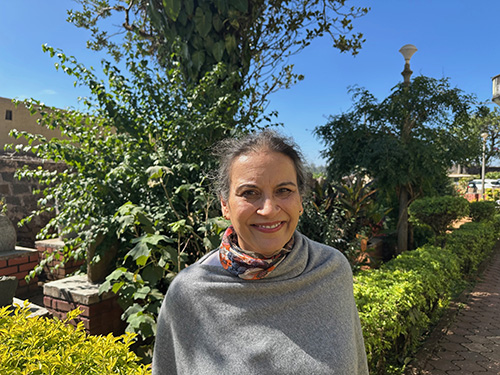
When we got out of the car at the Coorg Wilderness Resort, I realized we had entered the coldest place I’d ever experienced in India, with temperatures in the fifties and sixties daytime. I wrapped up in my cashmere shawl and kept it on for the rest of the stay.
Monkeys were everywhere! The clever girl photographed below became our frenemy. She waited near the suite till we were gone and then jumped down from the roof to our balcony and turned the handle of the closed door to go inside. Indoors, she located a closed can of almonds with a picture of the nuts on the can. She skillfully ripped off the metal lid, devoured the almonds and scampered through the suite, enjoying herself, until she was shooed out by the arriving cleaner. Even after the crime, she lingered near our door, giving cool stares that reminded Tony and me that she had rights to the place.
I’d seen the resort in brochures and online photographs and thought from its appearance that it was a renovated coffee plantation. My eyes had fooled me. The property was just a few years old but built in a convincingly traditional style and furnished with neo-Victorian furniture and textiles. Most rooms were a steep hill walk down from the reception building and hotels, but little electric carts whizzed about by young local drivers took care of any exhausting climbs, especially at night. The hotel buildings were painted cheerful red. Guest suites were almost all located up flights of stairs and had private balconies and terraces overlooking the rolling hills. At least part of my guess was correct: the vast lands included a small coffee plantation with beans being grown, roasted and shared with other properties in their group, the Paul John Hotels.
The food was extremely tasty, with most of the fare South Indian. Large buffet meals were included in most people’s room packages, but we found the hotel’s small restaurant that specialized in Kodava dishes, very enjoyable, both for the food and the company of local people. Local mushrooms, greens, and bamboo shoots were combined in curries that made an intriguing meal that seemed to taste of the mountains.
Hiking, swimming in a pool, visiting the hotel’s farm and learning about coffee production were all offered as activities. Most of the resorts’ clients were multigenerational Indian families. While climbing uphill on a hike to the lookout point shown above, I fell sharply and was worried my throbbing quadricep would prevent me from walking back downhill. One of the tourist families had chartered an all-terrain vehicle going along the same rough path and gave me a seat, for which I was extremely grateful. For the next eight days traveling in India, my bruised thigh slowly healed.
Fortunately, I was still mobile enough to walk short distances. In nearby Madikeri, Tony and I visited a fort dating from the early 1600s that, during British occupation of the early 1800s through 1947, was used for administration, as well as a small Anglican church. Strolling through this church, we studied a plaque engraved with names of British parishioners who’d left the paradise of Coorg to fight and ie in the World Wars. No longer used for services, the small Gothic building had become a museum of Indian history, with cases filled with local archaeological finds, many of them stone tablets and statues of Hindu and local deities.
One of India’s most distinguished military combat officers, General Kodendera Subayya Thimayya, came from a Kodava coffee plantation-owning family. The general, who was known in his youth as Dubbu to his family, became “Timmy” to the British and the outside world.
Gen. Thimayya studied at the Bishop Cotton boarding school in Bangalore, the Prince of Wales Royal Indian Military College, and finally at the Royal Military College in Sandhurst, where he was one of only six Indian cadets. During World War II, Timmy was the only Indian who commanded an Infantry brigade; after the British left, he rose in the Indian Army, becoming the 3rd Chief of the Army Staff of the Indian Army from 1957 to 1961. He retired and then served as Commander of the United Nations Peace Keeping Force in Cyprus, where he died of heart attack while on active duty at the age of 59.
It was delightful to talk with a retired soldier manning the visitor desk at Gen. Thimayya’s childhood home in Madikeri, which is now a museum. I enjoyed walking through and getting the sense of what a wealthy planter’s home was like. I was pleased to see a room devoted to information about the general’s wife, Nina, who was an accomplished dancer and had lived in France before their marriage, and other rooms had displays that told stories about his siblings and his children. The Thimayya house was one of the best sightseeing opportunities in Kodagu, which really doesn’t have the multiple temples, museums and shops in most Indian tourist destinations. Truly, the place is about being away from the world and in nature’s embrace.
In the center of Madikeri town, we sampled delicious cappuccino from local beans and deliberated over the varieties of coffee we would buy and share with friends as we traveled on in India.
It was sad to watch our last sunset from the balcony at the Wilderness Resort. But the long ride down from the mountains had another excitement in store: the Namdroling Monastery, a Tibetan Buddhist refuge and learning center. The monastery was built in 1963 when the Tibetans were welcomed to India after Chinese persecution.
The initial structure for the monastery was just bamboo, and the early monks had to fend of wild animals as they built in the jungle. The community raised money and have built the monastery into a gilded, impressive complex for monks and their families. The day we visited, many monks seemed to be hastening away down the road from the monastery. When we came upon police cars closing off the exit, we learned that the Dalai Lama was visiting for a few days, and the monks were going to meet him. No such chance for us; but we considered it a brush with greatness and another example of how Kodagu might appear like a sleepy mountain hideaway, yet have a powerful impact in the larger world.
source: http://www.sujatamassey.com / Sujata Massey / Home / by sujatamassey.com webmaster / March 26th, 2025
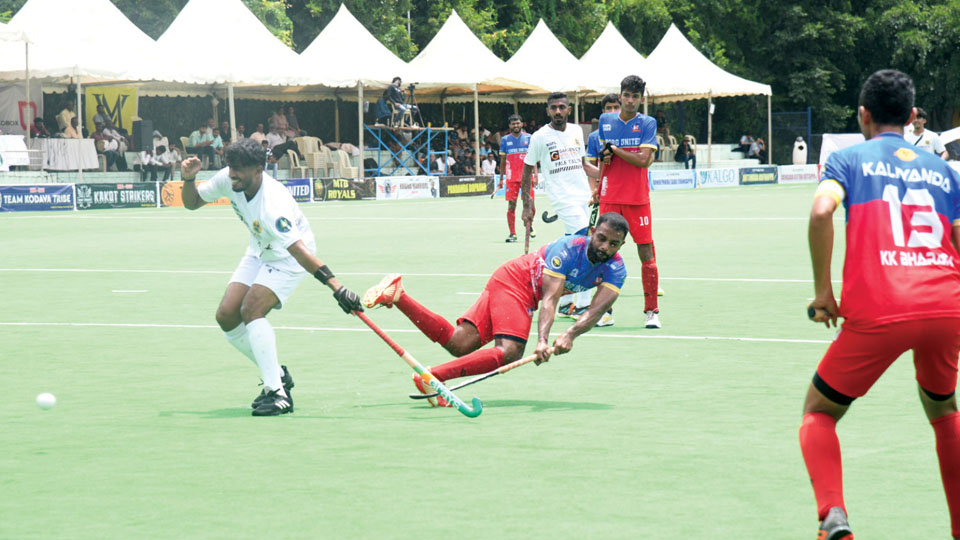
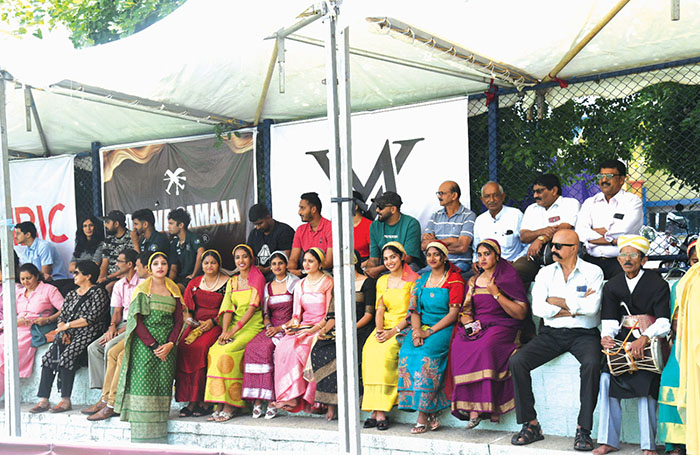
MTB Royals and Kakot Strikers ended up in the top of Pool A and Pool B respectively after winning both their matches on Day-1 of three-day Kodava Hockey Premier League (KHPL) organised by Kodava Samaja Youth Wing Mysuru at Chamundi Vihar Stadium here yesterday.
In their first match, MTB Royals defeated Team Kodava Tribe 1-0 and in their second match, they overcame Coorg Titans 1-0 to top the Pool A. Meanwhile, Kakot Strikers also won both their matches in Pool B. They defeated Connecting Kodavas 1-0 in their first match and South Side Rangers 2-1 in their second match.
On Day-2, this morning, Coorg United defeated MTB Royals 2-1, Kodavu Warriors overcame Kakot Strikers 2-1 and Coorg Titans reigned supreme over Team Kodava Tribe 2-0.
Yesterday’s Results
Coorg Titans 1 beat Coorg United 0
Kakot Strikers 1 beat Connecting Kodavas 0
Team Kodava Tribe 1 beat MTB Royals 0
Anjigeri Naad 4 beat Kodavu Warriors 3
(penalty shootout)
Pale Taluk 3 beat Coorg United 0 (shootout)
South Side Rangers 2 beat Kakot Strikers 1
Coorg Titans 1 beat MTB Royals 0
Connecting Kodavas 1 beat Kodavu Warriors 0
Pale Taluk 1 beat Team Kodava Tribe 0
South Side Rangers 4 beat Anjigeri Naad 3
(penalty shootout)
Day 2 Results
Coorg United 2 beat MTB Royals 1
Kodavu Warriors 2 beat Kakot Strikers 1
source: http://www.starofmysore.com / Star of Mysore / Home> Sports / June 28th, 2025
Date : June 27 – June 29 / Time : 7 am to 5.30 pm / Venue : Hockey Grounds, Chamundi Vihar Stadium
Mysuru:
The three-day Kodava Hockey Premier League (KHPL) – 2025 was off to flying start with Coorg United taking on Coorg Titans in the inaugural match held Chamundi Vihar Stadium in Nazarbad, here this morning.
In the inaugural match, Coorg Titans defeated Coorg United 1-0. Kuttimada Bhuvan Ponnanna scored the lone goal of the match for the Titans. In another match, Connecting Kodavas overcame Kakot Strikers 1-0. Mukkatira Poonacha scored for Connecting Kodavas. In the third match, MTB Royals defeated Team Kodava Tribe. Chekkera Varun Madappa scored the only goal of the match for the Royals.
The 3-day Franchise-based Kodava Hockey Tournament, organised by Kodava Samaja Youth Wing Mysuru in association with Kodava Samaja Mysuru and Hockey Mysore, will feature a total of 24 matches including the finals to be held on June 29.
A total of 10 teams including Coorg United, Kodavu Warriors, Pale Taluk, South Side Rangers, Team Kodava Tribe, Connecting Kodavas, Anjigeri Naad, Coorg Titans, Kakot Strikers and MTB Royals are competing in the tournament which promises some best action. Matches are played in a short format with 34 minutes allotted to each match with two quarters of 17 minutes each.
KHPL-2025 mandates each team to include one female player and two emerging players under 18. This step brings gender inclusivity and youth empowerment to forefront, ensuring 10 women and 20 young talents shine on Kodava hockey stage.
Hockey Karnataka Hon. Secretary and ex-Olympian Anjaparvanda B. Subbaiah, Hockey Mysore President Konganda Dilip Biddappa, Kodava Hockey Academy President Pandanda Bopanna, Hockey Mysore Vice-President Kotera Muddaiah, Kodava Samaja Cultural and Sports Club ex-President Kuttimada D. Muthappa, Youth Wing President Kotera Vedith Uthaiah, Field Marshal K.M. Cariappa Assn. President Nayakanda Thimmaiah and others were present.
source: http://www.starofmysore.com / Star of Mysore / Home> Sports / June 27th, 2025
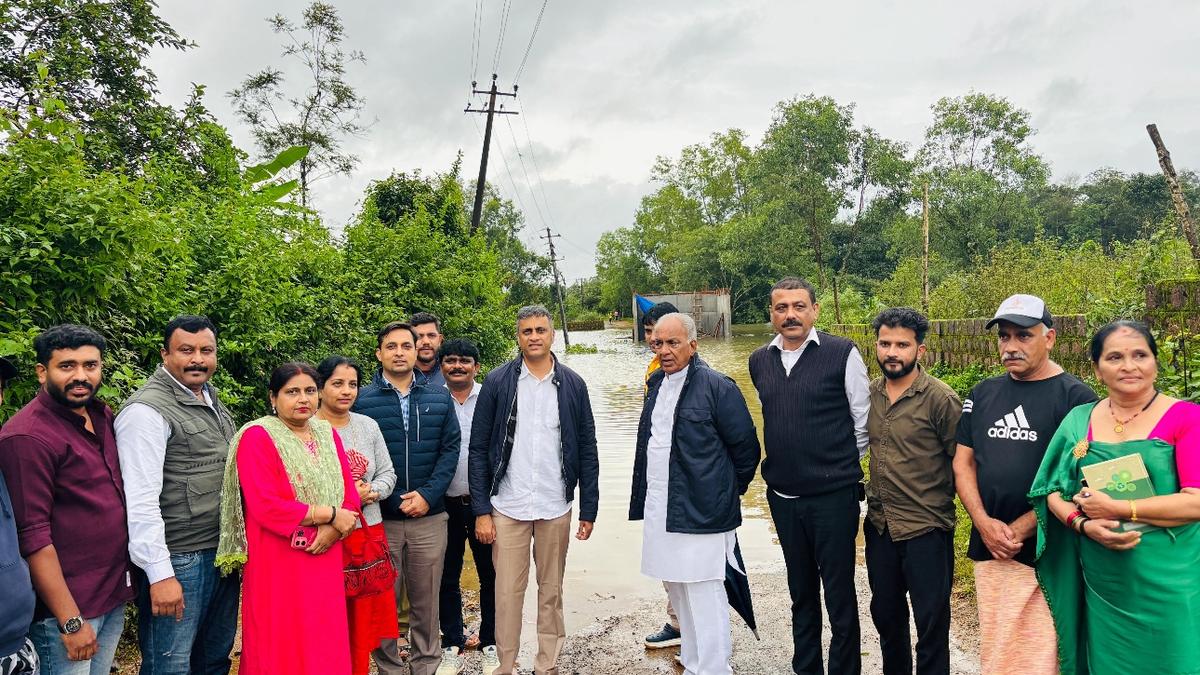
Minister in charge of Kodagu N.S. Boseraju, A.S. Ponnanna, MLA, and others visiting rain-affected areas at Napoklu in Kodagu on Friday. | Photo Credit: SPECIAL ARRANGEMENT
Kodagu district in-charge Minister N.S. Boseraju on Friday instructed the Forest Department officials to devise effective, long-term measures to tackle the growing human-animal conflict in the district.
Presiding over the district-level Karnataka Development Programme (KDP) tri-monthly review meeting in Madikeri, the Minister said that the conflict with wild elephant continues unabated, and he called for scientific and permanent solutions.
He spoke to Forest Minister Eshwar Khandre over the phone, suggesting a meeting in Bengaluru with Kodagu MLAs and senior forest officials to discuss forest-related challenges.
A.S. Ponnanna, MLA, raised concerns over the increasing elephant attacks that result in human casualties. While barricades and trenches have been created, elephants continue to raid villages in groups. Mantar Gowda, MLA, criticised the lack of coordination among forest officials, and said that elephants are merely chased from one area to another without addressing the root problem.
MLC S.L. Bhoje Gowda suggested scientific interventions, preservation of forest ponds, and replacing eucalyptus and acacia trees with fruit-bearing and bamboo species to provide adequate food for wildlife within forests.
Issues like permanent rehabilitation for flood-affected families in Karadigodu village, reparation of rain-damaged roads, etc. were discussed at the meeting. Directions were also issued to the Escom officials to remain alert in case of power disruptions during monsoon.
The Minister directed the officials to address grievances of aided schools and ensure basic facilities. The Agriculture Department was asked to ensure timely distribution of seeds and fertilisers for paddy and maize this season.
Later, Mr. Boseraju, along with Virajpet MLA and Chief Minister’s Legal Advisor A.S. Ponnanna, visited Cheriyaparambu in the Napoklu region to inspect the rain-affected places.
The Minister inspected the bridge built across the Cauvery river and assessed the surrounding areas. Mr. Boseraju instructed the officials to take precautionary measures to ensure public safety and road connectivity, if the bridge gets cut-off in case of floods in the river.
Deputy Commissioner Venkataraja, Zilla Panchayat CEO Anand Prakash Meena, and others were present.
source: http://www.thehindu.com / The Hindu / Home> News> India> Karnataka / by The Hindu Bureau / June 27th, 2025
Stirring up the markets were weather updates from Brazil, where a cold front of polar air is approaching. This could bring frost to some areas of Paraná, São Paulo and southern Minas Gerais, although not comparable, according to forecasters, to the winter 2021 events, which caused significant damage to crops.
Roasted coffee beans (credits: Ri Butov from Pixabay)
In the first winter session (austral winter, of course), fears of frost in Brazil caused coffee futures to surge, with a strong recovery seen yesterday, Monday 23 June 2025. In New York, the September contract gained over 3.6% (+1,150 points) to close 326.55 cents. In London, the September contract soared to $3,904, nearly 4.5% higher than the previous session’s settlement.
Stirring up the markets were weather updates from Brazil, where a cold front of polar air is approaching.
This could bring frost to some areas of Paraná, São Paulo and southern Minas Gerais, although not comparable, according to forecasters, to the winter 2021 events, which caused significant damage to crops.
Analysts expect New York coffee futures to trade within the 320–360 cent range in the near future.
According to Safras & Mercado, 43% of the Brazilian harvest was complete by 18 June. This figure is slightly lower than last year (44%), but higher than the five-year historical average (40%).
As for Robusta, Gil Barabach, analyst at S&M, reports “harvesting operations have progressed at a good pace in the last week, helped by favourable weather conditions”.
The Robusta harvest is 58% complete, compared to 62% last year. It should be noted that this year’s harvest is expected to be a record one.
The Arabica harvest advanced eight percentage points in one week reaching 34% of the estimated total. This is slightly below last year’s figure of 35%, but well above the historical average of 30%
“Overall, this year’s crop profile remains positive compared to last year, with an improvement in terms of coffee screen size,” added Barabach.
Meanwhile, Indian exports are booming. The Coffee Board of India reports that exports in FY2024/25 increased in value by 40.2% to over $1.8 billion. The main destinations included Italy, Germany, Russia, Belgium, the UAE and the US.
source: http://www.comunicaffe.com / International Comunicafe / Home> Markets & Trade> Reports & Statistics / June 24th, 2025
As per the data, exports stood at $1.28 billion in 2023–24, compared to $1.14 billion in 2022–23. Europe continues to be the top destination for Indian coffee, with key markets including Italy, Germany, Belgium, Middle East nations, South Korea.
India’s coffee exports have surged by 125 per cent over the past 11 years, touching $1.8 billion in 2023–24, up from $800 million in 2014–15, according to central government data. The rise in exports has been attributed to a series of policy measures implemented by the Coffee Board of India, including digitalisation of permits, export incentives, and support for value addition in processing.
As per the data, exports stood at $1.28 billion in 2023–24, compared to $1.14 billion in 2022–23. Europe continues to be the top destination for Indian coffee, with key markets including Italy, Germany, Belgium, Middle East nations, South Korea and Japan.
To bolster exports, the Coffee Board has taken steps such as digital issuance of RCMC, export permits and certificates of origin, regular engagement with exporters to address bottlenecks, and providing global market intelligence. Additionally, the government has introduced transit and freight assistance, offering Rs 3 per kg for value-added exports and Rs 2 per kg for high-value green coffee shipments to far-off markets such as the US, Canada, Japan, and Nordic countries. To further aid domestic processors and entrepreneurs, the Board offers 40% subsidy on machinery costs, capped at Rs 15 lakh, for roasting, grinding and packaging units.
India, the seventh-largest coffee producer globally with a 3.5% share, ranks fifth in exports with a 5% global share. The country produces about 3.6 lakh tonnes of coffee annually, with Karnataka, Kerala and Tamil Nadu being top growers. The sector directly and indirectly supports around 2 million people.
With its plant-based cuisines, Twisted Basil is a sanctuary for vegetarian travellers to Coorg.
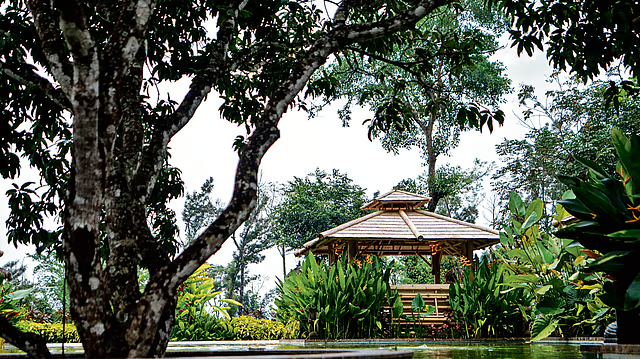
Perched amidst the verdant embrace of Timbertales Luxury Resort in Coorg, Twisted Basil stands out as a feast for both the eyes and the palate—a pure‑vegetarian sanctuary where plant‑based cuisine is elevated to an art.
If you are looking for an interesting tasting menu on your next trip to Coorg, look no further than Twisted Basil that offers a choice of tasting menu that include Pan Asian, Continental as well as a Chef’s Choice option, which is a mix of what is in season and fresh produce of the day.
Food: The continental menu starts with the first course called ‘starting savoury’. The Creamy Carrot Soup is hearty, served with a hint of basil oil. The Carpaccio Di Barbabietola salad with roasted beetroot carpaccio, navel orange and goat cheese is delicious. Next up is the Frittelle Di Zucchine e Parmigiano—crispy fritters made with grated Zucchini and Parmesan cheese, served with a tangy tomato and basil dip. It hits the right spot with its mellow flavours. The Cannelloni Spinach—a tender coconut and pineapple granita is a perfect for the main course. For dessert, the Barretta Di Cioccolato Croccante, a crunchy chocolate bar with salted caramel and white pearls, is a sweet end to the meal.
Service: The service is excellent with the staff explaining each course and ingredients well.
Décor: Set over water, framed by lush bamboo and ambient fountains, the restaurant pairs bold, globally inspired flavours with a serene, tropical backdrop—perfect for travellers seeking a refined and memorable dining adventure.
Price: The price is on the higher end, a meal for two costs Rs 10,000 without taxes.
Address: No. 94/2, Kedakal Post, Modur, Madikeri, Karnataka – 571237.
source: http://www.newindianexpress.com / The New Indian Express / Home> Food / by Bindu Gopal Rao / June 22nd, 2025
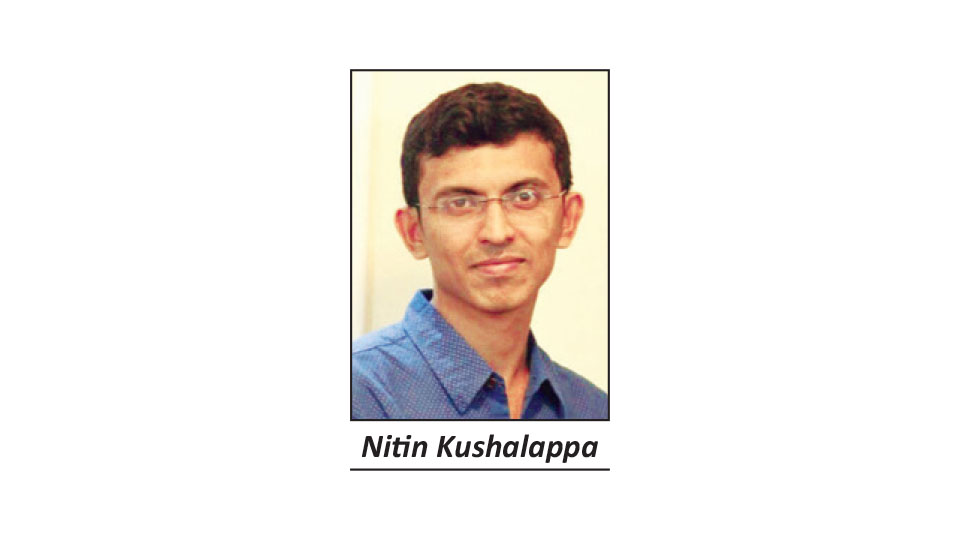
Kodagu-based author and engineer Mookonda P. Nitin Kushalappa has been awarded the prestigious Kendra Sahitya Akademi Bal Sahitya Puraskar for his latest work, Dakshin: South Indian Myths and Fables Retold, published by Puffin Books in 2023.
The awards were announced in New Delhi on Wednesday (June 18), and Nitin is among 24 writers to receive the Bal Puraskar this year.
The Sahitya Akademi, India’s National Academy of Letters, is the country’s central institution for literary dialogue, publication and promotion, and is the only organisation to conduct literary activities in 24 Indian languages, including English.
These distinguished literary honours recognise exceptional contributions to Indian literature across multiple languages, celebrating diversity, creativity, and the country’s rich linguistic heritage.
Presented annually, the awards honour authors whose works exemplify outstanding literary merit and cultural relevance. This year’s selection showcases a rich tapestry of genres — from poetry and novels to short stories and criticism — highlighting both emerging and established voices.
“Although I have authored seven other books so far, this is my first book for children. Winning this award was unexpected, and I am grateful that my current work has found such recognition. I thank the Sahitya Akademi for conferring the Bal Sahitya Puraskar on me. I am also thankful to my publishers, book agents, relatives, friends, and everyone who supported me on this journey,” Nitin Kushalappa told Star of Mysore.
An engineer by profession, Nitin is widely known for his deep interest in Kodagu’s local history, folklore and fiction. His notable publications include ‘The Early Coorgs’, ‘Long Ago in Coorg’, ‘1785 Coorg’, ‘Kodagu Principality vs British Empire’, ‘The Major Who Kept His Cool’, ‘The House of Awadh’ and ‘The Gandhi of Kodagu’.
His latest work, ‘Dakshin: South Indian Myths and Fables Retold’, reflects his signature storytelling style, which blends regional history with creative retelling. Award winners will each receive a casket containing an engraved copper plaque and a cash prize of Rs. 50,000 at a special ceremony on a later date.
A native of Kodagu, Nitin is the son of Mookonda K. Poonacha (Sunny) and M.P. Damayanthi (Pushpa), residents of Ammathi. He is married to Deepthi Belliappa from the Ketolira family.
He completed his education at Clarence High School, St. Joseph’s Pre-University College, CMR Institute of Technology (B.E.), Kuvempu University (M.A.) and Alliance University (Executive Post Graduate Diploma in Management).
2019 award
In 2019, Codanda Devika Cariapa received the Kendra Sahitya Akademi Bal Sahitya Puraskar for her book ‘A Children’s History of India in 100 Objects’, published by Penguin Random House India.
The book is a compilation featuring 100 objects that hold significant relevance in Indian history, from prehistoric times to modern-day India. The emphasis has been to capture India’s diversity through concise and descriptive texts and beautiful illustrations.
Devika is the daughter of Lt. Gen. Biddanda Chengappa Nanda (late) and Leela Nanda, and wife of Indian Air Force Group Captain (Retd.) Codanda Chitrajit Cariapa.
source: http://www.starofmysore.com / Star of Mysore / Home> News / June 21st, 2025
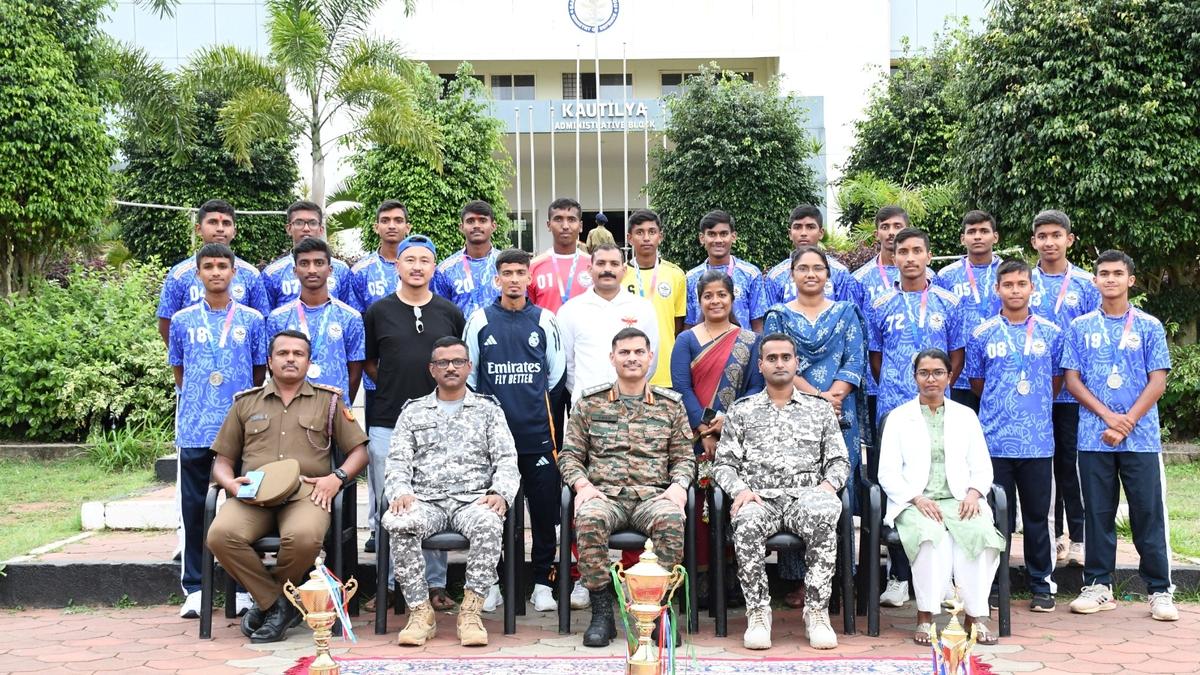
The Under-17 Junior Football Team of Sainik School Kodagu, which emerged as runners-up in the All India Sainik Schools Inter-Zone Football Tournament 2025, with the dignitaries after a victory parade on the school campus at Kudige recently. | Photo Credit: SPECIAL ARRANGEMENT
Sainik School Kodagu held a victory parade to celebrate the achievement of its Under-17 Junior Football Team, which emerged as runners-up in the All India Sainik Schools Inter-Zone Football Tournament 2025, also known as the Pre-Subroto Cup, held at Sainik School Bhubaneswar from June 9 to 15.
The cadets marched with their trophy, marking the school’s first-ever podium finish at the national level. Cadet Aryan, who was adjudged the Best Goalkeeper of the tournament, received an individual achiever’s trophy for his performance.
The victory parade commenced from Old Kudige and concluded on the school campus, drawing participation from cadets, teaching and non-teaching staff, NCC units, and local residents.
The Sub-Junior and Girls’ football teams took part in the procession, celebrating the collective spirit of sportsmanship, a press release said.
Principal Col. Amar Jeet Singh, administrative officer Wing Commnander Prakash Rao, vice-principal Squadron Leader Mohammad Shaji, and others attended the event. Girl cadets clad in traditional Kodava attire welcomed the players with flowers, while cultural performances such as ‘Dollu Kunita’ and the school’s ‘Tamate’ ensemble added vibrancy to the event, the release added.
The team was felicitated with citations and certificates. Col. Singh praised the team’s determination, skill, and resilience, and commended the dedicated efforts of coach Shek Ajjed and the entire coaching staff.
source: http://www.thehindu.com / The Hindu /Home> News> India> Karnataka / by The Hindu Bureau / June 20th, 2025
WELCOME. If you like what you see "SUBSCRIBE via EMAIL" to receive FREE regular UPDATES.
Read More »