My love affair with coffee started during the lockdown; trying new flavours and textures became an escape for me in those tough times, which has now developed into a regular morning comforting ritual with my coworkers. As I sit here penning down a love story to coffee, my colleagues can spot me sipping on a big tumbler of iced coffee. I had the chance to experience a rich story of coffee-making firsthand, one that had me appreciating this beverage even more. A 6-hour drive from Bengaluru brought me to the Tata Consumer’s plantation on the beautiful slopes of Coorg, which gave me an opportunity to discover and learn all about coffee beans.
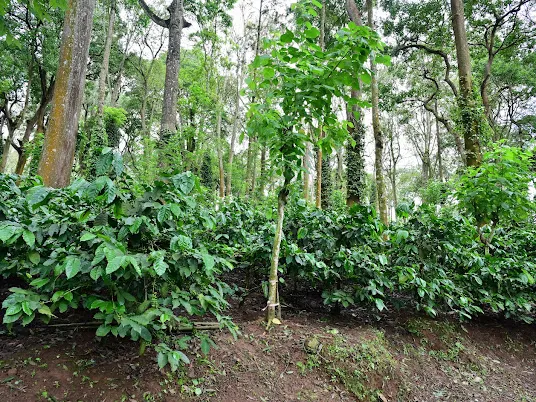
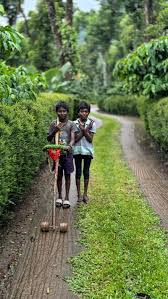
Coorg is more than a famous hill station; it is also India’s coffee-growing region. For a coffee-lover like me, this trip became a one-of-a-kind core memory. With tiny droplets of rain and stunning natural visuals, I was transported to a rain-soaked fantasy with the fragrant rustling from the coffee plants. Here I saw the labour and commitment that go into each cup. I was lulled into feeling of calmness, one of nature’s offerings that’s impossible to replicate. Strolling down the road that goes through the plantation with miles of trees and coffee plantations in either direction, I was drawn into the story of coffee. The coffee plants are laden with a green and maroon coloured beans which hang thickly from the branches.
The plantation slopes are renowned for their Arabica and Robusta brews and are surrounded by several lakes, verdant hills, and a diverse range of flora and animals. November is considered to be the best time to pick up the berries and witness the harvest. But when a coffee enthusiast like me is roaming around so much coffee, you can’t help but crave the brown beverage. So, while explaining the foundation and motives of their campaigns and crop, the brand served to cure our coffee craving with steaming hot sips of their best-selling filter kaapis.
A 150-Year-Old Legacy
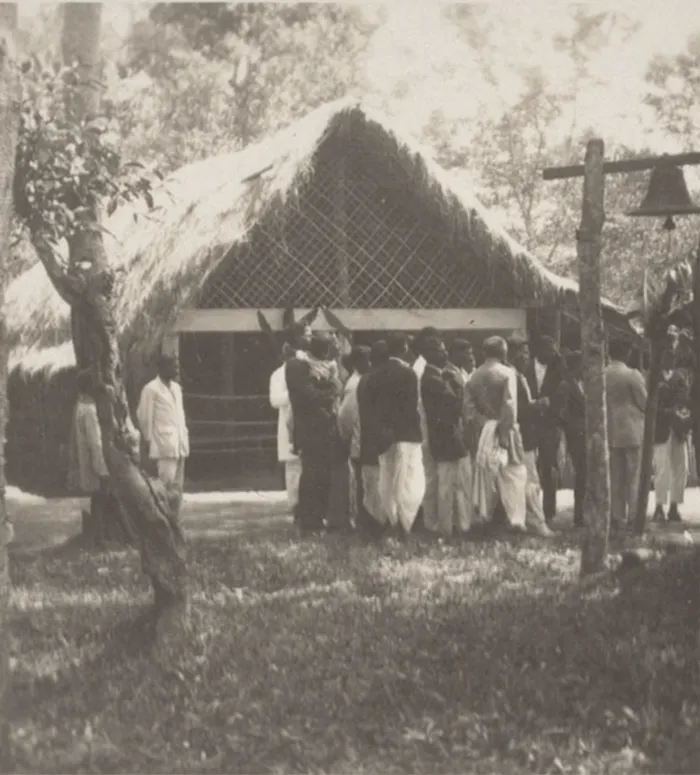
You might wonder what makes Tata Consumer Products different from its competitors. Tata’s association with the beverage dates back more than 150 years when some tenacious planters from the then-state of Mysore in South India planted the first seeds of the estates and brought coffee to the Coorg Hills. These are some of world’s best coffees, produced by the land and most importantly the local people living there.
source: http://www.elle.in / Elle / Home> Food / by Ekta Sinha / October 09th, 2023
Tucked away in the Western Ghats of Karnataka, Coorg offers a landscape that feels untouched by time. Rolling coffee plantations, mist-covered hills, dense forests, and slow-paced village life define the region’s character. For travelers seeking nature, heritage, and refined hospitality in one place, Evolve Back, Coorg represents the kind of immersive stay that aligns naturally with Coorg’s surroundings rather than competing with them.
Coorg is not a destination built on spectacle. Its appeal lies in subtlety, where scenery, culture, and experience unfold gradually.
Coorg’s Natural Landscape and Sense of Place
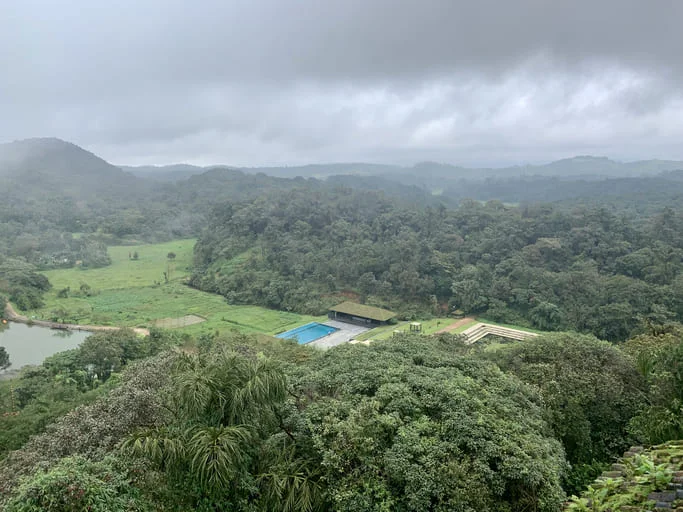
Coorg’s geography shapes every aspect of life here. Forests dominate the terrain, broken by coffee estates and rivers that wind through the hills. The region’s elevation keeps temperatures moderate throughout the year, while seasonal monsoons add depth and greenery to the landscape.
This environment encourages slower travel. Visitors often come to disconnect from urban routines and reconnect with nature. Early mornings are marked by birdsong and mist, while evenings bring quiet walks and unhurried conversations.
The land itself becomes part of the experience, influencing how resorts, homes, and daily life are designed.
Coffee Plantations and Everyday Culture
Coffee is central to Coorg’s identity. Plantations stretch across hillsides, shaping both the economy and the visual character of the region. Estate living is deeply rooted in tradition, with generations of families maintaining ties to the land.
Local culture reflects this connection. Cuisine features fresh produce and bold flavors, while festivals and customs are closely linked to agricultural cycles. Hospitality here feels personal, grounded in familiarity rather than formality.
For visitors, engaging with plantation life adds context to the landscape, turning scenic views into meaningful experiences.
Travel Experiences That Define Coorg
Coorg is best explored at an unhurried pace. Nature walks, plantation trails, river viewpoints, and heritage sites form the core of most itineraries. Unlike destinations driven by constant activity, Coorg offers space to pause.
Popular experiences often include guided estate walks, birdwatching, wellness rituals, and learning about local food traditions. These activities are not designed to fill time but to deepen understanding of the region.
Resorts that recognize this rhythm tend to blend more naturally into Coorg’s setting.
Resorts as Extensions of the Landscape
In Coorg, the best resorts function as extensions of the land rather than isolated luxury structures. Architecture often reflects local styles, using earthy materials, open layouts, and natural textures.
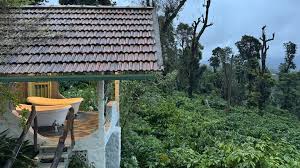
Guests are encouraged to engage with their surroundings rather than retreat entirely indoors. Private courtyards, outdoor baths, and plantation-facing spaces help blur the line between accommodation and nature.
This approach enhances the sense of immersion that Coorg is known for.
Evolve Back, Coorg: A Plantation-Led Resort Experience
Evolve Back, Coorg is set within a working coffee and spice plantation, allowing guests to experience estate life as it naturally exists. The resort’s layout reflects the scale and openness of traditional Kodava homes, with pathways winding through greenery rather than formal corridors.
The focus here is not on visual excess but on thoughtful design that respects the land. Privacy, space, and quiet define the experience, aligning with what many travelers seek when visiting Coorg.
Architecture, Villas, and Spatial Design at Evolve Back Coorg
The resort’s villas are designed to echo local architectural traditions while offering modern comfort. High ceilings, natural materials, and open courtyards create a sense of space without disconnecting guests from the environment.
Many villas include private pools or landscaped areas, encouraging relaxation without distraction. Interiors are intentionally understated, allowing views of greenery and sky to remain central.
This balance between comfort and restraint reflects Coorg’s understated elegance.
Wellness and Slow Living at the Resort
Wellness in Coorg is closely tied to environment and pace. At Evolve Back Coorg, wellness experiences draw from traditional practices and natural surroundings rather than packaged trends.
Spa therapies, yoga spaces, and quiet zones are integrated into the landscape. Guests often find that the setting itself contributes as much to relaxation as any formal treatment.
This emphasis on slow living aligns naturally with Coorg’s rhythm, making wellness feel organic rather than scheduled.
Culinary Experiences Rooted in Place
Food in Coorg reflects the land and its seasons. At the resort, dining experiences highlight local ingredients, regional flavors, and estate-grown produce where possible.
Meals are not rushed. Whether enjoyed in open dining spaces or private settings, food becomes another way to engage with the region’s culture. The focus remains on authenticity rather than theatrical presentation.
For travelers, this creates a deeper connection to place through everyday experiences.
Exploring Beyond the Resort
While the resort offers a self-contained experience, Coorg itself invites exploration. Nearby forest trails, viewpoints, and cultural sites provide opportunities to step beyond the plantation.
Guided excursions often focus on understanding ecology, local history, and traditional livelihoods. These outings complement the resort stay rather than competing with it, reinforcing Coorg’s identity as a destination rooted in nature and heritage.
Returning to the calm of the estate afterward reinforces the contrast between exploration and rest.
Choosing the Right Kind of Stay in Coorg
Not all travelers come to Coorg for the same reasons. Some seek wellness and solitude, others nature and culture, and some a blend of comfort and authenticity.
Resorts that succeed in Coorg tend to respect this diversity. They offer flexibility without overwhelming guests with constant programming. The emphasis remains on allowing visitors to shape their own experience.
This approach suits travelers who value depth over pace.
Summary
Coorg’s appeal lies in its landscapes, coffee estates, and quiet cultural richness. It is a destination best experienced slowly, where nature and daily life intertwine. Resorts that align with this character enhance rather than dilute what makes the region special.
Stays such as Evolve Back, Coorg reflect this philosophy by offering plantation-led hospitality that respects local architecture, environment, and traditions. For travelers planning a visit, platforms like Goibibo provide convenient ways to explore accommodation options and organize a journey that matches Coorg’s calm, immersive appeal.
source: http://www.europeanbusinessreview.com / The European Business Review / Home> Blogs> Culture & Lifestyle / January 30th, 2026
In the quiet village of Ullikal near Iritty in Kerala’s Kannur district, stands the ancient Vaithur Kaliyar Shiva temple reverently known as Bythoorappa by the Kodavas. As preparations begin for the annual festivities scheduled from 13 to 26th January, 2026 the temple once again becomes the focal point of an unique cultural and spiritual bond that has endured for generations across state borders.
More than a place of worship, the Bythoorappa temple represents a shared legacy between the people of Kodagu and northern Kerala. For centuries, traditions here have flowed seamlessly across geography, language and community, held together by faith and mutual respect. The administration of the temple itself reflects this harmony, being traditionally managed by a Trust comprising members of both the Kodava and local communities.
One of the most touching sights during the festival is the procession of bulls carrying offerings of rice from Kodagu. As the bulls walk steadily towards the temple, carrying grains grown by devoted hands , it feels as though the earth itself is offering thanks to the divine. There is a miraculous observation to be made here – the chosen bulls make their way to the temple without being aided – they “know” the way and wait at the destination where the rice is ceremoniously taken as an offering.
Devotees from Kodagu are welcome not as outsiders, but as family returning home. Hospitality here is instinctive, heartfelt and sacred – proof that cultural bonds can be stronger than physical boundaries. In these moments, Bythoorappa becomes more than a deity, and is a sacred guardian of shared heritage,
Among the many okkas spiritually bound by Bythoorappa, the connection of Kodandera Okka stands out rooted in our oral history that speaks of fear, faith and deliverance. Elders recount a grieving period when a Kodava Raja , driven by suspicion and authority, ordered the killing of young boys belonging of a particular clan. As the shadow of death loomed over the Kodandera lineage, an elderly woman of the Gummatira Household is believed to have turned to Lord Bythoorappa in prayerful obeisance.
With no power to resist and nowhere else to seek refuge, she made a solemn vow to the deity, pleading for the lives for the children of her clan and promising lifelong devotion in return. It is legendary folklore that the boys were spared. The clan survived. And with that survival, a sacred bond was sealed.
That vow did not end with her lifetime. Even today a fixed quantity of rice from Kodandera okka is offered at the Bythoorappa temple, faithfully continuing a promise made generations ago. The offering is modest and made with unwavering sincerity. Each grain standing as silent testimony to gratitude, remembrance and the power of belief, which is not ritual alone, but history placed gently at the feet of the divine.
Bythoor, also known as Baithur, represents faith well beyond stone and sanctum. It is History remembered through faith, a testament of centuries of respectful camaraderie and a symbol of harmony rooted in devotion. As long as prayers rise from both the hills of Kodagu and the plains of Kerala, Baithur will continue to stand as a living bond between the two communities united by solemn belief and heritage.
source: http://www.clnews.in / Coffeland News / Home> Articles / by Kodandera Mamatha Subbaiah / January 21st, 2026
From a single Coorg cottage to a growing cluster-based model, Simona Mohan is reshaping the mass-premium homestay market with curated stays and local experiences.
As with every 20-something, Simona Mohan and her friends were on a hunt for a New Year’s escape a few Decembers ago. A holiday in Coorg, dealing with subpar accommodation, planted the seed that eventually became Raho Hospitalities—an experience-led, mass-premium homestay brand that offers curated, end-to-end holiday experiences in non-urban leisure destinations.
Mohan, along with family friends Sidharth and Gautham Somana, twin brothers aged 35, started a pilot project two years ago with a single, family-owned, two-bedroom cottage in Coorg. “We did some simple decor, changed the bedsheets, added some paintings, and spent less than ₹5,000 on the project,” Mohan says. “We listed it on Airbnb to test it out, and we saw high occupancies of about 85 percent.”
At the time, Mohan was working in politics, drafting election manifestos, writing papers for MPs, and tracking parliamentary sessions. Sidharth, who was on a gap year from university, focussed on Raho, while Gautham was studying in the US. Mohan was helping with operations and on-ground guest service part-time. Sidharth had to return to university in the US the following year, and Mohan took charge.
“That’s when I started to enjoy the process. I quit the policy space completely and started doing it full-time,” she says.
Raho operates via a hub-and-spoke model: It sets up clusters of 40 to 100 rooms within a 30-minute radius to create micro-tourism hubs. This allows them to easily access and manage these properties from a central location within that zone.
Raho’s tagline says that it begins where Airbnb ends. “Airbnb and other OTA platforms like MakeMyTrip or Booking.com will only provide a listing; they won’t manage the property,” says Mohan. Raho partners with property owners, redesigns and standardises homes, and operates them end-to-end to deliver holiday experiences. “This includes not just the stay, but everything from the food to experiences on the ground, including shopping, taxis, local experiences, and even a personal host throughout your stay.”
An average booking with Raho can cost between ₹3,000 and ₹5,000 for a three-bedroom cottage in Coorg for one night. Their target audience is people between the ages of 25 and 40, who are looking for affordable but valuable experiences.
Raho currently has 50 operational rooms in Coorg and is focussed on expanding within the region before moving on to target markets, including Chikmagalur and Wayanad; its goal is to have 100 operational rooms by April.
The company raised a pre-seed round of ₹2.6 crore from Campus Fund and angel investors in April 2025. It operates a multi-channel, asset-light revenue model: Profit-sharing for rooms, 60 percent of which goes to property owners; Raho earns 15 percent commission on direct bookings. Beyond rooms, it earns about 30 percent margins on food and beverage, and 30 percent on curated experiences, services and in-property product sales.
“This blended model maximises guest value, strengthens unit economics at scale, and allows us to reinvest in brand consistency, guest experience, and operational excellence across clusters,” Mohan says.
Raho’s revenue for FY25 was ₹65 lakh; the company’s projected revenue for FY26 is ₹3 crore. It hopes to break even by April.
“Raho adopts a smart model, bridging design and homestay operations. It’s strong on structure, asset-light scalability and consistency. However, to elevate further, it could focus on curated luxury differentiation and stronger brand storytelling,” says Kapil Chopra, founder of EazyDiner and The Postcard Hotel, and 30 Under 30 jury for the hospitality category.
(This story appears in the Jan 09, 2026 issue of Forbes India. To visit our Archives, Click here
source: http://www.forbesindia.com / Forbes India / Home / by Pankti Mehta Kadakia / January 14th, 2026
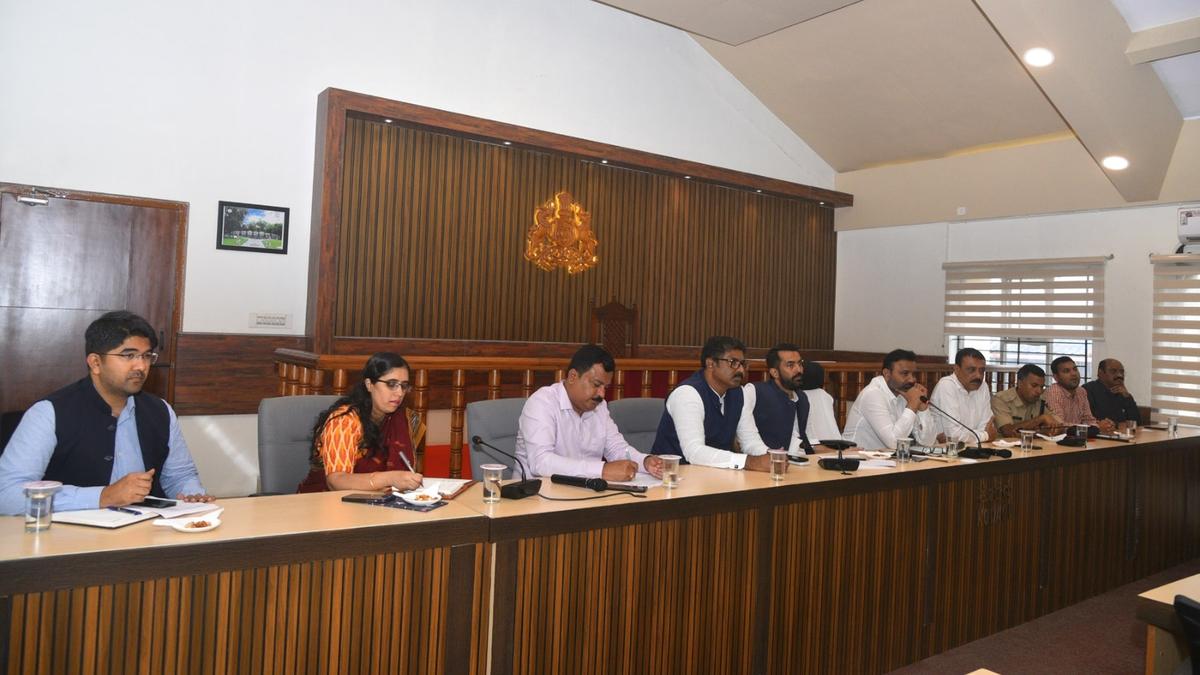
Labour Minister Santosh S. Lad presiding over a meeting in Madikeri on Thursday. | Photo Credit: SPECIAL ARRANGEMENT
Labour Minister Santosh S. Lad on Thursday directed representatives of labour unions, homestay and hotel associations, and other organisations to ensure that workers are paid minimum wages without fail and warned of strict action in case complaints are received.
Chairing a meeting at the Deputy Commissioner’s office here, the Minister emphasised the need to create awareness among workers about government schemes, including health insurance, and stressed safety measures in homestays and hotels, such as installation of CCTVs and compulsory collection of guest details.
On the issue of registration, licensing, and renewal of homestays in Kodagu, the Minister said discussions would be held with the Tourism, Urban Development, and Panchayat Raj Ministers. He suggested that associations appoint a PRO or a liaison officer to coordinate registration and renewal processes, adding that pending applications could be cleared during the quarterly KDP (Karnataka Development Programme) meetings.
MLA for Madikeri Mantar Gowda, who was present at the meeting, said that a delegation would soon meet Tourism and other Ministers after the conclusion of the Dasara festival. Tourism officials informed that nearly 230 applications are pending in the district.
During the meeting, labour union leaders drew attention to shortage of labour inspectors, continuation of the traditional bonded-labour system, and difficulties faced by plantation workers. Responding, the Minister assured that joint inspections involving Revenue, Labour, Police, Panchayat Raj, and other departments would be conducted if specific cases were reported.
The Minister said that payment of minimum wages is mandatory and reiterated the government’s commitment to protecting the interests of unorganised workers.
source: http://www.starofmysore.com / Star of Mysore / Home> News> India> Karnataka / by The Hindu Bureau / September 18th, 2025
The Bungalow 1934 is a 91-year-old family home where traditional Kodava cooking and hospitality are the order of the day.
On a hilltop in Coorg, sandwiched between a coffee estate and the Brahmagiri range, Bungalow 1934 is Amrith Thimmaiah’s home and a living chronicle of Kodava culture.
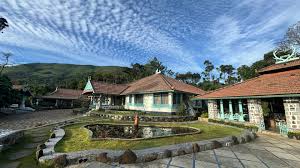
In 1934, Ketolira Diwan Bahadur Chengappa built a home in the typical Kodava-British style of bungalows, set against the backdrop of the Ballyatra hill. When Chengappa became the first Chief Commissioner of Coorg in 1943, the home became the venue for lavish parties for state guests and British officials.
In 2010, the fourth-generation of the family, Amrith Thimmaiah, and his parents Gappu and Fancy Ganapathi, opened their 91-year-old family home as a heritage homestay.
View of Bungalow 1934 set against the Ballyatra Hill / Amrith Thimmaiah
About the homestay
The Bungalow is located in Yavakapadi village, roughly 30km from Virajpet and Madikeri. There are sweeping valley views, as well as a clear view of the Igguthappa temple, a deeply significant site for Kodavas who visit the deity for a bountiful harvest.
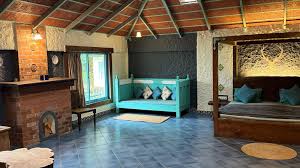
Bedrooms at the Bungalow 1934 / Amrith Thimmaiah
With mud walls, pillars, and beams, the home is a true depiction of Coorg ‘s ainmané or ancestral homes, where vaastu dictates aspects like where the owner’s room should be located (in the kubéra moolé, or south west direction). A sprawling fig tree stands out front, and you enter into a pillared, elevated open veranda where, traditionally, Kodava families gathered for tea, family meetings or an evening drink.
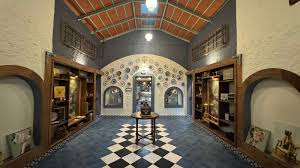
The hall in the Bungalow 1934, with old plates passed from generations in Amrith’s family / Amrith Thimmaiah
Peppered with antiques and with mosaic tile floors, the main bungalow features living spaces, a large common dining area, a room where Amrith stays, and four guest bedrooms. An annexe beside the main bungalow houses two more guest bedrooms. The six spacious rooms are rustic and cosy , with blue tiles, beamed ceilings, in-built fireplaces, and four poster beds. Large windows offer ample sunlight and views of the mountains. When the temperature drops in these misty mountains, there are plenty of fireplaces across the home and porches to curl up with some homegrown coffee.
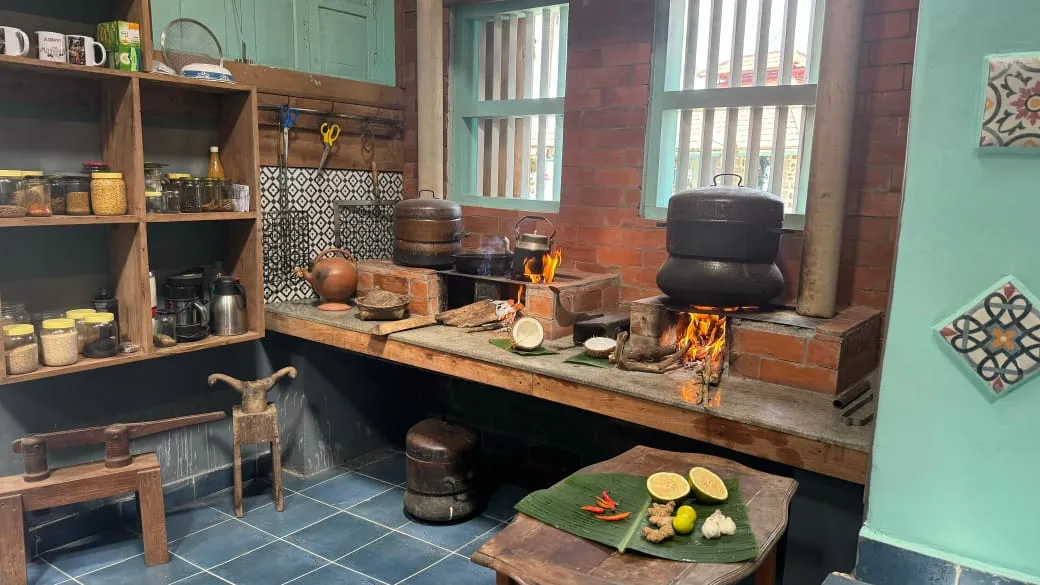
Kitchen at the Bungalow 1934 / Amrith Thimmaiah
The home is surrounded by rosewood, jackfruit and mango trees, and the grounds lead into the 70-acre Green Acres coffee estate. Arabica and Robusta coffee plants grow under a light canopy of Silver Oak, Cedar, and Benteak, dotted with pepper vines and cardamom plants. The buzz of cicadas and birdsong fill the air. Birders will be able to spot hornbills, white-bellied treepies, and the crow pheasant or the chombuka, considered lucky by the Kodavas.
About the hosts
Amrith at the BBQ lunch spread by the stream / Amrith Thimmaiah
Amrith is a rally driver by profession and a passionate host at the homestay, managing bookings personally (the homestay is not listed on any booking platforms), helping with logistics and recommendations. Guests usually come through word of mouth or as repeat visitors, and bookings are confirmed only for days a family member is present at the homestay. Staff leaves and village festivals are respected, and no bookings are made during this time.
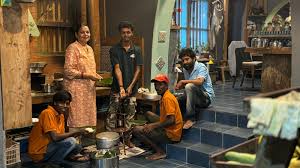
Fancy Ganapathi making Noolputt (steamed rice noodles) with Subbu, Krishna, Chethan & Pavithra / Amrith Thimmaiah
Amrith’s mother, Fancy Ganapathi, is a powerhouse who oversees the food at the homestay. The former lecturer of Kannada literature is a horticulturalist by passion, and a catalyst in forming the 700-member Nature’s Best Food Cluster in Kodagu. The organisation trains grassroot level farmers and enables them to sell their products at outlets in Coorg. “At the Bungalow, I love to share recipes with guests and if someone wants to purchase local produce, I ensure the cluster family provides their products,” she says. Gappu Ganapathi, Amrith’s father, is the backbone of the bungalow and manages the entire coffee plantation.
The Bungalow has 8 to 10 staff members, whose families have been associated with the Ketolira family for generations. Janaki Saraswati, the cook, used to be Amrith’s nanny and was taught heirloom recipes by Amrith’s grandmother.
The food
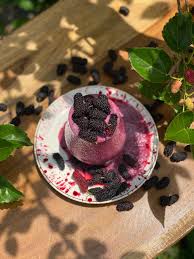
Frozen Mulberry Crush / Amrith Thimmaiah
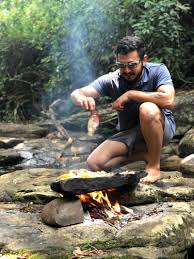
Koli Chuttadh (Chicken woodfire roasted) with bird’s eye chilies and lime / Amrith Thimmaiah
Food at the homestay stays true to any traditional Kodava home, with classic local dishes like khaima undae (mutton keema balls), kori erachi pulao (mutton pulao), pandhi curry and otti (pork curry with rice flatbread). Buffet style meals served in the dining area are generous and take into account dietary preferences. There are numerous vegetarian options within the gamut of Coorg cuisine, featuring seasonal produce like kaaké thopp (black nightshade leaves), kumm curry (mushroom), and kaad maangé curry, a tangy, sweet curry made with Coorg wild mangoes.
Fancy ensures that all dishes are served in the traditional Kodava style: baimbalé with otti (tender bamboo shoot curry with rice flat bread) served with ghee is a common Coorg breakfast; rice cakes or putt with meat curry; chutneys or pajjis made from seasonal produce.
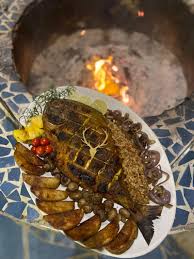
Pomfret Fish Grilled / Amrith Thimmaiah
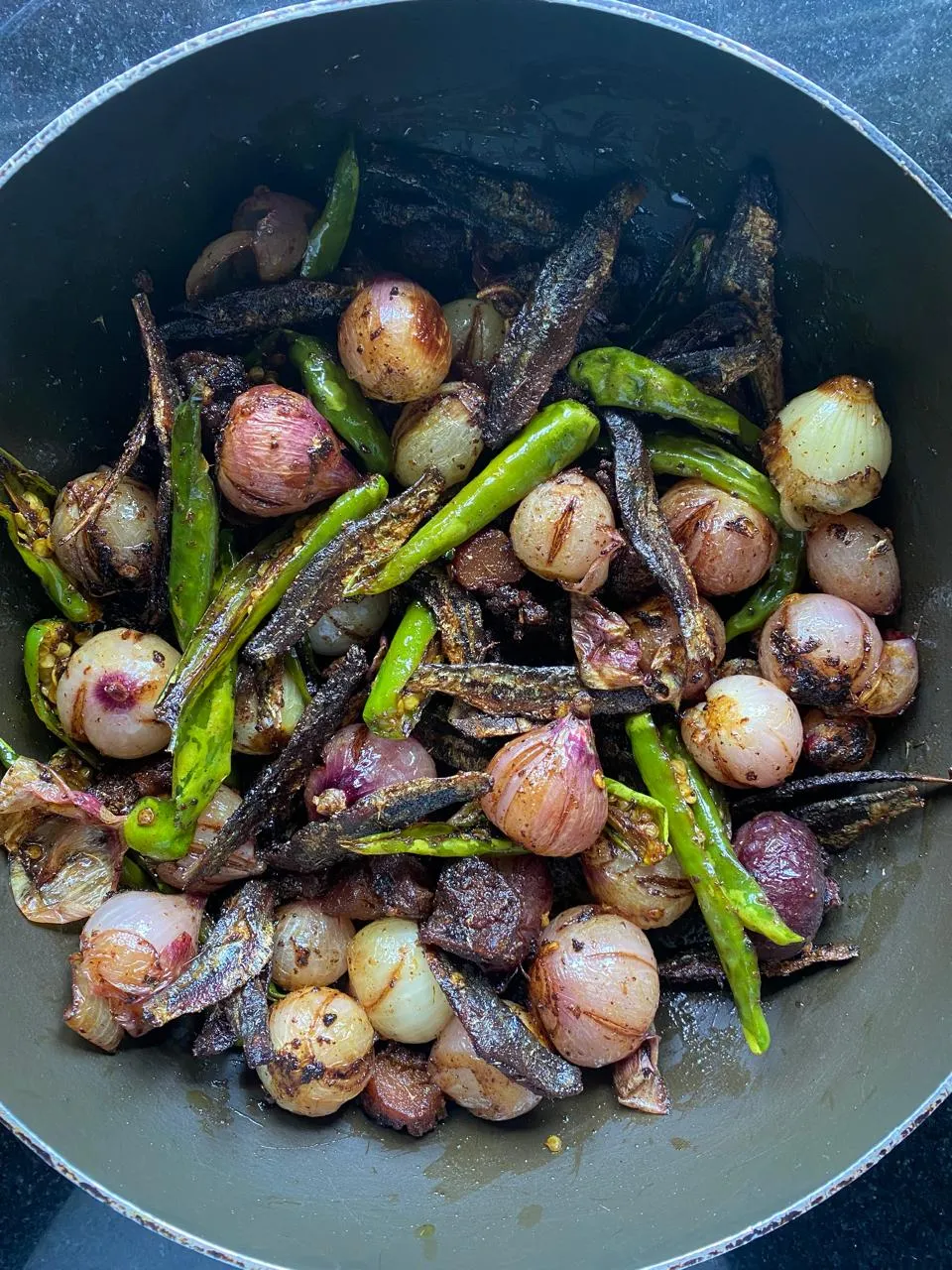
Onak Meen Barthadh (Dried Fish fry) / Amrith Thimmaiah
She also makes fruit wine and chocolates, and her mulberry and pomegranate wines are a hot favourite. This year, she has started to make oil and tea out of the rosemary growing in her small garden. The pathaya or granary on the homestay premises houses the products she makes, and make for perfect souvenirs to take home.
Amrith Thimmaiah
Amrith Thimmaiah
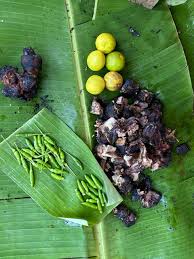
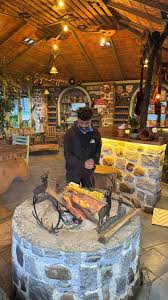
At dusk, Amrith has a house rule: he will host a typical Coorg-style barbeque for guests. Meat is roasted the traditional way over an open wood fire, mixed with finely chopped bird’s eye chili and the juice of bitter lime, to serve up Coorg’s favourite starter, pork chuddals. The family and staff tell stories by the fire, while you can sip cocktails under a star-studded sky with the lights of Madikeri town in the distance.
How to spend 48 hrs at The Bungalow 1934
Sparko at Charandi Polé / Amrith Thimmaiah
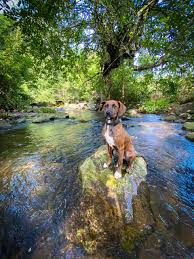
The homestay offers plenty of cosy nooks to read, write and while away the hours, but if you want to venture out, Amrith organizes treks to Thadiandamol peak and Chelavara Waterfalls. For those interested, Fancy conducts workshops for chocolate, wine, or jam making (4 people minimum, Rs5,000 per person). Sparko, the family dog, may take you down to a stream a short walk from the bungalow, where you can enjoy a barbeque picnic lunch by the stream.
Amrith Thimmaiah
Take a leisurely 2km walk or a guided plantation tour with Gappu at the coffee estate. Gappu and Fancy live in a home close by, with fish ponds, a cow shed, a coffee drying and storage area, and are happy to invite you over with advance notice.
A walk about Virajpet in Coorg throws up interesting tales.
STEEPED IN HISTORY: Virajpet. / Photo: Lakshmi Sharath
I was lost in Virajpet looking for an address. The quaint town in Coorg was a welcome break en route to Madikeri. Traditionally-dressed Kodava women were shopping in the vegetable markets, and the main street was bursting with traffic.
I looked around and saw houses with tiled sloping roofs transformed into eateries and retail outlets. I stopped by the auto stand and asked for Telugu Street, but was met with puzzled glances.
I walked around the main street, lost in the old world charm, when a Kodava came to my assistance.
“You are standing in Telugu Street Madam; go a bit further and you may find Bengali Street, but no one refers to the streets by these names now.” We had coffee at a local eatery as Ponappa, a retired Army man, provided a glimpse of Virajpet’s history.
The great escape
Our story starts in the middle of the 18th Century when Madikeri, the capital of Coorg, ruled by the Haleri kings, was invaded by Hyder Ali and his son Tipu Sultan. The young Haleri prince, Dodda Veerarajendra, and his brothers were virtually held prisoners, while the father-son duo was busy fighting the British.
The story goes that Dodda Veerarajendra finally escaped from Tipu’s prison and regained his kingdom. The British sensed an ally in the Haleri king and decided to support him in the war against Tipu.
It was in this scenario that Virajpet, barely 30 km from Madikeri, was founded by Dodda Veerarajendra.
As kings have a penchant for naming places after them, this town too was called Veerarajendrapette.
Ironically, it was established as a settlement to celebrate the relationship forged by the Haleri kings with the British. Ironic, because it was the British who finally deposed the Haleri dynasty later.
Virajpet belonged to Veerarajendra, who built a fort here with a palace, and a pond for his cavalry. Although the remnants of this can be seen even now, Virajpet is largely reminiscent of the Colonial era.
The landmarks today are the St Anne’s church, built initially during Veerarajendra’s reign and the clock tower, established in the 20th Century to commemorate the coronation of King George V.
I quiz Ponappa about Telugu Street, and he smiles. “When Veerarajendra built the town, many Kodavas were imprisoned by Tipu, and so he invited people from neighbouring kingdoms to come over.
There were several communities living here — the Christians, Moplas, Tamilians, Jains and Telugus, among others.”
Cosmopolitan town
Adds Ponnappa: “Virajpet is what you would have then called a cosmopolitan town. For instance, the Bengali Street was filled with those who came down here after the British defeated the Nawab of Bengal in another battle.”
I finally manage to find my destination, and Ponappa takes leave. It’s amazing how stories bring strangers together!
source: http://www.thehindu.com / The Hindu / Home> Features> Metroplus> Travel / by Lakshmi Sharath / May 23rd, 2010
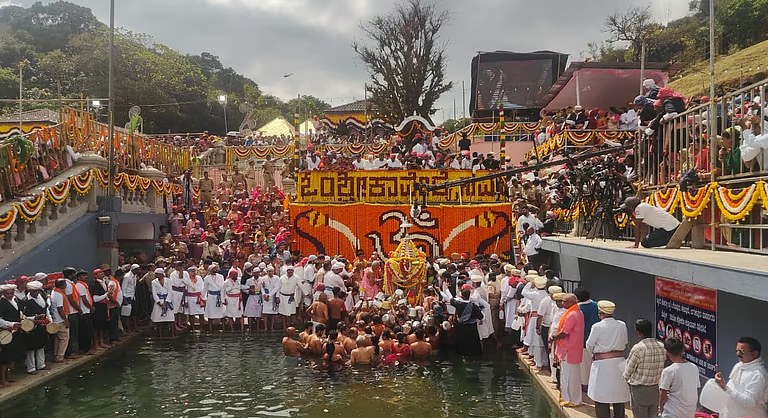
The auspicious moment when the holy river Cauvery gushed out from the sacred Kundike occurred at the predicted time of 1.44 p.m., marking the highlight of the annual ritual.
Hundreds of Kodavas, dressed in their traditional attire, walked barefoot for about 8 km from Bhagamandala to Talacauvery in a display of devotion.(Photo | Express)
Madikeri :
The chants of “Kaveramme Ukki Baa” filled the air across Talacauvery as thousands of devotees witnessed the sacred Cauvery Tula Sankramana on Thursday.
The auspicious moment when the holy river Cauvery gushed out from the sacred Kundike occurred at the predicted time of 1.44 p.m., marking the highlight of the annual ritual.
The rituals were led by chief priest Prashanth Achar along with a team of 11 other priests. Devotees from across Kodagu district and neighbouring states, including Kerala and Tamil Nadu, gathered in large numbers to take part in the holy festivity.
Hundreds of Kodavas, dressed in their traditional attire, walked barefoot for about 8 km from Bhagamandala to Talacauvery in a display of devotion.
Elders, also clad in traditional Kodava attire, led the way playing the traditional dudi and singing baalo paat as they made their way to Talacauvery. Devotees from various communities, including members of the Are Baashe community from across the district, also participated in the rituals with reverence.
Among the participants were Mysuru-Kodagu MP Yaduveer Wadiyar, who adorned the traditional white royal attire, and Virajpet MLA A.S. Ponnanna, who was dressed in traditional Kodava wear.
Both walked the 8 km stretch from Bhagamandala to Talacauvery and took part in the rituals. Madikeri MLA Dr Mantar Gowda, Deputy Commissioner Venkat Raja, Superintendent of Police K. Ramarajan and several others were also present at the ceremony.
Enhanced security measures and improved arrangements were in place at the temple premises to manage the large crowd. While a few devotees allegedly demanded the removal of barricades, the issue was resolved amicably, ensuring smooth movement for all.
A medical team from the Kodagu Institute of Medical Sciences was stationed at both Bhagamandala and Talacauvery to attend to any emergencies.
‘Annadhana’ (mass feeding) arrangements were made for devotees at both temples, while the Kodagu Ekikarana Ranga will host a month-long mass feeding programme at the centre.
Cultural programmes are also being organised at Talacauvery by the Kodava and Are Baashe Sahitya Academies.
Deputy Chief Minister D.K. Shivakumar and Muzrai Minister Ramalinga Reddy were scheduled to attend the event; however, their visit was cancelled due to unforeseen reasons.
source: http://www.newindianexpress.com / The New Indian Express / Home> Karnataka / by Express News Service / October 17th, 2025
A weekend getaway at the Blyton Bungalow in the Poomaale Estate in Coorg is all you need to recharge yourself from the urban noise.
The six-hour journey from Bengaluru to the Poomaale Estate feels like a slow untwining of the city’s grip. By the time the car climbs the hills of Kodagu district—better known as Coorg—the traffic thins, the air cools, and the dense green folds of the Western Ghats begin to swallow the winding road.
The final stretch feels enchanted: rain-slicked roads winding past tangled forests, a lone elephant crossing the road, and finally, the quiet approach into a 128-acre coffee estate that seems to have been built for retreat.
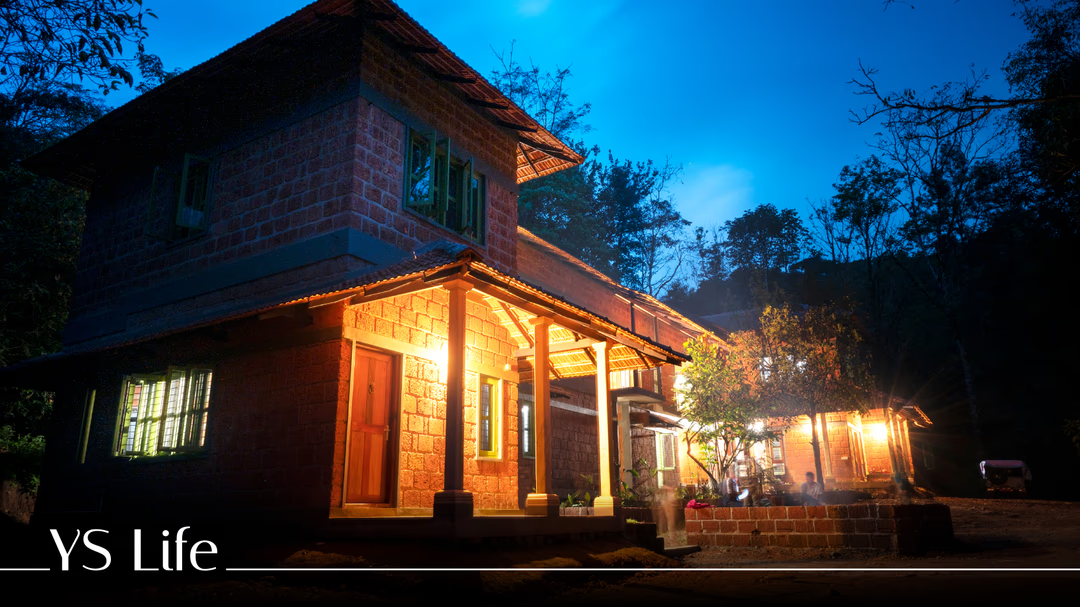
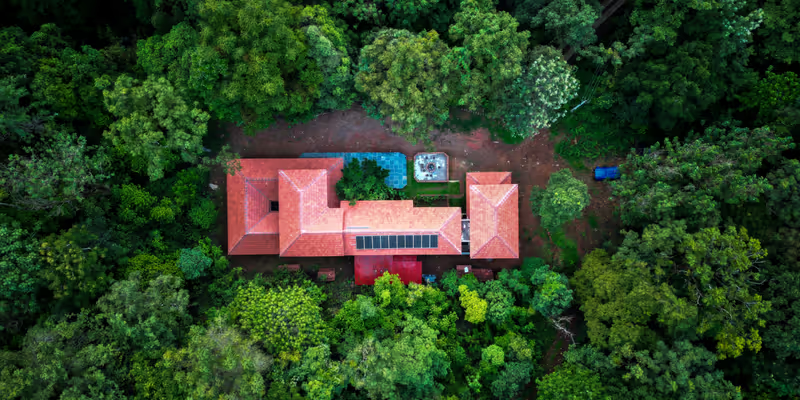
Nestled in the dense forests of the estate is the Blyton Bungalow. One can’t call Blyton a resort in the conventional sense; it encompasses the essence of Coorg’s diverse ecology and raw beauty.
The large, but homely, guesthouse is decorated with modest Mangaluru tiles, wide verandas, and wooden chairs, which build a perfect ambience for long hours of coffee and conversation, interspersed by the chirps of birds and a gushing waterfall.
We were welcomed with steaming cups of the estate’s brew, as Aranya Bagchi, the hospitality manager and resident naturalist, laid down some ground rules for our safe stay at Blyton, which is right in the middle of a dense rainforest.
No wandering outside alone after dark, as it may get dangerous.
Once the night falls, until early morning, the estate and its adjacent jungle become roaming grounds for wildlife movement, especially elephants.
And then, there’s the coffee.
Coffee at the source
Coffee is always better at its origin, and at Poomaale, it was earthy and robust, harvested, dried, and roasted just a few hundred meters away from Blyton. By the end of the stay, we lost count of the many cups we had consumed!
We just didn’t sip coffee, as part of the experience, we indulged in an hour-long session on various brewing methods. It wasn’t just a tutorial, but almost a ritual—one kindred to the Japanese tea ritual.
The nuances of grind size, the temperature of the water, and the patience of the pour. Coffee, in Bagchi’s telling, became more than a drink. It was a dialogue between soil, climate, and craftsmanship.
Walking the land
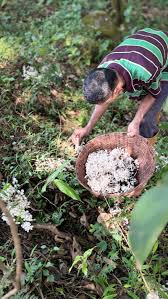
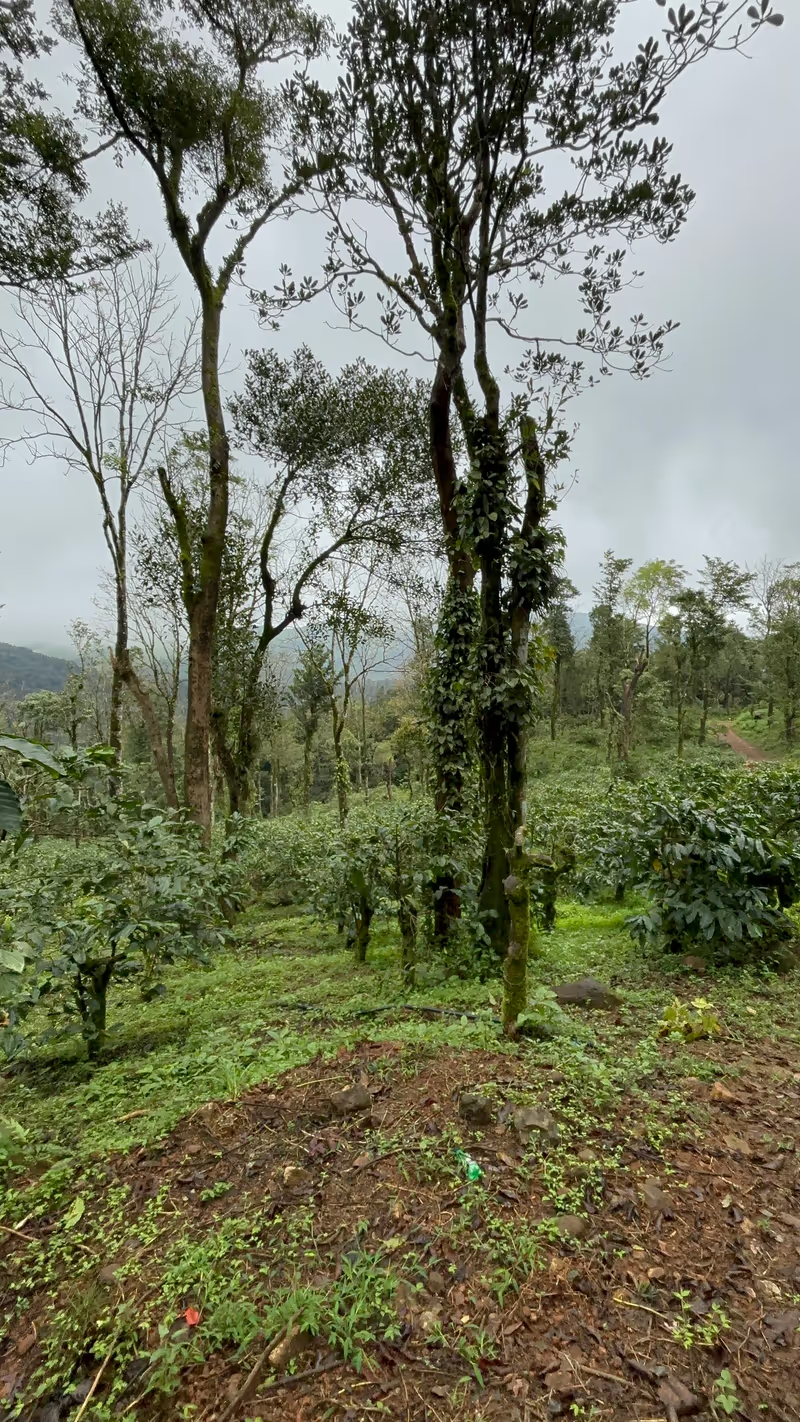
Poomaale Estate’s beauty best unfolds on foot. Sharan V, a budding researcher and a naturalist, guided us on a trek to a nearby hillside. On this hour-long trek, we crossed many coffee shrubs—most of them loaded with gestating green berries, while a few others were decorated with white flowers, rendering a sweet, almost jasmine-like scent.
Did you know? The gestation period of coffee is similar to that of humans; it takes nine months for coffee to mature from flower to bean.
Here, the trail was alive with fungi following the monsoon rains, as well as many fruit trees, specifically litchi, rambutan, and mandarins.
A small stream kept us company for much of the trail, and so did the patter of rain on leaves. By the time we emerged onto a grassland clearing, the hills of Coorg stretched before us, wrapped in mist. It wasn’t an arduous trek, but for sedentary city dwellers, the incline was steep enough to bring back to life muscles long forgotten.
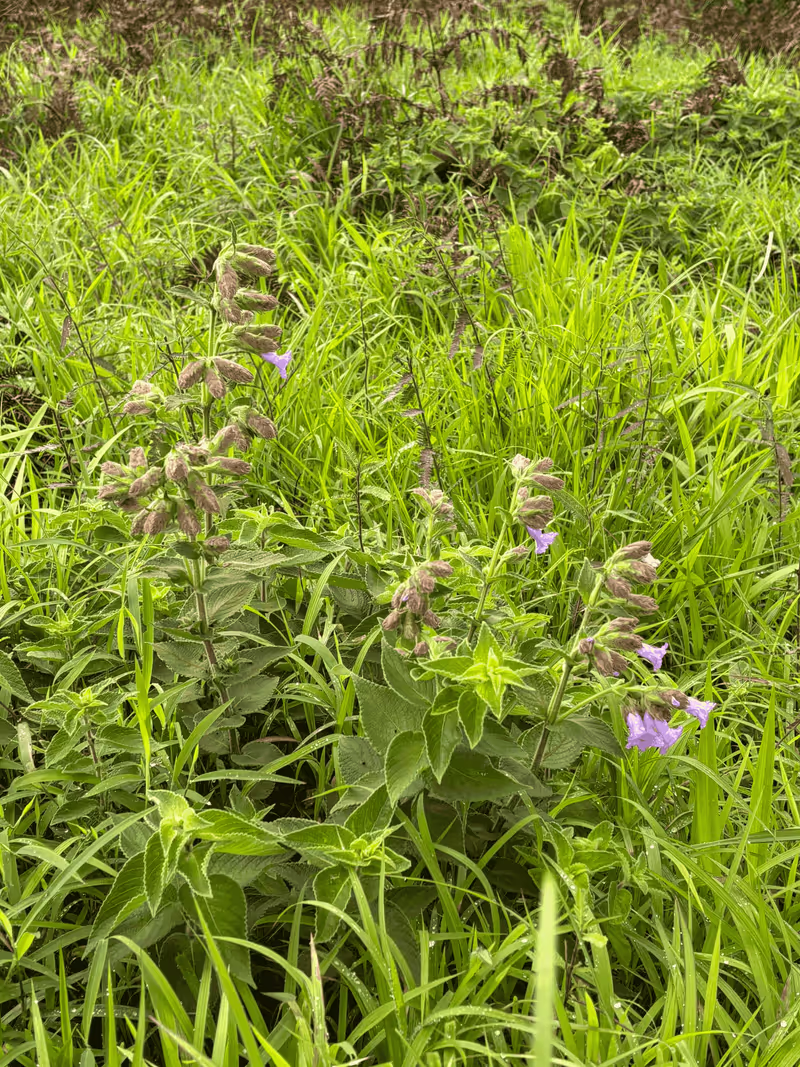
As we reached our destination, we stopped to check out a purple-hued, bell-shaped bloom called the Kurunji—not to be confused with the famed Neelakurinji of the Nilgiris, but equally rare, flowering once every four years.
To stumble upon it in bloom—surrounded by the dense green hills, partially covered in clouds—felt like being let in on a secret.
That night, rain lashed the windows, but our hosts were well prepared with hot water bottles, which were tucked into our bed for cosy comfort. The rooms were big, simple, but intimate. The laterite stone walls, iron-clad windows, rustic wooden doors, and high-rise ceilings reminded one of a village homestay, metamorphosed for a premium experience and comfort.
Encounters with the wild
Blyton offers a much-needed escape from the city’s ambient noise. The next morning, we were woken up from our deep slumber by an alarm bell, but not in the way one expects. The sound was the courtesy of the Malabar Whistling Thrush, also known as the Whistling Schoolboy; the bird is a daily visitor at Blyton Bungalow.
A morning walk, following a scrumptious breakfast, led us to several birdwatching points, where binoculars revealed flashes of scarlet and cobalt in the canopy. Sharan was quite excited to show us a tiger beetle, named after its distinct tiger-like patterns, indigenous to Coorg.
And then there was the waterfall. Swollen with the season’s rain, it roared with an energy that pulled you in. Standing beneath it, drenched and exhilarated, felt less like sightseeing and more like baptism—a cleansing of city fatigue.
PS: If you are in a rainforest, be prepared to encounter leeches and snails, among many other critters.
Food from the land
Meals at Blyton Bungalow were as much a reflection of the land as the treks. Every dish was sourced either from the Poomaale Estate itself or from one of its sister properties or “collectives” in Andhra Pradesh and Maharashtra, operated by their parent entity, Beforest.
Founded in 2018, Beforest is one of the first firms in India to carry out permaculture activities on a scale of 100+ acres in each of its collectives to reimagine a forest-friendly lifestyle.
Food at Blyton was homely, prepared by a local resident cook, Ishtak, who spun the forest produce into delicious meals. One evening, we were served a delicate dish made of young ferns, sautéed simply with local spices, their freshness speaking louder than seasoning. Try the wild mango curry—a sweet and tangy curry made with small mangoes from the estate’s orchards. We were also served the local rice, which had a distinct purple colour and was sweet to taste.
In fact, the estate has a cow shed that provides milk products for Blyton’s guests as well as manure for the plants. Behind the cow shed grows cardamom and pepper in the wild—the two spices that are cultivated at Poomaale besides coffee.
There was something grounding in knowing that every bite had a direct lineage to the soil underfoot. Nothing felt imported, nothing staged. It was food in conversation with the place.
A pause from the world
Blyton Bungalow is not about curated experiences or glossy perfection. Its magic lies in the authenticity of being away. The air carries petrichor and coffee blossom, the walls echo with bird calls, and the evenings settle into long stretches of rain and firefly glow.
Time slows here—not in the sense of boredom, but in the way that every moment feels fuller, layered with the textures of land, weather, and companionship.
When it was time to leave, the six-hour drive back to Bengaluru felt heavier, the city waiting with its demands and deadlines. But somewhere in the mind, the sound of the stream lingered, and so did the warmth of a hot water bottle pressed tucked in the sheets, and the image of a lone elephant, chalk-painted and solemn.
Blyton Bungalow isn’t just a getaway. It’s a reminder that retreating into nature is less about escape and more about return—a return to the quiet, the simplicity, a way of being that listens as much as it speaks.
Prices for two nights (inclusive of taxes):
Regular room: Rs 20,000
Suites: Rs 32,000
source: http://www.yourstory.com / Your Story / Home> YS Life> Travel & Leisure / by Suman Singh / edited by Kanishk Singh / September 20th, 2025
Experience the rich flavors of Coorg at The Westin Pune Koregaon Park from September 12-21. Join us for a 10-day celebration of authentic Kodava cuisine.
This September, embark on an exquisite culinary sojourn as The Westin Pune Koregaon Park brings the authentic flavors of Coorg to your table. From September 12 to 21, 2025, The Market will transform into a celebration of Kodava cuisine, offering a 10-day showcase of recipes and traditions that are deeply rooted in the region’s culture.
Curated by Chef Priya Aiyappa, a proud Coorg native, the festival promises an authentic dining experience, with dishes prepared using time-honoured techniques and locally inspired ingredients. On the menu are signature delicacies such as the legendary Pandi Curry, paired with pillowy Kadambuttu (steamed rice dumplings), alongside Paputtu (soft rice and coconut cakes), and Noolputtu (delicate rice noodles). Seasonal specialties like the rich Kakkada Nyend Curry—crafted with prized monsoon mud crabs—and the earthy Baimbale Curry made from tender bamboo shoots, bring the lush terrain of Coorg directly to the plate. For a sweet finish, the humble yet comforting Thambuttu, a banana-based dessert, completes the experience.
“Coorg food is a reflection of its land—simple, bold, and deeply connected to tradition,” says Chef Priya. “Through this festival, I want to bring the warmth of Kodava hospitality and the true flavours of my home to Pune.”
With its inviting ambiance and vibrant setting, The Market at The Westin Pune Koregaon Park provides the perfect canvas for this unique celebration. Whether you’re a passionate foodie or simply curious to explore the rich culinary heritage of Karnataka’s Western Ghats, the festival offers an unmissable opportunity to savour one of India’s most distinctive regional cuisines.
When: September 12 – 21, 2025| Lunch, Dinner & Brunch Where: The Market, The Westin Pune Koregaon Park Cost: 2399++ onwards Contact: +91 70662 00300
source: http://www.hospibuz.com / Hospibuz.com / Home> Hotel Listicles> Listicles / by Hospibuz / September 12th, 2025
WELCOME. If you like what you see "SUBSCRIBE via EMAIL" to receive FREE regular UPDATES.
Read More »