Capital infusion to fuel café expansion, retail growth and production infrastructure.
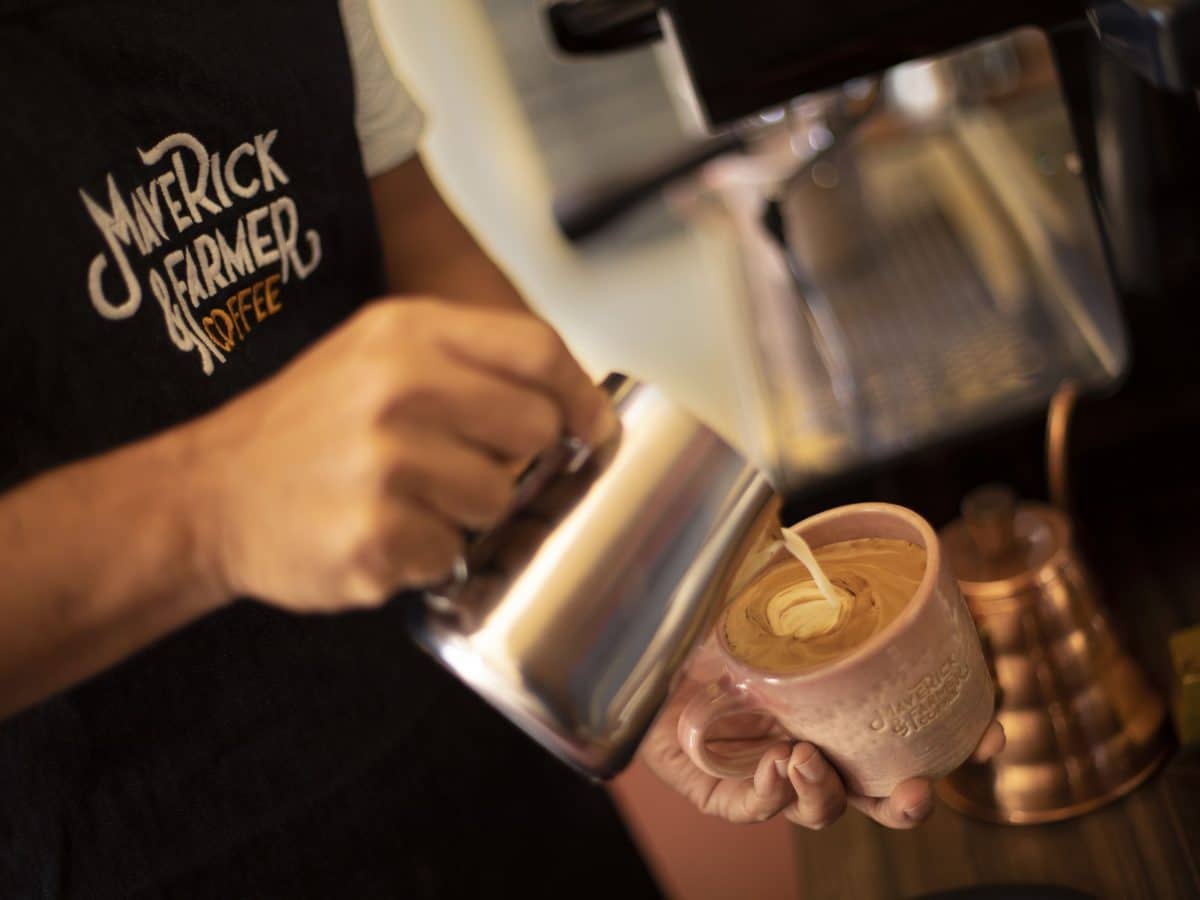
Good Farmer Food Concepts, the company that founded artisanal coffeebrand Maverick & Farmer Coffee and Square Burgers & Co., has raised $1.5 million in an ongoing Pre-Series A round. The company’s first external fundraising has been led by investment firm CreedCap with participation from Indian tennis star Rohan Bopanna and former Indian cricket team captain Rahul Dravid, along with Meraki Sport & Entertainment.
Planned use of funds
The company will utilize the fresh funds to expand its national presence with its cafes, invest in R&D and production infrastructure, and bolster and grow the brand’s retail vertical. The retail segment focuses on creating various SKUs of specialty coffee roasts and nurturing the home brewer experience by curating a variety of equipment. The brand’s new outlets in the pipeline are in Mumbai, Delhi NCR, Goa, and Bangalore. The company currently operates seven outlets in Bangalore and Goa and expects to reach ten by the end of the year.
Founders and brand philosophy
Founded by Ashish D’abreo, Sreeram Gangadharan, and Tej Thammaiah, Good Farmer Food Concepts is built on a product-first philosophy and a strong focus on quality and innovation. The company blends experimentation with coffee for retail, community-driven cafes, and a health-forward take on fast food. Maverick & Farmer is known for its experimental and maverick approach to Indian coffee, while Square Burgers & Co. continues to grow as a health-first food brand.
Co-founder’s perspective
“Before expanding, we first ensured that our people and operations were completely in order. Once that foundation was set, we began exploring funding and new locations. From the outset, we knew that each Maverick & Farmer Café should tell its own story and connect with a unique community. With Square Burgers, our vision was clear—we wanted to experiment with health-forward fast food. The current round of funding has enabled us to bring these ideas to life,” said Sreeram Gangadharan, Co-founder, Good Farmer Food Concepts.
Investor association and brand support
Bopanna has previously collaborated with the brand on a signature blend called the Rohan Bopanna Masterblend and has been closely associated with its evolution over the years. Dravid, who has long supported homegrown businesses built on strong fundamentals, joins the cap table for the first time.
“I’ve watched Maverick & Farmer grow from the very beginning and what’s always stood out to me is the honesty and intent behind the brand. Their commitment to quality, experimentation and staying true to their roots is rare. I’m proud to continue supporting their journey and excited to be part of what’s in store next,” said Rohan Bopanna.
source: http://www.hotelierindia.com / Hotelier India / Home> Operations / January 12th, 2026
The MP highlighted the immediate need to prevent pollution to the river and sought fund allocation in the union budget for conservation, sanitation, waste management and riverbank protection works.
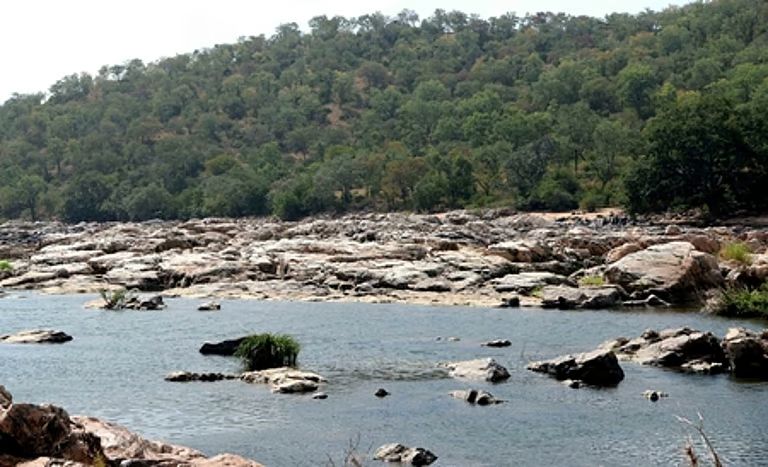
Cauvery River image used for representation purposes only.(File Photo | Express
Madikeri :
Mysuru–Kodagu MP Yaduveer Wadiyar has written to the Union Minister of Jal Shakti seeking central government support for the conservation of the River Cauvery in Kodagu.
The MP highlighted the immediate need to prevent pollution to the river and sought fund allocation in the union budget for Cauvery river conservation, sanitation, waste management and riverbank protection works.
The letter stressed on the immediate need for conservation and development of the riverbanks of Cauvery across the district. The MP also pointed out that the river has become a victim of increased pollution due to the flow of untreated wastewater from houses and commercial setups and from encroachments alongside the riverbanks.
“These issues are affecting water quality, public health, river ecology and the livelihoods of people dependent on the river,” the MP noted.
He urged the union minister to order a comprehensive survey of the boundaries of the River Cauvery in the district to enable eviction of the encroachments, followed by rehabilitation and systematic riverbank development in a planned manner.
The MP also highlighted the need to regulate activities along riverbanks in Madikeri, Virajpet and Kushalnagar taluks while also requesting the establishment of scientific sanitation and drainage facilities.
Wadiyar also sought a focused intervention to regulate tourist activities along the riverbanks and address recurring flood issues. He urged the need for eco-friendly riverfront development.
Mentioning the interstate importance of the River Cauvery, he urged the minister to formulate a central government-supported phased action plan for conservation and development of the Cauvery.
He has requested funds in the forthcoming budget for Cauvery river conservation, sanitation, waste management and riverbank protection works.
source: http://www.newindianexpress.com / The New Indian Express / Home> Karnataka / by Express News Service / January 09th, 2026
Goal is to achieve 15% speciality coffee out of this 7 lakh tons, says Coffee Board Chairman M.J. Dinesh
Three new coffee varieties would be released by the Central Coffee Research Institute during its centenary programme next month. File | Photo Credit: The Hindu
The Coffee Board of India on Monday said it has a target to double the coffee production to over 7 lakh tonnes by 2047. India currently produces 3.5 lakh tonnes of Arabica and Robusta varieties of coffee in about 4.05 lakh hectares of land.
Board chairman M.J. Dinesh said: “The board has set an ambitious target to increase our production to 7 lakh tonnes by 2047, when India celebrates 100 years of independence. Our goal is to achieve 15% specialty coffee out of this 7 lakh tonnes.’’
According to him, to achieve this production goal, the board has chalked out a comprehensive action plan.
Speaking at the Karnataka Planters’ Association (KPA) 67th annual general meeting here, he said about 1 lakh hectares will be brought under cultivation in Odisha and Northeast States like Nagaland. “We will increase land under coffee cultivation in non-traditional areas while we will also boost yield in the coffee heartland in Karnataka,’’ Mr. Dinesh added.
New varieties
He further said three new coffee varieties would be released by the Central Coffee Research Institute (CCRI) based at Balehonnur, during its centenary programme next month. “Over the past century, our scientists have released 30 Arabica varieties and three Robusta varieties. CCRI has one of the best germ plasm of over 400 varieties,” he said.
The board was also implementing clonal propagation of Robusta coffee tissue culture plants in collaboration with Jain Irrigation, which may be released by 2026-27, he further added.
Mr. Dinesh said the board was also designing the Indian Coffee Board Sustainability Certification Scheme (INDICOFS), which would offer a distinct global identity for Indian coffees. The board also introduced IndiaCoffee App, to help growers and exporters meet global traceability compliance mandated by the European Union Deforestation Regulation (EUDR) norms, he said.
Speaking on the occasion, Karnataka Energy Minister, K.J. George urged the planters community in the State to replicate the branding success of Araku Valley coffee growers.
Bhaskar Bhat, director, Tata Sons and former managing director of Titan, said coffee growers should focus on specialty and premium coffees to cater to the large and young growing population in the domestic market.
source: http://www.thehindu.com / The Hindu / Home> News> Cities> Bengaluru / by Mini Tejaswi / November 20th, 2025
India earns about ₹15,000 crore in foreign exchange from coffee production, and the target is to reach ₹50,000 crore by 2047, says Coffee Board member T. Kishore Kumar. | Photo Credit: FILE PHOTO
With coffee enjoying a huge global demand, Coffee Board member T. Kishore Kumar emphasised the need for the cultivation of coffee alongside other crops in Sampaje, Karike, Peraje and Chembu regions of Kodagu district.
Farmers of Sampaje, Karike, Peraje, and Chembu regions, who mostly cultivate arecanut, rubber, and pepper, should consider taking up cultivation of coffee also alongside the existing crops, suggested Mr. Kishore Kumar while addressing the 72nd All India Co-operative Week held at Peraje Primary Agricultural Co-operative Soceity premises on Friday.
The 72nd All India Co-operative Week, organised jointly by Karnataka State Co-operative Federation, Kodagu District Co-operative Union, Kodagu District Co-operative Central Bank, and Co-operation Department at Peraju in Kodagu district, focused on promoting digitisation to enhance efficiency, accountability and transparency.
Mr. Kishore Kumar pointed out that the government was encouraging coffee cultivation by extending subsidies and incentives for the crop. India produces 3.60 lakh metric tonnes of coffee annually, of which 2.30 lakh metric tonnes are exported while the remaining is traded domestically, he said.
Karnataka accounts for about 60% to 65% of India’s annual coffee production, with Kodagu district alone contributing 30%-35% while the adjoining Chikmagaluru and Hassan districts contribute 25%-30%. Kerala, Tamil Nadu, and Andhra Pradesh together account for another 20%-30%, while the North Eastern States contributed about 10%-15%, he explained.
India earns about ₹15,000 crore in foreign exchange from coffee production, and the target is to reach ₹50,000 crore by 2047. He said the farmers can achieve this by reaching a production target of 7 lakh metric tonnes.
He emphasised that farmers should use drip irrigation and other methodologies to achieve high production at low cost.
With Karnataka’s coffee enjoying a huge demand, Mr. Kishore Kumar said there was a need to strengthen the co-operative sector so that loan facilities can be provided to the farmers and the economy can be strengthened.
Kodagu District Co-operative Central Bank President K P Ganapathy said there were a total of 288 co-operative societies operating in Kodagu district. Leaders of Kodagu district had established co-operatives for coffee, cardamom, honey and oranges.
Farmers receive easy loan facilities through co-operatives and must make proper use of them, he said while adding that the Co-operative Week provides an opportunity to discuss the strengths and shortcomings of the co-operative sector so that steps can be taken in the right direction.
During the co-operative week, a free health check-up camp was held. A market fair was also organized by members of Sanjeevini group, who sold vegetables and other items.
source: http://www.thehindu.com / The Hindu / Home> News> India> Karnataka / by The Hindu Bureau / November 14th, 2025
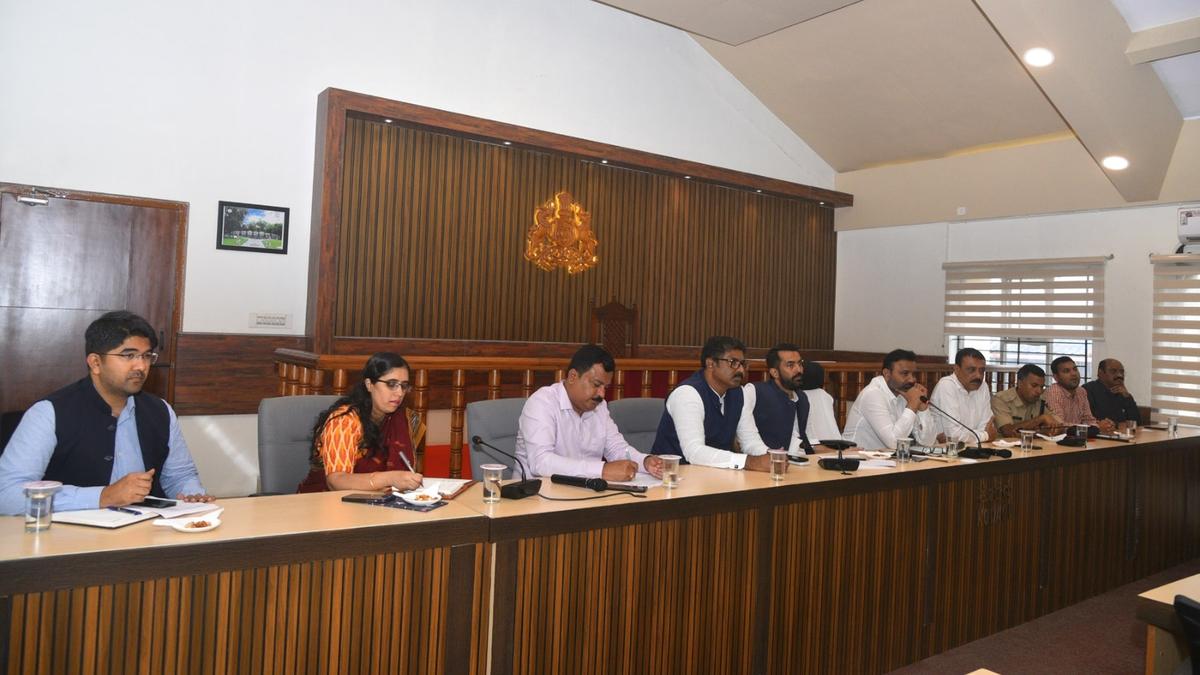
Revenue Minister Krishna Byre Gowda, MLA Mantar Gowda and Deputy Commissioner Venkataraja during the ground breaking function for Praja Soudha taluk administration complex at Kushalnagar on Tuesday. | Photo Credit: SPECIAL ARRANGEMENT
Revenue Minister Krishna Byre Gowda on Tuesday said that ₹50 crore has been released for landslide-prevention works in Kodagu and that an additional ₹10 crore will be sanctioned soon.
He was speaking after performing the bhoomi puja for the construction of the new ‘Praja Soudha’ Taluk Administration building near the Polytechnic College in Kushalnagar. The project is estimated to cost ₹8.60 crore. Madikeri MLA Mantar Gowda was present.
The Minister said new tahsildars and village administration staff have been appointed to strengthen administrative functioning in five taluks of Kodagu district. The new Prajasaudha complex will house the tahsildar’s office, land records office, sub-registrar office, treasury and other key departments under one roof.
A large-scale ‘Darakhast Podi Abhiyana’ (land record correction drive) is currently underway across the State, he said. Under Annexure-1, surveys of government land are being taken up and officials are visiting households to collect data to update records. In Kodagu, 2,344 applications have been taken up under the programme, of which over 1,500 cases have already been disposed of, he informed.
The Minister stated that around 42 lakh land holdings in the State are still in the names of deceased persons. Under the ‘Pouthi Khata’ initiative, efforts are being made to transfer such holdings to legal heirs by directly reaching out to families.
Revenue village accountants (VAs) and inspectors are being provided laptops to ensure paperless service delivery through e-offices, he said.
Disposal of cases has also been expedited in tahsildar and Assistant Commissioner courts.
Speaking on the occasion, Mr. Mantar Gowda said work on the KSRTC depot in Kushalnagar is in progress and ₹46 crore has been sanctioned for the construction of the new taluk hospital. He expressed gratitude to Higher Education Minister Dr. M.C. Sudhakar for providing land for the ‘Praja Soudha’.
On the occasion, people’s representatives urged the Minister to establish a sub-division office, establish a taluk stadium, and upgrade the sub-registrar office in Kushalnagar.
Guarantee Implementation Authority president V.P. Shashidhar said the Praja Soudha project is the outcome of a decade-long struggle to secure taluk status for Kushalnagar.
Deputy Commissioner Venkat Raja, Superintedent of Police P.K. Ramarajan, Zilla Panchayat CEO Anand Prakash Meena, Additional Deputy Commissioner Aishwarya, and other officials were present.
source: http://www.thehindu.com / The Hindu / Home> News> India> Karnataka / by The Hindu Bureau / November 11th, 2025
The 123-page report notes over 1,000 landslides in Kodagu, Shivamogga, and Chikkamagaluru in the last 10 years, causing losses of about Rs 350 crore since 2014.
The retaining wall built on NH 275 after the 2018 natural disaster in Kodagu has developed cracks. (File Photo | Express)
Bengaluru :
There is over-tourism in Kodagu. This is one of the reasons for the rise in man-animal conflicts. Annually, around 1.3 million tourists visit Kodagu (also called the Scotland of India). This is beyond what the region can hold.
It has also reached saturation in plantations, making it climatologically vulnerable. There is thus a need to introduce e-passes in the region to restrict tourism, restore 500 hectares of forest land, and promote agroforestry.
This was one of the suggestions listed in the Report on Assessing the Carrying Capacity of the Western Ghats in Karnataka – September 2025 (Revised), prepared by the Karnataka Western Ghats Conservation Taskforce (KSWGCTF), which was recently submitted to the Chief Minister.
The report also noted that the Uttara Kannada region has become highly vulnerable to landslides. It has recorded 439 incidents in the last 10 years due to illegal mining and ecotourism pressure. There is thus a need for a complete ban on mining in ecosensitive areas, the creation of checkposts in Dandeli, Ankola, and Karwar, and an early warning system for landslides.
The 123-page report, a copy of which is with TNIE, noted that there have been over 1,000 landslide events in the last 10 years, particularly in Kodagu, Shivamogga, and Chikkamagaluru, leading to losses of around Rs 350 crore since 2014. It also pointed out an increase in the number of homestays and resorts in and around forests, which was one of the reasons for the rise in man-animal conflict. The other primary reason is the lack of coordination between district administrations, tourism, and forest departments.
The rapid expansion of roads, highways, tourism resorts, estate housing, and multiple hydropower projects in Chikkamagaluru and Shivamogga was also cited as a cause of conflict.
The report highlighted rising trekking pressure in Mullayanagiri and Kudremukh, where 193 landslides were recorded in the last five years. It suggested traffic regulation in Shivamogga, particularly for pilgrimages in Madeveshwaramalai, and stressed the need to immediately address hydropower conflicts.
Mohammed Tabrez Alam Shariff, KSWGCTF Chairman, said that in the last three years no new permissions were given for the construction or operation of new homestays and resorts, yet a rise in them has been observed. This clearly shows violations that now need to be addressed.
To streamline and regulate tourism and construction activities in the Western Ghats, a letter is being sent to the state government to include KSWGCTF as part of the State Wildlife Board. It has been noted that many projects cleared by forest clearance committees and the wildlife board are later opposed by people. Thus, there is a need to involve all stakeholders when referring projects to the Union government and the National Board for Wildlife, Shariff said.
Sources in the state forest department admitted that many projects tabled before the Wildlife Board or forest clearance committees are divided into smaller projects to avoid clearance from the National Board for Wildlife or public scrutiny. This needs to be regulated. The carrying capacity report will help bring in regulations, particularly when clearing green power, electricity, and infrastructure projects, as they have ripple effects elsewhere.
source: http://www.newindianexpress.com / The New Indian Express / Home> Karnataka / by Bosky Khanna / November 13th, 2025
A proposal has surfaced for the construction of a mini-hydel project across the Kumaradhara river in Kodagu district at a time when the conservation of Western Ghats should be a policy priority.
The proposal in question is for the Sri Shantamallikarjuna Mini Hydel Project across the Kumaradhara in Kodagu, which seeks the diversion of 2.8 hectares of forestland in Kumarahalli village of Somwarpet taluk.
This has been proposed by M/s Poorna Pragna Infrastructure of Hassan district and is pending before the Deputy Conservator of Forests, Madikeri Division, for examination and recommendation.
However, conservationists have expressed concern drawing attention to ecological issues and the degradation of the Western Ghat ecosystem under the guise of mini and micro hydel systems.
Wildlife conservationist Giridhar Kulkarni has appealed to the Forest Department to deny permission for the project on grounds that the site was close to the Pushpagiri Wildlife Sanctuary — an important elephant habitat and home to several species listed under Schedule I of the Wildlife (Protection) Act, 1972.
Mr. Kulkarni said that the project area reportedly falls within the sanctuary’s Eco-Sensitive Zone (ESZ) notified in June 2017 and lies barely 2.5 km from its boundary.
“The region is already facing severe habitat fragmentation due to multiple infrastructure projects, unregulated tourism, and mini-hydel projects, and the new proposal, if approved, will further add to anthropogenic pressure and have a negative impact on the elephant corridor,” said Mr. Kulkarni. While it will threaten the survival of key species, it will also aggravate human-elephant conflict in the region, he cautioned.
Underlining the importance of conserving the project area, Mr. Kulkarni said failure to do so will also result in the degradation of the riverine ecosystem. The attention of the authorities was also drawn to recurring incidents of landslides in the region due to habitat degradation and measures to stop further deterioration of the ecosystem were sought.
The representation made to the Forest Department on October 28, 2025, also sought to remind the authorities of the State government affidavit filed before the Karnataka High Court in Writ Petition No. 9333/2009, wherein it undertook not to permit new mini hydel projects in the Western Ghats.
“The High Court had accepted this undertaking, leading to the cancellation of several proposed schemes. Any new approval, Kulkarni argued, would contradict this commitment and violate the State’s stated conservation policy,” said Mr. Kulkarni.
source: http://www.thehindu.com / The Hindu / Home> News> India> Karnataka / by The Hindu Bureau / November 11th, 2025
Labour Minister Santosh S. Lad presiding over a meeting in Madikeri on Thursday. | Photo Credit: SPECIAL ARRANGEMENT
Labour Minister Santosh S. Lad on Thursday directed representatives of labour unions, homestay and hotel associations, and other organisations to ensure that workers are paid minimum wages without fail and warned of strict action in case complaints are received.
Chairing a meeting at the Deputy Commissioner’s office here, the Minister emphasised the need to create awareness among workers about government schemes, including health insurance, and stressed safety measures in homestays and hotels, such as installation of CCTVs and compulsory collection of guest details.
On the issue of registration, licensing, and renewal of homestays in Kodagu, the Minister said discussions would be held with the Tourism, Urban Development, and Panchayat Raj Ministers. He suggested that associations appoint a PRO or a liaison officer to coordinate registration and renewal processes, adding that pending applications could be cleared during the quarterly KDP (Karnataka Development Programme) meetings.
MLA for Madikeri Mantar Gowda, who was present at the meeting, said that a delegation would soon meet Tourism and other Ministers after the conclusion of the Dasara festival. Tourism officials informed that nearly 230 applications are pending in the district.
During the meeting, labour union leaders drew attention to shortage of labour inspectors, continuation of the traditional bonded-labour system, and difficulties faced by plantation workers. Responding, the Minister assured that joint inspections involving Revenue, Labour, Police, Panchayat Raj, and other departments would be conducted if specific cases were reported.
The Minister said that payment of minimum wages is mandatory and reiterated the government’s commitment to protecting the interests of unorganised workers.
source: http://www.starofmysore.com / Star of Mysore / Home> News> India> Karnataka / by The Hindu Bureau / September 18th, 2025
India International Coffee Festival kicks off this week, and it promises a packed calendar for javaphiles in Mumbai.
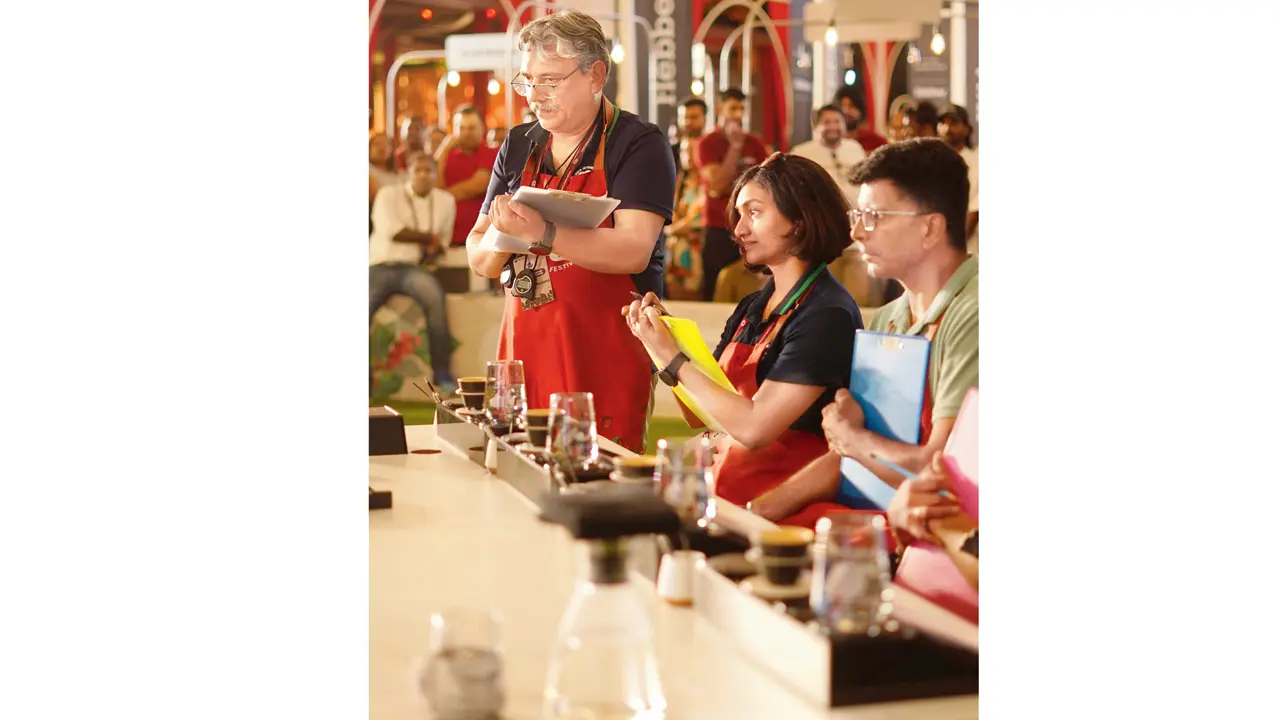
The competitions receive participating entries from home brewers and professional baristas. Pics courtesy/IICF
If you are a coffee lover, and take keen interest in its craft, India International Coffee Festival (IICF) to be held within the Bakery & HoReCa Industry Show is where you should be from October 30 to November 1.
Organised by Speciality Coffee Association of India (SCAI), the event will see six preliminary rounds of competitions including flagship National Barista Championship, Brewer’s Cup Championship, Coffee in Good Spirits, and Latte Art Championship. The final will be held in Bengaluru later this year. It is a great spot to network and engage with representatives from the entire coffee value chain across India.
The jury consists of qualified tasters
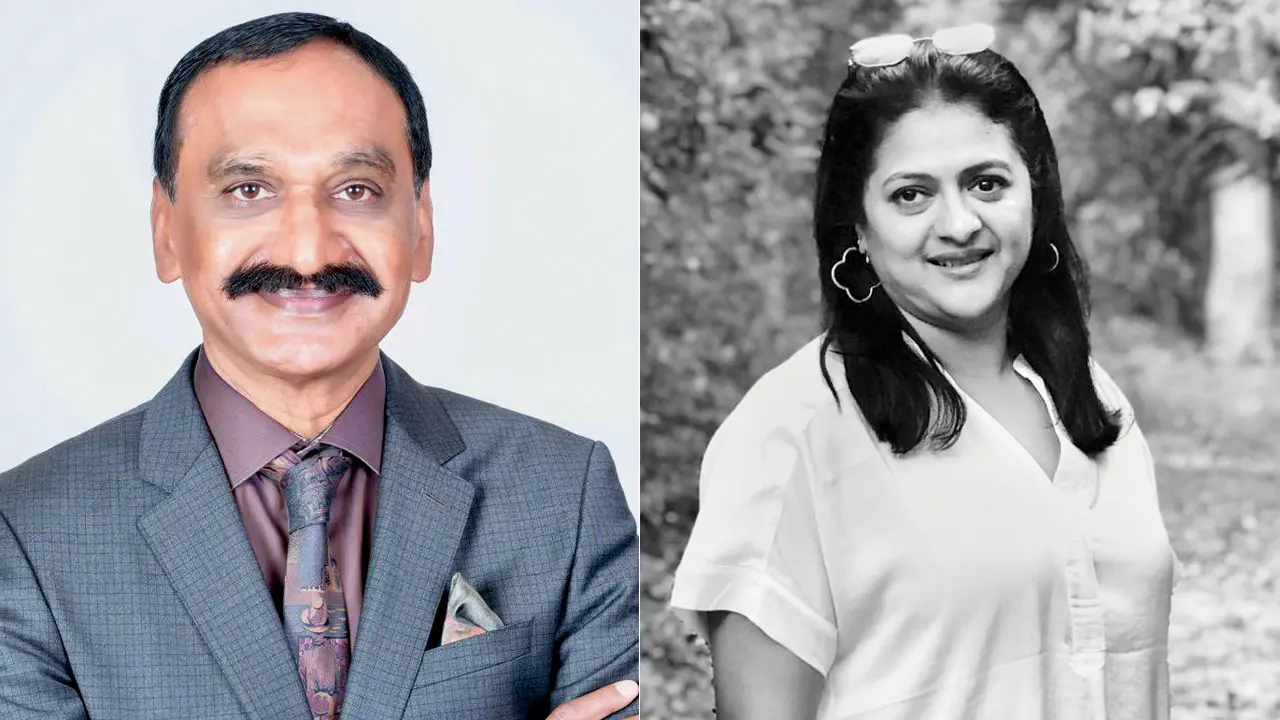
DM Purnesh, a fourth-generation coffee grower from Chikmagalur and immediate past president, SCAI, part from industry folks, the event is a great place for entrepreneurs, aspiring professionals, and enthusiasts to understand about coffee and its process. Over the last 23 years that we have been running competitions, we have seen a lot of interest from home brewers.
A participant takes part in a filter coffee making challenge
A qualified jury judges the competitions. Winners at Indian Barista Champion 2025 to be held in Bengaluru later this year will go on to represent at global competition World Barista Championship 2025,” says Purnesh.
Exhibiting brands include Kaapi Machine and Solutions, caffeine superstore Benki, Brewing Gadgets and Trufrost & Butler.
Serious about coffee
(Left) Suhas Dwarkanath; (right) a participant takes part in a previous coffee-making championship
Hamsini Appadurai, president, SCAI, is happy consumers are more aware in recent years and want to know where their coffee comes from. “Gone are the days when we would order a cup of coffee.
We also have a Brewers Cup and Filter Coffee Championship, which sees participation from home brewers as well. We want everybody to catch the coffee bug,” she tells us.
Micro communities around coffee are thriving on social media, WhatsApp and offline. “Makers discuss brewing and brewing techniques. The competitions are becoming a sort of value badge, allowing homebrewers to showcase their talent of working with different kinds of coffees and techniques,” adds Appadurai.
DM Purnesh and Hamsini Appadurai
Suhas Dwarkanath, last year’s winning barista who recently notched the 15th spot at the World Barista Championship 2025, says the festival is a great place to meet with the community exchanging ideas, networking and most importantly learning from others. “Trends today include coffee mocktails and Coffee Omakase sessions where barista-led Omakase coffee sessions are hosted over a multi-course tasting experience just like an omakase sushi dinner. It is a unique journey of coffee beverages for the diner. The expert highlights unique flavours, origins, and innovative preparations, sometimes with accompanying food pairings.”
On October 30 to November 1 At Bakery and HoReCa Business, Jio World Convention Centre, Bandra Kurla Complex. Time 9.30 am to 5.30 pm Register www.bakerybusiness.in Entry Rs 500
source: http://www.mid-day.com /mid-day / Home> Mumbai Guide News> Things to do News> Articles / by Phorum Pandya (smdmail@mid-day.com) / Mumbai, October 28th, 2025
The Bungalow 1934 is a 91-year-old family home where traditional Kodava cooking and hospitality are the order of the day.
On a hilltop in Coorg, sandwiched between a coffee estate and the Brahmagiri range, Bungalow 1934 is Amrith Thimmaiah’s home and a living chronicle of Kodava culture.
In 1934, Ketolira Diwan Bahadur Chengappa built a home in the typical Kodava-British style of bungalows, set against the backdrop of the Ballyatra hill. When Chengappa became the first Chief Commissioner of Coorg in 1943, the home became the venue for lavish parties for state guests and British officials.
In 2010, the fourth-generation of the family, Amrith Thimmaiah, and his parents Gappu and Fancy Ganapathi, opened their 91-year-old family home as a heritage homestay.
View of Bungalow 1934 set against the Ballyatra Hill / Amrith Thimmaiah
About the homestay
The Bungalow is located in Yavakapadi village, roughly 30km from Virajpet and Madikeri. There are sweeping valley views, as well as a clear view of the Igguthappa temple, a deeply significant site for Kodavas who visit the deity for a bountiful harvest.
Bedrooms at the Bungalow 1934 / Amrith Thimmaiah
With mud walls, pillars, and beams, the home is a true depiction of Coorg ‘s ainmané or ancestral homes, where vaastu dictates aspects like where the owner’s room should be located (in the kubéra moolé, or south west direction). A sprawling fig tree stands out front, and you enter into a pillared, elevated open veranda where, traditionally, Kodava families gathered for tea, family meetings or an evening drink.
The hall in the Bungalow 1934, with old plates passed from generations in Amrith’s family / Amrith Thimmaiah
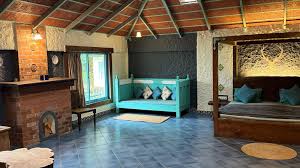
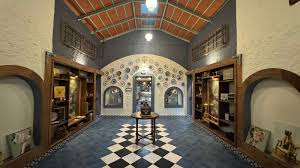
Peppered with antiques and with mosaic tile floors, the main bungalow features living spaces, a large common dining area, a room where Amrith stays, and four guest bedrooms. An annexe beside the main bungalow houses two more guest bedrooms. The six spacious rooms are rustic and cosy , with blue tiles, beamed ceilings, in-built fireplaces, and four poster beds. Large windows offer ample sunlight and views of the mountains. When the temperature drops in these misty mountains, there are plenty of fireplaces across the home and porches to curl up with some homegrown coffee.
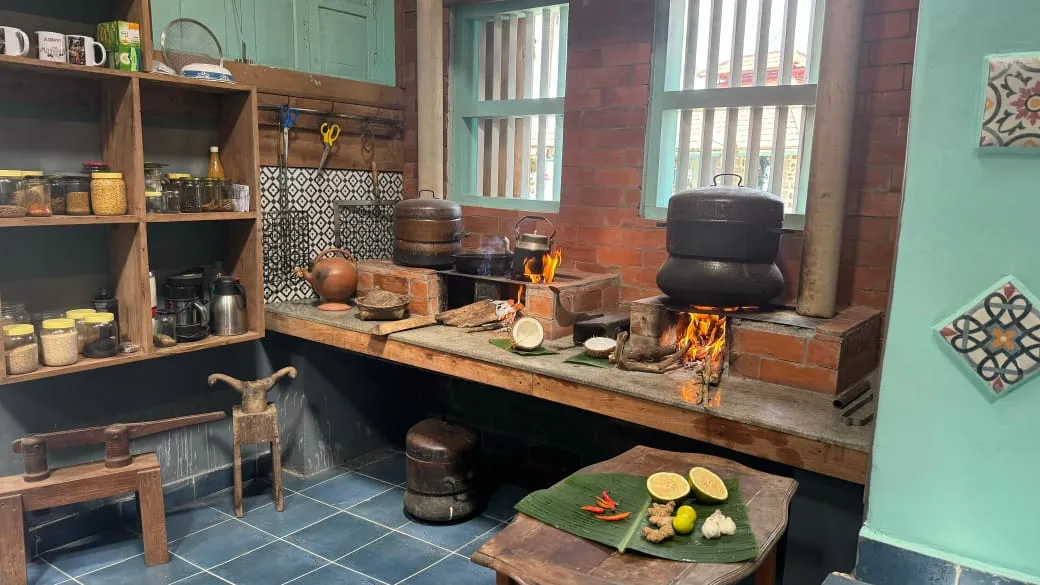
Kitchen at the Bungalow 1934 / Amrith Thimmaiah
The home is surrounded by rosewood, jackfruit and mango trees, and the grounds lead into the 70-acre Green Acres coffee estate. Arabica and Robusta coffee plants grow under a light canopy of Silver Oak, Cedar, and Benteak, dotted with pepper vines and cardamom plants. The buzz of cicadas and birdsong fill the air. Birders will be able to spot hornbills, white-bellied treepies, and the crow pheasant or the chombuka, considered lucky by the Kodavas.
About the hosts
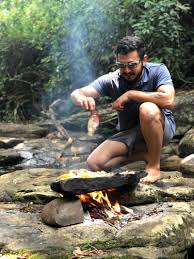
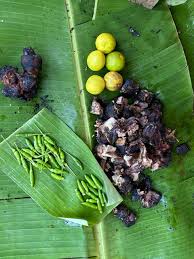
Amrith at the BBQ lunch spread by the stream / Amrith Thimmaiah
Amrith is a rally driver by profession and a passionate host at the homestay, managing bookings personally (the homestay is not listed on any booking platforms), helping with logistics and recommendations. Guests usually come through word of mouth or as repeat visitors, and bookings are confirmed only for days a family member is present at the homestay. Staff leaves and village festivals are respected, and no bookings are made during this time.
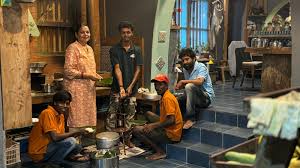
Fancy Ganapathi making Noolputt (steamed rice noodles) with Subbu, Krishna, Chethan & Pavithra / Amrith Thimmaiah
Amrith’s mother, Fancy Ganapathi, is a powerhouse who oversees the food at the homestay. The former lecturer of Kannada literature is a horticulturalist by passion, and a catalyst in forming the 700-member Nature’s Best Food Cluster in Kodagu. The organisation trains grassroot level farmers and enables them to sell their products at outlets in Coorg. “At the Bungalow, I love to share recipes with guests and if someone wants to purchase local produce, I ensure the cluster family provides their products,” she says. Gappu Ganapathi, Amrith’s father, is the backbone of the bungalow and manages the entire coffee plantation.
The Bungalow has 8 to 10 staff members, whose families have been associated with the Ketolira family for generations. Janaki Saraswati, the cook, used to be Amrith’s nanny and was taught heirloom recipes by Amrith’s grandmother.
The food
Frozen Mulberry Crush / Amrith Thimmaiah
Koli Chuttadh (Chicken woodfire roasted) with bird’s eye chilies and lime / Amrith Thimmaiah
Food at the homestay stays true to any traditional Kodava home, with classic local dishes like khaima undae (mutton keema balls), kori erachi pulao (mutton pulao), pandhi curry and otti (pork curry with rice flatbread). Buffet style meals served in the dining area are generous and take into account dietary preferences. There are numerous vegetarian options within the gamut of Coorg cuisine, featuring seasonal produce like kaaké thopp (black nightshade leaves), kumm curry (mushroom), and kaad maangé curry, a tangy, sweet curry made with Coorg wild mangoes.
Fancy ensures that all dishes are served in the traditional Kodava style: baimbalé with otti (tender bamboo shoot curry with rice flat bread) served with ghee is a common Coorg breakfast; rice cakes or putt with meat curry; chutneys or pajjis made from seasonal produce.
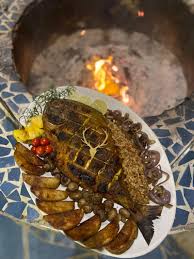
Pomfret Fish Grilled / Amrith Thimmaiah
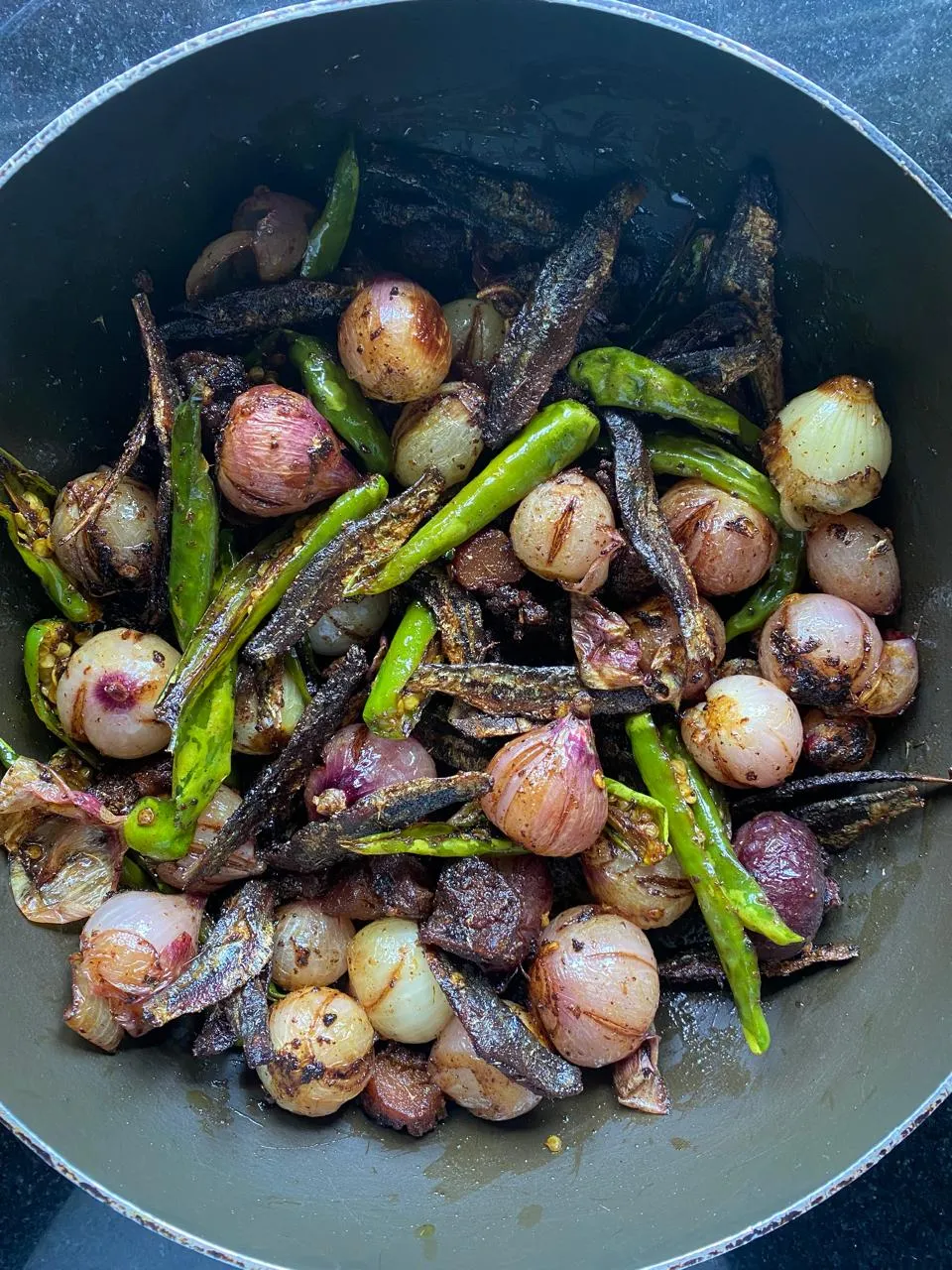
Onak Meen Barthadh (Dried Fish fry) / Amrith Thimmaiah
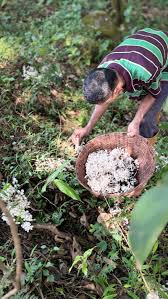
She also makes fruit wine and chocolates, and her mulberry and pomegranate wines are a hot favourite. This year, she has started to make oil and tea out of the rosemary growing in her small garden. The pathaya or granary on the homestay premises houses the products she makes, and make for perfect souvenirs to take home.
Amrith Thimmaiah
Amrith Thimmaiah
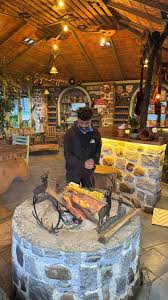
At dusk, Amrith has a house rule: he will host a typical Coorg-style barbeque for guests. Meat is roasted the traditional way over an open wood fire, mixed with finely chopped bird’s eye chili and the juice of bitter lime, to serve up Coorg’s favourite starter, pork chuddals. The family and staff tell stories by the fire, while you can sip cocktails under a star-studded sky with the lights of Madikeri town in the distance.
How to spend 48 hrs at The Bungalow 1934
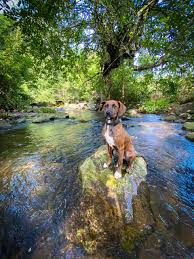
Sparko at Charandi Polé / Amrith Thimmaiah
The homestay offers plenty of cosy nooks to read, write and while away the hours, but if you want to venture out, Amrith organizes treks to Thadiandamol peak and Chelavara Waterfalls. For those interested, Fancy conducts workshops for chocolate, wine, or jam making (4 people minimum, Rs5,000 per person). Sparko, the family dog, may take you down to a stream a short walk from the bungalow, where you can enjoy a barbeque picnic lunch by the stream.
Amrith Thimmaiah
Take a leisurely 2km walk or a guided plantation tour with Gappu at the coffee estate. Gappu and Fancy live in a home close by, with fish ponds, a cow shed, a coffee drying and storage area, and are happy to invite you over with advance notice.