The19th Annual General Body Meeting (AGM) of Gokulam Kodava Sangha will be held on Aug. 3 (Sunday) at 10.30 am at Kodava Samaja first floor, Gen. K.S. Thimayya Road, Vijayanagar 1st Stage here.
Iythichanda Muddaiah, Sangha President, will preside.
Get-together:
The AGM will be followed by a get-together function at 11.30 am.
On the occasion, members’ children, who have excelled in the field of education (7th std., 10th std., II PUC, Graduation, Post-Graduation and Technical Courses), will be honoured. Those eligible may submit their marks card and certificate copy before 5 pm on Aug. 1 to the Sangha Secretary.
For more details, contact Sangha Secretary Chendanda Navin on Mob: 94816-02557.
source: http://www.starofmysore.com / Star of Mysore / Home> In Briefs / July 19th, 2025
Bringing the rich and rustic Kodava food to our palates, Chef Smitha Kuttayya impressed our hearts and tummies at Golconda Pavilion, ITC Kohenur.
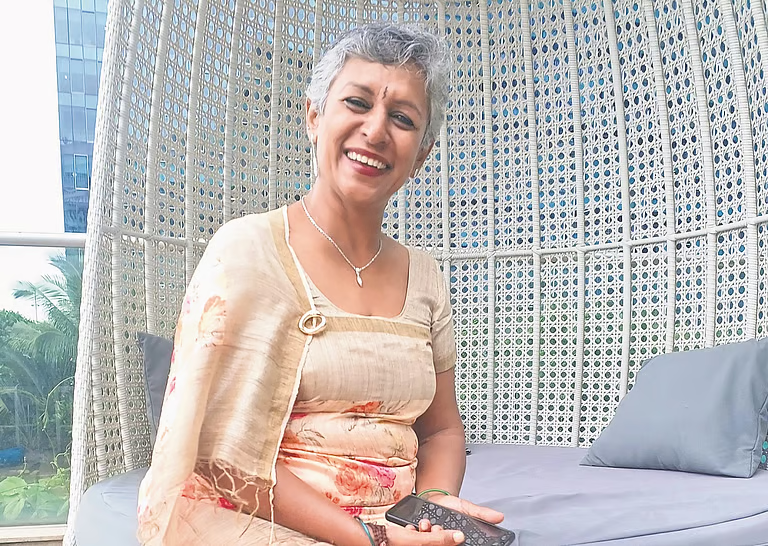
Lush green landscapes, ethereal waterfalls, and aromatic coffee plantations… wouldn’t you like to be in Coorg every single day? Well, a delicious fragment of Kodava culture presented itself on our plates at the Kodava Food Festival in Golconda Pavilion, ITC Kohenur. Chef Smitha Kuttayya, who looked stunning in her Kodagu-style saree, treated us to what was no less than a delightful feast right from the hills of her beloved homeland. She told CE, “The unique distribution of flavours and the use of local ingredients such as kachampuli, a local vinegar, is what makes Kodava cuisine stand out.”
Chef Smitha Kuttayya
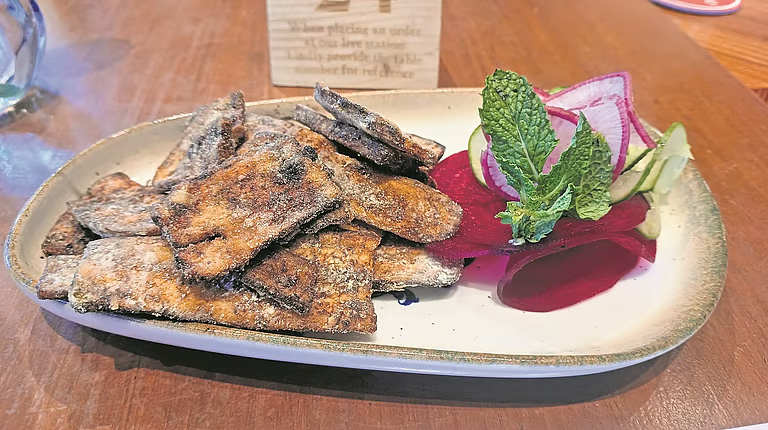
We started off with the Balekai Barthad, plantains marinated in kachampuli, shallow-fried and coated with rice flour. This dish was simply superb, with the right amount of sourness, crisp and texture. Its non-vegetarian counterpart, Meen Barthad, where the fish was marinated in kachampuli, chillies, and salt, was just as irresistible, with everyone going back for more. The Bollary Barthad, shallow-fried cucumber with spices and green chillies, was moderately spicy yet soothing. The Nallamalu Erchi and Koli Barthad — lamb and chicken fry respectively — stood out. The lamb, with subtle hints of cinnamon and cardamom, took you on a flavour ride. “Traditional Kodava cooking uses minimal oil for meat, relying on the lard instead. We also don’t favour overly spicy food, and because of our proximity to Kerala, we love using coconut; almost every dish has it,” Chef Smitha explained with a chuckle.
All the dishes were plated so professionally, but Chef Smitha revealed that this is the effect of modernity; traditional Kodava cuisine draws from its warrior culture, which prioritises bulk cooking for sustenance and togetherness. But then there are commonalities too — a staple loved across the southern states, the dosa appeared in its Kodava avatar: Neer Dosa. We had two versions: one filled with veg poriyal, the other with prawns marinated in kachampuli. Though quite full, we were treated to more of that famed Kodava hospitality.
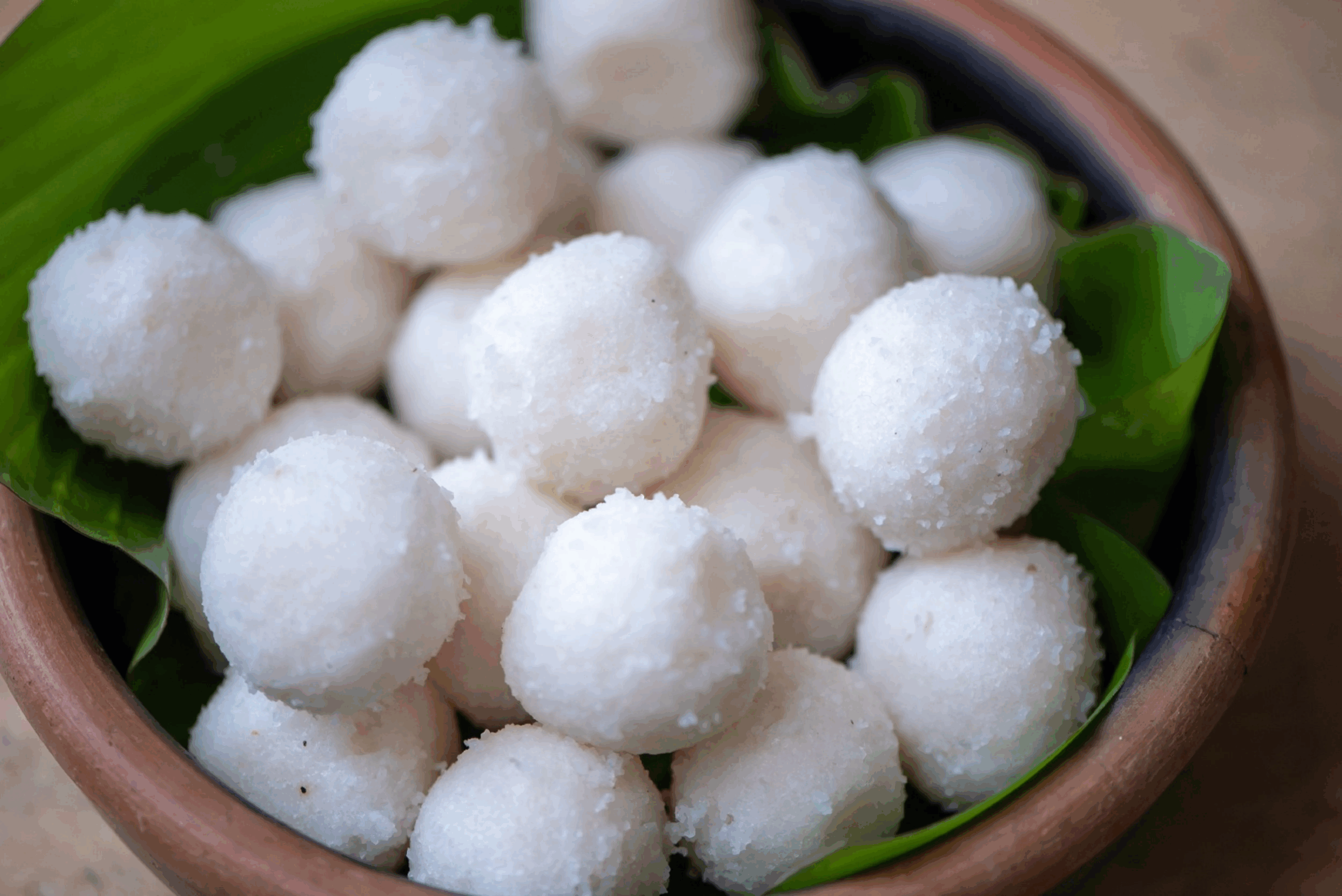
Chef Smitha brought out Otti (Kodava-style akki roti) and Kadambuttu (steamed rice balls) served with six curries. The Kootu, a mixed vegetable stew, matched the rainy Hyderabad mood perfectly, while the Kaad Mange, a tangy seasonal mango gravy, became an instant favourite. The spicy Meen Curry melted in the mouth, but the Koli Kanni, a chicken curry rich with coconut, cardamom, cloves, and pepper, stole the show. But no Kodava meal is complete without Pandi Curry or pork curry. While the other curries paired well with the Otti, the Pandi Curry was perfect with the Kadambuttu; the grainy rice balls with soft, flavourful pork created a textural celebration in the mouth. Among the vegetarian curries, the Baimbale Curry, made with tender fermented bamboo, burnt onions, and roasted rice, was the winner.
Now, both Hyderabadis and Kodavas love their rice, and so we had Erchi Pulav, a coconut-based lamb pulav which brought back the flavours of the hills, especially when paired with Mango Pachadi. The Vegetable Pulav was just as good. The spiciest dish was the Onkkerchi, or dry-shredded pork, due to the generous use of bird’s eye chilli.
It left us craving something sweet and so we had Thambuttu, mashed ripe bananas blended with roasted rice flour. With a generous drizzle of ghee, this dish was traditional perfection. “A woman is central in the Kodava household. During Puthari, our harvest festival, we make Thambuttu and offer it first to the married daughters, praying for their well-being,” shared Chef Smitha. The meal concluded with Kaskase Payasa, a delicious poppy seed kheer that was so good, it was hard to stop at one helping.
We were 800 km away from Coorg that day, but after tucking into that delightful spread, we felt miles closer to the hills.
source: http://www.newindianexpress.com / The New Indian Express / Home> Hyderabad / by Nitika Krishna (headline edited) / July 19th, 2025
Over 1300 families in the panchayat no longer need to travel 10 kilometres for cremation services, said the former Panchayat Development Officer Srinivas.
The mobile crematorium being used across Hosuru grama panchayat (Photo | Special arrangement)
Madikeri :
While births are celebrated, deaths cause not only grief but also stress as relatives, especially from underprivileged communities, struggle to give their loved ones a decent goodbye. However, a unique initiative has give solace to tribal residents of Hosuru grama panchayat in Kodagu.
This has become a model panchayat in the district for introducing the first mobile crematorium enabling smooth final rites of the departed.
“In Hosur Gram Panchayat, a majority of the population lives in modest line houses, often without access to land or essential facilities to perform the last rites of deceased family members. This lack of resources, particularly the absence of a cremation ground, caused not only emotional stress but also led to tensions between different communities over the use of limited space,” explained Srinivas MD, the former Panchayat Development Officer of Hosuru GP who envisioned the concept of a mobile crematorium. Srinivas is currently serving as Assistant Director of Ponnampet Taluk Panchayat.
Realizing the urgent need for a decent crematorium, Srinivas alongside other panchayat officers approached the Lions Club of Gonikoppal seeking their support. A mobile crematorium unit worth Rs 10 lakh was donated to the panchayat by the Lions Club. “This was in 2023 and I approached the then DC and obtained approval for 50 cents of land to serve as a designated cremation site. Further, utilizing Rs 5 lakh from the 15th Finance Commission grant, the infrastructure to manage and maintain the unit was established,” he recalled.
To ensure that the project was implemented in a structured and sustainable way, a dedicated committee to oversee the operation of the unit was formed even as a WhatsApp group to manage service requests efficiently was created.
“This digital coordination allowed timely deployment of the unit and maintained transparency in operations. As a result of these well-coordinated efforts of the panchayat, over 1300 families in the panchayat no longer need to travel 10 kilometres to Virajpet or Gonikoppal towns for cremation services. Particularly for daily wage workers residing in line houses, the nearby availability of the cremation facility has proven to be a great relief. Over 60 cremations have been respectfully carried out directly at the homes of the deceased using the mobile unit. The service has also been extended to neighbouring villages upon request,” he explained. He hopes that this model is adapted by all the Grama Panchayats to ensure a better society.
source: http://www.newindianexpress.com / The New Indian Express / Home> Karnataka / by Express News Service / April 10th, 2025
As it enters its centenary year, the Central Coffee Research Institute (CCRI) is preparing for a series of celebratory events,…
Chikkamagaluru:
As it enters its centenary year, the Central Coffee Research Institute (CCRI) is preparing for a series of celebratory events, beginning with the unveiling of its Centenary Emblem and Motto on July 18 at 10 am at the Coffee Board Extension Office in Chikkamagaluru.
The event, organised jointly by the Coffee Board of India and the Central Coffee Research Institute, Balehonnur, will also feature the launch of Coffee Yatra Vastu Pradarshana 2.0, a thematic coffee exhibition tracing the crop’s history, research, and contribution to the Indian economy.
Representatives and stakeholders from across India’s coffee-growing regions have been invited. Among the key guests are Capt. G.R. Gopinath, founder of Air Deccan and a progressive coffee grower, and Kota Srinivas Poojary, MP from Chikkamagaluru-Udupi and member of the Coffee Board. Notable tribal coffee entrepreneurs Vanatala Sandhya and Korra Savitri will also be present. Several coffee industry leaders will participate as special invitees, including K. Mathew Abraham (President, South India Joint Growers’ Association), A. Nanda Belyappa (President, Kodagu Growers’ Association), and Ramesh Raj (President, Coffee Exporters’ Association).
Presidents of grower associations from Kerala, Odisha, Karnataka, Tamil Nadu, and Shevaroys, along with office-bearers of the Coffee Curers’ Association, Specialty Coffee Association of India, and Coffee Roasters’ Association, are also expected to attend.
source: http://www.thehansindia.com / The Hans India / Home> News> State> Karnataka / by The Hans News Service / July 17th, 2025
The Suttur Mutt has deeply condoled the passing of K.B. Ganapathy, Founder-Editor of Star of Mysore and Mysuru Mithra. In his condolence message, Suttur Seer Sri Shivarathri Deshikendra Swamiji recalled that Ganapathy was originally an Advocate who practised at the Karnataka High Court and Civil Courts.
“Driven by a deep interest in journalism, Ganapathy left his legal profession and worked for The Free Press Journal and The Indian Express for several years. He later founded the English eveninger Star of Mysore in 1978 and the Kannada morning daily Mysuru Mithra in 1980, becoming the Founder-Editor of both newspapers. These publications quickly gained popularity for their in-depth reporting on local issues affecting Mysuru and surrounding districts, the Swamiji added.
“Ganapathy wrote thought- provoking editorials and book reviews, often highlighting social shortcomings. He also served the society in many capacities — as a Member of the Karnataka Media Academy, President of Mysuru District Journalists Association, Chairman of Bharatiya Vidya Bhavan (BVB) and Vice-President of Kodava Samaja. He actively participated in relief efforts through Mysuru Nagaraikara Vedike, extending help to Tsunami victims in Tamil Nadu and others affected by natural disasters,” the Seer said.
Sri Deshikendra Swamiji further noted that Ganapathy authored four books in Kannada — ‘Adarshavadi’, ‘Kodagina Mele Shilubeya Neralu’, ‘Choomantra’ and ‘Shivajiya Khadga’ — and seven in English. “His book ‘Life and Times’, which reflects on life, literature, religion, spiritualism and personalities, stands out as a significant work. His recent book ‘The Hidden Life of a Yogi’ was released during the 9th edition of the Mysuru Literature Festival-2025. His popular Abracadabra column in Star of Mysore and its translated versions in Mysuru Mithra were widely read and appreciated. He received numerous accolades, including the Rajyotsava Award and an Honorary Doctorate from the University of Mysore,” the Seer added.
“His demise is a great loss to society and the field of journalism. May the Almighty grant strength to his family, relatives and well-wishers to bear this loss. We pray for his soul to rest in peace,” the Seer said.
source: http://www.starofmysore.com / Star of Mysore / Home> News> Top Stories / July 14th, 2025
K.B. Ganapathy served as the Chairman of Bharatiya Vidya Bhavan (BVB), Mysuru Kendra. He has also served as its Vice-Chairman; Former Vice-President of Kodava Samaja, Mysuru; Former Vice-President of Mysore District Journalists Association (MDJA) and Member of Karnataka Patrika Akademi 1993-1995.
Fund raising
1. Funds were raised for the victims of the Kargil war in 1999.
2. Funds for the Gujarat earthquake in 2001 were raised by collecting about Rs. 12 lakh with the help of Rotary Mysore.
3. Collected Rs. 3.80 lakh as relief funds in association with Rotary Mysore for the earthquake victims of Latur district in Maharashtra in 2003.
4. Star of Mysore collected Rs. 74 lakh from various organisations and handed it over to the Mysore Citizens Forum (MCF) to be distributed to those who lost their lands and homes in the Tsunami that struck Tamil Nadu in 2004.
5. Star of Mysore has been giving monthly financial help to the nursing home being run by Little Sisters of the Poor and the rehabilitation centre for the mentally challenged being maintained by Mother Teresa Mission Charities in Bannimantap, and also presenting Rs. 10,000 annually to Deena Bandhu Charitable Trust to be distributed among talented children.
6. Star of Mysore also collected Rs. 7.5 lakh for successful surgery for a hearing-impaired child for a Cochlear implant.
7. Among other services, the company instituted the ‘Star of Mysore Silver Jubilee Endowment Medal’ at the University of Mysore. The gold medal is awarded to the candidate who has passed the MA Exam in Journalism by securing the highest marks in the entire course (in all the papers). The candidate, however, must have studied in the English Medium.
DEVELOPMENT OF SCHOOLS
1. Adoption of Government Kannada-Urdu High School in HUDCO Colony in Bannimantap and constructing separate toilets for boys, girls and teachers at the school and compound for the school.
2. As a patron of Kodagu Model School in Vidyashankara Layout, which is a lower-middle-class area, Ganapathy personally raised over Rs. 40 lakh donations and also contributed substantially to its development.
3. Star of Mysore has raised money to build infrastructure for other schools, too.
source: http://www.starofmysore.com / Star of Mysore / Home> News> Top Stories / July 13th, 2025
and Publisher of STAR OF MYSORE & MYSURU MITHRA Newspapers
Dr. Kalyatanda B. Ganapathy, the former Chairman & Managing Director (CMD) and Editor-in-Chief of Star of Mysore English Evening Daily and Mysuru Mithra Kannada Morning Daily of Mysuru, published by Academy Newspapers Pvt. Ltd., Bannimantap, Mysuru, passed away at the age of 85 in Mysuru today (July 13, 2025).
Mysuru city’s largest circulated and popular evening newspaper, Star of Mysore, was founded by K.B. Ganapathy and late C.P. Chinnappa in 1978. The Kannada morning regional newspaper Mysuru Mithra, a sister concern of Star of Mysore, was founded in 1980 and is equally popular, covering five districts — Mysuru, Mandya, Hassan, Chamarajanagar and Kodagu.
K.B. Ganapathy with C.P. Chinnappa, with whom he established Academy Press in 1975 and launched Star of Mysore in 1978.
Born on 27.12.1939 to K.A. Bopaiah and K.B. Muthavva (Baby) in Coorg (Kodagu), K.B. Ganapathy is the second of the four siblings. A native of Kunjila (Kakkabbe) village in North Kodagu, his father was a school teacher belonging to the Kalyatanda family, a Kodava clan.
Ganapathy was a Bachelor of Arts and Law and had a Diploma in Journalism from Bharatiya Vidya Bhavan (BVB), Bombay. He practised as an advocate at the Karnataka High Court and the Civil Courts in Bengaluru from 1961 to 1964.
After being a trainee-junior lawyer for four years at a senior advocate’s office in Bengaluru, he wanted to pursue journalism, which he was inclined towards. So he moved to Bombay to study journalism at Bharatiya Vidya Bhavan.
After he got his diploma, he interviewed with T.J.S. George, the doyen of journalism, who was then the Assistant Editor of Free Press Journal, who gave Ganapathy his first job as a Sub-Editor.
Ganapathy worked as a Journalist (Reporter and Sub-Editor) in Free Press Journal and Indian Express, Bombay, till 1970 and then established his advertising agency, ‘Sunbeam Advertising’, Pune, in 1970.
A star was born
After marriage, in 1976, he shifted to Mysuru because his wife K.K. Devamma (Ralie Ganapathy) was a Government College lecturer, and his family members were living in Mysuru. Soon, he ventured to do what he always loved — Journalism. Thus, in 1978, Star of Mysore was born.
Today, 48 years later, Star of Mysore, an evening English newspaper of Mysuru city, with a population of about a million, is the largest circulated newspaper with over a lakh readership. Two years after establishing Star of Mysore, in 1980, Ganapathy recognised the importance of journalism in the local language and started a local Kannada morning paper called Mysuru Mithra.
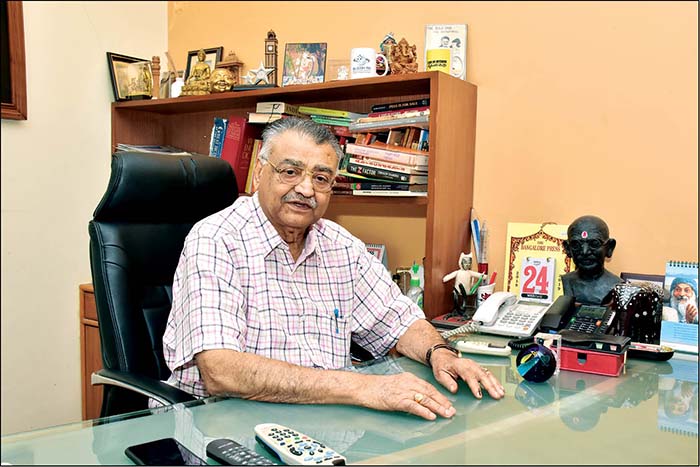
K.B. Ganapathy in his chamber at Star of Mysore office.
Today, this Kannada paper has gone from being a local paper to a regional paper covering five districts with a readership of over 2.5 lakh.
Even though in the 1970s Mysuru had many newspapers, Star of Mysore stood out for its factual reports and in-depth coverage. To add, Ganapathy wrote two columns every other day called Abracadabra and Hocus-Pocus, which helped popularise the paper.
These columns were enlightening, informative, risque and soon captured the attention and imagination of Mysureans. Ganapathy, after 48 years, continued to write his column. His last two Abracadabras were on the global conflict — ‘Pondering over wars and warmongers of the world!’ published on June 19 and ‘A miracle in Jerusalem’ on June 21, 2025.
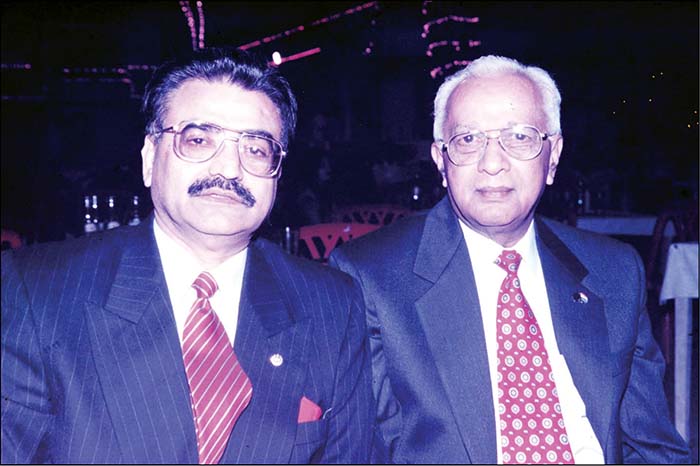
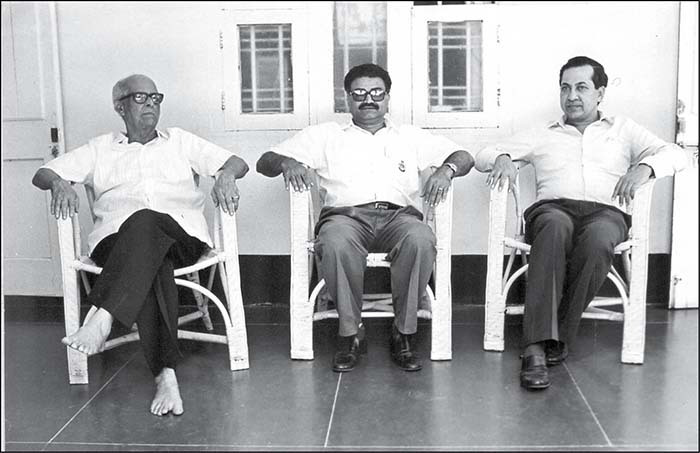
Three Wordsmiths: R.K. Narayan and N. Ram insisted that K.B. Ganapathy sit in the middle flanked by these patron giants of the literary world
Attention to reportage, visual appeal
It is noteworthy that Star of Mysore is probably the country’s only evening subscribed English newspaper. Ganapathy achieved this by building a strong distribution network while paying attention to reportage, an endeavour in which many national newspapers failed.
Ganapathy did three unique things in local journalism. First, he wanted the newspaper to stand out visually. To achieve this, he chose to print Star of Mysore in a unique size — Berliner. Even though this newspaper size costs more money to publish, he felt it was essential for recall. Today, Star of Mysore is the only Berliner- sized newspaper in the country.
The next was his approach to journalism and public participation. Before the term ‘citizen journalist’ was coined, Ganapathy in the 1980s encouraged Mysureans, be it teachers, students or industrialists, to write. Be it a letter to the editor or even articles, everyone was encouraged.
Even today, this tradition continues with columnists like Dr. Javeed Nayeem, Sadhguru, Devdutt Pattanaik, Dr. Balasubramaniam and Gouri Satya.
Many of the young journalists and writers of Star of Mysore from the 1980s-90s did not have a journalism degree, yet they were employed at Star of Mysore and Mysuru Mithra. Ganapathy felt that a ‘nose for news’, a ‘passion for storytelling’ and a ‘sense of journalistic purpose’ were more important than a degree in journalism.
Today, most of these ‘alumni’ of SOM and MM as the two newspapers are fondly abbreviated, are in senior positions in other national media houses.
Some of them are late Girish Nikam (Rajya Sabha TV), late Niranjan Nikam (Deccan Herald), Krishna Prasad (former Editor of Outlook Magazine), Chetan Krishnaswamy (Formerly with The Week Magazine), H.R. Ranganath (former editor of Kannada Prabha and now the Editor-in-Chief, Public TV), Manu Aiyappa (The Times of India), etc.
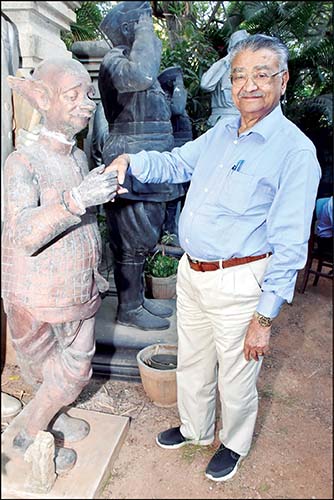
Shaking hands with a replica of noted cartoonist R.K. Laxman’s ‘The Common Man.’
Passion for journalism
In a way, with his passion for journalism, Ganapathy turned his two newspapers into a kind of school for journalism, producing more practising and successful journalists than the journalism schools in Mysuru.
Over the years, both newspapers have also patronised celebrated thinkers and writers such as T.J.S. George, Maneka Gandhi, Devdutt Pattanaik, Sadhguru, to name a few.
With his two newspapers, Ganapathy created awareness among the people of Mysuru city about the usefulness and impact of an influential local evening newspaper on the community.
When a citizen is in trouble due to poor service by various Government or quasi-Government agencies or the local bodies, Star of Mysore and Mysuru Mithra are their voice for justice. More importantly, he showed that local journalism could be influential and have an impact in creating a good city, as it brings awareness among the citizenry, who then hold their leaders accountable for the health of their city.
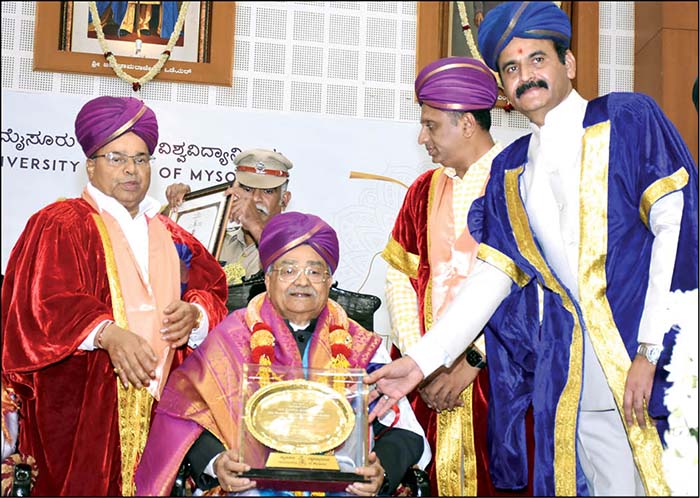
UoM Honorary Doctorate to Dr. K.B. Ganapathy.
Courage and determination
Speaking about Star of Mysore, late Union Minister H.N. Ananth Kumar had said, “If there is a torch-bearer in this part of the country that always stood for liberty and equality, it is Star of Mysore.” He then added, “Ganapathy always wages a silent war with the establishment and in the process, he and his family faced many threats and attacks. This is easier said than done. I salute his courage and determination.”
The combination of an entrepreneur-journalist is scarce, and Ganapathy has achieved a rare feat by being successful as both. Today, his newspapers have become household names, and with their online edition, they have truly become the conduit that connects Mysureans to Mysuru and Mysureans to their leaders.
No wonder late Ananth Kumar stated, “Star of Mysore is now addressed in the same breath as Mysore Pak and Mysooru Mallige. I have seen eveningers like Mid-Day in Mumbai and Bengaluru. But in this part of the country, Star of Mysore has earned its unique and respectful place in the hearts of its readers.”
Mysuru has been better off for having these two newspapers because using the two newspapers, Ganapathy took up numerous causes for the city of Mysuru and Mysureans, such as — Save Kukkarahalli Lake, Campaign against Chamalapura Power Plant, Campaign to Save Heritage buildings, Campaign for Tree Protection, Strived and succeeded in converting noted novelist R.K. Narayan’s house in Yadavagiri into a Museum, supporting Mysore Grahakara Parishat (MGP), an NGO, in its activities, to name a few.
Concern for Mysuru
Star of Mysore’s major article on Rare Materials Plant (RMP), the Uranium Unit of the Bhabha Atomic Research Centre (BARC) in Yelwal, which the local villagers called ‘Bomb Factory’, had brought the top official of Atomic Energy from Bombay to Mysuru to allay fears of the Mysureans.
This article was written by one Saketh Rajan (late), a young, intelligent student. The official held a press meet, assuring that there was no danger of ‘radiation leak’ or of any kind, and all measures for absolute safety and security are taken care of.
Only after this, other NGOs came on the scene demanding closure of this ‘bomb factory’ or revealing the safety measures taken in the event of accidents in the unit.
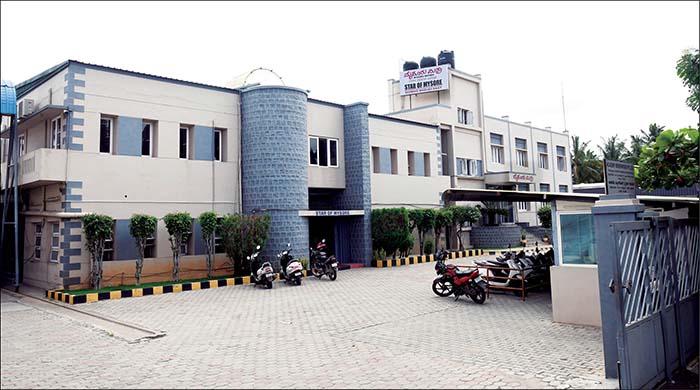
Star of Mysore and Mysuru Mithra head offices in Bannimantap.
Now, the company, Academy Newspapers Pvt. Ltd., under which the two newspapers are published, employs many people apart from providing part-time jobs and serving over 4 lakh Mysureans.
source: http://www.starofmysore.com / Star of Mysore / Home> Feature Articles> Top Stories / July 13th, 2025
Kodagu, often hailed as the ‘Land of Spices’ and the ‘Scotland of India’, is not only known for its lush coffee estates and spice plantations but also for producing some of the country’s finest athletes and brave soldiers. Adding to this legacy is 22-year-old Monnanda Tasmai Cariappa, an emerging talent in the world of motorcycle racing.
Tasmai recently made a stunning international debut by clinching second place in the SP400 (400cc) category at the BRIC Superbike Championship-2025 held in Thailand, a performance that has turned heads in the racing circuit.
Now, with his eyes set firmly on representing India at the highest level of motorsport, Tasmai is revving up for Indian Superbikes League (ISBL) selections scheduled to take place in Bengaluru next week. His passion runs so deep that he made the bold decision to put academics on hold — despite excelling in his II PUC — to pursue a professional career in motorsport.
A resident of Kuvempunagar in Mysuru, Tasmai is the son of Dr. Monnanda Nalini Somaiah, Professor, Department of Studies in Botany, Manasagangothri, University of Mysore.
Star of Mysore caught up with the promising racer as he gears up for the ISBL trials. Excerpts…
Star of Mysore (SOM): Being such a high-risk sport, how did you get into motorcycle racing?
Tasmai Cariappa: I’ve been passionate about racing from a young age. I grew up watching MotoGP and other races on television, which sparked my interest. After I turned 18, I got my first bike — a KTM Duke 390 — and started riding on the curvy roads of Chamundi Hill, which I loved.
During those rides, I met a few fellow enthusiasts who were already participating in races organised by KTM. That motivated me to take things more seriously. I enrolled in track training academies in 2019 and again in 2022, held in Coimbatore and Chennai. After completing the training, I began competing in Indian National Racing events in the 165cc category.
From the album – Tasmai Cariappa with his racing icon Marc Marquez of Spain.
SOM: Who has been your biggest inspiration among professional racers?
Tasmai Cariappa: Spanish racer Marc Márquez has been a huge inspiration for me. It’s not just his aggressive racing style, but also his mental strength and unshakeable determination that I admire. Despite suffering multiple injuries, he’s always managed to make a strong comeback and dominate on the track.
SOM: How did your family react when you told them you wanted to pursue racing?
Tasmai Cariappa: In the beginning, I didn’t inform my parents. I first shared my interest with my grandmother, Monnanda Jooby Somaiah, who supported me financially so I could join a racing academy. Only after completing my training did I inform my mother and my aunt, Rajini Somaiah, who works as a scientist in St. Louis, USA. Since then, they’ve all been very supportive of my racing journey.
SOM: Mysuru doesn’t have dedicated racing tracks. Where do you usually practice?
Tasmai Cariappa: I regularly train in Bengaluru, Coimbatore and Chennai. Bengaluru is my primary practice location because it has three Go-Kart tracks. I frequently ride at the Velocity International Circuit in Kolathur and the Aruani Grid in Dommasandra. Additionally, I visit the Madras International Circuit in Chennai and the Kari Motor Speedway in Coimbatore every month for advanced training.
SOM: Motorcycle racing involves a high risk of accidents. How do you manage that risk?
Tasmai Cariappa: Yes, the risks are there. But as you gain experience and improve your riding skills, the risk starts to reduce. A major part of staying safe also depends on the quality of your racing gear — your race suit, helmet, gloves and boots.
High-quality gear plays a crucial role in protecting you during crashes. Apart from that, maintaining physical fitness is essential — it strengthens your body and helps you recover quickly in case of a fall.
SOM: Injuries take time to heal and can be expensive to treat. Since motorsport doesn’t get much support in India, how do you manage your finances?
Tasmai Cariappa: In professional racing, we have what’s called Circuit Insurance, which covers medical expenses during events. However, beyond that, it’s essential to consult reputable doctors and physiotherapists. They help design recovery plans, recommend the right nutrition, and guide you to bounce back faster and stronger.
SOM: Is the fitness routine for motorsport different from other sports?
Tasmai Cariappa: Absolutely. Racing demands both physical and mental strength. It’s not just about building muscle or endurance — it’s about total body fitness. My routine includes CrossFit, Yoga, mobility drills, reflex training for quicker reactions, and stamina-building exercises. Mental sharpness is just as important as physical readiness when you’re on the track.
SOM: What kind of diet do you follow?
Tasmai Cariappa: Diet varies from person to person based on their age, weight, and the bike category — whether it’s 400cc, 600cc or 1000cc. As the G-force increases with higher-capacity bikes, your body needs to be strong enough to handle it. So, nutrition plays a critical role. Most of us follow a high-protein, low-carb, and fibre-rich diet. You can’t just eat anything — every element in the diet must be planned to support your performance.
SOM: You’ve chosen the Kawasaki Ninja 400 as your race bike. Why that model?
Tasmai Cariappa: In my category, riders can opt for the Yamaha R3 or KTM RC 390 as well. But I’ve chosen the Kawasaki Ninja 400 because it performs better at the top end and has a more reliable engine.
It also has a slight edge in displacement — about 50cc more than the Yamaha R3 and KTM RC 390, which makes a difference in race conditions. For long runs of 8-10 laps, engine reliability becomes crucial, and the Ninja 400 holds up very well.
Proud moment – Tasmai with his mother Dr Nalini Somaiah
OM: Do you see yourself racing in higher categories in the future?
Tasmai Cariappa: Yes. I want to race in higher categories — especially in the 1000cc segment. But I believe in taking it step by step. It’s a physically demanding sport, and it’s important to gradually build your knowledge of the bike and your own skill level before moving up. My dream is to represent India on the global stage at world championship-level events.
SOM: What are your thoughts on the newly launched Indian Superbike League (ISBL)?
Tasmai Cariappa: Indian motorsport is growing and the ISBL is a fantastic opportunity for aspiring racers. It’s especially valuable for those who are passionate about racing but don’t own a superbike. Ducati stepping in to provide the bike and gear for selected riders is a big move for the sport in India. The selection process will be tough, but getting through it would be a game-changing opportunity for any racer.
SOM: Thank you, and all the best !
Tasmai Cariappa: Thank you !
source: http://www.starofmysore.com / Star of Mysore / Home> Feature Articles / by S N Venkatnag Sobers / July 12th, 2025
Minister in charge of Kodagu district N.S. Boseraju on Friday said that instructions have been issued to take up immediate repair works at 71 anganwadis and 406 schools in the district.
Speaking to reporters in Madikeri on Friday, Mr. Boseraju said 77 houses were damaged in rains in May and June, and compensation has already been distributed. Around 2,364 electricity poles and 22 transformers have been replaced.
Under the Shakti scheme, 500 crore women passengers have travelled across the State, with 1.20 crore in Kodagu district alone, he claimed. The government had borne an expenditure of ₹50 crore for the scheme, he added.
source: http://www.thehindu.com / The Hindu / Home> News> India> Karnataka / The Hindu Bureau / July 11th, 2025
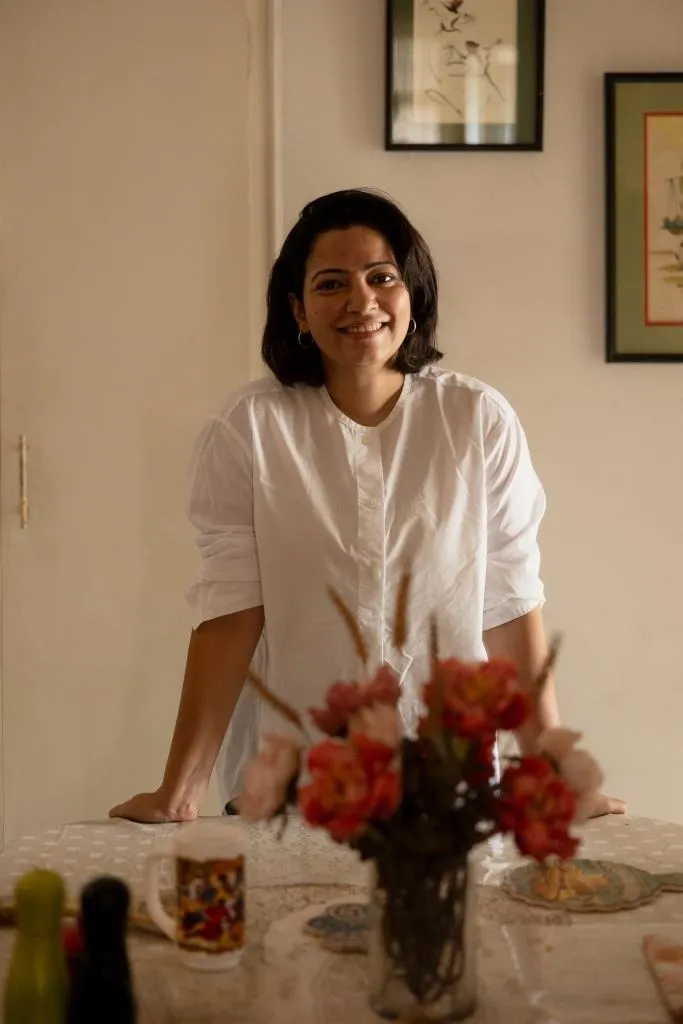
Experience the flavors of Coorg at Hilton Bengaluru’s exclusive pop-up, “A Coorg Kitchen Story,” featuring Chef Anjali Ganapathy’s culinary delights by the poolside.
3 -Day Exclusive Pop-Up by Pig Out at Neer
Hilton Bengaluru Embassy Manyata Business Park is set to host a one-of-a-kind culinary pop-up, “A Coorg Kitchen Story,” presented by Pig Out, the acclaimed dining platform founded by Chef Anjali Ganapathy. Held at Neer, the hotel’s elegant poolside restaurant, this limited-time event promises to transport diners to the misty hills of Kodagu through a sensory-rich celebration of Coorg cuisine.
Chef Anjali Ganapathy, renowned for her immersive, narrative-driven culinary experiences, brings the soul of Coorg to the city through a menu deeply rooted in heritage, memory, and the wild bounty of the Western Ghats.
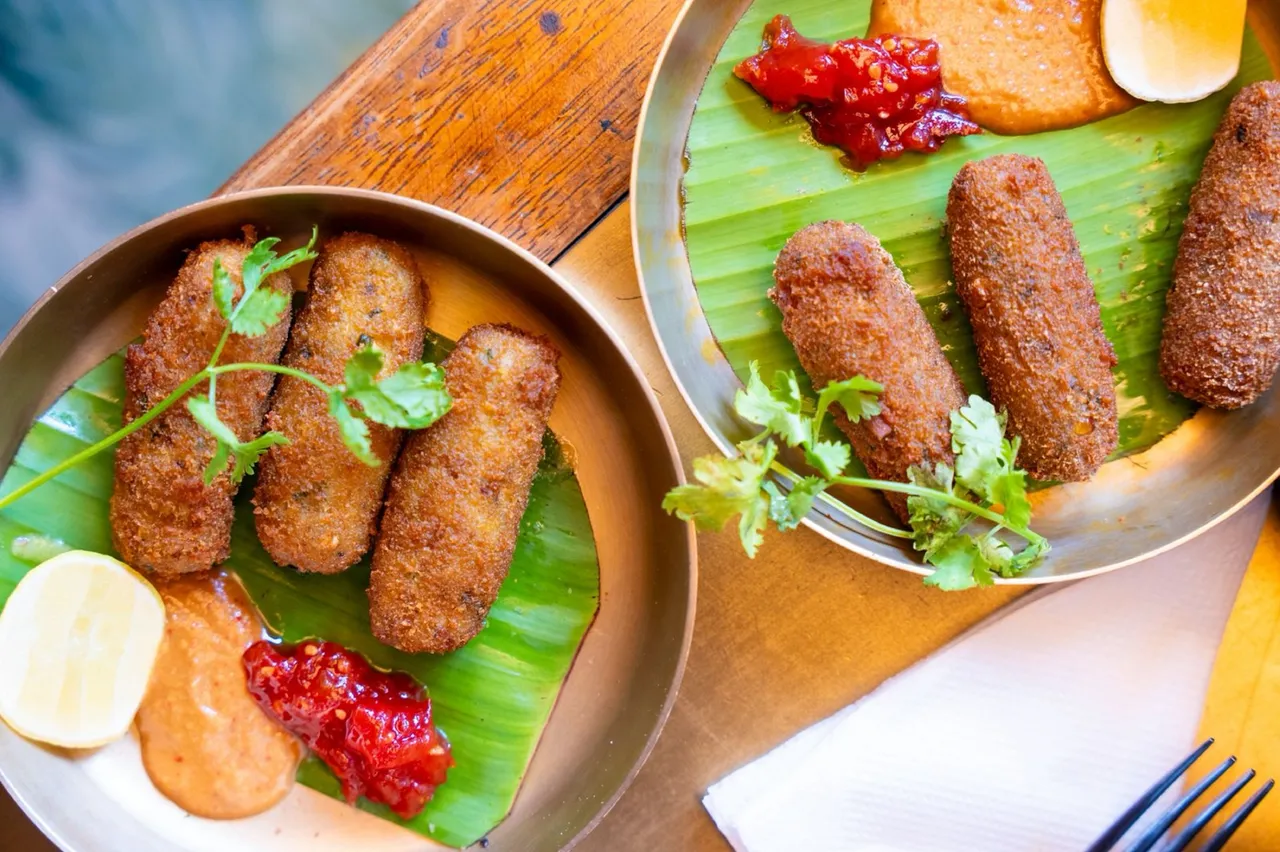
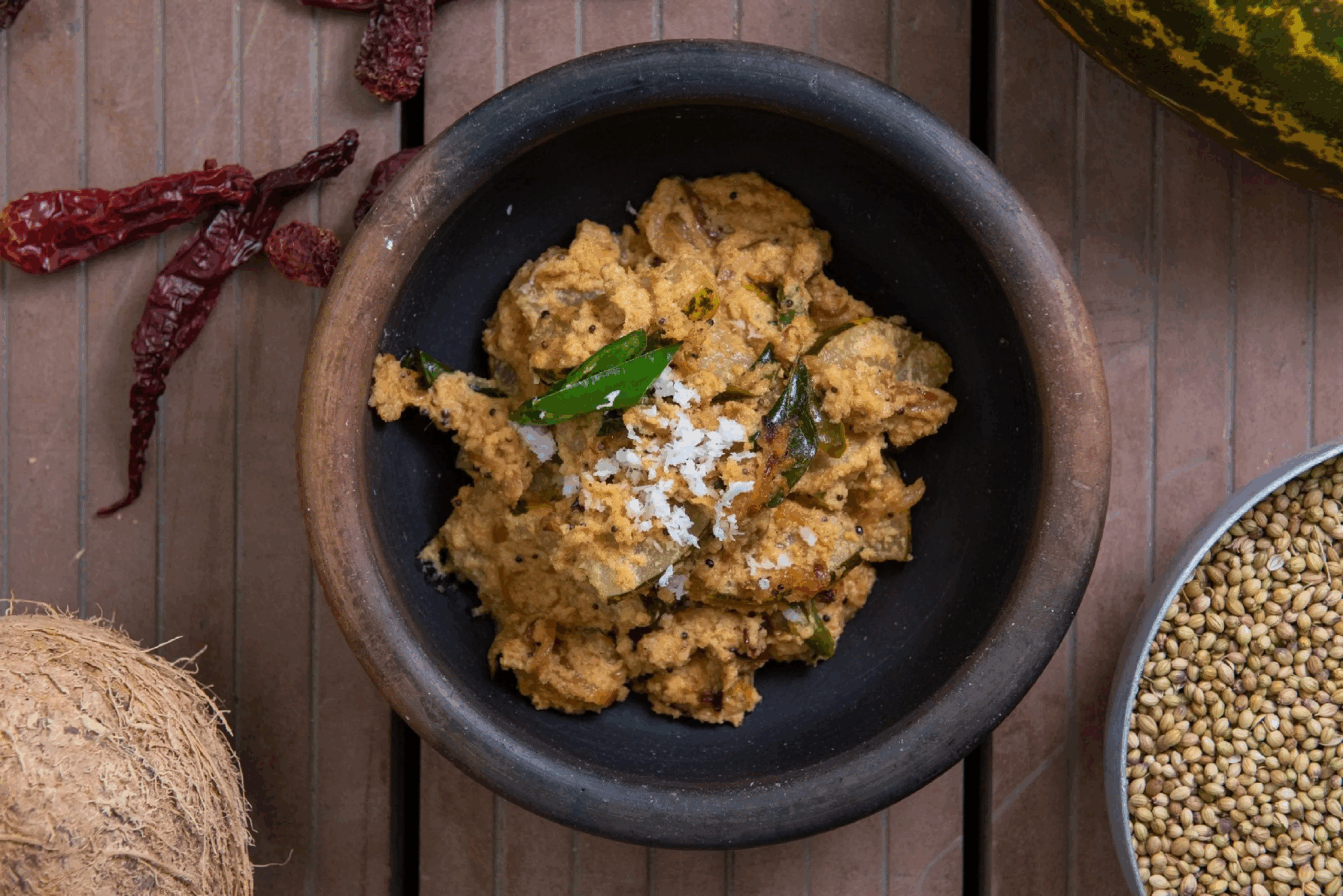
The menu promises bold, comforting flavors—from tantalizing Mathi Cutlet and Onak Erachi to vegetarian delights like Jackfruit Cutlet and Baimbali Stir Fry. Guests can savor iconic pairings such as Paaputt with Koli Curry and the soothing Kumbla Curry. Unique dishes like Kaipakai, Baale Thange and a vibrant assortment of curries—Kumm, Maange, Pandi, and Kakkda Njende—highlight the region’s culinary diversity. Hearty rice dishes such as Jackfruit Pulao and Erchai Pulao add depth, complemented by traditional sides like zesty Inji Pachadi, nutty Ellu Pajji, and the distinctive Baimbale Paara. Staple breads like Noolputt and Akki Otti round out the experience.
The pool side setting at Neer provides the ideal backdrop for this immersive journey. With its tranquil, tropical-inspired ambiance and curated beverage program, it enhances the rich, earthy narrative of Kodava cooking with understated elegance. This exclusive pop-up promises an unforgettable culinary escape into the heart of Coorg’s vibrant food heritage.
What: A Coorg Kitchen Story by Chef Anjali Ganapathy
When: 18th July 2025 to 20th July 2025, 7.00 PM onwards
Where: Neer, Hilton Bengaluru Embassy Manyata Business Park
source: http://www.hospibuz.com / Hospibuz.com / Home> Hotel Listicles> Hotel / by Hospibuz.com / July 11th, 2025
WELCOME. If you like what you see "SUBSCRIBE via EMAIL" to receive FREE regular UPDATES.
Read More »