Tag Archives: Kodava Food Festivals

‘Kodava Food Festival’ at Hyderabad’s ITC Kohenur : A warm hug from Kodagu

Bringing the rich and rustic Kodava food to our palates, Chef Smitha Kuttayya impressed our hearts and tummies at Golconda Pavilion, ITC Kohenur.

Lush green landscapes, ethereal waterfalls, and aromatic coffee plantations… wouldn’t you like to be in Coorg every single day? Well, a delicious fragment of Kodava culture presented itself on our plates at the Kodava Food Festival in Golconda Pavilion, ITC Kohenur. Chef Smitha Kuttayya, who looked stunning in her Kodagu-style saree, treated us to what was no less than a delightful feast right from the hills of her beloved homeland. She told CE, “The unique distribution of flavours and the use of local ingredients such as kachampuli, a local vinegar, is what makes Kodava cuisine stand out.”
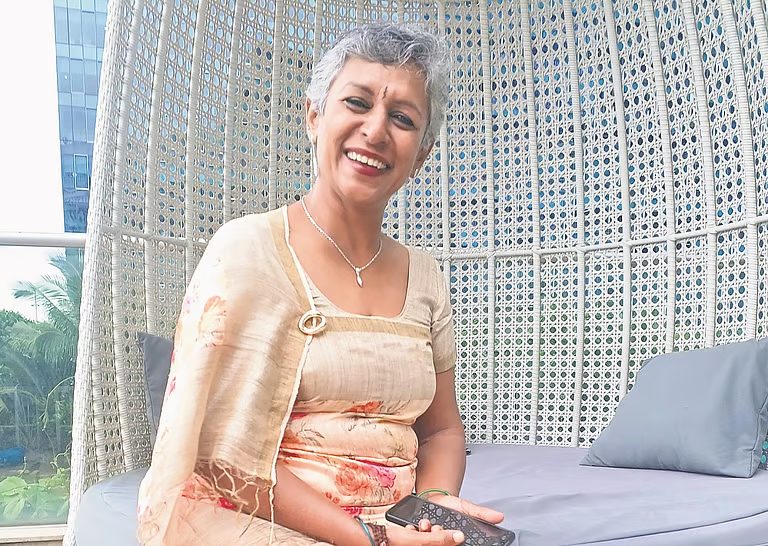
Chef Smitha Kuttayya

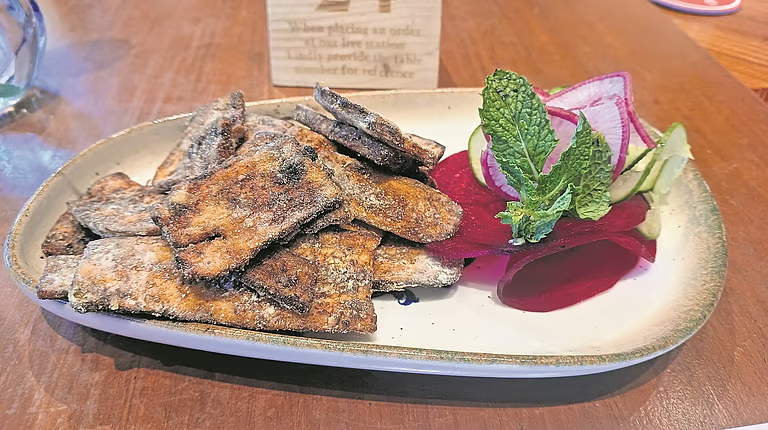
We started off with the Balekai Barthad, plantains marinated in kachampuli, shallow-fried and coated with rice flour. This dish was simply superb, with the right amount of sourness, crisp and texture. Its non-vegetarian counterpart, Meen Barthad, where the fish was marinated in kachampuli, chillies, and salt, was just as irresistible, with everyone going back for more. The Bollary Barthad, shallow-fried cucumber with spices and green chillies, was moderately spicy yet soothing. The Nallamalu Erchi and Koli Barthad — lamb and chicken fry respectively — stood out. The lamb, with subtle hints of cinnamon and cardamom, took you on a flavour ride. “Traditional Kodava cooking uses minimal oil for meat, relying on the lard instead. We also don’t favour overly spicy food, and because of our proximity to Kerala, we love using coconut; almost every dish has it,” Chef Smitha explained with a chuckle.

All the dishes were plated so professionally, but Chef Smitha revealed that this is the effect of modernity; traditional Kodava cuisine draws from its warrior culture, which prioritises bulk cooking for sustenance and togetherness. But then there are commonalities too — a staple loved across the southern states, the dosa appeared in its Kodava avatar: Neer Dosa. We had two versions: one filled with veg poriyal, the other with prawns marinated in kachampuli. Though quite full, we were treated to more of that famed Kodava hospitality.

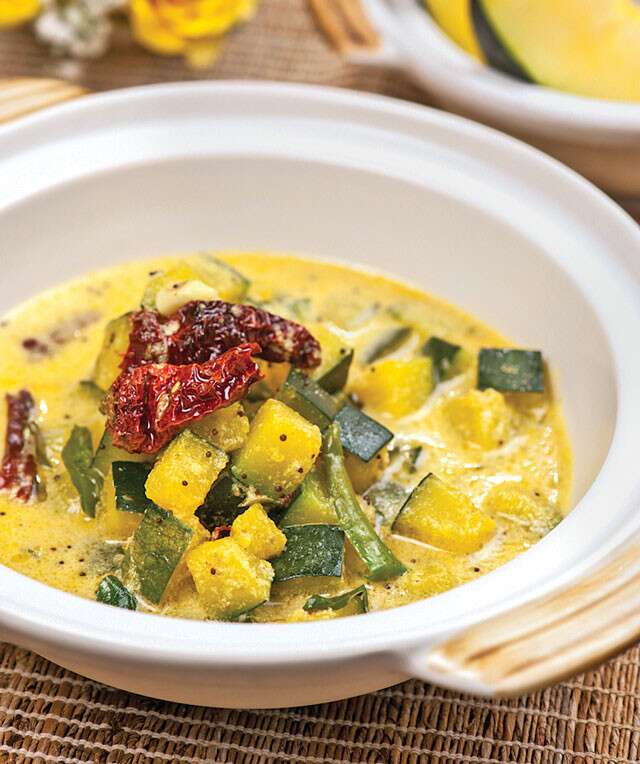
Chef Smitha brought out Otti (Kodava-style akki roti) and Kadambuttu (steamed rice balls) served with six curries. The Kootu, a mixed vegetable stew, matched the rainy Hyderabad mood perfectly, while the Kaad Mange, a tangy seasonal mango gravy, became an instant favourite. The spicy Meen Curry melted in the mouth, but the Koli Kanni, a chicken curry rich with coconut, cardamom, cloves, and pepper, stole the show. But no Kodava meal is complete without Pandi Curry or pork curry. While the other curries paired well with the Otti, the Pandi Curry was perfect with the Kadambuttu; the grainy rice balls with soft, flavourful pork created a textural celebration in the mouth. Among the vegetarian curries, the Baimbale Curry, made with tender fermented bamboo, burnt onions, and roasted rice, was the winner.

Now, both Hyderabadis and Kodavas love their rice, and so we had Erchi Pulav, a coconut-based lamb pulav which brought back the flavours of the hills, especially when paired with Mango Pachadi. The Vegetable Pulav was just as good. The spiciest dish was the Onkkerchi, or dry-shredded pork, due to the generous use of bird’s eye chilli.

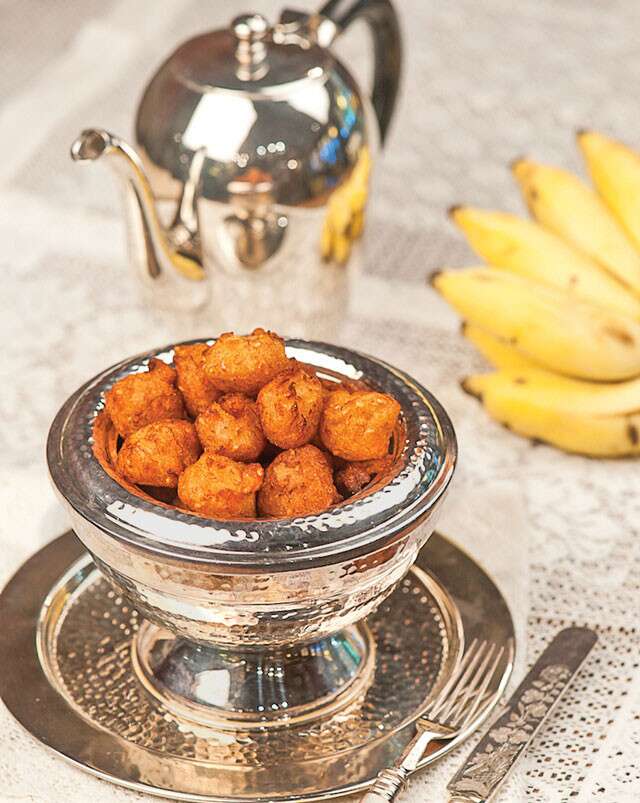
It left us craving something sweet and so we had Thambuttu, mashed ripe bananas blended with roasted rice flour. With a generous drizzle of ghee, this dish was traditional perfection. “A woman is central in the Kodava household. During Puthari, our harvest festival, we make Thambuttu and offer it first to the married daughters, praying for their well-being,” shared Chef Smitha. The meal concluded with Kaskase Payasa, a delicious poppy seed kheer that was so good, it was hard to stop at one helping.

We were 800 km away from Coorg that day, but after tucking into that delightful spread, we felt miles closer to the hills. 

source: http://www.newindianexpress.com / The New Indian Express / Home> Hyderabad / by Nitika Krishna (headline edited) / July 19th, 2025
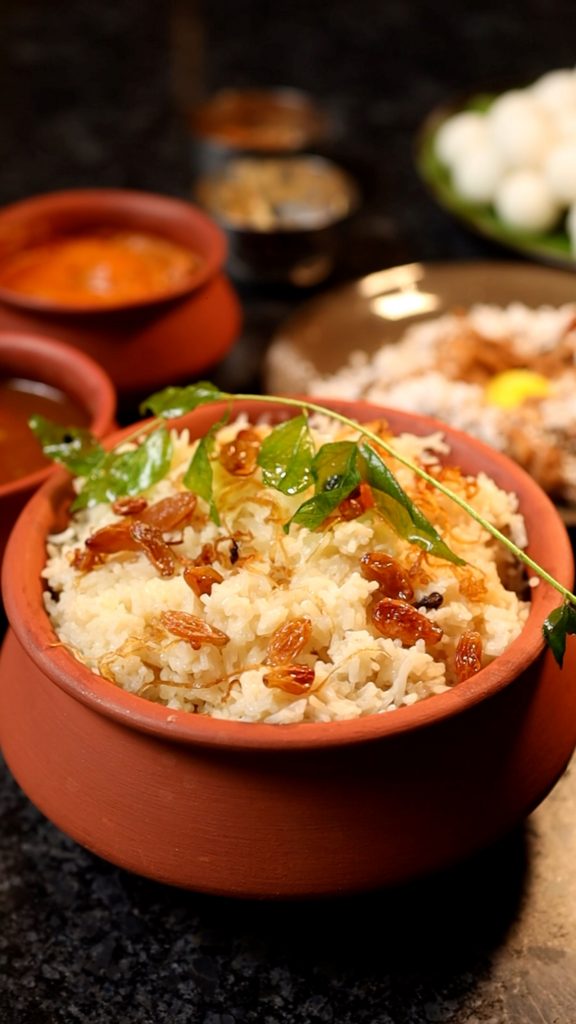
Discover the flavors of Kodava cuisine at Momo Cafe

Courtyard by Marriott Bengaluru Outer Ring Road invites you to a culinary journey through the hills of Coorg at their much-awaited Kodava Food Festival. Nestled in the picturesque landscapes of Karnataka, Coorg’s cuisine is a vibrant reflection of the region’s cultural richness and natural abundance.

Chefs Sugandha Rajappa and Rajani Kariappa, along with Executive Chef Vijay Bhandari, have meticulously crafted a menu that highlights the authentic tastes of Coorg. Their expertise is showcased in every dish, where traditional recipes meet contemporary flair, promising a delightful dining experience.

Treat yourself to a variety of Coorg’s signature dishes, such as the delicious Pandi Curry, Kodava Kummu Curry, Paputtu, and much more.

Each dish, prepared with locally sourced ingredients, captures the essence of Coorg’s rich culinary heritage. The festival guarantees a sensory feast, with aromatic spices and fresh ingredients taking center stage.

Gather with family, friends, or fellow food enthusiasts and visit Momo cafe to experience the essence of Coorg and create cherished dining memories.

For more details and reservations, please contact: +91 95136 53156 or 9513688331.

Where : Momo cafe , Courtyard by Marriott Bengaluru Outer Ring Road

When:  4-8th June

Lunch :  12:30 – 3:30 PM

Dinner :  7:00 PM – 11:00 PM

Price :  2200 INR plus taxes.

source: http://www.apnnews.com / APN News / Home> Life Style> Food & Beverages / June 07th, 2024

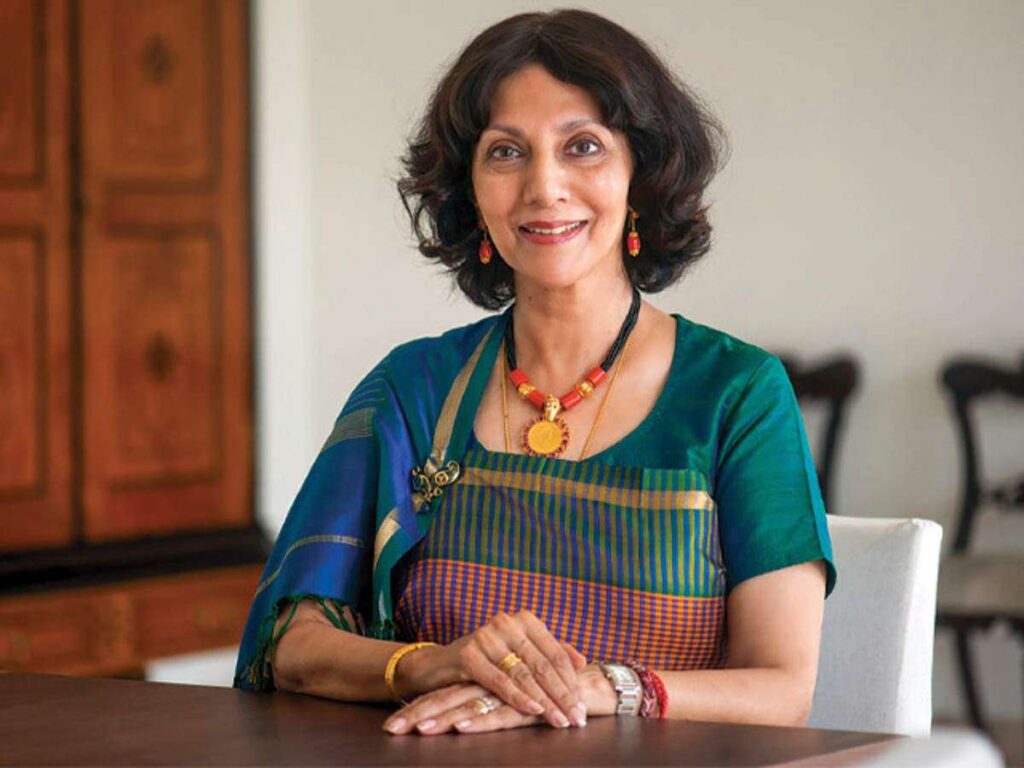
Meet The Custodian Of Kodava Food: Kaveri Ponnapa

With Indian cuisine in focus both globally and locally, there has never been a better time to chronicle Indian culinary culture in all its diversity. Rushina Munshaw Ghildiyal, herself the custodian of Uttarakhandi food, showcases 16 other women who are each committed to keeping their own culinary heritage alive. These are some of India’s most passionate culinary custodians, who are driving conversations around and exploration of regional, micro regional and community cuisines through media, books, TV, home delivery menus from their own home kitchens, and pop-ups at restaurants.

Kaveri Ponnapa 

Kodava Food
Kaveri Ponnapa is a Bengaluru-based independent writer on gastronomy and heritage, who is thought of as synonymous with Kodava culture and cuisine.

Avare Curry

Why We Think Kaveri Is A Culinary Custodian
While researching her first book The Vanishing Kodavas, Kaveri spent a significant amount of time in the villages of Kodagu (Coorg), connected with the local people, and got a first-hand experience of their lifestyle, which is still connected with the land. The Vanishing Kodavas is acclaimed as a cultural study of the Kodava people based on 15 years of fieldwork documenting their history, customs, worship and cultural practices. Kaveri’s writings on these subjects have been published in leading national and global publications. Her website The Vanishing Kodavas, blog The Coorg Table and its Facebook page continue to be unique rich resources for information and authentic recipes and are followed by audiences from across India and the globe including the Kodava diaspora, as well as people fascinated by the unique cuisine of this small community. Her current project, based on her observations of how a cuisine is born out of a particular landscape, culture and history, is a book documenting the culinary culture of the Kodava community from an anthropological and cultural perspective, enriched with information on local ingredients, practices and recipes including many that are no longer eaten or being forgotten. Kaveri has curated successful Kodava food festivals with ITC Windsor, been consultant to the Leela Palace and Taj MG Road Bengaluru on Kodava cuisine, and continues to train chefs and speak about the cuisine at hospitality institutions such as The Oberoi Centre for Learning and Development, Delhi.

Bale Nuruk

What We’ve Learned About Kodava Cuisine Through Kaveri
– Kachampuli is a souring and thickening agent indispensable to Kodava cuisine. Every kitchen will have a bottle or three of this dark, tart vinegar – made for centuries from the ripe fruits of the Garcinia gummi gutta tree, indigenous to Kodagu – stored away. It is a signature flavour in all the classic Coorg dishes.


– Rice is central to Coorg cuisine and used in many forms. Tari is washed, dried and hand-pounded rice that breaks down roughly into three to four bits and is used to make all the Coorg puttusAkki podi is finely-powdered rice, used to make rice rotis and batters for some fried sweets.
– 

Kartha masala, or black masala, is a signature spice blend made of slowly dry roasted, ground spices that lends a characteristic flavour to many classic recipes. The basic ingredients of cumin, mustard seeds, black peppercorns and fenugreek seeds are roasted slowly to a coffee-brown colour, powdered and used in curries. A few other spices might be used too, depending on the recipe.

Access Kaveri’s Wealth Of Knowledge
Website: kaveriponnapa.com/category/the-coorg-table/; thevanishingkodavas.com
Facebook: The Coorg Table, Kaveri Ponnapa
Instagram: @kaverikamb
Twitter: KaveriPonnapa

Images: Kaveri Ponnapa

source: http://www.femina.in / Femina.in / Home> Trending> Achievers / by Femina Food / July 22nd, 2023