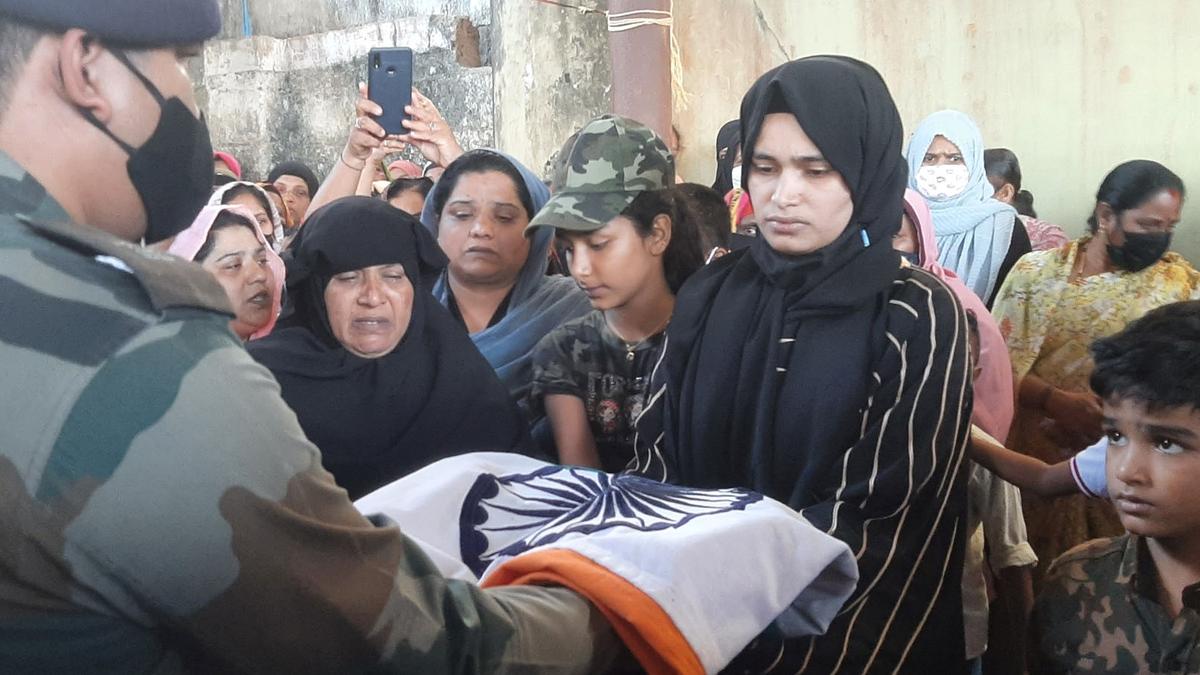
Army personnel handing over the tricolour to the wife of Hawaldar Althaf Ahmed, who died in Kashmir on February 22. | Photo Credit: Special Arrangemen
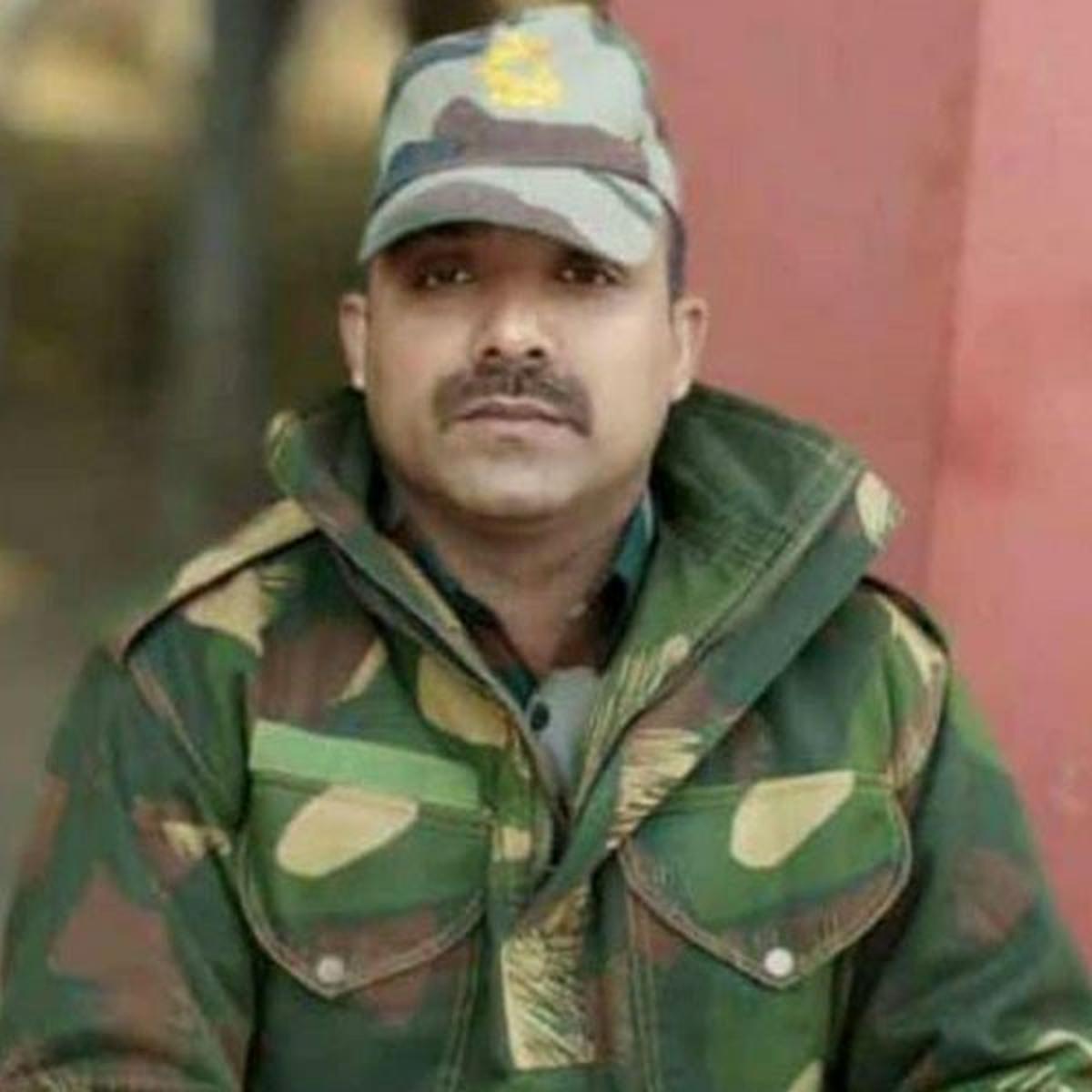
Althaf Ahmed | Photo Credit: Special Arrangement
The last rites of 37-year-old Indian Army Hawildar Althaf Ahmed, who died in a blizzard while on duty in Kashmir, were performed in his native in Meenupete in Kodagu district’s Virajpet taluk with state honours on Saturday.
The body of Althaf Ahmed, who had died on February 22, arrived in his native in Kodagu early on Saturday as its departure by air from Srinagar was delayed owing to bad weather. The body was kept at Eidgah Maidan in Meenupete for the public to pay their last respects before it was laid to rest at the burial ground as per Islamic rituals.
Virajpet MLA K.G. Bopaiah, MLCs Suja Kushalappa and Veena Achaiah, besides Deputy Commissioner B.C. Satish, Kodagu Superintendent of Police M.A. Aiyappa and other senior officials of the district administration were among the large number of people, who paid their last respects.
According to sources, Althaf Ahmed grew up in Meenupete and completed his SSLC in St Anne’s School in Virajpet and Pre University Education at the Virajpet Government Junior College. He later joined the Army Ordnance Corps (AOC) regiment. He had been serving the Army in various places since the last 19 years.
While guarding the border in Kashmir, Althaf Ahmed was caught in a blizzard on February 22 and died.
After the ceremonial gun salute during the funeral of the martyred solider, Army personnel handed over handed over the tricolour that draped Althaf Ahmed’s body and his uniform to his wife and two children. He leaves behind his mother, wife, a son and a daughter.
source: http://www.thehindu.com / The Hindu / Home> News> India> Karnataka / by Special Correspondent / February 26th, 2022
There’s more to Coorg than the coffee plantations, resorts and mountains shrouded in mist.
There are no Café Coffee Days or Baristas in the coffee county. Instead, vistas of stumped coffee plants growing in the shade of benevolent native trees stretch through silence broken by whistling wind and falling yet uplifting waterfalls. Wild elephants meander in the plantations in the day and fireflies fly in the plantations at night. Coorg is a country painted on a canvas and brought to life.
When you travel within India, you feel the truth of the cliché you’ve heard since childhood — India is many countries into one. How different are the people, their attires, aspirations, lives and even histories and humanities.
The bumpy, washed out road from Mangalore to Coorg changes its rough character drastically the moment it enters the Coorg district.
Perched on the Western Ghats of Karnataka, Coorg or Kodagu has gained its popularity in India in the recent years. She has claimed her place as a coffee plantation hill station, like her near and distant tea plantation cousins Kodaikanal, Ooty and Darjeeling. And with this claim numerous new resorts in the region have burgeoned, many of them located inside the coffee estates.
According to popular belief, coffee in India is rooted in a mystical beginning in the 17th century. The Muslim saint Baba Budan, returning from a pilgrimage, clandestinely brought along seven coffee seeds from Yemen (from where it was forbidden to take coffee seeds) and planted them in Chandragiri hills in Karnataka. These hills are now known as Baba Budan Giri. Like the seven skies and the seven rounds of Kabaa, the holy significance of number seven led him to carry seven seeds.
Kodavas are the main ethnic group of Coorg, carrying a rich farming and militia history. It is a culture that thrives on Nature, not industry. Paddy fields in the foothills and coffee plantations on the slopes, mainly around the district headquarter Madikeri, are the traditional and main source of livelihood.
What is different about the coffee country is not just the coffee, but guns. The Kodavas, being warriors in ancient times, worship arms. Guns are an important part of the festivals of this region. “Most families carry two or three guns,” says Biju, the co-owner of a coffee plantation that spreads over 400 acres. He continues with a glint in his eyes, talking about his passion, i.e., guns. “And yet it is one of the safest places to live in. The crime against women is quite rare and they are the main decision makers in many families.”
That is indeed reflected in the sex ratio where the number of females exceeds the number of males.
There are other ethnic communities and forest-dwelling hunter and gatherer tribes as well. Water is aplenty and the main river of the region is Cauvery. Coffee makes Coorg one of the richest districts of India. Sunil, the co-owner of a coffee plantation and The Porcupine Castle resort answers with a knowing grunt, when we inquire where we can find good coffee, “The coffee that you’re used to , is a mixture of different varieties of coffees.
And each one has a secret formulation, which the company doesn’t disclose. They just buy the raw coffee variety from us like Robusta and Arabica and process and mix it themselves.”
Nonetheless, the Indian coffee is supposed to be one of the finest in the world, grown fully in the shade of eucalyptus, vanilla and native evergreen and leguminous trees. The shade giving trees not only protect the coffee plants but also enrich the soil and prevent erosion. The exotic, full-bodied taste and aroma finds its way to your cup through intense labour and extraordinary care.
The coffee plantations are as multicultural and inclusive as the medley that is India. Pepper, cardamom, vanilla, a local variety of orange and bananas share the same home, drawing their daily supply of nutrients from the shared pool of coffee plantations.
The homesick British, who once inhabited the cool climes of Coorg, named it the Scotland of India. British architecture still stands strong in Madikeri and many tourists visit the same. Around 5 km away from Madikeri is Abbey Falls, a sight to behold, provided it’s not a public holiday.
There is Iruppu Falls too where you can actually go inside the water. An elephant camp of the forest department at Dubare is another tourist attraction and so is Nisargadhama, an island in Cauvery. For the religious, there is Talacauvery, the origin of Cauvery, with a Lord Brahma temple on the bank. For the adventurous, there are the Nagarhole National Park, and Brahmagiri, Talacauvery and Pushpagiri Wildlife Sanctuaries. You can hope to catch a glimpse of a tiger, gaur, dhole (wild dog), leopard or elephant that magnanimously let you pass through the privacy of their living space.
Ever wondered what we would do if a tiger or a guar or a dhole or a leopard enters the privacy of our home or our garden or our street or even our city?
But the Kodavas and the other ethnic groups and tribals of Coorg don’t mind them coming in to their plantations and passing by their villages.
They know better than us that the mountains and fields belong as much to a lonely elephant or a pack of dholes. If I were to settle in the coffee country, it won’t be only for the lush landscape or healthy sex ratio or rich culture; it will be for the forgotten pleasures of experiencing synergy with nature.
source: http://www.thehindu.com / The Hindu / Home> Todays Pages> Features> Metroplus / by Arefa Tehsin / May 18th, 2016
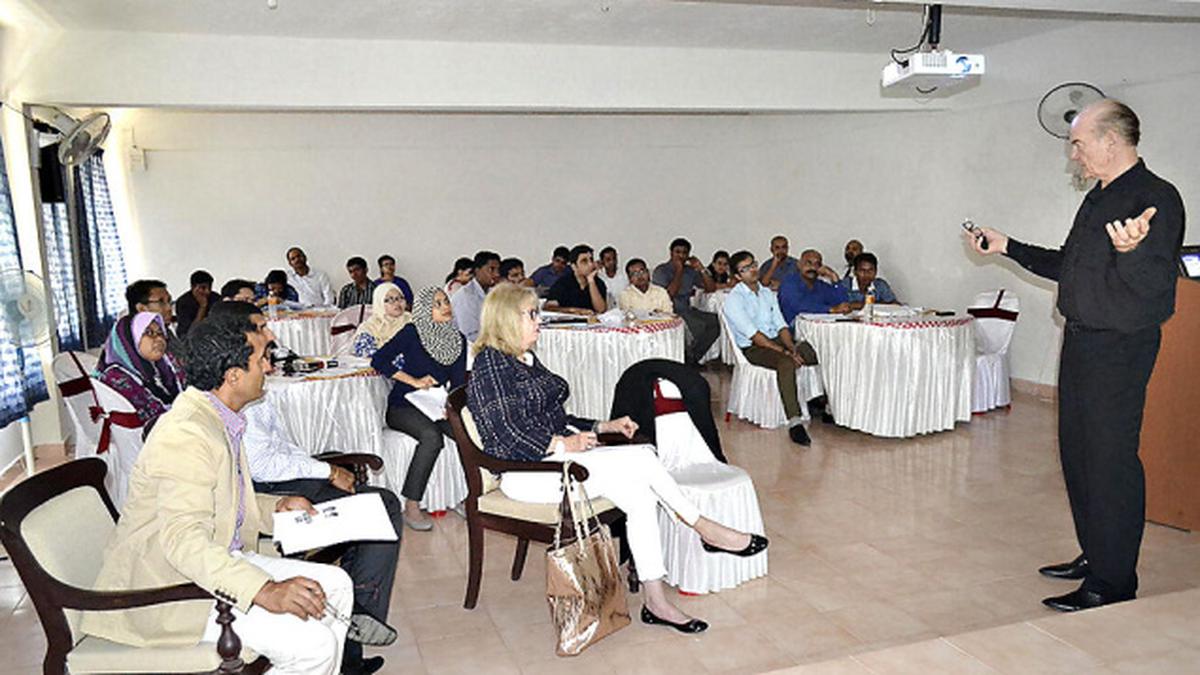
Delegates during the workshop at the Coorg Institute of Dental Sciences, Virajpet, Kodagu.
A four-day pan-global hands-on workshop on ‘Tip-edge plus orthodontic mechanics’ was inaugurated at the Department of Orthodontics and Dento-facial Orthopaedics in the Coorg Institute of Dental Sciences (CIDS), Virajpet, Kodagu, on Tuesday.
It was attended by 25 delegates from India, Malaysia, Sweden, and Germany.
International speakers and course directors, Urban Hagg, Director of Clinical Education, University of Copenhagen, Denmark, and Margareta Bendeus, multi-specialist practitioner in Landskrona, Sweden, were mentors at the workshop, according to information received from the CIDS here on Wednesday.
Three doctors from Afghanistan, Abdul Ghafar Gayur (plastic surgeon from Kabul), Habibullah Atif (general surgeon from Badakhshan) and Sebghatullah Natory (maxillofacial surgeon from Kunduz) performed 15 cleft surgeries at the cleft centre and the Department of Maxillofacial Surgery at the CIDS.
Getz Ehmann, maxillofacial surgeon from Hamburg, and Ulrike Lamle, cleft ENT surgeon from Berlin, were also present. Sunil Muddaiah, Dean, CIDS, addressed the gathering.
source: http://www.thehindu.com / The Hindu / Home> News> Cities> Bengaluru /by K Jeevan Chinnappa / February 19th, 2015
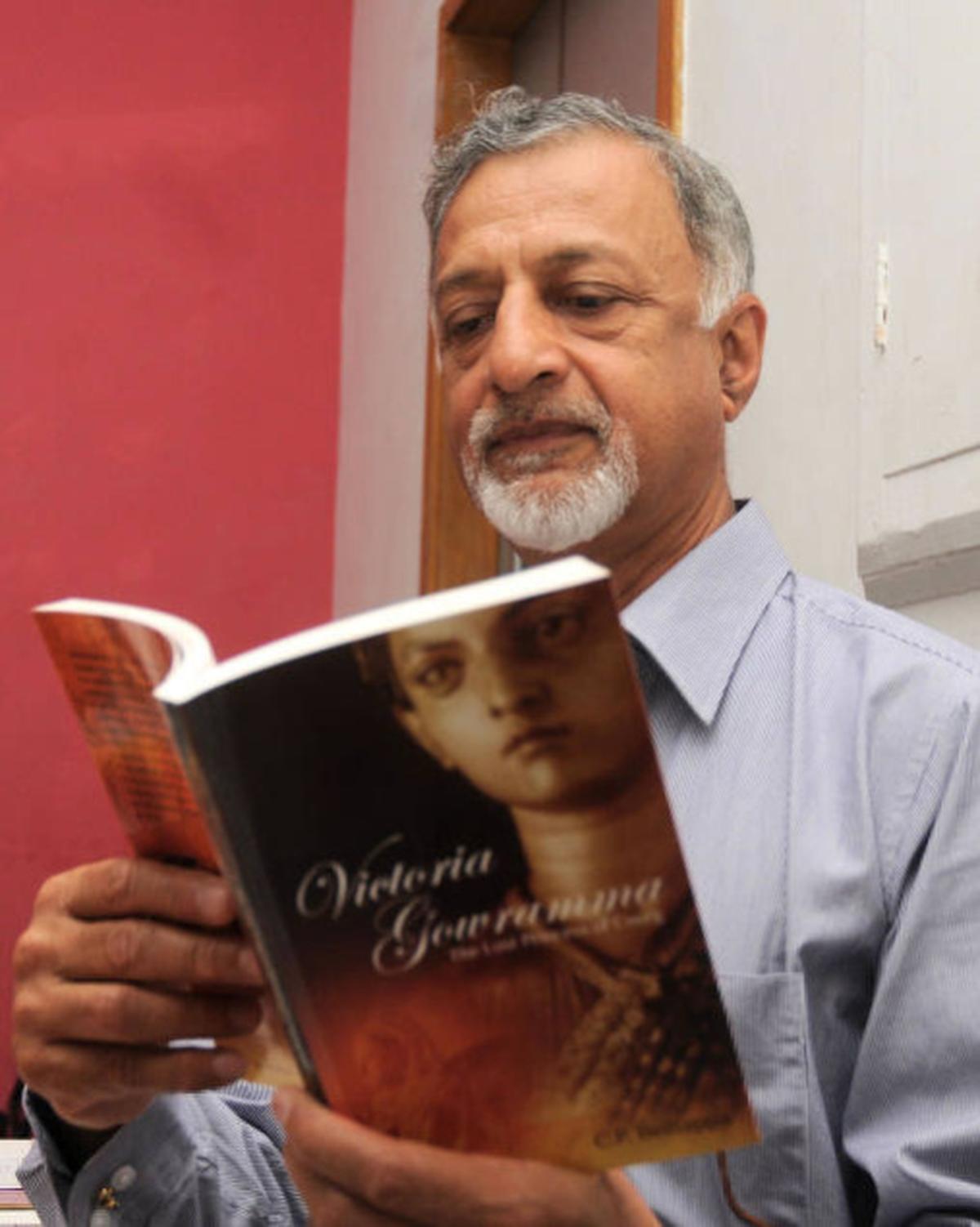
C.P. Belliappa’s A Slice of History: `Victoria Gowramma : The Lost Princess of Coorg’, brings to life the tragic tale of the princess from Coorg
A Slice of History: C.P.Belliappa’s `Victoria Gowramma : The Lost Princess of Coorg’. Photo: M. Vedhan
In a quiet corner of the Brompton Cemetery in London lies a 19th Century grave partially covered by undergrowth. The graceful stone cross above it is slightly broken, but the epitaph composed by Queen Victoria can still be read: “Sacred to the memory of the Princess Victoria Gouramma (sic), daughter of the ex-Raja of Coorg…”
That’s where the strange and tragic tale of Victoria Gowramma, the princess from Coorg who was raised Christian and became Queen Victoria’s goddaughter, ended in 1864. But, her story has come to light again in all its fascinating detail, thanks to C.P. Belliappa’s rigorously researched book “Victoria Gowramma: The Lost Princess of Coorg”, which was recently launched in the city.
“Historical writings on Coorg — mostly gazetteers by the British who lived there during the 19th Century — mention the story of Gowramma and her father, the exiled Raja Veerarajendra, in a paragraph or two,” says Belliappa, author of “Tale of a Tiger’s Tail & Other Yarns from Coorg” and “Nuggets from Coorg History”. “But the details were never there, and I got more and more inquisitive.”
Accidental discovery
His big break came when he accidentally stumbled upon three books written in the 19th Century by people who knew both the Raja and his daughter.
“I was able to download them — for free! — from www.archive.org, where old books are digitised and uploaded,” he says. “They were authentic, first-hand accounts, and comprised 75 per cent of the information I needed.”
The rest he found from the digital archives of The Times, London — reports of court functions and events that contained all sorts of interesting titbits of information. .
“Victoria Gowramma…” traces the intriguing series of events surrounding the princess’ journey to England with her father in 1852, and her difficult and often lonely life there subsequently. The various threads include the exiled Raja’s attempts to reclaim the wealth the British took from him (his reason for taking Gowramma to England in the first place), and the grand plans by Queen Victoria to match-make between Gowramma and another young royal convert to Christianity, Maharaja Duleep Singh of Punjab.
“Queen Victoria believed that if two royals converted to Christianity were married, and their children were born Christian, it would encourage more of their subjects to convert,” says Belliappa. “What’s interesting is that although the plan didn’t work, the Queen continued to be fond of Gowramma to the very end.”
Power dynamics
The book, then, is more than just a portrait of a princess; it gives you a glimpse into the political and religious power dynamics of the time. With its wealth of primary sources, it’s a solid historical work, though Belliappa admits that he was very tempted to go the historical fiction route. “I gave it a lot of thought, and decided finally that the facts themselves were so sensational that they didn’t need fictionalising,” he says.
Since the book’s release in England last year, the author has uncovered even more interesting nuggets of information — for instance, after a bit of detective work, he’s discovered that direct descendants of Gowramma live on to this day in Australia. “I have enough material to add at least an epilogue in future editions of the book,” he says. “It’s been a very exciting time.”
source: http://www.thehindu.com / The Hindu / Home> Books / by Divya Kumari / March 04th, 2011
Padma Shri awardee Rani Machaiah, an exponent of the Ummathat folk dance of Kodagu, was chosen as the Coorg Person of the Year 2023 by a news and tourism portal.
According to the author and editor of the portal www.coorgtourisminfo.com P.T. Bopanna, Ms. Rani Machaiah’s selection was made on the basis of a poll conducted through the portal.
It may be mentioned here that the portal had chosen actor Rashmika Mandanna as the Coorg Person of the Year 2022.
In a statement here on Ms. Rani Machaiah’s selection for the year 2023, Mr. Bopanna said the Ummathat folk dance exponent was leading her troupe since 1984 and had trained thousands of students in the folk dance tradition in Kodagu.
Rani Machaiah had been presented with Padma Shri by President Droupadi Murmu in 2023. “Rani is known for teaching and popularising Ummathat, a traditional form of Kodagu danced by women dressed in red brocade saris draped in Kodava style and wearing traditional Kodava jewellery. They dance gracefully in circles around a lit pedestal lamp to the rhythm of hand-held brass cymbals, which they beat as they dance to the accompaniment of folk songs sung by two or more women. The dance is devoted to Goddess Kaveri (the river which takes its birth in Kodagu and is considered as their mother goddess by Kodavas). It is performed mostly during the harvest festival Puthari,” said a statement issued by Mr. Bopanna.
source: http://www.thehindu.com / The Hindu / Home> News> India> Karnataka / by The Hindu Bureau / January 04th, 2024
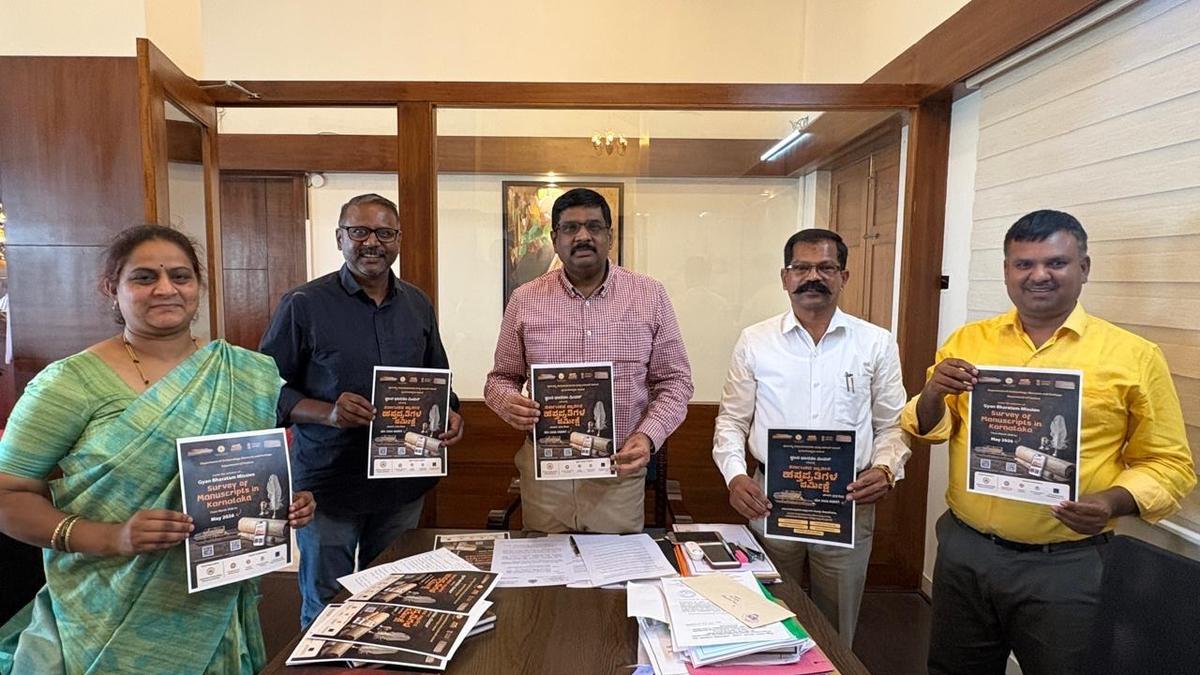
Deputy Commissioner S.J. Somashekhar releasing the posters made for the district-wide survey of ancient manuscripts under the State government’s Jnana Bharatham Mission in Madikeri on Friday. | Photo Credit: Special Arrangement
Kodagu Deputy Commissioner S.J. Somashekhar has directed officials to complete the district-wide survey of ancient manuscripts by the end of May under the State government’s Jnana Bharatham Mission.
Presiding over a preparatory meeting at his office on Friday, Mr. Somashekhar emphasised that manuscripts — handwritten on palm leaves, paper, and other materials — are invaluable repositories of history, literature, culture, and traditional knowledge, reflecting the intellectual wealth of past generations.
He instructed the Departments of Archaeology and Tourism to take immediate steps for the systematic collection, scientific preservation, and digitisation of manuscripts. Highlighting Kodagu’s rich historical legacy, he said identifying and digitising rare manuscripts must be treated as a priority.
“Manuscripts serve as vital sources to understand social and cultural history. They contain rare knowledge on epics, poetry, grammar, Ayurveda, and philosophy,” he said, adding that they also help decode ancient scripts and linguistic styles.
Mr. Somashekhar called for involving historians, literary enthusiasts, and senior citizens in identifying manuscripts. He suggested that documents be collected for scanning and safely returned to their owners to build trust and encourage wider participation.
He said the State government, in its 2025–26 Budget, has announced the Jnana Bharatham Mission as a flagship initiative aimed at reviving and safeguarding manuscript heritage through surveys, documentation, and digitisation. The government has urged citizens to upload details of manuscripts available in their homes or nearby locations using the Jnana Bharatham app or share information with district survey teams.
Archaeology Department Curator Rekha said manuscripts are likely to be found in temples such as Omkareshwara and Paloor Mahalingeshwara, as well as in mutts, traditional ainmanes (ancestral homes), and storage repositories.
Project District Coordinator Karthikeyan said the survey is being conducted across Karnataka in coordination with the Departments of Archaeology, Museums and Heritage, and Tourism. He added that creating a comprehensive digital archive would help preserve the district’s unique historical identity for future generations.
Field Marshal K.M. Cariappa College principal Raghav, Tourism Department consultant Jatin and other officials were present.
source: http://www.thehindu.com / The Hindu / Home> News> India> Karnataka / by The Hindu Bureau / April 11th, 2026
Kodagu Deputy Commissioner S.J. Somashekar said sincere efforts will be made to provide land to set up canteens, community halls, and hospitals for ex-servicemen in the district.
After listening to the grievances of ex-servicemen and their dependents at the Deputy Commissioner’s office in Madikeri on Tuesday, Mr. Somashekar said land will be reserved on a priority basis for constructing community halls for ex-servicemen in Madikeri and Ponnampet.
After ex-serviceman Chengappa informed the Deputy Commissioner that many ex-servicemen are sustaining themselves by cultivating small plots near their villages, requesting the authorities to formalise ownership of this land, Mr. Somashekar stated that he would look into the possibility of converting the land, up to one or two acres, cultivated by the ex-servicemen into their names and issuing them a Record of Rights, Tenancy and Crops (RTC). He assured that appropriate action would be taken in accordance with the rules.
A request would also be submitted to the government to relax the regulations regarding land allotment to ex-servicemen, he said.
When Mr. Chengappa brought to his notice that over 50% of ex-servicemen and their dependents do not own houses, the Deputy Commissioner said the issue of providing sites and houses to ex-servicemen will be examined and brought to the attention of the government.
“Discussions will also be held with concerned authorities to reserve sites for ex-servicemen in private layouts developed across the district,” Mr. Somashekar said.
Responding to a suggestion from the president of Kodagu District Ex-Servicemen’s Association, Major General (Retd.) B.A. Cariappa, the Deputy Commissioner, said ex-servicemen would henceforth be invited to the birth anniversary programmes of Field Marshal K.M. Cariappa and General K.S. Thimaiah.
In addition, to effectively address the grievances of ex-servicemen, he instructed that hearings take place at the taluk level in the presence of Assistant Commissioners, and that an ex-servicemen’s adalat be organised every two months by the respective Tahsildars.
The Deputy Commissioner also assured that individual land-related files would be examined in accordance with rules to ensure justice.
He directed officials to ensure that ex-servicemen visiting government offices be treated with dignity and respect.
Earlier, Mr. Cariappa, representing the District Ex-Servicemen’s Association, said ex-servicemen have served in high-altitude regions like Jammu and Kashmir and they must be provided at least basic facilities like hospitals and canteens, besides community halls.
An ex-serviceman shared a personal grievance and said his family members had denied him his rightful share of ancestral property during his service and requested the authorities to intervene so that he could receive his rightful share. Pointing out that he was currently eking out a living working as a security guard in Mysuru and Bengaluru, he appealed to the Deputy Commissioner to intervene.
source: http://www.thehindu.com / The Hindu / Home> News> India> Karnataka / by The Hindu Bureau / April 18th, 2026
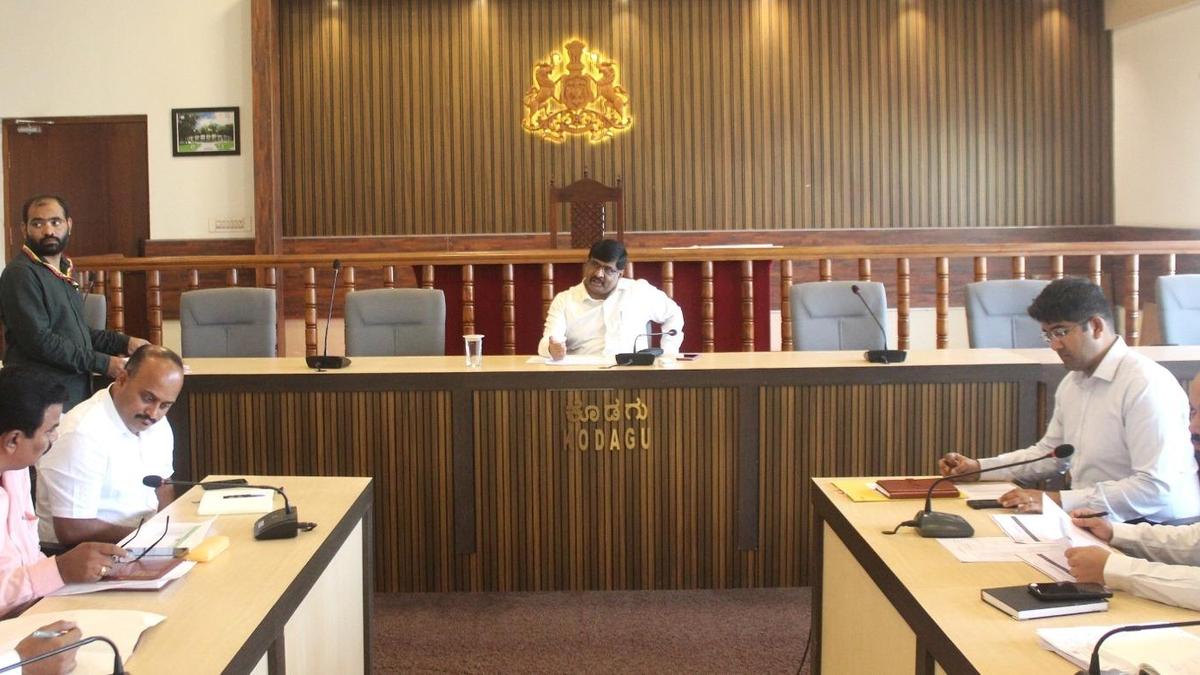
Deputy Commissioner S.J. Somashekar chairing a review meeting on the progress of door-to-door survey in the ongoing Census 2027, in Kodagu district on Monday. | Photo Credit: SPECIAL ARRANGEMENT
Deputy Commissioner of Kodagu S.J. Somashekar reviewed the progress of the door-to-door survey as part of the ongoing Census 2027 and directed the officials to expedite the process.
Chairing a meeting in Madikeri on Monday, Mr. Somashekar said Kodagu district currently stood in the 15th place in the State in terms of progress in the ongoing houselisting enumeration and directed the officials to achieve substantial progress by the end of this month.
The Tahsildars, Taluk Panchayat Executive Officers, Block Education Officers, and Chief Officers of municipalities and town panchayats, who have been designated as nodal officers, were instructed to ensure that no household is left out within their respective jurisdictions.
Meanwhile, 999 enumerators have already been deployed across the district for the house-to-house census work, including 187 in Madikeri taluk, 61 in Madikeri town, 186 in Somwarpet taluk, 12 in Somwarpet town panchayat, 133 in Virajpet taluk, 36 in Virajpet municipality, 161 in Ponnampet taluk, 19 in Ponnampet town panchayat and 158 in Kushalnagar taluk and 46 in Kushalnagar municipality.
Additionally, 172 personnel have been assigned as Census supervisors, and about 10% of enumerators have been kept in reserve, the Deputy Commissioner said.
During the comprehensive review of the progress of house enumeration in Madikeri, Somwarpet, Kushalnagar, Virajpet, and Ponnampet taluks, the officials briefed the meeting on the status of house mapping, numbering, and field mapping activities.
source: http://www.thehindu.com / The Hindu / Home> News>India / by The Hindu Bureau / April 28th, 2026
Dhanyata M Poovaiah writes about Kodagu’s paddy varieties, festivals linked to the agrarian calendar and traditional rice dishes.
Vasudha and Krishna (in purple) varieties of paddy being cultivated near Ponnampet in Kodagu. Photo by Ravi Shankar
Kodagu today is synonymous with its lush, aromatic coffee plantations. But long before coffee arrived with the British, the region’s identity was rooted in paddy cultivation.
Kodagu transitioned from paddy to coffee only in the late 20th century, as coffee plantations turned to be more profitable and less labour-intensive. In recent years, real estate development has resulted in the conversion of paddy fields into non-agricultural land.
Yet, rice continues to be the staple diet in Kodagu and remains an important crop, cultivated in around 14,000 hectares in the district. Consequently, the cultural life of the region is intertwined with the various phases of paddy cultivation.
The Kodava New Year, Edmyar Ondh, celebrated in Mid-April, marks the beginning of the paddy cycle. The year is ushered in with ploughing of the paddy fields. During Kodava Kakkada, the peak monsoon month from mid-July to mid-August, paddy saplings are transplanted. On the 18th day of Kakkada, known as Kakkada Padhinett, maddh payasa, a special dessert is prepared from a plant locally called maddh thoppu (medicinal plant). This plant (Justicia wynaadensis) is known to have several medicinal properties which helps boost immunity.
The Kailpodh festival, celebrated on September 3 every year, marks the completion of transplantation and offers a period to relax after the hard labour.
Puthari, celebrated in the Birchiyar month between November and December, marks the harvest of paddy.
“Since Kodagu is blessed with abundant rainfall, paddy cultivation is entirely rainfed and cultivated as a single-season Kharif crop in the lowlands,” says Dr Prashantha C, Assistant Professor of Entomology and Head of the Agricultural and Horticultural Research Station, Ponnampet.
“From December to March, the focus shifts to coffee harvesting and processing,” he adds.
Local paddy varieties, known for their flavour and aroma, are largely grown for self-consumption. “High-yielding varieties meant for commercial use are declining due to reduced returns,” adds Dr Prashantha.
Labour shortages and increasing human-animal conflict have also discouraged farmers from continuing paddy cultivation.
However, Kodagu is still home to several varieties of paddy. Among the indigenous varieties are Jeerige Sanna, BKB – developed by agriculturist Baduvanda K Belliappa, Biliya, Rajamudi, Doddi and Boliya, while popular high-yielding varieties include Tunga, KPR-1, Athira, BR-2655, MTU 1001 and IR 64.
“Indigenous varieties such as BKB and Doddi grow up to 3.5 feet in height and are a good source of fodder for the cattle. However, they are low-yielding and require 150 days to mature. High-yielding hybrid varieties such as Athira grow 2 to 2.5 ft and have less straw. These varieties mature at 120 days and usually require mechanical harvesters,” says Koniyanda Sanju Somaiah, an agriculturist.
Varietal conservation
According to seed conservationist Ravi Shankar B P, paddy varieties from any part of the country can be grown in Kodagu. Only the yield may vary. He has conserved over 100 varieties of paddy from across the world including the Kala Namak (Buddha rice) from Uttar Pradesh and Magic rice (Komal Saul) from Assam, and wishes to preserve several other unique rice varieties.
“With proper techniques, yields of paddy can be increased fivefold. This involves proper water management and in-situ green manuring. Under this method of manuring, short duration leguminous crops such as cowpea are grown in the field and are incorporated into the soil after sufficient growth, before the paddy saplings are transplanted. This improves soil fertility and its physical, chemical and biological properties, while reducing the need for external manure,” says Ravi Shankar.
Local varieties yield around 10–15 quintals per acre, while high-yielding varieties can produce 25–33 quintals per acre.
Paddy cultivation plays a vital ecological role as well. Waterlogged fields can help recharge groundwater, depending on soil and local conditions.
“The rise in the water table ensures that lakes, ponds and streams do not go dry even during summer” says Dr Veerendra K V, Scientist (Plant Protection) at Krishi Vigyan Kendra, Gonikoppal.
“Government schemes currently support farmers through subsidies on machinery, paddy seeds, pesticides, bio-fertilisers and green manuring crop seeds. However, increasing the minimum support price and offering other monetary benefits for cultivators will ensure increased paddy cultivation in the region,” he adds.
At present, procurement delays and storage challenges continue to deter farmers. While harvesting takes place in November–December, procurement happens only in February–March.
On the table
According to chef Naren Thimmaiah, Kodavas traditionally consumed pukkalakki (boiled rice) as their staple. Jeerige Sanna was used to prepare pulav and ghee rice on special occasions. However, since the mid-20th century, the white BKB variety has been widely adopted in the region. BKB and Jeerige Sanna varieties are also used to prepare otti, noolputt, kadambutt, paputt and thaliyaputt and payasa.
“In Kodava cuisine, pairing the right curry with the main rice-based dish is essential,” adds Naren.
Naada mann, naada kool’ (my soil, my rice) is a popular saying in Kodagu, reflecting the belief that instead of abandoning rice cultivation, each family should maintain at least a small patch. “For this, government support is crucial,” notes Ravi Shankar.
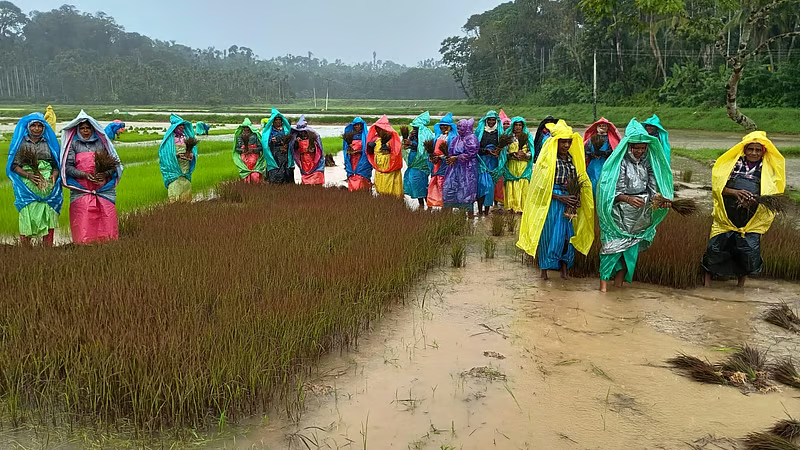
Women workers bundle paddy seedlings for transplantation in a field near Ponnampet in Kodagu. Photos by Ravi Shankar
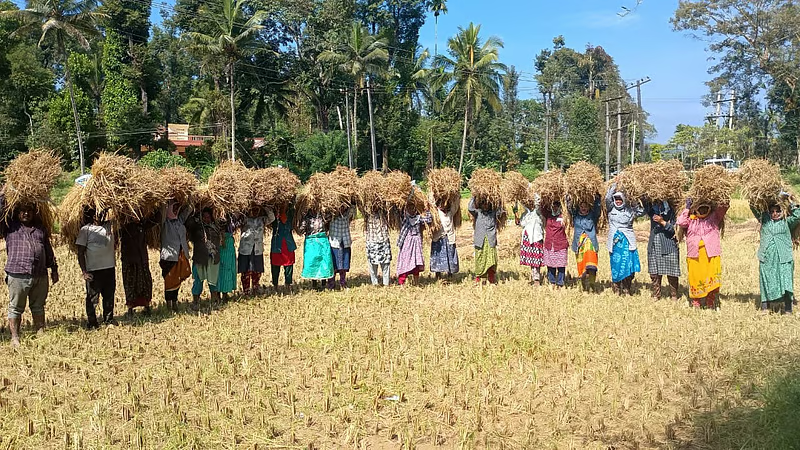
Workers with harvested paddy. Photo by Ravi Shankar
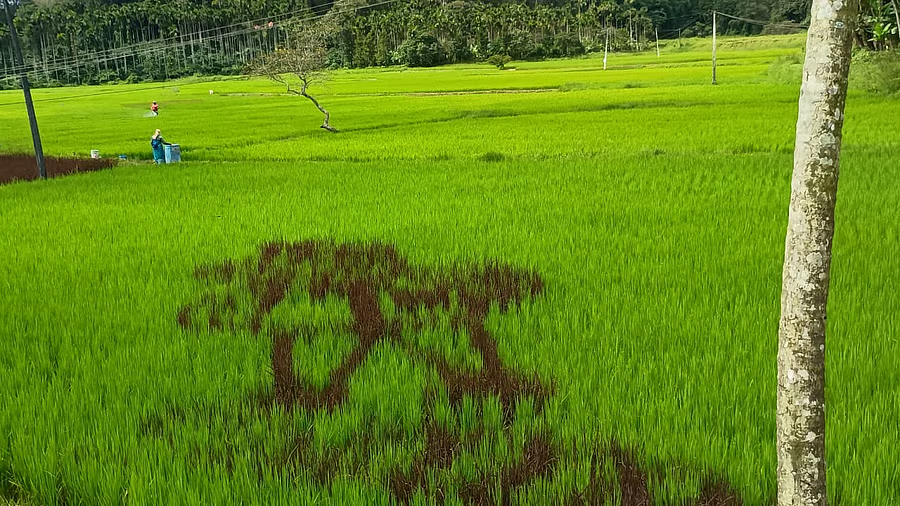
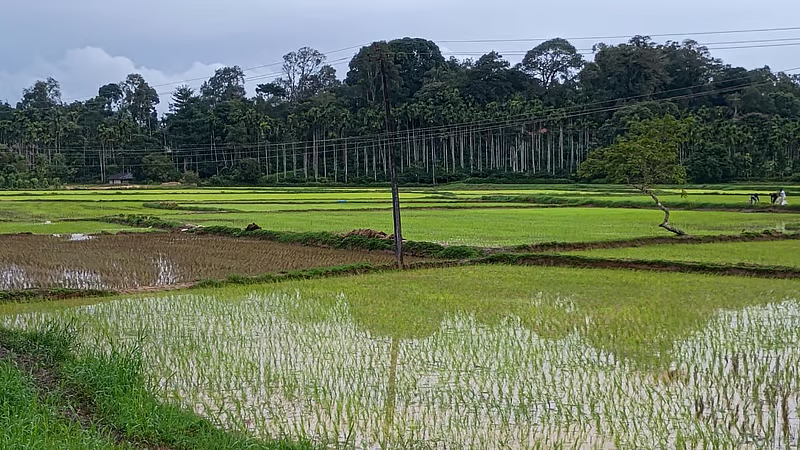
A paddy field near Ponnampet. Photo by Ravi Shankar
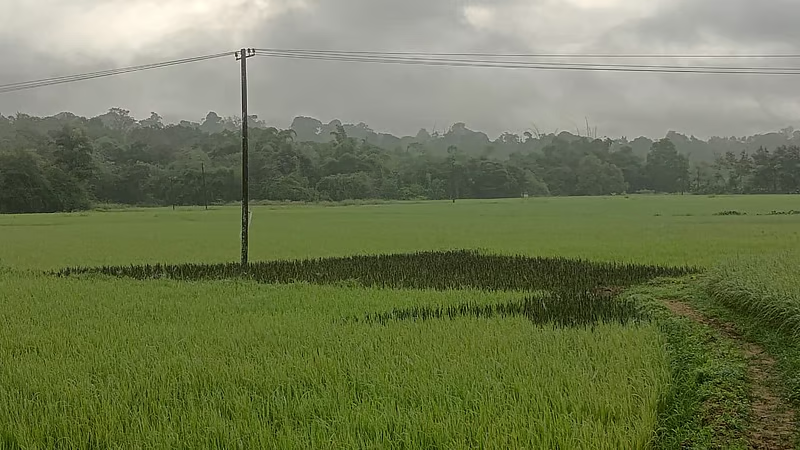
A paddy field near Ponnampet. Photo by Ravi Shankar
source: www.deccanherald.com / Deccan Herald / Home> India>Karnataka / by Dhanyata M Poovaiah / April 09th, 2026
WELCOME. If you like what you see "SUBSCRIBE via EMAIL" to receive FREE regular UPDATES.
Read More »