Category Archives: Travel, Tourism & Homestays (wef. Oct 03rd, 2021)

Whitewater rafting in Karnataka: Experts urge enforcing safety protocols

While Karnataka is all geared up to welcome whitewater rafting enthusiasts in the monsoon, it is important that adventure activities are conducted in a way that minimises risks and yet provides the benefits of participation, say experts.

Enjoying whitewater rafting in Dandeli, Karnataka / Jungle Lodges & Resorts

With the monsoon in full swing, Karnataka is all geared up to welcome tourists and adventure enthusiasts to experience the thrills of whitewater rafting. As you raft through gushing waters surrounded by dense jungles, you are transported into a world of roaring rapids with sprays of pristine white water and treated to glimpses of wildlife on some stretches of the river.

Adrenaline junkies can head to the stretch adjacent to the Dubare Elephant Camp in Kodagu on the River Cauvery and some stretches of the Kali river at Dandeli. The highlight of the season is the 1.5-hour whitewater rafting adventure on the roaring Barapole river, which originates in the Brahmagiri hills and flows towards the Arabian Sea. Rafting enthusiasts can navigate a 4.5 km stretch of the river featuring four iconic rapids with thrilling sections reaching up to Class 4 difficulty level for a duration of four months.

Another rafting destination is Bheemeshwari set on the banks of the Cauvery in the Cauvery Wildlife Sanctuary. Plans are on the anvil to resume rafting in Seethanadi, a swift Western Ghats river known for its challenging rapids and stunning scenery during the monsoon. The run on this powerful river passes through thick evergreen forests that form part of the Western Ghats in the Someshwara Wildlife Sanctuary and the Kudremukh National Park. Rafting on this brilliant 22 km stretch takes four hours to complete.

Streamlining rafting operations

The recently constituted River Rafting Management and Monitoring Committee of Kodagu district has stressed the need for enforcing stringent safety protocols to prevent mishaps during this high-risk adventure activity. The committee has urged all rafting operators in Kodagu district to compulsorily obtain and renew the fitness certificates for their rafts before launching any water-based adventure activity.

The mandatory certification, which must be renewed annually, is issued by the General Thimayya National Academy of Adventure (GETHNAA), a government of Karnataka enterprise for the promotion of adventure sports in the state.

“It is important that adventure activities are conducted in a way that minimises risks and yet provides the benefits of participation. Karnataka Tourism has laid down some guidelines that include obtaining necessary licenses and certifications from relevant authorities and ensuring compliance with safety standards,” says Major General (retired) MN Devaya, advisor to GETHNAA.

Listing the items that are essential for rafting, he adds, “Firmly secured life jackets, crash helmets, rescue floats with unreeling nylon lines, first-aid emergency kit, detailed instructions to the rafters, and an attendant kayak or raft for emergency assistance are mandatory for rafting activity. GETHNAA also has a training centre at Barapole.”

Explaining the measures taken by the committee, Venkat Raja, IAS, Deputy Commissioner (DC), Kodagu district, says, “The committee has taken up the responsibility of upgrading basic infrastructure at rafting sites to improve the tourist experience and enhance safety. Other measures included installation of shelters at the ticket counters, hand railing on the steps, changing rooms for guides, benches, provision of drinking water, toilets, CCTV surveillance, and directional signboards to rafting sites at strategic junctions.”

There are 47 raft operators functioning in the 7 km stretch in Dubare and four operators in the 4.5 km stretch in Barapole. “All the rafts are numbered for authenticity and easy identification. To prevent unhealthy competition, the pricing is flexible and monitored by the committee. Another encouraging factor is the involvement of the local populace, especially tribal residents, in the rafting operations,” adds the DC.

In Dandeli, Jungle Lodges & Resorts (JLR) is the only reliable organisation to conduct white water rafting. “The rafting operations that are currently suspended will resume after the monsoon in September/October. We have outsourced our rafting operations in the Kali river in Dandeli to Manasa Adventures, a professionally experienced adventure company. Strict safety guidelines are adhered to with professional river guides. We have perfected our standing as a whitewater rafting destination with highly qualified river guides and proper equipment,” says Prashanth Shankhinamath, IFS, Managing Director, JLR.

Need for stringent monitoring

Noting that there are many unauthorised rafting operators in Dandeli, Vaibhav Kamat of Jungle County, Dandeli, says, “This has led to protocol breach, which raises concerns over safety. As there is a mad rush during weekends, some of the operators overload the rafts, flouting all safety norms. Crowd control is also woefully lacking and overcrowding can lead to accidents. Some operators send visitors into rafts without safety gear such as life-jackets as they do not have the professional knowledge to operate the services. So there is a dire need for the state administration to monitor these operations.”

Urging a crackdown on illegal operators, he adds, “The safety standards and procedures followed by rafting organisations, including the availability of qualified guides and proper equipment, should be monitored. Action should be initiated against operators for violations. The permission process for raft owners should also be made more stringent.”

It is high time that Karnataka Tourism conducted a safety audit of all the river rafting destinations in Karnataka. This will help identify potential hazards and deficiencies in safety protocols. A social audit should also be conducted to examine the impact of rafting activities on local communities and the environment. This includes assessing benefits like opportunities for locals as well as potential negative impact such as environmental damage, social disruption, and cultural insensitivity. The impact of rafting on local businesses should be assessed.

An environmental impact study of rafting activities is imperative too to assess the impact on river banks, the river ecosystem, vegetation, and wildlife habitats. The effectiveness of waste management practices at rafting sites and the impact on the surrounding areas should be evaluated. The carrying capacity of rafting destinations and whether tourism is being managed sustainably should be determined.

Susheela Nair is an independent food, travel and lifestyle writer and photographer contributing articles, content and images to several national publications besides organising seminars and photo exhibitions. Her writings span a wide spectrum which also includes travel portals and guide books, brochures and coffee table books.

source: http://www.thenewsminute.com / The News Minute / Home> Karnataka / by Susheela Nair / edited by Vidya Sigamany / July 31st, 2025
Karnataka’s Kodagu district records over 95 lakh tourists in last two years

More than 95 lakh tourists visited the hilly district of Kodagu during the last two and a half years.

According to information provided by officials of the Tourism Department at a recent meeting of the Kodagu District Tourism Development Committee, the district had recorded 43.69 lakh tourists in 2023 and 45.72 lakh in 2024.

Sharing these numbers, Anita Bhaskar, Deputy Director of Tourism, Madikeri, said that Kodagu accounted for 23 out of the 778 tourist destinations identified under the Karnataka Tourism Policy 2020-26.

The tourist destinations in Kodagu included Raja Seat, Madikeri Fort, Abbey Falls, Mandalpatti, Harangi Reservoir, Mallalli Falls, Iruppu Falls, Dubare, Chikkahole, General Thimmayya Museum, and Nagarhole National Park among others.

A request had been made to shift the Talacauvery-Bhagamandala temples from the list of tourist sites to the list of spiritual destinations, the official said.

A total of 2,300 homestays in Kodagu district had been registered online and certified. This is in addition to the 150 hotels and resorts operational in the district, out of which 53 are officially registered on the Tourism Department’s portal.

Mandalpatti

The scenic peaks of Mandalpatti have been selected for development through Public Private Partnership (PPP) under the One District One Destination scheme.

The Galibeedu Gram Panchayat had approved the infrastructure development at Mandalpatti with an allocation of ₹50 lakh. However, as Mandalpatti falls under the Forest Department, cooperation of the Department has been sought for the repair of roads and other related works, the official said.

Referring to Chief Minister Siddaramaiah’s announcement on development of water sports and adventure tourism in his Budget speech of 2024-25 , the official said that Harangi reservoir will be open for such activities under Jungle Lodges and Resorts (JLR), while rafting licenses had been granted for Dubare in Kushalnagar and Barpuhole in Ponnampet.

Ms. Bhaskar said that the Tourism Department had sought approval from the Lake Development Authority to float tenders for rafting, kayaking, canoeing, wind surfing, jet skiing, and water zorbing at Honnamana Kere, a tourist destination in Somwarpet taluk of Kodagu district, which already has attractions like hills and caves.

Children’s mini train

Meanwhile, Deputy Commissioner of Kodagu Venkat Raja, who presided over the meeting, said steps will be taken to start a children’s mini train at Raja Seat after receiving a report from the engineers of South Western Railways.

He said that engineers from the Railways had already inspected the site and gathered details with regard to the proposal to start a children’s mini train.

source: http://www.thehindu.com / The Hindu / Home> News> India> Karnataka / by The Hindu Bureau / July 31st, 2025

Hotel Review: A Refreshing Break At Coorg Wild Walk By CGH Earth

Nestled in a coffee estate near Nagarhole’s Kutta Gate, Coorg Wild Walk by CGH Earth is a four-bedroom immersive retreat for those who seek nature’s quiet charm.

Coorg Wild Walk by CGH EarthSourced

My journey to Coorg Wild Walk by CGH Earth began in Delhi, which was sweltering at 40°C. A quick flight landed me in Bengaluru, and the city welcomed me with the gentlest breeze and cloudy skies as if someone had hit refresh on the weather. The shift was almost cinematic.

From there, we hit the road, a long, winding, 240-250 km stretch that slowly peeled away the layers of city life. Concrete gave way to curves of green, rustling leaves replaced honks, and the air grew dense with the smell of wet earth and roasted coffee. We took the Nagarhole route to Coorg, which was one of the best decisions of the trip. Tall, dense forests looked straight out of a rainforest documentary. Pine trees lined the roads like they were greeting you. The postcard views were only getting better as we drove further.

The monsoon was in full swing, with dramatic grey clouds rolling across the sky, casting flickering shadows over hills and plantations. Every turn brought a surprise: wild boars darting across the road, a family of deer grazing peacefully, birds fluttering overhead in sudden flashes of colour. I kept the car window down the entire time. Not even once did I feel like shutting the world out. It was more than just a ride; it was a slow transition into the wilderness.

The Stay: Coorg Wild Walk by CGH Earth

A glimpse of a room at Coorg Wild Walk by CGH EarthSourced

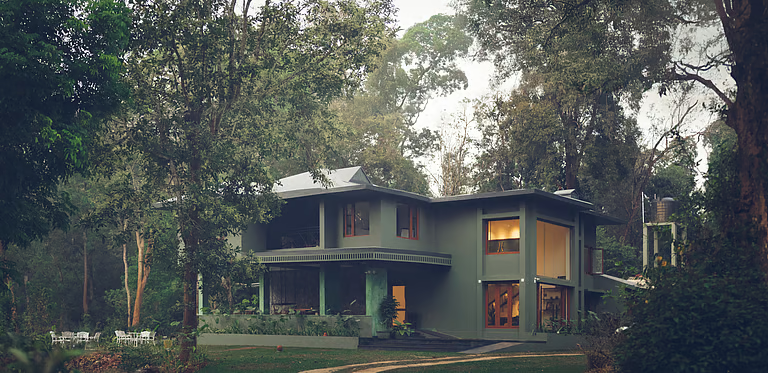
After nearly eight hours on the road, we arrived. But instead of exhaustion, I felt a sense of quietude. The welcome was warm and grounding — a chilled cultural drink in hand and a cool towel to freshen up. Even though we were right on the forest’s edge, it didn’t feel isolating. The villa is designed to blur the line between indoors and outdoors, with massive glass windows that open into dense greenery, open verandahs that double as dining spaces, and a living room so cosy you’ll find yourself curled up with a book without even trying.

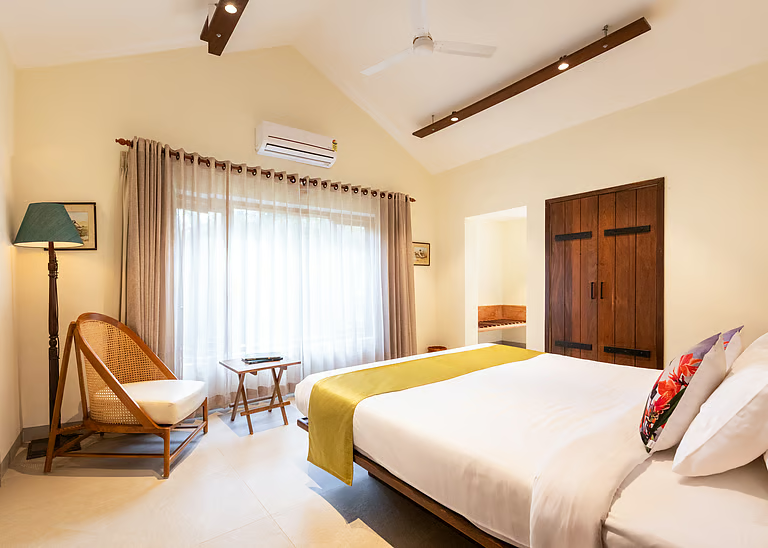
Inside, everything feels natural: reclaimed wood furniture, soft, warm lighting, bamboo accents, and handpicked Kodava artefacts that give the space a distinct cultural identity. My room had a large window with the best nature shots — I would sit there for hours with soft music playing, watching jackfruit trees sway, wildflowers bloom, and coffee plants ripple under the wind. Alarms didn’t mark mornings, but by the soft drip of rain, birds singing like lullabies, and the gentle rustle of animals waking up in the forest.

Property manager Lokesh Gowda told me about a leopard that once came and slept at the villa’s doorstep. “It’s his home, too,” he said with a chuckle. Elephants sometimes break through the electric fence at night. “Midnight feasts,” he added casually. Equal parts scary and fascinating, but mostly just humbling.

Dining At Coorg Wild Walk by CGH Earth

Enjoy a meal in the lap of nature at Coorg Wild Walk by CGH EarthSource

If the surroundings calmed my soul, the food healed everything else. Dinner on day one was like coming home to a table laid out by someone who knows exactly what comfort tastes like. Sitting down to a very inviting plate, it pulled me in before the first bite.

There was a crispy Aloo Gobhi Fry that had the perfect crunch and spice, a tangy Pineapple Curry that was equal parts sweet and sour with the fragrance of tempered mustard seeds dancing in the background, and a Spinach Curry that was silky, creamy, and comforting — like the green equivalent of a warm hug. The Coorg-style chicken was rich, peppery, and fell off the bone, while the mutton was slow-cooked till it melted with every bite. And don’t even get me started on the buttery carrot soup; it was thick, velvety, and carried this earthy sweetness that made me smile mid-sip.

Breakfast the next morning was just as dreamy. A spread of fresh fruits, grilled tomatoes, eggs made to order, warm potato tikkis, and sausages sizzling on the side. But it was the local dishes that stole my heart. Kadambuttu, those soft rice balls, soaked up the curry like they were made for each other. Neer Dosas, light and lacy, melted in the mouth. And the Akki Roti, hearty and wholesome, had the flavour that only wood-fired griddles can bring. The grand finale was a warm bowl of Paruppu Payasam — moong dal, jaggery, coconut, and dry fruits, slow-cooked into a sweet, sticky heaven. It was so good that I didn’t know whether to eat it or frame it.

And the best part? All this while sitting outside, under a canopy of trees, with birdsong as your playlist and clouds moving above like nature’s screensaver.

Nearby Experiences

A glimpse of the property / Sourced

Of course, no trip to Coorg Wild Walk is complete without a proper safari. With the Kutta Gate of Nagarhole Tiger Reserve just 3 km away, I set out early one cold morning, jacketless (rookie mistake) but buzzing with excitement.

Nagarhole, or the Rajiv Gandhi National Park, is a massive 847.98 sq. km sprawl of protected jungle, part of the Nilgiri Biosphere Reserve. Its core zones are tiger territory, but the entire area is teeming with life. Our safari began at dawn with only a few jeeps ahead, which meant less noise and more chance to spot animals in their element.

As we rumbled deeper into the forest, the rain-soaked leaves shimmered, and mist clung to the tree trunks. We saw Chital, Sambar Deer, Barking Deer, and even a herd of elephants walking gracefully through the undergrowth. Bright peacocks called from the branches above, and the elusive Indian Giant Squirrel darted like a flash of rust-red through the canopy.

It happened when I had given up hope of a big cat sighting. I spotted a leopard. Calm, unbothered, regal. She walked slowly, elegantly, just a few feet from us. Our eyes met for a second, hers wild and ancient, mine wide with awe. It felt like a shared moment. No roars, no drama, just quiet understanding. The kind you remember long after the ride ends.

The Extras that Make It Whole.

CGH Earth ensures this isn’t just a place you stay. It’s a place you feel. From guided plantation walks where you get to understand the journey of coffee from bean to cup, to peaceful birdwatching sessions and barbecue nights under star-splashed skies, every day has something new to offer. The property is not for the rushed. It’s for those who want to listen more than they speak. For those who like slow mornings, long books, deep conversations, and wild silences. It’s a place where nature doesn’t just surround you — it includes you.

The Information | Coorg Wild Walk by CGH Earth

Address: K Badaga, Nanachi Estate, Kutta, Karnataka 571250

Tariff: Starts at INR 13,571 per night. This includes breakfast and Wi-Fi (excludes taxes). Please note that the prices vary from season to season.

How to reach Coorg?

Coorg is around a 6–7 hour drive from Kempegowda International Airport, Bengaluru. You can hire a taxi or take a private cab. Alternatively, you can fly into Mangalore International Airport (IXE) or Mysore Airport (MYQ). Mangalore is about 140–160 km away, while Mysore is closer, at around 120–130 km.

When is the best time to visit Coorg?

Coorg is a year-round destination. For pleasant, cool weather, visit between mid-November and mid-February. The monsoon months (June to September) transform Coorg into a lush green escape, but expect heavy rainfall and slower city life. Flooding may occur in certain areas, so plan accordingly.

For bookings and other details check their website: www.cghearth.com/coorgwildwalk/

source: http://www.outlooktraveller.com/ Outlook Traveller / Home> Stay> by Mithi Singh / July 01st, 2025

A Twisting Trail to Kodagu, aka Coorg

This post originally appeared on Murder Is Everywhere.

Has a place name caught your ear and not let it go? I have always felt that way about the region in Karnataka called Coorg. The name of the hill station is so unusual. It’s mysterious, while still being easy to remember.

This past January, I finally reached Coorg and learned that the name has roots in colonialism alone. In the 1830s, when the British deposed the local Raja, they swiftly annexed the land and renamed the place called Kodagu, which has civilization dating back to India’s Sangam period, 300 BCE.

The land known as Coorg was incorporated into the new state of Karnataka in 1956. Today, Kodagu is the district’s official name, but Coorg is what lots of people still say and write. The area is known for deep green mountains, coffee plantations, and people who are incredibly warm—and physically strong. The regional identity is defined by its minority indigenous community called the Kodava, people who may have originally come as Kurdish exiles from Iraq or with the military forces of Alexander the Great. To this day, the Kodavas are admired for their skills in hunting and military service.

We came from Mysore by car for a two-day visit. The first driving hour was easy on smooth roads. The last two hours were a stomach-testing, bumpy and twisty journey into the beautiful green hills.

When we got out of the car at the Coorg Wilderness Resort, I realized we had entered the coldest place I’d ever experienced in India, with temperatures in the fifties and sixties daytime. I wrapped up in my cashmere shawl and kept it on for the rest of the stay.

Monkeys were everywhere! The clever girl photographed below became our frenemy.  She waited near the suite till we were gone and then jumped down from the roof to our balcony and turned the handle of the closed door to go inside. Indoors, she located a closed can of almonds with a picture of the nuts on the can. She skillfully ripped off the metal lid, devoured the almonds and scampered through the suite, enjoying herself, until she was shooed out by the arriving cleaner. Even after the crime, she lingered near our door, giving cool stares that reminded Tony and me that she had rights to the place.

I’d seen the resort in brochures and online photographs and thought from its appearance that it was a renovated coffee plantation. My eyes had fooled me. The property was just a few years old but built in a convincingly traditional style and furnished with neo-Victorian furniture and textiles. Most rooms were a steep hill walk down from the reception building and hotels, but little electric carts whizzed about by young local drivers took care of any exhausting climbs, especially at night. The hotel buildings were painted cheerful red. Guest suites were almost all located up flights of stairs and had private balconies and terraces overlooking the rolling hills. At least part of my guess was correct: the vast lands included a small coffee plantation with beans being grown, roasted and shared with other properties in their group, the Paul John Hotels.

The food was extremely tasty, with most of the fare South Indian. Large buffet meals were included in most people’s room packages, but we found the hotel’s small restaurant that specialized in Kodava dishes, very enjoyable, both for the food and the company of local people. Local mushrooms, greens, and bamboo shoots were combined in curries that made an intriguing meal that seemed to taste of the mountains.

Hiking, swimming in a pool, visiting the hotel’s farm and learning about coffee production were all offered as activities. Most of the resorts’ clients were multigenerational Indian families. While climbing uphill on a hike to the lookout point shown above, I fell sharply and was worried my throbbing quadricep would prevent me from walking back downhill. One of the tourist families had chartered an all-terrain vehicle going along the same rough path and gave me a seat, for which I was extremely grateful. For the next eight days traveling in India, my bruised thigh slowly healed.

Fortunately, I was still mobile enough to walk short distances. In nearby Madikeri, Tony and I visited a fort dating from the early 1600s that, during British occupation of the early 1800s through 1947, was used for administration, as well as a small Anglican church. Strolling through this church, we studied a plaque engraved with names of British parishioners who’d left the paradise of Coorg to fight and ie in the World Wars. No longer used for services, the small Gothic building had become a museum of Indian history, with cases filled with local archaeological finds, many of them stone tablets and statues of Hindu and local deities.

One of India’s most distinguished military combat officers, General Kodendera Subayya Thimayya, came from a Kodava coffee plantation-owning family. The general, who was known in his youth as Dubbu to his family, became “Timmy” to the British and the outside world.

Gen. Thimayya studied at the Bishop Cotton boarding school in Bangalore, the Prince of Wales Royal Indian Military College, and finally at the Royal Military College in Sandhurst, where he was one of only six Indian cadets. During World War II, Timmy was the only Indian who commanded an Infantry brigade; after the British left, he rose in the Indian Army, becoming the 3rd Chief of the Army Staff of the Indian Army from 1957 to 1961. He retired and then served as Commander of the United Nations Peace Keeping Force in Cyprus, where he died of heart attack while on active duty at the age of 59.

It was delightful to talk with a retired soldier manning the visitor desk at Gen. Thimayya’s childhood home in Madikeri, which is now a museum. I enjoyed walking through and getting the sense of what a wealthy planter’s home was like. I was pleased to see a room devoted to information about the general’s wife, Nina, who was an accomplished dancer and had lived in France before their marriage, and other rooms had displays that told stories about his siblings and his children. The Thimayya house was one of the best sightseeing opportunities in Kodagu, which really doesn’t have the multiple temples, museums and shops in most Indian tourist destinations. Truly, the place is about being away from the world and in nature’s embrace.

In the center of Madikeri town, we sampled delicious cappuccino from local beans and deliberated over the varieties of coffee we would buy and share with friends as we traveled on in India.

It was sad to watch our last sunset from the balcony at the Wilderness Resort. But the long ride down from the mountains had another excitement in store: the Namdroling Monastery, a Tibetan Buddhist refuge and learning center. The monastery was built in 1963 when the Tibetans were welcomed to India after Chinese persecution.

The initial structure for the monastery was just bamboo, and the early monks had to fend of wild animals as they built in the jungle. The community raised money and have built the monastery into a gilded, impressive complex for monks and their families. The day we visited, many monks seemed to be hastening away down the road from the monastery. When we came upon police cars closing off the exit, we learned that the Dalai Lama was visiting for a few days, and the monks were going to meet him. No such chance for us; but we considered it a brush with greatness and another example of how Kodagu might appear like a sleepy mountain hideaway, yet have a powerful impact in the larger world.

source: http://www.sujatamassey.com / Sujata Massey / Home / by sujatamassey.com webmaster / March 26th, 2025

A veggie paradise of taste

With its plant-based cuisines, Twisted Basil is a sanctuary for vegetarian travellers to Coorg.

Perched amidst the verdant embrace of Timbertales Luxury Resort in Coorg, Twisted Basil stands out as a feast for both the eyes and the palate—a pure‑vegetarian sanctuary where plant‑based cuisine is elevated to an art.

If you are looking for an interesting tasting menu on your next trip to Coorg, look no further than Twisted Basil that offers a choice of tasting menu that include Pan Asian, Continental as well as a Chef’s Choice option, which is a mix of what is in season and fresh produce of the day.

Food: The continental menu starts with the first course called ‘starting savoury’. The Creamy Carrot Soup is hearty, served with a hint of basil oil. The Carpaccio Di Barbabietola salad with roasted beetroot carpaccio, navel orange and goat cheese is delicious. Next up is the Frittelle Di Zucchine e Parmigiano—crispy fritters made with grated Zucchini and Parmesan cheese, served with a tangy tomato and basil dip. It hits the right spot with its mellow flavours. The Cannelloni Spinach—a tender coconut and pineapple granita is a perfect for the main course. For dessert, the Barretta Di Cioccolato Croccante, a crunchy chocolate bar with salted caramel and white pearls, is a sweet end to the meal.

Service: The service is excellent with the staff explaining each course and ingredients well.

Décor: Set over water, framed by lush bamboo and ambient fountains, the restaurant pairs bold, globally inspired flavours with a serene, tropical backdrop—perfect for travellers seeking a refined and memorable dining adventure.

Price: The price is on the higher end, a meal for two costs Rs 10,000 without taxes.

Address: No. 94/2, Kedakal Post, Modur, Madikeri, Karnataka – 571237.

source: http://www.newindianexpress.com / The New Indian Express / Home> Food / by Bindu Gopal Rao / June 22nd, 2025

June 2025 Weekend Plan: Coorg – Nature’s Gift Near Bangalore

Looking for a peaceful escape from the busy city life of Bangalore? June is the perfect time to take a weekend trip and enjoy the calm beauty of South India. One of the best weekend getaways near Bangalore in June 2025 is Coorg. Also known as Kodagu, Coorg is often called the “Scotland of India” because of its green hills, coffee plantations, cool weather, and peaceful atmosphere. It’s just around 250 km from Bangalore and is ideal for a short break with family, friends, or even solo.

Let’s explore why Coorg is the perfect weekend getaway this June.

Green landscapes and fresh air In June, Coorg becomes even more beautiful. The monsoon begins, and the rains make everything green and fresh. The smell of wet soil, the sound of birds, and the misty hills create a peaceful mood. If you are someone who loves nature, you will enjoy every moment here. The scenic drives through winding roads covered with thick forests and coffee plantations are a treat to the eyes. You can stop at many places on the way for pictures or just to breathe in the clean air.

Popular places to visit in Coorg

Coorg has something for everyone. Here are some must-visit spots:

Abbey Falls – A stunning waterfall hidden in the forest, Abbey Falls is a great place for nature lovers and photographers. The short walk through coffee plantations to reach the falls is a lovely experience.

Raja’s Seat – This viewpoint offers a beautiful view of the hills and valleys, especially at sunset. It’s a peaceful place to sit and enjoy the fresh breeze.

Madikeri Fort – For history lovers, Madikeri Fort gives a glimpse into Coorg’s past. It also has a museum inside with interesting displays.

Dubare Elephant Camp – If you’re traveling with kids or love animals, this camp is a fun place. You can watch elephants being bathed and fed and even take part in some activities.

Talacauvery – This is the birthplace of the river Cauvery. It is also a holy site and offers beautiful views from the hilltop.

Local food and coffee Coorg is also known for its tasty local food. Try dishes like Pandi Curry (pork curry), Kadumbuttu (rice dumplings), and Noolputtu (rice noodles). These are full of local flavors and are best enjoyed at homestays or small local restaurants.

And of course, don’t miss the coffee. Coorg produces some of the best coffee in India. You can visit a coffee plantation, learn how coffee is grown, and sip a fresh cup while enjoying the cool weather.

Where to stay

Coorg has many options for all kinds of travelers. From budget hotels to luxury resorts, and cozy homestays in the middle of coffee plantations, you will find a place that suits your needs. Staying in a homestay will also give you a chance to talk to locals, learn about their culture, and eat home-cooked food.

Perfect weekend itinerary

Here is a sample weekend plan for June 2025:

Day 1 (Saturday)

Leave Bangalore early in the morning

Reach Coorg by noon and check into your hotel or homestay

After lunch, visit Abbey Falls and Raja’s Seat Enjoy local dinner and relax

Day 2 (Sunday)

Visit Dubare Elephant Camp early in the morning

Head to Talacauvery and Madikeri Fort Try local food for lunch

Leave for Bangalore by late afternoon

Tips for travel in June

Carry an umbrella or raincoat, as it may rain suddenly

Wear comfortable walking shoes for sightseeing

Book your stay in advance as Coorg is popular during weekends

Try to leave early from Bangalore to avoid traffic

Why Coorg is perfect for June

June is the start of the rainy season, and Coorg looks like a green paradise. The weather is cool and perfect for walks, sightseeing, or simply relaxing with a hot cup of coffee. It’s close to Bangalore and easy to reach by road, which makes it a great weekend choice.

Whether you’re looking for nature, adventure, food, or just a peaceful time, Coorg gives you all. So, pack your bags and make your June weekend refreshing and unforgettable with a short trip to Coorg.

Get best deals on travel, receive travel tips and travel stories instantly Subscribe to Nativeplanet.

source: http://www.nativeplanet.com / Native Planet / Home> Travel Guide / by Neha Choubey / May 23rd, 2025

Kodagu popular getaway this Labour Day long weekend

Bengaluru travel and hospitality companies have shifted itineraries to accommodate the holiday rush.

A Jayanagar-based travel company has switched from tempo travellers to mini buses to meet the high demand for trips within Karnataka this long weekend. Credit: MuddieTrails

With the Labour Day holiday falling on a Thursday (May 1), Bengalureans are turning the mid-week break into a long weekend by taking Friday off from work. Some are heading out on treks and road trips across Karnataka, while others are flying to destinations in other states or even abroad.

Harshitha Karunakar is off on a four-day vacation to Sri Lanka starting Thursday. She admits their schedule is “a bit packed for an international trip”, but the timing worked well for her family — her mother, a schoolteacher, is on summer break, and her retired father is free to join. “I applied for leave a month ago,” said the content writer. Their itinerary includes Buddhist temples, colonial landmarks, beaches, and sites linked to the ‘Ramayana’.

Former communications professional Brian Ammanna and his friends are limiting their road trip to three days. They are returning Saturday to avoid Sunday traffic. They will explore eateries in Mysuru before heading to Kodagu to unwind. Since most stays in Kodagu were expensive due to the long weekend rush, they booked one near Madikere, half an hour away.

Product manager Bharat Vijay and his mother Uma Devi, a field engineer assistant, are using the flexibility of remote work to start their trip on Wednesday. They will backpack through Kodagu, trekking up the Tadiandamol peak, and visiting monasteries and coffee estates.

Advocate Shamanth Surendra has settled for a day trip. Along with his biker friends and cousins, he plans to ride up to the Mallappa Konda hill — on the Karnataka-Tamil Nadu-Andhra border — and the Bolumalai Fort in Tamil Nadu.

But some like IT professional Preeti K had to drop her family travel plans. She said most “decent hotels and resorts” in places like Kodagu, Kotagiri and Wayanad are either sold out or charging twice or more due to the long weekend demand.

‘Enquiries up by 2.5 times’

Travel and hospitality companies have shifted itineraries to accommodate the holiday rush. Muddie Trails, Jayanagar, saw enquiries more than double and responded by increasing their group trips to Ooty, Kodaikanal, and Munnar from one to three each. “One trip will start Thursday night,” said operations manager Shirky Sreemath.

Plan The Unplanned, Hulimavu, has scheduled two treks for May 1 — to Makali Durga and Kaiwara, both within 80 km of Bengaluru. As of Tuesday, each had 8-10 enquiries, mostly from 21-to-35-year-olds, but no confirmed bookings. “Long weekend plans are usually last-minute, so we are hopeful the slots will be filled by Wednesday,” said founder Jatin Munvar.

Chazing Sunsets, Chickpet, had sold 11 of 15 slots for a four-day jungle trail by Monday. “Mostly families with young children are booking. It becomes a short summer vacation for them,” said founder Rohit Kumar.

Nomadic’s hostel in Kodagu, which can accommodate 16 visitors, is fully booked. “Some guests have even opted to sleep on extra mattresses. We have had to decline more requests,” said founder Sandeep T K. And their D D Hills campsite in Tumakuru, which holds twice as many, has only a few tents left. “All these bookings are from Bengaluru,” he added.

Those seeking a long vacation had factored in the May 1 break well in advance. Sreemath’s company, for instance, had secured 50-60% of its bookings to Arunachal Pradesh as early as January, anticipating the holiday. Of these, 70% of travellers are from Bengaluru. “Booking early helps avoid expensive flights,” he explained.

source: http://www.deccanherald.com / Deccan Herald / Home> India> Karnataka> Bengaluru / by Barkha Kumari / April 30th, 2025

IBNII Coorg unveils Four Palatial Presidential & Honeymoon Suites

Coorg: 

The IBNII Coorg, an eco-luxury nature resort renowned for its seamless blend of opulence and sustainability, has unveiled its newest crown jewels palatial new suites:

Two resplendent Presidential Suites and two exquisitely appointed Honeymoon Villa Suites, offering an elevated escape for travellers seeking privacy, comfort, and immersive nature experiences. Designed to provide an intimate retreat, these newly added suites seamlessly combine Luxury with the untouched beauty of Coorg’s landscapes, these sanctuaries of serenity promise discerning travellers an elevated sojourn where privacy, indulgence, and nature converge in perfect harmony.

Cradled within the resort’s majestic 125-acre expanse of unspoiled verdure, the Presidential Suites and Honeymoon Villa Suites stand as the epitome of refined indulgence and serene seclusion. These sanctuaries have been masterfully conceived to offer an unparalleled confluence of grandeur and tranquillity amidst nature’s untouched splendour.

Dr. Sherry Sebastian, Managing Director, The IBNII Coorg, said, Luxury at IBNII is about creating meaningful experiences while staying true to our environment. These new suites embody that vision—where guests can indulge in comfort  without compromising on sustainability.”

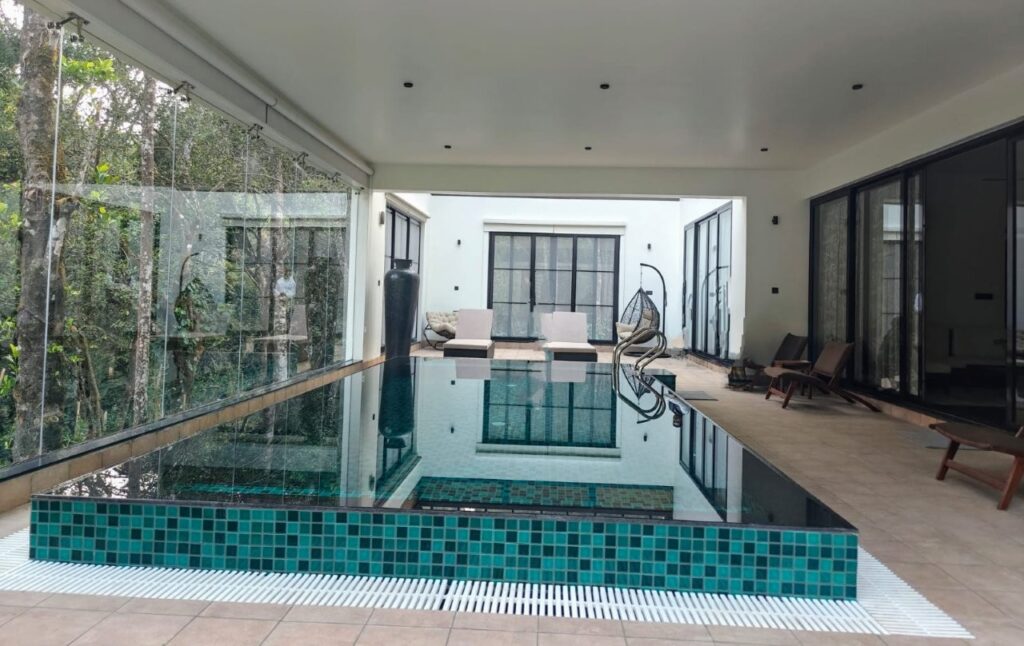
The two stately Presidential Suites, sprawling across an impressive 3,000 square feet, exude sophistication with their expansive dual-bedroom layout, each complemented by an opulent en-suite bath, a tastefully appointed living room, elegant bar counters, and a private indoor temperature-controlled swimming pool adorned with see-through glass walls that unveil panoramic views of the surrounding emerald foliage.

Exclusively designed for romantic interludes, the two Honeymoon Villa Suites span approximately 1,700 square feet and offer an intimate retreat with a lavishly proportioned bedroom, an indulgent en-suite bath, a plush living space, bespoke indoor massage beds, and a temperature-controlled swimming pool with an integrated jacuzzi — all encased within floor-to-ceiling glass walls that frame the poetic beauty of the forest beyond.

Each suite is a harmonious blend of artisanal craftsmanship and contemporary luxury, adorned with handcrafted wooden interiors, sweeping glass facades, and expansive private decks that dissolve the boundaries between the curated comforts of the indoors and the tranquil embrace of nature’s masterpiece.

Committed to sustainable hospitality, The IBNII Coorg has integrated eco-conscious practices into the design and construction of these suites. Locally sourced materials, energy-efficient systems, and minimal waste initiatives ensure that luxury coexists with responsibility.

Every detail of these suites is crafted to enhance the guest delight. From plush interiors reflecting the charm of Coorg’s natural surroundings to customised Wellness experiences, the new additions cater to travellers looking for a refined yet immersive stay. Guests can enjoy bespoke meal options prepared by IBNII’s chefs, personalised wellness therapies, and exclusive access to Ayurveda, yoga, and spa services for a truly rejuvenating escape.

As one of Coorg’s finest eco-luxury retreats, The IBNII Coorg continues to offer a perfect getaway for honeymooners, families, and discerning travellers. With an existing collection of 23 private pool villas, 12 wooden cottages, 8 Forest view cottages and a dedicated Aarogya wellness sanctuary spread over 60 acres, the resort remains a sought-after destination for those looking to reconnect with nature seeking Well – being to rediscover oneself and attain Self Realization steeped in 1.5 acres of Lush green clean air per person .

Located just 5.5 hours from Bangalore Airport and 2.5 hours from Mysuru railway station, The IBNII Coorg offers an unmatched blend of seclusion and accessibility.

source: http://www.kashmirvision.in / Kashmir Vision / Home> KV News / by Rayees Ahmed Kumar / October 11th, 2023

Gateway Coorg

Gateway Coorg Opens Its Doors

Indian Hotels Company (IHCL), India’s largest hospitality company, today announced the opening of Gateway Coorg, a serene retreat nestled in the heart of Karnataka’s coffee country.

Enveloped by lush rainforests and scenic trails, Gateway Coorg features 55 spacious rooms and suites that reflect the tranquillity of their natural surroundings. Guests can indulge in regional and global flavours at Ghat’s Café, unwind at Coorg Cellar, or sip artisanal blends at the Coffee Lounge. The resort is a haven for food enthusiasts, with a menu that showcases the bold flavours of traditional Kodava cuisine alongside contemporary favourites. Wellness and recreation are integral to the experience with a spa, outdoor swimming pool, and a fully equipped fitness centre.

Often referred to as the ‘Scotland of India,’ Coorg’s rolling hills and coffee estates offer a beautiful backdrop for exploration.

With the addition of this hotel, IHCL will have 26 hotels in Karnataka including 13 under development.

Hotel website

Gateway Hotels & Resorts

Gateway Coorg / Galibeedu, 571201 / India / +91 82723 52000

Hotel Website

source: http://www.hospitalitynet.org / HospitalityNet / Home> Hotel Development> Now Open / April17th, 2025

Getting a whiff of Coorg and its coffeeology

The Sidapur Museum of coffee where you can brew your own cup

SNUGGLED in the midst of 300 acres of verdant coffee and spice plantations in a picturesque pastoral setting, Evolve Back Resort in Kodagu has catapulted Kodagu onto the national tourism map. The luxury brand has ventured into the holiday hospitality business in this region. Owned by the Ramapuram Group, which has been in the plantation business since 1921, the resort is renowned for its beauty, facilities and hospitality. 

In keeping with its avowed philosophy of offering exquisite, true-to-the-land experiences, the resort allows guests to sample plantation life at its graceful best. This is made possible by the traditional-style accommodation, and the host of facilities that the resort offers. The wide choice of accommodation includes Kodava-style Ayenmanes  with private pools and plantation cottages. An Ayurveda spa, a gym, a conference hall, an infinity pool and three restaurants —Peppercorn, Plantation Leaf and Granary — are also on offer. 

Boating in a four-acre private lake, guided plantation tours, coracle rides, birdwatching, cycling, and visiting the resort’s own school are some of the activities arranged for guests.  We returned with memories of straight-from-the-heart service, pampering, privacy, tranquility and a multitude of enjoyable experiences firmly rooted in the natural environs and culture of the land.

At the Sidapur Museum of Coffee and Culture we experienced the thrill of making our own brew right from pulping, grading, roasting, grinding and cupping in. With the invigorating aroma of coffee in the air, we strolled around the museum and got a taste of how life was lived in the old days in Coorg. We found Coffeeology, a daily live session on the art and science of gourmet coffee, most interesting. 

The museum offers different sections that showcase the story of the Ramapuram family, the history of coffee in Coorg, how coffee is cultivated globally and the art of brewing the perfect cup. It recreates a space evoking the rustic feel of a coffee plantation, with materials and objects used in the past and the present, reminiscent of eras gone by and ways of life that have been replaced with the onset of modernity. 

Large, dented copper and brass vessels of unique shapes and sizes line the walls, each harbouring their unique stories. A few of the objects are from the Ramapuram family collection — a hand-operated coffee roaster and a typewriter that were very much in use on the Chikkana Halli Estate. The coffee grinder in the museum has had quite a journey. It belonged to a Kodava gentleman who ran a coffee house in Lahore before the Partition, after which it was transported to Bangalore and housed in Chinny’s Café on Brigade Road for many years.

restaurant which overlooks an infinity pool

Steeped in local lore and legend, the resort prides itself on locally inspired activities and initiatives which include school adoption, cultural shows by local artistes, providing them with a supplementary means of income, and schoolteachers’ training which demonstrate that responsible tourism is not a one-way street. Right from the native and eco-friendly architecture to the locally inspired activities and interaction with  ethnic communities, the entire experience is life-enriching. 

In keeping with its eco-friendly ethos, concerted efforts are made to conserve water. The cornerstone of the resort’s water conservation programme is the hotel’s own sewage treatment plant (STP). The treated water is used for irrigation in the gardens at the resort’s premises. The STP not only preserves the quality of fresh water resources, but  reduces the amount of water used by the hotel. An extensive drip irrigation system allows the resort to use less water. A reverse osmosis plant installed in each cottage provides 100 percent safe drinking water while reducing the negative impact of over 50,000 plastic bottles every year. Other commendable water conservation programmes of the resort include rainwater harvesting and the ozonisation plant for the main swimming pool.

The resort’s solid waste management efforts are noteworthy too. Apart from the segregation of degradable and biodegradable waste, plastic, glass, metal and paper are sent for recycling. STP sludge is used as fertilizer. The use of CFL lamps, electronic key tags, and installation of governors on diesel generator sets have helped in conservation of energy. A company-owned wind power generator offsets power consumption and supplies surplus power to the government.

No tree has been cut down during the construction and the enormous ficus tree next to the pool has been there since before its inception. The landscape is beautifully laid out with indigenous flowering shrubs and plants. It is difficult to find exotic flora in the resort. All the trees and plants are named and this makes for an enjoyable and informative walk. Steps have also been taken to minimize formal landscaping. 

With green consciousness catching on, travellers are heading to resorts with excellent responsible tourism bona fides.

Currently, local employment at the resort has been stepped up. The resort shows its concern for the community by organizing structured community development programmes. Cultural shows are carried out by the locals, providing them supplementary income.

The indigenous guides and staff are the faces of the resort’s claim to fame. These signature holidays which preserve the purity of nature and culture of the land have received due global recognition and prestigious awards. At the end of the stay, even a casual visitor will be converted into a sustainable tourism practitioner.  

Fact File

Getting there: Distance from Bengaluru — 230 km / Distance from Mysuru — 100 km / Email: coorg@evolveback.com

source: http://www.civilsocietyonline.com / Civil Society / Home> Travel / by Susheela Nair / November 23rd, 2023 (updated February 29th, 2024)