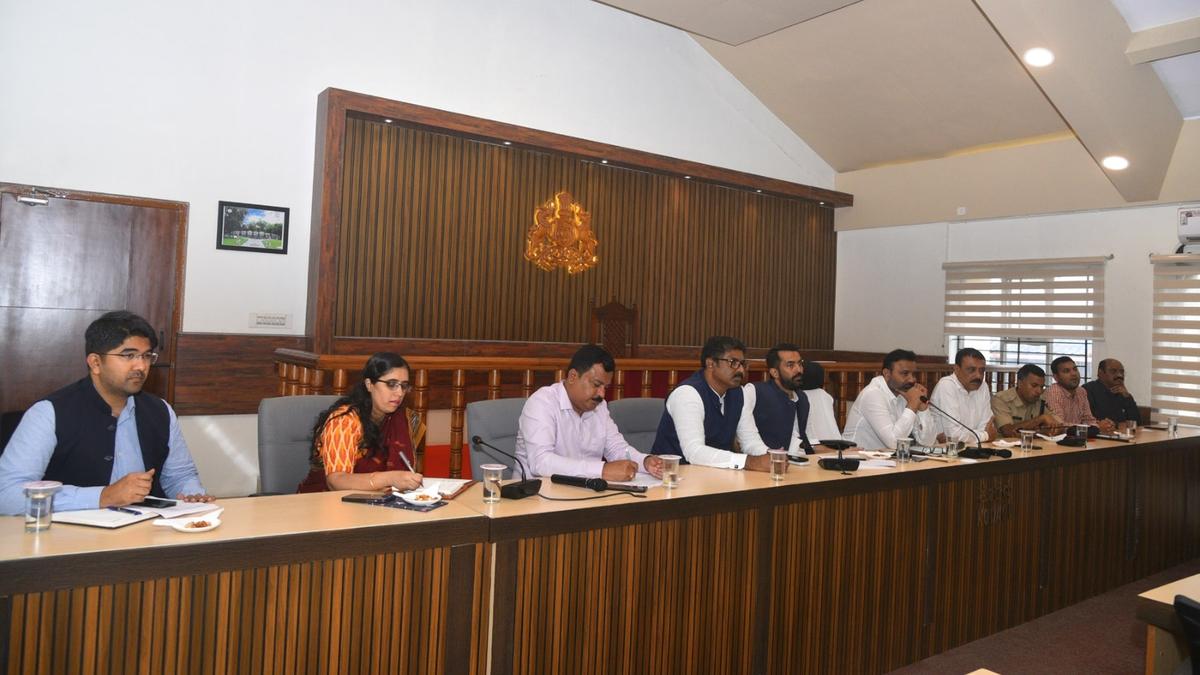
Labour Minister Santosh S. Lad presiding over a meeting in Madikeri on Thursday. | Photo Credit: SPECIAL ARRANGEMENT
Labour Minister Santosh S. Lad on Thursday directed representatives of labour unions, homestay and hotel associations, and other organisations to ensure that workers are paid minimum wages without fail and warned of strict action in case complaints are received.
Chairing a meeting at the Deputy Commissioner’s office here, the Minister emphasised the need to create awareness among workers about government schemes, including health insurance, and stressed safety measures in homestays and hotels, such as installation of CCTVs and compulsory collection of guest details.
On the issue of registration, licensing, and renewal of homestays in Kodagu, the Minister said discussions would be held with the Tourism, Urban Development, and Panchayat Raj Ministers. He suggested that associations appoint a PRO or a liaison officer to coordinate registration and renewal processes, adding that pending applications could be cleared during the quarterly KDP (Karnataka Development Programme) meetings.
MLA for Madikeri Mantar Gowda, who was present at the meeting, said that a delegation would soon meet Tourism and other Ministers after the conclusion of the Dasara festival. Tourism officials informed that nearly 230 applications are pending in the district.
During the meeting, labour union leaders drew attention to shortage of labour inspectors, continuation of the traditional bonded-labour system, and difficulties faced by plantation workers. Responding, the Minister assured that joint inspections involving Revenue, Labour, Police, Panchayat Raj, and other departments would be conducted if specific cases were reported.
The Minister said that payment of minimum wages is mandatory and reiterated the government’s commitment to protecting the interests of unorganised workers.
source: http://www.starofmysore.com / Star of Mysore / Home> News> India> Karnataka / by The Hindu Bureau / September 18th, 2025
The Bungalow 1934 is a 91-year-old family home where traditional Kodava cooking and hospitality are the order of the day.
On a hilltop in Coorg, sandwiched between a coffee estate and the Brahmagiri range, Bungalow 1934 is Amrith Thimmaiah’s home and a living chronicle of Kodava culture.
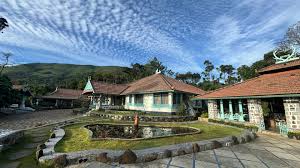
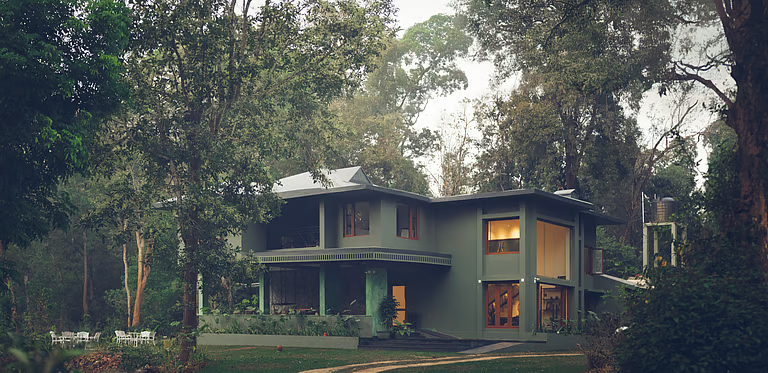
In 1934, Ketolira Diwan Bahadur Chengappa built a home in the typical Kodava-British style of bungalows, set against the backdrop of the Ballyatra hill. When Chengappa became the first Chief Commissioner of Coorg in 1943, the home became the venue for lavish parties for state guests and British officials.
In 2010, the fourth-generation of the family, Amrith Thimmaiah, and his parents Gappu and Fancy Ganapathi, opened their 91-year-old family home as a heritage homestay.
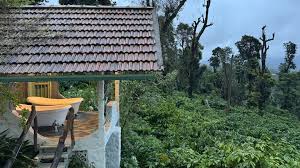
View of Bungalow 1934 set against the Ballyatra Hill / Amrith Thimmaiah
About the homestay
The Bungalow is located in Yavakapadi village, roughly 30km from Virajpet and Madikeri. There are sweeping valley views, as well as a clear view of the Igguthappa temple, a deeply significant site for Kodavas who visit the deity for a bountiful harvest.
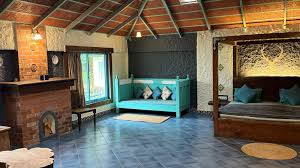
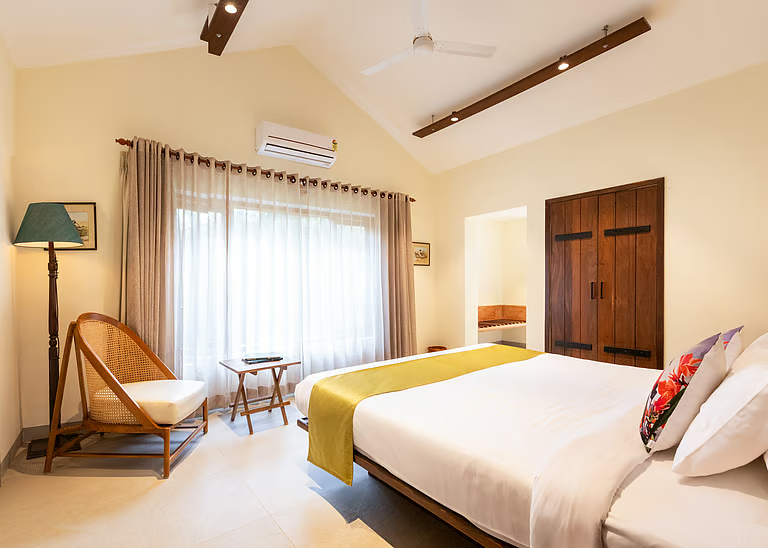
Bedrooms at the Bungalow 1934 / Amrith Thimmaiah
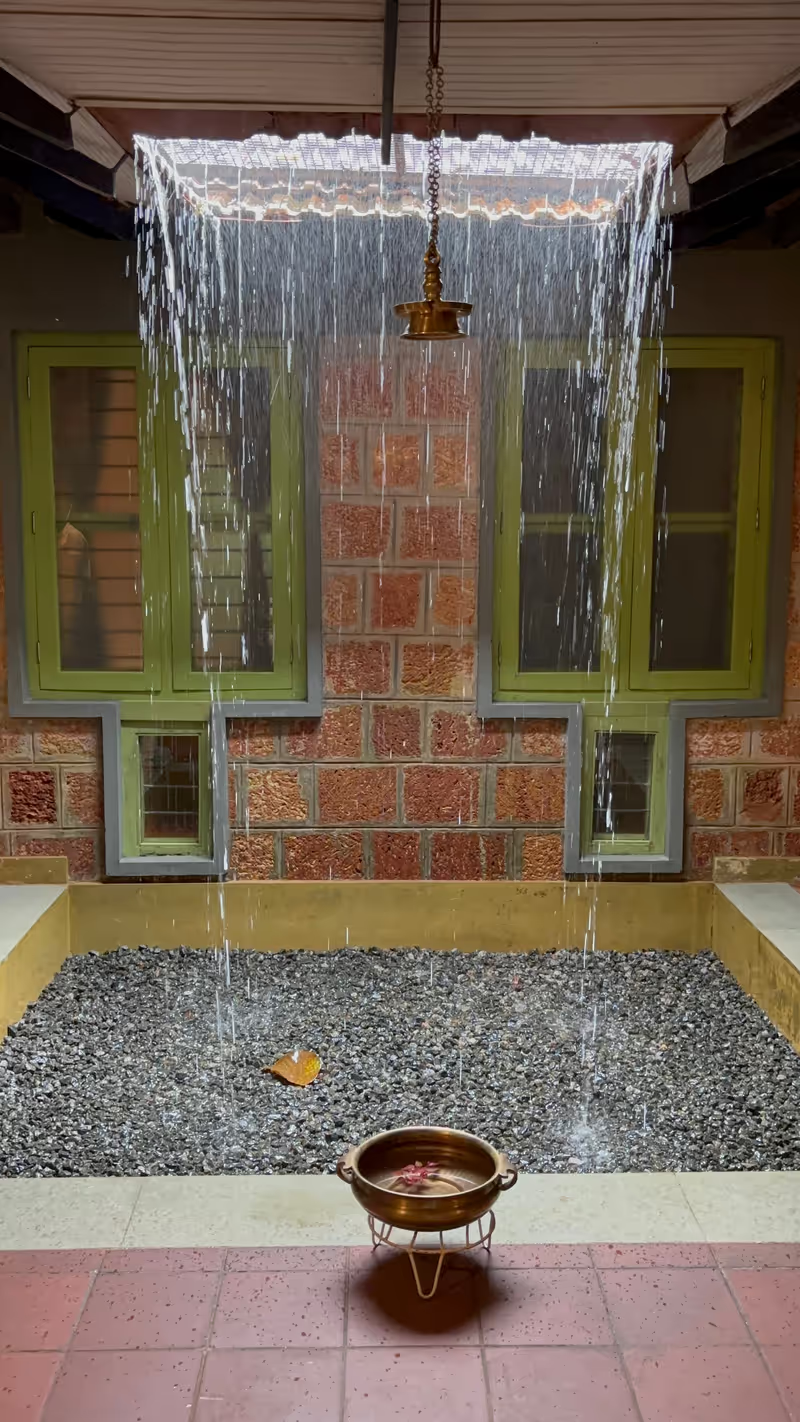
With mud walls, pillars, and beams, the home is a true depiction of Coorg ‘s ainmané or ancestral homes, where vaastu dictates aspects like where the owner’s room should be located (in the kubéra moolé, or south west direction). A sprawling fig tree stands out front, and you enter into a pillared, elevated open veranda where, traditionally, Kodava families gathered for tea, family meetings or an evening drink.
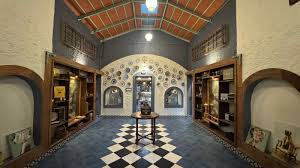
The hall in the Bungalow 1934, with old plates passed from generations in Amrith’s family / Amrith Thimmaiah
Peppered with antiques and with mosaic tile floors, the main bungalow features living spaces, a large common dining area, a room where Amrith stays, and four guest bedrooms. An annexe beside the main bungalow houses two more guest bedrooms. The six spacious rooms are rustic and cosy , with blue tiles, beamed ceilings, in-built fireplaces, and four poster beds. Large windows offer ample sunlight and views of the mountains. When the temperature drops in these misty mountains, there are plenty of fireplaces across the home and porches to curl up with some homegrown coffee.
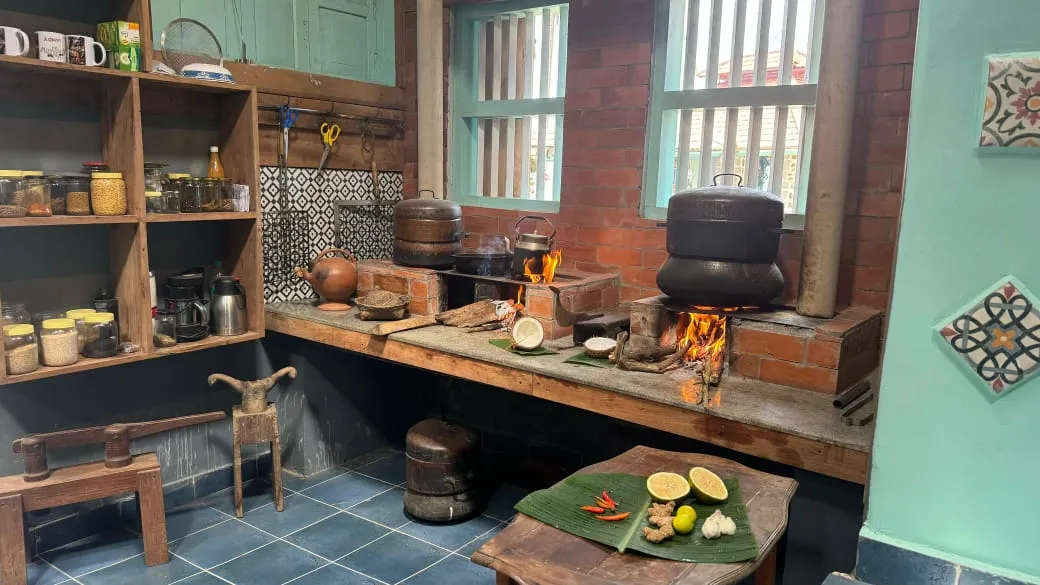
Kitchen at the Bungalow 1934 / Amrith Thimmaiah
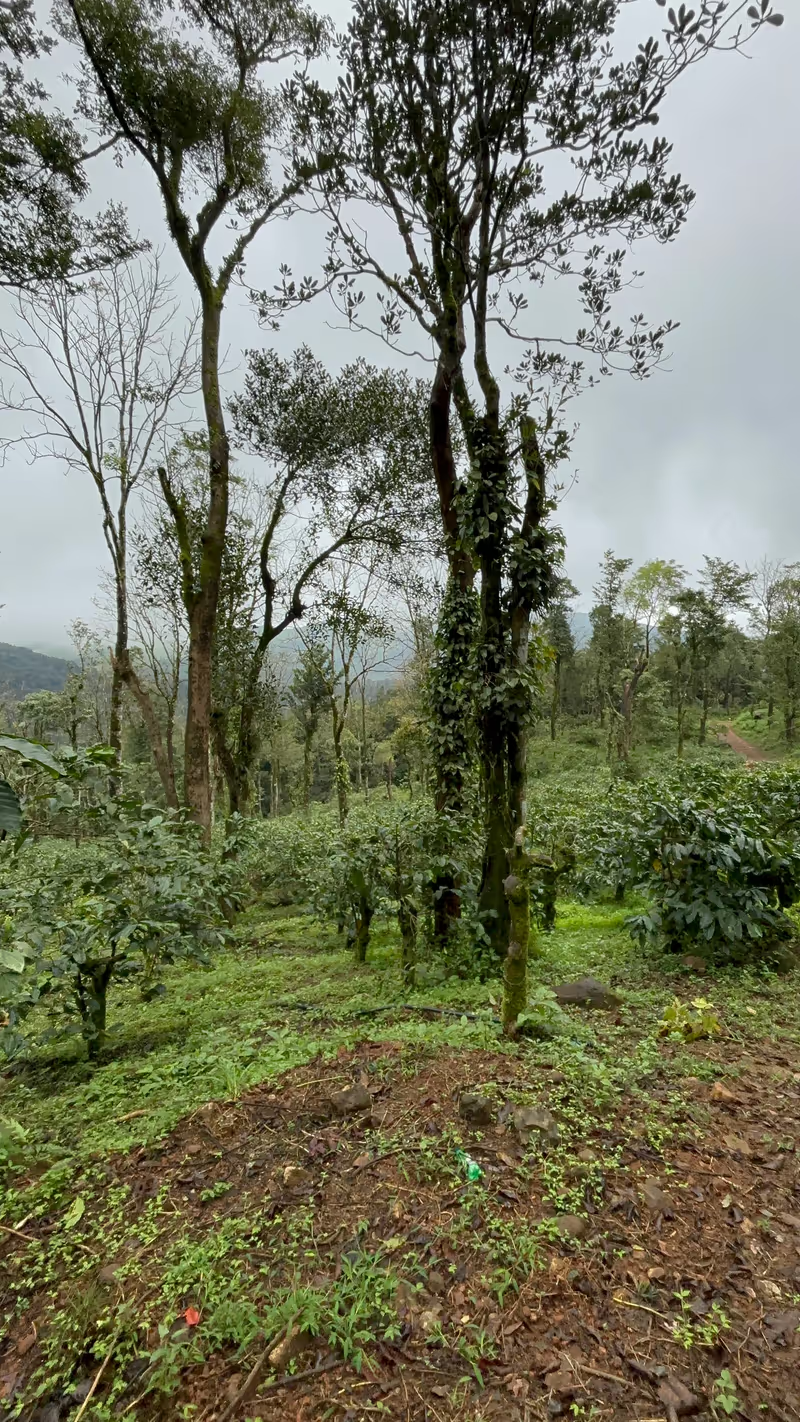
The home is surrounded by rosewood, jackfruit and mango trees, and the grounds lead into the 70-acre Green Acres coffee estate. Arabica and Robusta coffee plants grow under a light canopy of Silver Oak, Cedar, and Benteak, dotted with pepper vines and cardamom plants. The buzz of cicadas and birdsong fill the air. Birders will be able to spot hornbills, white-bellied treepies, and the crow pheasant or the chombuka, considered lucky by the Kodavas.
About the hosts
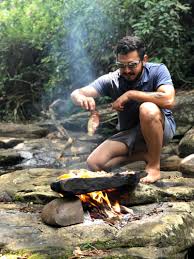
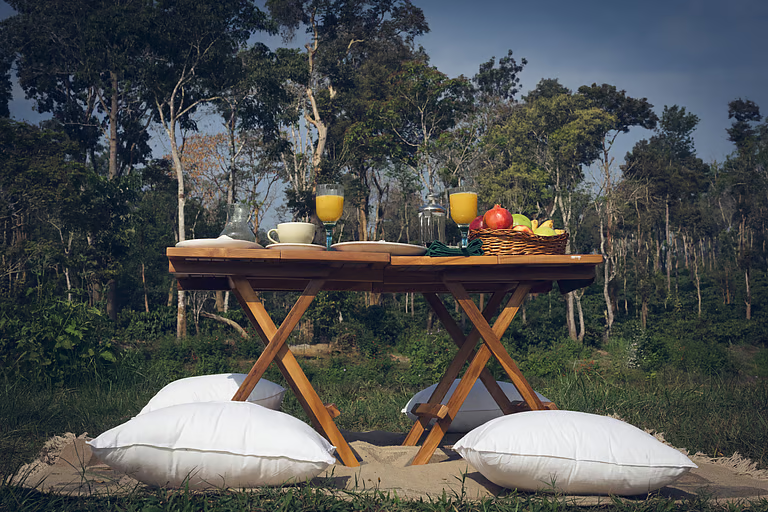
Amrith at the BBQ lunch spread by the stream / Amrith Thimmaiah
Amrith is a rally driver by profession and a passionate host at the homestay, managing bookings personally (the homestay is not listed on any booking platforms), helping with logistics and recommendations. Guests usually come through word of mouth or as repeat visitors, and bookings are confirmed only for days a family member is present at the homestay. Staff leaves and village festivals are respected, and no bookings are made during this time.
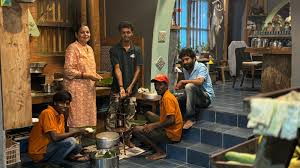
Fancy Ganapathi making Noolputt (steamed rice noodles) with Subbu, Krishna, Chethan & Pavithra / Amrith Thimmaiah
Amrith’s mother, Fancy Ganapathi, is a powerhouse who oversees the food at the homestay. The former lecturer of Kannada literature is a horticulturalist by passion, and a catalyst in forming the 700-member Nature’s Best Food Cluster in Kodagu. The organisation trains grassroot level farmers and enables them to sell their products at outlets in Coorg. “At the Bungalow, I love to share recipes with guests and if someone wants to purchase local produce, I ensure the cluster family provides their products,” she says. Gappu Ganapathi, Amrith’s father, is the backbone of the bungalow and manages the entire coffee plantation.
The Bungalow has 8 to 10 staff members, whose families have been associated with the Ketolira family for generations. Janaki Saraswati, the cook, used to be Amrith’s nanny and was taught heirloom recipes by Amrith’s grandmother.
The food
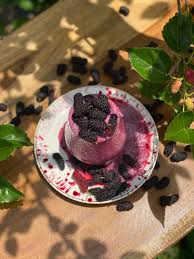
Frozen Mulberry Crush / Amrith Thimmaiah
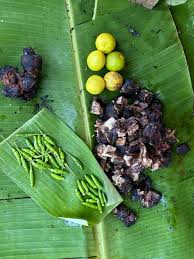
Koli Chuttadh (Chicken woodfire roasted) with bird’s eye chilies and lime / Amrith Thimmaiah
Food at the homestay stays true to any traditional Kodava home, with classic local dishes like khaima undae (mutton keema balls), kori erachi pulao (mutton pulao), pandhi curry and otti (pork curry with rice flatbread). Buffet style meals served in the dining area are generous and take into account dietary preferences. There are numerous vegetarian options within the gamut of Coorg cuisine, featuring seasonal produce like kaaké thopp (black nightshade leaves), kumm curry (mushroom), and kaad maangé curry, a tangy, sweet curry made with Coorg wild mangoes.
Fancy ensures that all dishes are served in the traditional Kodava style: baimbalé with otti (tender bamboo shoot curry with rice flat bread) served with ghee is a common Coorg breakfast; rice cakes or putt with meat curry; chutneys or pajjis made from seasonal produce.
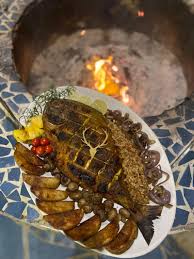
Pomfret Fish Grilled / Amrith Thimmaiah
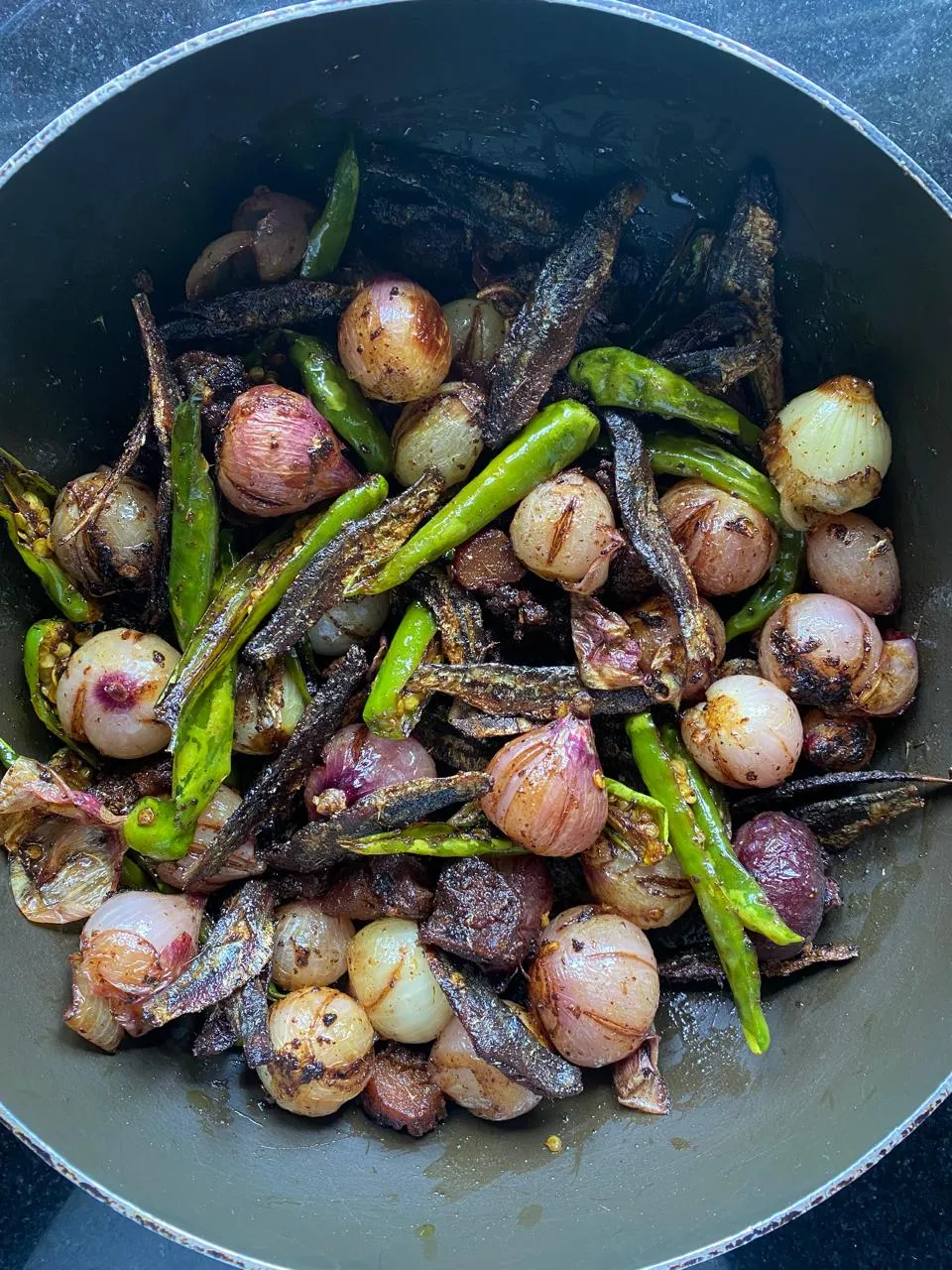
Onak Meen Barthadh (Dried Fish fry) / Amrith Thimmaiah
She also makes fruit wine and chocolates, and her mulberry and pomegranate wines are a hot favourite. This year, she has started to make oil and tea out of the rosemary growing in her small garden. The pathaya or granary on the homestay premises houses the products she makes, and make for perfect souvenirs to take home.
Amrith Thimmaiah
Amrith Thimmaiah
At dusk, Amrith has a house rule: he will host a typical Coorg-style barbeque for guests. Meat is roasted the traditional way over an open wood fire, mixed with finely chopped bird’s eye chili and the juice of bitter lime, to serve up Coorg’s favourite starter, pork chuddals. The family and staff tell stories by the fire, while you can sip cocktails under a star-studded sky with the lights of Madikeri town in the distance.
How to spend 48 hrs at The Bungalow 1934
Sparko at Charandi Polé / Amrith Thimmaiah
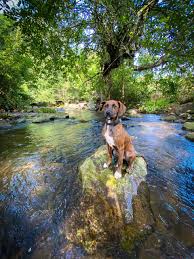
The homestay offers plenty of cosy nooks to read, write and while away the hours, but if you want to venture out, Amrith organizes treks to Thadiandamol peak and Chelavara Waterfalls. For those interested, Fancy conducts workshops for chocolate, wine, or jam making (4 people minimum, Rs5,000 per person). Sparko, the family dog, may take you down to a stream a short walk from the bungalow, where you can enjoy a barbeque picnic lunch by the stream.
Amrith Thimmaiah
Take a leisurely 2km walk or a guided plantation tour with Gappu at the coffee estate. Gappu and Fancy live in a home close by, with fish ponds, a cow shed, a coffee drying and storage area, and are happy to invite you over with advance notice.
A walk about Virajpet in Coorg throws up interesting tales.
STEEPED IN HISTORY: Virajpet. / Photo: Lakshmi Sharath
I was lost in Virajpet looking for an address. The quaint town in Coorg was a welcome break en route to Madikeri. Traditionally-dressed Kodava women were shopping in the vegetable markets, and the main street was bursting with traffic.
I looked around and saw houses with tiled sloping roofs transformed into eateries and retail outlets. I stopped by the auto stand and asked for Telugu Street, but was met with puzzled glances.
I walked around the main street, lost in the old world charm, when a Kodava came to my assistance.
“You are standing in Telugu Street Madam; go a bit further and you may find Bengali Street, but no one refers to the streets by these names now.” We had coffee at a local eatery as Ponappa, a retired Army man, provided a glimpse of Virajpet’s history.
The great escape
Our story starts in the middle of the 18th Century when Madikeri, the capital of Coorg, ruled by the Haleri kings, was invaded by Hyder Ali and his son Tipu Sultan. The young Haleri prince, Dodda Veerarajendra, and his brothers were virtually held prisoners, while the father-son duo was busy fighting the British.
The story goes that Dodda Veerarajendra finally escaped from Tipu’s prison and regained his kingdom. The British sensed an ally in the Haleri king and decided to support him in the war against Tipu.
It was in this scenario that Virajpet, barely 30 km from Madikeri, was founded by Dodda Veerarajendra.
As kings have a penchant for naming places after them, this town too was called Veerarajendrapette.
Ironically, it was established as a settlement to celebrate the relationship forged by the Haleri kings with the British. Ironic, because it was the British who finally deposed the Haleri dynasty later.
Virajpet belonged to Veerarajendra, who built a fort here with a palace, and a pond for his cavalry. Although the remnants of this can be seen even now, Virajpet is largely reminiscent of the Colonial era.
The landmarks today are the St Anne’s church, built initially during Veerarajendra’s reign and the clock tower, established in the 20th Century to commemorate the coronation of King George V.
I quiz Ponappa about Telugu Street, and he smiles. “When Veerarajendra built the town, many Kodavas were imprisoned by Tipu, and so he invited people from neighbouring kingdoms to come over.
There were several communities living here — the Christians, Moplas, Tamilians, Jains and Telugus, among others.”
Cosmopolitan town
Adds Ponnappa: “Virajpet is what you would have then called a cosmopolitan town. For instance, the Bengali Street was filled with those who came down here after the British defeated the Nawab of Bengal in another battle.”
I finally manage to find my destination, and Ponappa takes leave. It’s amazing how stories bring strangers together!
source: http://www.thehindu.com / The Hindu / Home> Features> Metroplus> Travel / by Lakshmi Sharath / May 23rd, 2010
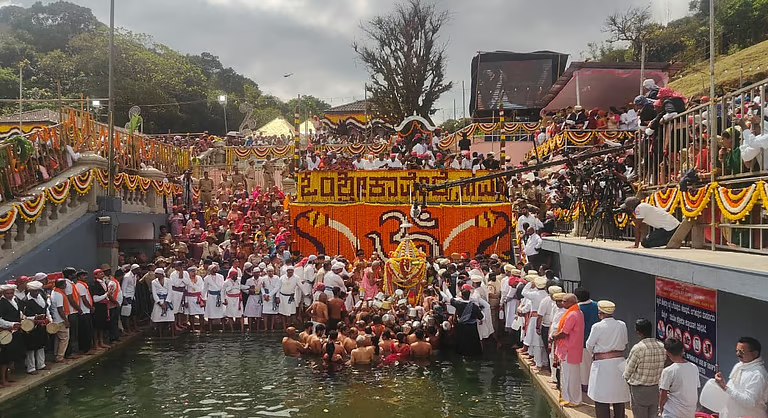
The auspicious moment when the holy river Cauvery gushed out from the sacred Kundike occurred at the predicted time of 1.44 p.m., marking the highlight of the annual ritual.
Hundreds of Kodavas, dressed in their traditional attire, walked barefoot for about 8 km from Bhagamandala to Talacauvery in a display of devotion.(Photo | Express)
Madikeri :
The chants of “Kaveramme Ukki Baa” filled the air across Talacauvery as thousands of devotees witnessed the sacred Cauvery Tula Sankramana on Thursday.
The auspicious moment when the holy river Cauvery gushed out from the sacred Kundike occurred at the predicted time of 1.44 p.m., marking the highlight of the annual ritual.
The rituals were led by chief priest Prashanth Achar along with a team of 11 other priests. Devotees from across Kodagu district and neighbouring states, including Kerala and Tamil Nadu, gathered in large numbers to take part in the holy festivity.
Hundreds of Kodavas, dressed in their traditional attire, walked barefoot for about 8 km from Bhagamandala to Talacauvery in a display of devotion.
Elders, also clad in traditional Kodava attire, led the way playing the traditional dudi and singing baalo paat as they made their way to Talacauvery. Devotees from various communities, including members of the Are Baashe community from across the district, also participated in the rituals with reverence.
Among the participants were Mysuru-Kodagu MP Yaduveer Wadiyar, who adorned the traditional white royal attire, and Virajpet MLA A.S. Ponnanna, who was dressed in traditional Kodava wear.
Both walked the 8 km stretch from Bhagamandala to Talacauvery and took part in the rituals. Madikeri MLA Dr Mantar Gowda, Deputy Commissioner Venkat Raja, Superintendent of Police K. Ramarajan and several others were also present at the ceremony.
Enhanced security measures and improved arrangements were in place at the temple premises to manage the large crowd. While a few devotees allegedly demanded the removal of barricades, the issue was resolved amicably, ensuring smooth movement for all.
A medical team from the Kodagu Institute of Medical Sciences was stationed at both Bhagamandala and Talacauvery to attend to any emergencies.
‘Annadhana’ (mass feeding) arrangements were made for devotees at both temples, while the Kodagu Ekikarana Ranga will host a month-long mass feeding programme at the centre.
Cultural programmes are also being organised at Talacauvery by the Kodava and Are Baashe Sahitya Academies.
Deputy Chief Minister D.K. Shivakumar and Muzrai Minister Ramalinga Reddy were scheduled to attend the event; however, their visit was cancelled due to unforeseen reasons.
source: http://www.newindianexpress.com / The New Indian Express / Home> Karnataka / by Express News Service / October 17th, 2025
A weekend getaway at the Blyton Bungalow in the Poomaale Estate in Coorg is all you need to recharge yourself from the urban noise.
The six-hour journey from Bengaluru to the Poomaale Estate feels like a slow untwining of the city’s grip. By the time the car climbs the hills of Kodagu district—better known as Coorg—the traffic thins, the air cools, and the dense green folds of the Western Ghats begin to swallow the winding road.
The final stretch feels enchanted: rain-slicked roads winding past tangled forests, a lone elephant crossing the road, and finally, the quiet approach into a 128-acre coffee estate that seems to have been built for retreat.
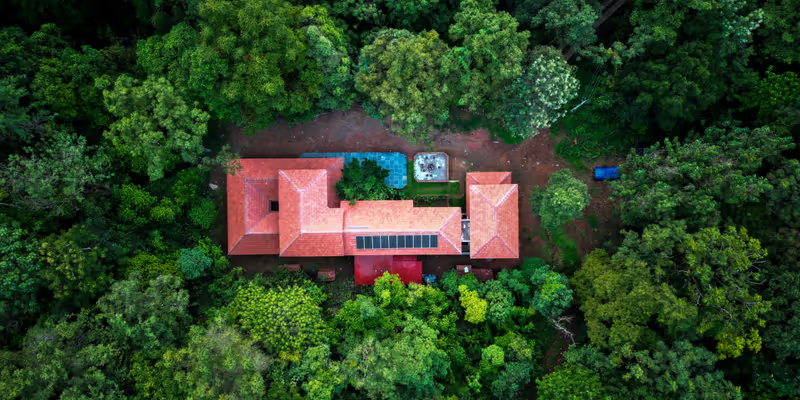
Nestled in the dense forests of the estate is the Blyton Bungalow. One can’t call Blyton a resort in the conventional sense; it encompasses the essence of Coorg’s diverse ecology and raw beauty.
The large, but homely, guesthouse is decorated with modest Mangaluru tiles, wide verandas, and wooden chairs, which build a perfect ambience for long hours of coffee and conversation, interspersed by the chirps of birds and a gushing waterfall.
We were welcomed with steaming cups of the estate’s brew, as Aranya Bagchi, the hospitality manager and resident naturalist, laid down some ground rules for our safe stay at Blyton, which is right in the middle of a dense rainforest.
No wandering outside alone after dark, as it may get dangerous.
Once the night falls, until early morning, the estate and its adjacent jungle become roaming grounds for wildlife movement, especially elephants.
And then, there’s the coffee.
Coffee at the source
Coffee is always better at its origin, and at Poomaale, it was earthy and robust, harvested, dried, and roasted just a few hundred meters away from Blyton. By the end of the stay, we lost count of the many cups we had consumed!
We just didn’t sip coffee, as part of the experience, we indulged in an hour-long session on various brewing methods. It wasn’t just a tutorial, but almost a ritual—one kindred to the Japanese tea ritual.
The nuances of grind size, the temperature of the water, and the patience of the pour. Coffee, in Bagchi’s telling, became more than a drink. It was a dialogue between soil, climate, and craftsmanship.
Walking the land
Poomaale Estate’s beauty best unfolds on foot. Sharan V, a budding researcher and a naturalist, guided us on a trek to a nearby hillside. On this hour-long trek, we crossed many coffee shrubs—most of them loaded with gestating green berries, while a few others were decorated with white flowers, rendering a sweet, almost jasmine-like scent.
Did you know? The gestation period of coffee is similar to that of humans; it takes nine months for coffee to mature from flower to bean.
Here, the trail was alive with fungi following the monsoon rains, as well as many fruit trees, specifically litchi, rambutan, and mandarins.
A small stream kept us company for much of the trail, and so did the patter of rain on leaves. By the time we emerged onto a grassland clearing, the hills of Coorg stretched before us, wrapped in mist. It wasn’t an arduous trek, but for sedentary city dwellers, the incline was steep enough to bring back to life muscles long forgotten.
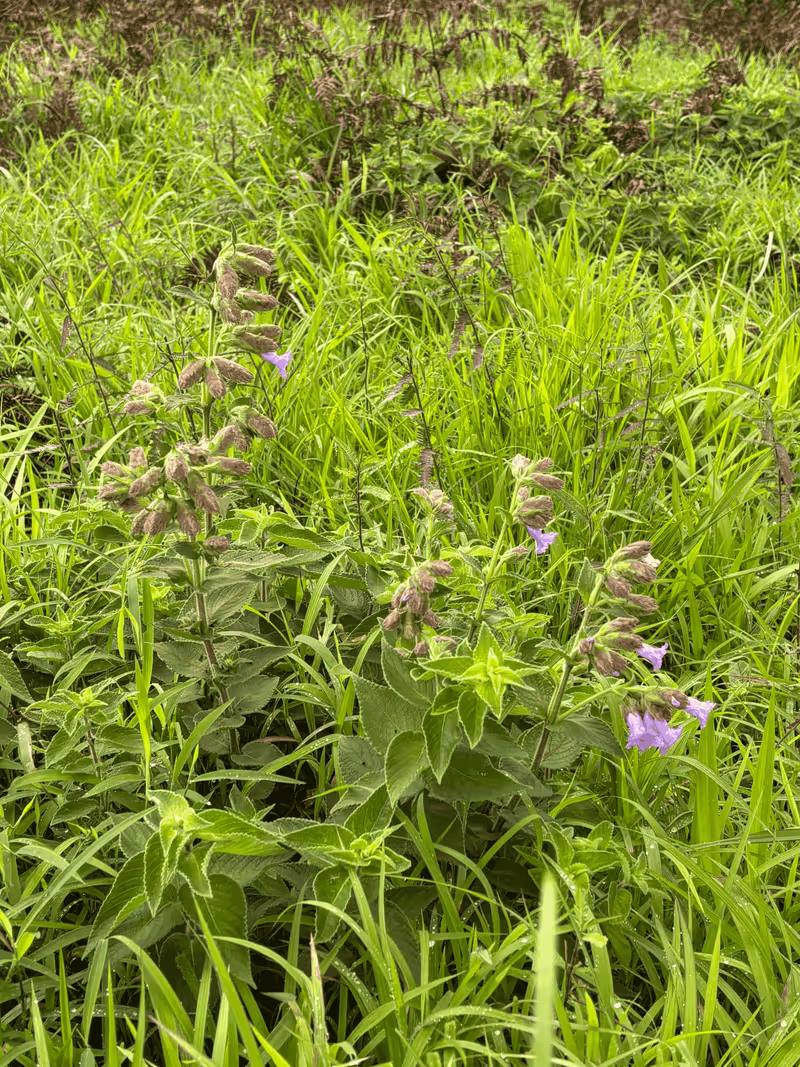
As we reached our destination, we stopped to check out a purple-hued, bell-shaped bloom called the Kurunji—not to be confused with the famed Neelakurinji of the Nilgiris, but equally rare, flowering once every four years.
To stumble upon it in bloom—surrounded by the dense green hills, partially covered in clouds—felt like being let in on a secret.
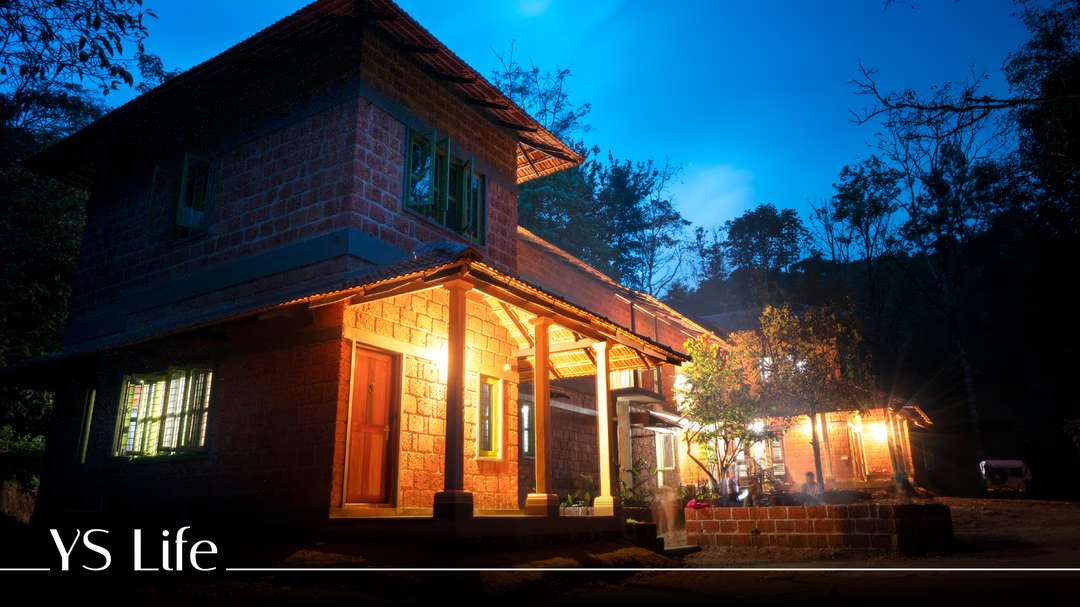
That night, rain lashed the windows, but our hosts were well prepared with hot water bottles, which were tucked into our bed for cosy comfort. The rooms were big, simple, but intimate. The laterite stone walls, iron-clad windows, rustic wooden doors, and high-rise ceilings reminded one of a village homestay, metamorphosed for a premium experience and comfort.
Encounters with the wild
Blyton offers a much-needed escape from the city’s ambient noise. The next morning, we were woken up from our deep slumber by an alarm bell, but not in the way one expects. The sound was the courtesy of the Malabar Whistling Thrush, also known as the Whistling Schoolboy; the bird is a daily visitor at Blyton Bungalow.
A morning walk, following a scrumptious breakfast, led us to several birdwatching points, where binoculars revealed flashes of scarlet and cobalt in the canopy. Sharan was quite excited to show us a tiger beetle, named after its distinct tiger-like patterns, indigenous to Coorg.
And then there was the waterfall. Swollen with the season’s rain, it roared with an energy that pulled you in. Standing beneath it, drenched and exhilarated, felt less like sightseeing and more like baptism—a cleansing of city fatigue.
PS: If you are in a rainforest, be prepared to encounter leeches and snails, among many other critters.
Food from the land
Meals at Blyton Bungalow were as much a reflection of the land as the treks. Every dish was sourced either from the Poomaale Estate itself or from one of its sister properties or “collectives” in Andhra Pradesh and Maharashtra, operated by their parent entity, Beforest.
Founded in 2018, Beforest is one of the first firms in India to carry out permaculture activities on a scale of 100+ acres in each of its collectives to reimagine a forest-friendly lifestyle.
Food at Blyton was homely, prepared by a local resident cook, Ishtak, who spun the forest produce into delicious meals. One evening, we were served a delicate dish made of young ferns, sautéed simply with local spices, their freshness speaking louder than seasoning. Try the wild mango curry—a sweet and tangy curry made with small mangoes from the estate’s orchards. We were also served the local rice, which had a distinct purple colour and was sweet to taste.
In fact, the estate has a cow shed that provides milk products for Blyton’s guests as well as manure for the plants. Behind the cow shed grows cardamom and pepper in the wild—the two spices that are cultivated at Poomaale besides coffee.
There was something grounding in knowing that every bite had a direct lineage to the soil underfoot. Nothing felt imported, nothing staged. It was food in conversation with the place.
A pause from the world
Blyton Bungalow is not about curated experiences or glossy perfection. Its magic lies in the authenticity of being away. The air carries petrichor and coffee blossom, the walls echo with bird calls, and the evenings settle into long stretches of rain and firefly glow.
Time slows here—not in the sense of boredom, but in the way that every moment feels fuller, layered with the textures of land, weather, and companionship.
When it was time to leave, the six-hour drive back to Bengaluru felt heavier, the city waiting with its demands and deadlines. But somewhere in the mind, the sound of the stream lingered, and so did the warmth of a hot water bottle pressed tucked in the sheets, and the image of a lone elephant, chalk-painted and solemn.
Blyton Bungalow isn’t just a getaway. It’s a reminder that retreating into nature is less about escape and more about return—a return to the quiet, the simplicity, a way of being that listens as much as it speaks.
Prices for two nights (inclusive of taxes):
Regular room: Rs 20,000
Suites: Rs 32,000
source: http://www.yourstory.com / Your Story / Home> YS Life> Travel & Leisure / by Suman Singh / edited by Kanishk Singh / September 20th, 2025
Experience the rich flavors of Coorg at The Westin Pune Koregaon Park from September 12-21. Join us for a 10-day celebration of authentic Kodava cuisine.
This September, embark on an exquisite culinary sojourn as The Westin Pune Koregaon Park brings the authentic flavors of Coorg to your table. From September 12 to 21, 2025, The Market will transform into a celebration of Kodava cuisine, offering a 10-day showcase of recipes and traditions that are deeply rooted in the region’s culture.
Curated by Chef Priya Aiyappa, a proud Coorg native, the festival promises an authentic dining experience, with dishes prepared using time-honoured techniques and locally inspired ingredients. On the menu are signature delicacies such as the legendary Pandi Curry, paired with pillowy Kadambuttu (steamed rice dumplings), alongside Paputtu (soft rice and coconut cakes), and Noolputtu (delicate rice noodles). Seasonal specialties like the rich Kakkada Nyend Curry—crafted with prized monsoon mud crabs—and the earthy Baimbale Curry made from tender bamboo shoots, bring the lush terrain of Coorg directly to the plate. For a sweet finish, the humble yet comforting Thambuttu, a banana-based dessert, completes the experience.
“Coorg food is a reflection of its land—simple, bold, and deeply connected to tradition,” says Chef Priya. “Through this festival, I want to bring the warmth of Kodava hospitality and the true flavours of my home to Pune.”
With its inviting ambiance and vibrant setting, The Market at The Westin Pune Koregaon Park provides the perfect canvas for this unique celebration. Whether you’re a passionate foodie or simply curious to explore the rich culinary heritage of Karnataka’s Western Ghats, the festival offers an unmissable opportunity to savour one of India’s most distinctive regional cuisines.
When: September 12 – 21, 2025| Lunch, Dinner & Brunch Where: The Market, The Westin Pune Koregaon Park Cost: 2399++ onwards Contact: +91 70662 00300
source: http://www.hospibuz.com / Hospibuz.com / Home> Hotel Listicles> Listicles / by Hospibuz / September 12th, 2025
While Karnataka is all geared up to welcome whitewater rafting enthusiasts in the monsoon, it is important that adventure activities are conducted in a way that minimises risks and yet provides the benefits of participation, say experts.
With the monsoon in full swing, Karnataka is all geared up to welcome tourists and adventure enthusiasts to experience the thrills of whitewater rafting. As you raft through gushing waters surrounded by dense jungles, you are transported into a world of roaring rapids with sprays of pristine white water and treated to glimpses of wildlife on some stretches of the river.
Adrenaline junkies can head to the stretch adjacent to the Dubare Elephant Camp in Kodagu on the River Cauvery and some stretches of the Kali river at Dandeli. The highlight of the season is the 1.5-hour whitewater rafting adventure on the roaring Barapole river, which originates in the Brahmagiri hills and flows towards the Arabian Sea. Rafting enthusiasts can navigate a 4.5 km stretch of the river featuring four iconic rapids with thrilling sections reaching up to Class 4 difficulty level for a duration of four months.
Another rafting destination is Bheemeshwari set on the banks of the Cauvery in the Cauvery Wildlife Sanctuary. Plans are on the anvil to resume rafting in Seethanadi, a swift Western Ghats river known for its challenging rapids and stunning scenery during the monsoon. The run on this powerful river passes through thick evergreen forests that form part of the Western Ghats in the Someshwara Wildlife Sanctuary and the Kudremukh National Park. Rafting on this brilliant 22 km stretch takes four hours to complete.
Streamlining rafting operations
The recently constituted River Rafting Management and Monitoring Committee of Kodagu district has stressed the need for enforcing stringent safety protocols to prevent mishaps during this high-risk adventure activity. The committee has urged all rafting operators in Kodagu district to compulsorily obtain and renew the fitness certificates for their rafts before launching any water-based adventure activity.
The mandatory certification, which must be renewed annually, is issued by the General Thimayya National Academy of Adventure (GETHNAA), a government of Karnataka enterprise for the promotion of adventure sports in the state.
“It is important that adventure activities are conducted in a way that minimises risks and yet provides the benefits of participation. Karnataka Tourism has laid down some guidelines that include obtaining necessary licenses and certifications from relevant authorities and ensuring compliance with safety standards,” says Major General (retired) MN Devaya, advisor to GETHNAA.
Listing the items that are essential for rafting, he adds, “Firmly secured life jackets, crash helmets, rescue floats with unreeling nylon lines, first-aid emergency kit, detailed instructions to the rafters, and an attendant kayak or raft for emergency assistance are mandatory for rafting activity. GETHNAA also has a training centre at Barapole.”
Explaining the measures taken by the committee, Venkat Raja, IAS, Deputy Commissioner (DC), Kodagu district, says, “The committee has taken up the responsibility of upgrading basic infrastructure at rafting sites to improve the tourist experience and enhance safety. Other measures included installation of shelters at the ticket counters, hand railing on the steps, changing rooms for guides, benches, provision of drinking water, toilets, CCTV surveillance, and directional signboards to rafting sites at strategic junctions.”
There are 47 raft operators functioning in the 7 km stretch in Dubare and four operators in the 4.5 km stretch in Barapole. “All the rafts are numbered for authenticity and easy identification. To prevent unhealthy competition, the pricing is flexible and monitored by the committee. Another encouraging factor is the involvement of the local populace, especially tribal residents, in the rafting operations,” adds the DC.
In Dandeli, Jungle Lodges & Resorts (JLR) is the only reliable organisation to conduct white water rafting. “The rafting operations that are currently suspended will resume after the monsoon in September/October. We have outsourced our rafting operations in the Kali river in Dandeli to Manasa Adventures, a professionally experienced adventure company. Strict safety guidelines are adhered to with professional river guides. We have perfected our standing as a whitewater rafting destination with highly qualified river guides and proper equipment,” says Prashanth Shankhinamath, IFS, Managing Director, JLR.
Need for stringent monitoring
Noting that there are many unauthorised rafting operators in Dandeli, Vaibhav Kamat of Jungle County, Dandeli, says, “This has led to protocol breach, which raises concerns over safety. As there is a mad rush during weekends, some of the operators overload the rafts, flouting all safety norms. Crowd control is also woefully lacking and overcrowding can lead to accidents. Some operators send visitors into rafts without safety gear such as life-jackets as they do not have the professional knowledge to operate the services. So there is a dire need for the state administration to monitor these operations.”
Urging a crackdown on illegal operators, he adds, “The safety standards and procedures followed by rafting organisations, including the availability of qualified guides and proper equipment, should be monitored. Action should be initiated against operators for violations. The permission process for raft owners should also be made more stringent.”
It is high time that Karnataka Tourism conducted a safety audit of all the river rafting destinations in Karnataka. This will help identify potential hazards and deficiencies in safety protocols. A social audit should also be conducted to examine the impact of rafting activities on local communities and the environment. This includes assessing benefits like opportunities for locals as well as potential negative impact such as environmental damage, social disruption, and cultural insensitivity. The impact of rafting on local businesses should be assessed.
An environmental impact study of rafting activities is imperative too to assess the impact on river banks, the river ecosystem, vegetation, and wildlife habitats. The effectiveness of waste management practices at rafting sites and the impact on the surrounding areas should be evaluated. The carrying capacity of rafting destinations and whether tourism is being managed sustainably should be determined.
Susheela Nair is an independent food, travel and lifestyle writer and photographer contributing articles, content and images to several national publications besides organising seminars and photo exhibitions. Her writings span a wide spectrum which also includes travel portals and guide books, brochures and coffee table books.
source: http://www.thenewsminute.com / The News Minute / Home> Karnataka / by Susheela Nair / edited by Vidya Sigamany / July 31st, 2025
More than 95 lakh tourists visited the hilly district of Kodagu during the last two and a half years.
According to information provided by officials of the Tourism Department at a recent meeting of the Kodagu District Tourism Development Committee, the district had recorded 43.69 lakh tourists in 2023 and 45.72 lakh in 2024.
Sharing these numbers, Anita Bhaskar, Deputy Director of Tourism, Madikeri, said that Kodagu accounted for 23 out of the 778 tourist destinations identified under the Karnataka Tourism Policy 2020-26.
The tourist destinations in Kodagu included Raja Seat, Madikeri Fort, Abbey Falls, Mandalpatti, Harangi Reservoir, Mallalli Falls, Iruppu Falls, Dubare, Chikkahole, General Thimmayya Museum, and Nagarhole National Park among others.
A request had been made to shift the Talacauvery-Bhagamandala temples from the list of tourist sites to the list of spiritual destinations, the official said.
A total of 2,300 homestays in Kodagu district had been registered online and certified. This is in addition to the 150 hotels and resorts operational in the district, out of which 53 are officially registered on the Tourism Department’s portal.
Mandalpatti
The scenic peaks of Mandalpatti have been selected for development through Public Private Partnership (PPP) under the One District One Destination scheme.
The Galibeedu Gram Panchayat had approved the infrastructure development at Mandalpatti with an allocation of ₹50 lakh. However, as Mandalpatti falls under the Forest Department, cooperation of the Department has been sought for the repair of roads and other related works, the official said.
Referring to Chief Minister Siddaramaiah’s announcement on development of water sports and adventure tourism in his Budget speech of 2024-25 , the official said that Harangi reservoir will be open for such activities under Jungle Lodges and Resorts (JLR), while rafting licenses had been granted for Dubare in Kushalnagar and Barpuhole in Ponnampet.
Ms. Bhaskar said that the Tourism Department had sought approval from the Lake Development Authority to float tenders for rafting, kayaking, canoeing, wind surfing, jet skiing, and water zorbing at Honnamana Kere, a tourist destination in Somwarpet taluk of Kodagu district, which already has attractions like hills and caves.
Children’s mini train
Meanwhile, Deputy Commissioner of Kodagu Venkat Raja, who presided over the meeting, said steps will be taken to start a children’s mini train at Raja Seat after receiving a report from the engineers of South Western Railways.
He said that engineers from the Railways had already inspected the site and gathered details with regard to the proposal to start a children’s mini train.
source: http://www.thehindu.com / The Hindu / Home> News> India> Karnataka / by The Hindu Bureau / July 31st, 2025
Nestled in a coffee estate near Nagarhole’s Kutta Gate, Coorg Wild Walk by CGH Earth is a four-bedroom immersive retreat for those who seek nature’s quiet charm.
Coorg Wild Walk by CGH EarthSourced
My journey to Coorg Wild Walk by CGH Earth began in Delhi, which was sweltering at 40°C. A quick flight landed me in Bengaluru, and the city welcomed me with the gentlest breeze and cloudy skies as if someone had hit refresh on the weather. The shift was almost cinematic.
From there, we hit the road, a long, winding, 240-250 km stretch that slowly peeled away the layers of city life. Concrete gave way to curves of green, rustling leaves replaced honks, and the air grew dense with the smell of wet earth and roasted coffee. We took the Nagarhole route to Coorg, which was one of the best decisions of the trip. Tall, dense forests looked straight out of a rainforest documentary. Pine trees lined the roads like they were greeting you. The postcard views were only getting better as we drove further.
The monsoon was in full swing, with dramatic grey clouds rolling across the sky, casting flickering shadows over hills and plantations. Every turn brought a surprise: wild boars darting across the road, a family of deer grazing peacefully, birds fluttering overhead in sudden flashes of colour. I kept the car window down the entire time. Not even once did I feel like shutting the world out. It was more than just a ride; it was a slow transition into the wilderness.
The Stay: Coorg Wild Walk by CGH Earth
A glimpse of a room at Coorg Wild Walk by CGH EarthSourced
After nearly eight hours on the road, we arrived. But instead of exhaustion, I felt a sense of quietude. The welcome was warm and grounding — a chilled cultural drink in hand and a cool towel to freshen up. Even though we were right on the forest’s edge, it didn’t feel isolating. The villa is designed to blur the line between indoors and outdoors, with massive glass windows that open into dense greenery, open verandahs that double as dining spaces, and a living room so cosy you’ll find yourself curled up with a book without even trying.
Inside, everything feels natural: reclaimed wood furniture, soft, warm lighting, bamboo accents, and handpicked Kodava artefacts that give the space a distinct cultural identity. My room had a large window with the best nature shots — I would sit there for hours with soft music playing, watching jackfruit trees sway, wildflowers bloom, and coffee plants ripple under the wind. Alarms didn’t mark mornings, but by the soft drip of rain, birds singing like lullabies, and the gentle rustle of animals waking up in the forest.
Property manager Lokesh Gowda told me about a leopard that once came and slept at the villa’s doorstep. “It’s his home, too,” he said with a chuckle. Elephants sometimes break through the electric fence at night. “Midnight feasts,” he added casually. Equal parts scary and fascinating, but mostly just humbling.
Dining At Coorg Wild Walk by CGH Earth
Enjoy a meal in the lap of nature at Coorg Wild Walk by CGH EarthSource
If the surroundings calmed my soul, the food healed everything else. Dinner on day one was like coming home to a table laid out by someone who knows exactly what comfort tastes like. Sitting down to a very inviting plate, it pulled me in before the first bite.
There was a crispy Aloo Gobhi Fry that had the perfect crunch and spice, a tangy Pineapple Curry that was equal parts sweet and sour with the fragrance of tempered mustard seeds dancing in the background, and a Spinach Curry that was silky, creamy, and comforting — like the green equivalent of a warm hug. The Coorg-style chicken was rich, peppery, and fell off the bone, while the mutton was slow-cooked till it melted with every bite. And don’t even get me started on the buttery carrot soup; it was thick, velvety, and carried this earthy sweetness that made me smile mid-sip.
Breakfast the next morning was just as dreamy. A spread of fresh fruits, grilled tomatoes, eggs made to order, warm potato tikkis, and sausages sizzling on the side. But it was the local dishes that stole my heart. Kadambuttu, those soft rice balls, soaked up the curry like they were made for each other. Neer Dosas, light and lacy, melted in the mouth. And the Akki Roti, hearty and wholesome, had the flavour that only wood-fired griddles can bring. The grand finale was a warm bowl of Paruppu Payasam — moong dal, jaggery, coconut, and dry fruits, slow-cooked into a sweet, sticky heaven. It was so good that I didn’t know whether to eat it or frame it.
And the best part? All this while sitting outside, under a canopy of trees, with birdsong as your playlist and clouds moving above like nature’s screensaver.
Nearby Experiences
A glimpse of the property / Sourced
Of course, no trip to Coorg Wild Walk is complete without a proper safari. With the Kutta Gate of Nagarhole Tiger Reserve just 3 km away, I set out early one cold morning, jacketless (rookie mistake) but buzzing with excitement.
Nagarhole, or the Rajiv Gandhi National Park, is a massive 847.98 sq. km sprawl of protected jungle, part of the Nilgiri Biosphere Reserve. Its core zones are tiger territory, but the entire area is teeming with life. Our safari began at dawn with only a few jeeps ahead, which meant less noise and more chance to spot animals in their element.
As we rumbled deeper into the forest, the rain-soaked leaves shimmered, and mist clung to the tree trunks. We saw Chital, Sambar Deer, Barking Deer, and even a herd of elephants walking gracefully through the undergrowth. Bright peacocks called from the branches above, and the elusive Indian Giant Squirrel darted like a flash of rust-red through the canopy.
It happened when I had given up hope of a big cat sighting. I spotted a leopard. Calm, unbothered, regal. She walked slowly, elegantly, just a few feet from us. Our eyes met for a second, hers wild and ancient, mine wide with awe. It felt like a shared moment. No roars, no drama, just quiet understanding. The kind you remember long after the ride ends.
The Extras that Make It Whole.
CGH Earth ensures this isn’t just a place you stay. It’s a place you feel. From guided plantation walks where you get to understand the journey of coffee from bean to cup, to peaceful birdwatching sessions and barbecue nights under star-splashed skies, every day has something new to offer. The property is not for the rushed. It’s for those who want to listen more than they speak. For those who like slow mornings, long books, deep conversations, and wild silences. It’s a place where nature doesn’t just surround you — it includes you.
The Information | Coorg Wild Walk by CGH Earth
Address: K Badaga, Nanachi Estate, Kutta, Karnataka 571250
Tariff: Starts at INR 13,571 per night. This includes breakfast and Wi-Fi (excludes taxes). Please note that the prices vary from season to season.
How to reach Coorg?
Coorg is around a 6–7 hour drive from Kempegowda International Airport, Bengaluru. You can hire a taxi or take a private cab. Alternatively, you can fly into Mangalore International Airport (IXE) or Mysore Airport (MYQ). Mangalore is about 140–160 km away, while Mysore is closer, at around 120–130 km.
When is the best time to visit Coorg?
Coorg is a year-round destination. For pleasant, cool weather, visit between mid-November and mid-February. The monsoon months (June to September) transform Coorg into a lush green escape, but expect heavy rainfall and slower city life. Flooding may occur in certain areas, so plan accordingly.
For bookings and other details check their website: www.cghearth.com/coorgwildwalk/
source: http://www.outlooktraveller.com/ Outlook Traveller / Home> Stay> by Mithi Singh / July 01st, 2025
Has a place name caught your ear and not let it go? I have always felt that way about the region in Karnataka called Coorg. The name of the hill station is so unusual. It’s mysterious, while still being easy to remember.
This past January, I finally reached Coorg and learned that the name has roots in colonialism alone. In the 1830s, when the British deposed the local Raja, they swiftly annexed the land and renamed the place called Kodagu, which has civilization dating back to India’s Sangam period, 300 BCE.
The land known as Coorg was incorporated into the new state of Karnataka in 1956. Today, Kodagu is the district’s official name, but Coorg is what lots of people still say and write. The area is known for deep green mountains, coffee plantations, and people who are incredibly warm—and physically strong. The regional identity is defined by its minority indigenous community called the Kodava, people who may have originally come as Kurdish exiles from Iraq or with the military forces of Alexander the Great. To this day, the Kodavas are admired for their skills in hunting and military service.
We came from Mysore by car for a two-day visit. The first driving hour was easy on smooth roads. The last two hours were a stomach-testing, bumpy and twisty journey into the beautiful green hills.
When we got out of the car at the Coorg Wilderness Resort, I realized we had entered the coldest place I’d ever experienced in India, with temperatures in the fifties and sixties daytime. I wrapped up in my cashmere shawl and kept it on for the rest of the stay.
Monkeys were everywhere! The clever girl photographed below became our frenemy. She waited near the suite till we were gone and then jumped down from the roof to our balcony and turned the handle of the closed door to go inside. Indoors, she located a closed can of almonds with a picture of the nuts on the can. She skillfully ripped off the metal lid, devoured the almonds and scampered through the suite, enjoying herself, until she was shooed out by the arriving cleaner. Even after the crime, she lingered near our door, giving cool stares that reminded Tony and me that she had rights to the place.
I’d seen the resort in brochures and online photographs and thought from its appearance that it was a renovated coffee plantation. My eyes had fooled me. The property was just a few years old but built in a convincingly traditional style and furnished with neo-Victorian furniture and textiles. Most rooms were a steep hill walk down from the reception building and hotels, but little electric carts whizzed about by young local drivers took care of any exhausting climbs, especially at night. The hotel buildings were painted cheerful red. Guest suites were almost all located up flights of stairs and had private balconies and terraces overlooking the rolling hills. At least part of my guess was correct: the vast lands included a small coffee plantation with beans being grown, roasted and shared with other properties in their group, the Paul John Hotels.
The food was extremely tasty, with most of the fare South Indian. Large buffet meals were included in most people’s room packages, but we found the hotel’s small restaurant that specialized in Kodava dishes, very enjoyable, both for the food and the company of local people. Local mushrooms, greens, and bamboo shoots were combined in curries that made an intriguing meal that seemed to taste of the mountains.
Hiking, swimming in a pool, visiting the hotel’s farm and learning about coffee production were all offered as activities. Most of the resorts’ clients were multigenerational Indian families. While climbing uphill on a hike to the lookout point shown above, I fell sharply and was worried my throbbing quadricep would prevent me from walking back downhill. One of the tourist families had chartered an all-terrain vehicle going along the same rough path and gave me a seat, for which I was extremely grateful. For the next eight days traveling in India, my bruised thigh slowly healed.
Fortunately, I was still mobile enough to walk short distances. In nearby Madikeri, Tony and I visited a fort dating from the early 1600s that, during British occupation of the early 1800s through 1947, was used for administration, as well as a small Anglican church. Strolling through this church, we studied a plaque engraved with names of British parishioners who’d left the paradise of Coorg to fight and ie in the World Wars. No longer used for services, the small Gothic building had become a museum of Indian history, with cases filled with local archaeological finds, many of them stone tablets and statues of Hindu and local deities.
One of India’s most distinguished military combat officers, General Kodendera Subayya Thimayya, came from a Kodava coffee plantation-owning family. The general, who was known in his youth as Dubbu to his family, became “Timmy” to the British and the outside world.
Gen. Thimayya studied at the Bishop Cotton boarding school in Bangalore, the Prince of Wales Royal Indian Military College, and finally at the Royal Military College in Sandhurst, where he was one of only six Indian cadets. During World War II, Timmy was the only Indian who commanded an Infantry brigade; after the British left, he rose in the Indian Army, becoming the 3rd Chief of the Army Staff of the Indian Army from 1957 to 1961. He retired and then served as Commander of the United Nations Peace Keeping Force in Cyprus, where he died of heart attack while on active duty at the age of 59.
It was delightful to talk with a retired soldier manning the visitor desk at Gen. Thimayya’s childhood home in Madikeri, which is now a museum. I enjoyed walking through and getting the sense of what a wealthy planter’s home was like. I was pleased to see a room devoted to information about the general’s wife, Nina, who was an accomplished dancer and had lived in France before their marriage, and other rooms had displays that told stories about his siblings and his children. The Thimayya house was one of the best sightseeing opportunities in Kodagu, which really doesn’t have the multiple temples, museums and shops in most Indian tourist destinations. Truly, the place is about being away from the world and in nature’s embrace.
In the center of Madikeri town, we sampled delicious cappuccino from local beans and deliberated over the varieties of coffee we would buy and share with friends as we traveled on in India.
It was sad to watch our last sunset from the balcony at the Wilderness Resort. But the long ride down from the mountains had another excitement in store: the Namdroling Monastery, a Tibetan Buddhist refuge and learning center. The monastery was built in 1963 when the Tibetans were welcomed to India after Chinese persecution.
The initial structure for the monastery was just bamboo, and the early monks had to fend of wild animals as they built in the jungle. The community raised money and have built the monastery into a gilded, impressive complex for monks and their families. The day we visited, many monks seemed to be hastening away down the road from the monastery. When we came upon police cars closing off the exit, we learned that the Dalai Lama was visiting for a few days, and the monks were going to meet him. No such chance for us; but we considered it a brush with greatness and another example of how Kodagu might appear like a sleepy mountain hideaway, yet have a powerful impact in the larger world.
source: http://www.sujatamassey.com / Sujata Massey / Home / by sujatamassey.com webmaster / March 26th, 2025
WELCOME. If you like what you see "SUBSCRIBE via EMAIL" to receive FREE regular UPDATES.
Read More »