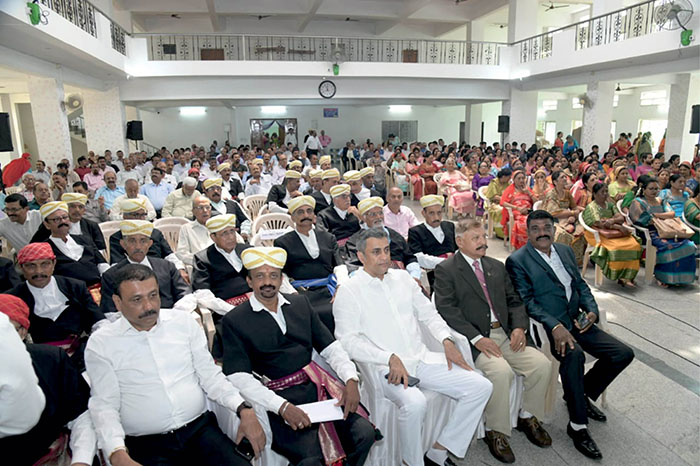
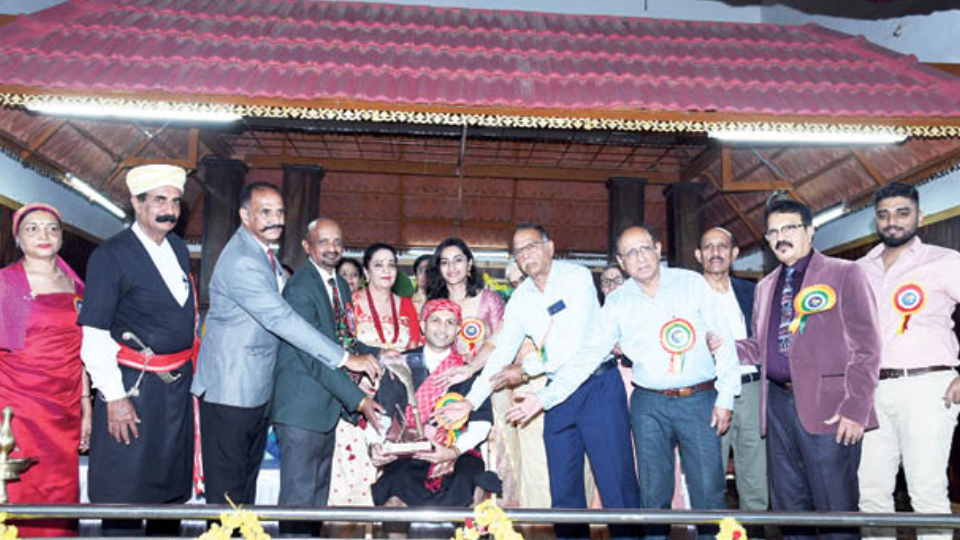
The winners of JB Fresh Face Season 8 held at a private hotel in city on Saturday — Anoushka Uthaiah and Shashank — are seen with fashion designer Jayanthi Ballal (JB).
source: http://www.starofmysore.com / Star of Mysore / Home> Photo News / September 24th, 2025
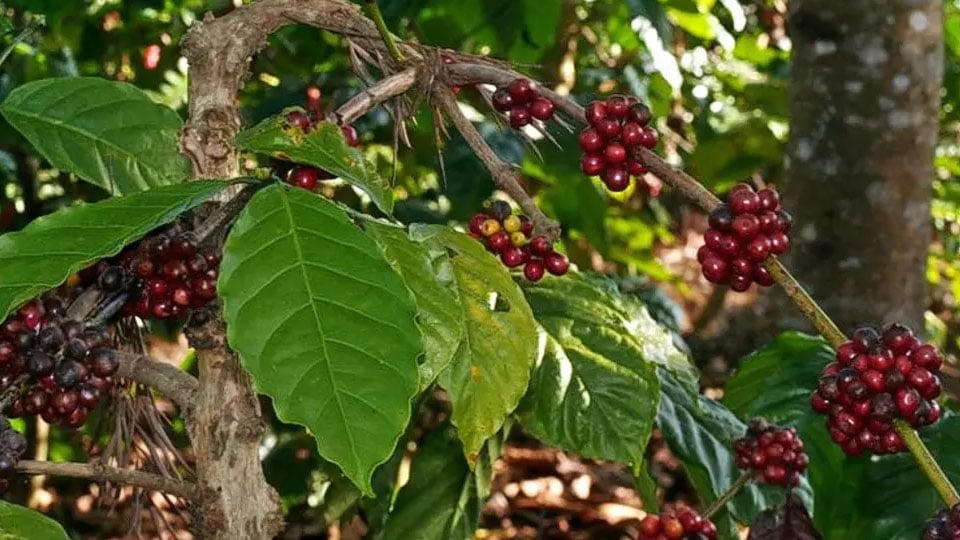
A unique Coffee Dasara blending festive spirit with agricultural pride will be held on Sept. 24 (Wednesday) at Gandhi Maidan in Madikeri, celebrating Kodagu’s deep-rooted coffee culture.
The event will honour coffee growers and provide valuable insights into cultivation techniques, announced H.T. Anil, Convener of Coffee Dasara.
Launched last year under the vision of Madikeri MLA Dr. Mantar Gowda, Coffee Dasara returns this year following an overwhelming response. The second edition is being organised in collaboration with the Coorg Planters’ Association.
The programme will begin at 10 am at the Sakamma Memorial Hall, named after Kodagu’s trailblazing coffee entrepreneur, the late Sakamma — Karnataka’s first woman coffee entrepreneur. Coffee stalls will be opened in her memory, celebrating her legacy.
A lecture series from 10.30 am to 1 pm will offer practical knowledge and expert guidance to coffee cultivators. At 1 pm, ten distinguished coffee growers from Kodagu will be felicitated for their exceptional contributions to the coffee industry.
Coffee on the menu
Adding a delicious twist to the festivities, culinary competitions will showcase coffee’s versatility in cooking and baking. Categories include coffee-flavoured cakes, cupcakes, brownies, biscuits, puddings, beverages, and chocolates — all celebrating coffee as both a drink and a delicacy.
This year’s Coffee Dasara will feature 35 stalls highlighting coffee-related products, information and innovations. Speciality brews will be served by local cafés, while major exhibits will be set up by the Indian Coffee Board, Horticulture Department, Industries Department, HOPCOMS, Nandini Dairy and the Kodagu Coffee Growers’ Cooperative Society, among others.
Coffee Dasara continues to honour Kodagu’s rich coffee heritage by blending tradition, innovation and community pride. This vibrant event not only celebrates the region’s global reputation for coffee cultivation but also strengthens the bond between growers, producers and coffee lovers.
source: http://www.starofmysore.com / Star of Mysore / Home / September 22nd, 2025
In this legend, the three elder brothers living in Kannur send their remaining siblings into Kodagu and Wayanad.
An idol of Pannangalatamme. Credit: Roshan Bopanna and Chenanda Rohan Ponnaiah
Kodagu folklore speaks of seven divine siblings — six gods and one goddess — who were from Kerala and settled in various parts of Kodagu and the adjacent districts in northern Kerala (Kannur and Wayanad).
In this legend, the three elder brothers living in Kannur send their remaining siblings into Kodagu and Wayanad. The three younger brothers (the eldest among them being Igguthappa) and the only sister enter Kodagu on foot. The sister is the best archer among them; she shoots arrows the farthest. She cooks food for them without using fire, instead relying on the hot sand on the banks of a river.
Igguthappa flings an arrow that lodges itself in the trunk of a mango tree. The sister takes the form of an egret and flies to that tree, near which she takes up residence. There, she fulfils her destiny. This is Pannangalatamme, the goddess of the Kodava-speaking Dalit community, the Kembattis.
The worship of Pannangalatamme and the celebration of her temple festival are central to the Kembatti identity today.
Festivities
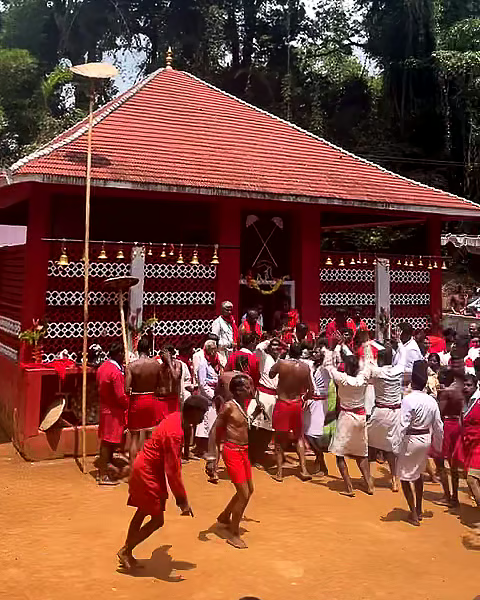
Every year, during a two-day festival, members of the Kembatti community gather at the main temple of Pannangalatamme, which is near Kakkabe, a large village in Kodagu. The men dress in traditional wraparound tunics called kuppyas, often coloured red or white. There are also temples dedicated to Pannangalatamme in Beppunaad Armeri and a few other locations.
Devotees at the main shrine in Kakkabe Kodagu district.
The kuppya is a long coat worn by the Kodavas and other natives of Kodagu. It is secured at the waist by a sash called a chele. In the past, the kuppya and chele came in various colours. These days, the kuppya is often black or white, and the chele is gold-embroidered and usually has a silver-covered dagger called the pichekaththi tucked into it.
The Kembattis were also village musicians, playing the vaalaga, a double-reed wind instrument similar to the oboe, the shehnai, and the nadaswara, which lent its name to the popular folk music of the region.
The Kembattis also blew long brass horns called kombu and played with thaala cymbals. They were often accompanied by drummers called Medas, who otherwise worked with cane, making baskets and mats. Their large drums were of two types: pare and dhol. This motley band of musicians performed at Kodagu weddings, funerals, and temple festivals.
It is difficult to trace the historical timeline of these traditions and temples, which are rooted more in folklore than classical literature. The Kembatti community and the Igguthappa temple are referenced in nineteenth-century texts of the Haleri Rajas, who ruled Kodagu.
The legend of Igguthappa, Pannangalatamme, and their brothers is old and appears probably for the first time in print in the 1870 Gazetteer of Coorg.
In some villages such as Chembebelloor and Bilugunda, the Kodavas, the Kembattis, and others celebrate their annual village festival through various performances in groups, either in disguise or as musicians.
Author Dr Bodukuttada Radhika Kuttappa, who belongs to the community, notes that there are currently 51 Kembatti clan names. On the other hand, Dr M G Nagaraj claims in his 2017 book Kodagina Kembatti Samskriti that there are 97 Kembatti clans in existence. While Dr Radhika listed unique names, Dr Nagaraj counted unrelated clans, sharing the same name as separate entries for different villages.
source: http://www.deccanherald.com / Deccan Herald / Home> India> Karnataka / by Mookonda Kushalappa / August 07th, 2025
The day-long ‘Kodavaamera Aara Bera,’ a grand celebration of Kodava Heritage, Tradition, Music and Unity (Kodava Cultural Namme), organised by Karnataka Kodava Sahitya Academy in collaboration with Kodava Samaja, Mysuru and Department of Kannada and Culture, began at Kodava Samaja premises in Vijayanagar here this morning.
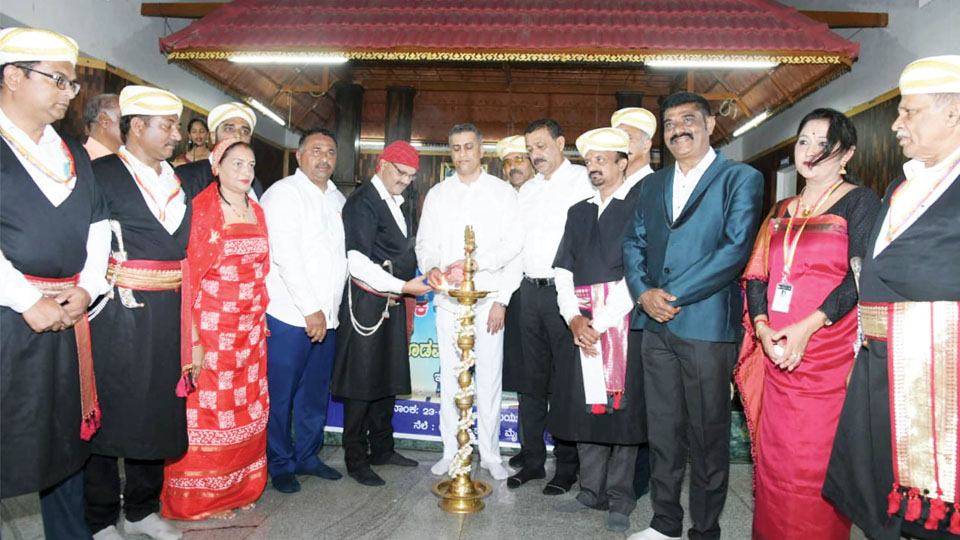
Virajpet MLA Ajjikuttira S. Ponnanna inaugurated the event by lighting the lamp along with Kodava Sahitya Academy President Ajjinikanda C. Mahesh Nachaiah.
Speaking on the occasion, Ponnanna said that this festival aims at projecting the rich Kodava culture, language and tradition.
Observing that there are many Kodavas in Mysuru, he stressed on the need for conserving the rich traditions and practices of Kodavas. The Kodava community members, who have settled at far off places for pursuing their career, should not forget their homeland’s culture and traditions.
Pointing out that a higher grant was provided for Madikeri Dasara last year, he said that this year too the celebrations would be on a grand scale in Madikeri and Gonikoppa with Government support.
The event features vibrant performances from folk tunes to traditional dance and drama, showcasing the spirit and essence of Kodava culture.
Kodagu District Guarantee Implementation Committee President Theethira Dharmaja Uthappa, Mysuru Kodava Samaja President Ponjanda A. Ganapathy, Event Convenor Kambeyanda Deena Bojanna, Co-convenors Putharira Pappu Thimmaya, Kondijammana M. Balakrishna and Napanda C. Ganesh, Kodava Sahitya Academy members Mollekuttanda Dinu Bojappa, Panikuttira K. Kuttappa, Ponnira U. Gagan, Kudiyara Kaverappa, Nayandira R. Shivaji, Cheppudira S. Uthappa, Nayakanda Baby Chinnappa, Chotteyanda A. Sanju Kaverappa and a host of Mysuru Kodava Samaja members were present.
MLA on Dharmasthala row
Speaking to media persons on Dharmasthala row on the sidelines of the Kodava event, MLA A.S. Ponnanna, who is also the Legal Advisor to Chief Minister Siddaramaiah, said that the Government is for a transparent investigation into Dharmasthala mass burial case and all those found guilty will be punished.
Commenting on the arrest of the ‘mask man’, the complainant in Dharmasthala mass burial case, Ponnanna said that the Government ordered investigation into the row in order to maintain the sanctity of the holy place.
Stating that it is not correct to say that no investigation should be made on allegations of mass burials at Dharmasthala, he said that SIT has arrested the complainant, who had made a statement before a Judge alleging that a mass burial of unidentified bodies had taken place in the surroundings of Dharmasthala.
Maintaining that the SIT has been doing its job in accordance with the law, he said that it has come to be known that the complainant himself is guilty of making false claims, for which he has been arrested this morning.
Wondering why the Opposition BJP is raising unnecessary hues and cries over the Dharmasthala issue, he questioned the propriety of the BJP taking out a march to Dharmasthala, which is nothing but politics.
The MLA further said it is left to the Police whether to take Sujatha Bhat, who had made allegations regarding Ananya Bhat missing case, into custody.
source: http://www.starofmysore.com / Star of Mysore / Home> News / August 23rd, 2025
Experience the rich flavors of Coorg at The Westin Pune Koregaon Park from September 12-21. Join us for a 10-day celebration of authentic Kodava cuisine.
This September, embark on an exquisite culinary sojourn as The Westin Pune Koregaon Park brings the authentic flavors of Coorg to your table. From September 12 to 21, 2025, The Market will transform into a celebration of Kodava cuisine, offering a 10-day showcase of recipes and traditions that are deeply rooted in the region’s culture.
Curated by Chef Priya Aiyappa, a proud Coorg native, the festival promises an authentic dining experience, with dishes prepared using time-honoured techniques and locally inspired ingredients. On the menu are signature delicacies such as the legendary Pandi Curry, paired with pillowy Kadambuttu (steamed rice dumplings), alongside Paputtu (soft rice and coconut cakes), and Noolputtu (delicate rice noodles). Seasonal specialties like the rich Kakkada Nyend Curry—crafted with prized monsoon mud crabs—and the earthy Baimbale Curry made from tender bamboo shoots, bring the lush terrain of Coorg directly to the plate. For a sweet finish, the humble yet comforting Thambuttu, a banana-based dessert, completes the experience.
“Coorg food is a reflection of its land—simple, bold, and deeply connected to tradition,” says Chef Priya. “Through this festival, I want to bring the warmth of Kodava hospitality and the true flavours of my home to Pune.”
With its inviting ambiance and vibrant setting, The Market at The Westin Pune Koregaon Park provides the perfect canvas for this unique celebration. Whether you’re a passionate foodie or simply curious to explore the rich culinary heritage of Karnataka’s Western Ghats, the festival offers an unmissable opportunity to savour one of India’s most distinctive regional cuisines.
When: September 12 – 21, 2025| Lunch, Dinner & Brunch Where: The Market, The Westin Pune Koregaon Park Cost: 2399++ onwards Contact: +91 70662 00300
source: http://www.hospibuz.com / Hospibuz.com / Home> Hotel Listicles> Listicles / by Hospibuz / September 12th, 2025
Kottangada Dr. Pemmaiah, Indian Revenue Services (IRS – Income Tax), Deputy Director, Enforcement Directorate (ED), New Delhi, was felicitated by the Mysuru Kodava Samaja at the ‘Kailpodh Namme’ celebrations held at the Samaja premises in Vijayanagar First Stage this morning.
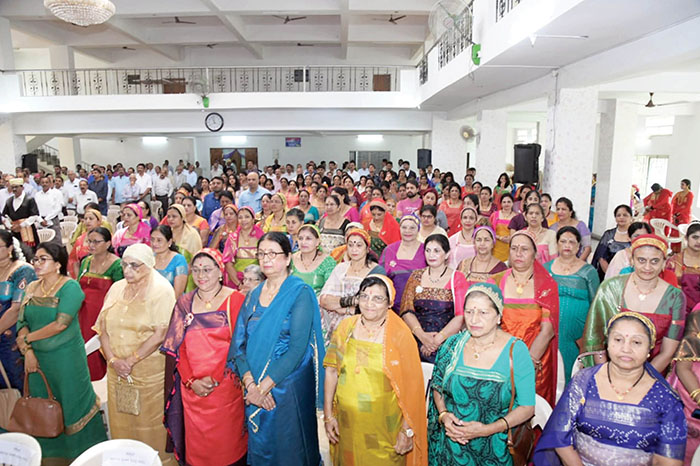
Picture shows a section of the audience.
Dr. Pemmaiah’s wife Lochan Pemmaiah, mother Kottangada Viju Devaiah (a social worker from Gonikoppa), Mysuru Kodava Samaja President Ponjanda Ganapathy, Vice-President Machimada P. Nanaiah, Secretary Ketolira A. Belliappa, Joint Secretary Ajjikuttira Diana Poovaiah and Hon. Treasurer Ittira G. Kashiappa and other office-bearers were present.
source: http://www.starofmysore.com / Star of Mysore / Home> Photo News / September 07th, 2025
The actor will join hands with the director for Hello 123, which will have music by V Harikrishna.
Bhuvvaan Ponnanna, known for his antagonist roles in films like Just Math Mathalli, Kool, and Kuchiku Kuchiku, worked his way to playing the lead in Randhava. Now, after a break, he steps into the spotlight as a hero with the upcoming musical, Hello 123, directed by none other than Yogaraj Bhat. The film features music by V Harikrishna and is produced under the banner of Amrutha Cine Craft by Vijay Tata and Amrutha Vijay Tata.
“When I came to Bengaluru in 2007, Yogaraj Bhat’s name was everywhere,” Bhuvvaan recalls. “Every actor wanted to do a film with Bhatru. While I was playing villains, I always had this wish, much like senior actors wanted to work in Puttana Kanagal. I wanted to be part of Yogaraj Bhat’s world, as I loved the magic he had brought to actors like Ganesh or Diganth.”
The actor admits he took his time after his debut as a hero in Randhava. “Yogaraj Bhat doesn’t push stories onto actors; he works around them. He told me, ‘I will not match the story with the actor; I’d rather work on the story, and then see how the actor fits.’ He was very particular, always striking up conversations, understanding me—my background, my language, my flavour. After many discussions, he tailored the story to suit me.”
Bhuvvaan, who also has a theatre background and trained in filmmaking at a New York film university, calls working with Bhat a learning experience. “Despite my theatre experience, this is going to be like film school. The chance to work with a director like Yogaraj Bhat is rare, and I am ready to absorb every moment.”
Hello 123, launched with Harshika Poonacha and Bhuvvaan’s daughter Tridevi in attendance, promises a light-hearted journey of a musician rising from nothing to everything. “It’s a typical Yogaraj Bhat film,” Bhuvvaan says. “Music, love, drama, the essence of Malnad, quirky characters, and humour—everything is in there.”
Pre-production is underway, and shooting is expected to begin in October. Apart from Bhuvvaan, the director and music director, the rest of the cast and crew is yet to be finalised.
source: http://www.cinemaexpress.com / Cinema Express / Home> News / by A Sharadhaa / September 05th, 2025
The Annual Kail-Poldh Festival get-together will be held on Sept. 7 (Sunday) at Kodava Samaja premises in Vijayanagar 1st Stage here.
The day-long programme from 10 am to 5 pm comprises Ayudha Puja, Sports and Games, Lucky Dip, honouring eminent Kodavas and distribution of Scholarship to meritorious children.
Dr. Kottangada Pemmaiah, Deputy Director, Enforcement Directorate (ED), New Delhi, will be the chief guest.
Ponjanda A. Ganapathy, President of Mysuru Kodava Samaja, will preside.
Samaja Vice-President Machimada P. Nanaiah, Secretary Ketolira A. Belliappa, Joint Secretary Ajjikuttira Diana Poovaiah and Hon. Treasurer Ittira G. Kashiappa will be present.
source: http://www.starofmysore.com / Star of Mysore / Home> In Briefs / September 01st, 2025
Kodagu Deputy Commissioner Venkat Raja during the inauguration of ‘Har Ghar Tiranga campaign’ in Madikeri on Tuesday. | Photo Credit: SPECIAL ARRANGEMENT
The Kodagu district administration, on Tuesday, launched the three-day ‘Har Ghar Tiranga’ campaign, which will see a variety of programmes being organised as part of the Independence Day celebrations.
The ‘Har Ghar Tiranga’ campaign, commemorating the 78th year of India’s independence, will be held from August 13 to 15 across the district.
Deputy Commissioner Venkat Raja inaugurated the campaign at his office in Madikeri. The Revenue, Panchayat Raj, School Education and Literacy, Pre-University Education, Social Welfare, Backward Classes Welfare, Urban Development, Municipal Administration, and Kannada and Culture Departments have joined hands to conduct various activities at the event.
Mr. Raja said that the ‘Har Ghar Tiranga’ campaign was being organised as per government directions, and added that programmes will be conducted at district, taluk, and gram panchayat levels through different departments. He appealed to all the participants to upload their selfies to https://hargartiranga.com after participating in the campaign.
Municipalities, town panchayats, and city councils will host a variety of events; schools, colleges, and hostels will also conduct a range of activities, the Deputy Commissioner said. “It is very important that everyone participates in the ‘Har Ghar Tiranga’ campaign,” he added.
Additional Deputy Commissioner R. Aishwarya said that various programmes had already been conducted in schools, colleges, and historical places, and urged everyone to contribute to the success of the campaign. Social Welfare Department Deputy Director and taluk panchayat Executive Officer Shekhar said that arrangements had been made to organise the campaign in various gram panchayats and hostels.
source: http://www.thehindu.com / The Hindu / Home> News> India> Karnataka / by The Hindu Bureau (Headline edited) / August 12th, 2025
Mysore Kodava Samaja paid floral tributes to Kalyatanda B. Ganapathy (KBG), Founder-Editor of Star of Mysore and Mysuru Mithra, who passed away on July 13, at the condolence meeting held at the Samaja premises in Vijayanagar yesterday.
Samaja President Ponjanda A. Ganapathy, former Samaja President and present BVB Mysuru Hon. Secretary Poyyettira S. Ganapathy, former Rajiv Gandhi University (Arunachal Pradesh) Vice-Chancellor Prof. Kambeyanda C. Belliappa, Samaja Advisor Jammada Ganesh Ayyanna, former Rangayana Director Addanda C. Cariappa, KBG’s son and Star of Mysore Managing Editor Vikram Muthanna, Bharani Art Gallery Convenor Nellamakkada B. Kaverappa and others spoke about KBG.
Samaja Vice-President Machimada P. Nanaiah, Hon. Secretary Ketolira A. Belliappa, Joint Secretary Ajjikuttira Diana Poovaiah, Hon. Treasurer Ittira G. Kashiappa and others were present.
source: http://www.starofmysore.com / Star of Mysore / Home> Gallery> Photo News / August 11th , 2025
WELCOME. If you like what you see "SUBSCRIBE via EMAIL" to receive FREE regular UPDATES.
Read More »